Tag: profit

  • Tapestry sales report

    Tapestry sales report

    The leather goods company formerly known as Coach Inc., Tapestry, has reported earnings for the first time since the name change.

    Tapestry, which is in the midst of a major rebranding, posted a 24.2 per cent increase in revenue to $1.29 billion and a net loss of $17.7 million compared with a profit of $117.4 million the previous year.

    Same store sales dropped two per cent for the Coach brand.

    Neil Saunders, managing director at GlobalData Retail, said the current period is one of transition for Tapestry, which changed its name from Coach last month as it grows into a multibrand lifestyle company following the acquisitions of accessories retailer Kate Spade and shoemaker Stuart Weitzman.

    “The inclusion of Kate Spade flatters the overall revenue number, which rose by almost 24 per cent,” Saunders said. “However, if this is excluded, a weaker picture emerges with sales down by 1.7 per cent over the prior year. This is solely the result of the continued revenue slide at Coach where overall sales dipped by 2.8 per cent, including a two per cent decline in comparables.”

    The pullback from department stores and other channels that Tapestry considers to be detrimental are part of the reason for the slide in Coach’s numbers. Saunders said this is not an unusual pattern.

    “However, we feel that there is an additional softness in this quarter’s results and that they indicate a slight worsening of performance since the prior period,” he said. “Fortunately, much of this appears to be down to transitory factors such as a shift in the Chinese Mid-Autumn festival and natural disasters in the United States. Even so, they serve as a reminder of the fickleness of demand when it comes to higher-end brands – which is why Tapestry wants to move away from being reliant on just one label.”

    Saunders said their recent store visits to Coach has led them to believe that the holiday quarter will be a positive one.

    “The collection is looking strong with some good gifting stories; merchandising is compelling and engaging,” he said. “Our consumer data also indicates that perceptions of Coach continue to rise and its status as a brand that people want to receive and to gift have both improved since last year.”

    Tapestry’s newest addition, Kate Spade, also suffered a sales decline, with comparables down by 9 per cent.

    “While this is a less than auspicious start, it is the result of deliberate action by Tapestry to wean the brand off its reliance on discounting and flash sales,” Saunders said. “Predictably, this had a negative impact on volumes, especially online where global e-commerce declined by 600 basis points.”

    As much as this is beneficial to gross margins, the shift put severe pressure on the bottom line.

    “Thanks to this, and the disruption and expense of the acquisition, Kate Spade fell firmly into the red,” Saunders said. “However, we are not overly concerned by this as we believe Kate Spade needs to take two steps back before it can move forward.”

    With Tapestry’s two leading brands in negative sales territory, it fell to Stuart Weitzman to try and make up some lost ground. The division duly delivered with a 10.2 per cent uplift in sales. Better collections in store coupled with improved demand for footwear drove the results.

    “We are confident that this uptick will continue into the holiday quarter and beyond, bolstered by the much-awaited collection from Giovanni Morelli,” Saunders said.

    According to Saunders, as important as the performance of the individual brands is, it is the way in which Tapestry will bring them together that will determine business performance. “Here, despite the negative revenue growth and this quarter’s net loss of $17.7 million, we are encouraged by the progress,” he said. “Synergy savings from the Kate Spade integration are ahead of schedule, which allowed the company to beat its earnings forecast. Moreover, Tapestry has increased its targeted savings out to 2019 from $50 million to $115 million.”

    Saunders added that all of this suggests that the current period is one of transition for Tapestry and that better numbers will come through over time.

    “Overall, we have confidence in the general direction and strategy of the group.”

  • Mitsubishi swings to operating profit in second quarter

    Mitsubishi swings to operating profit in second quarter

    Mitsubishi Motors said on Tuesday it swung to an operating profit for the second quarter, beating expectations as it rebounded from a mileage-cheating scandal a year earlier helped by cost cuts and favorable exchange rates.

    Healthy demand in Southeast Asia, Mitsubishi’s top market also lifted earnings with the automaker saying it was seeing strong orders for its new Xpander seven-seater multipurpose vehicles in Indonesia.

    Operating profit came in at 23.6 billion yen ($207.3 million) for the quarter, compared with a loss of 36.2 billion yen a year earlier when it was forced to stop sales of some domestic models due to the scandal.

    During the first-half, retail vehicle sales at home climbed 48 percent while those in southeast Asia rose 15 percent.

    Mitsubishi kept its forecast for operating profit to surge 14-fold to 70.0 billion yen in the year to March. That reflects the rebound from the scandal as well as expectations of further growth in Asia and cost savings from its alliance with Nissan Motor.

    The car maker has set ambitious goals for growth in Southeast Asia, China and the United States as well as for a comeback in Japan. Last month, it said it planned to boost global sales by 30 percent over three years.

    Under its new three-year strategy plan – Mitsubishi’s first since Nissan bought a controlling stake in 2016 following the scandal – the Japanese automaker will also ramp up R&D investment and capital spending.

    The company has reorganized the engineering division involved in the mileage manipulation scandal and has improved testing processes and compliance procedures.

    It expects the yen to trade around 105 yen to the U.S. dollar in the year to March.

  • Samsung Electronics profit nearly doubles

    Samsung Electronics profit nearly doubles

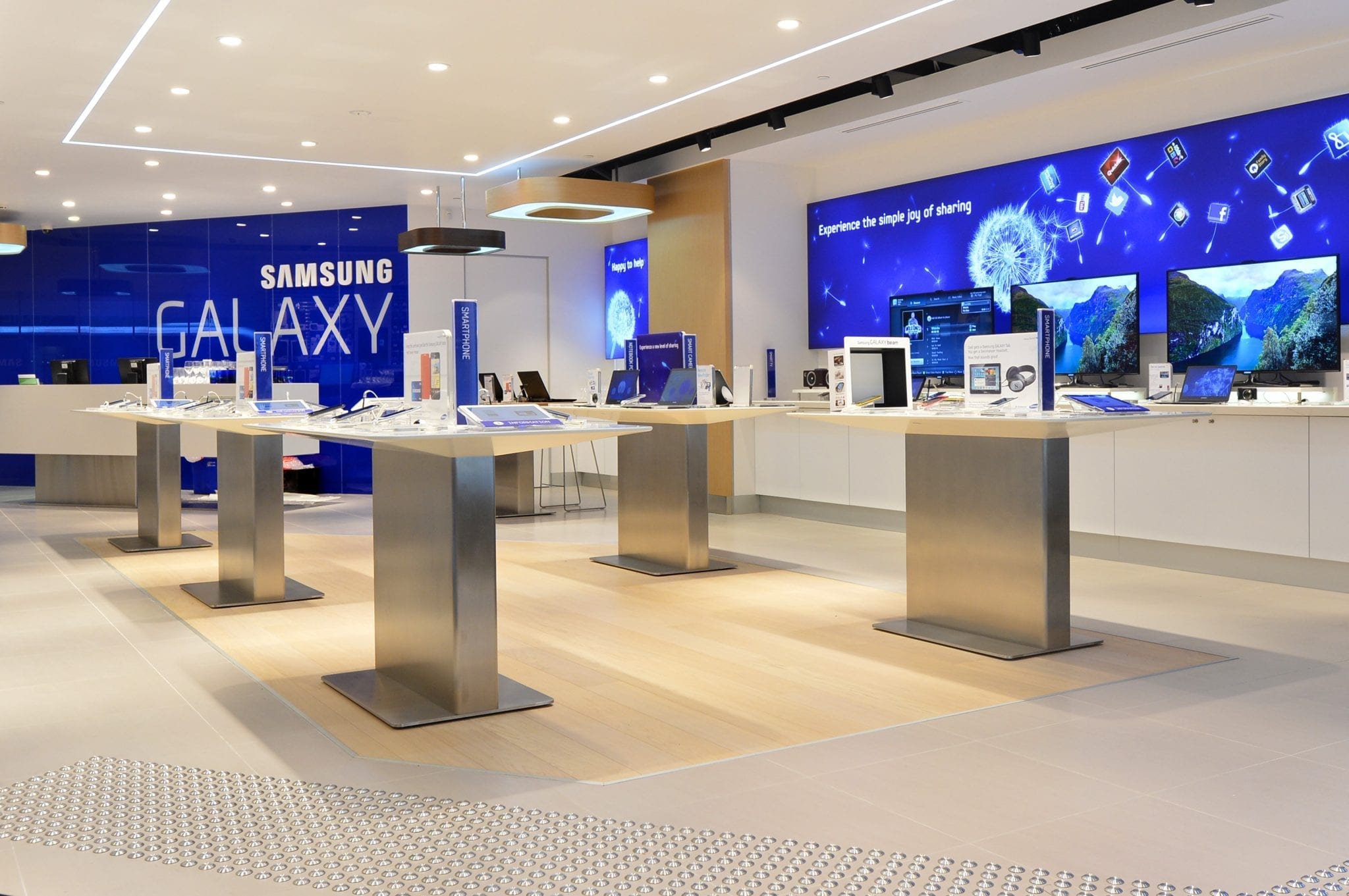
    Samsung Electronics profit nearly doubled in the third-quarter, mainly led by strong returns from its chip business amid an industry-wide boom.

    And it had a helping hand from rival Apple, for whom it makes screen for the iPhone X.

    Samsung Electronics profit reached 11.1 trillion won (US$9.87 billion), jumping from 4.53 trillion won posted a year earlier.

    Sales rose 29.7 per cent to reach 62 trillion won and operating profit came to 14.53 trillion won in the July-September period, also rising sharply from 5.2 trillion won posted last year.

    CNBC reported that Samsung is on track for record full-year profit, with analysts forecasting even better fourth-quarter on strong memory chip prices and organic light-emitting diode (OLED) screen sales for Apple’s iPhone X.

    The company’s operating margin reached 23.4 per cent in the third quarter, significantly rising from 10.9 per cent posted a year earlier.

    Samsung Electronics said its chip business raked in a record operating profit of 9.96 trillion won, helped by the rising seasonal demand. Its products’ prices increased due to limited supply in the market.

    For the fourth quarter, Samsung said the shipment of its products is expected to continue growing, as more mobile devices are adopting high-end memory chips and demand from data centres rising.

    “Looking to 2018, high demand from data center infrastructure expansion is forecast to continue while demand for contents growth in mobile products will rise on the widespread adoption of dual camera, 3D sensors and on-device AI offerings,” Samsung Electronics said.

    The tech giant added that the IT and Mobile Communications division, which covers smartphones, posted an operating profit of 3.29 trillion won, a huge turnaround from the meagre 100 billion won posted a year earlier, when the handset business was hurt by the suspended production of the Galaxy Note 7.

    The company, however, said while its shipment of smartphones in terms of units remained strong due to the release of the Galaxy Note 8 and robust sales of the Galaxy J series, the rising portion of budget models in the portfolio led to a decrease in earnings from 4.06 trillion won posted a quarter earlier.

    Industry watchers said the mobile arm’s performance is still better than expected, as the business was widely seen to remain sluggish due to increasing expenditure on marketing projects for the Galaxy Note 8.

    Preorders for the Galaxy Note 8 in South Korea came to 850,000 units, more than doubling the 400,000 units posted by its predecessor, the Galaxy Note 7.

    Experts said Samsung’s fourth-quarter performance is also anticipated to improve on the full-fledged sales of the Galaxy Note 8.

    The South Korean electronics company said it expects tougher competition in the market for the fourth quarter, saying it will release the new phablet in more countries in order to maintain sound returns.

    The consumer electronics division posted an operating profit of 440 billion won. Samsung said the performance falls behind the 790 billion won posted a year earlier due to changes in TV panel prices, although the increased shipments of premium products led to an on-quarter rise.

  • Amazon’s huge profit drop

    Amazon’s huge profit drop

    Amazon has reported a jump in retail sales but its profits took a big hit as the e-commerce giant continues investing in a number of costly areas, including video, fulfilment centers and international expansion within fast-growing economies such as India.

    The world’s largest online retailer has reported a 77 per cent slump in quarterly income and forecast a potential operating loss in the current quarter, $US300 million ($A376 million) to a loss of $400 million.

    The company posted second-quarter revenue of $38 billion, up 25 per cent from the previous corresponding period.

    Operating cash flow increased 37 per cent to $17.9 billion for the trailing twelve months, compared with $13.0 billion for the trailing twelve months ending June 30, 2016. Free cash flow increased to $9.7 billion for the trailing twelve months, compared with $7.7 billion for the trailing twelve months ended June 30, 2016.

    Operating income decreased 51 per cent to $628 million in the second quarter, compared with the operating income of $1.3 billion in second quarter 2016.

    “Our teams remain heads-down and focused on customers,” said Jeff Bezos, Amazon founder and CEO.

    “It’s energising to invent on behalf of customers, and we continue to see many high-quality opportunities to invest.”

    According to Neil Saunders, managing director of GlobalData Retail, Amazon’s breakneck growth stood in contrast to the fate of many brick-and-mortar rivals, who have struggled to find their footing as more people shop online.

    “While many other retailers are bumping along the bottom in terms of growth, Amazon increased its sales line by almost a quarter,” Saunders said. “In real terms, this means the online behemoth took some $7.5 billion more in revenue this quarter than during the same period last year. By any standards, this is an impressive performance – but it is doubly so for a company of the size and scale of Amazon.”

    “Worryingly for other retailers, Amazon shows no signs of slowing down.”

    Saunders said Amazon’s growth this quarter was sequentially better than last. Even in a mature market like North America, Amazon still managed to grow its sales line by 26.6 per cent.

    “And all of this comes before the sales benefits of Whole Foods, which will boost future growth rates by around 12 percentage points. All in all, it is clear that Amazon is not only increasing its dominance but is doing so at an ever-faster pace,” he said.

    Saunders said, however, that as good as Amazon is at generating sales, it is far less successful in turning those sales into profits.

    “To be fair, much of this is deliberate: Amazon chooses to reinvest in its business and to sacrifice profits to boost its market share and dominance,” he said. “However, such a strategy shows up in a weak set of bottom line numbers. Indeed, in its latest quarter, Walmart made more net profit in a week than Amazon did during the entire three-month period.”

    “As we predicted in our last note, Amazon’s profitability is getting worse rather than better,” Saunders said. “However, it all adds up to one thing: Amazon is buying sales at the expense of the bottom line.”

    He said in their view, this is a sustainable position both because Amazon is cash generative and is not losing money; nevertheless, it takes some of the shine off Amazon’s success.

    “The unfortunate truth for other retailers is that Amazon’s growth and success will force them to reduce margins, especially if they want to grow in e-commerce,” he said. “And While Amazon is comfortable operating with relatively low profitability, many other retailers – and their investors – are not. This is something that will create some significant pain points over the coming years.”

    Bezos’ wealth skyrockets

    Bezos also briefly became the world’s richest man in Forbes magazine’s tracking of wealth, as stock in his e-commerce company hit an all-time high.

    Microsoft founder Bill Gates reclaimed the lead by Thursday afternoon, as Amazon’s stock fell nearly 1 per cent for the day to $US1046.

    Amazon shares have been trading at a record high. They hit $US1083.31 at about noon on Thursday. According to securities filings, Bezos owns about 80 million shares, or 17 per cent; those shares were valued at more than $US87 billion ($A109 billion) at the peak. Bezos also owns The Washington Post through a holding company.

    Forbes said Bezos’ net worth was about $US90.6 billion when the market opened on Thursday. Gates had $US90.1 billion. Forbes said Gates would have been the undisputed leader had he not given billions of dollars away to various philanthropic causes. Bezos issued a request for philanthropic ideas in a tweet in June, just before Amazon announced a $US13.7 billion deal for organic grocer Whole Foods.

  • SK Telecom more than doubles Q2 profit

    SK Telecom more than doubles Q2 profit

    SK Telecom more than doubled its net profit during the second quarter due to factors including a record performance at chipmaker SK Hynix.

    The operator reported a net income of 620.5 billion won ($555.06 million), up 113.2% year-on-year. Revenue meanwhile grew 1.8% to 4.35 trillion won and operating income increased 3.9% to 423.3 billion won.

    But it was a challenging quarter for the operator’s core telecommunications business, with operting income on a non-consolidated basis falling 3.3% year-on-year to 462.3 billion won due to increased marketing expenses and depreciation costs from the 2.6-GHz spectrum acquired last year.

    Despite this non-consolidated revenue edged up slightly to 3.11 trillion won, due to increased mobile data usage and increased sales in new business areas including IoT solutions.

    Revenue from the SK Broadband division meanwhile increased 1.9% year-on-year to 730.1 billion won and the unit reported a record-high quarterly operating income of 31.6 billion won.

    Internet commerce arm SK Planet meanwhile posted a 5.4% increase in sales to 275 billion won, but still recorded an operating loss of 35.1 billion won.

    “Despite the challenges in the mobile telecommunications market, SK Telecom posted improved results due to the strengthened performance of its main subsidiaries,” SK Telecom CFO Ryu Young-sang commented.

    “SK Telecom will become a global leading ICT company by achieving meaningful growth in media and IoT, while maintaining leadership in the mobile network operations business.”

    The company is also planning to connect its AI platform to other services, including mobile services, media, commerce and its T Map mobile navigation service to generate differentiated big data it can use to provide customized products and services.

  • Alibaba sales beat estimates, plans $6m share buyback

    Alibaba sales beat estimates, plans $6m share buyback

    Alibaba Group’s first-quarter revenues surpassed industry estimates for the three-month period ending March, as the Chinese e-commerce giant witnessed strong growth in new business lines beyond online shopping.

    Total revenues for the last quarter reached 38.6 billion yuan (US$5.6bil), well above an average forecast of 36 billion yuan according to Thomson Reuters.

    “Our revenue base is now more diversified,” chief financial officer Maggie Wu said. The finance head added that Alibaba’s cloud and entertainment sectors became “more meaningful growth drivers” during the quarter.

    Despite the sales high, earnings fell flat for the three months, with profits adversely affected by tax increases after the expiration of a local tax reduction linked to Alibaba’s investment in Chinese electronics retailer Suning Commerce Group Co Ltd.

    Alibaba’s adjusted earnings per share (EPS), therefore, came in at 4.35 yuan (US$0.63), below estimates of 4.48 yuan.

    Coinciding with the results, Alibaba announced plans to buy back shares worth up to US$6bil over two years.

    The operator of online market place Tmall and financial payments system Alipay said the share repurchase scheme would replace its existing buyback program.

    For the last few years, Alibaba has been targeting news business lines such as cloud computing, big data, entertainment and offline retail as it expands beyond e-commerce.

    However, online shopping remains the firm’s bread and butter. In March, Alibaba said it plans to open a regional distribution hub in Malaysia to cater to its fast-growing business in the region. It also launched its Alipay business in the Asian nation last week, following a debut in the US earlier in the year.

  • Rakuten first-quarter profits surge on sales promotions, new tech investments

    Rakuten first-quarter profits surge on sales promotions, new tech investments

    Japanese e-commerce giant Rakuten said net income for the first-quarter of fiscal 2017 more than doubled for the three months ending March 31, on the back of a positive customer response to sales promotions and new technologies.

    Japan’s largest e-tailer said total quarterly net income reached 25.06 billion yen (US$220.3 million), up from 12.09 billion yen (US$104.7 million) for the same period a year earlier.

    The Tokyo-based company said its operating income rose 73.2% to 40.4 billion yen (US$355.3 million), while first-quarter sales jumped 17.6%, for a total of 212.08 billion yen (US$1.86 billion).

    The e-tailer currently offers customers up to seven times the typical rewards points, a bid to poach business from rivals Amazon.com and Yahoo.

    According to a press release, Rakuten said it has “cultivated loyal customers and conducted sales activities in order to win new users, as well as initiatives targeting greater customer satisfaction, strengthening services for smart devices and opening up the Rakuten ecosystem,” the company said.

    This incentive has increased membership in Rakuten-brand credit cards and the use of revolving balances, boosting the company’s financial business.

    “Results are on track for improvement in overseas internet services, due to contributions from the steady growth in U.S. subsidiary Ebates Inc. and other factors,” it added.

    In February, Rakuten invested $26 million in AirMap, a company working on a global airspace management platform for drones. Meanwhile, in September 2016, the company acquired Fablic, provider of the C2C marketplace app Fril.

    In the past year, it has also invested in American bot developer Run Dexter, digital content provider getAbstract AG, cross-border payment platform Currencycloud, and Japanese fintech company Folio – investments, which look to boost revenues further in the coming fiscal year.

    The firm said that for the twelve months ended December 31 it is targeting double-digit growth over the previous year.

    According to a recent report produced by JapanConsuming, e-commerce will be Japan’s largest single retail channel by 2022. In 2015, Japan generated roughly $80 billion in e-commerce sales. This compares to some $350 billion of e-commerce sales in the U.S. and China’s whopping e-commerce sales result, which exceeded $650 billion in 2015.

  • Boost for Sinarmas Land profit from Indonesian recovery

    Boost for Sinarmas Land profit from Indonesian recovery

    Propery developer Sinarmas Land saw its profits soar off the back of better sales from its joint venture developments. Net profit surged 136.6 per cent to S$37.2 million for the three months to March 31. This came off the back of higher revenue, which rose 31.8 per cent to S$237.1 million.

    It attributed its stellar performance to an increase in residential units handed over to home buyers in its mixed-use development BSD City in Indonesia, but said it was offset by lower sales of industrial land in Indonesia.

    It also recorded a share of profits in joint ventures of S$3.8 million for the first quarter, compared with a loss of S$3.1 million in the same period last year.

    Ms Margaretha Widjaja, executive director of SML and vice-chairman of Sinarmas Land Indonesia, said that Indonesia’s economic recovery has been aided by improved commodity prices, albeit at a gradual pace.

    While Indonesia’s property sector had been negatively impacted by extended periods of lackluster economic performance, consumer purchasing power is set to improve, she added.

    “The group is cautiously expecting a stronger recovering, following the Indonesian government’s larger infrastructure spending, increased direct investments, led by the implementation of economic stimulus packages,” she said.

    Earnings per share came in at 0.87 cents for the first quarter, compared with 0.37 cents for the same period a year earlier.

    Net asset value as at March 31 was S$0.44, down from S$0.47 three months earlier.

  • Airtel Q4 profit slumps 71.7%

    Airtel Q4 profit slumps 71.7%

    India’s Bharti Airtel has reported a steep 71.7% decline in net profit for its fiscal fourth quarter to 3.73 billion rupees ($57.6 million), as the company felt the effect of competition from newcomer Reliance Jio Infocomm.

    Revenue for the quarter declined 12.1% to 219.35 billion rupees, with revenue from India down 7.1% year-on-year to 170.3 billion rupees.

    Domestic revenue was impacted by a 11.4% year-on-year decline in mobile revenue as a result of intensified competition amid the free offering from Reliance Jio.

    “The sustained predatory pricing by the new operator has led to a decline in revenue growth for the second quarter in a row. The telecom industry as a whole also witnessed a revenue decline for the first time ever on a full year basis,” Airtel CEO for India and South Asia Gopal Vittal said.

    “The deteriorating health of the industry was compounded by the tsunami of incoming voice traffic from the new operator as a result of which significant investments had to be made just to carry the incoming traffic on our network.”

    While Airtel’s Indian mobile broadband customers increased by 20.5% to 42.7 million, mobile data’s contribution to total revenue declined to 21.5% from 23.3% in the same quarter last year. Airtel’s total mobile customer base in India grew 2.9% to 273.6 million.

    Revenue from Africa grew 2.6% in constant currency terms, with data revenue up 14.5% year-on-year to 157 million, representing 17.7% of total revenue from the continent.

    The company’s Airtel Mobey mobile money service meanwhile increased its customer base to 9 million, increasing the total transaction value over the platform by 35.1% to $4 billion. Airtel’s total Africa subscriber base declined by 0.4% to 80.06 million.

    For the full year, net income declined by 37.5% to 60.77 billion rupees, with revenue down 1.1% to 954.68 billion rupees.

  • Cebu Pacific posts P9.8bn net income in 2016

    Cebu Pacific posts P9.8bn net income in 2016

    Cebu Pacific Air (CEB) posted a net income of P9.8bn in 2016, up 122% year-on-year, on the back of the strong demand for low-cost air travel and robust growth in ancillary revenues, which include baggage fees, on-board meals, and merchandise.

    Total revenues, which include CEB cargo services and wholly-owned subsidiary Cebgo, jumped 9.6% to P61.9bn, as passenger revenues surged 9.2% to P46.6bn. For the full year, CEB flew 19.1mn passengers, up 4.1% versus the 18.4mn passengers carried in 2015.
    “2016 was a great year for CEB as we continue to enable ‘every Juan’ to fly to more destinations around the Philippines and to key destinations in Asia, the Middle East, Australia, and the US.

    “CEB remains committed to further increasing inter-island connectivity within the Philippines to promote trade and tourism and help more people connect with their families and friends all around the world, while consistently providing our trademark best value fares,” said lawyer JR Mantaring, vice-president for Corporate Affairs of Cebu Pacific.

    In 2016, CEB flew to 36 domestic and 30 international destinations through 102 routes and more than 2,820 flights weekly. CEB boosted its intra-regional network in the Visayas with flights from Cebu to Ormoc, Roxas and Calbayog. The airline also launched direct service between Kalibo and Incheon, as well as its first US destination, Guam.

    CEB also teamed-up with some of the world’s leading Low Cost Carriers (LCC) to form Value Alliance, the world’s largest LCC Alliance, which aims to provide greater value, connectivity and choice for travel throughout Southeast Asia, North Asia, and Australia. CEB also opened a branch office in South Korea to boost promotional efforts in the Korean market.

    CEB capped 2016 with 57 aircraft, adding two brand-new ATR 72-600 aircraft in February 2017, to bring its current fleet to 59. For the rest of 2017, CEB expects to take delivery of one Airbus A330, two Airbus A321neo, and four more ATR 72-600, and delivering out three of its four Airbus A319 to end the year with 63 aircraft. CEB continues to have one of the youngest aircraft fleets in the world with an average age of 4.91 years.

  • Huawei revenue grows 32% in 2016

    Huawei revenue grows 32% in 2016

    Huawei has reported a 32% increase in revenue for 2016, but profit grew just 0.4% as the company invested heavily in R&D.

    Group annual revenue for the year was 521.6 billion yuan ($75.7 billion), while net profit reached 37.1 billion yuan.

    Carrier business group revenues grew 24% to 290.6 billion yuan, as the operator focused on digital transformation as well as exploring opportunities in emerging categories including cloud and the IoT.

    Enterprise revenues meanwhile grew 47% to $5.9 billion yuan. Consumer revenues likewise increased 44% to 179.8 billion yuan due to strong smartphone shipments of 139 million.

    But the company’s 76.4 billion yuan in R&D spending muted profit growth for the year. Huawei rotating CEO Eric Xu said the spending marked an investment in future growth.

    “As humanity continues to explore and make new breakthroughs in the digital world, digitization and increasing intelligence present huge business opportunities for all industries, and are also paving the road for new growth for the ICT industry,” he said.

    “We will stay customer-centric and will support digital transformation in all industries, in order to create value for our customers and to grow sustainably.”

  • China Telecom revenue grows 6.4% in 2016

    China Telecom revenue grows 6.4% in 2016

    China Telecom has reported a 6.4% increase in operating revenue for 2016 to 352.28 billion yuan, as the company doubled its 4G subscriber base.

    Net profit for the year fell 10.2% to 18 billion yuan, due to the positive impact in the prior year associated with the sale of its tower assets to telecommunications infrastructure joint venture China Tower. Excluding this impact, profit would have grown 11.7%.

    Service revenue increased 5.6% to 309.64 billion yuan, with mobile service revenues up 10.5% to 137.61 billion yuan.

    Total mobile customers grew by 17.1 million to 215 million, giving China Telecom a mobile market share of 16.2%. Total 4G users doubled to 122 million, representing a penetration rate of 57% and giving China Telecom a total 4G market share of 16% – up 1.9 percentage points from end-2015.

    As a result of this growth, total 4G data traffic meanwhile increased by 130% during the year and mobile data revenues grew by 43%.

    Fixed service revenues meanwhile increased 1.9% to 172.03 billion yuan, with wireline broadband revenues up 3.3% over the prior year.

    China Telecom added 10.06 million fixed broadband subscribers during the year, taking its total to 123 million. FTTH subscribers accounted for 106 million of these customers, with total subscribers up 35%.

  • FJ Benjamin’s losses almost double

    FJ Benjamin’s losses almost double

    Clothing retailer FJ Benjamin has deepened its losses after discontinuing some brands and businesses during its second quarter.

    Its net loss virtually doubled from S$3.7 million (US$2.6 million) in the same quarter a year ago to S$7.3 million. The group says the situation was worsened by a foreign exchange loss of S$3.2 million in the latest quarter due to the strengthening of the US dollar.

    For the three months to December 31, revenue fell 11.9 per cent to S$62.5 million.

  • Telstra 1H profit falls 14.4% to $1.38b

    Telstra 1H profit falls 14.4% to $1.38b

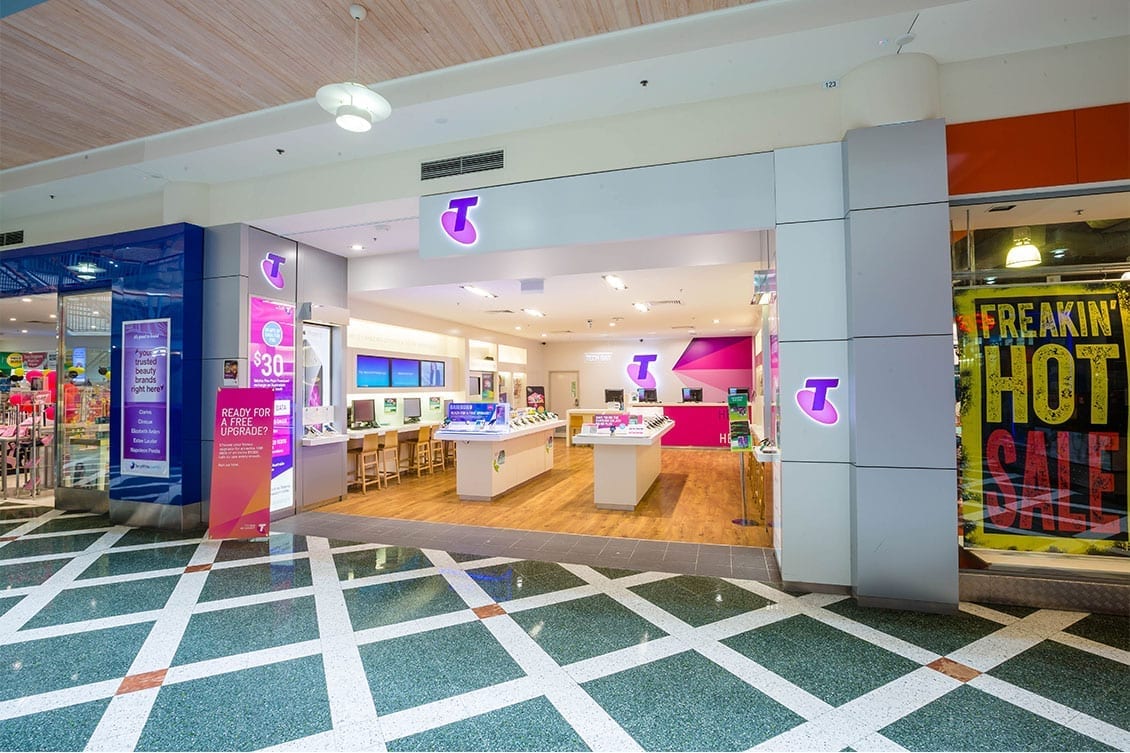
    Australia’s largest operator Telstra has reported a 14.4% decline in net profit for the first half of its financial year to A$1.79 billion ($1.38 billion), as the company dealt with an increasingly competitive market.

    Revenue for the six months ended in December fell 6.4% to A$12.8 billion, with fixed line revenue down 4.7% to A$3.3 billion and mobile revenue falling 8.7% to A$5 billion.

    Telstra added 200,000 new mobile subscribers, including 79,000 postpaid customers. Postpaid ARPU declined 2.6% but is showing signs of stabilizing, the operator said.

    On the fixed line side, Telstra acts as one of numerous retail resellers of services over the national broadband network (NBN). Telstra’s NBN customers grew by 292,000 to 792,000 giving the company a market share – excluding the small number of customers serviced by the NBN’s satellite service – of around 51%.

    Network applications and services revenue meanwhile grew 18% to A$1.5 billion due to higher revenue from cloud services as well as services provided to industry, including Telstra’s share of revenue from NBN commercial works.

    Telstra CEO Andrew Penn said the results indicate that the company performed relatively well in a tightly competitive environment.

    “It is significant that we were able to increase subscriber numbers in mobiles and retail fixed plans despite the increased competition,” he said.

    “We have a clear strategy to differentiate our products through the speed, coverage and reliability of our networks, innovative product design and new customer experiences, including access to media content. We are committed to improve the experience we provide our customers and as announced last year, we are investing up to $3 billion incremental capital expenditure in networks for the future and digitisation of the business.”

  • Profits rises for Yum China Holdings

    Profits rises for Yum China Holdings

    Yum China’s full-year operating profit of US$640 million was up 31 per cent led by margin expansion and restaurant openings.

    Its CEO describes it as a “momentous” year for the group, licensee of Yum! Brands in Mainland China. It has exclusive rights on the mainland to KFC, Pizza Hut and Taco Bell, which opened its first restaurant in China at the end of the year. Yum China also owns the East Dawning and Little Sheep concepts outright.

    Total system sales for the year grew 5 per cent, including growth of 6 per cent at KFC and 3 per cent at Pizza Hut Casual Dining, excluding foreign currency translation (F/X).

    Same-store sales were flat, with an increase of 3 per cent at KFC offset by a decline of 7 per cent at Pizza Hut.

    Yum China opened 575 restaurants during the year, representing 5 per cent growth, taking its total to more than 7500 outlets.

    Currency impact

    While retail tax structure reform helped profit growth, this was negatively impacted to the tune of $36 million by foreign currency translation. Excluding F/X and special items, operating profit grew 37 per cent.

    For its fourth quarter, Yum China’s total system sales grew 4 per cent, including growth of 4 per cent at KFC and 6 per cent at Pizza Hut, excluding F/X.

    Same-store sales were flat, rising 1 per cent at KFC and offset by a 3 per cent decline at Pizza Hut.
    The group opened 302 restaurants during the quarter.

    Foreign currency translation negatively impacted operating profit by $5 million.

    CEO Micky Pant says Yum China became an independent, publicly traded company while simultaneously improving its business performance and investing for future growth.

    “We continue to focus on our long-term growth formula: new unit development, same-store sales growth, and continued restaurant margin improvement. Right now, our top priority is consistently delivering positive same-store sales growth.”

    Digital engagement

    There was a focus on product innovation during the year, as well as restaurant refurbishing and digital engagement with customers.
    Pant says it was a groundbreaking year in digital and delivery.

    “Our loyalty programs have more than 80 million members –  ranked number one in the restaurant industry worldwide in terms of number of members.

    “Total delivery sales reached about $700 million, and we were number one among restaurant operators in terms of online sales in China. Cashless payment accounted for about 30 per cent of our company sales.”
    Pant says this year marks the 30th anniversary of the launch of KFC in China, and he believes most the company’s restaurants in China are yet to be built.

    Members in the loyalty programs grew to more than 60 million for KFC and more than 20 million for Pizza Hut.

    Mobile payments reached about 17 per cent of company sales for the year, while cashless payment methods were used for more than $2 billion in company sales.