Tag: profit

  • H&M reports 21 pc fall in second quarter net profit

    H&M reports 21 pc fall in second quarter net profit

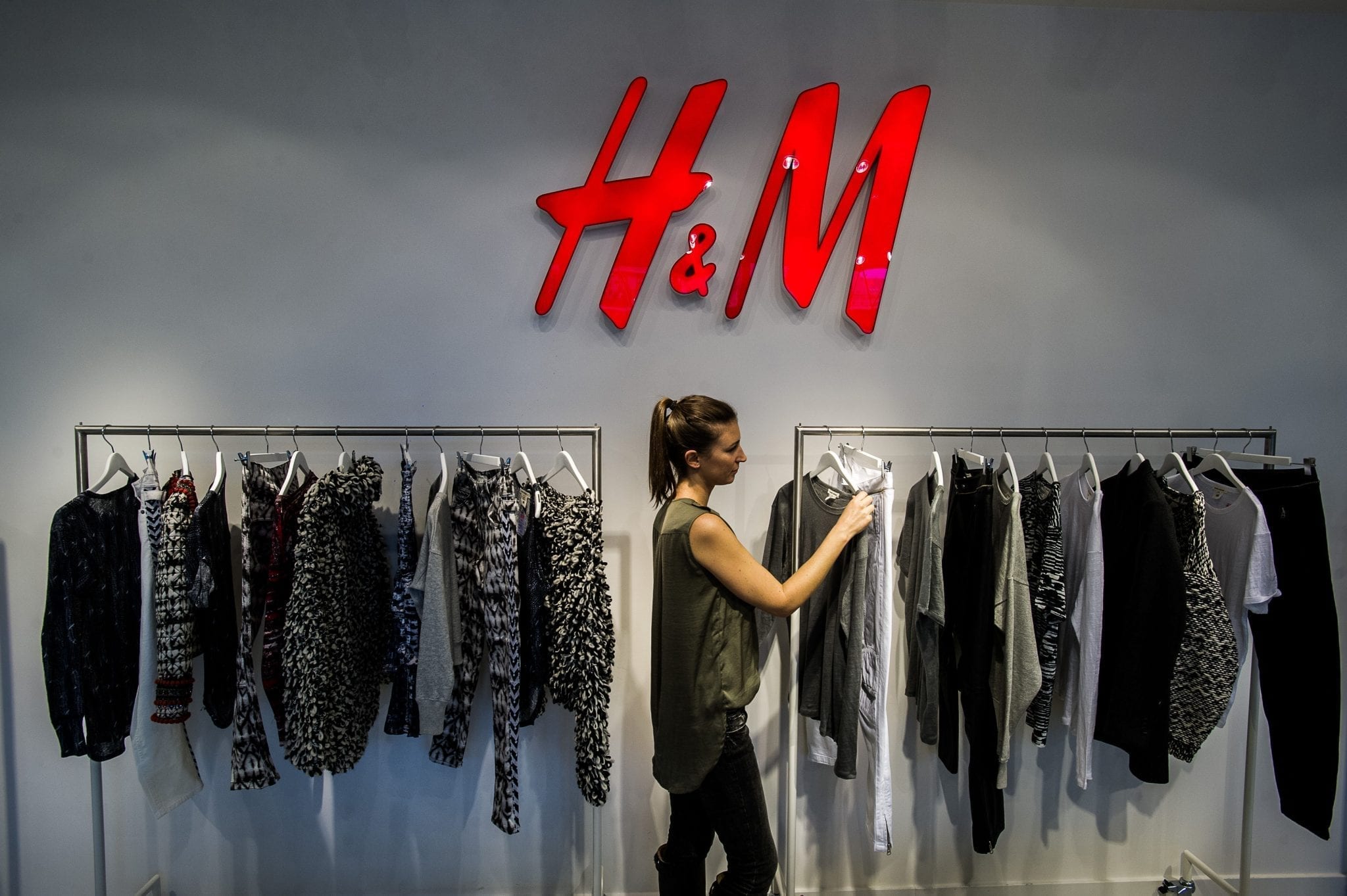
    Hennes & Mauritz AB on Thursday reported a 21 percent fall in second quarter net profit, missing estimates, as the retailer increased clearance sales to shift unsold stock and experienced logistical problems in it shifts to a more efficient supply chain.

    The Swedish fashion retailer said it entered the second quarter carrying too much stock, blaming imbalances in its product ranges, combined with interruptions to its flow of goods in a number of its major sales markets.

    The high inventory level will mean increased markdowns in the third quarter 2018 compared with the same quarter the previous year, it said.

    According to the release, The H&M group is going through a period of transformation to make the company even more customer-driven, efficient and flexible. This includes necessary transitions to new logistics systems that will allow even better availability, speed and transparency. However, sales and profits were temporarily affected by interruptions in connection with such transitions carried out in the second quarter in major markets such as the USA, France, Italy and Belgium.

    According to Karl-Johan Persson, CEO “The rapid transformation of the fashion retail sector continues, and we are in a transitional period that is both exciting and challenging. Challenging because it is complex, extensive and the pace of change is fast. Exciting because we can see positive trends and big potential in connection with our improvement work and investments.”

    Persson further added, “As we signalled previously, it was going to be a tough first half-year. We went into the second quarter carrying too much stock and we still had some imbalances in the H&M assortment – something that we are gradually correcting. As part of our transformation work we are transitioning our logistics systems to make our supply chain even faster, more flexible and more efficient. These transitions are complicated and can result in temporary interruptions, as unfortunately occurred during the second quarter in some of our major sales markets. This negatively impacted sales in the USA, France, Italy and Belgium, as well as online sales in the Nordic region.”

    H&M Home will broaden its product range in the second half of 2018 to include lamps and furniture.

    For 2019 Bosnia-Herzegovina is planned to become a new H&M store market and Mexico a new H&M online market.

    “Yet in a number of markets sales developed positively; in Sweden, Norway, Denmark and Eastern Europe we grew considerably faster than the market. This shows that we are on the right track and that our digital investments and improvement work are starting to have results. Overall, however, total sales for the quarter were not satisfactory, which meant that inventory levels were still too high at the end of the period,” said Persson.

  • Zara owner hits another revenue record

    Zara owner hits another revenue record

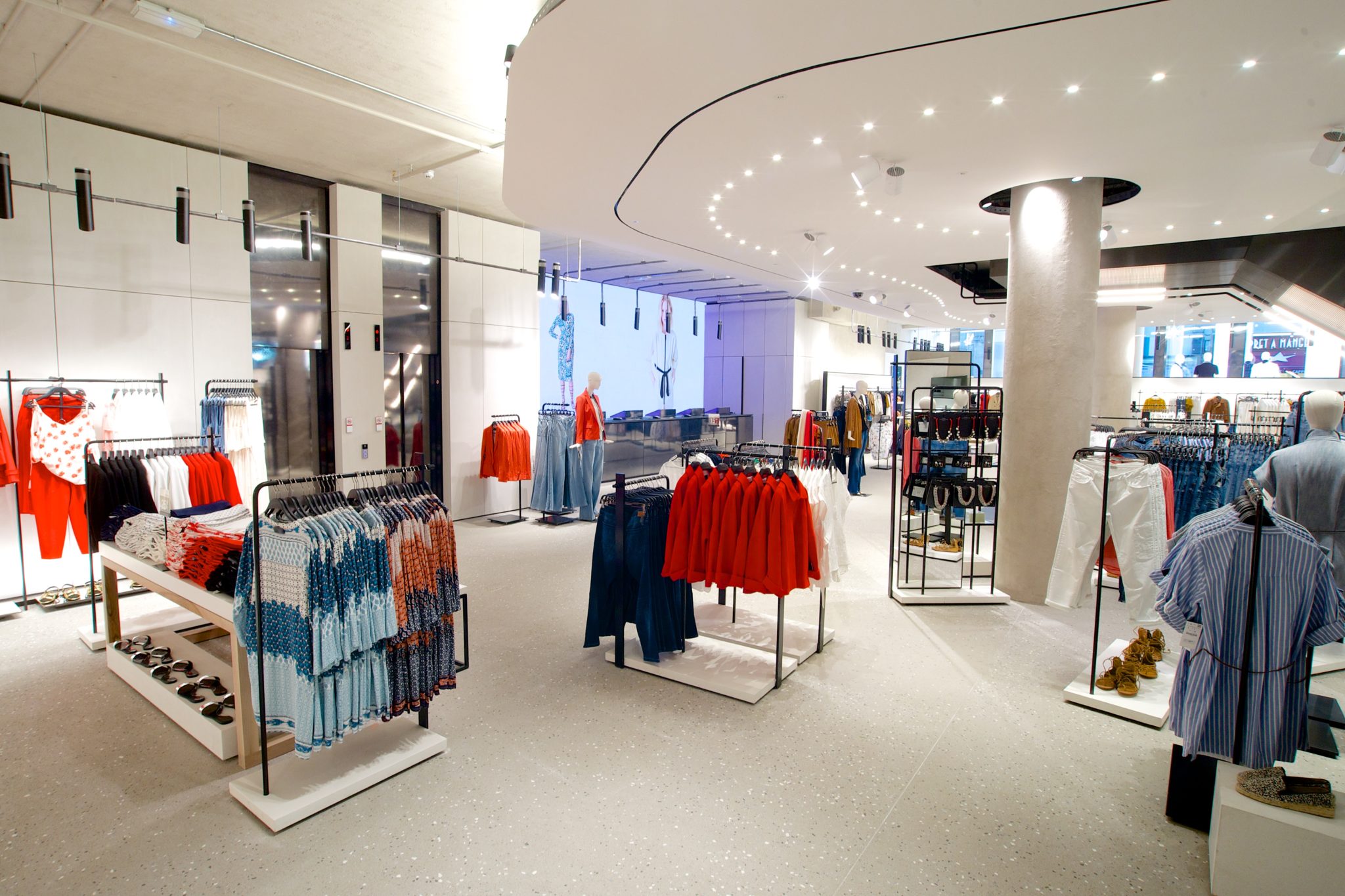
    Inditex Group announced a new first quarter record revenue of €5.7 billion, driven by flagship brand Zara.

    This marks a 2 per cent increase in net sales growth, up from €5.6 billion in the first quarter of 2017, which was underpinned by solid business performance and same-store sales growth across all geographies.

    Gross margin rose to 58.9 per cent, a 3 per cent increase year over year.

    Inditex’s chairman and CEO, Pablo Isla, noted that “the strength of the integrated store and online model, bolstered by continued innovation, is driving solid growth and notable job creation.”

    During this period, the Group continued to push its ‘integrated store model’, with many stores receiving refurbishments and expansions to bring them up to date, while launching online sales in Australia and New Zealand.

    Zara launched its first stores in Buffalo, New York and Murray, Utah in the United States, as well as in Pune, India, while bringing its augmented reality technology, ZaraAR, to 130 flagships globally.

    ZaraAR allows customers to use their phones to view AR models wearing Zara outfits either by holding the app up to a sensor within stores, or over online delivery packaging, offering a chance to easily preview what the clothes look like in motion.

    As a part of its Employee Profitsharing Plan, Inditex distributed €42 million among 88000 employees.

    The plan rewards employees with at least two years service in its stores, manufacturing facilities, logistics platforms, brands and subsidiaries, and commits to pay out 10 per cent of the annual growth in new profit.

    Competitor H&M Group will publish its six-month report for 2018 on 28 June.

  • Pos Malaysia’s Q4 profit nearly triples to RM29m on higher contribution from courier biz

    Pos Malaysia’s Q4 profit nearly triples to RM29m on higher contribution from courier biz

    Pos Malaysia Bhd’s net profit for the fourth quarter ended March 31, 2018 almost tripled to RM29.03 million from RM9.89 million a year ago, mainly due to higher contribution from the courier business coupled with improved cost management.

    Against the same quarter the previous year, its revenue increased 3% to RM653.08 million from RM653.55 million.

    For the full year period, Pos Malaysia’s net profit jumped 13.9% to RM93.25 million from RM81.88 million a year ago, while revenue was up 18.7% to RM2.47 from RM2.08 billion.

    Pos Malaysia the group’s future performance is mainly driven by the continued growth in e-commerce.

    “Technology and e-commerce remains a key platform to spur the growth of small and medium enterprises (SMEs) within the country. As the key player in the e-fulfilment space and with the widest last mile delivery network, the group is a key beneficiary of e-commerce growth in Malaysia. This will also benefit our end-to-end logistics businesses as heightened economic activity should increase the need for our services. Accordingly, we are generally optimistic Pos Malaysia’s prospects remain positive.”

    Pos Malaysia’s share price fell 5 sen or 1.4% to close at RM3.55 on some 197,200 shares done.

  • Amorepacific Q1 net profit plunges 21%

    Amorepacific Q1 net profit plunges 21%

    Amorepacific Corp., South Korea’s leading cosmetics maker, said on its first-quarter net profit declined 20.9 percent from the previous year, due mainly to a sharp drop in the number of Chinese tourists.

    Net income came to 176.7 billion won (US$163 million) in the January-March period, compared with 223.5 billion won tallied for the previous year, the company said in a regulatory filing.

    Operating profit fell 25.5 percent to 235.9 billion won, and sales declined 8.8 percent to 1.43 trillion won during the cited period, it said.

    The company attributed the weak performance to the decrease in inbound tourists from China, which followed the Beijing government’s ban on sales of Korea-bound package tours amid a diplomatic row over the deployment of a U.S. missile system here.

    China has been gradually lifting its travel ban by region, but the effect has yet to be felt by the South Korean retail and tourism industries, according to market sources.

    The combined net income of Amorepacific Group, which includes smaller brands like Innisfree and Etude, reached 216 billion won in the first quarter, also down 18.9 percent from a year ago.

    Total operating profit was down 26.5 percent to 278.1 billion won, and sales decreased 10.3 percent to 1.66 trillion won during the cited period, it said.

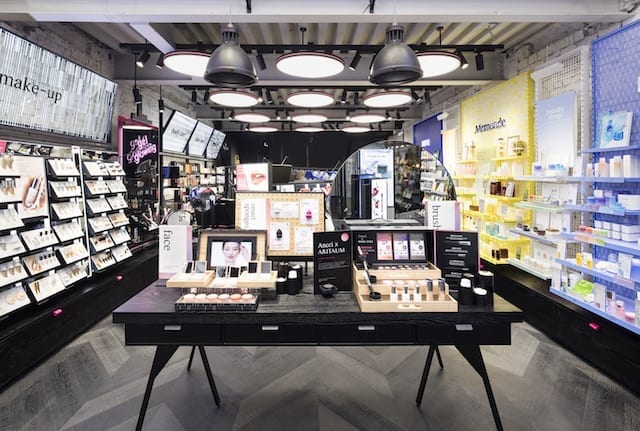
    Amorepacific Corp is steadily pursuing the global market with five global champion brands in order to improve its earnings and become a truly global company.

    Laneige entered the Australian market by being launched in Sephora last March and Mamonde entered the US market in the US ‘ULTA’, and Innisfree and Etude opened their first stores in Japan and the Middle East respectively. The company is also concentrating its efforts on developing new global markets.

    Hera also plans to enter the ASEAN market (Singapore) for the first time in May.

  • Singtel posts record full-year profit

    Singtel posts record full-year profit

    Singtel has reported a record full-year profit of S$5.45 billion ($4.06 billion) for the 12 months ending in March, mostly as a result of the windfall the company received from the NetLink NBN Trust IPO last year.

    Singtel was required to divest 75% of its 100% stake in NetLink NBN Trust, the network company for Singapore’s next-generation national broadband network (NG-NBN), as a condition of the operator winning the tender for the NG-NBN project.

    NetLink NBN Trust completed an IPO that was more than two times oversubscribed in July, providing Singtel with a roughly S$2.3 billion windfall.

    Excluding this impact, underlying profit fell 8% as a result of a lower contribution from regional mobile associate Bharti Airtel and the lower economic interest in NetLink NBN Trust as a result of the divestment.

    Revenue for the year grew 5% to S$17.64 billion, driven by growth in mobile and fixed broadband customer numbers at Singtel’s wholly-owned Australian subsidiary Optus, as well as higher contributions from the group’s Digital Life division.

    Optus’ full-year revenue grew 3% as the company added 384,000 new mobile customers and 225,000 new NBN broadband customers.

    But Singtel’s share of pre-tax earnings from Singtel’s network of regional mobile associates fell 13.2% to S$2.3 billion due in part to the ongoing challenges faced by Bharti Airtel.

    For the current year, Optus is projecting a low single digit growth in consolidated revenue and flat ebitda. Dividends from Singtel’s network of regional associates are meanwhile expected to be around S$1.4 billion.

  • Asia Pacific helps Under Armour to get up

    Asia Pacific helps Under Armour to get up

    US-based sportswear brand Under Armour has unveiled better than expected first quarter revenue growth of 6 per cent to US$1.2 billion, as weakness in its home market was offset by growing momentum overseas.

    Asia Pacific was the strongest individual operating region for the business, with sales increasing by 28 per cent, currency corrected.

    However, Under Armour booked a net loss of $30 million in the first quarter, although excluding $37 million in costs associated with its restructuring plan net income was $1 million.

    North American revenue declined by 1 per cent in currency corrected terms while its international business saw sales increase by 27 per cent, up 19 per cent in currency corrected terms.

    Under Armour chairman and CEO Kevin Plank affirmed the company’s $20-30 million operating income guidance for 2018 on Tuesday in the US.

    “Our first quarter results demonstrate measured progress against our focus on operational excellence and becoming a better company,” Plank said.

    “As we continue to build our global brand by delivering innovative performance products to our athletes, amplifying our story, further strengthening our go-to-market process, and leveraging our systems to create even deeper consumer connections – we remain confident in our ability to deliver on our full year targets.”

    GlobalData Retail MD Neil Saunders said that while there are some positives in the latest result the figures still give the impression that the business has “run out of steam”.

    “Overall revenue looks good enough with a 5.8 per cent increase in sales,” he said.

    “However, all of this comes from newer markets where Under Armour is buying growth through expansion. There is nothing wrong with this strategy, but it comes with costs attached – which means the contribution to the bottom line is less than impressive.”

    Saunders says Under Armour’s poor performance is solely of the brand’s own making.

    “Within North America, we believe that Under Armour’s image is still off-pitch and that its brand strategy remains extremely muddled. Strategically and in terms of its store and distribution footprint, it is clear that Under Armour wants to be a strong lifestyle brand with a wide reach.

    Indeed, recent partnerships, such as the collaboration with rapper A$AP Rocky, suggest a push to appeal to younger demographics more interested in fashion than sports.”

    Saunders says most consumers do not see Under Armour as a lifestyle brand; they see it as a specialist sports performance brand.

    “This limits Under Armour’s ambitions and means that many of the lifestyle initiatives it pursues fall on stony ground. The brand needs to have a much clearer identity, possibility by using sub-brands, before it can gain wider acceptance. Throwing out new products and lines before this clarity is developed is folly.”

    He also believes “the masculine nature of the brand” has made it hard to expand its reach to women.

    “While store design, marketing, and products remain male-focused, Under Armour will continue to struggle with women. This is a lost opportunity as female sports and fitness remain a fast-growth part of the market.”

    He says Under Armour is paying the price for growing too fast and has too broad a set of ambitions.

    “The result is a company that lacks a clear vision or point of view. In today’s crowded marketplace this has made it indistinct and easy to overlook. Until this is remedied, growth will remain problematic.”

  • Thai mall operator profits up 47 percent on tourism boom

    Thai mall operator profits up 47 percent on tourism boom

    Thai retail property developer Central Pattana Pcl (CPN) reported net profit of 13.6 billion baht ($432.3 million) for its 2017 fiscal year on Wednesday, up 47 percent from a year earlier.

    CPN beat estimates of 12.1 billion baht based on a survey of 11 analysts.

    CPN, which operates 32 shopping malls in Thailand, has been one of the main beneficiaries of the country’s tourism boom, led by Chinese arrivals.

    More direct flights from China, a visa fee discount and waiver incentives led to strong inbound tourism, CPN said in a statement.

    Thailand received 35 million tourists in 2017 and expects 37.55 million arrivals this year.

    Revenue from rent and services were up 3.2 percent from the year earlier, reaching 26 billion baht.

    Average occupancy rates in its retail properties stood at 92 percent, lower than 94 percent a year earlier due to major renovations.

    CPN, part of Central Group, owned by the billionaire Chirativat family, plans a compound annual growth rate of at least 13 percent until 2022 focusing on mixed-use and residential developments, increasing rental rates and new malls in Southeast Asia.

    Hotel revenue grew 10 percent to 1.1 billion baht, with an average occupancy rate of 93 percent, up from 83 percent a year ago, due to a higher number of tourists, it said.

    CPN expects its new mall on the tourist island of Phuket to open by mid-year and another mall in Malaysia to open by year-end.

  • SmarTone 1H17 profit falls 17%

    SmarTone 1H17 profit falls 17%

    Hong Kong’s SmarTone has reported a 17% year-on-year decline in net profit for the last six months of 2017, due largely to intense competition, increased spectrum expenses and lower handset sales.

    Profit for the six-month period fell to HK$328 million ($41.9 million), with revenue declining 23.5% to HK$4.1 billion.

    Service revenue fell 6% year-on-year but improved 1% sequentially to HK$2.52 billion, as a result of ongoing migration to SIM only plans.

    This and lengthening handset replacement cycles led to a steep 41% year-on-year decline in handset and accessory sales to HK$1.58 billion, although this was an 85% improvement on the previous half-year period.

    Net of handset subsidy amortisation, postpaid service revenue was flat year on year and increased 3% from 1H17.

    SmarTone increased its Hong Kong customer base by 7% over the course of the six-month period to 2.2 million, while postpaid customer churn fell to a low of 0.8%. But mobile postpaid ARPU fell 13% year-on-year to HK$262.

    During a presentation announcing the company’s results, SmarTone CEO Anna Yip detailed plans to roll out licensed assisted access (LAA) five component carrier aggregation (5CC CA) and improve its network speed to over 1Gbps in mid-2018, and deploy FDD Massive MIMO in 2H18.

    But she warned that the challenges facing Hong Kong’s mobile industry are expected to continue, including ongoing price pressure from the intense competitive environment and ongoing declines in voice roaming revenues.

  • Singtel Q3 profit falls 9%

    Singtel Q3 profit falls 9%

    Singtel has reported a 9% decline in profit for its fiscal third quarter to S$890 million ($671.7 million) as a result of declining voice revenues, higher costs and lower earnings from the operator’s regional mobile associates.

    Revenue for the December quarter grew 4% to S$4.6 billion as a result of higher earnings from Singtel’s wholly-owned Australian subsidiary Optus and strong contributions from the group’s digital businesses.

    Optus reported an 8% increase in revenue on the back of strong postpaid mobile and NBN customer growth. During the quarter, mobile revenue grew 4% and 125,000 new postpaid customers were added. Optus’ 4G population coverage meanwhile reached 96.6%.

    But Singapore consumer revenues fell 6% due to ongoing voice to data substitution and lower equipment revenues, partially offset by solid mobile data growth.

    Group enterprise revenue also fell 4% for the quarter, while Singtel’s Group Digital Life revenues more than doubled.

    Pre-tax earnings from Singtel’s network of regional mobile associates meanwhile fell 17.8% to S$523 million, largely as a result of the lower contribution from India’s Bharti Airtel due to the mobile termination rate cut and ongoing intense competition.

    Earnings also fell at Indonesia’s Telkomsel as a result of growing competition and at the Philippines’ Globe Telecom due to higher network investment related costs, but profit contributions from Thailand’s AIS rose due to solid revenue growth.

    “We see our investments in network infrastructure and spectrum as critical to our future growth and longer term returns in this digital world. Already, our transformation strategy is delivering with digital and ICT services accounting for 23% of our revenue this quarter,” Singtel group CEO Chua Sock Koong said.

    “Despite the current business headwinds, our regional associates’ markets remain attractive with strong mobile data growth. The ongoing consolidation in India will also pave the way for a healthier industry. We believe our associates’ investments in networks and spectrum, strategic partnerships and focus on innovation will pay off.”

    Singtel recently arranged to pay $412.6 million to indirectly increase its stake in Bharti Airtel to 39.5%.

  • H&M hoping to recover profits from its Tmall launching

    H&M hoping to recover profits from its Tmall launching

    Stung by a profit slump, the H&M group is pinning its hopes on China by launching a store on Alibaba’s Tmall next month.

    As well, the Swedish fast-fashion retailer is targeting India, Saudi Arabia and the UAE with new digital stores this year.

    Releasing its full-year report yesterday, H&M admits it has been struggling to keep pace with evolving shopping habits that have depressed sales in its physical stores.

    Sales grew 4 per cent last year but profit after taxes slumped 13 per cent, with CEO Karl-Johan Persson saying the fashion industry is “changing fast”.

    “At the heart of the transformation is digitalisation, and it is driving the need to transform and rethink faster and faster,” he says.

    With physical stores in 69 markets, H&M has an online presence in 43.

    Full-year global sales (to November 30) including VAT increased by 4 per cent to SEK231 billion (US$29 billion). This was a 3 per cent rise in local currencies. Sales excluding VAT reached SEK200 billion.

    Gross profit increased to SEK108 billion, corresponding to a gross margin of 54 per cent, down from 55.2 per cent the previous year.

    Profit after financial items amounted to SEK20.8 billion, down from SEK24 billion. The group’s profit after tax amounted to SEK16 billion, down from SEK18.6 billion.

    Final-quarter fall

    For the fourth quarter, H&M group sales including VAT were down 4 per cent to SEK58.4 billion (2 per cent in local currencies). Sales excluding VAT fell from SEK52.7 billion to SEK50.4 billion.

    Gross profit fell to SEK27.9 billion from SEK30 billion, corresponding to a gross margin of 55.4 per cent (57 per cent). Profit after financial items amounted to SEK4.8 billion, down from SEK7.4 billion.

    Profit after tax was SEK3.9 billion, down from SEK5.9 billion.

    Weak store sales led to increased markdowns and handling costs, impacting the quarter’s results.

    During the year H&M opened 479 stores (497 the previous year) and closed 91 (70), resulting in a net addition of 388 outlets. Eight online markets were launched and the brand entered five new markets. It ended the year with 69 sales markets, 43 of them including an online presence.

    This year the group plans to add about 390 stores to its network and close about 170, a net addition of about 220 stores. On Tmall it will have both H&M and H&M Home.

    At home in Sweden it will also introduce the Afound brand, an off-price marketplace offering products from fashion and lifestyle brands.

  • Ericsson rings up huge losses in 2017

    Ericsson rings up huge losses in 2017

    Swedish telecoms giant Ericsson said Wednesday that it rang up huge losses last year as network competition, restructuring costs and investment in lightning-fast 5G technology pushed it deeply into the red.

    The news sent Ericsson’s share price tumbling nearly nine percent on the Stockholm stock exchange in early trading, in a flat market.

    Ericsson said in a statement it booked net loss of 35.1 billion kronor (3.6 billion euros, US$4.4 billion) in 2017, compared with profit of 1.9 billion kronor the year before.

    The group also booked an underlying or operating loss of 38.1 billion kronor last year after profit of 6.3 billion kronor in 2016, while revenues dropped by 10% to 201.3 billion kronor, the statement said.

    “The focus during 2017 has been on reshaping overall strategy and on improving company structure and performance,” explained chief executive Borje Ekholm.

    “2017 was also the year when 5G went from vision to real business opportunities while we at the same time had good traction for our 4G portfolio,” he continued.

    “We are fully committed to our plans and our targets and expect to see tangible results of our turnaround in 2018.”

    Below target

    In the fourth quarter alone, Ericsson’s net loss widened to 18.9 billion kronor from a loss of 1.6 billion kronor a year earlier, while sales slumped by 12% to 57.2 billion kronor.

    “The fourth quarter was in line with our overall expectation, with gradual improving performance in networks and continued significant losses in digital services. The result is however far below our long-term ambition,” CEO Ekholm said.

    Earlier this month, Ericsson had announced that writedowns of 14.2 billion kronor would be booked in the fourth quarter, originating mainly from goodwill from investments made a decade ago.

    Investors fled after the earnings report was published.

    “When I look at the order book there’s not a lot of meat on the bone in there … I’m surprised the (share price) fall is so steep, but it’s an automated-traded share,” Jonas Olavi of Alfred Berg investment bank said.

    “Ericsson needs to turn over every rock in the search for new sources of income,” Mikael Tornwall, telecoms expert for daily Svenska Dagbladet, said.

    Ericsson said it had reduced the number of its employees and external workforce by 10,000 during the fourth quarter, part of its restructuring plan aimed at cost savings of 10 billion kronor by mid-2018.

  • Vietjet 2017 pre-tax profit reaches approximately USD209 million

    Vietjet 2017 pre-tax profit reaches approximately USD209 million

    Vietjet Aviation Joint Stock Company (HOSE code: VJC) announced its consolidated pre-audited financial statement report for 2017 with all indicators growing strongly compared with 2016 and exceeding the plan approved at the company’s Annual Shareholder Meeting.

    Specifically, total net revenue in 2017 reached nearly VND42,258 billion (USD1.86 billion), an increase of 53.7% year on year and exceeded the annual plan by 0.6%. Pre-tax profit stood at approximately VND4,755 billion (USD209 million), up 75.9% year on year and achieved a 126% increase over its yearly plan. After-tax profit of parent company’s shareholders reached VND4,527 billion (USD199 million), equivalent to VND10,065 (USD0.44) earning per share (EPS).

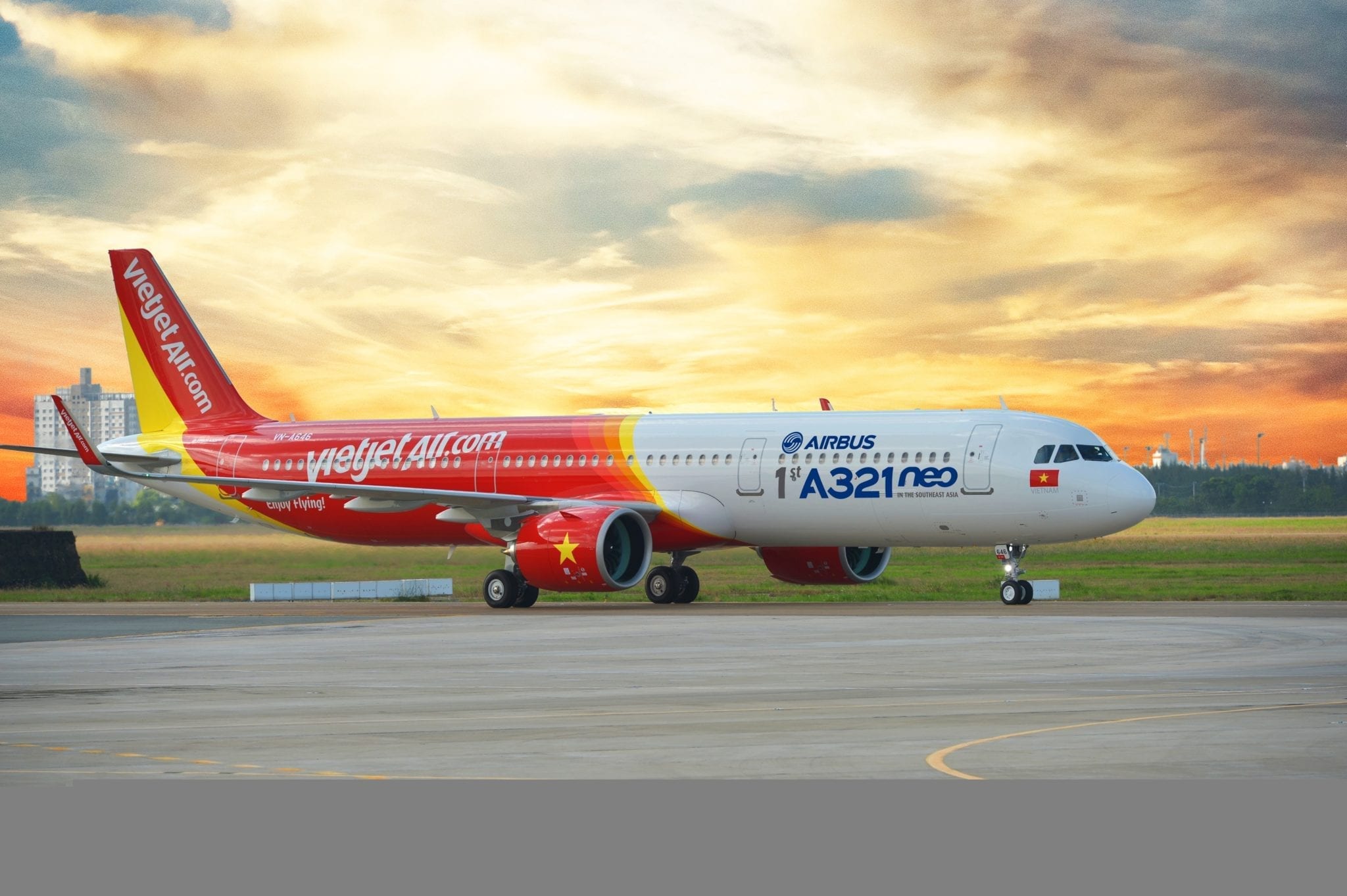
    Thanks to the expansion of its fleet by 17 aircraft in 2017 (including a modern A321 NEO – the first Airbus A321 NEO in Southeast Asia), Vietjet opened 22 new routes (one domestic and 21 international ones), increased its total operating routes to 82, including 38 domestic and 44 international ones. Vietjet carried over 17.11 million passengers in 2017. Air transportation revenue of the year was VND22,577 billion (USD995 million), up 41.8% year on year and exceeded the yearly plan by 4.6%.

    Up to December 31st, 2017, its total fleet consisted of 51 Airbus A320 and A321 aircraft. Vietjet received 39 aircraft out of the total of 219 aircraft ordered from Airbus and Boeing. On time performance in 2017 was 85.59%.

    Cost per available seat kilometers (CASK) excluding fuel decreased to 2.25 US cent, reduced by 7.3% year on year and at the lowest in the world due to the efficient cost control in 2017. CASK including fuel decreased by 2.27% to 3.79 US cent.

    In 2017, Vietjet paid 10% cash dividend, 40% share dividend for 2016 and advanced 20% cash dividend payment for 2017. With its positive business results, Vietjet has increased its 2017 dividend payment from 50% to 60% and

  • TAS Offshore posts RM1.56 million net loss in Q2

    TAS Offshore posts RM1.56 million net loss in Q2

    Shipbuilding firm TAS Offshore Bhd swung to the red registering a net loss of RM1.56 million for the second quarter ended November 30, 2017 against a net profit of RM489,000 in the previous corresponding period, due to unrealised forex losses as a result of the strengthening ringgit.

    Revenue however, jumped three times from RM2.92 million to RM11.71 million on progressive revenue recognition on shipbuilding contracts.

    TAS Offshore told Bursa Malaysia that despite signs of demand and supply finally finding a balance, the group will be cautious in its operation since the market is still uncertain due to the US shale oil industry.

    “However, in the long term, we envisage the oil price outlook to be positive due to the increase in demand for energy when industrial and development activities increase in tandem with the population growth and the demand for offshore support vessels will return.”

    For the first half of the year, TAS Offshore, however, reported a net profit of RM673,000 versus a net loss of RM642,000 in the same period a year ago, while revenue leaped over three fold from RM5.17 million to RM22.14 million.

    The stock closed unchanged 33.5 sen with some 147,000 shares changing hands.

  • Sa Sa to open more stores after getting confidence

    Sa Sa to open more stores after getting confidence

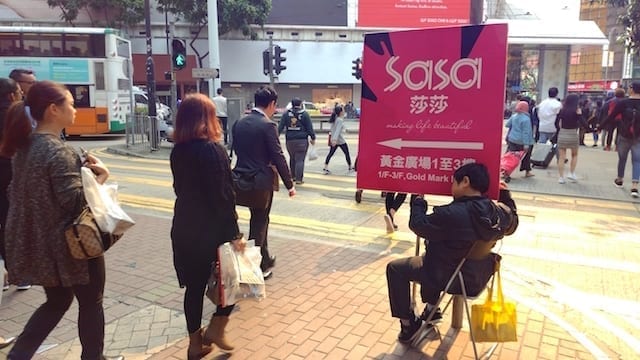
    Skincare and cosmetics retailer Sa Sa International Holdings Ltd on Thursday posted a 14.5 percent rise in first-half net profit as consumer sentiment and mainland tourist arrivals improved.

    The Hong Kong-based retail chain operator’s net profit rose to HK$109.9 million ($14.1 million) for the six months ended in September from HK$96 million a year earlier. Analysts were expecting HK$118 million, according to Thomson Reuters SmartEstimate.

    Revenue climbed to HK$3.66 billion from HK$3.60 billion a year earlier.

    “We aim to capitalise on weakness in the rental cycle to establish more strategic locations to improve our brand exposure and stimulate sales,” Chairman Simon Kwok said in a filing to the Hong Kong bourse.

    Retail sales in Hong Kong and Macau rose 2.2 percent, while gross profit margin improved to 42.2 percent from 41.4 percent. The company operated a network of 283 stores and counters as of end-September, unchanged from the year-ago period.

    Sa Sa had earlier said that for the July-September quarter its retail and wholesale turnover rose 1.1 percent year-on-year, narrowing from a 2.1 percent growth in the previous quarter.

    In its home base of Hong Kong, retail sales grew in September at the fastest year-on-year pace in more than 30 months, government data showed, as increasing numbers of mainland visitors helped boost spending, particularly on watches and jewellery.

    Benefiting from improved consumer sentiment, China’s top jeweller Chow Tai Fook Jewellery on Tuesday posted a 46 percent profit rise in the first half and said it aimed to continue expanding in mainland China in the second.

    Sa Sa shares rose 2.5 percent on Thursday prior to the results announcement, outpacing a 0.1 percent gain in the benchmark index.

  • Shiseido Japan and China sales jump, despite Q3 net loss

    Shiseido Japan and China sales jump, despite Q3 net loss

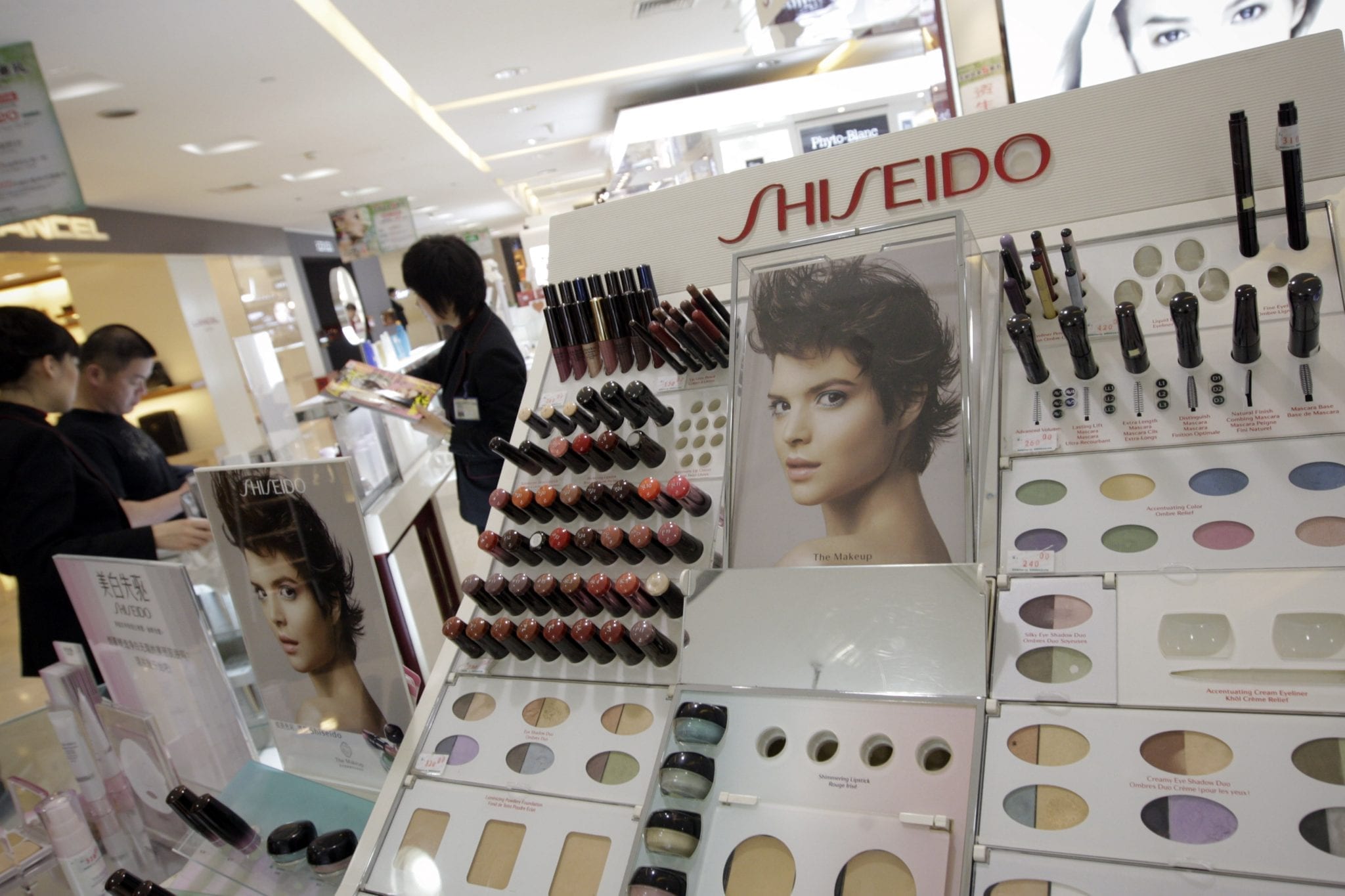
    Shiseido published a third quarter net loss, despite notable growth for the first nine months of 2017, pushed on by Asia revenues, particularly in Japan and China.

    The Japanese cosmetics group said combined turnover over the nine months rose 17.4% to 731.2 billion yen, close to 6 billion euros, according to a press release.

    However, depreciation of assets related to its struggling American subsidiary Bare Escentuals pushed Shiseido into a net loss of 17 billion yen over the nine months, compared to a net profit of 37.2 billion yen the year before,

    For the same period, operating profit jumped 82.4% to 70.7 billion yen over nine months (567 million euros), highlighting the US subsidiary sale’s negative impact on profits.

    Japan remained its strongest market, accounting for 44% of sales and revenues surged in China – which makes up 14% of total sales –as well as the rest of Asia, which continued to grow at a constant rate, said the press release.

    Conversely, European growth remained weak and sales slowed in the Americas, making up13.5% of total turnover.

    Looking ahead, Shiseido is predicting a modest annual net improvement of 5 billion yen (38 million euros).

    Earlier in the month, Shiseido relinquished firm Zotos— its Professional business division in North America to consumer goods firm Henkel for $485 million, saying at the time it plans to hone in on Asia’s professional market.

    Shiseido said in a press release the group would use the funds gained from the Zotos sales “to further pursue its strategic objectives of continuing to nurture its Prestige brands, reinforcing production capability and other activities.”

    Earlier in 2017, Shiseido appointed Nathalie Broussard to the newly created post of Scientific Communications Director EMEA, with the mission of bolstering relationships with the science and technology community in Europe, the Middle East and Africa.