Retail News CRM

Tag: Qualcomm

  • Qualcomm and Iridium end Snapdragon Satellite because of one key factor

    Introduced this past January, Qualcomm and Iridium surprised the mobile industry at the end of last week by announcing the end of Snapdragon Satellite without having one Android phone manufacturer sign on the dotted line. Snapdragon Satellite was expected to be used by Android manufacturers as a way to match the iPhone 14 and iPhone 15’s Emergency SOS via Satellite feature.
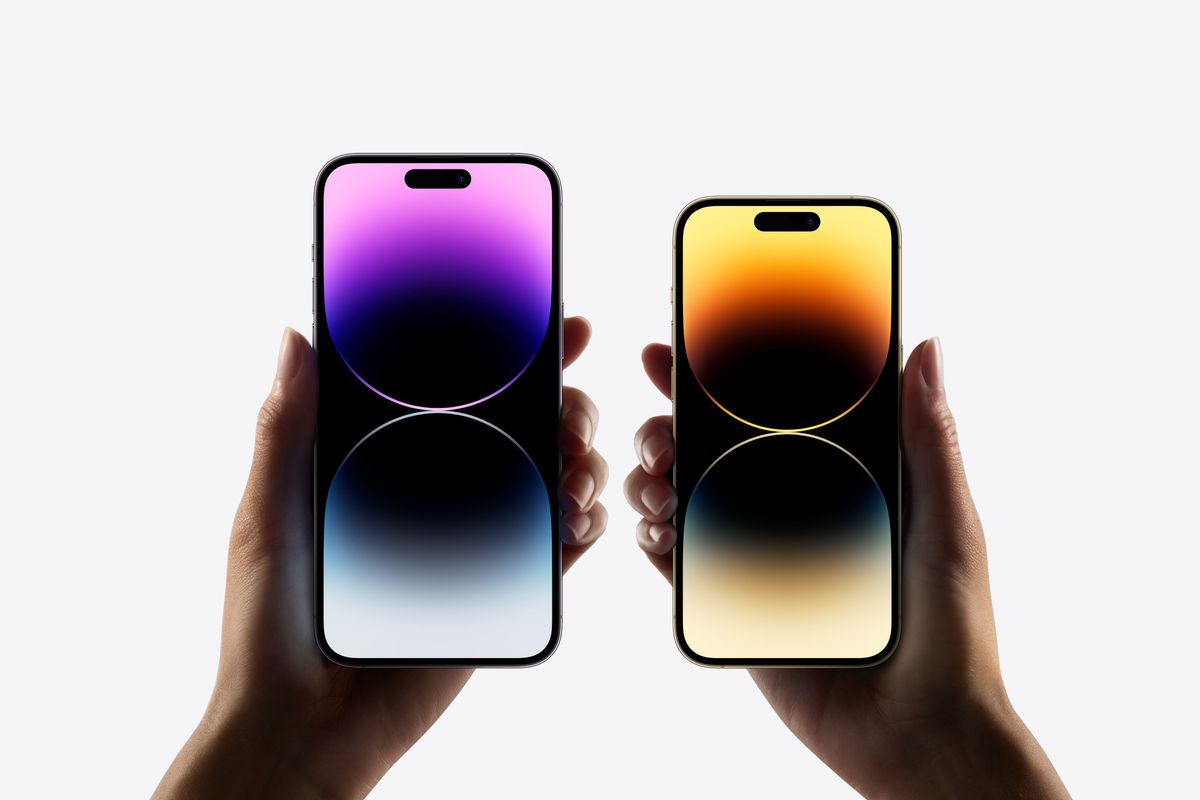
    Announced last year one day after Huawei unveiled a similar feature for its Mate 50 series, Emergency SOS via Satellite allows someone with a compatible iPhone model to report an emergency even in areas where there is no cellular connectivity. The iPhone screen helps show the user where to position the device to connect with a satellite; information about the emergency is texted to emergency services who dispatch first responders. The feature has already been credited with saving some lives.
    Snapdragon Satellite was set to work with Iridum’s satellite constellation and both Qualcomm and Iridium have announced the end of their partnership starting on December 3rd. This action effectively ends Snapdragon Satellite, at least for now. In its press release, Iridium notes that the decision to end the partnership is due to one huge factor: no business. As the satellite firm wrote, “The companies successfully developed and demonstrated the technology; however, notwithstanding this technical success, smartphone manufacturers have not included the technology in their devices.”

    Where this leaves Samsung is unclear. Last month, John Yong-In Park, head of Samsung Electronics SLSI Business Division, said during the 2023 Semiconductor Expo (SEDEX) keynote that 2024 Samsung Galaxy phones will offer satellite connectivity. He did not mention any specific models, but it was believed that the Galaxy S24 line might be Samsung’s first phones to offer emergency satellite connectivity.

    Last February, chipmaker MediaTek announced its MT6825 chipset that offers satellite connectivity for Android smartphones through Bullitt’s Satellite Connect platform. The chipset supports two-way satellite messaging, location sharing, and emergency SOS. Last year, T-Mobile announced that it would team up with Elon Musk’s Starlink to cover areas with no cellular coverage with satellite connectivity allowing users to send and receive SMS and MMS messages.
    Iridium CEO Iridium Matt Desch, talking about the end of his firm’s partnership with Qualcomm, said, “While I’m disappointed that this partnership didn’t bear immediate fruit, we believe the direction of the industry is clear toward increased satellite connectivity in consumer devices. Led by Apple today, MNOs and device manufacturers still plan, over time, to provide their customers with expanded coverage and new satellite-based features, and our global coverage and regulatory certainty make us well-suited to be a key player in this emerging market. User experience will be critical to their success, and we’ve proven that we can provide a reliable, global capability to mobile users.”
    Qualcomm also commented by stating that the lack of Snapdragon Satellite to sign a deal with any Android manufacturers “indicated a preference towards standards-based solutions” to be used to support smartphone-to-satellite connectivity. “We expect to continue to collaborate with Iridium on standards-based solutions while discontinuing efforts on the proprietary solution that was introduced earlier this year,” Qualcomm said.
    With a standards-based solution, several companies could create the technology to allow Android handsets to offer emergency satellite connectivity.
    As we noted earlier in the story, Huawei last year became the first phone manufacturer to offer satellite connectivity for emergencies and beat out Apple by one day. This year, the new Mate 60 line reportedly offers users the opportunity to make satellite calls using the new flagship phones. This could be considered an improvement over the technology used by Apple, which is limited to text-based communications.
  • Rumor in China says the U.S. will allow Qualcomm to ship 5G chips to Huawei

    Rumor in China says the U.S. will allow Qualcomm to ship 5G chips to Huawei

    Huawei consumer chief Yu Chengdong (you might know him by his Americanized name of Richard Yu) denies that the company is getting access to 5G Snapdragon chips. He calls reports that the U.S. is easing chip restrictions on Huawei inaccurate which means that unless the manufacturer releases some official news, the upcoming Mate 60 line will still be forced to use a Snapdragon chipset tweaked to work with 4G and not 5G.
    Could Huawei regain the ability to use 5G chipsets on its phones? In 2020, exactly one year to the day that the U.S. placed the company on the Entity List preventing it from accessing its U.S. supply chain, the U.S. expanded its export rules. Chip foundries using American technology to manufacture chips were not allowed to send cutting-edge silicon to Huawei. With its recent flagship models, Huawei has used Qualcomm’s Snapdragon chips tweaked so they do not work with 5G signals.
    For example, last year’s Mate 50 line and this year’s P60 series were powered by the Snapdragon 8+ Gen 1 although to receive 5G signals, users could purchase a specific case that supported those signals. But this all could be changing according to Huawei Central. Industry sources are saying that the U.S. has loosened its export rules to allow Qualcomm to ship 5G chips to Huawei.
    But it is all speculation until there is an official announcement from the U.S. or Huawei. Still, back in January, Qualcomm’s President, of Technology Licensing (QTL) & Global Affairs, Alex Rogers, said that the U.S. hasn’t stopped Qualcomm from selling chips to Huawei. Rogers stated, “So I don’t think it’s fair to characterize it as the latest restrictions on Huawei. What we’ve seen in our news reports the effect that Commerce is considering not issuing new licenses outweighs. And we haven’t heard anything from Commerce itself” (italics added).
    Huawei released an amazing phone last year in the Mate 50 Pro, and being limited to 4G connectivity (unless you bought the 5G case) didn’t seem to hinder sales inside China where long lines and sellouts greeted the device. Now back to its old schedule of releasing two flagship models a year (the photography-focused P series is launched in the first quarter followed by the technologically advanced Mate series in the fourth quarter), the Mate 60 line is expected to be released later in 2023.
    If the U.S. does allow Huawei to use 5G chips for the Mate 60 series, the manufacturer’s domestic rivals might sweat a little. After all, China is still the largest smartphone market in the world, and after showing that it can still make solid flagship phones even with U.S. restrictions, having one of those restrictions eased will only make Huawei more dangerous in its home market.
  • Qualcomm uses innovation to break through limits

    Qualcomm uses innovation to break through limits

    Researching and developing technologies, doing things no one has thought of is the focus of Qualcomm’s innovation strategy, according to Dr. Tran My An, Vice President of Engineering.

  • Qualcomm unveils Snapdragon AR2 Gen 1 Platform for headsets and smart glasses

    Qualcomm unveils Snapdragon AR2 Gen 1 Platform for headsets and smart glasses

    Yesterday Qualcomm kicked off the 2022 Snapdragon Summit by introducing the next generation of its top-of-the-line Application Processor (AP), the Snapdragon 8 Gen 2. This chip will be inside devices available to consumers by the end of this year. Today, the San Diego-based chip designer unveiled the Snapdragon AR2 Gen 1 Platform designed to deliver augmented reality (AR) for smart glasses and other head-worn gear.

    The new chip is part of Qualcomm’s Extended Reality (XR) offerings. Qualcomm says that the Snapdragon AR2 Gen 1 “delivers groundbreaking AR technology to unlock a new generation of sleek, highly capable glasses. The Company built Snapdragon AR2 from the ground up to revolutionize the head-worn glass form factor and usher in a new era of spatial computing experiences for the real-world/metaverse mix.

    Augmented reality is a technology that places computer-generated images (CGI) on top of the user’s real-world view of the world. A good example is the Live View AR feature available for Google Maps for those walking to a destination. The phone’s rear camera provides the user with a real-time image of what is in front of him while CGI images of arrows will appear over the real-time image to help guide and navigate the user to his destination.
    The main processor on the Snapdragon AR2 Gen 1 takes up less space on the printed circuit board while still improving AR performance by 2.5 times. The chip also uses 50% less power. As Qualcomm puts it, “This enables rich AR experiences on glasses that can be comfortably worn for extended periods of time and meet the demands of both consumers and enterprise use cases.”
    With the platform, latency-sensitive data such as video streaming, surgery, multi-player video games, and computerized stock trading, will be sent directly to the headset. Other, more complex data requirements will be off-loaded to a Snapdragon-powered smartphone, PC, or another kind of compatible host device.
    The AR processor is designed for headsets with multiple cameras and will, in fact, support up to nine concurrent cameras. The platform comprises a multi-chip architecture, which is important when dealing with the limited space available with smart glasses. There is an AR processor, an AR co-processor, and a connectivity platform.
    Hugo Swart, vice president of XR product management, Qualcomm Technologies, Inc. says, “We built Snapdragon AR2 to address the unique challenges of head-worn AR and provide industry-leading processing, AI, and connectivity that can fit inside a stylish form factor. With the technical and physical requirements for VR/MR and AR diverging, Snapdragon AR2 represents another metaverse-defining platform in our XR portfolio to help our OEM partners revolutionize AR glasses.”
    The AR co-processor will handle important tasks such as eye-tracking and can also use iris authentication not only to verify identity but also to render certain images only when the user is looking at a certain part of the display. This could save on power consumption.

    The system also uses the FastConnect 7800 connectivity platform allowing it to utilize Wi-Fi 7. This will allow latency between AR glasses and the host device (including a smartphone, if that is the case) to be less than 2 milliseconds (ms).

    The Snapdragon AR2 Gen 1 will be built on a 4nm process node (Qualcomm will not reveal which foundry is producing the chip) and Qualcomm is in “various stages of development” with manufacturers interested in the platform “including Lenovo, LG, Nreal, OPPO, Pico, QONOQ, Rokid, Sharp, TCL,Vuzix and Xiaomi.
    Rubén Caballero, Corporate Vice President of Mixed Reality, Devices & Technology at Microsoft stated that “Microsoft worked closely with Qualcomm on the platform requirements for Snapdragon AR2 to help define the purpose-built, foundational technologies to unlock new possibilities in AR experiences. Snapdragon AR2 platform innovations will revolutionize head-worn AR devices that will transform immersive productivity and collaboration and we look forward to seeing the innovation that Qualcomm and its partners will bring to market.”
  • Qualcomm and Apple team up to allow iPhone 14 line to reach for the sky

    Qualcomm and Apple team up to allow iPhone 14 line to reach for the sky

    Perhaps not as exciting to the average consumer as the Dynamic Island appears to be, Apple added satellite connectivity to all four iPhone 14 models. The feature will allow users to send out emergency messages even when they are out of cellular or Wi-Fi range. While this writer is guilty of this too, perhaps we should be more excited about satellite connectivity than how Apple made the notch useful.

    So what chips did Apple add to the iPhone 14 series to make satellite connectivity possible? Citing a breakdown of the iPhone 14 Pro Max conducted by iFixit, and a statement from Apple, Reuters revealed that the Qualcomm Snapdragon X65 modem chip does double duty on the phones. Not only does the chip help iPhone 14 series users connect with 5G signals, but it also works with band n53. The latter is the radio band used by Globalstar satellites.

    Earlier this year, in a deal typical of Apple, the company agreed to take up to 85% of Globalstar’s satellite transmission capacity for the iPhone 14’s emergency satellite messaging system.
    Yesterday, Apple said that the new models also sport proprietary Apple hardware and software to help the satellite messaging feature do its job. “iPhone 14 includes custom radio frequency components, and new software designed entirely by Apple, that together enables Emergency SOS via satellite on new iPhone 14 models,” the tech giant said.

    To use the new feature, hold your iPhone 14 unit as you would normally hold the device making sure it isn’t in a pocket or backpack. You don’t have to hold it up to the sky. Make sure that you are outdoors with a clear view of the sky and the horizon. Apple wants you to watch out for trees since those with “light foliage” can slow down the signals and those with “dense foliage” can block it completely.

    Also capable of blocking satellite signals are hills or mountains, canyons, and tall structures. And if you need to turn left or right, directions on your iPhone’s screen will tell you what to do. Once you’re connected to a satellite, your handset will maintain this connection even if the screen is locked.
    Apple suggests that in an emergency, you should first try to call for help. If you can’t get a call to go through, tap on Emergency Text via Satellite. You’ll be asked some questions about the emergency. Your message is sent to an emergency dispatch center where the appropriate help is ordered. Emergency SOS via Satellite will launch in November following an update to iOS 16.
    Interestingly, Apple was planning to design its own modem chip and use it in 80% of the 2023 iPhone handsets. But Qualcomm put the kibosh on these plans thanks to a couple of its patents. So as we wrote back in July, “Qualcomm will now supply Apple with 100% of the 5G modems for the 2023 iPhone 15 line leaving Apple with a bad taste in its mouth.”
    Keep in mind that Apple spent $1 billion, a large sum for Apple to spend on a single acquisition, to purchase Intel’s smartphone modem business. Additionally, after Apple reached a settlement with Qualcomm allowing all legal action between the pair to be dropped, it was assumed that Apple would continue to use Qualcomm’s Snapdragon 5G modem chips for a few years while designing its in-house component.
    This plan seemed all ready to go into action until Apple reportedly ran into a couple of Qualcomm patents that block the company from completing its journey. Apple even asked the Supreme Court to hear its argument on why these two patents should be canceled, but SCOTUS denied Apple’s request.
    Right now, Qualcomm is sitting in the catbird’s seat. Unless Apple can discover a way around the aforementioned patents, Qualcomm will continue to supply Apple with 5G modems for the iPhone for the foreseeable future. It’s widely believed that Qualcomm delivers the best 5G modems for smartphones.
  • Samsung rumored to begin mass production of 3nm chips next week

    Samsung rumored to begin mass production of 3nm chips next week

    Right now there are only two independent foundries that are able to manufacture cutting-edge chips. The companies are TSMC and Samsung Foundry. Independent foundries take chip designs created by other firms and build the actual chips off of that design. Both TSMC and Samsung are working on building chips using their 3nm process nodes. The smaller the process node used, the larger the number of transistors found inside a chip.
    This is important because the more transistors employed in a chip, the more powerful and energy-efficient that chip can be. Every two years or so, the process node gets smaller and more transistors fit inside an integrated circuit. This is the famous “Moore’s Law” that you’ve heard about, named after Intel and Fairchild semiconductor co-founder Gordon Moore. Remember, this is not an actual law and as smaller and smaller components are being built, this “observation” no longer can be fully counted on to double the transistor count every other year.
    Still, over time, you can see how “Moore’s Law” has forecast the incredible increase in processing capabilities over the years. Let’s take the iPhone X, which was released in November 2017 powered by the Apple A10 Bionic chipset. The latter carried 4.3 billion transistors in each chip. Now let’s move ahead to the 2021 iPhone 13 series which sports the A15 Bionic chipset. The A15 Bionic contains 15 billion transistors, up 27.1% from the 11.8 billion transistors employed by the A14 Bionic chip.
    So now Samsung and TSMC are battling for supremacy in the business of building chips for third-parties. TSMC is number one in most metrics and its customer list includes top tech firms such as Apple (its number one customer), MediaTek, Nvidia, Qualcomm, and others. But it appears, according to ExtremeTech, that Samsung will soon beat out TSMC by starting mass production of chips made using its 3nm process node next week with TSMC starting 3nm mass production later this year.
    Additionally, Samsung is going to use a new transistor structure on its 3nm chips called GAA or gate-all-around. With this structure, the flow of current is controlled by gates that contact the transistor on all four sides. TSMC will continue to use the FinFET structure which has been in place since the 22nm process node debuted. TSMC will finally scrap FinFET for GAA when it starts shipping 2nm chips in 2026.
    Samsung’s GAA design is called Multi-Bridge Channel Field Effect Transistor (MBCFET) also known as nanowires. This is one of only two different gate-all-around designs currently available with the second one known as GAAFET or nanowire.
    The report cites a major Korean news agency that says Samsung is expected to make a major announcement about its 3nm chip production shortly. It also notes that the move to gate-all-around from FinFet will reduce the area of a chip by 45% to help deliver a performance bump of 30% while reducing energy consumption by 50%. However, there is a big problem. Samsung was reportedly getting yields of only 10% to 20% at 3nm meaning that the vast majority of its 3nm chip dies cut from a wafer could not pass quality control.
    Back in February, a report indicated that Samsung’s yield on 4nm production was only 35% resulting in Samsung losing some business from chip designer Qualcomm. The latter supposedly moved some of those orders to TSMC. However, if Samsung Foundry is about to announce the start of high volume manufacturing (HVM) at the 3nm process node, one could come to the conclusion that Samsung Foundry has improved its 3nm yield.
    Speaking of 3nm, TSMC’s major customers such as AMD, Apple, Broadcom, Intel, MediaTek, Nvidia, and Qualcomm, have started to queue up for 3nm capacity. And next on the horizon, of course, is the 2nm process node that both TSMC and Samsung are working on. Another name is expected to join TSMC and Samsung on the list of  cutting-edge foundries. Intel Chief Executive Pat Gelsinger has announced that the American company will regain process leadership from Samsung and TSMC by 2025.


  • Qualcomm’s next Snapdragon chipset arrives May 20

    Qualcomm’s next Snapdragon chipset arrives May 20

    At the start of the month, speculation arose about a possible delay to Qualcomm’s next set of chipsets. But a more recent leak pointed to an announcement before the end of May and now Qualcomm has confirmed exactly that.

    The company behind Snapdragon chipsets has confirmed that it will be hosting an announcement event in China later this week, on May 20. Qualcomm has yet to confirm which chipsets will be making an appearance, though rumors suggest that both the Snapdragon 7 Gen1 and Snapdragon 8 Gen1+ could be unveiled.

    Qualcomm’s Snapdragon 8 Gen1+ is undoubtedly the most exciting of the two. Building upon the brilliant foundations of the vanilla Gen1, which powers a bunch of flagships, the Gen1+ is set to be built on the 4nm process and offer both a 10% CPU speed boost and battery life improvements.

    In other words, devices powered by the Snapdragon Gen1+ should be faster and last longer than those powered by the regular Gen1. The devices that’ll use Qualcomm’s next high-end processor remain to be confirmed, but Motorola’s Frontier could be one of the first.

    Samsung’s next foldables — the recently leaked Galaxy Z Fold 4 and Flip 4 — should benefit from the upgraded chipset as well. The Gen1+ is likely to be one of the biggest upgrades since Samsung is planning only small design tweaks.

    Moving on to the Snapdragon 7 Gen1, it’s expected to be built upon the 4-nanometer manufacturing process and slot in directly below the Snapdragon 8 series. That means it’ll be used inside slightly cheaper devices, but still offer an impressive level of performance.

    On the smartphone front, the new Reno 8 from Oppo, set to debut later this month, could be the first one powered by Qualcomm’s Snapdrag

  • Ferrari And Qualcomm Team Up For Tech Projects For Road, Racing Cars

    Ferrari And Qualcomm Team Up For Tech Projects For Road, Racing Cars

    Ferrari said on Tuesday it would partner with Qualcomm Technologies to use the San-Diego based group’s premium product, the Snapdragon chipsets, to accelerate the sports carmaker digital transformation. The deal will involve both its road cars and its Formula One racing team and the first common projects, including the so-called digital cockpit, have been already identified, the Italian group said in a statement.

    Ferrari’s new CEO Benedetto Vigna – a technology industry veteran – said in November Ferrari would seek technology partnerships as it moves ahead with transition toward cleaner mobility and in order to pivot technologies that require high investments.

    The Snapdragon logo will make its debut on Ferrari’s F1-75 racing model, which will debut on Feb 17

    “Innovation requires market leaders working together. Thanks to this agreement … we expand our knowledge in digital technologies and web 3.0, areas with great potential for automotive and motorsport,” Vigna said in the statement.

    The Snapdragon logo will make its debut on the F1-75 racing model, the Ferrari single-seater which will be unveiled at the company’s headquarters in Maranello on Feb. 17.

  • AIS, Qualcomm and ZTE debut world’s first 5G NR-DC showcase with 2.6GHz and 26GHZ in Thailand

    AIS, Qualcomm and ZTE debut world’s first 5G NR-DC showcase with 2.6GHz and 26GHZ in Thailand

    AIS, Qualcomm Technologies, Inc. and ZTE have jointly announced the world’s first 5G NR-DC (new radio dual connectivity) showcase in the field with 2.6GHz and 26GHz, achieving 8.5Gbps peak downlink speed and 2.17Gbps peak uplink speed with a single mobile device. As part of the joint effort, this collaboration combines two major 5G frequency bands, sub-6 and 5G mmWave, to enhance the capabilities of Thailand’s 5G network and extend the 5G application landscape.

    The test was conducted at the AIS commercial 5G site in Korat, Thailand, using a smartphone form-factor test device powered by Snapdragon® X65 5G Modem-RF System, and ZTE’s latest mmWave AAU network infrastructure equipment.

    The NR-DC was implemented with one 100MHz carrier in 2.6GHz, and four 200MHz carriers in 26GHz. The test achieved 8.5Gbps peak downlink speed and 2.17Gbps peak uplink speed demonstrating the extraordinary capability and flexibility of NR-DC for diversified requirements from individual consumers and industry leaders.

    This NR-DC showcase drives the commercial progress of 5G mmWave into the fast lane in Thailand. AIS, Qualcomm Technologies and ZTE are together committed to accelerating and growing 5G for capability enhancement, efficiency improvement and application boundary extension.

    “AIS’s key goal is to develop the smart 5G network as a national infrastructure with investments of 30,000-35,000 MB,” Wasit Wattanasap, head of nationwide operation and support business unit at Advanced Info Service Pcl. (AIS), commented, “We are the licensee holding the most spectrum in low band, mid band and high band or mmWave, which has the outstanding feature of rapid data transmission with low latency. We have never stopped deploying innovations to level up the network, including 5G Non NSA/SA Voice over new radio (VoNR) and 5G carrier aggregation (CA), to provide increasingly improved experiences to Thai customers, which was our intention when we joined the auction for spectrum.”

    “Most recently, we have continued our collaboration with ZTE and Qualcomm Technologies, to jointly trial 5G NR-DC technology. It is a crucial step to combine different 5G spectrum, 2600 MHz (mid Band) and 26GHz (high Band) in a world-first. This enables downloads of up to 8.5 Gbps, and uplinks of up to 2.17 Gbps. This trial gave us a wider channel for the signal and extremely low latency. For instance, there could be streaming games online (cloud game), controlling driverless vehicles and commanding robots remotely in real-time. Moreover, the trial supports the development of new models of chipsets in the future, to speed up data transfer even more.”

    “This cooperation highlights how AIS is the only provider using its licensed spectrum of every waveband for development to support business growth in various dimensions. It is also continuous transformation and updates for Thai consumers. Taking this joint-trial as a good start, we are confident that AIS 5G network is ready to expand the use of mmWave technology and support growth of the business sector in various aspects,” concluded Wasit.

    “Our collaboration with AIS and ZTE proves the feasibility of deploying 5G mmWave in Thailand,” said ST Liew, vice president, Qualcomm CDMA Technologies Asia-Pacific Pte. Ltd. and president, Qualcomm South East Asia. “Qualcomm Technologies believes that 5G mmWave will be the key to unlocking the full potential of 5G. The possibility is endless and we are proud to take the first step in bringing the full benefits of 5G mmWave to the country.”

    “We’re pleased to work with AIS and Qualcomm Technologies to achieve this milestone, which lays a technology validation foundation for 5G mmWave commercialization,” said Mei Zhong Hua, senior vice president, ZTE Corporation. “With broader 5G opportunities enabled by mmWave, we will join hands with partners to continuously drive mmWave development, create ultimate experiences and usher in a wonderful 5G era.”

  • Qualcomm’s new smartwatch chips will reportedly be built using 4nm process node

    Qualcomm’s new smartwatch chips will reportedly be built using 4nm process node

    Qualcomm is looking to take its Snapdragon Wear chipset to a higher level while replacing the current Wear 4100 platform. Built on the 4nm process node, the Snapdragon Wear 5100 and 5100+ are both expected to improve the performance of Google’s wearable operating system thanks to the manufacturing process being used.

    While Samsung Foundry will reportedly build the chips (it should be noted that Samsung manufacturers the Snapdragon 8 Gen 1 SoC used on most flagship Android devices), this doesn’t mean that they will be used on any Samsung timepiece. Being built on the 4nm process node, the Snapdragon Wear 5100 and 5100+ should be more energy-efficient than the current 4100 chip which is built on the 12nm process node (and compared to the 28nm process node used on the Snapdragon Wear 3100).

    The difference between the 5100 and the 5100+ is in the packaging with the former separating the SoC and the PMIC (power management integrated circuits). The latter is known as a Molded Embedded Package (MEP) where everything is packaged together. The more powerful of the two chips features an “ultra low power deep sleep mode” that will allow for Bluetooth or Wi-Fi connectivity even when employed.

    The “Plus” chip also will include technology from ARM that supports heart rate and fall detection and will deliver improved haptics. Both variants include four Cortex-A53 cores running at a clock speed of 1.7GHz. In addition, both chips will feature the Adreno 702 GPU running at 700MHz.

    The Snapdragon Wear 5100 and 5100+ will both support up to 4GB of LPDDR4X RAM and eMMC 5.1 storage. This happens to be the same core as the Wear 4100+ although it would seem that Qualcomm is counting on the reduced process node to cover some of the improvements found in the newer chips.

    The ISP will support dual cameras in the 13MP and 16MP range and the thought is that watches will be used for video conference calls in the future. The 5100 line of Snapdragon chips can be used not just to power a Wear OS device, but also can drive an Android device as well.

    The 5100+ will include the QCC5100 co-processor which adds a 22nm Cortex-M55 ultra-low-power processor to help reduce the consumption of battery power. Speaking of which, it seems that the move to use a 4nm process node to build the two variants is a recent change from the 5nm that Samsung was going to use to produce the silicon.

    There is no word when the chips will be available for use on consumer devices. It doesn’t appear that the components will be available to be used on the rumored Google Pixel Watch. The rumor mill has worked overtime to produce renders of what is supposedly the Pixel Watch with a circular watch face. The speculation calls for the timepiece to be unveiled in May, possibly during the Google I/O Developer Conference.

    The device will reportedly be equipped with the capability to allow Google Assistant to process speech on-device. Not only can this speed up the time it takes for the digital helper to respond to queries, it also could allow users to speak to the Assistant even when offline.

    Tipster Max Weinbach disseminated a tweet a few months back that said the Pixel Watch will be powered by a Samsung Exynos chipset similar to the 5nm Exynos W920. The latter is the silicon used with the Galaxy Watch 4 line, but it will carry the Tensor name. That is the name used by Google for the AI-focused SoC that debuted on the Pixel 6 series.

    Google might want to keep the Tensor branding on the chips that power its devices in order to give the public a certain expectation about the AI features that will be available on its products and to present a certain aura of premium quality.

  • Qualcomm Inks Car Chip Deals With Volvo, Honda And Renault

    Qualcomm Inks Car Chip Deals With Volvo, Honda And Renault

    Qualcomm Corp on Tuesday announced deals to supply chips to automakers Volvo Group, Honda Motor Co Ltd and Renault SA, accelerating its push to partner with legacy automotive firms digitizing their product lines.

    The San Diego, California, company once known for its mobile phone chips has created a range of automotive offerings, from self-driving car brains to chips that operate digital dashboards and infotainment systems. But the chips are all aimed at the same goal of helping automakers transform their vehicles into rolling computers that can be updated over the air with paid upgrades that generate revenue for carmakers long after a vehicle has left dealer lots, a business model pioneered by Tesla Inc.

    At the Consumer Electronics Show in Las Vegas, Qualcomm said it has reached a deal with Geely Holding-backed brands Volvo and Polestar to use Qualcomm’s “Snapdragon Cockpit” chips and an operating system from Alphabet Inc’s Google in vehicles starting later this year.

    The deal will allow Volvo’s electric SUV to tap into hands-free use of Google Assistant and navigation with Google Maps

    The deal will allow Volvo’s electric SUV, which is to begin production this year, to tap into hands-free use of Google Assistant and navigation with Google Maps. The companies said that future upgrades will be sent out over the air.

    Qualcomm also said that Honda will start using its “cockpit” chips in vehicles that will hit roads in 2023. Qualcomm also said Renault has agreed to use its automotive technology, but did not give specifics of which chips or when vehicles using them would arrive.Qualcomm said on Tuesday that it has created a new chip and system for computer vision, which uses cameras on the car and artificial intelligence to help with safety functions like automatic lane control. The new “Snapdragon Ride Vision System” uses software from Arriver, which was part of Qualcomm’s $4.5 billion purchase of automotive technology firm Veoneer Inc last year.

  • Ericsson, Telstra, and Qualcomm Technologies achieve highest uplink peak rate

    Ericsson, Telstra, and Qualcomm Technologies achieve highest uplink peak rate

    Ericsson, Telstra, and Qualcomm Technologies have achieved the highest uplink peak rate ever recorded on a commercial network during a live demo in Queensland, Australia. Together, they reached an uplink data speed of close to 1Gbps, paving the way for more seamless experiences in use cases such as live video streaming and social media content sharing.

    Using Ericsson’s New Radio-Dual Connectivity (NR-DC) and carrier aggregation software features together with a smartphone form-factor test device powered by Snapdragon® X65 5G Modem-RF System on Telstra’s network, this new uplink speed record marks another significant milestone for the ecosystem collaboration between the three companies.

    The high uplink peak rate was reached by combining the data rates from both mid-band and high band (millimeter wave) to fully utilize Telstra’s spectrum for improved user experience. The demo used Ericsson’s NR-DC software feature with uplink four-component carrier aggregation (UL 4CC CA), in which four contiguous carriers of 100MHz are combined, resulting in higher data speeds.

    Delivering uplink peak rates of close to 1Gbps will enable Telstra to more than double the current uplink throughput in its 5G network. This is particularly important for supporting applications and services that involve uploading vast amounts of data.

    Sibel Tombaz, head of product line 5G RAN, Ericsson, says: “We continue to pursue new and innovative ways of enhancing the end-user impact of 5G. An uplink speed of close to 1Gbps using NR-DC and four-component carrier aggregation is the latest in a series of 5G milestones we have achieved in collaboration with Telstra and Qualcomm Technologies. This means users can enjoy vastly improved experiences from applications where quicker upload time makes a difference.”

    Nikos Katinakis, group executive networks & IT, Telstra, says: “We have a history of world firsts with Ericsson and Qualcomm Technologies. In 2016 we broke the 1Gbps barrier on 4G; in January this year, we set a new download record on 5G, and now we have set a new record in the uplink on a commercial 5G network. It is a testament to the continuous efforts of our team to innovate, and I take pride in how, together, we continue to push the boundaries of what this technology can deliver.”

    Sunil Patil, vice president, 5G product management, Qualcomm Technologies says: “Qualcomm Technologies is pleased to collaborate with Ericsson and Telstra on this 5G dual connectivity and carrier aggregation milestone. By achieving the highest uplink peak rate ever recorded on a commercial network in Queensland, Australia, we’re underscoring our commitment to enabling differentiated 5G experiences across a variety of use cases beyond mobile. Together, we are realizing the full potential of 5G through new breakthroughs that will drive transformative benefits for consumers and enterprises alike.”

    Ericsson, Telstra and Qualcomm Technologies achieved the first on a commercial network in Queensland, Australia with a theoretical maximum uplink speed of 986 Mbps, integrating four-component 100MHz carriers of millimeter-wave, combining with the 100MHz of 3.6GHz spectrum. NR-DC was implemented with n78 and n258.

    The testing was conducted at Telstra’s 5G Innovation Centre (5GIC) using Telstra’s commercial network resulting in a throughput of roughly 1Gbps, more than doubling the current uplink speed on the market. The smartphone form-factor test device powered by Snapdragon X65 was used with Ericsson Radio System’s Baseband 6648 and AIR 6488 for mid-band, which has been widely deployed in Telstra’s network, and Baseband 6648 with the AIR 5322 for high-band.

    Ericsson’s NR-DC software combines 5G frequency ranges below 7.125 GHz (mid-band, Time Division Duplex, TDD) and above 24.25 GHz (high-band TDD) and is now available for commercial deployment. The UL 4CC carrier aggregation software is slated to go commercial globally in the second quarter of 2022.

  • Qualcomm unveils Snapdragon 8 Gen 1, the S22 chipset, with 10 Gigabit 5G

    Qualcomm unveils Snapdragon 8 Gen 1, the S22 chipset, with 10 Gigabit 5G

    Qualcomm just took the stage to announce the long-rumored Snapdragon 8 Gen 1 chipset that is going to power a number of Android flagships in the next year or so, including Samsung’s upcoming Galaxy S22 series phones.

    Previously rumored as Snapdragon 898, the processor got a name change, as Qualcomm decided to simplify and streamline how it calls its mobile chipsets. This, and the fact that the team from San Diego is branching out into processors for Microsoft Windows 11 devices, as well as into a gaming platform. We are most interested in mobile applications, however, so here are the most interesting Snapdragon 8 Gen 1 details.

    Here’s a list of the most important new Snapdragon 8 Gen 1 features:

    • Up to 3GHz Kryo CPU with Cortex-X2 cores.
    • 30% faster Adreno GPU with 25% lower power consumption.
    • The world’s first X65 5G modem to reach 10 Gigabit download speeds.
    • First 18-bit image signal processor for mobile.
    • First 8K HDR10+ video capture for mobile.
    • Mega low-light capture snaps 30 images and merges the best parts into one shot.
    • Always-On ISP for fast face unlocking and locking.
    • 7th Gen Qualcomm AI Engine for voice analysis and Leica Leitz Look bokeh filters.
    • Bluetooth Low Energy audio features like broadcasting, stereo recording, and voice back-channel for gaming.
    • First platform with Android Ready Secure Element support, the new standard for digital car keys or drivers’ licenses.
    As for how does the new Snapdragon 8 Gen 1 stacks up against its Snapdragon 888 predecessor and Apple’s A15 monster in the iPhone 13, here’s a quick comparison of their specs and features.
    Snapdragon 8 Gen 1 Snapdragon 888 Exynos 2100 Apple A14
    Production process Samsung 4nm EUV Samsung 5nm EUV Samsung 5nm EUV TSMC 5nm 2nd gen
    Processor cores 1xCortex-X2@3GHz

    [email protected]

    [email protected]

    1x [email protected]

    3x [email protected]

    4x [email protected]

    Exynos [email protected]

    3x [email protected]

    4x [email protected]

    2x [email protected]

    4x [email protected]

    GPU Adreno 730, 30% faster and 20% more frugal Adreno 660 @ 800MHz ARM Mali-G78 Apple custom quad-core (5-core on the iPhone 13 Pro models)
    Modem X65 5G modem (integrated)

    up to 10 Gbps over 5G

    Global iSIM multi-SIM card support

    X60 5G modem (integrated)

    up to 7.5Gbps over 5G, and 3 Gbps download speeds on LTE

    Exynos 5123
    (Category 24)Downloads up to 7.3Gbps (mmWave), 5.1Gbps (sub-6GHz), or 3Gbps (4G LTE), 8xCA

    Uploads: up to 422 Mbps

    Qualcomm X60 5G modem
    AI co-processor 7th Gen Qualcomm AI Engine Hexagon 780 Tri-core NPU, up to 26 TOPS 16-core Neural Engine, up to 15.8 TOPS
    Video encode 8K HDR10+ 8K HDR at 60fps
    4K HDR at 120fps
    8K HDR at 60fps
    4K HDR at 120fps
    4K HDR+ at 120fps
    Features support QHD+ @144Hz or 4K@60Hz display refresh

    Demura and subpixel rendering for OLED uniformity

    First 18-bit ISP, mega low light capture merges 30 images in one shot for brighter, sharper pictures

    Qualcomm FastConnect 6900: Bluetooth 5.2, Wi-fi 6E (up to 3.6GBps)

    QHD+ @144Hz or 4K@60Hz display refresh

    Triple 14-bit Spectra 580 ISP, up to 200MP sensor

    4K computational HDR, low-light capture architecture

    Qualcomm FastConnect 6900: Bluetooth 5.2, Wi-fi 6E (up to 3.6GBps)

    UFS 3.1 storage support for up to 2.9GB/s speeds

    Single-camera up to 200MP

    up to 16 GB DDR5

    Variable 120Hz display refresh rate

    Computational photography

    Cinematic Mode video bokeh

    Machine learning capable of 15.8 trillion operations per second.

    As you can see, Qualcomm isn’t playing around and offers some unique 5G connectivity and other features that Apple will have to catch up with when its next-generation A16 processor hits the iPhone 14 in the fall of 2022. That one is reportedly also being done on the 4nm process, but until then the Snapdragon 8 Gen 1 may stay the undisputed connectivity king for the 5G era..

    We are also very curious to test the new 18-bit ISP and the 8K HDR10+ video capture it brings, not to mention the digital keys and cards or the integrated iSIM multi-SIM functionality. There’s is little doubt that the Galaxy S22 series will be powered by Qualcomm’s new Snapdragon 8 Gen 1, but the chipmaker also lists many other manufacturers lining up for it.
    Black Shark, Honor, iQOO, Motorola, Nubia, OnePlus, OPPO, Realme, Redmi, SHARP, Sony, vivo, Xiaomi, and ZTE are all in the Snapdragon 8 Gen 1 mix, with the first phones powered by the new chipset expected as soon as next month.
  • Qualcomm’s Apple M1-rivalling silicon arriving in 2023

    Qualcomm’s Apple M1-rivalling silicon arriving in 2023

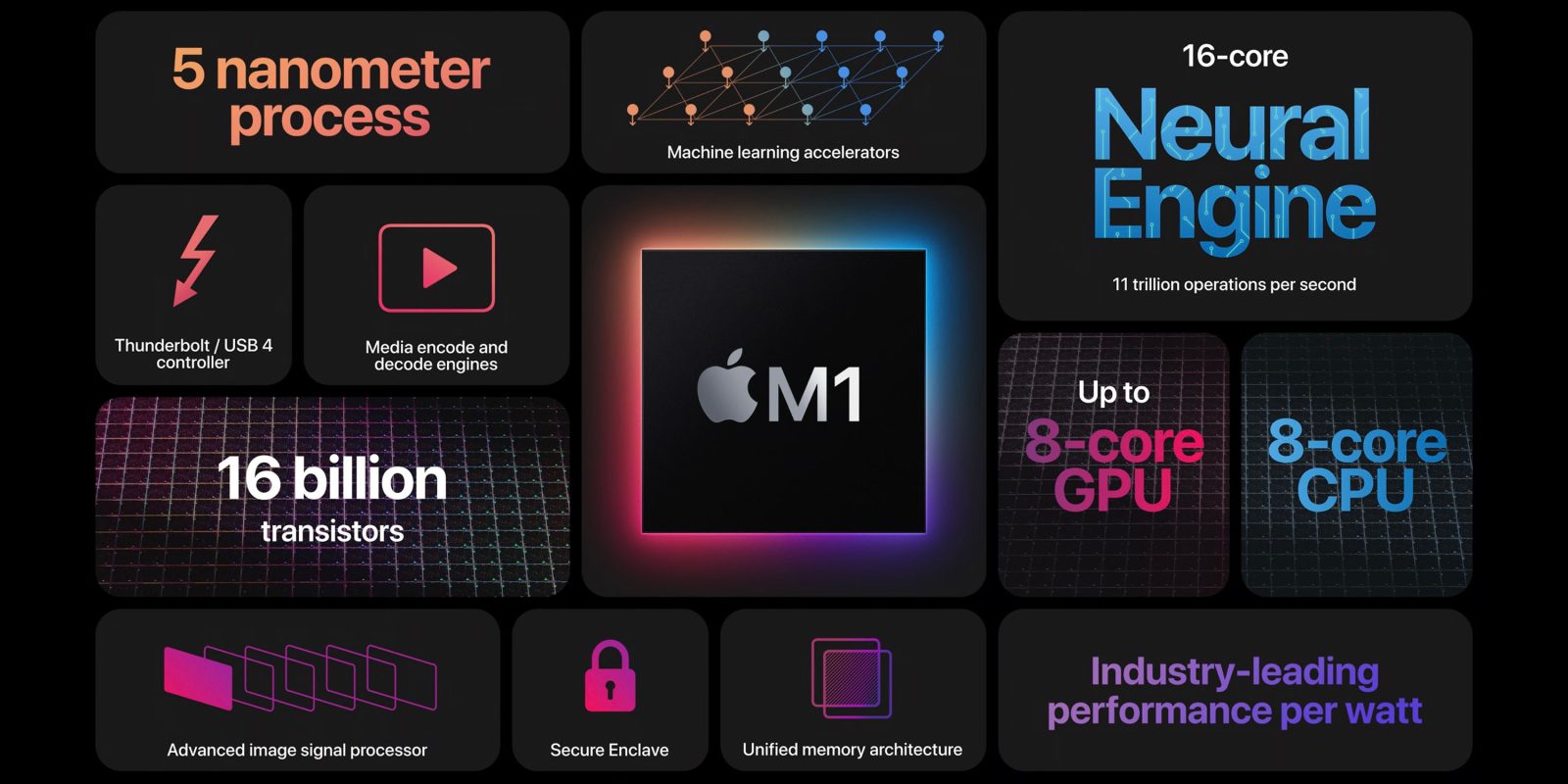
    Qualcomm revealed plans to bring to the market an Apple M1-beating chip by 2023 during its 2021 investor conference.

    The processor will be based on technology from Nuvia, a chip startup that was founded by ex-Apple engineers who had worked on Apple A and M series chips and was bought by Qualcomm earlier this year. We can hope to see Nuvia’s tech in smartphone chips too at some point in the future.

    For now, the focus is on the next generation of Arm-based processors which Qualcomm claims will set a new performance benchmark for Windows PCs. The chip will offer industry-leading sustained performance and battery life, or so Qualcomm hopes. It will feature Arm-based CPU cores, Adreno graphics, 5G modem, Hexagon DSPs, and Spectra imaging core.

    If you look at what Apple has done with the M-series, on the upper hand it even has the performance of an [Nvidia] RTX 3080 at discrete graphics.” – Qualcomm CEO Cristiano Amon.

    Qualcomm will also work on improving its Adreno GPUs to offer a desktop-like gaming experience on PCs. The chip giant is aiming to have samples out for customers in around nine months, with the official launch planned for 2023.

    Whether the chip will be able to live up to the claims or see the same fate as the Qualcomm Snapdragon 8cx and Microsoft Surface SQ2 PC chips that failed to make a mark remains to be seen.

    Apple meanwhile has already launched even more powerful versions of the M1 chip, the M1 Pro and M1 Max, and is now reportedly working on the third-generation of Mac chips that will likely offer significantly better CPU performance than the latest chips. The M series chip power a slate of new Apple products, including some of the best tablets that money can buy.

  • Apple settles with Qualcomm outside of court

    Apple settles with Qualcomm outside of court

    Ever since 2017, Apple and its primary modem chip supplier Qualcomm have been dealing with some severe falling-outs. First, Apple had accused Qualcomm of charging it unfairly high prices compared to other competitors.

    Then after Apple had diversified its partnerships with other modem suppliers to curtail its sole reliance on Qualcomm, the chipmaker, in turn, launched multiple lawsuits against Apple, alleging that it was stealing trade secrets and passing them along to competing suppliers Intel.

    The quarrels haven’t stopped since then, with the latest court case consisting of Apple suing Qualcomm for forcing it to pay licensing fees in order to even be allowed to buy Qualcomm 5G modem chips for its iPhones. Apple attorney Ruffin Cordell equated this policy to asking Kentucky Fried Chicken customers to buy licenses to eat fried chicken before it would sell them any.

    The two companies managed to reach a settlement on Tuesday, however, right when things were about to get heated in the courts. Apple and Qualcomm struck a deal that put a stop to further prosecution for both parties (Qualcomm was also simultaneously running a case against Apple’s contracted manufacturers), at least for the time being.

    And on Wednesday (the day following the settlement outside of court), the Federal Circuit officially ruled that as a consequence to Apple’s agreement to the settlement, the Cupertino giant has lost its right to invalidate Qualcomm patents.

    This is in reference to a series of claims Apple had previously made on Qualcomm intellectual property, which were first rejected but then re-appealed by Apple to the Patent Trial and Appeal Board (PTAB).

    And now that Apple has chosen to make peace with Qualcomm—in a deal which includes a global patent license and a chipset supply contract for years to come—Apple has now precluded its ability to continue pursuing its patent claims on Qualcomm.

    “We do not write on a blank skate in assessing Apple’s standing here,” the Federal Circuit stated in the ruling yesterday. “Rather, as presaged above, the writing is already on the wall.”