Retail News CRM

Tag: Qualcomm

  • China said to restart review of Qualcomm-NXP deal

    China said to restart review of Qualcomm-NXP deal

    Chinese regulators have reportedly restarted their review into chipmaker Qualcomm’s planned $44 billion acquisition of NXP Semiconductor, after suspending the review due to the growing trade tensions between China and the US.

    Officials at China’s Ministry of Commerce have been asked to hasten the review into the acquisition, as well as Qualcomm’s proposed remedies to protect Chinese companies to soften the deal.

    According to the report, Chinese companies have expressed concerns that the combined entity would allow Qualcomm to extend its patent licensing business into areas including mobile payments and autonomous driving, which could threaten the viability of companies operating in this area.

    China is the last remaining required global regulator to approve the acquisition. Regulators have been stalling the takeover for some time amid growing trade tensions with the US.

    The decision to expedite the approval process may be related to the decision by US president Donald Trump to intervene to work out a solution to allow ZTE to get back in business.

    The Chinese vendor was forced to cease major operations last week in the wake on a ban on the company importing components from US providers.

  • Qualcomm releases Snapdragon Wear 1200 platform

    Qualcomm releases Snapdragon Wear 1200 platform

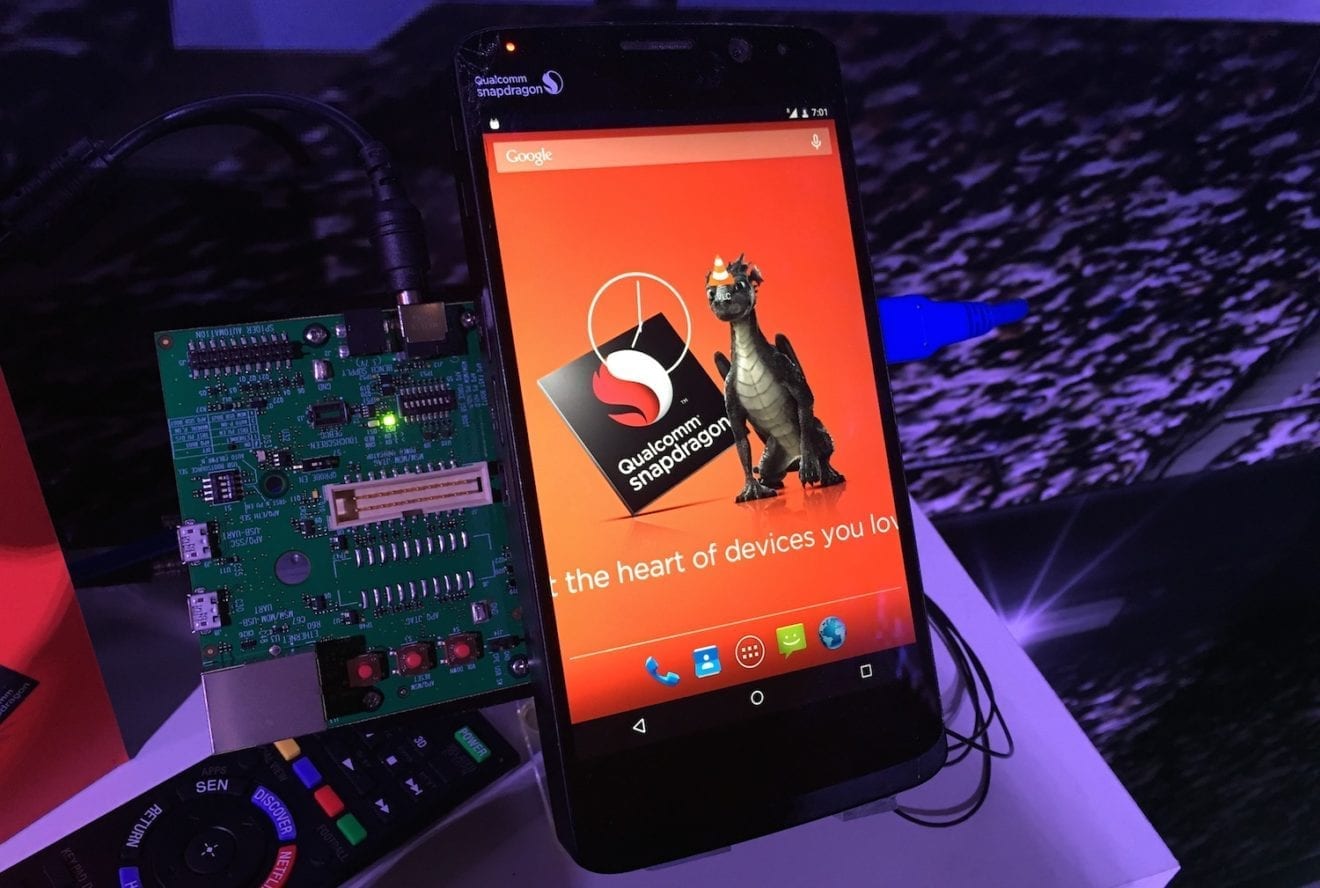
    Qualcomm has launched its ‘Snapdragon Wear 1200’ multi-mode wearables platform incorporating LTE-M and NB-IoT connectivity.

    The new platform –  complements the existing Snapdragon Wear 1100 and Snapdragon Wear 2100 platforms – is designed to connect wearable devices for fitness trackers, kids, the elderly and pets.

    “The smart wearables industry continues to grow with prolific innovation across targeted opportunities such as kids, pets, elderly, and fitness,” said Pankaj Kedia, senior director of product management at Qualcomm Technologies.

    “To effectively scale, these opportunities require ultra-low power, highly energy efficient, always connected, and cost-efficient solutions,” said Kedia. “With the introduction of Snapdragon Wear 1200, we extend our wearables offerings to bring LTE IoT categories M1 and NB1 to connect the next generation of wearable devices and provide an exciting complement to our Snapdragon Wear 2100 platform for smartwatches.”

    Qualcomm also announced collaborations with original design manufacturers (ODMs), Borqs and Quanta, who have developed reference platforms based on Snapdragon Wear 1200.

    These reference designs target the kid, elderly, and pet tracking segments and will enable device manufacturers to commercialize new products in an accelerated fashion while leveraging the features and functionality of Snapdragon Wear 1200.

  • Unicom, Ericsson, Qualcomm demo VoLTE over Cat-M1

    Unicom, Ericsson, Qualcomm demo VoLTE over Cat-M1

    China Unicom, Ericsson and Qualcomm have completed the first demonstration of LTE Cat-M1 Voice over LTE use cases.

    The demonstrations at last week’s Mobile World Congress Shanghai involved providing connectivity for a fire alarm trigger panel and a GPS emergency tracking device.

    The demos were conducted using Unicom’s spectrum, Ericsson’s IoT and VoLTE capable network infrastructure and IoT devices equipped with Qualcomm multimode IoT modems.

    Adding VoLTE support to Cat-M1 allows IoT devices based on the cellular IoT technology to make voice calls as well as sending data.

    The demonstrated showed that emergency communications devices can be designed or retrofitted to  support wireless connectivity, supporting voice communication between the devices and emergency centers.

    In the case of the fire alarm trigger panels, people triggering an alarm were able to describe the situation to first responders and get immediate guidance.

    The GPS emergency tracking device demonstration meanwhile showcased the ability of such devices to send GPS location data while enabling VoLTE calls for coordinated emergency response.

    “China Unicom aims to drive the development of the IoT and accelerate cellular network development and large-scale business implementation by constructing the leading 4G FDD network,” Unicom executive director and senior vice president Guanglu Shao said.

    “We launched NB-IoT on a pre-commercial basis on May 12 in Shanghai. This cooperation on eMTC with Ericsson and Qualcomm is a new venture intended to boost social intelligence and the Internet of Everything through wide cooperation and the construction of leading networks.”

  • Qualcomm, Apple go to war over licensing

    Qualcomm, Apple go to war over licensing

    Qualcomm and Apple will battle it out in court over patent licensing for technology used in the iPhone, with both filing suit against the other.

    Apple recently filed three lawsuits against Qualcomm, in the US, China and the UK, accusing the chipmaker of abusing its dominant market position to force Apple to pay billions in superfluous royalty payments for components that have nothing to do with Qualcomm baseband processors.

    These components include Touch ID and Apple Pay. The US lawsuit is seeking $1 billion in damages, while the lawsuit in China is seeking $145 million.

    Now Qualcomm is hitting back, filing an answer to Apple’s lawsuit as well as a counterclaim accusing Apple of failing to engage in good-faith negotiations regarding Qualcomm’s 3G and 4G standards-essential patents on fair, reasonable and non-discriminatory (FRAND) terms.

    Qualcomm has also accused Apple of breaching agreements and negotiations with the company, interfering with Qualcomm’s agreements with licensees that manufacture iPhones and iPads for Apple and encouraging “regulatory attacks” on Qualcomm’s business by making false claims.

    Apple also allegedly deliberately chose not to utilize the full performance of Qualcomm chips in the iPhone 7 to misrepresent the performance disparity between iPhones using Qualcomm’s modems and those using competitor-supplied modems, and threatened Qualcomm in an attempt to prevent it from making public comparisons about the relative performance of iPhones.

    “Over the last ten years, Apple has played a significant role in bringing the benefits of mobile technology to consumers with its popular products and services. But Apple could not have built the incredible iPhone franchise that has made it the most profitable company in the world, capturing over 90% of smartphone profits, without relying upon Qualcomm’s fundamental cellular technologies,” Qualcomm EVP and general counsel Don Rosenberg commented.

    “Now, after a decade of historic growth, Apple refuses to acknowledge the well established and continuing value of those technologies. It has launched a global attack on Qualcomm and is attempting to use its enormous market power to coerce unfair and unreasonable license terms from Qualcomm.”

  • Apple sues Qualcomm in China over technology fees

    Apple sues Qualcomm in China over technology fees

    Apple has filed suit in China challenging Qualcomm’s fees for technology used in smartphones two years after Chinese regulators fined the chipmaker for its licensing practices.

    Two lawsuits filed by the iPhone maker accuse Qualcomm of abusing its control over essential technology to charge excessive licensing fees, a Beijing court said on its microblog. It said Apple reports suffering 1 billion yuan ($145 million) in “economic losses” and asks for 2.5 million yuan ($360,000).

    Most of Apple’s iPhones and other products are assembled in China by contractors.

    Apple filed a similar complaint on Jan. 21 in U.S. federal court in San Diego, California, accusing Qualcomm of demanding royalties for innovations on iPhones that have nothing to do with Qualcomm’s technology. The U.S. lawsuit seeks $1 billion in damages.

    The U.S. Federal Trade Commission also has filed a lawsuit accusing Qualcomm of imposing unfair licensing terms on manufacturers.

    Qualcomm, headquartered in San Diego, said in a statement it had not seen Apple’s complaint to the Chinese court but defended its fees. The company said Apple rejected terms consistent with those accepted by more than 100 Chinese manufacturers.

    Qualcomm agreed to change its licensing after Chinese regulators fined the company 6 billion yuan ($975 million) in 2015 on charges it abused its control over technology to charge excessive fees.

    In a separate statement, Apple complained Qualcomm demands royalties for phone features that nothing to do with its technology.

    “For many years Qualcomm has unfairly insisted on charging royalties for technologies they have nothing to do with,” said the Apple statement.

    It also accused Qualcomm of withholding nearly $1 billion in payments due to Apple, headquartered in Cupertino, California, in retaliation for cooperating with investigations by regulators in the United States, Europe, South Korea and Taiwan.

    Qualcomm said its fees were consistent with changes worked out with Chinese regulators.

    “These filings by Apple’s Chinese subsidiary are just part of Apple’s efforts to find ways to pay less for Qualcomm’s technology,” said Don Rosenberg, executive vice president and general counsel of Qualcomm, in the statement.

    South Korean regulators last month fined Qualcomm $853 million for violating antitrust laws, a decision Qualcomm is fighting.

  • Qualcomm unveils Gigabit-class connected vehicle platform

    Qualcomm unveils Gigabit-class connected vehicle platform

    Chipmaker Qualcomm has announced the launch of a new version of its connected car reference platform that incorporates a a Gigabit-class LTE modem.

    The new reference platform is designed to allow carmakers to easily integrate new wireless and networking technologies into their vehicles, including Wi-Fi, Bluetooth, BLE and global navigation satellite system (GNSS).

    Qualcomm has also developed a reference hardware module in two band configurations, one for North America and one for the rest of the world.

    The module design can support up to four antennas to take advantage of the 4×4 MIMO capabilities of the integrated modem.

    “Connected cars are becoming intelligent sensors on the road, not only using data for consumer use cases such as Wi-Fi hotspots and video streaming, but also collecting and transmitting critical, rich real-time information about road conditions, map updates and driver status,” Qualcomm SVP and GM for automative Patrick Little said.

    “As a leader in car connectivity, Qualcomm Technologies is well positioned to address the tremendous data demand, helping automakers integrate the broad set of technologies required by a new generation of connected vehicles.”

    Qualcomm separately announced it has established a new consortium with SWARCO Traffic Systems and the University of Kaiserslautern to carry out the first Cellular-V2X (Vehicle to Everything) trial based on the 3GPP Release 14.

    The trial will focus on Vehicle-to-Vehicle (V2V), Vehicle-to-Infrastructure (V2I) and Vehicle-to-Pedestrian (V2P) direct communication, as well as Vehicle-to-Network (V2N) wide area communications.

    The new Connected Vehicle to Everything of Tomorrow (ConVeX) consortium will conduct the trial with funding from the participating organizations as well as the German Federal Ministry of Transportation and Digital Infrastructure.

  • Qualcomm to support Google’s Android Thing IoT platform

    Qualcomm to support Google’s Android Thing IoT platform

    Qualcomm announced that it plans to work with Google to add support for the search giant’s new IoT operating system, Android Things, in its Snapdragon processors.

    In a statement released Wednesday, Qualcomm said the collaboration with Google will focus on developing both “consumer and industrial applications” and the initiative would help a vast number of developers participate in the IoT opportunity.

    “We anticipate Android Things running on Snapdragon processors will offer developers familiar connectivity environments, including cellular, Wi-Fi, and Bluetooth; support for a wide array of sensors; camera, graphics, multimedia, and rich UI capabilities; hardware-based security; Google services and cloud integration; test and optimization tools, and more – allowing for rapid development of scalable, cost-effective and security-focused IoT solutions,” Qualcomm said.

    Although Android Things is currently in a developer preview stage, Qualcomm noted the platform is expected to be released more broadly on Snapdragon processors next year.

    Qualcomm’s announcement came a day after Google launched a preview of the new IoT platform which it said would enable developers to quickly build smart devices using Android APIs and Google services.

    In a blog post on the Android Developers’ Blog, Google said Android Things incorporates feedback received on its Project Brillo IoT OS and will include tools such as Android Studio, the Android Software Development Kit, Google Play Services, and Google Cloud Platform.

    Google will also offer Developer Preview updates in the coming months to provide the infrastructure necessary to securely push OS patches, security fixes, a developer’s own updates, built-in Weave connectivity and more, the search giant added.

    Google is also updating its IoT communication platform Weave to help facilitate cloud connectivity for all types of devices so they can interact with services like Google’s Assistant.

    “This is just the beginning of the IoT ecosystem we want to build with you,” Google developer advocate Wayne Piekarski wrote in the blog post.

  • Qualcomm unveils 5G modem chipset solution

    Qualcomm unveils 5G modem chipset solution

    US chipset maker Qualcomm has announced what it says is the world’s first commercial 5G modem chipset solution to help accelerate the deployments of 5G networks globally.

    Announced at the Qualcomm 4G/5G Summit in Hong Kong on Tuesday, Qualcomm said the Snapdragon X50 5G modem is designed to support original equipment manufacturers (OEMs) in building 5G smartphones and other devices, as well as aid mobile operators with early 5G trials and deployments.

    The solution, with 800MHz bandwidth support, works in the millimetre-wave (mmWave) spectrum in the 28-GHz band and supports a peak download speed of 5Gpbs. It employs MIMO antenna technology with adaptive beam-forming and beam-tracking technology.

    “The Snapdragon X50 5G modem heralds the arrival of 5G as operators and OEMs reach the cellular network and device testing phase,” said Cristiano Amon, executive vice president at Qualcomm Technologies.

    “Utilizing our long history of LTE and Wi-Fi leadership, we are thrilled to deliver a product that will help play a critical role in bringing 5G devices and networks to reality. This shows that we’re not just talking about 5G, we’re truly committed to it.”

    The Snapdragon X50 5G platform includes the modem, the SDR051 mmWave transceivers, and the supporting PMX50 power management chip.

    The modem can be used for multi-mode 4G/5G mobile broadband, along with fixed-wireless broadband devices, when paired with a Qualcomm Snapdragon processor with an integrated Gigabit LTE modem and interwork cohesively via dual-connectivity.

    Sampling for the Snapdragon X50 5G modem is expected to begin in the second half of 2017, with the first commercial products integrated the modem expected in the first half of 2018.

    The company also introduced three new processors for mobile devices – the Snapdragon 653, Snapdragon 626 and Snapdragon 427 processors.

    The Snapdragon 653, Snapdragon 626 are expected to be available in the market by the end of this year, while the 427 processor will appear in commercial devices by early 2017, Qualcomm said.