Retail News CRM

Tag: Qualcomm

  • Qualcomm’s new Snapdragon 690 chipset brings 5G to the masses

    Qualcomm’s new Snapdragon 690 chipset brings 5G to the masses

    As more carriers expand 5G services to more markets, demand for 5G-enabled smartphones starts to increase. In theory, that’s supposed to increase prices as well, but only if there are few offerings. Qualcomm is making sure that you will no longer have to pay a fortune for a 5G smartphone going forward.

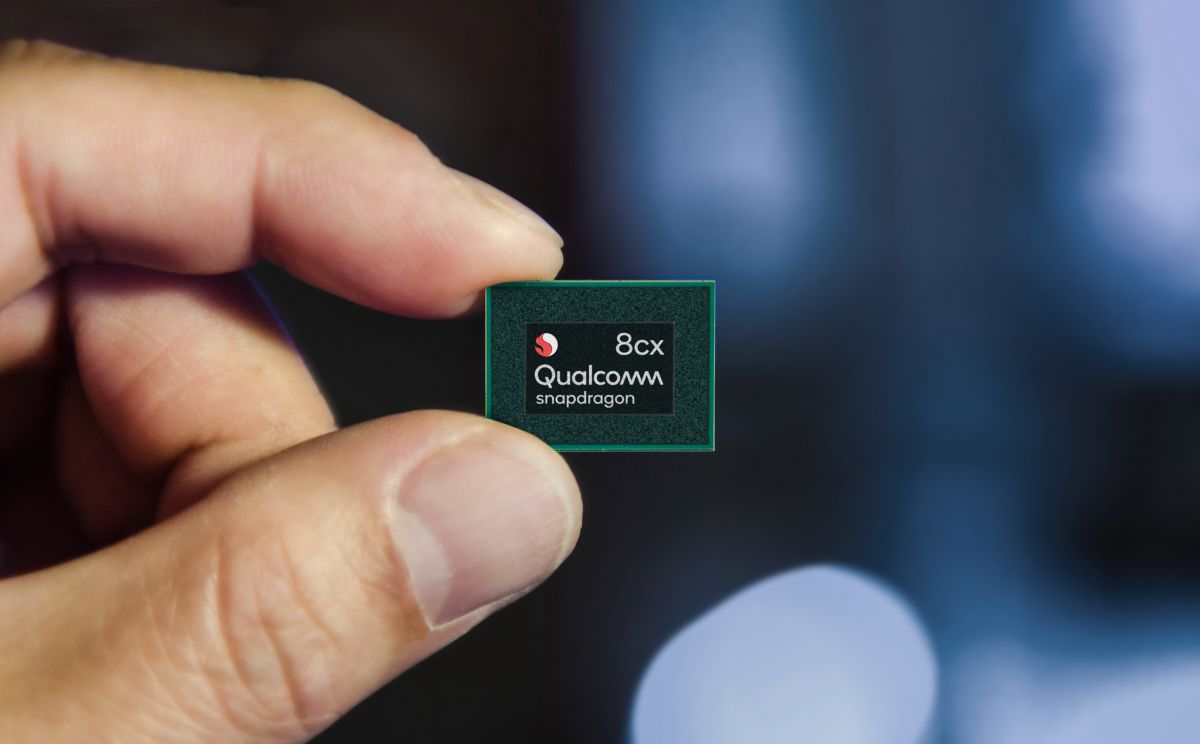
    The new Snapdragon 690 chipset fully supports 5G connectivity and is meant to be embedded in mid-range devices. With the new SoC (system-on-chip), Qualcomm plans to make 5G broadly available worldwide with the help of smartphone makers.

    The first companies to confirm they will launch smartphones equipped with the new Qualcomm Snapdragon 690 chipset are Motorola, LG, HMD Global, Sharp, and TCL. Other important players in the market are likely to embrace this new piece of tech, but they’ll probably wait for the first wave of devices to hit the market.

    Qualcomm’s new Snapdragon 690 5G is the first mid-range chipset to feature 4K HDR support to capture pictures at up to 192 megapixels. Moreover, the chipset includes support for 120hz displays for very fast refresh rates.

    Hardware-wise, the Snapdragon 690 chipset accommodates a Qualcomm Kryo 560 processor that should provide up to 20% performance improvement compared to its predecessor. The included Snapdragon X51 5G modem is optimized for the 6-series platform and offers blazing-fast speeds and superior 5G coverage.

    Also, the chipset comes with an Adreno 619L GPU (graphics processing unit) that delivers up to 60% faster graphics rendering. Last but not least, the Snapdragon 690 is fully compatible with Qualcomm’s Quick Charge 4+ technology that charges up to 4x faster than conventional charging.

    If you’re dying to get your hands on the new devices equipped with the Snapdragon 690 5G chipset, you’ll be pleased to know that the first smartphones are expected to be commercially available in the second half of the year.

  • Qualcomm reveals faster, more efficient Quick Charge 3+ technology for the masses

    Qualcomm reveals faster, more efficient Quick Charge 3+ technology for the masses

    Qualcomm has just announced a new version of its quick charging technology for smartphones. It’s called Qualcomm Quick Charge 3+ because it’s better than Quick Charge 3 technology but less advanced than Quick Charge 4+.

    While there haven’t any breakthroughs in the smartphone battery field, quick charging seems to thrive. As one would expect from such a technology, Quick Charge 3+ will be faster and more efficient than Quick Charge 3.0.

    According to Qualcomm, Quick Charge 3+ can bring a smartphone’s battery from 0% to 50% in just 15 minutes, 35% faster compared to the previous generation. More importantly, the new technology is backward compatible with older Quick Charge devices, while newer devices can work with Quick Charge 3+ accessories.

    Basically, Qualcomm is bringing the speed and efficiency of Quick Charge 4+ to cheaper smartphones. Some of you might already know that with Quick Charge 4+ technology, a compatible device can get up to 50% charge in 15 minutes, just like the new Quick Charge 3+.

    The catch is Quick Charge 3+ will be available on Qualcomm Snapdragon 765 and 765G chipsets, followed by other Snapdragon SoCs later this year. These processors are part of Qualcomm’s new mid-range tier, whereas Quick Charge 4+ is meant for flagships equipped high-end chipsets like the Snapdragon 845.

    For early adopters, the world’s first smartphone with both Quick Charge 4+ and Quick Charge 3+ charging technology is Xiaomi’s Mi 10 Lite Zoom.

  • Qualcomm partners with video enhancing company Imint for future smartphones’ superior video capabilities

    Qualcomm partners with video enhancing company Imint for future smartphones’ superior video capabilities

    These days consumer demand for higher quality videos grows exponentially and people expect more and more from upcoming smartphones. Now, Sweden-based software company Imint, a firm offering video enhancements and analysis, has announced that it will collaborate with chip manufacturer Qualcomm for better video capabilities in future Snapdragon-powered devices.

    Imint’s CEO, Andreas Lifvendahl, stated that the collaboration with Qualcomm will bring a great possibility for the software company to take advantage of the AI-powered chip core technology offered by Qualcomm, and therefore be able to develop a next-gen video enhancement software. The two have already collaborated, developing the Vidhance algorithm, which provides a selfie mode that ensures the user’s face stays in the frame when using the video capabilities of the phone (video calls, chats and recordings).

    Additionally, Lifvendahl believes that Qualcomm’s latest breakthroughs, given the fact that Qualcomm is a world leader in the chip manufacturing market, become a higher stepping-stone for Imint’s software. The two companies have even created a technology to help lower power consumption when processing videos with Vidhance algorithms. The aforementioned power-saving tech is available for devices equipped with Qualcomm’s Snapdragon 865 mobile platform.

  • Cheap phones are about to get a lot better with Qualcomm’s new chips

    Cheap phones are about to get a lot better with Qualcomm’s new chips

    5G might be what everyone is talking about but the reality is that 4G will remain the backbone of our wireless communications for at least a few more years. Besides that, many markets haven’t even begun implementing 5G. Keeping that in mind, Qualcomm has released three new chips to suit the needs of manufacturers and users that are still shying away from the new technology.

    The three chips span from the upper mid-range to the low end. They follow Qualcomm’s familiar naming scheme making it easy to recognize which is which: Snapdragon 720G, 660 and 460.

    All three get features we’re used to seeing on high-end phones. When it comes to connectivity, that means Wi-Fi 6, Bluetooth 5.1 with Qualcomm FastConnect for better audio experience and of course, higher 4G max speeds.

    GPS improvements are also present with support for Dual-Frequency. And we can’t forget about our other favorite buzz word: AI. Even Qualcomm’s low-end chips will now have AI capabilities that will help with “user experiences across photography, voice assistants, and virtually always-on scenarios for increased contextual awareness.” Now, the help of AI can often be hard to measure, but let’s trust Qualcomm on this one that there will be noticeable benefits for the users.

    That being said, let’s briefly check what each of the new chips has to offer.

    The Snapdragon 720G is meant to satisfy the needs of mobile gamers that don’t quite have the budget for a Snapdragon-865-powered phone. The chip has 8 Kryo 465 cores that can boost up to 2.3GHz and are paired with the Adreno 618 GPU. With the 720G, consumers will get “HDR gameplay, dynamic color range and contrast, realistic and immersive in-game environments and high-quality, synchronized sound.”

    Not everything is about gaming, however, the new and improved ISP now supports photo capture up to 192MP, in case there’s a manufacturer that wants to go all out with megapixels.

    Naturally, Qualcomm has also crammed a bunch of its own tech goodies we won’t bore you with, but you can check at the chip’s information page.

    What we will mention, however, is that the 720G is manufactured using an 8nm process, which means it will have not only better performance, but lower power consumption as well

    The Snapdragon 662 is perhaps the most boring chip of this lineup. It’s a slightly less powerful octa-core chip (Kryo 260, up to 2GHz) that has all the expected improvements but nothing particularly noteworthy. The 662 a cookie-cutter mid-range chip that will quietly do what it’s supposed to without any thrills or headaches. There’s no 4K video recording, cameras can only go as high as 48MP and it’s made using the 11nm Process Technology. That’s not to say it’s a bad chip, it’s just kind of bland.

    The Snapdragon 460, on the other hand, has the most potential for making an impact. Sure, it’s a chip for budget devices that won’t wow anyone, but the improvements Qualcomm has achieved with this little guy are impressive.

    The 8 Kryo 240 cores perform 70% better and the GPU is only slightly behind with 60% improvement, according to Qualcomm. When all other upgrades are considered, the company says this chip delivers twice the performance compared to the previous generation. That’s a big win for budget smartphones.
    The Qualcomm Spectra 340 ISP that comes with the Snapdragon 460 should not only improve the image quality of photos but also supports triple cameras.
    Better performance and better cameras, what more can you want? This chip seems perfect for Nokia’s budget phones and it will be interesting to see how well it does in the real world.
    Speaking of the real world, when can you expect o see phones with these new chips? Well, Qualcomm says the Snapdragon 720G will make an appearance in Q1 of 2020. This means in two months max we should see at least one smartphone powered by it.
    The timeline for the 662 and 460 is a bit foggier, but devices based on them are expected by the end of the year.
  • Qualcomm has started a price war that will impact prices of 5G phones

    Qualcomm has started a price war that will impact prices of 5G phones

    A report issued by reliable analyst Ming-Chi Kuo says that a price war has begun in the 5G chip industry. Kuo’s note to clients, says that Qualcomm has cut pricing for its mid-range 5G Snapdragon 765 chipset after sales of high-end 5G smartphones fell short of expectations. By cutting the cost of its mid-range 5G chips to manufacturers, Qualcomm is trying to get these firms to produce more affordable 5G handsets to entice the public. The price cuts will also extend to Qualcomm’s low-end chips as well.
    As a result of the price cut, Kuo sees MediaTek facing pricing pressure for its Dimesnity line of 5G chips three to six months earlier than expected. Instead of achieving gross margins of 40% to 50% for its chips as the consensus expects, the analyst sees MediaTek’s margins dropping to less than 30%-35%.
    Qualcomm has reportedly cut the price of the 5G Snapdragon 765 chipset (SD7250) by $25-$30 to $40. MediaTek’s Dimensity 1000 5G chipset costs the company $45-$50 to make and it sells for $60-$70 per chip. As a comparison, Qualcomm’s top-of-the-line Snapdragon 865 Mobile Platform with the Snapdragon X55 5G modem costs $120-$130 and has not had its price cut. The company’s flagship chip outperforms the MediaTek Dimensity 1000 and Qualcomm sees no need to drop the price of its high-end chipset.
    The recently announced MediaTek Dimensity 800 chipset, which supports only the slower sub-6GHz 5G signals, is due to be released in May. This chip, developed for lower-priced 5G handsets, is expected to be sold at a price of $40-$45 per chip and costs MediaTek $30-$35 to make. There might not be that much room for MediaTek to maneuver in response to Qualcomm’s pricing actions.
    The pricing shakeup could cost MediaTek some business. The company’s major 5G chip customers like Oppo, Vivo, and Xiaomi are said to be switching orders for 20 million to 25 million chips from MediaTek to Qualcomm. These components are scheduled to be shipped next month.
    The Snapdragon 765 SoC is equipped with eight Kryo 475 CPU cores running at a clock speed as fast as 2.4GHz. It features an integrated Snapdragon X52 5G modem that supports both mmWave and sub-6GHz 5G signals, and sports the Adreno 620 graphics processor. There is also a Snapdragon 765G for gaming phones that is equipped with an enhanced version of the GPU offering 10% faster graphics rendering compared to the standard Snapdragon 765 chipset.
    The Dimensity 1000 also has an integrated 5G modem and is packed with four performance Cortex-A77 CPU cores running at a clock speed of up to 2.6GHz. Four efficiency Cortex-A55 CPU cores are also included. This SoC is equipped with the ARM Mali-G77 MC9
    Qualcomm’s salvo would have less of an impact on the market if MediaTek’s margins were a little wider. A larger margin would allow the company to take a hit and still thrive. But the Dimensity 1000 brings $10-$25 per chip to MediaTek’s bottom line and the Dimensity 800 garners profits of $5-$15 per chip.
    MediaTek’s Dimensity 1000 and Dimensity are manufactured by TSMC using its 7nm process. The Snapdragon 765/765G will be manufactured by Samsung using its 7nm process. The flagship Snapdragon 865 Mobile Platform is also a 7nm chip, and it also will be produced by TSMC. Qualcomm originally planned to have Samsung’s foundry roll out the Snapdragon 865, but the chipmaker was concerned about allowing Samsung to get a peek under the hood of its top chipset for 2020.
    Chip prices might also run into pressure halfway through this year when TSMC starts producing more powerful and energy-efficient 5nm chips. Among the first to be manufactured will be Apple’s A14 Bionic and Huawei’s next high-end IC expected to be named the Kirin 1020.
  • Qualcomm Launches Autonomous Driving Computer, Aiming To Hit Roads By 2023

    Qualcomm Launches Autonomous Driving Computer, Aiming To Hit Roads By 2023

    Qualcomm Inc on Monday announced a computing system for autonomous vehicles designed to handle everything from lane controls to full self-driving that it aims to have on the road by 2023. The system, dubbed Snapdragon Ride, is the company’s first foray into a full system to power self-driving cars. San Diego-based Qualcomm, known best as the world’s biggest mobile phone chip supplier, has been a major automotive supplier for more than a decade, but primarily for the modem chips that connect vehicles to the internet and chips for the infotainment systems that power screens inside vehicles.

    Qualcomm has spent years developing self-driving technology near its headquarters in virtual silence while rivals such as Intel Corp and Nvidia Corp jumped into the market, spending billions on acquisitions supplying major automakers for autonomous driving.

    Patrick Little, the senior vice president and general manager of Qualcomm’s automotive business, said the company is using the expertise it built in the mobile phone processor business developing powerful processors that consume little electricity and generate little heat.

    Qualcomm’s new computers can fit in one hand and do not need fans or liquid cooling systems to prevent them from overheating. Lower power consumption will become important in electric vehicles, in which computers will have to compete with the drive train for battery power.

    “Many of these cars have a supercomputer in the back. It looks like your kid’s gaming PC,” Little told Reuters in an interview. “Now imagine you’re putting that in the trunk of an electric vehicle. Now your range anxiety is just doubled.”

    Qualcomm has also broken the system into pieces of hardware and software that can be scaled up or down for various needs from automakers. A smaller version of the computer can be used for simpler tasks like lane-control, or the computers can be chained together for full self-driving. Little said Qualcomm has used test vehicles in San Diego to develop its own set of self-driving software algorithms if automakers want to use them, but that it will be up to each one.

    “If they came to us with their own software stack, or even somebody else’s software stack, we’re happy to say we’ll help you” adapt it to Qualcomm’s hardware, he said.

    Qualcomm and General Motors Co on Monday also said that the automaker has expanded its existing partnership with the chip suppler into “high performance compute platforms.” Qualcomm previously provided chips for the company’s dashboard electronics, location tracking and driver-assistance systems.

  • Qualcomm unveils world’s biggest fingerprint sensor for smartphones

    Qualcomm unveils world’s biggest fingerprint sensor for smartphones

    Qualcomm was the first company to introduce an under-display ultrasonic fingerprint scanner, the 3D Sonic Sensor, the same piece of technology that’s now embedded under Samsung Galaxy S10’s stunning display.

    Fast forward one year and the US company announced an upgrade to its last year ultrasonic fingerprint scanner, the 3D Sonic Max, which promises to accurately scan a fingerprint in three dimensions.

    Unlike the first iteration that only allows users to scan one fingerprint, the 3D Sonic Max lets you scan two fingerprints at the same time. 3D Sonic Max, the latest version of Qualcomm’s ultrasonic fingerprint sensor offers a recognition area that is 17x larger than the previous generation, allowing for increased security via simultaneous two-finger authentication, increased speed and ease of use.

    This makes the 3D Sonic Max the world’s largest fingerprint sensor and also the first in the world to enable two-finger authentication. On top of that, 3D Sonic Max promises to deliver 1::1,000,000 rather than 1::50,000, which should prevent fingerprint spoofing and inaccurate results. Qualcomm also claims that its new fingerprint sensor is faster than the previous generation, but doesn’t say by how much.

    We have yet to learn which handset makers will implement Qualcomm’s new fingerprint sensor into their phones, but it looks like Samsung might be one of its clients.

  • Qualcomm’s anti-competitive business practices get support from the Trump administration

    Qualcomm’s anti-competitive business practices get support from the Trump administration

    Back in May, Judge Lucy Koh (of Apple v. Samsung fame) made a ruling that still might change the way Qualcomm sells its chips to phone manufacturers. The judge ruled in favor of the Federal Trade Commission and against the chipmaker after a 10-day non-jury trial was held at the beginning of the year. The FTC argued that Qualcomm’s “no license, no chips” policy is anti-competitive.
    Other Qualcomm policies attacked in court included the way royalty payments are calculated based on the entire price of a phone instead of the chip being used. And Qualcomm was also cited for not licensing its standards-essential patents (SEP). These are patents that must be licensed by rivals to guarantee that their products meet technical standards; as a result, they are supposed to be licensed on a fair, reasonable and non-discriminatory fashion (FRAND). In its defense, Qualcomm says that the argument of royalties is an issue of contract law that should not be heard in a forum designed for antitrust cases. And it also says that there is nothing wrong with getting compensated for the money it spends on R&D.
    In her decision, Koh said that Qualcomm needs to renegotiate its current contracts with phone manufacturers. In her written decision, Judge Koh said, “Qualcomm’s licensing practices have strangled competition in the CDMA and the premium LTE modem chip markets for years, and harmed rivals, OEMs, and end consumers in the process.” As you might expect, Qualcomm has appealed the decision and even managed to get the Ninth U.S. Circuit Court of Appeals to issue a stay. This prevents Qualcomm from having to follow Koh’s orders until all of its legal options have been exhausted. The firm did have a compelling reason to request a stay; it would be a waste of time and energy to renegotiate all of its contracts only to win on appeal and reverse all of the changes made.
    And speaking of the appeal, the FTC is actually on the opposite side of the Trump administration. Before Judge Koh released her decision, Trump officials asked her to limit any penalties that she was planning to impose on the chipmaker. And now that the case is being heard in appeals court, the administration is concerned that a Qualcomm loss will negatively impact America’s global leadership in technology and national security. And the Justice Department, under the leadership of U.S. Attorney General William Barr, has contradicted the FTC by stating that there is nothing anti-competitive about Qualcomm’s business practices. That is unusual because the FTC and the DOJ both handle antitrust cases. The Justice Department is joined by the Defense Department and Energy Department which told the appeals court that a ruling against Qualcomm could affect the country’s military and its energy and nuclear infrastructure.
    But perhaps even more important to the Trump administration is the possibility that should Qualcomm lose on appeal, it will negatively impact the rollout of 5G in the states. The next generation of wireless connectivity will initially deliver download data speeds 10 times faster than 4G LTE and will lead to the creation of new businesses and industries. The nations that harness 5G first will have a big advantage in the global economy. Qualcomm’s Snapdragon X50 and X55 modem chips allow smartphones to connect to 5G networks. The former is compatible with the super zippy ultra-high mmWave spectrum while the latter works with both mmWave and sub-6GHz  airwaves.
    But as far as the FTC is concerned, Qualcomm and the Justice Department have not shown how Judge Koh’s ruling “threatens national security in any way — or how those considerations could justify allowing Qualcomm to continue to violate” U.S. antitrust law. The 9th circuit appeals court, located in San Francisco, could start hearing arguments in February and issue a ruling sometime in 2020. For Qualcomm, there is plenty at stake.
  • The Snapdragon 735 chipset could lead to lower prices for 5G phones

    The Snapdragon 735 chipset could lead to lower prices for 5G phones

    Everyone is awaiting Qualcomm’s introduction of its next-generation flagship SoC, the Snapdragon 865 Mobile Platform. This could take place sometime next month. Meanwhile, you might recall that six months ago the chipmaker unveiled the Snapdragon 730 chipset and the Snapdragon 730G gaming-focused chip.

    The Snapdragon 735, while designed by Qualcomm, will apparently be manufactured by Samsung using its 7nm EUV LPP (Low Power Plus) process. The lower the process number, the higher the number of transistors that can fit inside an integrated circuit. By adding transistors, chips become more powerful and energy-efficient. By next year, both Samsung and rival TSMC should be rolling 5nm chips off of its assembly line (more on this later). The EUV stands for extreme-ultraviolet lithography, a technology that allows chip dies to be more precisely marked up for transistor placement; this will also allow more transistors to fit inside a chip. When you consider that Huawei’s Kirin 990 SoC with an embedded 5G modem contains about 10.3 billion transistors, you can understand how precise chip production must be.

    The Snapdragon 735 SoC is rumored to feature eight cores with a pair of Cortex-A76 cores to do the heavy lifting; the remaining six Cortex-A55 cores will be earmarked for general housekeeping. The latter will reportedly run at a clock speed of 1.73GHz, and the two high-performance cores at 2.26GHz and 2.32GHz. If the rumored specs are legit, the chipset will come with the Adreno 620 GPU and support up to 12GB of RAM and 4K video at 60fps. And there is good news for consumers; the Snapdragon 735 SoC is said to be 5G ready, which means that support for the next generation of wireless will be available on more mid-range (and less expensive) phones.

    It should be noted that Qualcomm has yet to introduce the component. The Snapdragon 735 SoC will replace the 730 which is produced using the 8nm process and ships with the Adreno 618 graphics processor. Some features of the current chip, such as support for the new Wi-Fi 6 standard and the multi-core Qualcomm AI Engine, will undoubtedly be found in the Snapdragon 735 chipset. Qualcomm said earlier this year that it would bring 5G support to its mid-range series 7xx and series 6xx Snapdragon chipsets.

    As for the eagerly awaited Snapdragon 865 Mobile Platform, the other day Chinese luxury goods manufacturer, 8848 was the first to announce a phone that will be powered by Qualcomm’s new flagship chipset. The Titanium M6 5G will ship next year with the Snapdragon 865 SoC inside. While Qualcomm could introduce the chip next month, it won’t be found inside any consumer devices until next year.

    What we know about the Snapdragon 865 is that Samsung’s foundry unit will manufacture it using Samsung’s 7nm EUV process. The Snapdragon 855 and the overclocked Snapdragon 855+ chipsets were both produced by the world’s largest independent foundry, Taiwan Semiconductor Manufacturing Company (TSMC) using TSMC’s 7nm process. 2021’s Snapdragon 875 Mobile Platform will be produced by TSMC using its new 5nm process. At 5nm, integrated circuits are packed with as many as 171.3 million transistors per square millimeter.

    Both Samsung and TSMC have roadmaps taking production to 3nm. The latter is reportedly working on ways to keep increasing the number of transistors inside a chip to increase both power and energy consumption. Just to show you how far we’ve come, the Apple iPhone 4, released in 2010, featured Apple’s A4 SoC under the hood. That chip was designed by Apple, equipped with ARM’s Cortex-A8 CPU, and built by Samsung using its 45nm process.

  • Qualcomm could unveil its next-gen flagship chip on September 24th

    Qualcomm could unveil its next-gen flagship chip on September 24th

    There is speculation that the chip designer will unveil the Snapdragon 865 Mobile Platform. Expected to be found inside high-end Android devices next year, the new chipset will be manufactured by Samsung using its 7nm EUV process. The smaller the process number, the more transistors fit inside the chip making it more powerful and energy-efficient. And extreme ultraviolet lithography (EUV) is a more precise method of marking up a chip die for transistor placement. Qualcomm’s current top-of-the-line-chipset is the Snapdragon 855+, an overclocked version of the Snapdragon 855 Mobile Platform that offers a 15% improvement in graphics capabilities.

    However, there could be another reason for the announcement. As it turns out, some new Android handsets are expected to be unveiled on Tuesday including a pair from Xiaomi (Xiaomi Mi 9 Pro 5G and Xiaomi Mi MIX Alpha), the Sony Xperia 5 and the Realme X2. Taking this into consideration, the buzz around the water cooler suggests that one or more of these devices could be the reason for the teaser that Qualcomm posted yesterday for the upcoming event. All of the aforementioned phones will employ a Snapdragon SoC with the 855+ expected inside the Mi 9 Pro 5G and possibly the Mi MIX Alpha. The regular Snapdragon 855 SoC will power the Xperia 5 with the Snapdragon 730G chip driving the X2. There must be a connection between the number “3” used in Xiaomi’s teaser and the three smartphone manufacturers we’ve been discussing in this paragraph.

    While Samsung is doing the fab work and manufacturing the Snapdragon 865, Qualcomm will be returning to Taiwan Semiconductor Manufacturing Company (TSMC) for 2021’s Snapdragon 875 Mobile Platform. The world’s largest independent foundry, TSMC rolls chips off the assembly line for companies that design their own chips, but don’t have the facilities to make them. For example, both Apple and Huawei design their own SoCs like the A13 Bionic and Kirin 990 respectively. But both rely on TSMC to churn out the chips they’ve designed.
    As for the Snapdragon 865, traditionally Samsung’s new Galaxy S phones have been the first with a global release to sport the latest Qualcomm Snapdragon chipset, and that most likely won’t change next year. The very first phone to be powered by the Snapdragon 855 Mobile Platform was the Xiaomi Mi 9, but this device was not offered worldwide.
    2019 has been quite a tumultuous year for Qualcomm. It started with the chip designer in the midst of a feud with Apple and both companies were getting ready to square off in court multiple times. Qualcomm also was the defendant in an antitrust case brought by the FTC. The non-jury trial in January was presided over by Judge Lucy Koh (of Samsung v. Apple fame). During the proceedings, Apple and other firms testified against Qualcomm’s sales practices including its “No license, no chips” policy, the computation of royalties based on the retail price of a phone, and its failure to license its standards-essential patents in a Fair, Reasonable and Non-Discriminatory (FRAND) manner.
    Things took a turn for the better in April (as far as Qualcomm is concerned) just as a court battle with Apple was wrapping up; the two outfits agreed on a settlement. All legal action between the companies was dropped and Apple paid Qualcomm an undisclosed amount believed to be $4.5 billion; in return, Apple received a six-year license (with a two-year option) and a multi-year chip supply agreement.
    And so Qualcomm sailed along, but only for a month. In May, the verdict was in and Judge Koh ruled that Qualcomm had engaged in anticompetitive behavior. Losing this court case could force the chip designer to overhaul its current business practices. And while Judge Koh refused to grant Qualcomm a stay that would allow it to continue the status quo until all of its appeals have been exhausted, last month the Ninth U.S. Circuit Court of Appeals granted the stay.
    If Qualcomm does not get Judge Koh’s ruling overturned on appeal, it faces the long, complex and difficult task of renegotiating all of the current contracts it has with phone manufacturers. The chip designer asked for the stay because it did not want to go through this process, win on appeal, and then have to come to terms on a whole new set of contracts.
  • Motorola might drop Qualcomm’s chipsets for the Moto G8 Play

    Motorola might drop Qualcomm’s chipsets for the Moto G8 Play

    We don’t expect Motorola to announce a new lineup of mid-range smartphones until next year, but that doesn’t mean the US company is not already working on the Moto G8 series. Even though we’re still far from an official announcement, the first details about Motorola’s plans regarding some of its upcoming phones have already emerged.

    The folks over at XDA Developers report at least one of Motorola’s upcoming smartphones, the Moto G8 Play will no longer come equipped with a Qualcomm processor. Instead, Motorola plans to include either the MediaTek Helio P60 or the MediaTek Helio P70.

    On the bright side, the Moto G8 Play is rumored to pack a much larger 4,000 mAh battery, a 1,000 mAh increase over the current Moto G7 Play model. Also, the smartphone will include either 3 or 4GB RAM and 32 or 64GB of internal memory. Pretty much every part of the phone (memory, battery) seems to have been improved over the current model, although we’re not so sure about the processor.

    Furthermore, depending on the market, the Moto G8 Play will support NFC (Near Field Communication), dual SIM, both, or neither of those. For the time being, Motorola plans to launch the Moto G8 Play in Latin America, Asia Pacific countries, and Europe, so there’s no telling whether or not it will bring it to the US.

  • Apple reportedly is close to buying Intel’s modem chip business

    Apple reportedly is close to buying Intel’s modem chip business

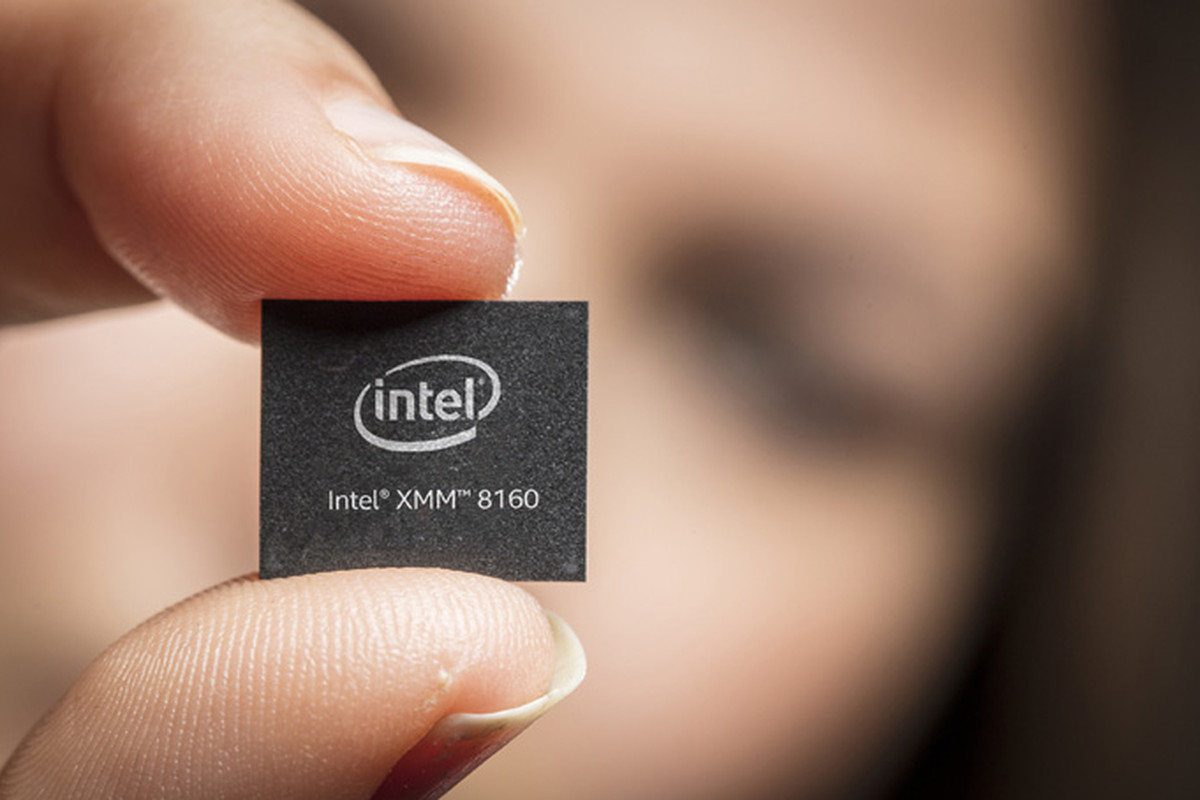
    By April of this year, Apple was desperate. It was embroiled in a fight with Qualcomm that was playing out in numerous lawsuits including one that was taking place in San Diego with billions of dollars at stake. With Qualcomm apparently unwilling to sell it 5G modem chips, Apple was relying on Intel, the company that supplied it with the 4G LTE modem chips used on the 2018 iPhones. But there were questions about whether Intel could deliver a 5G modem chip in time for Apple to release a 5G iPhone by 2020.

    On April 7th, Intel said that it would be able to supply Apple with its 5G modem chip in time for the first 5G iPhone to be launched next year. But just nine days later, while closing arguments were taking place during the trial in San Diego, a blockbuster announcement was made; Apple agreed to pay Qualcomm an undisclosed amount (believed to be $4.5 billion) and in return Qualcomm gave Apple a six-year license (with an option for two additional years) and a multi-year chip supply agreement. All lawsuits were dropped. Intel could see which way the wind was blowing and later that same day, the chipmaker announced that it was quitting the 5G smartphone modem business. And last month, the rumors started about Apple buying Intel’s smartphone modem business. Such an acquisition, if completed, would help Apple achieve its goal of producing its own modem chips.

    The talks between Apple and Intel have heated up to the point where they are now classified as “advanced.” The deal, said to be valued at $1 billion or more, could be announced as soon as next week. This would be a big transaction for Apple as the company usually makes small purchases. For example, in 2012 Apple bought biometrics firm AuthenTec for $356 million and Touch ID debuted a year later on the iPhone 5s. In 2015, Apple paid a reported $20 million for imaging firm LinX. The acquisition helped Apple immediately step up its camera game.  The most money that Apple has ever shelled out to buy another company was the $3 billion it spent to buy Beats Audio in 2014. While most of these deals had almost immediate payoffs for Apple, even with Intel’s smartphone modem chip business, it might not be until 2022 or 2023 before Apple is able to be self-sufficient in this area.

    Apple has been hiring engineers, including some from Intel, and plans on opening an office in San Diego with 1,200 employees. If a deal is reached, Intel will be getting rid of a business that has been losing $1 billion a year. And while it will no longer be producing chips for smartphones, it will still work on 5G based components for other devices. Meanwhile, Apple is looking to move in-house as much of the iPhone’s supply chain as possible. Last year it spent $600 million to purchase facilities and engineers from Dialog Semiconductors so that it could start producing internally the battery-management chips that it had been buying from Dialog in the past.

    While Apple appears to have this deal locked up, when Intel first announced that it was exiting the business, it received indications of interest from other companies. Should Apple and Intel fail to come to an agreement, another buyer could step in to take Apple’s place. Meanwhile, investors rightly regard this as potentially bad news for Qualcomm. When the story broke after the 4 pm EDT close of the NYSE, Qualcomm’s shares dropped 1.8% to $74.55.

    If Apple ends up buying Intel’s smartphone modem chip business, it can easily afford it. After accounting for debt, Apple had $113 billion of cash available as of March 30th when its fiscal second-quarter came to an end.

  • Judge’s ruling is bad for Qualcomm

    Judge’s ruling is bad for Qualcomm

    Back in May, Judge Lucy Koh ruled that Qualcomm’s business practices are anti-competitive. The judge, already known for presiding over the iconic Apple v. Samsung patent trial sat through the FTC v. Qualcomm non-jury trial held earlier this year. Judge Koh found that the chipmaker’s business practices violated antitrust laws. These included Qualcomm’s “no license, no chips” policy and its failure to license standard-essential patents to competitors at a fair, reasonable and non-discriminatory (FRAND) manner. These are patents that companies need to license so that their products can meet technical standards. Qualcomm was also called out by Judge Koh for charging royalties based on the retail price of a phone instead of just the cost of its chips.

    Of course, Qualcomm says that it will appeal the decision since it requires the company to renegotiate its contracts and licensing agreements with manufacturers. Qualcomm is also complaining that all of these negotiations can make it difficult for it to complete talks with phone producers who want to purchase Qualcomm’s 5G modem chips. And the ruling would force the company to work out deals with its rivals over licensing of its standard-essential patents.

    Qualcomm also is seeking a stay of the decision until it exhausts the appeals process. This way it doesn’t have to go through the whole exhaustive renegotiation process and then reverse the new deals if it wins on appeal. Even though that might make sense to some, Judge Koh has denied Qualcomm’s request. A spokesman for the chipmaker says that it will immediately request a stay from the 9th U.S. Circuit Court of Appeals.

    The FTC v. Qualcomm trial was held in January and featured testimony from employees of several phone manufacturers. Many testified about Qualcomm’s onerous terms for licensing its IP and how it bases the royalties it charges manufacturers on the entire retail price tag of a phone. So instead of paying a percentage of a $20-$40 part for each unit sold, phone manufacturers were charged a percentage of retail prices amounting to $400 and up for each phone rung up with a Qualcomm part. This is the difference between the chipmaker receiving dollars per phone or pennies per phone.

    One of those who took the stand was Apple supply chain executive Tony Blevins. At the time, Apple and Qualcomm were not on speaking terms and both companies had filed multiple suits against each other. But that all changed in April after closing arguments were heard in a trial that pitted Apple against Qualcomm. A settlement was announced that resulted in Apple paying Qualcomm an undisclosed amount (believed to be as much as $4.5 billion) and in return, Apple received a licensing agreement for six years (with a two-year option) and a multi-year chip supply agreement. In addition, both sides dropped all lawsuits filed against each other.

    One phone manufacturer happy with Tuesday’s decision is LG. It doesn’t want to see Koh’s decision stayed because it is currently negotiating a licensing and chip supply deal with Qualcomm and is worried that it might be forced to sign another “unfair” deal with the company. And needless to say, the FTC was also against a ruling that would stay the decision.

    Unless the decision has stayed, LG and other phone manufacturers will probably be working out new deals with Qualcomm while the appeals process goes on. It could take more than a year before a final decision is rendered by an appellate court. Wall Street weighed in with its decision and in after-hours trading on Wednesday (the market closed regular trading early for the July 4th holiday), the stock dropped by $2.49 or 3.25% to $76.63.

  • Qualcomm might be able to continue its anticompetitive chip selling policies

    Qualcomm might be able to continue its anticompetitive chip selling policies

    Last month, Judge Lucy Koh finally issued a ruling in a case that could force Qualcomm to change the way it does business. The case, known as the FTC (Federal Trade Commission) v. Qualcomm was originally heard during a ten-day period at the beginning of this year. With no jury seated, the FTC essentially put Qualcomm’s business practices on trial in front of the judge. Qualcomm’s “no license, no chips” policy, the collection of royalties based on the retail price of a phone, and its refusal to license its standard-essential patents were some of the company’s anticompetitive behaviors that were brought up by the FTC.

    Qualcomm has asked for a stay of the ruling so that it can appeal it, although Judge Koh has yet to make a decision on the request. The chip maker points out that if it starts renegotiating contracts as ordered by Judge Koh and then wins on appeal, it might not be able to reverse these deals once again. And Reuters reports that an FTC official thinks that Qualcomm has a good chance at overturning the ruling. FTC Commissioner Christine Wilson, appointed by President Donald Trump, wrote in the Wall Street Journal last week that the ruling against Qualcomm “radically expanded a company’s legal obligation to help its competitors,” and was based on a flawed 1985 Supreme Court decision (more on that later).

    Wilson’s op-ed might give Qualcomm an idea on how to win an appeal of Koh’s decision, according to several antitrust attorneys. Others believe that the appeals courts will find it hard to overturn Koh’s ruling, which some say was based on the judge’s strong fact-finding abilities and her determination about the credibility of those who testified before her.

    The aforementioned 1985 Supreme Court decision ruled that a company that drops a business arrangement that has proven profitable over time could be guilty of violating competition law. How does this relate to Qualcomm? The company once licensed its standard-essential patents to rival chip firms. These are patents that manufacturers need to license to make sure that their products are in compliance with technical standards. As a result, they must be offered to rivals on a fair, reasonable and non-discriminatory (FRAND) basis. In the early 2000s, Qualcomm stopped offering these patents to other chip makers and only licensed them to smartphone manufacturers.

    During the trial, the company denied that it had ever offered full licenses to other chip makers and says that if forced into doing so by Koh’s decision, it would be a new business arrangement, not the resumption of an old one. And that dovetails with Wilson’s op-ed in the Journal in which she wrote that Koh’s decision means that if a company sells a product to a competitor, it would have to sell every product it makes to every competitor or else be charged with violating antitrust law. The FTC commissioner also said that Judge Koh misapplied the 1985 Supreme Court decision.  University of Southern California law professor Jonathan Barnett agrees with Wilson and says that the Supreme Court ruling was supposed to be “very narrow.” He says that there is a good chance that Qualcomm will be able to reverse Judge Koh’s ruling.

    Many investors are hoping the same thing. On April 15th, the day before Qualcomm and Apple reached a settlement on their legal issues, Qualcomm’s shares closed at $57.18. Following news of the settlement, the stock soared peaking on May 1st at $89.29. The day before Judge Koh released her decision, Qualcomm’s shares had already declined to $77.75. Following the ruling, the stock dropped to $65.37. The company’s shares closed last week at $66.82.

  • Qualcomm and Intel comply with the White House ban

    Qualcomm and Intel comply with the White House ban

    As if the maker of the world’s most popular mobile operating system cutting you off wasn’t unpleasant enough for Huawei, US chip makers will also be forced to do so, or risk the wrath of the current White House administration.

    Qualcomm, the maker of all things Snapdragon and 4G/5G modems, as well as Broadcom, a supplier of Wi-fi and other connectivity chips, will also have to deal with the administration’s thinly veiled restrictions for doing business with precisely Huawei.

    Intel is in the mix, too, just when Huawei laptops started getting glowing tech reviews for their design, battery longevity, and value-for-money configurations. Infineon, the German modem maker that Intel bought in 2011, has also received marching orders to cut supply to Huawei effective immediately.

    Needless to say, Huawei makes its own mobile processors and has a 5G connectivity modem already in retail devices, so it wouldn’t be as worried about US chip makers shunning its business. Moreover, it has apparently anticipated the chip ban and stockpiled a three-month supply, but Google’s move is potentially much more devastating as it will be hard to find a replacement.

    Not of the Android system per se, as Huawei has been working on an alternative for a while now, but for the apps it launches. On the plus side, excellent phones like the P30 Pro may become much cheaper now. Morbid humor, but Google isn’t cutting Huawei off completely until Android Q rolls in. That is a few short months from now, though, so it will be interesting to follow China’s reaction to this hostile US attitude and Huawei’s ban as collateral damage in the larger trade war between the two nations.