Retail News CRM

Tag: Qualcomm

  • Qualcomm Tops Magna’s Bid With $4.6 Billion Offer For Veoneer

    Qualcomm Tops Magna’s Bid With $4.6 Billion Offer For Veoneer

    Chipmaker Qualcomm Inc said on Thursday it had offered to buy Swedish auto parts maker Veoneer Inc for $4.6 billion, an 18.4% premium to a bid by Canada’s Magna International Inc that was accepted by Veoneer’s board. U.S.-listed shares of Veoneer rose 21.7% in premarket trading as the stage was set for a bidding war. Neither Magna or Veoneer made any immediate comment. Demand has been on the rise for advanced driver assistance systems, known in the industry as ADAS, that add features ranging from collision warning to parking assist. Some systems collect data from cameras and radar to monitor surroundings, interpret the situation and take action.

    Qualcomm, apart from powering mobile phones, has been a chip supplier to carmakers for a decade and last year started its own line of ADAS systems called Snapdragon Ride. Earlier this year it signed a signed a collaboration deal with Veoneer to develop a software and chip platform for driver-assistance systems. While fully self-driving vehicles are years away, assisted-driving features, such as adaptive cruise control, are being fitted into new cars by most manufacturers.

    Qualcomm hopes to grow its automotive chips business by creating open and competitive platforms for automakers along with Veoneer. “As the automotive industry continues to transform, it is becoming increasingly important for automakers to have a partner who develops horizontal platforms that drive innovation and enable competition,” said Qualcomm CEO Cristiano Amon.

    Magna has a similar interest in buying Veoneer as it tries to compete with ADAS makers such as Aptiv, Bosch and Continental to capture a larger share of the booming business. The Canadian company had offered to buy rival Veoneer in July for about $3.8 billion in cash.

  • Intel to build chips for Qualcomm; hopes to rival TSMC

    Intel to build chips for Qualcomm; hopes to rival TSMC

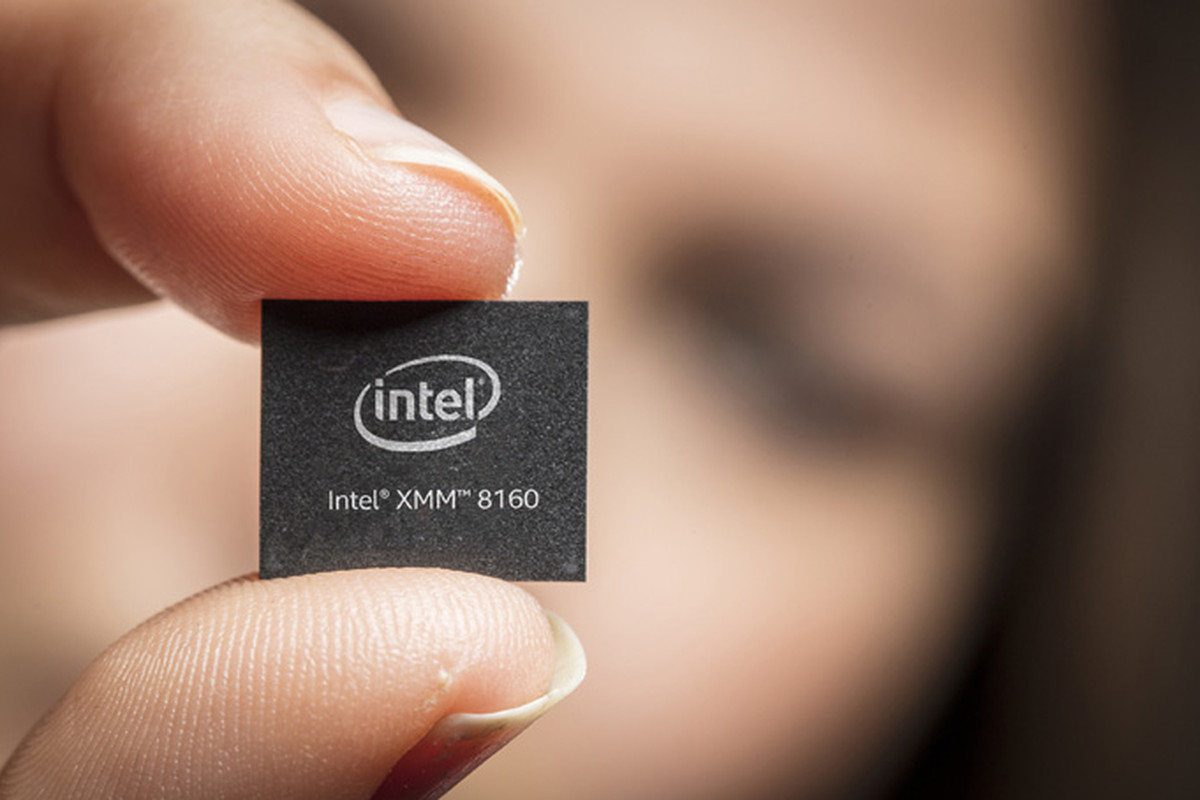
    TSMC and Samsung, the two top contract foundries in the world, will soon have a new rival. Reuters reports that yesterday Intel announced that it will start producing chips for other companies such as Qualcomm and Amazon. Intel expects to challenge TSMC and Samsung by 2025.

    Intel was once the T-Rex of chipmakers, but Taiwan’s TSMC has become the global leader with Samsung right beside it. Both of those firms produce chips for Apple, Qualcomm, AMD, and other top tech companies. The pair also currently manufacture chips using 5nm process nodes and have roadmaps down to 2nm. As an example of what each of the two foundries can offer,  TSMC is the foundry rolling out Apple’s M1 chip that carries a whopping 16 billion transistors (no typo here folks) in each chip.

    Intel says that over the next four years, it will introduce five new technologies related to the production of these vital components. One of the five is the introduction of Intel’s first new transistor design in ten years. As early as 2025, Intel will get its hands on ASML’s next-generation extreme ultraviolet lithography (EVL) machines that place on the silicon an image of where the circuitry will be placed.

    The EVL machine is important because it needs to produce extremely thin lines as transistor size shrinks allowing foundries to pack more transistors inside the components they manufacture. Intel also plans on revamping the way it names its chips to be more in line with TSMC and Samsung. Dan Hutcheson, chief executive of VLSIresearch, an independent semiconductor forecasting firm, said that Intel’s current naming protocol gave the impression that the company was less competitive.

    The larger the number of transistors that fit inside a square mm, the more powerful and less energy-guzzling a chip is. And while Intel has been losing the process node war with TSMC and Samsung, it does plan to reveal a design for transistors smaller than 1nm by 2024.

    Intel’s first major new customers will be Qualcomm and Amazon. The former is known for the Snapdragon chips that drive mobile phones with some helping to connect handsets to 5G networks. These chips will use Intel’s 20A manufacturing technique that will produce chips that consume less power than current components thanks to the use of new transistor technologies.

    Amazon plans on using Intel’s packaging technology for the components it produces itself for the data center chips used for its Amazon Web Services. Intel Chief Executive Pat Gelsinger stated that “There have been many, many hours of deep and technical engagement with these first two customers, and many others.”

    While some analysts remain cautious about whether Intel can deliver on the promises it has made, Real World Technologies’ David Kanter said that the chipmaker is being more cautious than it has been in the past. He says, “Intel is absolutely going to catch up, and be ahead in some dimensions, with TSMC over the next few years. Intel really does have people who spend all their time looking at how to deploy new materials and technology to juice their performance.”

    You might recall that a legal feud between Apple and Qualcomm had Apple scrambling for a 5G modem chip to replace the one it wanted from Qualcomm. Apple planned on using a new 5G modem chip designed and produced by Intel. But Apple wasn’t thrilled about this and eventually reached a settlement that allowed it and Qualcomm to bury the hatchet resulting in the use of Qualcomm’s 5G modems on the iPhone 12 line, the first iPhone models to support 5G.

    Eventually, Apple plans on designing its own 5G modem chip and ended up purchasing most of Intel’s smartphone modem business in July 2019 for $1 billion.

  • Qualcomm sheds light on which smartwatches support Google’s new Wear OS

    Qualcomm sheds light on which smartwatches support Google’s new Wear OS

    The reveal of a new Wear OS fully supported by Samsung was a big surprise for the wearable industry. In fact, it was such as surprise that many smartwatch manufacturers don’t know whether or not their products support the platform that’s said to combine the best of Wear OS and Tizen.

    Not even Google was willing to offer a straight answer when asked which of the current smartwatches can be upgraded to Wear OS 3.0, and which ones will remain on their current version of the OS.

    Qualcomm on the other hand has been more generous and shared some info on the matter. XDA reports that a spokesperson for Qualcomm confirmed that Snapdragon Wear 3100 and Snapdragon Wear 4100/4100+ are the only chipsets that would be able to run the new Wear OS 3.0.

    We are working with Google on bringing Wear OS 3.0 to Snapdragon Wear 4100+ and 4100 platforms. Snapdragon Wear 3100, 4100+ and 4100 platforms are capable of supporting Wear OS 3.0, but we are not discussing any specifics at this time.

    Although that doesn’t necessarily mean that all smartwatches equipped with these specific chipsets will receive the Wear OS 3.0 upgrade, at least we know which ones are more likely to be updated.

    Of course, if you’re using a Fossil smartwatch, then you already know you won’t be getting the new Wear OS 3.0 update, as the company has already issued an official statement on the matter not long ago.

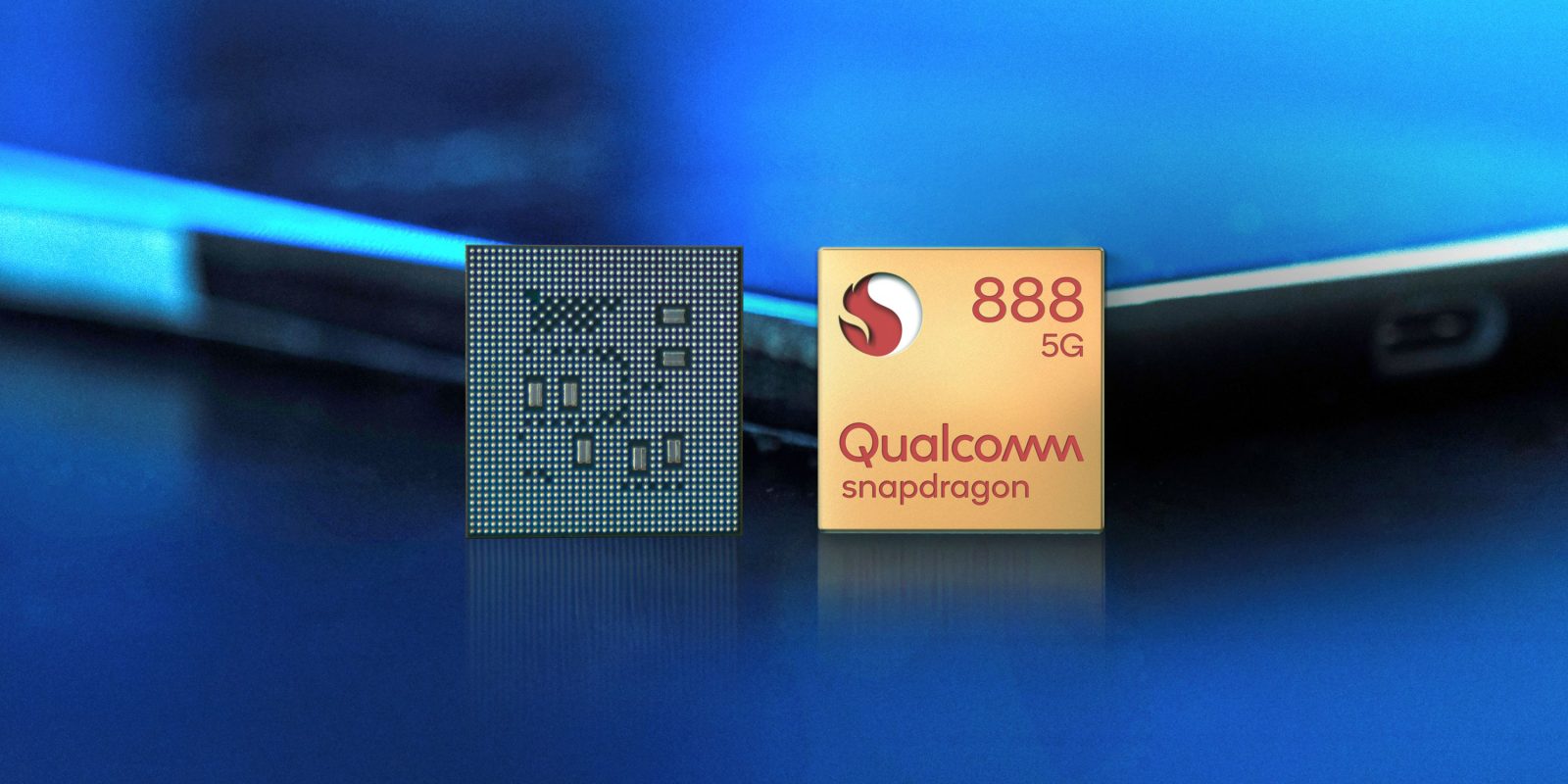
  • Qualcomm’s true Snapdragon 888 sequel is already shaping up as a huge upgrade

    Qualcomm’s true Snapdragon 888 sequel is already shaping up as a huge upgrade

    Smartphone processors don’t typically get the same kind of attention that, well, actual mobile devices do ahead of their official announcements, but while it’s still early to know for sure how the industry will look in 2022, a number of recent rumors and a vague AMD confirmation seem to suggest some big breakthroughs might be right around the corner.

    To fend off Samsung’s high-quality graphics-focused Exynos 2200 chip and whatever A-series monsters Apple has in the pipeline after revolutionizing tablet power with the M1 iPad Pro, Qualcomm is apparently working on a “next-gen premium” SoC carrying model number SM8450.

    Right off the bat, we should mention this thing is different from the oft-rumored and recently benchmarked Snapdragon 888 Plus, aka SM8350+, which is widely expected to follow in the footsteps of the regular SM8350 (better known as the Snapdragon 888) with relatively modest performance gains by the end of 2021.

    Likely to see daylight inside 2022’s first wave of Android flagships, the SM8450 could bring way more than your routine yearly upgrades in CPU and GPU muscle to the table. If the latest information shared by Evan Blass on Twitter proves reliable (which is almost always the case), the unnamed next-gen Snapdragon powerhouse will combine ARM Cortex v9-based Kryo 780 CPU cores with an Adreno 730 graphics processing unit.

    While these types of monikers can certainly be misleading (just think of the Snapdragon 888, which isn’t that much more impressive than the 865), the Adreno 730 name gives us hope for something truly game-changing. We’re talking something a lot better than the Adreno 660-integrating Snapdragon 888, which came after the Adreno 650-packing Snapdragon 865.

    The last jump of a similar magnitude came when the Snapdragon 845 chipset replaced the 835’s Adreno 540 with a 630 model, also upgrading the Kryo 280 CPU cores to 385. The Kryo-replacing branding scheme has actually stayed consistent ever since, so the impending jump from Kryo 680 to 780 may not signal anything groundbreaking… at least at first glance.

    Unsurprisingly, the SM8450 is tipped to come with many other changes and improvements as well, including a key switch from a super-advanced 5nm fabrication process to… even more advanced 4nm technology and a leap from a built-in X60 to an integrated X65 5G modem.

    The rest of the specifications and capabilities seemingly leaked today are just as promising, from the Spectra 680 image signal processor (up from a Spectra 580 on the Snapdragon 888) to an Adreno 665 video processing unit, Adreno 1195 display processing unit, and support for up to 1GHz mmWave downlink and 400MHz Sub-6 D.

    That’s… a lot of numbers you may not know what to make of, and of course, we don’t really know either how they’ll translate into real-world performance. But because we don’t believe in coincidences, it sure looks like Qualcomm is preparing something big on the mobile graphics front to keep the newly formed alliance between Samsung and AMD at bay.

    Previous rumors suggested 2022’s Snapdragon 888 successor will be manufactured by TSMC instead of Samsung, by the way, but something tells us the world’s largest smartphone vendor can’t afford to completely break up with Qualcomm yet.

    Like the vast majority of the overall best phones available in 2021, the Galaxy Note 20 and S21 families still use Snapdragon processors rather than their Exynos counterparts (in some regions), and we fully expect that to be the case for next year’s Galaxy S22 lineup as well.

  • Chip delays reach crisis territory; Apple, Qualcomm and others are affected

    Chip delays reach crisis territory; Apple, Qualcomm and others are affected

    The worldwide chip shortage is about to hit a benchmark indicative of more serious problems ahead for tech companies. This benchmark measures the lead times for chip orders, or the time it takes between ordering semiconductors and actually receiving the shipment. Bloomberg reports that this measure hit 17 weeks last month according to Susquehanna Financial Group which says that it is a sign that users are getting desperate to obtain the needed components

    Su.squehanna Financial notes that the 17 weeks is the longest period of time it has recorded for this measure since it started tracking it in 2017. Based on that figure, the research firm says that when it comes to purchasing sufficient chips, consumer electronic firms and automobile outfits are in “the danger zone.” Last year at this time, the lead time was 12.53 weeks.

    Susquehanna analyst Chris Rolland disseminated a note to clients yesterday in which he wrote about lead times for analog chips, power management chips, and others. “All major product categories up considerably. These were some of the largest increases since we started tracking the data,” he stated. Apple has said that it could lose up to $4 billion in revenue during the current quarter thanks to shortages of chips and other components, while automakers are on track to report a revenue shortfall of $110 billion this year.

    Rolland wrote that demand for chips might be overstated by actions taken by customers afraid of missing out on supplies. “Elevated lead times often compel ‘bad behavior’ at customers, including inventory accumulation, safety stock building and double ordering. These trends may have spurred a semiconductor industry in the early stages of over-shipment above true customer demand.”

    The analyst said that the 17 week lead time expanded from the previous 16 week lead time and marks the fourth consecutive month that lead time has risen by a “sizeable” amount. Power Management chips lead time weighs in at 23.7 weeks, up about four weeks over the last month. Industrial microcontroller’s order lead times have recently risen by three weeks.

    Susquehanna says that delays are longer for smaller manufacturers; for example, headphone manufacturers have lead times longer than 52 weeks! The expanded lead times has forced firms to redesign, and even drop projects. Rolland says that 70% of the companies he tracks in the chip industry are reporting expanding lead times while 20% have seen lead times drop.

    NXP Semiconductors NV, a company that supplies chips to automakers, has seen lead times rise from 12 weeks late last year to 22 weeks. And STMicroelectronics, another chip supplier for the auto industry, had its lead times rise by 4 weeks in April to 28 weeks.

    Taiwan, the home of the world’s largest independent foundry TSMC, has been dealing with a couple of issues that could impact chip production in the country. The number of COVID-19 cases in the country has been rising and in addition, drought has impacted the country. Water is an important ingredient when it comes to chip making and TSMC has ordered huge deliveries of the ultra-pure water required to run its assembly lines.

    TSMC has plenty of important customers that rely on it to turn chip designs into chips. Among those firms are Apple, Qualcomm and MediaTek. Today, Taiwan’s Centers for Disease Control raised the island’s alert level which spreads COVID-containment measures to the whole country.

    Also today, Taiwan’s Water Resources Agency said that the country needed to use more aggressive water-saving methods thanks to the low amount of rain that has fallen in the country. TSMC responded by saying that it will continue to tighten up its water usage, although it doesn’t believe that it will have to make any changes to its operations even with the countries’ new measures announced today.

  • Qualcomm scores a major legal victory that might hurt phone manufacturers

    Qualcomm scores a major legal victory that might hurt phone manufacturers

    Back in 2019, Judge Lucy Koh ruled in favor of the Federal Trade Commission over chipmaker Qualcomm. The judge said that the way Qualcomm does business, from its “no license, no chips” mantra, to its refusal to license standards-essential patents with other chipmakers on a Fair, Reasonable, and Non-Discriminatory (FRAND) basis, and the way it calculates royalties based on the retail price of an entire device (instead of the much smaller price of Qualcomm’s components) were anti-competitive. While Qualcomm gets the majority of its revenue from selling chips, the bulk of its profits come from licensing its library of telecommunication patents. The FTC accused Qualcomm of obtaining excessive licensing fees from those manufacturers.
    Phone manufacturers had testified against Qualcomm during the brief trial since they were the ones being subjected to monopolistic behavior on the part of the San Diego-based outfit. In her 2019 ruling, Judge Koh said that she ignored the testimony of Qualcomm executives as the judge noted that their testimony was contradicted by emails and notes written by others at the company.
    But Qualcomm, whose entire process of selling chips was on the line, was not going to go down so easily. It filed an appeal and won over a three-judge panel in California’s Ninth Circuit; the trio tossed out the original decision. The Ninth Circuit shot down each charge against Qualcomm stating that each one was not anticompetitive. For example, it said that since the company had no duty under antitrust law to license chips to competitors, the company’s licensing at the manufacturer level was legal. The appeals court also ruled that Qualcomm’s “no license, no chips” policy is not anticompetitive and does not “undermine competition.” As for its inability to offer standards-essential patents at FRAND (Fair, Reasonable and Non-Discriminatory) terms, the appeals court said that a remedy can be found by filing a different type of lawsuit with a different court. The FTC asked that the appeals court decision be reheard, last August it was turned down.
    And that brings us to Monday when FTC Acting Chairwoman Rebecca Kelly Slaughter announced that she has decided not to petition the U.S. Supreme Court to review the case. In a statement, Slaughter said, “Given the significant headwinds facing the Commission in this matter, the FTC will not petition the Supreme Court to review the decision of the Court of Appeals for the Ninth Circuit in FTC v. Qualcomm. The FTC’s staff did an exceptional job presenting the case, and I continue to believe that the district court’s conclusion that Qualcomm violated the antitrust laws was entirely correct and that the court of appeals erred in concluding otherwise. Now more than ever, the FTC and other law enforcement agencies need to boldly enforce the antitrust laws to guard against abusive behavior by dominant firms, including in high-technology markets and those that involve intellectual property. I am particularly concerned about the potential for anticompetitive or unfair behavior in the context of standard setting and the FTC will closely monitor conduct in this arena.”
    Slaughter was not a member of the FTC when the lawsuit was originally filed in January 2017 during the waning days of the Obama administration. Now that the FTC has decided not to take the case to the Supreme Court, it can be considered a complete vindication for the chip maker whose style of doing business was criticized by the entire mobile industry. The company would always defend itself by noting that it used licensing fees and royalties to fund its R&D to help it create faster and improved components for its customers.
    Qualcomm, of course, was pleased by the agency’s decision to drop the case. Don Rosenberg, general counsel of Qualcomm, stated, “Qualcomm got to where it is today by investing tens of billions of dollars in R&D and inventing technologies used by billions of people around the world. Now, more than ever, we must preserve the fundamental incentives to innovate and compete.”
  • Qualcomm supports SoftBank’s fastest-ever 5G mmWave in Japan

    Qualcomm supports SoftBank’s fastest-ever 5G mmWave in Japan

    Qualcomm Technologies, Inc. announced that SoftBank Corp. has launched its 5G millimeter (mmWave) service in Japan – using devices based on Qualcomm® Snapdragon™ 5G Mobile Platforms and Modem-RF Systems. 5G mmWave allows Japanese users to enjoy the fastest possible multi-Gigabit download speeds in the country. Along with the launch, SoftBank is making the “Pocket WiFi 5G A004ZT” 5G mmWave mobile hotspot available for sale. All initial 5G mmWave-compatible mobile devices in SoftBank’s portfolio, including soon-to-be announced 5G smartphones, are expected to be powered by Qualcomm Technologies’ 5G mmWave products.

    The deployment of 5G mmWave is critical to unleashing the full potential of 5G and addressing the massive increase in mobile data demand. 5G mmWave allows leading operators such as SoftBank to take advantage of the large amount of spectrum resources available in higher bands, enabling them to deliver the world’s fastest multi-gigabit cellular speeds and low latency connectivity.

    5G mmWave is also a cost-effective way for mobile operators to increase the network capacity needed to meet the increasing demand for data in dense urban, fixed wireless access and enterprise environments – with savings up to 35% in total cost of ownership compared to sole use of sub-6 GHz bands.

    “5G mmWave is critical for mobile operators to stay competitive and to realize the full potential of 5G to transform many industries,” said Francesco Grilli, vice president, product management, Qualcomm Technologies, Inc. “Japan is at the forefront in deploying the most advanced 5G technologies such as mmWave, and we are honored by working with SoftBank to bring the fastest mobile experiences to Japanese consumers and businesses.”

    “SoftBank is pleased to collaborate with Qualcomm Technologies and use its leading 5G mmWave technology to offer world-class 5G service to our subscribers,” said Keigo Sugano, senior vice president, head of product division, SoftBank Corp. “We look forward to continuing our long-standing collaboration with Qualcomm Technologies to support Japan’s growth and leadership using the most advanced wireless innovations.”

    This announcement follows SoftBank’s commercial launch of 5G Sub-6 GHz service with smartphones powered by Snapdragon 5G Mobile Platforms in March 2020. The commercial launch of 5G mmWave significantly strengthens SoftBank’s 5G network capabilities, with more mmWave capable mobile devices to be launched going forward.

  • Qualcomm ups the perfect wireless audio ante with Snapdragon Sound

    Qualcomm ups the perfect wireless audio ante with Snapdragon Sound

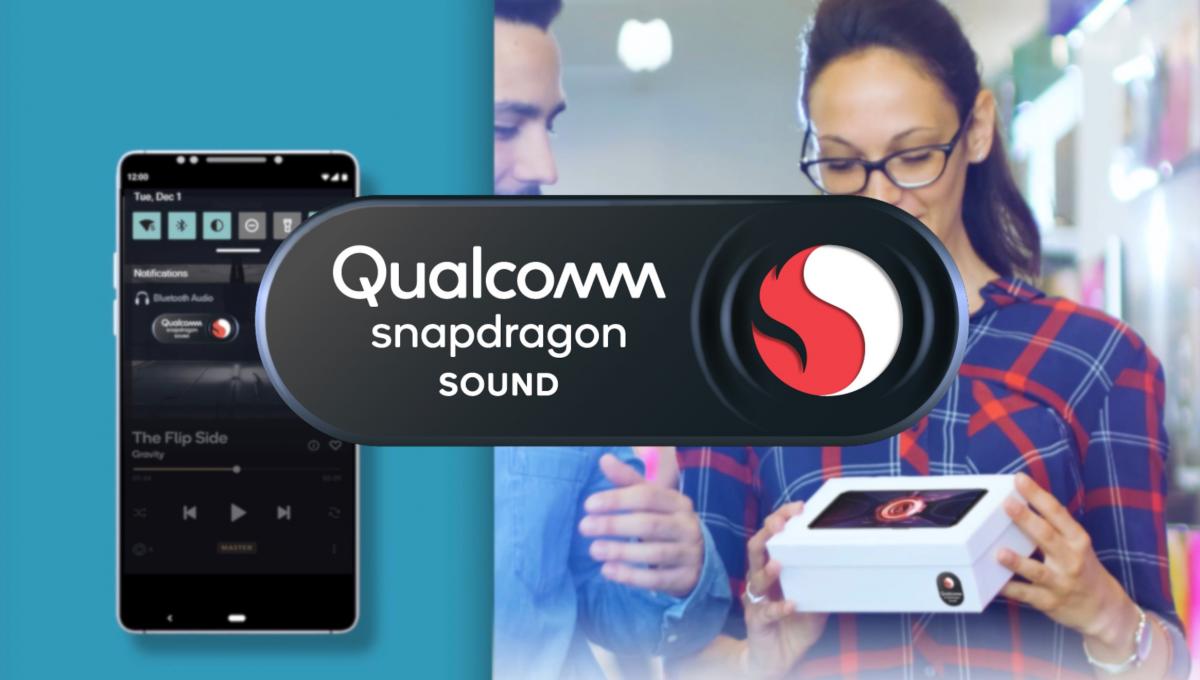
    Qualcomm just took to the airwaves to detail Snapdragon Sound, a holistic platform across a universe of devices to bring the best possible audio to your ears. We are talking phones, true wireless buds, wearables, laptops, game controllers, and even cars or virtual reality gear equipped with Qualcomm’s Snapdragon Sound platform.

    The company teased its cross-device audio initiative with the launch of its Snapdragon 888 chipset and said that we will be able to experience it this year. Sure enough, the first phone makers to adopt it, like Xiaomi, are already at the top of the phone audio pile over at DxOMark, boding well for the future of the Snapdragon Sound platform. Needless to say, a bunch of prerequisites need to be met before Qualcomm puts the Snapdragon Sound stamp on a device’s packaging:

    • Qualcomm Snapdragon 8-series mobile platforms
    • Qualcomm FastConnect 6900 mobile connectivity system
    • Qualcomm QCC514x, QCC515x and QCC3056 series Bluetooth Audio SoCs
    • Qualcomm Active Noise Cancelling (ANC) technology
    • Qualcomm aptX Adaptive 24-bit 96kHz and 89ms latency
    • Qualcomm aptX Voice super wideband voice
    • Qualcomm Aqsti audio codec and smart speaker amplifier WCD938x and WSA883x
    • Qualcomm Audio and Voice Communication Suite

    Curiously enough, these components are only present in their entirety in Qualcomm’s flagship 8-series processors like Snapdragon 888, which explains why the top phone in terms of audio quality over at DxO is the Asus ROG Phone 5 – a device that hasn’t even been announced yet, and still its Snapdragon Audio optimizations earned it top dog audio status. According to James Chapman, vice president and general manager, Voice, Music and Wearables, Qualcomm Technologies International, Ltd:

    The human ear is highly sensitive to glitches, latencies and other challenges which commonly occur when streaming music, video conferencing, or gaming over wireless connections. By focusing end-to-end, we are looking to deliver innovations to solve common consumer pain-points across virtually all audio interaction points.

    Qualcomm Technologies is uniquely positioned to provide tremendous value to customers with Snapdragon Sound and help them quickly commercialize products differentiated by great sound quality. Our system-level approach aggregates multiple technologies and the latest products from across our mobile and audio platform portfolios to achieve our vision of delivering high-resolution, wired quality audio, wirelessly.

    What does this all mean? Well, you heard the man, stereo latency or crackling while listening with true wireless buds should be a thing of the past, and Snapdragon Sound supports ultra high-res, 24-bit 96kHz audio. The “crystal-clear voice quality” is something that caught our attention in particular, as, in this day and age of teleworking and Zoom meetings, clean audio seems more important than ever.

    We can’t wait to take Qualcomm’s promises for a spin when the respective phones and buds are sent to us for testing. If you want to test for yourself, the Qualcomm Snapdragon Sound playlist is now available over at Amazon Music HD.

  • Qualcomm is no longer the top supplier of chipsets for smartphones

    Qualcomm is no longer the top supplier of chipsets for smartphones

    There has been a change in the smartphone industry. During the third quarter of this year covering July through September, MediaTek overtook Qualcomm to become the top provider of chipsets for the smartphone industry with a 31% share of the market. Counterpoint attributes MediaTek’s success to strong sales of phones in the $100-$250 price range amid strong growth in the top two smartphone markets in the world; that would be China (#1) and India (#2). As a developing country, Indian consumers prefer value brands many of which use MediaTek chips instead of Qualcomm’s pricier Snapdragon silicon.

    This is not to say that Qualcomm couldn’t find a sweet spot for growth in Q3. With 39% of the market, the chip maker is the leading provider of 5G chipsets for phones and this is a market that doubled during the third quarter. Counterpoint says that 17% of  all phones sold during the third quarter supported 5G. That figure is expected to rise to 33% for the current quarter that started in October and concludes at the end of the year. With strong growth in 5G shipments for the fourth quarter, Qualcomm does have a chance to take back the crown that MediaTek took away from it.

    MediaTek’s leading 31% share of the smartphone chipset market was a 19% percent gain from the 25% share that the Taiwan based firm had last year. During the same time period, Qualcomm’s slice of the chipset pie for handsets declined from a leading 31% to the current 29%. Apple was third as its A-series chips, built exclusively for its phones and tablets, garnered 12% of the market. That put Apple in a three-way tie with Samsung and Huawei’s HiSilicon unit.

    Counterpoint Research Director Dale Gai pointed out that “MediaTek’s strong market share gain in Q3 2020 happened due to three reasons – strong performance in the mid-end smartphone price segment ($100-$250) and emerging markets like LATAM (Latin America) and MEA (Middle East and Asia), the US ban on Huawei and finally wins in leading OEMs like Samsung, Xiaomi and Honor. The share of MediaTek chipsets in Xiaomi has increased by more than three times since the same period last year. MediaTek was also able to leverage the gap created due to the US ban on Huawei. Affordable MediaTek chips fabricated by TSMC became the first option for many OEMs to quickly fill the gap left by Huawei’s absence. Huawei had also previously purchased a significant amount of chipsets ahead of the ban.”

    Gai also noted that, “On the other hand, Qualcomm also posted strong share gains (from a year ago) in the high-end segment in Q3 2020, again thanks to HiSilicon’s supply issues. However, Qualcomm faced competition from MediaTek in the mid-end segment. We believe both will continue to compete intensively through aggressive pricing, and mainstream 5G SoC products into 2021.”

    Counterpoint Research Analyst Ankit Malhotra added, “Qualcomm and MediaTek have both reshuffled their portfolios, and consumer focus has played a key role here. Last year, MediaTek launched a new gaming-based G-series, while Dimensity chipsets have helped in bringing 5G to affordable categories. The world’s cheapest 5G device, the realme V3, is powered by MediaTek. Using his crystal ball to look into the future, Malhotra said, “The immediate focus of chipset vendors will be to bring 5G to the masses, which will then unlock the potential of consumer 5G use cases like cloud gaming, which in turn will lead to higher demand for higher clocked GPUs and more powerful processors. Qualcomm and MediaTek will continue to contend for the top position.”

  • Data from Qualcomm suggests that Apple could produce 176 million 5G iPhone units this year

    Data from Qualcomm suggests that Apple could produce 176 million 5G iPhone units this year

    With a little bit of math and plenty of fingers and toes, Sina Finance has calculated that Apple purchased approximately 176 million 5G modems from Qualcomm for this year. This calculation dovetails with estimates calling for Apple to produce 5G and non-5G iPhone models in the neighborhood of 190-200 million units for 2020. On the other hand, another report written by Taiwan’s Appledaily calls for Apple to roll out 120 million 5G iPhones this year indicating that the higher figures overestimate reality. Another possibility is that Apple expects strong sales for the iPhone 12 series this year and next year. One other option is that Apple ordered more modem chips than they needed because the company plans on using them on some future Apple devices. There has been talking about a 5G iPad tablet in the future and Apple might have ordered enough chips for such a device.

    Each 12-inch wafer that TSMC ships to Qualcomm can yield 2,211 modem chips for Apple; with 80,000 wafers shipped, we can estimate that Apple received 176 million 5G modem chips. This tells us that Apple expects to deliver 176 million 5G handsets this year. You might recall that Apple and Qualcomm were the Silicon Valley equivalent of the Hatfields and McCoys in 2019 with both firms taking each other to court for various patent infringements. Apple was frantically trying to find a source for 5G modem chips. On April 16th, 2019, just after Apple concluded its opening statement in a court battle with Qualcomm, a settlement between the two companies was announced. In return for a large sack of cash from Apple (estimated to be $4.5 billion), the chip designer gave Apple a six-year licensing agreement with an option for an additional two years. The settlement also included a supply agreement that covers the purchase by Apple of Qualcomm’s 5G modem chips. All legal action filed by both companies against the other was dropped.

    In more news related to this subject, Qualcomm is now TSMC’s largest customer for chips made used the 7nm process node. The process node is based on the number of transistors that fit in a square mm. TSMC’s 7nm process node sports 96.5 million transistors in that little space compared to 171.3 million with the latest 3nm process node. The larger the number of transistors inside a chip, the more powerful and energy-efficient it is. The 7nm process is used to manufacture the Snapdragon X55 modem chip and the current flagship Snapdragon 865 and Snapdragon 865+ chipsets.

    Apple does not ever want to be in the position again where it needs a specific component from a third-party supplier. So it has been working on developing its own modem chip. This would be dome similar to how Apple designs its own chipsets and has it built by a contract foundry such as TSMC or Samsung. Last year, Apple spent $1 billion to acquire most of Intel’s smartphone modem chip business. 2,200 Intel employees joined Apple with the transaction. Apple hopes to start using its own 5G modem chips perhaps by 2023. This could save Apple some money which in turn might allow the firm to cut pricing on future 5G enabled devices.

    That Apple went ahead and purchased Intel’s smartphone modem business suggests how strongly it wants to design its own chips. A $1 billion acquisition is unusual for Apple which usually involves itself in smaller transactions covering niche components that it plans on using for the iPhone or other devices within the next year or two. The largest acquisition made by Apple was its purchase of Beats Audio for $3 billion in 2014.

  • Qualcomm Snapdragon 875 will be unveiled in December

    Qualcomm Snapdragon 875 will be unveiled in December

    Qualcomm has started sending out invites for a two-day digital event that will kick off on December 1 and although the chipmaker hasn’t confirmed this, it’s a given that the Snapdragon 875 will be unveiled during the Tech Summit.

    Per rumors, the Snapdragon 875 will be Qualcomm’s first SoC to employ the 5nm manufacturing process. It is expected to have one Cortex-X1 core, three Cortex-A78 cores, and four Cortex-A55 cores. The chip will reportedly be manufactured by Samsung.

    We can expect it to be around 20 percent more power-efficient than the Snapdragon 865. Performance could get a 10 percent boost.

    The Snapdragon X60 5G modem will apparently be integrated within the chip.

    It is not clear at the moment if Qualcomm also plans to announce other chips during the event. The company is apparently working on its first 6nm chip dubbed Snapdragon 775G which will succeed the Snapdragon 765G. Another 5nm silicon and an entry-level chip are also in the pipeline reportedly.

    A couple of reports suggest that Snapdragon 875 powered phones will be faster than the iPhone 12. While Android users may rejoice at the prospect, the alleged high price of the chip could prevent some Android manufacturers from equipping their 2021 phones with the SoC.

    For instance, the grapevine has it that only the highest-end Samsung Galaxy S21 model will be powered by the Snapdragon 875, and the rest will either employ an in-house chip or settle for the Snapdragon 865.

  • Qualcomm’s newest 5G chipset is announced

    Qualcomm’s newest 5G chipset is announced

    Qualcomm unveiled a new 5G enabled chipset from the Snapdragon 7-Series. The Snapdragon 750G enables “truly global gaming” according to the San Diego-based company, along with True HDR gaming (with 10x brighter colors), and on-device AI. The chipset supports both sub-6GHz and mmWave 5G; the latter delivers signals that travel far, easily penetrate structures but provide slower 5G download data speeds than what is available from mmWave 5G signals. The Snapdragon 750G chip offers some features from Qualcomm’s Snapdragon Elite Gaming that allow for smooth gameplay with low latency.

    The Snapdragon 750G comes with the Adreno 619 GPU providing users with as much as a 10% hike in graphics rendering compared to the Adreno 618 GPU found on the Snapdragon 730G. Qualcomm states that the new chipset delivers “stunning, life-like imagery” and the 5G support allows users to play multiplayer contests or stream games through their smartphones using 5G cloud gaming platforms.

    AI tasks will be handled by the fifth-generation Qualcomm AI Engine supporting voice translation, smart camera, and video, AI-enhanced gaming experiences and advanced AI-based imaging. The AI Engine handles up to 4.0 Trillion Operations Per Second (TOPS), a 20% improvement compared to Snapdragon 730G. The chip is powered by the Kryo 570 CPU core allowing for a 20% hike in “enhanced user experience,” also compared to the Snapdragon 730G. Integrated into the Snapdragon 750G is an AI-based audio and voice communication suite that allows users to hear speech loud and clear despite dogs barking in the background, the sounds of construction, loud traffic, and more.

    The Qualcomm Spectra 355L Image Signal Processor produces noise-reduced sharp images and 4K HDR videos can be recorded. The chip will work with image sensors supporting a pixel count of up to 192MP.

    The CPU runs at a clock speed as fast as 2.2GHz and works with Bluetooth 5.1. It is Wi-Fi 6 ready and does work with a 120Hz rapid refresh rate on screens with a resolution of FHD+. The maximum display that can be driven by the Snapdragon 750G is QHD (1440p) with a standard 60Hz refresh rate. The chip is manufactured using an 8nm process node and the first devices to be powered by the chip are expected to be commercially available at the end of this year.

    Verizon’s Chris Emmons, executive director device and product marketing, says, “As Verizon continues to lead 5G innovation with 5G Ultra Wideband and our soon-to-be-launched 5G Nationwide network, we know we can count on technology partners like Qualcomm Technologies to provide the superior solutions for sub6 and mmWave spectrum needed to run the next-generation 5G devices our customers rely on.”

    >Andreas Bussmann, program manager 5G Devices Deutsche Telekom, states that “Deutsche Telekom and Qualcomm Technologies have a strong strategic collaboration in driving innovation together. We are excited as this announcement will further help scale 5G for everyone and improve the overall consumer experience.” Lastly, Quanxin Wang, general manager of product and technology, Xiaomi International, said that “Xiaomi is committed to developing cutting-edge devices to address the growing consumer demand for 5G. We are proud to work with Qualcomm Technologies to launch the first commercial smartphone based on the latest Snapdragon 750G to consumers.”

    Speaking of 5G, the Snapdragon 750G offers peak speeds of up to 3.7Gbps (download) and 1.6Gbps (upload) with 5G connectivity. Peak LTE speeds are up to 1.2Gbps (download) and 210Mbps (upload).

    So now we know that a Xiaomi branded 5G handset will be the first powered by the Snapdragon 750G when the integrated circuit is released later this year.

  • Samsung to manufacture Qualcomm’s upcoming 5G chipset for premium phones

    Samsung to manufacture Qualcomm’s upcoming 5G chipset for premium phones

    Samsung is the sole manufacturer of Qualcomm’s upcoming Qualcomm Snapdragon 875 chipset, South Korean media reports. Apparently, the South Korean giant is about to ink a deal with the US chipset maker for the manufacture of the premium chipsets that will power flagships launching in 2021 and beyond.

    The deal worth about $1 billion elevates Samsung from a relatively large chipset supplier for the smartphone market to a major position. Reports claim Samsung’s offer was slightly better than TSMC’s, but no numbers were revealed in the report.

    Qualcomm’s Snapdragon 875 chipset (tentative name) is manufactured using a 5-nanometer process and it’s aimed at premium smartphones. The new chipset is expected to be unveiled in December, but the first devices powered by Snapdragon 875 won’t be ready until next year.

    Samsung Galaxy S21 and other flagships from Xiaomi and Oppo will be among the first to pack Qualcomm’s new Snapdragon 875 processor, which also includes 5G support. Samsung Electronics has already started the mass production of the new chipset at its foundry line in South Korea.

  • Qualcomm’s new Snapdragon gaming chip is official and we know which phone it will debut on

    Qualcomm’s new Snapdragon gaming chip is official and we know which phone it will debut on

    On Monday, Qualcomm introduced its latest gaming chipset the Snapdragon 732G. This is a sequel to the Snapdragon 730G and comes with an upgraded GPU and CPU compared to the older chip. The 2.2GHz clock speed on the Kryo 470 CPU Prime core on the previous generation’ chip is surpassed by the 2.3GHz clock speed on the Snapdragon 732G and the “bolstered” Adreno 618 GPU delivers a 15% improvement in graphics rendering.

    The first phone to use the Snapdragon 732G will be an upcoming Poco phone set to be released in India soon. Kedar Kondap, vice president of product management at Qualcomm Technologies said that the “Snapdragon 732G will deliver a powerful gaming experience, sophisticated on-device AI, and superior performance. We’re excited to work with Poco on the new Poco smartphone powered by the enhanced Snapdragon 732G globally.”

    Poco’s head of products, Sam Jiang, states, “We are extremely excited about the upcoming Poco smartphone and our collaboration with Qualcomm Technologies that allowed us to create the first device on the market with the latest Snapdragon 732G Mobile Platform. We believe the device will set a new benchmark in the mid-range category, completely redefining the relationship between a phone’s price and its capabilities.”

    The Snapdragon 732G allows certain “players to experience seamless and ultra-realistic gameplay in over a billion shades of color” thanks to True HDR Gaming. Thanks to the Qualcomm Game Jank Reducer and Physically Based Rendering (PBR), gameplay is more realistic and smooth. The Snapdragon X15 LTE modem delivers download LTE speeds of up to 800Mbps. The Computer Vision ISP will support images from a single camera of up to 192MP and 4K HDR Video at 30fps.

  • Qualcomm unveils Quick Charge 5: batteries go from 0 to 50% in just five minutes

    Qualcomm unveils Quick Charge 5: batteries go from 0 to 50% in just five minutes

    Waiting too long for the battery powering your phone to charge? Qualcomm introduced Quick Charge 5. The technology will allow users to charge the batteries that power their phones from 0% to 50% in only five minutes. So let’s imagine that you need your phone for work. But you spent all night on Peacock streaming Law and Order episodes and now your battery is as alive as the clientele inside the nursing home down the street. In just five minutes you can have your battery at 50% which should keep you up and running while discussing a new contract with your biggest client. Wait an extra ten minutes (for a total of 15 minutes) and your handset will be fully charged. Quick Charge 5 supports charging at 100W and faster.

    Qualcomm says that its new fast-charging system “delivers unprecedented mobile phone charging speed and efficiency improvements compared to previous versions while enabling new battery technology, accessories, and safety features. The world’s first commercially viable fast charging platform to support more than 100W charging power in a smartphone, Quick Charge 5 is engineered to allow users to charge devices from 0 to 50 percent battery power in just five minutes – representing the fastest mobile phone charging capabilities available.” You might recall that last year Xiaomi introduced its 100W “Mi Charge Turbo” that will fully charge a 4000mAh battery in 17 minutes. Xiaomi’s quick charging technology is compatible with Qualcomm’s Quick Charge as are systems offered by Motorola (TurboPower), Samsung (Adaptive Fast Charging), ASUS (BoostMaster) and Vivo (Dual-Engine Fast Charging).

    Quick Charge 5 will also feature Qualcomm Battery Saver and the new Qualcomm Smart Identification of Adapter Capabilities technology. Both will increase the life cycle of a battery and make it more efficient. Qualcomm has come a long way since Quick Charge 1. Early in 2013, we pointed out that the technology was improving charging speeds by up to 40% on phones like the Droid DNA, the Lumia 920, and the Nexus 4. These phones would normally have taken over four hours to fully charge and Quick Charge 1 reduced that to under three hours. The new version of Quick Charge charges up to four times faster than the previous generation of the technology.

    Of course, charging times have been greatly reduced since then and Quick Charge 5 carries 10 times the power delivery carried in Quick Charge 1. It also is 70% more efficient than Quick Charge 4. Helping to drive the latest iteration of Quick Charge are the latest and next-generation management power management integrated circuits (PMIC), the Qualcomm SMB1396 and the Qualcomm SMB1398. Quick Charge, says Qualcomm, is available on more than 1,200 mobile devices, accessories, and controllers.

    Right now, Quick Charge 5 is being tested by Qualcomm customers and should start to appear on devices running the Snapdragon 865 and Snapdragon 865+ Mobile Platforms during the current quarter which runs through September. It also will work on future premium and high-end Snapdragon chipsets. Ev Roach, VP Product Management, Qualcomm Technologies, Inc. states,”Quick Charge 5, our fastest and most versatile charging solution, will enable consumers to enjoy their devices for longer periods of time, without worrying about the time required to recharge. We are proud to expand our technology portfolio and make accessible 100W+ charging a commercial reality. We work closely with manufacturers to create industry-leading devices that meet consumers’ demand for more immersive and accessible mobile experiences.”

    Battery life is improving as smartphone batteries get larger and larger. But that is only half of the story. Large capacity batteries are great and certain phones can go as long as three days on a single charge. But without a fast-charging system, they can take a long time to replenish the power inside the component. And that is where Qualcomm’s Quick Charge comes in, helping to improve a phone user’s overall experience.