Retail News CRM

Tag: Qualcomm

  • Qualcomm shows how important Apple’s business is

    Qualcomm shows how important Apple’s business is

    Last month, just as Apple and Qualcomm were into the opening statements of their billion-dollar trial in San Diego, surprising news was released. Behind the scenes, Apple and Qualcomm had been negotiating a settlement and both companies finally shook hands on a deal. Apple paid the chip maker an undisclosed amount of money; in return, Apple received a 6-year licensing agreement (with a two-year option) and a multi-year chip supply deal.

    It was no secret that Apple was getting desperate for a company to supply it with 5G modem chips for the iPhone. Apple wasn’t totally convinced that Intel, whose 4G LTE modem chips are exclusively used on the 2018 iPhones, could deliver the 5G component in time. In fact, during the FTC v. Qualcomm non-jury trial in January, Apple supply chain executive Tony Blevins testified that the firm had spoken with Samsung and MediaTek about sourcing their 5G modem chips. And even though Intel said early last month that it would ship its chips starting in the second half of this year, Apple still felt compelled to shake hands with Qualcomm. Hours after the agreement was announced, Intel said that it was leaving the mobile 5G modem chip business.

    According to one analyst, Apple will pay Qualcomm as much as $9 for each iPhone it sells with a 5G Qualcomm modem chip. The terms of the settlement obviously benefit Qualcomm greatly, and the company has decided to reward its executives including CEO Steve Mollenkopf. The executive received a bonus consisting of 40,794 shares of Qualcomm stock. The shares are currently valued at over $3.5 million. Not that Mollenkopf was underpaid; last year he took home $20 million according to data from FactSet.

    Other Qualcomm executives received bonuses too, thanks to the settlement with Apple. Company president Cristiano Amon scored $2.14 million in Qualcomm stock and Chief Technical Officer James Thompson was given $1.65 million in company shares. Other beneficiaries included General Counsel Donald Rosenberg and interim CFO David Wise. The pair received $1.22 million and $254,000, respectively. Wise pointed out that other Qualcomm employees will receive higher bonuses too, thanks to the settlement. Investors also have benefited from the deal with Apple (assuming that they weren’t short the stock). The day before it was announced, Qualcomm’s shares closed at $57.18. Yesterday, the stock closed at $85.84, which means that it has soared 50% over the last three weeks.

    The bonuses and the stock surge are both an indication of how important Apple’s business is for Qualcomm. Apple only used Qualcomm’s modem chips on the iPhone from 2011-2015. As a result, Apple demanded and received a $1 billion incentive payment from the chip maker annually. But Apple CEO Tim Cook was upset that Qualcomm was receiving five times more in royalties than it was paying all of its other suppliers combined. Qualcomm’s royalty payments were based on the retail price of the iPhone, and that didn’t make Cook very happy either.

    Apple ended up testifying against Qualcomm at a hearing held by the South Korea Fair Trade Commission. That angered Qualcomm, as did a statement from Apple that it would have to add a second modem chip supplier due to “Qualcomm’s exclusionary conduct.” At the same time, Qualcomm learned that Apple was planning on using Intel modem chips on the iPhone 7 and it stopped sending Apple those $1 billion checks. In return, Apple told its contract manufacturers like Foxconn and Pegatron to stop paying royalties to Qualcomm. Apple sued Qualcomm in January 2017 leading to a number of suits filed by both companies against each other. All of those suits have been withdrawn by Apple and Qualcomm as part of the settlement.

    Now that Apple and Qualcomm are on speaking terms, a 5G iPhone seems a sure bet for 2020.
  • ZTE debuts China’s first 5G smartphone

    ZTE debuts China’s first 5G smartphone

    ZTE has launched the first 5G smartphone in China, the ZTE Axon 10 Pro 5G. The vendor’s flagship 5G smartphone is ready for commercial use on China’s upcoming 5G networks.

    The device has achieved downlink speeds of 2Gbps under China’s 5G experimental network based on EN-DC technology in April, and achieved 100Mbps speeds over 5G at a launch event for the device yesterday.

    ZTE said the ZTE Axon 10 Pro 5G includes a number of innovations designed to overcome the technical challenges involved in supporting 5G networks, including liquid cooling technology and composite phase-change thermal materials to allow the CPU to operate at a high frequency for extended periods.

    In addition, the device includes innovations in electromagnetic compatibility, antenna design and power consumption.

    The device is the first commercial smartphone to use the Qualcomm Snapdragon 855 5G chipset with the chipmaker’s Snapdragon X50 5G modem. It sports up to 8GB of RAM and 256GB of ROM, runs on the Android P operating system and includes a large 6.47”, 2340×1080 AMOLED display.

    “ZTE is always active in promoting and accelerating the 5G end-to-end commercialization process. We have submitted over 3,500 5G patent applications, among which including thousands of terminal-related 5G patents,” ZTE Mobile Devices CEO Xu Feng said.

    “ZTE is keeping open in 5G ecosystem development by cooperation with leading carriers worldwide and industry-chain partners to let 5G happen in the near future.”

  • Qualcomm support China Unicom’s 5G announcement

    Qualcomm support China Unicom’s 5G announcement

    U.S. based chip designer Qualcomm announced on Monday that it supports the introduction of  China Unicom’s 5G services in the largest smartphone market in the world. Qualcomm’s latest and greatest Snapdragon 855 Mobile Platform and Snapdragon X50 5G modem chip were used on 5G phones from manufacturers like (in alphabetical order) nubia, OnePlus, Oppo, Vivo, Xiaomi and ZTE. Devices from these companies were part of Monday’s event. China Unicom said that it is the first Chinese carrier to announce that it will offer 5G wireless service to consumers in the country.

    Starting tomorrow and running through April 25th, Qualcomm, China Unicom and the aforementioned phone manufacturers plan on showing live demonstrations of 5G at the 2019 China Unicom Partner Conference in Shanghai. These demonstrations will show OTA connections made using China Unicom’s 5G network and devices powered by Qualcomm’s 5G solutions. Consumers in China hope that 5G phones and service will be made available later this year. Those attending the conference will get to see HD video streaming, cloud gaming, web browsing and realtime sharing of data between devices and the cloud all over a 5G network.

    “For the past decades, our technology has been a foundation for the wireless evolution. It takes many years of R&D, specification, prototyping, testing, trials and product development to bring a new generation of mobile technology to China and the world. Like previous generations, 5G is the result of more than a decade of collaborative efforts by Qualcomm Technologies and our ecosystem partners, with the mission of preparing the mobile industry for 5G rollout starting this year. We’re excited for Chinese consumers to experience 5G’s truly transformative wireless experience in 2019.”-,” said Frank Meng, Chairman, Qualcomm China.

    5G data speeds run up to 10 times faster than 4G LTE speeds. The next generation of wireless connectivity is expected to lead to the launch of new services and businesses world wide in the same way that 4G LTE networks gave rise to new businesses. For example, the ride sharing industry was born thanks to the replacement of 3G data with faster 4G LTE service. The creation of this industry helped birth multi-billion dollar companies like Uber and Lyft.

  • Qualcomm’s next Snapdragon processor could take 5G mainstream Easily

    Qualcomm’s next Snapdragon processor could take 5G mainstream Easily

    Support for 5G networks is currently limited to a handful of flagship devices such as the Galaxy S10 5G, LG V50 ThinQ 5G, and Huawei Mate 20 X 5G. This situation is unlikely to change anytime soon, but in order to boost the adoption rate, Qualcomm is apparently developing a 5G-ready chip that’ll make its way into future mid-range smartphones.

    Dubbed the Snapdragon 735, the upcoming chip is expected to succeed the recently-announced Snapdragon 730. Like Qualcomm’s flagship processors, this new one will reportedly be manufactured on the 7-nanometer manufacturing process. Concrete details about this are yet to be revealed, but compared to the older Snapdragon 710 it should result in a performance boost of up to 20% and an increase of 50% in terms of efficiency. Additionally, efficiency gains of up to 20% are to be expected over the Snapdragon 730.

    As mentioned above, the Snapdragon 735 will introduce support for 5G networks. But rather than utilizing the separate Snapdragon X50 modem found inside the Galaxy S10 5G, the Snapdragon 735 will apparently use an integrated 5G modem. This should result in thinner and lighter 5G smartphones. It should also reduce the overall cost associated with the technology.

    Moving on to some of the more technical details, the included CPU will boast an octa-core 1+1+6 setup. This will include six efficiency cores clocked at 1.6GHz, a slightly faster one at 2.4GHz, and a high-performance core clocked at 2.9GHz. There will also be an upgraded GPU in the form of the Adreno 620.

    Lastly, the Snapdragon 735 should allow manufacturers to build mid-range smartphones with as much as 12GB of RAM. Additionally, the chip will support 21:9 displays with 3360x1440p resolutions, 4K video recording at 60FPS, and a dedicated NPU that’ll help with AI features.

    The Qualcomm Snapdragon 735 is expected to arrive during the final quarter of this year, perhaps alongside the flagship Snapdragon 865. In terms of a release, the first Snapdragon 735-powered devices should arrive during the first half of 2020.

  • Apple had a Plan to end Qualcomm’s licensing policies

    Apple had a Plan to end Qualcomm’s licensing policies

    When Apple agreed to use only Qualcomm’s modem chips for the iPhone, it worked out an annual $1 billion “incentive fee” that it would receive from the chip maker. But there was an important condition. If Apple decided to use a second modem chip supplier, it would have to pay Qualcomm back the “incentive fees” it received. Apple then attended a hearing held by the South Korea Fair Trade Commission and spoke out against Qualcomm’s chip licensing practices. As a result, the $1 billion checks stopped. At the same time, Qualcomm learned that Apple was planning on using Qualcomm and Intel modem chips for the iPhone 7.

    In January 2017, Apple sued Qualcomm over the $1 billion checks it was no longer receiving, setting off a chain reaction of lawsuits filed by both sides against each other. But that is all water under the bridge following the settlement that both companies agreed to last week. All lawsuits are dropped, and Apple will pay Qualcomm an undisclosed amount. Apple now has a six-year licensing agreement with Qualcomm and a multi-year pact that will guarantee it modem chips from the San Diego based chip maker. According to one analyst, Apple could be paying Qualcomm as much as $9 per iPhone for the component.

    During the two years before the settlement, Apple publicly derided the quality of Qualcomm’s modem chips while in private it called them “the best.” These complementary comments were made by Apple executives in memos that also praised Qualcomm’s “unique patent share” and “significant (intellectual property) holdings.” The memos were obtained by Qualcomm during the discovery process. That is when both parties in a lawsuit hand over evidence to each other before a trial starts.

    Apple called Qualcomm’s chips worthless in arguments it made to lawmakers, regulators, judges, and juries while privately raving about the company’s components. This has many wondering how deeply Apple believed what it was saying when it tried to get courts to change the methods that Qualcomm uses to sell its chips. Apple’s true feelings about Qualcomm might explain why it might be paying Qualcomm as much as $9 per iPhone for its chips.

    Previously, Apple derided Qualcomm’s royalty deals that force phone manufacturers to pay a percentage of the retail price of each phone sold. In fact, just before the settlement was announced, Apple and Qualcomm were squaring off in a San Diego courtroom with billions of dollars in play. On Tuesday, during his opening statements, Apple’s attorney (Ruffin Cordell from Fish & Richardson) was trying to prove that the iPhone didn’t rely on Qualcomm’s component. He did this by pointing out that an iPhone can function using a Wi-Fi connection. And Apple has wondered in the past why Qualcomm should receive royalties for parts of a phone that it has nothing to do with.

    Apple’s attorney also pointed out Tuesday that licensing deals Apple made with Ericsson and Huawei were for twice the number of patents that Apple licensed from Qualcomm, but for a small percentage of what Apple was paying the chip supplier. However, an internal Apple document later obtained by Qualcomm showed that Apple licensed less expensive patents on purpose in order to create evidence that showed how much more Qualcomm was seeking to license its patents.-

    “While it’s very common for companies who are engaged in legal disputes to play hardball, the disclosure of these documents is very unsettling. It potentially reveals that Apple was engaging in a bad faith argument both in front of antitrust enforcers as well as the legal courts about the actual value and nature of Qualcomm’s patented innovation.”-Adam Mossoff, law professor at George Mason University, director of the Center for the Protection of Intellectual Property

    Documents received by Qualcomm during discovery revealed that Apple had planned on suing Qualcomm as far back as 2014; the tech giant decided to wait so it could continue to collect the billion-dollar payments from the chip maker. One document, produced by Apple six months before it lobbed the first salvo in their court battles, revealed Apple’s game plan to reduce the amount of the royalties it was paying to Qualcomm. Apple would “hurt Qualcomm financially,” and “put Qualcomm’s licensing model at risk.”

    Qualcomm’s licensing model is at risk, but not necessarily because of Apple. Earlier this year the Federal Trade Commission and Qualcomm squared off in a non-jury trial held before Judge Lucy Koh. Apple did have some executives testify against Qualcomm’s licensing practices, but other phone manufacturers did so as well. If Judge Koh, who presided over the Apple v. Samsung patent trial, rules in favor of the FTC, Qualcomm might have to change the way it sells its chips.

  • Three new Snapdragon chips unveiled today

    Three new Snapdragon chips unveiled today

    Qualcomm unveiled today the Snapdragon 730, 730G and 665 Mobile Platforms. The chip maker says that the new chips are designed to offer customers “exciting experiences” in gaming, AI and performance. The first new devices to be powered by these chipsets will hit the market in the middle of 2019.

    The Snapdragon 730 is the first 7 series SoC from Qualcomm that brings certain features previously found only on the flagship 8 series chips. Replacing the Snapdragon 710, the new SoC comes with on-device AI to provide “intuitive image capture, exceptional gaming, and optimized performance.” The Snapdragon 730 is equipped with Qualcomm’s fourth generation multi-core Qualcomm AI Engine, twice as powerful as the previous generation’s AI Engine. It also includes the Qualcomm Spectra 350 image signal processor (ISP), found for the first time ever in a 7 series chip. The ISP provides four times the power savings as its predecessor and can support a triple-camera setup made up of telephoto, ultra-wide and portrait lenses. It will record 4K HDR video in Portrait mode.

    Made using the 8nm process, the Snapdragon 730 includes the Adreno 618 graphics processing unit (GPU) and a state-of-the-art graphics library that uses 20% less power than Open GL ES. This means that the chip will provide gamers with improved graphics and longer battery life. And with Qualcomm aptX Adaptive audio and Qualcomm Aqstic audio technology, gamers will be able to experience surround sound while playing mobile games.

    The new chip is Wi-Fi 6 ready, and with the Kryo 470 CPU on board, each core brings as much as a 35% improvement in performance. The Snapdragon X15 LTE Modem handles LTE download speeds as fast as 800Mbps.

    “With the introduction of the Snapdragon 730, 730G and 665 Mobile Platforms, we are bringing features such as sophisticated AI, exceptional gaming and advanced camera capabilities to a broad spectrum of devices at exceptional performance. Each iteration of Snapdragon drives immense innovation that will surpass customer expectations.”-Kedar Kondap, vice president, product management, Qualcomm Technologies, Inc.

    The Snapdragon 730G Mobile Platform is made for gaming phones, thus the “G” tacked on to the name of the chip. With an enhanced Adreno 618 GPU, graphics are rendered up to 15% faster than seen with the Snapdragon 730. Qualcomm met with some of the top mobile game developers to optimize the Snapdragon 730G. There is a Jank Reducer feature that removes up to 90% of janks with games running at 30fps. The chip also makes sure that players aren’t cheating, and the Wi-Fi latency manager keeps gameplay running smoothly. With over 1 billion different shades of color, games won’t only play better, they will look more realistic too.

    While the Snapdragon 730 and 730G will be used in handsets that are just not quite flagship material, the new Snapdragon 665 Mobile Platform is earmarked for pure mid-range models. But that doesn’t mean you won’t find some interesting features on the chip, like the third generation Qualcomm AI Engine. This provides twice the performance as the second generation AI engine. Speaking of AI, the Spectra 165 ISP found in the chipset includes AI capabilities. It also supports a triple camera setup made up of telephoto, wide-angle, and ultra-wide lenses. It also can handle images taken with today’s 48MP sensors.

    For gamers, the Snapdragon 665 SoC comes with the Adreno 610 GPU for “improved and longlasting gameplay.” The chip itself features four performance cores to handle the heavy-duty tasks, and four efficiency cores to take care of the light housekeeping. The Snapdragon 665 employs the Kryo 260 CPU and the Snapdragon X12 LTE Modem. The latter handles 4G LTE download speeds up to 600Mbps.

  • 5G Apple iPhone likely to appear next year

    5G Apple iPhone likely to appear next year

    With several Android manufacturers releasing 5G enabled phones this year (and technically the Moto Z3 with the 5G Moto Mod is the first), Apple iPhone users might wonder when they will have the opportunity to buy a 5G iPhone. We don’t expect it to happen this year, and one analyst said earlier this month that it won’t happen next year either. Timothy Arcuri, who hangs his hat at the Union Bank of Switzerland (UBS), believes that Intel won’t have its 5G modem chip available in time for Apple to introduce a 5G phone in 2020.

    Sure, Apple could turn to Qualcomm to provide it 5G modem chips, but the two firms have been battling each other in court over numerous issues ranging from patent infringement to anti-trust violations. A new trial will start soon in San Diego with Apple and its contract manufacturers seeking billions of dollars from the chip maker. Besides, Qualcomm reportedly refused to sell its 4G LTE modem chips to Apple for the iPhone XS and iPhone XR.

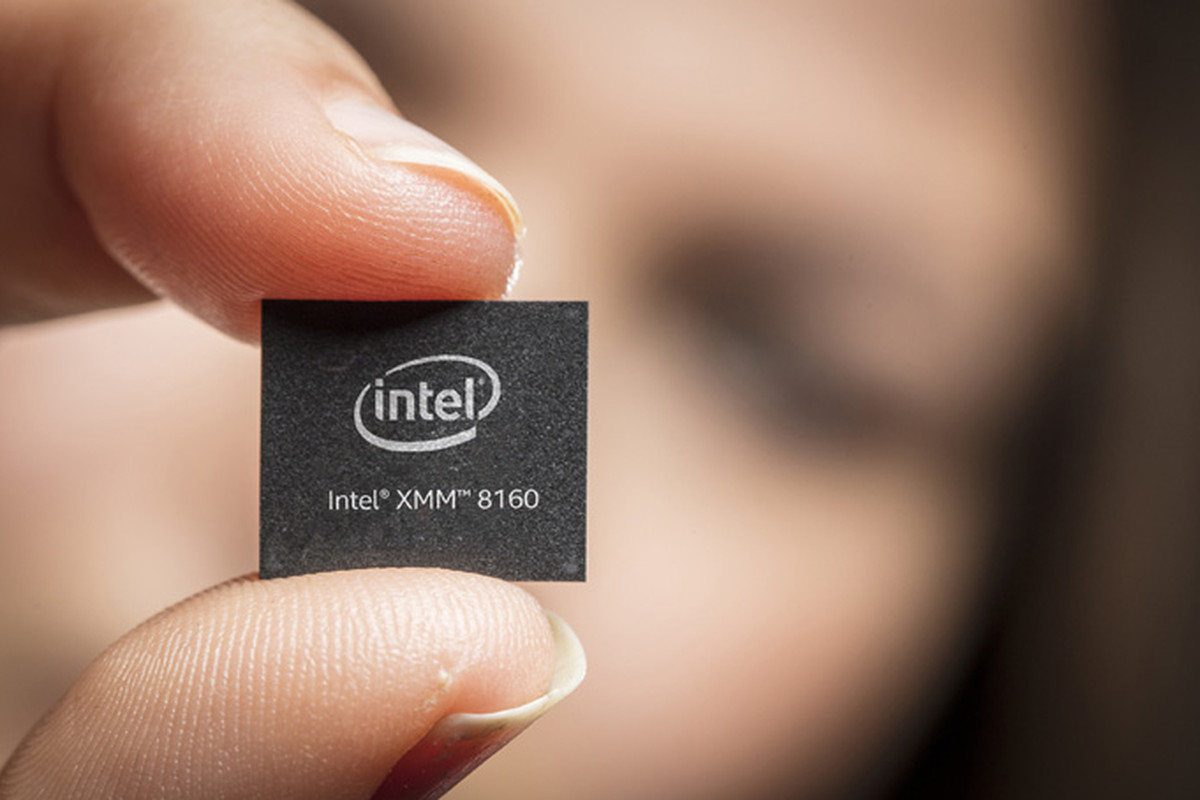
    Those familiar with the situation say that Intel has been missing deadlines as it develops the XMM 8160 5G modem chip. In order for Apple to unveil a 5G iPhone next September, Intel would have to deliver sample parts to Cupertino early this summer and a final version of the chip’s design by early next year. But Intel says that it is fully capable of delivering its 5G modem chip to Apple in time for a 5G iPhone to be launched in 2020.

    Last November, Intel said that it expected to start shipping the XMM 8160 5G modem chip during the second half of this year, and it would appear as though no changes have been made to those plans. In a statement emailed to Fast Company, Intel wrote, “As we said in November 2018, Intel plans to support customer device launches in 2020 with its XMM 8160 5G multimode modem.”

    From 2011-2015, Apple used only Qualcomm modem chips for the iPhone. In 2016 and 2017, both Qualcomm and Intel supplied Apple with modem chips for the iPhone. Last year, with Apple and Qualcomm suing each other, Apple stuck with Intel for the part and expects to do the same this year. Apple is known to be a rather demanding customer (Intel has had three project managers handle its modem business with Apple thus far), and the profits from selling Apple these chips is not overwhelming. But Intel needs the revenue to justify the expense of building 10nm and 7nm fabrication platforms in order to keep up with TSMC. The Intel 7560 modem chips used on the 2018 iPhone models were manufactured using the 14nm process. This means that newer modem chips will contain more transistors than older versions, allowing them to have improved performance and consume less power. But this can also backfire as far as Intel is concerned. As part of its deal with Intel, Apple gets to be first in line to have its chips roll off the assembly line. That means other chip orders that might be more profitable to Intel must wait until Apple’s order is completed.

    Other chip makers like Samsung and MediaTek are apparently not being considered. UBS’ Arcuri says that if Intel’s chip isn’t ready for next year as he believes, neither company would be able to fulfill the order in time to deliver the goods for 2020. Meanwhile, rumors that Apple is designing its own 5G modem chips are apparently true. The company reportedly has 1,000 to 1,200 engineers developing such a component. Additionally, Apple has allegedly hired RF engineers from both Qualcomm and Intel who are said to be toiling away in San Diego. Any modem chip designed by Apple would have to be manufactured by a company with production capabilities like TSMC or Samsung. A self-designed 5G modem chip for the iPhone would probably not be found on the device until 2021 at the earliest.

  • Apple and its partners seek billions from Qualcomm

    Apple and its partners seek billions from Qualcomm

    A trial starting in San Diego on April 15th has all the makings of a big courtroom battle. Apple and its contract manufacturers are suing chip maker Qualcomm. The firms that assemble the iPhone such as Foxconn, Compal, Pegatron, and Wistron are seeking $27 billion in damages from Qualcomm, claiming that the company violated antitrust laws and breached various contracts. You might wonder why they are involved in this battle at all. That’s because they are the companies that license Qualcomm patents for Apple. Both Apple and Qualcomm are also seeking damages.

    The trial is scheduled to run for 20 days, and a joint filing made by Apple and Qualcomm includes a witness list that names the CEOs of both companies (Tim Cook and Steve Mollenkopf, respectively), as well as executives from other phone manufacturers like Samsung and Motorola, and industry experts. Qualcomm owns patents on software used in most smartphones, and technology related to 3G, 4G and 5G connectivity. That is in addition to patents it owns for the chips that it sells. Apple instructed its contract manufacturers to stop paying royalties to Qualcomm and has claimed in other lawsuits that the chip maker failed to license its standard-essential patents in a fair, reasonable and non-discriminatory (FRAND) fashion as required. Such patents must be licensed by manufacturers to make sure that their products meet technical standards.

    Apple, and other phone manufacturers, are not pleased with Qualcomm’s “no license, no chips” policy, and claim that they are paying royalties to Qualcomm for phones they sell that don’t use any of the chip maker’s patents. And while the $27 billion claim certainly makes you take notice, we are awaiting a decision on a more important case held earlier this year. The FTC v. Qualcomm trial was a non-jury affair, and depending on how Judge Lucy Koh rules, the company might have to change the way it licenses and sells its chips.

    Qualcomm loses one of its patents

    Qualcomm has been successful in several cases where Apple has been found to have infringed on various patents related to the Snapdragon designer. Earlier this week, ITC Judge MaryJoan McNamara ruled that Apple had infringed on a couple of Qualcomm patents and recommended that an exclusion ban be imposed on the versions of the iPhone 7, iPhone 7 Plus, iPhone 8, iPhone 8 Plus and iPhone X using an Intel modem chip. That decision now goes for review in front of the entire commission, and a final decision will be announced in July. The same day that decision was announced, a final ruling was issued by the ITC in another patent infringement case involving Qualcomm and Apple. Originally, Judge Thomas Pender ruled that Apple infringed on a Qualcomm patent, but didn’t recommend a import ban on certain iPhone models. The entire commission decided that Qualcomm’s patent was invalid, which left them no choice but to uphold Judge Pender’s decision not to ban the iPhone in the U.S.

    All of these legal battles have affected Qualcomm’s relationship with Apple and has cost it business. From 2011-2015, Apple exclusively sourced modem chips for the iPhone from the San Diego based company. Over the subsequent two years, both Qualcomm and Intel shared the task of supplying Apple with this all-important part. But last year, Apple decided to drop Qualcomm and the 2018 iPhone models sport Intel modem chips only.

    One of the most interesting court cases involving Qualcomm is a class action lawsuit that can be joined by anyone who purchased a smartphone after since Feb. 11, 2011. Dubbed the biggest class action in history, more than 250 million phone owners are seeking damages ranging between $4.84 billion and $5.54 billion.

  • Qualcomm’s new line of chips will make smart speakers better than ever

    Qualcomm’s new line of chips will make smart speakers better than ever

    Qualcomm, manufacturer of the popular Snapdragon chips that power billions of devices, is now aiming to dominate another segment of smart products: speakers and displays with voice assistant support. To do that, the company announced today a new family of chips called the QCD400 Series Smart Audio SoCs. The new chips are designed specifically for the needs of smart speakers like the Google HomePod and Home mini, Amazon’s Echo lineup and others. That is why Qualcomm has focused on two main aspects: sound reproduction and voice recognition.

    The QCS400 line promises “truly superior audio performance” that should come not only from Qualcomm’s own technologies, but support for Dolby Atmos and DTS:X as well. The chips will be capable of supporting up to 32 audio channels.

    To make your communication with the voice assistant better, Qualcomm is once again putting AI to use. The AI should help with voice recognition so you can expect fewer misheard words and phrases in the future. The new chips should also allow the device to better separate voices from background noises or music and detect trigger words easier.

    Besides those main capabilities, Qualcomm is also looking to improve a couple more things that are also quite important.The first one is an improvement in power consumption which will come handy for portable Bluetooth speakers and other battery-powered devices. Devices with the new chips are expected to have a significantly longer standby time during which voice wakeup will be available.

    And finally, the new chips will ensure that your smart device is always well connected. Whether that is to the internet via Wi-Fi or to your phone through Bluetooth, Qualcomm has made improvements in any aspect of the smart speaker connectivity.

    The QCD400 chips are four in total, two of them are for audio only. The least powerful is the dual-core QCS 403, followed by a quad-core QCS404. The two chips that come with video capabilities have the Adreno 306 GPU and support HDMI. Only the highest tier chip, the QCS407 supports 32 channel audio, while the rest top up at 12 channels.

    If you’re a frequent user of smart speakers these new developments are good news for you. And if not, well, you’re probably concerned about the fact that soon these pesky always-listening devices will be able to hear you even better. Like them or not, it seems they’re here to stay!

  • Jury decision means Apple must pay Qualcomm millions

    Jury decision means Apple must pay Qualcomm millions

    Earlier today, we updated a story to tell you about a ruling made by Judge Gonzalo Curiel of the U.S. District Court for the Southern District of California. The judge said that Qualcomm is obligated to pay Apple nearly $1 billion in rebated royalties that it promised to pay Apple as long as the company didn’t attack the chip maker in court or to regulators.

    But another legal decision involving Qualcomm and Apple was announced today. A jury sitting in federal court in San Diego today, awarded Qualcomm the $31 million it was seeking from Apple after finding that the latter infringed on a trio of Qualcomm patents. That works out to $1.41 for each iPhone sold without a license for the Qualcomm technology used inside each device. Despite the award, when you consider the $1 billion that Qualcomm will have to rebate to Apple, the latter ended up approximately $969 million in the black.

    The $31 million that was awarded to Qualcomm covers a trio of patents. One allows a phone to connect to the internet as soon as it is booted-up. Another helps conserve the amount of battery power consumed by the graphics processor when in use, and the third covers how traffic flows between the app processor and the modem on a handset. As you might imagine, Qualcomm was happy with the jury’s decision while Apple said it was disappointed with it. Apple and Qualcomm still have a number of court battles remaining. For example, next month a trial will start up in San Diego that will deal with billions of dollars in royalties.

    “Today’s unanimous jury verdict is the latest victory in our worldwide patent litigation directed at holding Apple accountable for using our valuable technologies without paying for them. The technologies invented by Qualcomm and others are what made it possible for Apple to enter the market and become so successful so quickly.”-Don Rosenberg, general counsel, Qualcomm

    “Qualcomm’s ongoing campaign of patent infringement claims is nothing more than an attempt to distract from the larger issues they face with investigations into their business practices in US federal court, and around the world.”-Apple

    Qualcomm could be forced the way it sells chips to phone makers

    Qualcomm is also awaiting a couple of key rulings that could change the way chips are sold to smartphone manufacturers in the future. The court battle it had with the FTC earlier this year revealed why many phone manufacturers hate dealing with the chip maker. Qualcomm’s “no license, no chips” policy has infuriated these handset vendors because each of them end up paying for the Qualcomm chips used in its phones, and a license that is based on the number of phones each manufacturer ships whether it contains a Qualcomm chip or not.  Qualcomm also has been accused of not licensing its standards essential patents in a fair, reasonable and non discriminatory manner. These are patents that cover technology that a device must include in order to meet technical standards.

    On March 26th, the International Trade Commission (ITC) is expected to make another important ruling involving Qualcomm. In this case, an ITC judge originally ruled that while Apple had infringed on a Qualcomm patent, it would be against the public interest to give Qualcomm the iPhone sales and import ban in the U.S. that Qualcomm was seeking. But ITC regulations call for a review of that decision by the entire commission, and the result of that review will be announced a week from this coming Tuesday.

    Depending on how this all shakes out, Qualcomm could end up with a whole new method of selling chips to smartphone manufacturers. And if it shows remorse and promises to reform, it just might be able to win back Apple’s business. From 2011-2015, Qualcomm was the exclusive supplier of modem chips for the iPhone. In 2016 and 2017, Qualcomm and Intel both supplied Apple with this component. Intel was the sole supplier of modem chips for the 2018 iPhone models, and is rumored to be the sole source of 5G modem chips for the 2020 iPhones.

  • Mass-production of a key component for 5G Apple iPhone about to Start

    Mass-production of a key component for 5G Apple iPhone about to Start

    Since Apple is expected to use Intel’s modem chips for its first batch of 5G compatible phones, we know not to expect 5G iPhones to be unveiled until 2020. That’s because Intel won’t have its modem chip for the next generation of wireless connectivity ready until next year. The chip maker will start work next quarter on the engineering projects it needs to finish in order to begin volume production of its 5G modem.

    Once Intel starts producing its 5G modem chip in 2020, it will compete with Qualcomm’s recently introduced Snapdragon X55 5G modem, the sequel to the Snapdragon X50 5G modem. The latter will be used on most 5G Android phones this year. It also will go up against the 5G modem chip designed by MediaTek. All three firms could still be in play to become the source of Apple’s 5G modem chips, although previous reports state that Intel has already won this battle. Sources cited in yesterday’s report say that Intel will also continue to generate revenue from selling its 4G modem chips to Apple for older iPhone 7 and iPhone 8 models.

    Apple currently has a contentious relationship with Qualcomm; over the last few months both sides have squared off in court on issues ranging from patent infringement to royalty payments. Just yesterday, one judge ruled that Qualcomm owed Apple close to a billion dollars in royalty payments it promised to rebate to the company (the actual figure is much. much higher says FOSS Patents). Meanwhile, a jury in San Diego yesterday ordered Apple to pay Qualcomm $31 million after it found Apple liable of infringing on a trio of patents. On March 26th, the International Trade Commission will rule on Qualcomm’s request for an exclusion order to be imposed on the iPhone in the U.S. Such an order would result in a sales and import ban of certain iPhone models in the states.

    Intel is now the exclusive source of modem chips for the iPhone

    During yet another trial held earlier this year (FTC v. Qualcomm), the plaintiffs called Apple supply chain executive Tony Blevins to the stand. Blevins testified that Apple had looked at sourcing 5G modems from Samsung and MediaTek. There is also speculation that Apple will design its own 5G modem chip, like it does for the A-series chipset that powers the iPhone and iPad. But Apple isn’t expected to deliver an in-house 5G modem design until 2021 at the earliest.

    From 2011 to 2015, Qualcomm was the exclusive provider of modem chips for the iPhone. That changed in 2016 when both Qualcomm and Intel were responsible for the modems used on the iPhone. That continued in 2017, and last year Apple sourced all of the modem chips used on the latest iPhone models from Intel.

    Apple is expected to be among the last major phone manufacturers to produce a 5G phone. Samsung has already unveiled its first 5G phone, which will debut on Verizon this summer. Huawei, LG and Oppo should also release 5G phones this year, and the 5G Moto Mod will allow the Motorola Z3 to support the faster data speeds as soon as Verizon flips the switch to turn on its new service. Once 5G service becomes more mainstream and less a curiosity, the faster data speeds will allow new services and businesses to be created. With 5G, a television series that takes 10 minutes to 15 minutes to download over 4G, will take only seconds to complete the task.

    When the industry transitioned from 3G to 4G LTE, Apple was one of the last major manufacturers to deliver a phone that supported the then-new technology. While a number of Android phones were launched with support for 4G LTE in 2011, Apple didn’t release a 4G LTE enabled handset until 2012’s iPhone 5.

  • Xiaomi Pocophone F1 Lite could launch soon

    Xiaomi Pocophone F1 Lite could launch soon

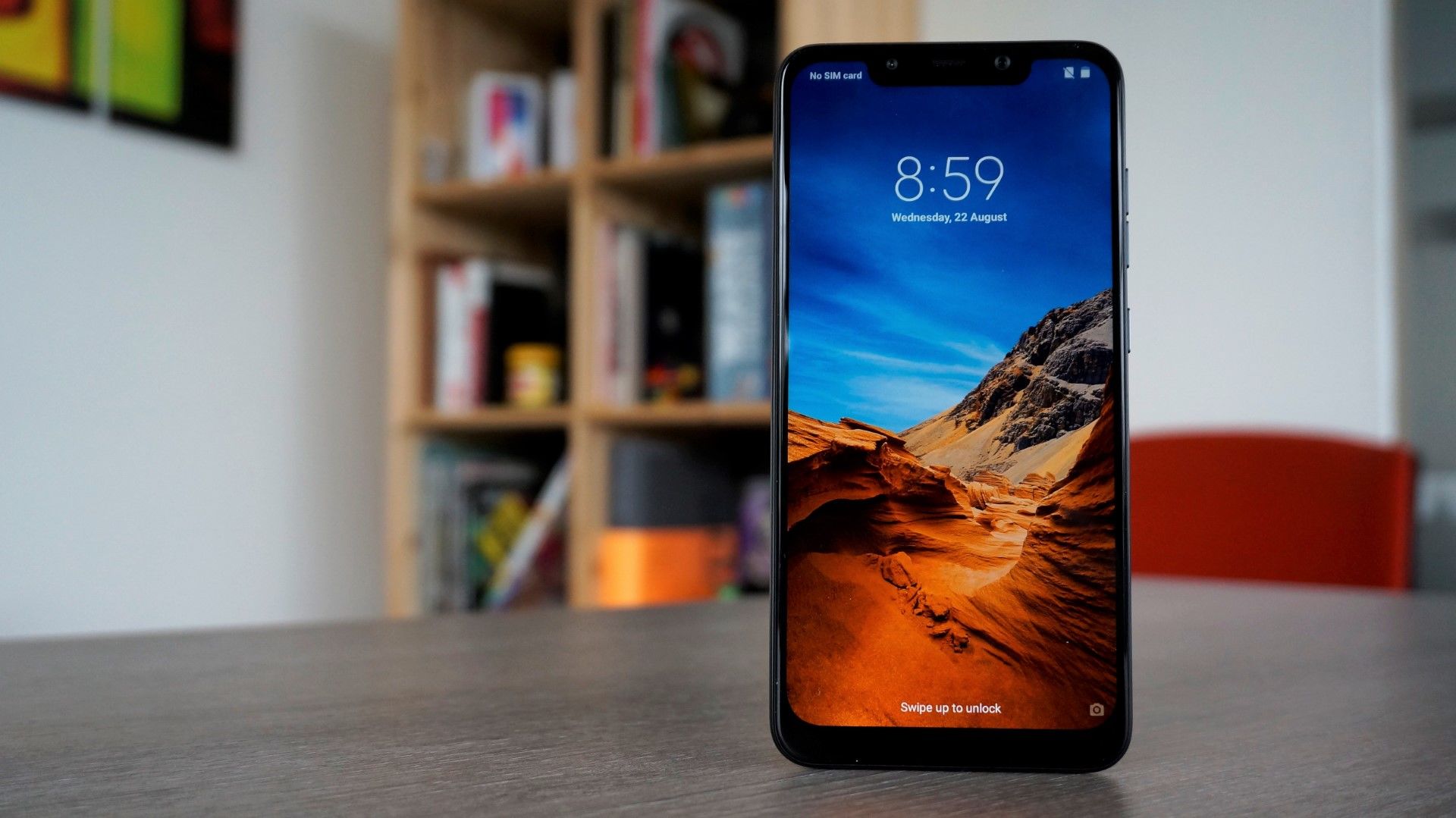
    The Pocophone F1 is one of the most competitively-priced smartphones out there. It offers Qualcomm’s Snapdragon 845, 6GB of RAM, and 64GB of storage for just €329/$389. But not everyone can afford to spend that on a smartphone, and it now seems as though a solution might be on the way. From the look of two Geekbench listings, Xiaomi sub-brand Pocophone is developing a slightly less powerful device that will be offered to consumers at a much lower price. Rather than including the high-end Snapdragon 845, the device looks set to adopt Qualcomm’s mid-range Snapdragon 660.

    This chip has already been succeeded by the newer Snapdragon 670 and 675 but should still provide decent levels of performance. In fact, Xiaomi recently used it inside the Redmi Note 7 and the Android One-powered Xiaomi Mi A2.

    The smartphone, which is codenamed ‘Uranus,’ also includes a respectable 4GB of RAM and Android 9 Pie straight out of the box. As for external features, the notched display and 3.5mm headphone jack will probably both be retained. Xiaomi may also keep the second rear camera, although a downgrade to the sensor is likely.

    At the moment, it’s unclear when this smartphone will hit shelves across the globe. But pricing wise, Xiaomi could easily price this device below $200. After all, the Redmi Note 7 mentioned above costs just €179 ($202) in Asia.

  • Executives blind to disruptive nature of 5G

    Executives blind to disruptive nature of 5G

    Accenture says business and technology executives underestimate the disruptive potential of 5G technology. Fifty-three percent of respondents in a global survey of 1,800 executives in 10 countries believe there are “very few” things that 5G will enable them to do that they cannot already do with 4G networks. Only 37% expect 5G to bring a “revolutionary” shift in speed and capacity.

    Competitive advantage

    5G is believed to have important competitive implications. Up to 60% of surveyed executives believe 5G will cover nearly all the population by the year 2022, and 70% believe that 5G applications will give them a competitive edge with customers. Speed will be a key advantage according to 46% of respondents while 42% cite its capacity.

    “The reality is that 5G will bring a major wave of connectivity that opens new dimensions for innovation and commercial and economic development,” said George Nazi, Accenture’s Network practice global lead. “Breakthroughs in three-dimensional video, immersive television, autonomous cars, and smart-city infrastructure will unleash opportunities that are difficult to imagine today but will soon be transformative. Telecommunications companies will play a pivotal role in bringing these prospects to light.”

    Role of carriers

    Up to 72% of executives said they need help to imagine future possibilities and use cases of 5G. These see telcos as just the right partner on their 5G journeys, cited by 40% of respondents. Hampering this partnership is the recognition by 60% of respondents who cite telcos’ lack of industry knowledge as a key challenge.

    Other barriers include the need for upfront investment (36%), security (32%) and employee buy-in (29%). While 78% of executives believe that using 5G in the workplace will make their business more secure, 32% have concerns about the security of the new connectivity standard.

    Anders Lindblad, Accenture’s Communications & Media industry lead for Europe, said, “Despite the knowledge gap, there is excitement among business leaders about the value that 5G can bring to enterprises. This value is currently trapped within the perceived risks and uncertainty around 5G, which can be unlocked by organizations that understand customer needs, can overcome barriers to adoption and can drive collaboration among service providers.”

  • Vietnam’s Vsmart global market

    Vietnam’s Vsmart global market

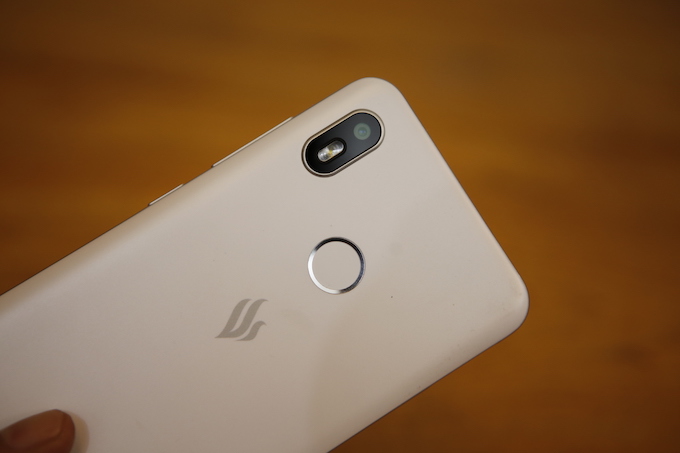
    Vietnam’s largest private firm Vingroup launched four new phone models Friday, saying it aims to sell them internationally. The four new Vsmart phones, manufactured at the group’s VinSmart factory in Vietnam’s northern city of Hai Phong, are priced from 2.49 million ($107.18) to 6.29 million ($270.76) in the introductory phase. The prices will later increase to VND2.59-6.59 million ($111.49-283.67).

    Tran Minh Trung, CEO of VinSmart, said at the launching event that his company wants to branch out to markets outside of Vietnam.

    “We will not stop at the Vietnam market. We will bring out products to the world with five business departments in five continents. A sixth department will be in charge of e-commerce. We are capable of competing and we want to be accepted in both local and international markets,” he said.

    VinSmart is set to be a new competitor in the Vietnam market of 95 million people, currently dominated by Samsung and Apple phones.VinSmart acquired the intellectual property rights for the four phones from Spanish technology firm BQ, in which VinSmart owns a 51 percent stake.

    Vietnam is the largest smartphone production base for Samsung, while key Apple supplier Foxconn is also considering setting up a factory in the country.

    The launching of the phones has happened at rapid speed, just six months after Vingroup established the VinSmart company in June to produce smartphones and other smart electronic devices with a registered capital of VND3 trillion ($131.54 million).

    Vingroup, once a real estate and retail focused conglomerate, also became the country’s first full-fledged domestic car maker in October, introducing three new car models.

    VinSmart factory is capable of making five million phones a year in its first phase of operations, the company has said.

    It has also said that the factory will produce smart TVs and other smart products in the future. VinSmart also signed a multimode global patent license deal on Friday with chip producer Qualcomm.

  • Naver Labs, Qualcomm to team up on future tech

    Naver Labs, Qualcomm to team up on future tech

    Naver Labs and Qualcomm will work together on future technology like robotics and self-driving vehicles, the local IT company said on Tuesday. The two companies signed an agreement on Monday to combine their knowledge and expertise.

    U.S.-based Qualcomm is a well-known manufacturer of semiconductors and telecommunications solutions. Naver Labs is an affiliate of Korea’s largest portal site and is currently working on a wide array of location-based technology solutions like autonomous driving, mapping and navigation using augmented reality.

    Naver Labs said it hopes to apply Qualcomm’s latest chips and solutions to its high-tech products. The first products developed by the two companies will be unveiled at next year’s Consumer Electronics Show in Las Vegas in January.

    “We plan to offer full technology support for the successful development of Naver Labs’ products and services,” said Jim Cathey, Qualcomm’s president for the Asia Pacific and India regions.