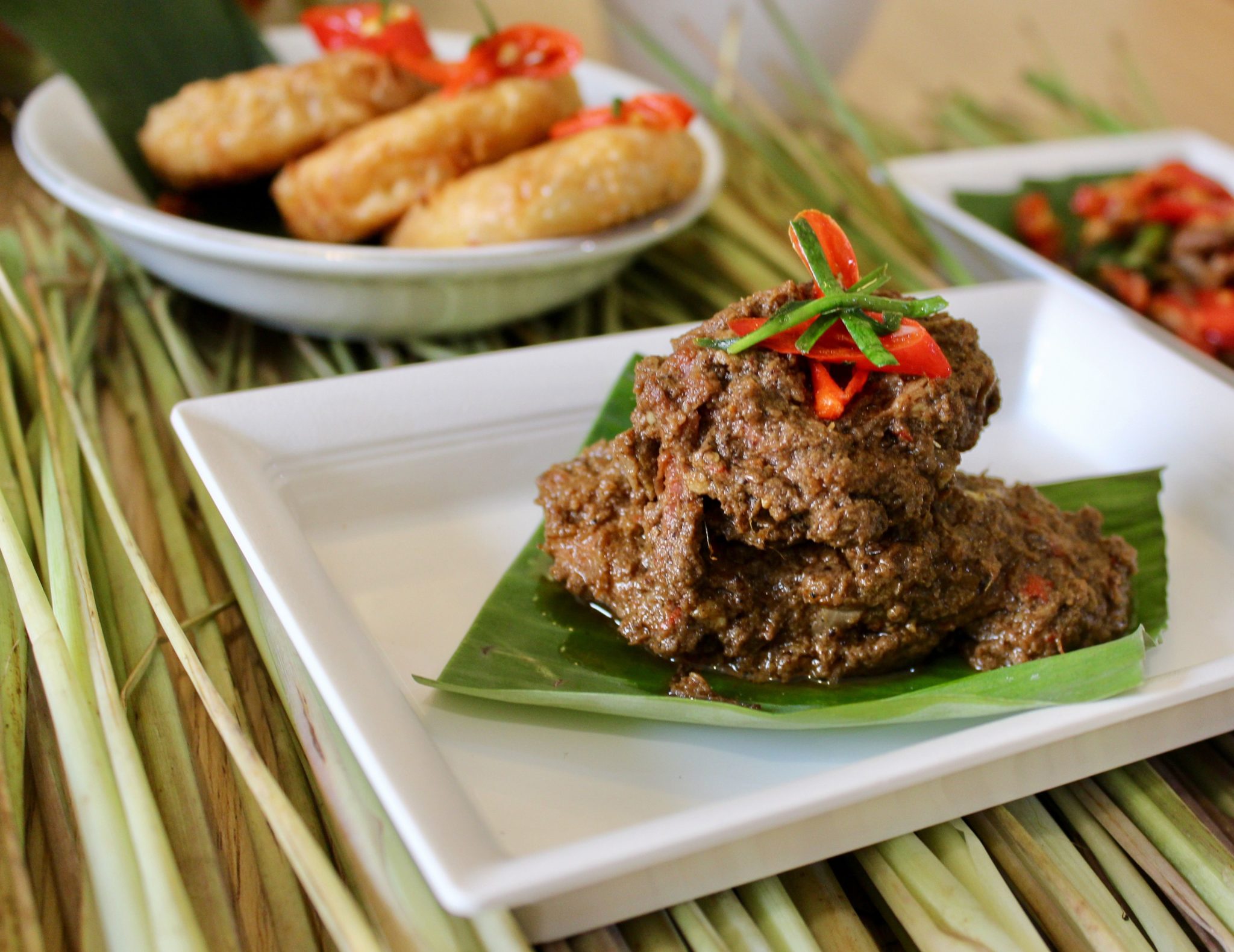
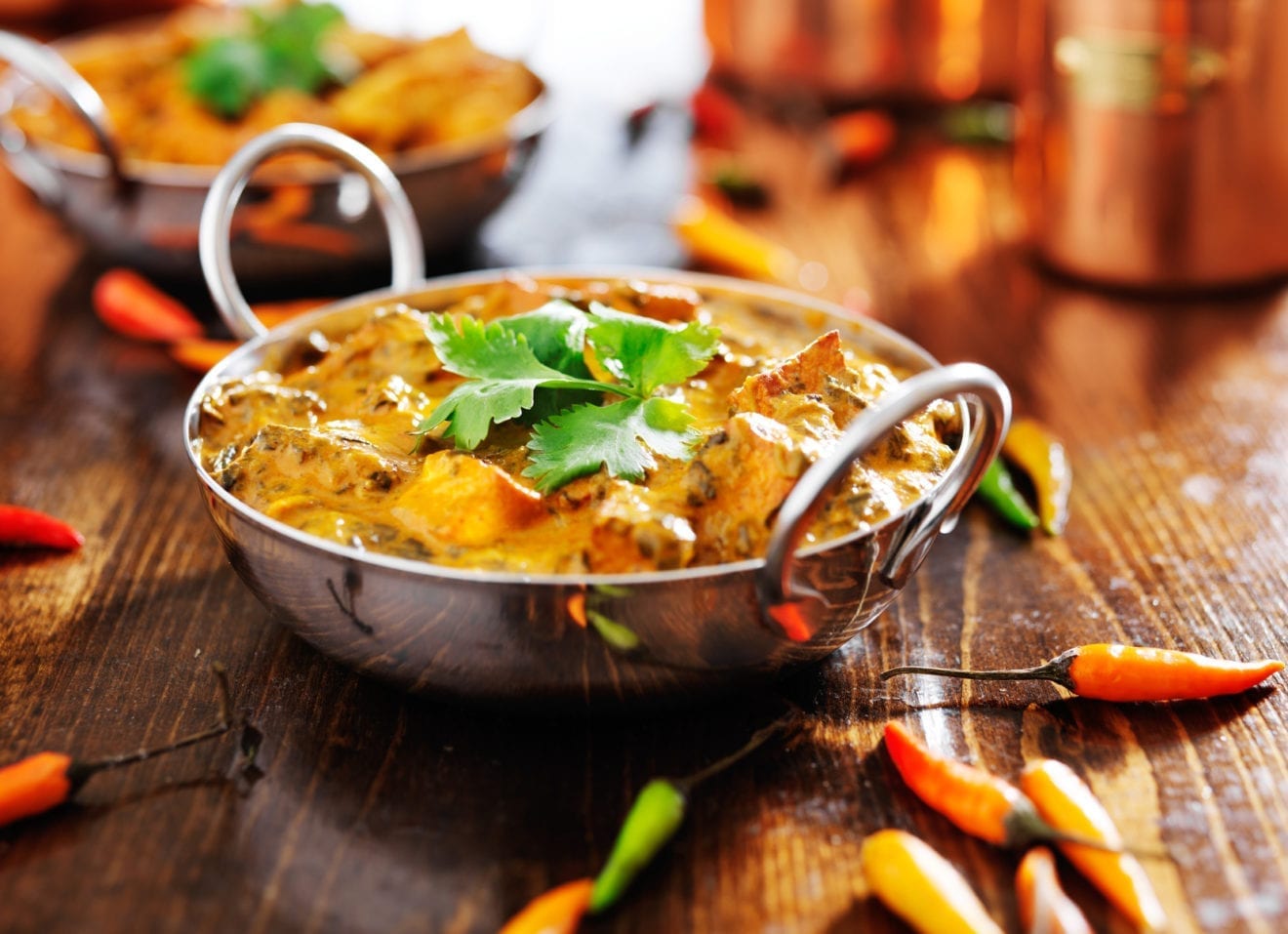
Kedai Ayamas eatery operator Kara Holdings is looking to establish 100 outlets within four years through its new franchising program, predominantly within peninsular Malaysia. The move into franchising should elevate the company’s finances by 10 per cent this year to about RM40 million (US$9.85 million). Nine franchises have opened so far, with 20 more targeted within the year.
“As Johor Corp’s wholly owned subsidiary, we complement the KFC business in terms of maximising the use and distribution of poultry products at the farm,” said Kara’s executive director Abd Rahman Md Dawi. “The poultry-relating business has always been a high-demand market for the food and beverage sector in Malaysia.
“Last year, we registered a revenue of RM35 million [$8.6 million]”, he added. “With the additional franchise business, hopefully, it will amplify our revenue this year, coupled with Kara’s technological adoption of food delivery services such as Foodpanda and Grab-Food.”
According to Dawi, the company is open to franchisee acquisition of Kara’s 40 corporate outlets. Six of the nine new franchises were acquired from the firm.
“There are certain criteria that will be considered for us to sell our own shops, but we encourage the newcomers to open a new shop,” he said.
Kara’s franchising program costs between RM100,000 and RM400,000 ($24,600–98,450), and includes management and operational training sessions.
Taiwan 7-Eleven operator President Chain Store Corp is trialling a dual-branded store with Domino’s Pizza in Taipei’s Xinyi District. In doing so, the Taiwanese retail company has created the first convenience store in the country to offer fresh-cooked pizza with groceries and if successful, it will pave the way for a roll-out in selected stores.
With Taiwan’s convenience-store market penetration the second highest in the world, sitting between South Korea and Japan, operators are seeking ways to achieve growth by means other than opening new stores.
The trial store will allow customers to watch the pizza-making process. Pizzas will be priced from US$2.90 to $6.80, depending on serving size.
President Chain Store is targeting busy working people in what is one of the capital city’s more upmarket neighbourhoods. The company hopes pizza will boost sales of complementary items such as beverages and other meal items.
President Chain Store’s rival Taiwan familyMart has already partnered with companies to offer financial, catering and laundry services and health foods in its stores.
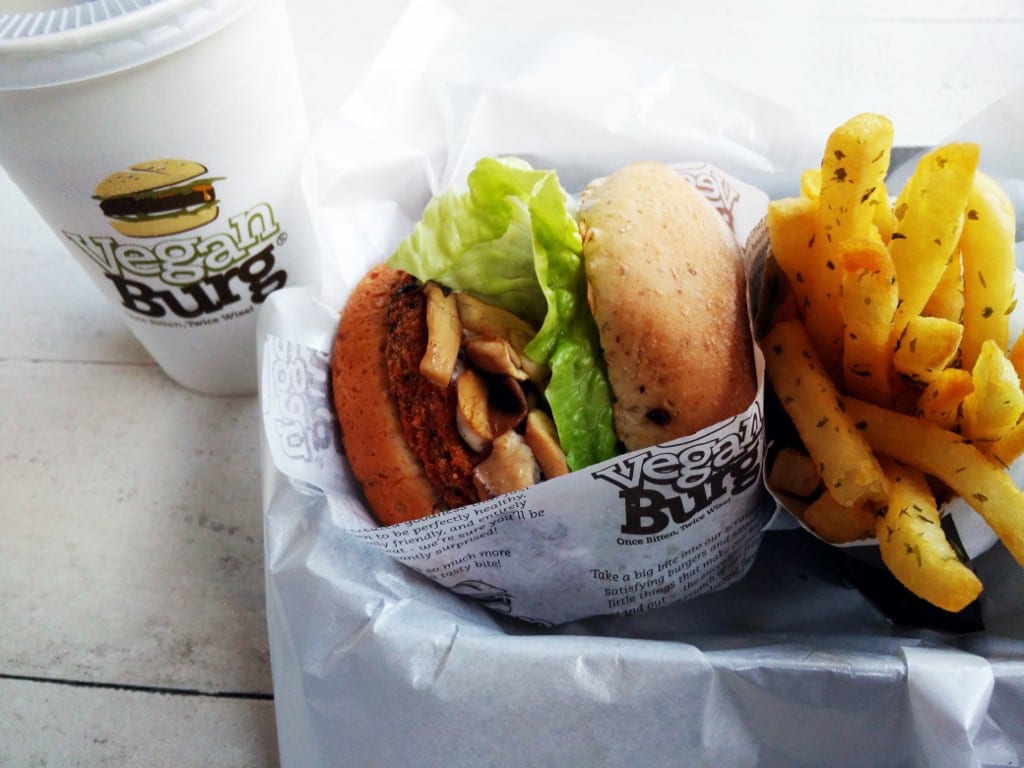
Singapore-based burger chain VeganBurg is seeking new franchisees to expand its business in California. The company will hold a franchising conference in Las Vegas next month, expected to be attended by many Californian companies and individuals evaluating franchise concepts. “VeganBurg has developed a passionate following from customers in Singapore and internationally and we have spent the last few years refining operations and investing in what has made VeganBurg a winner — our juicy burgers, fantastic staff, and world-class customer service,” said Alex Tan, VeganBurg CEO and founder.
“We are interested in meeting enthusiastic and dedicated people who are passionate about the environment and impeccable people support,” he added.
VeganBurg’s franchisees can be assured of support from pre-opening and training. An operations team will help new partners establish supplies of proprietary ingredients and products, assist with site selection and interior design, initial training and ongoing training support, product research and development, branding and marketing assets, systems, tools and processes.
Founded in 2010, VeganBurg has been redefining food pop culture and comfort food in Asia and North America with its 100-per-cent plant-based menu.
Thai restaurant operator Zen Corporation secured THB975 million (US$31.35 million) via an IPO issued last Wednesday. The firm sold all 75 million shares on offer, representing 25 per cent of its registered capital, at THB13 each. Its stock price grew 17.69 per cent over the course of its trading debut, as strong demand pushed the value per share up to THB15.30 on the first day.
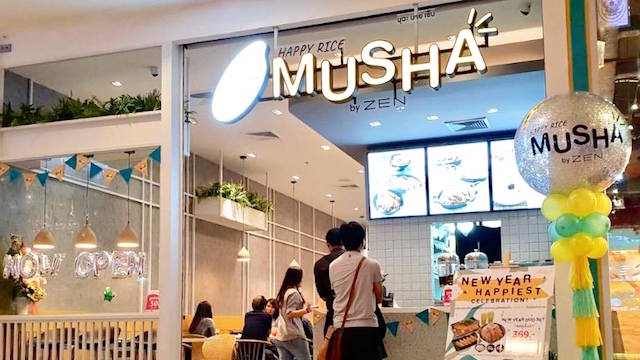
Zen Corporation is known for its various restaurant chains, including its eponymous brand as well as Musha by Zen, Sushi Cyu Carnival Yakiniku, AKA, On the Table Tokyo Cafe, Tetsu and de Tummour.
The firm also operates food delivery, catering, restaurant management and consultancy services, as well as food retail operations.
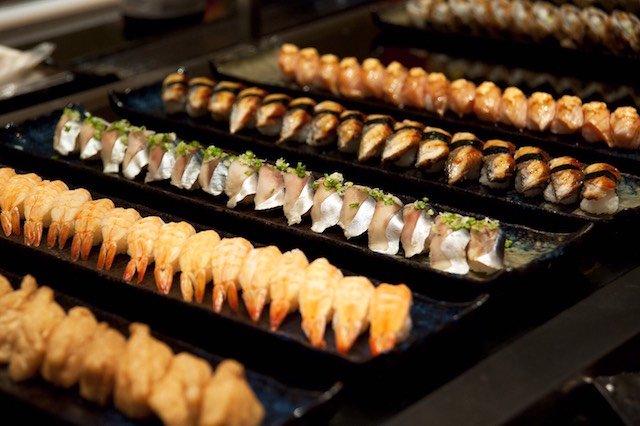
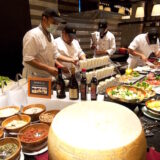
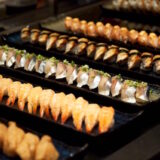
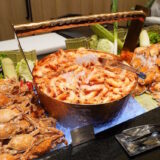
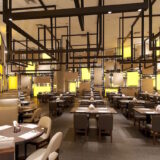
Taiwan’s extravagant Harbour buffet restaurant has opened its first Thai restaurant at IconSiam. Charoen Pokphand Foods PLC (CPF) and Taiwan’s HiLai Group have jointly brought the famous international buffet restaurant to Thailand. The franchise has routinely seen diners in China and Taiwan waiting a month for a table. The 2000sqm IconSiam outlet is its 10th restaurant worldwide, pending Harbour’s unveiling in major global cities as part of CPF’s strategy to become “Kitchen of the World”.
“Harbour has enjoyed overwhelming success in Taiwan and China”, said CPF’s COO-food business and co-president Sukhawat Dansermsuk. “We believe that we will be warmly welcomed by Thai consumers thanks to the restaurant’s strengths coupled with Thais’ eating-out lifestyle. And that’ll be the beginning of CPF’s success in the restaurant business.”
According to Sukhawat, the restaurant was established as a joint venture with HiLai Group with THB130 million (US$4.16 million) in registered capital.
CP HiLai Harbour CEO Liu Tzu-Ming said the venue is targeting THB240 million ($7.68 million) in first-year revenue and plans to introduce new restaurants at major Thai cities.
The international buffet restaurant can accommodate 450 diners per round, or about 1000 diners per day.
View the gallery below for more picture of the restaurant :
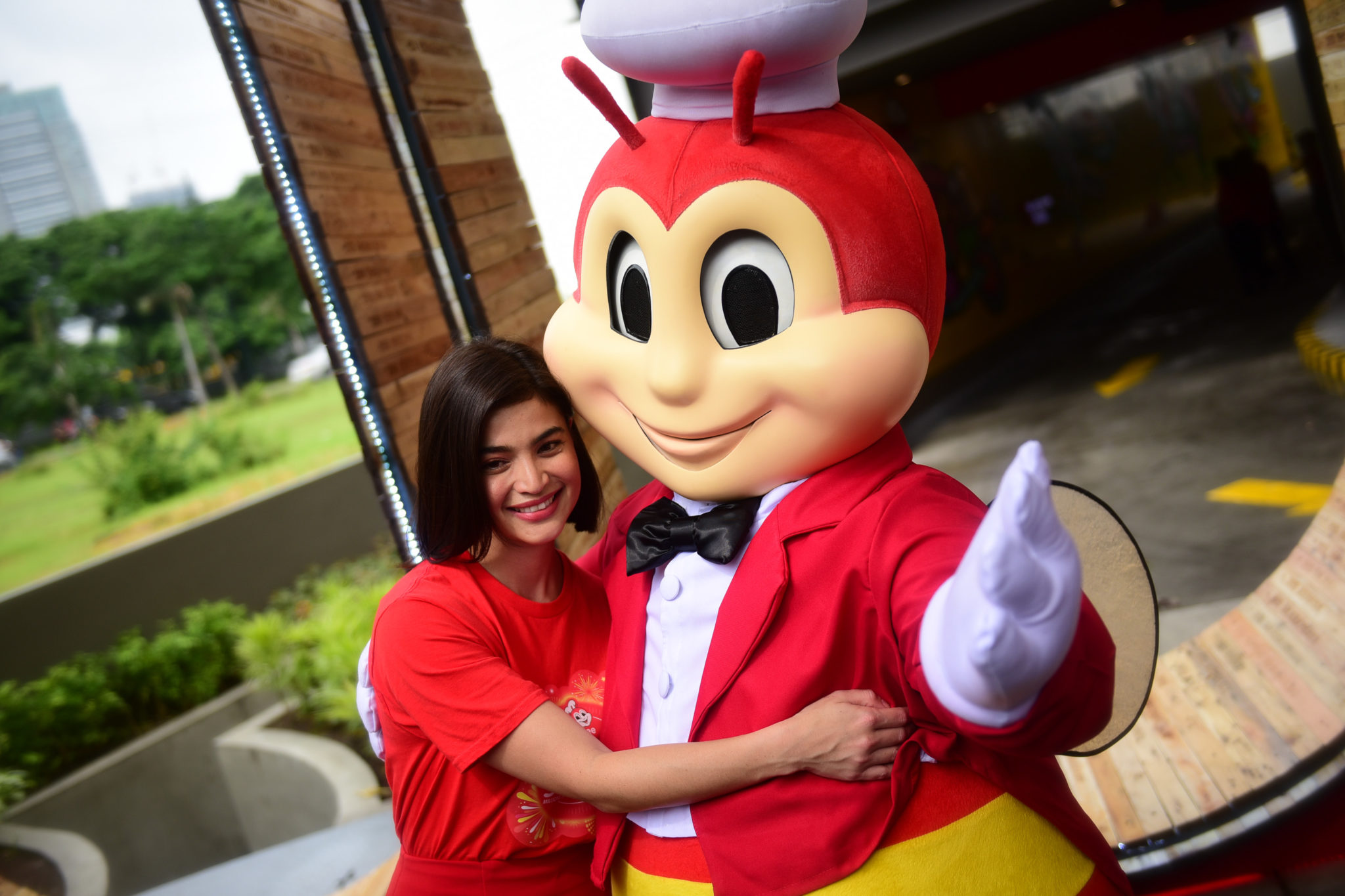
Philippine restaurant chain Jollibee has announced plans to launch more than 100 Jollibee stores in Malaysia within the next 10 years. According to a report, the openings will include 50 stores in Sabah and Sarawak. President and head of JFC International Business for Europe, the Middle East, Asia and Australia Dennis Flores said that Jollibee would be a “welcome addition to the diversity of the food scene in Kota Kinabalu,” the Sabah state capital.
“We believe that we can appeal to the diversity as we have seen in other countries where Jollibee has been successful, such as Vietnam, Brunei, Hong Kong and Singapore,” he said at the official inauguration of the Jollibee Malaysia grand store (which has been trading since last year) at Centre Point Sabah this week.
Chairman and founder of JFC Tony Tan Caktiong said the company was happy with the enthusiastic welcome to the store’s opening from local customers.
“This has given us an encouragement to reach more Malaysians with our delicious menu and friendly service,” he said.
Jollibee operates 14 brands in 21 countries with more than 4500 stores worldwide.
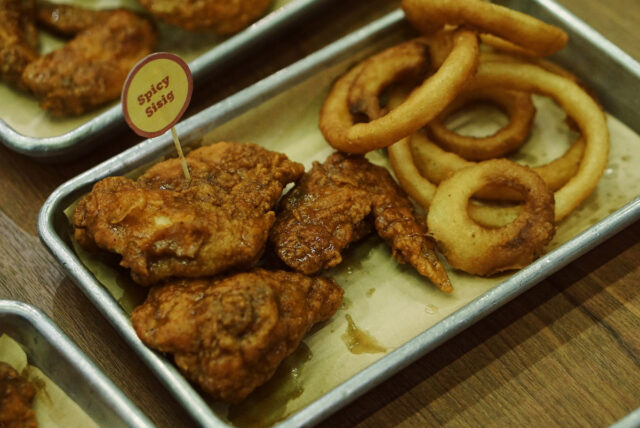
US-based restaurant chain Wing Zone plans to open five more outlets in Manila by the end of this year ahead of pursuing more Southeast Asian opportunities. As Wing Zone opens new restaurants internationally, the company is exploring more local flavours and also plans to incorporate new menu options available in the US such as Zesty Breaded Wings and Chicken Ribs.
“We have built a solid international presence and reputation with dedicated franchisees who share our values and understand the commitment to customer service. As we continue to find those qualified franchisees to help in our growth in the US we will be exploring even more partnerships to bring Wing Zone to more cities and countries internationally as well,” said Matt Friedman, co-founder and CEO of Wing Zone.
Processed with VSCO with a6 preset
In the US, Wing Zone will open eight new domestic locations in 2019 in North Carolina, South Carolina and Alabama. In Asia, after the Philippines, the chain will also explore other Southeast Asia markets.
Wing Zone has nearly 100 locations across the US, and overseas including in Panama, Guatemala, Malaysia, Singapore and the Philippines.
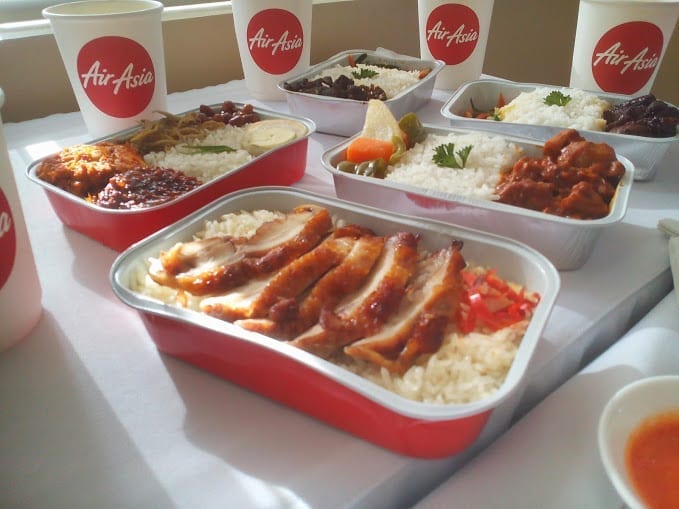
Low-cost carrier AirAsia may launch restaurants serving its Santan “gourmet” in-flight menu on the ground. The proposal was revealed by AirAsia Group CEO Tony Fernandes while promoting his recent autobiography in an interview with US talk show host Larry King. “I think our food is fantastic,” said Fernandes in response to a question from the audience. “We believe in it so much we’re going to start a fast-food restaurant out of it.”
But Fernandes gave no more details away about the plan, such as where the restaurants might be located or whether he favoured airport locations or city centres.
News that AirAsia may launch restaurants on the ground may come as a surprise to travellers, but Fernandes has previously spun off new business concepts from the airline’s business model including a short-lived budget hotel chain where occupants paid extra for features such as air conditioning, towels and amenities, and a bus service connecting Kuala Lumpur Airport with downtown.
AirAsia also made news recently for its new chatbot Ava (AirAsia Virtual Allstar) which, along with a new look for the firm’s website and mobile app, are designed to deliver a more seamless and user-friendly experience to customers.
Fernandes has also indicated the airline will place increased focus on the Indonesian and Philippines markets in the near future.
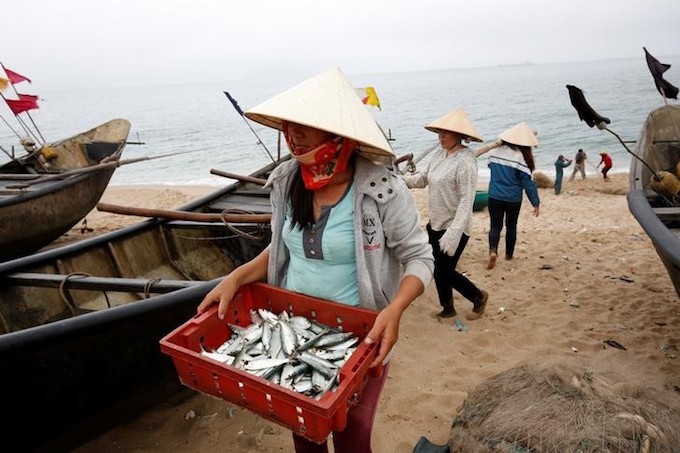
Vietnam hopes to export $10 billion worth of seafood this year, meeting its 2020 goal a year early. The Vietnam Association of Seafood Exporters and Producers (VASEP) said at a recent conference it would include $4.2 billion worth of shrimp, $2.3 billion worth of pangasius fish and the rest from other products. Minister of Agriculture and Rural Development Nguyen Xuan Cuong said the $10 billion target is high but achievable since Vietnamese seafood is liked in international markets.
VASEP president Ngo Van Ich said shrimp exported to the U.S. is expected to face a lower anti-dumping tariff this year.
Vietnam’s recent accession to the Comprehensive and Progressive Agreement for Trans-Pacific Partnership would also help increase exports, he said.
But there are also challenges.
Truong Dinh Hoe, VASEP general secretary, said the country faces difficulties like shrinking catches and intense competition from other exporting countries.
A major hurdle is the ‘yellow card’ restriction slapped by the European Union since 2017 for illegal fishing.
The European Commission has said it would ban seafood imports from Vietnam unless it does more to tackle illegal fishing by Vietnamese vessels in other countries’ territories.
After an evaluation done last May the European Commission said it would consider lifting the yellow card in 2019.
Vietnam ranks among the top ten seafood producers in the world, according to the U.N. Food and Agriculture Organization.
Last year its exports were worth $9 billion against a target of $9.5 billion.
This February, foodies in Hong Kong will salivate over scrumptious treats and desserts at eat darling eat, the new Causeway bay eatery that is bringing a playful twist on iconic Chinese desserts to spread love and evoke warm childhood memories.
The 1,300 ft design-centric space is bold, surreal and out of the ordinary, sharing an array of lip-smacking treats with an eclectic twist. Situated in Fashion Walk, eat darling eat is the latest addition under Ming Fat House. The dessert spot is further enhanced by the interior design, with large playful stickers on the walls, and creative food photographs that make visitors do a double take. At eat darling eat, all delicious culinary creations are all about stimulating the senses, each of them made with utmost care and loving attention.
eat darling eat’s extensive menu features iconic Hong Kong desserts such as the homemade fluffy Pineapple Buns (HK$38) that are quintessential to the city, filled with pineapple custard. Chinese “tong sui” desserts get a modern reinterpretation with such intriguing combinations such as double-boiled Papaya (HK$68) with snow fungus, candied papaya and mascarpone cheese. Sweet Potato (HK$68), a sweet potato soup playfully pairs with a luscious chocolate cake and taro ice cream; and Red Bean (HK$68), mixed with tangerine peel soup with a scoop of matcha ice cream.
Other signature creations are home-made icy treats that have a modern flavour. Set to become a favourite is the Double-strength Milk (HK$48), that features two scoops of the milk flavoured ice cream that are infused with Chinese rice wine. Sichuan Pepper (HK$48), with scoops of the ice cream that bring out the spicy taste of Sichuan peppercorns and complemented with the sweetness from candied bacon.
The icy treat that is sure to be popular amongst the fans is the Chinese Ginger Vinegar (HK$48), creatively topped with crispy pork skin. Inspired by a traditional Cantonese dish that is typically shared by new mothers to celebrate the arrival of a newborn baby, this trail blazing creation promises a spoonful to remember.
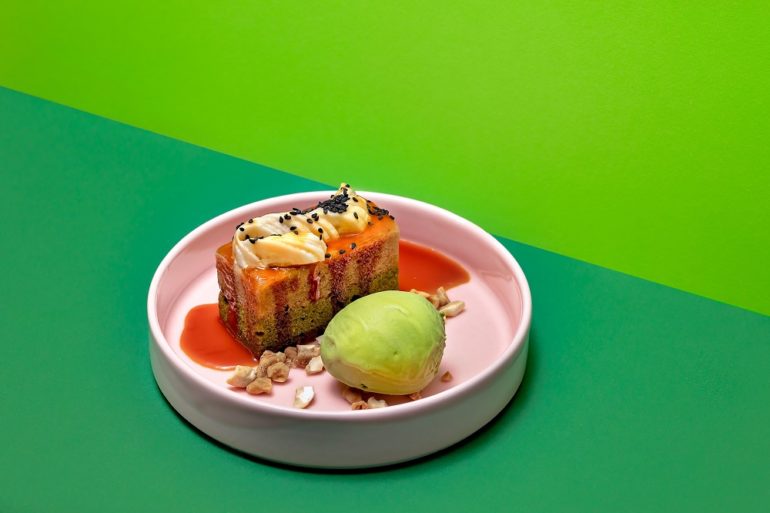
Other delectable desserts include the Lava Cake (HK$78), featuring a decadent Valrhona dark chocolate filled cake with the earthy taste of walnut soup, and Matcha Cake (HK$58), a sweet caramel sponge cake topped with caramelised banana, and finished with scoops of matcha ice cream.
“At eat darling eat, we strive to bring the element of traditional Hong Kong desserts that not only touch the heart, but also add a modern twist that will create new memories for our customers,” explained Jonathan Bui, owner of eat darling eat.
The creative talent behind these quirky and tasty desserts is Executive Chef Jason Luk who tucked international experiences under his sleeve having worked in Bangkok, Shanghai and Miami. In Hong Kong he has honed his skilled at The Drawing Room and Zuma Hong Kong and brings a limitless array of culinary ideas at eat darling eat.
“While living abroad, I learned a lot about desserts in other places, but at the same time I missed eating food from home. Since coming back to Hong Kong, I want to share the recipes from my experiences and present them to foodies in Causeway Way, which is the perfect place to showcase new and exciting trends and styles,” says Jason.
eat darling eat offers guests a respite from busy Causeway Bay with its whimsical interiors that mirror the eclectic menu. The design draws inspiration from the experimental Post-modern era, incorporating designs, shapes and colours that challenge convention.
The interior highlights split-level architecture, where the lower level entrance area is an open concept, while the upper space is framed as a theatre featuring fluorescent colours and reflective surfaces. The overall design is bold, surreal and out of the ordinary, emphasizing the creativity of the desserts.
While eat darling eat offers mainly fun and playful desserts, it also offers savoury dishes for lunch and dinner that can be chosen from the a la carte menu and signature lunch menu alongside an extensive coffee, tea and cocktail menu. eat darling eat invites diners to take a break, slow down, and savour the moment in the midst of the hustle and bustle of Causeway Bay.
India’s food ordering and delivery platform Swiggy Tuesday said it has launched ‘Swiggy Stores’ moving beyond its core food delivery segment to provide access to consumers items across multiple categories. The company will deliver from these stores “in categories such as fruits and vegetables, kiranas and supermarkets, florists, baby care, health and supplements among others,” Swiggy said in a statement.
With the launch of these stores, Swiggy wants to become the one-stop delivery app that enables access to every store in the city, it added.
“Today’s announcement takes Swiggy to categories beyond food, where we hope to deliver the same level of delightful experiences to consumers for their everyday needs,” Sriharsha Majety, CEO, Swiggy said.
It is the first milestone in Swiggy’s vision to elevate the quality of life for the urban consumer by offering unparalleled convenience, he added.
Swiggy Stores will give its merchant-partners unmatched access to a combination of core assets to reach more existing and new customers, the statement said.
For the delivery partners this will give them access to an additional avenue for income, it added.
Founded in 2014, Swiggy currently connects consumers to over 60,000 restaurant partners across more than 80 cities.
Online restaurant guide and food ordering firm Zomato Monday said it is planning to convert 40 percent of its delivery fleet into power-assisted bikes in two years. Currently, the company has over 5,000 cyclists operating across 12 cities in India, with the majority of the fleet being in Delhi-NCR, Zomato said in a statement. The company provides food delivery services in 150 cities across the country with a last-mile delivery fleet of 1.5 lakh partners, it added.
“We are working closely with our vendor partners to raise the scale of e-cycle adoption and aim to convert 40 percent of our fleet to power-assisted bikes within the next two years,” Mohit Gupta, CEO – Food Delivery Business, Zomato said.
The company aims to build a future that creates more tangible value and leaves a lesser carbon footprint, he added.
Food is the largest retail consumption category in India, accounting for 33 percent of the overall consumption expenditure. It is also the largest opportunity area, especially in times when market dynamics are changing dramatically, and consumer behaviour is no longer generic.
Indian consumers are becoming more and more indulgent with food (and vegetables), and they are experimenting with new and foreign cuisines; they are seeking variety and are open to international brands. They profess to enjoy foreign food and are ready to pay more for premium or organic food items. This is a huge shift from the last decade.
The changes to Indian consumer behaviour are being driven by increasing incomes, younger profiles of consumers and growing access to the Internet.
According to Krish Iyer, President & CEO, Walmart India and Chairman of India Food Forum, the key trend certainly is for on-demand food.
“There are a lot of pressures on the disposable income of the consumer. Factors like rising costs of real estate and the need to invest in health – important today because of the awareness and education on health are taking away good chunk of consumer’s disposable income and the expectation of value is increasing,” Iyer said on the sidelines of India Food Forum 2019.
Expectations, he said, have built up because the consumer has a lot of options, making him more demanding of quality and other conveniences. “Today’s consumer is time-starved. Working couples want ready-to-eat, on-the-go and on-demand food, and this is driving a lot of consumption,” he added.
To meet the shift in consumer demands, FMCG players are gearing up make the changes in their retail stores.
Share of E-Commerce in The Retail Pie
Iyer stated that the share of e-commerce is set to rise over the next 10 years aided by a rise in the Omnichannel format. This, despite the growth in brick-and-mortar retail from 2 percent to 12 percent.
“What works for today’s FMCG players is a ‘go-to market (GTM) strategy’. This is particularly true for small and medium enterprises who want to launch products. Since GTM is more about digital first, they use the opportunity to connect with consumers in today’s highly connected phygital environment,” he said, talking about the big change which the FMCG sector is witnessing today.
He stressed on the fact that it is extremely important to bridge the gap between physical and digital retail, especially since the consumer is going digital in terms of experience as also his touchpoints.
Tech-Savvy CX At Walmart
Sharing his insights gleaned from years at being at the helm of Walmart India, Iyer explained that that by enriching customer experience, Walmart has observed that the consumer has started purchasing more using the Omnichannel format – Rs 180 over Omnichannel versus Rs 100 spent at the physical store.
While citing technology adoption as the key to retail growth, Iyer also talked about the four key challenges that retailers need to face head on: food security, safety and nutrition, food wastage and sustainability.
“Feeding a rising world population of 10 billion, amid rising deaths of infants due to malnutrition and changing climatic conditions are key challenges. In India, phenomenal efforts are made on the regulatory front for safety and nutrition that will follow with awareness, compliance and enforcement of law. Significant investment amounting to Rs 92,000 crore in food processing in catchment areas is needed to overcome the wastage of 30 percent of all food and 40 percent of fruits and vegetables in the country,” he concluded.
Shopping malls are now allocating a higher percentage of their tenant mix (more space) to food & beverage (F&B) retailers, partly because competition from online platforms has impacted other types of retailers such as fashion, according to a market research and consulting firm. “Traditionally, F&B made up less than 20% of a mall’s tenant mix, but can go up to 40% nowadays,” Stratos Consulting Group Sdn Bhd managing director Tina Leong said.
She said with the tenant mix now consisting of more F&B, this means that malls will need to design or renovate in such a way as to cater to the specific technical requirements that F&B retailers have, for example provisions for water, grease traps, storage, waste disposal and daily delivery.
“F&B as a segment itself has become the anchor for some malls,” said Leong.
She said malls that have a high F&B tenant mix include the refurbished 3 Damansara (formerly Tropicana City Mall), which now has more F&B compared to before. Similarly, Paradigm Mall in Petaling Jaya has refurbished its lower ground floor, which now consists of more F&B than previously.
Sunway Velocity Mall general manager centre management Danny Lee said F&B makes up 27% of the mall’s tenant mix currently, and that it is targeting to have F&B reach 30%.
“Naturally, F&B is doing better compared to others,” Lee said.
Meanwhile, Leong noted that having more or certain types of F&B can also be part of experiential retailing.
“For example, people nowadays, especially millennials, appreciate and are willing to spend on meals or drinks with friends and family, within nicer ambience restaurants or cafes, due to the memorable experiences this create.”
She said to continue to draw shoppers (rather than them shopping online), more shopping malls are looking at creating engaging “experiences” for their customers. Experiential shopping simply means making the physical act of spending money more than simply handing over cash in exchange for goods and services.
“More grocery stores are incorporating food and wine bars where people can enjoy a meal or a drink as well as a social experience before or instead of shopping,” said Leong, adding that some retailers have also integrated augmented reality into their stores, for example Starbucks Reserve Roastery in Shanghai and US-based fashion brand Reformation.
Examples of experiential shopping are malls that have attractively themed or landscaped spots on every floor, where one can stop to take photographs with their friends or family, such as Aeon Mall Kuching. Some community malls in Bangkok, Thailand, have incorporated spaces for pet parks, children’s sand pits and jogging tracks.
“Another recently opened mall, Kiara 163 in Mont Kiara, has incorporated the ‘experiential’ element into their mall design, with a central garden and water features for people to relax. Apart from design features, other ways of creating memorable shopper experiences are through interesting or unique events, activities, decorations, pop-up stores, technological innovations and customer service,” explained Leong.
She said some of the major major malls have been doing this all along, such as Suria KLCC and Pavilion Kuala Lumpur that usually have attractive and unique festive decorations.
“What is different is that nowadays, the customer experience aspect is becoming a focal point. It has become more important as malls and retailers try to attract and retain shoppers in the midst of competing options such as online shopping,” said Leong.
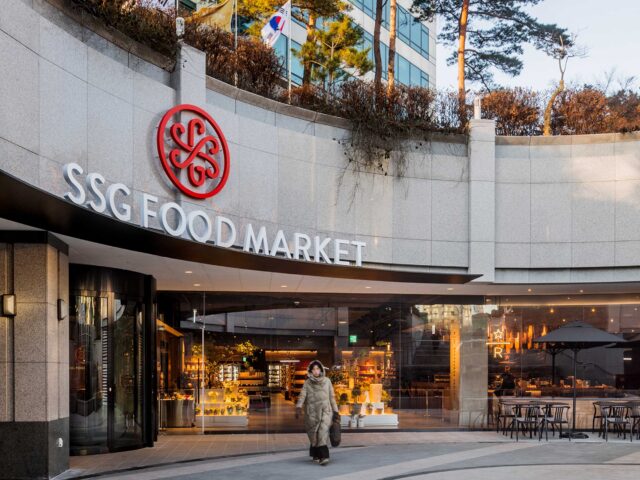
Nestled in the upmarket suburb of Dogok, Seoul, sits the newly opened reinvention of Emart’s “Star Super”: “the SSG Food Market”, designed by Landini Associates. Emart is the leading business of the Shinsegae group, the largest retailer in South Korea, operating multiple brands including department stores, discount to premium supermarkets, and the mighty Emart hypermarkets.
The brief was to create a world class premium supermarket and food hall fusion, and Landini Associates were entrusted to redesign every detail of the new store experience. This included: the built environment, naming and identity, furniture and fixtures, signage and communications, ticketing, menus, POS, advertising style guides, packaging and uniforms. In fact every customer touchpoint.
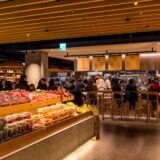
The result is a modern market, a convenient and accessible food lover’s heaven, where locals can do a daily or weekly shop, or dine in with friends at one of the many in-store restaurants and cafes. Attracting a newer younger audience, whilst rewarding its existing, the SSG Food Market is a community epicentre to meet, eat and shop in, throughout the day.
The offer
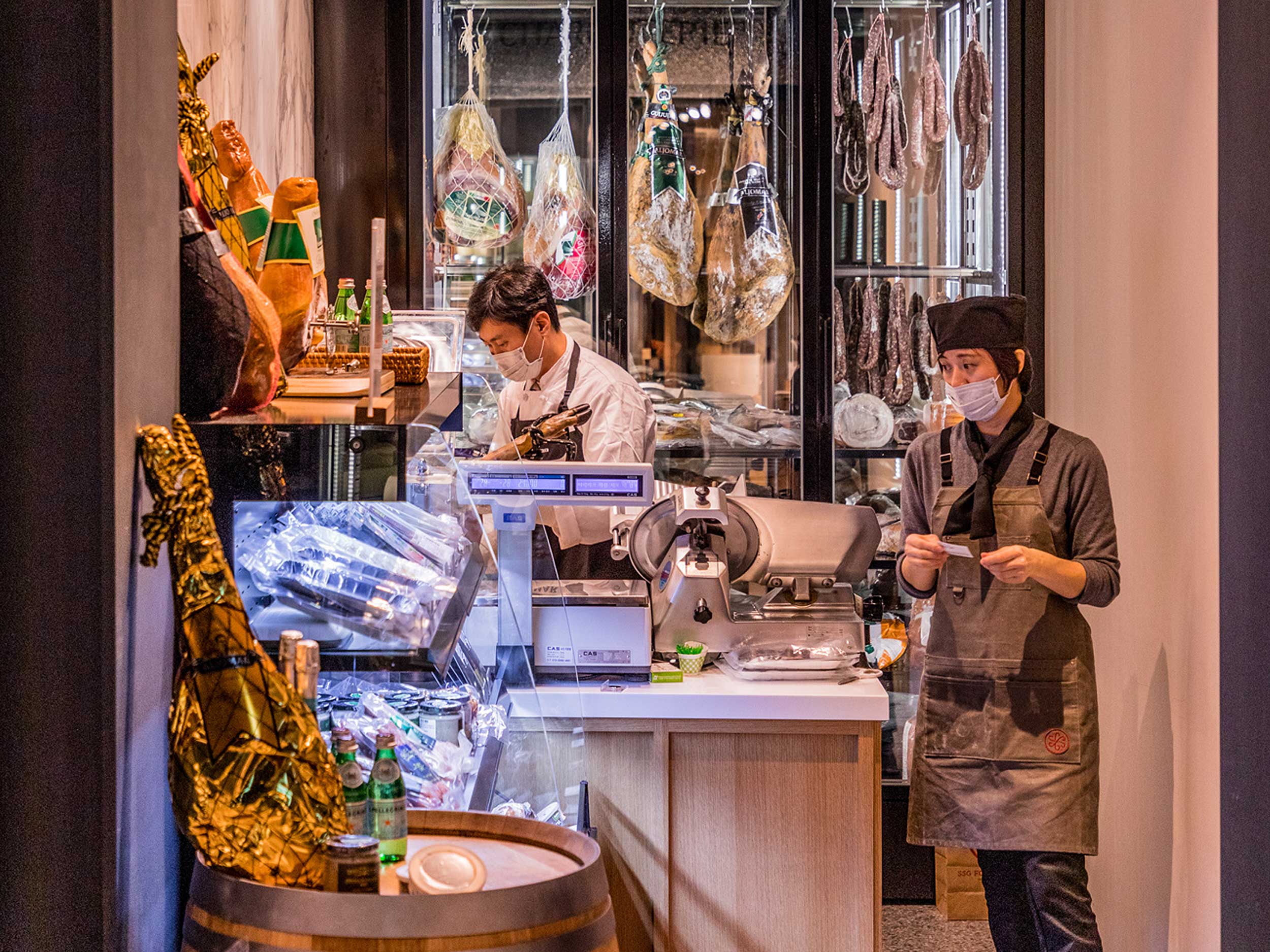
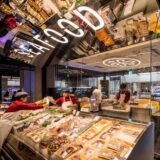
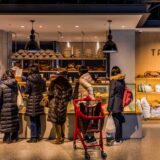
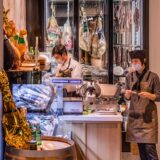
The reinvention enriched and upscaled the existing food and beverage offer to include an extensive fresh department, vegie butcher serving house-made salads and juices, take home meals, Korean deli, bakery (run by hip San Francisco brand Tartine), fishmonger, butcher, Korean traditional street food, café, 200 seater restaurant, sushi restaurant, specialist cheesemaker, western charcuterie, wine and beer department, coffee roastery, dry goods, florist and homewares.
The result is a curated selection of quality products, and a onestop-shop supermarket and refined specialist items. In addition the market is a wonderful meeting place to dine with friends and family, further enriching the retail and community experience.
SSG Food Market Landini Associates Trevor Mein Fruit and Vegetables 45
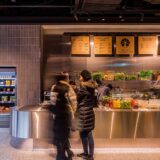
The offer is made up of both SSG run departments, franchises (such as Starbucks, a premium brand in Korea), and third-party retailers. Ensuring that these were all presented as a tangible whole required the design team to be sensitive to multiple design briefs, whilst ensuring that the customer had a seamless experience.
Additionally, the site has a low ceiling which created some challenges for the reticulation of services, and multiple entrances, including a pre-trading public access to a subway station through the heart of the store; a gift to residents from Shinsegae.
Landini’s solution creates a space of intrigue, transparency and exploration by celebrating the food, the people who make it, and its preparation.
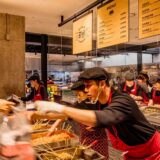
Specialist departments are visible across the restaurant’s open kitchen and include: Korean Traditional Street Food, Korean/ Chinese Noodles and a grill. All the production is exposed, and chefs work in glazed pavilions serviced by counters showcasing this theatre whilst you order. There are also take home meals in the Korean deli prepared daily in its kitchen, or fresh fish and meat cooked to order at the Grill, to take home, or eat in.
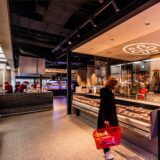
As always, and especially because the market is in a basement, the lighting plays a key role in Landini’s design. Chiaroscuro, the contrast between light and shade, creates areas of interest and calm, gently guiding customers on a journey of discovery throughout the store. Perimeter departments use pavement lights to create space, and give sense of the world above.
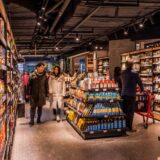
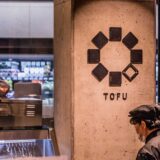
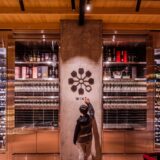
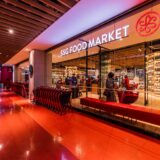
In the main market hall the interior is paired back, functional yet classic. This “bare bones beauty” of exposed steel beams and concrete bulkheads contrasts with fine marbles, glass and blackened steel, and is balanced by timber fixtures and details. This subtle, considered and classic material palette allows the food to be the hero, and merchandising plays a major role. Long-life departments such as wine and dry-goods have a warmer, more earthy and textural palette, utilising brick and added timber. In the carpark, red floors and walls add vibrancy to the market experience before customers even get out of their car.
The basement site is located below two high-end residential apartment buildings. Visitors can enter from the sunken courtyard on street level, or via the red carpark inside. SSG has created a residents pre opening pedestrian route through the store, a shortcut to the train station to save locals from the blistering cold in winter. Landini designed a set of messaging icons for this route, also.
The graphics
Landini Associates established a tone of voice for the brand to reflect their new food experience. This influenced all store communications including: naming and identity, signage and communications, ticketing, menus, advertising style guides, packaging and uniforms.
The entire site required an ownable, easy to understand signage and graphic messaging system to reflect the brand’s new established tone of voice. The Landini design team evolved the existing SSG logo mark, developing an adaptation on communications applications to collateral and signage.
The design is simple, contemporary yet classic; impacting not overwhelming. The palette is one of debossed concrete, timber, black and whites, and complimentary hits of the brand’s colour, red.