Tag: retail expansion

  • Chow Tai Fook Opens Luxury Flagships Across Four Markets in Ten Weeks

    Chow Tai Fook Opens Luxury Flagships Across Four Markets in Ten Weeks

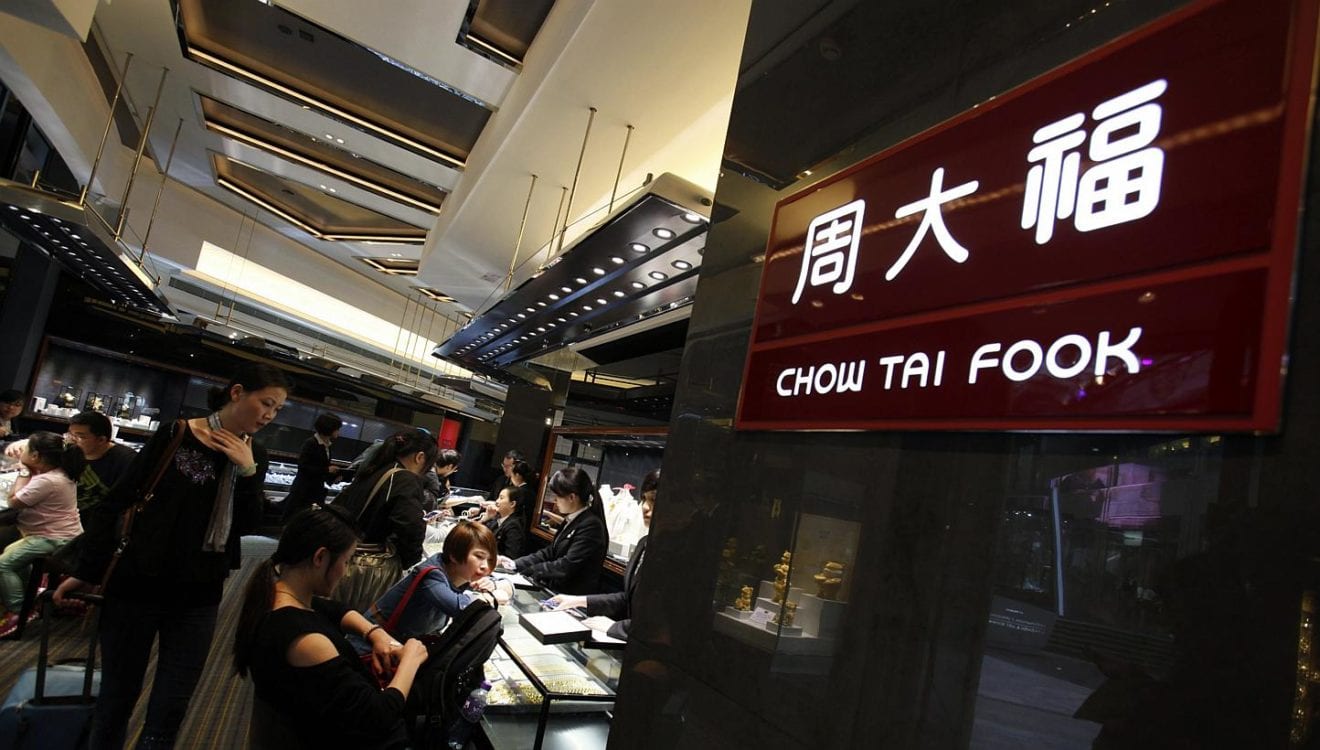
    Chow Tai Fook rolled out a new fleet of luxury-format stores across four international markets within ten weeks, betting on high-end Chinese design to capture affluent consumers. The retail push included a 10,000-square-foot global flagship on Canton Road in Hong Kong’s Tsim Sha Tsui shopping corridor.

    The Canton Road site puts the Chinese jeweller on the same strip as European luxury houses Hermès and Louis Vuitton. That opening followed an aggressive start to the year in Southeast Asia, where the company secured prime retail real estate inside Bangkok’s Siam Paragon shopping mall in January.

    High-Street Real Estate and Prime Malls

    Securing ten thousand square feet on Canton Road represents a major capital commitment in one of Asia’s most expensive retail districts. The scale reflects an explicit repositioning by the group toward higher margin, design-led jewellery lines rather than relying purely on mass-market gold volume sales.

    In Bangkok, the Siam Paragon opening targeted both local Thai wealth and returning Chinese tourists. By late March, the company widened the rollout to additional regional commercial hubs, completing four market debuts in under two and a half months.

    Shifting from Mass Retail to Global Luxury

    Traditional gold jewellery chains across Greater China have long competed on retail footprint density and weight-based pricing. Chow Tai Fook’s shift toward oversized flagships and upscale mall locations mirrors the playbook of European heritage brands, aiming to elevate average transaction values.

    Competing jewellers across Asia face rising raw material costs and cautious consumer spending in mainland department stores. Placing large-format stores in premier tourist precincts allows the brand to test international appetite for contemporary Chinese fine jewellery outside its domestic core.

    RetailNews Asia will track the sales performance across these new flagship sites as the group reports its upcoming quarterly store productivity metrics.

  • Who Gives A Crap Targets A$100 Million Annual Donations on Retail Push

    Who Gives A Crap Targets A$100 Million Annual Donations on Retail Push

    Melbourne consumer brand Who Gives A Crap has distributed more than A$50 million to global sanitation initiatives as it expands into mainstream supermarket chains worldwide.

    The company, which gives half of its profits to water and hygiene projects, is now mapping a growth path aimed at generating A$100 million in annual donations by 2050. That target requires building a commercial footprint large enough to challenge legacy paper giants such as Kimberly-Clark.

    From web stunt to supermarket shelves

    Co-founders Simon Griffiths, Danny Alexander and Jehan Ratnatunga launched the business in 2012 by raising A$50,000 through a 50-hour crowdfunding web feed. Bootstrapped for its first nine years, the company took outside institutional funding in 2021 and expanded its workforce to nearly 300 employees.

    While direct-to-consumer delivery drove early revenue across Australia, the United States, Britain, Canada, France and Germany, long-term growth now depends on physical grocery distribution. In the United States, placement with Whole Foods Market opened access to shoppers who do not buy paper goods online. Supermarket distribution across Australian chains followed a similar pattern, forcing the brand to compete directly against entrenched multinational FMCG lines on store shelves.

    Targeting global scale in paper goods

    Entering physical stores presents distinct margin and packaging challenges for direct-to-consumer challengers across the Asia-Pacific region. Brand visibility in high-traffic aisles requires heavy inventory commitments and immediate shelf recognition, especially in staple categories where consumers buy on autopilot.

    The company plans to use expanded supermarket listings in North America and Europe to fund its target of A$100 million in yearly charitable disbursements by 2050.

  • Bandai Namco to Open Australia’s First Gundam Base and Tamashii Nations in Sydney

    Bandai Namco to Open Australia’s First Gundam Base and Tamashii Nations in Sydney

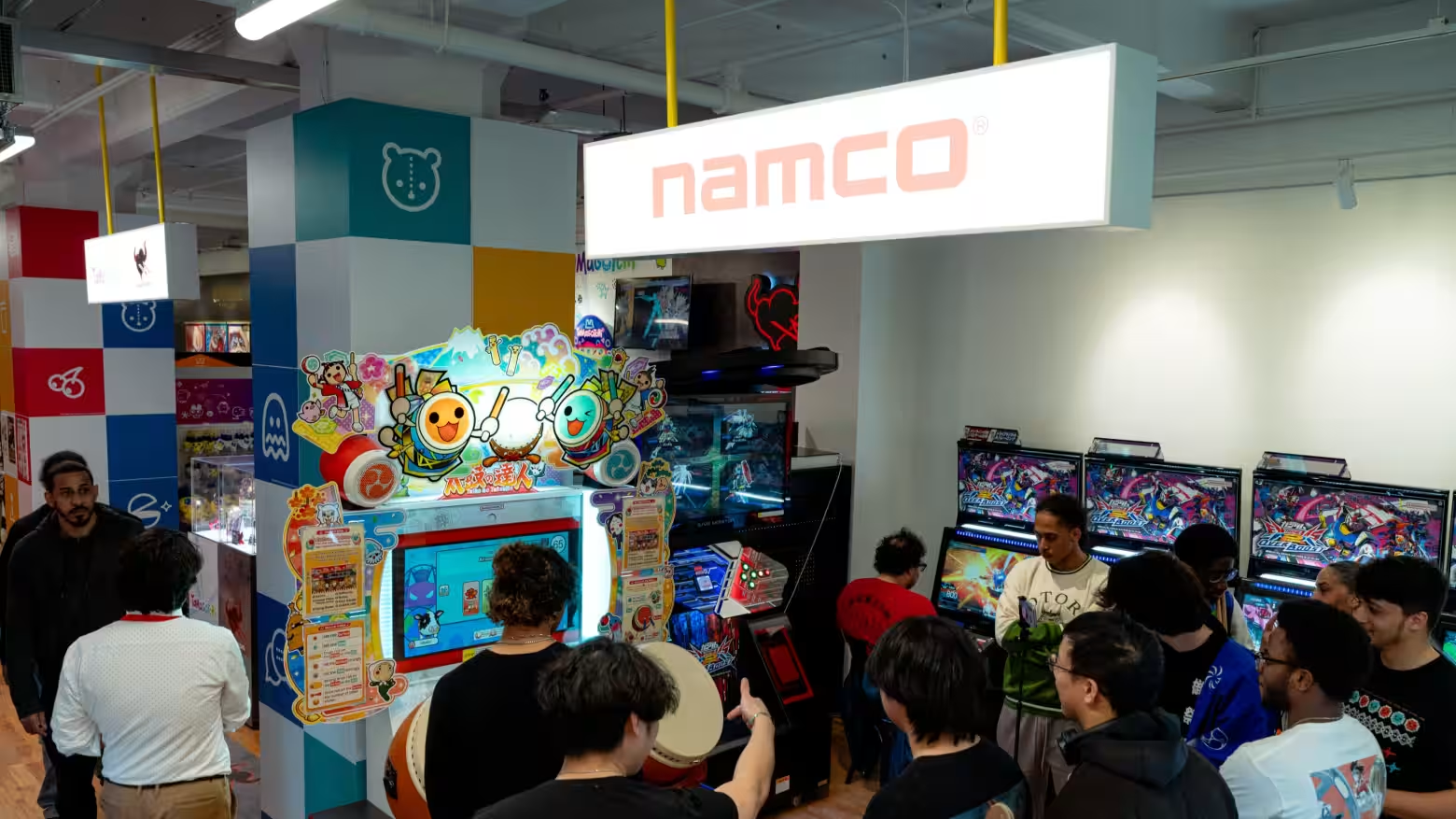
    Bandai Namco Asia will open Australia’s first The Gundam Base store at Broadway Sydney in November 2026. The location will also house one of only four Tamashii Nations flagships worldwide.

    Both permanent shops will sit on level one of the retail complex. They follow a trial pop-up tour at the Mirvac-owned centre last year.

    Expanding Japanese IP Across Asia-Pacific

    The Gundam Base serves as Bandai’s dedicated retail brand for Mobile Suit Gundam ‘Gunpla’ model kits. The Sydney site will sell kits, apparel, and exclusive releases unavailable through standard wholesale channels.

    Next door, Tamashii Nations will stock finished collector figurines. That store focuses on high-end robot models and licensed merchandise from anime franchises such as Dragon Ball, One Piece, and Demon Slayer.

    Bandai Namco Asia president Hiroyuki Fujita said the Sydney destination will run prototype shows, immersive displays, and regional fan events alongside standard retail sales.

    Building Out Physical Collector Hubs

    Japanese entertainment companies are rolling out direct-to-consumer flagships across Asia-Pacific to secure higher margins and cultivate collector communities. Bandai opened a flagship in Hong Kong in December, testing regional appetite before committing capital to Australia.

    Landlord Mirvac relies on fandom-driven concepts to pull foot traffic into Broadway Sydney. Fit-outs for both stores will finish ahead of the November 2026 launch.

  • Temasek and ChrysCapital Compete to Buy 33 per Cent Stake in India’s Blue Tokai

    Temasek and ChrysCapital Compete to Buy 33 per Cent Stake in India’s Blue Tokai

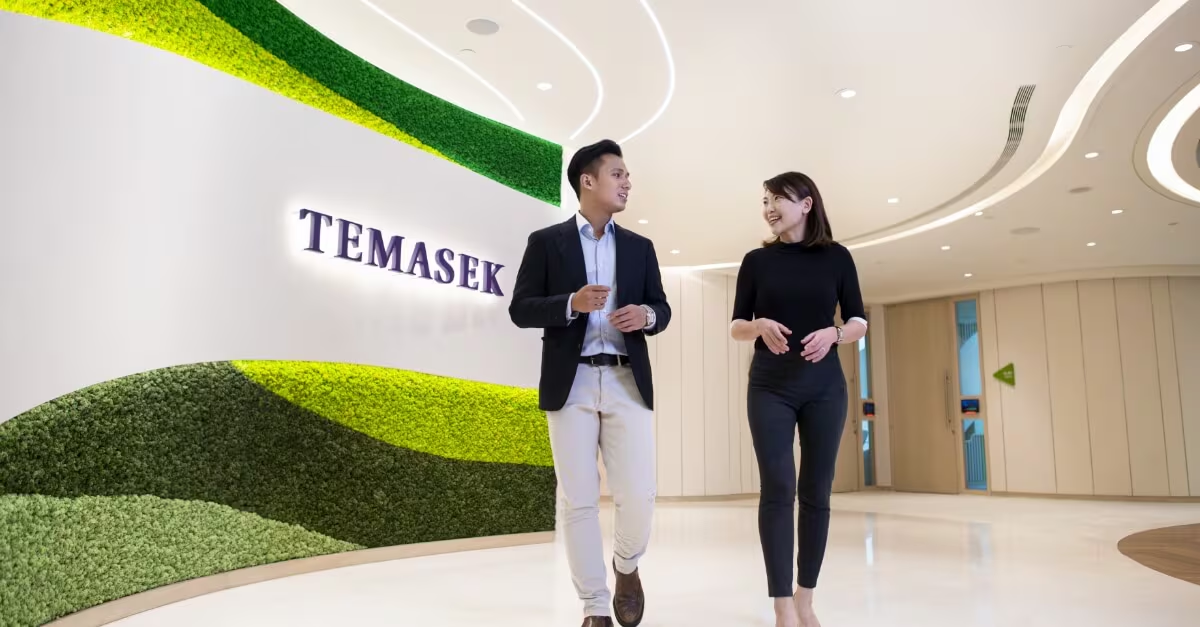
    Singapore’s Temasek Holdings and private equity firm ChrysCapital are competing to invest up to 1,200 crore rupees in Indian specialty roaster Blue Tokai Coffee Roasters. The transaction values the 13-year-old chain at up to 3,700 crore rupees and will hand the winning bidder a stake of between 30 and 33 per cent.

    The deal structure involves both primary capital to finance retail expansion and secondary sales to provide exits for early seed backers. Existing shareholders include A91 Emerging Fund, which holds 21.72 per cent, alongside Verlinvest, Waterfield Fund and 12 Flags. The three founders, Matt Chitharanjan, Namrata Asthana and Shivam Shahi, currently hold an aggregate 15.27 per cent stake.

    Funding store targets across Asia and the Gulf

    Blue Tokai currently runs 240 outlets across India through parent company Muhavra Enterprises. The roaster plans to open 120 locations during the current financial year, pushing into secondary markets including Ahmedabad and Lucknow, before reaching an 800-store target by fiscal 2030.

    Overseas expansion is also underway. The chain partnered with UAE-based Ambrosia Gulf last year to build a regional store footprint, while setting up plans for an entry into Japan. It also acquired bakery operator Suchali’s Artisan Bakehouse in 2024 to support food service across its cafe network.

    Financial performance has shifted after Blue Tokai turned Ebitda-positive on a monthly basis for six consecutive months. Revenue climbed 50 per cent to 325 crore rupees in fiscal 2025, while net losses narrowed by 20.6 per cent to 50 crore rupees.

    Competition intensifies in India’s cafe sector

    Specialty coffee operators across Asia are racing to scale before high real estate overheads catch up with unit economics. In India, Tata Starbucks remains the market leader with more than 500 outlets and a plan to add 100 locations annually, while international entrants such as Canada’s Tim Hortons and Britain’s Pret a Manger compete against domestic rivals including Third Wave Coffee, Barista and Cafe Coffee Day.

    For ChrysCapital, a deal would follow its acquisition of patisserie chain Theobroma in August 2025 for roughly 2,410 crore rupees, opening opportunities to combine bakery and beverage operations. Temasek brings its own food service portfolio to the table, with holdings in Rebel Foods, Haldiram’s, Licious and Chinese coffee operator Luckin Coffee.

    Blue Tokai has not yet filed its fiscal 2026 accounts, though projections reviewed by investors point to revenue reaching between 750 crore and 775 crore rupees in fiscal 2027.

  • Lululemon Opens 1,220-Square-Metre Harajuku Flagship in Tokyo

    Lululemon Opens 1,220-Square-Metre Harajuku Flagship in Tokyo

    Lululemon has opened a 1,220-square-metre flagship store in Tokyo’s Harajuku district, its largest retail location across the Asia-Pacific region. The multi-level site serves as the brand’s first global flagship in Japan, built to anchor its wider expansion beyond traditional yoga apparel.

    The store design incorporates a sculptural logo centrepiece built with Japanese furniture maker Karimoku and Torafu Architects. It features commissioned artworks referencing Meiji Shrine, Yoyogi Park and Ura-Harajuku, alongside the company’s first in-store personalisation services in Japan and traditional Furoshiki gift wrapping options.

    Local Design and Product Mix

    Assortments in the Harajuku store focus heavily on category diversification, stocking lines for running, training, golf, tennis and commuting. Apparel includes dedicated Asia Fit cuts tailored specifically to regional sizing preferences, moving the brand deeper into everyday activewear.

    Elliot Harris, Lululemon’s senior vice president and general manager for Asia Pacific, noted that Japanese consumers demand high standards of craftsmanship, longevity and product education. The flagship operates as a community venue hosting running events like the Hatsu Run and sessions with local brand ambassadors.

    Betting on Japanese Sports Apparel

    While many apparel chains across East Asia trim physical square footage to cut overhead, premium athletic labels are taking the opposite route in Tier 1 retail hubs. Japan’s sports apparel market is projected to expand into a US$15 billion sector by 2032, driven by sustained local participation in fitness, running and outdoor movement.

    RetailNews Asia views the Harajuku opening as a direct play for brand equity in a market where shoppers still place heavy value on physical store service before buying online. Large-format spaces allow athletic brands to justify premium price points by bundling experiential marketing with technical product demonstrations.

    Lululemon is monitoring foot traffic and conversion metrics at the Harajuku site as it evaluates flagship store formats for other key metropolitan markets across Asia Pacific.

  • SKIMS Opens Flagship Store at Times Square in Hong Kong

    SKIMS Opens Flagship Store at Times Square in Hong Kong

    SKIMS opened a flagship store at Times Square in Hong Kong, establishing a dedicated physical location in one of the city’s busiest shopping destinations. The opening brings the brand’s core shapewear, loungewear, and apparel lines directly to local shoppers in Causeway Bay.

    Causeway Bay Footprint

    The Times Square location anchors the brand’s direct retail operations in Hong Kong. By securing floor space in a prime commercial mall, the company shifts from wholesale and regional e-commerce fulfilment toward standalone branded storefronts that handle higher foot traffic.

    Shoppers gain direct access to the full product catalogue across sizing ranges and seasonal collections. Physical fitting and immediate inventory availability remain central to the store format, addressing sizing demands that online channels cannot replicate.

    Expansion Across Regional Hubs

    Western direct-to-consumer labels continue to target top-tier retail properties across Asia to capture resilient domestic consumer spending. Hong Kong remains a testing ground for international fashion brands gauging appetite before committing to broader rollouts across mainland China and Southeast Asia.

    Retail property managers in Causeway Bay have adjusted tenancy mixes over the past two years, replacing legacy luxury concessions with high-engagement lifestyle and specialty apparel names. Mall operators look to these direct-to-consumer openings to lift younger demographic footfall and weekday mall conversion rates.

    Attention turns to foot traffic numbers and sales productivity per square foot through the opening quarter, alongside any future site announcements across Greater China.

  • Regatta Opens Refreshed Flagship at SM Mall of Asia

    Regatta Opens Refreshed Flagship at SM Mall of Asia

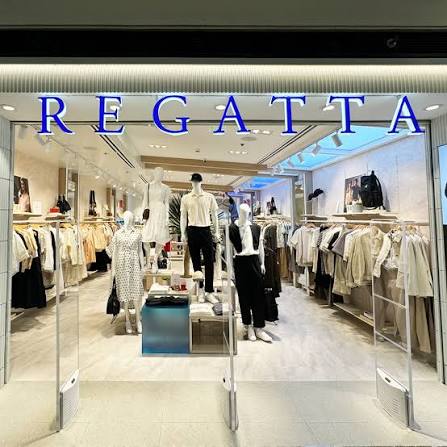
    Filipino lifestyle apparel brand Regatta opened a refreshed flagship store at SM Mall of Asia in Metro Manila, expanding its footprint inside one of the country’s largest retail centers.

    The store occupies space on the third floor of the South Main Mall, introducing an updated coastal retail layout paired with a new apparel sub-category.

    Inside the unit, merchandise is organized into dedicated product zones. A central accessories display carries lifestyle goods, including fragrances, headwear, drinkware, and towels, while an entire wall shows the retailer’s core polo shirt collection next to a customer lounge section.

    Athletic range expands casual lineup

    Alongside the store launch, Regatta introduced Regatta Sport, a product line targeting daily activewear. The collection includes quarter-zip pullovers, polo dresses, sweat shorts, lightweight nylon shorts, and jackets designed to bridge classic country club styling with functional athletic wear.

    The apparel rollout gives the brand broader coverage across technical fabrics and leisure categories as consumer demand for hybrid sportswear grows across Southeast Asia.

    Mall footprints anchor local brands

    Domestic apparel brands in the Philippines continue to renovate key metro flagships to hold floor space against competing international fast-fashion chains. High-traffic centers such as SM Mall of Asia serve as testing grounds for local operators seeking to expand product categories into lifestyle accessories and performance apparel.

    Regatta will monitor sales performance from the sports range at the South Main Mall location before rolling the inventory across its wider domestic store network in subsequent seasons.

  • I’m Donut? Expands into Southeast Asia with Kuala Lumpur Store in September

    I’m Donut? Expands into Southeast Asia with Kuala Lumpur Store in September

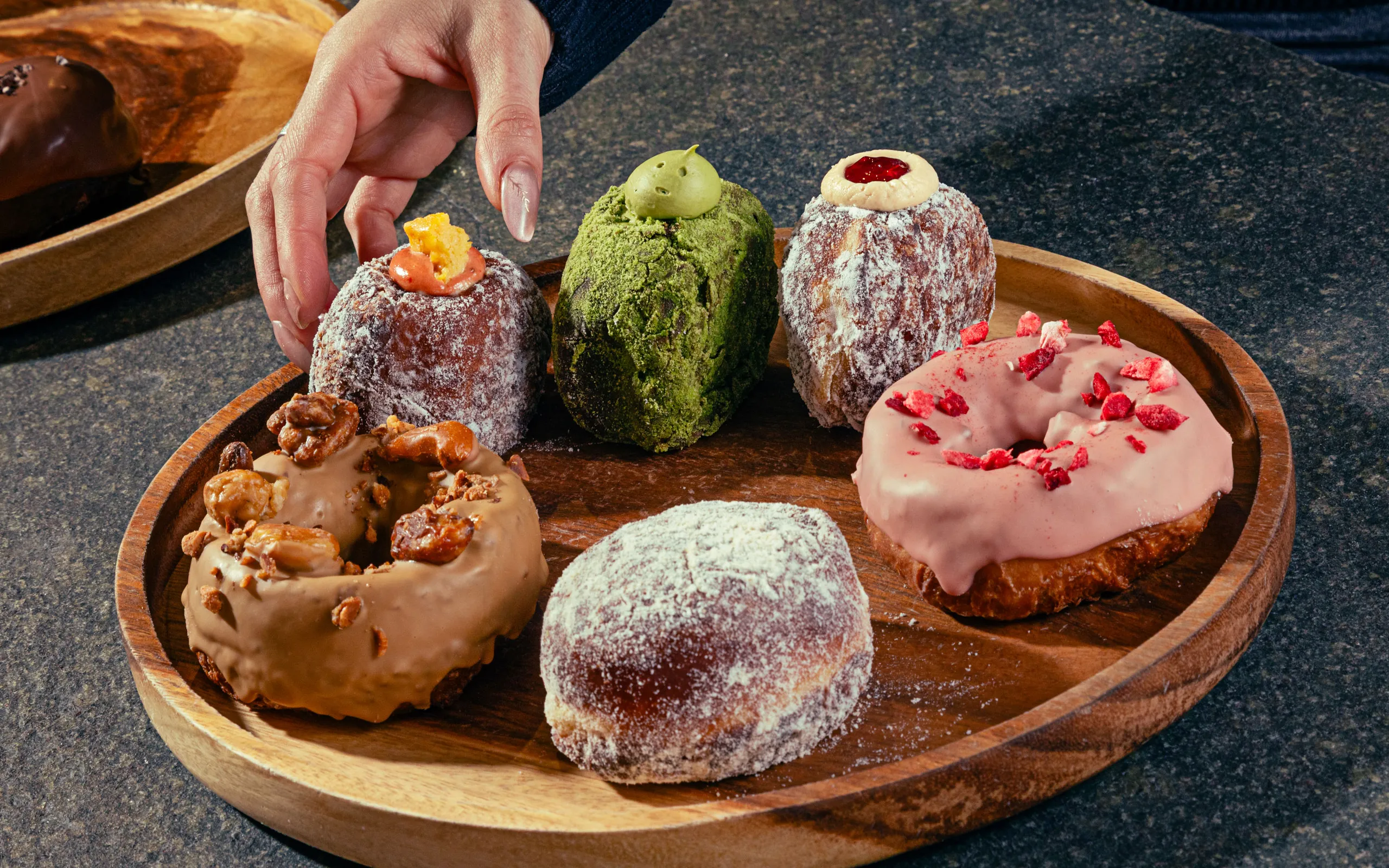
    Japanese bakery brand I’m donut? Will open its first Southeast Asian store in Kuala Lumpur this September. The store brings the company’s signature raw nama donuts to Malaysia for its regional debut.

    The concept built long queues across Tokyo with fried dough that uses pumpkin puree and high hydration to achieve a soft texture. The brand now enters Southeast Asia as international food and beverage operators target urban shopping destinations across the region.

    Expansion beyond Japan

    Malaysia frequently serves as an entry point for Japanese food brands testing regional appetites. Operators rely on high consumer familiarity with Japanese retail concepts and strong mall foot traffic in the Klang Valley to build brand momentum before expanding into neighbouring countries.

    Specialty dessert brands across Southeast Asia have shifted toward focused single-item menus. High-turnover bakery concepts allow operators to keep production footprints compact while driving customer traffic through distinct product formats.

    Competition in premium baked goods

    Artisanal bakery chains and overseas dessert operators are competing directly for prime retail space in major Malaysian retail centres. Premium baked goods have maintained steady foot traffic even as broader consumer discretionary spending faces pressure from food inflation and import costs.

    RetailNews Asia notes that dessert chains expanding internationally must balance localized supply chains with the need to match the taste profiles of their original domestic stores. The company plans to announce the exact retail site and opening schedule in Kuala Lumpur ahead of the September launch.

  • Laopu Gold Targets Global Expansion as Sales Growth Moderates

    Laopu Gold Targets Global Expansion as Sales Growth Moderates

    Laopu Gold is pushing ahead with overseas expansion plans to secure new sales channels as top-line retail growth cools across its core Chinese market.

    The Beijing-based luxury heritage gold brand reported a moderating pace of domestic expansion while confirming plans to establish footprints in key international shopping hubs.

    Slowing Domestic Demand

    Consumer appetite for pure gold jewellery in China faced pressure after a prolonged run of sharp price gains. Shoppers who drove previous surges in heritage gold sales have pulled back on discretionary luxury purchases, forcing premium jewellers to adjust their operational expectations.

    Laopu Gold built its brand equity on handcrafted traditional gold ornaments sold at significant premiums through boutique locations. As domestic store productivity normalises, management is looking beyond mainland shopping centres to sustain revenue momentum.

    Pushing Into Global Retail

    International luxury corridors represent the next commercial frontier for the brand. Establishing outposts in regional financial hubs and tourist destinations allows the jeweller to capture affluent Chinese travellers as well as international high-net-worth consumers.

    Rival jewellers across Hong Kong and mainland China have made similar shifts into Southeast Asia and the Middle East over the past two years. For Laopu Gold, competing on international high streets requires convincing foreign consumers to pay luxury design markups on traditional Chinese craftsmanship rather than treating items purely as gold weight assets.

    Execution details on specific international leases and overseas opening schedules will determine whether foreign revenue can counterbalance cooling domestic retail volumes.

  • Burger King Korea Opens Seoul Flagship Store as It Chases 1.1 Trillion Won in Sales

    Burger King Korea Opens Seoul Flagship Store as It Chases 1.1 Trillion Won in Sales

    Burger King Korea will open its first global flagship store in Seoul on September 10, backing a push to reach 1.1 trillion won in annual sales.

    The quick-service operator is targeting a network of more than 600 locations across South Korea this year, up from its current footprint.

    Located in the eastern district of Seongsu, the new format trades under the name Flameground. Local operator BKR designed the venue around exclusive menu items, branded merchandise and reservation-only dining, shifting away from standard counter-service fast food into experiential dining in one of Seoul’s busiest retail corridors.

    Private equity backing and store targets

    BKR operates both Burger King and Canadian coffee chain Tim Hortons in South Korea. The company entered the country in 1984 with an initial site in Jongno, changed hands to VIG Partners in 2012, and joined Hong Kong private equity firm Affinity Equity Partners in 2016.

    Affinity attempted to divest its Burger King operations in South Korea and Japan in 2022 before pausing the auction. In June, the buyout group restarted the sale process for BKR, seeking an exit four years after first testing buyer appetite.

    Shifting format in Seongsu

    Fast-food chains across East Asia are building larger experiential flagships in high-footfall neighborhoods to protect margins against rising ingredient costs and weaker discretionary spending. Seongsu has become the preferred testing ground for experimental retail formats, drawing both domestic fashion pop-ups and international food brands trying to appeal to younger consumers.

    BKR will open Flameground on September 10, with transaction advisers watching whether the higher-margin concept supports the ongoing sale process.

  • Chinese Restaurant Chains Target US Market as Domestic Growth Slows

    Chinese Restaurant Chains Target US Market as Domestic Growth Slows

    Chinese restaurant chains are expanding across the United States to offset slowing growth at home, betting American diners are finally ready to embrace authentic regional menus.

    The push enters a market that already counts more Chinese dining spots than individual locations of almost any major American fast-food chain. For decades, those menus relied heavily on Westernised adaptations like chop suey and fortune cookies, both created in the United States rather than mainland China. Traditional fare struggled to gain traction during the twentieth century as immigrant chefs navigated widespread consumer resistance and discrimination.

    Shifting from takeout staples to authentic menus

    Domestic headwinds across China’s dining sector are now accelerating the overseas push. Operators face tighter consumer spending and intense margin pressure in their home cities, making international expansion an urgent priority rather than a long-term experiment.

    Instead of modifying dishes to suit Western palates, newer entrants are bringing specialized formats straight from the mainland. Concepts range from high-end Michelin-starred Peking duck houses to regional hotpot and noodle formats. The shift reflects growing diner familiarity with authentic Chinese culinary traditions, moving the market away from generic takeout boxes toward distinct regional identities.

    Navigating saturated overseas markets

    Breaking into the American market presents operational hurdles despite the historical presence of Chinese food. Mainland chains must manage higher labor expenses, complex local supply chains, and entrenched domestic competitors while maintaining recipe authenticity.

    The test for Chinese operators is whether authentic regional concepts can capture mainstream suburban foot traffic or remain confined to dense urban centers with established Asian diaspora populations.

  • South Korea’s APR Targets W500b in Europe After First-Half Sales Surge

    South Korea’s APR Targets W500b in Europe After First-Half Sales Surge

    South Korean beauty company APR raised its full-year European sales target to 500 billion won ($358 million) after regional revenue jumped 363 per cent in the first half of 2026.

    European sales reached 228.9 billion won ($163.8 million) during the six-month period, accounting for roughly 17 per cent of the Seoul-based firm’s total revenue.

    Amazon Stores and Sephora Shelves

    Online momentum built quickly after APR launched official storefronts on Amazon in the UK, France, Germany, Italy and Spain late last year. Average monthly sales across those five country portals grew more than eightfold between January and June, lifted by demand during Amazon’s Prime Day event.

    Physical retail followed a parallel trajectory. APR secured shelf space at Sephora in March, driving its first-half offline revenue in Europe up more than ninefold compared with the same period a year earlier. To support the retail push, the company increased its available stock-keeping units in the region by more than five times.

    Korean Beauty Footprint Abroad

    The European push shows how quickly Asian beauty brands can convert digital traction into physical shelf space once regional distribution networks open up. While domestic Korean cosmetics demand remains steady, major operators in Seoul increasingly rely on Western department store chains and global e-commerce portals to absorb rising production volumes.

    APR is preparing to open dedicated Amazon storefronts in additional European countries while negotiating terms with regional department stores and specialty beauty chains to widen its physical distribution network before the end of the year.

  • Chick-fil-A Opens Second Singapore Store Under US$75 Million Asia Push

    Chick-fil-A Opens Second Singapore Store Under US$75 Million Asia Push

    Chick-fil-A opened its second restaurant in Singapore at Millenia Walk on July 30, backing a US$75 million capital commitment to expand across Asia over the next decade.

    The US fast-food chain appointed 23-year food and beverage veteran Deborah Ku as owner-operator after an 11-round interview process that screened more than 900 applicants over nearly two years.

    Single-unit operator model

    Unlike competitors that rely on master franchisees or multi-unit master developers across Southeast Asia, Chick-fil-A runs a single-operator structure. The Atlanta-based company assigns one dedicated local owner-operator to lead daily operations at each site.

    The Millenia Walk restaurant maintains standard corporate operating policies, including closing on Sundays. Prior to opening its doors, the branch donated S$25,000 to The Food Bank Singapore under the chain’s mandatory community contribution rule for new outlets. Ku adapted the menu for local palates with a Singapore Chili Sauce alongside distinct domestic architectural elements.

    Western fast-food expansion in Southeast Asia

    American quick-service brands face a fiercely competitive environment in Singapore, where high mall rents and persistent kitchen labour shortages have forced several established dining concepts to downsize or exit entirely since 2022. While rivals such as McDonald’s and KFC rely on mass-scale corporate franchising to protect margins, Chick-fil-A is testing whether high-touch individual owner-operators can carve out defensible market share in island retail hubs.

    Real estate watchers and franchisors now track site selection for the company’s next pipeline locations as it deploys the remainder of its 10-year, US$75 million regional capital pool.

  • Puma Relocates and Expands Flagship Store at VivoCity Singapore

    Puma Relocates and Expands Flagship Store at VivoCity Singapore

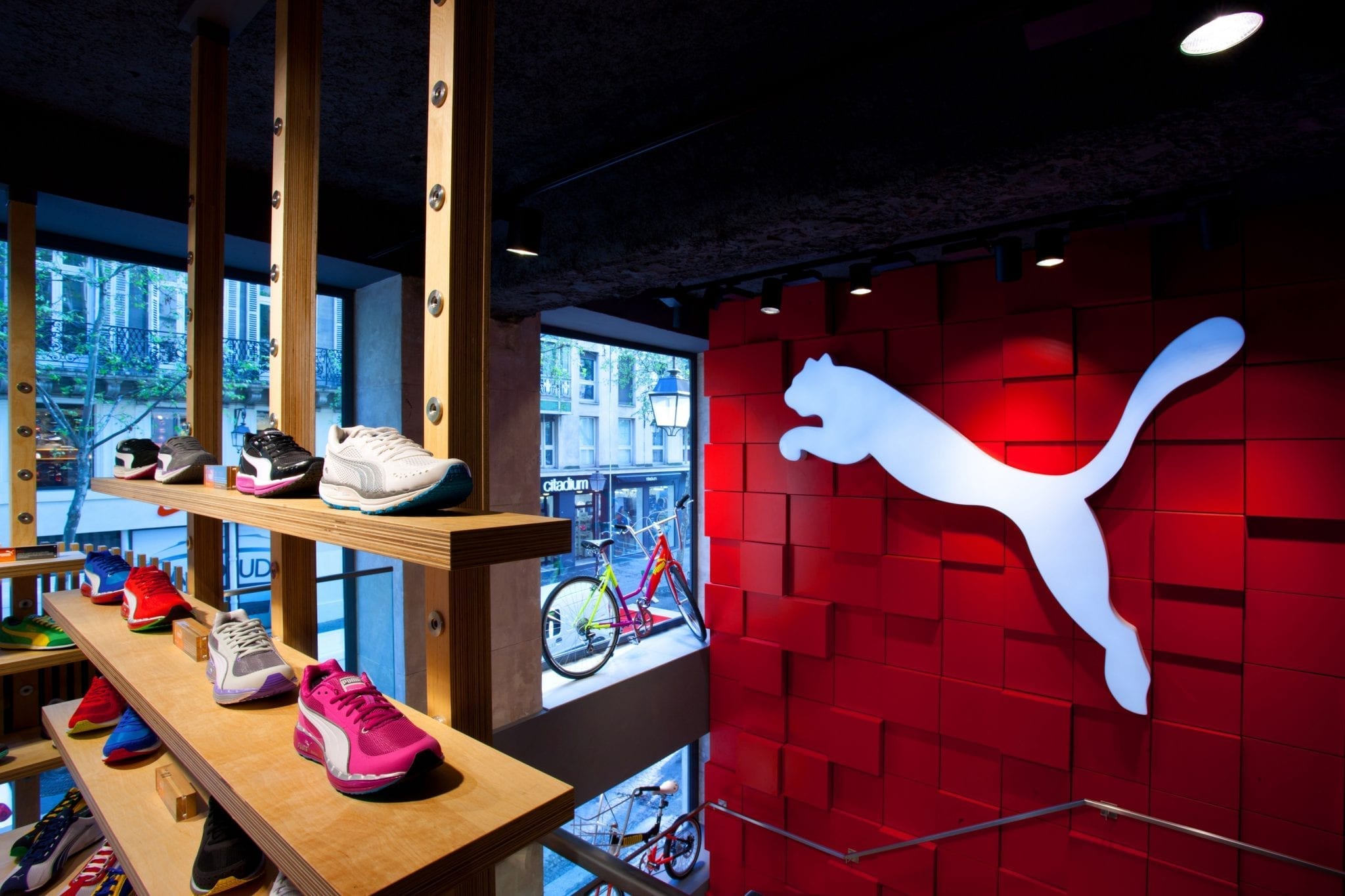
    Puma has opened its renovated flagship store at VivoCity in Singapore. The label shifted operations to a larger space on the mall’s ground level.

    Trading previously took place on level two. The new location sits on level one to capture heavier shopper traffic.

    Floor shift and category layout

    The expanded store houses the brand’s footwear, apparel, and accessories across distinct sections. Key product zones show running, training, team sports, and motorsports merchandise.

    “VivoCity is an important retail destination in Singapore, and this new flagship allows us to bring the full breadth of Puma to consumers in a more engaging and accessible way,” said Sanjay Roy, managing director of Puma Southeast Asia and Oceania.

    Sportswear footprint in regional malls

    Sports brands across Southeast Asia continue upgrading mall tenancies from upper levels to prime ground-floor units. The strategy targets casual lifestyle buyers alongside performance athletes. RetailNews Asia has observed similar moves across core retail nodes in Singapore, where flagship expansions anchor marketing and broader wholesale distribution.

    At VivoCity, the store is now fully operational with the brand’s complete seasonal line-up ahead of the final quarter retail cycle.

  • Makro Returns to Philippines with Four Greater Manila Outlets

    Makro Returns to Philippines with Four Greater Manila Outlets

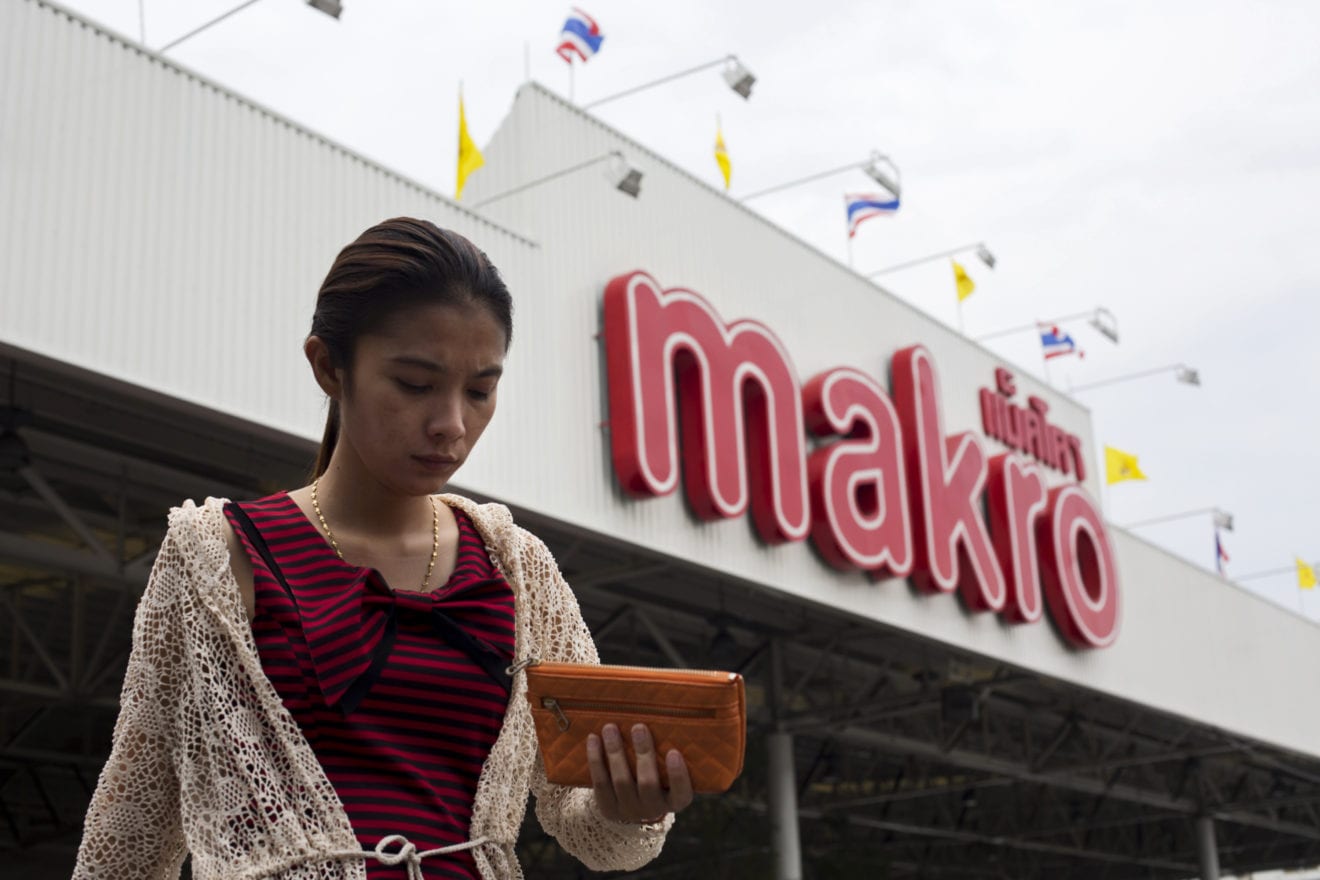
    Thai wholesale operator CP Axtra has partnered with Ayala Corporation to bring Makro back to the Philippines across four commercial estates in Greater Manila.

    Under the deal, the joint venture signed lease agreements with Ayala Land for sites in Quezon City, Taguig, Laguna, and Cavite. The cash-and-carry brand returns nearly two decades after its original footprint was sold off and absorbed by rival operators.

    Four Hubs Across Greater Manila

    All four locations sit inside key transport corridors and commercial zones. In Quezon City, Makro will open at Cloverleaf at the intersection of EDSA and the North Luzon Expressway. In Taguig, the retailer will take space inside Ayala Malls Arca South to serve the capital’s southern gateway.

    Two other branches target corridors south of Metro Manila. Broadfield in Biñan, Laguna, puts Makro inside a dedicated commercial and logistics campus. Meanwhile, Evo City in Kawit, Cavite, places the brand in a fast-growing residential and commercial district.

    Rebuilding an Old Partnership

    Makro first entered the Philippine market in March 1996 through a joint venture among Dutch retailer SHV, Ayala, and the SM Group. Ayala sold its 28 percent stake in 2004. SM took full control five years later, converting all existing branches into SM Hypermarkets by 2009.

    Today, the partnership pairs Ayala with CP Axtra, the retail arm of Thailand’s Charoen Pokphand Group, which operates Makro wholesale centres and Lotus’s supermarkets. The Philippine market offers a strong base of small merchants, food service businesses, and bulk-buying households that CP Axtra targets across Southeast Asia.

    Makro Philippines plans to open its first two stores at Cloverleaf and Arca South between the fourth quarter of 2026 and the first quarter of 2027. Openings in Cavite and Laguna will follow.