Tag: retail problems

  • China’s retail sales record double-digit growth

    China’s retail sales record double-digit growth

    China released economic data for July that showed slower-than-expected growth as the world’s second-largest economy battled floods and a resurgence of Covid-19.

    The slowdown was particularly apparent in individual Chinese consumer spending, despite authorities’ efforts to build up consumption as a driver of economic growth.

    The data showed consumers cut back on spending across the board, whether it was on big-ticket items like cars or lower-cost products like cosmetics that can be bought through online e-commerce platforms.

    Retail sales rose by 8.5% in July from a year ago, lower than the forecast 11.5%, according to analysts polled by Reuters. Auto-related sales, the largest component of retail sales by value, was the only category to decline in July, down 1.8% year-on-year.

    The cosmetics sector was one of the slowest-growing categories, and sales grew just 2.8% in July from a year ago, versus growth of 13.5% in June.

    Online sales of physical consumer goods rose by 4.4% in July, far below an average of about 21% for the past five years, according to CNBC calculations of official data.

    Bruce Pang, head of macro and strategy research at China Renaissance, attributed the sharp drop in online sales to massive shopping promotions in June, which were followed by logistics disruptions amid Covid-19 travel restrictions, floods and typhoons in July.

    E-commerce giants Alibaba and JD.com handled a record $136.51 billion of sales during the June 18 shopping event, known as “618.” China’s other major shopping festival of the year falls on Nov. 11.

    Outside of consumption, China’s manufacturing sector also grew more slowly than expected.

    Industrial production grew by 6.4%, also below expectations of a 7.8% year-on-year increase in July, according to the Reuters poll.

    Fixed asset investment for the first seven months of the year rose by 10.3%, below the forecast of 11.3% year-on-year growth for the January to July period, according to Reuters.

    The National Bureau of Statistics noted “the impact of multiple factors including the growing external uncertainties and the domestic COVID-19 epidemic and flooding situation,” according to a release. The bureau added that the “economic recovery is still unstable and uneven.”

    On consumption, the bureau’s spokesman Fu Linghui said during a press conference that Chinese willingness to spend is increasing since spending per capita grew faster than that of disposable income in the first half of the year — up 17.4% and 12%, respectively.

    The country added 1.24 million new urban jobs in July, on track to reach Beijing’s target of creating more than 11 million new urban jobs this year.

    However, the unemployment rate in cities ticked higher to 5.1% in July, up from 5% the prior month. The unemployment rate for those 16- to 24-years-old remained far higher, rising to 16.2% from 15.4% in June.

    Economists have cut their China GDP forecasts given the latest wave of travel restrictions and residential community lockdowns in the wake of the spread in the last two months of the highly contagious Delta variant within the country.

    Goldman Sachs expects 8.3% growth this year, down from 8.6% previously, according to an Aug. 8 note.
    Nomura predicts 8.2% GDP growth for the year, down from 8.9%, according to an Aug. 3 note.

    The official growth target is lower, at over 6%.

    Although the number of new Covid cases is low compared with other countries, the economic impact could be greater since China has taken a “zero tolerance” approach. Last week, authorities shut a terminal of the world’s third-busiest port after one worker was infected.
  • H&M plans showing its first Home concept store in Paris

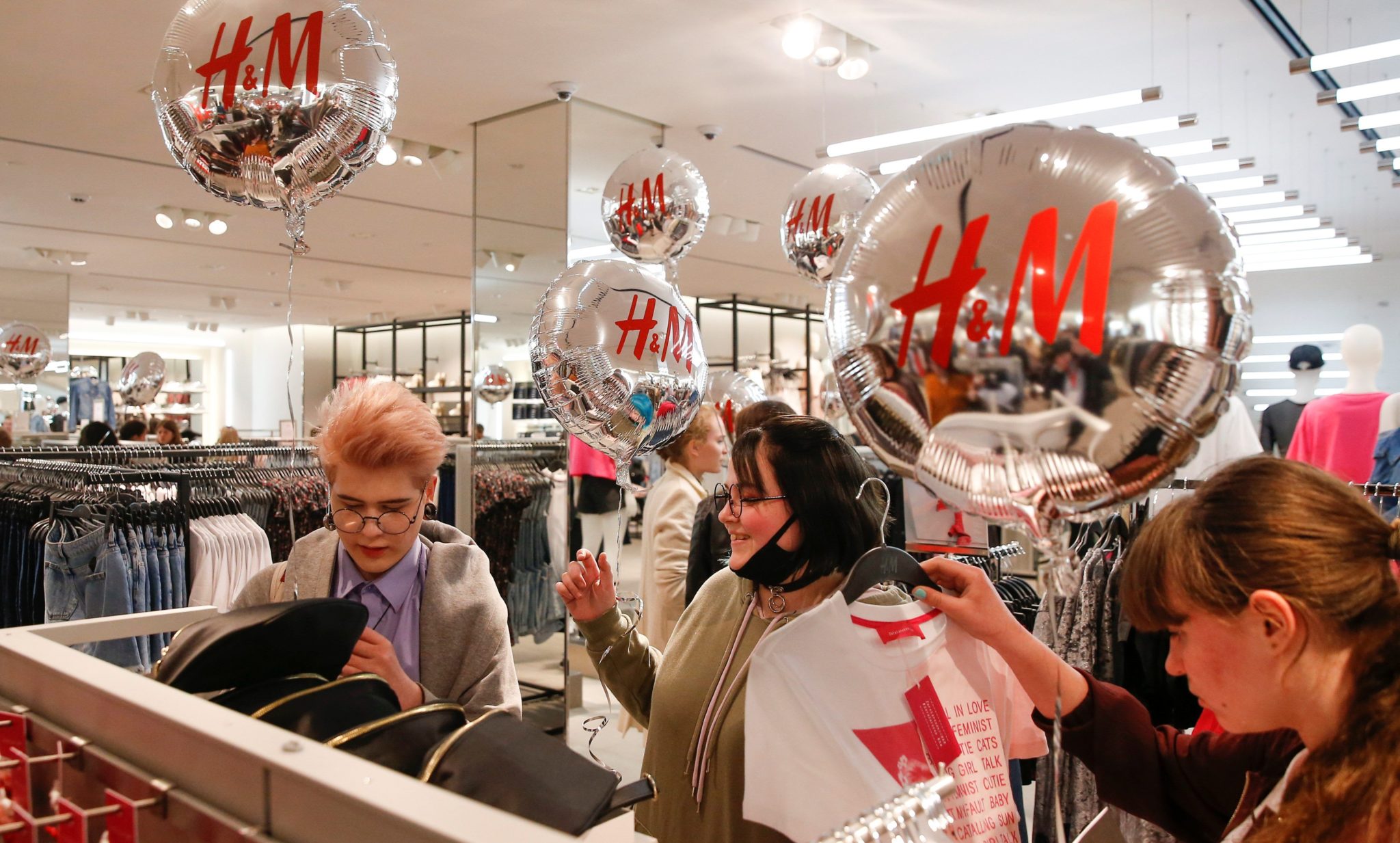
    H&M plans showing its first Home concept store in Paris

    The Swedish giant is about to open an XXL store in Paris. Officially inaugurated on Thursday September 9, 2021, this H&M Home store is to open in the famous Madeleine area. Here is what we know about this spot already.

    Good news for home décor fans looking for bargains. H&M is opening this Fall 2021 a new store dedicated to home. Called H&M Home, this first 100% home décor store in France by the Swedish giant is to take over the Madeleine district – already housing the first IKEA store in Paris.

    It is at 14 boulevard des Capucines, a stone’s throw from Olympia, and not far from their flagship the concept-store is about to welcome Parisians and tourists looking for bargains to transform their indoors. This new spot, covering 724sqm, will feature different styles, also available in the H&M Home collection and collaborations with other brands.

    In addition to decoration for each room, you can find storage units, accessories, bedding, indoor clothing, crockery, toys for children, and even furniture to fit on small surfaces. This will be the occasion for small budgets to change their décor for a lesser cost.

    So, when will this new H&M concept store dedicated to indoor decoration open in Paris? The official opening is scheduled on Thursday September 9, 2021 with a special weekend including exclusive guest brands to enjoy on-site, and a never-before-seen digital experience.

    After the opening of an Ikea Décoration in Paris 1st arrondissement, and before the inauguration of Maxi Bazar in the 13th, stores dedicated to decoration are very trendy in town!

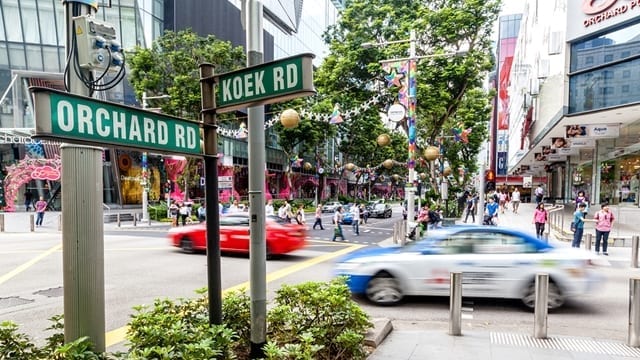
  • Singapore retail sales stabilise at below pre-Covid levels

    Singapore retail sales stabilise at below pre-Covid levels

    Singapore’s retail sales rose 79.7 percent year on year in May to S$3.3 billion, rebounding from the low base during the 2020 “circuit breaker”, according to a Singapore Department of Statistics released on Monday.

    This was up from April’s 54 percent jump and exceeded economists’ expectations of a 65 percent rise. Yet retail sales remain below pre-Covid levels, noted Singstat. May’s figures were also down 6.8 percent on a month-on-month seasonally adjusted basis.

    Online sales accounted for 13.7 percent of May’s takings, up from 11.2 percent in April. Excluding motor vehicles, May’s retail sales were up 61.6 percent year on year, but down 5.2 percent on a month-on-month seasonally adjusted basis.

    Due to “the low base in May 2020 when most physical stores were closed for the whole month”, all retail industries saw major year-on-year increases, except for two categories: supermarkets and hypermarkets, and mini-marts and convenience stores. These saw falls of 12.1 percent and 9.2 percent respectively.

    The largest increases were seen for watches and jewelry, with May’s takings more than 20 times the year-ago figure; department stores; and wearing apparel and footwear.

  • Japan’s retail sales extend gains but Covid-19 challenges persist

    Japan’s retail sales extend gains but Covid-19 challenges persist

    Japan’s retail sales rose for a fifth straight month in July, beating expectations as the consumer sector continued its recovery, although a coronavirus resurgence has cast doubts over the spending outlook.

    A surge in Delta variant cases this month forced the government to widen state of emergency restrictions, which are now threatening to hurt consumer spending and derail a fragile economic recovery.

    Retail sales advanced 2.4% in July from the same month a year earlier, government data showed on Monday, slightly faster than economists’ median forecast for a 2.1% rise in a Reuters poll. It followed a 0.1% increase in June.

    “The recent strength in retail sales is unlikely to last,” Marcel Thieliant, Senior Japan Economist at Capital Economics, said in a note.

    “The severe Delta wave now hitting the country coupled with an ever-expanding list of prefectures under states of emergency resulted in a renewed weakening in consumption this quarter,” Thieliant said.

    The better-than-expected rise in retail sales in July came as authorities struggled to get a defiant public to heed stay-at-home restrictions in major cities like Tokyo, which hosted the Olympics during the month.

    The trade ministry data found strong demand for a variety of items such as cars, clothing, general merchandise, and food while fuel was helped by higher petrol prices.

    Small retail establishments like convenience stores and drug stores saw the biggest sales growth from a year earlier.

    However, growth was also flattered by the comparison with last year’s steep slide, when consumer demand was hurt by the coronavirus pandemic.

    Compared with the previous month, retail sales gained a seasonally adjusted 1.1% as consumption continued the surprising growth seen in the second quarter, helped by the Tokyo Olympics.

    The world’s third-largest economy grew at a better-than-expected rate in the April-June quarter, thanks largely to private consumption, which makes up more than half of the country’s gross domestic product.

    But rebounding consumer activity poses a challenge to policymakers as the more contagious Delta variant of COVID-19 upends the nation’s healthcare system, with state of emergency curbs now covering nearly 80% of Japan’s population.

    “People’s mobility has been decreasing, and consumption may peak out in August,” said Atsushi Takeda, chief economist at Itochu Economic Research Institute, noting that the downward trend could drag until September.

  • Macau retail sales surge after Covid-19 lockdown

    Macau retail sales surge after Covid-19 lockdown

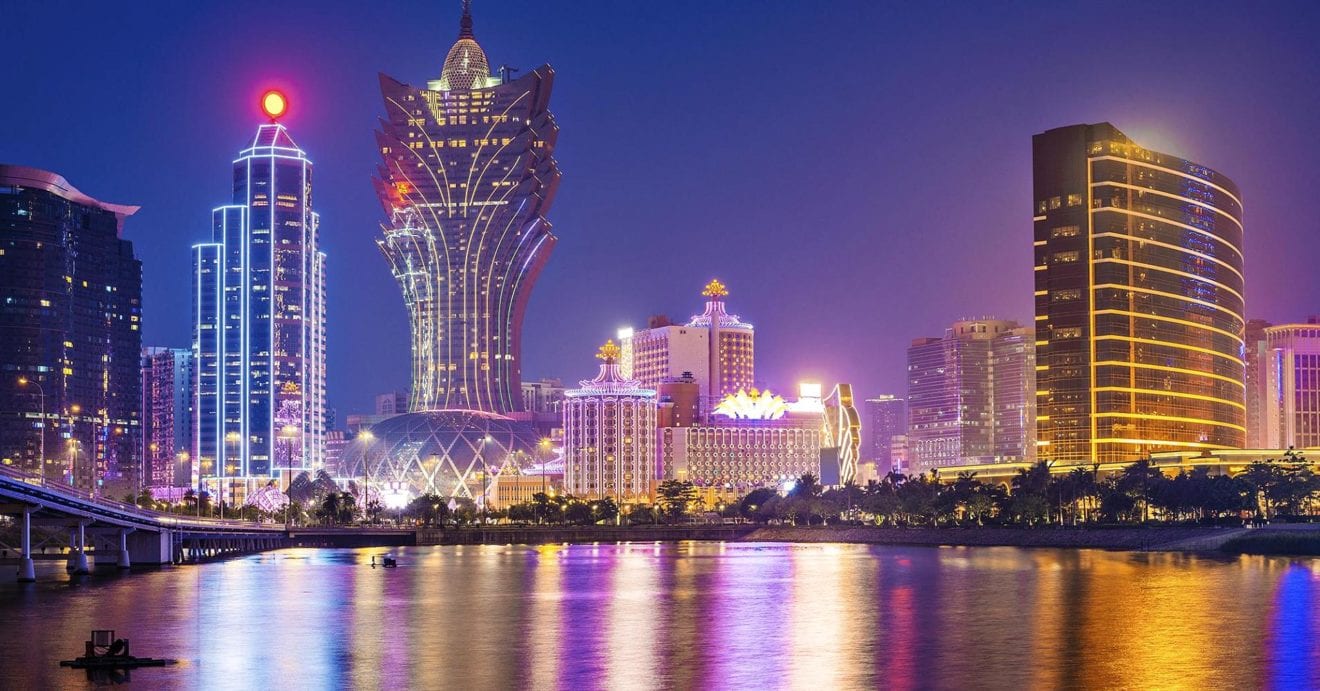
    The value of Macao’s retail sales for the second quarter of 2021 totaled 20.70 billion patacas (about 2.58 billion U.S. dollars), up 200 percent year on year, the special administrative region’s statistic department said on Tuesday.

    The latest report from the Statistics and Census Service (DSEC) showed that among the major retail trade activities, sales values of watches, clocks and jewelry, leather goods, and communication equipment witnessed a notable year-on-year growth of 957.9 percent, 504.0 percent, and 460.4 percent respectively, whereas sales value of supermarkets dropped by 11.3 percent.

    As regards the sales volume index, the indices of watches, clocks and jewelry, leather goods, and communication equipment registered a significant rise, while the index of supermarkets decreased.

    For the first half-year of 2021, the value of retail sales reached 39.46 billion patacas, an uplift of 118.4 percent year on year. Besides, the sales volume index jumped by 130.4 percent.

    The value of retail sales in the second quarter of 2021 rose by 10.3 percent as compared with the revised figure of 18.76 billion patacas in the first quarter. Sales values of department stores and watches, clocks, and jewelry increased markedly, whereas sales values of communication equipment declined.

    Moreover, the sales volume index grew by 9.9 percent quarter on quarter.

    In respect of retailers’ comments, 40.9 percent of the retailers expected the sales volume to stay stable year on year in the third quarter of 2021, 42.9 percent anticipated a decrease, and 16.2 percent forecast an increase. Meanwhile, 78.0 percent of the retailers predicted that the retail prices would remain steady year on year in the third quarter, 15.3 percent foresaw a decrease and 6.7 percent expected an increase.

    As compared with the second quarter of 2021, about 44.7 percent of the retailers envisaged sluggish business in the third quarter, whereas retailers expecting stable performance and those anticipating a favorable outlook together accounted for 55.3 percent of the total.

  • Pandora jewellery sales top pre-pandemic levels as US shoppers splash out

    Pandora jewellery sales top pre-pandemic levels as US shoppers splash out

    Danish jewelry maker Pandora said on Tuesday that a strong performance in the United States spurred rapid sales growth in the second quarter but sales in China fell. Pandora, which aims to strengthen its brand in the world’s two biggest economies, said its total comparable sales in April-June jumped 7 percent compared to the same quarter of 2019 before the pandemic.

    In the United States quarterly sales more than doubled from a year earlier and were up 63 percent compared to 2019 as massive government stimulus and vaccinations against Covid-19 fuelled spending on goods and services.

    Pandora said it saw indications that it was gaining more market share in the United States, its biggest market, but cautioned that the high growth would come down in the second half of the year.

    “We have dampened the expectations on the US growth versus the first half and then we have raised expectations in Europe when the stores reopen and we are seeing that play out,” Chief Executive Alexander Lacik told Reuters in an interview.

    Pandora’s shares, which have gained around 25 percent this year, fell around 1 percent in early trade.

    “The questions arise for how long growth in the US operation can offset continued weakness elsewhere, and can Pandora stabilize its European operations to coincide with slower US growth?” Handelsbanken said in a research note.

    Sales in China, the world’s largest jewelry market, fell 13 percent in the second quarter compared to 2019.

    “It will take time so this is not a quick fix. The first attempt to try to turn this around is going to happen later this year,” Lacik said, adding that Pandora would announce further details on its brand repositioning in China at its capital markets day in September.

    Pandora earlier this month raised its full-year sales and profit margin forecasts as fewer stores would have to close due to Covid-19 than initially assumed.

    On Tuesday, Pandora also announced a new share buyback programme, the latest European company to repurchase stock in the wake of a strong earnings season.

  • French retailer Carrefour to launch $1.9bn sale of Taiwan business

    French retailer Carrefour to launch $1.9bn sale of Taiwan business

    French retailer Carrefour is planning to launch a sale of its Taiwan business, which is valued at around US$1.9 billion in the coming weeks, three people with knowledge of the matter have told Reuters.

    The supermarket chain operator has hired Morgan Stanley to run the sale, which is expected to kick off after the summer, said the people, who declined to be identified as the information is confidential.

    Carrefour has approached a number of potential buyers, including private equity firms, to gauge their interest, the people said.

    The company did not immediately respond to a request for comment. Morgan Stanley declined to comment.

    Europe’s largest retailer said in June it had started considering possible consolidation, divestitures or tie-ups of its foreign subsidiaries, but denied it had decided to sell any assets.

    Carrefour acquired food retailer Wellcome Taiwan from Asia’s Dairy Farm in December, making it the number two player in Taiwan’s convenience stores market. The transaction, with an enterprise value of $113.6 million covers the purchase of 224 stores as well as a warehouse.

    Carrefour reported $1.48 billion in Taiwan net sales in the first half, up 13 percent year on year at constant exchange rates. The company said the newly acquired Wellcome stores strongly outperformed.

    While it has expanded in Taiwan in recent years, Carrefour retreated from the highly competitive Chinese market in 2019 by selling 80 percent of its loss-making operations to electronics retailer Suning.

  • Retail coffee prices to climb as frost and freight costs bite

    Retail coffee prices to climb as frost and freight costs bite

    A massive shipping logjam caused by the most devastating frost in decades in Brazil and record freight costs wrought by COVID-19 in top coffee producer Brazil is expected to push retail prices to multi-year highs in the coming weeks. have hope.

    A rise in coffee prices will further increase the cost of the shopping cart for other items such as bread, vegetable oil and sugar. The United Nations Food Agency’s index of world food prices for July saw a 31% year-on-year rise at a time when many consumers are struggling financially because of the pandemic.

    The worst cold snap since 1994 in Brazil sent the price of green coffee beans to the highest level in nearly seven years and is expected to pass on to consumers when they buy roasted beans or ground coffee at supermarkets.The price of Arabica coffee on the ICE Futures US exchange has more than doubled in the past 12 months and crops in Brazil have already dried up after the worst drought in 91 years.

    The extent of the damage is still being assessed, but it could take up to seven years for production to fully recover in areas where there are no coffee trees left.

    Shipping disruptions, partly due to increased demand for consumer goods and not enough ships as people stayed home due to the global coronavirus pandemic, have led to a sharp increase in the cost of transporting beans to major consumer countries in North America and Europe. is of. .

    With merchants believing that consumers will soon have to pay more to buy coffee from supermarkets, the price of a latte or Americano at high street coffee chains may not follow suit in the short term.

    “The roast and ground (coffee at the supermarket) only has coffee and a little packaging. Your coffee at Starbucks can’t go up (as much) because you pay more for the shop, the wifi, the experience,” he said.

    Data released by the US Bureau of Labor Statistics showed ground coffee prices rose to $4.75 a pound in April, up 8.1% from a year earlier and the highest level since July 2015, as a drought-hit Brazil. had an early effect on crops.

    Arabica coffee prices on the ICE Futures US exchange rose sharply, however, after the recent frost and retail prices are sure to increase in response.

    In Brazil, the world’s number two consuming country after the United States, prices of roasted and ground coffee rose 3.4% in June, according to the statistics office IBGE.

    They are sure to grow further. Following the July frosts, Brazilian coffee industry group Ebique asked roasters to analyze their costs and adjust prices accordingly to maintain the stability of their businesses.

    Ebic estimates that green coffee prices for roasters in Brazil have increased by about 80% from the end of December to July.

    “Some companies, including market leaders, have already announced price increases,” Ebic said in a letter to affiliated roasters seen by Businesshala.

    JDE Peet’s, whose brands include Douwe Egberts, Kenko and Peet’s, said there has been a sharp increase in material, freight and other costs over the past 12 months.

    “Historically, significant fluctuations in green coffee prices have been reflected in the market (retail prices) and we expect this precedent to continue,” the company said.

    An increase in transportation costs, coupled with a shortage of shipping containers, can play a major role in driving up prices. Coffee is typically shipped in containers, as opposed to items such as cereals, which are transported in bulk carriers.

    Many coffee companies find it easier to cope with an increase in the cost of beans, at least in the short term, than to increase shipping costs because they often price their purchases several months in advance.

    Mark Schneider, chief executive officer of Nestle, recently said, “We’ve been hedging here for a good percentage of our coffee needs for the rest of this year and even part of next year, So I’m not worried about it.” Conference call, adding it was not in terms of transportation costs.

    Carlos Santana, coffee head trader at Aisa Intergricola, a unit of ECOM Trading, said it was very challenging to ship coffee specifically to the US.

    “It’s not nearly as economical to use this route right now. Ports are full in the US, shipping companies don’t want to move as much cargo there, so they charge more. Prices are three times higher than they were before the pandemic,” They said.

    Thiago Cazarini, a coffee broker in the Brazilian state of Minas Gerais, said despite paying very high prices to secure a container, exporters are having problems trying to load them into ships.

    He said the problem is widespread, affecting all players.

    One US coffee importer said, “Brazil is logically such a mess at the moment. I have coffee that arrived two months ago and haven’t received it yet.”

    Julian Thomas, managing director of Maersk Brazil (MAERSKb.CO), part of the world’s largest container shipping line, said: “The current bottlenecks of pandemic containment measures and a strong demand are also affecting supply chains in and outside Brazil. Is.”

    “We are still serving our customers and can meet their growing demand,” he told Businesshala.

    German container shipper Hapag Lloyd (HLAG.DE) said there were delays for shipping goods, “but not just coffee”.

    Brazil accounts for an estimated 30% of global exports and its peak shipment season has already begun.

    Additional reporting by Maytal Angel in London and Ana Mano in So Paulo; Editing by Veronica Brown and David Evans

  • India’s Reliance Retail to buy Just Dial for $469 million

    India’s Reliance Retail to buy Just Dial for $469 million

    Reliance Retail is to buy nearly 41 percent of search and database firm Just Dial for US$468.84 million.

    Billionaire Mukesh Ambani-owned Reliance Retail will also make an open offer to public shareholders of Just Dial to acquire an additional 26 percent, according to regulatory requirements.

    Reliance has been on an acquisition spree to ramp up its online retail offerings and, over the past three years, has bought British toy retailer Hamleys, music streaming service Saavn, online furniture retailer Urban Ladder and e-pharmacy Netmeds.

    The deal with Just Dial, subject to shareholder and other approvals, will help Reliance get access to the company’s massive merchant database that spans across the country.

    The deal will boost “the digital ecosystem for millions of our partner merchants, micro, small and medium enterprises,” Isha Ambani, a director at Reliance Retail, said in the statement.

    Just Dial has a database of about 30.4 million listings as of March 31 and gets consumer traffic of about 129.1 million unique users each quarter.

    The capital infusion from the deal will help Just Dial expand discovery on its platform and boost transactions for millions of its products and services.

    Just Dial’s MD VSS Mani will continue to lead the company, the statement said.

  • Indonesia’s Bukalapak kicks off $1.1 billion IPO

    Indonesia’s Bukalapak kicks off $1.1 billion IPO

    Indonesia’s Bukalapak launched an up to $1.13 billion IPO ahead of next month’s listing, marking the country’s biggest issue in over a decade amid rising investor appetite for tech stocks in a region boasting a growing consumer class, according to a term sheet seen by Reuters.

    The e-commerce company, which counts Singapore sovereign investor GIC and Microsoft among its backers, is set to be valued at $5.6 billion at the top end of a price range, doubling the company’s valuation from two years ago.

    Details of the IPO are currently being announced at an investor briefing.

    Reuters reported on Thursday that Bukalapak, the country’s fourth-biggest e-commerce firm, was targeting raising more than $1 billion in its IPO, 25% more than previously planned.

  • Singapore retail sales still running below pre-Covid times

    Singapore retail sales still running below pre-Covid times

    Singapore retail sales (excluding motor vehicles) increased 61.7 percent in May, but the figure was skewed significantly by the low base of the previous year when Covid-related movement orders effectively shut the offline retail sector down for a whole month.

    Of the total estimated retail sales in May of about SG$2.8 billion, excluding motor vehicles, online sales accounted for about 16.1 percent.

    The largest online categories were computer and telecommunications equipment where e-commerce accounted for 54.4 percent of total sales; furniture and household equipment (30.7 percent) and supermarkets and hypermarkets (12.1 percent).

    May’s overall sales increase followed a 39.2-per-cent rise in April – however, Statistics Singapore says sales continue to track at lower levels than before the outbreak of Covid.

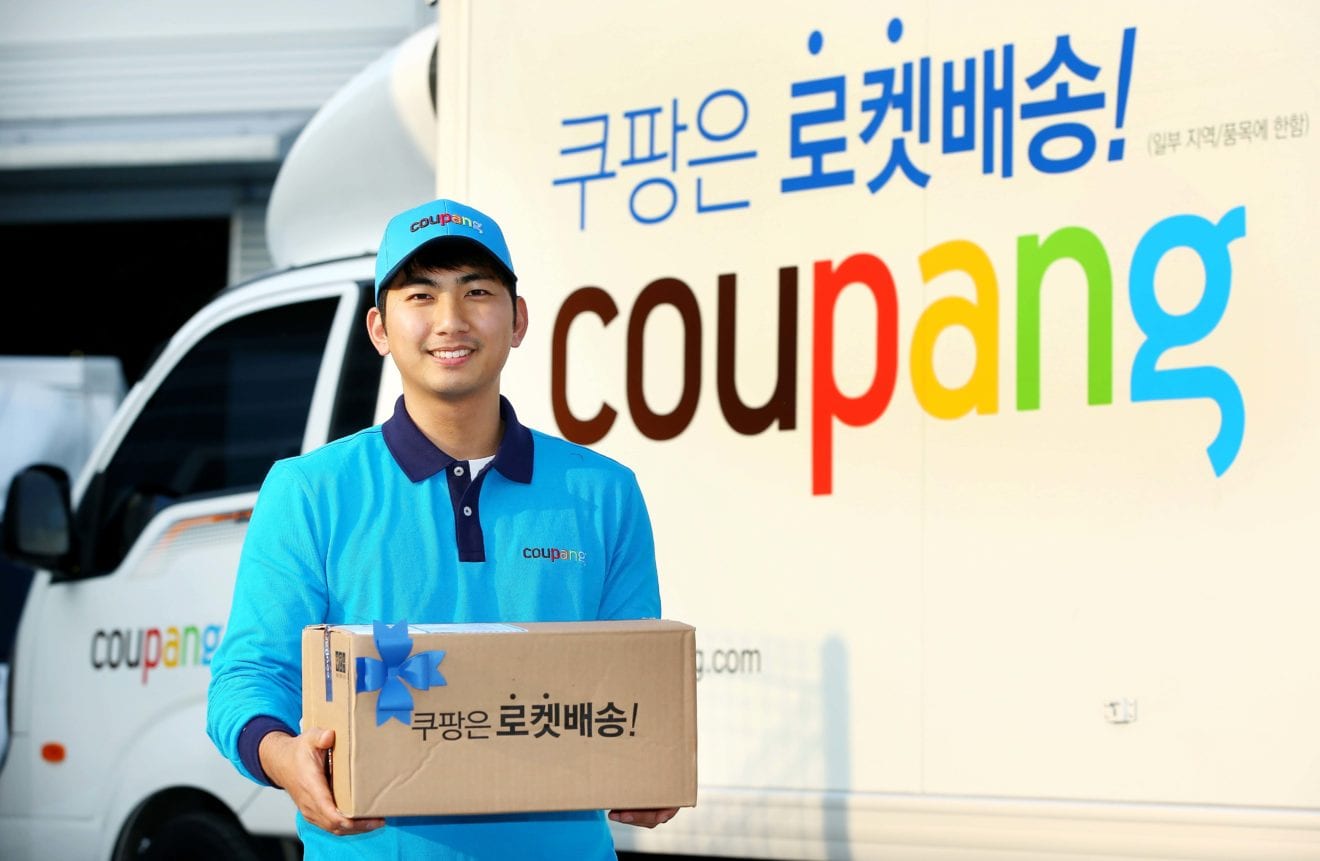
  • Coupang faces probe into unfair trade practices

    Coupang faces probe into unfair trade practices

    After stoking a series of controversies, including a fire at a logistics centre and poor working conditions, South Korean e-commerce giant Coupang is now facing a government investigation into alleged unfair trading practices.

    The Korea Fair Trade Commission (KFTC) recently noted that Coupang might have violated the Fair Trade Law and carried out a field investigation at Coupang’s headquarters in Songpa-gu in Seoul late last month.

    Coupang has allegedly manipulated its search algorithm to make its private-label products more visible than the products of other suppliers.

    The company manipulated the algorithm towards prioritizing and placing its private-label products at the top of the search results while placing other products at the bottom.

    The antitrust regulator is also investigating whether Coupang conducted ‘gapjil’ against suppliers. Gapjil is a Korean term referring to power harassment and abuse of power.

    Coupang has allegedly required suppliers to offer their products at the lowest price and penalized those who refused to supply their products at a lower price than the supply price for other platforms.

    In the field investigation, the KFTC checked the allegations that Coupang forced suppliers to purchase advertising space and excluded those who refused to do so from various benefits, including the company’s rocket delivery service.

    Another allegation was that Coupang unfairly returned products to suppliers.

  • Hong Kong retail sales rise 10.5 percent in May

    Hong Kong retail sales rise 10.5 percent in May

    Hong Kong retail sales rose 10.5 percent in May from a year earlier, the fourth consecutive monthly gain, boosted by an easing Covid-19 threat. But the growth lagged pre-pandemic levels as inbound tourism is at a halt and global travel restrictions linger.

    Sales climbed to HK$29.6 billion (US$3.81 billion), government data showed on Wednesday. That compares with a 12.1 percent rise in April, a 20.21 percent rise in March, and 30 percent growth in February.

    “The near-term operating environment of the retail sector will remain challenging given the lack of visitor spending,” a government spokesman said.

    In volume terms, retail sales in May jumped 7.8 percent year-on-year, compared with a revised 11-per-cent surge the previous month.

    Online retail sales in May soared 53.1 percent in value year-on-year, compared to revised 26.9-per-cent growth in April and a 44-per-cent rise in March.

    Sales of jewelry, watches, clocks, and valuable gifts, which depend heavily on mainland tourists, surged 54.8 percent in May versus a revised 93.9 percent rise in April, the data showed.

    Clothing, footwear, and allied products rose 12.1 percent in May, compared to a revised 61.2 percent in April.

    Tourist arrivals fell 34.8 percent year-on-year in May to 5305, after posting a 38.3-per-cent jump in April in the city’s first growth in arrivals after 21 consecutive months of declines.

    Hong Kong’s seasonally adjusted unemployment was 6 percent in the March-May period, against 6.4 percent in February-April, as the labor market was boosted by economic recovery and as the novel coronavirus outbreak receded.

    The government saw some sectors to take longer to return to pre-pandemic levels because of an uneven pace of recovery.

    The city’s economy grew by a revised 7.9 percent in the first quarter from a year earlier, snapping six consecutive quarters of annual contractions. Official forecasts are for the economy to grow between 3.5 percent and 5.5 percent in 2021, after a 6.1-per-cent contraction last year.

  • Singapore Reconsiders Economic Reopening

    Singapore Reconsiders Economic Reopening

    A growing cluster of infections threatens to derail Singapore’s economic reopening, while expats in the country are growing restless from being cooped up on the island with no end in sight.

    Singapore’s Multi-Ministry Task Force is closely monitoring the growing number of community cases, particularly the expanding cluster of cases that now numbers 56, which originated from a neighborhood market.

    Day by day, we are seeing the number of unlinked cases – the cryptic cases in the community – is likely to be rising too. Given these developments, we are evaluating the timing and scope of the next stage of reopening, Finance Minister Lawrence Wong said in a video recording posted on Facebook and Instagram on Wednesday.

    The country is set for further relaxation of «heightened alert» restrictions from Monday, following a month of heightened Covid-19 related restrictions, during which community cases fell sharply, a and a week-long first stage of reopening.

    Singapore’s borders have been effectively shut for more than a year now, and many expats are getting restless, particularly as the U.S. and Europe return to normalcy.

    Many feel the country is too slow in reopening its borders, and may depart in the next six months if vaccinations and travel re-opening do not go as planned. Currently, returning residents face three weeks of quarantine – if they are allowed back into the country.

    Singapore said any ease in travel curbs will depend on the pace of vaccinations, which it has targeted for half of its population bu the end of August and 75 percent by October. Currently, about 35 percent of the population is vaccinated.

  • Shinsegae, Naver win bidding battle for EBay South Korea

    Shinsegae, Naver win bidding battle for EBay South Korea

    South Korean retail giants Lotte Shopping and Shinsegae Group have submitted separate letters of intent for online marketplace eBay Korea, the retailers’ spokesmen confirmed on Monday.

    It is a deal that will almost certainly shake up the country’s e-commerce retail segment, potentially propelling one of the country’s largest retailers into becoming the leading omnichannel operator in South Korea.

    SK Telecom, South Korea’s biggest mobile carrier, and private equity firm MBK Partners, the largest shareholder of discount store chain Homeplus, reportedly dropped out of the race to acquire eBay Korea, which has been up for sale since last year.

    This week’s formal bidding marks the second attempt to divest its interests by eBay Korea – which represents about 11% of global sales within the U.S.-based eBay corporation – and it wants at least $4.43 billion, a price that is looking increasingly attainable.

    South Korea’s total e-commerce transactions jumped 25% last year according to Trade Ministry estimates and eBay Korea represents about 12.8% of South Korea’s e-commerce market, just trailing Coupang at 13% and market leader Naver with 18%. Its revenue is estimated at $1.17 billion, with an operating income of $76 million.

    Coupang listed on the New York Stock Exchange in March, becoming the largest Asian company since Alibaba to go public in New York and raising $4.6 billion. Founded by billionaire Bom Kim, a Harvard business school dropout, Coupang is now the country’s most valuable start-up with a market capitalization of more than $60 billion, backed by Softbank’s Vision Fund.

    By contrast, Lotte and Shinsegae’s market shares in the country’s e-commerce sector are estimated at just 5% and 3% respectively and the takeover of eBay Korea by either could reshape the country’s online retail segment and fast-track the winning bidder into a market-leading position. Both have struggled to catch up with the major online competitors, especially after the impact of the Covid-19 pandemic.

    However, the picture is complicated. Naver could be one of the biggest beneficiaries if Shinsegae is successful as it is believed to be offering support in financing any acquisition. The retailer and portal established a strategic alliance in March and Shinsegae could switch to Naver Pay as the payment platform for three e-commerce websites operated by eBay Korea: Gmarket, Auction and G9. At present, eBay Korea uses its own online payment system called Smile Pay.

    Top South Korean cellphone carrier SK Telecom and retail group E-Mart were still among the remaining suitors as the preliminary round of bids sought by the U.S. parent closed 16 March.

    Indeed, SK Telecom had been the leading candidate. The group also operates the online platform 11Street through a subsidiary, making SK Telecom the fourth-biggest e-commerce provider. But 11Street has struggled to grow, leading SK Telecom to partner with Amazon AMZN 0.0% in November in a collaboration initially limited to 11Street hosting Amazon products, but likely to expand in scope.

    Meanwhile, Lotte will no doubt view the purchase of eBay Korea as a springboard for rebuilding the group’s online business. In April 2020, the group merged the e-commerce sites of its department stores, supermarkets, electronics shops and other physical retail affiliates under one shopping platform called LotteON but it has failed to make much headway.

    While all the potential suitors have refused to give much away, Kang Hee-tae, CEO of Lotte Shopping, admitted during a spring shareholder meeting: “We’re certainly interested.”

    Launching in 2000, eBay Korea quickly grew and last year earned around $75 million in operating profit. But eBay Korea has been squeezed by rivals in recent years, while activist investors like Elliott Management have urged eBay to shed assets with poor growth prospects.

    The U.S. parent’s hope of securing a lucrative deal initially looked ambitious but then Coupang went public successfully, boosting its hopes.

    Whoever wins the battle for eBay Korea, the fact that the rivals are both major retail players should heat up the market and could lead to an array of collaborations and partnerships to fight scale with scale. South Korea is on the brink of the biggest online shake-up since eBay announced its arrival over two decades ago.