Tag: retail problems

  • Trade surplus at $10.6B for 2022

    Trade surplus at $10.6B for 2022

    The trade surplus was US$0.78 billion in November, which took the year’s figure to $10.6 billion, the General Statistics Office said Tuesday.

    The surplus in the same period last year was $0.6 billion.

    But exports fell in November by 8.4% to $29.18 billion, which took the full-year figure to $342.21 billion.

    The U.S. has been Vietnam’s biggest export market ($101.5 billion).

    Meanwhile, imports were worth $331.61 billion, a year-on-year increase of 10.1%.

    They included shipments of $109.9 billion from China, the biggest exporter to Vietnam.

    Last year exports had been worth $336.31 billion, up 19%, and imports, $332.23 billion, up 26.5%, for a trade surplus of $4.08 billion.

    The surplus has been growing since 2016, according to the GSO.

  • Ikano Retail posts record revenue growth

    Ikano Retail posts record revenue growth

    Ikano Retail has recorded its highest turnover yet for the financial year to August 31, reaching US$1 billion across the five markets in which it operates Ikea stores – Malaysia, Singapore, Thailand, the Philippines and Mexico, equivalent to 41.2 per cent year-on-year growth.

    The increased sales were driven by the return of visitors to physical stores after two years of Covid-19 disruptions. CEO of Ikano Retail, Christian Roejkjaer, said there were 113 million visits to the group’s stores and shopping centres.

    In Malaysia, where the group operates four shopping centres, the company recorded $361.8 million in sales. Meanwhile, in the Philippines, where earlier this year it opened the world’s largest Ikea store in Pasay City, turnover reached $113.6 million.

    Sales in Singapore and Thailand reached $255.4 million and $276.6 million respectively.

    “Our shelves were not fully stocked as we would have liked it and our costs went way up,” said Roejkjaer. “Still, we are leading our markets for affordable, quality home furnishing solutions – and our customers appreciate that.’’

    The retailer is also accelerating its expansion plan after the easing of Covid-19 restrictions, planning to open its first compact city-centre concept store in Thailand later this year at The Emsphere, along with its third Mexico store.

  • Singapore retail sales continue their strong post-Covid surge

    Singapore retail sales continue their strong post-Covid surge

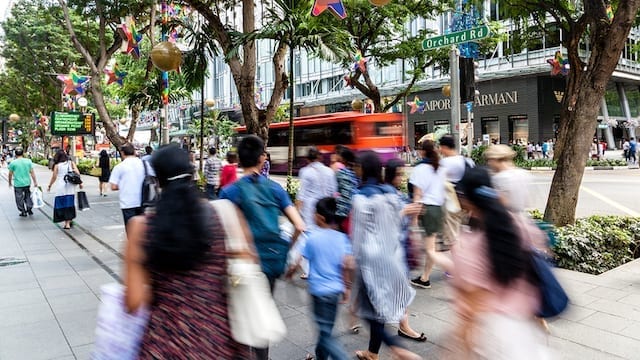
    Takings at the till in Singapore grew faster in May, helped by a low year-ago base and the continued boost from tourist spending after travel restrictions were eased. Retail sales surged 17.8 percent year on year, extending the 12.1 percent growth in April, according to figures released by the Department of Statistics (SingStat) on Tuesday (July 5).

    This exceeded the expectations of analysts polled by Bloomberg, who projected sales to grow by 13.4 percent.

    Excluding motor vehicles, growth was even stronger, coming in at 22.6 percent.

    “The year-on-year increase in retail sales in May 2022 was mainly attributed to the low base in May 2021 when measures such as international travel restrictions were in place,” said SingStat in a press statement.

    Experts said this growth is expected to continue but might be moderated due to higher prices and inflation.

    RHB senior economist Barnabas Gan said: “The retail sales momentum will likely stay buoyed into the third quarter as Asia moves on from Covid-19-related fears. Tourism levels have been picking up across Asian economies, including Singapore.”

    He added that the tight labour market and reopening of Asia’s borders should support spending. “On the back of domestic demand and tourism-led spending, we think retail sales from an index perspective will likely return to pre-Covid levels by the end of this year,” he said.

    But the bright outlook might be muddied by any unexpected worsening of the Russia-Ukraine conflict and China’s economic slowdown, he noted.

    Maybank Kim Eng economist Lee Ju Ye added that the surge in inflation and rising mortgage rates will likely result in some belt tightening by consumers.

    “In particular, sales of discretionary items such as watches and jewellery and recreational goods may be the most affected,” she said.

    Consumers are also expected to lean towards lower-priced items as costs go up, added National University of Singapore business professor Lawrence Loh.

    “In the near term, retail may face a double whammy of moderation in demand and escalation of costs.”

    Within the retail trade sector, most industries recorded year-on-year growth in sales in May.

    Discretionary industries such as wearing apparel and footwear saw sales balloon by 98.2 per cent due to the low base in May 2021, when there was lower tourist spending due to travel curbs.

    Department stores, which were hard hit by Covid-19 restrictions, also saw sales jump by 73.1 per cent.

    This was followed by retailers of watches and jewellery, which recorded higher sales of 60.7 per cent.

    Retailers of food and alcohol saw sales rise by 47.3 per cent, while petrol service stations recorded sales increases of 45.8 per cent.

    In contrast, sales of motor vehicles fell 10.2 per cent.

    Supermarkets and hypermarkets recorded declines in sales of 10.3 per cent, while minimarts and convenience stores saw sales fall by 4.8 per cent.

    This was due to the higher demand for groceries in May 2021 when more people stayed home during the Phase 2 (Heightened Alert) period, SingStat noted.

    Meanwhile, the sales of food and beverage services grew by 40.1 per cent in May on a year-on-year basis, compared with the 11.6 per cent increase in April.

    “The significant growth in food and beverage sales in May 2022 was mainly attributed to the low base in May 2021, when Phase 2 (Heightened Alert) measures were in place, with dining in at food and beverage establishments not allowed for half of the month,” SingStat said.

  • Vietnam national brand value gains 11%

    Vietnam national brand value gains 11%

    Vietnam saw its national brand value increase by 11% this year to $431 billion thanks to its foreign direct investment policies. Its increase of $184 billion year-on-year was the third highest of any country, U.K. consultancy Brand Finance said in a recent release.

    The country went up one place to 32nd, just behind Thailand and the Philippines.

    “The country has gained momentum as an attractive destination for foreign investment thanks to successful fiscal and monetary policies and investments in human capital, but also amid trade disruptions from China’s lockdowns and continued tensions between Beijing and Washington,” the release said.

    Among the 50 most valuable corporate brands in Vietnam, telecommunications giant Viettel led at $8.8 billion, up 44% from 2021. It was followed by another state-owned telecom firm, VNPT, at $2.9 billion. Other places in the top five were claimed by dairy giant Vinamilk, property developer Vinhomes and brewer Sabeco.

    The top sectors in terms of brand value in Vietnam are telecom, banking and food.

    Globally, the U.S. claimed top spot in the national brand list at $26.5 trillion, followed by China, Germany, Japan, and the U.K.

  • Singapore retail sales continue to recover

    Singapore retail sales continue to recover

    Singapore retail sales continued their rebound in July, rising 18.1 per cent year on year, excluding motor vehicles.

    That followed a 19.9 per cent increase in June, both months reflecting the low base of a year earlier when Covid restrictions on border crossings and retail trading impacted shopping.

    The fastest-growing category was apparel and footwear which surged 68.3 per cent, largely due to handbags and footwear. Sales of food and alcohol, trade through department stores, and sales of watches and jewellery increased by between 41.7 and 53.1 per cent.

    Retail sales (excluding motor vehicles) in July were estimated at S$3.4 billion, of which online sales comprised 14.3 per cent, a similar level to June. Online sales of computer and telecommunications equipment accounted for 49 per cent of the category’s turnover, while 28.9 per cent of furniture and household equipment spending was online, and 14.8 per cent of supermarket sales.

    Meanwhile, sales of food and beverage services grew by 41.9 per cent in July, following June’s 59.1 per cent increase. The significant growth was due to the low base in July last year when restrictions on dining-in at restaurants and cafes were in place.

    Food and beverage service sales reached $939 million in July, of which online ordering accounted for 26.2 per cent.

  • South Korea’s retail sales up 9.7 per cent in July amid eased virus curbs

    South Korea’s retail sales up 9.7 per cent in July amid eased virus curbs

    Retail sales in South Korea rose 9.7 percent on-year in July amid eased COVID-19 curbs and the growth in people’s outdoor activities, the industry ministry said Tuesday.

    The combined sales of 25 major offline and online retailers came to 14.17 trillion won ($10.48 billion) last month, compared with 12.9 trillion won a year earlier, according to the data compiled by the Ministry of Trade, Industry and Energy.

    It marked the fifth consecutive month of on-year growth.

    Sales from offline stores rose 12.1 percent in July, as department stores, in particular, saw their sales surge 31.6 percent on-year. Demand for luxury goods, clothing and other fashion items logged solid growth, according to the data.

    Sales of convenience stores also went up 10.4 percent in July on the back of the popularity of food packages and other daily items.

    Sales of discount chain stores, such as E-mart and Lotte Mart, inched up 0.2 percent on-year amid the dwindling demand for home appliances, while those of smaller supermarkets fell 3.6 percent, the data showed.

    Sales from online platforms jumped 7.3 percent from a year earlier over the continued spread of the contactless shopping trend amid the prolonged pandemic.

    Demand for cosmetics via online platforms surged 14 percent on-year as people resumed outdoor activities.

    Sales of foodstuff and beverages also grew 14.7 percent, while those of home appliances and other electronic devices logged an on-year fall, the data showed.

    Online platforms accounted for 47.63 percent of the total sales in July, according to the ministry.

    South Korea has experienced a new virus wave since late July following a monthslong let-up after the worst infections here so far.

    But the government decided not to reimpose strict antivirus regulations, such as business curfews and a cap on private gatherings, to support people’s return to normalcy.

    All schools resumed in-person classes, and many companies ended their remote working policies.

  • Singapore Considers More Tightening for Retail Crypto

    Singapore Considers More Tightening for Retail Crypto

    The Monetary Authority Singapore is reeling back on retail access to cryptocurrencies with the latest consideration for more curbs.

    The MAS is considering tightening crypto rules for retail investors by «adding friction» to mass access, according to managing director Ravi Menon in a speech published online. This includes the possible addition of suitability tests as well as restrictions on the use of leverage and credit.

    Market volatility this year has led a number of crypto players in the city-state to suffer including exchange Zipmex and lender Hodlnaut. In the latest, fallen Singapore hedge fund Three Arrows’ co-founder Su Zhu reemerged in public to deliver an affidavit defending himself against liquidator claims.

    Despite its concerns, Menon notes that a regulatory ban is not a viable option as it is «not likely to work».

    The cryptocurrency world is borderless. With just a mobile phone, Singaporeans have access to any number of crypto exchanges in the world and can buy or sell any number of cryptocurrencies, Menon said in the opening address of a seminar held today.

    Singapore continues to rethink mass access to cryptocurrencies following guidelines issued in January to limit trading services providers from public promotion.

  • Amazon to invest in Japanese beauty retailer Istyle

    Amazon to invest in Japanese beauty retailer Istyle

    Amazon.com will invest in istyle, the company behind the @cosme review and retail site, gaining access to the Japanese beauty product vendor’s trove of user reviews.

    Under the agreement announced Monday, istyle will issue 2.5 billion yen ($18.7 million) in convertible bonds as well as 11.5 billion yen in warrants to Amazon on Sept. 6. If these convertible bonds and warrants are turned into stock, Amazon would become the top shareholder with a 36.95% stake.

    Amazon will open a dedicated page, tentatively named @cosme Shopping, on its site, where istyle will provide the latest on beauty products to the e-retailer’s members and sell cosmetics from a wide range of brands.

    Istyle has been pushing to merge online and offline sales, setting up a brick-and-mortar store in Tokyo’s Harajusku district. Going forward, Amazon and istyle could collaborate in operating stores using digital tech. The partnership could boost Amazon’s presence in the cosmetic market, where drugs stores and department stores are also formidable players.

    Istyle will also issue convertible bonds to investors including leading trading house Mitsui & Co.

    Mitsui plans to position the cosmetics business as one of its key growth fields and wants “to broaden access to istyle’s customers and manufacturers,” according to a spokesperson. It intends to leverage its sales network to offer Japanese-made cosmetics in overseas markets.

  • How to Meet Demand in an e-commerce Age with Supply Chain Automation  

    How to Meet Demand in an e-commerce Age with Supply Chain Automation  

    Retailers across the Southeast Asian region are under tremendous supply chain pressure due to increased demand for online orders, hyper-competitive pricing and faster delivery times. For online orders, customers want the cheapest price, shortest delivery time, up-to-date information on stock availability, access to the real-time status of their orders, and seamless return options. On top of all this, businesses continue to contend with increasing labour costs, high staff turnover, increasing costs for building space, pressures from increased regulation and safety requirements, and supply chain disruptions, be they from pandemics, natural disasters and geopolitical tensions.

    All these factors combined have made the task of cost-effective order fulfilment more challenging than ever before. However, there is a way business can tackle these challenges and turn them into an opportunity to improve competitiveness. As this new age of retail and eCommerce coerces supply chains to work faster and harder, automation and technology in Fulfilment Centres are proving to play a critical role in helping businesses streamline their processes towards achieving higher levels of efficiency in their distribution operations.

    So, what can retailers do to meet demand in an e-commerce age when the only constant appears to be disruption?

    Optimised processes make for streamlined operations

    The answer to succeeding in the future involves adopting a strategy to optimise operations around cost-effectively meeting and exceed consumer expectations. Optimisation falls into three broad categories: processes, human efficiency, and inventory management.

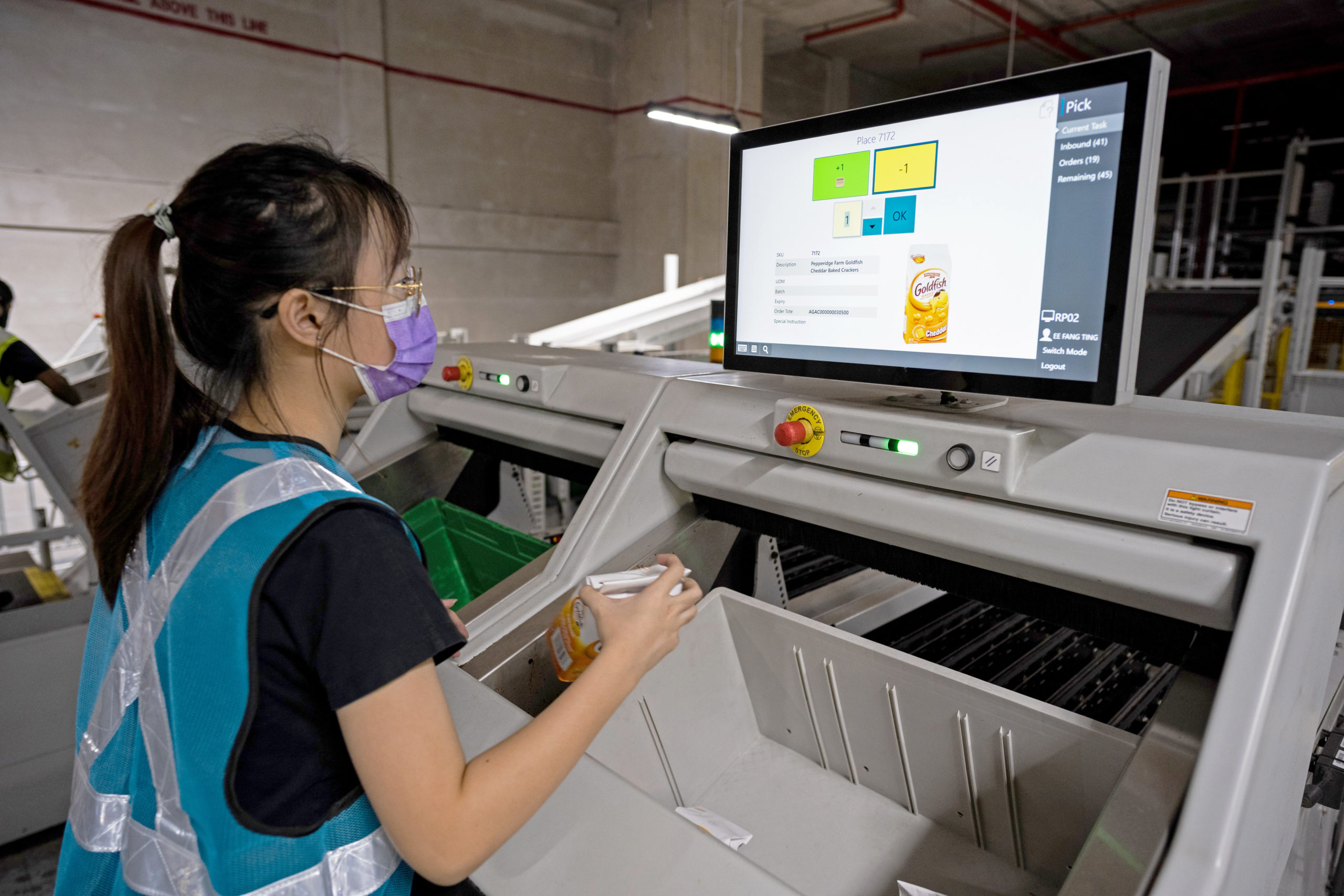
    Processes provide the structure for supply chains to function. Automation and technology help optimise processes by removing non-value-adding activities, improving productivity, reducing errors and increasing the speed of the necessary tasks. As an example, the order fulfilment processes can be improved significantly in terms of speed, productivity and accuracy with the implementation of wearable devices to provide real-time instructions and interaction with operators. The process of order tracking is automatically improved with the same software that drives the technology, also providing the capability to track every transaction and movement of inventory through the order fulfilment task.

    Inventory management is key

    Inventory storage has transitioned from being a static requirement to a dynamic one, with many supply chains now able to drive high levels of optimisation across their logistics operations and their retail operations as well.  Automation and technology often play a key role in achieving these high levels of optimisation.

    Manual forklift trucks and Automated Storage Retrieval Systems (AS/RS) are no longer the only material-handling technologies that can be used to store inventory.  Technologies such as Automated Guided Vehicles (AGVs), mobile robotics and shuttle systems can provide much more flexible, scalable and dynamic storage solutions in a wider range of supply chain facilities.

    Make your workers more effective

    In traditional order fulfilment operations, operator travel consumes the largest portion of an operator’s time in fulfilling a customer order. One of the most effective ways to improve the efficiency of operators is to minimise operator travel, or to eliminate it altogether. In terms of automation, Goods-to-Person (GTP) picking solutions can increase operator productivity by over 5 times by eliminating operator travel.  Advances in robotic fulfilment technology have enabled order fulfilment processes to be performed without the involvement of operators at all in some cases.

    Case Study: RedMart’s Advanced Online Grocery Fulfilment with GTP

    To meet surging demand and growth in online orders, RedMart – the online grocery service of e-commerce giant, Lazada – implemented automation at its logistics facility in Singapore, in order to improve productivity, speed, accuracy, and space efficiency.

    A key part of the automation solution is the Goods-to-Person (GTP) order fulfilment, powered by a Dematic Multishuttle system. At the ergonomically designed workstations, operators pick orders up to five times faster than they were previously when they would have to manually travel through multiple aisles of shelving to pick the items required for an order.

    The GTP system covers a huge product range in a small footprint, with an extremely effective picking method. Workers stay in one place as items are automatically delivered to their workstation, increasing picking speeds, improving fulfilment accuracy, and advancing operator comfort and safety.

    Optimisation with information

    With the use of new logistics automation and technologies, retailers have a pathway to improve their fulfilment operations, achieving cost-effective and efficient fulfilment processes, higher levels of inventory availability, shorter lead times and improved traceability.  Robust and real-time integration between mechatronics, control systems and software platforms across fulfilment operations and their broader supply chain networks, is a key ingredient to achieving competitiveness and sustainable success in the future landscape of retail.

    For more information on how your business can optimise its supply chain operations and meet market demands, please visit: www.dematic.com/en-au

    Written by: Michael Bradshaw, Senior Regional Director Sales & Solution Development, Dematic Asia


  • Grocery chain Bach Hoa Xanh revenues drop on store closures

    Grocery chain Bach Hoa Xanh revenues drop on store closures

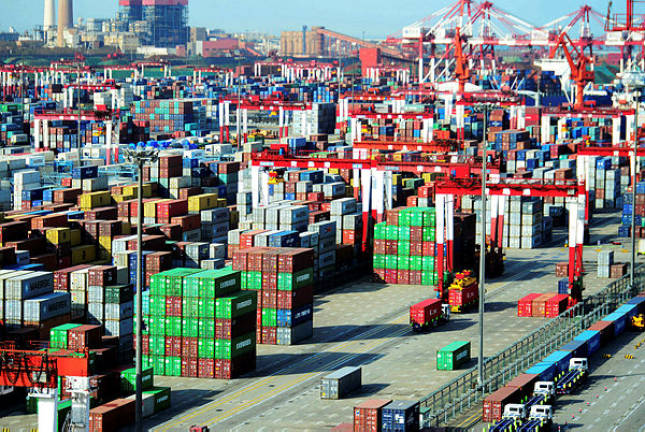
    Grocery chain Bach Hoa Xanh suffered an 8 percent fall in sales year-on-year in the second quarter to VND6.76 trillion (US$289.47 million) following its closure of hundreds of outlets.

    The subsidiary of electronics retailer Mobile World closed 251 unprofitable outlets in May and June as it restructured and also changed the layout of the remaining stores.

    It has so far renovated nearly 1,500 outlets and it plans to close down more this quarter, keeping only 1,700-1,800 stores open.

    Nguyen Duc Tai, its chairman, has said there will be no expansion this year to focus on improving efficiency and customer service.

    The company is preparing for nationwide expansion in 2023 from its current predominant presence in the south.

    Bach Hoa Xanh reported revenues of VND12.8 trillion for the first half, accounting for 18 percent of Mobile World’s revenue.

    Mobile World’s revenues rose 13 percent to VND70.8 trillion, while profits were up 1 percent at VND2.68 trillion.

  • Amazon, Cartier sue counterfeiters using social media to sell fakes

    Amazon, Cartier sue counterfeiters using social media to sell fakes

    Amazon is continuing its crackdown on counterfeiters, this time against a social media influencer they claim was selling fake Cartier bracelets, necklaces and earrings.

    The online retail giant said on Wednesday that it filed two joint lawsuits with Cartier against an unnamed social media influencer and eight businesses for allegedly promoting counterfeits on social media and other websites that were then sold on Amazon. The lawsuits were filed in the US District Court for the Western District of Washington, alleging the businesses conspired together to sell counterfeits and falsely advertise them as real, infringing on Cartier’s trademarks, avoiding Amazon’s anti-counterfeiting detection tools and violating Amazon’s policies, according to the companies.

    While items on Amazon were non-branded and listed with generic product descriptions to avoid detection by Amazon’s anti-counterfeit policies, the ads linking to the Amazon product pages used the Cartier brand name to sell the allegedly fake bracelets, necklaces and earrings, according to the companies. For instance, a counterfeit of the Cartier Love bracelet was listed on Amazon as “Women’s Fashion Classic Screw Love Titanium Steel Bracelet”.

    Amazon has put more effort into detecting and removing counterfeit sellers from the site. According to the company’s second Brand Protection Report, published in 2022, Amazon stopped over 2.5 million attempts from bad actors to create new selling counts, down over 6 million compared to the previous year. The company also increased the number of brands on its Brand Registry tool, which detects infringements, leading to a 25 per cent decrease in infringements compared to the previous year.

    Amazon has also begun working directly with luxury brands to remove fake products from its site; last February, Amazon filed two joint lawsuits with Ferragamo against counterfeiters, and in April, the companies said Chinese authorities had conducted an investigation and seized the counterfeit products. In June 2020, Amazon filed its first joint lawsuit with Valentino against New York-based Kaitlyn Pan Group for allegedly counterfeiting the brand’s Rockstud shoes, though the case was settled in January 2021.

    “By using social media to promote counterfeits, bad actors undermine trust and mislead customers,” said Kebharu Smith, associate general counsel and director of the Amazon Counterfeit Crimes Unit, in a statement. “Amazon will keep investing and innovating to stay ahead of counterfeiters and working with brands and law enforcement to hold bad actors accountable. We don’t just want to chase them away from Amazon — we want to stop them for good.”

    Amazon has been making efforts to break into the luxury market: earlier this month, it rolled out its Luxury Stores concept to the UK, Germany, France, Italy and Spain after launching it two years ago with Oscar de la Renta and Roland Mouret, among others. However, experts say that the widespread selling of counterfeits and dupes by third-party sellers on the platform is holding the e-commerce behemoth back from elevating its position.

    By publicising its condemnation of counterfeits, Amazon wants to signal its trustworthiness to the luxury sector. “Amazon is deeply committed to protecting brands’ intellectual property and strictly prohibits counterfeit products in its stores,” the company said in a statement, adding that it invested $900 million and employed 12,000 people to protect against counterfeits in 2021.

  • Retail sales in Singapore surge as border restrictions relaxed

    Retail sales in Singapore surge as border restrictions relaxed

    Retail sales in Singapore surged 17.4 per cent in April (excluding motor vehicles), faster than the rate of 13.6 per cent in March.

    Statistics Singapore said the increase was driven by sales of apparel, food & liquor – up by 46.6 per cent year on year – and improved supermarket turnover.

    Retail sales in Singapore, excluding motor vehicles, were estimated at S$3.3 billion (US$2.4 billion) in April, with online retail sales accounting for 14.2 per cent of that. Online sales of computer & telecommunications equipment comprised 48.2 per cent of the category’s turnover, while 28.3 per cent of furniture & household equipment was sold online.

    Statistics Singapore said the growth in apparel sales was due to increased demand for bags and footwear, partly fuelled by increased tourist spending as border restrictions were eased. Sales of food & alcohol, in department stores, and of watches & jewellery, increased by between 28.4 and 35.6 per cent.

    However, sales at mini-marts & convenience stores fell by 5.5 per cent.

  • The enormous cost of McDonald’s Russian exit

    The enormous cost of McDonald’s Russian exit

    McDonald’s became the symbol of glasnost in action 30 years ago when it opened its first restaurant in Moscow. But after temporarily shutting down more than 800 restaurants following the invasion of Ukraine, McDonald’s has decided to leave Russia altogether.

    The burger chain will sell its Russia business, saying the “humanitarian crisis caused by the war in Ukraine, and the precipitating unpredictable operating environment, have led McDonald’s to conclude that continued ownership of the business in Russia is no longer tenable, nor is it consistent with McDonald’s values.”
    In March, shortly after the war began, McDonald’s followed other Western companies and temporarily shut down its restaurants in Russia.
    Once the sale is finalized, the Russian restaurants will be “de-Arched,” meaning the locations will no longer be allowed to use the McDonald’s name, logo or menu. McDonald’s said its employees will still be paid until the transaction closes and that “employees have future employment with any potential buyer.”
    CEO Chris Kempczinski said he’s proud of the more than 60,000 workers employed in Russia and said the decision was “extremely difficult.”
    “However, we have a commitment to our global community and must remain steadfast in our values. And our commitment to our values means that we can no longer keep the Arches shining there,” he said.
    The decision brings to a remarkable end McDonald’s three-decade relationship with Russia. McDonald’s opened the doors of its first restaurant in Moscow on January 31, 1990. More than 30,000 were served and the Pushkin Square location had to stay open hours later than planned because of the crowds.
    Its arrival in Moscow was about more than just Big Macs and fries, noted Darra Goldstein, a Russia expert at Williams College. It was the most prominent example of Soviet Union President Mikhail Gorbechev’s attempt to open up his crumbling country to the outside world.
    “There was a really visible crack in the Iron Curtain,” she previously said. “It was very symbolic about the changes that were taking place.” About two years later, the Soviet Union would collapse.
    McDonald’s exit “represents a new isolationism in Russia, which must now look inward for investment and consumer brand development,” said Neil Saunders, managing director of GlobalData said in a note Monday. He added that other Western brands take “principled stance on the concepts of freedom and democracy” and revisit their businesses in Russia.
    McDonald’s will take a significant write-off from exiting Russia — between $1.2 billion to $1.4 billion. Shares were barely changed in early trading.
    “The fact that McDonald’s owns most of its restaurants in Russia means there is an asset rich business to sell,” said Saunders. “However, given the circumstances of the sale, the financial challenges faced by potential Russian buyers, and the fact that McDonald’s will not license its brand name or identity, it is unlikely the sale price will be anywhere near the pre-invasion book value of the business.”
    In its most recent earnings report, McDonald’s said closing its restaurants in Russia had cost it $127 million last quarter. Nearly $27 million came from staff costs, payments for leases and supplies. The other $100 million was from food and other items it will have to dump.
    McDonald’s had 847 restaurants in Russia at the close of last year, according to an investor document. Together with another 108 in Ukraine, they accounted for 9% of the company’s revenue in 2021.
  • Central Retail reports solid growth in Thailand, Vietnam and Italy

    Central Retail reports solid growth in Thailand, Vietnam and Italy

    Mr. Yol Phokasub, Chief Executive Officer of Central Retail Corporation PCL (CRC), announced “Central Retail has achieved success hitting record-high in Q4/2021 performance, with a revenue of THB 58,765 million +15%. EBITDA THB 8,031 million +42% and a net profit of THB 2,464 million +124%. We ended 2021 on a high note with profit of THB 277 million. EBITDA THB 20,059 million and a total revenue of THB 195,654 million. Despite the ongoing challenges posed by the spread of COVID-19 for extended periods across Thailand, Vietnam and Italy, Central Retail achieved profitability and generated positive returns to shareholders, with dividend payment of THB 0.30 per share.

    Thailand: Sales in 2021, excluding tourist spendings, returned higher than pre-pandemic levels. Accounting for this achievement is Central Retail’s Multi-Category Platform, providing portfolio flexibility and adaptability to changing customer needs. The focus in 2021 was the hardline segment, which aligns with consumer trends during the pandemic, enabling the segment to rapidly grow and drive sales to levels higher than the pre-pandemic era by 26%. The company launched 5 new Thai Watsadu branches and new store formats under go! WOW banner of total 15 branches within three months in 2021, of which was positively received by customers, underlining the company’s leadership position in Omnichannel Home Improvement Platform. Additionally, Central Retail successfully acquired COL, including OfficeMate and B2S, and is prepared to list MEB, the leader in the e-book business and novel website for Thais, in the stock exchange of Thailand in 2022. For the food segment, Central Retail maintains its #1 position as The Best Food Destination in Thailand, driving business expansion in 2021 by opening 46 branches to reinforce its leadership position in the category. Tops Supermarket also received the Top Influential Brands award from Influential Brand Singapore and Neo Target, a leader in corporate reputation consultancy in Thailand. The company also implemented fixed prices of consumer goods from the end of last year until the first quarter of this year to alleviate financial burdens of consumers during turbulent times. For the fashion segment, the company drove the highest levels of growth in the fourth quarter when compared to previous quarters in the last two years and the segment is still strong in momentum.

    Vietnam: Despite the impact from COVID-19, Central Retail charged ahead with investment plans, including renovations and business expansion to strengthen its leadership in the hypermarket and lifestyle mall segment across urban and rural areas. The company also expanded into the food segment by launching new store format mini go! that targets mass consumers, as well as Tops Market to serve every customer segment in Vietnam. Although Vietnam faced a difficult situation during the pandemic that forced stores to close during the second and third quarters, our sales grew by 8% higher than 2019 whilst EBITDA grew 9% compared to the previous year.

    Italy: Central Retail initiated renovations of Rinascente across 3 flagship stores, including Milan, Florence and Rome. The renovations took place during the lockdown in Italy and were completed in time for the border reopening in mid-2021, which has successfully attracted a growing number of customers, resulting in strong business growth. The spending power from domestic customers along with the return of European tourists boosted sales growth in the fourth quarter, matching 99% of sales during the pre-pandemic era. The company’s annual sales in Italy saw a strong growth of 30% compared to the previous year and has achieved a fourfold increase in EBITDA compared to the year before.

    Property: Renovated and launched new branches across Thailand and Vietnam, including the opening of GO! lifestyle mall in Vietnam and Robinson Lifestyle in Thailand, totaling 6 branches. Robinson Lifestyle maintained an occupancy rate of over 90% and the number of customers has been increasing consistently. By the end of 2021, Central Retail has a total of 69 branches across Robinson Lifestyle, Tops Plaza and GO! lifestyle malls with total net leasable space over 650,000 square metres, a 10% increase from the previous year.

    Technology and Digital: Central Retail enhanced technology integration across the organisation and its people by adopting a digital-first culture and building on the most comprehensive omnichannel platforms, securing Central Retail’s unique leadership in omnichannel retailing. These efforts resulted in omnichannel sales accounting for 20% of total sales, and a 109% growth. The company also built on the CRC Data Ecosystem and developed new techn

  • High costs drive consumer prices up

    High costs drive consumer prices up

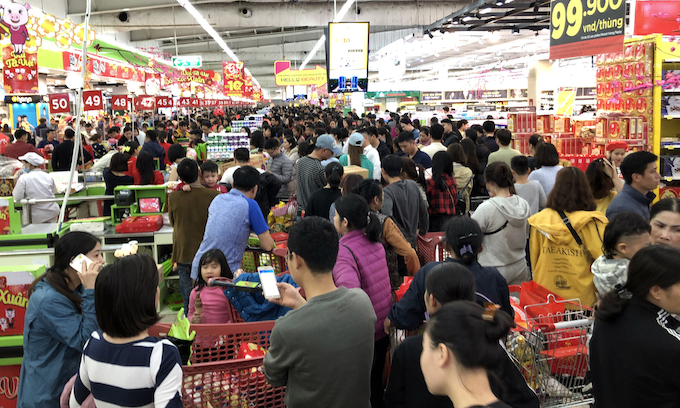
    The prices of many consumer goods, especially food and foodstuffs, have skyrocketed in the first quarter of this year driven by higher input costs and record gasoline prices. At her local retail store last weekend, Loan, a worker in a garment factory in HCMC’s District 12, could not hide her surprise at the sudden increase in the prices of many goods.

    “I estimated the prices of many consumer goods like sugar, milk, cooking oil, instant noodles, fish sauce, and beer had increased by 10-30 percent since the beginning of this year,” she said.

    She now has to pay VND500,000 ($22) to buy seasoning for half a month compared to VND400,000 earlier.

    “Other living expenses have also gone up.”

    The value-added tax was cut to 8 percent from 10 percent on Feb. 1, but many consumers said they “have yet to feel its impact” since the prices of many goods have risen sharply. Many retailers are also surprised by the price hikes. Ngoc, owner of a retail stall in HCMC’s Go Vap District, said the prices of beer, sugar, instant noodles, fish sauce, and cooking oil have increased by 10 percent this year.

    “Consumer goods prices rarely increase in the first quarter. After Lunar New Year (Tet) holidays in early February, businesses often reduce prices to stimulate demand since demand is weak”.

    Ngoc has yet to restock her stall, but the wholesaler who supplies her has announced a hike in prices during the next delivery because many manufacturers have already increased them. A survey found that the prices of eight of the nine main consumer products have surged, with seven of them seeing a double-digit increase. Saying input costs have increased by 120 percent in the last 12 months, a spokesperson for a cooking oil company added they had to raise prices by VND1,000-2,000.

    Breweries also cited costs as a reason to hike prices. Wheat prices have risen by 10-20 percent since the crisis between Russia and Ukraine, two of the world’s biggest wheat exporters, began. The chief of a HCMC-based consumer goods producer said labor and raw materials costs have soared by 40 percent since last year and they have been forced to adjust prices up.

    Acecook, the country’s leading instant noodles producer, said it has had to hike prices by 10 percent since input and transportation costs have risen. Other businesses said they have yet to raise their prices but it is “inevitable”. Truong Chi Thien, head of egg producer Vfood, said his company is losing VND100-200 on every egg it sells.

    It has yet to increase prices because of a commitment under HCMC’s price stabilization program to keep prices unchanged for a month before and after Tet, which this year fell on Feb. 1. Thien said his firm would have to seek approval from the city Department of Finance to hike prices in the next stabilization program starting April.

    The prices of other items like wood and steel also rose to new highs recently. Steel prices have gone up by nearly 8 percent in the last two weeks to over VND19 million per ton, which is higher than the VND18.3 million reached last year. Vietcombank Securities forecast its prices to keep rising as energy prices surge amid the Ukraine conflict.

    VnDirect Securities said global commodities prices are at a 14-year peak. The S&P GSCI Index, the benchmark for commodity prices, has gone up by 5.02 percent this month, it said. Rising oil prices have driven metal prices up, with aluminum rising by 3.6 percent to a new peak of US$3,850 per ton on the London Metal Exchange, it said. Iron ore futures are 15 percent up, the highest in over three months, it added. It said commodities prices will continue to increase, putting inflation risks on the global and Vietnam market.