Tag: Retail

  • Singapore’s Orchard Rd hasn’t lost its gloss

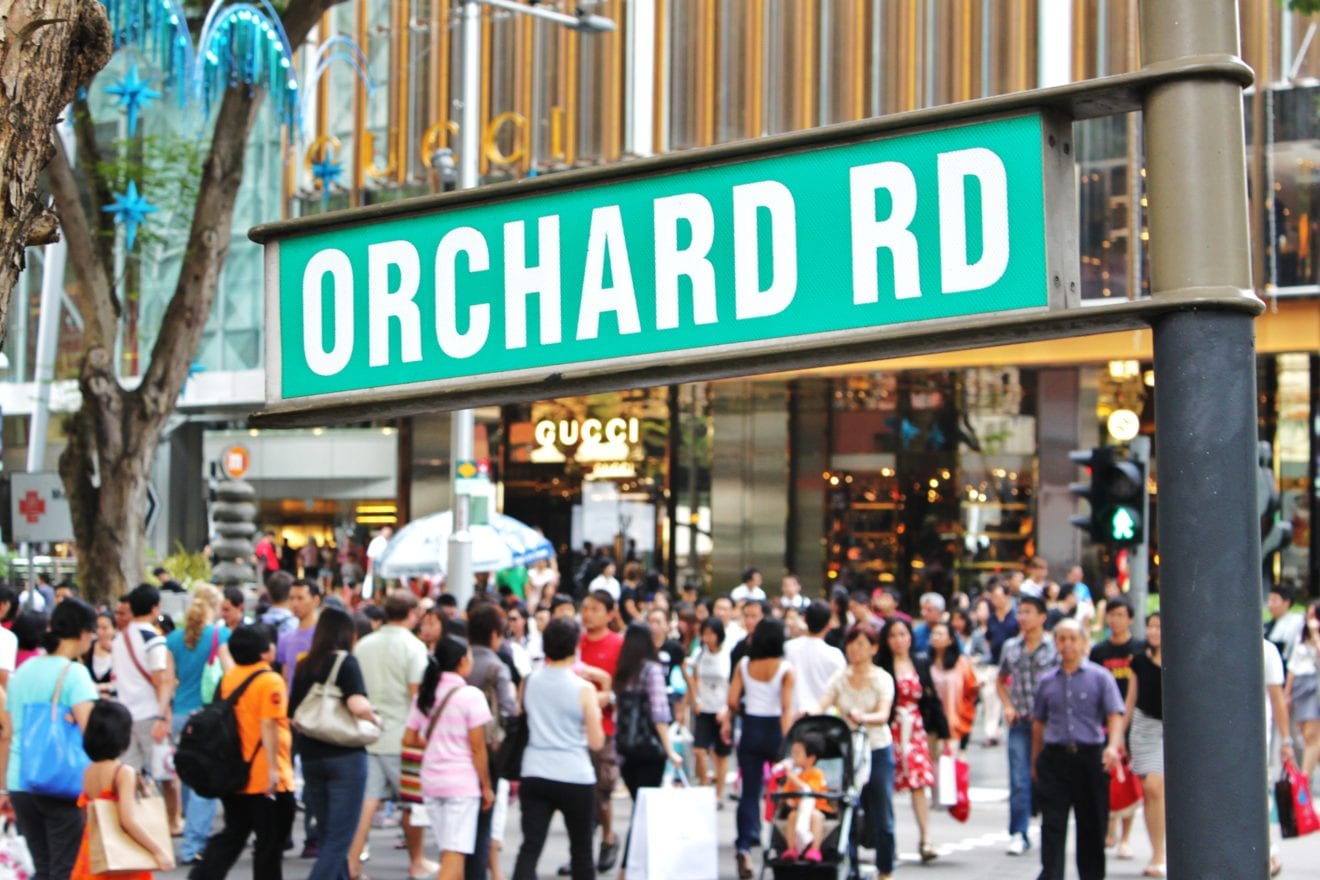
    Singapore’s Orchard Rd hasn’t lost its gloss

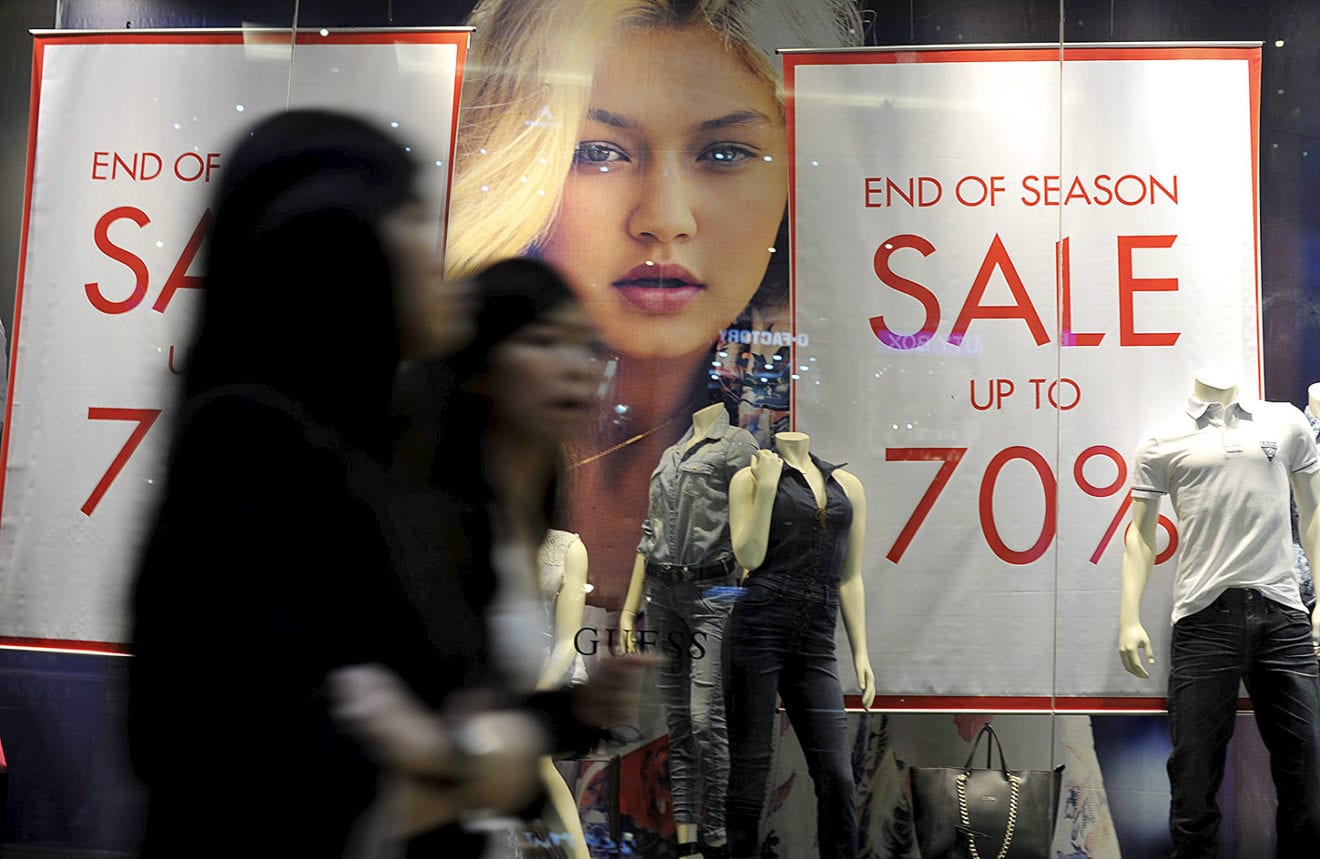
    Orchard Road remains the top destination for shoppers during the recent Great Singapore Sale, according to a new report, debunking calls that Singapore’s prime shopping belt may be losing its shine.

    The premier retail strip attracted the highest footfall during the city-state’s annual shopping promotion, held from May 29 to June 28 this year, a new report by location intelligence company AdNear said. The study analyzed the foot traffic data from 192,000 respondents in six retail locations, including Bugis Junction, Marina Square, Novena Square, Orchard Road, Raffles City and Suntec City, for the month of June.

    “The busy shopping district [of Orchard Road] had almost 2.5 times more foot traffic, definitely in line with the fact that it has an array of malls [compared to] Suntec City, Raffles City and Bugis Junction,” the report said.

    Long regarded as one of Asia’s best shopping streets, Orchard Road has been struggling to keep up with a competitive retail environment brought about by a confluence of factors including fewer tourist arrivals from China andincreased competition from suburban malls and online retailers.

    Reflecting slowing sales at major department stores, average monthly gross rents of prime retail space on Orchard Road slipped 1 percent in the second quarter to a four-year low of $37.79 Singapore dollars per square foot, according to data provided by property consultancy Cushman and Wakefield.

    With its position as a top shopping destination at stake, events such as the Pedestrian Night where a section of Orchard Road goes car-free once a month, have been unveiled; while a $40 million worth of facelift is on the cards to rejuvenate Singapore’s premier shopping street.

    Who likes Orchard Road more?

    To be sure, shoppers are not ditching Orchard Road just yet.

    Among consumers surveyed, the tree-lined shopping belt is ranked among the top three retail locations for the affluent group, homemakers, professionals and travelers. Only the student category gave the shopping precinct a thumbs-down, ranking Orchard Road as the second least-preferred place for retail therapy.

    Orchard Road is also the go-to destination for females, but shunned by male shoppers who ranked it as the least desirable shopping destination. Interestingly, the top choice for male shoppers – Marina Square – was ranked last by female consumers.

    The report showed Sunday as the favorite day for a shopping spree among females, whilst the men favored a mid-week splurge, with footfall at its highest on Tuesdays. Despite the preference for different days, both genders like to shop between 5pm and 9pm.

  • Hero to open more stores  to boost revenues

    Hero to open more stores to boost revenues

    Retail company PT Hero Supermarket (Hero) will spend up to Rp 640 billion (US$48 million) this year for business expansion with retail plans to open stores in several cities across the country.

    The move will be made to restore the company’s disappointing financial performance earlier this year.

    Hero, which operates hypermarkets, supermarkets, convenience stores, drug stores and furniture stores, plans to open four Giant Ekstra hypermarkets and six mid-sized Giant Ekspres supermarkets in several regions, including Bangka and Lombok. Arief Istanto, a director with Hero, said each Giant Ekstra would cost between Rp 100 billion and Rp 150 billion while the Giant Ekspres would cost about Rp 20 billion. It means the company will allocate between Rp 440 billion and Rp 640 billion in capital expenditure to build the stores this year.

    Arif said the company aimed to improve its financial performance and hoped to book profits like it did in previous years. The company will use its internal funds for the expansion.

    “We would like to expand our network so that it can attract more customers. Thus, our top line will also increase,” he said after an extraordinary shareholders’ meeting on Tuesday. At the meeting, they agreed not to disburse the Rp 43.75 billion in dividends to shareholders and instead spend it on the company’s business expansion plan.

    Hero Supermarket previously suffered Rp 33.19 billion in net losses during the first quarter of this year amid a 14 percent increase in net revenues of Rp 3.57 trillion, making it the worst performer in the country’s retail industry.

    Last year, the company saw its net profit dive to Rp 43.75 billion from Rp 671.13 billion in 2013. A 13.94 percent increase in revenues, which stood at Rp 13.56 trillion at that time, could not ease the ballooning operating expenses, which hit Rp 3.31 trillion.

    “Our 2014 financial results were disappointing with weak sales growth and a significant increase in operating costs across all businesses as well as higher overhead and store pre-opening costs,” Stephane Deutsch, Hero’s president director, said in a statement.

    In 2014, the company launched a flagship furniture store under Swedish brand IKEA in Alam Sutera, Tangerang, Banten, some 25 kilometers west of Jakarta’s city center.

    Arief confirmed Hero has planned to build five more IKEA stores in the future as the company was upbeat about the prospects of the franchise furniture store.

    “At the moment, we are looking for land for the second store. It is supposed to be done this year,” Arief said, adding that the second store would be located in Greater Jakarta.

    According to him, IKEA has contributed around Rp 200 billion to Hero’s revenues in the first quarter of this year,

    Hero says it hopes to book 30 to 40 percent growth in revenues during the fasting month of Ramadhan this year. The company currently operates 33 Hero supermarket stores, 341 Guardian healthcare stores, 98 Starmart convenience stores, 53 Giant Ekstra stores, 121 Giant Ekspres stores, two Jason supermarket stores and one IKEA store.

  • Gap narrows for Chinese brands

    Gap narrows for Chinese brands

    Chinese brands are closing the gap with international brands as consumers become more concerned about product quality rather than the origin of the brands, according to a latest study.

    As high as 67 percent of consumers said they favor domestic brands, consumer research firm Mintel said in a research report yesterday.

    The study covered 3,000 consumers aged between 20 and 49 in 10 cities.

    The domestic food and beverage brands have a strong following, with 42 percent of the respondents favoring them over foreign products compared with 25 percent that prefer imported snacks.

    For domestic ready-to-drink beverage brands, 44 percent of consumers prefer them against 27 percent that favor foreign products.

    Baby food is an exception with 45 percent of respondents saying they would choose international brands against only 31 percent who favor domestic products.

    “We’ve seen Chinese consumers becoming more value-driven, as they’re more likely to judge a product by its content and quality instead of checking whether it’s an international or domestic brand,” said Laural Gu, Mintel China’s senior lifestyle analyst.

    The study also found that 47 percent of the consumers were more willing to indulge themselves by paying for services instead of products.

  • Now, you can shop on Twitter

    Now, you can shop on Twitter

    Twitter has announced that the company is launching a product and place pages that allows users to discover and purchase items within the service.

    According to the Verge, the new pages will organise related tweets about products and brands on dedicated pages.

    A product page will let people see others’ tweets about that product, prices, and, sometimes, a buy button.

    The company is also rolling out what it’s calling Collections, a way for brands and celebrities to curate products and recommend them to followers.

    This is the second new feature Twitter has unveiled this week after announcing Project Lightning, a news platform that would allow users to follow events instead of people.

  • As platinum gains popularity, more outlets set to come up

    As platinum gains popularity, more outlets set to come up

    As platinum gains popularity in India, the Platinum Guild India expects to see the number of outlets going up from 800 now to over 1200 by March 2016.

    Vaishali Banerjee, India Manager of Platinum Guild India, told that within a short span, India has become the fourth largest market for platinum jewellery in the world and this can only get bigger as more youth take to this precious metal.

    The growth in India has been particularly rapid in the past 5 years and has grown to over 5 tonnes last year as against about 400 kg in 2008. This speaks volumes of how young people are embracing Platinum jewellery, whose trade is getting extremely organised with big retail stores setting up exclusive zones for display of platinum jewellery, she said.

    What started with platinum couple bands has gradually gained with men’s jewellery spanning chains and bracelets and now has grown into the Evara range of bridal jewellery segment. Introduced about six months ago, it is gaining popularity as its charm is in co-existence with popular gold jewellery in India. Though gold jewellery is tops when it comes to bridal jewellery, a number of youngsters are taking to platinum jewellery, she said.

    Vaishali said, “We are pleased at the way Platinum Evara has been received by consumers and trade, as platinum symbolises love and resonates well with the new bride and groom. There is huge appeal for platinum amongst youngsters.”

    Varghese Alukka, Managing Director of Jos Alukkas Jewellery said, “From 34 stores in the southern market in the country, we are looking at growing this to 50 stores in the next two years.”

  • Jakarta Great Sale Casts Its Net Beyond Indonesia

    Jakarta Great Sale Casts Its Net Beyond Indonesia

    Last month, Jakarta celebrated its 488th anniversary. The capital, which was established by Indonesian national hero, Fatahillah, in 1527, is definitely getting old. But despite being home to more than 10 million people, the city never slows down.

    New high-rises pop up on every corner of the city. And each of them outdoes the previous in size and grandeur. Major developments are currently underway, promising that the city is on track to become one of the most glam and sophisticated in Southeast Asia.

    To celebrate its birthday, the city’s modern landmarks and shopping malls again present the Festival Jakarta Great Sale (FJGS). FJGS has been held annually since 2008.

    “FJGS has always been an important highlight of the city,” said Ellen Hidayat, chairwoman of the executive committee of FJGS 2015. “And it’s going to be much bigger and better this year.”

    This year, the event is organized by Association of Shopping Mall Management in Indonesia (APPBI), in collaboration with 12 other shopping and tourism-related associations in the country.

    Until mid-July this year, 78 malls in Jakarta will offer discounts on their merchandise by up to 70 percent.

    The event is also supported by Jakarta’s Tourism Office and featured in its official calendar of events.

    “Our office fully supports FJGS,” said Purba Hutapea, chief of Jakarta’s Tourism Office. “We hope to attract more local and international tourists with the event.”

    Jakarta is targeted to attract three million tourists this year — a 25 percent increase on tourist arrivals last year, which were about 2.4 million.

    “And FJGS is indeed a great way to attract more visitors to the city,” said Purba.

    Among the top five international tourists visiting Jakarta are Malaysians, Chinese, Singaporeans, Japanese and South Koreans. And their main reason of visit is to go shopping.

    “Malaysians love our Muslim attire, as they have very good quality at affordable prices,” said the chief of the tourism office.

    Besides Malaysians, according to Purba, the Chinese, Japanese and South Koreans are currently eyeing our fashion products.

    FJGS is also targeting Indonesian shoppers.

    “Indonesians have a habit of going to Singapore for shopping, as Singapore usually offers more products of international brands at cheaper prices,” said Ellen Hidayat. “But it’s a different story this year.”

    Ellen and her team have recently surveyed the malls in Singapore during the currently ongoing The Great Singapore Sale.

    “With today’s foreign exchange rate [between the Singaporean dollar and the rupiah], the prices of the branded products in Jakarta are actually a lot cheaper,” said Ellen. “So, this year, we hope that the locals will choose to shop in Jakarta instead of going to Singapore.”

    Ellen believes that FJGS and a series of fun activities organized in the malls during the event will see an increase in visitors by 30-40 percent to the city’s malls.

    The executive committee of FJGS 2015 hopes to achieve a total transactions of Rp 14.3 trillion this year, or about a 10 percent increase from last year’s transactions of Rp 13 trillion.

    It seems a high aim during Indonesia’s current economic slow-down, but the chief of Jakarta’s economic bureau, Adi Ariantara, remains optimistic.

    “FJGS, which is held during the school holiday season, as well as the fasting month, will surely encourage people to spend more,” said Adi. “And hopefully, it will also instigate positive economic growth for us.”

    A series of attractive events have been prepared to draw more visitors to the malls during FJGS 2015.

    One of them is Jakarta’s iconic Midnight Shopping events. During FJGS this year, a total of 19 shopping malls will take turns to hold ‘Midnight Shopping’ on weekends.

    “It’s one of the most awaited events during FJGS, as the malls will usually offer a series of entertainment, as well as special prizes for shoppers,” said Ellen.

    This year, Jakarta’s shopping malls also open their doors to traditional craftsmen and small-to-medium enterprises (SMEs) belonging to the National Handicraft Council (Dekranasda) of Jakarta.

    During FJGS 2015, these craftsmen and SMEs are allowed to offer their products at stalls dedicated to them along the corridors of the malls.

    This year, BayWalk Mall, Puri Indah Mall and Grand Indonesia Shopping Town will host these craftsmen and SMEs.

    “In the future, Dekranasda will work together with all shopping malls in Jakarta and encourage them to dedicate a special section within their malls for the craftsmen and SMEs in their regions,” said Veronica Basuki Tjahaja Purnama, chairwoman of Dekranasda Jakarta.

    But the excitement of FJGS 2015 is not only felt within the glitzy malls and shopping centers of Jakarta.

    For the first time ever, the event will also be held in traditional wet markets in Jakarta.

    “We want every layer of the community to feel the excitement of FJGS,” said Djangga Lubis, director of PD Pasar Jaya, government-owned company that manages traditional wet markets in Jakarta.

    There are currently 153 traditional wet markets in Jakarta. But only 10 are featured in FJGS this year.

    “These 10 markets are those that are most ready, in terms of cleanliness and comfort, to present the ‘Pasar Murah’ (Affordable Market) bazaars during FJGS this year,” said Djangga. “And these 10 markets also represent Jakarta’s five main regions.

    Among the 10 wet markets are Pasar Santa in South Jakarta, Pasar Gembrong in Central Jakarta, Pasar Pos Pengumben in West Jakarta, Pasar Cibubur in East Jakarta and Pasar Koja Baru in North Jakarta.

    During FJGS 2015, these traditional wet markets will take turns to present ‘Pasar Murah’ on weekends.

    The items offered during Pasar Murah are staple food items, including rice, eggs and meat. These items will be offered discounts of about 20 percent.

    It seems that FJGS is indeed getting more solid this year. Unfortunately, the growth of shopping destinations has yet to be supported by proper infrastructure development that could further push the city to become a destination that is on par with neighboring countries such as Singapore.

    Recognizing this issues, Jakarta Governor Basuki Tjahaja Purnama ensured during the opening night of FJGS 2015 that projects are underway.

    “We’ve just designed seven routes for the Light Rapid Transportation (LRT), which will connect major shopping centers and hotels in Jakarta,” said Basuki. “We’re also buying a lot of new buses for Jakarta as we plan to provide 24-hour bus transportation in the capital,” said Basuki.

    Ahok also plans to develop 12 new traditional markets in Jakarta to accommodate street-side peddlers.

    “On top of these traditional markets, we’ll also build apartments for rent at affordable prices for the peddlers,” he said.

    With these plans, Jakarta promises to be a much nicer city to visit and live in.

    “We’re planning to save Rp 10-15 trillion from corruption each year and use the money to build more infrastructure, parks and public facilities for Jakarta,” said the governor.

    “Once they are in place, we can confidently announce that Jakarta is a shopping paradise to the whole world,” said Basuki.

  • Jewellery and watch firms top performers in luxury space

    Jewellery and watch firms top performers in luxury space

    India has bounced back and is confidently growing in the luxury markets as other BRIC countries struggle to gather pace, says Deloitte’s annual Global Powers of Luxury Goods report. By the end of last fiscal, world’s 100 largest luxury goods companies had generated sales of $214.2 billion despite currency headwinds and intense technological disruption.

    Developed economies like the US and Europe appear to be on the rebound, thus, boosting the purchasing power of upscale customers.  The Indian economy, too, is recovering from its slump. Jewellery and watch companies are top performers, producing the second-largest share of the luxury goods sale. Companies like Titan, Gitanjali Gems and PC Jeweller all make the cut as newcomers in the Deloitte’s top 100 luxury brands.

    The study also established that the channels on which luxury consumers shop are constantly evolving, making it critical for companies to understand the changing desires and buying behaviours.  “Several key aspects of the luxury sector will be unrecognisable in the next few years. The travelling luxury consumer will change the concept of national boundaries; millennial consumers will represent a significant percentage of sales volume in luxury; and the competitive forces driven by technology will continue to disrupt at a faster pace.” said Gaurav Gupta, senior director, Deloitte, India.

  • Fast Retailing, Seven & I mull partnership

    Fast Retailing, Seven & I mull partnership

    Two of Japan’s largest retail businesses are eyeing a “comprehensive business alliance” according to Japanese news reports.

    A strategic relationship currently under discussion could see a range of mutually beneficial co-operations spanning physical stores and eCommerce.

    Details are still sketchy, but according to news reports, Fast Retailing, the parent of Uniqlo, could work with Seven & I, parent of 7-Eleven convenience stores and the Ito-Yokado supermarket chain, on areas including product design, house brands, marketing and distribution.

    Uniqlo may use 7-Eleven stores as collection points for online purchases.

    The two companies may also launch a joint venture clothing brand outside the Uniqlo network.

    To date, that’s as much information as has leaked out.

  • Truly a Dark Horse

    Truly a Dark Horse

    Dark Horse the unique Singaporean vintage clothing retail concept, is holding a grand opening of its pop up store tomorrow, (August 1).

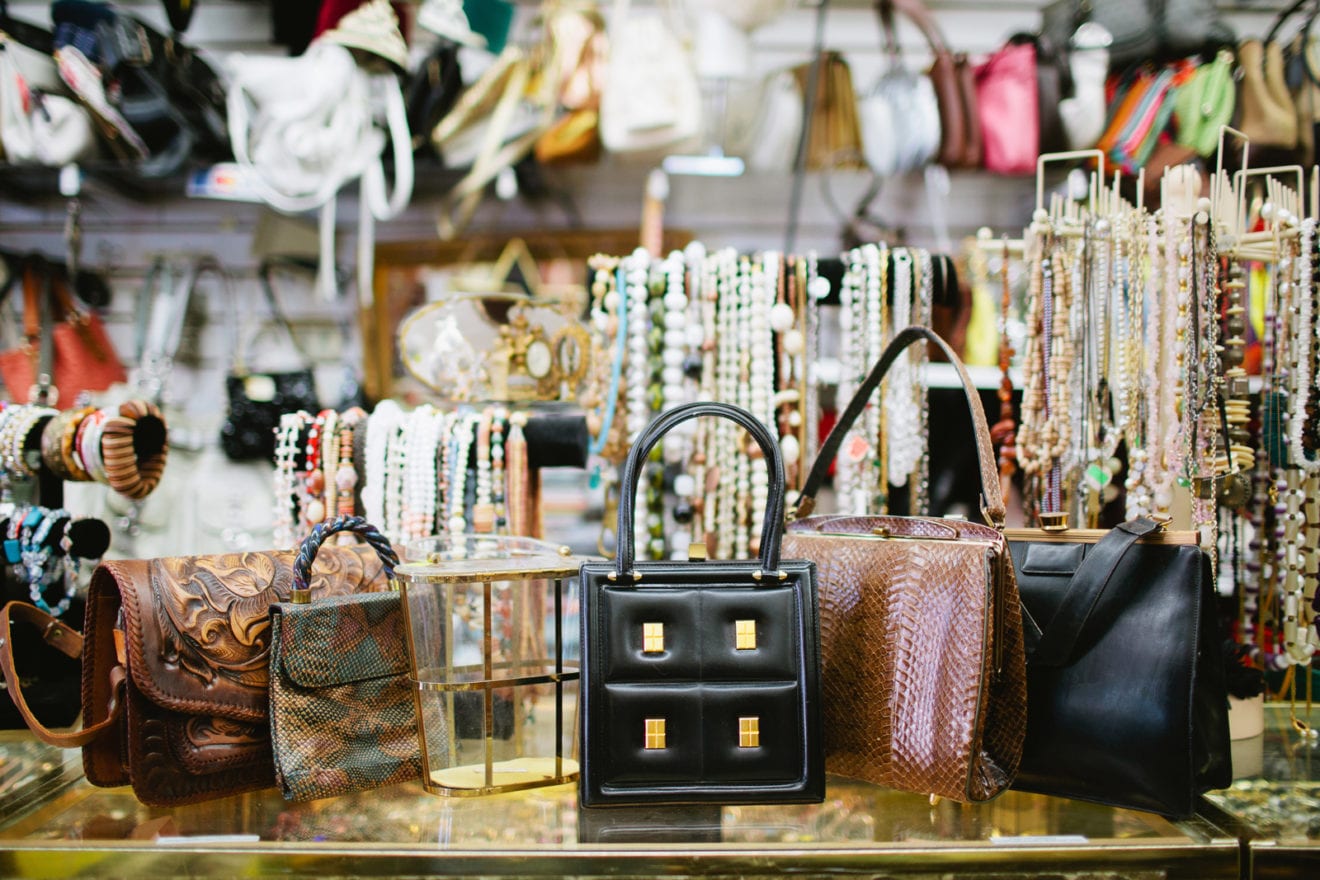
    Dark Horse Vintage offers a comprehensive range of “vintage treasures” hand-picked from abroad.

    Each piece has its own distinctive style, detailing and history, guaranteeing purchasers they won’t have to worry about seeing someone else adorned in the same threads.

    “Our gems are only one of a kind,” exclaim the founders.

    The pop up will be located on Arab St, at no 31.

    The store promises a wide range of collections from 1960s sun dresses to elegant silk scarves, retro high-waisted skirts and more.

    Besides its occasional pop up stores the retailer also provides personalised shopping and styling. “We handpick a customised collection from our range especially suited customers style preferences”.

  • Hang Lung posts strong result

    Hang Lung posts strong result

    Hong Kong listed Chinese mall owner Hang Lung Group has reported a three per cent rise in turnover in the first half of 2015.

    The group said revenue reached HK$4.893 billion, with rental turnover up eight per cent to HK$4.148 billion. Property sales income decreased 17 per cent to HK$745 million due to the sale of fewer residential units.

    Overall operating profit of the group increased by three per cent to HK$3.725 billion.

    In Mainland China the group says it has benefited from increased investment in the Chinese market by luxury brands.

    “Our seven shopping malls in mainland China collectively posted an 11 per cent rental income growth to HK$1.684 billion,” the company said in its stock exchange filing.

    That portfolio comprises two malls each in Shanghai and Shenyang, and one each in Jinan, Wuxi and Tianjin. The two malls in Shanghai, Plaza 66 and Grand Gateway 66, contributed nine per cent more in rents to HK$1.059 billion and were almost fully let.

    “The young malls outside Shanghai cumulatively contributed 16 per cent more in rents year-on-year mainly attributable to contribution from the Riverside 66 shopping mall in Tianjin which commenced operation last September. All the young malls are going through different stages of gestation period with ongoing tenants or trade adjustments. Their occupancy rates ranged from 80 per cent to 90 per cent.”

    In Hong Kong, rental turnover of our diversified Hong Kong leasing portfolio rose seven per cent to HK$1.816 billion against the backdrop of declining overall retail sales in the local market.

    “All business segments of our portfolio recorded growth with total profit rose seven per cent to HK$1.556 billion. The resulting leasing margin was 86 per cent.”

    Positive rental reversions of Hang Lung’s Hong Kong commercial portfolio generated six per cent more in rents to HK$1.040 billion.

    “All the malls, which are situated in prime locations of Hong Kong, were virtually fully let. Grand Plaza in Mongkok and Amoy Plaza in Kowloon East both enjoyed a 13 per cent rental growth. The Causeway Bay commercial portfolio posted a five per cent rental income growth, despite Hang Lung Centre has been closed for renovation by H&M since January 2015.

    “The properties in Central collected seven per cent more in rents. The Peak Galleria at the

    Peak contributed extra five per cent leasing income to the Group. Kornhill Plaza, our regional mall in Hong Kong East, posted a stable rental growth of four per cent during the period.”

    Hang Lung said final preparations are underway for the opening of its shopping mall at Olympia 66 in Dalian towards the end of the year. This new mall comprises almost 222,000 sqm of retail area and 1200 car parks.

  • 7-Eleven Vietnam plans 1000 stores

    7-Eleven Vietnam plans 1000 stores

    The world’s largest convenience store operator has confirmed the signing of a master franchisee in Vietnam and now plans 1000 stores over the next decade.

    7-Eleven Vietnam will be a partnership between the Japanese-headquartered US subsidiary and a new venture called Seven System Vietnam Co. While the US announcement did not identify the parties behind Seven System, Japan’s Nikkei news agency identified the partner as IFB Vietnam, which owns the Pizza Hut franchise in Vietnam.

    Nikkei says the first store will open in the nation’s commercial hub, Ho Chi Minh City, with a target of 100 stores within the first three years and 1000 within 10.

    7-Eleven has 56,400 stores globally and Vietnam will mark its 18th international market.

    Japan’s Seven & I Holdings has openly been assessing a Vietnam entry for some years. The convenience store sector is still at an early development stage with Circle K and FamilyMart the early entrants and Thailand’s B-smart, part of the Berlei Jucker Group, playing a cameo role.

    Given the booming convenience store market in other Southeast Asian countries, especially Thailand, the Philippines, Indonesia and Malaysia, 7-Eleven’s superior logistics, product mix, marketing and location selection should see it assume market leadership there well within the first 10 year window.

    7-Eleven’s US statement says, somewhat enigmatically, the new Vietnam business will “construct 7-Eleven stores [and] convert existing locations to the 7-Eleven brand” without disclosing which brand is to be swallowed up.

    While the initial stores will be company-owned, the company says it will eventually franchise stores to local entrepreneurs.

    “7-Eleven’s entry into the country aims to enhance the convenience-shopping experience for Vietnamese customers and contribute to modernizing small retailers in the world’s 13th most populous country.”

    7-Eleven US and its parent company, Seven-Eleven Japan, will provide start-up support for its newest master franchisee by assisting Seven System Vietnam in implementing 7-Eleven’s strategies of market concentration, team merchandising and item by item management. Vietnam marks 7-Eleven’s first new market in the Pacific Rim since it entered Indonesia in 2009.

    It already operates in the US, Canada, Mexico, Japan, Thailand, South Korea, Taiwan, China, The Philippines, Australia, Singapore, Malaysia, Indonesia, Norway, Sweden, Denmark and the UAE, where the first 7-Eleven store will open in the third quarter of this year.

  • HonestBee triggers Singapore food fight

    HonestBee triggers Singapore food fight

    A new player in Singapore’s online grocery market – honestbee – is set to bring a unique approach and ramp up the competition.

    Jonathan Low, co-founder of the new concept, describes honestbee as “an Instacart-like service which assigns a freelance runner to buy groceries on your behalf from the nearest supermarket”.

    Honestbee is the latest entrant in Singapore’s online grocery battle, and it’s eager to prove it can deliver the goods. Casual observers probably won’t spot many differences between the service and its competitors, which now include RedMart, PurelyFresh, and GoFresh. Even supermarkets like Cold Storage are upping the ante with a revamped online shopping site.

    Indeed, they all seem to work the same way. After entering your postal code, the site tells you what merchants are available in the area. You then select one of its partners – from supermarkets like Cold Storage and Sheng Siong to smaller setups like Pet Lovers Centre and Gastronomia.

    Next comes putting items in your shopping cart, picking a time slot, and checking out. The service waives delivery fees for basket sizes above a certain amount. And, if all goes well – and it usually does – the delivery guy rings your doorbell at the appointed time.

    So far so good. But where honestbee really shines is its promise of delivering groceries to you within an hour, writes Terence Lee on TechInAsia.com.

    “Well, more like two hours, as the case was for me. I made my purchase at 11.30am, and the earliest time slot I could choose was 1pm to 2pm. One-hour ranges are the best anyone can do in Singapore now, though honestbee wants to eventually introduce 30-minute slots.”

    The startup is part of a rising class of “on-demand” services that aims to give you what you want, as soon as you want it. Uber pioneered the idea of using existing resources (idle private vehicles) and summoning them to anyone through an app. Instacart takes the same concept to groceries, and honestbee applies the same model to Singapore.

  • Goxip mixes fashion, celebrities and shopping

    Goxip mixes fashion, celebrities and shopping

    Star-gazers – those who focus on the celebrities, that is – now have an app they can use to find fashion matching what their idols are wearing.

    A Hong Kong startup has launched an app called Goxip which uses social media, photo recognition technology and news feeds to connect fashion lovers with online retailers.

    So when 25 year old Tina in a downtown Hong Kong cafe sees Fan Bingbing wearing a stunning new dress on a red carpet stroll she can copy the image on Goxip, crop the photo and wait while the app digitally searches online stores around the world for something similar.

    The app’s creators – Juliette Gimenez and YC Lau – hope Goxip will become “the commerce layer, in between the world of [celebrity news] content and the retailers,” according to an interview.

    It’s aimed at ‘ordinary people’ who cannot afford to splurge $5000 on designer rags worn by a Hollywood superstar – but want something as similar as they can. Meanwhile, fast fashion apparel brands are constantly studying catwalks and red carpets to spot new trends and cuts they can incorporate into their next weekly or fortnightly release.

    Goxip helps the two parties meet – hopefully resulting in online sales for the retailer.

    Behind the app is a system constantly searching for new trends and celebrity revelations.

    “When you read the news, you can go straight to the article. Or you can shop. We have a snap and crop function. I like this dress, so I crop. I like this red dress for my cocktail party. I crop, take a photo, type the style and a list of clothing that matches your desire is listed,”.

    Gimenez, Goxip’s CEO, worked with group-buying startup uBuyiBuy.com in 2010 which was later acquired by Groupon. Lau, Goxip’s head of product, is an investor and adviser for Chinese language web forum HKGolden.com, which boasts 6 million daily page views.

    Goxip already has relationships with over 40 retailers (including Amazon, Shopbop, Zalora, Bloomingdales and TopShelf) and estimates it already has about 1 million clothing items in its database.

  • Prince Philippines to expand

    Prince Philippines to expand

    Hypermart chain Prince Philippines says it will open four new stores before the end of this year.

    Prince Hypermart says the new stores will be in Visayas and Mindanao and will take its network to 28, all located in provincial areas where the company has strong relationships with traditional sari-sari store owners as well as direct to consumer business. It offers micro financing options for sari-sari owners.

    Business development manager John Robertson S Go says the first new store will open in Gingoog City in Misamis Oriental.

    “Sari-sari store business is relevant to the local economy because it directly helps Filipinos at the grassroots level in getting themselves out of poverty,” another company executive said.

    The company already serves about 500,000 customers every day in its 24 existing stores

    Prince says it has been adjusting its stock range in recent years as buying habits change. Where once customers were always seeking the least expensive products, there is now growing demand for premium goods.

    “This means they have more money to spend. Their inventories have also upgraded,” the spokeswoman said.

  • Strong Vietnam retail sales growth

    Strong Vietnam retail sales growth

    Vietnam retail sales growth reach 8.3 per cent in the first half of this year, according to government data.

    In the first seven months of this year, the private sector accounted for 85.6 per cent of total retail sales, earning $73.4 billion or a year-on-year increase of 9.5 per cent, according to the Vietnam News Service..

    Vu Manh Ha of the General Statistics Office, says the nation’s retail sales stabilised during the first quarter. Sales rose eight per cent in the first four months, 8.2 per cent in the first five months and 8.3 in the first six.

    He attributed the stabilisation in the growth rate to a low increase in the Consumer Price Index.

    Total retail sales reached US$85.8 billion.