Tag: Retail

  • Metro China For Sale

    Metro China For Sale

    German wholesaler Metro has called for bids for its China operations.

    The firm was reported last September to be considering exiting its Metro China retail business as part of a plan to focus on wholesaling activities worldwide. The sale is partially in response to the emerging strength of e-commerce in China.

    According to industry insiders, Metro is seeking a deal in a deal that would value the business from US$1.5–2 billion, covering 95 stores in the territory as well as real estate assets in several major cities. Some observers have estimated the Metro China business to be worth up to $3 billion.

    Several local retail chains and private equity firms are expected to be among potential bidders, although none of the named firms responded to requests for comment for a report. E-commerce giant Alibaba has previously held talks with Metro over a possible stakeholding in the business and tencent has been linked to a bid.

    First-round bids should emerge next month.

    In related news, the firm announced the opening of a new warehouse in Yangon last week, aiming to serve local professional customers in the fast-growing hospitality and tourism sectors in the region. Metro Myanmar will not run wholesale stores but provide a virtual shopping experience for customers through its e-commerce and delivery systems.

  • Competition increases in Bangkok market

    Competition increases in Bangkok market

    Competition is increasing in the Bangkok retail-property market, according to international property consultant CBRE.

    The competition is focused on the bricks vs clicks sector as e-commerce grows, and the bricks vs bricks market, as developers build new malls.

    “All over the world, e-commerce is challenging traditional retail stores, and Thailand is no exception,” said CBRE in a report.

    Currently e-commerce only forms a small percentage of total retail sales in Thailand, but CBRE expects that to change rapidly.

    In the UK, 18 per cent of retail sales are now online rather than through traditional stores.

    Globally, retail tenants are having to pursue an omnichannel approach with both online e-commerce sales and offline traditional sales in stores. In many cases, this has led to a rationalisation of their retail portfolio and a reduction in the number of stores.

    In the Bangkok retail-property market, the threat to landlords is not just from the rise of e-commerce, but also from the increase in supply.

    2019-03-18 - Retail Supply in Bangkok

    Based on the latest survey by CBRE Research, there is more than 600,000sqm of space under construction due for completion by 2023, mainly in large-scale shopping malls like EmSphere, Bangkok Mall and One Bangkok. There are also new malls being planned where construction will start soon, such as the redevelopment of the Dusit Thani Hotel.

    Competition in the Bangkok retail-property market is going to be fierce and landlords are going to have to adapt to the new environment to survive. That, according to CBRE Research, will mean big changes to their business model.

    Historically, landlords have leased out space on three-year leases at monthly rents. Landlords have set rents based on the tenant’s ability to pay driven by business type, size of shop, which floor in the building and which location on the floor. Landlords have tried to extract as much rent as the tenant can afford to pay with the tenant bearing the obligation of a fixed amount of rent and assuming much of the business risk.

    Now the business model is changing with tenants wanting the landlord to share more of the risk by basing the rent on a percentage of the tenant’s revenue, known in Thailand as a Gross Profit (GP) rent.

    The landlord, along with the tenant, will benefit if business is good, but suffer if business is bad, with the landlord not only taking a risk on the ability of the mall to attract customers but also on the success of tenant’s business.

    Landlords are also now expected not just rent space but to be data providers and analysts.

    Tenants now want landlords to collect, analyse and share data on how many people come to the mall, how often and what they are spending their money on along with many other details, said CBRE.

    Tenants are going to be increasingly demanding about the quantity and quality of information that they get from the landlord so they can best match their products and services to the mall’s customers.

    In the current era, online retailers have to give people a reason to visit their store and not just to buy online.
    Increasing the volume of food outlets providing “retailtainment” is one way to get more foot traffic into malls, but restaurants cannot pay the same rents as luxury brand retailers.

    “Creating limited time opportunities through pop-up stores or events is another emerging trend giving people a reason to get up and go to a mall because they will not be able to get the product or have the experience elsewhere or at another time,” said CBRE Thailand’s head of advisory and transaction Jariya Thumtrongkitkul.

    “The revolution in retailing with the coming of e-commerce and competition from new supply means that landlords will have to be a lot more sophisticated in what they provide both in terms of mall format and data”.

  • Singapore retail sales up with 5.3 per cent

    Singapore retail sales up with 5.3 per cent

    Singapore retail sales rose by 5.3 per cent in January, underpinned by consumers stocking up ahead of the Lunar New Year holiday.

    When motor vehicles are included in the data, the official topline figure was a 7.6 per cent increase.

    Lunar New Year fell two weeks earlier this year compared with last year, which means some volume of pre-holiday stocking up was completed in January rather than the first half of February.

    According to Statistics Singapore, the total retail sales value in January was about S$4.2 billion. Online retail sales accounted for a solid 4.8 per cent of sales.

    Most retail industries recorded higher sales in January this year compared to last. Sales of apparel & footwear, medical goods & toiletries and by department stores, supermarkets & hypermarkets and food retailers registered growth rates of between 8 per cent and 10.5 per cent, as a result of higher demand during the Lunar New Year lead up.

    In contrast, sales of computer & telecommunications equipment declined 11.5 per cent, due in part to lower demand for mobile phones during this period.

    Sales of food & beverage services increased 5.9 per cent in January, reaching $862 million, compared to $814 million in January last year.

  • Fung and JD launch Hong Kong’s first AI checkout

    Fung and JD launch Hong Kong’s first AI checkout

    JD has partnered with Fung Retailing Group to unveil Hong Kong’s first AI checkout solution in a retail store environment.

    The AI-powered checkout technology is a result of a strategic deal between the firms signed last year. It represents the first AI checkout experience featuring image recognition technology in the territory. This technology is currently installed at the AI Retailing Zone in two Circle K stores in Hong Kong.

    Designed to make the checkout experience as easy and hassle-free as possible, customers can complete checkout using the AI-powered solution in just four seconds with three simple steps, including placing the products on the counter, scanning, and paying via Octopus card.

    The advanced AI algorithm enables the checkout counter to recognise up to five products within one second with an accuracy rate of more than 97 per cent, reducing the overall checkout time by 30 per cent.

    “This is an important milestone for Fung Retailing as the first in the industry to unveil the first AI-powered checkout pilot experience in a convenience store environment,” said group MD Sabrina Fung.

    “This underscores our ongoing commitment to experiment with new technologies like AI and to build partnerships like the one with JD to enhance the end-customer experience, further transforming the future of retail for Greater China.”

    “AI will continue to play a critical role in transforming the retail landscape,” said JD VP Dr Bowen Zhou.

    “Retailers who are able to capitalise on this trend, will have a competitive edge among their peers. Leveraging Fung Retailing’s offline retail expertise and JD’s leading retail technology, this pilot project represents a critical first step in collectively realising our vision for smarter and more convenient retail.”

  • The future of retail has arrived

    The future of retail has arrived

    Once upon a time, the future seemed a long way off. Remember Tom Cruise in 2002’s Minority Report? And the famous shopping centre scene?

    Director Steven Spielberg recruited a panel of futurists to predict a far-off tomorrow that included responsive, personalised advertising and sales assistants, triggered by iris and facial recognition.

    Well, today, we’re living in that future. Geo-location is ho-hum, facial recognition is a feature built into our phones and Alibaba in China has already tested “smile to pay” in kiosk screens in KFC stores, that replace the need for a wallet.

    Way back in 1994 (was that really 25 years ago?) American phone carrier AT&T ran a TV ad that forecast a future where shoppers could check out “a whole shopping cart at a time” through a scanner, and you could receive “a phone call on your wrist”.

    Fast forward to today, and frictionless grocery retail is a reality with Amazon Go stores (now rolling out across the US), and when I visited one in Seattle recently the receipt was pinged to my Apple Watch along with my trip time. Shoppers are actively gamifying grocery shopping, seeing how fast they can get in and out of the store.

    AmazonGo receipts are pinged to your wrist.

    The future, as science fiction writer William Gibson famously wrote, is already here. It’s just not very evenly distributed. Or, as Matt Thompson from American grocery giant Kroger put it even more succinctly: “The future is now”.

    I see examples of the “future of retail” in the US every day. Creator Burger in San Francisco has a burger-making robot. Nordstrom’s “Local” retail concept centres around click-and-collect, and services, and has no stock in store. Amazon’s 4-Star stores stream ratings and reviews live to the shelf. Kroger is testing self-driving grocery delivery vehicles with Nuro in Arizona.

    China takes things to a whole new level. When I attended Singles’ Day in China last year, I witnessed first-hand a shopping culture that was more “Bladerunner” than suburban mall. There, the mobile rules and stores are not destinations but “nodes”, designed to be interacted with both physically and virtually as the need fits. (My colleague in China ran out of garlic while cooking at home. No problem – he jumped on his app, and had the ingredient delivered in time to finish preparing the meal.)

    As I write this, I am about to return to Australia for a visit. I can’t wait to share my experiences and observations of perhaps the most dynamic time in the history of retail. At the same time, I’m also looking forward to seeing what’s new and exciting in our part of the world. The truth is that, particularly today, the future of retail is not limited to a geographic region. From Telstra stores to innovative supermarket and convenience store design, there is a lot to learn from what’s going on in the Southern hemisphere. You just have to look. Because the future is already here.

  • Employers are more trusted than government,

    Employers are more trusted than government,

    New Zealanders trust their employers significantly more than they trust the government, NGOs, business or the media, according to the 2019 Acumen Edelman Trust Barometer.

    According to the report, “my employer” was more trusted (74 per cent) than government (50 per cent), NGOs (48 per cent), business (47 per cent) and the media (34 per cent).

    This is the result of trust in other institutions remaining flat, while trust in employers is on the rise. The finding aligns with the trend of employees seeking out purpose in the their jobs and organisations shifting away from being ‘customer-first’ to being ‘employee-first’.

    Acumen Republic’s chief executive Adelle Keely said organisations should see this finding as an opportunity to play a more critical role in the lives of their employees, and reap the benefits of loyalty and productivity.

    “Employees are looking for trusted sources of information in a time of change and disruption and there is an opportunity for employers to provide education and useful insights that help them navigate the new world,” she said.

    Keely noted there is a growing expectation for business leaders to step up as change-makers, with three-quarters of employees wanting CEOs to take the lead on change instead of waiting for government to impose it. This is 15 points higher than last year, she said.

    “Employers need to lead on change, address workers’ concerns, provide information and equip employees for the future. They should demonstrate their relevance and contribute to the communities where they operate. This is particularly important for those not headquartered in New Zealand.”

    Interestingly, there is a gender divide in trust in institutions, with women being less trusting than men. Women trust only government, while men have trust in both business and NGOs.

    “Trust in business shows the biggest gender divide. This is likely the result of lack of female representation and reporting around pay equity and the #metoo movement,” Keely said.

  • Kogan looks to cash in on marketplaces

    Kogan looks to cash in on marketplaces

    Online retailer Kogan.com announced the launch of Kogan Marketplace on Thursday, calling it a “win-win” for customers and businesses.

    The marketplace currently offers more than 100,000 products from brands such as Microsoft, Breville, Lego, Fisher-Price, Paw Patrol, SodaStream, Gillette, Gucci and Philips.

    That number is set to grow after today, when brands can apply to sell via the marketplace. According to Kogan.com’s most recent annual report, select brands and distributors were already selling on the marketplace in the 12 months to 30 June 2018.

    “With today’s launch, there are now over 100,000 products available to purchase on Kogan.com — meaning customers have more choice than ever before,” Lazar Monin, Kogan.com’s director of marketplace, said in a statement. “Our mission is to make the most in-demand products and services more affordable for all Australians.”

    The marketplace gives brands and retailers access to more than 1.5 million active customers on Kogan.com, as well as the retailer’s marketing and online distribution capabilities.

    “We’re obsessed with creating a great experience at Kogan.com for our customers and sellers alike,” Monin said.

    The marketplace also gives Kogan.com an opportunity to expand its range, reach new customers and increase sales, without having to buy and hold inventory or lose margin to the new low-value GST, which has dampened its global brands business over the last eight months.

    The potential for growth through an online marketplace is perhaps best demonstrated by Kogan.com’s rival Catch, which has seen significant success since launching a marketplace in 2017. The former ‘deal-of-the-day’ site now carries nearly two million SKUs and has roughly the same number of active customers as Kogan.com.

    According to a UBS forecast reported by the Australian Financial Review in October 2018, Kogan.com currently has a bigger share of the online retail market excluding food in Australia, but Catch, thanks to its marketplace, was expected to leapfrog Kogan.com to grab a bigger share of the market after FY19.

    Meanwhile, Catch has been diversifying its offering into telecommunications and financial services, a strategy that Kogan.com has been executing in a bid to meet more of its customers’ needs. Catch last year launched mobile phone plans with Optus called Catch Connect, and recently partnered with Now Finance to offer small personal loans to customers.

    Kogan.com has been launching similar services for the past few years and now has a portfolio of insurance offerings, credit cards, internet plans and even superannuation.

    The online retailer recently reported record trading during the peak Christmas period, driving first-half revenue to $231.8 million, up 10.6 per cent on the previous corresponding period. Gross profit in the half was $45.1 million, up 10.8 per cent on first-half trading in FY18.

  • Iuiga defends use of Muji brand on its website

    Iuiga defends use of Muji brand on its website

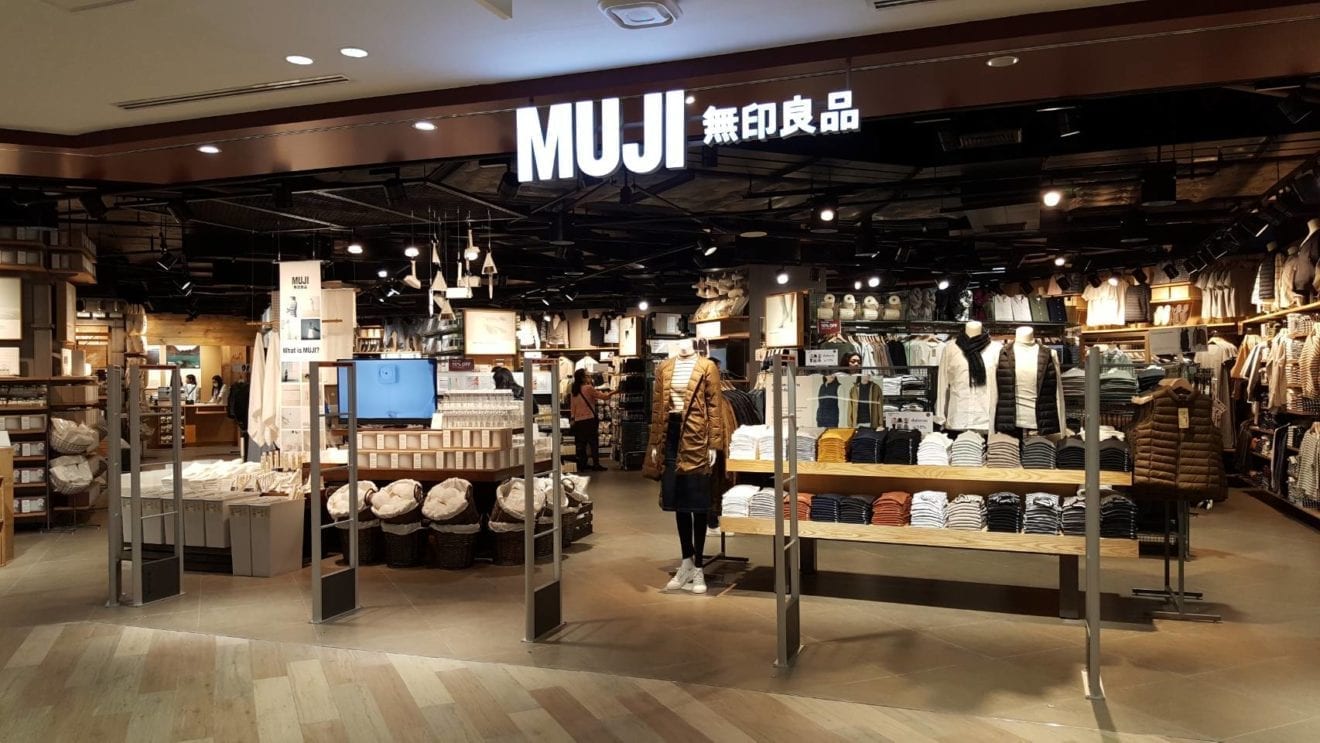
    Singaporean retailer Iuiga says it has done “nothing wrong” using the Muji brand name on its website.

    “The information on our website is factually accurate and our manufacturing processes are legal,” said Jaslyn Chan, Iuiga chief growth officer.

    Iuiga says it works directly with Original Design Manufacturers (ODM), who produce for large international brands including Muji. Under the ODM business model, the exterior, aesthetics, materials, dimensions and patented technologies are developed by the ODM and these product and design rights belong to them.

    “There is no direct ownership of the product by any single brand entity, allowing the ODM to produce for more than one brand. This is what Iuiga means when it says a certain product is from the “same manufacturer as Brand A”.

    Based on this, Iuiga maintains it is working with ODMs that also work with Muji.

    “Iuiga is also preparing a list of manufacturers that both Iuiga and Muji work with to be released to the media later,” Chan added.

  • Indian fashion chain Reliance Trends to open over 2,000 stores

    Indian fashion chain Reliance Trends to open over 2,000 stores

    Indian conglomerate Reliance Industries will expand its low-cost fashion store network Reliance Trends to 2500 locations within five years.

    The chain currently has just 557 stores in 160 cites, and will target a presence in 140 more, involving deeper penetration into tier 3 and 4 cities.

    The planned expansion will involve an integration with the firm’s online activities and will serve as a gambit to seize a commanding market share of consumer spending against e-commerce competitors Amazon and Flipkart.

    The move follows recent restrictions on foreign investment into India that have at least temporarily disadvantaged the online giants. The new legislation bans online retailers from making exclusive contracts with vendors, among other restrictions.

    The Reliance Trends expansion is expected to help the firm boost its own labels in a territory that is home to the world’s largest population of millennial consumers.

  • Retail Sales growth slows in February

    Retail Sales growth slows in February

    Electronic card spending was up 0.9 per cent month on month in February, according to the latest figures from Stats NZ, which are adjusted for seasonal effects.

    This was modest compared to January’s 1.8 per cent month on month increase, though spending rose across five of the six retail industries in February.

    The biggest increases were seen in groceries and liquor, where spending was up 1 per cent or $19 million on the previous month, fuel, where spending was up 1.3 per cent or $7.4 million on the previous month, and hospitality, where spending was up 0.7 per cent or $7 million on the previous month.

    Vehicles, excluding fuel, was up 2.6 per cent or $4.6 million on January, and apparel was up 0.9 per cent or $2.8 million on January. Only durables was down 0.2 per cent, or $2.5 million.

    “The rise in fuel spending coincided with a gradual increase in fuel prices, after a period of lower fuel prices,” Stats NZ retail manager Sue Chapman said.

    “Sales of durables such as furniture, hardware and appliances, as well as clothes and shoes, appear to have levelled out in February, after a more volatile patch in December and January,” she said.

    Core retail spending, which excludes the fuel and vehicle-related industries) rose 0.9 per cent in February.

    Actual retail spending using electronic cards was $5.1 billion in the month, up $168 million, or 3.4 per cent, from February 2018.

  • V-MORE Enters Thailand’s E-Commerce Market With More Than 500 Marketplace Platforms and Merchants

    V-MORE Enters Thailand’s E-Commerce Market With More Than 500 Marketplace Platforms and Merchants

     V-MORE, Asia’s leading e-commerce supply chain management platform, has announced its plans to expand into Thailand. Over the pasts 12 months, the fast-growing one-stop e-commerce platform which has already garnered 500,000 users in the region.  V-MORE aims to recruit new Thai e-commerce merchants as part of its expansion strategy and has rolled out onboarding programs for new merchants and users.

    “We are pursuing a plan of expansion and hope to achieve revenue growth through mass adoption by users and merchants in our ecosystem. Thailand is fast becoming the leading e-commerce market, and we seek to increase our user and merchant base through user incentive programs, brand awareness and marketing programs,” said Sir Eldee Tang, CEO and Founder of Noble Vici Group.

    V-MORE is a one-stop marketplace for high quality products which are value for money. Its unique shop, save and earn program has gained the trust of many online shoppers. Through V-MORE, consumers can shop and be rewarded at over 500 marketplace and shopping sites including leading online brands, hotel and flight booking sites, technology as well as food and beverages merchants. Thai merchants can participate in its e-commerce program and increase their exports to other countries in Asia and beyond.

    According to research, there are more than 57 million internet users in Thailand who are well-versed with digital technologies, mobile and e-commerce. The market is valued at USD 3.5 billion and is expected to generate revenue growth rate of 13.2% annually, reaching USD 5.8 billion by 2022.

    “We look forward to new local merchants to come on board our platform and welcome sellers and buyers to experience the online marketplace for the first time,” Eldee added.

  • Improved penalty rates and conditions for Priceline workers

    Improved penalty rates and conditions for Priceline workers

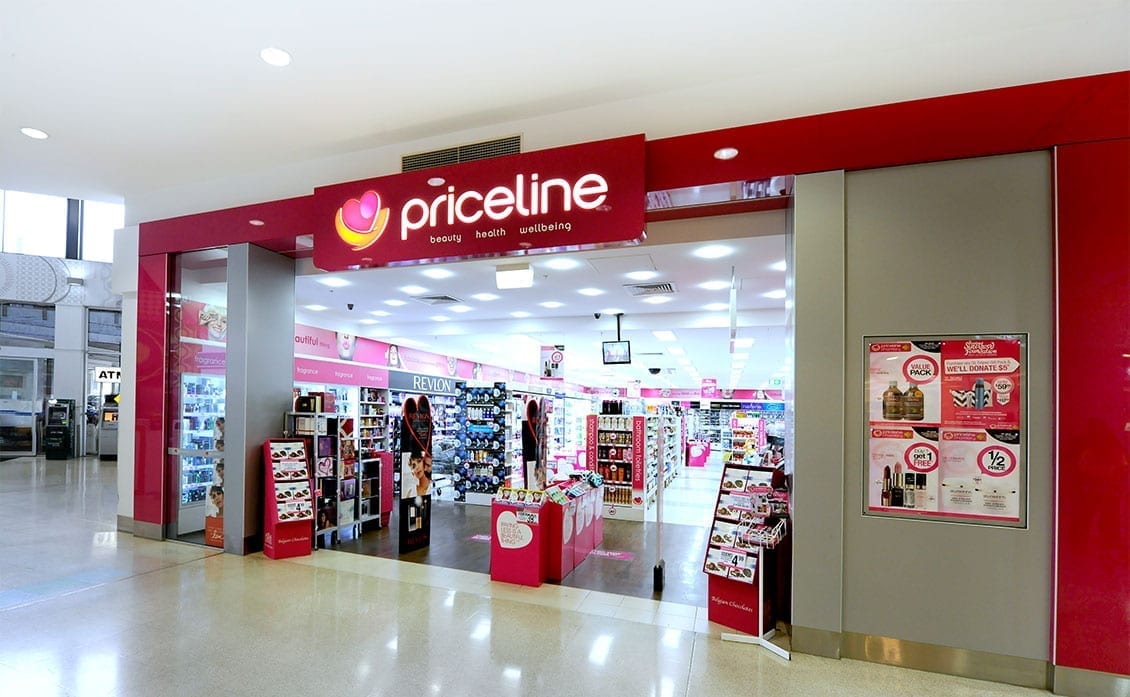
    Retail workers’ union SDA has secured a new agreement for Priceline Pharmacy workers that improves penalty rates and leave conditions for staff.

    The new agreement, which came into effect on Friday March 8, will see annual pay increases backdated from July last year, through to July 2020.

    “Wage growth for Australian workers is at an all time low and we’re proud we’ve been able to lock in strong annual pay increases for Priceline workers for the next three years,” SDA national secretary Gerard Dwyer said.

    “Priceline workers will receive an immediate 3.5 per cent pay increase backdated from 1 July 2018, and 3 per cent pay increases from 1 July 2019 and 1 July 2020. This means the permanent hourly rate for Priceline workers will increase to A$21.81 and the casual hourly rate will increase to A$27.26 per hour. With the rate of inflation at 1.8 per cent these pay increases will make it a little easier for Priceline workers and their families to make ends meet.”

    The new agreement also includes five days paid and five days unpaid Family and Domestic Violence Leave for all employees per year.

    “Unions, employers and government must all take responsibility for addressing family and domestic violence and we’re pleased we’ve taken the first steps in this agreement,” said Dwyer.

    Workers will also be paid superannuation on all paid leave, including paid parental leave. The SDA said this will help address the gender pay gap, as previously superannuation was not paid when parental leave was taken.

  • RFG totters making its way

    RFG totters making its way

    Retail Food Group remains in danger of collapse as it tests the nerve of its financiers. The multi-brand franchisor has racked up losses of more than half a billion dollars in the past 18 months; its market capitalisation has fallen below $50 million, with its share price dropping to 25¢ last week on the Australian Securities Exchange.

    Directors have been attempting to sell assets in a bid to reduce debt to satisfy bankers and ensure the company can continue to trade.

    The problem is that most of the assets have little value in real terms and, in some instances, carry significant liabilities in respect of store lease commitments, exit costs on unprofitable and unfranchised stores and prospective legal action by disgruntled franchisees.

    The results for the first half of the 2019 financial year would indicate that the entire company is struggling to survive and is facing imminent administration if it cannot quickly conclude a significant asset sale.

    Debt covenants tested

    A waiver of debt covenants by lenders NAB and Westpac expired on December 31 – and are due to be tested by March 31. Without clear indications of the viability of the company on an ongoing basis, lenders are unlikely to hold their nerve.

    Directors of the company have been unable to conclude a deal on any asset sales despite the company reporting the Donut King and QSR Division as discontinued operations in its FY19 first-half results released last week.

    Directors advised investors that negotiations were ongoing but no formal binding agreement had been achieved with a proposed buyer.

  • Consumers are in control and searching for Experiences

    Consumers are in control and searching for Experiences

    Retailers must recognise consumers are in control and they are looking for experiences above all else, according to US trend expert Tom Mirabile.

    Speaking at the International Housewares Association’s annual show in Chicago, Mirabile said housewares suppliers and retailers need to focus all their efforts on what the consumer wants, how the consumer sees themselves, and how the industry can help create solutions for them.

    “We need to stop looking at objects and start looking at what those objects deliver,” he said. “People aren’t buying objects, they’re buying experiences.”

    Mirabile began his presentation with an overview of generational distinctions and key “need-to-knows” about each generation right now. Generation Z is on track to be the most well-educated generation (according to Pew Research), with a liberal set of attitudes and openness to emerging social trends. They also may be the first generation where cooking is truly no longer a gendered task, viewing “cooking as a craft or a skill,” according to Mirabile. This generation skews more toward traditional life cycles, with many saying they want to start a family and own a home.

    A much less traditional generation, millennials prefer staying home over going out. But they’re less likely to eat around the kitchen table; many eat in their bedrooms and even bathrooms. They also report replacing one meal a day with snacks.

    Another way of bucking the norms: “Millennials don’t see a brand as religion,” said Mirabile. “Loyalty does exist, but you have to constantly earn it.”

    Generation X is smaller in numbers but is entering its prime earning years. Thirty-one percent of discretionary spending in the US right now is coming from this generation, Mirabile said.

    Gen X is very self-sufficient and does more product research than any other generation. They’re also a true shopping hybrid; they still enjoy a trip in-store but have fully embraced online shopping.

    Many Baby Boomers are retiring, moving or remodeling their homes, which means they will be buying more items for their homes. Many are also in a period of personal reinvention. “Boomers are still looking to Millennials and Generation Z to see what they want to be,” Mirabile said.

    As for seniors, many are still economically active but much of their consumption has shifted to experiences and healthcare. By 2035, one in three US households (versus today’s one in five) will be headed by someone over 65 years old.

    Next up, Mirabile shared some key tenets that are important for housewares suppliers and retailers as they adjust to the quickly-changing marketplace where consumers hold all the control. He tied them to the acronym ‘FASTR’:

    F – Be flexible, be fun, be fearless. Change is constant, but even the most established brands can reinvent themselves. Mirabile cited Ikea and KitchenAid as examples. He also cited recent amusing commercials from Skittles, Wayfair and Geico, “(Brands) who can have fun and make fun of themselves send a message of self-confidence,” Mirabile said. And be fearless – don’t be afraid to take a stand or do something different from the norm. It helps make your brand feel authentic and helps you stand out from the crowd.

    A – Be addictive, be aware, be aspirational. American adults spend more than 11 hours per day listening to, watching, reading or generally interacting with media, according to the Nielsen Total Audience Report. The challenge is in hooking them in. Be aware: there’s a tremendous amount of information out there, but “you’ve got to be self-educated, you’ve got to be a culture vulture,” said Mirabile, and keep up with what consumers want. Be aspirational: “Today’s consumer doesn’t dream of owning, but of becoming,” said Mirabile. “Stop telling the customer who you are and start telling them you know who they are.”

    S – Be surprising, be shareable, be simple. The subscription e-commerce market has grown by more than 100 per cent a year over the past five years, said Mirabile. A reason? They deliver boxes of surprising items a consumer may never had found on their own (or without a lot of time and effort). Be shareable: these days, this doesn’t simply mean sharing an image, though that still does have value. It’s more about inspiring people to physically share something, such as the opportunity for a family to cook and eat a meal together. And be simple: “Instead of big claims, sometimes it’s about the little obsessions,” was a finding shared from PHD Worldwide.

    T – Be true, be transparent, be trustworthy. Consumer trust levels are at an all-time low, whether it comes to government institutions, businesses or media. Be transparent: This is important whether you’re talking about ingredients, labor usage, or product materials. Significant numbers of people across all generations will pay more money for eco-friendly materials, said Mirabile. Be true: this often starts within your own company culture and then rises through the ranks of everything you do.

    R – Be real world, be responsible, be reactive. “To me, this is all about looking at real-world problems people are having, and how you’re going to solve them for them,” said Mirabile. Be responsible: a large part of this has to do with sustainability, a key issue for many generations of consumers these days. Be reactive: getting negative reviews? You must be quick to react, explain and make things right online. eMarketer data finds that roughly two-thirds of US internet users reference product reviews at least often before making a purchase.


  • Select Vietnamese sellers to get Amazon training support

    Select Vietnamese sellers to get Amazon training support

    100 selected Vietnamese businesses will participate in a support program to help them reach more customers on Amazon. These businesses will receive offline or online training, with in-depth support from Amazon and discounts from local service providers, according to a statement jointly released Wednesday by the Vietnam Trade Promotion Agency (Vietrade) under the Ministry of Finance and Amazon Global Selling.

    The program aims to help local businesses, especially in handicraft, textile, footwear and consumer goods, improve their export capabilities through selling on Amazon.

    They will also have the opportunity to participate in the second stage of the program, which will help them develop their brands.

    Other sellers who are interested can also join an online training program starting next month to get equipped with the basic knowledge of selling on Amazon.

    Bernard Tay, Amazon’s regional director for Southeast Asia, said that the young, tech savvy population in Vietnam and strong development of the manufacturing sector generate great e-commerce potential in the country.

    However, a lack of knowledge and experience prevents them from reaching out to the global market, he said.

    Vu Ba Phu, director of Vietrade, said that the support program will open up new potentials for local companies in expanding their businesses internationally.

    There are 300 million Amazon accounts in 185 countries and territories at present. Amazon also has 175 fulfillment centers worldwide.

    Vietnam has more than 700,000 businesses, of which 98 percent are small and medium enterprises, according to Vietrade.

    The country’s e-commerce market grew by 25 percent in 2017 and is expected to maintain this growth momentum over the next three years, according to the Vietnam E-commerce Association (Vecom).

    It also estimates online retail revenues to hit $10 billion by 2020, accounting for five percent of the country’s retail market.