Tag: Retail

  • Paragon mall adds more Retail brands On Level 3

    Paragon mall adds more Retail brands On Level 3

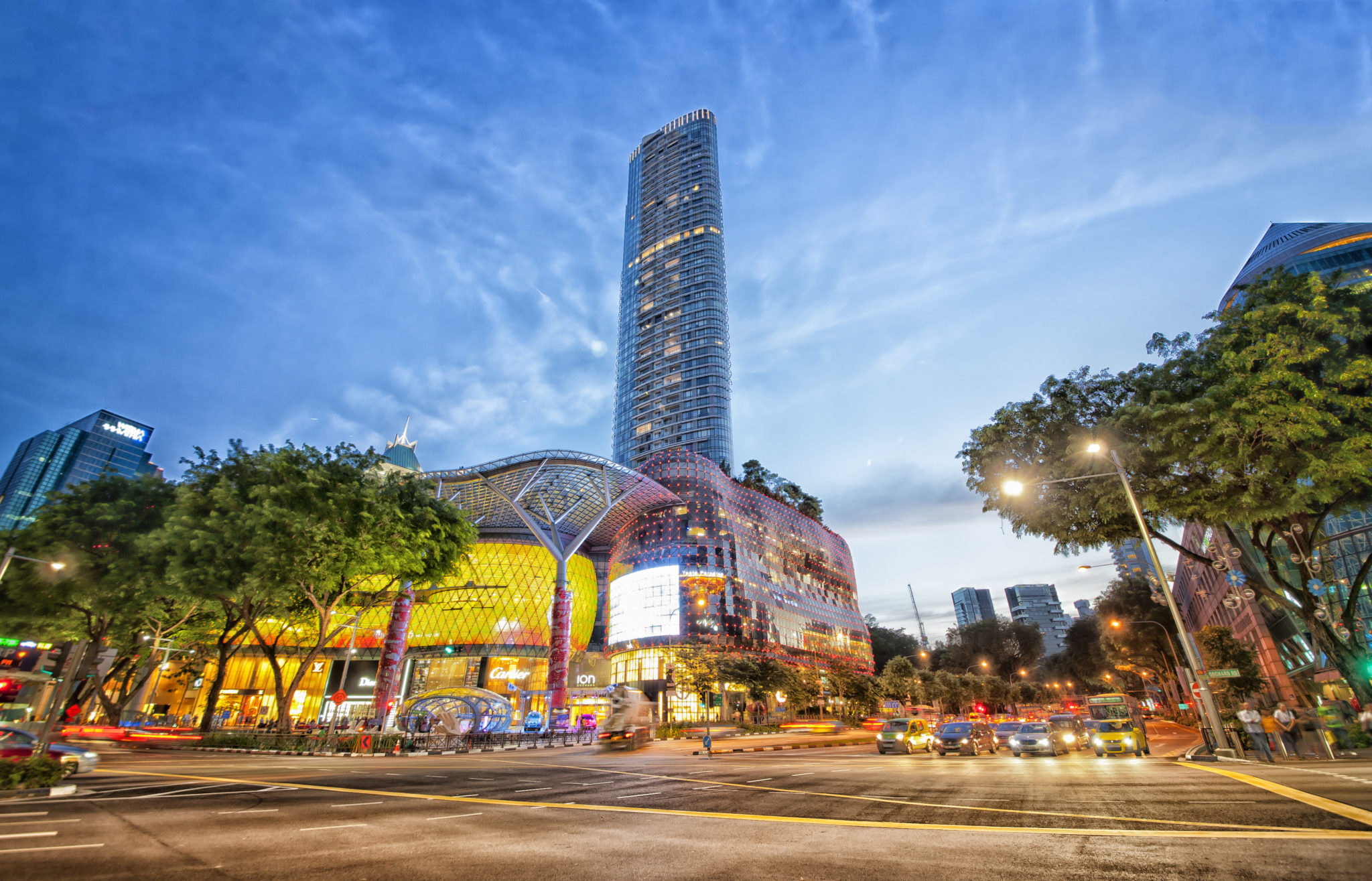
    Paragon mall has added a new retail and lifestyle concept on level 3, bringing together curated fashion brands.

    Launched in phases from last June, the refreshed 15,000sqft concept offers new names from fashion, beauty, bags and accessories, dining and lifestyle brands.

    In fashion, there are French-based women fashion Anne Fontaine, Indonsia label D2-i, European-made shoes Hue, European fabric Moiselle, Asia’s esteemed multi-brand fashion Pois, home-grown fashion designer Sabrinagoh, first concept store for ladies by Samsonite Samsonite for Her, Norwegian fashionable shoe brand with a bold personality Swims, and bespoke collection of jewelry Sulin Serio.

    For skincare and fragrances, there are Scandinavia’s leading cosmetic brand Make Up Store, beauty products from Escentials, and home scenting Flaming Queen, niche fragrances boutique Amaris.

    Western-meets-Sichuan café style dining Halcyon & Crane adds to dining options.

  • February Down for Hong Kong retail spending

    February Down for Hong Kong retail spending

    Hong Kong retail spending shrank in February according to data from Mastercard.

    While the official figures will not be released  by the Census and Statistics Department (C&SD) until next week, Mastercard SpendingPulse, which measures consumer spending across all payment types, including cash, found that retail sales contracted by 3.2 per cent year on year in February.

    However, Hong Kong retail spending data is always affected in January and February by the changing timing of Lunar New Year, which is why C&SD advises both January and February figures should be counted together before comparing with previous years.

    According to Mastercard, which did not amalgamate January and February data for a fair comparison with last year, the drop in February retail sales was seen across the board, with clothing, grocery, health & beauty, jewellery and furniture all experiencing a year-on-year decrease.

    “After an impressive 21-month growth trend, we have seen a decline in retail sales in Hong Kong, particularly around Chinese New Year, due to various reasons ranging from the unusually warm winter to consumer confidence,” said Sasha Krstic, executive VP, services – Asia Pacific at Mastercard.

  • Japan’s small retailers gain global e-commerce platform presence

    Japan’s small retailers gain global e-commerce platform presence

    The Japan External Trade Organisation is offering free international e-commerce site access to small-scale domestic retailers to help them sell products in 18 markets abroad.

    The initiative is expected to bolster exports for small and medium-sized businesses, taking advantage of the global popularity of Japanese products as international online trade remains on course to reach US$994 billion next year – up from $530 billion two years ago.

    Twenty four e-commerce sites, including Japan’s Rakuten; China’s Alibaba, Red and JD; and Singapore’s Redmart are signed up to participate in the program, featuring selected Japanese products on their platform without charging listing fees.

    Walmart’s Seiyu and British retailer Ocado will bring Japanese products into markets outside of Asia.

  • Walmart is taking on Amazon with its upcoming tablet

    Walmart is taking on Amazon with its upcoming tablet

    Soon, those searching for a cheap Android tablet won’t have to deal with the lack of Google Play Services found on the low-priced Amazon Fire Tablets. The line, powered by a forked version of Android, does not come with core Google apps including the Play Store. Instead, Amazon’s own app storefront is included. A tweet disseminated by XDA’s Mishall Rahman reveals that discount retailer Walmart is prepping an 8-inch Android slate that has Android 9 Pie pre-installed. The device will offer the usual bevy of Google apps and will feature the Google Play Store. Made in China, the tablet will carry Walmart’s own ONN brand, which it uses on low-priced tech accessories like headphones and cables.

    The new tablet, model number ONA19TB002, is expected to be “kid-friendly” according to a subsequent Bloomberg report. The 8-inch display will carry a resolution of 1200 x 800. Other specs included in Rahman’s tweet mention that the tablet will have a quad-core MediaTek MT8163 chipset under the hood, along with 2GB of memory and 16GB of expandable storage. The slate will have a microUSB port, and carry a 3500mAh battery.

    Walmart’s tablet has already received certification from the FCC, and could be priced under $200. A low priced tablet like this will probably not to do much to reverse the decline in shipments of the device. Strategy Analytics says that tablet shipments declined 6.2% last year. The Apple iPad remains the market share leader followed by Samsung and Amazon.

  • Octopus inks partnership with JD.com providing retail innovations

    Octopus inks partnership with JD.com providing retail innovations

    Octopus Retail Management (Octopus), a Singapore-based company and a pioneer in offering a holistic suite of retail management solutions, today announced that it has partnered with JD.com for its cutting-edge Point of Sales (POS) suite of solutions which has benefitted a variety of businesses spanning the retail, F&B and ecommerce sectors.

    With Octopus’ partnership with China’s largest retailer, JD.com, Octopus will be the first B2B software provider for the retail industry and will have access to more than 300 million active customers that shop on JD.com. This strategic alliance is in light of Octopus’ vision to digitally transform the retail industry.

    Octopus is a Cloud-Based Retail Management Company that offers a comprehensive Point of Sale solution to brick and mortar SMEs. With a presence across 7 countries — Singapore, Malaysia, Philippines, China, Sri Lanka, Indonesia and the USA, Octopus generates around $2 billion of GMV on their platform from over 20,000 retail points across 3000 customers.

    Ong Whee Shiong, Founder and Managing Director, Octopus said, “The digital age has thrown several challenges at businesses today. It has become critical for retailers to have an efficient retail management system to enhance their business productivity. Our products aim to empower the retailers to embrace digitalisation and streamline their online business.”

    The company’s cloud-based retail management solution helps firms to leverage social media interactions to curate personalised offerings based on consumer’s shopping and dining behaviours. The solutions can also synchronise inventory, support customer promotions, and offer loyalty points to add more value propositions to their customers. The solutions also allow its customers to onboard a mobile platform through its cloud offering. This enables real-time visibility over the network to monitor sales, the performance of staff, and inventory which leads to efficiency and better decision-making.

    According to an article citing joint research by Google and Temasek in 2017, more than half of Southeast Asia’s population is a millennial and of that, 70 per cent are under the age of 40. The retail space per capita remains low, indicating limited access to offline stores and products. Whilst the report shows that consumers in the region show the interest and willingness to shop online, there have been emerging trends focussing on omnichannel and online-to-offline solutions.

    “We believe online and offline need to go hand in hand today. Through our integrated solutions, our clients are able to offer their customers enhanced seamless shopping experience and create more value,” he added.

  • Athleisure trend boosts Yue Yuen sales in 2018

    Athleisure trend boosts Yue Yuen sales in 2018

    Yue Yuen Industrial, the world’s largest manufacturer of athletic, athleisure, casual and outdoor footwear, boosted revenue by 6.3 per cent last year.

    Yue Yuen makes shoes for a raft of brands, including Geox, Levi’s, Rockport, Carters and Pony. Its subsidiary Pou Sheng operates a network of some 5500 directly operated stores and 3000+ sub-distributor stores, predominantly on the mainland.

    For the year to December, the Group recorded revenue of US$9.695 billion, with gross profit up by 4 per cent to $2.446 billion. However, profit attributable to shareholders fell 40.9 per cent to $307.1 million, mainly due to operating deleverage within the manufacturing business, a reduction of the non-recurring gain for the year, and higher finance costs.

    Yue Yuen said revenue attributed to footwear manufacturing (including athletic shoes, casual/outdoor shoes and sports sandals) declined by 1.5 per cent to $5.39 billion, whereas the volume of shoes produced increased by 0.4 per cent to 326 million pairs. The average selling price decreased by 2 per cent to $16.53 per pair, compared with the previous year.

    The group’s athletic footwear category outperformed all other categories as a result of the global athleisure trend, accounting for 79.2 per cent of footwear manufacturing revenue last year. Casual and outdoor shoes accounted for 19.1 per cent of footwear manufacturing revenue.

    The group’s distribution sales are derived primarily from Pou Sheng, involving in retail operations for international sporting goods brands in the Greater China region. Last year, the revenue attributable to Pou Sheng grew by 23.3 per cent to $3.422 billion.

  • Strong potential’ for sharing economy in China

    Strong potential’ for sharing economy in China

    New research suggests strong potential for the sharing economy in China, with just 30 per cent of consumers there saying they only want to use brand-new products.

    Mintel says the figures highlight the significant market for selling second-hand products and targeting consumers who will rent out rather than buy.

    Mintel says 91 per cent of Chinese consumers said they have rented or bought second-hand bicycles/electric bicycles in the past year. This was followed by cars (61 per cent), books/audio-visual products (25 per cent), digital products such as mobile phones and cameras (25 per cent), furniture (18 per cent) and home appliances such as fridges (12 per cent). While the clothes and accessories sharing category has been making headlines, just 9 per cent of urban Chinese consumers have rented or bought them second-hand.

    “The current consumer landscape in China shows great potential for the sharing economy to develop further,” said Mintel China associate research analyst Scarlett Zhao. “Largely driven by substantial promotions and subsidies, high penetration in rental and second-hand businesses is more focused on the transportation industry; including cars and bicycles. But while the sharing economy in China is dominated by transportation, we see this trend slowly extending to knowledge sharing through books or audio-visual products.

    “At the moment, consumers are not as open to other product categories in the sharing economy space such as clothes and accessories, probably because consumers have not yet cultivated the habit to rent or buy second-hand products. China’s sharing economy still stands in an emerging to growth stage, where market rules and regulations need to be further improved. As a result, this has caused many to remain on the sidelines just like when e-commerce was first introduced.”

    Mintel research reveals that the majority of consumers in China acknowledge the benefits of the sharing economy, with as many as 86 per cent of them appreciating the convenience that sharing products and services bring. Meanwhile, 59 per cent of Chinese consumers cite affordability as a reason to participate in the sharing economy, making it the greatest motivation for them to choose renting or buying second-hand products.

    Environmental factors are also proving important to consumers. Fifty-one per cent of urban Chinese consumers say that they will rent or buy second-hand products as it is good for the environment.

    “Under the healthy wave, consumers today not only look inward to their body health, but are also paying more attention to the whole ecosystem they are interacting with,” added Zhao. “When communicating with and marketing to consumers, companies in the sharing economy space can make consumers feel good about themselves by emphasising how this concept can help reduce the carbon footprint – benefiting the public and the environment.”

  • Nearly half of Vietnamese shoppers buy premium products online

    Nearly half of Vietnamese shoppers buy premium products online

    Forty-eight percent of Vietnamese consumers buy premium products online from local retailers, with cosmetics the top category, a report says. Although the majority of survey respondents, 69 percent, said that they still purchase their premium products at local physical stores, the online ratio was higher than the global rate of 45 percent, says a global report by market research firm Nielsen.

    Nielsen’s Changing Consumer Prosperity study also found over a quarter of Vietnamese respondents, 27 percent, were inclined to buy online from overseas e-retailers, and 23 percent even travel overseas for these premium goods.

    Cosmetics are the top premium products that Vietnamese consumers spend their money on, according to 46 percent of respondents, following by clothing/shoes (44 percent), electronics (43 percent), body care (41 percent) and meat or seafood (38 percent).

    What Vietnamese people care most about a premium product is its high quality, according to 65 percent of respondents, and superior performance, 58 percent. Over half the respondents also seek premium products that contain environmentally friendly materials or natural/organic ingredients.

    When it comes to trying new premium products, Vietnamese rated peer recommendations as the most influential factor.Half of the respondents said that recommendations and encouragement by friends and family influenced their decision, followed by product research (46 percent), online advertising (42 percent), television advertising (39 percent) and in-store advertising (39 percent).

    In another survey released recently, Nielsen said that Vietnamese people remain among the most optimistic consumers even as global confidence fell in Q4 2018. Despite considerable increase in savings, Vietnamese consumers are still willing to fork out just as much or possibly even more money on big-ticket items such as new clothes, holidays or out-of-home entertainment, it said.

    Vietnam’s e-commerce sector has been booming in recent years. E-commerce revenue reached $2.26 billion last year, a growth of 30 percent over 2017, according to Germany-based data portal Statista. It estimated that this figure will reach $2.7 billion this year.

  • Vietnam’ E-commerce revenue forecast to hit $15 bn in 2020

    Vietnam’ E-commerce revenue forecast to hit $15 bn in 2020

    With 53 per cent of its population using the internet and nearly 50 million smartphone subscribers, Vietnam’s e-commerce market is expected to beat the previous revenue forecast of $10 billion in 2020 and may reach $15 billion, according to experts. The country’s e-commerce sector records annual average growth of 35 per cent; 2.5 times higher than the figure in Japan, making it one of the countries with the fastest e-commerce growth in the world.

    Mr. Dang Hoang Hai, Director of the E-Commerce and Information Technology Agency under the Ministry of Industry and Trade,  as saying that retail sales from e-commerce earned $8 billion in 2018, much higher than the forecasted figure of $7 billion.

    Therefore, revenue from e-commerce in 2020 could surpass the projected $10 billion, he said.

    A report on online shopping in 2018 conducted by market researchers Q&Me shows that Shopee accounts for the lion’s share of the domestic e-commerce market, at 35 per cent, with over 700 active brands and sellers, according to the news agency.

    It quoted Mr. Le Anh Huy, Deputy General Director of the Sen Do Technology JSC, the operator of the Sendo online commerce platform, as reporting that it recorded a threefold surge in 2018 over the previous year, serving more than 10 million consumers around the country.

    Experts have said, however, that e-commerce in Vietnam still faces various obstacles, including legal issues, skills for e-commerce development, security rights for concerned parties, and infrastructure for the sector.

    Support for e-commerce development in Vietnam’s remote and mountainous regions also remains modest.

    According to experts, Vietnam should consider the establishment of a State management agency to tackle those challenges and bolster the development of logistics in line with the digital economy, or assign such tasks to a ministry.

    Vietnam should also regularly update its legal system as well as develop synchronous infrastructure and a national payment system for e-commerce development, the experts suggested.

  • Why does the Vietnam Economy lags behind?

    Why does the Vietnam Economy lags behind?

    The core of the doi moi (renovation) in Vietnam is the shift from single-ownership into a multi-ownership economy, where the central planned regime no longer exists. The 1987 Law on Foreign Investment, the 1990 Corporate Law & the Law on Private Enterprises, and the 1999 Enterprise Law have encouraged the development of Vietnam’s private economic sector.

    One of the revolutionary viewpoints of the 1999 Enterprise Law was that ‘people can do anything that are not prohibited by the laws’, rather than ‘people can only do the things allowed by the laws’, which was one of the major reasons hindering economic development in many decades before.

    Khai then set a goal that Vietnam would have 1 million businesses by 2010.Soon after the Enterprise Law took effect, the then PM Phan Van Khai set up a task force in charge of implementing the Enterprise Law, which deserved credit for removing half of sub-licenses, considered obstacles on businesses’ development way.

    However, the business environment did not improve as expected to pave the way for the development of private enterprises. The ask-and-grant scheme still existed and businesses still had to ‘ask for grant’ from state management agencies.

    News vendors also had to obtain licenses valid for 3 months and scrap dealers needed to have licenses for six months.

    Old sub-licenses were removed, and new licenses have come out. One chocolate bar must obtain 13 kinds of licenses to be able to hit the market, while farmers complain that it takes longer to obtain a license to sell chicken than to raise chicken.

    As a result, the private enterprise network is shrinking and their competitiveness is getting weaker, while Vietnam is more deeply integrating into the global economy.

    The 2017 master economic survey conducted by the General Statistics Office (GSO) found that as of January 1, 2017, Vietnam had 517,924 operating enterprises. Vietnam had 800,000 enterprises already in 2008.

    The GSO’s report on the socio-economic situation in the first 11 months of 2018 showed that the number of businesses suspending operation or awaiting to get dissolved increased sharply by 64 percent, while the number of newly established businesses increased by 4.5 percent only, compared with the same period 2017.

    The report pointed out that the number of small & medium enterprises (SMEs) increased sharply, now accounting for 98 percent of total enterprises. Of SMEs, 74-75 percent are micro businesses.

    The Communist Party Politburo Resolution No 39 released on April 17, 2015 said that the number of state officers must be cut by 70,000 a year, or 140,000 after two years, to streamline the civil service However, in reality, the number of officers has increased by 96,000.

    As a result, the ratio of civil servants per 1,000 people in Vietnam is 43, not including policemen and military officers, much higher than other countries. In the Philippines, there are only 13 civil servants, including policemen and military officers for every 1,000 people.

    Vietnam has 30 ministries and ministerial-level agencies, while Japan has 11, Singapore 15 and China 20.

    Vietnam has more than enough deputy heads of divisions. A report shows that there are 81,492 ‘deputy heads’, from deputy head of divisions to Deputy Minister, accounting for 21.7 percent of total civil servants from the central to district levels.

    The cumbersome apparatus requires a huge budget to feed it. In 2011-2015, regular spending accounted for 65 percent of total spending, increasing by 2.2 times compared with five years before.

  • The tech advancements transforming the Hong Kong retail environment

    The tech advancements transforming the Hong Kong retail environment

    Ever-changing market dynamics and audience preferences are pushing retailers into a digital-driven world to respond promptly to consumer needs. Though e-payment machines are an increasingly common in-store sight, there are other retail tech trends that will have a longer lasting impact and help businesses stay one step ahead.

    Despite the rise of eCommerce, physical stores are not going anywhere. Customers will always want the option of visiting a physical store to try on jeans and dresses rather than buying three different sizes online. Sue Temple, vice president of global consumer insights at Nielsen, sees the trend of shoppers doing smaller, but more shopping trips in general, including online and physical stores. Connecting online and physical store experiences remains a major focus this year.

    Shops without shopkeepers

    When Amazon launched its Amazon Go to the public last year, the cashier-free store concept was seen as a revolutionary model for the future of retail, enticing the rest of the industry worldwide to play catch up. This year we are likely to witness more movements on smart, automated and cashier-less checkout schemes. Unmanned stores will eventually become ubiquitous in retail.

    Hong Kong shoppers had a taste of this kind of smart retail experience during the Chinese New Year. Tencent’s WeChat Pay HK and JOOX collaborated with Sun Hung Kai Properties to open an unmanned shop at the apm mall in January. The 1,000 square foot unmanned shop featured five themed zones offering trendy gaming, Chinese New Year merchandise, limited edition souvenirs, a self-service karaoke station and an AI mechanical arm interactive experience zone.

    The highlight of the unmanned store was a digitised consumer journey with more than 1,000 assorted goods in the store embedded with RFID chips. Customers could pick out items they wanted to purchase and then scan the QR code. The RFID system would automatically detect their chosen goods at the store exit, at which point, customers could use the Wechat Pay HK system to settle their transactions and leave.

    Tencent’s International Business Group (Tencent IBG) tells Marketing: “The unmanned store has been well-received by shoppers. It is a real-life demonstration for consumers to experience smart retail through a seamless and secure mobile payment solution. We aim to enhance the overall consumer journey, and empower consumers through greater flexibility and convenience as they go about their daily lives.”

    In the unmanned store, Tencent’s technologies not only enhanced the consumer experience, but also reduced operation costs for the retailer. It also provided analysable data to allow businesses and marketers to better understand consumer traffic, preferences and behaviour.

    Tencent IBG has noticed a number of challenges that traditional retailers are currently face: rising offline operating costs, declining revenue as shoppers move online, and increased consumer demand. At the same time, there are visible opportunities for retailers to drive business efficiency by disrupting old channels, gaining a better understanding of consumers, and exploring new technological possibilities such as facial recognition and voice recognition.

    Unmanned stores are all about removing friction and increasing productivity. While the minimisation of time in store has proven particularly effective for some retail categories (such as convenience and groceries) they are not suitable for other categories. Luxury, for instance, relies on the experience and time spent in-store, along with a high-touch service, as part of its value proposition.

    Reality bytes

    Great customer experiences will come from blending technology with a personal touch. Retailers are continuing to strive towards more personalised experiences with the use of AR and VR tech in their marketing campaigns and consumer journeys.

    Recently, L’Oréal Group brand Lancôme partnered with Alibaba Cloud to introduce an AR game to Hong Kong customers. The launch of a seasonal mobile app coincided with the opening of a Lancôme pop-up store in Harbour City. The partnership leveraged Alibaba Cloud’s data, image search and AR technologies with Lancôme’s beauty product lines to create a holistic online-to-offline experience.

    Customers could activate and play the AR game on their smartphones from anywhere in the city. Moving their cameras around, they were able to find and capture AR images of Lancôme’s signature beauty products.

    “The retail store is no longer simply a place for making a purchase, it is also an entertainment destination.”

    Larry Luk, CMO at L’Oréal Group, says, “As a beauty-tech company, L’Oréal combines beauty-tech with integrated marketing plans to drive the ‘retailtainment’ trend. This adds an entertainment element into the traditional retail approach, providing consumers with better interactive experiences.”

    Alibaba aims to demonstrate that cloud technology can also be used in offline retail shops, by not only offering innovative ways of engaging consumers, but also showing how Lancôme will better understand customers’ needs by using data analytic tools.

    “Lancôme began the Year of the Pig by breaking its daily sales record and achieving double-digit growth in Hong Kong by leveraging AR, Alibaba Cloud’s image search technology and cloud services,” Luk says. “Employing Lancôme as the pilot brand, the Chinese New Year campaign succeeded in creating unique and fun experiences and establishing personalised relationships with consumers.”

    The ultimate goal of all these types of innovative and interactive campaigns is to stimulate customers’ interest in the products and drive business growth. Nevertheless, in 2019, retailers may go a step further from AR and VR to the  world of IR (immersive reality).

    The potential of IR could be immense. While AR overlays digital content onto an existing physical space and VR transports users into a synthesised 3D world through sight and sound input, IR is a dramatic advancement. It provides an immersion of all five senses (sight, sound, touch, smell and taste) and far more interactivity. Which could, of course, result in far more data.

    Consumer soothsayers

    While marketers believe collecting big data is enough to understand current consumer behaviour for planning campaigns or business strategies, building accurate predictions of future consumer behaviour may be the game changer.

    “A lot of big data looks backwards. It is what happened five minutes ago, an hour ago or last week. Now we are trying to predict what happens next,” Nielsen’s Temple explains.

    Shopper behaviour is changing rapidly; a tool that enables retailers to keep up with the speed of change, or even stay ahead of it, will be the key to winning. Temple says: “If we can get quicker at research, we can model more things, more quickly, and we can look forwards not backwards, then the retailers have a real chance to win, to differentiate themselves from competitors, to deliver something the shopper wants.”

    After rolling out in 12 markets in 2018, in February 2019, Nielsen’s Smartstore launched in Hong Kong. Smartstore is a digital solution that captures shopper insights in a 3D virtual immersive environment. Respondents will be tested in multiple live scenarios in a variety of custom store formats to gather predictive information. Their shopper experience will provide tracked head, eye and feet movements, alongside 3D heat maps for analysis. The turnaround for results can be as fast as one week.

    This solution combines store planning, merchandising and marketing research. Retailers can measure, evaluate and optimise a range of retail concepts on sales and profit, based on how target shoppers react at the moment of truth. The solution allows retailers to measure the effectiveness of point of sale merchandise based on what shoppers “see, think and do”.

    Technological advancements help businesses to create better marketing strategies with a better understanding of consumer behaviour, and ultimately, achieve greater business uplift with higher conversion. However, Temple thinks Hong Kong is lagging behind adopting retail tech.

    “Digital is not an option anymore, it is not about being a digital marketeer, it is about being a marketeer that embraces all of that, the traditional and the digital, and getting the right mix for your brand, your category and your store.”

  • Vietnam Retail Steap Climb in Retail Growth

    Vietnam Retail Steap Climb in Retail Growth

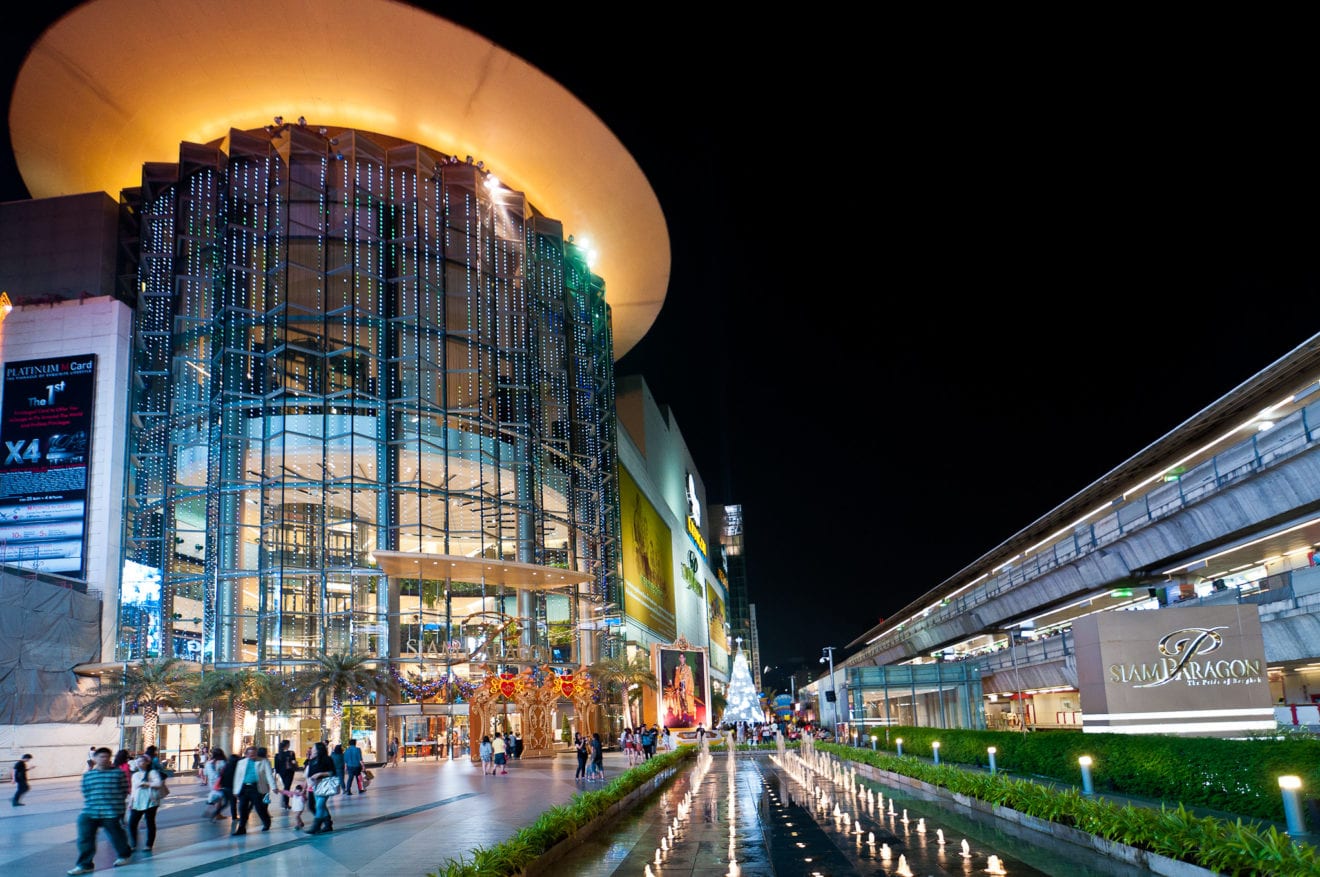
    The Vietnam retail sector is forecast to record double-digit growth from 2019 to 2024, according to a report by ResearchAndMarkets.

    While a number of Vietnamese consumers still choose to shop in traditional markets as they can buy ingredients in smaller portions, supermarkets are offering ready-to-cook packages better suited to the daily needs of the average consumer, says the report. Thus, supermarkets and convenience stores are taking an increasing share of the overall food and grocery market.

    Food products, non-food products, and home appliances are also sold in larger supermarkets, offering more range and convenience for local customers under one roof.

    Modern retail outlets also offer private brands/products that can be exclusively purchased in their stores.

    Some newer stores have in-house bakeries and cafes where consumers can hang out and enjoy with family or friends.

    Growth of convenience

    The growing Vietnamese middle and affluent classes and the younger population increasingly value convenience and comfort. That is driving growth in the convenience store market, met by the expansion of companies such as Circle K, which is now expanding across Hanoi after establishing a strong presence in Ho Chi Minh City, FamilyMart, 7-Eleven and GS25, among others.

    The increasing presence of local players, such as Vinmart+, which has nearly 900 stores nationwide, and test stores trading as Bach Hoa Xanh, operated by Mobile World, are helping expand the Vietnam retail market.

    Traditional food-and-beverage retailers still dominate the sector.

    As of last year, traditional retailers accounted for 94 per cent of the retail grocery sales, and the remaining 6 per cent sales were attributed to modern retail.

    According to industry experts, modern retail sales are expected to reach 18 per cent of total food retail sales by 2024.

  • Australia’s C/MEO Collective Lifts Off on Tmall

    Australia’s C/MEO Collective Lifts Off on Tmall

    Women’s fashion label C/MEO Collective has started selling on Chinese online marketplace Tmall.

    The move is part of a broader strategy of parent company Australian Fashion Labels to focus on China.

    “China is now really at the forefront of retail innovation and we see localisation of channels as crucial to being relevant in this market,” said Dean Flintoft, Australian Fashion Labels founder and chairman, in a statement.

    Prior to launching on Tmall, C/MEO Collective was already stocked in approximately 300 brick-and-mortar stores across Greater China, along with Australian Fashion Labels’ other brands: Keepsake The Label, Finders Keepers and The Fifth.

    But with more than 700 million people shopping on Alibaba’s retail marketplaces, including Tmall, this represents a significant expansion in reach.

    According to the company’s statement, C/MEO Collective was chosen because it is the brand with the greatest appeal in the China market, thanks to its innovative signature style, premium fabrics and approachable price point.

    “With C/MEO already having gained such strong traction in China via social media and via its marketplace presence, we wanted to respond to the enthusiasm for the brand and make it more accessible to our customer base in China,” said Mei Ping Doery, CEO of Australian Fashion Labels China.

    C/MEO Collective showcased the first of its collections for Tmall at VAMFF in Melbourne on March 8.

    While demand for Australian brands and products in China is most concentrated in areas such as health and wellness, beauty and food, and wine, fashion brands are increasingly seeing success.

    Brands including Seafolly and Lorna Jane have made headway in China through Tmall, and the addition of C/MEO Collective suggests there is a market for more fashion-forward Australian design.

    Australian Fashion Labels was founded in 2007 by Dean and Melanie Flintoft with the introduction of Finders Keepers. The company has since developed C/MEO Collective, Keepsake, The Fifth and Jaggar.

    The brands are available in 1700 stores worldwide, including major department stores, as well as to customers directly through an online retail platform, which ships globally.

  • Thinking about creating an e-commerce shop in Asia?

    Thinking about creating an e-commerce shop in Asia?

    Thinking about how to create your e-commerce store in Asia? This exclusive event has all your answers.

    Moni, a digital commerce and brand experience agency, providing an end-to-end suite of e-commerce services in the region, is set to take centre stage on April 2 in Central, Hong Kong.

    Moni, with more than 12 years of experience of delivering digital-commerce experiences, joins together with Magento – the world’s No 1 e-commerce platform – to host an exclusive event to teach merchants how to kickstart and grow their online store. The insightful event will also explore the best practices of ever-evolving online shopping experiences. Moni is one of the few Certified Magento Partner Agencies in Asia.

    Who should attend?

    Retailers, B2B companies, and brands who are looking to expand their online presence and reach through e-commerce, or who are interested in understanding the nuances of Magento platform.

    Join the conversation and network with knowledgeable community members who will help you grow your business to the next level. The event will help you discover why Magento is right for your business, how to drive traffic and sales to your e-commerce store, with some of the best practices detailed along with case studies to learn from.

    The event hosts developers, system integrators, subject-matter experts, merchants, service providers, speakers and technology partners from Hong Kong and Singapore under one roof. Moreover, the event will also host an interactive talk session enabling attendees to get the queries answered in real-time.

    What will you gain?

    The session will equip attendees with a broad understanding of the Magento platform and its benefits such as modernised technology stack, better performance and scalability, smooth customisation, seamless integration and minimised testing efforts.

    David François, MD at Moni, will direct the audience through several successful e-commerce projects in Asia. For more than 20 years he has specialised in helping brands create digital customer experiences that drive tangible results and outcomes.

    Mel Lim, enterprise sales manager at Magento, comes from Singapore, and will share details about the full suite of Magento capabilities. She has a decade of experience working with brands across Asia Pacific on their digital-transformation journeys, specialising in commerce customer experience.

    Each merchant today can capitalise on commerce system flexibility, buying patterns, maximising gross margins, driving innovation and meeting end-to-end customer expectations.

    To attend this exclusive event, click here to RSVP.

  • Deloitte forecasts forgettable year in Retail

    Deloitte forecasts forgettable year in Retail

    2019 is shaping up to be a ‘gap year’ for Australian retail, according to Deloitte’s latest Retail Forecast for the year ahead. Retail turnover is expected to slip from 2.2 per cent during 2018 to a more modest 1.6 per cent, before lifting back up to 2.2 per cent in 2020, according to Deloitte Access Economics partner David Rumbens.

    “It’s fair to say retailers have only survived the last few years because consumers have lived beyond their means. But that ship has now sailed,” Rumbens said.

    “Labour income growth is good, but not good enough yet to avoid some damage to retail growth in the absence of an excuse to run down savings further. And when overall net wealth is heading downwards, it provides a fairly strong incentive for people to be more prudent with their cash.”

    This isn’t likely to affect every facet of the retail sector equally, with businesses that offer more essential items, such as supermarkets, unlikely to feel the downturn in the same way as those that offer bigger ticket items such as furniture. Retailers that have some flexibility in the stock that they carry, such as department stores, may wish to re-evaluate and refocus on more essential items, as discretionary spend continues to tighten. However, it doesn’t have to be all doom and gloom for retailers, as such a year affords the opportunity to make calculated changes to prepare for a predicted upturn in sales in 2020. One of the key things retailers can do over this ‘gap year’ is to analyse and improve the link they have with their customers, as well as the relationship they have with their employees and supply chains.

    “There has been… an increase in focus on payments to staff and suppliers, are there issues there that retailers need to investigate to put themselves on a more sound footing going forward?” Rumbens said.

    “Retailers should investigate activities which will support the business so that it’s better able to react when sales growth does move back up to a faster pace.”

    One way retailers can offset some of the strain of operating in the Australian retail environment is to utilise a digital international expansion into other markets.

    “With digital commerce, we’ve clearly seen a lot of great overseas presence in Australia, and I think there’s a lot that Australian retailers can explore there,” Rumbens said.

    “You’ve got quite strong economic and consumer spending growth through China, and a significant market in India. These are not activities to be undertaken lightly, but if you consider the 700 million internet users in China… is it time to start considering that market?”

    Rumbens also believes the Federal Government could offer a stimulus to the Australian public, which could provide support for retailers at a time when growth is slow.

    “There is a strong prospect of some government stimulus coming through and supporting the sector mid-year,” he said.

    “It’s likely to happen, but we’ll have a fair idea in the next couple of weeks when the Federal Budget is handed down.”