Tag: Retail

  • Veeko buys New Territories retail store

    Veeko buys New Territories retail store

    Veeko International has sealed a deal to buy a retail property in the New Territories, with an eye to converting it into one of its own stores.

    Veeko – which owns its namesake fashion brand along with Wanko, and the Colourmix and Morimor cosmetics-store chains – has paid HK$117.5 million to acquire the ground floor of 88 San Hong Street North in the New Territories. The 833sqft space is currently occupied by Yue Fung Dispensary Co, paying $248,000 a month until its lease expires on December 31, 2020.

    The company says that while the retail space is currently tenanted, “upon the expiry of the existing tenancy agreement, the group shall evaluate the benefit of continuing leasing of the property against the benefit of using the property as the group’s store”.

    Savills has independently valued the space at $120 million.

    The transaction is scheduled to be completed by June 18.

  • South Korean E-Commerce Under Pressure

    South Korean E-Commerce Under Pressure

    Mounting losses in the South Korean e-commerce industry are calling local business models into question. Competitive pricing and fast delivery capacities have made the industry an ascendant phenomenon in the territory, with the purchase of a whole spectrum of consumables now possible via mobile phone. The industry hit a record high of KRW111.8 trillion (US$98.4 billion) in transactions last year, putting the economy among the top five e-commerce markets worldwide.

    But gigantic operational losses have emerged out of stiff competition on price and logistics set-up costs. Korea’s top e-commerce firm Coupang shattered its own records with KRW4.42 trillion ($3.8 billion) in sales last year, but made a staggering KRW1.1 trillion ($950 million) operational loss.

    While Coupang’s deficits have been widening for nine years, CEO Kim Beom-seok stubbornly insists the losses are planned and says investment will continue.

    “We have pushed for massive investment to impress our customers,” said Kim, “and will continue to aggressively invest in technology and infrastructure.”

    The firm has single-handedly changed the outlook for South Korean retail and put brick-and-mortar operators on red alert – but has yet to prove profitable.

    Rival operator Tmon faces a similar issue, with its KRW492 billion ($425 million) sales last year sad-tromboned by KRW125.5 billion (108.4 million) in operating losses that have been accumulating since the year 2000, now standing at KRW770 billion (665.5 million) in total. The firm’s latest nose dive was attributed to “investment in core technologies”.

    “Customers frequently visited our app on expectations for new products and promotions changing every hour, which raised their royalty and created a virtuous cycle,” said Tmon CEO Lee Jae-hu. “We will continue efforts to strengthen the market position and seek ways to improve profitability this year.”

  • Suppliers call on ACCC to investigate retailers

    Suppliers call on ACCC to investigate retailers

    Suppliers have called on the Australian Competition and Consumer Commission (ACCC) to investigate whether retailers are complying with the Food and Grocery Code of Conduct,following a turbulent few weeks in which major brands were withheld from supermarket shelves.

    In early April, some of Australia’s favourite pet food brands like Whiskas, Pedigree, My Dog and Dine as well as Uncle Toby’s cereals vanished from shelves around the country in what appeared to be an ongoing price war between supermarkets and suppliers.

    The ACCC said in a statement that it “is aware of the issues and is assessing the matter”.

    The ACCC’s code of conduct contains rules relating to grocery supply agreements, payments, termination of agreements, dispute resolution and a range of other matters. It is a voluntary code, under the Competition and Consumer Act, and therefore only applies to retailers or wholesalers that have elected to be bound by the Code, something that Woolworths, Coles, Aldi and About Life have done.

    While the code requires both retailers and suppliers to act “in good faith”, there may be grounds for a retailer to delist a product that is withheld by a supplier or unobtainable for an extended period of time.

    Industry sources told that this area is open to potential abuse as most suppliers do not have enough market data to argue their case.

    The ACCC invites suppliers to report alleged breaches of the Act or Code and has also made submissions to a recent review of the Food and Grocery Code.

    A spokesperson for Woolworths told that its team members are trained to comply with all the requirements of the code of conduct.

    “We treat our obligations under the Food and Grocery Code very seriously and train our teams to comply with its requirements in all our dealings with suppliers,” a spokesperson for Woolworths said in a statement.

    “If a supplier has concerns with any aspect of our conduct, there are a range of channels available, including anonymous reporting lines, for those to be raised and properly investigated.”

    “While we will always endeavour to limit increases to the cost of groceries for Australian families, we have reached agreements with many suppliers to pay many millions more for the products they supply to us in recent times.”

  • Amazon to close China mainland store

    Amazon to close China mainland store

    Amazon China is about to stop selling local goods to local shoppers. According to multiple financial-news services, the global e-commerce giant is about to announce the closure of its dedicated Mainland China store, however Chinese consumers will still be able to order goods from Amazon’s global store.

    The dedicated Amazon China platform will close in July, meaning shoppers will no longer be able to buy goods listed by third-party local suppliers.

    According to “people familiar with the matter” quoted by Bloomberg, exiting the intensively competitive Mainland China market will allow Amazon to shift its focus to more lucrative businesses selling imported goods to Chinese and developing its successful cloud services operation.

    The withdrawal comes 15 years after Amazon entered China, purchasing local online store Joyo.com for US$75 million. Seven years later it rebranded the site under its own banner.

    The company estimates it will take about three months to close down its mainland fulfilment centres and delist local vendors as appropriate.

    With Alibaba and rival JD accounting for a combined 82 per cent of the Mainland China online market, there was little room for Amazon to eke out a commercially viable market share within a reasonable time frame.

    Michael Pachter, an analyst at Wedbush Securities, said Amazon was pulling out of the Chinese domestic market, “because it’s not profitable and not growing”.

    “The domestic Chinese online retailers just have huge advantages that Amazon can’t compete with.”

    Amazon has yet to officially confirm the China plan.

  • Hamley’s set to be sold to Indian Toy Retailer

    Hamley’s set to be sold to Indian Toy Retailer

    Toy retailer Hamleys is set to have its fourth owner in 15 years since it was taken private by an Icelandic investor.

    According to multiple Indian news media reports, Reliance Retail is in the final stages of negotiations with China’s C.Banner International, which has been trying to find a buyer since last October, after three years of ownership.

    C.Banner bought the business in 2015 for US$130 million, but has struggled to produce a profit. The company reportedly lost $15.6 million in 2017 on sales down 2.5 per cent to $86.5 million.

    Sources in India are speculating Reliance Retail will pay between $36 and $50 million, representing a substantial loss for C.Banner on exiting the brand.

    Reliance Retail, a subsidiary of the giant Indian conglomerate Reliance Industries, is in acquisition mode as it tries to expand its business by 30 per cent annually for a decade, an ambition on a scale probably only realisable in India right now. As at the end of last year it operated 9907 stores across 6400 Indian cities with a combined retail area of more than 21 million sqft. Its retail licenses and partnerships include Marks & Spencer, Diesel, Steve Madden and Kenneth Cole.

    “Due diligence for the Hamley’s deal is at an advanced stage,” a source told Money Control, itself a subsidiary of Reliance Industries. “Reliance Retail is aggressively pursuing the deal.”

    Reliance Retail is already the Indian licensee of Hamley’s and operates 50 stores under the banner, representing the toy brand’s largest market by store numbers. There are plans to open 150 more.

    Toy retailer Hamley’s was founded in 1760 as Noah’s Ark. It has about 129 stores globally, including a Regent Street, London flagship and stores in China, Germany, Russia, South Africa and the Middle East. A foray into Vietnam in 2015 ended in failure, however the company still sells toys online there.

    If the acquisition proceeds, it will help boost Reliance Retail’s portfolio. “Reliance can scale up Hamley’s business with its capabilities in supply chain management and strong distribution network.”

  • Habitat by Honestbee Flies High with global Retail Innovation

    Habitat by Honestbee Flies High with global Retail Innovation

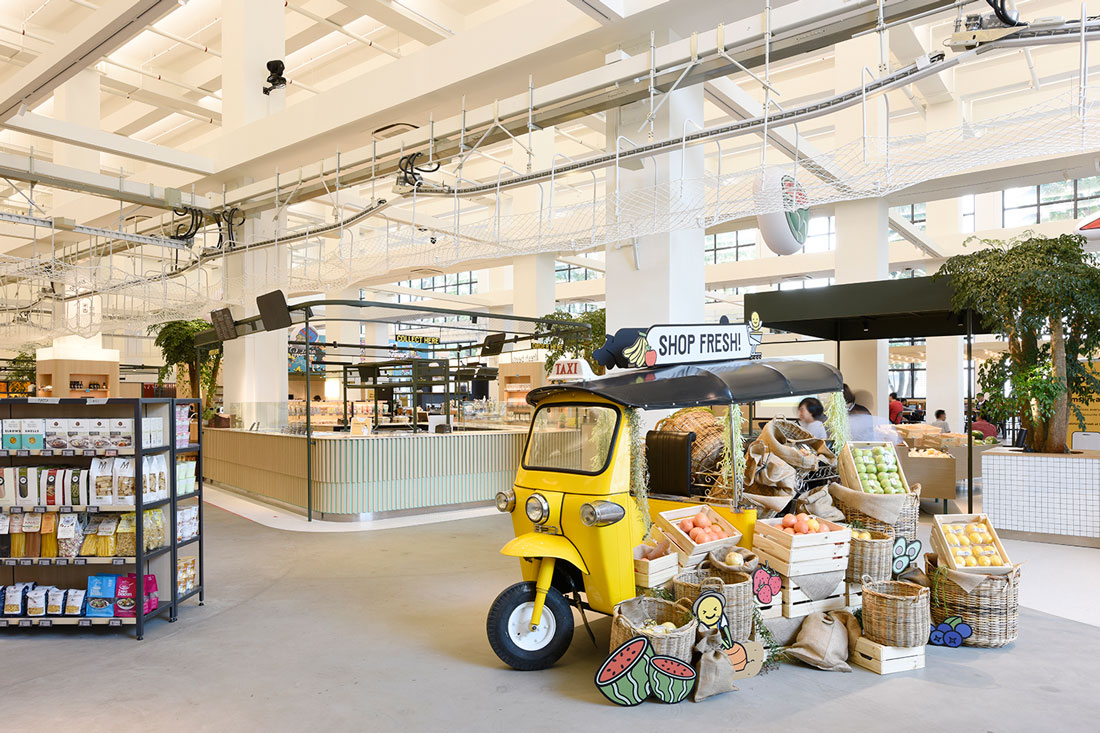
    Habitat by Honestbee has been voted one of the must-see retail innovations in the world this year. The concept was listed among the top 16 stores to visit in the world by IGD, and Google reports it among the top 10 trending searches in Singapore last year.

    The 60,000sqft flagship store opened last October, offering more than 20,000 essential and unique food and grocery products.

    The store is billed as the world’s first tech-enabled food-and-grocery concept which uses technology to provide a seamless shopping experience with human interaction.

    According to Honestbee, customers are spending an average of two hours at the store – considerably more time than people spend in a single visit to any other supermarket in Singapore.

    Close to 500,000 people spanning all age groups have visited the store, despite its remote location. The two largest demographic groups of customers fall between the ages of 26 – 35 years old (41 per cent) and 36 – 45 (28 per cent). Two in three customers are family groups who visit the store, attracted by the mix of grocery and dining and its friendly neighbourhood feel.

    “We are pleased to have had such a resounding success since the launch, not just with customers, but also with the business community in retail, property, grocery and F&B,” said Pauline Png, Habitat by Honestbee MD.

    “Strong sales growth pushes us to continue delivering a memorable experience for customers to visit, try new products and return. This tactility that Habitat by Honestbee provides ignites a curiosity for our products, which are also available online.”

    Future growth plans

    Png says Honestbee will soon be providing an option to combine food carts on the app, enabling orders from multiple F&B concepts at the store on one receipt.

    More engaging product information and content will be added in time, along with personalised recommendations.

    “The launch of Habitat by Honestbee has allowed us to elevate our business into an omnichannel platform and work with partners like no other online player can,” said Joel Sng, CEO and founder of Honestbee.

    “Habitat by Honestbee has built on our brand’s promise and expertise in using data to optimise the customer experience.”

    Sng says the company is confident it can expand the concept into other markets.

    “In the second quarter of the year, we will be extending our food-retail leadership in Asia by launching a scalable, multi-concept kitchen and convenience store powered by data.”

    Honestbee started in early 2015 as an online concierge and food-delivery service.

  • Walmart launched subscription service With Kidbox

    Walmart launched subscription service With Kidbox

    International retailer Walmart and Kidbox, the curated childrenswear subscription service, are teaming up to offer Walmart.com customers an exclusive, curated stylebox for kids.

    The service features an option to receive a seasonal selection, without a styling fee.

    The new stylebox will offer Walmart.com customers personalised styles selected from more than 120 premium kids’ brands. The stylebox will include four to five fashion items for US$48 – about 50 per cent off the suggested retail price for the group of bundled items.

    Clothing will include items from premium brands including BCBG, Butter Super Soft, C&C California and Puma.
    Walmart customers can order a stylebox by visiting the store’s website and completing a short style quiz for their child. Kidbox stylists use the quiz to tailor each box based on the child’s style preferences, the season and where the child lives.
    “We are thrilled to partner with Kidbox to introduce our first kids’ subscription apparel service offering premium fashion brands at a substantial savings,” said Walmart US e-commerce head of fashion Denise Incandela.

    “Over the last year, we have significantly expanded our portfolio of kids’ fashion brands as part of our broader effort to establish Walmart.com as a destination for fashion. Our partnership with Kidbox enables us to round out our offering with additional national and premium kids’ brands.”

    The Walmart and Kidbox collaboration has a charitable aspect as well. For every stylebox purchased on Walmart.com, Kidbox will clothe a child in need through its partnership with Delivering Good.

    “Walmart has done a lot over the past year to establish itself as a go-to retailer for all things fashion, and we’re honored to partner with the retailer to expand its kids’ assortment online, while also saving parents time and offering them the value and convenience of a stylebox,” said Kidbox CEO Miki Berardelli. “At Kidbox, we pride ourselves on understanding kids’ fashion preferences while also creating moments for them to learn about the importance of giving back.”

    Walmart.com has an expanding kids’ fashion assortment, which features more than 100 new brands that have been added over the last year, including Betsey Johnson, Kapital K, Levi’s, Limited Too and The Children’s Place. The retailer has also launched new shopping destinations for dance essentials and gymnastics, and licensed children’s clothing, making it easier for customers to shop for fashion featuring top movie, TV and gaming characters.

  • Giordano sales down in China

    Giordano sales down in China

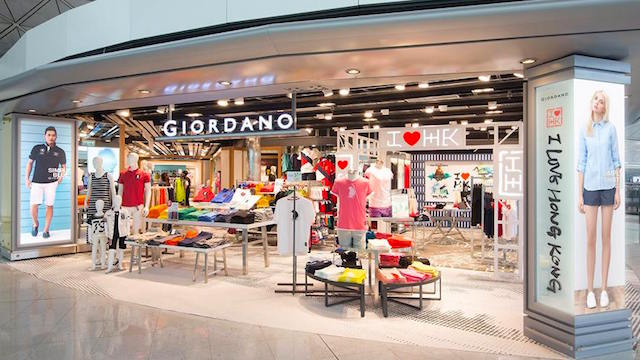
    Giordano sales in Greater China plunged by 17.7 per cent during the first quarter, dragging group-wide sales down by 10.8 per cent, or 8.5 per cent on a constant currency basis.

    In a stock exchange filing on the eve of the holiday weekend the casual apparel retailer blamed the downturn on “uncertainty stemming from the Sino-US trade dispute and abnormally warm weather”.

    Giordano sales in Indonesia, Thailand and Vietnam remained stable during the quarter, and in the fledgling Middle East market rose by 10 per cent to HK$80 million, slightly compensating for the heavy impact of China.

    By market, Mainland China sales fell from $378 million to $295 million, in Hong Kong and Macau from $248 million to $225 million and in Taiwan from $201 million to $161 million. In the rest of Asia-Pacific, they declined from $422 million to $398 million.

    In the three months to March 31, inventories rose from HK$507 million to $512 million.

    During the quarter, Giordano closed two stores in Hong Kong and Macau and reduced directly operated stores on the mainland by 31, but opened 19 franchised outlets.

  • Vietnam’s exports to Japan increase rapidly in Q1

    Vietnam’s exports to Japan increase rapidly in Q1

    Elimination of many tariff lines for goods under the CPTPP has helped Vietnam’s exports to Japan increase sharply in the first quarter of this year, according to the General Department of Customs.

    Vietnam’s export value to Japan in the first quarter surged 6.7 per cent year on year to US$4.6 billion, the general department said. Việt Nam became one of three markets gaining an export value in the billions of US dollars to Japan, after the US and China.

    In March 2019 alone, the export value to Japan reached $1.7 billion, a sharp increase of 62.3 per cent month on month and a surge of 2.7 per cent year on year.

    The strong growth in Vietnam’s export value to Japan was attributed to the Comprehensive and Progressive Agreement for Trans-Pacific Partnership (CPTPP). According to this agreement, Japan for the first time has pledged to completely eliminate tariffs for the majority of Việt Nam’s agricultural and seafood products exported to this market.

    That meant Japan immediately abolished 86 per cent of tariff lines, equivalent to 93.6 per cent of Việt Nam’s export value to Japan, and then this figure will increase to 90 per cent of tariff lines within five years.

    On the other hand, the Việt Nam-Japan and ASEAN-Japan free trade agreements have created advantages in tariffs for some of Việt Nam’s seafood products exported to Japan.

    About 62.5 per cent of Vietnam’s total goods items exported to Japan in the first quarter gained strong growth compared to the same period last year, according to the general department.

    The major export products to Japan included textiles (export value of about $900 million), means of transport and spare parts ($630 million), machinery and equipment ($450 million) and seafood products ($306 million).

    Especially, the fertiliser exports to this market had a sudden growth in the first quarter of 2019 to 8,126 tonnes, earning $3.7 million. The exports rose up by five times in volume and about 11 times in value year on year.

    In addition, Vietnam saw strong growth in exports of some goods to Japan in the first quarter, including chemical products (up 70 per cent), animal feed and raw materials (up 56.8 per cent), ore and minerals (up 52 per cent), all kinds of steel (up 49 per cent) and plastic materials (up 43 per cent).

    Meanwhile, Japan sharply reduced imports of cassava and cassava products from Vietnam, with a reduction of 99.6 per cent in volume and 98.5 per cent in value over the same period, despite the average export price of cassava surging by 3.3 times to $886 per tonne.

    In 2018, Vietnam’s goods export value to Japan reached more than $18.8 billion. Textiles and garments accounted for the largest proportion with over 20 per cent of the total export value. Meanwhile, seafood, furniture and footwear respectively hold 7.4 per cent, 6.1 per cent and 4.5 per cent.


  • Tmall Reinforces Go-to Platform Status for Product Debuts

    Tmall Reinforces Go-to Platform Status for Product Debuts

    Alibaba Group’s Tmall today announced it will launch a dedicated gateway for customers to discover new products through the Taobao mobile app, looking to cement its position as the “go-to” platform for such launches.

    From Wednesday, customers clicking on the “Tmall” icon in their Taobao app will be directed to the “Tmall New Products” channel, which includes a full array of new features, such as Tmall’s “Most Sought-after New Items,” “The Next New Things,” “Limited Editions” and “New Flagships.” Working with brands and key opinion leaders, the channel will provide customers with in-depth information and recommendations on new products.

    Tmall has long been an effective platform for showcasing new products, a one-stop shop for consumers to find the hottest new items online, and a creative, experiential channel to interact with and learn more about new products.

    The new channel for product launches is powered by Tmall’s already impressive suite of marketing tools, such as “Hey Box” and the Tmall Innovation Center (TMIC). In the past year, 82% of new products tailored by TMIC became a top-three “hot” item in its category within 30 days of launch. TMIC has also reduced the product development cycle by half, to an average of nine months.

  • Qualtrics Research Reveals the Business Impact of Responding to Customer Feedback

    Qualtrics Research Reveals the Business Impact of Responding to Customer Feedback

    Qualtrics, the leader in experience management (XM), today launched research revealing the extent to which Singaporean businesses are responding to customer feedback and the subsequent impact on business outcomes.

    The Qualtrics State of Customer Feedback report – which surveyed 500 consumers – found that 42 per cent of Singaporean respondents said while organisations had acknowledged feedback they had failed to act upon it. Ten per cent said they were ignored entirely. This means just under half of customer feedback is being actioned in Singapore, with 48 per cent of respondents saying changes had been made based on their feedback.

    A failure to act on insights and address negative experiences has an adverse effect on loyalty, according to the Qualtrics study. Unresolved negative experience mean 84 per cent of consumers are less likely to buy again. When the experience is resolved however, 54 per cent of respondents are more likely to purchase again.

    “Through these findings Qualtrics aims to demonstrate the importance of acting upon feedback, and best practices for doing so across platforms and demographics. Organisations can engage with customers on their terms, interact with them when and where it suits them, and get straight to the issues that matter using dynamic data collection tools that adapt intelligently to feedback in real-time. Inspired by the insights, companies can not only react to feedback but also take actions to deliver a better experience next time.,” said Foo Mao Gen, Head of Southeast Asia, Qualtrics.

    First Impressions Count

    Findings emphasise the importance of making a positive first-impression on consumers, with respondents more likely to share a negative experience (58 per cent) than a positive one (26 per cent) following the first engagement. Males were also found to be more likely (35 per cent) to submit negative feedback compared to females (25 per cent).

    Positive experiences with employees also leads to more feedback being shared. Three in ten (30 per cent) of respondents said they would share feedback following a positive engagement, compared to 15 per cent who said a bad experience prompted feedback. Additionally, positive employee feedback is given over two times as much as negative employee feedback.

    Know How to Respond Across Channels

    The speed at which customers expect responses vary depending on the feedback channel used. Overall, 80 per cent of consumers want feedback within 24 hours – with just under two-thirds (62 per cent) saying it is received within this timeframe.

    With social media being entwined into consumers’ lifestyles today, it has emerged as a popular tool for customers to provide feedback. LinkedIn and Instagram should be consumers’ preferred feedback channel as this is where brands are most likely to respond within a 24-hour time frame (90 per cent and 77 per cent respectively).Facebook was found to be the least likely platform to respond within 24 hours (69 per cent). However, this is likely down to the sheer volume of feedback through the platform.

    Away from social media, email is the preferred option among consumers for sharing positive (39 per cent) and negative (40 per cent) feedback. Online reviews are also a popular platform for positive feedback, with 28 per cent opting for this platform. When it comes to sharing negative feedback, phones are the preferred platform after email (18 per cent).

    “Customers’ expectations for the time organisations take to respond to their feedback largely differ by industry. This could be due to preconceptions about the service standards of the industry and also, the value of the product and service, as evidenced by 87 per cent and 85 per cent of consumers expecting phone service providers and airlines respectively to respond within 24 hours, while only 70 per cent expecting the same from government agencies,” added Foo.

  • Retail spend on AI services to Multiply by 2023

    Retail spend on AI services to Multiply by 2023

    Global spending by retailers on AI services will reach US$12 billion by 2023, according to Juniper Research.

    That figure is more than three times the amount expected to be spent this year, of $3.6 billion and represents investment by more than 325,000 retailers expected to adopt the technology during the next four years.

    According to Juniper Research’s report, AI in Retail: Segment Analysis, Vendor Positioning & Market Forecasts 2019-2023, AI use by retailers will unlock efficiencies across back office operations. Advanced analytics employed in functions such as demand forecasting and automated marketing will make retailers more agile and improve margins.

    Juniper forecasts that retailers will face an AI adoption race, where AI-equipped retailers, which have adopted systems as early movers, will displace slower moving retailers, offering superior service at optimised price points.

    Demand forecasting crucial

    The use of machine learning in demand forecasting will prove to be a key market for AI vendors, with associated service revenues reaching $3 billion by 2023, up from $760 million in 2019.

    Juniper Research says demand forecasting will be essential to enable an effective omnichannel experience and drive higher margins.

    “With the rise of collect-in-store and one-off events such as Black Friday, understanding demand and supply chains is more crucial than ever with AI playing the central role,” said research author Nick Maynard.

    The research also found that smart checkouts, largely powered by AI technologies such as computer vision, will have a strong future in the convenience area; leading to annual transaction volumes of more than 1.4 billion by 2023, compared with just 42 million this year.

    While Amazon is currently highly visible with its Go model, China will be the biggest driver of future growth. This reflects the rapidly growing Chinese market, as well as the backlash Amazon has had recently due to its cashless model.

    Juniper Research provides research and analytical services to the global hi-tech communications sector, providing consultancy, analyst reports and industry commentary.

  • Singapore retail sales plunge due to Chinese New Year

    Singapore retail sales plunge due to Chinese New Year

    Singapore retail sales plummeted 10 per cent year on year in February – but the sudden drop was largely due to the timing of Chinese New Year celebrations.

    After excluding motor vehicles from the figures, sales dropped by a slightly higher 10.7 per cent.

    Chinese New Year fell in the middle of the month last year, and early in the month this year, resulting in a shifting of some seasonal spending back into January this time around. Figures combining January and February sales in both comparable periods were not released.

    According to Statistics Singapore, sectors such as food retailers, apparel & footwear, supermarkets & hypermarkets, department stores, furniture & household goods, and medical goods & toiletries registered declines in retail sales of between 10.4 per cent and 24.8 per cent this year.

    Sales of watches & jewellery, optical goods, and books fell by between 7.2 per cent and 9.2 per cent.

    Statistics Singapore estimated total retail sales in February this year at $3.3 billion, with online retail sales comprising about 5 per cent of those.

    Sales of food & beverage services decreased 2.3 per cent year on year. The total sales value of food & beverage services in February was estimated at $855 million, compared to $875 million in February last year.

  • A narrative-driven Retail Concept Shop Opened by Macy’s Story

    A narrative-driven Retail Concept Shop Opened by Macy’s Story

    US department store Macy’s has opened its “narrative-driven retail concept shop” Story in 36 locations across the US.

    The store concept takes an editorial approach to retail, launching with “colour” as an inaugural theme, inviting customers to explore and experience colour through a rainbow of curated, giftable products and more than 300 colour-inspired events.

    “The discovery-led, narrative experience of Story gives new customers a fresh reason to visit our stores and gives the current Macy’s customer even more reason to come back again and again throughout the year,” said Macy’s chairman & CEO Jeff Gennette.

    Story themes will change every few months with new concepts featuring unique collaborations, narrative-driven merchandising and dynamic event programming.

    “The simultaneous launch of Story at Macy’s in 36 stores across 15 states is the successful outcome of a reimagined approach to cross-functional collaboration and the work of more than 300 Macy’s colleagues who contributed to creating this new, scalable business model nationwide,” said Story founder and Macy’s brand experience officer Rachel Shechtman.

    In the lead up to launch, more than 270 dedicated Story managers and “storytellers” were hired and participated in an experiential retail training program that immersed staff with integrated roles on everything from building fixtures to customer engagement and event production.

    Story at Macy’s averages 1500sqft, cumulatively representing more than 55,000sqft of main-floor retail space across all 36 stores. Herald Square serves as the flagship location, where Story at Macy’s covers more than 7500sqft of continuous retail space on the main floor and mezzanine levels. The expanded space showcases a broader range of partners and interactive experiences than in other locations.

    “The Story at Macy’s experience feels a lot like a real-life version of scrolling through Instagram,” added Shechtman. “You discover things you weren’t looking for, but are inspired by all the fun finds – the second you see it, you need it!

    “We aspire to create that feeling with the breadth of the narrative-driven merchandise edit we are bringing to life with the launch of Story at Macy’s across the country.”

  • Uniqlo Parent Cuts Financial Outlook

    Uniqlo Parent Cuts Financial Outlook

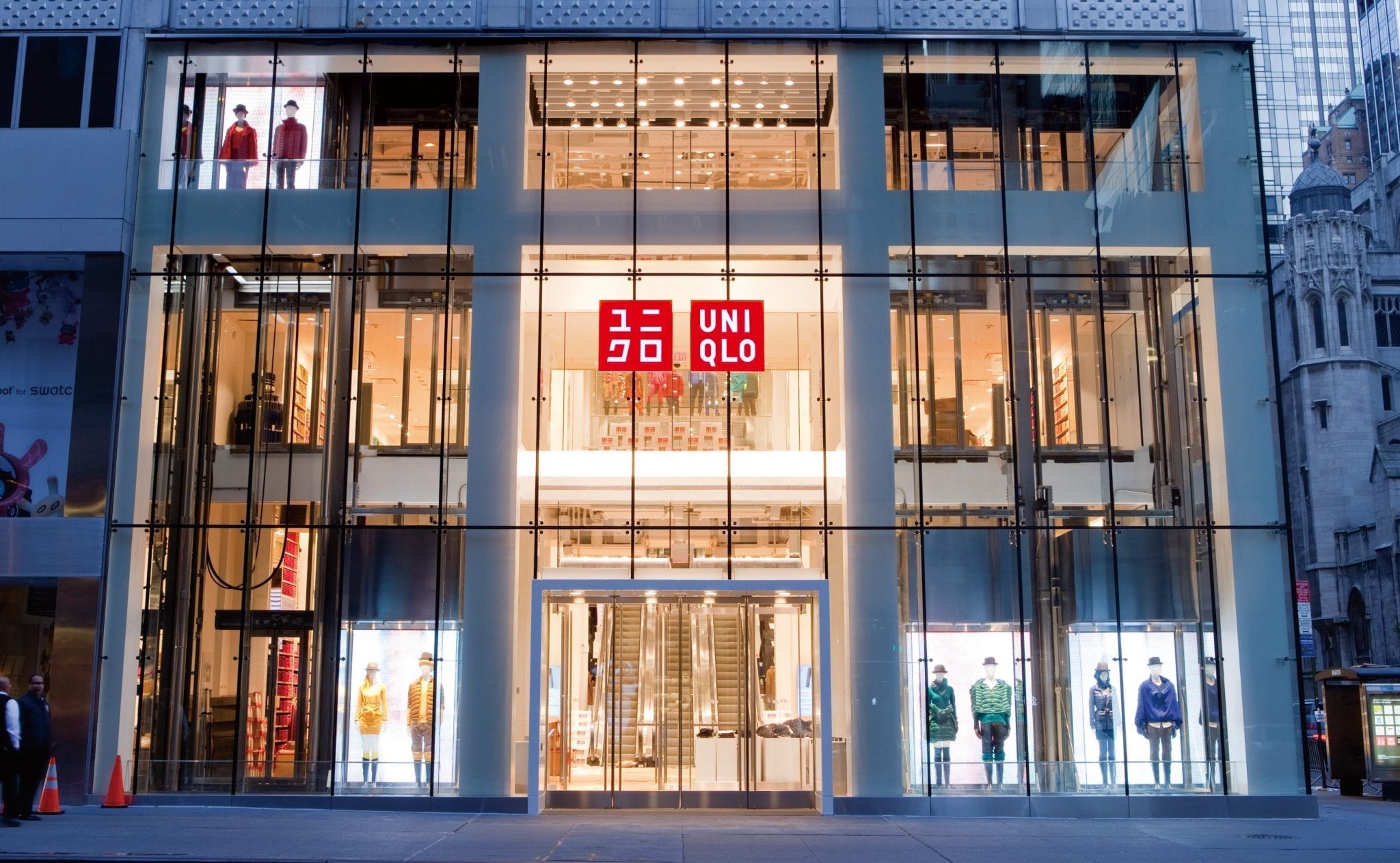
    Uniqlo parent Fast Retailing has cut its annual operating forecast amid heavy discounting to offload winter clothes.

    The apparel company has struggled with a shortage of popular winter items in the past, and overcompensated last winter by ordering too much inventory.

    The unseasonably warm weather hit sales of winter clothes which led to the decline of Fast Retailing’s first quarter profit.

    The company is undergoing the biggest revamp of its logistics and supply chain network to resolve the challenge it faced over winter.

    The Japanese retailer said it now expects an operating profit of  ¥260 billion (A$3.2 billion) for the financial year through August, compared to its previous forecast of  ¥270 billion in January. The revised outlook would still be a record high and represent a 10 per cent year-on-year rise.

    For the quarter ending February, Fast Retailing posted a double-digit increase in sales and profit in China, which has helped the brand turn in a better-than-expected rise in operating profit to ¥68 billion.

    The company reported declines in both revenue and profit in the first half of fiscal 2019, with revenue totaling ¥491.3 billion yen, down 5 per cent from the previous corresponding period, and operating profit totaling ¥67.7 billion yen, down 23.7 per cent from the previous year.

    First-half same-store sales, including online sales, declined 9 per cent.

    Online sales, which now account for 9.9 per cent of Uniqlo sales in Japan and 20 per cent in China, rose 30.3 per cent in the first half.