Tag: Retail

  • Online fashion retailer Mogu reports Steep Growth Numbers

    Online fashion retailer Mogu reports Steep Growth Numbers

    Chinese online fashion and lifestyle retailer Mogu has reported an 18.7 per cent increase in gross merchandise value (GMV) for the year to March 31, to RMB17.408 billion (US$2.594 billion).

    The company’s revenue for the year reached RMB1.074 billion (US$160.1 million), an increase of 10.4 per cent year on year.

    However the number of active buyers in the year to March remained the same as the previous year, at 32.8 million.

    The company said it live-video broadcast business continued to grow strongly with associated GMV increasing 138.1 per cent year on year.

    “We delivered another quarter of solid growth,” said Qi Chen, Mogu’s chairman and CEO. “During the past quarter, we continued to expand, optimise and elevate the supply chain for our fashion ecosystem by enriching content, increasing user engagement on our live-video broadcasts, and facilitating more repeat repurchases,” he said.

    “Looking ahead, we will continue to strengthen our unique three-way fashion ecosystem by further growing our content creation community of fashion key opinion leaders and live-video broadcast hosts, elevating the fashion-product supply chain and supporting deeper collaboration between merchants and KOLs, and ultimately facilitating greater user and community engagement through rich and high-quality interactive fashion content and products.”

  • Kidsland launches FAO Schwarz store in Beijing

    Kidsland launches FAO Schwarz store in Beijing

    China’s largest toy retailer and distributor Kidsland has introduced FAO Schwarz, an international toy brand store with 157 years of history, in its first Asian flagship store.

    The FAO Shwarz Beijing flagship is located inside the Kidsland flagship store at China World Mall in a prime shopping and lifestyle district.

    Staff wearing soldiers’ uniforms from Grimm’s Fairy Tales are positioned at the entrance to greet and escort customers into the 30,000sqft store, interacting with customers throughout the shopping experience. The store also features “toy demonstrators” who invite customers to play with the toys. The “Toy Soldiers” and demonstrators are overseas-trained and make up 20 per cent of the staff.

    Founded in 1862, FAO Schwarz is one of the oldest toy stores in the world. The brand returned to New York last November with a new 20,000sqft flagship at Rockefeller Center in Manhattan.

    Kidsland has a comprehensive online and offline integrated sales network within China. In December it counted 257 independent stores in 44 cities within the region, along with 519 self-operated consignment counters and 931 distributors covering more than 3000 additional points of sale. Kidsland also represents multiple brands in operating 18 online stores in China.

    “The introduction of FAO into China reflects our confidence in the potential of the Chinese economy and market development,” said chairman and CEO of Kidsland Lee Ching Yiu. “We believe there is strong demand for quality toys among families and young people, so this is an important advantage for Kidsland to provide quality experiential retailing there. In this way, we hope to serve as a bridge, enabling Chinese consumers to experience the latest and best toys in the world.

    “FAO Schwarz plans to open a large flagship and several medium-sized stores in China in the next two years. We will also establish a kidsland experiential retail flagship store, and in the coming one to two years, we will open a mid-sized kidsland retail store to bring an enriched retail experience to wider spectrum of the public.”

  • Vietnamese retailers Growing at a Lightning Fast Pace

    Vietnamese retailers Growing at a Lightning Fast Pace

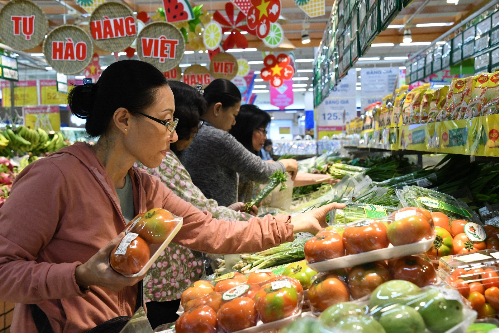
    Local retail firms are expanding quickly while foreign counterparts stagnate or quit due to fierce competition. The number of convenience stores in the country from April last year to April this year had risen by 72 percent year-on-year to over 3,100, according to Ho Chi Minh City market research firm Q&Me. That means 1,300 convenience stores came to the market in just one year.

    Half of them, 660, came from Vinmart+, a convenience store chain of Vietnam’s largest conglomerate Vingroup. This is a growth of 82 percent. In the same period, supermarket chain Vinmart saw its number of store risen by 82 percent to 120 outlets.

    Bach Hoa Xanh, a retail unit of the country’s major phone seller Mobile World (MWG), now has over 500 department stores after incorporated in 2015. It is seeing strong growth with VND4.3 trillion ($184 million) in revenue last year, three times that of 2017.

    The market has recently seen strong merger and acquisition activities, with Vingroup’s retail arm VinCommerce buying out convenience store chain Shop&Go last month and supermarket chain Fivimart last October.

    Vietnam’s retail market has become increasingly crowded with both local and international players over the last five years. Although experts have said that the market has a lot of growth potential, many foreign businesses have quit or scaling back expansion plans.

    French supermarket group Auchan Retail might be the newest player to withdraw from the market.

    Auchan’s 15 out of 18 supermarkets will stop operating on June 3. Its CEO Edgar Bonte said that their business in Vietnam generated revenues of 45 million euros ($50.4 million) last year, but was making losses. He did not provide figures of the losses.

    A source from the company, who wished not to be named, said the firm is negotiating with a few retailers to sell the outlets and the negotiations “are expected to end before Auchan withdraws from Vietnam early next month.”

    Germany-headquartered Metro was sold to a Thai investor in 2014 and disappeared from the market ever since, while Malaysia’s Parkson has been closing down its malls since 2015.

    Other convenience store chain has failed or will unlikely meet its initial expansion target. Japanese Ministop had only 115 stores as of April, even though it had planned to have 800 by last year.

    Japanese convenience store chain FamilyMart saw its store number dropped by nine to 151 from last April to this April, while its initial plan was to have 1,000 stores by next year.

    Vietnam’s revenue from selling goods last year rose by 11.7 percent from 2017 to $142 billion, up 12.4 percent from 2017.

  • North Korean department store boasts ‘world-class’ design

    North Korean department store boasts ‘world-class’ design

    Pyongyang department store design takes cues from foreign states.

    A new North Korean department store just opened in Pyongyang is drawing attention for welcoming foreign technologies and products, as well as management strategies and culture.

    The Choson Sinbo, the pro-Pyongyang media outlet headquartered in Tokyo, introduced the new Daesung Department Store that opened in Pyongyang in April, describing it as a “modern mall” created in close cooperation with foreign states.

    It reported that architects at the Paektusan Academy of Architecture, known as North Korea’s top architectural research facility, strived to bring in world-class design from advanced nations, ranging from overall interior design to methods of showcasing products.

    It is the department store’s strategy to sell both expensive world-class brands and North Korean-made quality products that are more affordable.

    “Unlike Pyongyang Department Store No.1 or the Gwangbok District Commercial Center where quality North Korean goods are sold, Daesung Department Store not only sells North Korean goods, but also various world-class brands,” said the Choson Sinbo.

    “They sell both affordable and expensive goods together.”

    Daesung Department Store is reflecting global trends to sell both high and low-end brands from overseas as well as popular domestic brands within the confines of a single store.

    Flat-screen televisions made by Sony and Philips, water purifiers from Maybaum, washing machines by Siemens, rice cookers by Tiger, and electronic goods by Panasonic were among the goods offered at the store.

    North Korea also invited foreign experts to study the methods of showcasing products at the store, bringing in various tools to increase sales.

    Daesung Department Store was first built in 1986 on Pyongyang’s Munsu Street, and was renovated recently for expansion.

  • Retail Sales growth holds steady in April

    Retail Sales growth holds steady in April

    Economy-wide spending remained stable in April, apparently unaffected by the election period, according to the Commonwealth Bank’s latest Business Sales Indicator (BSI).

    Spending rose 0.5 per cent in trend terms in April, after gains of 0.6 per cent in both February and March, and a 0.5 per cent increase in January.

    Annual trend sales growth remained steady at 5.3 per cent for the 4th straight month, just below the 5.5 per cent long-term average growth rate.

    The seasonally-adjusted measure of the BSI, which measures debit and credit card transactions at Commonwealth Bank merchant facilities, rose 0.3 per cent in April, the 10th gain in the past year.

    The continued momentum in April was driven by strong growth in the amusement and entertainment and utilities sectors, which were both up 1.0 per cent, and hotels and motels, which was up 0.9 per cent, likely due to the Easter and Anzac Day holiday period.

    Retail stores also recorded spending gains in the month, though sales in clothing stores were down 0.3 per cent, making it the sector with the biggest drop, followed business services and repair services, which were down by 0.2 per cent.

    Sales were stronger across all states and territories in April except Northern Territory, where spending was down 0.4 per cent. Queensland saw the strongest growth, up 0.9 per cent), followed by Victoria and Tasmania, both up 0.8 per cent, South Australia, up 0.5 per cent, and Western Australia, NSW and ACT, both up 0.3 per cent.

    In annual terms, all states and territories had sales above a year ago except Northern Territory, where sales were down 5.4 per cent. Tasmania had the strongest annual growth, up 7.1 per cent, followed by Western Australia, up 7 per cent. South Australia had the slowest growth, up 3.1 per cent.

  • Amazon Helps Deliveroo with $835m in funding round

    Amazon Helps Deliveroo with $835m in funding round

    Deliveroo on Friday announced it is looking to raise US$575 million ($835 million) in a Series G funding round, bringing its total investment to date to US$1.53 billion ($2.22 billion).

    Amazon is set to be the largest investor in the round, alongside existing investors T. Rowe Price, Fidelity Management and Research Company and Greenoaks.

    The food delivery company said it will use the capital to grow the tech team at its UK headquarters, expand its delivery reach to add new customers and continue to innovate its delivery-only kitchen concept, Deliveroo Editions.

    The company also plans to develop new products to give customers a more personalized experience, increase support for its restaurant partners and provide riders with new tools for flexible and well-paid work.

    “This new investment will help Deliveroo to grow and to offer customers even more choice, tailored to their personal tastes, offer restaurants greater opportunities to grow and expand their businesses, and to create more flexible, well-paid work for riders,” Will Shu, founder, and CEO of Deliveroo, said in a statement about the funding round.

    Shu said he was looking forward to working with Amazon.

    “Amazon has been an inspiration to me personally and to the company, and we look forward to working with such a customer-obsessed organization.

    The company said the investment will benefit restaurants, by helping them grow their business, and riders, by giving them more work. Deliveroo has been a leader in offering perks and protections in the emerging gig economy.

    Deliveroo in Australia last year partnered with Whitelion to help long-term unemployed young people to work and collaborated with Open Classrooms to give riders free access to hundreds of online courses for professional development.

    “We’re impressed with Deliveroo’s approach, and their dedication to providing customers with an ever increasing selection of great restaurants along with convenient delivery options,” said Doug Gurr, Amazon UK country manager.

    “Will and his team have built an innovative technology and service, and we’re excited to see what they do next.”

  • Parkson Retail to open store above Chinese railway station

    Parkson Retail to open store above Chinese railway station

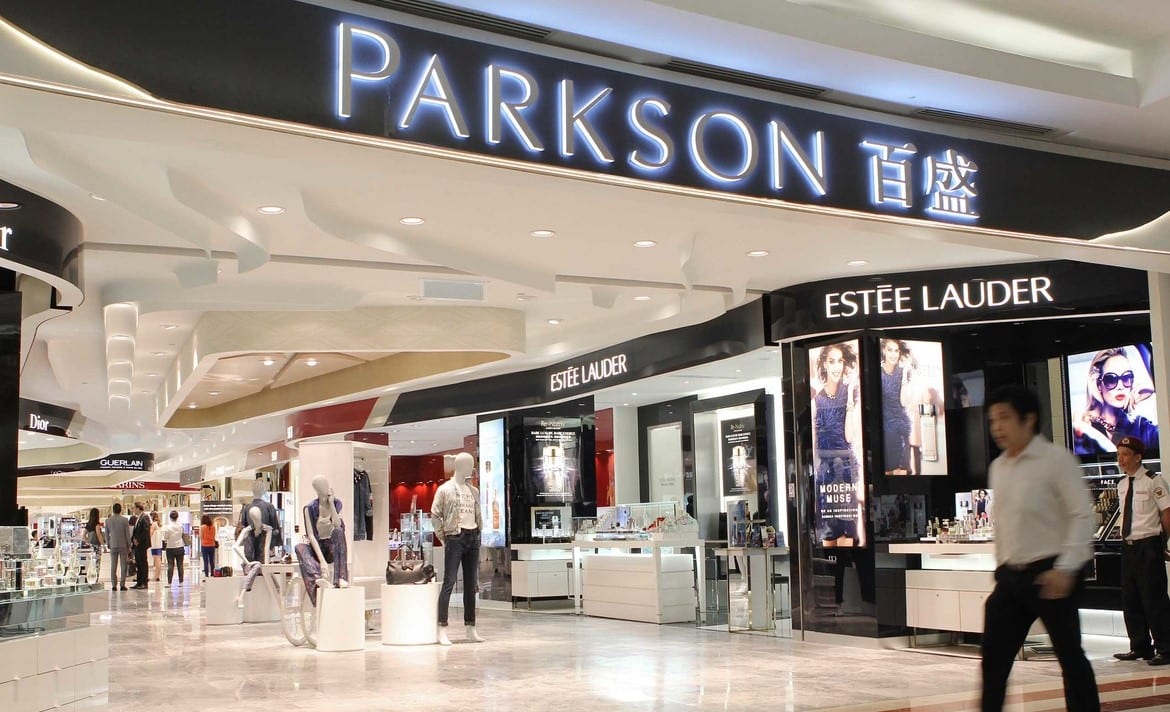
    Parkson Retail Group is preparing to occupy a complex above Nanjing Railway Station in Chinese Jiangxi.

    The group, a Hong Kong-listed firm controlled by Malaysian Parkson Holdings Bhd, won its US$6.1 million bid for the tenancy of buildings above the Bayi Guan Station of the Nanchang Rail Transit Line 1 in the city.

    The 12-year tenancy will allow a 42,903sqm retail space for the firm, although no formal agreement on the tenancy has been signed as of yet.

    A statement from the firm read: “The tenancy, if materialised, may constitute a discloseable transaction for PRGL,” given its alignment with the firm’s development strategy for the province.

  • Turning data into information in the age of IoT

    Turning data into information in the age of IoT

    If you think about what your home was like even just a few years ago, life was very different.

    Think about what grocery shopping was like. You’d open your fridge door to check out what’s missing, scribble down on a notebook a shopping list of what you need, turn off the aircon and switch on the alarm before you left the house and leave.

    Now, your smart fridge automatically knows when you’re running low on milk and will order the specific brand and size that you prefer and have it delivered to your front door. Left home and forgot to switch the aircon or alarm on or off? Simply view the app on your smartphone and tap your appliances on or off.

    Known as the Internet of Things (IoT), people are consuming information from more connected devices and as a result, marketing practices are rapidly changing. Retailers need to learn how to speak to customers through more channels than before.

    As IRI’s product solution director Adam Fisher explains, while more devices are creating more communication, marketers are getting blocked where they weren’t before. What happens when your fridge starts ordering groceries for you? Where a marketer could previously capture customers at the shelf in a grocery store, they now need to work out how to get your attention when the fridge automatically orders milk to your doorstep.

    “From a marketer’s standpoint, there are so many devices vying for people’s attention —How do you get the right person’s attention at the right time?” Fisher says.

    According to Fisher, one of the biggest challenges for retailers is knowing how to turn all the data into actionable information.

    “It’s knowing how do I bring [the information] in, how do I make sense of it, but on top of that, how do I know when I need to do something when it’s signalling something?” he points out.

    Marketing automation can give brands more insights and data into how people are responding to these different channels and how they should be approached, suggests Fisher. It’s one of the biggest trends in retail today

    and can help businesses engage with their customers by programmatically finding the optimal marketing and promotional activities for defined customer segments.

    A major benefit of IoT is the fact that based on all this new information from devices, brands and retailers are able to bring products to market faster, allowing them to keep up with the ever-changing retail landscape.

    However, it is vital that businesses have the right infrastructure in place in order to deliver real business growth.

    Fisher says: “It is important that they have the technology and right partner in place. In order to do this, brands and retailers will have to combine mobile and cloud technology infrastructure and go entirely digital to build a new business model by connecting people, things, processes, and data to keep up with technological innovation. That is the essence of what we do at IRI, is connecting the dots to help make faster and stronger business decisions.”

  • Singapore retail sales lags last Month

    Singapore retail sales lags last Month

    Singapore retail sales slid by 1.5 percent in March, after excluding motor vehicle sales from the data. According to Statistics Singapore, most retail categories recorded lower sales for the month compared with the same period last year. Sales of optical goods and books fell by 6.4 percent and of computers and telecommunications equipment by 4.9 percent.

    Food retailers, watch and jewelry retailers, and department stores reported sales declines of between 4.6 percent and 5.7 percent.

    In contrast, sales of medical goods and toiletries rose by 2.8 percent, due in part to higher demand for cosmetics. Supermarkets and hypermarkets registered sales growth of 0.9 percent.

    Month on month, Singapore retail sales were essentially stable.

    The total market for March was estimated at $3.8 billion, with online sales comprising about 5.3 per cent.

    Year-on-year sales of food and beverage services in Singapore rose by 0.7 percent in March.

    On a seasonally adjusted basis, sales of food and beverage services increased 1.3 percent month on month.

    Total sales value for the sector was $868 million, compared to $863 million in March last year.

  • Singapore retail sales slipped last Month

    Singapore retail sales slipped last Month

    Singapore retail sales slid by 1.5 percent in March, after excluding motor vehicle sales from the data.

    According to Statistics Singapore, most retail categories recorded lower sales for the month compared with the same period last year.

    Sales of optical goods and books fell by 6.4 percent and of computers and telecommunications equipment by 4.9 percent.

    Food retailers, watch and jewelry retailers, and department stores reported sales declines of between 4.6 percent and 5.7 percent.

    In contrast, sales of medical goods and toiletries rose by 2.8 percent, due in part to higher demand for cosmetics. Supermarkets and hypermarkets registered sales growth of 0.9 percent.

    Month on month, Singapore retail sales were essentially stable.

    The total market for March was estimated at $3.8 billion, with online sales comprising about 5.3 percent.

    Year-on-year sales of food and beverage services in Singapore rose by 0.7 percent in March.

    On a seasonally adjusted basis, sales of food and beverage services increased 1.3 percent month on month.

    Total sales value for the sector was $868 million, compared to $863 million in March last year.

  • Boomtime ahead for chatbots in E-commerce

    Boomtime ahead for chatbots in E-commerce

    New data from Juniper Research predicts consumer interaction with chatbots in retail will reach 22 billion by 2023.

    The figure represents a sharp increase over an estimated 2.6 billion interactions this year.

    According to the new research report “AI in Retail: Segment Analysis, Vendor Positioning & Market Forecasts 2019-2023”, chatbots in retail will enable effectively automated customer interactions for both online and offline vendors.

    A crucial enabler of this development will be improvements in NLP (Natural Language Processing), which will dramatically reduce the failure rate of chatbot interactions, by making them more natural and valuable for customers.

    Juniper anticipates that retailers who do not adopt chatbots will face strong challenges from more technologically-adept disruptors, who will use chatbots as an extension to the crucial omnichannel retail experience.

    The research also found that chatbots used for customer service have a strong potential to reduce costs; with deployments realizing annual savings for retailers of US$439 million globally by 2023, up from just $7 million this year.

    These potential savings will act as a key “pull” factor, given the margin pressure that many retailers are presently feeling.

    “By embracing automated customer service with chatbots, retailers can act in a more flexible and efficient way,” explained research author Nick Maynard. “The wider retail market means that chatbots are no longer a luxury, they are essential.”

    Meanwhile, sales resulting from interaction with chatbots in retail will reach $112 billion by 2023, up from $7.3 billion this year; representing an annual growth rate of 98 percent.

    The research found these sales will largely be a result of migration from other channels, rather than a new revenue stream. Accordingly, the research emphasized that while retailers must adopt chatbots for ease of use (and to reduce consumer churn), their return on investment will come from efficiencies, rather than new income.

  • SM Retail Achieves Small Profit Boost

    SM Retail Achieves Small Profit Boost

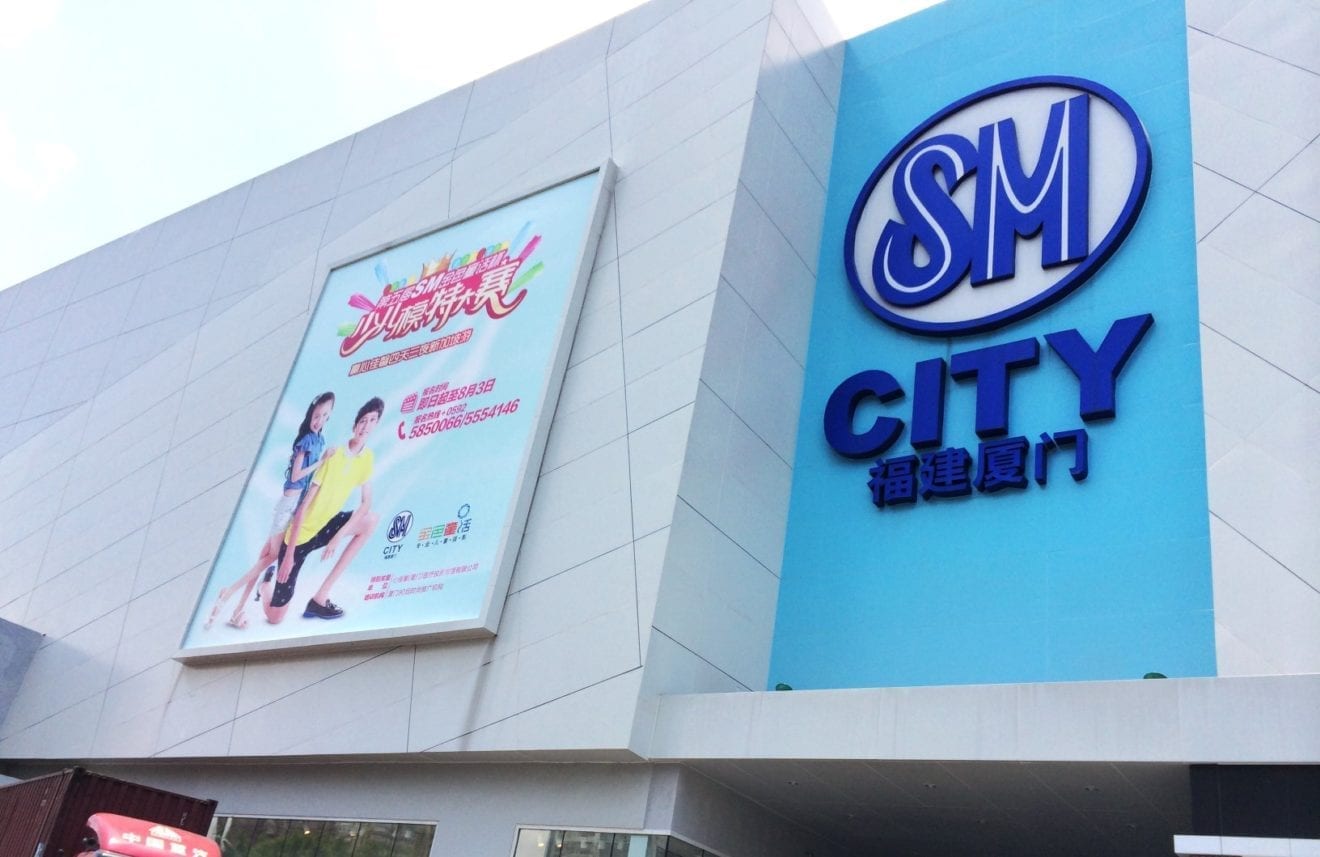
    SM Retail has achieved a first-quarter profit increase of 5 percent to P2.7 billion (US$51.7 million).

    Retail revenues in the first three months rose by 13 percent year-on-year to P79 billion, while sales from specialty retail stores grew by the same percentage to P19.6 billion.

    As at the end of March, SM Retail had 2385 stores, comprising 63 department stores, 1388 specialty retail stores, 57 SM Supermarkets, 53 SM Hypermarkets, 194 Savemore, 52 WalterMart, and 578 Alfamart stores.

    The figures were included in the quarterly report of SM Investments, which boosted its profit by 26 percent to PHP10.7 billion (US$205 million).

    The gains reflected improved sales from the retail business as well as its property and banking activities.

    Consolidated revenues during the period were up 15 percent year-on-year to PHP109 billion ($2.1 billion).

    “We continued to deliver double-digit growth to both our top and bottom line in the first quarter,” said SMIC president Frederic DyBuncio. “Performance was strong across our businesses, particularly for our banks.”

  • South Korean retail sales surged during Holidays

    South Korean retail sales surged during Holidays

    The unprecedented extension of the Japanese Golden Week holiday to 10 days has seen a surge in tourists visiting South Korea.

    The holiday was extended to mark the enthronement of Crown Prince Naruhito from the usual April 29 to May 5 period.

    Duty free businesses saw big jumps in sales during the period compared to the previous year. Lotte Duty Free in Sogong-dong saw a 45 per cent sales increase, while Shinsegae Duty Free in Myeongdong saw an 80 per cent year-on-year increase.

    Hotels in the main commercial districts of Seoul also saw double-digit occupancy boosts during the period above Golden Week figures for last year.

    Tourism from China was also up 25 per cent during the period, although this rise was lower than in the first four months of this year.

  • JD.com Closes Australian branch Store

    JD.com Closes Australian branch Store

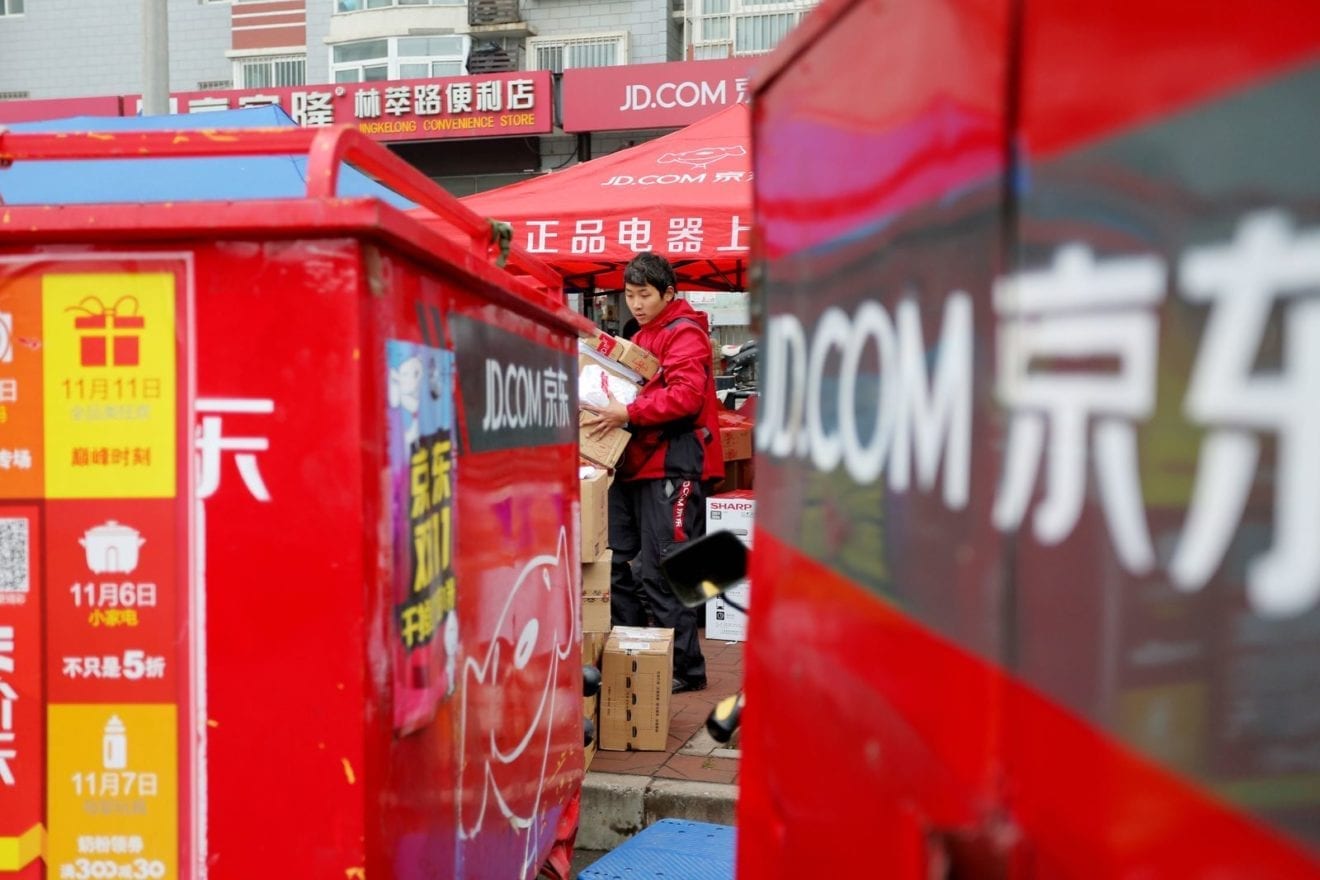
    Chinese online marketplace JD.com has closed its local branch after only 15 months in the market.

    The e-commerce giant launched its Australian office in Melbourne in February 2018, after its competitor Alibaba opened an office in Melbourne in 2017.

    At the time, the opening was seen as a way for JD.com to work more closely with the Australian and New Zealand brands on its platform, and to pitch its business to new brands looking to expand into China.

    A JD.com spokesperson confirmed that the online marketplace is integrating its Australian office into the business in China. The spokesperson said the move didn’t reflect the business’s performance in Australia, nor the region’s importance.

    The retailer’s head of Australian operations Patrick Nestrel is no longer with the business, likely in an effort to ensure management in China is able to fully integrate Australian operations.

    The online retailer is set to report its first-quarter sales results on May 10. It has had a difficult few months recently after founder Richard Liu was arrested in September 2018 in the US for sexual misconduct. He was not charged.

    In April, the Chinese university student who accused Liu of misconduct filed a civil lawsuit against him.

  • Pricing Tactics to Boost Sales in E-Commerce

    Pricing Tactics to Boost Sales in E-Commerce

    More than 80% of the purchasing decision depends on price. Especially in the ultra-fast e-commerce arena where businesses showcase and change their prices every 3 to 6 hours. But before changing prices out of the blue you must know that there are certain conditions to do that. Decrease your prices to very low and you’ll leave a lot of money on the table raise them up high and you’ll end up hunting flies.

    The Importance of Pricing

    Let’s start by going through each insight down below to understand why pricing needs more attention ever than before.

    • 90% of consumers invest their time to hunt the best online deals.
    • 80% of “first-time” consumers say it’s important to be able to see and compare prices from different sellers.
    • 70% of consumers believe they’ll get a better deal online than in brick&mortar stores.
    • 50% of consumers will purchase products left in shopping carts if those products are offered at a lower price.

    As you can see pricing is very, very important.

    Let’s get into some tactics on how you can approach pricing to increase your profits margins and sales numbers.

    Charm Pricing

    Have you ever heard about the power of 9s? That is the strategy, where you end a price with a “9” instead of a “0” on the price tag. This is a very common tactic especially in physical stores, but you may also come across it in online stores as well.

    Here’s why! Our brain perceives $50.00 and $49.99 as different values. According to consumer perception, $49.99 seems closer to $40.00, which is cheaper than $50.00 and product prices ending with a “9” are considered “the” deal to not miss.

    Prestige Pricing

    This is suitable for high-end, luxury, emotion-triggering products, where you should apply round prices such as $500, $750, opposite of charm pricing. Setting round prices on products which evokes emotions converts better.

    A study by Kuangjie Zhang and Monica Wadhwa, claims that “A rounded price ($100.00) encourages consumers to rely on feelings when evaluating products, while a non-rounded price ($98.76) encourages consumers to rely on reason. When a purchase is driven by feelings, rounded prices lead to a subjective experience of feeling right,”

    Bundle Pricing

    This psychological trick makes online shoppers search for getting an extra item with the purchased product at the same price. This presents a golden opportunity for the wise e-commerce seller. To reduce this pain and encourage online shoppers to buy your products, use bundling, set your prices accordingly and get these customers to reach deeper into their pockets.

    For example, Amazon has an advanced bundling strategy; it always suggests two or three related items that you may want to purchase at the same time. Most of the online shoppers jump onto these types of offers because they’re amazed by the simplicity of purchasing them all at the same time. Bundle two or three items together with a single price set an adequate discount, and you can start selling less-popular items.

    What’s Next?

    All of the tactics above are some part of the common approaches laid out from the people of Prisync. To learn more about other pricing strategies take the time to read most of their blog posts. When you’ve successfully implemented a strategy, you’ll either address your customer’s emotions or logic. Either way, you will start winning and boosting your conversion rates, sales, and eventually revenue. And if you want to automate that, we recommend you start using a pricing software sooner before its too late.