Tag: Retail

  • E-commerce explosion driving worldwide warehouse Expansion

    E-commerce explosion driving worldwide warehouse Expansion

    Global analysis firm ABI Research has found that the global Warehouse Management System (WMS) market will be worth US$5 billion by 2025, growing at a CAGR of 13.9 per cent.

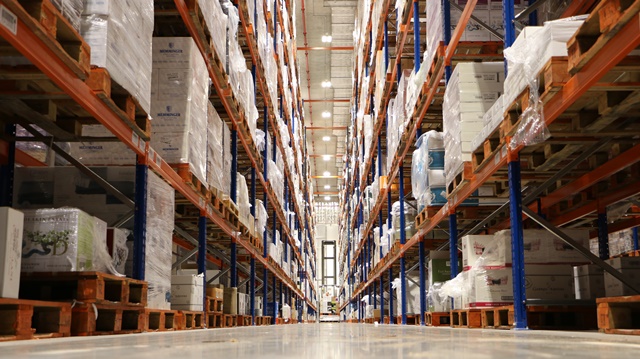
    The period will see a warehouse boom with some 57,000 more distribution centres in operation by then than last year. The continued growth of the e-commerce market and rising customer expectations are putting enormous pressure on warehouses to execute more rapid and flexible deliveries. This is driving investment in warehouse facilities, automation technologies, and warehouse management systems to coordinate and optimise operations.

    “The warehouse is becoming the engine room of the supply chain and is, therefore, a focal point for investment from retailers, manufacturers, and logistics service providers,” said ABI Research principal analyst Nick Finill.

    “As the warehouse technology ecosystem becomes increasingly complex, supply chain operators require more sophisticated management systems that can orchestrate the high volume and variety of intelligent, connected devices and systems within their facilities, as well as the flow of inventory.”

    The firm finds that as the e-commerce boom grows in and extends beyond the established economies of China, Japan, and Korea, the Asia-Pacific will experience the highest growth of warehouse facilities and WMS revenue, becoming the largest market for the software by 2023. The rapid adoption of WMS is also expected in the emerging economies of the Middle East, Africa, and Latin America. Europe and North America will experience strong growth as supply chain operators increase spending on upgraded software systems.

    WMS spending will also vary according to industry verticals. The retail, food and beverage, and manufacturing sectors will be responsible for the highest growth rate as they catch up with more mature verticals, such as logistics service providers.

    ABI’s data suggests AI-driven innovation from WMS market leaders such as JDA Software, High Jump, and Manhattan Associates is enabling substantial flexibility and functionality in WMS and Warehouse Execution Systems, an increasingly important orchestration layer linking high-level management with connected machines. At the device and machine level, greater automation is creating demand for more sophisticated Warehouse Control Systems from major automated material handling solution providers such as Bastian Solutions, Dematic, and Honeywell Intelligrated.

    “The increasing velocity of goods through the supply chain is driving demand for real-time decision making and optimisation,” said Finill. “As the margin for error in the warehouse decreases, AI and ML-enabled WMS solutions are becoming imperative for warehouses that rely on speed, efficiency, and intelligence to remain competitive.”


  • E-commerce giants report record results for 6.18 shopping festival

    E-commerce giants report record results for 6.18 shopping festival

    China’s e-commerce giants JD and Alibaba turned in record-breaking results for the 6.18 shopping festival on June 18.

    Total sales transaction volume during JD’s 6.18 trading reached a new high this year of US$29.2 billion. Key drivers leading to the breakthrough results were new products as well as Chinese consumers’ continued interest in and pursuit of higher quality.

    Alibaba Group’s Taobao and Tmall shattered multiple records during the Mid-Year Shopping Festival, stating a rising demand from consumers in less-developed cities for quality products. More than 200,000 brands took part, using campaigns and tools provided by Alibaba’s core platforms to help more than 110 brands each generate gross merchandise volume in excess of RMB100 million ($14.5 million).

    New products were a strong focus of JD’s retail strategy overall this year. JD has launched an exclusive channel within its platform to socialise and promote these products as well as bring them to market, making them easier for consumers to find, and helping brands to strategically reach new consumers. Consumers from lower-tier cities are also “trading up” showing greater interest in brands traditionally more coveted by consumers in higher-tier cities.

    Transaction volume growth was twice as high in lower-tier cities than the overall growth on JD. The percentage of new users from lower-tier cities was also much higher than the percentage of new users overall. Two campaigns involved participation from more than 100 million users. One was an innovative “birthday red envelope” campaign, which encouraged and rewarded consumers for sharing on social platforms. Another campaign engaged users to share, vote for and win shared rewards for their cities.

    The firm’s recent C2M initiative employs big data and consumer insights, providing insights to brands to adjust their manufacturing and marketing approaches with the goal of providing consumers with products they want before they even know they want them. Transaction volume of new products and C2M products during 6.18 increased 289 per cent compared with the same period last year. One out of every three monitors sold during this year’s 6.18 campaign were C2M products. HP saw a 100 per cent increase in sales of its Zhan 66 laptop, a C2M product, during 6.18.

    Several new brands also launched on JD during 6.18. Most recently, Italian designer brand Prada, as well as Miu Miu and Car Shoe – two sister brands under the Prada Group – launched authorised flagship stores on JD. Farfetch also launched a flagship store on JD during the period, enabling JD consumers to access more than 3000 brands through Farfetch’s network of more than 1000 brand and boutique partners.

    JD also worked with the world’s top hotel brands to empower subscribers of its premium membership program, JD Plus, with exclusive privileges at 15,000 high-end hotels around the world, marking the first time JD Plus benefits can be enjoyed outside of China. During this 6.18, shopping festival JD sold more than 2.8 million JD Plus memberships.

    Technology continues to be key to improving the consumer experience and exceeding expectations during the sales festival. 91 per cent of orders coming from JD fulfillment centers were delivered same-or next-day. During this year’s 6.18, JD’s smart customer service robot fielded more than 32 million inquiries, of which it solved 90 per cent of those independently, freeing up human customer service for more complicated inquiries.

    Flash sales crash records

    Alibaba’s flash sales channel, Juhuasuan, which aids brands in attracting new customers via discounts, added over 300 million new consumers. During the festival. More than 180 products topped RMB10 million ($1.45 million) in sales, and 4700 products achieved sales of more than RMB1 million ($145,000). This was a record-breaking number for brand participation in Juhuasuan.

    The firm’s Taobao live-streaming platform helped generate GMV of more than RMB13 billion ($1.88 billion).

    “The results of the ‘6.18 Mid-Year Shopping Festival’ are encouraging,” said president of Taobao and Tmall Jiang Fan. It has proven to be a celebration that can match the enthusiasm and scale of the ‘11.11 Global Shopping Festival.’ More than 100 brands achieved a new sales record that surpassed the result from last year’s 11.11.

    “We are very pleased to see that our strategy to help brands penetrate the less-developed markets has paid off. Customers in the emerging cities are very receptive to innovative products and promotion campaigns such as programs on the Juhuasuan platform. The number of customers and GMV from third- to fifth-tier cities both hit 100 per cent growth. We believe this group of customers will continue to grow into a strong and sustainable force for brands who are looking at further developing the Chinese market,” he added.

    With an increase in discretionary income, consumers in China’s less-developed areas are quickly becoming a crucial driver of China’s solid consumption. These consumers were a main engine powering this year’s 6.18 Shopping Festival. According to Tmall, 48 per cent of the newly launched products on the platform during the event were purchased by customers outside first- and second-tier cities.

    Demands and preferences from lower-tier cities consumer were diverse, ranging from high-end electric products from Apple to imported fruit, such as durian from Malaysia, and daily necessities, including socks and toothbrushes.

    Tmall’s Luxury Pavilion sales more than doubled from last year, boosted by customers in emerging cities and shoppers born after 1995. Premier brands hit better-than-expected results. Sales of Versace jumped 20 times compared with last year.

    This year, Taobao’s Daily Deals, a channel which allows consumers to order customised products straight from the manufacturers, generated more than 420 million orders. With Alibaba’s big data and IoT technology, the Daily Deals service has effectively digitised the manufacturing industry by initiating a direct manufacturer-to-consumer model.

    Sales generated from consumers in third- and forth-tiers cities on cross-border trade platform

    Tmall Global increased by 153 per cent from a year before. The top five countries on Tmall Global were Japan, the US, South Korea, Australia and Germany.

  • Omega China makes E-commerce debut

    Omega China makes E-commerce debut

    Swiss timepiece maker Omega has launched its first e-commerce initiative in China.

    Omega China has opened a new pop-up store in the Tmall Luxury Pavilion, an online platform for premium brands under Alibaba Group.

    Pre-sales for Omega’s new Seamaster Aqua Terra Beijing 2022 limited-edition wristwatch will be exclusively available on the pop-up site between June 15 and August 7. The watch will be available in physical stores later on. Just 2,022 watches have been made to mark Beijing’s upcoming Winter Olympics.

    The Pavilion has recently overhauled its site with more personalised offers and recommendations, introducing a brand-generated content feed and online magazine.

    “We want to step up our offerings in terms of creative experiences, trending product feeds and style tips from fashion editors to help young users find items and brands they love,” said Tmall Luxury Pavilion head Lili Chen. “The Pavilion revamp enhances the discovery journey and shopping experience for our customers, while helping luxury brands better express their brand vision, aesthetics and new creations.”

    Omega joins 133 brands on Tmall’s Luxury Pavilion, including rival brands Tag Heuer and Zenith, along with Versace, Stella McCartney, Moschino, and others.

  • L’Occitane profit rose after Restructuring

    L’Occitane profit rose after Restructuring

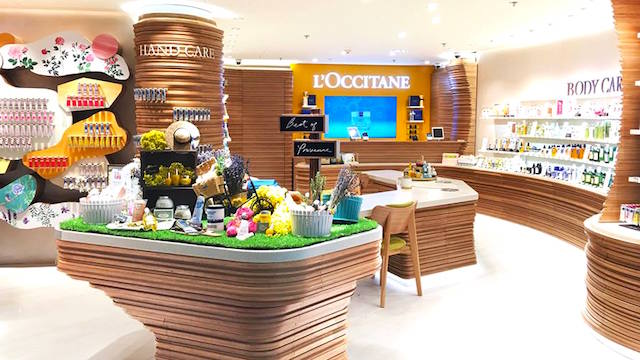
    Hong Kong-listed beauty-products retailer L’Occitane is reaping the benefits of a restructure with profit up 21.8 percent last financial year to €117.6 million.

    And chairman Reinold Geiger says even better results are in the pipeline. “The group now operates as a multi-brand entity, where unique brand identities are celebrated and common values shared — respecting nature, creating authentic and genuine experiences, promoting entrepreneurship, and bringing a human approach to beauty,” he said in a statement.

    “The group encourages its brands to stay agile and autonomous, yet synergies are also being identified and capitalized. With the material improvements delivered by the core L’Occitane en Provence brand, combined with the largely accretive consolidation of Elemis, the group expects to see enhanced profitability in 2020 and beyond.”

    Group net sales were €1.427 billion for the year to March 31, up 8.7 percent at constant exchange rates. Gross margin remained high at 83.2 percent and operating profit rose by 6.9 percent.

    L’Occitane’s Hong Kong net sales were €137 million, an increase of 9.9 percent year on year, or 8.6 percent at constant exchange rates. However, same-store sales fell 2.6 percent.

    “Macroeconomic uncertainties continued to erode consumption sentiment, reflected in a marked downturn in the Hong Kong retail market after the first quarter of {last year}, notably in the average ticket value,” the company said in its earnings review. “Meanwhile, the increase in mainland tourist traffic brought by new infrastructure did not uplift Hong Kong retail sales.”

    Sales in China reached €178.1 million, an increase of 11.9 percent, or 12.1 percent on a constant-exchange-rate basis.

    “Sales momentum in China was dynamic throughout the whole year,” the company said. “Sell-out sales remained strong even though trading with seven fewer stores than last year, posting a growth of 9.6 per cent at constant exchange rates, and with same-store sales growth at 6.9 percent. The marketplace channel continued to drive growth, with impressive performances recorded during key festivals such as Singles’ Day, Chinese New Year and Women’s Day. Sell-in sales also posted encouraging results, with the growth of more than 30 percent, thanks to the launch of JD and dynamic B2B sales.”

    In Japan, net sales rose 1.5 percent to €222.1 million, however in the local currency, the growth was just 0.1 percent. “The flattish performance was due to a sluggish retail market. Nonetheless, retail sales of L’Occitane en Provence grew at a low single-digit rate as compared to last year, thanks to the new stores opened, the large-scale “Balloon Journey” marketing event and successful face care campaigns during the year.”

    Taiwan net sales of €38.2 million represented a decline of 3.2 percent at reported rates, or 2.7 percent at constant exchange rates.

    “The Taiwan retail market remained competitive,” the company said. “The decrease in sell-out was largely explained by the negative 2.7 percent same-store sales growth, together with the typhoon hits and poor weather during the summer season. Web sell-out channel, however, recorded double-digit growth, thanks to the revamped own e-commerce platform as well as the development of the marketplace.”

    Most other markets remained static for L’Occitane, with the exception of Brazil, where sales fell by 4 per cent, and the US, where they soared 35 per cent.

  • The Great Singapore Sale renewed this year

    The Great Singapore Sale renewed this year

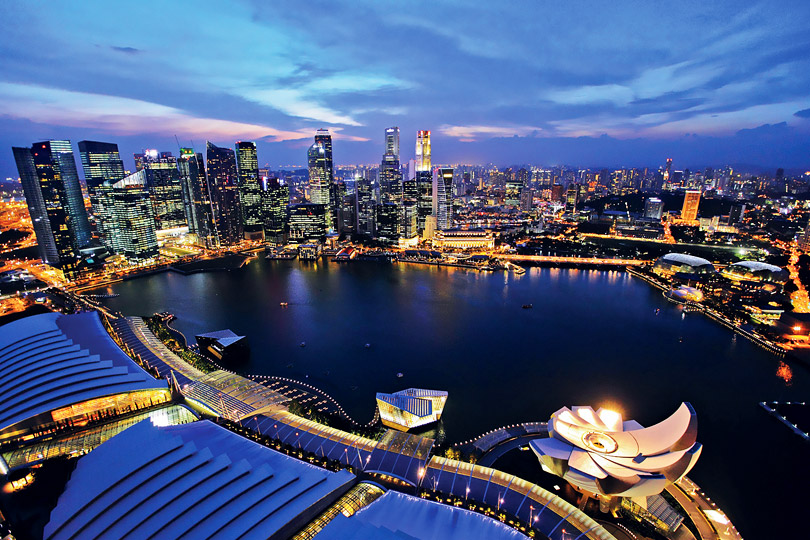
    The annual Great Singapore Sale is back this month, with the theme ‘GSS: Experience Singapore’.

    Taking place between June 21 and July 28, the sale will include Shopping Sprees such as ‘TGIF!’ (held every Friday) where retailers and food-and-beverage operators will run day-long specials and discounts.

    On July 7 (7.7), there will be an additional 7 percent off all goods – a marketing initiative based on retailers paying shoppers’ goods-and-services tax.

    Beyond the mega sales and discount programs, the event will boast a host of interactive activities and experiences at Orchard Road and Kampong Gelam.

    The first, the Orchard Road Fashion Scramble on June 21, will center around a fashion show curated by the Singapore Retailers Association and TAFF. Orchard Road will be transformed into a performing arena and an interactive runway for 300 dancers and models – showcasing an array of clothing designs and trends from local and foreign designers.

    The opening segment will feature designs by popular, up and coming local designers, followed by leading international fashion houses, before closing off with award-winning creations by Singapore students.

    The Great Singapore Street Pop Up will coincide with the Orchard Road Fashion Scramble, running from Ion Orchard to Mandarin Gallery, and at Robinsons The Heeren and the Grange Road carpark. The pop up will offer retail experiences and food for 10 days from the June 21-30.

  • Singapore retail sales in April fell

    Singapore retail sales in April fell

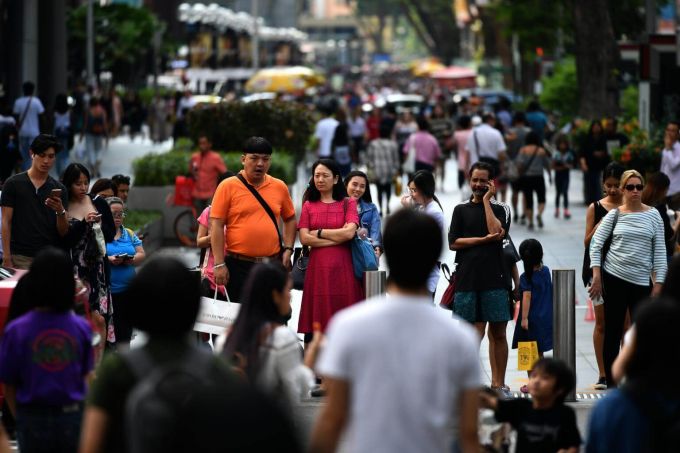
    Singapore retail sales in April decreased by 2 percent year on year (motor vehicles excluded), with the apparel sector the only category to post growth.

    On a seasonally adjusted basis, sales decreased by 0.1 percent on March’s figures.

    The worst-affected categories were computers and telecommunications equipment, down 6.7 percent, and furniture and household equipment, down 6.5 percent. Statistics Singapore said this was due in part to lower sales of mobile phones and furniture. Sales by food retailers, of optical goods and books and in department stores decreased by between 3.1 percent and 3.5 percent year on year.

    However, sales of the apparel and footwear grew by 3.4 percent, due in part to a higher demand for bags and footwear.

    Singapore retail sales in April were estimated at S$3.5 billion, with online sales accounting for  about 5.4 percent of that figure

    Sales of food and beverage services grew by 3.1 percent year on year in April, reaching $826 million. Fast-food outlets, food caterers and other eating places (such as cafes) registered growth of between 3.6 percent and 8.2 percent. Sales of restaurants increased by a marginal 0.1 percent.

  • AI-powered retail store We9go opens

    AI-powered retail store We9go opens

    Accrelist-owned AI retail store We9go has fully launched after an eight-month trial.

    The Geylang Road shop uses AI, facial recognition and radio frequency identification to track inventory, collect data on shopper preferences, facilitate payment processes and recognise product movements.

    When it soft launched last October it was open only to invited customers, so as to test and demonstrate its features.

    Accrelist says it will now focus on strengthening AI solutions and facial-verification services.

    “The company intends to move beyond smart retail-technology solutions,” said Terence Tea Yeok Kian, Accrelist’s executive chairman and MD.

    “We aim to offer a wider range of smart-and-secure cloud-based solutions as a systems integrator through its collaboration with technology companies to broaden the group’s revenue stream.”

    After its full launch, the 24/7 We9go store has an AI-powered robot that greets shoppers and assists them with product information and availability.

  • Waterstones parent to buy Barnes & Noble

    Waterstones parent to buy Barnes & Noble

    The parent of British bookseller Waterstones, Elliott Management, will purchase Barnes & Noble – the last remaining big-box bookseller left in the US following the departure of rival Borders – for about US$683 million.

    Once the deal is finalised in Q3 of this year, Waterstones CEO James Daunt will also assume control of all Barnes & Noble operations, although the two firms will remain independent.

    Dive Insight says: “The deal with Elliott could mark the closing of a turbulent chapter in Barnes & Noble’s story, one that included a failed merger, a legal battle with a former executive and agitation by activist investors. And prior to that there were years of management turnover, strategic misfires and lost sales as the last box book seller tried to hold off Amazon.”

    “As it happens, I know James Daunt fairly well,” said Barnes & Noble chairman Leonard Riggio in a letter to employees, “and I am delighted to have him as our new leader.

    “Like me, James believes our culture has to be more store-centric, which means more localisation of assortments and operations. It follows that he believes local managers must have more authority to get the job done.”

    A press release from Barnes & Noble read that Waterstones “has successfully restored itself to sales growth and sustainable profitability, based on a strategy of investment in their store estate and the empowerment of local bookselling teams.”

    Elliott, which has owned Waterstones for about a year, has US$825 million in debt financing available banks to fund the Barnes & Noble acquisition.

  • Topshop future in stretch as crucial vote delayed

    Topshop future in stretch as crucial vote delayed

    The future of fashion label Topshop is in limbo after a crucial vote on a Company Voluntary Arrangement for parent Arcadia Group was delayed last week.

    Arcadia’s chairman Sir Philip Green is trying to gather approval from creditors for a scheme which would see them convert debt to future equity and rents reduced on UK stores in return for sa further investment by Green’s family of £50 million (US$63.8 million). The scheme would also see 23 stores shuttered in the UK and the closure or sale of all 11 of Topshop’s US stores – on top of 25 UK store closures already planned.

    “Against a backdrop of challenging retail headwinds, changing consumer habits and ever-increasing online competition, we have seriously considered all possible strategic options to return the group to a stable financial platform,” Arcadia CEO Ian Grabiner said when unveiling the CVA last month.

    “This has been a tough but necessary decision for the business.”

    But a meeting of creditors – who include suppliers landlords and pension funds – was postponed last week when it became clear support would fall short of the 75 per cent required for it to be approved. That vote will now likely be held this week. However if it fails, creditors may call in administrators opening the possibility of a sale of Arcadia’s brands, which also include Miss Selfridge, Dorothy Perkins, Evans and Topman.

    UK retail industry sources say landlords are especially cynical to the CVA, casting doubts on whether Green can revive the troubled business in an era of dwindling high-street retail sales and growing e-commerce.

    One major retail landlord told The Business of Fashion that cutting rents to Arcadia to help its survival would be “quite a tough message to communicate to other tenants paying full rent”.

    Arcadia’s like-for-like sales reportedly fell 7.5 per cent in the year to August 2018, with total sales down 10.5 per cent to £1.7 billion. That decline was largely due to a 20 per cent slump in Topshop sales.

    The chances of Green’s plan did receive a boost last week after The Pensions Regulator and Pensions Protection Fund indicated their support. That followed a commitment by Sir Philip’s wife Lady Tina Green to invest a further £100 million in the fund to protect staff.

    Lady Green has also promised landlords who accept the deal a 20 per cent share of the proceeds should Arcadia be sold.

  • Mecca to open its biggest store ever

    Mecca to open its biggest store ever

    Beauty retailer Mecca is opening its biggest store yet at Westfield Parramatta on Friday, June 7.

    The 500sqm store brings the retailer’s Maxima and Cosmetica concepts together and offers over 100 beauty brands in one large-format location.

    “We are so delighted to unveil our latest and greatest Mecca store,” Mecca founder Jo Horgan said.

    “We really wanted to offer Mecca’s entire brand line-up in the one location, in an environment that was both glamorous and service-centric but also with new innovations to make it a truly unique shopping experience.”

    The store features Mecca’s first dedicated ‘skin space’, where customers can enjoy skincare consultations and services including a personalised, complimentary ‘skin review. The reviews will take approximately 30 minutes and will help customers learn about the skincare they should be using for their skin.

    Additionally, the store features the Mecca Beauty Lab program, where customers can book a place in a beauty workshop. A Mecca expert will teach participants the skills they need to properly utilise the make-up sold in-store.

    During opening day, the first 200 customers in line will receive a free bonus with purchase, while anyone who spends over $85 will be able to choose a gift from a pool of prizes worth over $100,000.

  • Online retail sales slows down last Month

    Online retail sales slows down last Month

    Online retail sales fell 3.8 per cent month on month in April, after a less than stellar March, according to the National Australia Bank’s monthly Online Retail Sales Index.

    The result is consistent with a general slowdown in retail observed by NAB, while the result itself is up 1.7 per cent on a year on year basis.

    “This month, both online retail and broader cashless retail series indicated very weak retail conditions,” NAB chief economist Alan Oster said.

    “While year-on-year growth in online sales has also slowed considerably in recent months, these comparisons are made to a period of elevated sales in 2018, with major new merchants to Australia, and also pre-GST exemption effects.”

    While all categories suffered a contraction in sales during April, games and toys suffered least with only a 0.2 per cent reduction in sales, while takeaway food fell 8.6 per cent – the steepest drop.

    International retailers outperformed domestic retailers on a monthly basis, with international retail enjoying a 0.7 per cent increase in sales, compared to the 4.4 per cent fall in domestic trading.

    However, NAB identifies a considerable weakness in international online sales on a year-on-year basis, most likely owing to the change in how GST is calculated and charged.

    “Tasmania, with about 2 per cent of online sales, was weakest in April after leading growth in March,” Oster said.

    “New South Wales, Victoria and Queensland represent over three quarters of the online market in Australia by sales value. Of these larger sales states, Queensland was strongest over the year.”

  • Philippines, Vietnam lead FMCG sales growth in Asia

    Philippines, Vietnam lead FMCG sales growth in Asia

    The Philippines and Vietnam led Southeast Asian FMCG sales growth last year, according to a report by market research company Nielsen.

    In What’s Next for Southeast Asia, Nielsen reported that Vietnam’s FMCG sales growth reached 5.2 per cent, second in Southeast Asia behind the Philippines’ 8.7 per cent.

    Global FMCG sales growth was only 3.4 per cent, but Asian markets benefited from buoyant economic factors and strong consumer confidence.

    In Vietnam, consumers are making more frequent shopping trips for everyday needs, with Nielsen’s data showing the average shopper visited a convenience store 4.5 times per month last year – that’s three times the frequency of 2010.

    “We’ve been seeing solid growth in the convenience and mini-market channels across Southeast Asia for some time now, but over the past year or so that growth has really hit fever pitch,” said Vaughan Ryan, Nielsen’s MD Southeast Asia.

    “Consumers throughout the region are living increasingly fast-paced lives, and this lifestyle shift is driving increasing demand for on-the-go offerings.”

    Vietnam’s local retailers are taking advantage of the trend. Vingroup has launched the first virtual store chain in the country, which allows users to shop by scanning QR codes on large banners in public areas as well as printed catalogues.

    Subsidiary VinCommerce, which owns the VinMart+ convenience store chain, recently acquired a rival c-store chain Shop&Go,which it plans to convert to its own banner. Vietnam retail is forecast to record double-digit growth from this year to 2024.

  • Hong Kong retail sales felt Last Month

    Hong Kong retail sales felt Last Month

    Hong Kong retail sales fell by 4.5 per cent in April, contributing to a 2 per cent decrease in year to date.

    Worse, the Census and Statistics Department said that after netting out the effect of price changes year on year, Hong Kong retail sales fell 5 per cent year on year, following a 0.8 per cent fall in March and contributing to a 2.3 per cent decline year to date.

    “The larger year-on-year decrease recorded in April reflected the still-cautious consumption sentiment amid external uncertainties, but was also partly due to the late arrival of the Labour Day holidays in the Mainland (which fell in early May this year but straddled between April and May last year), which has led to a notable deceleration in the growth rate of visitor arrivals,” a government spokesman said, commenting on the data.

    He said that in the near term, consumption sentiment will continue to be affected by various external uncertainties, though the sustained expansion in inbound tourism and the largely stable local labour market should provide support to retail sales business. In other words: it may be too soon to start panicking.

    Predictably, the jewellery, watches and luxury goods sector performed the worst, sales down 11.4 per cent in April. Apparel, the second greatest contributor to the figures, slipped by a more modest 2.2 per cent, with cosmetics down 6 per cent, department-store sales down 4.3 per cent and electrical goods by 13.7 per cent. Sales of footwear and accessories fell 5.4 per cent, furniture by 0.4 per cent; books, newspapers, stationery and gifts by 7.5 per cent; Chinese drugs and herbs by 5.7 per cent, and optical shops by 7.8 per cent.

    On the positive side, supermarket sales rose by 1.1 per cent; food, alcohol and tobacco by 0.8 per cent and fuels by 3.3 per cent.

  • RedBalloon parent’s newest brand targets purpose-driven customers

    RedBalloon parent’s newest brand targets purpose-driven customers

    Naomi Simson’s Big Red Group has partnered with US experience retailer IfOnly to launch the brand of the same name in Australia.

    Like RedBalloon, Big Red Group’s flagship website, IfOnly offers a range of experiences that customers can buy online, from cooking classes to archery lessons to chopper tours of the Yarra Valley.

    The difference is that every listing on IfOnly benefits a cause, with up to 80 per cent of the proceeds going to an associated charity.

    The decision to launch IfOnly in Australia reflects consumers’ rising interest in supporting businesses that do good, according to Big Red Group co-founder Naomi Simson.

    “People in Australia are choosing [based on] what an organisation stands for, not just what it sells. They want to believe that they’re using their consumer dollar for good,” Simson said.

    This trend, sometimes referred to as conscious consumption, is part of the experience economy, which is defined by consumers’ interest in having experiences over buying things.

    “We know there’s a trend of access over ownership, there’s a trend of sustainability. There’s a slight melding, an overlap, between this and the experience economy, but they’re not yet one and the same thing,” Simson said.

    IfOnly taps into several of these trends by combining unique experiences with charitable causes. The site offers a range of experiences with local and world-class experts, celebrities and other noteworthy personalities, from ultra-luxury, bucket list-type offerings to more accessible special outings, with a portion of the proceeds from every experience going to a charity of the luminary’s choosing.

    Some of the listings include a 5-day stay and rhino conservation experience with Kevin Pietersen at the Umganu Lodge in South Africa, which costs $190,000 for eight people and benefits Care for Wild Africa, a meet-and-greet with popstar Ariana Grande and VIP tickets to her Sweetener tour, which costs $5,223 and benefits the GoodCoin Foundation, a $150 donut decorating class with Morgan Hipworth, which benefits the Australian Red Cross, and a $250 private archery lesson from Australian Olympian Alec Potts, which benefits the Movember Foundation.

    “Yes, there are celebrities and thought leaders, but really it’s a groundswell of incredible artisans that are using their skills for good,” Simson said.

    “The experiences don’t all have to be expensive…it’s not about being elitist, or unattainable,” she said.

    More than 20 local charities are set to benefit from the purchase of experiences on IfOnly, including Cancer Council, R U OK?, Starlight Children’s Foundation, OzHarvest and The Sony Foundation.

    Simson herself is offering a $1975 private whisky lesson on a vintage cruiser in Sydney Harbour to support the Cerebral Palsy Alliance, which she is a governor of.

    “My role is to be an ambassador and to raise funds, but there are limited ways to do that. [IfOnly] provides a way for luminaries to support chosen charities,” she said.

    According to IfOnly CEO John Boris, the website has raised millions of dollars for charities in the US and is looking forward to doing the same in Australia through its partnership with the Big Red Group.

    “By combining the Australian experiences market leader with the leader of premium experiences in the US, we are able to bring our unique offering to new audiences and support more causes,” Boris said in a statement about the launch.

    Big Red Group plans to build awareness about the new brand by unlocking access for Australian residents to enter a global sweepstakes to win an experience with The Who and Pearl Jam’s Eddie Vedder at Wembley Stadium in London this July.

    Simson said the company does not plan to promote IfOnly to RedBalloon’s customer database.

    “Just because one person buys something on RedBalloon doesn’t mean they will be an IfOnly customer. We can’t presume they want to hear about it,” she said.

    “Nobody wants to be bombarded with something they didn’t ask for. It’s about respect.”

    The launch of IfOnly follows Big Red Group’s acquisition of the adventure-focused experience marketplace, Adrenaline, in November 2018.

    The company’s brand portfolio now includes RedBalloon, Adrenaline, IfOnly, Marketics, the exclusive distributor of ‘Albert’ AI in Australia, and Redii, a platform to reward employees.

    As a $100 million company, Big Red Group is the largest online aggregator of experiences in Australia and the third largest globally, according to HitWise’s 2018 research.

  • Lulu Group’s Tablez plans 150 More Stores

    Lulu Group’s Tablez plans 150 More Stores

    Abu Dhabi-headquartered Lulu Group’s retail arm Tablez is moving to invest US$75 million into the Indian market with the aim of opening more than 150 stores in the territory by the end of next year.

    The move, if successful, is expected by management to nearly quadruple its market share in India.

    “We plan to exit this year with nearly 100 stores, and we would be scaling up with fresh investments in 2020 to arrive at a portfolio of 150+ stores in India,” said Tablez MD Adeeb Ahamed.

    “We will be adding five more brands – Corir, Desigual, GoSport, YOYOSO and OshKosh, taking the total number of our retail brands across various categories to 13 brands in India by the end of 2019,” he said.

    Tablez has more than 40 stores within India operating in several industry sectors from F&B to fashion.

    “To fuel further growth, we would be deploying about $75 million in capital over the next two years to scale our retail stores, enhance our people building capacity and create backend infrastructure and marketing,” he said.

    Tabelz currently markets a range of international and homegrown brands in the territory.