Tag: Retail

  • Retailers trust Mobile Device Data for Retail Network planning

    Retailers trust Mobile Device Data for Retail Network planning

    Retailers have found a new way to conquer the challenge of limited data availability in many Asian markets by using Mobile Device Data.

    Yes, location-powered Mobile Device Data is the latest and most powerful tool for analyzing customer origins and movement patterns.

    With both population growth and growing disposable incomes, as well as an appetite for many retail formats, numerous Asian countries are becoming increasingly attractive for global retailers. But the Asian market is both enormous and very diverse, so customer profiling is essential for any retailer wanting to target its growth strategy to the most lucrative opportunities.

    Enter Mobile Device Data – the new frontier in the trade area, customer analysis and retail network planning.

    Mobile Device Data as a technology can be used to cost-effectively deliver a range of network planning functions, including:

    1. Understanding population densities and movements at a small area level, for both daytime and evening populations
    2. Identifying gaps for new business opportunities
    3. Forecasting trade area overlaps and sales cannibalization
    4. Creating targeted local store marketing and advertising opportunities.

    Increasingly retailers are moving to cloud-based mapping tools like GapMaps to help them make the best possible decisions in a data-driven, cost-effective manner. Instead of running customer origin surveys, which can incur huge costs and chew up lots of time for data entry, fieldwork and analysis, retailers are now looking for location intelligence platforms which are dynamic, global, flexible and cost-effective. Most importantly, Mobile Device Data can also generate more accurate results, drawing on massive volumes of customer data collected over years, rather than a small sample survey conducted over a few weeks.

    That’s exactly what GapMaps offers. GapMaps is a global platform which is leading the way in Mobile Device Data analysis. The platform has successfully integrated device data as a new layer on its network mapping platform, providing deep insights into customer visitation patterns and movements during both daytime and evening. The GapMaps technology has been successfully used in many countries by a number of leading global retailers in quick service restaurants, fast food, cafes, petrol retailing, health and fitness, child care and many other sectors. The platform is also widely used by many developers in these various sectors.

    Where can you use GapMaps Mobile Device Data?

    GapMaps can help any client analyse Mobile Device Data for any location in the world where mobile phones are extensively used.

    Many GapMaps clients in India, Indonesia, Hong Kong, and Taiwan are already using Mobile Device Data to define trade areas. The following example shows the mobile device density during the day in New Delhi, India.

    The data can be used for any location that attracts significant numbers of visitors, be it an individual retail store or shopping centre, quick service restaurant, gymnasium, sports arena, museum, entertainment venue or tourism precinct.

    Real-time, large scale, and cost-effective Mobile Device Data

    Harnessing GPS information based on mobile phone activity at and around any selected location, the data are collected from mobile phones (devices) via one or more of hundreds of popular apps. These apps collect the data and feed it back to a central collection point.

    GapMaps founder and managing director, Anthony Villanti says: “Mobile Device Data is a game changer in terms of how retailers can substantiate network planning decisions and model their catchment areas. Mobile devices observed in specific locations, such as a retail store, can be linked with their common evening and daytime locations, such as ‘home’ or ‘work’, for example. When the data is visualized in the GapMaps platform, it’s a really effective tool.”

    Mobile Device Data offers the powerful combination of being real-time, Big Data, continual, flexible, easily replicable across locations or time periods, and cost-effective, because

    1. The observations are time stamped and therefore any period of analysis can be selected.
    2. The analysis can be easily repeated for multiple time periods and multiple locations. There are no limits.
    3. Any site or location can be analyzed, including any competitor sites – no permissions are required.

    The data is easily deployed via the user-friendly GapMaps platform, enabling insightful analysis (both tabular and pictorial) to be conducted and presented by any user – no technical expertise is necessary.

    Combining such Mobile Device Data with demographic, government and industry statistics in India, Indonesia, Hong Kong, Taiwan and other countries throughout Asia, GapMaps can be used to inform and guide network strategy. It is already being used by hundreds of companies across a wide range of industries – from childcare and fast food to fitness, cafes, aged care, fashion retailing, entertainment destinations, financial services and more.

  • Indonesian Retail Sales Down Last Month

    Indonesian Retail Sales Down Last Month

    Indonesian retail sales grew by 10.1 percent in March following a 9.1 percent increase in February, according to central bank survey data.

    The strong March performance was underpinned by sales of apparel along with automotive parts and accessories.

    However, the bank’s survey predicted that Indonesian retail sales growth will rise by a more modest 5.7 percent in April, the same figure it projects for the full year.

  • Retail sales rise at slower Pace Last Month

    Retail sales rise at slower Pace Last Month

    Retail spending rose 0.3 percent in March in seasonally adjusted terms, according to the latest trade figures from the Australian Bureau of Statistics (ABS), beating market expectations of 0.2 percent growth.

    This is a slowdown from February’s upwardly-revised increase in retail sales of 0.9 percent month on month, but March spending was still up 3.5 percent compared to the same time last year, representing the fastest year-on-year increase since October 2018.

    Monthly sales growth was driven by spending at cafes, restaurants and takeaway food services (up 1.4 percent in seasonally adjusted terms) and clothing, footwear and accessories stores (up 1.2 percent in seasonally adjusted terms).

    Spending on food retailing, including supermarkets, was up 0.4 percent and spending on households goods was up 0.2 percent in seasonally adjusted terms, while spending on department stores was down 1.5 percent and spending on other retailing, including pharmacies and newsagents, was down 0.4 percent in seasonally adjusted terms.

    By state and territory, spending was up across the board in March, excluding Western Australia, where retail sales fell 0.7 percent in seasonally adjusted terms. Victoria and the Northern Territory each saw a 0.7 percent increase, Queensland saw 0.6 percent increase, followed by Tasmania, up 0.4 percent, New South Wales, up 0.2 percent, and South Australia, up 0.1 percent, in seasonally adjusted terms.

    Online retail sales were also up in the month, with NAB’s Online Retail Sales Index showing a 1.7 percent increase from February after the index recorded the sharpest ever drop in monthly online sales.

    NAB measures e-commerce sales as representing around 9 percent of total retail turnover in Australia, while the ABS pegs it at around 5.7 percent.

    Quarterly spending shrinks for the first time since 2012

    On a quarterly basis, however, retail turnover in the three months to March fell 0.1 percent in seasonally adjusted volume terms, following a flat December quarter. This represents the first quarter of negative growth since the September quarter of 2012.

    The fall was led by household goods retailing, according to the ABS, which fell 0.6 percent, and department stores, which fell 1.2 percent. The other categories all rose in seasonally adjusted volume terms for the quarter.

    According to Westpac analyst Matthew Hassan, the figures show that retail sales growth in the month was driven by price increases rather than volume.

    “The undershoot vs expectations was due to a stronger than expected rise in retail prices which rose, up +0.8%qtr vs +0.7%qtr in Q4,” he said.

    “The sub-category detail shows a particularly big rise in food prices (+1.4%qtr vs 1.2% in Q4). Non-food retail prices posted a 0.2%qtr gain.”

    According to Hassan, broader economic headwinds are still hampering consumer spending.

    “Overall the March retail report points to downside risks to the wider consumer spending estimates in the March quarter GDP, the headwinds that emerged in the second half of last year clearly carrying into 2019,” he said.

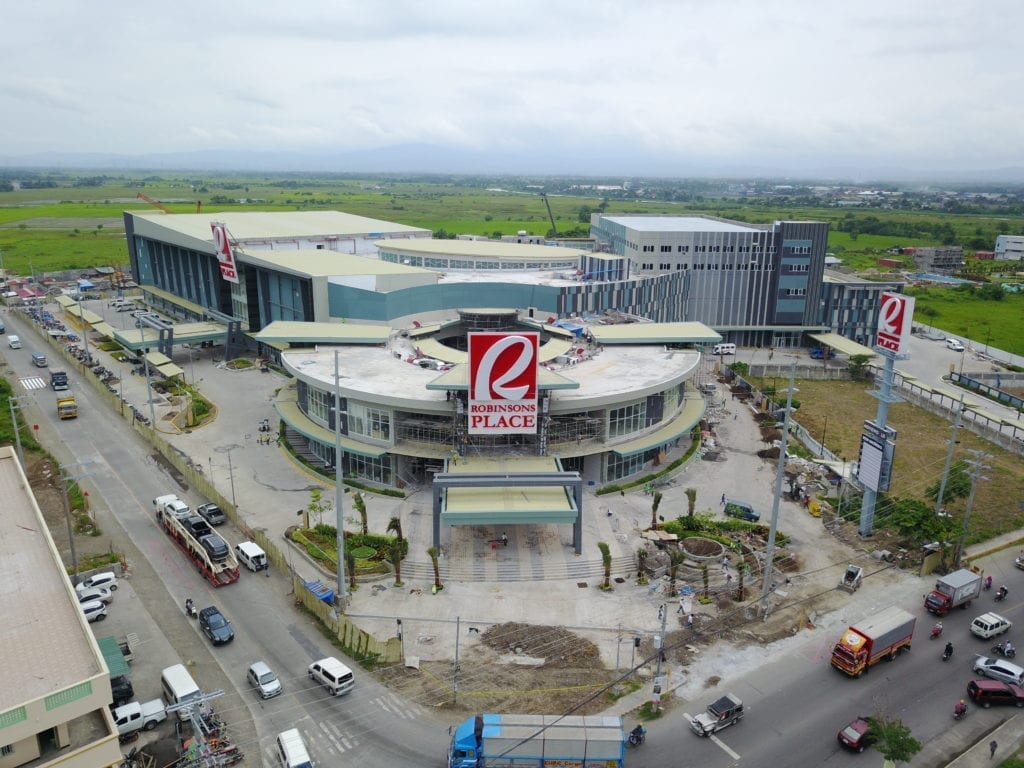
  • Robinsons Retail plans 150 new stores in Philippines

    Robinsons Retail plans 150 new stores in Philippines

    Robinsons Retail Holdings will launch up to 150 new stores in the Philippines this year.

    The firm published a presentation online revealing plans to invest PHP3–5 billion (US$57.8–96.3 million) on the store openings, following expenditure of PHP4.41 billion ($85 million) on openings last year. As at December, it had 1910 stores, including supermarkets, department stores, do-it-yourself stores, specialty stores, drugstores, and convenience stores. The entire network covers a gross floor area of 1.48 million sqm.

    Robinson’s achieved a 5.9 percent same-store sales growth last year, with help from a 1.5 percent uptick in transaction count and a 6.1 percent increase in basket size in its supermarket business. The group is targeting a 2-4 percent same-store sales growth this year.

    The firm’s net income reached PHP5.11 billion ($98.5 million) last year, an increase of 2.6 percent on the year previous, with a 15.1 percent increase in net sales.

  • DBS Rolls Out Customer Center of the Future

    DBS Rolls Out Customer Center of the Future

    DBS has retrained its customer center employees to take on new roles as customers become more digitally savvy. Voice biometrics specialists, live chat agents, and customer experience designers are among the 13 new job roles that DBS Bank has introduced in recent years as it creates the customer center of the future, the bank said in a media statement on Thursday.

    As it creates the customer center of the future, the bank has upskilled and retrained over 500 customer center employees and eliminated common customer pain points such as long waiting times. «By investing in our people, we have been able to transform from a labor-intensive department with a high turnover rate to one that is technology-enabled where employees are more fulfilled and armed with future-forward skills,» said Geeta Sreeraman, DBS’ Head of Customer Centre, Singapore.

    Customer centers are traditionally labor-intensive departments. At DBS Singapore, its customer center processes over four million inbound customers’ calls every year. But with new digital initiatives and new roles created, call volumes have dropped 12 percent over the last year. Over the next three years, the bank predicts call volumes will drop by a further 20 percent.

    As customers become more digitally-savvy, DBS has expanded its service channels online and on social media to serve its customers. DBS’ customer center has also incorporated technologies such as voice biometrics, chatbots, and data analytics so that callers can experience shorter call waiting times and opt to resolve their banking queries independently via the bank’s website, on their mobile banking app or through the bank’s Facebook or Twitter channels.

    In 2017, DBS committed to investing S$20 million over five years to equip employees with digital skills to become a future-ready workforce. Since then, the bank has rolled out a company-led Professional Conversion Programme (PCP), an AI-based learning tool available 24/7 and scholarships that encourage peer-to-peer learning.

    The new roles in DBS’ Customer Center are:

    1. Social media relations manager
    2. ‘Live’ chat agent
    3. Customer experience designer
    4. Demand manager
    5. Mobile app developer
    6. Business intelligence lead
    7. Content creator
    8. Knowledge platform designer
    9. Voice biometrics specialist
    10. Natural language processing engineer
    11. Scrum master
    12. Digital evangelist
    13. VTM manager
  • Indian startup RealTell launches gamification for Retailers

    Indian startup RealTell launches gamification for Retailers

    Offline retail is here to stay,” says founder of in-store experiential service.

    Retail tech startup RealTell is launching its flagship product “Realtell Retail” for fashion and lifestyle brands.

    “Offline retail is here to stay,” said Ashish Mittal, chief mentor at Turning Ideas Ventures (which incubated RealTell) “and this startup helps retailers, primarily the fashion and apparel brands, to drive footfall and increase basket size by gamifying the offline shopping experience.”

    The company was started by two young college entrepreneurs from Shri Ram College of Commerce (SRCC) Delhi University, Sanyam Gupta and Shivendra Misra.

    In a statement, the company said its kiosk solutions will help shoppers to discover new combo prices for the fashion and other retails products every day, based on artificial intelligence and machine learning, driving footfall to stores and turning the buying experience into a game.

    Press materials released by the brand observed that while online retailers have detailed information about shoppers – because every click can be tracked – offline retail stores lose out on valuable shopper insights due to the lack of proper infrastructure and technology.

    With its patented technology, RealTell Retail gamifies the shopping experience by letting shoppers discover a dynamic price for products of their choice.

    “Imagine walking into a store, scanning your items at a kiosk and saving money at each visit,” said Misra.

    “What’s exciting is that the prices and the offers change every day. That’s what no one has been able to do. The industry has relied for long on the rule of thumb and guesswork but never before has it been able to make data-driven decisions at scale to make the experience of the end-customer so good that they want to come back again.”

    Cofounder Sanyam Gupta added: “It is about making the customer the king and having a compelling value proposition to drive footfall that offline retailers will not experience with the traditional systems that they use.”

    The startup has deployed its solution in more than 900 stores under lifestyle manufacturer Crimsoune Club pan India.

    “Mobility is clearly the future of retail and lifestyle brands will have to stay on top of the wave to continue to grow and innovate,” said Crimsoune Club director Piyush Mangla.

    “RealTell has already helped Crimsoune Club manage the business at the click of a button and now, drive more footfall to stores, something which offline retail stores have struggled for long.”

  • Little Dip in Hong Kong Retail Sales Last Month

    Little Dip in Hong Kong Retail Sales Last Month

    Hong Kong retail sales in March slipped by a negligible 0.2 percent, a slower decline than the 1.6 percent of January and February combined.

    But figures from the Census and Statistics Department show first-quarter retail sales were still down 1.2 percent year on year.

    After netting out the effect of price changes over the same period, the provisional estimate of the volume of retail sales in March decreased by 0.8 percent compared with a year earlier, and for the first quarter by 1.6 per cent.

    March’s decline was driven largely by the watches, jewelry and valuable gifts sector, which fell by 2.6 percent, and apparel, down by 2.3 percent. Sales of electronic goods fell by 15.6 per cent, of optical shops by 5.7 per cent and of books and stationery by 2.5 percent.

    Conversely, sales by supermarkets increased 3.3 percent, of medicines and cosmetics by 2.5 percent, in department stores by 5 percent, and of food, liquor and tobacco by 3.6 per cent.

    Footwear and accessories sales rose by 7.1 percent, furniture by 4.3 percent and Chinese drugs and herbs by 1 percent.

    A government spokesman said the decline in Hong Kong retail sales in March “reflected the cautious consumption sentiment amid various external uncertainties”.

    He said that looking forward, retail sales business will likely continue to be affected by various external uncertainties in the near term, but the largely stable labor market and the sustained growth in inbound tourism should provide some support.

  • CX is Critical to Cuccessful for Etailers

    CX is Critical to Cuccessful for Etailers

    Why a personalised and convenient engagement with shoppers is critical in online stores. Consumers are expecting more personalised and convenient experiences from retailers and brands in the B2B space.

    Research shows 58 per cent of online shoppers expect retailers to provide a more personalised user experience while 64 per cent of consumers have purchased online because of free shipping.

    That’s one of the key conclusions shared at a recent seminar in Hong Kong jointly organised by digital retail-experience agency Moni and e-commerce platform Magento, to share best practices in the industry and guide retailers on successful strategies for rolling out an e-commerce platform in Asia.

    Ensuring a superior customer experience cannot be achieved by adopting a one-size-fits-all prospect. It is critical to deliver consumers an excellent experience across every channel, including e-commerce.

    “Experience-driven commerce provides a comprehensive and flexible platform to make every moment personal and every experience shoppable,” says Mel Lim, enterprise sales manager – APAC at Adobe Magento.

    Delivering a personalised, customised experience of providing product recommendations based on a customer’s browsing history, presenting a dynamic call to action and saving abandoned carts, for example, are just some of the prime goals for online retailers in today’s multi-channel environment.

    Today, 77 per cent of consumers expect retailers to provide an end-to-end, connected experience which is consistent and integrates in-store and online.

    “Designing a true omnichannel experience is to provide customers what they want, when they want and where they want it – by delivering seamless experiences across all channels,” says David Francois, MD at Moni.

    The success of an omnichannel initiative depends on a combination of the brand’s presence – not only through an e-commerce store, but also on marketplaces, by initiating social commerce and by how well the online and offline experience is in sync, he says.

    Marketing automation can boost sales

    Cart abandonment is a constant challenge for e-commerce companies worldwide, with US$4.6 trillion worth of merchandise left unpurchased in online carts every year. The 77-per-cent cart-abandonment rate can be minimised by optimising an online store, taking steps such as simplifying the check-out processes and implementing marketing-automation tools to capture the lost sales.

    Magento has more than 4400 extensions to empower the platform, including an abandoned-cart automation tool powered by Dotmailer that produces professional, personalised email communications and reports user data from a company’s Magento store.

  • Suning.com’s Online Sales Soars

    Suning.com’s Online Sales Soars

    Suning.com’s first-quarter online sales soared 40.87 per cent as the company’s smart-retail strategy continues to drive the rapid growth.

    Operating income of RMB 62.2 billion (US$9.2 billion), represented a 25.44 per cent increase on the same period last year. First-quarter net profit was RMB 136 million.

    In a statement, Suning.com said during the first quarter of this year, the overall domestic consumer market in Mainland China still exhibited potential for growth.

    “Despite the softer market environment, Suning’s online and offline businesses maintained relatively rapid growth.”

    Off-line, Suning continued its large-scale expansion, its network comprising 9758 self-owned stores and 2571 franchise stores as at March 31. A standout was the Redbaby store, whose sales increased by 15.7 per cent year on year.

    “In the online market, with the enhanced industrial synergy and the improved efficiency brought by resource integration, the growth rate of Suning’s sales clearly outpaced the industry average,” the company said.

    During the quarter, the company set up five major product groups including household appliances, consumer electronics, FMCG, clothes and accessories, and international items to streamline product management.

    In the FMCG sector, Suning strengthened its brand and achieved dual online-offline growth through centralised procurement, purchasing directly from the manufacturer and strategic cooperation, which helped grow its network of offline stores.

    “In the same period, Suning has further optimised the supply chain management of online and offline stores through the acquisition of 37 Wanda stores, marking a significant success for Suning’s all-categories product portfolio operational strategy.”

  • Central Phuket opens luxury VIP Zone

    Central Phuket opens luxury VIP Zone

    Thai property developer and the operator of Central Phuket shopping centre, CPN, has celebrated a new luxury zone with the launch of a range of world-class brands.

    The company says the new stores are being introduced in line with “the rapid growth and high demand of the affluent world tourist market in support of Thailand’s tourism industry’s move to elevate Phuket city as a global beach lifestyle destination comparable to the French Riviera, Miami, and Hawaii”.

    “As a global player, we aim to elevate Central Phuket to become one of the most complete travel destinations in the world,” said CPN deputy CEO Wallaya Chirathivat. “Central Phuket has the concept of ‘The Magnitude of Luxury & Leisure Resort Shopping Destination’ in the form of a ‘Beach Lifestyle’, which perfectly matches with Phuket as a beach city comparable to the world’s greatest beach cities. We truly appreciate that the global luxury brands have placed trust and confidence in our project as the first luxury mall located outside Bangkok, Thailand.”

    To mark the occasion, Central Phuket held a grand celebration entitled “The Unveiling of the New World of Luxury” highlighting the prestigious “Universe of Sirivannavari: The First View from Paris to Phuket” exhibition. HRH Princess Sirivannavari Nariratana allowed the exhibition to be held for the first time in Thailand at Central Phuket Floresta from April 28 to May 26.

  • Joy City reveals management Revamp

    Joy City reveals management Revamp

    Hong Kong property company Joy City has revealed new management appointments and the departure of its CFO.

    Two new deputy GMs have been appointed: Song Bingxin and Guo Fengrui.

    Song, 49, joined Cofco Corporation, Joy City’s controlling shareholder, in 1994. From December 2016 to April this year, she was deputy GM at Grand Joy Holdings.

    Guo, 50, served as GM of the operations management from February 2015 and acted as the GM assistant from April 2019 at Grand Joy Holdings.

    At the same time, CFO Xu Hanping has ceased her role “due to work reallocation”, according to a stock exchange filing by Joy City.

    “Ms Xu confirmed that she has no disagreement with the board and there is no matter in relation to her cessation as the CFO that needs to be brought to the attention of the shareholders of the Company,” the statement read, before expressing gratitude for her service.

    Zhang Jianguo, 53, has been appointed as her replacement. He joined Grand Joy Holdings in 1994 and most recently served as CFO at Grand Joy Holdings.

    All the changes took effect on April 26.

    The Joy City management team now comprises Zhou Peng (GM), Yao Changlin, Song, Guo and Li Wenyao as deputy GMs and Jianguo as CFO.

  • Sephora Hong Kong plans Eight More Store Openings

    Sephora Hong Kong plans Eight More Store Openings

    Sephora Hong Kong has confirmed not one, but eight stores in its return to brick-and-mortar retailing in the territory – but shoppers will have to wait until August for the first outlet to open.

    As previously reported, the LVMH-owned chain will open a 4200sqft store in IFC Mall after a 10-year absence from the city.

    In an announcement confirming its plans, Sephora Hong Kong says it will open a second store at Windsor House in Causeway Bay in the fourth quarter of this year and expand its online offer.  Six more stores will follow over a three-year timeframe, their locations as yet not revealed.

    In a statement, Benjamin Vuchot, president of Sephora Asia, said the company currently operates in 12 countries and during the next three years sees its retail presence expanding by almost 50 per cent across Asia.

    “Hong Kong, being strategically located in the Greater Bay Area, allows us to meet the growing demands from Hong Kong consumers, as well as tourists from Mainland China and Southeast Asia,” he said.

    “We believe that Hong Kong will be a key market … giving Sephora the opportunity to amplify global beauty trends locally, elevate the in-store retail experience and to bring in digital touch points within the brick-and-mortar format to create a virtuous customer centric cycle.”

    Sephora said the retail landscape in Hong Kong has changed significantly over the 10 years since Sephora last had a store there.

    “Conventional retail with a physical presence has proven higher chances of winning in a market with strong digital development. Moreover, the re-launch of Sephora brings to Hong Kong’s department store-focused retail landscape a much-needed prestige retail chain for an authentic omni-channel experience,” the statement said.

    Sephora Hong Kong plans to make beauty “more personalised, fun and interactive” upon its return, allowing customers “the freedom to experience products that work for them, learn tips and tricks, as well as to have access to unbiased beauty services from beauty advisors”.

    The company plans more than 40 brands of cosmetics exclusive to Sephora stores in the city, along with its own in-house label Sephora Collection. It has promised to include local Hong Kong brands in its offer as well, over time.

    Digital innovation will play an integral role in Sephora’s traditional retail experience, with vending machines to be located in stores to support the Beauty Pass loyalty program, an app powered by member insights to drive seamless customer service, a digital skincare consultation for immediate and accurate recommendations, and the opportunity to go online to book in-store makeovers.

  • Walmart trials new Online Store Format

    Walmart trials new Online Store Format

    Supermarket retailer Walmart has launched a new technology called Intelligent Retail Lab (IRL) that allows it to monitor its physical stores more efficiently and keep costs under control.

    The retail giant is testing this new technology, which includes artificial intelligence-enabled cameras, interactive displays and a massive data centre, in its 50,000-square-foot neighborhood market grocery store in Levittown, New York.

    According to IRL CEO Mike Hanrahan, the location is one of Walmart’s busiest stores and has more than 30,000 items and this allows them to test out the new technology concept in a real-world environment.

    “We’ve got 50,000 square feet of real retail space. The scope of what we can do operationally is so exciting,” Hanrahan said.

    IRL is set up to gather information about what’s happening inside the store through an array of sensors, cameras and processors. It has a combination of cameras and real-time analytics that will automatically trigger out-of-stock notifications to internal apps that alert associates when to re-stock, detect the products on the shelf and compare the quantities, among others.

    Hanrahan said the first thing this equipment will help the team focus on is product inventory and availability. In short, the team will use real-time information to explore efficiencies that will allow associates to know more precisely when to restock products, so items are available on shelves when they’re needed.

    “Customers can be confident about products being there, about the freshness of produce and meat. Those are the types of things that AI can really help with,” Hanrahan said.

    Walmart said with its new IRL technology, customers can trust that the products they need will be available during the times they shop.

  • Shandong Ruyi seeks $500m

    Shandong Ruyi seeks $500m

    Chinese textile and retail investment company Shandong Ruyi will list an IPO for its recently acquired The Lycra Co in the hopes of raising around US$500 million.

    The group is currently exploring a listing in the US as it works with Goldman Sachs, according to those familiar with the prospective deal.

    Progress has been slow for Shandong Ruyi since regulatory delays held up its $2 billion purchase of Lycra for more than a year, which it finally completed in January. Plans for the IPO are now at early stages and are subject to significant changes before listing, which is scheduled for sometime within the next three years.

    Shandong Ruyi has previously been reported as having ambitions to become “the LVMH of China” and has acquired numerous overseas fashion brands. It is now focusing on consolidating its holdings rather than pursuing new deals.

    Shandong Ruyi Investment Holding is the largest textile and apparel company in China, and ranks among the Top 100 Chinese multinational enterprises. It is headquartered in Jining, Shandong and operates 13 domestic industrial parks.

  • The new golden rule for retailers to be Succesful

    The new golden rule for retailers to be Succesful

    The retail climate in Australia has long been a concern, but could there be a secret sauce to help brands reclaim valuable real estate in the minds of their consumers?

    Let’s face it — which brand doesn’t want to be like Nike? Its mass market, appeal and unique ability to stay relevant throughout its 50-year history have made it one of the most valuable brands amongst sports organisations. If Nike hadn’t already cemented its position as one of the biggest culture catalysts in the world, Colin Kaepernick has definitely made sure it has now.

    Commentators have waxed lyrical about the Kaepernick campaign and marketers have taken to it big time. But retail businesses too can take a leaf out of this book. You can’t fault the way Nike engaged with consumers on the basis of what motivates them, summed up by the campaign’s tagline: “Believe in something. Even if it means sacrificing everything.”

    This is the crux of value-based engagement: engaging consumers on the basis of what they want to do, not necessarily what they want to buy. Australian retailers need to think beyond the product, and instead provide experiences and solutions that support and enable fundamental consumer needs, desires and aspirations.

    Between the brand and consumer, the latter now has more influence over the other. The growth of online shopping means the challenge for retailers to surprise and delight is getting harder, and thanks to technology, consumers are more informed and more in control at every stage of the purchase process. They are more aware of what they want and don’t want, and their attention span depends on how well you can teach, entertain or guide them at every given moment they interact with your brand.

    Consumer loyalty and advocacy is won and lost through the quality of experiences that retailers can provide. Whether your consumer comes to you to be inspired, be motivated to do good, alleviate frustrations, fulfil desires or solve a problem, retailers now need to create and invest in experiences to retain their customers.

    There are four main types of in-store experiences:

    • Convenient: These involve removing unwanted friction and inconvenience in the shopping journey. Amazon set a new standard for frictionless retail with Amazon Go, where consumers can walk in, shop and leave without ever going through a checkout line. With time as the new currency, the retailer that removes the most painful features of the shopping journey and increases overall convenience can go a long way towards building consumer loyalty and trust.
    • Communal: Turn the store into a destination for loyal customers to gather, who orient themselves to particular causes, affinities or cultural distinctions. In Tokyo, Adidas’ RunBase concept stores work extremely well as a local runners’ hub on which customers can test new gear and receive customised training ahead of purchase.
    • Curated: The future of retail will not be about having a proliferation of choices as it has been in the past; rather, it will involve winning consumers over with thoughtful curation of products and experiences. With OPSM reminding you to order more contact lenses for the next three months, would you consider moving to another optometrist? No!
    • Immersive: While this type of experience is still in infancy, it’s a safe bet that more retailers are going to invest heavily in this space as the need for experience-based differentiation becomes paramount to survival and future growth. To promote Deadpool 2, 7-Eleven launched its first augmented reality (AR) in-store experience, which consisted of different points of engagement and encouraged customers to spend more time in-store. Deadpool could be seen through the app as guiding users around the store, and a selfie filter was available, plus scannable codes that unlocked in-store activities and loyalty points.

    The next frontier of retail will have shopper demands and desires be foreseen, processed and fulfilled before they are articulated or even consciously realised. The creation of unique experiences represents a chance for retailers to achieve true, meaningful engagement with their consumers. And by committing to helping them achieve what they want to achieve, retailers will ensure their relevance over a greater period of time.