Tag: Retail

  • Mountain Designs relaunches witch New E-commerce Platform

    Mountain Designs relaunches witch New E-commerce Platform

    Australian adventure brand Mountain Designs has officially relaunched, with a new e-commerce website sporting the brand’s full range.

    Spotlight Group chief executive of leisure brands Chris Lude said the business was committed to maintaining its 45 year heritage.

    “We are dedicated to ensuring the iconic Mountain Designs brand remains Australian owned, operated and designed,” Lude said.

    The relaunched brand also offers a renewed range, with the business having redeveloped 14 of its best sellers, as well as newly designed apparel and gear.

    “Adventure is in the Mountain Designs DNA, and the new range will continue to provide quality, technical, multi-functional gear that people know and love,” Lude said.

    Acquired in early 2018 by Spotlight Retail Group for an undisclosed sum, Mountain Designs confirmed it would offer a selection of goods, including thermals, apparel and equipment, within the Spotlight-owned Anaconda chain.

    Prior to being acquired by Spotlight Retail Group, Mountain Designs had been shuttering its bricks-and-mortar locations to focus on a purely online model to create a more sustainable platform for the business moving forward.

    During this period, the brand’s website was also closed to facilitate this shift, remaining offline until earlier this week.

    Spotlight Retail Group has recently indicated a larger push into the New Zealand market amid a larger revamp of its brands, with craft retail chain Spotlight to open a Christchurch flagship later in the year.

    It remains to be seen if this initiative extends to Anaconda or Mountain Designs – both of which operate solely in Australia.

  • China’s Coffee Consumption Keeps Growing

    China’s Coffee Consumption Keeps Growing

    China’s coffee craze has gained pace with the growth rate in consumption on premise 25 per cent higher last year.

    According to research from Mintel, China’s on-premise coffee market value reached RMB64.7 billion (US$9.6 billion) last year, up 7.5 per cent on the year prior, when the growth rate was 6 per cent. It is predicting growth to resume to 6 per cent annually from this year until 2023.

    However, while sales by value are thriving, Mintel estimates that the number of on-premise coffee house outlets shrank by 2 per cent as fewer new stores opened than closed. But that is half the decline of a year earlier.

    “Like many industries across China, the on-premise coffee market is not immune to the influence of New Retail,” said Belle Wang, associate food and drink research analyst at Mintel.

    “The quick expansion of New Retail coffee businesses across the country has stimulated more coffee consumption among consumers, resulting in strong sales volume. With the growing momentum of New Retail coffee shops, and an increasing number of international and domestic brands entering the market, consumers today have more options when it comes to coffee. As such, the industry will see positive growth rates over the next two years.

    “However, this growth will slow down, largely due to Chinese consumers’ traditional behaviour of drinking tea and the country’s thriving tea shops,” said Wang.

    Mintel expects positive volume growth in the next two years, at 0.6 per cent from last year to this year and a further 1.2 per cent between this year and next, to reach an estimated 74,000 coffee houses by 2020.

    Convenience versus traditional

    When it comes to choosing where to get their caffeine fix, more Chinese consumers today are purchasing coffee from convenience stores than traditional coffee house chains. Mintel’s research reveals that 52 per cent of Chinese consumers (survey sample of 3000) buy coffee at convenience stores compared to just 44 per cent who purchase it from a traditional coffee-house chain.

    About 23 per cent of consumers who drink on-premise coffee at least once a month have done so at new retail coffee houses.

    “Our research shows that more on-premise coffee users get their coffee from convenience stores than from traditional chain coffee houses. This is perhaps due to Chinese consumers associating convenience stores with a full range of breakfast options. Convenience stores are also viewed as easily accessible and more affordable. Given this upward trend, other coffee vendors could introduce unique features, like providing various food and coffee pairings, in order to compete,” said Wang.

    “While New Retail coffee is experiencing a lot of growth at the moment, consumer engagement remains low – partially because they are still relatively new. However, there is an opportunity for New Retail coffee houses to catch up in terms of popularity by offering aggressive discounts and delivery service.”

    That said, big discounts alone will not be sufficient, as discounting is neither the best nor a sustainable strategy for a long-term business plan. There needs to be other merits such as offering healthy mix-and-match meal deals,” Belle added.

    Latte the top choice

    Mintel’s research reveals the favourite coffee beverages consumed in China’s coffee craze. More than half of on-premise coffee consumers order lattes (54 per cent) or cappuccinos (52 per cent). These are followed by mocha (45 per cent), Americano (38 per cent), flavoured coffee (36 per cent), espresso (26 per cent) and cold-brew coffee (23 per cent).

    A relatively new concept in China’s coffee craze is coffee mixed with plant-protein milk, with 22 per cent of on-premise coffee consumers ordering it.

    “Lattes and cappuccinos are the most popular drinks in coffee houses as they are generally very palatable due to their creamy texture and rich dairy flavour. Furthermore, as they are usually widely available, they are often a first step into coffee appreciation,” said Wang.

    “Once consumers fully appreciate these basic beverages, they are more likely to try non-milk based drinks, like an Americano or cold brew coffee. However, only offering basic coffee selections makes it difficult to stand out in the homogenous coffee marketplace and attract more coffee consumers.

    “As such, coffee houses can take inspiration from tea shop drinks by making their offerings more visually appealing and ‘instagramable’ in order to draw attention and pique consumer interest,” Belle concluded.


  • Indonesian retail sales growth speeds up

    Indonesian retail sales growth speeds up

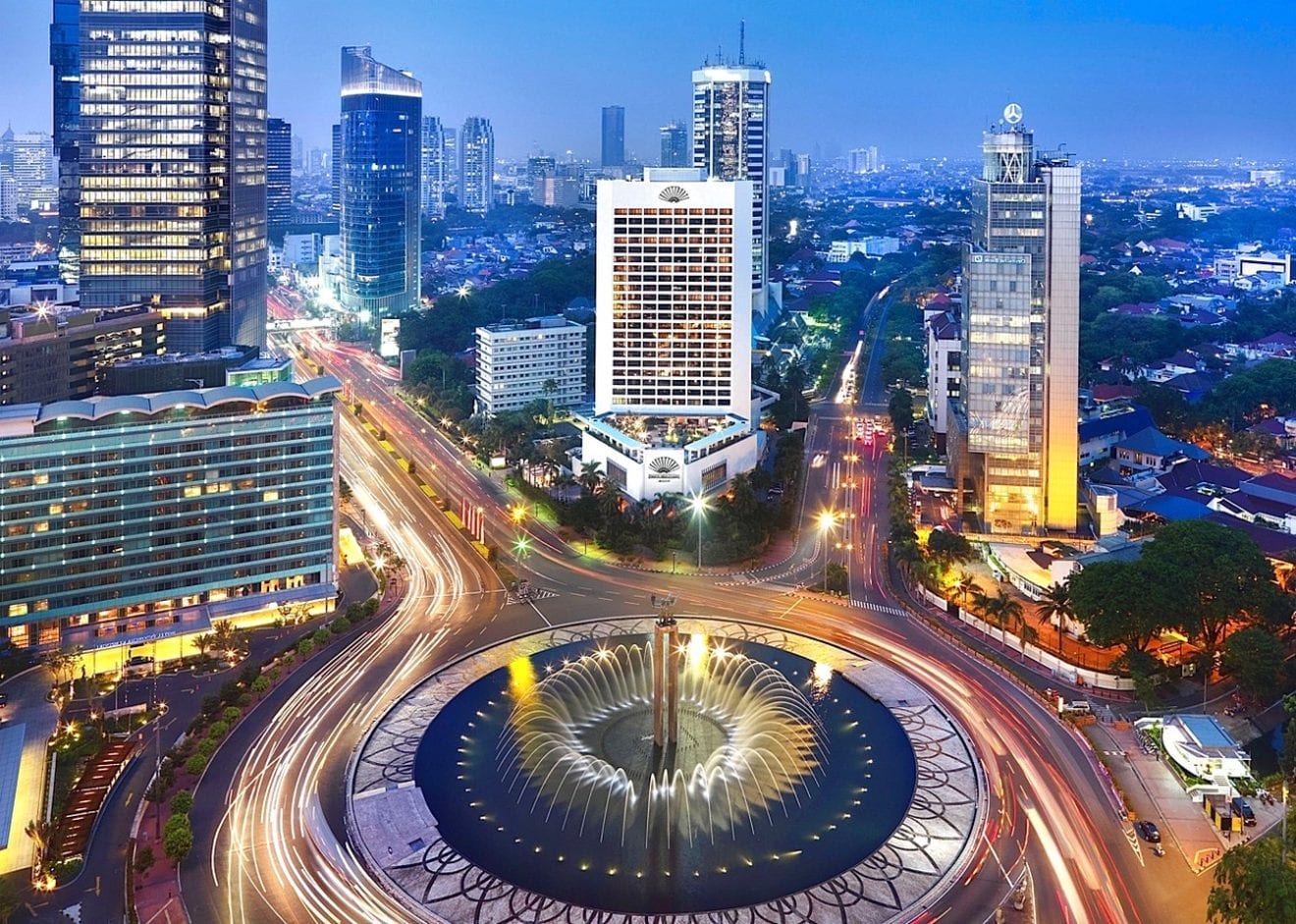
    Indonesian retail sales surged 9.1 per cent in February – a rate higher than anticipated.

    The growth rate appeared to be driven by shoppers splurging on Lunar New Year celebrations as well as an increase in apparel sales during the month.

    February’s rise followed a 7.2 per cent improvement in January and government statisticians have predicted a rise of 8 per cent for March.

  • Shop&Go chain showcases brutal retail practice with 1$ Price Tags

    Shop&Go chain showcases brutal retail practice with 1$ Price Tags

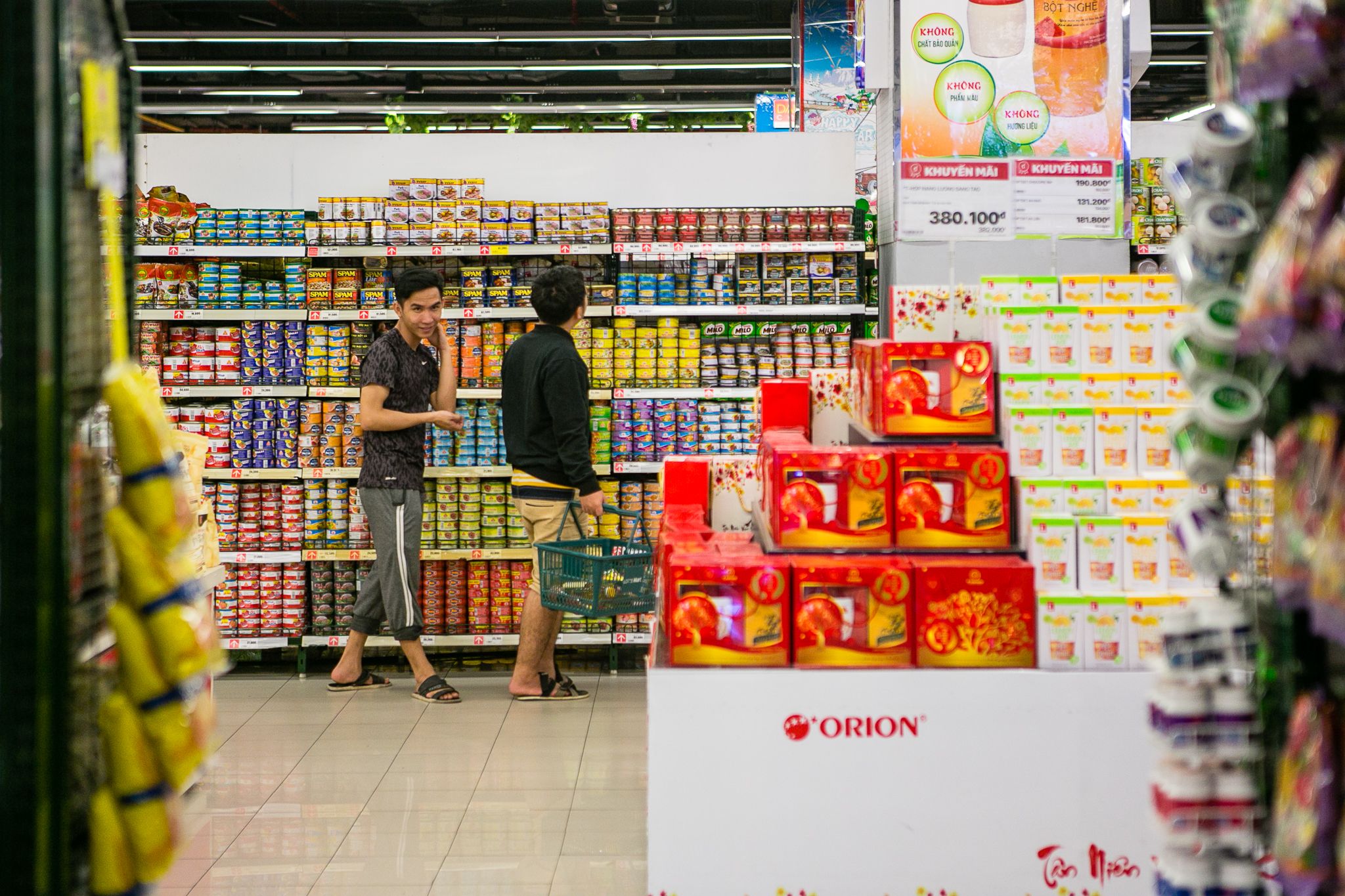
    Shop&Go became the newest loser in Vietnam’s retail market Monday when it was bought out by conglomerate Vingroup for $1.

    The company reported an aggregated loss of almost VND205 billion ($8.81 million) by 2016, the latest year for which figures are available. VinCommerce, the retail arm of Vingroup, took over its 87 stores and its debts in the latest deal.

    Vietnam’s retail market has become increasingly crowded with both local and international players over the last five years. Although experts have said that the market has a lot of growth potential, many businesses have quit or scaling back expansion plans.

    Coffee giant Trung Nguyen has twice attempted and failed with its G7 Mart and G7-Ministop.

    Super market chain Saigon Co.op established its first retail store Co.op Smiles in 2016 with the hope of opening 500 such outlets a year, but two years later, the number is around 100.

    Japanese convenience store chain FamilyMart previously said it wanted to have 1,000 stores by 2020, but it announced last year that it won’t invest in new stores. The number of its stores stay at 151.

    Vietnamese food company Vissan said early last year that it has closed nearly 60 of 100 convenience stores. Nguyen Ngoc An, CEO of Vissan, said that the stores had failed to attract a large number of customers.

    A senior manager of the Family Mart said that they “could no longer pour more resources into the chain.”

    Industry insiders say that retail chains fail to compete because they don’t have deep pockets to bear the losses. Pham Viet Anh, a strategic business expert, said that cash flow is among the most important factors in the retail business. If a company cannot collect enough revenue before it has to pay suppliers, its working capital gets eroded.

    “A retail company can rely on its debts with providers in the short term, but in the longer term, it needs to find a way to be profitable. If not, growing losses will eventually bankrupt it,” Anh said.

    Vietnam’s revenue from selling goods last year rose by 11.7 percent from 2017 to $142 billion, up 12.4 percent from 2017.

  • Dusit Thani Shares More News about Bangkok Developments

    Dusit Thani Shares More News about Bangkok Developments

    More details have been revealed about the massive mixed-use development planned for downtown Bangkok on the high-profile site of the former Dusit Thani Hotel.

    Dusit Thani, the Thai hotel and property development company, is partnering with Central Pattana, which owns the Central retail and mall businesses, in the development, located a stone’s throw from the Sala Daeng skytrain station, adjacent to Rama 4 Road and Lumpini Park.

    Scheduled for completion in 2024, the US$1.15 billion development will comprise 440,000sqm of prime real estate, including a new Dusit Thani hotel, luxury residences, a modern office tower and a high-end shopping mall.

    The development will open in three stages, firstly the 39-story hotel building, followed by Central Park Offices, whose 90,000sqm will be fitted out as a technology hub.

    The 80,000sqm mall, to be called Central Park, is designed to interconnect with all elements of the development as well as the skytrain and adjacent underground railway stations. It will feature a rooftop park. Both the offices and mall are scheduled for completion in 2023.

    The final part of the project, a 69-storey residential tower which is divided into two sections – Dusit Residences and Dusit Parkside – will be completed subsequently.

    “We aim to deliver a one-of-a-kind mixed-use project that blends heritage and innovation, connects all important infrastructure and transportation, embraces a green concept reflecting our prime position opposite Lumpini Park, and delivers enduring value for all our stakeholders,” said Suphajee Suthumpun, group CEO of Dusit Thani Public Company.

    “By blending the best of Thai design and hospitality with international standards of service, we will create a new city landmark that reflects our past, embraces our present, and anticipates the future. By doing so, we will continue the legacy of Dusit Thani Bangkok following the same principles Thanpuying Chanut Piyaoui had when she founded the hotel — to be bold and do great things, to create things that never existed before, and to always have a positive impact.”

    Suthumpun said the development aimed to “revolutionise the way people shop, dine, work, live and stay” in the area.

    Wallaya Chirathivat, deputy CEO of Central Pattana said Dusit Central Park will connect four Bangkok neighbourhoods in four directions – Ratchaprasong (north), Charoenkrung (south), Sukhumvit (east), and Yaowarat (west), in doing so creating “a new junction where old meets new, and financial meets commercial”.

  • The Mills Fabrica opens Techstyle X, Next Level Retail

    The Mills Fabrica opens Techstyle X, Next Level Retail

    Hong Kong business incubator and tech springboard The Mills Fabrica celebrated the launch of its first retail store Techstyle X on Saturday at The Mills.

    According to the group, the term “techstyle” covers material and supply chain innovation, wearables merging technology and style, and new retail experiences.

    The new store provides a platform for promising techstyle companies to showcase their products and services, attempting to bridge the gap between traditional long-term and pop-up stores by offering innovative startups a retail space with high traffic and flexible terms.

    Following its grand opening, Techstyle X is offering three experiential zones for its visitors to discover new techstyle innovations. Visitors will get a chance to use the self-serve 3D scanning station, customise their own t-shirts, and explore the latest techstyle innovations.

    The self-serve 3D scanning station allows visitors to obtain their very own digital avatar with key measurements – customers may then order perfect-fitting garments from personalised suits to sustainably-sourced denim jeans.

    Companies are able to rent a display space to launch their products, test the market and share their innovations with the world at the store, allowing customers to witness the latest and upcoming brands in the techstyle industry.

  • RFG back to square one in asset sale process

    RFG back to square one in asset sale process

    Retail Food Group on Tuesday said sale talks with a potential buyer of its Donut King, Pizza Capers and Crust businesses have ended in disappointment, following months of negotiations.

    The deal fell through after the two parties failed to reach a formal binding agreement on terms that the board considered to be in the best interests of the company as a whole, RFG said in a statement.

    “Our Donut King and QSR brands [Pizza Capers and Crust] continue to provide solid earnings contributing to the company’s underlying profit,” Peter George, executive chairman of RFG, said.

    “The potential sale of any of these assets must be at a price not only acceptable to our board but in the best interests of our shareholders.”

    The franchisor, which operates Gloria Jean’s Coffees, Brumby’s Bakeries, Donut King, Michel’s Patisserie, Di Bella Coffee, The Coffee Guy, Café2U, Pizza Capers and Crust, had been pursuing an asset sale to help pay down its net debt of roughly $258.9 million, after restructuring costs and write-downs wiped out its declining profit in the first half of FY19.

    An RFG spokesperson said the failure to sell its Donut King and QSR brands will not impact the company’s recent agreement with NAB and Westpac to reset its financial covenants and waive a review of the business.

    The company continues to work closely with its lenders and maintains their support, the spokesperson said.

    The RFG board is investigating a range of other options to pay down its debt, including equity, other debt funding options and potential asset sales, and will update the market of any definitive option being reached.

    In response to a report that the Australian Securities and Investments Commission is “keeping an eye” on the franchisor, particularly around big announcements, the RFG board said it has not been made aware of any current investigations.

    A spokesperson for ASIC told that “ASIC supervises the market, so we monitor all share trading”.

  • Walmart partners with Google for voice shopping

    Walmart partners with Google for voice shopping

    US retail giant Walmart and tech company Google have collaborated on voice technology to assist customers with grocery shopping.

    Starting this month, Walmart Voice Order will allow consumers to order groceries through Google Assistant by saying, “Hey Google, talk to Walmart”.  Google Assistant will then follow the orders directly and add grocery items to their Walmart Grocery cart.

    “We continue to innovate for the future and look to technology to make great services even better in the future. Introducing: Walmart Voice Order,” said Tom Ward, senior vice president, Digital Operations, Walmart US.

    “With the new voice ordering capabilities we’re building across platforms with partners like Google, we’re helping customers simply say the word to have Walmart help them shop … literally.”

    “Best of all, customers can be extra confident that we can quickly and accurately identify the items they are asking for with the help of information from their prior purchases with us. The more you use it, the better we’ll get,” added Ward.

    When shoppers say “add milk to my cart,” the Google Assistant will add the specific milk brand the customer usually buys, meaning there is no need to continually repeat the brand, volume and whether it’s a low fat or whole milk.

    Shoppers can use Walmart Voice Order on Smart Displays like Google Home Hub, Android phones, iPhones, watches, etc.

    “We know when using voice technology, customers like to add items to their cart one at a time over a few days – not complete their shopping for the week all at once. So, this capability aligns with the way customers shop. We can’t wait to hear what they think about it and how it’s making shopping easier for them,” Ward explained.

    Walmart, Amazon competes in the US grocery sector

    Walmart’s latest move comes in light of Amazon’s plans to slash prices at Whole Foods Market and to give major discounts to Amazon Prime members. Amazon also offers voice-activated shopping using its own Alexa-enabled devices, which dominates the US smart speaker market, with 67 per cent market share in 2018.

    “We still don’t see a lot of people shopping and buying with smart speakers yet, but this may change if more lower-cost models begin to incorporate screens. We’re also likely to see people doing more things with their voice assistants as they find their way into cars and other home-based devices,” said analyst Victoria Petrock.

    There are still a minimum number of shoppers who are using speakers to shop. Voice commerce in 2018 accounted for approximately 0.4 per cent of US e-commerce sales. Analysts expect it to increase in the next few years.

  • M1 taps UOB for QR code payment

    M1 taps UOB for QR code payment

    Singapore operator M1 has partnered with the nation’s United Overseas Bank (UOB) to offer PayNow as a payment mode for M1 customers.

    Under the agreement, M1 customers can now make mobile payments for purchases via PayNow at all M1 Shop outlets, as well as make monthly bill payments via PayNow by scanning the QR Code on the bill.

    M1 is the first communications provider in Singapore to enable retail customers to make e-payments via PayNow, providing customers with an additional payment option, in addition to existing payment modes. UOB is the key provider of PayNow Corporate services to M1, and will help enable the safe and hassle-free scan-and-pay experience for M1’s customers.

    To pay for in-store purchases, customers need to scan a dynamic QR Code that is generated at the counter using the mobile banking application of any PayNow participating banks with QR scanning functionality. Customers can also use PayNow to pay for their monthly bills by scanning the dynamic QR code on their bill statement. Customers can complete the payment by confirming the transaction details that have been automatically filled in, such as the payment amount and recipient.

    “Today, about eight in 10 consumers in Singapore have adopted e-payments and PayNow is a very convenient e-payment platform which will enhance our customers’ payment experience. This new initiative is one of many, as part of our digitalization journey to deliver a seamless digital experience for our customers,” M1 CMO  P. Subramaniam said.

  • SF Express Logistics shuts SF Best retail network

    SF Express Logistics shuts SF Best retail network

    Chinese logistics firm SF Express is reportedly closing its network of SF Best offline retail stores in major Chinese cities.

    The move, which has seen the shuttering of the firm’s e-commerce and retail business SF Best, has been prompted by a slowing economy and thin margins in the sector. The brand was formally considered at the head of China’s e-commerce wave.

    Just two years ago, SF Best announced plans to open 10,000 outlets within three years. Its aggressive offline expansion plans, however, saw heavy retail losses and a high turnover in management that sent the firm into a dive.

    A spokesperson for the firm announced that it is currently undergoing restructuring and plans to ramp up operations in Beijing and southern China before further expansion. It is also working to strengthen its online brand.

  • Vingroup buys Vietnam c-store chain Shop&Go

    Vingroup buys Vietnam c-store chain Shop&Go

    Vingroup has acquired 87 Vietnamese Shop&Go convenience stores for just US$1.

    Vingroup’s retail arm VinCommerce, which manages Vinmart supermarkets and Vinmart+ convenience stores, will upgrade infrastructure, staff and goods at the acquired stores by the end of next month.

    According to a VinCommerce statement, Shop&Go made the approach and offered to sell itself.

    “The competition is more intense than we imagined; that is why we’ve decided to leave,” a Shop&Go spokesperson said, admitting Vietnamese retail market still has potential for growth.

    “We have sold our stores to Vingroup so it can continue to develop them.”

    Opened in 2006, Shop&Go was one of the earliest convenience store chains in Vietnam.

    By 2016, it had aggregated losses of almost VND205 billion (US$8.81 million).

    VinCommerce runs 108 VinMart supermarkets and 1900 VinMart+ convenience stores.

    Last year, it acquired supermarket chain Fivimart with 23 outlets.

    In a report last year, Nielsen Vietnam observed a rise in visits by Vietnamese to convenience stores. The average shopper uses a convenience store 4.5 times per month – three times the frequency of 2010.

  • South Korean online retail sales show steep climb

    South Korean online retail sales show steep climb

    South Korean online sales posted double-digit growth in February, underpinned by soaring demand for air purifiers.

    The spike in demand was caused by an instance of fine-dust pollution that hit Korea during the month.

    The findings were published in a Ministry of Trade, Industry and Energy report last Thursday that registered a 12 per cent advance in online retail sales compared with the same period last year.

    Home appliances sales, encompassing air purifiers, grew 62.2 per cent over the course of the month.

    The February figures contrasted with a 0.4 per cent dip in revenue by both online and offline major retailers and a 7.1 per cent decline in offline sales. Discount outlet sales also dropped by 13.7 per cent.

  • Ikea to open first small-format store in Sydney

    Ikea to open first small-format store in Sydney

    Ikea Australia’s first small-format store is set to open in Sydney’s Westfield Warringah Mall at the beginning of May.

    The Ikea Planning Studio will provide shoppers on the Northern Beaches with a place to plan and build their dream kitchens and bedrooms. Staff on-site will be equipped with tablets and provide one-on-one consultations to help customers select the right products from Ikea’s range of furniture, appliances, storage solutions and more.

    This stands in sharp contrast to the massive, showroom-cum-warehouse stores that Ikea traditionally has been famous for. But the shifting retail landscape has seen the Swedish furniture giant globally adapt its offer by launching e-commerce sites, providing more do-it-for-me services and, increasingly, experimenting with smaller stores in urban centres.

    “At Ikea, we know Australians are looking for new and more convenient ways to shop their favourite products. We’re excited to be bringing bespoke Ikea shopping experiences to Aussies around the country in locations that suit them,” Ikea Australia country manager Jan Gardberg said.

    “We’ve chosen Warringah Mall as our first location in order to reach even more Australians that live within urban areas, outside of the city centre.”

    The Planning Studio seemingly aims to provide a more immersive shopping experience, with a “luxe bedroom environment” that will transport shoppers to a “hub of femininity through floral scents and classic detailing” and a “soothing wellness sanctuary” that will feature a variety of kitchen solutions.

    In a separate initiative, the retailer currently is hosting a series of “sleepovers” at stores across the country, where select customers can experience how Ikea’s range of sleep solutions – that is, mattresses, bedding and other items – provide a better night’s sleep. This suggests Ikea is looking for ways to interact with customers on a more personalised and experiential level.

    “We want to inspire people to get creative and explore the possibilities of our range. The launch of our small format stores is just another way we’re helping Australians to create personalised and functional spaces within the home,” Gardberg said.

    The Planning Studio’s design was inspired by Scandinavian modern style and Ikea’s design values of sustainability, quality, form, function and affordability, the retailer said, and created with the eco-friendly shopper in mind.

  • Drop in Hong Kong retail sales

    Drop in Hong Kong retail sales

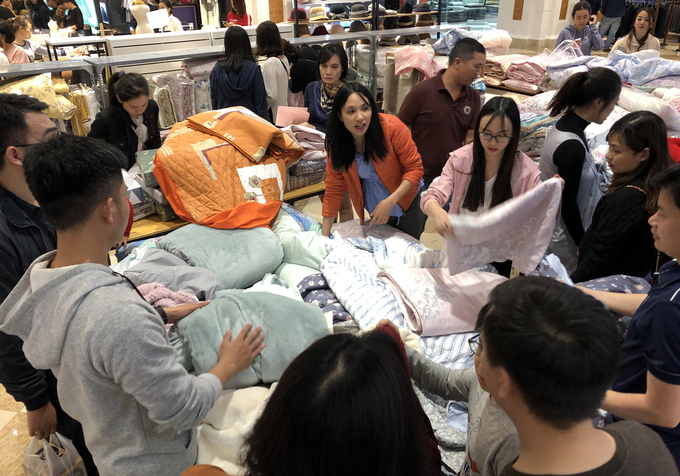
    Hong Kong retail sales fell 1.6 per cent in the first two months of this year.

    February’s sales were always expected to be down on last year due to the timing of Lunar New Year. They fell 10.1 per cent, while the revised figure for January was an increase of 7 per cent.

    As always, the Census and Statistics Department (C&SD) warned not to read too much into either month’s performance alone, asserting the combined January-February figures for each year provide a more accurate assessment of the state of retail sales growth.

    A government spokesman said the weak performance of retail sales in recent months reflected that consumer sentiment remained cautious amid “various external uncertainties”.

    “The near-term outlook for retail sales should continue to be affected by moderating global economic growth and various external uncertainties, but the full-employment situation and the sustained growth in inbound tourism should provide some support.”

    After netting out the effect of price changes over the same period, Hong Kong retail sales for the first two months of the year decreased by 1.8 per cent year on year.

    Combining the two months, sales of jewellery, watches and clocks decreased by 2.8 per cent. Other categories to fall included apparel down 3.7 per cent; food, alcoholic drinks and tobacco down 1 per cent; electrical goods and other consumer durable goods down 18.3 per cent; Chinese drugs and herbs down 1.7 per cent; and optical shops, down 2 per cent.

    However sales of medicines and cosmetics increased by 2.3 per cent; department store sales rose 4.2 per cent; supermarket sales by 1.5 per cent; footwear and accessories by 1.3 per cent; furniture and fixtures by 3.4 per cent; and books, newspapers, stationery and gifts by 1.7 per cent.

    The C&SD estimated the value of retail sales decreased by 0.6 per cent during the three months to February compared with the preceding three months, while the volume declined by 1.2 per cent.

  • Gome Retail’s loss soars tenfold After Restructuring

    Gome Retail’s loss soars tenfold After Restructuring

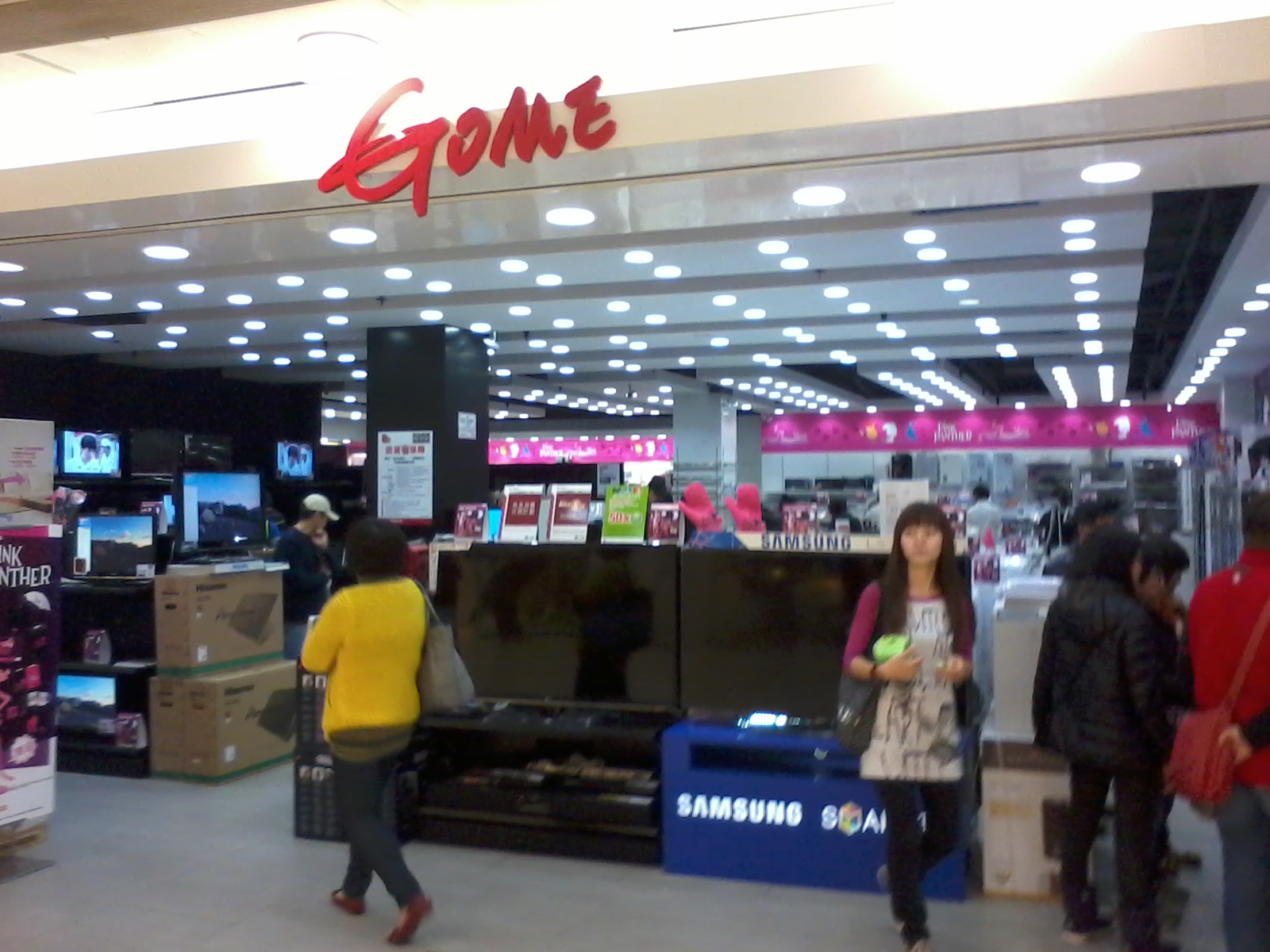
    Gome Retail’s loss tenfold last year to RMB4.887 billion (US$728 million), compared with RMB450 million in the previous year.

    The loss – projected early last month in a profit warning – was largely due to massive write downs as the once brick-and-mortar based retailer continued its transformation into a New-Retail-era business, with its focus moving online. On a day-to-day trading basis, the company has almost broken even.

    During the reporting period, GMV (gross merchandise volume) from its ME Shop increased by 368 per cent, while GMV from new businesses such as home solution and integration of kitchen cabinets with electrical appliances increased by 116 per cent and from smart products by 89 per cent. Services GMV rose by 51 per cent.

    “The booming new business indicates that the group’s strategic transformation is progressing well,” the company said in an earnings statement.

    Overall sales revenue fell 10 per cent to RMB64.356 billion, and consolidated gross profit margin of 16.8 per cent was down on the 18.26 per cent of 2017.

    “Looking forward, Gome will continue to focus on major large-scale integrated flagship store projects in the first- and second-tier cities in an effort to provide one-stop comprehensive household solution, from home appliance to decoration, construction and household services,” the Hong Kong-listed company said.

    The group expects to open 16 large-scale integrated flagship stores and 200 home-decoration materials and home furnishing shops this year.

    “Gome will step up the output of its supply-chain service in the third- to sixth-tier cities to achieve swift development of store coverage in county-level cities, with an emphasis on franchising. It is expected that 500 franchise “new retail stores” and 200 self-operating county-level stores will be opened this year.”