Tag: Retail

  • Stocking up on Digitalization to Increase Share-of-Basket

    Stocking up on Digitalization to Increase Share-of-Basket

    With the rise of e-Commerce, Asian retailers are under tremendous pressure to continuously push traditional boundaries and embark on digital transformation to engage consumers. Keeping up with the latest trends in providing the best consumer experience have retailers looking to tech innovations, particularly digital technologies, to play a key role in capturing and keeping customers’ attention and loyalty.

    Technologies such as the cloud, Internet of Things (IoT), mobility solutions, and augmented reality (AR) are driving customer-facing innovations such as digital marketing, smart shopping carts, couponing, and mobile apps – that bring people into the store and keep them coming back. Cloud applications also make it easier for store associates and corporate staffers alike to collaborate and take care of back-office needs.

    The reality is that retailers need to embrace digital transformation and use technology in innovative ways to enhance the customer experience if they want to remain competitive.

    Technology Challenges

    However, rapid adoption of digital in retail not only improves outcomes but ignites new challenges for IT administrators in retail organizations. Among the challenges are how to:

    • Support increased customer engagement with in-store technologies that have high-bandwidth demands
    • Support increasing use of applications in the cloud with a resilient and secure network
    • Ensure connectivity and provide secure access for point-of-sale (POS) applications and electronic payment transactions
    • Ensure performance for real-time applications such as voice, video, and unified communications

    Taking on one of these efforts in the past may have required every resource, but now all of these must be accomplished by the same IT staff.  Also, these changes must be deployed across hundreds and even thousands of store locations spanning vast geographical regions.

    Yet the connective element that brings everything together for retailers –  existing networks are now too complex, too expensive, and frankly, too outdated to support the challenges and opportunities that come from digital transformation. A new approach to the retail network is required.

    With a Virtual Cloud Network, retailers can create an end-to-end software-based network architecture that delivers services to applications and data wherever they are located at global scale from edge to edge, with consistent, pervasive connectivity, and security.

    Faster service delivery on the cloud

    Alfamart in Indonesia is an example of a retailer that embarked on digital transformation by adopting cloud and mobility solutions, and reaped the benefits of a modernized, connected business network.

    Faced with a vast network of over 10,300 minimarts spread across the Indonesian archipelago and basic internet infrastructure in many far-flung areas, it was difficult for Alfamart to convey information in a timely manner across its network.

    The slow flow of information impeded the business’ ability to make critical decisions in a timely manner,  resulting in them not being able to react quickly enough to customer feedback or market trends, and affected overall competitiveness.

    Alfamart decided to connect all of its store employees and partners with a bring your own device (BYOD) strategy and an enterprise mobility management platform over the cloud.

    All store employees are now equipped with the most up-to-date product information, prices and stock level at their fingertips, enabling them to act quickly to meet market trends, and manage peaks in demand for the fast-moving perishable goods they provide.

    This has improved their speed-to-market, reduced training costs by 20 per cent, enhanced mobility across device and platforms, and improved internal communications between management and employees. Customer satisfaction levels have also gone up.

    Keeping systems up and goods in stock at all times

    City Mart in Myanmar is another retailer which benefited from modernizing its legacy IT infrastructure by adopting virtualization. Lengthy downtimes were a common occurrence under their old IT system, which affected their supply chain and resulted in unfulfilled customer orders, negatively impacting revenues.

    The supermarket network implemented a software-defined IT infrastructure and automated certain IT processes, which not only eliminated server downtime but also cut operational expenses by half. Predictive analytics and smart alerts also helped improve the system performance.

    With a new inventory management system, City Mart is now able to gain visibility of their stock across their entire network of 180 stores, whether on storeshelves or in the warehouse. This enabled them to better understand changing consumer demand patterns across different stores, ensure that goods are in stock at all times, and build stronger relations with suppliers.

    Ultimately, the virtualized IT infrastructure supports City Mart’s expanding business, enabling the retailer to meet the needs of Myanmar’s growing consumer class.

    Networking for Retail 2020

    The future of networking is software, and the network of the future is the Virtual Cloud Network. Virtual Cloud Networks allow retailers to create a digital business fabric for connecting and securing applications, data, and users across the entire network in a hyper-distributed world. In this way, retailers can simplify networking and wide area network management, optimize cloud access from all locations, assure high performance for even the most demanding applications, and enforce security and compliance across the network in every store location.


    – Sanjay K. Deshmukh, Vice President and Managing Director, South East Asia and Korea, VMware

  • New product helps Vietnam’s canned coffee market

    New product helps Vietnam’s canned coffee market

    One of the largest beverage makers in the world is hoping to ‘capture’ Vietnamese taste with its new canned coffee product. Coca-Cola, one of the two biggest players in the Vietnamese carbonated beverages market, has entered the canned coffee market with Georgia Coffee Max.

    Though Vietnam is the second largest exporter of coffee in the world, its ready-to-drink coffee market has not attracted much attention from major players.

    Coca-Cola’s move could breathe life into it, but the challenge is not a small one, industry insiders said.

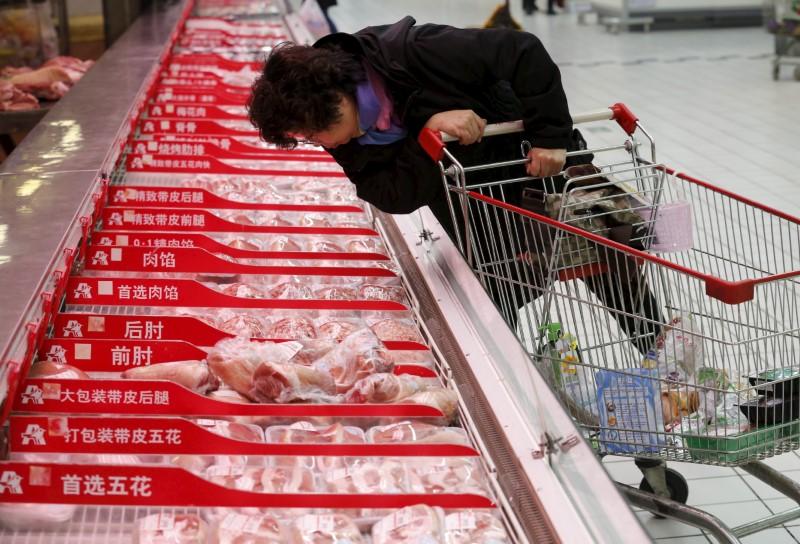
    For instance, at a supermarket on Quan Hoa Street in Hanoi’s Cau Giay District, canned coffee products do not have their own section, but are placed among other carbonated and energy drinks.

    Four brands of this rarely-seen product — Birdy, Nescafe, Highlands Coffee, and My Café — sit inconspicuously among dozens of other beverages.

    According to the shop assistants, canned coffee is hardly purchased, and sometimes is not bought for weeks at a time.

    The market for canned coffee came to existence 10 years ago with the entry of Birdy Coffee from Japan’s Ajinomoto.

    A year later Nestlé, which wanted a piece of the action, established a canned coffee production line at its plant in the southern Dong Nai Province.

    Other early birds included local dairy giant Vinamilk, which started putting up ready-to-drink coffee production facilities, followed by two then-emerging brands, Tan Hiep Phat and Highlands.

    Though initially many of the brands ran aggressive marketing campaigns, the market gradually fizzled out. Many products disappeared completely within a short time.

    In 2013 local coffee giant Trung Nguyen launched a range of fresh coffee products in bottles and cartons in sizes ranging from 500 ml to a liter. Within two years these too disappeared from grocery store and supermarket shelves.

    Today only a few names are left in the market, like PepsiCo, Highlands Coffee, Nestlé, Ajinomoto, and the new entrant, Coca-Cola.

    The real challenge for producers is no longer getting market share but changing consumer habits.

    Industry insiders quoted customer feedback as saying canned coffee is like fast food, sweet and lacking the authentic coffee taste.

    Speaking at the launch of the new product, a Coca-cola executive said though there are other brands in the market, their research showed the pie is large enough for new players to enter.

    Le Trung Tin, director of the Georgia Coffee Max line, said the secret to success is capturing the Vietnamese taste in the canned coffee.

  • Chow Tai Fook sales rises

    Chow Tai Fook sales rises

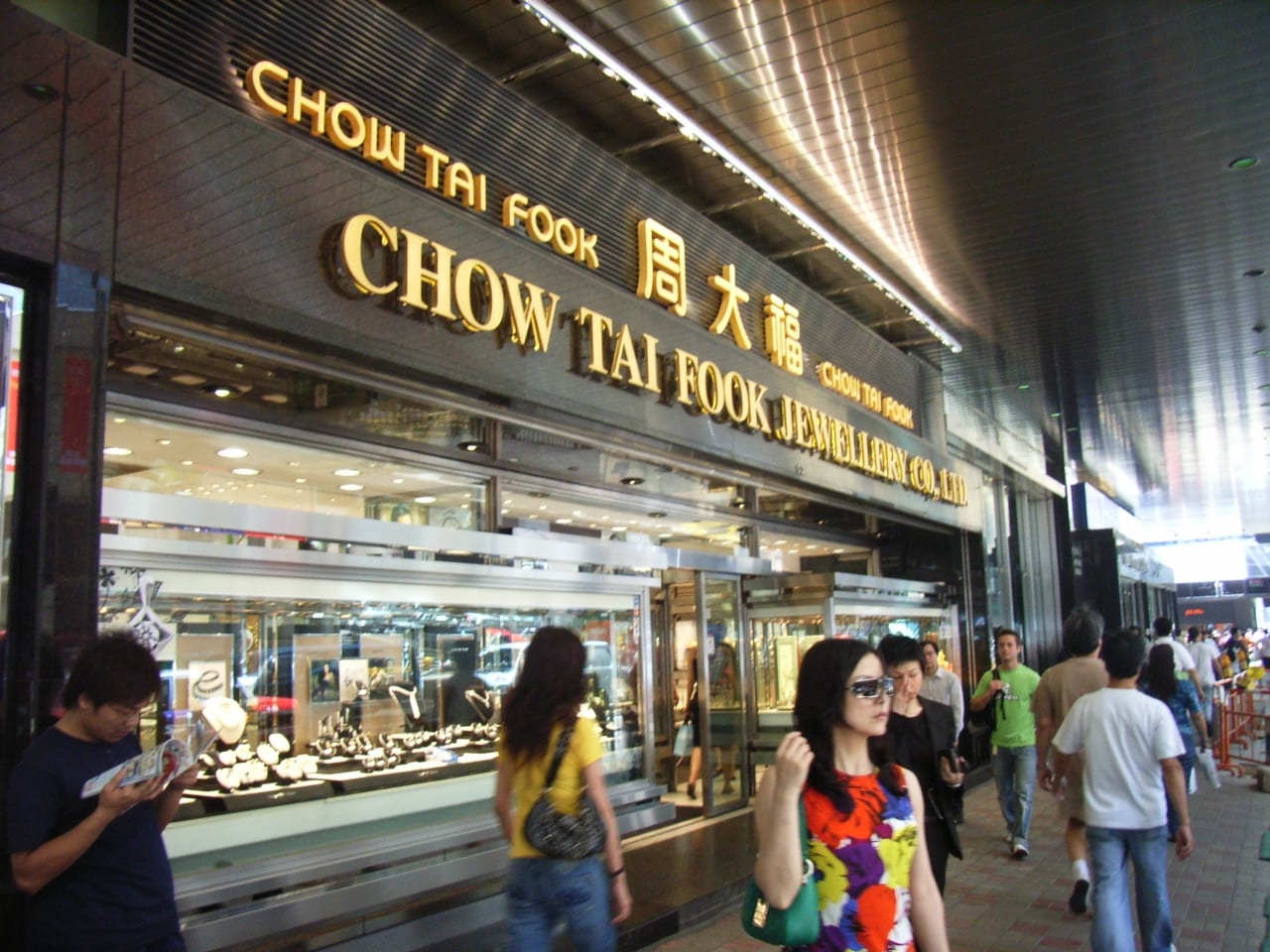
    Chow Tai Fook sales soared 25 per cent in Hong Kong and Macau in the September quarter.  On the mainland, sales rose by a solid 15 per cent. Same-store sales rose 23 per cent in Hong Kong and Macau and by 6 per cent on the mainland, according to a stock exchange filing by the company.

    But same-store volume growth told a different story: down 2 per cent in Hong Kong and Macau and up 1 per cent on the mainland, reflecting weaker gold prices which correspondingly drove more customers into stores.

    Chow Tai Fook’s sales of gold products grew by 41 per cent in Hong Kong and Macau and by 11 per cent in Mainland China

    Chairman, Dr Henry Kar-Shun, described the Hong Kong and Macau market growth as “impressive” during the quarter, “benefitting from buoyant consumer spending and resilient mainland visitation”.

    He said the same-store sales performance of gold products in both markets was driven by the increase in weight per piece sold. The company’s same-store average sale value on the mainland was HK$4000 compared to $3600 in the preceding quarter, while in Hong Kong and Macau, it rose from $7100 to $8500.

    The average international gold price declined by 5 per cent year on year during the quarter to September 30.

    Chow Tai Fook opened a net 162 points of sale in Mainland China during the quarter, which

    included 158 new Chow Tai Fook Jewellery spaces, three SoInLove spaces and one Chow Tai Fook T Mark space.

    In Hong Kong, Macau and other markets, the group opened one Hearts On Fire space and closed two CTF Watch stores in Hong Kong, and opened one Chow Tai Fook Jewellery space in South Korea. As at September 30 the company had 2822 points of sale globally.

  • Fast fashion retailer Giordano sales surge in Hong Kong

    Fast fashion retailer Giordano sales surge in Hong Kong

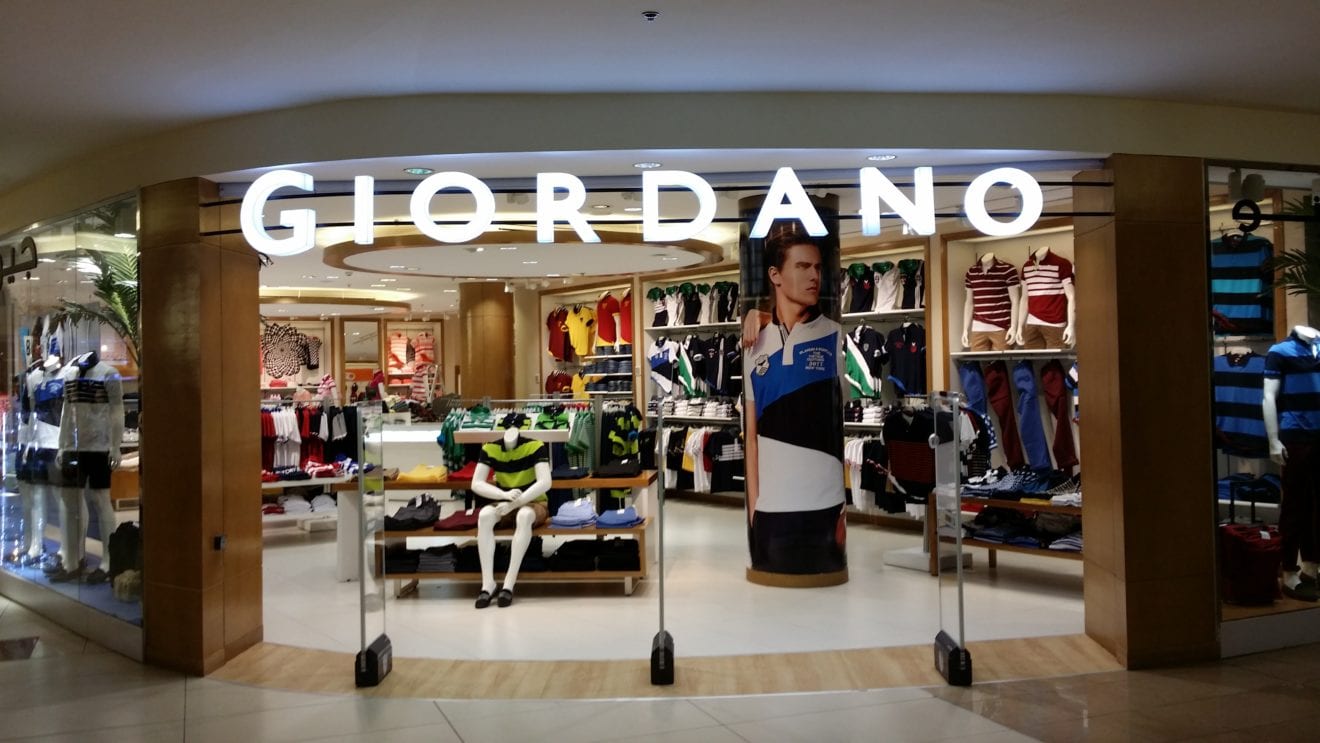
    Giordano sales slid 5.2 per cent in the September quarter, according to a trading update by the fast-fashion retailer. Translated into constant currency basis, sales declined by 6.9 per cent, the company said. “We saw a sharp decline in sales as a result of dampened consumer confidence since June throughout the Asia Pacific region,” said chairman and CEO Peter Lau.

    Group comparable-store sales slipped by 2.8 per cent.

    However, Giordano sales in Hong Kong and Macau bucked the trend, rising by HK$2 million on a same-store basis in the quarter and by $6 million for the nine months to the end of September, reaching $226 million and $703 million respectively.

    Mainland China sales fell $30 million to $251 million.

    Lau said core Giordano lines accounted for 84.6 per cent of total brand sales. The company’s premium womenswear brand, Giordano Ladies, posted comp-stores growth of 3.3 per cent.

  • Korean companies in China becoming less optimistic

    Korean companies in China becoming less optimistic

    Korean companies operating in China are less optimistic about business conditions in the fourth quarter of this year, as the Chinese economy is cooling amid a trade spat with the United States, a survey showed Sunday. According to the Korea Institute for Industrial Economics and Trade (KIET), its business survey index (BSI) stood at 103 for the October-December period, down 12 points from the previous quarter.

    A BSI reading above 100 means optimists outnumber pessimists. The BSI for the sales outlook was also still over 100, but came in at 117, down 8 from a quarter ago.

    By sector, electronics, electric and retail were more pessimistic about the fourth quarter, while automaking and textiles remained bullish over business conditions in China.

    Last week, China reported its weakest quarterly growth since the first quarter of 2009, during the global financial crisis.

  • Cashmaster Launches QR-Connect in APAC – New Integration Software Solution for Cash Management

    Cashmaster Launches QR-Connect in APAC – New Integration Software Solution for Cash Management

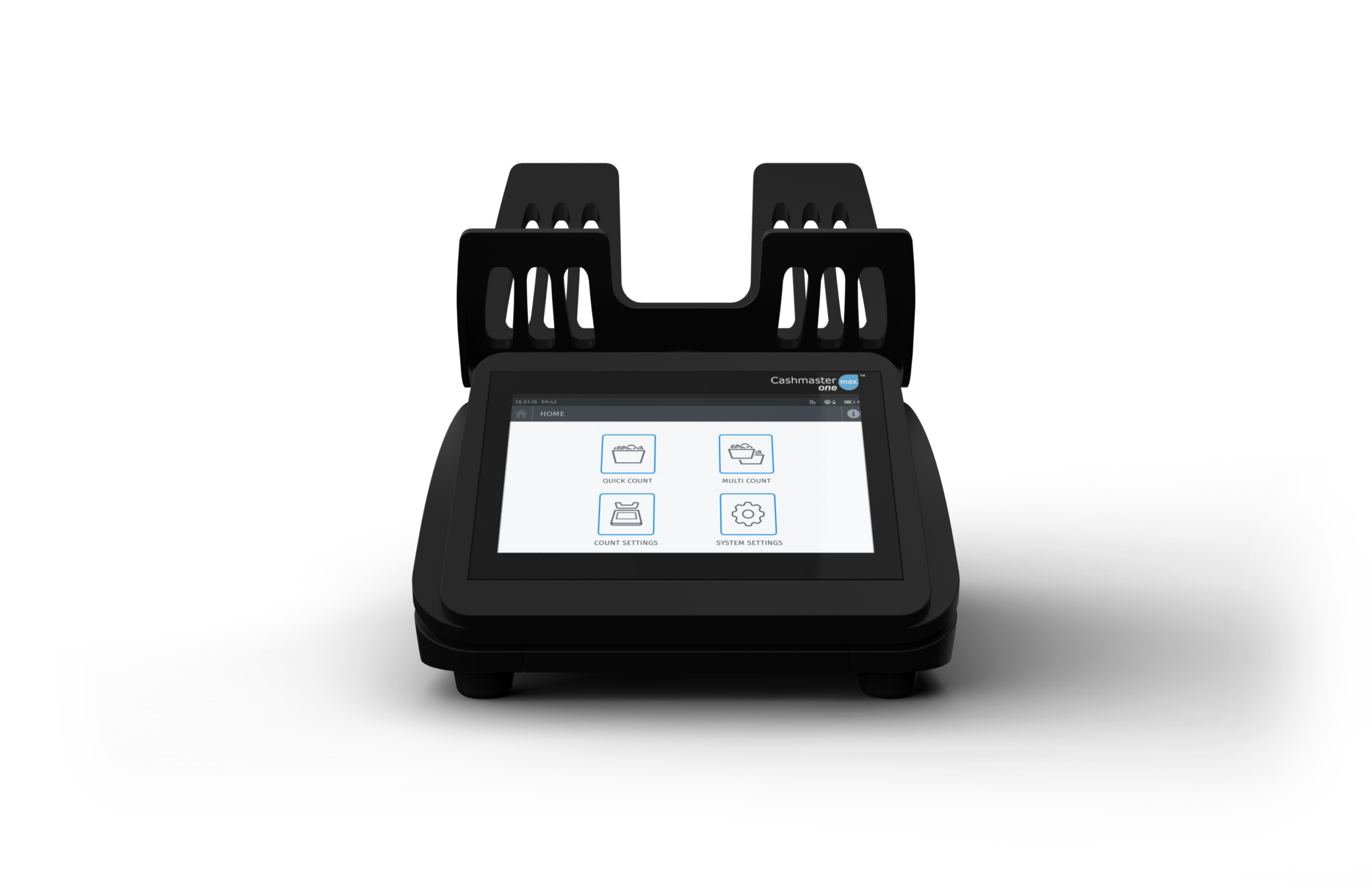
    Cashmaster Asia today announced the Introduction of Cashmaster QR-Connect, a QR code application providing enhanced software functionality for its Cashmaster One range of count-by-weight cash counting devices that offers an innovative, simple solution to integrating with back office or POS systems. When installed, count data is presented as a QR code on the display of the Cashmaster One device that can be scanned by a standard POS scanner or the camera of a mobile/tablet device.

    The count data is instantly transferred to the POS or other system. The QR code avoids the need for USB or ethernet cable connectivity between the POS and the Cashmaster Cash counter – effectively providing wireless transfer of the cash count (including vouchers/coupons in addition to notes and coins) as well as other information for process traceability, such as cashier ID and till ID.

    In a connected world, a deeper level of integration and seamless transfer of data to the POS is a growing requirement for Cashmaster’s clients. Its customers are looking to remove multiple levels of manual processing of data across their businesses in order to: reduce opportunities for errors; speed up the processing of data; give more real-time information that businesses can use to make better, faster decisions; and provide greater accuracy and accountability to their enterprises. Integration can be seen also as a key component in a loss prevention strategy.

    No matter the level of operation, these solutions provide data in a format that can be easily digested by cash management and analytics programs for big, medium or small companies. As competition increases, the rewards of deploying Cashmaster One and Cashmaster QRConnect can show directly in bottom line improvements. Gordon McKie, Group CEO of Cashmaster, commented, “Companies are under intense pressure to maximise income and improve efficiencies, while at the same time motivating staff. It’s a complex dynamic that Cashmaster understands; it has also been a powerful imperative for us in designing the intuitive technology for cash management that helps clients achieve those goals.

    “Solutions can be tailored to customers’ specific needs, from simple off-the-shelf tools requiring minimal customer resources to implement, to working with customers’ IT teams in providing more complex solutions. With a proven quick return on the initial investment to boot.”

    Cashmaster is a global company that specialises in the design and manufacture of count-by-weight cash counting devices using the most advanced touch-screen technology. The company has more than 30 years’ experience in creating innovative and reliable cash handling solutions for a wide range of international clients including supermarkets, convenience stores, retail, banking, fast-food restaurants and coffee shops.

    Website: www.cashmaster.com

    All trade enquiries for Cashmaster One:

    Tel (Hong Kong): +852 9334 8578; E-mail: [email protected]

    Tel (UK): +44 (0) 1383 416 098; [email protected]


  • Security concerns inhibiting m-payment adoption in Hong Kong

    Security concerns inhibiting m-payment adoption in Hong Kong

    More than half (53%) of Hong Kong residents polled during a recent survey conducted by the Hong Kong Internet Registration Corporation (HKIRC) said concerns over cybersecurity and privacy risks are major barriers to greater adoption of mobile payments.

    Other barriers that have been cited in the survey include technical instability and the lack of support for mobile payment from most local merchants in the city

    In speaking about the survey, HKIRC deputy CEO Bonnie Chun allayed the primary fear of using mobile payment, pointing out that the government ‘has already put a lot of regulations in place to ensure the industry strictly follow their guidelines. We suggest the government promote its policies via different channels such as social media among others,” said Chun.

    She added that the government should keep on educating the public about the different ways of maintaining safe online hygiene such as changing one’s passwords regularly, using two-factor authentication, not using public Wi-Fi connections for making payment transaction and downloading mobile apps only from reliable sources.

    “Also, mobile payment providers should increase their transparency on how they handle personal data. They should try not to collect too much personal data during the registration process to increase users’ confidence.”

    Mobile payment gets a foothold in Hong Kong

    The survey polled 1,200 residents in the city between the ages of 18 and 65, who belong to various industry sectors.

    Survey results showed that mobile payment is now gaining a foothold in the city with 23% of respondents using mobile payment and is now in the top three payment methods in Hong Kong after credit cards (37%) and Octopus Card (25%).

    While 93% of respondents between the ages of 18 to 25 have used it before, a high percentage – 77% – of older respondents aged 56 to 67 have also used mobile payments.

    More than a quarter of respondents or 28% have been using mobile payments two to three times a week. About 88% of respondents use their mobile phone for transactions of less than HK$500 ($64).

    The survey showed that respondents want to be able to use mobile payment in three areas: public transport, government bills and clinic,

    “The future of mobile payment in Hong Kong is very positive. When we start using mobile payment in public transport, people will become more familiar with it and the adoption rate will increase,” Chun said

  • Asia-Pacific retailers plan overseas expansion

    Asia-Pacific retailers plan overseas expansion

    Asia-Pacific retailers as increasingly embracing overseas expansion, according to new research by commercial real estate company CBRE.

    The report, Rise of Apac Retailers 2018, analysed 600 openings in the region, showing the proportion of Apac retailers (predominantly F&B operators, fashion and beauty brands) had increased from 17 to 30 per cent between 2014 and last year, accounting for almost a third of new regional entrants. The strongest target markets are China, Hong Kong, Taiwan and Singapore, while the expansion itself has been shown to strengthen brands in their home markets.

    Most retailers expanding into Apac territories are from Australia, Japan and Korea.

    The firm’s  head of retail, advisory and transaction services Asia Vivek Kaul said: “Apac retailers are becoming a driving force in the region, spurred on by potential revenue growth and the need for stronger brand awareness. This expansion is not focused on one single market – instead, it reflects the diversity and dynamism within Asia Pacific’s retail sector.”

    Associate director of Asia Pacific research Liz Hung said whether they are establishing flagship stores in gateway cities or testing the waters in emerging markets, Apac brands are “increasingly adopting a savvier approach” to regional expansion.

  • Millennial parents, the new force in luxury spending

    Millennial parents, the new force in luxury spending

    The development of China in the last decade is most easily visible through big numbers. But stats such as ‘Chinese travelling overseas increased by 1,380% from 2000 to 2017‘ do not help to understand the intricate changes in society that have taken place. One of these enormous (seismic, tectonic, however far you want to go) changes is in the new parenting culture of China’s affluent Millennial generation.

    The more traditional aspects of Chinese parenting culture are clear: a one-child policy, parents who feel the need to pressure their child into intensive study, Einstein-level maths, weekend classes and the like, with Grandparents and extended family all colluding into the alleged Little Emperor culture.

    The new lifestyle, opinions and expectations of China’s Millennials, and their influence as the drivers of luxury consumption, should now be well accepted by anyone who reads about global luxury. But now these Millennials are also parents – China’s new generation of modern parents, living in globalised cities and travelling internationally at will.

    Turn back just 5-6 years ago and it was not uncommon to come across hotels in Shanghai that labelled themselves ‘business hotels’, not interested in the ‘family’ sector. Only a few specialised shopping malls had sections for kids’ play areas and the like. In 2018, practically every single 5-star hotel offers children’s amenities, menus and activities, while countless shopping malls and other businesses now compete for family visitors with global names like Peppa Pig and Dora the Explorer tagging along.

    In luxury, brands are eager to capture the new Chinese family – ‘Baby Dior’ campaigns strongly, China has the most Burberry kids’ stores in the world, and ‘Fendi Kids’ opened in Shanghai’s Plaza 66 in 2017. Millennial parents not only demand but expect special organic food, imported children’s furniture, with ‘baby MBAs’ and ‘Olympic maths’ yet more angles on the drive of furthering their mini-me’s lifestyle.

    How is this new demographic of the affluent, modern Chinese parent evolving, and what must luxury brands know in order to connect with them?

    China is approaching a boom of Millennial mamas – or in their own words, “Spicy Mums (辣妈),” AKA ‘hot mamas’. They are the new generation of post-90 mums that maintain an image of both hot and cool.

    To understand this new demographic of the affluent, modern Chinese parent, luxury brands should be aware of the size of this social shift. Imagine the difference in parenting in the West, between those born in the 1930s or the 1960s. We’re talking about the first generation of parents that are asking new questions about parenthood, rather than simply accepting what was done before.

    Post-90 Spicy Mamas think, shop, and raise kids very differently than previous generations. A 2018 report on Chinese Millennial moms’ shopping behavior from CBN Data and a 2016 Maternal Marketing Whitepaper both share similar insights on this new demographic:

    They feel entitled to self-care and self-love. They see investment in premium brands as a necessity for themselves and their kids.
    They turn to other Millennial moms, rather than their own parents, for parenting advice.
    They are less sensitive about price, more concerned about product safety and quality.
    They love to shop for high-quality kids products via cross-border e-commerce.
    The Competition: Parenting to Win

    As the clearest indication of the thoughts of this demographic, one simple comment from a mother went viral on WeChat last year:

    “A Monthly Salary of 30,000 RMB (US$4,493) is Not Enough for My Child’s Summer Vacation”. Written by a highly-paid executive mom, it told the story of how she could hardly keep up with the extravagant overseas summer programmes that she lined up for her daughter. The mother explained that the total cost of her daughter’s education for the summer is 35,000 yuan (roughly US$5,240 USD), including 20,000 yuan (US$3,000) for a 10-day US study tour and other tutoring classes that cost up to 10,000 yuan (US$1,500) – and that she was compelled to do this as all of her peers were doing the same.

    With the country’s digital boom, new Chinese parenthood is also digitally integrated. Spicy mums form their communities mostly through dedicated apps and WeChat groups.

    Babytree, an online community with over 20 million Millennial parents, is among the most active sites. QinBaobao (“kiss baby” in Chinese), is a popular app for these parents to exchange parenting ideas, and post photos of their babies without the social pressures of mixing life or work contacts in WeChat. In these e-parenting communities, Haitao, meaning cross-border e-commerce, is frequently brought up: How to source safer, better products than the domestic options in China is a primary concern for such parents.

    KOL Parents Hit Key Cultural Pointers

    The demographics’ economic capacity to spoil their kids, combined with a lack of generationally consistent parenting knowledge, have given rise to a wave of parenting KOLs across social media. Among them, “ZhouYueyue” (粥悦悦) makes illustrations about a typical young mum’s experience, striking a chord with many. “NicoMama”, who shares more practical info graphics and healthy cooking tips, is deemed as a ‘mum authority’.

    There is plenty of space for niche content, too. “Nakikorose”, who brands herself as a “Maternity & Child Sleep Consultant”, seems to attract parents in a higher income bracket. Content perceived to be scientifically credible, or myth defying against the long-standing parenting superstitions in Chinese society is popular among post-90 spicy mums.

    Filial piety remains strong among all in China – at least, part of it. Millennial parents bring their own parents with them on holidays, family celebrations always involve gifts and blessings to their elders and they are still nonetheless keen to have willing babysitters! Yet they still consider that the instruction of the older generations may be based on ancient theorem – a mis-match with their otherwise international lifestyle and knowledge.

    The spending power of Spicy Mums is booming. From kids fashion, enrichment classes, to preschools that promises a “holistic” educational approach, there are a few main buying trends among China’s modern parents.

    1. Luxury kids wear – “mini-me”, but also “better-me”

    A quick view on social media can reveal that Spicy Mums love nothing more than dressing in similar outfits to their kids and posing alongside them for a selfie: ‘Aren’t I cute too?!’ Smart brands are wise to this.

    In May 2018, Dior posted pictures of child celebrity Heidi Cui in a Baby Dior dress in Cannes. Heidi first gained public attention from her role in the reality TV show “Where Are We Going, Dad?”

    This image combines youth with popularity and success – three traits which are catnip for Spicy Mums.

    Luxury kids wear is nothing new to the affluent Chinese market. D&G, Gucci, Baby Dior, Burberry, and French luxury line Bonpoint have been the capsule wardrobe for wealthy Chinese children. The practice of using celebrity kids’ street styles to raise brand awareness, however, is quite unique to the Chinese market. China’s kid fashion websites and magazines’s main content are celebrity kid styles, especially street style shot by paparazzi. What Suri Cruise, the Beckhams, and other celebrity kids are wearing in their day-to-day life, become the fashion bible for millennial Spicy Moms.

    The West has given a name to the demand for luxury kid wear – “the mini-me trend”. In these more mature markets, luxury kid wear consumption is led by the parents’ desire to channel their personality through their kids. A cool, well-dressed kid is a manifestation of the parents’ good taste.

    This trend is still in the embryonic phase, with affluent Chinese parents shopping for their kids by looking at leading western celebrities, dressing them in ways that they never could have achieved in their own youth. The trend is fertile branding ground and shows long-term opportunities.

    2. Experiences for both – ‘look what a good parent I am’

    Luxury kids fashion, imported organic food supplement – these are already the new normal for China’s millennial parents. Beyond the luxury purchase, they now seek experience, preferably with their own participation ready to be posted on their social media.

    Baby swimming is one example which is on trend. In the last few years, China’s first-tier cities have witnessed a boom in baby swimming clubs that charge over 10k RMB (1570 US Dollars) for an annual membership. The sport was first spotted on Chinese celebrities’ social media, and then publicised as the choice of all smart parents such as Mark Zuckerburg and actress Ziyi Zhang.

    Loong Swim Club, a market leader, rapidly expanded all over China, emphasizing its “German origin” to assure Chinese parents that it must be worth the fee. Loong has included a German flag in its logo header, and a EU distribution network in its homepage. Like other swim clubs, Loong uses social media to tell parents how baby swimming helps to develop kid’s social skills and increase their confidence level. For many young parents, these promised advantages are worth the hype.

    Recently, Four Seasons Hotel, Pudong, Shanghai and Hyatt On The Bund Shanghai have started to offer premium swimming classes for children in their pools – yet further indication of the changing expectations of their guests.

    All aspects of an affluent lifestyle should involve the child, including dining at 5 star hotels. The Peninsula Hotels in both Shanghai and Beijing are well aware of the family aspect as a draw. Last Christmas, The Peninsula Beijing offered experience such as baking cookies and decorating trees together. Along with the luxury elements such as Champagne for the parents and Christmas drinks for kids, the focus was on the creative, social activities done as a family, learning about a ‘western’ holiday and ripe in plentiful photo opportunites for the parents to share on their WeChats and Weibos.

    The ‘togetherness’ side also has an aspect of “I’m a big kid too” (aren’t we cute together?!):

    Would parents in the West want to buy Disney items for themselves? Perhaps somewhat unlikely. But Millennial Chinese parents are young-at-heart – proven by the ubiquitous ‘gamificiation’ now seen across many luxury brands. These parents want to be ‘part of the fun’ themselves. One recent example was Coach collaborating with Disney (Coach x Disney in trendy terms) in a ‘magic mirror’ on their WeChat accounts. The launch of their ‘A Dark Fairy Tale’ collection contained all of the current methods of interaction – short videos, the ability to interact with the AI ‘mirror’ and offline events related to the game – all targeted at adult buyers.

    3. “Holistic” pre-school

    “赢在起跑线上”, literally translates into “win at the starting line”, and well-summarises the prevalent parenting ethos in China. Even for the affluent, the ‘culture of scarcity’ feeling remains ever-present. With such a high population, the competitiveness and being sure of ‘not losing out’ is right at the pulse of cultural behaviours.

    While the need to ensure one’s children have the best education is recognisable in any demographic worldwide, the desire is distinct in China. While a wealthy family in, for example the UK, may feel confident that their child can go to the ‘right’ kindergarten and school, the urge to ensure that this is the case is the baseline of any affluent Chinese parent. The clothes, the lifestyle and more are desired, while the educational aspect of making sure their child keeps up with their peers is the very raison d’etre.

    And so, premium preschools with a “holistic” educational approach, promising to turn kids into smart, kind and confident individuals can set their own price.

    Willpower Royal British Education is one of many “holistic” preschools that cost well over RMB 200,000 ($30,000) per year in Beijing. The preschool has made a list of advantages to justify the cost: organic food with made-in-England silver cutlery, state-of-the-art facilities, bilingual education, and proper play time. The kindergarten also offers training courses such as horse riding and golf, hobbies that are traditionally associated with privilege.

    ‘International Schools’ are not available for Chinese passport-holders, but, the most affluent segment of Chinese parents may live abroad (or send their child to do so) for the number of years required to gain a foreign passport, before returning to study at an International School in China. Even for Chinese passport-holders, these International Schools have now created ‘bilingual’ schools, still in their name – for example Wellington or Dulwich having a separate school which can accept Chinese passport-holders, at the same RMB 200,000+ annual school fee.

    Such a “holistic” approach that combines study and play is considered a luxury in Chinese education. For millennial parents, the internationalism and social aspects are extremely attractive. They believe the craft courses, sport lessons, and social time with peers from similarly privileged backgrounds will give their kids an edge from early on.

    Little Star Group, which manages high-end kids wear brands such as I Pinco Pallino and YeeHoo in China, offers exactly such programs to Millennial families.

    The brand group has a special club space for its VIP members – Little Star Club. VIP families can join the specially designed activities in Bund 27, a prestigious address in Shanghai. Not only that, the club offers social training: classical music, horse riding, golf, and sailing courses. Every activity is described to enhance kids’ certain characters. Classical music is good for creativity, horse riding for chivalry, golf for calmness, and sailing for ambition.

    As a 28-year-old Spicy Mum told The Luxury Conversation, “If my kid grows up in this environment, his life vision and perspective will all be better.” With a British kindergarten degree, her 6-year-old boy has already secured a spot in a competitive elementary school in Beijing.

    China’s Spicy Mums are big spenders when they are convinced the value is there. Among the growing competition for this sector, the question is only whether they find your offer attractive or not.

    The Luxury Conversation Takeaways:

    Affluent mothers in China live by the word of WeChat groups. All keen to be in a WeChat group with their social peers, there is often one ‘leader’, who makes recommendations based on what celebrities are doing on Facebook and Instagram. As mentioned above, the ‘Spicy Mamas’ are keen to follow the trends set by celebrity parents and kids. Instagram is accessed by VPN in China and is well worth exploring in order to engage with these globally-versed mamas.

    Everything is education. Everything is betterment, upgrading … and basically showing off just how elite your kids (and therefore you) are. Create a reason/purpose for the luxury.

    Elite kids are ‘all access’. Dinner at a three-star Michelin restaurant? It’s a whole family affair with the family’s little Princess or Prince sampling the degustation and comparing it to others they have tried worldwide.

    The upgrading and the luxury should not be arbitrary – the ideal offering is to collaborate with a renowned education, institution, celebrity or other brand. Holding a cooking class in your hotel? Then give the little chefs a Cordon Bleu certificate afterwards. Promoting a healthy life? Then engage with one of China’s Olympic athletes for photo-opportunities. There should always be a famous badge, flag or face to attach to the activity as a mark of elite success achieved.

    For the ‘right’ investment in their child’s experience, there is no limit for affluent Chinese parents. No price is too great if it will deliver the truly elite, WeChat post-worthy moment for their child.


  • The great differentiator in retail industry

    The great differentiator in retail industry

    The retail industry is competitive, it’s relentless and the success of brands and retailers depends on how firmly they deal with their competition. One way to stay ahead of the curve is the incorporation of technology in a brand’s operating model.

    Technology is changing the shape of the global retail industry as also the way many retailers and businesses operate. In retail, technology gives brands the platform to better satisfy their customers by helping them concentrate on consumer needs.

    According to a Walker study, customer experience will overtake price and product as the key brand differentiator by 2020 and 86 percent of consumers will pay more for a better experience. The challenge in serving the modern customer for most retailers, therefore, lies in bringing about the right balance between technology and humans.

    Retailers with the foresight to understand the potential of technology without getting lost in its complexities, and merging it with human interaction, have always been able to grow faster and bigger. Simply put, technology is beginning to play an increasingly important role in the management of complex retail operations all over the world. To stay ahead of the game, retailers are taking the help of different technologies to lead the way in changing two aspects: their points-of-sale and their points-of-supply.

    As retail markets continue to grow and become complex, it is becoming increasingly tough for businesses to keep a track on new developments and then to figure out how these developments can be combined into their operating models in order to come up with a winning proposition – both for themselves as well as their consumer. This is one of the many reasons that retailers need technology.

    Other important factors for retail brands to transform their IT capabilities include:
    – Increasing the company’s ability to respond to the evolving marketplace through enhanced speed and flexibility
    – Collecting and analysing customer data while enhancing differentiation
    – Working effectively; retailers need one system working across stores (or even across national borders) to make sure the most effective use of stock and improve business processes

    Technology in Retail

    High tech innovations help retailers stay competitive in key categories including consumer convenience, price, size and speed. High tech tools help in manufacturing products in bulk, ensuring fulfillment of consumer demands with greater speed and ease both at the warehouses/ stores and on the sales floor.

    Technology also balances inventory assortments, manages ordering and tracks pricing. Customer tracking tools increase customer satisfaction and promote loyalty by enhancing shoppers’ in-store experience.

    For example, in-store sensors and beacon technology can record behavioral and demographic data to a business’s cloud computing system, offering insight into the customers’ psyche. This data can then guide product, layout and display strategies. The data gathered systems can analyse customer browsing and buying patterns, which then be used to personalise in-store experiences for consumers. IoT beacons can also help customers quickly find items in a store and notify them of offers and discounts via their smartphones.

    On the executive level too, technology plays a positive role in strategy and decision making, saving time and adding convenience and profits to the business.

    Personalisation & CRM Through POS Systems: Thanks to modern technology, cloud-based POS systems aid business owners in the automation of daily tasks. These include payment and checkout like interactive signage, employee attendance, self-service applications like customer check-in. POS systems also help in the overall optimisation of processes like tracking inputs from different access points, implementation of a reservation system (in case of a restaurant) and developing a customer loyalty program.

    These smart register terminals provide reports, calculate discounts, offer coupons, capture and match tally of customer profile information with ease to avoid chaos at the billing counter. They use a signature capture technology for credit card transactions which retains receipts electronically.

    Use of POS technology has served towards making the payment process easier and contactless. RFID and NFC technology provide customers with the bonus of making a purchase using their smartphones and smartwatches.

    It is important for retail businesses to streamline these processes to develop a system which is informative and error-free.

    Inventory Management: According to stores.org, “Retailers will continue to explore ways to use IoT in the coming year for everything from keeping better tabs on their inventory to managing losses from theft and connecting with shoppers.

    With the help of technology, managers can track inventory in an organised manner through its purchase cycle and offer real-time information and updates about the product to consumers. Technology is also already helping in informing managers of the status of the store stock – whether it needs replenishing or not.

    Features like ‘Electronic Data Interchange (EDI)’ help in maintaining direct computer-to-computer transactions from the store to the vendors’ databases and ordering systems. The wireless hand-held inventory units keep a check on the entire database at the headquarters by downloading and help in downloading the data regularly.

    The Universal Product Code (UPC), is used for product identification system using bar code and unique numbering for organising the goods category wise. Automatic replenishment manages restocking of what’s been sold. Customer Relationship Management (CRM) software allows retailers to track customers.

    Price Auditing: Despite being a time consuming and costly process, price auditing is another important aspect for retailers which ensures that the consumers are not being charged extra or less. Auditing has been streamlined to a large extent by the introduction of technology as products can now be scanned at the time of purchase. Th is creates more accurate pricing, saves store employees a lot of time and creates better trust between the store and the customers.

    Impact of Technology on the Retail Industry

    The dawn of e-commerce had dealt a huge blow to the traditional retail – that is until retailers discovered the advantages of Omnichannel retail. With the advent of new technology, retailers are now raising the industry from the simple concept of buying and selling and taking Omnichannel to another level altogether.

    “Retailers will continue to adopt emerging technologies in 2018 to close the gap between the digital and physical worlds, and to learn more about consumers. Mobile will become an increasingly important part of the retail equation as stores also evolve. And throughout the industry, retailers will attain more data about their shoppers and use artificial intelligence to enhance their marketing and merchandising. Personalisation in retail will play a important role in 2018.

    Retailers will use data and AI platforms to better engage customers with personalized shopping experience both online and in the store. More retailers will use AI-based capabilities and technologies to better match shoppers with products. They will be able to access personal shopping history, demographics, page views and clicks then use AI to offer better recommendations and individually tailor their marketing,” says Sunil Nair, Sr. Vice President IT & Business Solutions, SPAR India (Max Hypermarkets).

    Indians as customers are more digitally aware now than ever before, and this number will increase over the next few years. More Indians getting into the digital space would mean more opportunities and challenges for us retailers in terms of getting through to the right audience in a manner that converts them into loyal customers. Upcoming technologies are going to make way for the Indian Retail Industry to make a digital breakthrough and provide exactly what the digitally-aware customers would want,” he adds.

    “India is one of the biggest consumer market in terms of mobile devices. Coupled with an efficient distribution and logistics setup, the retail industry is set for exponential growth. The real time analytics could bring in efficiencies in inventory management, product placements, supply chain, deliveries, and even product development for the right consumer market. The two hot technologies that are becoming very popular are ‘Robotics & Drone Deliveries’ in retail are yet to get a serious consideration in Indian market,” says Chetan Chaturvedi, CIO, Head – IT, Reliance Market Retail Ltd.

    “With the availability of new technologies each consumer today can be viewed as a unique individual with clearly identifiable preferences. Therefore, Indian retail needs to move from one-size-fits-all approach to a highly-customized, consumer-centric
    approach. The way retail is currently structured, this requires a both a big paradigm and structural shift,” adds Abhishek Lal, Sr. Director E-commerce – Emerging Markets, adidas Emerging Markets.

    “AI has become one of the biggest technological developments in recent years. With its ability to help turn large and diverse data sets into enriched information that can help improve speed, cost and flexibility across the value chain. In fashion, AI helps brands and retailers with predictive forecasting, capacity planning and merchandising. Consumers enjoy the benefi ts of better product availability,” says Manoj Patel, Dep. CIO, House of Anita Dongre Ltd.

    How IOT is Shaping the Industry

    “Retailers will make greater use of beacons, sensors and the Internet of Things devices to drive the in-store experience in 2018. IoT will be the tool that can finally bridge the gap between the digital and physical worlds as it finally offers the ability to obtain and use data in stores. Retailers will be able to use these devices to gather more information about consumers in the store and convert that into data that can also be used online and through mobile. They will pilot more IoT programs to enhance store entry, customer interaction, improve merchandising and offer more rapid checkout. We are in the process of implementing IOT for inventory management, improving in-store experience through personalised marketing and energy management,” explains Nair.

    “IoT adaptation varies from company to company. For beauty and cosmetics retail, it would help in recognizing customer sentiments through camera sensors, analysing in-store traffic and converting them as shoppers in real time. IOT can help out in building virtual assist to ‘try on’ makeup look before actually buying the final products. We are working on that,” says Tarun Bali, Head IT, Quest Retail Pvt. Ltd., The Bodyshop.

    “IoT is key for this consumer facing industry and it would create a huge impact in our customer offerings. There is use of sensors which capture Image/ Video/ Product information which are critical elements for retailers. Organizations need to store IoT data and use in for better operating decisions,” Piyush Chowhan, Chief Information Officer, Arvind Fashions Ltd.

  • Asia’s large format retailers prepare for steady growth

    Asia’s large format retailers prepare for steady growth

    Global research organisation IGD has reported that Asia’s large format retailers are set to grow 3.3 per cent a year to 2022, with Vietnam, India and the Philippines forecast to see double-digit growth from large format players over the next five years.

    Most of this growth is predicted to be driven by domestic retailers, except for Vietnam where foreign retailers have been investing to gain a foothold in this fast-growing market. Indonesia will see steady growth, also driven mainly by domestic players; with China coming through as another market with significant growth opportunities due to its vast geography.

    Many large format retailers in Asia are still enjoying steady growth through expansion although they are facing pressures from increased competition in more developed markets.

    Besides expansion to new regions, retailers are also digitising physical stores to create a seamless shopping experience in more matured markets.

  • Retail interest in Myanmar robust, but foreign investment is lacking

    Retail interest in Myanmar robust, but foreign investment is lacking

    When RHB, a Singapore brokerage, first selected Singapore Exchange-listed Yoma Strategic Holdings as one of its top five stock picks for retail clients on May 2, shares of the company soared 15 percent, hitting a 4-month high of 48 cents on May 9 as investors hurried to get onboard.

    “Yoma Strategic offers a pure play on Myanmar, and is well positioned to capture growth opportunities in the country,” wrote RHB analyst Vijay Natarajan in his report.

    While prospects could be “clouded” because of Rakhine, Mr Natarajan believes Myanmar holds long-term growth potential and views “the stock as the best proxy for investors to get exposure to Myanmar.”

    With GDP growth projected to hit 6.8pc in 2018-19 and rise further to 7pc in the next fiscal year, according to the World Bank’s latest estimates, Myanmar remains one of the most promising emerging economies in Asia and retail investors have been keen for a slice of the pie.

    Yet, Myanmar’s economy also remains one of the most difficult to access, with few avenues available for retail investors to tap. “Many Maybank clients have been asking about opportunities to invest in Myanmar. But other than Yoma Strategic, there are hardly any other options for retail investors to enter the country,” said Chua Hak Bin, senior economist at Maybank Kim Eng Research.

    Mr Chua added that there is still a lack of statistics and data available on Myanmar compared to other countries, which has made it hard to generate reports that will help his clients make investment decisions.

    Consequently, many have been channeling funds into Vietnam instead. “Vietnam has opened up its economy, signed on to the Trans-Pacific Partnership [of 11] and attracted a flood of foreign direct investments,” Mr Chua said.

    Vietnam is also experiencing a tourism boom, led by tourists from China, as well as a remittance boom, as overseas Vietnamese re-invest their earnings, including into the property market. This has driven the current account and balance of payments into a surplus, even though imports have been on the rise.

    Notably, Vietnam’s push to equitise its State-owned enterprises has also helped to boost interest and liquidity in the country’s stock market. “Vietnam has been the rockstar in ASEAN. There are lessons for Myanmar from Vietnam’s experience,” Mr Chua said.

    ‘Many Maybank clients have been asking about opportunities to invest in Myanmar. But other than Yoma Strategic, there are hardly any other options for retail investors to enter the country.’ Chua Hak Bin, Maybank Kim Eng Research

    Companies Law

    While efforts to reform the economy have been slower than expected to materialise, Myanmar, for its part, has taken credible measures to liberalise its market with the enactment of several new laws, including the Myanmar Companies Law, which was signed last December.

    Among the most anticipated regulations is one that will allow foreigners to own stakes of up to 35pc in local companies, including the five listed on the Yangon Stock Exchange.

    “The purpose of this regulation is to allow foreigners to own shares in local firms and for local companies to benefit from access to foreign capital,” said U Aung Naing Oo, director general of the Directorate of Investment and Company Administration (DICA), during the Myanmar’s Business Leaders Summit in Yangon last week.

    At the summit, U Aung Naing Oo reaffirmed that the process of enforcing the Company Law “is going well. The key aim is to make it easier for foreign investors to invest in Myanmar. As promised, we will be able to fully enforce the law by August 1,” he said.

    In fact, the YSX has seen a spike in interest from local companies to list on the exchange since the Companies Law was approved. Within a year, investors should be able to trade shares of three more firms – engineering company Great Hor Kham, Myanmar Agro Exchange Public Limitedand logistics player Ever Flow River  -on the exchange.

    Still, some say it could take a while yet before the equity market opens up to retail investors. Pedro Jose Bernando, a partner at law firm Kelvin Chia, warns that while the Company Registration Office has already circulated draft rules on the Companies Law, it appears“they are more concerned now with the implementation of the e-registration system, and not so much with how the substance of the law, including the 35pc threshold will be implemented,” he told The Myanmar Times.

    He added that the 35pc rule will like be rolled out incrementally, to privately-owned Myanmar companies first, before being extended to public-listed companies, if at all.

    Stocks to watch

    In the meantime, investors still keen on placing their bet on Myanmar still have a few other stock options to consider. Singapore-listed Memories Group, the vehicle which holds Yoma Strategic and Yangon-listed First Myanmar Investments’ tourism businesses, is one.

    The company, which came to market in January, operates Balloons over Bagan and the Hpa-an Lodge and Pun Hlaing Lodge businesses. In March, it also bought a luxury yacht business in Mergui.

    London-listed Myanmar Strategic Holdings (MSH) is another option. Just last week, the company took up a $150,000 minority stake in Myanmar-based digital consulting firm, nexlabs. This came a month after MSH and Auston Institute of Management announced a joint venture to set up and operate a private school in Yangon. It is also invested in the Ostello Bello hostel chain in Bagan, Mandalay and Inle Lake.

    Then, there is London-listed Myanmar Investment International, an investment holding company with stakes across the financial services, telecommunications, healthcare and tourism sectors.

    Investors can also consider a handful of other companies which operate businesses in Myanmar, including Thai national oil and gas company PTT Exploration and Production Public Company Limited (PTTEP) as well as Thai Beverage, which is listed in Singapore.

    Last year, Thai Bev bought a 50pc stake in Myanmar Distillery Co, which makes Grand Royal whisky. In 2013, it acquired Singapore’s beverage maker Fraser & Neave (F&N), which this year received Myanmar Investment Commission approval to manufacture and distribute beer in the country, three years after it sold its 55pcstake in Myanmar Brewery to Japan’s Kirin Holdings for $560 million.

    In the meantime, Yoma Strategic is already upping its game. Last week, the company announced a joint venture with Pernod Ricard, which makes Chivas and Ballentine’s, to produce and distribute whisky in Myanmar.

  • Operation Goalkeeper World Cup against Counterfelt Goods

    Operation Goalkeeper World Cup against Counterfelt Goods

    In a sting to thwart criminal attempts to sell 2018 FIFA World Cup fakes, Hong Kong Customs’ Operation Goalkeeper has so far resulted in about $15.3 million worth of suspect merchandise being seized, plus five arrests.

    Aimed at preventing such items crossing the border, Operation Goalkeeper launched at the end of April with a focus on finding infringing items being trafficked through passenger and cargo channels at airport, seaport, land boundary and railway control points on the eve of the matches.

    Launched at the end of April 30, the sting has so far resulted in about 259,000 pieces of suspect items in 21 cases being seized.

    Items include about 180,000 pieces of apparel and accessories, 50,000 pairs of shoes and 29,000 bags. There are also about 57,000 suspected counterfeit jerseys, including 50,000 pieces bearing suspected forged FIFA trademarks.

    The items were seized from 12 seaborne containers, four goods vehicles and a batch of air parcels.

    Under the Trade Descriptions Ordinance, any person who imports or exports any goods to which a forged trademark is applied commits an offence. The maximum penalty is a fine of $500,000 and imprisonment for five years.

    Operation goalkeeper continues.

  • Singapore Sales stays under the Expectations

    Singapore Sales stays under the Expectations

    Falling sales of electronics and apparel muted the overall figure for Singapore retail sales in April.

    The year-on-year headline figure rose by just 0.7 per cent after sales of motor vehicles were excluded from the data. Sales of computers and phones fell by 9.8 per cent, while apparel and footwear sales fell by 3.4 per cent.

    Supermarkets and hypermarkets slipped by 2.3 per cent and department stores by 1.7 per cent.

    Categories which improved were led by petrol service stations, up 8.5 per cent, and medical goods and toiletries, up 7.8 per cent.  Sales of furniture and household goods rose 4.8 per cent.

    Month-on-month retail sales declined 1.7 per cent and Statistics Singapore estimated online shopping accounted for just 4.4 per cent of total retail sales in April.

    Food retailers also had a forgettable month, with total sales falling 1.7 per cent year on year. Within that category, fast-food outlets boosted sales by 5.4 per cent, at the expense of restaurants and cafes, which declined 4.3 per cent.