Tag: Retailers

  • Singapore retail sales growth halts in August

    Singapore retail sales growth halts in August

    Singapore retail sales growth – excluding motor vehicles – remained static in August, following July’s 2-per-cent increase.

    Of the estimated $2.9 billion in retail sales (excluding vehicles), online sales accounted for 16.4 percent, a similar proportion as in July. By category, the strongest online was computer & telecommunications equipment, with 56.5 percent of turnover online rather than in-store. Online accounted for 31.5 percent of furniture & household goods sales and 14 percent of supermarkets & hypermarkets.

    In terms of overall category sales, most sectors recorded year-on-year declines in sales during August. Optical goods & books were worst affected – down by 9.6 percent – followed by department store turnover, down by 8.5 percent.  Sales through petrol service stations and of watches & jewelry rose by 23.7 percent and 7.9 percent respectively, driven by higher petrol prices and greater demand for watches, said Statistics Singapore.

    Meanwhile, sales of food & beverage services fell 6.7 percent in August compared to the 6-per-cent decline in July, due mainly to stricter dine-in restrictions this year.

  • Imports dominate popular categories on e-commerce platforms

    Imports dominate popular categories on e-commerce platforms

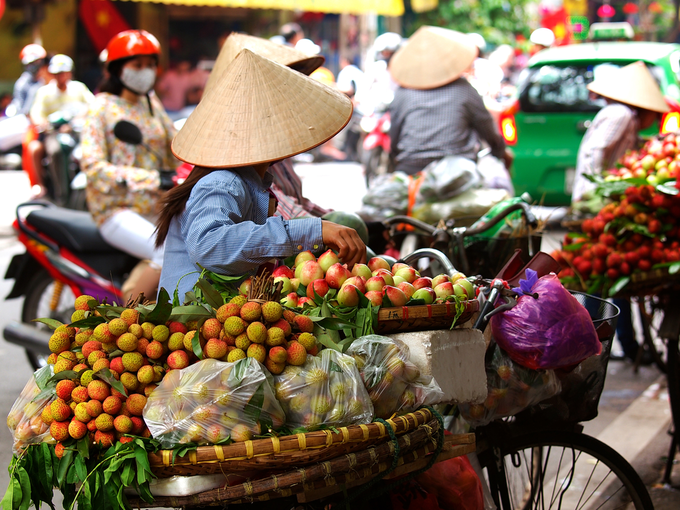
    Only 17 percent of the most popular goods on e-commerce platforms since last year have been Vietnamese, a market research firm said.

    Malaysian market research firm iPrice Group said in a report that 83 percent of the 1,200 most sought-after items were imported.

    The rates for Vietnamese products ranged between 25 percent for Sendo and 13 percent for Shopee Vietnam.

    The overall rate dropped to 14 percent in the first half of this year.

    Sendo and Tiki are Vietnamese-owned businesses.

    “Vietnamese enterprises have not paid due attention to e-commerce yet,” Sendo chairman Nguyen Dac Viet Dung said.

    “After two years of working with the Ministry of Industry and Trade to bring Vietnamese goods to e-commerce platforms, we have attracted many traditional retailers”.

    Vietnamese goods dominated the groceries category, with demand surging because of Covid-19 lockdowns.

    Agricultural specialties are becoming increasingly on the two local platforms.

    Vietnam’s e-commerce market has seen an average annual growth rate of 25-30 percent in the last five years, according to Vietnam E-commerce Association (VECOM).

    Should the growth rate be maintained, Vietnam would rank third in e-commerce market size in Southeast Asia by 2025, behind Indonesia and Thailand.

  • The Competitive Landscape is Changing: What Amazon’s Physical Stores Will Mean for Asian Retailers

    The Competitive Landscape is Changing: What Amazon’s Physical Stores Will Mean for Asian Retailers

    The decline of brick-and-mortar retail has long been discussed in the industry, to the extent that some alarmists started to talk about its inevitable death. However, recent reports of Amazon’s plans to create a network of physical retail outlets demonstrates that in-store shopping is far from ending up on life-support. In fact, brick-and-mortar retail still remains strong among consumers, and for retailers it continues to be a critical way to connect with customers and drive sales.

    The ‘great disrupter’, Amazon, has revolutionised the way people shop online over the last twenty years to become one of the largest retail groups in the world. So, what does Amazon creating a physical store presence mean for retailers?

    Until now, established brick-and-mortar retailers’ primary defence against the eCommerce giant has been their local store presence. The ability to be close to shoppers and offer a physical shopping experience that allows consumers to interact in-person with retailers in real-time has for many stood out as a better customer experience. However, once the ‘moat’ (or point of differentiation of having physical stores) starts to be breached, defending the ‘castle’ against Amazon becomes much more challenging.

    Amazon is very good at what it does and bringing a digital-first approach to brick-and-mortar retailing will introduce new, creative and technology-centric options for the consumer. In addition to the purchase of Whole Foods and its partnership with Kohls, this latest move into the physical retail space by Amazon clearly validates that physical stores are a vital element of the omnichannel shopping experience.

    Amazon’s push to develop physical stores means that all retailers need to go ‘all in’ on omnichannel. To survive the next phase in Amazon’s evolution retailers should prepare their systems and processes for a new marketplace that will be dominated by those brands that are able to deliver seamless, personalised shopping experiences simultaneously across physical and digital channels.

    But what does this mean for Asian retailers today? How can they create omnichannel experiences that engage with and maintain customer loyalty in the face of new competition from Amazon?

    Modernise the customer journey

    The rise of online shopping, click and collect and the world of social media has transformed the buying experience. Customers have access to information, expertise, and validation at every step of their online journey, but today they want an in-store and offline experience that complements and meets the same standards of excellence they have already experienced online. Whether it’s an in-store associate tracking down stock in another store and organising delivery to the customer’s home, allowing a customer to return online purchases without complication in-store, or ringing the call centre to change an existing order mid-delivery – today’s consumers expect service excellence at every stage of the purchase cycle, including in-store and on the phone.

    The problem is, many retailers still perceive the customer journey to be one that is linear, when that’s not the case. Customers often flit between in-store and online, with social feedback, phone interaction and email for communication. Consumers do not always buy where they browse, instead looking in-store and then buying online or vice versa, and then if they change their mind they expect to be able to arrange a return via email, chat, phone or in-store. Retailers must be aware of this and provide solutions to meet customer expectations.

    Store associates today need applications that give complete command and control of the customer buying experience, as well as all store inventory and fulfilment functions. From mobile checkout to guided fulfilment and inventory location notification, when provided with the right technology store associates are made more efficient and are better able to serve customers and meet their needs.

    Seamlessly manage customer orders

    Never has omnichannel execution played such a significant role in determining a retailer’s brand image. Consumers now expect retailers to provide seamless, ‘buy and deliver or pick-up anywhere’ experiences. To compete with Amazon across all aspects of retail, brands need to consistently meet the delivery promises they make to customers and ensure that the turnaround between order and delivery is shorter than ever.

    To assist, new business-to-consumer distribution models are coming to market, with a core focus on the importance of ‘living’ the omnichannel customer experience, rather than just talking about it. One such model is Order Management Systems (OMS), which integrate all sales and distribution channels into one place, bringing absolute transparency and making it easier for retailers to manage customer orders. An OMS helps retailers to see what inventory they have where, what’s been allocated, what is in transit, what’s been sold, what is available, what needs to be replenished and what’s being returned.

    Manage business disruption, customer expectations with an OMS

    Innovation is occurring in the retail sector at an unprecedented pace and increased competition from Amazon will only speed the adoption of new systems to meet customer demand.

    Without this push towards efficiency-boosting technology, retailers risk being left behind the competition. With innovations like advanced OMS, retailers have been able to navigate disruptions caused by COVID-19 by reviewing the rules of stock allocation, temporarily giving priority to in-store stock over warehouse stock, thus, freeing up any trapped inventory confined within closed stores. This is a great advantage for the many retailers whose physical stores have been closed for long periods during lockdowns.

    Optimising order sourcing allows retailers to use the stock available in their entire network, wherever it is located. A smart OMS allows retailers to use the ‘pool’ of physical stores in large urban areas to offer same day, or next day delivery by couriers, whilst also favouring the warehouse stock for less immediate orders. This increased delivery efficiency will help build a stronger connection and more favourable brand perception amongst consumers.

    In addition to using store level inventory to ship orders to a customer’s home, it can also be deployed for click-and-collect orders. With new fulfilment options enabled by the store, consumers can click, collect, and return goods at their own convenience, which works to achieve satisfaction in the short-term, as well as long-term loyalty.

    If you can’t offer seamless shopping experiences, someone else will

    The importance of brick-and-mortar retail to the overall equation of profitable sales is (again) attracting renewed attention following the move by Amazon to create its own store network. In fact, it makes sense for Amazon to create a store presence, given that stores themselves create the conditions for a sale. The experience that consumers can be given in-store is often more immersive, tactile, and engaging. These more emotional connections can lead to immediate sales and an increase in long-term loyalty.

    However, the increased competition that will come from Amazon establishing their own in-store presence means that Asian retailers need to focus on meeting customer demands through technological innovation. Customers expect seamless, personalised shopping experiences across all physical and digital buying channels today and you can bet that if you can’t offer that, Amazon definitely will.

    By Richard Wright, Managing Director, SEA, at Manhattan Associates

    For more information on how your retail outlet can create seamless shopping experiences across multiple channels, please visit: https://www.manh.com/en-in/active/omni




  • UOB Targets Doubling of Digital Retail Customers by 2026

    UOB Targets Doubling of Digital Retail Customers by 2026

    The bank said it would invest up to $500 million in digital innovation initiatives to reach its goal of serving more than 7 million customers in Asean.

    With digital banking now the preferred choice among UOB customers, the bank is «doubling down» on its data-driven model to create hyper-personalized digital experiences for its customers.

    The bank will be combining TMRW, its digital bank that launched in 2019 and is available in Thailand and Indonesia, with its mobile app «Mighty» on to one platform: UOB TMRW, the bank said in an announcement on Wednesday.

    By harnessing the best of TMRW and UOB Mighty in one platform, we can tap economies of scale to accelerate innovation especially in the area of hyper-personalised digital banking experiences and speed to market, Wee Ee Cheong, UOB deputy chairman and CEO, said.

    Upon the successful completion of its beta pilot currently underway among UOB employees, the platform will be launched for all UOB customers in Singapore later this year, the announcement said.

    UOB TMRW will be progressively rolled out across its key Asean markets, with the next markets expected to launch in the next 18 months.

    In this next phase, we are making it our goal to explore how technology can enable us to make the digital banking of tomorrow smarter and even more intuitive for our customers, Kevin Lam, head of TMRW and group digital banking, said.

  • Payments Platform 2C2P Partners Atome to Grow BNPL Reach

    Payments Platform 2C2P Partners Atome to Grow BNPL Reach

    The regional partnership will support thousands of merchants across Southeast Asia, as competition in the Buy Now Pay Later (BNPL) space heats up.

    Global payments platform 2C2P is partnering Buy Now Pay Later (BNPL) brand Atome, which will allow its network of online and offline merchants across the region to offer BNPL as an alternative payment method to their customers.

    Merchants using 2C2P’s platform in Singapore and Malaysia will be able to offer their customers the option to pay using Atome, either online or in-store, which allows them to make payments over three months with zero interest, service fees or annual fees.

    Headquartered in Singapore, Atome has a presence across Southeast Asia, India and Greater China. The platform was launched in 2019, and currently partners over 5,000 online and offline retailers in nine markets.

    Its partnership with 2C2P is expected to roll out in other markets such as Thailand, Philippines and Indonesia in the near future, the announcement said.

    BNPL payment methods have seen surge in popularity, particularly among millennials and Gen Z consumers. Merchants are also tapping on its growth to increase customer conversion, average order size and repeat sales.

    The market is estimated to grow to $33.6 billion by 2027, with Asia being the fastest-growing regions due to increasing rates of mobile Internet penetration, according to a 2020 study by Coherent.

    Earlier this month, U.S. fintech giant PayPal announced a mostly cash deal to acquire Japan BNPL platform Paidy for ¥300 billion (about $2.7 billion). Square, run by Twitter CEO Jack Dorsey bought Australian BNPL platform Afterpay for $29 billion last month.

  • Experts warn of risks to premature economic reopening

    Experts warn of risks to premature economic reopening

    Reopening the economy is necessary but any untimely decision amid low vaccination rates and high contagion risks could stymie the country’s efforts to defeat Covid-19, experts warn.

    “The premature lifting of the lockdown and reopening the economy while the full vaccination rate remains low, new infections and fatality rates are still soaring and the health system is overburdened may even endanger the economy and people’s lives more badly,” Nguyen Minh Cuong, principal country economist at the Asian Development Bank said.

    But the country stands at a crossroads since lengthening strict social distancing is likely to inflict further socio-economic costs and endanger its medium- and long-term growth prospects, he told VnExpress International in an emailed statement.

    Prime Minister Pham Minh Chinh and Ho Chi Minh City leaders have spoken about letting economic activities resume gradually and how the lockdown “cannot go on forever.”

    Vietnam has been struggling in its Covid-19 fight since the end of April when a fourth wave began and infected nearly 609,000 people and killed over 15,000.

    HCMC, the largest city and major manufacturing and exporting hub, has imposed strict social distancing for over two months but still thousands of new cases are being found every day.

    This is why analysts are reluctant about resuming economic activities now.

    “It is complicated to find the perfect moment to reopen the economy,” Tim Evans, CEO of HSBC Vietnam, said.

    The risks of doing this too early at a time when vaccination is not up to optimum speed and the medical system is overwhelmed could lead to additional Covid cases resulting in a further increase in mortality rates, he said.

    Other experts concurred.

    “In our view, reopening the economy, especially in the epicenter HCMC, is a risky move,” Jason Yek, senior Asia country risk analyst at market research company Fitch Solutions, said.

    The rate of full vaccination in Vietnam is low, and reopening before the outbreak has been suppressed would possibly elicit a lukewarm response from consumers, he said.

    Vietnam has vaccinated 24 percent of its population, but only 5.2 percent have received two doses.

    The country has received 29.8 million doses of vaccine, or only one-fifth of its target of 150 million doses to vaccinate 70 percent of the population.

    This is why a premature opening risks a surge in infections which would overwhelm the healthcare system and could force the government to tighten restrictions again, Yek said.

  • H&M plans showing its first Home concept store in Paris

    H&M plans showing its first Home concept store in Paris

    The Swedish giant is about to open an XXL store in Paris. Officially inaugurated on Thursday September 9, 2021, this H&M Home store is to open in the famous Madeleine area. Here is what we know about this spot already.

    Good news for home décor fans looking for bargains. H&M is opening this Fall 2021 a new store dedicated to home. Called H&M Home, this first 100% home décor store in France by the Swedish giant is to take over the Madeleine district – already housing the first IKEA store in Paris.

    It is at 14 boulevard des Capucines, a stone’s throw from Olympia, and not far from their flagship the concept-store is about to welcome Parisians and tourists looking for bargains to transform their indoors. This new spot, covering 724sqm, will feature different styles, also available in the H&M Home collection and collaborations with other brands.

    In addition to decoration for each room, you can find storage units, accessories, bedding, indoor clothing, crockery, toys for children, and even furniture to fit on small surfaces. This will be the occasion for small budgets to change their décor for a lesser cost.

    So, when will this new H&M concept store dedicated to indoor decoration open in Paris? The official opening is scheduled on Thursday September 9, 2021 with a special weekend including exclusive guest brands to enjoy on-site, and a never-before-seen digital experience.

    After the opening of an Ikea Décoration in Paris 1st arrondissement, and before the inauguration of Maxi Bazar in the 13th, stores dedicated to decoration are very trendy in town!

  • Singapore retail sales stabilise at below pre-Covid levels

    Singapore retail sales stabilise at below pre-Covid levels

    Singapore’s retail sales rose 79.7 percent year on year in May to S$3.3 billion, rebounding from the low base during the 2020 “circuit breaker”, according to a Singapore Department of Statistics released on Monday.

    This was up from April’s 54 percent jump and exceeded economists’ expectations of a 65 percent rise. Yet retail sales remain below pre-Covid levels, noted Singstat. May’s figures were also down 6.8 percent on a month-on-month seasonally adjusted basis.

    Online sales accounted for 13.7 percent of May’s takings, up from 11.2 percent in April. Excluding motor vehicles, May’s retail sales were up 61.6 percent year on year, but down 5.2 percent on a month-on-month seasonally adjusted basis.

    Due to “the low base in May 2020 when most physical stores were closed for the whole month”, all retail industries saw major year-on-year increases, except for two categories: supermarkets and hypermarkets, and mini-marts and convenience stores. These saw falls of 12.1 percent and 9.2 percent respectively.

    The largest increases were seen for watches and jewelry, with May’s takings more than 20 times the year-ago figure; department stores; and wearing apparel and footwear.

  • Japan’s retail sales extend gains but Covid-19 challenges persist

    Japan’s retail sales extend gains but Covid-19 challenges persist

    Japan’s retail sales rose for a fifth straight month in July, beating expectations as the consumer sector continued its recovery, although a coronavirus resurgence has cast doubts over the spending outlook.

    A surge in Delta variant cases this month forced the government to widen state of emergency restrictions, which are now threatening to hurt consumer spending and derail a fragile economic recovery.

    Retail sales advanced 2.4% in July from the same month a year earlier, government data showed on Monday, slightly faster than economists’ median forecast for a 2.1% rise in a Reuters poll. It followed a 0.1% increase in June.

    “The recent strength in retail sales is unlikely to last,” Marcel Thieliant, Senior Japan Economist at Capital Economics, said in a note.

    “The severe Delta wave now hitting the country coupled with an ever-expanding list of prefectures under states of emergency resulted in a renewed weakening in consumption this quarter,” Thieliant said.

    The better-than-expected rise in retail sales in July came as authorities struggled to get a defiant public to heed stay-at-home restrictions in major cities like Tokyo, which hosted the Olympics during the month.

    The trade ministry data found strong demand for a variety of items such as cars, clothing, general merchandise, and food while fuel was helped by higher petrol prices.

    Small retail establishments like convenience stores and drug stores saw the biggest sales growth from a year earlier.

    However, growth was also flattered by the comparison with last year’s steep slide, when consumer demand was hurt by the coronavirus pandemic.

    Compared with the previous month, retail sales gained a seasonally adjusted 1.1% as consumption continued the surprising growth seen in the second quarter, helped by the Tokyo Olympics.

    The world’s third-largest economy grew at a better-than-expected rate in the April-June quarter, thanks largely to private consumption, which makes up more than half of the country’s gross domestic product.

    But rebounding consumer activity poses a challenge to policymakers as the more contagious Delta variant of COVID-19 upends the nation’s healthcare system, with state of emergency curbs now covering nearly 80% of Japan’s population.

    “People’s mobility has been decreasing, and consumption may peak out in August,” said Atsushi Takeda, chief economist at Itochu Economic Research Institute, noting that the downward trend could drag until September.

  • Singapore’s Shopee disrupts the Brazil’s e-commerce sector

    Singapore’s Shopee disrupts the Brazil’s e-commerce sector

    Shopee took just two years to become Brazil’s most downloaded shopping app, winning users to its low-cost marketplace with its game-changing approach to e-commerce: in-app mini-games offering coupons to winning users.

    The Singapore-based company has combined online shopping with the gaming nous of its separate mobile game arm Garena – creator of “Free Fire”, Brazil’s most downloaded title for eight consecutive quarters – to generate sales analysts estimated at almost a third of local champion Magazine Luiza.

    Back home, Shopee only needed five years to become Southeast Asia’s most-visited e-commerce website, overtaking the likes of Lazada, backed by China’s Alibaba Group Holding, and Tokopedia, backed by Japan’s SoftBank Group.

    “Shopee has a track record in Southeast Asia of coming into the market late, looking at how others have solved existing problems and then building a system to leapfrog those issues,” said analyst Jianggan Li at advisory firm Momentum Works.<

    Shopee’s early surge highlights the space left for foreign entrants to grow in a sector once dominated by regional firms like Magazine Luiza and Argentina’s MercadoLibre.

    To be sure, the startup’s timing was fortuitous, launching in Brazil just as the COVID-19 pandemic drove consumers away from physical stores, pushing up 2020 e-commerce sales by 44% to $42 billion, showed data from Brazilian payments company EBANX.

    Shopee – akin to Alibaba’s AliExpress, carrying Chinese-made knick-knacks – emerged as Brazil’s top app by downloads and time spent in use, showed data from analytics platform App Annie.

    Yet, in pursuit of growth, Shopee is still losing money, propped up by Sea’s profitable gaming division. In the second quarter of this year, Garena posted adjusted earnings before interest, tax, depreciation and amortization (EBITDA) of $740.9 million even as the e-commerce arm lost $579.8 million.

    “Money being generated by one side of the business, which is a cash cow, is being reinvested aggressively in Brazilian e-commerce – with success,” said Itau BBA analyst Thiago Macruz.

    Sea’s Brazil foray is just one element of its global ambition. Investment arm Sea Capital is also considering putting money into startups in Latin America and beyond, said a person with knowledge of the matter, who was not authorized to speak with media and so declined to be identified.

    The firm has also taken Shopee to Chile, Colombia and Mexico where, unlike Brazil, it has no locally based staff and so has partnered social media influencers to increase brand awareness, said two people familiar with the matter.

    Sea, whose shareholders include Chinese gaming leader Tencent Holdings, declined to comment.

    The firm has disclosed little data about Shopee Brazil, but Itau BBA analysts estimated the value of goods and services sold on the platform last year hit 12 billion reais ($2.27 billion).

    The average price on its marketplace is 40 reais, other estimates showed, less than a third that of e-commerce leader MercadoLibre, which often carries higher-value branded products.

    Sea’s biggest challenge for Shopee Brazil is delivery in such a vast country. It reduced its reliance on the local postal system this year in favor of private carriers, but is still competing against rivals with proprietary delivery services.

    Shopee aims to have one main logistics partner per country in the region, a company source said.<

    The company itself expects e-commerce growth in the region to spawn more delivery partnerships, as happened in Southeast Asia, Sea executives told analysts on a call this month.

    On the same call, Group Chief Corporate Officer Yanjun Wang called Brazil “a good market for continued investment.”

    Competition in Latin America’s largest economy stepped up this month when Shopee’s nearest rival in terms of product offering, AliExpress, opened up its marketplace to domestic sellers charging a single-digit commission. AliExpress had been in Brazil for 11 years; Shopee did similarly after its first year.

    Small-business owner Luciana Carvalho began selling plastic packaging products on Shopee in February, attracted by the free shipping and 6% commission – compared with MercadoLibre’s 17%.

    “It’s easy to sign up, calculate your commission, get your delivery tags, your receipts. It makes us invest more in the platform,” she said.

    In a move toward profitability, Shopee has since raised commission to 18% – as much as twice marketplaces can charge in some Southeast Asian countries, indicating Latin America’s potential profit margins. Carvalho continues to use Shopee, though she prefers MercadoLibre for its “unbeatable” delivery.

    To further improve profitability, Goldman Sachs analysts said Shopee could start selling higher-ticket items, as it has in Southeast Asia. Momentum Works’ Li expects Shopee to add financial services to its Brazil app as it has in Indonesia.

    “I wouldn’t be surprised,” if they reached number one, said Li, “Given what they have done in Singapore, Indonesia and Malaysia, Thailand.”

  • Macau retail sales surge after Covid-19 lockdown

    Macau retail sales surge after Covid-19 lockdown

    The value of Macao’s retail sales for the second quarter of 2021 totaled 20.70 billion patacas (about 2.58 billion U.S. dollars), up 200 percent year on year, the special administrative region’s statistic department said on Tuesday.

    The latest report from the Statistics and Census Service (DSEC) showed that among the major retail trade activities, sales values of watches, clocks and jewelry, leather goods, and communication equipment witnessed a notable year-on-year growth of 957.9 percent, 504.0 percent, and 460.4 percent respectively, whereas sales value of supermarkets dropped by 11.3 percent.

    As regards the sales volume index, the indices of watches, clocks and jewelry, leather goods, and communication equipment registered a significant rise, while the index of supermarkets decreased.

    For the first half-year of 2021, the value of retail sales reached 39.46 billion patacas, an uplift of 118.4 percent year on year. Besides, the sales volume index jumped by 130.4 percent.

    The value of retail sales in the second quarter of 2021 rose by 10.3 percent as compared with the revised figure of 18.76 billion patacas in the first quarter. Sales values of department stores and watches, clocks, and jewelry increased markedly, whereas sales values of communication equipment declined.

    Moreover, the sales volume index grew by 9.9 percent quarter on quarter.

    In respect of retailers’ comments, 40.9 percent of the retailers expected the sales volume to stay stable year on year in the third quarter of 2021, 42.9 percent anticipated a decrease, and 16.2 percent forecast an increase. Meanwhile, 78.0 percent of the retailers predicted that the retail prices would remain steady year on year in the third quarter, 15.3 percent foresaw a decrease and 6.7 percent expected an increase.

    As compared with the second quarter of 2021, about 44.7 percent of the retailers envisaged sluggish business in the third quarter, whereas retailers expecting stable performance and those anticipating a favorable outlook together accounted for 55.3 percent of the total.

  • Lazada merges logistics divisions under new name

    Lazada merges logistics divisions under new name

    E-commerce player Lazada, which is now majority-owned by Alibaba, is confident that its expertise in Southeast Asian markets can counter the looming threat from Amazon’s much-anticipated entry into the region, a top executive said.

    Last year, TechCrunch reported that Amazon had planned to launch local e-commerce services in Singapore in the first quarter of 2017. But earlier this year, the news site cited sources and said Amazon’s much-anticipated entry was postponed.

    Aimone Ripa di Meana, co-founder and chief marketplace officer at Lazada, said the company’s on-the-ground knowledge about each of the six regional markets in which it operates, its logistics network, and the backing from Jack Ma’s Alibaba Group will be advantageous in the face of competition.

    “We feel very confident about what we’ve built so far — we have a very unique approach to business,” Meana said. “Having built teams that have been with us for a long time that function in a very organic way that knows the markets, know the complexities that are in each market, which can’t easily be replicated. I don’t think knowing how to do (business in) Singapore is in any way relevant to how you build your business in the Philippines or Indonesia.”

    He explained that the differences in each Southeast Asian market went beyond people and languages spoken. It involved things including the infrastructure set-up in each country to facilitate logistics and delivery, how the syntax of each local language affected the way search worked and also the behaviors of small and medium enterprises in listing their products and structuring their catalogs.

    But the region is still lucrative for e-commerce as millions of first-generation internet users embrace online shopping. A frequently cited study from Google and Singapore investment firm Temasek Holdings predicted the region’s internet economy to grow to $200 billion by 2025, driven mostly from growth in e-commerce. Meana said Alibaba’s investments into Lazada, and the speculation surrounding Amazon’s eventual push into the market, underscored the potential of the region.

    “We are in a market that is at the beginning of its curve,” said Meana. “While obviously the numbers are vast and exciting, I think the opportunities that lie ahead are much larger than anything that’s been built behind us.”

    To be sure, Amazon has aggressively invested in markets outside the U.S. to grow its stake. For example, reports in India said Amazon has invested more than $2 billion to-date to compete with local e-commerce players Flipkart and Snapdeal.

    Earlier this year Alibaba upped its stake in Lazada from 51 percent to about 83 percent, with over $2 billion invested into the company. Its affiliate Ant Financial, earlier this year, merged with Lazada’s helloPay platform to bolster payments processing capabilities.

    The backing allowed Lazada to move into Alibaba’s ecosystem and make use of all of the innovation and features for sellers on their platform, said Meana. Those include offerings like a business intelligence portal and new promotional features that allow sellers to create shop decorations in the same way they would’ve done for an offline business.

    To offer consumers more variety, Lazada launched its Taobao Collection store that curates and sells about 4 million products in English from Alibaba’s Taobao marketplace — which is inaccessible to many non-Chinese speaking consumers in Southeast Asia.

    Logistics operations, which Meana said is a key differentiator for Lazada, also benefit by tapping into Alibaba’s technology, processes and approaches to delivery. Currently, Lazada has about 100 logistics partners in the region and its operations are split into two areas of business: last-mile delivery and a control tower that coordinates the most effective means of delivering parcels from merchants to customers.

    “For a consumer or merchant, this is completely seamless. They don’t need to make decisions or choices — all that is done by us, and in turn what that means is, a number of players that were maybe too small to catch the trend, that weren’t able to enter e-commerce, are now being able to leverage our infrastructure and be part of this phenomenal growth that we’re seeing in e-commerce,” he said.

    Delivery speed is another way that many online retailers attempt to differentiate themselves. For a region like Southeast Asia, Meana explained that fast delivery was not always feasible. That is, cross-border e-commerce, a growing part of Lazada’s business, means consumers are more willing to wait for their parcels, he said.

    Ultimately, Meana said, it’s about maintaining a balance between being local and nimble — required for most online marketplaces — in multiple countries and having a regional structure to grow the business.

    “That’s clearly one of the great learnings of having built Lazada over the past five years — the interplay between having this regional structure and the economies of scale and scope to get there and then maintaining the nimbleness of the market,” he said.

    “It’s not an easy balance, but it’s something that we’ve invested a lot of time to get to and I don’t think it’s acquired or built in a day.”

  • Amazon to test department stores in offline expansion

    Amazon to test department stores in offline expansion

    Now that it’s officially swallowed the lion’s share of online retail sales, Amazon is reportedly eyeing ways to corner our offline shopping, too. The e-commerce giant is drumming up plans to open “several” department-style stores in a handful of cities across the U.S. People familiar with the matter told the paper that these stores would help Amazon “extend its reach in sales of clothing, household items, electronics, and other areas.” It’s a smart move from Amazon, but also one that would end up being a privacy nightmare for a company that’s seen its fair share of scandals in the space.

    Per the Journal, the first states where these department stores are expected to open include Ohio and California. They’re planned to be mid-size, at around 30,000 square feet—smaller than your average Costco or Walmart, but way larger than the Amazon 4-star stores that generally clock in at around 4,000 square feet. Like those 4-star locations, sources told the Journal that Amazon’s private-label products would be featured front and center in these bigger locations, alongside wares from other “top consumer brands.”

    The alleged department store spaces are just Amazon’s latest foray into the brick-and-mortar world. In 2015, the company began experimenting with small bookstores: first on its Seattle home turf, before trickling out to a few other cities across the U.S. But for all sorts of reasons, sales in these bookstores have pretty much flatlined in the years since their debut. By 2019, the company decided to fold together these stores and the company’s then-struggling “pop-up” shops—essentially mall bodegas that sell Amazon-branded tablets and e-readers. Eighty-seven of those pop-ups closed essentially overnight. Other real-world retail efforts like Amazon Go Grocery met similar ends, either collapsing into larger big-box projects from the company or indefinitely closing for unspecified “renovations.” Even then, Amazon’s retail efforts have translated into millions of dollars taken from countless competitors that were already struggling to pitch themselves against the e-commerce juggernaut.

    But if the multiple ongoing federal probes into Amazon’s antitrust-y behavior have shown us anything, it’s that the company won’t be satisfied until it dominates every sale, not just most of them. Right now, the bulk of Amazon’s real-world retail dollars are coming from its myriad grocery chains, including Whole Foods. But the company still lags behind its brick and mortar brethren when it comes to selling high-end fashion, or basic cosmetics and health goods—think toothpaste or bottles of shampoo. In June, reports emerged that the company was mulling plans to open its own Amazon-branded physical retail pharmacies, which would help the company crater competitors like Walmart or CVS that currently rule the world of retail-ized healthcare

    Amazon’s department store push would also help the company compete with two of its tech giant pals: Facebook and Google, which together dominate more than half of the multibillion-dollar digital ad ecosystem. Amazon ranks in a distant third place by earning 10% of that spend, but that number’s skyrocketing fast—and a lot of that boom boils down to data.

    Amazon’s always collected data on its shoppers and sellers, but the past few years have seen the company make a serious push to woo advertisers away from platforms like Instagram and YouTube. And that woo worked because Amazon could offer what those platforms couldn’t: data about every purchase, every search, and every wishlist from every Amazon customer.

    But that still left the company with a pretty large blind spot: data from real-world, in-store purchases. Meanwhile, those real-world retailers—including names like Target, Walmart, and CVS—have started launching ad networks of their own, offering data from the real-world purchases happening outside of Amazon’s sight.

    An Amazon-branded department store would potentially bring those dollars back into Amazon’s pockets, and then some. Amazon’s past brick-and-mortar efforts have shown that the company isn’t afraid to collect as much data as possible from people who walk through its doors—even if that person doesn’t end up buying anything at all. Amazon knows the aisles you’re browsing, the items you’re picking up from a shelf, and whether your buys were influenced by an ad you saw on Amazon’s site. It knows how often you shop for groceries, whether you’re a vegetarian, and if you might be running low on eggs this week—which is great for Amazon and its advertiser partners, but a privacy nightmare for consumers that already have ample reason to be weirded out over Amazon’s data collecting practices.

    Right now, Amazon’s future plans in the real-world retail space are mostly confined to rumor—but they still paint a damning picture. A world where Amazon department stores and Amazon pharmacies are the norm is one where Amazon knows every prescription you take, not to mention all the purchases we might want to keep quiet from everyone—our pregnancy tests, bottles of hair dye, trashy magazines. If Amazon really wants to know how often I’m buying a box of “feminine hygiene” products or something equally classy, they’re welcome to try finding out. But I’d really rather keep those details to myself.

    We’ve reached out to Amazon about the Journal’s report and will update this post when we hear back.

  • Pandora jewellery sales top pre-pandemic levels as US shoppers splash out

    Pandora jewellery sales top pre-pandemic levels as US shoppers splash out

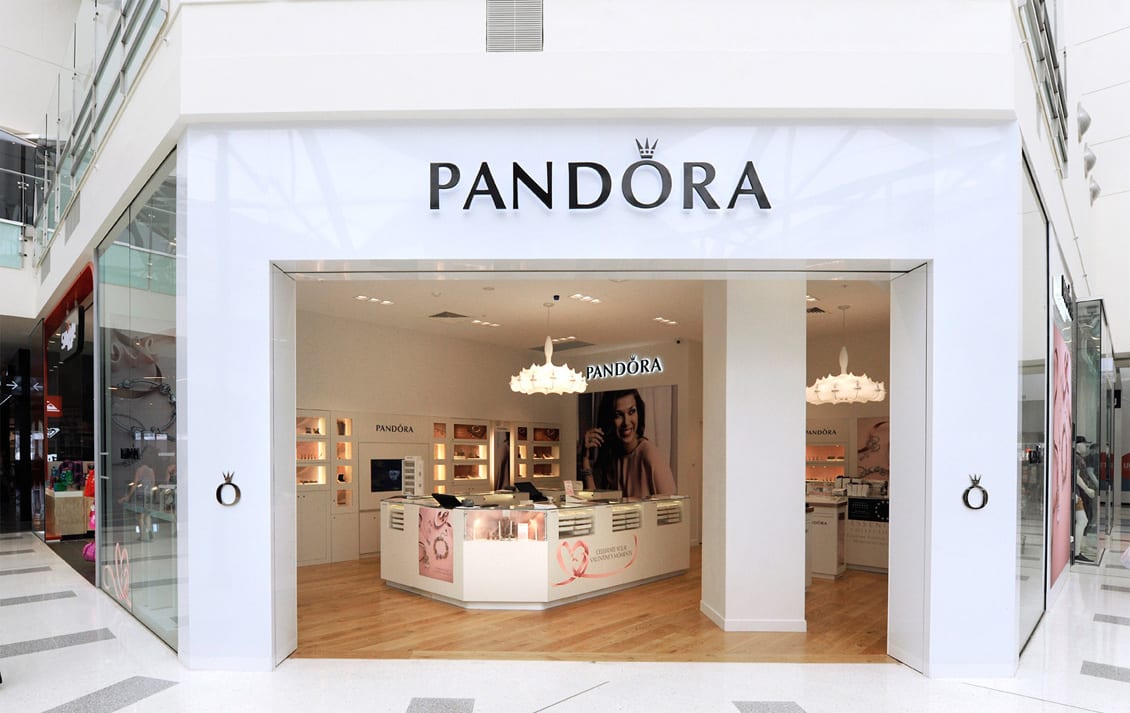
    Danish jewelry maker Pandora said on Tuesday that a strong performance in the United States spurred rapid sales growth in the second quarter but sales in China fell. Pandora, which aims to strengthen its brand in the world’s two biggest economies, said its total comparable sales in April-June jumped 7 percent compared to the same quarter of 2019 before the pandemic.

    In the United States quarterly sales more than doubled from a year earlier and were up 63 percent compared to 2019 as massive government stimulus and vaccinations against Covid-19 fuelled spending on goods and services.

    Pandora said it saw indications that it was gaining more market share in the United States, its biggest market, but cautioned that the high growth would come down in the second half of the year.

    “We have dampened the expectations on the US growth versus the first half and then we have raised expectations in Europe when the stores reopen and we are seeing that play out,” Chief Executive Alexander Lacik told Reuters in an interview.

    Pandora’s shares, which have gained around 25 percent this year, fell around 1 percent in early trade.

    “The questions arise for how long growth in the US operation can offset continued weakness elsewhere, and can Pandora stabilize its European operations to coincide with slower US growth?” Handelsbanken said in a research note.

    Sales in China, the world’s largest jewelry market, fell 13 percent in the second quarter compared to 2019.

    “It will take time so this is not a quick fix. The first attempt to try to turn this around is going to happen later this year,” Lacik said, adding that Pandora would announce further details on its brand repositioning in China at its capital markets day in September.

    Pandora earlier this month raised its full-year sales and profit margin forecasts as fewer stores would have to close due to Covid-19 than initially assumed.

    On Tuesday, Pandora also announced a new share buyback programme, the latest European company to repurchase stock in the wake of a strong earnings season.

  • Sexual wellness retailers combine to form global Lovehoney Group

    Sexual wellness retailers combine to form global Lovehoney Group

    Online retailer Lovehoney is merging with WOW Tech Group to form a global sexual wellness group: The Lovehoney Group.

    The group will operate across EMEA, APAC and North America, and will combine a strong portfolio of brands, such as Fifty Shades of Grey, Happy Rabbit, Womanizer, We-Vibe, and Arcwave, as well as Swiss retailer Amorana, which was purchased by Lovehoney last year.

    The merger and expansion comes after the sexual wellbeing market exploded during global lockdowns, with the sector poised to grow at a CAGR of 8 percent from 2021 to 2028.

    Johannes Plettenberg, WOW Group founder and Lovehoney Group CEO, said the sector is fast becoming mainstream, “supported by liberalization, acceptance of sexual awareness, and the influence of popular culture.”

    “Amorana, Lovehoney, and WOW Tech share the same mission to destigmatize sexuality, empower people to enjoy a fulfilling love life, and experience sexual happiness,” Plettenberg said.

    “Combined, Lovehoney Group will provide a specialist e-commerce platform with unmatched international reach, with the creator of the most well-known and innovative brands in the industry.”