Tag: Retailers

  • China reopens border gate with Vietnam

    China reopens border gate with Vietnam

    China has reopened one of its border gates in Guangxi with Vietnam after closing it for several days due to Covid-19 fears.

    Trade resumed Wednesday at Tan Thanh Border Gate in the northern province of Lang Son after customs officials of both countries agreed on Covid-19 safety measures.

    There are over 1,000 trucks stuck at the gate and another major gate in the same province, Huu Nghi, said Nong Hai Thang, director of border gate management in Lang Son.

    “Trucks need to wait two days to pass the gate.”

    The delay is caused by China imposing more stringent examinations on vehicles and products to prevent Covid-19 contagion.

    There are 12 big and small border gates in Lang Son.

    Vietnam has recorded nearly 290,000 Covid-19 cases since the end of April.

    China was Vietnam’s second-largest export market in the first seven months with a value of $28.7 billion, up 24 percent year-on-year, according to the General Statistics Office.

  • Victoria’s Secret joins JD with store

    Victoria’s Secret joins JD with store

    Victoria’s Secret is expanding its online presence in China with the launch of a flagship store on JD, the e-commerce platform.

    A representative from JD’s underwear business said the collaboration of the two companies not only expands JD’s cooperation with international fashion brands, but also provides additional choices for JD’s customers pursuing high-quality products.

    The JD flagship store offers Chinese customers Victoria’s Secret’s full range of classic bras, panties, lingerie and T-shirts. The launch came in time for the Chinese Valentine’s Day when sales are expected to boost as local consumers buy gifts for their loved ones.

    The online flagship follows the opening of the brand’s first China duty store in Hainan Tourism Duty-Free Shopping Complex earlier this month.

    The US lingerie brand closed its high-profile Victoria’s Secret flagship store in Hong Kong last year after two years of operation.

  • Coupang Q2 revenue soars on active customer growth

    Coupang Q2 revenue soars on active customer growth

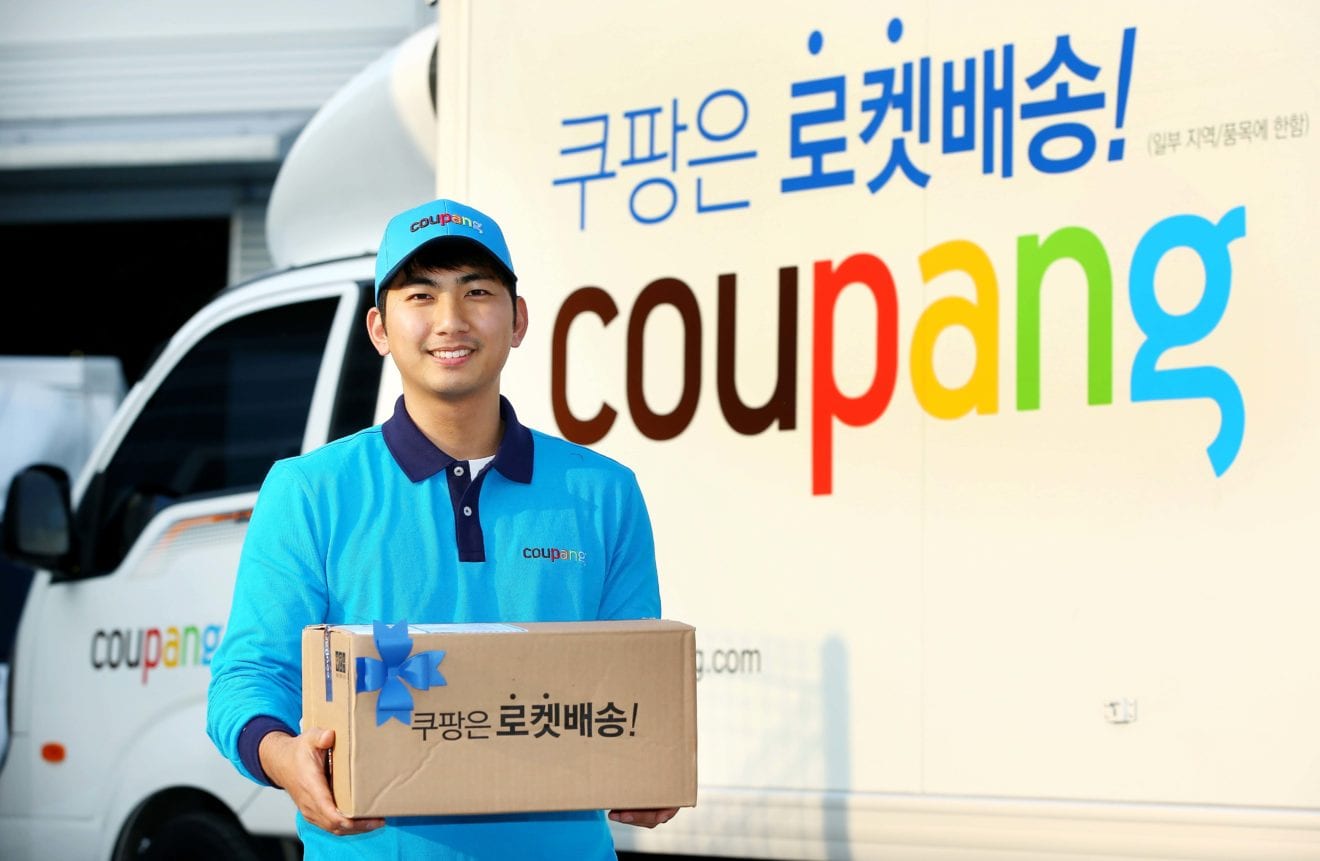
    South Korean e-commerce company Coupang has reported surging revenues and profits on higher active customers during its 15th consecutive quarter of growth above 50 percent.

    But the company is still battling to stem losses thanks to investment into new business activities.

    Total net revenues rose 71 percent on a reported basis, or 57 percent on a constant-currency basis with the number of active customers up 26 percent year over year to 17 million.

    Revenue per active customer grew 36 percent.

    Coupang reported a gross profit of US$658 million, which would have been higher but for $158 million in inventory write-offs as a result of a fire at its Deokpyeong fulfillment center in Korea.

    Revenue from its Rocket Fresh division more than doubled, exceeding $2 billion, while the company’s Eats revenue nearly tripled during the past two quarters, with the loss per order down by more than 50 per cent year on year.

    Investments in Rocket Fresh and Eats accounted for almost the entire pre-tax loss of $122 million for the quarter, which the company said highlighted the profitability of its more mature business operations.

    In March, Coupang was valued at around US$109 billion after the company raised around $4.6 billion in its US IPO.

  • French retailer Carrefour to launch $1.9bn sale of Taiwan business

    French retailer Carrefour to launch $1.9bn sale of Taiwan business

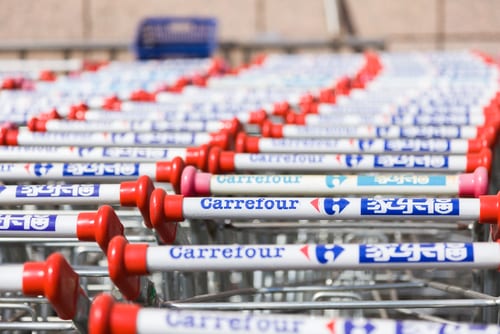
    French retailer Carrefour is planning to launch a sale of its Taiwan business, which is valued at around US$1.9 billion in the coming weeks, three people with knowledge of the matter have told Reuters.

    The supermarket chain operator has hired Morgan Stanley to run the sale, which is expected to kick off after the summer, said the people, who declined to be identified as the information is confidential.

    Carrefour has approached a number of potential buyers, including private equity firms, to gauge their interest, the people said.

    The company did not immediately respond to a request for comment. Morgan Stanley declined to comment.

    Europe’s largest retailer said in June it had started considering possible consolidation, divestitures or tie-ups of its foreign subsidiaries, but denied it had decided to sell any assets.

    Carrefour acquired food retailer Wellcome Taiwan from Asia’s Dairy Farm in December, making it the number two player in Taiwan’s convenience stores market. The transaction, with an enterprise value of $113.6 million covers the purchase of 224 stores as well as a warehouse.

    Carrefour reported $1.48 billion in Taiwan net sales in the first half, up 13 percent year on year at constant exchange rates. The company said the newly acquired Wellcome stores strongly outperformed.

    While it has expanded in Taiwan in recent years, Carrefour retreated from the highly competitive Chinese market in 2019 by selling 80 percent of its loss-making operations to electronics retailer Suning.

  • Retail coffee prices to climb as frost and freight costs bite

    Retail coffee prices to climb as frost and freight costs bite

    A massive shipping logjam caused by the most devastating frost in decades in Brazil and record freight costs wrought by COVID-19 in top coffee producer Brazil is expected to push retail prices to multi-year highs in the coming weeks. have hope.

    A rise in coffee prices will further increase the cost of the shopping cart for other items such as bread, vegetable oil and sugar. The United Nations Food Agency’s index of world food prices for July saw a 31% year-on-year rise at a time when many consumers are struggling financially because of the pandemic.

    The worst cold snap since 1994 in Brazil sent the price of green coffee beans to the highest level in nearly seven years and is expected to pass on to consumers when they buy roasted beans or ground coffee at supermarkets.The price of Arabica coffee on the ICE Futures US exchange has more than doubled in the past 12 months and crops in Brazil have already dried up after the worst drought in 91 years.

    The extent of the damage is still being assessed, but it could take up to seven years for production to fully recover in areas where there are no coffee trees left.

    Shipping disruptions, partly due to increased demand for consumer goods and not enough ships as people stayed home due to the global coronavirus pandemic, have led to a sharp increase in the cost of transporting beans to major consumer countries in North America and Europe. is of. .

    With merchants believing that consumers will soon have to pay more to buy coffee from supermarkets, the price of a latte or Americano at high street coffee chains may not follow suit in the short term.

    “The roast and ground (coffee at the supermarket) only has coffee and a little packaging. Your coffee at Starbucks can’t go up (as much) because you pay more for the shop, the wifi, the experience,” he said.

    Data released by the US Bureau of Labor Statistics showed ground coffee prices rose to $4.75 a pound in April, up 8.1% from a year earlier and the highest level since July 2015, as a drought-hit Brazil. had an early effect on crops.

    Arabica coffee prices on the ICE Futures US exchange rose sharply, however, after the recent frost and retail prices are sure to increase in response.

    In Brazil, the world’s number two consuming country after the United States, prices of roasted and ground coffee rose 3.4% in June, according to the statistics office IBGE.

    They are sure to grow further. Following the July frosts, Brazilian coffee industry group Ebique asked roasters to analyze their costs and adjust prices accordingly to maintain the stability of their businesses.

    Ebic estimates that green coffee prices for roasters in Brazil have increased by about 80% from the end of December to July.

    “Some companies, including market leaders, have already announced price increases,” Ebic said in a letter to affiliated roasters seen by Businesshala.

    JDE Peet’s, whose brands include Douwe Egberts, Kenko and Peet’s, said there has been a sharp increase in material, freight and other costs over the past 12 months.

    “Historically, significant fluctuations in green coffee prices have been reflected in the market (retail prices) and we expect this precedent to continue,” the company said.

    An increase in transportation costs, coupled with a shortage of shipping containers, can play a major role in driving up prices. Coffee is typically shipped in containers, as opposed to items such as cereals, which are transported in bulk carriers.

    Many coffee companies find it easier to cope with an increase in the cost of beans, at least in the short term, than to increase shipping costs because they often price their purchases several months in advance.

    Mark Schneider, chief executive officer of Nestle, recently said, “We’ve been hedging here for a good percentage of our coffee needs for the rest of this year and even part of next year, So I’m not worried about it.” Conference call, adding it was not in terms of transportation costs.

    Carlos Santana, coffee head trader at Aisa Intergricola, a unit of ECOM Trading, said it was very challenging to ship coffee specifically to the US.

    “It’s not nearly as economical to use this route right now. Ports are full in the US, shipping companies don’t want to move as much cargo there, so they charge more. Prices are three times higher than they were before the pandemic,” They said.

    Thiago Cazarini, a coffee broker in the Brazilian state of Minas Gerais, said despite paying very high prices to secure a container, exporters are having problems trying to load them into ships.

    He said the problem is widespread, affecting all players.

    One US coffee importer said, “Brazil is logically such a mess at the moment. I have coffee that arrived two months ago and haven’t received it yet.”

    Julian Thomas, managing director of Maersk Brazil (MAERSKb.CO), part of the world’s largest container shipping line, said: “The current bottlenecks of pandemic containment measures and a strong demand are also affecting supply chains in and outside Brazil. Is.”

    “We are still serving our customers and can meet their growing demand,” he told Businesshala.

    German container shipper Hapag Lloyd (HLAG.DE) said there were delays for shipping goods, “but not just coffee”.

    Brazil accounts for an estimated 30% of global exports and its peak shipment season has already begun.

    Additional reporting by Maytal Angel in London and Ana Mano in So Paulo; Editing by Veronica Brown and David Evans


  • 10 Jobs in Retail You Can Do While Still in College

    10 Jobs in Retail You Can Do While Still in College

    According to a study by Georgetown University’s Center on Education and the Workforce, 70% of college students work while studying. Some are forced to do so to take care of their family and bills. In contrast, others do it to get some extra bucks other than pocket money and gain experience.

    However, they can all agree that juggling work and school is not the easiest experience. Things get worse in the case of formal employment since most of the employers give limited flexibility and not very rewarding salaries.

    Luckily, students can enjoy more flexibility with an array of jobs in retail that allow them to manage their time effectively.

    Even better, if you have a hard time balancing work and school due to assignments, you can entrust professional essay writers with your projects. This will allow you to manage all your tasks with ease.

    Boutique Sales Associate

    If fashion and design are your things, you should consider working in a boutique as a sales associate. This is a perfect option if you are studying a course in this niche. It gives you the perfect opportunity to practice as you wait to complete school and get into the real fashion world.

    Part-Time Sales Representative

    The retail sector is full of sales rep opportunities. With a good employer, you can choose your ideal schedule, and although the pay may not be the best, you will get the chance to interact with customers and perfect your sales skills. Everyone has to start from somewhere. Working as a retail sales representative may be your stepping stone to becoming a wholesale business owner in the future.

    Hardware Products Loader

    Tons of hardware stores out there are looking for part-time employees to help load heavy products and equipment into the customers’ vehicles.

    If you feel energetic and strong enough to carry loads from the store to the car, this is a great chance to work in a rewarding environment. Apart from being energetic, you should also be good at interacting with people and offer good customer service.

    Such jobs are mostly seasonal but require you to be available on weekends and holidays. This is definitely a suitable time for students. 

    Warehouse Worker

    You do not necessarily have to be a forklift guru to work in a warehouse. The e-commerce industry is rising continuously. This forces warehouses to work around the clock to offer speedy services. This makes them a perfect working station for college students since most warehouses are operating at night and on weekends.

    You can get a job as a warehouse representative during your ideal time. You could work for a few hours during the weekend for some extra cash. Some tasks to consider at the warehouse include sorting and packing, picking orders, and quality control.

    Work in the Food Sector

    Perhaps you have always wanted to work in a restaurant or set up your eatery after college. You don’t have to wait until graduation to fulfill your dream. You may even sell street food in the evening to exercise your passion.

    The good thing about working as a food service worker is you get extra income in the form of tips. Some duties of a food service worker include light food preparations, taking orders, and serving.

    On-Demand Staffing Job

    There are hundreds of on-demand staffing jobs available for part-time workers, and students are no exception.

    All you need to do to get into the mobile marketplace is to create an online profile and share your portfolio. You can then search for available jobs based on your preferred niche.

    It could be in beauty, fashion, and design, selling electronics, you name it.

    Pharmacy Technician

    If you are studying medicine, working as a pharmacy technician will prepare you for the real world. The job involves stocking shelves and data entry. You may also be tasked with printing labels and other light tasks to save the pharmacist’s time.

    The good thing with pharmacy technicians is that you can choose to only stock the shelves and print labels which will take you a few hours. Then you are off to school.

    Artisan

    If art is your thing, consider spending your free time making paintings, leather goods, or handwoven textiles. You may choose to sell them online or join a shop near you where you get paid for every piece sold. The job allows you to practice your passion and perfect your skills as you earn.

    Ice-Cream Shop Server

    Undoubtedly, there are many ice-cream shops around your school, and it would be very convenient to work as a server or cashier there.

    Ice-cream joints are busy in the afternoon hours when the temperature rises. If you don’t have classes around that time, you can rush to the shop and get back to school work in the evening. The salary is quite decent, and you only get to work for a few hours per day.

    Smoothie Maker

    Smoothies are another students’ favorite. You can take advantage of this to make extra funds right outside your school. You only need a reliable blender for a start, fruits, and a few cups, and you are ready to go. If you can, get a bench and watch how students and bypassers will flock to your station.

    You may also include some snacks on top of the smoothies to differentiate your business. 

    Final Thoughts

    Do not wait until you are out of college to collect your first paycheck. Working while in college gives you a sense of responsibility. It also makes you feel good earning extra cash to buy that one thing you have always wanted. Most importantly, working prepares you for life after school.

    The retail sector provides an opportunity for anyone regardless of their passion or skills. The best part is that most of the jobs do not demand any experience, so you can start any time. Check out the above jobs in retail, and select one that suits your passion.


  • Indonesia’s Bukalapak kicks off $1.1 billion IPO

    Indonesia’s Bukalapak kicks off $1.1 billion IPO

    Indonesia’s Bukalapak launched an up to $1.13 billion IPO ahead of next month’s listing, marking the country’s biggest issue in over a decade amid rising investor appetite for tech stocks in a region boasting a growing consumer class, according to a term sheet seen by Reuters.

    The e-commerce company, which counts Singapore sovereign investor GIC and Microsoft among its backers, is set to be valued at $5.6 billion at the top end of a price range, doubling the company’s valuation from two years ago.

    Details of the IPO are currently being announced at an investor briefing.

    Reuters reported on Thursday that Bukalapak, the country’s fourth-biggest e-commerce firm, was targeting raising more than $1 billion in its IPO, 25% more than previously planned.

  • Singapore retail sales still running below pre-Covid times

    Singapore retail sales still running below pre-Covid times

    Singapore retail sales (excluding motor vehicles) increased 61.7 percent in May, but the figure was skewed significantly by the low base of the previous year when Covid-related movement orders effectively shut the offline retail sector down for a whole month.

    Of the total estimated retail sales in May of about SG$2.8 billion, excluding motor vehicles, online sales accounted for about 16.1 percent.

    The largest online categories were computer and telecommunications equipment where e-commerce accounted for 54.4 percent of total sales; furniture and household equipment (30.7 percent) and supermarkets and hypermarkets (12.1 percent).

    May’s overall sales increase followed a 39.2-per-cent rise in April – however, Statistics Singapore says sales continue to track at lower levels than before the outbreak of Covid.

  • Coupang faces probe into unfair trade practices

    Coupang faces probe into unfair trade practices

    After stoking a series of controversies, including a fire at a logistics centre and poor working conditions, South Korean e-commerce giant Coupang is now facing a government investigation into alleged unfair trading practices.

    The Korea Fair Trade Commission (KFTC) recently noted that Coupang might have violated the Fair Trade Law and carried out a field investigation at Coupang’s headquarters in Songpa-gu in Seoul late last month.

    Coupang has allegedly manipulated its search algorithm to make its private-label products more visible than the products of other suppliers.

    The company manipulated the algorithm towards prioritizing and placing its private-label products at the top of the search results while placing other products at the bottom.

    The antitrust regulator is also investigating whether Coupang conducted ‘gapjil’ against suppliers. Gapjil is a Korean term referring to power harassment and abuse of power.

    Coupang has allegedly required suppliers to offer their products at the lowest price and penalized those who refused to supply their products at a lower price than the supply price for other platforms.

    In the field investigation, the KFTC checked the allegations that Coupang forced suppliers to purchase advertising space and excluded those who refused to do so from various benefits, including the company’s rocket delivery service.

    Another allegation was that Coupang unfairly returned products to suppliers.

  • StanChart Names Chief Information Officer for Retail Banking

    StanChart Names Chief Information Officer for Retail Banking

    She takes over Paul Macpherson, Chief Information Officer, CPBB since 2018, who will be leaving to pursue opportunities outside the bank.

    Standard Chartered has appointed Anshu Sharma Raja as chief information officer, Consumer, Private & Business Banking (CPBB), the bank announced on Friday.

    Raja joined the bank in 2018 as managing director, global head of Retail Banking Technology and head of Global Business Services and Technology & Innovation Centers, based in Bengaluru, India. She previously worked for Vodaphone, AIG, Goldman Sachs, and consulted with investment banks for technology solutions, according to her LinkedIn profile.

    Raja is based in Singapore and reports to Michael Gorriz, group chief information officer.

    Our ambitious growth plans for our affluent, mass and wealth management business rely on a modern, cloud-based architecture that delivers superior client products and experiences digitally, Gorriz said in the announcement.

  • Volkswagen Polo GTI Facelift Unveiled

    Volkswagen Polo GTI Facelift Unveiled

    Now before getting into the details of the new Volkswagen GTI facelift, let us tell you how these official pictures of the 2021 model year surfaced online. So we actually don’t know whether it is one of Volkswagen’s marketing strategies, or Ralf Brandstatter – CEO, Volkswagen Passenger Cars got so excited by looking at these official pictures of this new hot hatch, that he couldn’t help sharing them on his linked in profile. Yes! This is how the range-topping 2021 Volkswagen Polo GTI was unveiled, almost two years after the global debut of the line-up.

    In terms of design, the new GTI gives you exactly what you expect of a facelift as the changes remain subtle and it’s a predictable evolution if you will. It gets fully redesigned headlights along with the slim DRLs extending to the new grille, just like the Golf GTI. Then, there are wider taillights and the overall design has been spruced up with the usual red accents, dual exhaust tips, and a honeycomb grille. It also sports chunkier two-tone alloy wheels with upgraded brakes featuring red calipers and other sporty elements include contrasting black mirrors and roof.

    On the inside, it gets VW’s Discover Pro and Discover Media systems as optional, and the car also receives Volkswagen’s new ‘digital cockpit’ dashboard setup, as used by the Golf and ID 3. Other elements include a 9.0-inch touchscreen unit, panoramic sunroof, voice control, wireless charging, Beats sound system, and 18-inch alloy wheels. In the safety department, the new Polo gets Volkswagen’s Travel Assist system for the first time, which includes adaptive cruise control, lane assist, side assist and rear traffic alert. Autonomous emergency braking is also standard, as is a driver alert system and automatic post-collision braking.

    The new Polo GTI also comes with three driving modes – Eco, Normal and Sport with the last one tuned for enhanced exhaust note. The Polo GTI also gets a bespoke, performance-oriented chassis tune, lowering the body by 15 mm compared with the standard Polo and adding a large stabilizer on the car’s front axle, rigid coupling rods at the front and stiffer axle-locating mounts at the rear. Now Brandstatter is promising a powerful TSI engine under its hood, but mechanical details are not confirmed yet. We expect it to feature the same 2.0-litre, four-cylinder Turbo TSI motor tuned for optimum performance and it should come with the options of both six-speed manual and DSG transmission. Talking about the India context, the new Volkswagen Polo GTI is based on the sixth-generation Polo and both models are not likely to join VW India’s line-up anytime soon.

  • Sweaty Betty opens first Singapore store

    Sweaty Betty opens first Singapore store

    British activewear retailer Sweaty Betty has made its Singapore debut, more than two years after entering Asia.

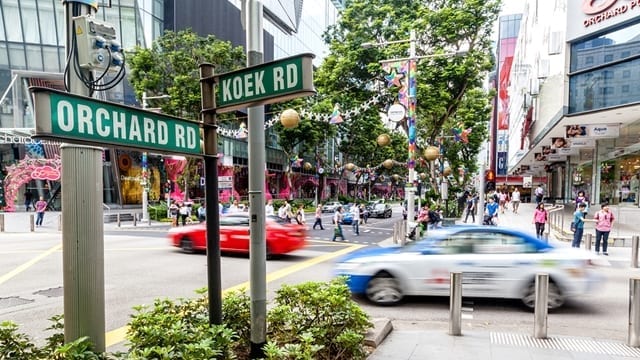
    Located in the city’s Ion Orchard mall, Sweaty Betty Singapore offers a full range of its lifestyle and activewear, including Pride Collection and Halle Berry x Sweaty Betty Collection.

    The Singapore launch is part of Sweaty Betty’s plan to expand and strengthen its presence in the Asian market. The brand, often referred to as a rival to Canada’s Lululemon, first entered Asia in 2019 opening a store in Hong Kong’s IFC mall.

    Founded in Notting Hill, London in 1998 by Simon and Tamara Hill-Norton, Sweaty Betty is renowned for its bum-sculpting leggings, innovative prints, and technical high-performance fabrics.

    The retailer now operates more than 60 outlets, mostly across the UK and the US.

  • L’Occitane posts record profit as China becomes its largest market

    L’Occitane posts record profit as China becomes its largest market

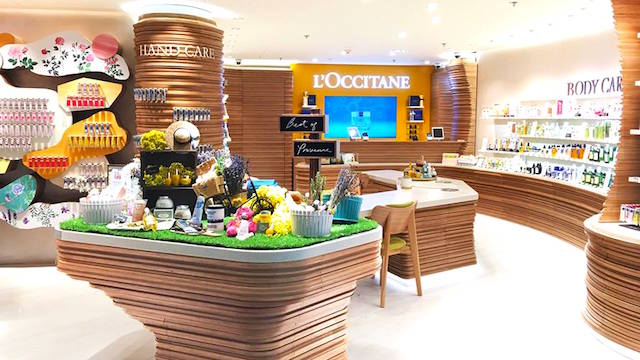
    Beauty products retailer L’Occitane International has reported sales and profit beyond expectation after successfully adapting to the challenges of selling products during a global pandemic.

    Despite the Covid crisis, like-for-like net sales of US$1.83 billion were down just 1.1 percent against the previous year, but net profit grew by 36.3 percent to a record $187 million, representing 10.2 percent of net sales.

    China is now the company’s largest market, with year-on-year growth of 36 percent.

    The overall performance was largely driven by a strong focus on online sales in the absence of travel retail business and long periods of physical store closures – more than 75 percent of the company’s outlets were closed at the peak of the pandemic. Global e-commerce turnover soared 69.2 percent and accounted for more than one-third of overall sales.

    Social selling was a key component of the online push, with 68 projects in Europe alone, including personal shopping concierge services, live streaming, and online consultation services.

    “Thanks to the group’s agility and adaptability in a socially distant world, the strong sales recovery in the second half of the year helped recover most of the ground lost earlier in the year, resulting in only a slight sales decline,” said chairman Reinold Geiger in a Hong Kong stock exchange filing.

    “Importantly, the group made tremendous progress in expanding its bottom line – recording an operating margin of 14.3 percent with contribution from its online channels, excellent performance in key markets in Asia, strong results from its newer brands, as well as greater operational efficiency.”

    He put the strong performance down to the group adhering to five pillars of its strategy to build trust, sustainable growth and profitability: empowering teams; executing fundamentals, especially in a retail context; adopting an omnichannel, mobile and digital approach; engaging customers; and strengthening brand commitments.

    Geiger said China was undisputedly the group’s best-performing market, coinciding with it being among the first to emerge from Covid-19. During the fourth quarter, L’Occitane International’s China sales grew by more than 50 percent, boosted by successful Chinese New Year and Women’s Day promotional campaigns, as well as a low base the previous year. Physical roadshows during Chinese New Year encouraged product sampling and conversion.

    Meanwhile, Geiger says two major restructuring activities will help the business achieve greater efficiency in future years.

    Last October, the company announced a reorganization that led to the loss of some 300 positions globally from its 9000-strong workforce, mostly at corporate offices. And in January, its US subsidiary, L’Occitane, Inc, commenced voluntary Chapter 11 bankruptcy protection in order to accelerate its store rationalization process. By the end of March, 25 underperforming US stores were closed. The Chapter 11 process is expected to achieve savings of up to $12 million annually for the next four to five years.

  • Hong Kong retail sales rise 10.5 percent in May

    Hong Kong retail sales rise 10.5 percent in May

    Hong Kong retail sales rose 10.5 percent in May from a year earlier, the fourth consecutive monthly gain, boosted by an easing Covid-19 threat. But the growth lagged pre-pandemic levels as inbound tourism is at a halt and global travel restrictions linger.

    Sales climbed to HK$29.6 billion (US$3.81 billion), government data showed on Wednesday. That compares with a 12.1 percent rise in April, a 20.21 percent rise in March, and 30 percent growth in February.

    “The near-term operating environment of the retail sector will remain challenging given the lack of visitor spending,” a government spokesman said.

    In volume terms, retail sales in May jumped 7.8 percent year-on-year, compared with a revised 11-per-cent surge the previous month.

    Online retail sales in May soared 53.1 percent in value year-on-year, compared to revised 26.9-per-cent growth in April and a 44-per-cent rise in March.

    Sales of jewelry, watches, clocks, and valuable gifts, which depend heavily on mainland tourists, surged 54.8 percent in May versus a revised 93.9 percent rise in April, the data showed.

    Clothing, footwear, and allied products rose 12.1 percent in May, compared to a revised 61.2 percent in April.

    Tourist arrivals fell 34.8 percent year-on-year in May to 5305, after posting a 38.3-per-cent jump in April in the city’s first growth in arrivals after 21 consecutive months of declines.

    Hong Kong’s seasonally adjusted unemployment was 6 percent in the March-May period, against 6.4 percent in February-April, as the labor market was boosted by economic recovery and as the novel coronavirus outbreak receded.

    The government saw some sectors to take longer to return to pre-pandemic levels because of an uneven pace of recovery.

    The city’s economy grew by a revised 7.9 percent in the first quarter from a year earlier, snapping six consecutive quarters of annual contractions. Official forecasts are for the economy to grow between 3.5 percent and 5.5 percent in 2021, after a 6.1-per-cent contraction last year.

  • HSBC Agrees to French Retail Bank Sale

    HSBC Agrees to French Retail Bank Sale

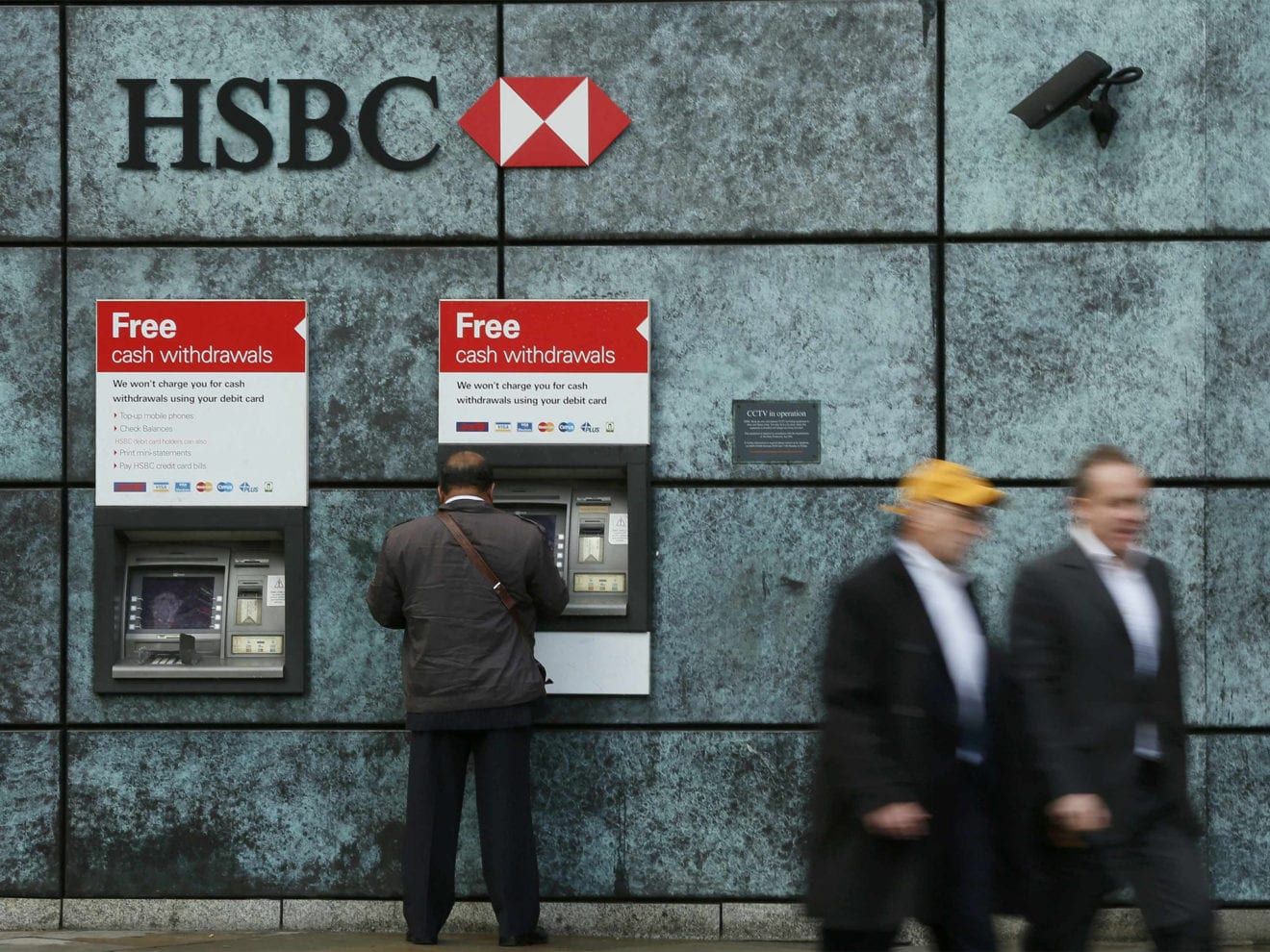
    HSBC has agreed to sell its French retail bank to Cerberus-backed My Money Group, furthering the British lender’s non-Asia retreat.

    HSBC has agreed to sell its French retail bank to the Paris-based banking group in a deal that includes 244 branches, 3,900 staff alongside 21.5 billion euros ($25.5 billion) in customer loans and 18.9 billion euros in deposits, according to a statement.

    If agreed by employees of both firms, as per French law, the deal could be signed off by the second half of this year and completed by 2023.

    According to HSBC, the sale prices will be a nominal 1 euro which will result in a loss of around $2.3 billion. At the time of deal completion, the bank expects net asset value to total $2 billion and it agrees to make up any shortfall should that valuation decline.

    The signing of an [memorandum of understanding] for the potential sale of our French retail banking business represents a significant step in progressing the actions we announced during our strategic update earlier this year, said HSBC group chief executive Noel Quinn.

    It will enable us to dramatically simplify our business in Continental Europe and allow us to accelerate the transformation of our European wholesale banking franchise.

    According to My Money CEO Eric Shehadeh, the firm aims for the newly acquired bank to return to profitability three years after taking control with commitments not to cut jobs until 2024 or 2025.

    The acquisition, if successful, will further add to U.S. private equity firm Cerberus’ portfolio of European banking stakes which includes ownership at Deutsche Bank and Commerzbank.