Tag: Retailers

  • South Korean retail sales record double-digit growth

    South Korean retail sales record double-digit growth

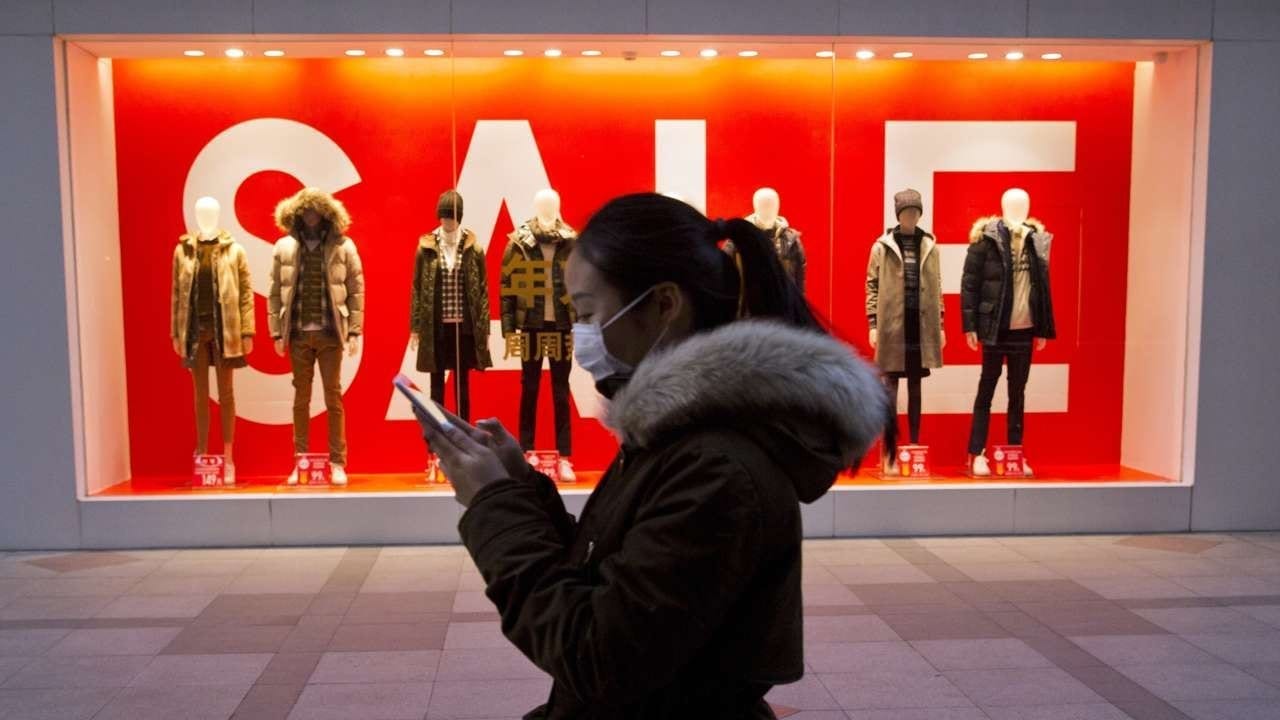
    Department store sales jumped 40 percent in February against a year-ago period in the biggest year-on-year gain since the data became available from 2005 to suggest a rebound in private consumption in South Korea.

    According to the Ministry of Strategy and Finance’s monthly economic review, department store sales jumped 39.5 percent on year in February, a record-high growth rate since monthly records became published.

    Sales at discount stores also gained 24.2 percent, the largest increase since the 34.8 percent gain in Feb 2015.

    Domestic credit card spending last month rose 8.6 percent from a year ago, rebounding for the first time in three months.

    The boost in consumer spending was spurred by the Lunar New Year’s holiday in early February in a pent-up demand after protracted social distancing measures, the finance ministry noted.

    The figure also goes against poor numbers a year ago when the country was swept up in the first wave of Covid-19 outbreak.

    In Feb last year, the department store sales fell 30.6 percent. Discount store revenue declined 19.6 percent, the biggest drop since Jan 2015 when the figure was down by 24 percent.

    An official from the finance ministry said that the low base effect from last year may have made the February figures look better than they really are.

  • Hong Kong e-commerce scene ready for growth in 2021

    Hong Kong e-commerce scene ready for growth in 2021

    E-commerce businesses in Hong Kong are set to recapture their growth hit by the COVID-19 pandemic, with supply chain and logistics issues and a decline in sales, Paypal’s new study showed.

    Despite the obstacles brought by COVID-19, two-thirds (61%) of businesses surveyed are anticipating a recovery at the end of 2020, along with the measures to address the financial pressure and customer relationship challenges.

    The study also found 86% of respondents believing to improve their e-commerce experience for consumers to boost their competitiveness in this time.

    The PayPal Hong Kong Merchant Survey was conducted in August to understand the impact of the pandemic on e-commerce businesses and their thoughts on recovery. 86% of respondents seek capitalization on the opportunity of improving online shopping experiences to boost competitiveness.

    While online shopping amplified, 27% of respondents reported tough challenges amidst the pandemic – mainly growing concerned on their sustainability.

    Since January 2020, 86% of businesses claimed to have supply chain and logistics problems, while 52% reported decrease in sales as their main challenge. Such are creating dual pressure on businesses in addition to the increasing operational costs.

    These issues are also causing failing customer relationships in Hong Kong businesses, including rising complaints, damaged company reputation, and loss of regular customers.

  • China retail sales rebounds after Covid-19

    China retail sales rebounds after Covid-19

    China’s industrial output and retail sales surged in the first two months of the year, official data showed yesterday, underscoring the country’s recovery from the COVID-19 pandemic. Industrial production spiked a forecast-busting 35.1 percent on-year, the biggest bounce in decades, while retail sales also beat expectations with 33.8 percent growth.

    However, the Chinese National Bureau of Statistics said the latest surge was in part due to distortions from last year’s “low base in the same period.”

    Both indicators fell in the early months of last year after COVID-19 surfaced in central China and spread rapidly across the nation.

    However, the world’s second-largest economy became the first to bounce back globally after imposing strict lockdowns and virus control measures, clocking a full-year economic growth of 2.3 percent.

    “After removing the base effect, the growth of main indicators is stable and macro indicators are in a reasonable range,” the bureau said.

    Data for January and last month were released together to eliminate the influence of uncertainties brought about by the Lunar New Year holiday, which typically falls within this period.

    Industrial activity was likely boosted by the fact that many migrant workers were discouraged from returning to their hometowns because of COVID-19 restrictions, meaning some factories remained open through the holiday or reopened sooner.

    “We expect activity to remain strong in the near-term, as the easing of virus restrictions boosts consumption and fiscal stimulus among key trading partners should keep exports strong,” Capital Economics senior China economist Julian Evans-Pritchard said.

    Urban unemployment rose to 5.5 percent last month, up from 5.2 percent in December, data showed, but experts said the real rate might be higher owing to the high number of workers in unofficial employment.

    “Even though we do see improvement on the global economic environment, they are still very cautious,” Oversea-Chinese Banking Corp (華僑銀行) Greater China head economist Tommy Xie (謝東明) said on the issue of unemployment.

    While urban unemployment rate remains within the government’s target, the caution was likely due to another potential record number of graduates entering the job market this year, he said.

    He added that there is an “uneven recovery” ongoing as well, with smaller firms and industries, such as travel, not fully recovered from the pandemic hit.

  • Japan’s Lixil adopts DTC model in Singapore retail store launch

    Japan’s Lixil adopts DTC model in Singapore retail store launch

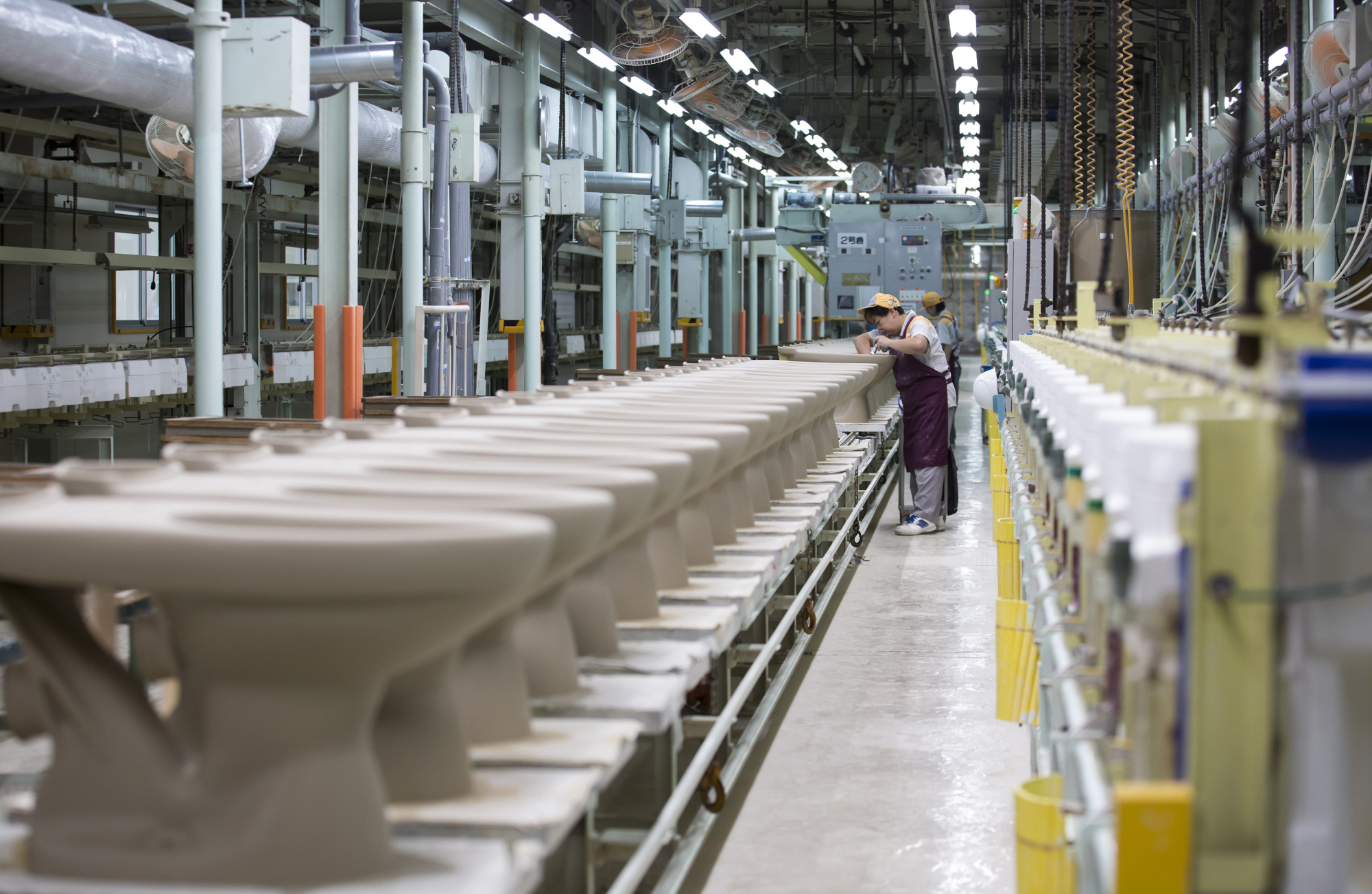
    LIXIL, maker of pioneering water and housing products, today announced the launch of its flagship showroom in Singapore. Located at a heritage shophouse unit at 24 Mohd Sultan Road, the 6,000 square feet store is in the heart of Singapore’s prime lifestyle district. Bringing multiple LIXIL brands under one roof, the store offers a wide range of sustainable living solutions, meaningful design, and cutting-edge hygiene technology.

    The launch of the store comes at a time when the COVID-19 pandemic and the planet’s health have put issues such as sanitation and hygiene at the forefront of consumer minds. Besides offering LIXIL’s unique hygiene technology through the store, LIXIL is also leveraging on its industry-leading experience with a direct-to-consumer business approach and unparalleled retail concept to offer a full bathroom product line-up to reach more consumer segments. The showroom will feature products from GROHE and American Standard, with plans to include INAX, the Japanese brand that manufactures innovative sanitaryware and artistic ceramic tiles.

    Satoshi Konagai, Leader, LIXIL Water Technology-Asia Pacific, said, “We are very happy to inaugurate our flagship showroom and hope to provide the best solutions for their living and working spaces. The customer and retail experience have always been very important to us at LIXIL and we are constantly looking for ways to maximize the value for our consumers.”

    He further added, “Today the world is more concerned than ever about hygiene. Singapore’s recent commitment on sustainability and its exemplary handling of the pandemic showcases a rising awareness on these global issues, and we believe there is a growing demand for solutions to address them. Homeowners expect proven solutions that offer peace of mind. Our technologies such as Touchless faucets and flushing systems, Easy to clean solutions, Double Vortex flushing system, HygieneRim technology and Aqua Ceramic can help to provide the ‘optimum hygiene’ to our discerning consumers.“

    “Also, in a time where people are unable to travel and spend more time at home, they want to be able to feel relaxed and enjoy a spa-like experience right in their own home. Here our solutions like GROHE F-Digital Deluxe, GROHE SmartControl, GROHE Sensia Arena shower toilet can provide a ‘home spa‘ experience to consumers by bringing the enjoyment of water to them.”

    Built on the brand’s core pillars of hygiene, sustainability, and innovative design, LIXIL’s flagship showroom in Singapore takes an experiential approach at showcasing its award-winning water technology and living solutions.

    Some of the key highlights that consumers can expect to see in the store:

    • Cutting-edge technologies in interior design, such as the GROHE F-Digital Deluxe Spa System which consists of a shower system with lights, steam and sound, controlled by an app; as well as GROHE Sensia Arena shower toilet, one of LIXIL’s most internationally awarded product.
    • LIXIL’s first 3D metal-printed faucet, the GROHE Allure Brilliant Icon 3D faucet retailing at S$34,234.24.
    • Kitchen solutions, such as the GROHE Zedra SmartControl which features our “push-and-turn technology”, as well as GROHE Blue, the brand’s sustainable living water filter system and faucet.
    • American Standard’s elegant hygiene products such as its Line Sensor Technology Faucet, the elegant Acacia SupaSleek Collection, and its Signature Collection — featuring its cutting-edge HygieneClean System for toilets, with its Double Vortex flushing technology, anti-stain Aqua Ceramic material, anti-bacterial ComfortClean technology and rimless Hygiene Rim design.
    • FREE 360-degree virtual bathroom design and proprietary LIXIL’s rendering service CustoMySpace, allowing visitors to shortlist their favourite products and render them in 3D in a virtual bathroom setting for them to bring their ideas to life.
  • Fashion giant H&M’s sales recover in March as stores reopen after lockdowns

    Fashion giant H&M’s sales recover in March as stores reopen after lockdowns

    Sales at fashion group H&M fell slightly less than expected in the three months through February and rose in the first half of March as pandemic restrictions were eased in some markets, allowing hundreds of stores to reopen.

    The world’s second-biggest apparel retailer said on Monday net sales fell 27% from a year earlier, or 21% when measured in local currencies, to 40.1 billion crowns ($4.72 billion).

    Analysts had on average forecast a 30% decline in net sales for the period – the Swedish group’s fiscal first-quarter – according to Refinitiv SmartEstimate.

    “Sales development was significantly affected by the COVID-19 situation, with extensive restrictions and at most over 1,800 stores temporarily closed,” H&M said in a statement.

    “Since the beginning of February, a number of markets have gradually allowed stores to reopen and at the end of the quarter around 1,300 stores remained temporarily closed,” it said, adding that online sales had continued to develop very well.

    RBC analyst Richard Chamberlain, who has a “sector perform” rating on H&M’s shares, said the figures implied that online sales had provided a stronger-than-expected boost in February.

    H&M said sales in the March 1–13 period were up 10% in local currencies as many countries, including single-biggest market Germany, began allowing some stores to reopen. However, about 900 of H&M’s approximately 5,000 stores remained closed due to pandemic lockdowns as of March 13.

    Chamberlain said most stores should be open by mid-April bar new lockdowns in Europe, H&M’s main market.

    “As such, we see the potential for a strong sales recovery in the remainder of the year, with potential for gross margin to surprise on the upside, due to the weaker U.S. dollar,” he said.

    Market leader Inditex, the owner of Zara, last week forecast a return to healthy sales as soon as lockdown are lifted, as it reported a 70% fall in profit for its fiscal year through January. It predicted all its shops would be open by mid-April.

    H&M, whose full December-February earnings report is due on March 31, is bracing for a loss in the quarter after the pandemic slashed 2020 profits by 88%.

    Shares in H&M were up 3% in early trading, taking a year-to-date rise to 32%

  • JD.com cashes in on steady online demand, beats market expectations

    JD.com cashes in on steady online demand, beats market expectations

    JD.com Inc’s fourth-quarter revenue beat expectations on Thursday as more shoppers flocked to its website on the back of a broader shift to online shopping triggered by the COVID-19 pandemic.

    While China has largely emerged from coronavirus lockdowns with most businesses resuming production, JD.com’s domestic consumers continue to shop online for everything from daily groceries to luxury products.

    The Beijing-based company posted revenue of 745.8 billion yuan ($114.97 billion) for the year, beating analysts’ estimate of 740.81 billion yuan.

    In a pandemic-struck year, during which retail sales fell 3.9% in China, JD.com’s strategy of ramping up its in-house delivery network enabled faster deliveries.

    The company has also been working to expand into price-sensitive lower-tier cities through its shopping platform Jingxi in a bid to stave off stiff competition from rivals like Alibaba and Pinduoduo that are equally popular.

    As a result, JD.com raked in 110 million new active customer accounts during the year. Meanwhile, Jack Ma’s Alibaba added about 68 million active buyers in the same period.

    U.S.-listed shares of the company, which have been volatile as China looks to tighten scrutiny on its tech giants, were up 3% at $91.98 in early trading.

    The world’s second-largest economy has vowed to strengthen oversight of its big tech firms, which rank among the world’s largest and most valuable, citing concerns they have built market power that stifles competition, misused consumer data, and violated consumer rights.

    The long-term impact of this on JD.com’s business, though unclear, remains a threat. In late December, regulators fined the company, along with Alibaba and other e-commerce sites, 500,000 yuan for engaging in irregular pricing.

    The company’s net revenue rose 31.4% to 224.3 billion yuan in the quarter ended Dec. 31, beating analysts’ estimate of 219.73 billion yuan, according to IBES data from Refinitiv.

  • Malaysia retail sales slump to worst in the recent 22 years

    Malaysia retail sales slump to worst in the recent 22 years

    Malaysia retail sales last year dropped to the lowest level in 22 years as the country has been heavily impacted by the Covid-19 pandemic.

    According to the Malaysia Retail Sales Report, turnover plummeted 16.3 percent last year, with most retail sub-sectors recording double-digit declines. The department store and fashion segments shrunk at 38.3 percent and 37.9 percent respectively, the worst-performing sectors.

    Since the Movement Control Order (MCO) was in place for most of the first quarter, retail sales this year are expected to drop 4.1 percent, with the first quarter’s sales down by 13.4 percent. The next three quarters will show recovery, the report predicts.

    “Last year, Malaysia’s retail industry recorded the worst performance since the Asian financial and economic crisis that took place 22 years ago,” said Tan Hai Hsin, MD at Retail Group Malaysia. “In 1998, retail sales in Malaysia dropped by 20 percent.”

    While most retail sub-sectors, including F&B, children products, and pharmacy, contracted by double digits, the convenience-store sector posted its best performance with 14.8 percent growth last year. The furniture and electronics sector surged by 0.4 percent despite the pandemic.

  • Chinese New Year timing impacts Singapore retail sales in January

    Chinese New Year timing impacts Singapore retail sales in January

    Shops in Singapore had a quieter-than-usual January ahead of muted Chinese New Year celebrations, with official data showing retail sales down 6.1 percent year-on-year.

    “The larger decline in January 2021 was due partly to higher sales in January 2020, when the Chinese New Year was celebrated,” the Department of Statistics said in a Friday statement.

    Although Singapore has lifted most domestic pandemic-related restrictions on business and socializing, the usual street pageantry did not take place during this year’s holiday, which was celebrated in mid-February.

    The usual big and boisterous family parties, during which gifts are handed out, were limited to eight visitors or two households.

    January sales of food and beverages were down by around 25 percent, the department reported, as families did not stock up as usual ahead of the holiday.

    The annual Chinese or Lunar New Year is one of the main public holidays in Singapore, where around 70 percent of the population is of Chinese descent.

    With Singapore closed to almost all visitors and business travel limited to a handful of countries, tourist-dependent sectors such as department stores and cosmetics also saw huge declines, the department said, falling by around 30 percent compared to January 2020 “as they continue to remain affected by low visitor arrivals.”

    Singapore’s economy shrank by a record 5.4 percent in 2020, though the government expects a rebound this year and is projecting growth of around the same percentage as last year’s contraction.

  • Vietnam women’s e-commerce leadership ratio second highest in Southeast Asia

    Vietnam women’s e-commerce leadership ratio second highest in Southeast Asia

    Forty-six percent of e-commerce business leaders in Vietnam are women, the second-highest in Southeast Asia, according to a survey.

    The survey has been conducted in Hong Kong and six Southeast Asia countries by market research company iPrice Group.

    This figure was lower than that of Hong Kong (55 percent) but higher than that of Thailand (44 percent), the Philippines (39 percent) and three other Southeast Asian countries, showed the survey.

    Vietnam’s figure has improved from 37 percent in 2018.

    In Southeast Asia, however, there is still a gender gap in top positions. Only 31 percent of women have C-level roles – executive levels such as CEO or chief financial officer (CFO).

    In the vice president position, just 38 percent are women.

    Overall, there is a 40-60 disparity between women and men when it comes to being in positions of power.

    “Given centuries of gender inequality and women taking time off for child-rearing, the disparity isn’t as wide as we may have assumed,” the iPrice report said.

  • Disney closing North American stores to focus on e-commerce

    Disney closing North American stores to focus on e-commerce

    Walt Disney Co will close at least 60 Disney retail stores in North America this year, about 20 per cent of its worldwide total, as it revamps its digital shopping platforms to focus on e-commerce.

    The media and entertainment company also is evaluating a significant reduction of stores in Europe, a spokesperson said, adding that locations in Japan and China will not be affected. Disney currently operates roughly 300 Disney stores around the globe.

    In November, Disney launched digital marketplaces in Australia, New Zealand and India.

    The company did not say how many people would lose their jobs as a result of the closures.

    Consumers have been moving to digital shopping over physical locations, and chains including Walmart and Macy’s have shuttered brick-and-mortar stores. The global coronavirus pandemic accelerated that change when people were forced to stay home.

    “While consumer behaviour has shifted toward online shopping, the global pandemic has changed what consumers expect from a retailer,” said Stephanie Young, president of Disney’s consumer products, games and publishing.

    Over the past few years, Disney has expanded its shops inside other retailers such as Target in the US and Alshaya Group stores in the Middle East. Those locations will continue to operate, as well as stores inside Disney parks. Disney-licensed products also will remain widely available through third-party retailers.

    Disney will overhaul its shopDisney apps and websites over the next year.

    “We now plan to create a more flexible, interconnected ecommerce experience that gives consumers easy access to unique, high-quality products across all our franchises,” Young said.

    Digital shopping gives Disney a chance to offer a much broader selection and include higher-end products from all of its Disney, Pixar, Marvel and Star Wars brands.

    New products will include adult apparel, artist collaborations, premium home products and collectibles, the company said. It recently unveiled streetwear featuring Grogu, the “Star Wars” character popularly known as Baby Yoda.

  • FJ Benjamin and Lazada Singapore Sign MOU for Strategic Partnership to Boost Online-Offline Sales

    FJ Benjamin and Lazada Singapore Sign MOU for Strategic Partnership to Boost Online-Offline Sales

    FJ Benjamin Holdings (FJB) and leading eCommerce platform, Lazada Singapore, today signed a Memorandum of Understanding (MOU) to forge a strategic partnership that aims to deliver the ultimate retail experience to customers across all channels and devices.

    The proposed partnership will tap Lazada’s technical and online capabilities, and eCommerce platform management expertise, and leverage FJB’s experience in fashion brand management and physical store operation, to boost the eCommerce performance of FJB’s stable of brands in Singapore, Malaysia and Indonesia, as well as to expand and incubate new FJB brands to eventually integrate brick-and-mortar and virtual stores.

    FJB will also discuss with brand principals opportunities for eCommerce in markets Lazada has a presence but where FJB does not, such as Vietnam, Thailand and the Philippines. Powered by Alibaba’s advanced eCommerce tools and systems, Lazada will develop new tailor-made solutions to deliver a truly omnichannel customer experience in managing the full online ecosystem of FJB brands across the markets.

    Group CEO Nash Benjamin said: “FJ Benjamin has been strategising and planning our omnichannel business model for some time now and this partnership with Lazada is intended to get us to where we want to be much faster and in a more cost-efficient manner. This will combine our respective capabilities to strengthen customer experience across brick and mortar and virtual channels.”

    Besides operating principal branded sites, it is also intended to host certain brands on LazMall as well as other regional sites, subject to principal approvals.

    “We are thrilled to be part of this new chapter with FJ Benjamin and value their trust in us,” said James Chang, CEO of Lazada Singapore. “Lifestyle, fashion and beauty are important pillars in our eCommerce plans and shoppers can now look forward to seeing more well-known brands and labels on our platform, for an integrated shopping experience. In the last year, Lazada has supported many businesses that adopted a multichannel approach to set up stores online and we know that our expertise in the eCommerce space will benefit and contribute to the success of a renowned brand like FJ Benjamin, and look forward to seeing positive results with them.”

    While some of the brands managed by FJB, including La Senza, Pretty Ballerinas and Petunia Pickle Bottom, are currently available on Lazada’s premiere shopping platform, LazMall, this is the first time both parties –  one, a traditional brick-and-mortar operator, and the other, the region’s leading eCommerce player – have come together to envision and execute a truly omnichannel model under which customers can control the buying process and enjoy a seamless shopping experience across multiple channels – brick-and-mortar, desktop, and mobile.

    Since the pandemic lockdowns last year forced FJB stores in Southeast Asia to shutter, the Group had secured principals’ approvals to pivot to eCommerce. It has ramped up its online presence from one brand, the cult British fashion label Superdry, to almost all its brands including Guess, La Senza, Casio, Rebecca Minkoff, Pretty Ballerinas, Airfree and Dr Barbara Sturm.

    The MOU states that  “the parties agree both physical stores and online stores are part of the retail ecosystem. With Lazada’s technical and online abilities and FJB’s experience in fashion and lifestyle brand management and physical store operations, this brings together a strong strategic partnership which leverages each other’s expertise to deliver an ultimate consumer experience.”

    Under the terms of the MOU, both FJB and Lazada will, within 90 days, work on a detailed action plan and a definitive agreement to move the partnership forward.

    Mr Benjamin said FJB will continue to take charge of all aspects of product assortment, brand management, pricing, promotions as well as key parts of logistics such as inventory and supply chain. The parties will jointly undertake online marketing and campaign strategies while Lazada will operate the online stores.

  • Consumers complain most about transport sector

    Consumers complain most about transport sector

    The transport service sector received the highest number of customer complaints in 2020, with travel restrictions related to the Covid-19 pandemic triggering more disputes than usual.

    A report released Monday by the Vietnam Competition Authority (VCA) under the Ministry of Industry and Trade says that complaints in the transport sector accounted for 49.1 percent of the total, followed by banking, finance and insurance (9.3 percent), and telephone and telecommunications (8.8 percent).

    Tourism and restaurant ranked fourth with 6 percent of customer complaints, says the report, also noting that sectors hit hardest by the Covid-19 crisis, like aviation and tourism, have elicited more complaints from customers than in previous years.

    Last year, when Vietnam experienced two Covid-19 outbreaks in March and July, the government had imposed stringent travel restrictions to try and curb the spread of the virus.

    The VCA said that it had answered 9,965 out of 11,211 calls its center received last year, up 63 percent from the previous year.

    Around 56.4 percent of all complaints related to businesses’ violation of commitments. Others related to the quantity and quality of goods as also delivery time. There were complaints about contracts with service providers (7.5 percent) and information provided by sellers (5.2 percent), the report says.

    Last year, Ho Chi Minh City topped the list of localities receiving the highest number of customer complaints, followed by Hanoi.

  • Indian officials to examine Amazon after Reuters probe

    Indian officials to examine Amazon after Reuters probe

    India’s federal financial crime-fighting agency will examine findings in a Reuters report, which revealed that Amazon.com Inc has for years given preferential treatment to a small group of sellers on its India platform and used them to circumvent the country’s foreign investment rules, a senior agency source told Reuters on Thursday.

    It provided an inside look at the cat-and-mouse game Amazon has played with India’s government, adjusting its corporate structures each time the government imposed new restrictions aimed at protecting small traders.

    On Thursday, a senior Enforcement Directorate source told Reuters that “we will be examining findings” of the story. The subject matter “is not entirely new for us,” said the source, without elaborating. The source asked not to be identified.

    Amazon didn’t immediately respond to a request for comment.

    Amazon is already under investigation by India’s Enforcement Directorate for possible violation of foreign investment rules. Such probes typically take years in India, and in most cases, details aren’t made public. In the Reuters report published Wednesday, Amazon said it was confident of its compliance when asked about the agency’s probe.

    In tweets issued on Wednesday, Amazon criticized the Reuters report as “unsubstantiated, incomplete, factually incorrect,” without going into specifics. “In last several years, there have been (a) number of changes in regulations; Amazon has on each occasion taken rapid action to ensure compliance,” the company said.

    In an e-mail to employees on Thursday, Amazon’s India head Amit Agarwal addressed the Reuters story, saying he understood “such instances can be distracting.”

    The company was on “the threshold of creating a legacy,” he wrote in the e-mail, which was reviewed by Reuters. “It will require significant innovation, it will push our abilities, we will be misunderstood, but it will be fulfilling.”

    Indian retailers, who are a crucial part of Prime Minister Narendra Modi’s support base, have long alleged that e-commerce giants like Amazon and Walmart’s Flipkart flout federal regulations and that their business practices hurt small traders. The companies deny the allegations.

    The documents reviewed by Reuters revealed that Amazon helped a small number of sellers prosper on its India platform, giving them discounted fees and helping one cut special deals with big tech manufacturers such as Apple Inc. The company has also exercised significant control over the inventory of some of the biggest sellers on Amazon.in, the documents show, even though it says publicly that all sellers operate independently on its platform.

    Government rules announced in 2016 required that an e-commerce platform should “not exercise ownership” over sellers’ inventory.

    Gopal Krishna Agarwal, a national spokesman for Modi’s ruling party, said the findings in the Reuters story were “serious” and that “any predatory policy, deep discounting … will not be tolerated by the government. The party will take a stand on that.”

    Small businesses are “very important” for the party, he said. “Their concerns will be taken care of.”

    In a written response to the Reuters report published on Wednesday, Amazon said it “does not give preferential treatment to any seller on its marketplace,” and that it “treats all sellers in a fair, transparent, and non-discriminatory manner.”

    A leading group of Indian retailers urged the government to ban the local operations of Amazon and said it was considering taking legal action, after the Reuters story was published.

    The Confederation of All India Traders, which says it represents 80 million retail stores, said “the shocking revelations” are “sufficient enough to immediately ban operations of Amazon in India.”

    Amazon did not respond to a request for comment on the trader group’s statement.

  • Japan retailer turns to cuddly toys to boost Lunar New Year sales

    Japan retailer turns to cuddly toys to boost Lunar New Year sales

    Japan’s cuddly bear character Rilakkumma, who has captured the hearts of children and adults alike with his laidback demeanor, sits on the shelves of a swanky department store in the capital, flanked by Hello Kitty and other plush toys.

    As the Lunar New Year begins on Friday, they are taking the place of home appliances, from rice cookers to electric toilet seats, normally favored by Chinese tourists who are absent this year because of coronavirus restrictions.

    “Due to the current travel bans, it’s impossible for them to come to Japan,” said Jin Xuezhu, head of the inbound sales division at the Laox duty-free retail chain, which runs the store in Tokyo’s district of Akihabara.

    Chinese have accounted for 90% of the chain’s customers since 2014, Jin said, adding, “So the absence of that 90% has a huge impact on our business.”

    The sharp contraction in global tourism brought by the pandemic forced the chain to shutter half of its 24 stores last year to cut costs and restore cash flow. It has refurbished its image, adding friendly touches to lure domestic customers.

    “We have put out many hobby and toy goods that are unique to Akihabara,” Jin said. “Before we were branded as a duty-free shop, but last year we renovated our stores so that Japanese customers can also feel welcome.”

    But Laox has not forgotten its clientele in China, hosting live broadcasts from Tokyo since last autumn on Chinese e-commerce platforms, such as those of electronic giant Suning and messaging app WeChat.

    “We have great expectations for online shopping through live streams,” said Cui Wenzhe, the manager of the chain’s live commerce section.

    The chain hosted 350 such broadcasts last year and expects even better numbers during the Lunar New Year holiday, he added.

    “We’re also looking forward to more sales events for Valentine’s Day.”

    Laox declined to provide details of the hit to current Lunar New Year sales, but acknowledged the pandemic’s “huge impact” on its business.

    Although Japan has not suffered virus outbreaks on the scale of other major economies, such as Britain and the United States, it has just extended by another month its state of emergency in Tokyo and other regions.

    The continued travel ban, particularly the absence of holidaying Chinese for a second successive year, is expected to hurt Tokyo retailers further.

  • Retail chains rush for expansion

    Retail chains rush for expansion

    The race for domestic retail market share was heating up as local and foreign firms looked to expand their networks, experts said.

    At a recent meeting in HCM City, Trương Công Thắng, general director of VinCommerce Company, told partners that the retailer wanted to open nearly 10,000 stores and more than 300 Vinmart supermarkets in the next five years.

    In addition, the company also plans to attract 100 strategic partners with an ambition to lead the Vietnamese retail market. The company’s financial report showed that in the first nine months of the year, revenue reached VNĐ23.6 trillion, posting a 56.5 percent year-on-year increase.

    Meanwhile, Saigon Co.op is looking at expanding its network to at least 2,000 stores and annual average revenue growth of 8-10 percent in the next five years.

    It has already opened 849 stores in 43 provinces and cities that attract 350,000 customers a day, up 26 percent compared to five years ago.

    Another leading retailer in HCM City, Satra, said that they targeted to have five Satramart supermarkets and four malls by 2025, and depending on the market situation, 150-250 Satra branded stores.

    Local retail giants are looking to expand their market share in the face of fierce competition from big foreign investors such as Aeon, Lotte, Big C and Mega Market.

    The latest example is in October 2020, Japan’s largest retailer cosmetics chain Matsumoto Kiyoshi opened its first store in HCM City.

    In July 2020, leading Japanese retailer Muji also opened a store in HCM City. Japanese fashion retailer Uniqlo, launched its first store last year.

    Japanese retailer Aeon is also surveying a third shopping mall in HCM City in 2021, and plans to have 25 shopping malls in Việt Nam by 2025 with a capital source of US$2 billion for the investment.

    Hirai Shinji, chief representative of JETRO HCM City (Japan External Trade Organisation) was quoted as saying by Thời báo Kinh Doanh that after the COVID-19 pandemic and the market was gradually recovering, it was a favorable time for Japanese retail groups to open in Việt Nam.

    This would lead to fiercer competition, the experts said.

    It was also important to note the efforts of domestic retailers to expand their systems into neighboring areas of big cities, as urbanization and incomes in these areas had been increasing.

    Experts said that although retail sales were concentrated in major cities and key economic regions, with the high speed of urbanization, these areas would become the driving force for growth instead of existing big cities.

    As a result, many domestic retailers had been gradually expanding to areas surrounding the big cities. The evidence is quite clear from data showing that suburban stores brought in more revenue with higher growth than inner cities.

    According to retail expert Nguyễn Văn Thịnh, the number of supermarkets in 2020 had been decreased by 20 percent compared to 2019 – from 336 to 330. This decrease mainly came from Vinmart.

    Meanwhile, the number of convenience stores has marked a growth of 60 percent – from 2,495 in 2019 to 5,228 stores in 2020. This came from Vinmart+ and Bách Hoá Xanh.

    Small stores recorded a slight increase in 2020, while shopping centers posted a growth rate of about 11 percent from 96 centers in 2019 to 107 in 2020.

    Thịnh said that although there were many changes in 2020, Việt Nam was still one of the most attractive retail markets in the world, and competition in the market was becoming more and more intense.

    For some brands, it was an increase in the number of stores, others had to face restructuring, he said.