Tag: Retailers

  • Ikano Retail posts record revenue growth

    Ikano Retail posts record revenue growth

    Ikano Retail has recorded its highest turnover yet for the financial year to August 31, reaching US$1 billion across the five markets in which it operates Ikea stores – Malaysia, Singapore, Thailand, the Philippines and Mexico, equivalent to 41.2 per cent year-on-year growth.

    The increased sales were driven by the return of visitors to physical stores after two years of Covid-19 disruptions. CEO of Ikano Retail, Christian Roejkjaer, said there were 113 million visits to the group’s stores and shopping centres.

    In Malaysia, where the group operates four shopping centres, the company recorded $361.8 million in sales. Meanwhile, in the Philippines, where earlier this year it opened the world’s largest Ikea store in Pasay City, turnover reached $113.6 million.

    Sales in Singapore and Thailand reached $255.4 million and $276.6 million respectively.

    “Our shelves were not fully stocked as we would have liked it and our costs went way up,” said Roejkjaer. “Still, we are leading our markets for affordable, quality home furnishing solutions – and our customers appreciate that.’’

    The retailer is also accelerating its expansion plan after the easing of Covid-19 restrictions, planning to open its first compact city-centre concept store in Thailand later this year at The Emsphere, along with its third Mexico store.

  • Singapore retail sales continue their strong post-Covid surge

    Singapore retail sales continue their strong post-Covid surge

    Takings at the till in Singapore grew faster in May, helped by a low year-ago base and the continued boost from tourist spending after travel restrictions were eased. Retail sales surged 17.8 percent year on year, extending the 12.1 percent growth in April, according to figures released by the Department of Statistics (SingStat) on Tuesday (July 5).

    This exceeded the expectations of analysts polled by Bloomberg, who projected sales to grow by 13.4 percent.

    Excluding motor vehicles, growth was even stronger, coming in at 22.6 percent.

    “The year-on-year increase in retail sales in May 2022 was mainly attributed to the low base in May 2021 when measures such as international travel restrictions were in place,” said SingStat in a press statement.

    Experts said this growth is expected to continue but might be moderated due to higher prices and inflation.

    RHB senior economist Barnabas Gan said: “The retail sales momentum will likely stay buoyed into the third quarter as Asia moves on from Covid-19-related fears. Tourism levels have been picking up across Asian economies, including Singapore.”

    He added that the tight labour market and reopening of Asia’s borders should support spending. “On the back of domestic demand and tourism-led spending, we think retail sales from an index perspective will likely return to pre-Covid levels by the end of this year,” he said.

    But the bright outlook might be muddied by any unexpected worsening of the Russia-Ukraine conflict and China’s economic slowdown, he noted.

    Maybank Kim Eng economist Lee Ju Ye added that the surge in inflation and rising mortgage rates will likely result in some belt tightening by consumers.

    “In particular, sales of discretionary items such as watches and jewellery and recreational goods may be the most affected,” she said.

    Consumers are also expected to lean towards lower-priced items as costs go up, added National University of Singapore business professor Lawrence Loh.

    “In the near term, retail may face a double whammy of moderation in demand and escalation of costs.”

    Within the retail trade sector, most industries recorded year-on-year growth in sales in May.

    Discretionary industries such as wearing apparel and footwear saw sales balloon by 98.2 per cent due to the low base in May 2021, when there was lower tourist spending due to travel curbs.

    Department stores, which were hard hit by Covid-19 restrictions, also saw sales jump by 73.1 per cent.

    This was followed by retailers of watches and jewellery, which recorded higher sales of 60.7 per cent.

    Retailers of food and alcohol saw sales rise by 47.3 per cent, while petrol service stations recorded sales increases of 45.8 per cent.

    In contrast, sales of motor vehicles fell 10.2 per cent.

    Supermarkets and hypermarkets recorded declines in sales of 10.3 per cent, while minimarts and convenience stores saw sales fall by 4.8 per cent.

    This was due to the higher demand for groceries in May 2021 when more people stayed home during the Phase 2 (Heightened Alert) period, SingStat noted.

    Meanwhile, the sales of food and beverage services grew by 40.1 per cent in May on a year-on-year basis, compared with the 11.6 per cent increase in April.

    “The significant growth in food and beverage sales in May 2022 was mainly attributed to the low base in May 2021, when Phase 2 (Heightened Alert) measures were in place, with dining in at food and beverage establishments not allowed for half of the month,” SingStat said.

  • Hong Kong retail sales growth stalls

    Hong Kong retail sales growth stalls

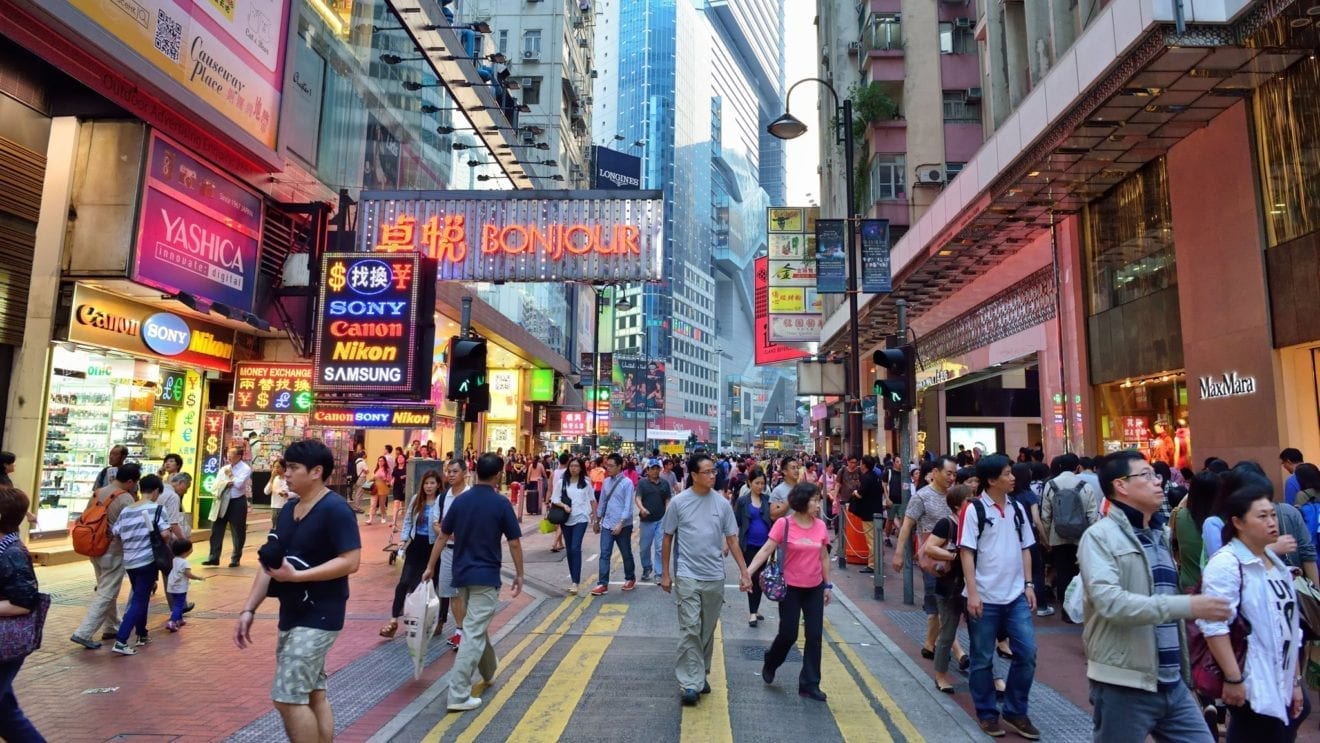
    Hong Kong retail sales growth stalled in August, down 0.1 percent yearly, following a revised estimated increase of 4.1 percent in July.

    According to the Census and Statistics Department, August’s figures were impacted by a high base compared to a year ago, but for the first eight months of the calendar year, sales are down by 1.5 percent on year.

    Calculated with the impact of price changes removed, August sales were down by 2.9 percent, and July sales were up by 1.1 percent. Sales for the first eight months of the year combined were down by 4.5 percent.

    “Looking ahead, the moderating local epidemic situation, improving labor market conditions and [the government’s] The Consumption Voucher Scheme will continue to support consumption sentiment and demand in the near term, but the increasingly tight financial conditions will pose constraints,” said a government spokesperson. “It is crucial for the community to work in unison with the government to contain the epidemic, to create greater room for the recovery of consumption-related activities.”

    Online sales accounted for 9.1 percent of total turnover in August and were 21.3 percent higher than the same month last year. That followed an increase of 8.4 percent in July, with year-to-date online sales up by 21.7 percent.

    Categories with the largest declines in August were apparel (down by 7.4 percent), shoes and accessories (12.7 percent), and books and stationery (17.4 percent). Categories showing growth included jewelry and watches up by 4.3 percent, and motor vehicles and parts, up by 43.7 percent.

  • Vietnam, Cambodia trade climbs to record level

    Vietnam, Cambodia trade climbs to record level

    Trade between Vietnam and Cambodia reached a record US$7.7 billion in the first eight months of the year.

    Vietnam’s exports rose by 32% year-on-year to $4.1 billion, as the country turned last year’s deficit into a surplus, according to its customs department.

    The most significant item was iron and steel, accounting for 17% of the total, followed by garments and fuel.

    Vietnam’s imports from Cambodia rose marginally to $3.6 billion, with rubber and cashew being the main items.

    As a result, last year’s deficit of $0.4 billion turned into a surplus of $0.5 billion.

    Cambodia is Vietnam’s third largest trading partner in Southeast Asia, behind Thailand and Singapore.

  • Singapore retail sales continue to recover

    Singapore retail sales continue to recover

    Singapore retail sales continued their rebound in July, rising 18.1 per cent year on year, excluding motor vehicles.

    That followed a 19.9 per cent increase in June, both months reflecting the low base of a year earlier when Covid restrictions on border crossings and retail trading impacted shopping.

    The fastest-growing category was apparel and footwear which surged 68.3 per cent, largely due to handbags and footwear. Sales of food and alcohol, trade through department stores, and sales of watches and jewellery increased by between 41.7 and 53.1 per cent.

    Retail sales (excluding motor vehicles) in July were estimated at S$3.4 billion, of which online sales comprised 14.3 per cent, a similar level to June. Online sales of computer and telecommunications equipment accounted for 49 per cent of the category’s turnover, while 28.9 per cent of furniture and household equipment spending was online, and 14.8 per cent of supermarket sales.

    Meanwhile, sales of food and beverage services grew by 41.9 per cent in July, following June’s 59.1 per cent increase. The significant growth was due to the low base in July last year when restrictions on dining-in at restaurants and cafes were in place.

    Food and beverage service sales reached $939 million in July, of which online ordering accounted for 26.2 per cent.

  • South Korea’s retail sales up 9.7 per cent in July amid eased virus curbs

    South Korea’s retail sales up 9.7 per cent in July amid eased virus curbs

    Retail sales in South Korea rose 9.7 percent on-year in July amid eased COVID-19 curbs and the growth in people’s outdoor activities, the industry ministry said Tuesday.

    The combined sales of 25 major offline and online retailers came to 14.17 trillion won ($10.48 billion) last month, compared with 12.9 trillion won a year earlier, according to the data compiled by the Ministry of Trade, Industry and Energy.

    It marked the fifth consecutive month of on-year growth.

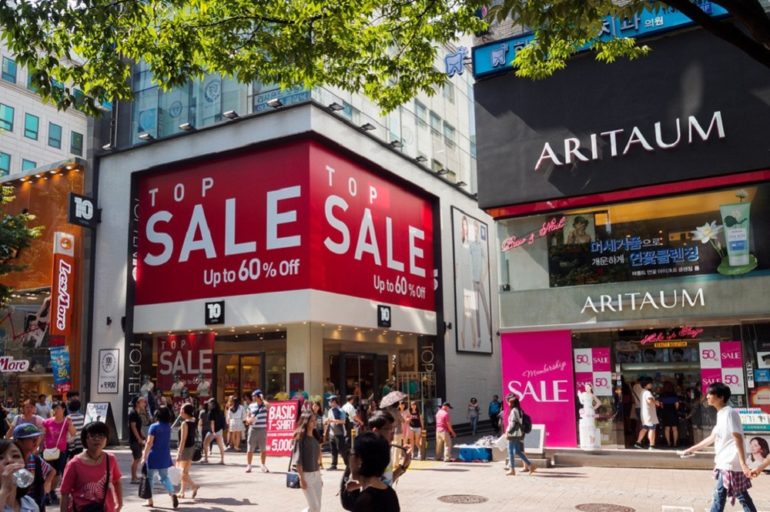
    Sales from offline stores rose 12.1 percent in July, as department stores, in particular, saw their sales surge 31.6 percent on-year. Demand for luxury goods, clothing and other fashion items logged solid growth, according to the data.

    Sales of convenience stores also went up 10.4 percent in July on the back of the popularity of food packages and other daily items.

    Sales of discount chain stores, such as E-mart and Lotte Mart, inched up 0.2 percent on-year amid the dwindling demand for home appliances, while those of smaller supermarkets fell 3.6 percent, the data showed.

    Sales from online platforms jumped 7.3 percent from a year earlier over the continued spread of the contactless shopping trend amid the prolonged pandemic.

    Demand for cosmetics via online platforms surged 14 percent on-year as people resumed outdoor activities.

    Sales of foodstuff and beverages also grew 14.7 percent, while those of home appliances and other electronic devices logged an on-year fall, the data showed.

    Online platforms accounted for 47.63 percent of the total sales in July, according to the ministry.

    South Korea has experienced a new virus wave since late July following a monthslong let-up after the worst infections here so far.

    But the government decided not to reimpose strict antivirus regulations, such as business curfews and a cap on private gatherings, to support people’s return to normalcy.

    All schools resumed in-person classes, and many companies ended their remote working policies.

  • Singapore Considers More Tightening for Retail Crypto

    Singapore Considers More Tightening for Retail Crypto

    The Monetary Authority Singapore is reeling back on retail access to cryptocurrencies with the latest consideration for more curbs.

    The MAS is considering tightening crypto rules for retail investors by «adding friction» to mass access, according to managing director Ravi Menon in a speech published online. This includes the possible addition of suitability tests as well as restrictions on the use of leverage and credit.

    Market volatility this year has led a number of crypto players in the city-state to suffer including exchange Zipmex and lender Hodlnaut. In the latest, fallen Singapore hedge fund Three Arrows’ co-founder Su Zhu reemerged in public to deliver an affidavit defending himself against liquidator claims.

    Despite its concerns, Menon notes that a regulatory ban is not a viable option as it is «not likely to work».

    The cryptocurrency world is borderless. With just a mobile phone, Singaporeans have access to any number of crypto exchanges in the world and can buy or sell any number of cryptocurrencies, Menon said in the opening address of a seminar held today.

    Singapore continues to rethink mass access to cryptocurrencies following guidelines issued in January to limit trading services providers from public promotion.

  • Understanding Modern Retail Through the Gen Z Filter

    Understanding Modern Retail Through the Gen Z Filter

    Over the past decade retailers faced the challenge of managing their own digital transformation, while simultaneously scrambling to serve the needs of a younger and increasingly online-savvy audience – generally accepted as being digitally native. Today, brands are additionally tested to plan and accommodate for the increasing buying power of the emerging 11-24 age group of shoppers, colloquially known as ‘Gen Z’ or ‘Zoomers’.

    Generation Omnichannel

    Perhaps a more fitting nickname for Gen Z or Zoomers, would be ‘Generation Omnichannel’, as this is the first truly omnichannel generation to both physical and online stores and social media platforms in equal measure. This group are prepared to shop wherever suits them best, and in a more impulsive and immediate way.

    According to a recent article in Vogue, Zoomers are 56% more likely to have shopped for fashion in-store over the last three months and 38% more likely to have shopped online in the same timeframe. They are willing to shop across all channels and have an appetite for higher-quality items in an effort to stay on trend with cultural developments.

    This awareness of cultural trends is leading to some key generational spending indicators too; not to mention the fact that Gen Z consumers are more conscious about the planet and the future. They believe that the generations before them represented overconsumption, capitalism, and materialism, meaning they are more likely to associate themselves (and their wallets) with brands that match their own core values, such as sustainability, environmentalism, and equality.

    At the same time, Gen Z has been called the most critical consumer group of all, with a fundamentally different view of shopping and consumption to previous generations. They are the latest to enter the workforce and will have strong purchasing power over the next decade, meaning brands have to earn their loyalty before they become loyal shoppers.

    Furthermore, Zoomers’ frequency of shopping for new items is being disrupted by the second-hand, preloved, vintage market – a market that Zoomers are 27% more likely to shop. In Australia, preloved and vintage platforms, such as Depop & Vinted, are arguably slowing the cycle of new purchases and redefining the concept of the customer journey and what it really means to be ‘new’.

    Embracing New & All Forms of Payments

    According to PayPal, 22% of Zoomers have used buy-now, pay-later (BNPL) solutions such as Klarna and Afterpay since the start of the pandemic to buy more expensive, higher-quality products.

    Since the beginning of the pandemic, 123% more Zoomers have used BNPL than previously, representing the strongest uptake of any generation – and during April 2021, 33% of Gen Z respondents said they were likely to use BNPL solutions in the future too.

    Furthermore, Gen Z has continued to embrace mobile payment options such as mobile apps and e-wallets, including Apple and Android Pay, faster than any other consumer spending group. This expectation to be able to pay now, or later, with a device or platform is something that permeates Gen Z spending habits enormously, meaning traditional payment and Point-of-Sale (POS) technologies need to be modernised in order to offer these different payment options.

    A Window to the Future

    The pandemic and the associate rise in online activity grew usage and acceptance of eCommerce amongst consumers, regardless of generational status. If we glance into the future, beyond the Gen Z age group, Generation Alpha and subsequent cohorts will likely prove to be even more digitally-savvy – thus, the cycle of retail reinvention will likely have to start anew in another 20 years or so.

    The key to success for brands confronted by this continual sequence of progressiveness is to be agile and nimble enough to not only introduce different digital and in-store commerce options but have the capabilities to support these with the native omnichannel capabilities needed to deliver against the demanding expectations of these new generational groups.

    Gen Z is the emerging cultural and economic powerhouse in today’s retail landscape and it will continue to drive cultural change and retail spending habits on so many levels over the next two decades.

    While the full force of their dollars may not have hit retailers just yet, the race to meet the future expectations of Gen Z consumers is very much underway. The success of brands over the next two decades will not only be established by understanding what, how and from who Zoomers are likely to buy, but also on a retailer’s abilities to execute frictionless omnichannel experiences by having the right technology in place at within stores and supply chains.

    Written by Richard Wright, Managing Director, SEA, at Manhattan Associates

    For more information on how your brand can better serve customers in an omnichannel environment, please visit: www.manh.com/en-sg


  • Shopee culls staff across SE Asia, Europe

    Shopee culls staff across SE Asia, Europe

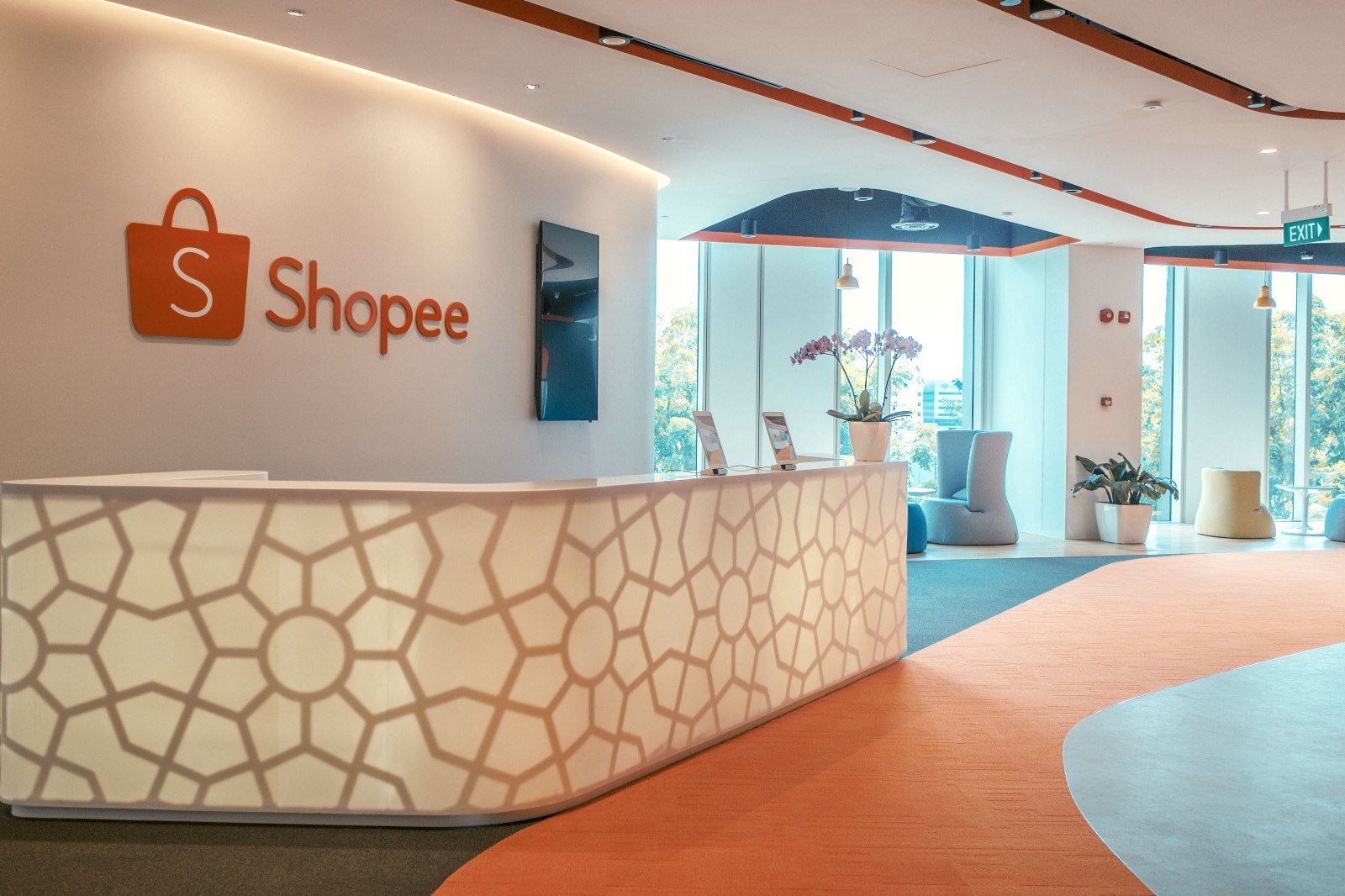
    Sea Group’s e-commerce arm Shopee is laying off staff across multiple markets as it seeks to rationalize its e-commerce business, DealStreetAsia has learned.

    The layoffs have affected employees across several of the company’s Southeast Asian markets including Indonesia, Thailand and Vietnam, sources told DealStreetAsia. The company is said to have emailed employees affected by the layoffs, the sources added.

    Shopee’s payments arm ShopeePay and food delivery business ShopeeFood are also said to be facing cuts. A general meeting was also reportedly held on Monday to address the job cuts with Shopee employees.

    The extent of the job cuts and the number of employees affected could not be confirmed at the time of publishing. DealStreetAsia has reached out to Shopee for comment.

    Two sources aware of the matter said nearly half of Shopee Thailand’s payment and food delivery teams have been affected by the downsizing. One of the sources noted that the email was said to have been managed in an off-handed manner, with the company asking staff members to return home and await further notice of termination.

    A separate source told DealStreetAsia that Shopee has stopped hiring, with several job offers for regional roles rescinded.

    While Sea Group’s business continues to show signs of improvement in overall profitability, most of its revenue continues to come from its gaming arm Garena.

    Sea Group’s first-quarter 2022 financials reflected a 64.4% year-on-year increase in Generally Accepted Accounting Principles revenue at $2.9 billion, with gross profits soaring 81.3% to $1.2 billion over the same period.

    Shopee’s business, while still losing money, has also reflected improvements, with a 71.3% year-on-year increase in orders to $1.9 billion in the first quarter of 2022 while gross merchandise value rose 38.7% to $17.4 billion. Importantly, Shopee’s gross profit margin for e-commerce increased year on year, with faster growth in transaction-based fees and advertising income generating higher margins versus other value-added services.

    Shopee, however, continues to face several macro headwinds, including rising inflation and interest rates, that may dampen retail and consumption sectors.

    The company also appears to be facing setbacks on some of its ambitious internationalization plans, including its forays into Europe and Latin America. Shopee, which has operations in Poland and Spain, decided to pull out of France after only five months as it was not meeting expectations.

  • Owndays launches premium concept store in Singapore

    Owndays launches premium concept store in Singapore

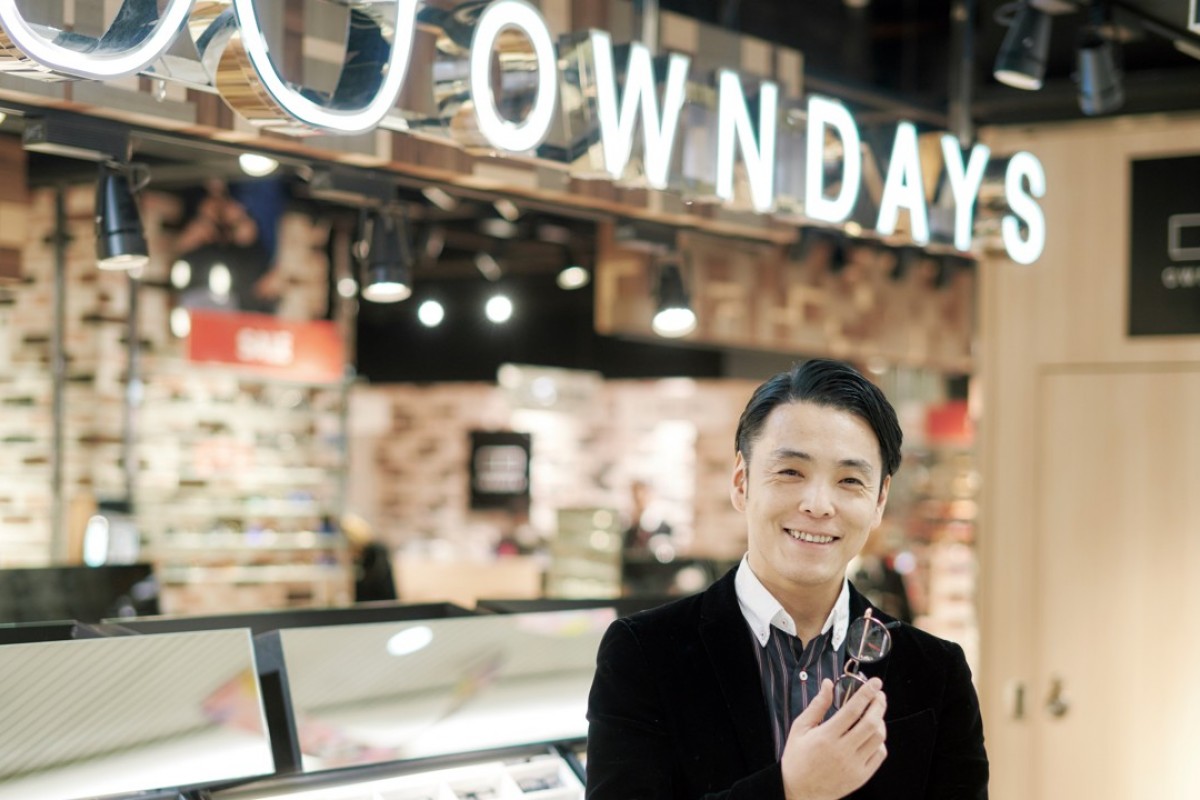
    Japanese fast fashion eyewear brand, OWNDAYS, is pleased to announce the opening of a new store at Takashimaya S.C., Ngee Ann City. This will be the brand’s second premium concept store in the world and its 33rd store in Singapore. The new store will open to public on 20 May 2022 and will house a collection of made-in-Japan eyewear and premium ophthalmic lenses curated exclusively for its premium concept stores.

    The Takashimaya S.C. store mirrors the concept of “Japanese Luxury” originally introduced at its first premium concept store at Marina Bay Sands, offering a premium eyewear shopping experience topped with Japanese hospitality and an extended product offering. Drawing inspiration from Ryoanji Temple, an UNESCO World Heritage Site and a popular attraction in Kyoto, Japan known for its famous rock garden, the new store features a distinct Japanese-styled aesthetics that pays homage to the origins of the brand while incorporating a touch of luxury.

    The main retail floor is flanked by a dry landscape complete with rock arrangements, gravel, moss and shrubs to achieve the Zen Garden interior. Beige wood elements are also heavily featured in the store interior to emphasise a sense of traditional Japanese-ness.

    Také Umiyama, Managing Director/COO of OWNDAYS INC. said, “The Takashimaya S.C. store reflects the core value of OWNDAYS, which is to constantly evolve and innovate in order to deliver quality eyewear to consumers at the best value. With a store that is located right in the heart of Orchard Road, it allows us to make well-designed, good quality eyewear more accessible to our customers. Besides, the new store is a space where we hope local consumers could enjoy a complete Japanese experience without having to physically travel to Japan. We welcome customers to visit the store even when they are not looking to purchase any spectacles and just to feel transported to Japan.”


  • Reimagining the Customer Experience for New Breed of Shoppers

    Reimagining the Customer Experience for New Breed of Shoppers

    Retailers across the APAC region have had to quickly adapt to changing operating conditions over the previous two years, leading to many adopting new technologies and solutions to better serve customers across whichever touchpoints or platforms they prefer.

    As learned pandemic behaviours become the default setting for millions of consumers across the region, brands will continue to serve customers via click & collect and kerbside pickup, while simultaneously processing online returns in-store too.

    For many retailers, this agile, innovation-heavy fusion of online and physical demand is becoming more commonplace, placing the role of modern, dynamic Point-of-Sale (POS) technology squarely at the centre of a redefined connected commerce era.

    For brands today, a reimagined customer experience can be broken down into three key stages, with modern POS playing an important linchpin function at each of the three phases:

    • Pre-purchase: Retailers need to have full visibility of not just customer data such as purchase history, but also their own inventory too.
    • Purchase: Out-of-stock is no longer an option for retailers today. With modern POS, endless aisle capabilities mean shoppers can purchase goods from across an entire network, rather than being restricted by the availability of inventory at a single location.
    • Post-purchase: Stores have a critical role to play in the returns process, but without smart, joined-up store systems, returned goods can often fall into an inventory ‘black hole’.

    From retail industry’s first conception of a Point-of-Sale system, invented back in 1879, the retail landscape has come a very long way, and for those who want to meet the needs of the 21st century shopper, they need to be across all aspects of the omnichannel.

    But, as we observe an acceleration towards a true convergence point between physical and digital retail (fuelled by the effects of the pandemic), it’s important for retailers to continue to innovate and remove any remaining points of friction from this reimagined shopping experience.

    For example, if we go back to the perennial problem of out-of-stock predicaments, it’s hard to believe that even in this day and age, only a small minority of retailers are capable of offering in-store purchasing from another store’s inventory, or indeed from the warehouse.  From a customer experience perspective, this tends to feel like an outdated process, causing not only the risk of losing a sale but also brand loyalty.

    To truly reimagine the customer experience journey at a deeper level in 2022, we must recognise that the role of the store is no longer limited to selling, rather brick-and-mortar retail must be repositioned as a hub for fulfilment too.

    The benefits of this approach have been played out over the last two years and continue to do so today – with retailers with store fulfilment options seeing higher revenue growth – a 114% increase when click and collect is implemented and a 60% increase when ship from store is implemented.

    The future of the customer experience journey is closely linked to eCommerce, and the future of eCommerce is intrinsically linked to the evolving capabilities offered by stores.

    In order to meet supercharged customer expectations, retailers need to adopt a ‘sell/fulfil/engage’ mentality. However, when it comes to future-ready POS implementation, brands often make three common mistakes: adopting a store-only plan which could limit future agility, underinvestment in change management leading to uncertainty or failure to thrive, and selecting a “proven” vendor with old technology without consideration for new innovations.

    All too often, brands are still thinking in silos. Instead, they need to develop a unified commerce roadmap – encompassing a POS + clientele management + store fulfilment + customer engagement strategy. Likewise, retailers need to make a clear plan for organisational change and select the right vendor capable of delivering against long-term, aspirational, and often moving targets.

    As the evolution of POS continues amidst the backdrop of a pandemic-effected economy, one thing that has become increasingly clear is that customers are in the driving seat when it comes to how, when and where they want to shop.

    Today, it’s now up to retailers to take the reins of this new customer experience journey and drive the narrative forward, but they can only do this by having sophisticated, modern POS and order management systems in place that support their customers varied shopping journeys. Whether customers are shopping in-store, online, or via a smartphone or on social media, retailers need to ensure that they are capable of delivering a seamless customer experience journey across all the places their brand is represented, both online and physically.

    For more information on how your retailer business can enhance the customer experience in 2022, please visit: www.manh.com/en-sg

  • Physical store or online store: Which is better?

    Physical store or online store: Which is better?

    Physical store or eCommerce, which do you prefer?

    This question has been at the center of the reflections of small companies for the last past few years. And they try to understand whether or not it is worth investing in a website to sell on the internet.

    Let’s say that there is no one answer to those who want to know if it’s a better physical store or eCommerce. It depends on several factors. But still, we can confirm that the web can be adequate support even for small local businesses.

    Also, those who decide to invest and open a quality shop can make the difference without choosing between a physical store or eCommerce.

    Physical store vs. online store

    The physical store is that establishment or local, in which our potential customers can purchase their products in person at the same place. This type of business has many years since internet platforms and the internet itself did not exist some time ago.

    On the other hand, online stores were born nowadays, and many of the newest companies we know have opted for this type. So, let’s start with the advantages and disadvantages of these two store models.

    Advantages of the physical store vs. the online store

    The physical store has several advantages, which can help you decide on how to sell your products. Therefore, we will give you a summary of some of the benefits that this type of store offers.

    Live product view

    Your customers will be able to analyze and observe all the characteristics of the product at the moment, which can help them decide to buy in this way for the simple reason that they know how the product is one hundred percent.

    Immediate product acquisition

    Having the product in your hands and making use of it without waiting for its arrival is much more convenient, and for occasions when you purchase with urgency, this type of store is much more helpful.

    Customer loyalty

    By being face to face with your potential customer, you can convince him that your store is the best in that sector and above all get his loyalty. For sure he will go to your store before the competition the next time he has to buy a product similar to the one you sell.

    You will also get them to recommend you to other potential customers and thus achieve a more significant number of visits to your establishment.

    Complexity in the sale of these products

    Suppose that in your store, you sell products that, at first glance, are challenging to sell because of the way they work or the type of utility they may have. In that case, the physical store is much more helpful in reaching customers, and encouraging them to purchase online may seem difficult.

    Advantages of an online store compared to a physical store

    As we have said before, an online store or eCommerce is that type of business with which you can make purchases in a much more comfortable way and without leaving home.

    Nowadays, the Internet world is becoming wider and wider, so many companies have opted for this type of store when selling their products.

    Attracting new customers

    With this store model, we can get a wide range of potential customers, which we would not know that we could reach, but with the help of ads and advertising, we can get them to visit our website and decide to buy our products.

    Lower costs

    When we talk about costs, we refer to the money necessary to provide when creating any store. And it is that the expenses of the online stores are much lower since the most important thing is to acquire a domain and, after that, to dedicate time to the creation. In addition to the own expenses that the brand has and the payment of the shipments of your products. While in a physical store, you need to have a store, pay the electricity, the expenses of the brand itself, etc.

    But if we make a balance, the expenses of the online store are much lower than the expenses of the physical store.

    The same applies to customers: purchasing products or services from online stores is often cheaper and more convenient.

    For example, online betting shops like sbo.net are perfect for those who want to bet online wherever they are, without the need to travel to their local betting shop. On the site, you can find trusted expert reviews of the best sports betting sites that provide the best odds, promotions, banking options, and customer service. This can all be done conveniently on a desktop or any mobile device, allowing you to place your bets anywhere, anytime.

    Plus, you’ll consistently receive better odds when you bet online.

    Greater convenience

    Another advantage is the possibility of working from wherever we want and is that when working through the web it is not necessary to be in the same physical place always.

    In addition, this type of store offers greater convenience to the store’s creator, but our customers can also get our products at any time they need.

    Extended opening hours

    Usually, in every physical store, there are opening and closing hours. However, in the case of online stores, this does not happen; why? For the simple fact that although we have our working day, the page is open 24 hours a day, allowing us to get more sales of products.

    For example, if you watch a movie at night and want to eat popcorn, you know you can order them online on ubereats.com, even if the physical shops are closed.

    Conclusion

    As you know, the business world continues to grow and change, so we recommend that before making the final decision, you analyze well what type of store is the one that can work best with your business.

    Also, in many cases, many companies decide to create both types of stores and join both to reach a more significant number of customers and future customers that will help your business grow.

    The negative side of deciding to create both types of stores is the cost since when making both, the money you will have to spend will be twice as much as choosing one of the two.


  • Miniso eyes Hong Kong stock market listing

    Miniso eyes Hong Kong stock market listing

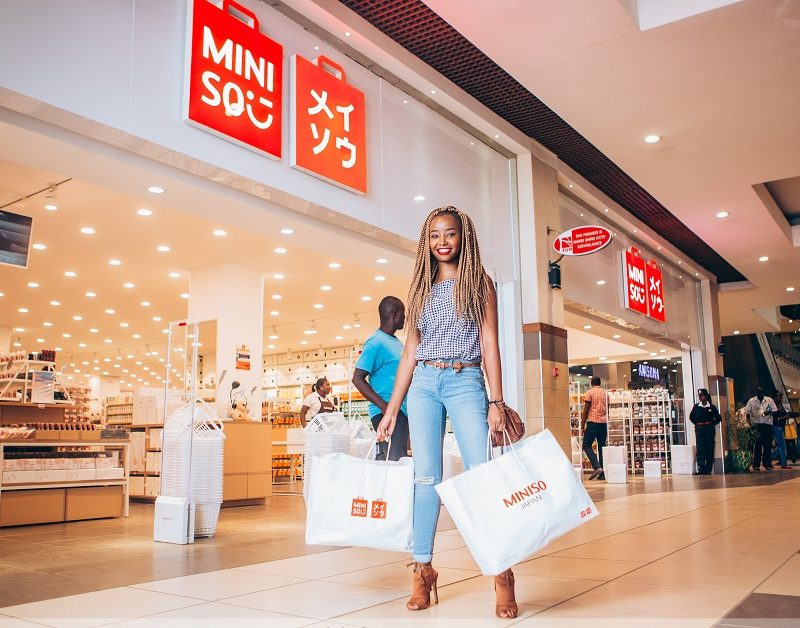
    Miniso Group Holding, the New York-listed Chinese household and consumer goods retailer, is planning a second listing in Hong Kong, joining an increasing number of US-listed mainland companies seeking a listing closer to home.

    The retailer submitted its application to Hong Kong stock exchange on Thursday, according to the bourse’s website.

    The Guangzhou-based company is following in the footsteps of electric-vehicle makers Li Auto and Xpeng in seeking a dual primary listing in Hong Kong to hedge against the risk of being delisted from US exchanges. Legislation introduced by the Trump administration in 2020 seeks to delist Chinese companies that fail to pass US audit reviews for three consecutive years, and the Biden administration is not letting up.

    Miniso raised US$608 million from its IPO on the New York Stock Exchange in October 2020. The company’s shares, however, have fallen more than 66 percent since listing and were trading at US$7.88 on Thursday.

    Miniso’s revenue increased by 24.2 percent to 5.42 billion yuan (US$853.5 million) for the six months ended December 2021, while adjusted net profit rose 114 percent to 398.6 million yuan, according to its listing application.

    The company said it expects to see strong growth because of China’s booming retail and pop toy market.

    The estimated growth rate of the pop toy market in China, which saw gross merchandise value (GMV) reach 34.5 billion yuan in 2021, is 24 percent from 2022 to 2026, according to Miniso’s filing, citing data from Frost & Sullivan.

    Miniso, which opened its first store in China in 2013, has built a global network with over 5,000 stores in around 100 countries, including 3,100 in China as of end 2021.

    The aggregate GMV of products sold through its network was about 18 billion yuan in 2021, making it the largest global branded variety retailer of lifestyle products, according to Frost & Sullivan.

    BofA Securities, Haitong International Capital and UBS are the joint sponsors.

  • South Korea’s retail sales rebounded in February

    South Korea’s retail sales rebounded in February

    Sales at South Korea’s top department stores rebounded sharply in February from the previous month, government estimates showed on Tuesday, reflecting this year’s change of timing for the Lunar New Year holiday.

    Combined sales last month at department stores run by Hyundai Department Store, Lotte Shopping and Shinsegae Co rose 7.1 percent from a year ago, the finance ministry said.

    This was the fastest gain for department store sales since a 10.5 percent rise seen in August last year and compared to a 11.0 percent drop in January, which was the steepest contraction on record.

    Retail numbers are usually distorted at the beginning of the year as the Lunar New Year holiday, when consumers tend to splurge, can fall either in January or February. This year the holiday was in February while it was in January last year.

    Sales at the country’s top discount stores also showed a sharp gain in February, jumping 30.5 percent on-year and bouncing back from a 18.3 percent drop in January.

    The January decline was the sharpest fall seen since February 2014.

    Meanwhile, the same data showed annual sales of locally produced automobiles last month slipped 3.8 percent, undermining a 3.9 percent gain in January.

    Gasoline sales by volume last month rose 12.5 percent in annual terms, rising for a third straight month and picking up the pace from a 5.3 percent rise in January the finance ministry data showed.

  • As western retail brands exit, Russia looks east for replacements

    As western retail brands exit, Russia looks east for replacements

    Russia is looking to China, India, Iran and Turkey to plug the gap created by an exodus of western retail companies, an industry body said on Friday, as Moscow grapples to find ways to combat its growing isolation in the face of sanctions.

    The Russian Council of Shopping Centres (RCSC), an organisation representing developers, shopping centre owners and retail chain operators, said it was negotiating with its corresponding representatives in the four countries about finding alternatives to western brands.

    “A list of foreign companies that have temporarily ceased operations in Russia was sent to them so that appropriate equivalents can be found,” a statement on the RCSC website read.

    “Over time this will help supplement or completely replace goods of the defunct brands with ones of a similar quality and design.”

    Dozens of big brands have temporarily shuttered operations or exited the country since Russia sent tens of thousands of troops into Ukraine on Feb. 24 in what it calls a special operation.

    Sanctions have hampered supply chains and fuelled panic buying among some Russians, with medicine and sugar shortages reported, and accelerating inflation is set to send prices higher.

    During an RCSC meeting of more than 100 market participants, the challenges facing Russian retailers were discussed.

    RCSC cited Igor Maltinsky, director of development at Melon Fashion Group, as saying that the main challenge facing domestic retail firms was the uncontrollable growth of production costs, due to huge increases in procurement and logistics costs, as well as many other related factors.

    Melon owns four, mainly women’s, fashion brands – Zarina, Befree, Love Republic and Sela and had 846 stores across Russia and CIS at the end of 2021. It had been planning to hold an initial public offering (IPO) this year.

    On Thursday, Swedish real estate firm Eastnine, a minority shareholder in Melon, said the planned IPO had been postponed. It said western sanctions had negatively affected the company, making valuing it very difficult.