Tag: Retailers

  • JD offers a helping hand to boost bookstore sales in China

    JD offers a helping hand to boost bookstore sales in China

    E-commerce platform JD has helped boost bookstore sales in China during the coronavirus outbreak.

    Last month, sales of two children’s bookstores – Caldecott Bookstore and Zhongshang Children’s Books – increased by 221.6 percent and 282 percent respectively, year on year.

    According to JD, the increased bookstore sales in China are attributed to consumers staying home during the epidemic and turning to books for inspiration and encouragement.

    JD Logistics continued to deliver products to Chinese consumers as usual during the outbreak while implementing a series of disinfectant measures to ensure consumers received their books safely.

    The coronavirus outbreak has led to the temporary shutdown of offline bookstores, a shortage of employees due to the epidemic, a sharp drop in operating revenues, and a surge in pressure on store rents and staff spending. During the period, JD has been assisting partnering bookstores in putting out live broadcasts to drive traffic and promote brand awareness, thus boosting bookstore sales in China.

    “Supporting offline bookstores to do live broadcast is a good example of how JD.com has been using its resources to help offline bookstores to transform their businesses to better cater to the needs of Chinese consumers,” said JD’s offline book team operations manager Jiao Zhang, “especially when there is limited traffic in offline bookstores during the epidemic period”.

    According to the 2019–2020 China Offline Bookstore Industry Report, there are more than 70,000 bookstores in China. Last year, more than 4000 new bookstores opened in the territory. China currently has 135 book malls that are more than 5000sqm each, of which 35 are more than 10,000sqm in size.

  • JD to launch worldwide new products initiative

    JD to launch worldwide new products initiative

    Chinese e-commerce platform JD plans to help 3000 new products around the world become hot sellers, nurturing more than 1000 new global brands this year.

    The details were announced during the JD Worldwide online conference for merchants, which focused on customer growth, developing third-party business and nurturing merchants in order to support the growth of more international retail in China.

    The group also anticipates helping more than 100 suppliers to achieve RMB100 million in sales this year via monthly promotions designated to push new products.

    Last year an average of more than eight new products were sold on JD Worldwide every minute. Customers displayed a greater consumption-ability during this period, and the platform has more young consumers and consumers from lower-tier cities than in previous years.

    According to the firm, JD Worldwide will focus on building a healthy ecosystem for merchants this year with a more comprehensive after-sale service system and special support for those using JD’s fulfillment services.

    During the coronavirus outbreak, JD’s international supply chain system and continuous logistics service have enabled merchants to supply their products to customers without interruption, with some merchants seeing sales increase by more than 90 percent.

    JD currently has more than 1000 international transportation routes to support overseas merchants.

  • Reliance Retail buys Indian department-store chain

    Reliance Retail buys Indian department-store chain

    Reliance Retail Ventures Limited has bought Indian retailer Shri Kannan Departmental Store for US$20 million.

    “The investment will further strengthen the group’s retail operations and presence in the state of Tamil Nadu and will further enable retail and new commerce initiatives,” said a spokesperson for Reliance.

    With this acquisition, Reliance Retail has started a “new commerce” plan which links producers, traders, small merchants and customers through digital innovation.

    Incorporated in 1999, Shri Kannan Departmental Store operates 29 stores across Coimbatore and nearby areas with a retail area of more than 600,000sqft.

    Reliance Retail is India’s largest retail conglomerate, with more than 4000 stores covering multiple categories. It is a subsidiary of Reliance Industries.

  • Coronavirus Drags Car Dealers Into Digital Commerce

    Coronavirus Drags Car Dealers Into Digital Commerce

    Auto retailers have been slow to embrace e-commerce, but the coronavirus pandemic is changing that. Online traffic has risen even as in-person showroom traffic has disappeared. Auto dealers are embracing digital tools to close deals without a handshake and arranging for vehicles to be picked up or delivered without requiring customers to come to their stores.

    U.S. new vehicle sales will be hit hard by the pandemic. Demand dropped 13% in the first 19 days of March, according to research firm J.D. Power. In especially hard-hit markets like Seattle, San Francisco, Los Angeles and Chicago, where the virus has spread quickly, demand slumped as much as 22%.

    Moody’s Analytics said on Friday the new and used vehicle markets could slump by as much as 20% from 2019 levels and stay depressed into 2021.

    New and used vehicle markets could slump by as much as 20% from 2019 levels and stay depressed into 2021.

    Based on a survey of some 40 dealers, analysts at Evercore ISI on Monday estimated the March U.S. seasonally adjusted annual selling rate could be 11 million to 12 million vehicles, on par with levels seen during the 2008/2009 financial crisis.

    However, online traffic for the 1,000 U.S. and Canadian dealers served by Roadster, which provides a digital sales platform for everything from financing paperwork to vehicle delivery, was up about 6%.

    “Many dealerships are going to get caught with their pants down,” said Brian Benstock, a dealer in the New York City borough of Queens. “This will be a watershed moment for the dealership industry.”

    Dealers have been doing business online for years, but it has never been a major focus. Only 15% of all transactions are online, according to a November survey of 540 dealers commissioned by the National Automobile Dealers Association. However, they expect online car sales to double by 2025.

    Benstock, who began moving most of his sales online in 2015, said companies like Tesla Inc and retailer Carvana Co, which does all its business online, have begun to change consumer expectations.

    Tesla has always relied on internet orders for its vehicles. It is implementing “touchless deliveries” in many locations, allowing consumers to unlock cars using the Tesla App, sign any relevant paperwork and return it to a drop-off location.

    Carvana, which sells used vehicles, expanded the number of cars it sold to retail customers by 89% in 2019 from 2018.

    Despite a sharp decline in its shares, Carvana has a market capitalization twice that of AutoNation Inc, the largest bricks and mortar U.S. retail vehicle chain. AutoNation started boosting investment in its online selling capability well before the virus shock.

    David Smith, chief executive of dealership chain Sonic Automotive Inc, said most customers still want to visit a showroom to see the cars they are buying.

    “There’s only a small percentage of the market who want to buy their car entirely online and have it delivered,” he said.

    “It’s what people wanted going into this,” she said, citing a Cox January survey that found consumers cited vehicle pick-up and delivery as their top desire.

    Matthew Zappone, general manager of a Chrysler Jeep Dodge Ram dealer outside of Albany, New York, is encouraging his sales staff to use FaceTime to show customers the vehicle features they want to see without visiting the store.

    “If you haven’t been doing it to this point, you’re under-prepared,” Zappone said.

  • Hong Kong government launches cash relief for retailers from Monday

    Hong Kong government launches cash relief for retailers from Monday

    The Hong Kong government will allocate US$271 million in aid for around 70,000 retailers affected by the coronavirus outbreak.

    The Retail Sector Subsidy Scheme will launch next Monday, with eligible stores set to receive an HK$80,000 (US$10,300) subsidy under the scheme to help alleviate their financial difficulties.

    Beneficiaries of the fund must be substantial retail businesses operating since at least January 1 this year, excluding restaurateurs, hawkers and stalls in department stores without a separate payment system. Mail order, internet and direct marketing businesses are also excluded from the scheme.

    Parent companies operating multiple locations can apply for up to HK$3 million ($386,200) in relief funding.

    The Hong Kong Trade Development Council will help implement the scheme with retailers instructed to apply online to speed up the application process and minimize the time required for vetting the eligibility of applications received. Applications for support will only be accepted from March 23 to April 12.

    A telephone hotline has opened (1836 111) and an email address (enquiry@retailsubsidy.hk) established for inquiries from retailers, which are operational now.

  • Malaysian retail expected to contract

    Malaysian retail expected to contract

    Retail Group Malaysia (RGM) predicts Malaysian retail sales will contract by 3.9 percent year-on-year in the first quarter of this year.

    The estimate is based on footfall having halved during the coronavirus outbreak, contradicting RGM’s expectation earlier this year that Malaysian retail sales could rise by 0.4 percent.

    “In the event, the global coronavirus outbreak and domestic political turmoil take more than the next few months to resolve, it will further affect the retail consumption pattern in Malaysia drastically,” said Tan Hai Hsin, MD at RGM.

    He said it was unable to estimate the likely retail industry growth figure for this year while preparing the report because of the unpredictable changes of the coronavirus outbreak and the new ruling government policies.

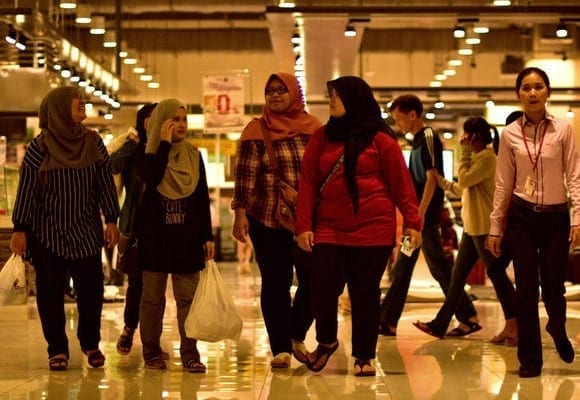
    Although shopping traffic has dropped significantly in the country, some shopping malls have remained open to the public to provide essential goods and services.

    Aeon Mall’s tenants, including pharmacies, banks and POS Malaysia, will continue to operate, however, food & beverage tenants will only provide takeaway and delivery services. Aeon Retail’s outlets will also provide dedicated check-out lanes for senior citizens, the disabled and pregnant women to ensure that they can shop for their daily needs in “a safe and worry-free environment”, the company said in a statement.

    Meanwhile, 1 Utama Shopping Centre said on its social media that its essential service tenants such as supermarkets, pharmacies or convenience stores will remain open, and reassured consumers that there is no need to start panic shopping.

    In the final quarter of last year, Malaysia’s retail sales increased 3.8 percent year on year with the best growth in the pharmacy and personal care categories. The worst-performing sector was supermarkets and hypermarkets which witnessed a 2.8-per-cent full-year decline.

  • Dire retail sales in Mainland China a harbinger for rest of the world

    Dire retail sales in Mainland China a harbinger for rest of the world

    Retail sales in Mainland China slumped by 20.5 percent in the first two months of this year according to government figures – providing a glimpse of what lies ahead for retailers in other countries where the coronavirus is now having an impact on community behavior.

    For most of January and February hundreds of millions of Chinese were subject to lockdown in their homes, and retail stores and shopping malls were closed. Most consumers moved online to purchase goods with e-commerce giants like JD and Alibaba developing safe delivery protocols to ensure distancing between delivery riders and customers.

    Combining the first two months of retail sales figures provide an accurate comparison with previous years as it eliminates any impact from the changing timing of Lunar New Year, traditionally a busy season for retailers.

    By comparison, retail sales in Mainland China grew by 8 percent in December.

    Analysts had expected sales to fall by 5 percent in January and February, a dramatic understatement of the eventual figures.

    On a more positive note, many major retail chains have reopened stores across Mainland China this month as the spread of the virus has abated. March data will be eagerly awaited to see if there is any indication of consumers spending on luxury goods and other unnecessary purchases as they celebrate the gradual return to normal life and indulge to reward themselves for enduring the lockdowns.

  • India’s Flipkart applies for food-retailing licence

    India’s Flipkart applies for food-retailing licence

    Indian e-commerce platform Flipkart has filed for approval from regulatory authorities to conduct food retail in the territory.

    According to a Times of India report, The Walmart-owned business has made the application with the Department for Promotion of Industry and Internal Trade with the expectation of a decision within three months.

    The firm registered an online grocery business in October last year under the brand name Flipkart FarmerMart. According to reported figures, the firm will make an investment of ₹2,500 crore (US$338,000) in the venture.

    Initial plans will see the firm delivering customer purchases via local “kirana” stores partnering with the Flipkart business.

    The firm will “focus on deep agri-supply chain investment, especially at the farm gate level and will encourage demand-driven sowing, which will help farmers produce right fruits and vegetables and get paid as per market price”.

    Flipkart competitor Amazon has held a food retail license in India since 2017.

  • Ebay struggling to sell South Korea division

    Ebay struggling to sell South Korea division

    US online shopping giant eBay is struggling to offload its South Korean unit.

    Sources within the e-commerce industry believe there are a few large retail companies that could potentially buy the Ebay South Korea business due to its large size.

    They estimate the business could potentially be worth 5 trillion won (US$4.18 billion), based on about one-third of the company’s 16 trillion won in annual transactions.

    Ebay Korea is the country’s largest e-commerce company, with major online shopping malls such as Gmarket, Auction and G9 under its arm. Their share is estimated to account for around 12 percent of the local market.

    The acquisition of Ebay Korea, which is one of the few profitable e-commerce businesses in South Korea which is profitable, would quickly make the purchaser one of the nation’s top players.

    There are few large retail companies that could afford such a large-scale acquisition, thus Lotte and Shinsegae have emerged as potential buyers.

    Lotte, which has yet to start its e-commerce business in earnest, was mentioned as the most prominent suitor. However, the company has reportedly ruled out a bid.

    “When Lotte was considering acquiring TMON Inc for 2 trillion won, it was said that negotiations broke down over the price,” an industry source said. “The valuation of Ebay Korea at 5 trillion won is too much.

    “Ebay has a structure that makes profits by acting as a bridge between consumers and sellers through online market brokerage,” said Nam Sung-hyun, a researcher at Hanwha Investment & Securities Co.

    “However, Ebay needed to invest in related infrastructure in the process of transforming the purchasing product group into food, but the company failed to implement it properly, losing its competitive edge,” Nam added.

  • Ikea online E-commerce store opens on Tmall

    Ikea online E-commerce store opens on Tmall

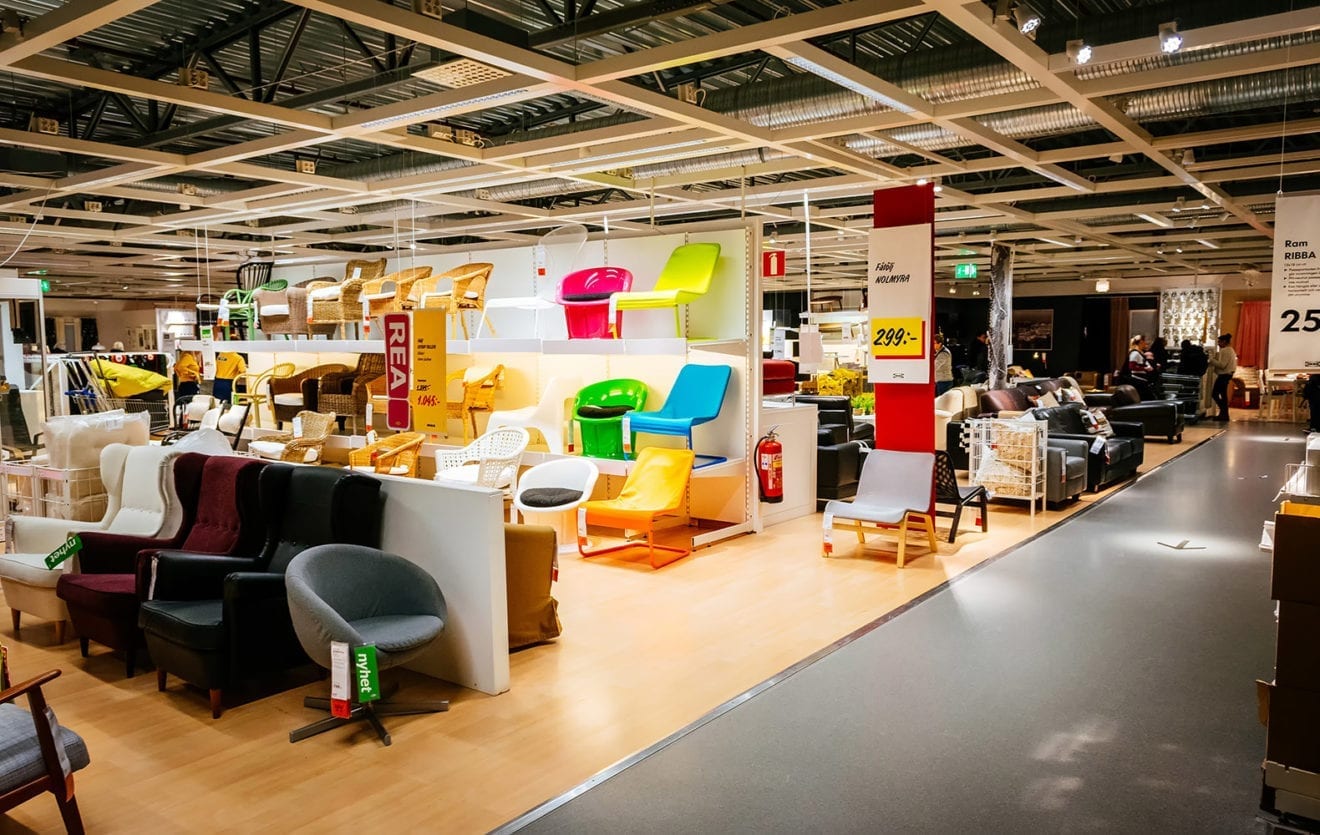
    Ikea has launched a flagship store on Alibaba’s marketplace Tmall, the first third-party platform the brand has partnered within Asia, and after leaving Amazon last year.

    Initially, with a six-month trial across the Chinese provinces of Jiangsu, Zhejiang and Anhui, and the city of Shanghai, the Ikea online flagship store features more than 3600 products.

    “At Ikea, we are very proud of our [physical] stores, but we are always eager to learn how to improve our service,” said Jon Abrahamsson Ring, MD of Inter Ikea Systems BV. “We are happy about this collaboration with Alibaba. I’m convinced that we will learn a lot and develop even better ways to meet our customers.”

    The launch of the Ikea online store on Tmall is part of the brand’s strategy to broaden the ways it reaches Chinese customers, making the brand more accessible.

    The coronavirus outbreak had no influence on the timing of the Tmall launch, an Ikea spokesperson confirmed.

    Ikea shut half of its 30 stores in China earlier this year due to the coronavirus outbreak. Recently, Ikea China is slowly returning to its normal business as the brand is reopening some of its stores across the country.

  • Hongkong Land posts record profit, despite protests

    Hongkong Land posts record profit, despite protests

    Property developer Hongkong Land has reported a 4-per-cent rise in underlying profit to a record US$1.076 billion for last year – but warned that the advent of the coronavirus outbreak will dent results this year.

    “The group’s results in 2020 will be impacted by the COVID-19 outbreak, with the performance of development properties in the Chinese mainland and the group’s retail properties expected to be most affected,” said chairman Ben Keswick.

    “The extent of the impact will be dependent on the duration and geographic extent of the outbreak. Stable contributions are expected from the group’s other businesses, although there are expected to be higher financing costs,” he said.

    In Hong Kong, where the company’s high-profile retail portfolio is centred, beneath its Central office towers, all store spaces were fully occupied and delivered “a respectable performance over the Christmas period” following several challenging months for the retail market in the city relating to anti-extradition bill protests.

    “Despite positive base rental reversions, however, the average retail rent in 2019 decreased to HK$222 per sqft from HK$233 per sqft in 2018, due to temporary rent relief and a decline in turnover rent,” the company said in a statement.

    Meanwhile, planning of the group’s 49-per-cent owned prime mixed-use retail and Grade A office development in Bangkok’s CBD, a partnership with local Central Group, continues on schedule. The development is expected to complete in 2025.

  • Lunar New Year timing boosts Singapore retail sales in January

    Lunar New Year timing boosts Singapore retail sales in January

    Excluding motor vehicles, Singapore retail sales in January rose by 0.6 percent, but it will be another month until the effects of the growing coronavirus crisis on tourism and domestic consumer spending is evident.

    Including vehicles, Singapore retail sales in January decreased by 5.3 percent year on year, but this as much reflects changing criteria for vehicle ownership certificates of entitlement in the city-state as an economic trend. Month on month, retail sales were down by 0.5 percent excluding vehicles.

    Online retail sales in January comprised about 5.8 percent of the total. The major categories here were computer & telecommunications equipment, where online accounted for 25.9 percent of total category sales, furniture & household (10.9 percent) and supermarkets & hypermarkets (7.8 percent).

    Overall retail sales of furniture & household equipment declined by 16 percent in January, while sales of optical goods & books fell by 9.4 percent.

    However, sales by supermarkets & hypermarkets, food & alcohol, and apparel & footwear grew by between 6.4 percent and 8.7 percent, due partly to increased spending during the Lunar New Year.

    January saw 9.1 percent growth in sales of food & beverage services, again due mainly to the timing of Lunar New Year, which was earlier this year. On a seasonally adjusted basis, sales of food & beverage services increased by just 0.8 percent in January.

    The value of food & beverage services in January was estimated at S$963 million. Of that, online sales comprised about 9.8 percent.

    Turnover of restaurants, fast-food outlets, and food caterers increased by between 8 percent and 16.4 percent in January, again fuelled by increased spending due to the Lunar New Year.

    Sales by cafes, food courts & other eating places fell by 2 percent.

  • Hong Kong retail sales down in January

    Hong Kong retail sales down in January

    Hong Kong retail sales slumped 21.4 percent in January, further than the 19.4 percent of December – but the worst is yet to come.

    The Census and Statistics Department (C&SD) provisionally estimated Hong Kong retail sales at HK$37.8 billion (US$4.86 billion) but cautioned that the timing of Lunar New Year – on January 25 this year and February 5 last year – may have lessened the statistical impact of January’s data.

    “Retail sales continued to record a sharp fall in January, notwithstanding the possible boost from the Lunar New Year, which fell in late January this year but early February last year,” said a government spokesperson.

    This hints at a bleak outlook for February’s Hong Kong retail sales, given the advent of the coronavirus which saw inbound tourist numbers drop by 98 percent in what should have been one of the best trading months of this year.

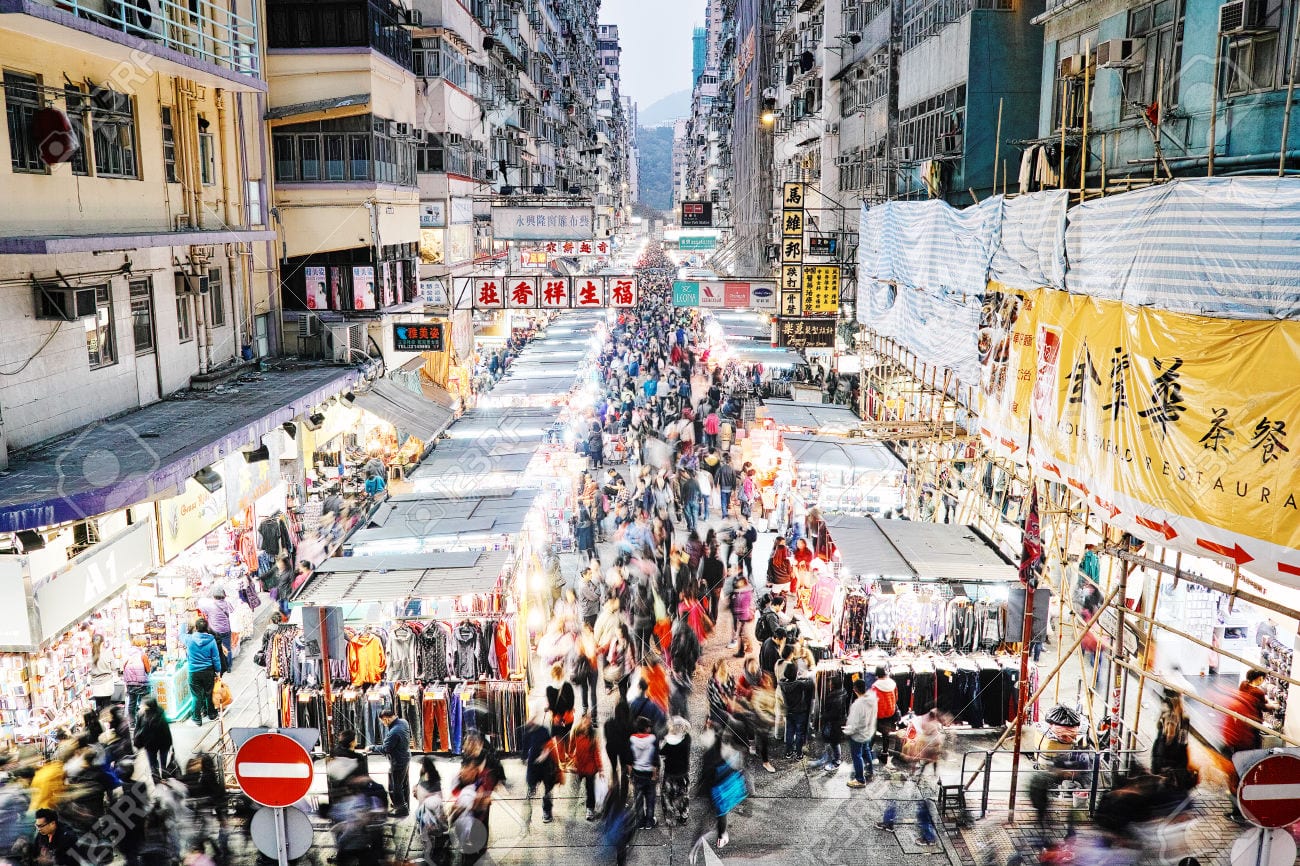
    The coronavirus hit just as the peak Lunar New Year holiday season kicked off, a time when thousands of mainlanders traditionally head across the border to holiday and shop. Sales during the month were already affected by the anti-extradition protests which had been running since June last year.

    Sales of jewelry, watches, and clocks slumped by 41.6 percent in January, with medicines and cosmetics down 32.3 percent and apparel by 28.9 percent. Department-store sales were down 27 percent, books, newspapers, stationery, and gifts by 25.9 percent and optical goods by 23.9 percent, furniture, and fittings by 22 percent, footwear, and accessories by 21.6 percent and electrical goods by 20.4 percent.

    Sales of Chinese drugs and herbs fell by 16.2 percent and of food, alcohol and tobacco products by 6.8 percent.

    The only categories to buck the downturn were sales in supermarkets, up 10.2 percent, and of fuel, up 12.3 percent.

  • Shanghai retail sales slowly returning to normal after coronavirus outbreak

    Shanghai retail sales slowly returning to normal after coronavirus outbreak

    Roughly a third of the 11,000 stores in Shanghai that closed for the coronavirus outbreak has opened for business.

    Among the reopening stores is Starbucks’ largest global outlet, Starbucks’ Reserve Roastery, which attracted daily queues before the epidemic. The store, which counts as a tourist attraction in its own right, opened just one of its doors on Wednesday – although its air conditioner remains off.

    All 57 Starbucks stores in the area have been working with officials to protect staff and customers as the outbreak continues. Half of the Reserve Roastery tables have been removed to keep customers at a distance from each other.

    “Well on the way to containing COVID-19, Shanghai is gradually returning to normal,” reported local English-language media Shine News. However, it said local residents are still taking precautions to protect themselves from infection.

    “I feel like a vegetable after being stuck at home for so many days,” said one elderly customer. “I miss these butter cookies so much. But I’ve learned from the news that we should take protective measures, so I’m wearing a mask and gloves.”

    “It’s always of vital importance to keep a balance between epidemic control and resumption of business, so we have to provide a good service,” said Jing’an Market Regulation director Chen Ping.

  • Central Retail to invest US$575 million on expansion this year

    Central Retail to invest US$575 million on expansion this year

    Thailand’s Central Retail Corporation achieved 8 percent revenue growth last year to US$7.1 billion and an 11-per-cent boost in profit to $394.7 million.

    CEO Yol Phokasub said the improvement reflected “robust platforms” in every country in which it operated: Thailand, Vietnam and Italy.

    “We increased market share in every product category, including fashion, food and hardlines, whilst we also grew our customer base in each market with our strong eco-systems,” he said.

    Central Retail is on track to achieve a five-year goal of achieving 8-10-per-cent average annual income growth and earnings growth of 10-11 percent.

    This year, Central Retail is investing $575 million into expanding its business in its three core markets, exclusive of mergers and acquisitions.

    In Thailand it plans to open three Robinson Lifestyle stores, seven Thai Watsadu stores and 3 Baan and Beyond stores, as well as expanding its food and specialty-store networks.

    In Vietnam it will open six supermarkets under the existing Big C banner and its new brand Go!

    It also plans to refurbish some existing stores and open more outlets under its LookKool, Kubo and SuperSports banners.

    In Italy, it will refurbish its department stores in Florence and Rome, and focus on leadership in the lifestyle-luxury segment of the market.

    “After many uncertainties in both the global and Thai economies this year, whether from the strong Baht, the COVID-19 epidemic, reduced tourist arrivals or declining consumer confidence, Central Retail must exercise caution in its business operations, closely monitor various issues and use technology to manage costs effectively,” said Phokasub.

    “Our multi-category and multi-format platforms give us flexibility and adaptability to rapidly changing and volatile situations. This offers us an advantage and a good opportunity to reach customers, providing them with new experiences through our robust omnichannel platforms.”

    Central Retail achieved sales growth online of about 56 percent last year.

    “This year, we forecast sales through the omnichannel platforms to account for over 10 percent of Central Retail’s sales,” he said.