Tag: Retailers

  • Hong Kong toy shop fined for deceptive conduct

    Hong Kong toy shop fined for deceptive conduct

    An unidentified Hong Kong toy-shop owner has been convicted of misleading omission commercial practice.

    The owner was convicted of engaging in commercial practices involving misleading omission according to the Trade Description Ordinance (TDO) and sentenced to 200 hours of community service by Kowloon City Magistrates’ Courts. The court also ordered him to compensate HK$11,210 (US$1440) to three victims.

    An investigation carried out after Hong Kong Customs received a complaint from the victims alleging that a toy shop owner had engaged in unfair trade practices, showed that the owner had failed to explain the risks of late delivery to its customers on a social-media platform page. The owner has sold eighteen types of toy models without regard to the risk of delay.

    Under the TDO, any trader who engages in a commercial practice that omits or hides material information or provides material information in a manner that is unclear, unintelligible, ambiguous or untimely, or fails to identify its commercial intent and as a result causes, or is likely to cause, an average consumer to make a transactional decision commits an offense. The maximum penalty upon conviction is a fine of $500,000 and imprisonment for five years.

  • Shops without stock draw crowds in South Korea

    Shops without stock draw crowds in South Korea

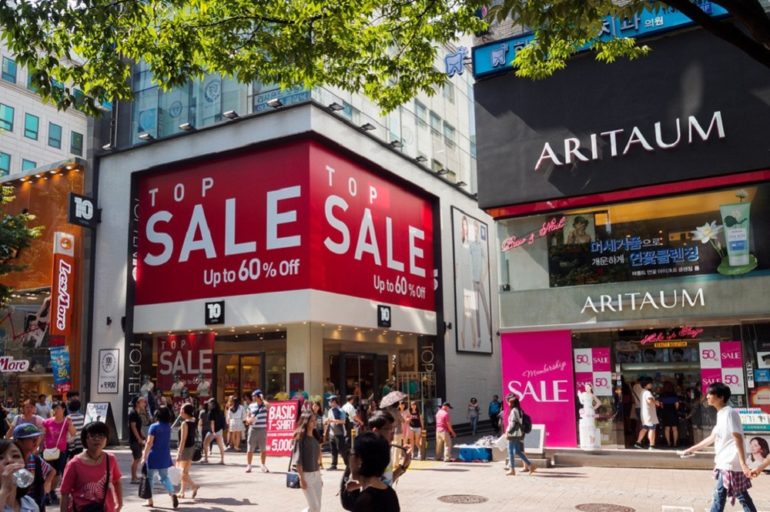
    There’s a new trend capturing South Korean consumers’ attention: shops without stock, focusing on experience rather than instant retail sales.

    With a growing number of consumers choosing and purchasing products online or on mobile devices, hands-on stores that target such customers are becoming a new marketing trend.

    Amore Seongsu, which opened in early October as a customer experience-oriented store of AmorePacific, a South Korean cosmetics giant, had surpassed 24,000 cumulative visitors as of December 5, about two months after its opening.

    At Amore Seongsu, customers can test and experience the brand’s cosmetics – but nothing is for sale in this shop without stock.

    Visitors can apply and spray products tailored to them from the beauty library, which features more than 30 brands and 2300 products from AmorePacific.

    Furthermore, Amore Seongsu offers various other services, including makeup classes, flower box- and perfume-making classes every month to encourage customers to participate.

    “We only offer customers the opportunity to check out products suitable for them at our stores, and customers purchase the products online afterward,” said an official from AmorePacific.

    Online shopping transactions of cosmetics reached 1.15 trillion won (US$966 million) as of October, up 28 percent year on year. Meanwhile, sales via mobile devices rose 32 percent to 648.8 billion won, according to Statistics Korea.

    In fact, data shows that 20 percent of customers who visit Amore Seongsu purchase products from the brand online within a week of their visit.

    In addition, AHC, a cosmetics brand operating under Carver Korea, opened its flagship store “Future Salon” in Myeong-dong, Seoul, in late October.

    American mattress maker Simmons opened a cultural complex, Simmons Terrace in Icheon, Gyeonggi Province, last year.

    Moreover, Aekyung Industrial Co, a South Korean household-goods and cosmetics maker, also launched Luna Signature, a hands-on cosmetics store near Hongdae in Seoul, in June. The two stores also place more weight on experience rather than sales.

    “We don’t put much importance on sales performance at experience stores,” a source from Aekyung said. “If we increase brand awareness by communicating with more consumers, it will lead to an increase in sales online.”

    The furniture industry, which already operated showrooms and flagship stores, has also recently attracted visitors by decorating exhibition and sales halls as cultural spaces.

    American mattress maker Simmons opened a cultural complex, Simmons Terrace in Icheon, Gyeonggi Province, last year. It has welcomed more than 100,000 visitors in just one year since its opening.

    In addition to the showroom-like shops, museums and exhibitions featuring gardens, lounges and brand stories have been set up at Simmons Terrace.

    “Customers do not purchase products immediately on site, but visitors become strong potential customers,” a furniture industry source said.

  • Asia will account for 45 per cent of global retail sales next year

    Asia will account for 45 per cent of global retail sales next year

    The world’s retail market is expected to slow down next year, but Asia will account for 45 percent of global retail sales, according to a new report from economic and business research group The Economist Intelligence Unit.

    In terms of volume, sales growth will slow compared to this year, but in US-dollar terms growth will accelerate. This divergence will reflect differing regional trends in demand, pricing and exchange rates, with developing markets outpacing developed ones.

    “It’s a mixed picture for global retail sales in 2020,” said The Economist Intelligence Unit consumer goods analyst Shveta Sharma. “Although there will be areas of opportunity, particularly in Asia, there are several threats to the industry.

    “The US-China trade war, Brexit and the protests in Hong Kong will all take a toll, while some retailers will also struggle to keep up with the continued shift online. We expect more store closures and job cuts.”

    Online retail will continue to undermine the competitiveness of brick and mortar stores next year, she said. Growth will be driven by social media apps such as TikTok and Instagram, as well as better digital payment systems. Retailers and consumer goods producers will need to adapt quickly to changing local conditions, shifting suppliers and closing stores as demand patterns change.

    The EU, however, is leading a backlash, scrutinizing the marketing tactics of online players as well as their efforts to avoid taxes. The scale of job cuts will also prompt more scrutiny in the US, in the run-up to November’s presidential election.

    The group’s full report on global retail sales is available for download here.

  • Japan retail sales tumble as tax rise takes effect

    Japan retail sales tumble as tax rise takes effect

    Japan retail sales fell by 7.1 percent in October – the greatest single monthly fall in almost five years.

    The reason: the implementation of a sales-tax increase from 8 percent to 10 percent on October 1, aimed at helping reduce the country’s public debt, which is running at twice the size of its GDP.

    The headline figure was driven by a significant reduction in sales of big-ticket items such as motor vehicles and appliances. But department stores and apparel retailers also bore the brunt.

    Japan retail sales fell by 14.4 percent month on month, higher than the 13.7-per-cent month-on-month decline which followed previous sales-tax increases 1997 and 2014.

    Some analysts, however, have suggested the October decline may have been worsened by weather during the month, which included severe typhoons in the central and eastern parts of the country. There was also likely to be an element of extra spending in September as consumers tried to mitigate the tax effect.

  • Korean retail giants expect improved profits next year

    Korean retail giants expect improved profits next year

    After a tough year, South Korean retail giants are tipped to log a modest improvement in their earnings next year on the back of improved business conditions and cost-cutting efforts, industry sources say.

    This year has been the toughest ever for two homegrown South Korean retail giants, Emart and Lotte Shopping, as they struggled to battle with e-commerce giants such as Coupang and TMON, which launched aggressive promotion and free delivery services to woo more customers.

    Hit by increased competition and an economic slowdown, Emart, the country’s No 1 retailer, suffered a 40.3 percent year-on-year fall in its third-quarter operating income to 116.2 billion won (US$98.8 million).

    Analysts said Emart will be on a roll next year, as the company’s efforts to improve margins have started to bear fruits since the third quarter, according to IBK analyst Lee Myung-hee. The brokerage estimated an 18 percent on-year rise in sales for 2020 and a 60 percent jump in operating profit.

    Emart saw the number of its underperforming or loss-making offline stores fall to 141 this year, down from 147 in 2016. The company also expanded shipping infrastructure for its online-only retail corporation SSG.com, launched on March 1, in a bid to win back customers from e-commerce operators.

    To bolster its delivery services, Emart also plans to open its third pick-and-packing station in Gimpo, 29 km west of Seoul, by the end of the year. The company currently runs two facilities, one in Gimpo and another in Yongin, 49km south of Seoul.

    Lotte Shopping, the operator of the supermarket chain Lotte Mart, also suffered a sharp fall in its third-quarter earnings because of poor performance by its supermarket chain. Lotte Mart takes up about 30 percent of its business portfolio.

    Lotte Shopping’s July-September operating income stood at 87.6 billion won, falling 56 percent on-year. The earnings shock came due to the nationwide boycotting of Lotte’s products since July, triggered by trade tensions between Korea and Japan.

    But the market consensus is that the discount store chain’s quarterly operating profit will go up thanks to reduced costs stemming from layoffs of contract workers.

    Ju Young-hoon, an analyst at Eugene Securities, forecast a 2.9 per-cent year-on-year gain in Lotte Mart’s annual sales for next year, compared to a 1.3-per-cent decline this year.

  • Sands Shoppes Macao honours its top selling retailers

    Sands Shoppes Macao honours its top selling retailers

    Sands Shoppes Macao held its fifth Sands Retail Awards this week, at the Four Seasons Hotel.

    The awards honor retailers who achieved outstanding performance this year across 13 categories including best store performance, best loyalty program, best window display, best store design, and best customer service, along with a rising star.

    “While the Sands Retail Awards recognize the best of the best, all our retailers across Sands Shoppes Macao set incredibly high industry standards,” said David Sylvester, executive VP of global retail at Las Vegas Sands Corp.

    “There is huge competition for these coveted awards and the retailers who make it through have demonstrated total commitment to ensuring visitors to our shopping malls enjoy their experience here.”

    Sands Shoppes Macao Retail Awards Winners are:

    Best Store Performance – Luxury: Louis Vuitton (Shoppes at Four Seasons)

    Best Store Performance – Luxury Watch & Jewellery: Rolex (Shoppes at Venetian, Shoppes at Cotai Central, Shoppes at Parisian)

    Best Store Performance – High Street Fashion: MSGM (Shoppes at Parisian)

    Best Store Performance – High Street Watch & Jewellery: Swarovski (Shoppes at Cotai Central)

    Best Store Performance – Beauty: Temptation (Shoppes at Parisian)

    Best Store Performance – General Retail: Mannings (Shoppes at Venetian)

    Best Store Performance – Food & Beverage: Lei Garden (Shoppes at Venetian)

    Best Loyalty Program Performance – Highest Point Redemption: Fortress (Shoppes at Venetian)

    Best Loyalty Program Performance – Highest Number of Transactions: Tai Hing Restaurant (Shoppes at Venetian)

    Best Window Display: Versace (Shoppes at Four Seasons)

    Best Store Design: Apple (Shoppes at Cotai Central)

    Best Customer Service: Victoria’s Secret (Shoppes at Venetian)

    Rising Star: Sandro (Shoppes at Venetian)

  • Senreve raises funds for Asian expansion

    Senreve raises funds for Asian expansion

    Online fashion startup Senreve has raised US$16.75 million in Series A funding to expand into the fast-growing Asian market.

    The funds bring Senreve’s total capital raised to more than $23 million within three years.

    Led by Norwest Venture Partners, this latest round of funding will help co-founders Coral Chung and Wendy Wen take Senreve to reach a more global scale from its San Francisco base.“We focus on authentic brand storytelling, creating beautiful and luxurious products, and engaging with customer feedback and data,” said Senreve co-founder and CEO Coral Chung.

    “We’re thrilled to bring on an institutional partner like Norwest, and especially excited to partner with Sonya Brown who has a phenomenal track record of backing successful consumer brands,” said the firm’s COO Wendy Wen.

    “In a world where direct-to-consumer channels have become increasingly crowded, Senreve has been extremely savvy about how they introduce themselves digitally,” said Norwest general partner Sonya Brown. “Coral and Wendy’s ability to build a luxury brand practically overnight is a testament to their authentic understanding of the modern woman. In particular, Senreve resonates with the next generation of powerful women because they don’t want to compromise functionality to achieve luxury, and they shouldn’t have to. I am thrilled to partner with them for this next, exciting chapter.”

    The new funding is expected to significantly expand Senreve’s product offering, grow its geographic presence – particularly in its expanding Asian markets where it is looking to form strategic partnerships – and explore new brick-and-mortar retail opportunities.

    As a female-founded start-up, this latest round of funding is a milestone for the company as well as extremely rare in the startup landscape. According to PitchBook, female-founded start-up companies receive only 2.2 per cent of the total capital invested by US venture capital firms, despite owning 38 per cent of businesses in the country.

  • Retailers need to offer more flexible in-store shopping options

    Retailers need to offer more flexible in-store shopping options

    The advancement of digital and mobile innovation is creating disruption across the Asian retail sector. Richard Wright, Managing Director Southeast Asia at Manhattan Associates, looks at how the role of traditional bricks and mortar retail stores are evolving and shifting as the prominence of online shopping continues to grow.

    With omnichannel initiatives such as buy-online-pickup-in-store (BOPIS) in full swing for almost every multi-channel retailer, the ability to execute on the promises of great experiences and fast, free delivery are putting tremendous pressure on retail fulfilment systems and teams to answer the bell profitably. To adjust to this changing environment, store associate roles are required to adapt as they are being asked to do more than ever before.

    As consumers, when we order online for in-store pickup, we are giving merchants a tremendous opportunity to engage with us to sell more than our original order. In fact, 46 percent of us will buy more when we arrive at the store to pick up our item. However, in order for us to purchase more, our experiences need to remain smooth and efficient. We want a single transaction and receipt and a single order to review later in our app or online — no matter how many items we added to the original order. For most retailers today, the fairly simple omnichannel experience described here is onerous to execute and nearly impossible to do so as a single transaction for their customer. They simply do not have systems designed for this kind of engagement.

    Retailers committed to a unified commerce experience need systems and tools that have been optimised and engineered specifically for omnichannel demands. They need a cloud-native, services-based architecture that enables exceptional scaling and provides maximum flexibility when new types of engagement are demanded — not another application on top of the legacy system.

    A single application that gives complete command and control of the customer buying experience and all store inventory and fulfilment functions is required. From mobile checkout to guided fulfilment and inventory location notification, associates are made more helpful and more efficient. From encouraging individual selling goals to monitoring the health of the store activity, managers are more keenly attuned to the customer experience and driven to improve it.

    For more information, please visit: https://www.manh.com/en-sg


  • Chinese consumers embraced voice ordering on Singles Day

    Chinese consumers embraced voice ordering on Singles Day

    More than 1 million orders were placed and processed through voice command via Alibaba’s Tmall Genie during its 11.11 Global Shopping Festival on Monday.

    The smart speaker was used to purchase items throughout the day – including 810,000 eggs, 1.4 million tons of rice and 76 tons of liquid detergent – showing that voice shopping has become an increasingly popular trend among Chinese consumers of all ages.

    According to Alibaba’s statistics, more than 40 percent of Tmall Genie users have tried voice shopping. The rise of voice shopping shows the growing popularity of smart speakers in China. Alibaba’s intelligent speech assistant, Tmall Genie, is ranked as the number one brand in terms of sales volume of smart speakers in the first three-quarters of China, according to Euromonitor International’s research conducted in October.

    “As the number one smart speaker in China, Tmall Genie has become an essential part of many families’ daily life,” said Alibaba A.I.Labs GM Miffy Chen. “As we continue to enhance the product features and increase the offering of infotainment services – from entertainment and news to children’s books, food delivery and elderly care – we hope the use of a virtual assistant will help people across age groups to embrace a digital life that is simple, fun, informed and connected.”

    Some 10.47 million Tmall Genie units were sold during the first nine months of this year, accounting for a 38-per-cent market share in China, where sales of smart speakers reached 27.56 million units in the same period, according to Euromonitor International.

    In particular, Tmall Genie recorded more than 3 million sales units in this year’s third financial quarter, making it the most popularly purchased smart speaker brand in China for three consecutive quarters.

    “Since the launch of the first smart speaker in China in July 2017, Alibaba has made Tmall Genie the top brand with the largest sales volume in China this year,” noted Euromonitor International in the research. “That is largely due to Tmall Genie’s product differentiation strategy and its expanding sales channels both online and offline,”.

    According to the research, Alibaba, Xiaomi and Baidu are the top three smart speaker brands in China, with a total market share of 93 percent in terms of sales volume in the first three quarters this year. 77 percent of smart speakers were purchased online during that period, dominated by Alibaba’s e-commerce platforms – Tmall and Taobao.

    The research also pointed out that as an important medium for human-machine interaction, smart speakers are expected to be equipped with a growing number of features tailored to consumers’ daily needs, including search and information queries. A smart speaker with a screen – which can offer both speech and visual interaction – is also believed to be a forthcoming trend among major brands, Euromonitor noted.

    Controlling smart home appliances through voice commands is still one of the most popular uses of smart speakers. Alibaba statistics show that currently, Tmall Genie has been connected to more than 235 million home appliances such as lights and air-conditioning from 900 brands in China.

    Alibaba believes that voice assistants are expected to play an increasingly important role in a wide spectrum of applications, including in-car infotainment experience, food delivery, beauty and makeup, childrens’ education and elderly nursing support.

  • Real Singapore retail sales stable in September

    Real Singapore retail sales stable in September

    Real Singapore retail sales (excluding motor vehicles) slipped by 0.3 percent in September compared to the same month last year.

    With motor vehicle sales included, the decrease was 2.2 percent, marking the eighth consecutive monthly decrease in the headline figure.s

    Month on month, retail sales excluding vehicles rose by 0.8 percent.

    Significantly, online sales grew to account for 6.9 percent of total sales in September.

    Year on year, the worst affected categories aside from vehicles (down 12.3 percent) were furniture and household equipment; recreational goods; and watches and jewelry which experienced declines of between 4.4 percent and 8.9 percent. Sales of department stores declined by 1.2 per cent respectively.

    On the positive side, retailers of computer and telecommunications equipment posted sales growth of 8.7 percent, while sales of apparel and footwear; medical goods and toiletries; and optical goods and books increased by between 2.1 percent and 4.2 percent.

    Singapore retail sales of food and beverage services grew by 4.3 percent year on year in September and by 0.4 percent month on month.

    Sales at fast-food outlets; cafes; food courts and other eating places; and restaurants reported sales up by 12.5 percent, 4.6 percent and 2.7 percent respectively, while turnover of food caterers declined 0.5 percent.

  • Alibaba’s Singles Day sales up 26 per cent

    Alibaba’s Singles Day sales up 26 per cent

    Alibaba’s Singles Day retail promotion is over for another year – and predictably a new record was set.

    The Chinese internet behemoth says its gross merchandise volume (GMV) reached RMB268.4 billion (US$38.4 billion) when midnight fell, ending the 24-hour Shopatron which engages with hundreds of millions of Chinese online and on TV.  That figure is 26 per cent ahead of last year’s GMV.

    “Today we showed the world what the future of consumption looks like for brands and consumers,” said Fan Jiang, president of Taobao and Tmall, perhaps unaware of the real meaning of the word ‘consumption’, defined by Oxford dictionary as “the action of using up a resource”.

    “We are meeting the growing demand of Chinese consumers and helping them upgrade their lifestyles, while introducing new users to our digital economy from across China and around the world.”

    While Alibaba’s Singles Day turnover figures seem to shock commentators with their predictable annual increase, a large proportion of the total sales are lined up well in advance of November 11, especially big-ticket items like motor vehicles and – for the first time this year – apartments.

    More than 200,000 brands participated in this year’s event which was launched via a televised countdown variety show on Sunday night headlined by American singer Taylor Swift.

    Of those brands, 299 achieved sales in excess of RMB100 million (US$14.3 million) and 15 of them surpassed RMB1 billion (US$143.0 million). Curiously, Alibaba listed just 14 of them: Apple, Bose, Estee Lauder, Gap, H&M, L’Oreal, Levi’s, Muji, Nestle, Nike, Philips, The North Face, Under Armour and Uniqlo.

    It took 16 hours and 31 minutes this year to surpass last year’s total GMV of RMB213.5 billion.

    While Singles Day was launched by Alibaba in 2009, the retail frenzy has since extended across Asia’s retail industry with many independent online retail brands, platforms and marketplaces launching promotions to keep pace with Alibaba.

    In Singapore, for example, cashback platform ShopBack reported a 250-per-cent increase the number of unique users during the first hour of 11.11 compared with last year. Lazada, Shopee and Qoo10 were the most popular merchants, the Straits Times reported.

    Pascal Martin, partner at OC&C Strategy Consultants, notes three trends that supported the growth of Alibaba’s Singles Day this year: New Retail, globalization and diversification.

    “This year’s Singles Day included even more partners than last year, not only online but also offline. For example, Tmall ‘s3000+ convenience stores, Hema and RT Mart supermarkets, Suning and Auchan, all members of the Alibaba New Retail ‘family’ have been part of the event.”

    In terms of globalisation, he says Singles Day has expanded beyond China through Lazada, Alibaba’s Southeast Asia platform.

    “Also, there is increasing participation by international brands that are taking advantage of the Tmall Global platform – number one by far among Chinese cross-border platforms – to get introduced to Chinese consumers without having to build a direct presence in China. The choice of an international celebrity like Taylor Swift as an anchor for the 11.11 Singles Day show is testimony to Alibaba’s global ambition.”

    Diversification is highlighted by the expansion of the event beyond products to include a variety of services from food delivery on Ele.com, videos on Youku to mobile games on UC, theatre tickets on Taopiaopiao, music on Xiami music and travel on Feizhu.
  • Accor and Alibaba form strategic partnership

    Accor and Alibaba form strategic partnership

    International hospitality group Accor and e-commerce giant Alibaba have entered a strategic partnership to develop a series of digital applications and loyalty programs to improve the consumer and traveler experience over the next five years.

    The announcement was made at a ceremony in Beijing during this year’s China International

    Import Expo. Accor was among the delegation of French companies accompanying President Emmanuel Macron on a state visit to China.

    The strategic collaboration will leverage Alibaba’s nearly 700 million consumers across its China retail marketplaces to enable more Chinese travelers to access Accor’s consumer offerings. It will allow for seamless integration of Accor’s customer journeys within Alibaba’s ecosystem. Alibaba’s travel arm Fliggy will allow consumers to book hotels, access catering services, book entertainment and take advantage of other lifestyle services. Payments can be made using Alipay, a digital payment service operated by Alibaba affiliate Ant Financial.

    Accor will also offer Chinese consumers a hassle-free hotel experience through its “Haoke” program – geared towards Chinese travelers. Haoke, which means “Welcome” in Chinese, is a certification program that ensures Accor’s hotels are ready to welcome Chinese guests by incorporating Chinese-language, Chinese dishes on menus, Chinese-speaking staff, and other services and payment systems that meet the needs of Chinese travelers.

    The collaboration between Accor and Alibaba will be instrumental to the roll-out of Accor’s soon-to-be-launched lifestyle loyalty program, ALL – Accor Live Limitless. Alibaba will make the program’s services and benefits available to its massive consumer base, using its ecosystem, consumer insights and digital marketing capabilities, accelerating the roll-out of ALL in China and around the world.

    “We are excited to enter into this strategic global partnership with Alibaba, a leading global technology company in the world,” said Accor’s chairman & CEO Sebastien Bazin. “China’s importance to the world’s tourism industry and this key collaboration with Alibaba will symbolically strengthen economic ties between China and France, while giving Chinese travelers access to exciting events and benefits through ALL – Accor Live Limitless.”

    “Over the past 20 years, Alibaba has formed two flywheels with one focused on consumers and the other on enterprises, said Alibaba Group executive chairman and CEO Daniel Zhang. “Our consumer-facing business facilitates and stimulates consumption, of which travel consumption is an important segment. Through the Alibaba business operating system, we enable tourism industry partners such as Accor to fully digitize their business operations, from sales to marketing, brand building to member management and service Innovations.”

  • Alibaba’s Singles Day next week will be ‘grander than ever’ predicts analyst

    Alibaba’s Singles Day next week will be ‘grander than ever’ predicts analyst

    While eye-popping sales numbers have become routine for Alibaba’s Singles Day on 11.11, Forrester senior analyst Xiaofeng Wang expects this year’s event will be “grander than ever in terms of scale and reach innovations, and social responsibility”.

    Singles’ Day, the world’s largest online shopping event, will be held on Monday, but a huge share of sales are set up in advance. Here are four points to watch out for on Alibaba’s Singles Day this year, according to Wang:

    Bigger discounts will come with more complex promotion schemes. 

    Major players such as Alibaba, JD and Shopee rolled out preorder campaigns with varying start dates, and their promotion schemes have become increasingly complex. Consumers fall into a dilemma between deals that are too good to resist and schemes that are too many and too complex to follow.

    Alibaba will continue to push the boundaries of what to buy online. 

    Last year, Alibaba expanded its 11.11 product portfolio to new industries like automobiles and hotels. This year, it is expanding into new areas such as entertainment to offline services to real estate. Consumers in China can buy tickets to Disney Parks, car-care services, home decoration, and renovation services online. What’s more, Alibaba plans to sell 10,000 apartments on its auction platform.

    Live-streaming commerce will be the key driver of revenue growth.

    Live-streaming commerce is increasingly gaining momentum in China and quickly expanding to Southeast Asia and beyond. Lazada, Shopee, and Rakuten all launched live-streaming features. Beauty brand Whoo already created a jaw-dropping record of achieving 100 million yuan Gross Merchandise Volume in six minutes of live streaming during the preorder campaign period. Fifty-five cars were sold in just one second in another live-streaming session of Chinese automobile brand JMC. We expect to see more record-breaking live streaming sales like this emerge on 11.11 this year.

    Leading retailers and brands will differentiate with their social responsibility.

    Alibaba announced the plan of “a greener 11.11.” It is committing to set up 40,000 recycling stations across China through its Cainiao Smart Logistics Network, along with an additional 35,000 by its express-courier partners. It also encourages consumers to participate by rewarding them with “green energy” points on Ant Forest. Not exactly for Singles Day, Singapore-based online retailer Carousell recently launched a “reboxing” campaign with a similar idea of reducing waste. We expect to see more retailers and brands participate and initiate social responsibility campaigns like this.”

  • Sheng Siong profits up on network expansion

    Sheng Siong profits up on network expansion

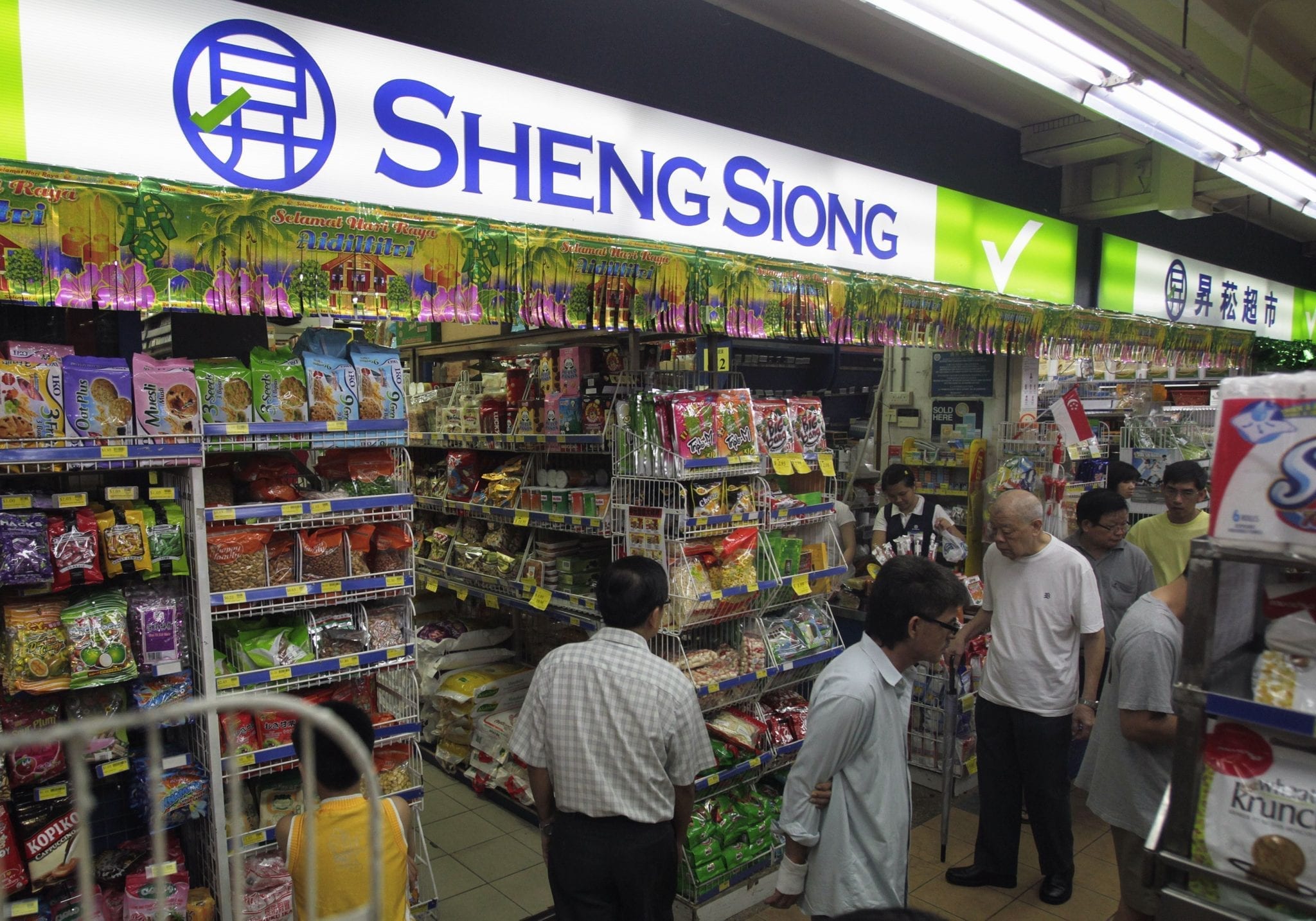
    Singaporean supermarket chain Sheng Siong has reported a 16.4-per-cent year-on-year increase in net profit to SG$20.6 million (US$15.1 million) for the third quarter.

    The increase is largely attributed to an increase in gross profit arising from the growth in revenue, slightly improved gross margin, and higher other income – but was partially offset by higher operating expenses and net finance expense.

    “We are pleased that we have opened two new stores at Block 182 Woodland Street 13 and Block 602A Tampines Ave 9 with retail areas of 8500sqft and 9000sqft respectively while another store at Block 202 Marsiling Drive which we have secured will be operational by the first quarter of next year,” said the group’s CEO Lim Hock Chee. “Going ahead, we will continue with our efforts in expanding our retail network in Singapore, especially in areas where our potential customers reside.

    “Besides placing focus on nurturing the growth of our new stores in Singapore and China, we remain committed to enhancing the gross margin and lowering input cost by improving the sales mix with a higher proportion of fresh produce and deriving more efficiency gains in the supply chain.”

  • Asia dominates global retail acquisitions in September

    Asia dominates global retail acquisitions in September

    Asian deals dominated global retail acquisitions in September according to a database compiled by GlobalData.

    Retail industry deals for the month were worth more than US$7.52 billion, representing an increase of 94.9 percent over August and 38.6 percent above the 12-month average of $5.43 billion.

    In terms of a number of deals, the sector saw a rise of 15.1 percent over the 12-month average with 145 deals against the average of 126 deals.

    In value terms, Asia-Pacific led the activity with deals worth $5.14 billion.

    The top five retail deals accounted for 72.7 percent of the overall value during September – and three of them were in Asia.

    The top five retail industry deals of September tracked by GlobalData were:

    • Yahoo Japan’s $3.72 billion acquisition of Zozo.
    • The $750 million acquisition of Jetro Restaurant Depot by Fomento Economico Mexicano.
    • GIC Singapore’s $500 million private equity deal with VCM Services and Trading Development Joint Stock (VinGroup’s VinMart in Vietnam).
    • The $300 million venture financing of Zhuan Zhuan by 58.com and Tencent Holdings.
    • Glade Brook Capital Partners, TCV and Thrive Capital’s venture financing of Capsule for $200 million.