Tag: Retailers

  • Mecca opens newest cross-concept store in Christchurch CBD

    Mecca opens newest cross-concept store in Christchurch CBD

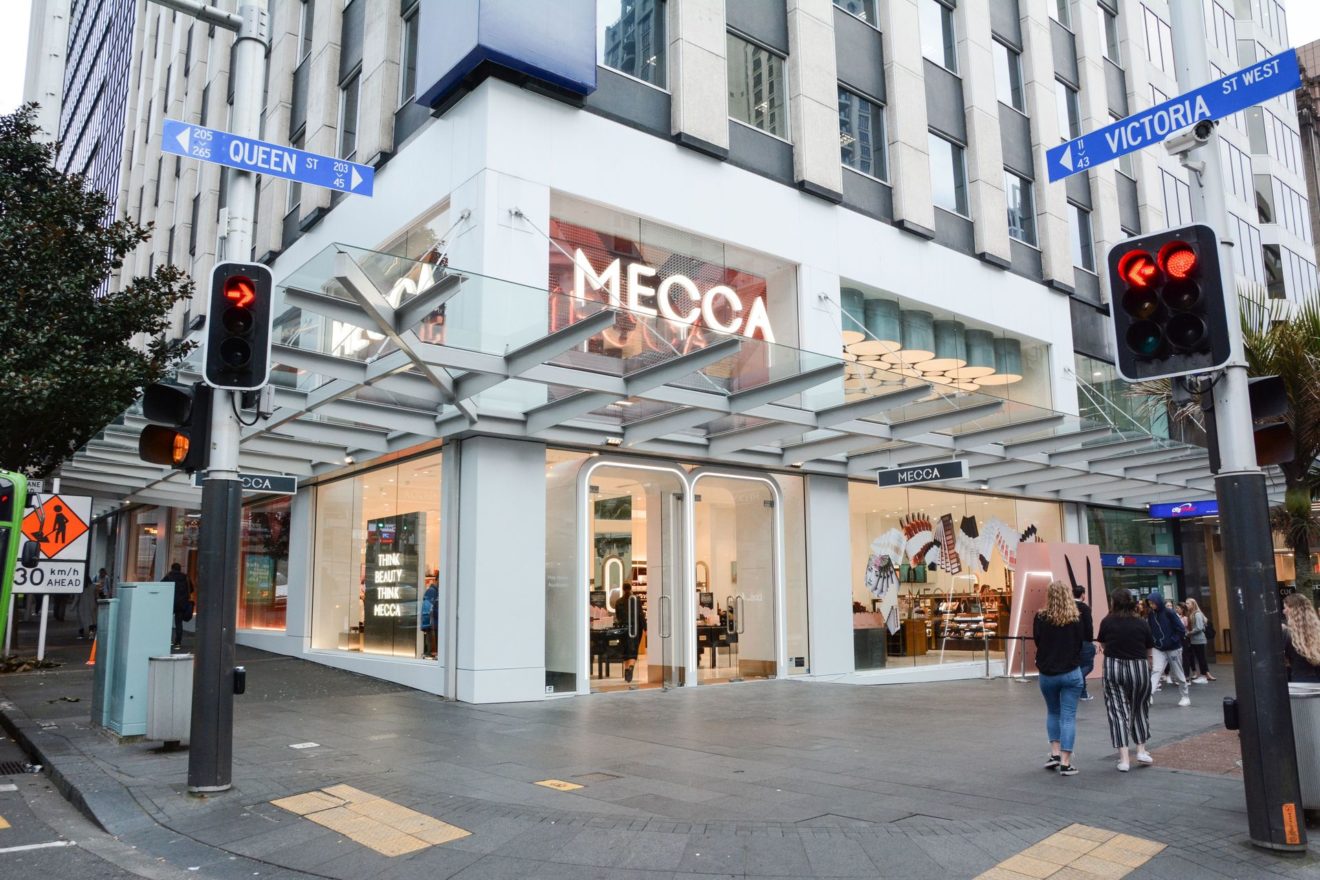
    Beauty retailer Mecca has opened its newest cross-concept store, combining its Mecca Cosmetica and Mecca Maxima offerings, in the heart of Christchurch’s CBD.

    The new 224sqm store houses more than 75 of the world’s most sought-after brands of makeup, fragrance and skincare products.

    It also features a Perfumeria, housing brands such as Le Labo and Frederic Malle, and three ‘Play Bars’ which will provide customers with space to experiment with the latest beauty buys and learn new techniques.

    Eight additional makeup stations have been made available for applications, consultations and beauty treatments.

    According to the retailer, the Garden City store is the first of its kind on the South Island.

    Carly Emery, Mecca’s New Zealand country manager, said it was a natural next step was to bring a bigger, brighter Mecca to Cantabrians, following
    the success of its Auckland and Wellington stores.

    “Our Mecca Auckland and Mecca Wellington stores have been so well received and given the great development happening in Christchurch lately, we didn’t think twice about bringing our latest concept to the city,” Emery said.

    The brand made its initial foray into Christchurch in 2009 with the launch of Mecca Cosmetica Ballantynes, just weeks before the devastating earthquake. Mecca supported its staff throughout the extensive rebuild period, including providing alternative employment opportunities within other regions where possible.

    The retailer said it had to close its Mecca Maxima ANZ Centre, which opened its doors in 2016 and was the first of its kind in the country, to make way for the concept store. Its 17 employees carried over into the new store and an additional five staff members have been added to the team.

  • Adairs finally delivers first profit in New Zealand

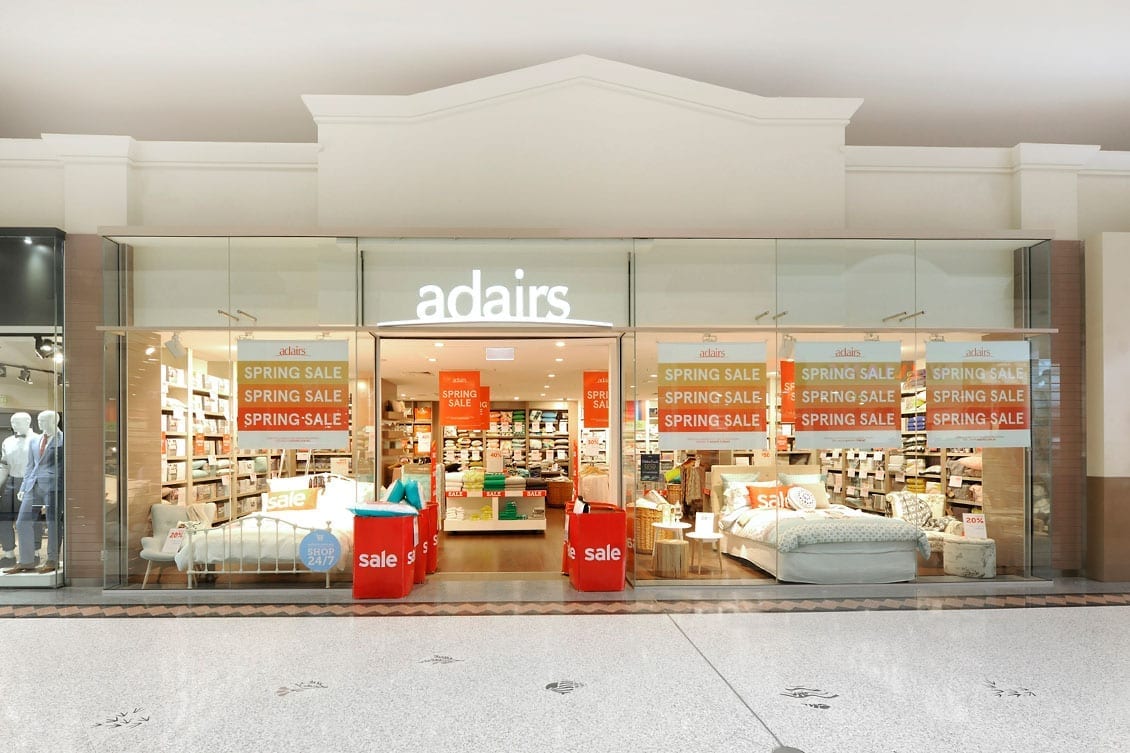
    Adairs finally delivers first profit in New Zealand

    Homewares business Adairs delivered its first profitable year in New Zealand in FY19, with work done on the local supply chain significantly assisting sales, along with improving brand awareness.

    New Zealand saw sales growth of over 25 percent during FY20.

    According to Adairs chief executive and managing director Mark Ronan, the lessons learned in New Zealand will assist the business as it looks to expand into further markets – when the right opportunity arises.

    On a group level, Adairs saw net profit slip despite sales and gross profit improving as a result of a weaker Australian dollar and the costs of a growing distribution network over the year to 30 June, 2019.

    Total sales increased 9.7 percent to A$344.4 million ($365.2 million), with Adairs’ online channel growing 41.7 percent during the year – now contributing 17 percent of overall sales.

    Despite relatively strong sales numbers, Adairs net profit fell 1.3 percent to A$29.6 million ($31.39 million).

    Ronan said the group results were attributed to an unrelenting focus on delivering excellent retail execution, and an understanding of what the business’ customers want both online and offline.

    Part of this understanding comes from the business’ loyalty offering, Linen Lovers, which grew 17 percent over the year. Linen Lovers members contributed 75 percent of all sales.

    According to Ronan, Adairs is not quite operating at best-practice in its omnichannel operations, which gives the business a lot of room for growth in the online space.

    Cost of doing business grew by A$15.2 million ($16.12 million) (, or 11 percent, due to efforts to restructure the business’ supply chain network in order to provide agile, the best-in-class capability to accommodate future demand.

    “We are addressing our short-term supply chain issues and have a clear process to finalize the long term solution,” Ronan said.

    “We see this as an opportunity to contribute to building and sustaining our competitive advantage. In the last 12 months, we have made strategic hires in key areas of our business, [and] we are in a strong position to deliver a great retail experience.”

    However, Ronan acknowledges that the current retail climate brings its own set of challenges.

    “While the macro environment is challenging, our strategies of product differentiation, range expansion, more inspiring and larger store formats, and an unwavering focus on customer service will all play a key role in growing both like-for-like and total sales in FY20,” Ronan said.

    During FY20, Adairs expects to open between four to six new stores across Australia and New Zealand, and forecasts total sales of between A$360 million and A$375 million ($381 million and $397.7 million) to deliver an EBIT of between A$43 million and A$46 million ($45.6 million and $48.79 million).

  • Shopee app Singapore’s most downloaded

    Shopee app Singapore’s most downloaded

    The Shopee app has emerged as Singapore’s most downloaded shopping app.

    The Sea company platform had 2.8 million visitors per month on average during the second quarter, with an 11 percent increase compared to the previous quarter. It is currently the most-used app of its kind throughout the whole of Southeast Asia, while rival firm Lazada remains the most actively used e-commerce app within Singapore itself.

    “Apps by Alibaba such as Taobao and AliExpress remained prominent among Singaporean consumers probably due to the increased popularity of Chinese products and Chinese language proficiency in the country,” read a report by iPrice Group.

  • KrisShop marks rebranding by taking to the ground

    KrisShop marks rebranding by taking to the ground

    Singapore Airlines’ inflight and online travel retail store KrisShop has revamped its brand and launched a new website.

    To mark the launch, KrisShop is curating a pop-up exhibition in downtown Singapore, divided into several experiential zones, each showcasing a different retail feature of the new site. KrisShop.com now sports a cleaner look with a new interface that includes more intuitive features for swift and smooth navigation.

    KrisShop has also introduced multiple initiatives for convenient payment and pre-order and delivery services, aiming to provide personalised experiences to suit the varying lifestyles of customers. It is targeting both travellers and non-travellers.

    “Over the years, the travel retail industry has experienced a radical disruption driven by digitalisation,” read a statement from the firm on the rebranding. “KrisShop seeks to embrace a holistic omnichannel approach to deliver an integrated shopping experience that engages its customers at every step of the journey – both online and offline.

    “Advancing beyond a retail catalogue, KrisShop.com aims to re-invent itself as the go-to lifestyle e-commerce website that caters to the needs of all shoppers, whether they are travelling or not.”

    In the coming months, the firm will progressively roll out the site’s new features, including multiple payment options, pre-ordering up to 60 minutes before flight, hotel delivery, in-flight entertainment, and self-collection at PopStations.

    “Beyond being a retail e-commerce site, KrisShop seeks to establish itself as a one-stop shopping destination, and is continually evolving to meet the needs and demands of today’s consumers,” said KrisShop CEO Chris Pok. “Leveraging our expertise in retail, we are proud to unveil the new Krisshop.com that aims to modernise the consumer shopping journey.”

    The KrisShop popup is located at Raffles Hotel’s Palm Ballroom, and will be open to the public from August 23 to 24.

  • US retail sales up solidly

    US retail sales up solidly

    The US Commerce Department says retail sales rose a healthy 0.7 per cent last month, a sign of consumer confidence.

    US consumers have spent more at retail stores and restaurants in July, a sign that concerns over slower global growth that have roiled financial markets haven’t dampened consumer confidence.

    The Commerce Department says retail sales rose a healthy 0.7 per cent last month, after a 0.3 per cent gain in June. Online retailers, grocery stores, clothing retailers and electronics and appliance stores all reported strong gains.

    Consumer spending, the primary driver of the US economy, remains healthy even as other sectors of the economy, such as business investment, have weakened amid growing uncertainty over the US-China trade war.

    Job growth is steady, the unemployment rate is near a 50-year low, and wages are rising modestly, which bolsters Americans’ spending power.

    Even department stores reported solid sales increases despite Wednesday’s anaemic earnings report by Macy’s.

  • Growth rate down for China retail sales in July

    Growth rate down for China retail sales in July

    Chinese retail sales in July rose at a slower rate than in June, although the decline was largely attributed to falling sales of new motor vehicles.

    Official government retail sales figures include motor vehicles, making it difficult to assess the true trend of ‘real’ retail sales in the market.

    Chinese retail sales in July rose by 7.6 per cent year on year, compared to a 9.8-per-cent increase in June. The growth rate was slower than analysts had been forecasting.

    July marked the 13th consecutive month of decline in China’s new-car market, affected by the imposition of stricter environmental controls and a generally cooling economy.

  • What retailers can learn from Ikea Retail

    What retailers can learn from Ikea Retail

    “Innovation has nothing to do with how many R&D dollars you have. When Apple came up with the Mac, IBM was spending at least 100 times more on R&D. It’s not about money. It’s about the people you have, how you’re led, and how much you get it.”

    – Steve Jobs

    “These businesses are wholly aware that Amazon is eyeing what’s theirs and that what worked yesterday probably won’t work tomorrow. They are motivated to embrace change and their customers are certainly changing.”

    – Beck Besecker, Forbes

    As Besecker goes on to say, consumers, today have constant access to entertainment and communication through smartphones and the internet, while real estate development trends are leaning away from bedroom communities and towards new urbanism and gentrification.

    And so adaptation remains far more relevant than innovation. To adapt we must have:

    • vision
    • bravery
    • skill
    • risk appetite
    • insights
    • and an insatiable ability to question why.

    Businesses that meet these criteria will be hugely successful in this retail landscape both now and into the future because they will be best placed to meet three inescapable trends emerging quickly:

    • In-store retail is naturally becoming less about inventory and more about providing intermediary and indispensable, location-based services that result in sales, craft relationships with customers and captures new data.
    • Advances in fulfillment and same-day delivery services will dictate largely the role of retail shops as points of sheer fulfillment
    • As this blends into the landscape, physical space in shops will start to decrease, and digitally integrated experiences will become more common, and sales will occur in different ways.

    Bricks-and-mortar retail has always been about the fantasy of what is possible, and that inspirational experience remains at the heart of retail.

    Emerging retail formats will further blur the line between shopping and entertainment – so much so that the customer may lose sight of the fact that they are in a store.

    Take the Ikea shopping experience, which is designed to help people imagine Ikea products as part of their day-to-day lives. Ikea doesn’t just sell furniture, it sells a lifestyle, and its stores are set up to entice customers to adopt the Ikea way of thinking.

    But while the global retailer traditionally has built huge lifestyle outlets, now the brand is adapting its store format to global consumer trends around urbanization.

    Last year, the Swedish furniture brand announced it would open 30 new store concepts in urban centers, from stores of the future to sub-100sqm shops to pop-ups, to standalone cafes and singular category shops.

    The stores are backed up by the most advanced technology, providing everything Ikea has to offer, but in a virtual environment. The goal is to make every interaction between the customer and the brand more seamless, allowing consumers to have fun while shopping and learning about the brand along the way.

    Looking at Ikea’s urban store in Madrid, there are three very important reasons for the success of this concept:

    • services
    • proximity
    • entertainment.

    The new store offers much more than a standard Ikea store. There is a high level of entertainment available, with the main goal being to engage customers. And since the store is located in the city center, customers can easily shop on their way to work, or while they spend their time in the city.

    Customer can learn how to customize their products, try different furniture concepts and styles, receive expert decoration and design advice, enjoy various projections and visual merchandising of products, and so much more.

    Other retailers can learn from Ikea’s example. Aside from delivering the highest level of brand engagement, inspiration, and entertainment, it also uses digital to make its services and products fully customer-centric.

    Ikea is also continuing to explore new store methods and formats that will allow it to get even closer to its customers and deliver world’s best omnichannel offer while remaining a leading brand in furniture retail, and potentially revolutionizing the way people buy products.
  • E-Mart posts first-ever loss ; restructuring lures

    E-Mart posts first-ever loss ; restructuring lures

    Korean discount chain operator E-Mart has posted its first-ever net loss, amid growing competition from online shopping rivals and e-commerce giants.

    The company’s quarterly results showed a net loss of KRW26.6 billion (US$24.7 million) between April and June, its first negative result since it was spun off from Shinsegae Group in 2011. The loss stands in comparison to a net profit of KRW94.8 billion ($77.7 million) during the same period last year.

    The company says it plans to raise 1 trillion won (US$820 million) by selling assets and will buy back stocks worth some 100 billion won to boost shareholder value.

    E-Mart says it expects its losses will to continue into the next financial period.

    “Online archrivals, such as Coupang Inc and other major e-commerce operators are forecast to expand their food category later in the year,” said Hana Financial Investment expert Park Jong-dae, “which could further weigh down E-Mart.”

  • Reliance-Tiffany partnership in India wins the right approval

    Reliance-Tiffany partnership in India wins the right approval

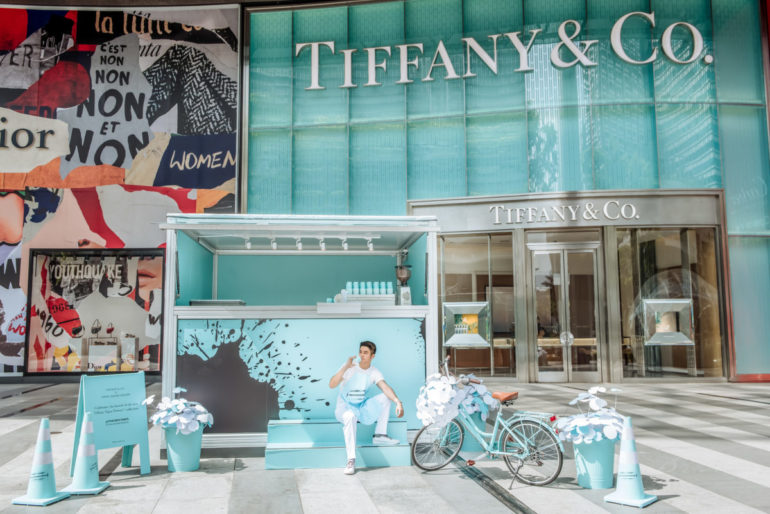
    The Reliance-Tiffany partnership in India will allow Tiffany & Co to offset subdued demand in US and Europe, says data and analytics company GlobalData.

    The US-based luxury jeweler Tiffany & Co formally announced last week it was forming a joint venture with India’s Reliance Brands Limited (RBL), a part of the Reliance Industries Limited (RIL), to open a line of stores in India. That move was widely predicted earlier.

    Shagun Sachdeva, consumer insights analyst at GlobalData, says India is the fastest-growing luxury market in the Asia-Pacific region, expected to grow at a compound annual rate of 14.2 percent between 2017 and 2022, to reach US$7billion by then.

    “The projected healthy growth can be attributed to the positive economic outlook, growing younger upper-middle-class population coupled with growing brand-consciousness, and the increasing popularity of the online channel for luxury shopping.”

    Sachdeva said Tiffany & Co, famous for its diamond engagement rings and famous blue boxes, has been trying to enter the Indian market for a long time.

    “By leveraging Reliance’s long-standing brand presence and product positioning, it will be able to expand globally and offset the subdued demand in the US and Europe.

    “After the deployment of omni-channel model and the introduction of the iconic British toy retailer Hamleys in India earlier this year, the latest move by Reliance to open Tiffany stores in Delhi later this year and in Mumbai in 2020 through a joint venture is in line with its strategy to bring the best-in-class products to the emerging Indian luxury market,” she said.

    “It provides a unique opportunity for Reliance to bolster its consumer-focused units, retail, and telecoms, to match the strength of its leading oil and gas business.”

  • Singapore retail sales slip in June

    Singapore retail sales slip in June

    Singapore retail sales – excluding motor vehicles – decreased by 2.7 percent in June, according to Statistics Singapore.

    The headline figure, which includes motor vehicles, was down 8.9 percent, reflecting the high volume of cars sold in June last year and a lower COE quota for May to July this year.

    Month-on-month, Singapore retail sales were down 0.4 percent, excluding vehicles.

    Online accounted for 5.5 percent of the S$3.5 billion in retail spending for June.

    Sales of furniture & household equipment declined 15.1 percent year on year, attributed to higher sales in the sector during last year’s Hari Raya festive season. Similarly, the computer & telecommunications equipment and watches & jewelry sectors reported sales down by 7.7 percent and 4.8 percent respectively, driven in part by lower demand for handphones and jewelry.

    Sales of medical goods & toiletries and of apparel & footwear both grew by 1.4 percent.

    Compared to the same period last year, sales of food & beverage services grew by 5.3 percent in June, estimated at $864 million, compared to $820 million in June last year.

    Sales by fast-food outlets grew by 10.6 percent compared to June last year, due partly to the opening of new outlets by some major fast-food chains. Food caterers, restaurants and other eating places (such as cafes)were up by between 3.2 percent and 5.7 percent during the period.

  • South Koreans start boycotting Japanese retail goods

    South Koreans start boycotting Japanese retail goods

    As a South Korean consumer boycott of Japanese goods gains momentum, consumers are starting to share information on new and upcoming Japanese retailers coming to the country.

    The intention, reports Korea Bizwire, is to include the retail brands on the boycott list and hurt sales as soon as the stores open. Among them, Japanese brands GU and Muji are being mentioned online as possible targets.

    GU is Uniqlo’s sister brand, owned by Fast Retailing. It plans to open its second and third stores in Yongin, Gyeonggi Province and Seoul’s Times Square Mall by early next month.

    Netizens are posting articles that emphasize the relationship between Uniqlo and GU as well as FRL Korea, which currently operates the Uniqlo Korea business.

    Discord between the two countries dates back to Japan’s colonial occupation of the Korean Peninsula before and during the Second World War and controversy over forced labor and sexual slavery. It expanded into a diplomatic crisis last week when Japan threatened to throttle exports of materials essential to South Korean industries.

    Last weekend, thousands of protestors marched in Seoul, accusing Japan of an “economic invasion”. The boycott campaign against Japanese retailers has stemmed from there.

    South Korea’s Lotte Shopping and Japan’s Fast Retailing invested US$19.7 million to establish FRL Korea, owning 49 percent and 51 per cent of the company’s shares, respectively.

    That business partnership is being subject to public criticism for taking the lead in importing Japanese goods into South Korea after GU set up its flagship store at Jamsil’s Lotte World Mall and its second franchise at Lotte Mall in Yongin.

    Muji, one of the best-known Japanese brands on the boycott list, is planning to renovate its store in Times Square Mall later this month.

    The news is being shared on social media, and many netizens are already calling for a boycott of the new store.

    GU and Muji have no current plans to suspend expansion or shut down stores already in operation. However, experts who spoke to Korea Bizwire agree that the new stores won’t be able to attract customers through the ‘grand opening’ effect unless the boycott movement subsides.

  • Double-digit leap for General Vietnam retail sales

    Double-digit leap for General Vietnam retail sales

    Vietnam retail sales surged by 11.6 percent in the first seven months of this year, according to figures from the nation’s government.

    According to the General Statistics Office of Vietnam, sales of goods and services reached US$120.57 billion from January through July, with 76.1 percent of that figure ($91.76 billion) spent on goods – 12.5 percent up year on year.

    In July alone, according to the government estimates, sales of retail goods and services reached $17.84 billion, 1.7 percent up on June and 12.4 percent ahead of July last year.

    By category, Vietnam retail sales of food and foodstuffs rose by 12.8 percent year to date, with clothing and textiles up by 10.7 percent.

    Accommodation and restaurant services grew 10 percent year on year to $14.51 billion. Travel services rose 12.5 percent to $1.1 billion.

  • Decline in Hong Kong retail sales in June less as forecasted

    Decline in Hong Kong retail sales in June less as forecasted

    Hong Kong retail sales in June fell – but not by as much as many were expecting.

    Official figures from the Census and Statistics Department (C&SD) show a 6.7 per cent decline year-on-year in June, somewhat higher than the 1.4 per cent revised figure for May, but well short of the double-digit predictions some pessimists were picking late last month.

    Year-to-date Hong Kong retail sales are down 2.6 per cent compared with a year ago.

    June was the month when rolling protests began on Hong Kong Island, particularly affecting retailers in Admiralty, Wan Chai, Central and Causeway Bay. Watsons this week confirmed some of its stores in those areas had recorded double-digit declines in sales.

    A government spokesman said that retail sales registered an enlarged decline in June, as local consumer sentiment turned more cautious and growth in visitor arrivals moderated.

    He expects sales would remain subdued in the near term, as a weakened global and local economic outlook and other headwinds continue to weigh on consumption sentiment.

    “The recent mass demonstrations, if continued, would also dent the retail business further,” he said.

    Predictably, sales of jewellery, watches and valuable gifts in June were hit the hardest, plunging 17.1 per cent. Due to their high value, that category traditionally has the greatest impact on the overall figures.

    Other categories to decline – in descending order of impact – were medicines and cosmetics (down 4.1 per cent); apparel (down 8.2 per cent); commodities in department stores (down 6 per cent); food, alcoholic drinks and tobacco (down 1.3 per cent); electrical and consumer durable goods (down 16.1 per cent); footwear and accessories (down 1.4 per cent); books, newspapers, stationery and gifts (down 4.5 per cent); Chinese drugs and herbs (down 0.1 per cent); and optical shops (down 11.9 per cent).

    In contrast, supermarket sales increased by 1.6 per cent in June, while sales of other consumer goods not elsewhere classified rose by 0.3 per cent, and furniture and fixtures rose by 1.1 per cent.

    C&SD said that after netting out the effect of price changes year-on-year Hong Kong retail sales in June decreased by 7.6 per cent and by 3.1 per cent in the year to June.

  • NomadX adds more provision shops

    NomadX adds more provision shops

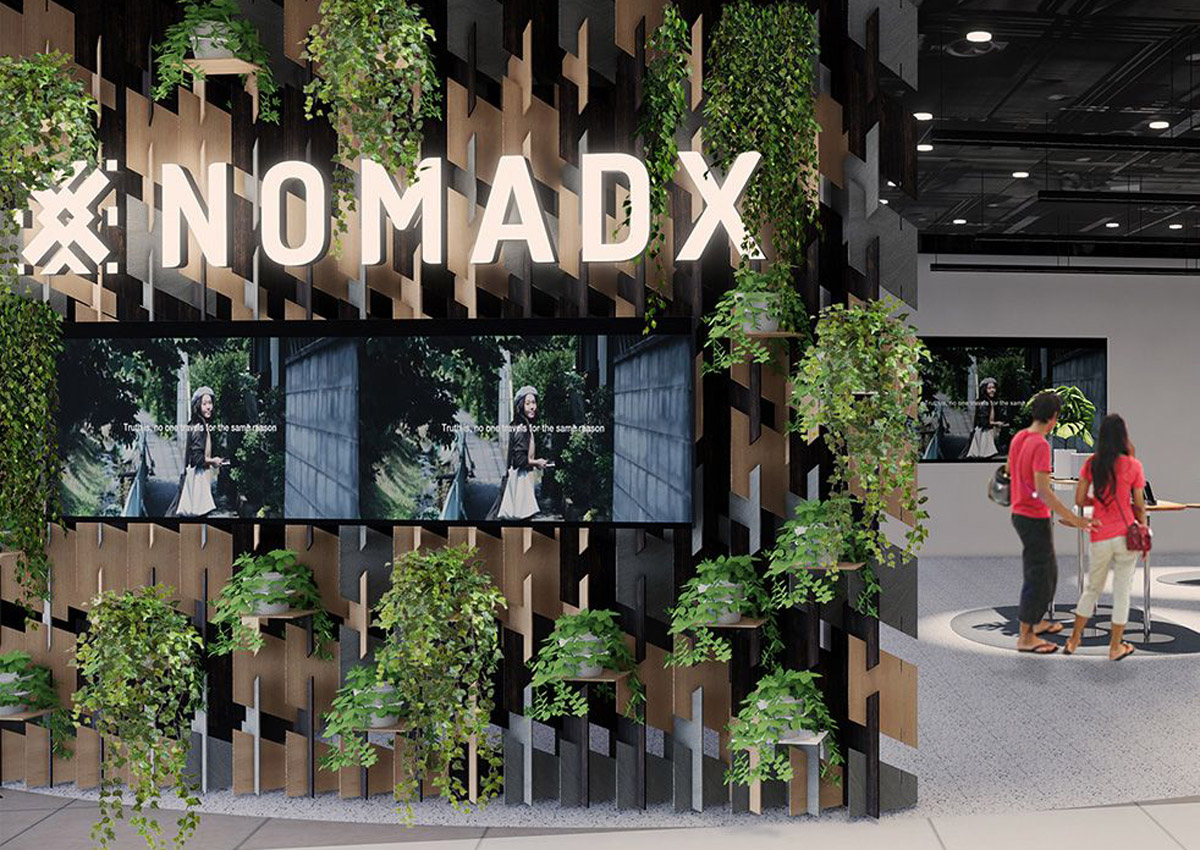
    Multi-label concept store NomadX has updated and expanded its space, adding new stores.  Technology has also been rolled out: along with a touchscreen directory, interactive screens and “game stations” that help customers to find their style, there are mirrors that offer automated store assistance. Customers can also scan the product QR code to add any products to their digital cart for purchases.

    Among the new brands at NomadX is The Lucky Shop (by Zha Huo Dian), a boutique offering ‘old-school’ and vintage fashion for men and women.

    Another is a faux ‘supermarket’ M*Art which displays apparel and accessories in neon-pink repurposed refrigerators.

    Other newcomers include homegrown fashion and accessories brands Qlothe, The Sophia Label, Ans.ein and Studio Emoi. Mrphy’s home decor range and French beauty company Melvita are making their Singapore debut there.

    More brands will be popping up at the store, including sustainable-swimwear label August Society, Pleatation and Love SG.

  • Alibaba targets 30 million US SMEs

    Alibaba targets 30 million US SMEs

    Alibaba has opened its platform to enable US businesses to sell their products to millions of Alibaba.com buyers in the US and around the globe.

    The nearly 30 million small and medium-sized businesses in the US – especially manufacturers, wholesalers, and distributors – can now better access the US$23.9 trillion global B2B e-commerce market, an opportunity that is six times larger than the global B2C e-commerce market.

    Alibaba is also co-producing a series of “Build Up” workshops and webinars with local chambers of commerce and B2B organizations across the country – including Score, one of the nation’s largest non-profit networks of volunteer, expert business mentors.

    “Alibaba aims to empower entrepreneurs and help them succeed on their own terms,” said Alibaba Group’s head of North America B2B John Caplan. “With 10 million active business buyers in over 190 countries and regions, we are reshaping B2B commerce by providing the tools and services needed for US SMB companies to compete and succeed in today’s global marketplace.”

    “Alibaba’s announcement to welcome US sellers onto its B2B marketplace shows the Chinese retail giant’s desire to diversify its product offering,” said Emarketer principal analyst Jillian Ryan.

    “Currently, about 90 percent of the goods sold on the marketplace are from factories in China that are often manufacturing custom goods-to-order for buyers across the globe. Buyers on the platform are from developed nations like the US, Canada, India, Australia, Brazil, and the UK, and these buyers want to be able to source goods from the US.”

    As part of its extended services, Alibaba has streamlined the ability to build and manage a single digital store on the global Alibaba.com platform; added valuable transaction capabilities, including online payment; built CRM and communications tools to facilitate the direct ownership of customer relationships; enhanced digital marketing tools to target any appropriate B2B demand; and provided an option to work with Alibaba.com’s US-based Seller Success team.