Tag: Retailers

  • Tenants leaving Thomson Plaza due to renovation works

    Tenants leaving Thomson Plaza due to renovation works

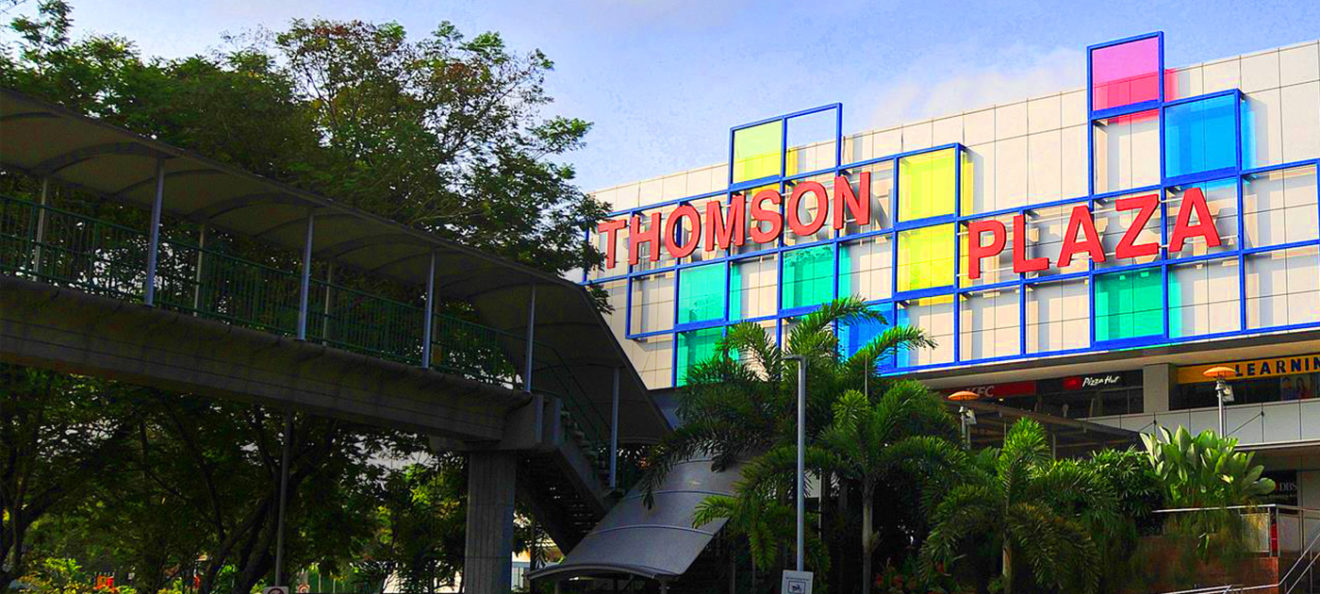
    Tenants are upset over Thomson Plaza renovation works, with at least 20 retailers leaving.

    The renovation started this month and will last until the second quarter of next year. Parts of the first and third storeys are being renovated by one of its landlords, Mercatus Co-operative.

    “The renovation will provide shoppers with a holistic and comfortable shopping experience, in preparation for the improved connectivity from the upcoming MRT station at Upper Thomson,”

    Retailers say business has fallen since the renovation began.

    “They didn’t give us enough time, and we just renovated. Business has been so bad since the renovation started, we earned only $200 on some days,” said Siva Crakash, branch manager of Home-Fix, which has been there for 15 years.

    Twenty tenants out of 180, will not be returning, including Royal Sporting House and Wine Connection.

    Shoe shop NTS Marketing on the third floor has moved to the second and its owner is also unhappy with the revamp.

    “Regulars don’t know where we moved to and we have a smaller unit now, so we have to serve fewer people at one time,” the owner said.

  • Bonjour Holdings warns of loss ahead

    Bonjour Holdings warns of loss ahead

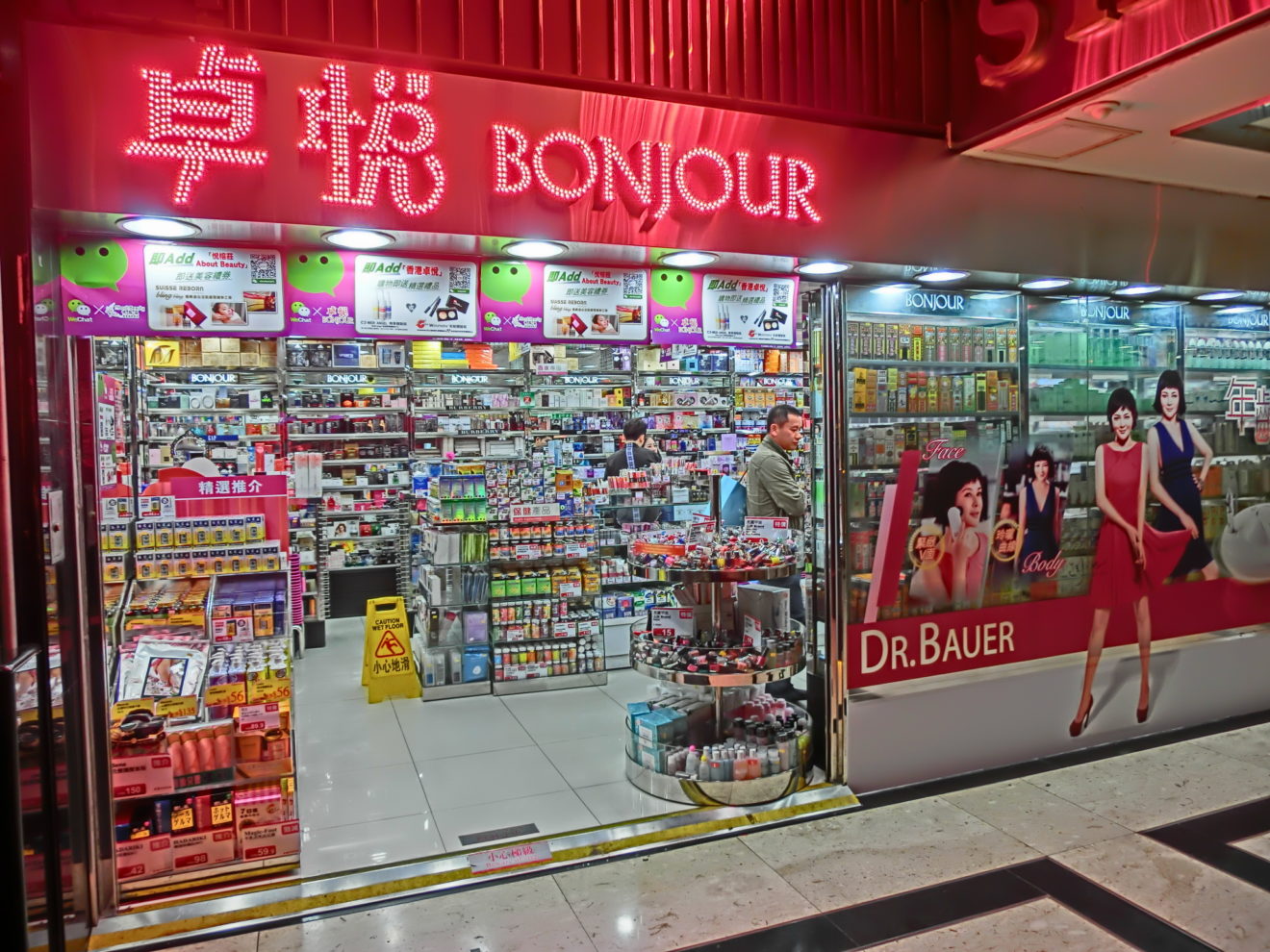
    Bonjour Holdings says it expects a loss in the half year to June as protests took their toll on the city’s retail sector.

    Last year, Bonjour Holdings reported a profit of HK$7.4 million in the six month period.

    In a stock-exchange filing, the company did not release an estimate of the level of loss it anticipates, with the preparation of final results still incomplete.

    Chairman and executive director Wilson Ip Chun Heng said the board believes the reversal of fortune is mainly attributable to the weak sales performance brought about by both local and global factors, including the US-China trade war, the depreciation of RMB, and the demonstrations and social unrest in Hong Kong which occurred in June.

    “Moreover, the implementation of the e-commerce law in China at the beginning of the year has severely hit the mainland “Daigou” (surrogate shopping) which has, to a certain extent, adversely affected our group’s turnover in the short-term.”

  • Saigon Co.op takes over Auchan Vietnam

    Saigon Co.op takes over Auchan Vietnam

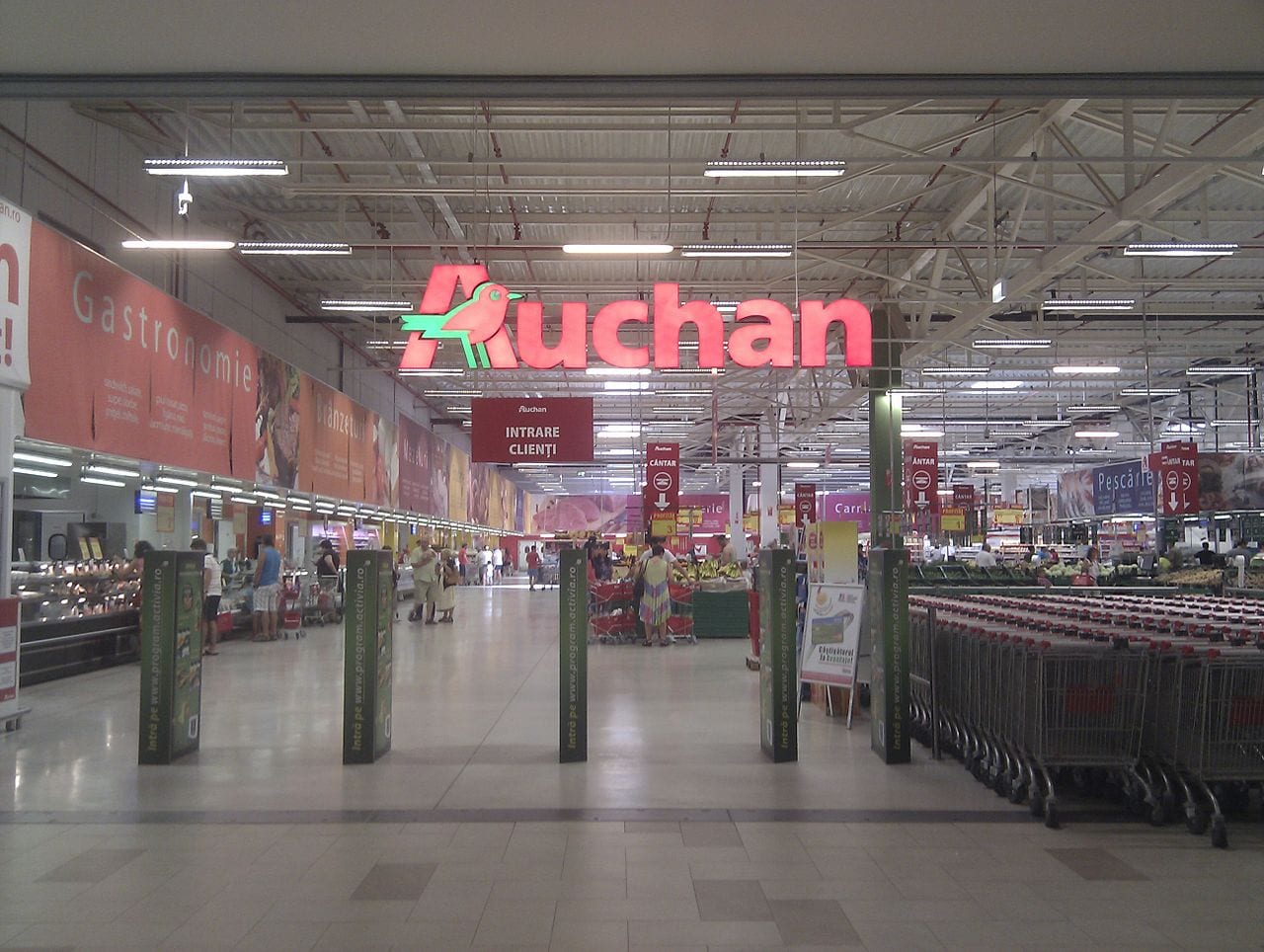
    Local retail group Saigon Co.op has acquired the Auchan Vietnam business.

    Auchan will transfer its 15 closed store spaces and the three remaining stores still trading in Ho Chi Minh City’s Districts 7 and 1, along with its e-commerce and supply-chain retail system to Saigon Co.op.

    According to the arrangement, Saigon Co.op will renovate the closed stores and restore operations under their own brands which include Co.opMart, Finelife and Co.opXtra.

    The three stores still trading will maintain their Auchan branding until next Lunar New Year.

    In May, Auchan decided to pull out of Vietnam after consistent losses.

  • South Korean retail sales up as summer season arrives

    South Korean retail sales up as summer season arrives

    South Korean retail sales increased by 3.4 percent year on year in May.

    Online sales reportedly surged by 18.1 percent in May, far faster than offline sales, which increased buy just 1.9 percent.

    A government spokesperson said the increase in sales for the month was driven by growing demand for seasonal products such as air conditioners, as summer arrived.

    There was also strong demand for electronics and gifts for Parents’ Day and Children’s Day.

    May’s 3.4 percent rise in South Korean retail sales was below the mean average monthly rate of 3.9 percent recorded from 1996 until this year.

  • Hong Kong retail sales declined again in May

    Hong Kong retail sales declined again in May

    Hong Kong retail sales fell again in May, but the rate of decline was significantly less than in April.

    According to the Census and Statistics Department the value of retail sales in May, provisionally estimated at HK$40 billion (US$5.1 billion), decreased by 1.3 percent year on year, well below April’s 4.5 percent decline.

    For the first five months of this year, Hong Kong retail sales were down 1.8 per cent compared with the same period last year. After netting out the effect of price changes over the same period, sales for the five months were down 2.2 per cent.

    For the three months to May, sales fell by 0.8 per cent.

    For once, the jewelry, watches and valuable gifts category – which traditionally has the greatest effect on overall retail sales fluctuations – registered one of the lowest falls in May, down 2.7 percent.  Apparel sales fell 4.6 per cent, electrical goods by 14.8 per cent, optical shops by 11.3 per cent, furniture by 1.3 per cent and supermarket sales by 0.8 per cent.

    In contrast, sales of medicines and cosmetics rose 1 per cent, of food, drinks, alcohol and tobacco by 3.1 per cent, footwear and accessories by 1.6 per cent, Chinese medicines by 0.7 per cent and books, newspapers, stationery, and gifts by 0.1 per cent.

    A government spokesman said narrower decline of Hong Kong retail sales in May was partly due to the late timing of the Labour Day holidays in Mainland China this year, which had led to a visibly larger year-on-year rise in visitor arrivals during the month.

    “Overall, the performance of retail sales remained subdued in recent months.”

    Retailers will be waiting for the June figures, the month when the protests over the extradition bill stepped up, disrupting access to stores on Hong Kong Island at certain times and possibly dissuading overseas visitors.

    The spokesman said that in the near term, the outlook for retail sales will likely be clouded by the still-cautious consumption sentiment amid an uncertain global economic environment. “Nevertheless, the sustained expansion in inbound tourism and the largely stable local labor market should continue to provide some support.”

  • Bleak reaching for Hong Kong luxury goods market

    Bleak reaching for Hong Kong luxury goods market

    Analysts are warning of challenging times ahead for the Hong Kong luxury goods market.

    In a research note, Kathryn Parker and Flavio Cereda, equity analysts at Jefferies, say sentiment within Hong Kong has almost unanimously worsened since March due to the lingering effects of the trade war reducing high-quality tourism traffic into the territory, the rebalancing of prices after Mainland China’s VAT cut, ongoing Hong Kong protests and closer monitoring of the daigou by the central government.

    “We are concerned that there is an elevated reliance on mainland Chinese consumers within luxury stores in Hong Kong,” the pair said.

    Luxury-goods stores in Hong Kong commonly receive as much as 60 percent of their sales from mainland visitors – yet more and more mainlanders are choosing to shop at home where tax cuts have seen prices ease.

    “We were concerned to see further investment such as the opening of the new K11 Musea mall [in Kowloon], rather than a contraction of the retail footprint,” the analysts said.

    “Discussions with mainland Chinese consumers, particularly those in Shanghai, showed continued optimism in terms of both sales data and wider sentiment, which is despite the record-breaking first half.

    “An abundance of new malls within Hong Kong, Shanghai and Beijing means rents are not going up, but it is imperative that brands keep their store footprints dynamic and have a presence in the lux malls with the most traffic,” said Parker and Cereda.

    “All malls are increasing the proportion of food and beverage and experiences, such as cinemas and wellness, to drive footfall so there is relatively less space for retail.”

    While the Hong Kong luxury goods market suffered a downturn in the second half of last year, official retail sales figures for the first five months of this year show a modest 1.8 per cent decline against a higher base last year. But the latest figures are from May, prior to the acceleration of street protests in June and reflecting the later timing of the Mainland China Labour Day holiday period.

  • Indian mall space to grow by 65 million sqft by 2022

    Indian mall space to grow by 65 million sqft by 2022

    India will take on more than 65 million sqft of new mall space by the end of 2022, according to a new report from real estate services firm Anarock.

    The report shows the region’s top seven cities will account for 72 percent of the new mall space, while tier 2 and tier 3 cities will see 18.2 million sqft of new supply. Nearly two-thirds of the planned space (40 million sqft) will hit the market by next year.

    “This new supply is also driven by the increasing interest of institutional investors – including private-equity players – who invested almost US$1.9 billion into Indian retail between 2015 and the first quarter of this year,” said Anarock Retail MD & CEO Anuj Kejriwal. “In fact, more than 60 percent of this investment was infused in the last two years alone, making these the best years for the Indian mall sector in recent times.

    Notwithstanding the decline in deal activity in the second half of last year following the liquidity crisis, the retail segment attracted investments of almost $115 million in just the first quarter of this year.”

    The report also maintains that real estate investment trusts (REITs) can be a viable tool for mall developers to raise funds, but this fund-raising instrument still needs to mature sufficiently. Also, the retail REIT structure and performance may not be directly comparable with the commercial office sector.

    The report also showed the Indian retail industry has moved from long-term leasing to short-term leasing tenures (three to five years) to enable constant updating of the brand mix within the mall. Globally, the standard lease term is still above five years.

  • Nike grows profit, pulls product in China

    Nike grows profit, pulls product in China

    Sportswear brand Nike has revealed its net profit increased to US$4 billion during the 2019 financial year, compared to the previous year, which saw Nike earn US$1.9 billion.

    The large disparity is attributed to the enactment of the Tax Act last year, which raised Nike’s effective tax rate to 55.3 percent – causing a 54 percent drop in profits. In FY19, Nike’s tax rate returned to a more normalized level of 16.1 percent.

    The positive results come at a turbulent time for the sportswear giant, which recently faced a social media backlash in China after Undercover, a Japanese streetwear label it collaborated with on a line of sneakers, shared an Instagram Story with the caption, “No Extradition to China,” and “Go Hong Kong”.

    Nike subsequently pulled the sneakers from its offering in China, according to media reports.

    Nike president, chairman, and chief executive Mark Parker told investors the business is committed to the China market “for decades to come”.

    “We are and remain a brand of China and for China,” Parker told analysts, according to the Financial Times.

    “We’re confident that we’ll continue to grow sport and our business in China for decades to come.”

    On Thursday, Parker told investors FY19 was a pivotal year for the retailer.

    “Our distinctive innovation and digital advantage led to accelerated growth across our complete portfolio, while our brand fuelled deeper relationships with consumers around the globe,” he said in a statement.

    Revenue grew 7 per cent to US$39.1 billion, driven by sportswear, Jordan, and running, as well as strategic investments in innovation and digital led by Nike Direct.

    The Converse brand saw revenue grow 3 per cent to US$1.9 billion, which was mainly driven by double-digit growth in Asia and digital.

    Nike and Retail Prodigy Group have been contacted for comment.

  • Suning.com ranked China’s most-valuable retail brand

    Suning.com ranked China’s most-valuable retail brand

    Suning Holdings’ retail subsidiary Suning.com has been ranked China’s most valuable retail brand, finishing 13th on World Brand Lab’s 16th “China’s 500 Most Valuable Brands” list.

    This was the second consecutive year Suning finished in 13th place with its brand value totaling RMB269.198 billion (US$39.093 billion), an increase of 17 percent compared to last year. Its listed brand value has increased by a factor of six since 2009.

    In the past year, Suning.com announced operational revenue of RMB244.96 billion ($36.479 billion), up 30.35 percent year on year; and a sales volume of RMB336 billion ($50.16 billion), an increase of 38.39 percent.

    By the end of March this year, the company owned 12,329 offline brick-and-mortar stores in Mainland China, Hong Kong, Macao and Japan, covering diversified consumption scenarios that include Suning Retail Cloud Franchise Stores, SuFresh (fresh food supermarkets), Suning Xiaodian (providing neighbourhood products and services) and Redbaby (maternal and child supplies stores).

    Last February, the company announced the acquisition of 37 Wanda department stores nationwide and in June, it acquired 80 percent of Carrefour China to improve its full-scenarios ecosystem and expand its all-categories merchandise retailing by reinforcing its market competitiveness in fast-moving consumer goods operations.

  • Hong Kong airport Retail revamp Finalised

    Hong Kong airport Retail revamp Finalised

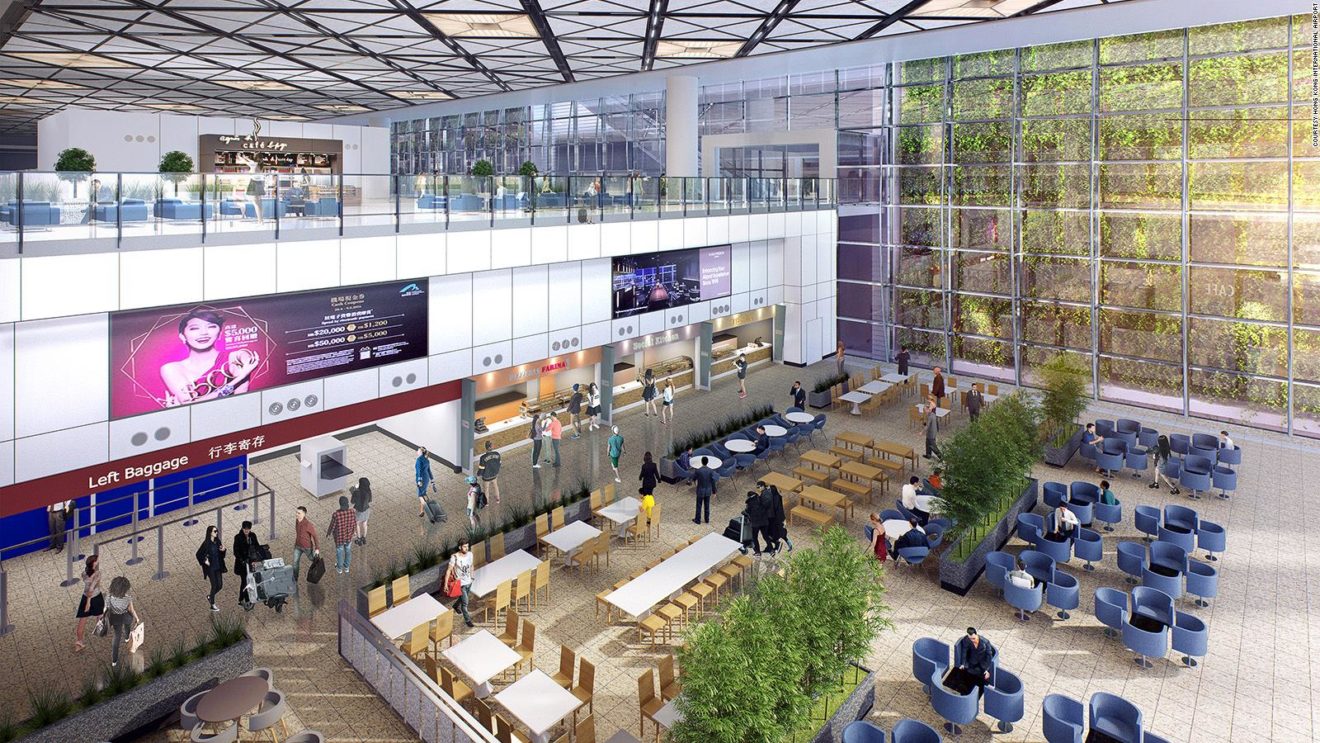
    A major Hong Kong airport revamp is planned spanning passenger facilities and retail spaces.

    Architectural firm Lead8 has been appointed lead designer for the planned Hong Kong International Airport (HKIA) Terminal 1 renovation.

    Working with Airport Authority Hong Kong, Lead8 will spearhead a collaboration of international consultants to deliver a “transformative upgrade” to the passenger halls of the 21-year-old aviation hub.

    The Boarding Gate Transformation project is expected to be completed in 2021. Lead8’s design scope includes a total overhaul and upgrade of the 49 boarding gates and adjacent areas of the Level 6 departure concourses.

    The renovation work will include upgraded technologies at all boarding gates, along with new and refreshed beam seating across all departure waiting areas. Retail and service cabins will be upgraded with more convenience for passenger access, all aimed at delivering “a more fluid experience for travelers”.

    “The refreshed look of the terminal will bring an inviting ambiance that combines new technological features to convey convenience and comfort to the terminal’s local and international travelers when transiting to and from Hong Kong,” said Lead8’s co-founder & executive director Chris Lohan.

    Contemporary seating designs with upgraded charging facilities will provide passengers with convenient and comfortable waiting experiences. The retail and service cabin facilities will also be upgraded to offer a rejuvenating environment for waiting passengers.

    Lead8 have also curated a number of entirely new experiential zones that will provide places of entertainment, relaxation, on-the-go work and general down-time spaces for passengers awaiting flights.

    “The combined enhancements of the transformed facilities at Hong Kong International Airport’s signature Terminal 1 building will further solidify our city’s status as a key international and regional aviation hub,” added Lohan.

  • Black forecast for Hong Kong retail sales

    Black forecast for Hong Kong retail sales

    Hong Kong retail sales will shrink by 5 per cent this year according to projections by PWC.

    Citing uncertainty clouding consumer markets across Mainland China and Hong Kong, PWC also says macroeconomic uncertainty has prompted Chinese retailers to refocus on customer experience.

    “Hong Kong retail sales is estimated to fall by 5 per cent to approximately HK$460 billion this year, as the ongoing Sino-US trade dispute, equity market turbulence and volatility of Renminbi continue to cast a long shadow on consumers sentiment and actual spending”, says Michael Cheng, PWC’s Asia Pacific and Hong Kong/China consumer markets leader.

    PWC had earlier forecast a 3-per-cent decline in Hong Kong retail sales and says its downgrade reflects a weaker outlook for the second half of the year, due to a combination of factors including external headwinds, economic instability, as well as the projected decrease in tourist arrivals and spending.

    The projections are included in the consultancy’s report Back to the Core: Reinvigorate Experience-driven Retail at a Time of Uncertainty.

    Government data shows Hong Kong retail sales for the first four months of this year fell by 2 per cent, with electrical and luxury goods among the sectors suffering the biggest decline, against the backdrop of a weak Renminbi and waning consumer confidence. On the back of the completion of major infrastructures such as the Hong Kong–Zhuhai–Macau Bridge and the Guangzhou–Shenzhen–Hong Kong Express Rail Link, mainland tourist arrivals grew steadily in the last quarter of last year, reaching a record high in January, aided by the Chinese New Year holiday-shopping season. However, mainland tourist arrivals started to drop from the peak three months in a row since February.

    “Local retail sales and mainland tourist arrivals are expected to continue on a downward trend through the rest of this year, indicating a slowing consumer market in Hong Kong,” says Cheng.

    “Electrical and luxury goods are set to shrink further, while consumer goods like health-and-beauty products will hold well with a modest growth. The recent political and social unrest, temporary closure of the Peak Tram due to renovations, coupled with a lack of new tourist attractions might lower mainland tourists’ appetite to visit Hong Kong in the short term. Meanwhile, a weakening economy as well as uncertainty surrounding the trade dispute present risks to the outlook in the medium to longer run,” he says.

    Adapt or suffer

    Cheng says this year’s tough Hong Kong retail climate underlines the importance for retailers to adapt to changing consumer preferences and spending patterns in order to maintain competitiveness and profitability.

    “As shoppers nowadays have put a bigger focus on consumer experience, more and more retailers are moving to create a more engaging and experience-driven shopping journey with innovative and unconventional retail strategies such as ‘retailtainment’ and ‘coopetition’. Moreover, brands are increasingly tapping the power of emerging technologies like AR and VR to appeal to a new generation of tech-savvy shoppers who value personalised experience.”

    The report, which builds on the survey findings of PWC’s Global Consumer Insights Survey 2019, also points to an increasing emphasis on customer experience among retailers in China, who are refocusing on business fundamentals such as profitability and cost management in the light of growing economic headwinds.

    He says this year continues to be challenging for mainland Chinese retailers amid uncertain outcome of trade negotiations with the US and a slowdown in the economy. Mainland retail sales growth fell to a 15-year low at 9 per cent last year, signalling sluggish demand among Chinese consumers. As part of its wider efforts to transition towards a consumption-driven economy, the Chinese government has rolled out a range of stimulus policies including tax cuts, reduction in social insurance costs and incentives for high-tech consumption, with a view to building a more resilient domestic economy to mitigate external risks.

    “In the face of a slowing economy and consumer market, retailers are going back to basics by pursuing a more defensive strategy, characterised by profitability focus, consumer-centricity and operational excellence,” says Phil Lai, PWC China consulting partner. “The story of New Retail continues, as retailers strengthen digitisation along the retail value chain through smart supply chain management enabled by technology and big data, with a laser focus on experience.”

    Thanks to extensive mobile connectivity and established technology infrastructure, digital-savvy Chinese consumers tend to accept and embrace emerging technologies to a greater extent than their global counterparts. Sixty-eight per cent of Chinese consumers surveyed purchase products online at least once a week.

    Technology enablement consequently fuels the hunt for new experiences that integrate digital into the offline environment. Close to 40 per cent of Chinese respondents said their in-store experience would be enhanced by the use of technology including IoT scanners, tablet and mobile checkout, and self-service kiosks.

    As Chinese shoppers seek to redefine their experience with a frictionless purchase journey and a blend of both physical and digital interactions, retailers are thinking beyond the traditional return on investment (ROI) metrics to adopt a consumer-centred return on experience (ROX) strategy.

    “Specifically, retailers need to map out their consumers’ purchase journey, isolate key customer touch points and factors that drive experiential moments, and invest more in aspects which directly impact those interactions and yield measurable results,” said the report.

    Lai concludes: “From end-to-end digitisation to the rise of experience-based business models, the New Retail evolution in China has come a long way. To thrive in the world’s largest consumer market, we see retailers and brands becoming more digitally-agile and data-driven, using new technologies to fuse customer experience across the entire value chain, while monetising discrete moments and building communities with a purpose to ensure long term profitability and sustainability.”
  • E-commerce sales up in New Zealand with 16 per cent last year

    E-commerce sales up in New Zealand with 16 per cent last year

    New Zealand consumers spent $4.2 billion online last year, a 16 percent increase in 2017, according to the latest e-commerce report from NZ Post.

    This compares to just 2 percent annual growth in bricks-and-mortar shopping, the postie said in a statement released last week.

    The rise in spending was driven by Kiwis shopping online more often, with consumers hitting the ‘buy’ button 22 times each.

    Last year also saw the emergence of ‘super shoppers’ – with nearly 10 percent of the 1.8 million Kiwis who shopped online last year spending over $9000.

    The report found that spending with New Zealand online stores grew nearly twice as fast as spending with international online stores, though roughly a third of the dollars consumers spent online in 2018 overall went overseas.

    Around 12 percent of online shoppers used to buy now pay later methods, such as Afterpay, last year – with younger users and women being the majority of users.

    The most prominent online shoppers in New Zealand are women aged between 30 and 45 who live in rural areas, NZ Post found.

    “NZ Post is delivering well over half of all parcels bought online in New Zealand and we’re proud to be integral to that moment of joy when your online shopping parcel arrives,” Bryan Dobson, NZ Post’s chief marketing officer, said.

  • Battle for HK Retail Customers Begins as HSBC Scraps Fee

    Battle for HK Retail Customers Begins as HSBC Scraps Fee

    As banks in Hong Kong brace for fierce competition from virtual banks, HSBC on Wednesday said it is scrapping minimum balance fees and associated charges.

    HSBC announced on Wednesday that it will scrap the minimum balance fee that applies to its 3 million customers in Hong Kong. From August 1, it will be the first bank in Hong Kong to go back to providing free basic banking services to retail customers who hold its passbook accounts, statement accounts, personal and advance integrated accounts and super ease accounts.

    To reinforce HSBC’s commitment as Hong Kong’s leading bank, it will also waive off associated charges faced by small depositors, like counter transaction fees.

    «More than 3 million retail banking customers will benefit from the removal of our below-balance fees, counter transaction fees and annual fees for most our personal savings accounts,» said Greg Hingston, HSBC’s head of retail banking and wealth management in Hong Kong, who was quoted in «South China Morning Post».

    Introduced 18 years ago, the monthly charge of HK$50 for small depositors with a passbook savings account and other basic accounts with a balance below HK$5,000 (US$640), is seen as a penalty on some of the bank’s most loyal customers.

    The move comes as the Hong Kong Monetary Authority (HKMA) issued eight virtual bank licenses since March. The virtual bank licensees, who operate solely online, are not allowed to charge a minimum balance fee to small depositors. Such zero-cost bank accounts would likely lure millions of customers away from banks who are still charging small depositors.

    The move is likely to be followed by other big lenders as they brace for the intense competition from the virtual banks due to come online later this year. Hang Seng Bank, a unit of HSBC, is also considering a plan to scrap its minimum-balance fee, according to a spokesperson.

    «Banks should draw up their fees structures in accordance with their own corporate strategies, service models and costs,» an HKMA spokesperson said. «However, the HKMA has constantly reminded banks to keep in mind the public’s expectations and needs in basic banking even while they run their banks based on business principles.»

  • Lazada brand refreshed with New Slogan and Tagline

    Lazada brand refreshed with New Slogan and Tagline

    Southeast Asian e-commerce platform Lazada has launched a new brand campaign – Go Where Your Heart Beats.

    This is the first refresh of the Lazada brand in five years, representing an attempt to elevate the role of the company beyond a transactional shopping platform to a “lifestyle destination”. The move is underpinned by the brand’s “shoppertainment” strategy to enhance the shopper experience, its seller empowerment efforts and ongoing engagements with local community segments.

    The campaign kicked off yesterday with a series of films following the personal journeys of three individuals made possible through Lazada, and introduced the firm’s new brand identity that reflects a more youthful, energetic and dynamic look and feel. It features a new heart logomark, typeface and new palette of Lazada colours.

    “As this region’s e-commerce pioneer, we first introduced Lazada in Southeast Asia to provide effortless shopping online,” said Lazada Group CEO Pierre Poignant. “Seven years on, we are the e-commerce leader that aims to serve 300 million customers by 2030.

    “We are elevating the role of Lazada beyond just a transactional shopping platform, to a lifestyle destination that can enable and progress hopes, dreams and desires – whether you’re a seller or a shopper.”

    The new Lazada brand identity was developed by Superunion Singapore and the accompanying campaign was conceptualised and developed by Wunderman Thompson Singapore.

  • E-commerce explosion driving worldwide warehouse Expansion

    E-commerce explosion driving worldwide warehouse Expansion

    Global analysis firm ABI Research has found that the global Warehouse Management System (WMS) market will be worth US$5 billion by 2025, growing at a CAGR of 13.9 per cent.

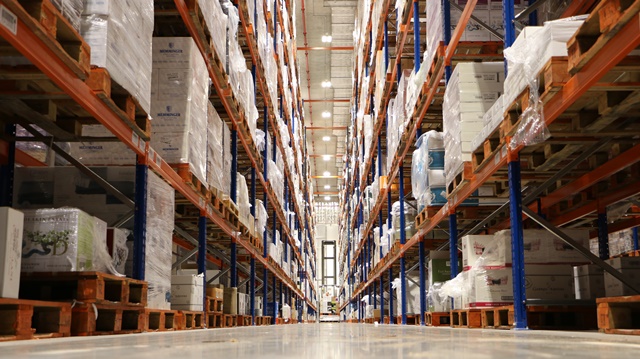
    The period will see a warehouse boom with some 57,000 more distribution centres in operation by then than last year. The continued growth of the e-commerce market and rising customer expectations are putting enormous pressure on warehouses to execute more rapid and flexible deliveries. This is driving investment in warehouse facilities, automation technologies, and warehouse management systems to coordinate and optimise operations.

    “The warehouse is becoming the engine room of the supply chain and is, therefore, a focal point for investment from retailers, manufacturers, and logistics service providers,” said ABI Research principal analyst Nick Finill.

    “As the warehouse technology ecosystem becomes increasingly complex, supply chain operators require more sophisticated management systems that can orchestrate the high volume and variety of intelligent, connected devices and systems within their facilities, as well as the flow of inventory.”

    The firm finds that as the e-commerce boom grows in and extends beyond the established economies of China, Japan, and Korea, the Asia-Pacific will experience the highest growth of warehouse facilities and WMS revenue, becoming the largest market for the software by 2023. The rapid adoption of WMS is also expected in the emerging economies of the Middle East, Africa, and Latin America. Europe and North America will experience strong growth as supply chain operators increase spending on upgraded software systems.

    WMS spending will also vary according to industry verticals. The retail, food and beverage, and manufacturing sectors will be responsible for the highest growth rate as they catch up with more mature verticals, such as logistics service providers.

    ABI’s data suggests AI-driven innovation from WMS market leaders such as JDA Software, High Jump, and Manhattan Associates is enabling substantial flexibility and functionality in WMS and Warehouse Execution Systems, an increasingly important orchestration layer linking high-level management with connected machines. At the device and machine level, greater automation is creating demand for more sophisticated Warehouse Control Systems from major automated material handling solution providers such as Bastian Solutions, Dematic, and Honeywell Intelligrated.

    “The increasing velocity of goods through the supply chain is driving demand for real-time decision making and optimisation,” said Finill. “As the margin for error in the warehouse decreases, AI and ML-enabled WMS solutions are becoming imperative for warehouses that rely on speed, efficiency, and intelligence to remain competitive.”