Tag: Retailers

  • RedBalloon parent’s newest brand targets purpose-driven customers

    RedBalloon parent’s newest brand targets purpose-driven customers

    Naomi Simson’s Big Red Group has partnered with US experience retailer IfOnly to launch the brand of the same name in Australia.

    Like RedBalloon, Big Red Group’s flagship website, IfOnly offers a range of experiences that customers can buy online, from cooking classes to archery lessons to chopper tours of the Yarra Valley.

    The difference is that every listing on IfOnly benefits a cause, with up to 80 per cent of the proceeds going to an associated charity.

    The decision to launch IfOnly in Australia reflects consumers’ rising interest in supporting businesses that do good, according to Big Red Group co-founder Naomi Simson.

    “People in Australia are choosing [based on] what an organisation stands for, not just what it sells. They want to believe that they’re using their consumer dollar for good,” Simson said.

    This trend, sometimes referred to as conscious consumption, is part of the experience economy, which is defined by consumers’ interest in having experiences over buying things.

    “We know there’s a trend of access over ownership, there’s a trend of sustainability. There’s a slight melding, an overlap, between this and the experience economy, but they’re not yet one and the same thing,” Simson said.

    IfOnly taps into several of these trends by combining unique experiences with charitable causes. The site offers a range of experiences with local and world-class experts, celebrities and other noteworthy personalities, from ultra-luxury, bucket list-type offerings to more accessible special outings, with a portion of the proceeds from every experience going to a charity of the luminary’s choosing.

    Some of the listings include a 5-day stay and rhino conservation experience with Kevin Pietersen at the Umganu Lodge in South Africa, which costs $190,000 for eight people and benefits Care for Wild Africa, a meet-and-greet with popstar Ariana Grande and VIP tickets to her Sweetener tour, which costs $5,223 and benefits the GoodCoin Foundation, a $150 donut decorating class with Morgan Hipworth, which benefits the Australian Red Cross, and a $250 private archery lesson from Australian Olympian Alec Potts, which benefits the Movember Foundation.

    “Yes, there are celebrities and thought leaders, but really it’s a groundswell of incredible artisans that are using their skills for good,” Simson said.

    “The experiences don’t all have to be expensive…it’s not about being elitist, or unattainable,” she said.

    More than 20 local charities are set to benefit from the purchase of experiences on IfOnly, including Cancer Council, R U OK?, Starlight Children’s Foundation, OzHarvest and The Sony Foundation.

    Simson herself is offering a $1975 private whisky lesson on a vintage cruiser in Sydney Harbour to support the Cerebral Palsy Alliance, which she is a governor of.

    “My role is to be an ambassador and to raise funds, but there are limited ways to do that. [IfOnly] provides a way for luminaries to support chosen charities,” she said.

    According to IfOnly CEO John Boris, the website has raised millions of dollars for charities in the US and is looking forward to doing the same in Australia through its partnership with the Big Red Group.

    “By combining the Australian experiences market leader with the leader of premium experiences in the US, we are able to bring our unique offering to new audiences and support more causes,” Boris said in a statement about the launch.

    Big Red Group plans to build awareness about the new brand by unlocking access for Australian residents to enter a global sweepstakes to win an experience with The Who and Pearl Jam’s Eddie Vedder at Wembley Stadium in London this July.

    Simson said the company does not plan to promote IfOnly to RedBalloon’s customer database.

    “Just because one person buys something on RedBalloon doesn’t mean they will be an IfOnly customer. We can’t presume they want to hear about it,” she said.

    “Nobody wants to be bombarded with something they didn’t ask for. It’s about respect.”

    The launch of IfOnly follows Big Red Group’s acquisition of the adventure-focused experience marketplace, Adrenaline, in November 2018.

    The company’s brand portfolio now includes RedBalloon, Adrenaline, IfOnly, Marketics, the exclusive distributor of ‘Albert’ AI in Australia, and Redii, a platform to reward employees.

    As a $100 million company, Big Red Group is the largest online aggregator of experiences in Australia and the third largest globally, according to HitWise’s 2018 research.


  • Lulu Group’s Tablez plans 150 More Stores

    Lulu Group’s Tablez plans 150 More Stores

    Abu Dhabi-headquartered Lulu Group’s retail arm Tablez is moving to invest US$75 million into the Indian market with the aim of opening more than 150 stores in the territory by the end of next year.

    The move, if successful, is expected by management to nearly quadruple its market share in India.

    “We plan to exit this year with nearly 100 stores, and we would be scaling up with fresh investments in 2020 to arrive at a portfolio of 150+ stores in India,” said Tablez MD Adeeb Ahamed.

    “We will be adding five more brands – Corir, Desigual, GoSport, YOYOSO and OshKosh, taking the total number of our retail brands across various categories to 13 brands in India by the end of 2019,” he said.

    Tablez has more than 40 stores within India operating in several industry sectors from F&B to fashion.

    “To fuel further growth, we would be deploying about $75 million in capital over the next two years to scale our retail stores, enhance our people building capacity and create backend infrastructure and marketing,” he said.

    Tabelz currently markets a range of international and homegrown brands in the territory.

  • Online fashion retailer Mogu reports Steep Growth Numbers

    Online fashion retailer Mogu reports Steep Growth Numbers

    Chinese online fashion and lifestyle retailer Mogu has reported an 18.7 per cent increase in gross merchandise value (GMV) for the year to March 31, to RMB17.408 billion (US$2.594 billion).

    The company’s revenue for the year reached RMB1.074 billion (US$160.1 million), an increase of 10.4 per cent year on year.

    However the number of active buyers in the year to March remained the same as the previous year, at 32.8 million.

    The company said it live-video broadcast business continued to grow strongly with associated GMV increasing 138.1 per cent year on year.

    “We delivered another quarter of solid growth,” said Qi Chen, Mogu’s chairman and CEO. “During the past quarter, we continued to expand, optimise and elevate the supply chain for our fashion ecosystem by enriching content, increasing user engagement on our live-video broadcasts, and facilitating more repeat repurchases,” he said.

    “Looking ahead, we will continue to strengthen our unique three-way fashion ecosystem by further growing our content creation community of fashion key opinion leaders and live-video broadcast hosts, elevating the fashion-product supply chain and supporting deeper collaboration between merchants and KOLs, and ultimately facilitating greater user and community engagement through rich and high-quality interactive fashion content and products.”

  • Kidsland launches FAO Schwarz store in Beijing

    Kidsland launches FAO Schwarz store in Beijing

    China’s largest toy retailer and distributor Kidsland has introduced FAO Schwarz, an international toy brand store with 157 years of history, in its first Asian flagship store.

    The FAO Shwarz Beijing flagship is located inside the Kidsland flagship store at China World Mall in a prime shopping and lifestyle district.

    Staff wearing soldiers’ uniforms from Grimm’s Fairy Tales are positioned at the entrance to greet and escort customers into the 30,000sqft store, interacting with customers throughout the shopping experience. The store also features “toy demonstrators” who invite customers to play with the toys. The “Toy Soldiers” and demonstrators are overseas-trained and make up 20 per cent of the staff.

    Founded in 1862, FAO Schwarz is one of the oldest toy stores in the world. The brand returned to New York last November with a new 20,000sqft flagship at Rockefeller Center in Manhattan.

    Kidsland has a comprehensive online and offline integrated sales network within China. In December it counted 257 independent stores in 44 cities within the region, along with 519 self-operated consignment counters and 931 distributors covering more than 3000 additional points of sale. Kidsland also represents multiple brands in operating 18 online stores in China.

    “The introduction of FAO into China reflects our confidence in the potential of the Chinese economy and market development,” said chairman and CEO of Kidsland Lee Ching Yiu. “We believe there is strong demand for quality toys among families and young people, so this is an important advantage for Kidsland to provide quality experiential retailing there. In this way, we hope to serve as a bridge, enabling Chinese consumers to experience the latest and best toys in the world.

    “FAO Schwarz plans to open a large flagship and several medium-sized stores in China in the next two years. We will also establish a kidsland experiential retail flagship store, and in the coming one to two years, we will open a mid-sized kidsland retail store to bring an enriched retail experience to wider spectrum of the public.”

  • Vietnamese retailers Growing at a Lightning Fast Pace

    Vietnamese retailers Growing at a Lightning Fast Pace

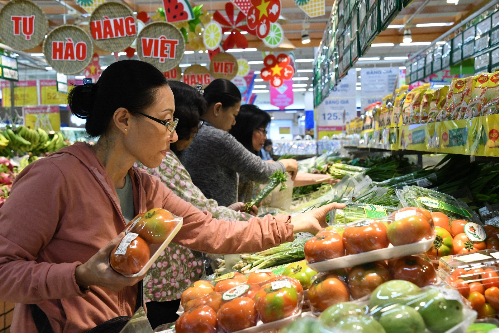
    Local retail firms are expanding quickly while foreign counterparts stagnate or quit due to fierce competition. The number of convenience stores in the country from April last year to April this year had risen by 72 percent year-on-year to over 3,100, according to Ho Chi Minh City market research firm Q&Me. That means 1,300 convenience stores came to the market in just one year.

    Half of them, 660, came from Vinmart+, a convenience store chain of Vietnam’s largest conglomerate Vingroup. This is a growth of 82 percent. In the same period, supermarket chain Vinmart saw its number of store risen by 82 percent to 120 outlets.

    Bach Hoa Xanh, a retail unit of the country’s major phone seller Mobile World (MWG), now has over 500 department stores after incorporated in 2015. It is seeing strong growth with VND4.3 trillion ($184 million) in revenue last year, three times that of 2017.

    The market has recently seen strong merger and acquisition activities, with Vingroup’s retail arm VinCommerce buying out convenience store chain Shop&Go last month and supermarket chain Fivimart last October.

    Vietnam’s retail market has become increasingly crowded with both local and international players over the last five years. Although experts have said that the market has a lot of growth potential, many foreign businesses have quit or scaling back expansion plans.

    French supermarket group Auchan Retail might be the newest player to withdraw from the market.

    Auchan’s 15 out of 18 supermarkets will stop operating on June 3. Its CEO Edgar Bonte said that their business in Vietnam generated revenues of 45 million euros ($50.4 million) last year, but was making losses. He did not provide figures of the losses.

    A source from the company, who wished not to be named, said the firm is negotiating with a few retailers to sell the outlets and the negotiations “are expected to end before Auchan withdraws from Vietnam early next month.”

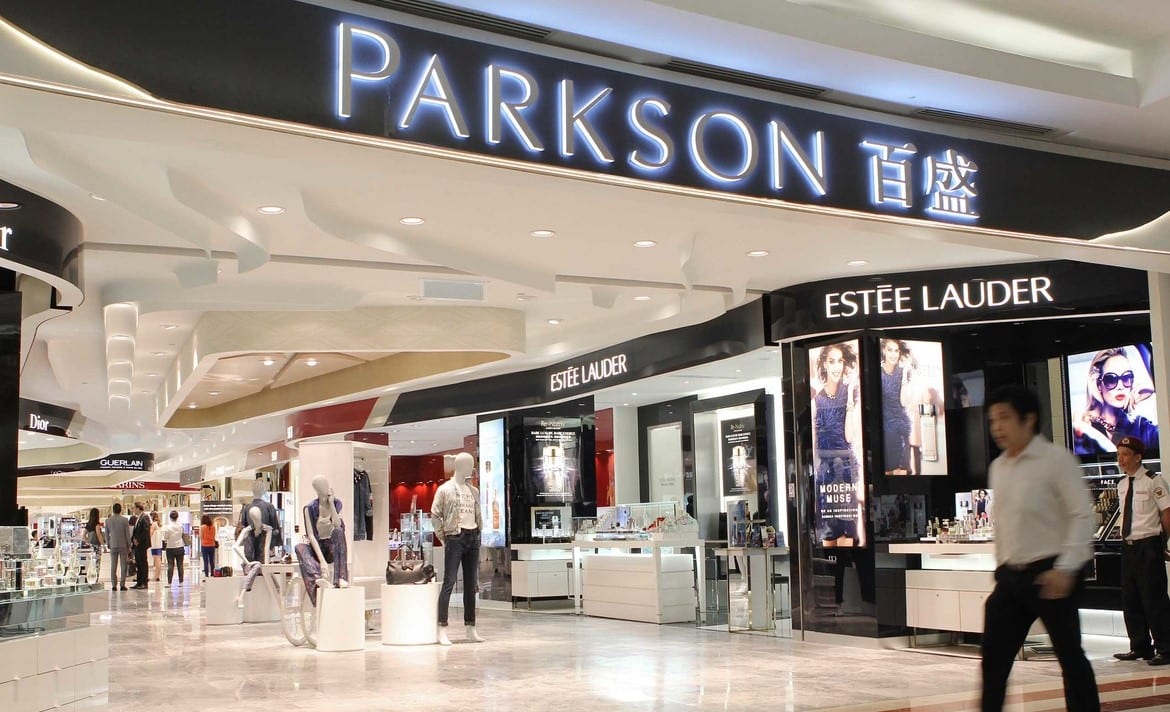
    Germany-headquartered Metro was sold to a Thai investor in 2014 and disappeared from the market ever since, while Malaysia’s Parkson has been closing down its malls since 2015.

    Other convenience store chain has failed or will unlikely meet its initial expansion target. Japanese Ministop had only 115 stores as of April, even though it had planned to have 800 by last year.

    Japanese convenience store chain FamilyMart saw its store number dropped by nine to 151 from last April to this April, while its initial plan was to have 1,000 stores by next year.

    Vietnam’s revenue from selling goods last year rose by 11.7 percent from 2017 to $142 billion, up 12.4 percent from 2017.

  • HKairportshop.com offers ‘world’s fastest airport pickup’ for Ecommerce Shoppers

    HKairportshop.com offers ‘world’s fastest airport pickup’ for Ecommerce Shoppers

    Hong Kong International Airport’s one-stop online-shopping platform HKairportshop.com is making orders purchased via the platform ready for pickup at the airport 90 minutes after the purchase is made – including duty-free hard liquor.

    The e-commerce platform brings together more than 3000 products including popular makeup and fragrances, travel exclusive collections, wines, electronic goods, souvenirs and HKIA’s exclusive smart luggage tag MyTag – which alerts passengers of their arriving bags when paired with the HKG My Flight app.

    The site is now offering travellers who spend more than HKD1000 (US$127.40) on the platform a saving of HKD200 ($25.48) when they use the promo code “UP200” from now till June 30.

  • Global food e-commerce sales forecasted to Triple

    Global food e-commerce sales forecasted to Triple

    A new report has forecasted global food e-commerce sales to nearly triple through 2023, rising to US$321 billion and accounting for nearly 5 percent of total e-commerce revenues.

    The Global Food E-Commerce report, released by market research firm Packaged Facts, projects the Asia Pacific region will account for the majority of absolute growth, primarily due to the rapidly expanding Chinese market.

    China dominates regional e-grocery activity in part because of the country’s large urban population and rapidly expanding the middle class. In addition, much of China’s large population has access to high-tech devices and the ability to shop online, due to the country’s position at the forefront of technological development and electronics.

    Last year, more than 75 percent of global food e-commerce sales were concentrated in the top five markets: China, the US, Japan, the UK, and South Korea. In each of these countries, e-grocery spending is highest in large urban centers, where many retailers have focused their marketing efforts for home delivery or click-and-collect services.

    The report states that through 2023, demand growth in these countries will be driven by five key factors: increasing comfort among existing online shoppers in making routine grocery purchases online; growing use of subscriptions and memberships with online retailers; greater penetration of broadband internet in rural and remote areas; greater acceptance of (and investment in) home delivery, click-and-collect, and drive order fulfillment formats in an increasingly omnichannel retail environment; and improvements to data security that ease consumer fears about having their personal information stolen while shopping online.

  • Inclusive design could help retailers o make more Profits

    Inclusive design could help retailers o make more Profits

    Businesses could generate an extra $4 billion in revenue and reach more consumers if they built products and services with an inclusive design in mind.

    That is according to new research from Adobe, Microsoft, PwC and Australia’s Centre for Inclusive Design released this week in PwC’s report, The Benefit of Designing for Everyone.

    The report reveals that five million Australians are unable to access products and services because of poor design, and yet they possess over $40 billion in annual disposable income.

    This number includes people living with a disability and seniors, however, there are millions of Australians who are also vulnerable to exclusion due to location, gender, ethnicity or financial status.

    Within the retail products sector, up to 20 percent of Australians are unable to access and use goods appropriately, the PwC report states. Retailers could promote accessibility and improve the user experience for more consumers by using inclusive design.

    This means keeping in mind the needs of people who have disabilities when designing products. Last year, for instance, Coles introduced an autism spectrum-friendly low-sensory “Quiet Hour” experience in 173 of its stores.

    “The initiative has not only impacted shoppers with autism but also shoppers who want peace and quiet while they shop,” the report states.

    The benefit of inclusive design is that the products ultimately cater to a wide audience, not simply those with special needs. As the report noted, various retail products that were originally designed with edge users in mind are now used by a wide majority of consumers.

    “Electric toothbrushes were created for patients with limited motor skills but have also become popular with consumers who don’t have this issue,” PwC said.

    “Design that considers the full range of human diversity with respect to ability, language, culture, gender, age and other forms of human difference means more people are included,” said Dr Manisha Amin, CEO of the Centre for Inclusive Design.

    “We commissioned the research to identify and determine the necessary means by which Australia can act to reduce these gaps.”

  • Amazon Helps Deliveroo with $835m in funding round

    Amazon Helps Deliveroo with $835m in funding round

    Deliveroo on Friday announced it is looking to raise US$575 million ($835 million) in a Series G funding round, bringing its total investment to date to US$1.53 billion ($2.22 billion).

    Amazon is set to be the largest investor in the round, alongside existing investors T. Rowe Price, Fidelity Management and Research Company and Greenoaks.

    The food delivery company said it will use the capital to grow the tech team at its UK headquarters, expand its delivery reach to add new customers and continue to innovate its delivery-only kitchen concept, Deliveroo Editions.

    The company also plans to develop new products to give customers a more personalized experience, increase support for its restaurant partners and provide riders with new tools for flexible and well-paid work.

    “This new investment will help Deliveroo to grow and to offer customers even more choice, tailored to their personal tastes, offer restaurants greater opportunities to grow and expand their businesses, and to create more flexible, well-paid work for riders,” Will Shu, founder, and CEO of Deliveroo, said in a statement about the funding round.

    Shu said he was looking forward to working with Amazon.

    “Amazon has been an inspiration to me personally and to the company, and we look forward to working with such a customer-obsessed organization.

    The company said the investment will benefit restaurants, by helping them grow their business, and riders, by giving them more work. Deliveroo has been a leader in offering perks and protections in the emerging gig economy.

    Deliveroo in Australia last year partnered with Whitelion to help long-term unemployed young people to work and collaborated with Open Classrooms to give riders free access to hundreds of online courses for professional development.

    “We’re impressed with Deliveroo’s approach, and their dedication to providing customers with an ever increasing selection of great restaurants along with convenient delivery options,” said Doug Gurr, Amazon UK country manager.

    “Will and his team have built an innovative technology and service, and we’re excited to see what they do next.”

  • Parkson Retail to open store above Chinese railway station

    Parkson Retail to open store above Chinese railway station

    Parkson Retail Group is preparing to occupy a complex above Nanjing Railway Station in Chinese Jiangxi.

    The group, a Hong Kong-listed firm controlled by Malaysian Parkson Holdings Bhd, won its US$6.1 million bid for the tenancy of buildings above the Bayi Guan Station of the Nanchang Rail Transit Line 1 in the city.

    The 12-year tenancy will allow a 42,903sqm retail space for the firm, although no formal agreement on the tenancy has been signed as of yet.

    A statement from the firm read: “The tenancy, if materialised, may constitute a discloseable transaction for PRGL,” given its alignment with the firm’s development strategy for the province.

  • Zara’s local profit after E-commerce Launch

    Zara’s local profit after E-commerce Launch

    Inditex Group’s Australian business, Group Zara Australia, posted a 35 percent increase in net profit for the year ending January 31, 2019, lifting the figure from $8.9 million to $12 million, according to documents lodged with the Australian Securities & Investments Commission.

    This came off the back of strong sales growth, with Zara’s full-year revenue in Australia grew 10.5 percent to $311.7 million, up from $282 million in the previous corresponding period.

    This is due in part to the launch of Zara’s local e-commerce site in Australia and New Zealand in 2018, which opened up a new sales channel for the business and gave more customers the ability to shop with the fashion brand.

    Zara’s parent company Inditex launched online stores in a further 106 markets in November last year, which led to a group-wide online sales increase of 27 percent to $5.19 billion (€3.2 billion) – contributing 12 percent of group net sales for the year.

    Zara had 21 stores in Australia on January 31, 2019, including 19 Zara and two Zara Home stores.

    In a statement about its full-year earnings, Inditex highlighted the growing risk fast fashion brands face of being perceived by stakeholders, including customers, employees, shareholders, suppliers and society in general, as unsustainable.

    The retail giant noted that it was ranked as the ‘most sustainable company in the global retailing industry’ by the Dow Jones Sustainability Index for the third straight year based on the progress it has made in its environmental strategic plan and laid out various initiatives it is undertaking to lessen its impact on the planet.

    These include gaining greater control over the materials used in the creation of its products, reducing the amount of water used in its supply chain and using energy efficiently.

    Additionally, in September of last year, Inditex piloted an at-home pick-up service for recycled garments in China, an initiative that is already operating in Spain, though has yet to make it to Australian shores.

    Inditex is far from the only fashion retailer tackling the issue of sustainability. The Iconic recently launching Considered, an initiative that allows customers to more easily filter products based on their own personal values, such as sustainable materials, eco-production, fair production, animal-friendly, and community engagement.

    Swedish fashion retailer H&M has also committed to add more information to its website to allow customers to understand where its products come from – a move to create greater product transparency.

  • Turning data into information in the age of IoT

    Turning data into information in the age of IoT

    If you think about what your home was like even just a few years ago, life was very different.

    Think about what grocery shopping was like. You’d open your fridge door to check out what’s missing, scribble down on a notebook a shopping list of what you need, turn off the aircon and switch on the alarm before you left the house and leave.

    Now, your smart fridge automatically knows when you’re running low on milk and will order the specific brand and size that you prefer and have it delivered to your front door. Left home and forgot to switch the aircon or alarm on or off? Simply view the app on your smartphone and tap your appliances on or off.

    Known as the Internet of Things (IoT), people are consuming information from more connected devices and as a result, marketing practices are rapidly changing. Retailers need to learn how to speak to customers through more channels than before.

    As IRI’s product solution director Adam Fisher explains, while more devices are creating more communication, marketers are getting blocked where they weren’t before. What happens when your fridge starts ordering groceries for you? Where a marketer could previously capture customers at the shelf in a grocery store, they now need to work out how to get your attention when the fridge automatically orders milk to your doorstep.

    “From a marketer’s standpoint, there are so many devices vying for people’s attention —How do you get the right person’s attention at the right time?” Fisher says.

    According to Fisher, one of the biggest challenges for retailers is knowing how to turn all the data into actionable information.

    “It’s knowing how do I bring [the information] in, how do I make sense of it, but on top of that, how do I know when I need to do something when it’s signalling something?” he points out.

    Marketing automation can give brands more insights and data into how people are responding to these different channels and how they should be approached, suggests Fisher. It’s one of the biggest trends in retail today

    and can help businesses engage with their customers by programmatically finding the optimal marketing and promotional activities for defined customer segments.

    A major benefit of IoT is the fact that based on all this new information from devices, brands and retailers are able to bring products to market faster, allowing them to keep up with the ever-changing retail landscape.

    However, it is vital that businesses have the right infrastructure in place in order to deliver real business growth.

    Fisher says: “It is important that they have the technology and right partner in place. In order to do this, brands and retailers will have to combine mobile and cloud technology infrastructure and go entirely digital to build a new business model by connecting people, things, processes, and data to keep up with technological innovation. That is the essence of what we do at IRI, is connecting the dots to help make faster and stronger business decisions.”

  • Singapore retail sales lags last Month

    Singapore retail sales lags last Month

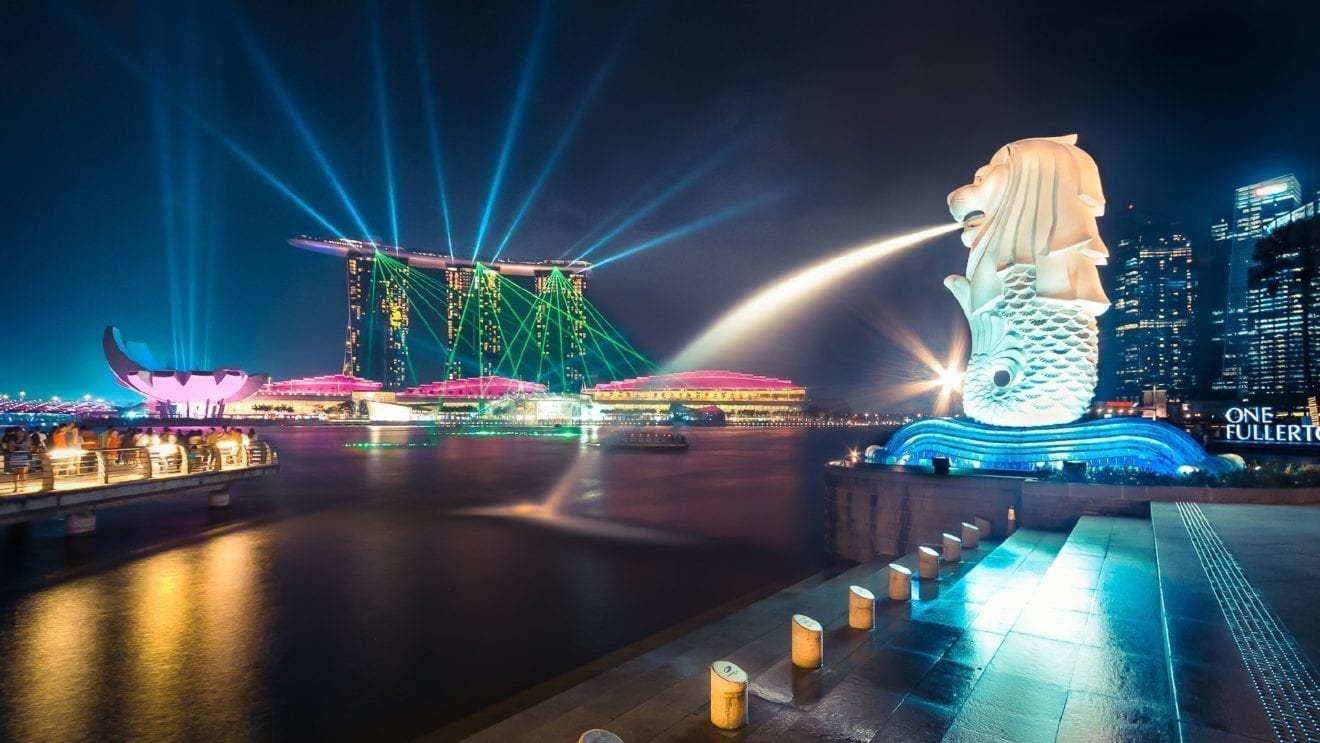
    Singapore retail sales slid by 1.5 percent in March, after excluding motor vehicle sales from the data. According to Statistics Singapore, most retail categories recorded lower sales for the month compared with the same period last year. Sales of optical goods and books fell by 6.4 percent and of computers and telecommunications equipment by 4.9 percent.

    Food retailers, watch and jewelry retailers, and department stores reported sales declines of between 4.6 percent and 5.7 percent.

    In contrast, sales of medical goods and toiletries rose by 2.8 percent, due in part to higher demand for cosmetics. Supermarkets and hypermarkets registered sales growth of 0.9 percent.

    Month on month, Singapore retail sales were essentially stable.

    The total market for March was estimated at $3.8 billion, with online sales comprising about 5.3 per cent.

    Year-on-year sales of food and beverage services in Singapore rose by 0.7 percent in March.

    On a seasonally adjusted basis, sales of food and beverage services increased 1.3 percent month on month.

    Total sales value for the sector was $868 million, compared to $863 million in March last year.

  • Hong Kong online retailers ‘ignoring’ Gen Z consumer needs

    Hong Kong online retailers ‘ignoring’ Gen Z consumer needs

    Hong Kong online retailers are ignoring Gen Z consumers, according to a new report on the local payments market by unified commerce platform Tofugear and financial technology firm Wirecard.

    The research found that the territory’s e-commerce sites are not catering to Gen Z consumers when it comes to the payment options they offer.

    In contrast to older millennial and Gen X consumers, credit-card ownership rates among this demographic – those born between 1997 and 2012 – are low. As a result, one in three Gen Z consumers (35 percent) prefer to make online purchases via a cash-on-delivery option.

    The Digital Payments Landscape in Hong Kong 2019 report finds that while Hong Kong online retailers such as Zalora are already catering to this trend, they are in the minority as only around 5 percent of all retailers in the territory offer a cash-on-delivery option for online purchases.

    “Retailers should ignore Gen Z at their own peril,” says Tiffany Lung, retail analyst at Tofugear.  “Much focus has been on millennials, but the consumer behaviors of Gen Z are radically different – particularly when it comes to payment preferences. They think traditional payment methods are as lame as Facebook.”

    Digital wallets such as AlipayHK are also an important means of transaction for this young demographic, with 86 percent using this payment method – typically for purchases of less than HK$500.

    “Rather than passively waiting for years to qualify for a credit card like millennials have done, Gen Z has been much more proactive,” says Lung. “They have turned to digital wallets to solve the barriers they face when it comes to in-store and online payments. I believe this habit will stay with them as they come of age.”

    Based on a survey of 1000 Hongkongers, the report compares the payment habits of Gen Z, millennial and Gen X consumers and finds that while many perceive Hong Kong to be a laggard when it comes to smart payments, there is a genuine willingness to adopt new payment methods such as digital wallets – regardless of the consumer’s age.

    “After years of complacency, the payments ecosystem in Hong Kong is finally waking up to the fact that cash might be knocked off its throne – or at least see its dominance challenged by a plethora of new payment methods,” says Lung.

    Alongside the consumer survey, key players in Hong Kong’s digital payment industry were interviewed including Google Pay, Octopus Card, TNG FinTech Group, BBPOS Merchant Services, as well as online retailers such as Zalora and SkyMart.

  • Singapore retail sales slipped last Month

    Singapore retail sales slipped last Month

    Singapore retail sales slid by 1.5 percent in March, after excluding motor vehicle sales from the data.

    According to Statistics Singapore, most retail categories recorded lower sales for the month compared with the same period last year.

    Sales of optical goods and books fell by 6.4 percent and of computers and telecommunications equipment by 4.9 percent.

    Food retailers, watch and jewelry retailers, and department stores reported sales declines of between 4.6 percent and 5.7 percent.

    In contrast, sales of medical goods and toiletries rose by 2.8 percent, due in part to higher demand for cosmetics. Supermarkets and hypermarkets registered sales growth of 0.9 percent.

    Month on month, Singapore retail sales were essentially stable.

    The total market for March was estimated at $3.8 billion, with online sales comprising about 5.3 percent.

    Year-on-year sales of food and beverage services in Singapore rose by 0.7 percent in March.

    On a seasonally adjusted basis, sales of food and beverage services increased 1.3 percent month on month.

    Total sales value for the sector was $868 million, compared to $863 million in March last year.