Tag: Retailers

  • Ito Yokado To Accelerate Expansion In Mainland China

    Ito Yokado To Accelerate Expansion In Mainland China

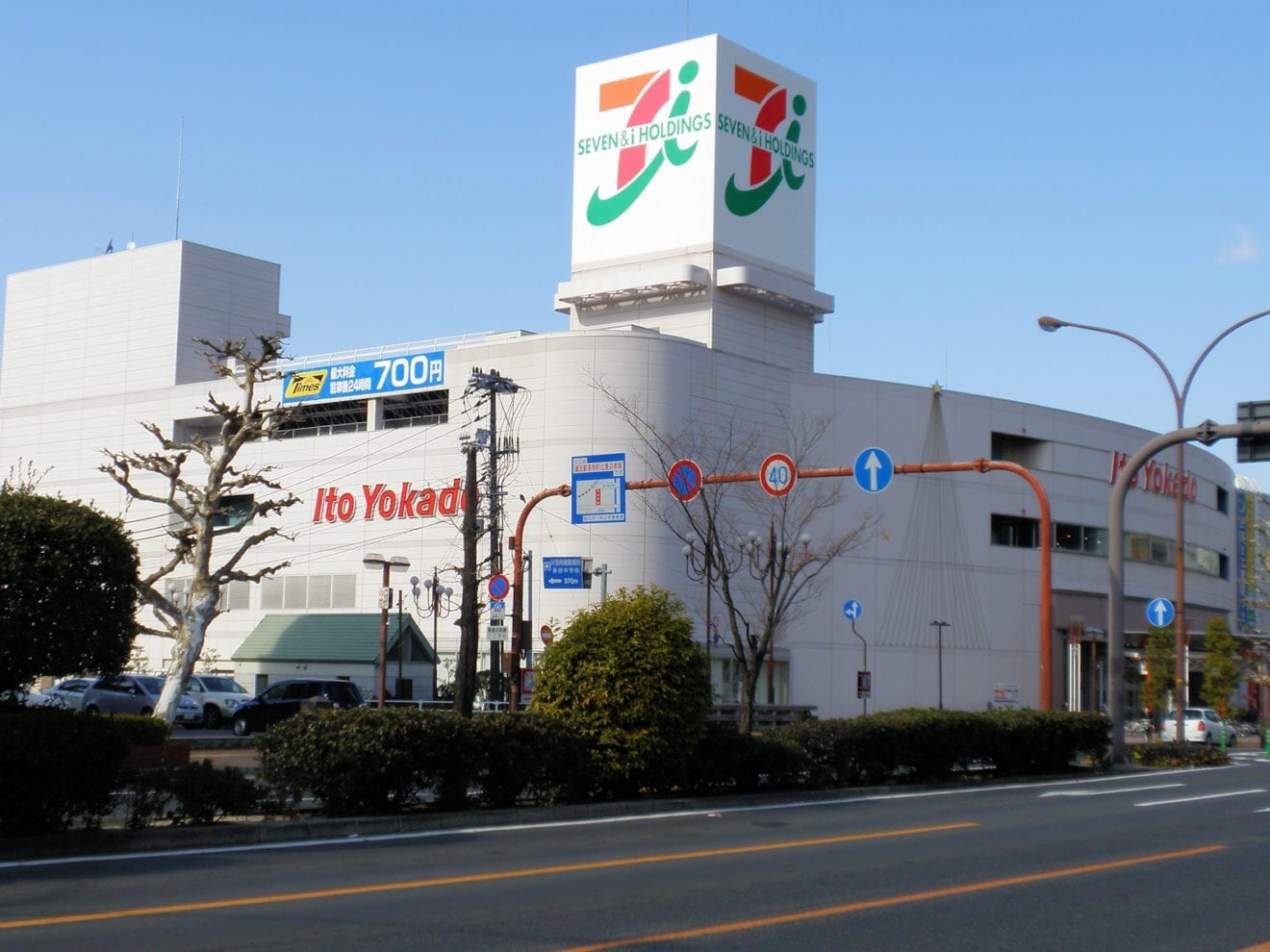
    Seven & I Holdings, parent company of Ito Yokado, will accelerate store expansion in the Chinese mainland market and plans to have 20 stores by 2020, tripling their current number in China.

    Ito Yokado entered the Chinese mainland market in 1997, with its first store openning in Chengdu, Sichuan province. In 1998, the company entered the Beijing market. At present, Ito Yokado has six stores in Chengdu and two in Beijing.

    On January 12, 2017, Ito Yokado opened a new store in Sichuan’s Meishan city and the company plans to launch another new store in Sichuan’s Leshan city in 2019. According to Ito Yokado, the company will increase the number of its general merchandise stores and food supermarkets to ten in Sichuan.

    In 2005, Ito Yokado opened its first food supermarket in Beijing. However, due to the severe competition from foreign supermarket giants like Carrefour and Chinese local enterprises, the Japanese retailer ceased the operations of this food supermarket in December 2016 and only maintains two department stores in the capital city.

    In addition, with the rapid development of e-commerce in China, Ito Yokado also plans to tap the online business. The company will establish a new company in Sichuan this summer and it aims to achieve sales of JPY10 billion by 2020 via online sales.

  • Local retailers must prioritize selling online for 2017

    Local retailers must prioritize selling online for 2017

    As first blush, the arrival of transnational retailers in the metropolitan centres of Vietnam appears to be a boon for consumers who want wider choices and a death sentence for local retailers, most of whom are small.

    These local smallholders suddenly find themselves facing foreign rivals wielding a daunting array of advantages including – substantial financial resources, advanced technology, superior products, powerful brands, and professional staffs with seasoned marketing and management skills.

    Most of these small business owners think they cannot compete with their larger foreign rivals and are left calling on the government to reinstate trade barriers or provide some other form of support.

    Still others seek strategic alliances with the so-called ‘big and mighty’ transnationals, while a significant number of local companies just throw in the towel and shutter their doors.

    But experts advise that small retailers by the tens of thousands around the globe have managed to develop winning strategies to successfully defend their home turf against the same brand name transnational retailers the likes of Lotte, AEON, MM Mega Market and Big C that are gaining market entry into Vietnam.

    Defending with the Home Field Advantage

    The key to success say the owners of these small but successful companies is to concentrate on the advantages they enjoy in their home market.

    In the face of aggressive and well-endowed foreign competitors, they with near unanimity suggest to local retailers that they will do better by focusing on consumers who appreciate the local touch and ignoring those who favour global brands.

    Give effect to a strategy that concentrates on the large group of consumers who remain loyal to traditional products and stock the store shelves with brands positioned around beliefs in long-standing Vietnamese ingredients.

    Recognize the importance of Online Sales

    Recognize that the internet continues to attain more and more users with each passing month and online sales is growing faster than any other retail sector in Vietnam, say the experts. Local retailers should expect this trend to continue and recognize that their business needs to be part of it.

    The internet is growing very fast in Vietnam, says Vu Xuan Truong from the Institute for Brand and Competitiveness strategy. Nearly 50 million Vietnamese use the internet frequently to make purchases and internet sales are on a steep upward trajectory.

    With more than 60% of today’s youth shopping online and that percentage expected to grow at an astronomically fast rate, local retailers in Vietnam cannot afford to underestimate the importance of selling online.

    Truong says that 2017 should be the year that all local retailers throughout the country set up shop online and discover how to drive online domestic sales and access new export markets via social media, search engine optimization and ecommerce.

    Local retailers need to understand that the internet is the biggest supermarket in the country (and the globe). If they want to compete in retail with the large transnational retailers making market entry into Vietnam— they must be online.

    Truong adds that if they are not online, they simply cannot win in retail in Vietnam or anywhere around the globe.

    Though selling products online may seem a little daunting at first, a beautifully designed and developed website is indispensable for all local retailers in Vietnam, says Le Doan Hop, president of the Digital Communications Society.

    Local retailers must learn to master web technology to help their businesses increase sales utilizing an effective ecommerce online sales strategy if they are to successfully compete with the large transnational retail giants in this digital age, Hop concludes.

  • Korean sales +30.9% to $10.6bn as growth slows

    Korean sales +30.9% to $10.6bn as growth slows

    South Korea’s duty free industry saw total sales grow by +30.9% or $2.5bn to a record-breaking $10.6bn in 2016, although senior sources in Seoul tell TRBusiness that sales growth is expected to slow to between 10% to 15% in 2017 – resulting in incremental sales of between $1bn to $1.5bn.

    These estimates nevertheless assume that foreign tourist numbers (primarily Mainland Chinese) continue to increase in 2017 as expected.

    According to senior sources in Seoul, foreign visitors’ duty free purchases amounted to US$7.6bn in 2016, accounting for 72% of South Korea’s total US$10.6bn purchases last year. This sales result includes contributions from all airport, seaport and downtown shops (including internet) sales and ‘domestic duty free’ sales on Jeju Island, although it excludes inflight duty free sales.

    BIG CHINESE TOURIST DEPENDENCY

    Highlighting the dependence on foreign tourists for duty free growth, South Korean travellers’ share of sales came in at $2.9bn last year, which was equivalent to 28% of the national duty free revenue total.

    “In 2015 we had a big impact from MERS on our duty free market from July to October, then the market recovered from November. It meant half of 2015 was impacted by MERS so we had a big 31% sales increase last year,” said a senior industry duty free source in Seoul.

    He told : “Sales to foreign tourists increased about 40% last year in value, about 80% of them are Chinese; but sales to South Korean travellers saw only a 9.7% increase.

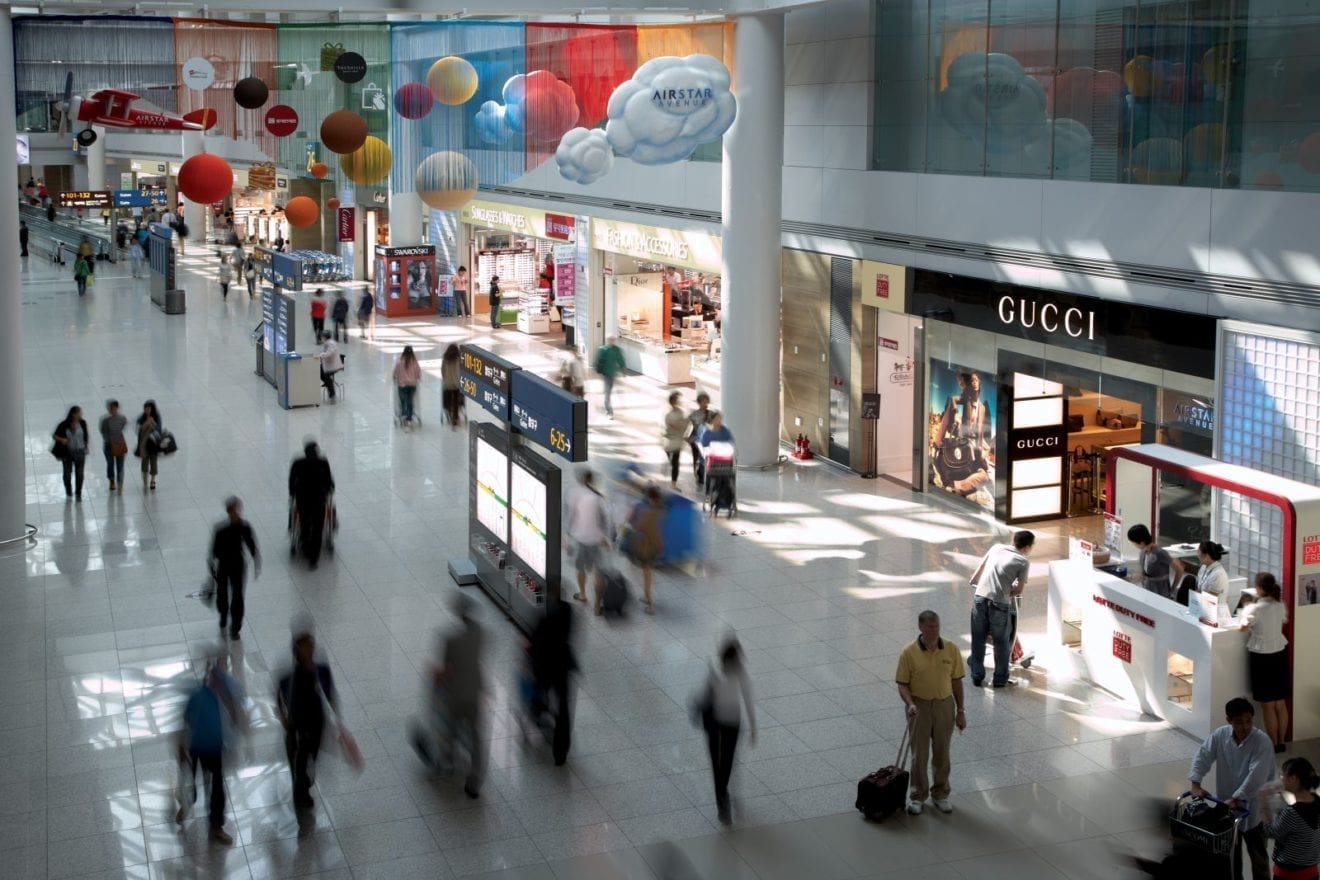
    A busy cosmetics counter at the Lotte World Tower duty free shop in Seoul.

    Meanwhile, per capita duty free spending amongst foreign visitors grew last year, allaying fears among duty free operators that changes made to China’s luxury goods import regulations in April might force a reduction in individual spending.

    20.6M FOREIGNERS BOUGHT DUTY FREE

    According to industry figures, a total of 20.6m foreign visitors bought duty free products in South Korea last year – a rise of 28% compared to those purchasing in 2015.

    In addition, 27.9m South Koreans purchased duty free goods last year – an increase of 13.6% compared to 2015.

    “Sales to foreign customers increased 40% in value and the number of foreign customers rose by 28%, so total per capita spending by foreign visitors increased last year,” said the source.

    By contrast, South Korean per capita customer spending slowed slightly in 2016 as total South Korean duty free purchases rose by 9.8% in value, although this was less than the rise in the number of customers making purchases.

    As expected, perfume and cosmetics continues to dominate as South Korea’s largest duty free category accounting for more than 50% of duty free sales, with Lotte Duty Free – the country’s leading operator – generating total sales of $5.7bn, of which perfume and cosmetics sales accounted for almost $3bn. These sales included all of Lotte’s various downtown and airport stores.

    HOTEL SHILLA SALES REACHED $2.6BN

    Hotel Shilla Duty Free was the next biggest operation with total sales registering $2.6bn in 2016 (not including its HDC Shilla joint venture in Seoul) and once again, perfume and cosmetics accounted for a large share of revenue.

    Other South Korean duty free operators – including new entrants to the industry – also registered good P&C sales, with many finding it easier to arrange supply deals with local cosmetics manufacturers rather than international brand suppliers.

    “The numbers are incredible; cosmetics is the number one item for Chinese visitors,” said the senior source. “South Korean cosmetics brands are about 60% of the purchases and imported cosmetics are 40%. South Korean cosmetics are very good quality and the prices are reasonable.

    “South Korean cosmetics companies are developing products to please East Asian customers, as their skin texture is different. They know what products Chinese visitors are looking for. South Korean face mask products are very famous with Chinese customers.

    SOUTH KOREAN COSMETICS GROWTH

    “The other thing is the price gap between the South Korean and Chinese markets. There are big perfume and cosmetics import tariffs in China; also, Chinese people do not trust products made in China, as there are many fake products.”

    While duty free operators are obviously happy to see products fly off the shelves, a number of perfume and cosmetics brands and luxury goods brands have started to limit the volumes sold to individual customers, as suspicions grow amongst some suppliers that not all these purchases are for personal use.

    ‘SURROGATE SHOPPERS’ ARE A CONCERN…

    “Many people are saying that a significant ratio of purchases are by surrogate shoppers,” said the source. “As foreign brands begin to withdraw from China, so mainland tour companies are sending tourists here to buy luxury branded goods and pay them a commission for buying.

    “The travel companies collect these products for re-sale in China, as there is a 30% to 40% price gap between South Korea and China because of the luxury goods tariffs. Chinese wholesalers organise these purchasing trips; they’re common now.”

    Individual brand product purchasing limits also vary, with most international P&C brands – along with top South Korean brands – limiting the number of pieces sold to individual customers to five items. For luxury fashion goods and accessories, many international brands also limit purchases to one or two items per customer.

    “The purchase limits are set by the brands, not the operators; the operators only think of profit. It’s the same around the world,” the source remarked.

    Foreign visitors are the major customers in South Korea’s downtown duty free stores, spending $6.4bn in downtown outlets in 2016, a huge figure which is five times the value of foreign traveller purchases worth $1.1bn in airport duty free shops last year.

    AIRPORT SALES EQUALLY DIVIDED

    Foreign and South Korean customers each accounted for half of the country’s total airport duty free sales that were worth $2.4 billion in total in 2016, of which the major share was recorded at Incheon International Airport.

    South Korean customer purchases were divided equally between downtown and airport shops, with spending reaching $1.3bn in the country’s downtown stores and $1.2bn in international airport shops last year, plus almost $500m was spent in Jeju Island’s domestic airport and seaport duty free shops.

    Foreign visitors accounted for 83% of all downtown store duty free purchases worth a total of $7.7bn in 2016, according to industry figures. Outbound South Korean traveller purchases accounted for just 17% of downtown duty free stores’ overall sales and included online and internet purchases estimated to account for 25% to 30% of total downtown revenue.

    More than 80% of purchases in almost all downtown duty free stores in South Korea were made by foreign customers (primarily Mainland Chinese) with the exception of the Shinsegae Duty Free and Lotte Duty Free Busan downtown shops, where South Korean customers accounted for 48% and 34% of purchases respectively.

    In addition, foreign visitors accounted for 71% of total sales in South Korea’s various SME downtown duty free stores, which recorded combined total sales worth $68m last year, a sales total equivalent to less than 1% of the nation’s total duty free revenue.

    Meanwhile, government policy to increase the number of duty free operator licenses in an effort to reduce large conglomerates’ dominance of the domestic duty free market has led to increased competition.


    LOUIS VUITTON STILL DELIVERS…

    “Last year there were 8m Chinese visitors to South Korea,” said the source. “South Korea’s duty free market is very concentrated and it’s difficult to make money as travel agents dominate an important share of the market. If they do not send tourists here there will be no group tour sales, so they receive huge a commission from South Korean duty free operators.

    “Two to three years ago the maximum commission paid was 20% for group tour customers, but nowadays over 30% is being paid. It’s impacting on operator profits. Most small operators and new starters cannot expect a profit – it’s a severe and critical problem in this market.”

    This follows the opening of new downtown stores in Seoul over the past 18 months by Shinsegae Duty Free, HDC Shilla, Doota (Doosan), Hanwha Galleria and SM Duty Free and another four downtown stores are also scheduled to open this year.

    As reported, Lotte has only recently reopened its Lotte World Tower store after winning a new downtown license, while three completely new downtown stores are scheduled to open in the capital city.

    DIPLOMATIC FALL OUT DUE TO MISSILE DEFENCE SYSTEM

    Work is underway preparing the Shinsegae Kangnam and Hyundai CO-EX duty free stores that are scheduled to open in Seoul’s growing southern area by the end of 2017 – along with the SME Top City Sincheon (City Plus) store in the capital’s western region.

    Meanwhile, one large dark cloud on the horizon is the deterioration in South Korea’s current diplomatic relations with China, which are causing serious concern for duty free operators.

    This has resulted in a dramatic reduction of Chinese visitor arrivals in both November and December, according to the Korea Tourism Organization.

    At the same time, South Korea’s current domestic political crisis, after the National Assembly voted to impeach Park Geun Hye over corruption allegations, has left the country in a leaderless limbo with no major statesperson in place to handle the escalating dispute with China – until new presidential elections in the spring of this year.

    GROUP TOUR NUMBERS ARE SUFFERING

    Some operators say this dispute has already prompted Beijing to quietly reduce group tour numbers visiting South Korea in January, as a clear warning that it means business with its protest against Seoul installing the proposed Terminal High Altitude Area Defense (THAAD) defence system.

    “South Korea’s duty free market should be increasing this year by 10% to 15%, but already in January we are losing the group tour market. We have already felt impact from South Korea and China’s tension,” said the source.

    “We will have presidential elections in April or May. Now there is no president as President Park is impeached and the South Korean government cannot react to China properly.

    “For the first half of 2017 we will be impacted by the China group tours situation. Also, Chinese customers are getting smarter and they are looking not only for luxury products, but reasonably-priced products and leveraging down their spend.”

  • Singapore businesses eye growth in China despite slowdown

    Singapore businesses eye growth in China despite slowdown

    Singapore brands continue to eye growth in China despite increased domestic competition, higher costs and a slowdown in the world’s second-largest economy.

    For some, China provides an alternate avenue for growth in sectors such as property and retail, helping to buffer lower-performing regions.

    Other Singapore companies in sectors that have taken harder hits recently, such as manufacturing, have been reassessing and realigning their business models to stay competitive.

    China is, after all, “too large a market for ambitious foreign investors to ignore” despite having lost some shine, said Mr Chio Kian Huat, CEO of accounting and business advisory group Stone Forest.

    This is especially so as the central government continues its crackdown on corruption and improves the transparency and predictability of doing business in China, said Ernst & Young Asia Pacific transaction advisory services leader, Harsha Basnayake.

    For CapitaLand, diversification in China has provided “respite from weakness in the Singapore property market”, said Maybank Kim Eng analyst Derrick Heng.

    The real estate developer has increased its presence in China over the years with the country accounting for 45 per cent of its asset base today, up from just six per cent in the early 2000s, Mr Heng told The Business Times.

    “With robust China home sales in recent years… we expect strong earnings contribution from the country in the next one to two years,” he said.

    CapitaLand Retail China Trust Management Limited (CRCTML), the manager of CapitaLand Retail China Trust, announced its 2016 Q4 net property income (NPI) on Jan 26, bringing the NPI for the whole of 2016 to a total of RMB669.8 million (S$139 million) – 4.1 per cent higher than in 2015.

    “We remain positive that CRCT’s portfolio of family-oriented shopping malls will continue to benefit from China’s growing urban population and rising retail sales,” said CRCTML chairman Victor Liew.

    Singapore-based beauty products seller Best World International is also projecting growth in China, its second largest market.

    China contributed 30 per cent of the group’s revenue as of the third quarter of 2016, after growing more than 200 per cent year-on-year, and the company is aiming to grow its sales in China eight-fold from 2016 to 2020, said Maybank Kim Eng analyst John Cheong.

    “Demand for Best’s products has not been impacted by the general slowdown, its products continue to gain traction from a low base, market expansion in China and increase in popularity from the recent approval of its direct selling licence,” he said.

    In announcing the licence approval in November, which allows Best World to conduct direct selling in Hangzhou, group co-chairman and president Doreen Tan said Best World is “cautiously optimistic” about its China growth prospects in the next five to eight years.

    “We will continue to expand the geographical coverage of our direct selling licence, drive membership growth through more marketing activities and introduce new products and services,” she said.

    Those in manufacturing have not been as fortunate – labour costs in China have been increasing at an average of 20 per cent annually for the past four years, and other rising costs such as electricity and natural gas are also eroding margins, said Mr Chio.

    Singapore design manufacturer Koda would know.

    The company was forced to shut down its manufacturing facilities in China in the last few years and has shifted its focus to its furniture retail arm, Commune, “to cater to the rising middle class”, Koda chief financial officer Joshua Koh told BT.

    “Commune is well received by this younger and more design-savvy generation and we still have a positive outlook on growth in this segment.”

    The China arm has been “growing consistently” and has “helped to buffer the drop in sales from our other markets like Malaysia, which has suffered due to the uncertain economic situation and reduced margins”, he added.

    Over in the food and beverage sector, stiffer domestic competition and changing consumer demands have translated into a race to deliver fresh tastes.

    BreadTalk, for one, has been working on new concepts for its stores to continually engage and excite customers, said a company spokesman. The company’s first store in China, which opened in 2003, has since undergone “its fifth round of renovations with a brand new concept”.

    BreadTalk has grown its total number of outlets from 453 across the mainland and in Hong Kong as of end 2015 to “about 500 outlets in 50 Chinese cities” today.

    Annual reports show that the company’s business in Hong Kong and mainland China contributed about 42.7 per cent of total revenue in the 2015 financial year, up slightly from 41.3 per cent in 2012.

    “Despite the slowing economy, the growth of consumerism and influx of new brands in China remains unabated,” said the BreadTalk Group spokesman.

    “Consumer spending continues with the desire to try new products and experiences all the time. Brands will always need to present exciting and engaging offerings to attract consumer loyalty with competition being stiff in such a diverse market.”

    For restaurants, establishing a niche product is the key to good business, said Mr Basnayake.

    Singapore’s Jumbo Group of chilli crab fame may be one such example of building success on a signature dish that continues to draw crowds of Chinese diners.

    Jumbo had percentage revenue contribution from its restaurant operations in Shanghai increase from eight per cent in the 2015 financial year to 15 per cent in 2016, and intends to expand its brands to other major Chinese cities, CEO and executive chairman Ang Kiam Meng told BT.

    China’s economy may not be expanding at the rate it was a decade ago – the Chinese Academy of Social Sciences forecast economic growth to dip again this year to 6.5 per cent, which would be the slowest pace in more than 25 years – but Mr Ang is among those who are confident that business opportunities remain.

    So, too, is Citi’s chief China economist Liu Li-Gang.

    “It is no longer as easy as in the past for foreign investors to make money… but in many areas there should be many investment opportunities, especially in the service sector,” said Dr Liu, noting that China is progressively liberalising its healthcare and financial services.

    Stone Forest’s Mr Chio said: While China is no longer a low-cost producer, there is a still a “huge market for services and products that cater to the needs of its growing middle class.”

    China is also making strides in technology and other emerging sectors, he added.

    “These factors, along with China’s growing middle class and their increasingly sophisticated demand, mean that businesses need to look at the Chinese domestic market for opportunities and not depend on low cost production to succeed.”

  • China retail sales grow 10.4 pct in 2016

    China retail sales grow 10.4 pct in 2016

    China’s retail sales of consumer goods, a key indicator of consumption, grew 10.4 percent year on year in 2016, the same as the first three quarters, official data showed Friday.

    Retail sales grew 9.6 percent year on year after deducting price factors, according to the National Bureau of Statistics (NBS).

    Total retail sales of consumer goods hit 33.23 trillion yuan (4.84 trillion U.S. dollars) last year.

    The data showed strong consumption potential in rural areas, with retail sales expanding 10.9 percent, outpacing the 10.4 percent rate in urban areas.

    The NBS said that retail sales of communication equipment and housing goods had grown fast. Sales of communication equipment jumped 11.9 percent year on year, furniture went up 12.7 percent, and building and decoration materials climbed 14 percent.

    The catering industry garnered 3.58 trillion yuan in revenue last year, up 10.8 percent year on year.

    Online sales boomed, surging 26.2 percent year on year to reach 5.16 trillion yuan.

    Per capita spending was 17,111 yuan, representing a nominal growth of 8.9 percent year on year, though real growth was 6.8 percent after deducting price factors.

    In December, nominal growth of retail sales was 10.9 percent year on year, slightly higher than the 10.8 percent increase in November.

    Retail sales contributed significantly to China’s economic growth as the country shifts from an export-driven economy to a consumer society.

    Consumption contributed 64.6 percent of China’s economic expansion in 2016, the NBS said.

    Retail sales of consumer goods are expected to jump by 10.2 percent year on year to exceed 37 trillion yuan in 2017, contributing more than 70 percent of the country’s economic growth, according to a report issued by the China General Chamber of Commerce.

    China’s economy grew 6.7 percent year on year in 2016, well within the government’s annual growth target of 6.5 to 7 percent.

  • Vietnam E-commerce well placed to meet growth targets

    Vietnam E-commerce well placed to meet growth targets

    Last year, e-commerce revenues increased to $5 billion, accounting for about three per cent of the total retail trade and services revenue.

    It has become an indispensable extension for businesses as a rapidly growing country with growing Internet connectivity deepens its global integration process.

    The development of multi-channel businesses that combines physical stores with an online presence has become an inevitable trend.

    Viet Nam has a gross domestic product (GDP) growth rate of more than six per cent per year. Internet connectivity is growing by 50 per cent plus every year. Online marketing revenues in the country increased from US$26 million to nearly $330 million in the 2010-2015 period.

    It is not surprising that with these advantages, the nation’s e-commerce market has witnessed the entrance of large players in the last few years.

    The Vingroup officially stepped into e-commerce in 2015 with its Adayroi trading floor. Earlier, several savvy entrepreneurs had launched online shopping websites that became popular, like sendo.vn, nguyenkim.com, tiki.vn, zalora.vn and lazada.vn.

    The South Korean Lotte Group also entered e-commerce market in Viet Nam last year with its lotte.vn website. It was followed soon by Japan’s largest retailer Aeon, which launched aeoneshop.com at the beginning of this month.

    Given their brand prominence and their large story systems, aeoneshop.com and lotte.vn are expected to offer stiff competition to sites like lazada.vn and tiki.vn that currently dominate the domestic market.

    Tran Trong Tuyen, general secretary of the Viet Nam E-commerce Association, told the Hai Quan (Customs) online newspaper recently that in the past, it was important for businesses to open their stores at a good location, but the situation has changed with 40 million Internet users having the option to buy things online.

    “If retail companies do not invest properly in e-commerce, they will gradually lose customers,” Tuyen said.

    The newspaper also quoted Trinh Van Hoa, director of the Nguyen Kim E-commerce Centre, as saying that the centre studied customer’s shopping habits and understood that they were looking for multi-business shopping facilities.

    Its focus on providing the most convenient shopping solutions for customers has seen the company grow rapidly in recent years, she said.

    The growth of the company, accordingly, also increased several times compared to the previous years, she said.

    Impressive figures

    E-commerce revenues in Viet Nam reached $4.07 billion in 2015, a 37 per cent year-on-year increase. It also accounted for about 2.8 per cent of total retail trade and services revenue.

    Last year, e-commerce revenues increased to $5 billion, accounting for about three per cent of the total retail trade and services revenue.

    The popularity of Online Friday, a mega sales event held every December, has soared, with last year’s sales of VND664 billion, triple that of the previous year.

    These figures show that the nation is well placed to meet its e-commerce targets. The 2016-2020 e-commerce master plan envisages $10 billion in business-to-consumner (B2C) turnover by 2020, accounting for five per cent the country’s total retail sales.

    Despite the rapid growth and enormous potential, the e-commerce market share of Vietnamese enterprises was still modest, Tuyen remarked.

    He said that even though famous names like Tiki and Sendo had millions of users and tens of thousands of orders per day, they were limited to the national scale, and although e-commerce revenue in 2015 was five times that of 2012, the Vietnamese market, had yet to match world leaders.

    In the US, e-commerce transactions accounted for five per cent of total retail sales, and it was 9-10 per cent in China, and about three per cent in Viet Nam.

    Shopping trends

    Market research firm Nielsen recently released the results of an online survey covering 63 countries

    It found more than six out of ten (64 per cent) Vietnamese consumers purchased fashion products online.

    More than half the Vietnamese respondents said they purchased books, music and stationery products (51 per cent) and 47 per cent said they bought travel products or services online.

    Four in 10 respondents (40 per cent) said they purchased personal-care and beauty products online.

    About one-fourth (26 per cent) said they placed online orders for babies and infants; an equal number ordered meal-kits or restaurant deliveries and one-fifth ordered packaged groceries online.

  • Retail seen robust in Year of the Rooster

    Retail seen robust in Year of the Rooster

    Retail scene in the metro is expected to remain robust given the enhanced purchasing power of Filipinos. Never has the local retail scene become more competitive than it is today.

    Considering that shopping malls and commercial centers have sprouted in practically every corner of the country, it would be hard to believe that the local market remains far from its saturation point.

    Sure, competition may have gotten stiffer today compared to a decade ago, as more local and foreign brands fight over a share of the Filipinos’ increasingly insatiable appetite for consumer goods and services.

    But the fact remains that there remained huge and potentially lucrative business opportunities that can be tapped.

    And this is being attributed to the country’s young and growing population and its strong, sustained economic growth, which make it more economically viable for retailers to further expand their presence, and for developers to put up more malls in whatever form or wherever these may be.

    Property consultancy firm Colliers International Philippines said in its 2017 forecast that it expected Metro Manila retail to remain robust given the enhanced purchasing power of Filipinos fueled by revenues generated by the IT and business process outsourcing (IT-BPO) industry and remittances by the overseas Filipino workers (OFWs).

    “Colliers sees a bullish retail segment over the next 12 months given a vastly improved consumer outlook. According to the Central Bank’s latest poll, consumer confidence is at its highest since the survey started in the first quarter of 2007,” said Joey Roi Bondoc, research manager at Colliers

    Colliers sees a bullish retail segment over the next 12 months given a vastly improved consumer outlook.

    High occupancy

    In an interview, Bondoc noted that retail vacancy in Metro Manila has remained low as regional and super-regional malls continue to record high occupancy rates.

    “Regional and super regional malls are at near full-occupancy, registering occupancy rates of 98 to 99 percent. If we factor in smaller formats such as neighborhood and district shopping centers, overall vacancy in Metro Manila remains at about 7 percent,” he said.

    “Colliers expects the figure to rise to about 10 percent following the completion of additional retail space in the fourth quarter of 2016, but we see this easing to 7 to 8 percent as retailers absorb the new space,” Bondoc further explained.

    According to Bondoc, food and beverage remained the major driver of retail spending in Metro Manila, accounting for anywhere between 30 and 40 percent of the leasable space in shopping centers—reportedly the highest in Asia Pacific.

    This is supported by Filipinos’ high expenditure on food and beverage, which typically covers about 40 percent of Philippine household spending.

    “Colliers sees this trend being sustained over the long term as consumer spending, which accounts for about two-thirds of the country’s gross domestic product (GDP), continues to drive the overall growth of the economy,” he added

    Higher consumption

    Real estate consultancy firm Santos Knight Frank Inc. meanwhile predicted that upcoming retail developments in Metro Manila will add about 485,000 square meters (sq.m.) of gross leasable area until 2018.

    “Retail expansion will be driven by developments outside Metro Manila as demand in the countryside remains robust. In the long run, there will be sustained consumer confidence backed by strong consumption pattern and increased disposable income,” the company said in a statement.

    According to Santos Knight Frank, the year 2016 was marked by increased consumption expenditure. Shopping malls, it noted, have adopted a lifestyle-oriented trend, building community malls and retail podiums in Metro Manila as well as outside cities.

    “Retail openings in clothing apparel and food chains were still prevalent because of current lifestyle trends. The steady increase of consumer spending evident (last) year has required manufacturing firms to expand operations and increase size of storage facilities,” it said.

    “Firms have been aggressively searching for warehouses and manufacturing spaces in known industrial locations especially in Central and North Luzon,” it disclosed.

    Aggressive expansion

    Such opportunities are not lost on companies like DoubleDragon Properties Corp., which is aggressively expanding its retail footprint nationwide.

    Through its subsidiary CityMall Commercial Centers Inc. (CMCCI), DoubleDragon is looking to put up 100 CityMall branches by 2020 and become the become the largest independently branded community mall chain in the Philippines.

    As of end 2016, there are already 10 operational CityMalls located in prime provincial city centers mostly in the Visayas and Mindanao region.

    The first CityMall opened its doors to the public in Roxas City, Capiz last March 2015.

    CityMall will not only provide prime spaces to the top Philippine fast food brands such as Jollibee, Mang Inasal, Chowking, Greenwich, Red Ribbon and Highlands Coffee. It will also serve as a platform for the provincial expansion of modern retail brands such as Savemore, Ace Hardware, Watson’s, SM Appliance, SM Simply Shoes, BDO, and Chinabank Savings, among others.

  • Luxury Brands Advised to Reassess Physical Store Strategy

    Luxury Brands Advised to Reassess Physical Store Strategy

    Luxury brands looking to assess their global brick-and-mortar strategies would do well to remember it’s not a one-size-fits-all approach.

    A recent study by management consulting firm Boston Consulting Group and Bernstein research advises luxury labels to optimize existing physical locations, determine how best to cater to both tourists and locals, and consider streamlining stores in cases for which ecommerce would suffice.

    Looking at retail geographically, the report says some regions are oversaturated while others are ripe for expansion. For luxury brands with multiple stores in New York, Tokyo, London, Paris, Seoul and Hong Kong, the findings show retail is poised to remain strong, as tourists and locals support flagships and secondary locations, respectively.

    The report cautions against adding new doors in top Asian cities like Tokyo, Seoul, Hong Kong, Shanghai, Beijing, Singapore and Taipei where there are already too many locations and the size of the footprints outstrip demand.

    For brands looking to expand, research shows that the U.S. is still a solid market. While luxury companies may find opportunities for new locations in key hubs, the focus in those cities should be on drawing more shoppers into stores, the report said. Opening new stores could be the best approach in second-tier cities where the local population could offer consistent traffic and sales. But first, it’s up to brands to determine which cities represent their best prospects.

    “Brands must continue to invest in the tools and techniques that help them get better and better at segmenting markets and uncovering pockets of demand,” said Oliver Abran, a partner and managing director at BCG’s Paris office and the global leader of the firm’s luxury, fashion and beauty topic area. “Analytics software can be invaluable but it still needs the talent to make it effective and the processes to properly gauge potential markets.”

  • How new network technology helps Singapore’s traditional retailers to cut expenditure

    How new network technology helps Singapore’s traditional retailers to cut expenditure

    While Internet-based competition has created serious issues for traditional retailers, the Internet is now benefiting established retailers by becoming a conduit for substantially reducing their computer network costs while offering increased flexibility, reliability and new options for servicing customers.

    Lower communications costs are helping traditional retailers to shrink the advantage gained by digital retailers whose go-to-market strategies have significantly lower operational expenses. These on-line traders have eliminated costs such as store rental, store staffing and store connectivity from headquarters.

    In response, conventional retailers are developing strategies that leverage their store and staffing investments to provide ‘value added’ in-store experiences that digital retailers are unable to match. Their tactics include introducing upgraded customer loyalty schemes and customer knowledge programs, better demonstration facilities, improved customer tracking, and increased investment in online customer service and sales training.

    Compounding the issues of raising the capital expenditure to invest in these strategies, established retailers are finding that their new IT-based solutions are increasing the volumes of data being sent to and from each of their stores, inevitably resulting in higher monthly costs.

    The answer lies in new technology – the software-defined wide area network, or SD-WAN.  This allows organizations to replace or augment their present networks, which run on a technology called multiprotocol label-switching (MPLS), with the far less expensive commodity Internet links. The cost advantages can be as high as 60 percent.

    SD-WAN is the latest iteration of data communications, which began with dedicated bandwidth via copper cable through telephone exchanges. In the early 2000s, these ‘pipes’ were replaced by frame relay technology which delivered greater flexibility and more bandwidth and lower costs. In turn, frame relay was replaced by MPLS, further reducing cost.

    Now SD-WAN is becoming the next stage of the evolutionary process, offering retailers a spectrum of technical and monetary benefits. It can help with most of the initiatives that traditional retailers are introducing to combat Internet-based retailers.

    The traditional retailers are working to create a compelling in-store experience, a key area where Internet sales organizations are unable to compete. Free Wi-Fi and the tracking of customers as they move through the store are projects that can benefit from inexpensive and flexible Internet-based networks, rather than MPLS networks. Using the Internet via SD-WAN, a store that wishes to demonstrate 4K television to a customer can simply download the demo from head office without delay or incur prohibitive costs.

    A marked trend among conventional Singapore retailers is to retain a brick-and-mortar presence while conducting business around an online e-store. Omni-channel retailing entails the maintenance of a seamless experience and connectivity across channels from physical stores, the mobile app and the website to drive sales.  Retailers must be prepared to handle the increase in customer data and improve their store-to-store communications.

    Loyalty plans are a trend at present, as stores reward good customers. Contactless payments such as e-wallet services like Apple Pay which was introduced last year in Singapore as well as mobile payments are changing the way traditional retailers collect payment.

    As these initiatives became globalized we expect a trend to their becoming cloud-based solutions, with data on customers stored in remote data centers. At present, most traditional retailers are using expensive MPLS bandwidth to reach their data centers.
    Many lack the network capacity to minimize computer equipment in each of their stores and do not have the option of administering their networks centrally.

    By switching to SD-WAN these retailers can gain low-cost Internet communications to all their branches, enabling them to run their software-as-a-service (SaaS) solutions more efficiently and cost-effectively.

    Another issue that SD-WAN can help resolve arises among retailers that need to backhaul all their network traffic, including cloud applications, to the data center then out to the Internet and back. This infrastructure is a source of network bottlenecks and poor application performance. SD-WAN is able to make this an all-broadband route, savings substantial costs, and increasing traffic speed.

    The rise of SD-WAN

    So how are Singaporean retailers and other organizations responding to the emergence of SD-WAN technology? We saw 2016 as the year of proof-of-concept. Organizations are looking to add branch or store locations incrementally by taking advantage of a localized SD-WAN solution initially and slowly, over time, migrating toward full SD-WAN coverage.

    Most have long-term contracts in place with telecoms providers for their communications links, so we are unlikely to see full savings of the new technology for two or three years as contracts come up for renewal. Singapore’s retailers can use the intervening time to proof SD-WAN and make sure it works optimally. When the time comes to retire their MPLS links, they will have a deep knowledge of the new technology and be well versed to appreciate the differences in cost and flexibility. They can switch over safely knowing it delivers the goods.

    Initially, we expect to see smaller retailers going 100 percent with SD-WAN, while larger organizations with more applications in their data centers will use a hybrid MPLS/SD-WAN setup. In this architecture, they would use MPLS only to exchange secure information between a store and the in-house applications at head office.

    Some are already leveraging SD-WAN to bring their idle Internet links to life, adding broadband Internet as part of a hybrid MPLS-Internet network, or even ditching MPLS and implementing dual broadband connections to the branch.

    The proven SD-WAN capabilities, including dynamic path control, zero-touch provisioning and path conditioning, which delivers forward error correction and real-time packet order correction, make Internet connectivity simple to deploy and manage and deliver retailers a more cost-effective means of achieving 99.99 percent service availability.

    Offerings from leading vendors such as Silver Peak are already linking users securely to their applications via the most cost-effective source of connectivity available. The flexibility of SD-WAN allows retailers to augment or replace MPLS with any combination of transport connectivity, including broadband, DSL, LTE and more. Its visibility and control allow network administrators to see and control all applications, and encrypt all WAN overlay traffic with AES-256 for maximum security.

    An SD-WAN-enabled architecture resolves the issues of high cost and complex MPLS; shows clearly what cloud applications are consuming a network; and puts an end to users complaining about poor application performance over distance.

  • Vietnam franchise rules under pressure to change

    Vietnam franchise rules under pressure to change

    At the end of the 1990s, franchise was still a strange concept to most people in Việt Nam. There were no opportunities to enjoy or even see the products and services of the world’s well-known brands in Việt Nam.

    KFC, McDonald, Starbucks and Lotteria were not familiar names for Vietnamese youth. However, this has changed.

    Now, you can start a beautiful morning with friends at a Starbucks or enjoy lunch with family at a KFC or Lotteria outlet. You could also purchase the latest Nike or Adidas products as well as those of other world famous brands at stores in Việt Nam.

    This change has been the result of a very effective business model – franchise.  After 40 years of  Đổi mới (Renewal) and more than 19 years since its entry into the World Trade Organization (WTO), Việt Nam has emerged as one of the most attractive countries for investors and franchisors, with a population of over 90 million, 65 per cent of whom are under 35 years old, and a very dynamic consumer class with a strong preference for foreign brands.

    Despite the global economic slowdown, thanks to its advantageous location, population size, and consumer habits, Việt Nam is now an ideal destination for many investors as well as franchisors.

    According to the Vietnamese Ministry of Industry and Trade (MoIT), around 160 franchises have entered Việt Nam so far. This is just the franchises that are required to register with MoIT before officially commencing their operation pursuant to the 2005 Commercial Law.

    The dominant business sectors for franchises are food services, retail, education, and entertainment. Food and beverage franchises account for 30 per cent of the registered franchises. The primary reason for the sustained increase in franchise activities in Việt Nam is the adoption of the 2005 Commercial Law and Decree 35/2006/NĐ-CP (later amended by Decree 120/2011/NĐ-CP), which, for the first time, provided a legal framework for franchising.

    Foreign franchisors are required to register their franchising activities before granting franchises in Việt Nam. If they carry out their franchise activities in the country without a certificate of franchise registration, they will face administrative sanctions, including fines ranging from VNĐ10 million to 20 million (approximately US$439-878).

    The franchisors must also consider the following conditions before registering their activities: The franchise network must have been in operation for at least one year.

    As regards Vietnamese sub-franchisors:

    – They must have operated the franchise business for at least one year before they initiate sub-franchising.

    – The goods or services that are the subject of a franchise agreement must not be on the Government’s list of banned goods and services.

    If they are on the list of goods and services subject to business restrictions, a special business license must be obtained before franchising is deployed.

    A franchise registration dossier must comprise:

    – An introduction of the franchise business containing the information as required by Circular 09/2006/TT-BTM guiding the commercial franchising registration;

    – A copy of the certificate of business registration or a legally equivalent document;

    – A copy of the certificate of protection of industrial property rights in Việt Nam or in foreign countries if the franchise includes a license of industrial property rights;

    – Approval from the primary franchisor to the sub-franchisee in case of a sub-franchisor;

    – Other documents required by the competent authority (including the franchise agreement or form of agreement).All documents issued in a foreign language must be notarized and legalized. The Vietnamese versions of such documents must also be notarized.

    According to Decree 35, the franchisor has an obligation to provide the franchisee with the information regarding the franchise system, namely a copy of a form of franchise agreement and an introduction of the franchise business, at least 15 days before signing the agreement. The franchisor must also notify the franchisee of all substantial changes in the franchise system.

    In case of a master franchise, in addition to providing the aforementioned information, the secondary franchisor must also provide a proposed franchisee with the following information in writing: (a) information about the franchisor which has granted the franchise; (b) contents of the master franchise contract; and (c) the manner in which secondary franchise contracts will be dealt with in the event of termination of the master franchise contract.

    If the parties select application of the law of Việt Nam, the franchise contract may contain the following main items:

    i. Contents of franchising;

    ii. Rights and obligations of the franchisor;

    iii. Rights and obligations of the franchisee;

    iv. Price and periodic franchising fee, and payment method;

    v. Term of the contract; and,

    vi. Extension and termination of the contract, and dispute resolution.

    The franchise contract must be made in Vietnamese. In the case of a franchise from Việt Nam to overseas, the parties must agree on the language of the franchise contract. Once registered, a franchisor must report any changes in the general information about the franchisor and/or changes affecting the relevant industrial property rights (i.e., changes in Part a) to the competent authority within 30 days after the date of change.

    In addition, by January 15 every year, a franchisor must send an annual report to the competent authority on the matters contained in the disclosure document.

    The above regulations regarding franchise activities in Việt Nam are provided in the 2005 Commercial Law. However, such regulations were issued in 2005 and there are some defects in this law: the definition of franchising is not clear for distinguishing between a trademark licence agreement or a technology transfer agreement; the conditions on franchisee and sub-franchisee do not offer sufficient protection for the rights of the sub-franchisees.

    In addition, the method and measures for controlling and checking the franchisee’s activities by the franchisor are not clear.

    Furthermore, numerous changes in the legal system, such as adoption of new investment and enterprise laws, the civil code, changes in the legislative mindset of lawmakers, have occurred in order to protect and ensure the freedom of enterprises as well as actual business conditions at a time Việt Nam is deepening its international integration.

    Therefore, the need to revise the said regulations should be taken into account. In fact, the drafting of a new commercial law is underway and, according to MoIT, the draft will be submitted to the Government in 2017 and publicised to collect feedback before it is submitted to the National Assembly for passage in 2018.

    The franchise business in Việt Nam has developed in a stable manner thus far. With a new commercial law to be adopted soon, this business will hopefully prosper further.
    Read more at https://vietnamnews.vn/economy/350237/vn-franchise-rules-under-pressure-to-change.html#wg0kz4K4qwK39BXg.99

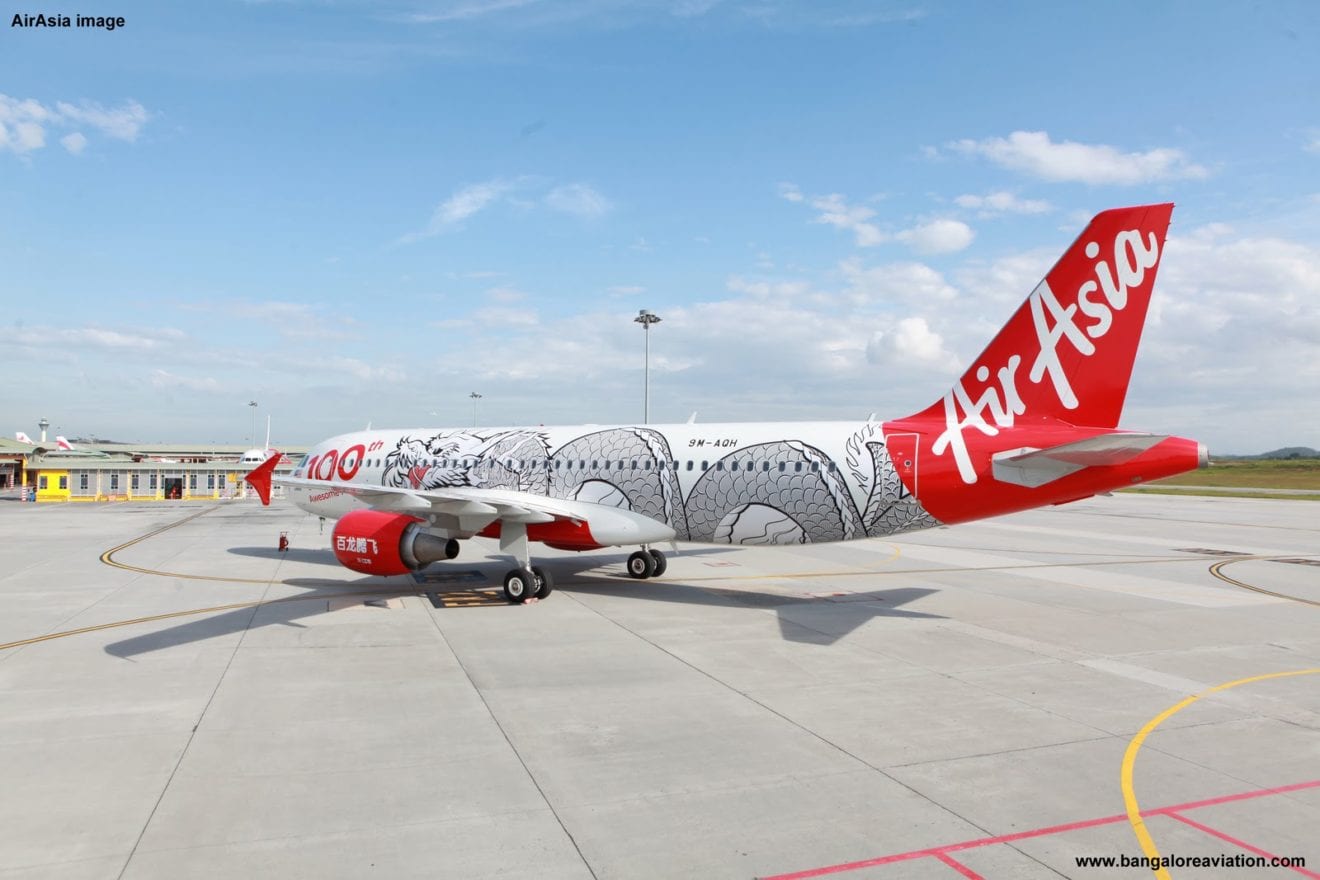
  • AirAsia load factor up 85% in third quarter 2016

    AirAsia load factor up 85% in third quarter 2016

    AirAsia Bhd recorded a load factor of 85% in the third quarter (Q3) of 2016, up two percentage points from the same period last year.

    The carrier said the total number of passengers carried increased 7% year-on-year (y-o-y) to 14.51 million, well ahead of the 5% increase in seat capacity.

    At the end of the quarter under review, the budget airline’s total fleet size stood at 172 aircraft (174 including two aircraft delivered to AirAsia Japan but yet to commence operations).

    For financial year 2016 (FY16), the airline carried a total of 56.59 million passengers for a load factor of 86%.

    AirAsia said in a statement the Malaysian operations achieved a load factor of 87% in Q4, up two percentage points year-on-year.

    It added that demand exceeded the 2% y-o-y increase in capacity, with the number of passengers carried rising by 5% y-o-y to 6.76 million. AirAsia Malaysia ended the quarter with a fleet size of 77 aircraft.

    Thai AirAsia posted a load factor of 82% in Q4, unchanged y-o-y. The number of passengers carried was 4.37 million, an increase of 8% y-o-y, near to the capacity growth of 10% y-o-y.

    “Thai AirAsia took two additional aircraft during the quarter, ending the year with a fleet of 51 aircraft. For FY16, Thai AirAsia carried 17.22 million passengers and posted a load factor of 84%, up three percentage points from FY15,” it said.

    Indonesia AirAsia posted a load factor of 83% in Q4, up three percentage points y-o-y. The number of passengers carried totalled 1.55 million on a reduced capacity of 10% y-o-y, in line with the turnaround strategy.

    For FY16, Indonesia AirAsia carried 6.52 million passengers and averaged a load factor of 84%.

    Philippines AirAsia reported a load factor of 85% while AirAsia India posted a load factor of 86% in Q4.

    Meanwhile, AirAsia X Bhd (AAX) said overall operating performance in Q4 has improved y-o-y, resulting from the successful turnaround initiatives implemented during the year.

    “In Q4, the company recorded high double-digit increase in passengers carried of 40% y-o-y to 1.38 million, in line with capacity growth of 43% y-o-y. The huge capacity injected during the quarter was to cater to higher demand from year-end holiday travel,” it said in a separate statement.

    AAX said passenger load factor dropped two percentage points to 81% against 83% for the same period last year, as available seat per kilometers grew 44% y-o-y to 8,474 million in Q4.

    “Operationally, FY16 has been a success turnaround story, with various phases of turnaround initiative carried out positively during the year.”

  • Australian Online Retailers Need to be Extra Vigilant

    Australian Online Retailers Need to be Extra Vigilant

    Thirty-nine of the world’s top 250 retailers now operate in Australia, up two from last year. Australian retailers are warned to be extra vigilant, with international retailers set to enter our retail market further in 2017, according to Deloitte’s 2016 Global Powers of Retailing report.

    With 16 percent of the world’s top 250 retailers currently operating in Australia, coupled with a relatively stable economy, significant discretionary spend and strong consumer demand for international products and brands, we can expect further disruption in the Australian retail market with new entrants highly likely.

    “Australian retailers will need to be vigilant in ensuring they are differentiating themselves from their competitors by offering the right product range and mix and delivering a service, in-store and online, that meets their customers’ expectations,” said David White, partner and national leader of Deloitte’s retail, wholesale and distribution group.

    At present, the Australian market remains relatively unsaturated by the world’s largest retail brands compared to the US and European markets, according to White. “In the last quarter of 2015 we learnt South African retailer Steinhoff  had secured a deal with UK department store Debenhams to sell a selection of its private label apparel through its Harris Scarfe stores. And, in its first venture outside of South Africa, Mr Price has entered the Australian fast-fashion market, branded MRP, with two stores in Melbourne.”

    Whilst new global retailers look to Australian shores, those already here continue to expand their operations, including Sephora and US retailer Williams-Sonoma, both set to continue their store expansion programs in 2016.

    Amazon, ranked 12th, is the number one e-commerce retailer globally according to the report, followed by Apple, China’s largest B2C online retailer JD.com and Walmart in the US. All but six of the Top 50 online retailers are based in the US (26 companies in total) or Europe (18). The majority of the e-50 (39 companies) are omnichannel with bricks-and-mortar stores as well as online and other non-store operations.

    China to Enter Soon

    With nearly half of the 39 Top 250 global retailers which operate in Australia based in the US, one country conspicuous by its absence is China. Whilst China has nine retailers in the Top 250, none currently operate in Australia.

    “Many of the products we buy are manufactured in China, however unlike other sectors we have yet to see Chinese retailers entering the Australian market directly,” said White. “The growth in the middle classes in China is already prompting a surge in consumer demand and Chinese developed brands. It is only a matter of time before we see these emerging retailers expanding their businesses more globally, including Australia.

    Deloitte’s retail report also highlights the impact of technology on the digital divide between online retail and in-store, and evolving consumer expectations. “Some retailers may underestimate the digital influence, while others recognise the real opportunity to capitalise on this ‘digital divide.’”


  • Indonesian mall integrates tech in the shopping experience

    Indonesian mall integrates tech in the shopping experience

    Supermal Karawaci, one of the largest mall entertainment center in Western Jakarta, has launched an interactive mobile application that would allow retailers to offer personalized content and engage with customers better.

    The 125,000-square-meter retail destination in Banten Province, West of Jakarta has over 1,000 retail stores and outlets, three cinemas and the largest Timezone arcade in Southeast Asia.

    The app, which was built on the shopper engagement platform of Singaporean technology firm Sprooki, is integrated with Supermal Karawaci’s touchpoints and mobile apps. Using location and contextual data, retailers would be able to offer individualized content such as vouchers, special offers, event alerts and store information.

    The system allows social sign-in and content sharing on platforms, including Facebook, which has more than 76 million users in Indonesia as of end 2016 and projected to grow to 86.4 million by end of 2017, according to eMarketer. The service will also be available in both English and Bahasa.

    Pipih Tjandra, Supermal Karawaci Marketing and Leasing General Manager, said the Sprooki platform would help keep the shopping hub at the cutting edge of technology, which customers had come to expect.

    “Supermal Karawaci works every day to be in tune with what today’s consumers want and expect through innovative marketing strategies. By implementing the Sprooki platform, our mall will be one of the first shopping precincts in Indonesia to incorporate a data-driven mobile platform to improve shopper experience, helping our tenants to increase in-store traffic and sales,” he said in a news release.

    Pablo Amante, Sprooki’s Head of Marketing, said in an email interview that the Indonesian market is ready to start adopting location-based and engagement technologies to help retailers and business to engage their shoppers, making the Indonesian retail industry much more competitive.

    The latest report from eMarketer shows that the number of smartphone users in Indonesia will rise from 55 million in 2015 to 92 million in 2019 and would be the third largest smartphone market in the Asia-Pacific.

    According to Lee Kang, the Vice Chairman of the Indonesian Cellular Phone Association (APSI), number of smartphone users in Indonesia has been growing between 30 and 50 percent each year and this growth momentum will remain intact due to the availability of affordable 4G smartphones on the Indonesian market and further development of Indonesia’s 4G network.

    “Based on these figures, retailers, shopping malls, and all companies focused on engaging their customers through mobile will see in our software a powerful tool to optimize their sales and marketing strategies, based on real data about their customers’ behavior,” Amante said.

    Cloud-based platform

    The Sprooki software is a cloud-based platform that analyzes physical and digital shopper behavior detected inside and outside stores. The platform is an analytics and contextual engine that algorithmically analyzes digital and physical data and predicts what shoppers are most likely to respond to, offering shoppers most relevant products at the best moments and locations.

    “Mall’s retailers benefit most from Sprooki platform, which gives them the possibility of engaging mobile shoppers in context and personalized ways; driving footfall to their stores; rewarding their top customers; making data and insights actionable through integrated reporting and predictive recommendations, and all these by using only one platform, saving time and efforts, so retailers and malls can focus on their marketing and sales strategies,” Amante explained.

    The software can be integrated either in mobile apps or websites. In these environments, consumers are always able to opt out or not sign in. The challenge, however, is to provide highly targeted and relevant content in a way that shoppers appreciate the added value of having access to these offers, campaigns or rewards.

    “When our customers provide to its shoppers with contextual and personalized offers, general response by consumers is very positive, as the shopping experience is different for each one and it’s relevant according to their likes and what they are looking for,” Amante added.

    While this is the first implementation of Sprooki technology in Indonesia, its customers are already spread across Southeast Asia.

    Amante said some of its customers include the 313@somerset iconic mall at Orchard Road in Singapore where the company implemented Sprooki Campaigns module, which allows shoppers to access to exclusive offers and coupons through vouchers. At Far East Organization /Shop Far East Asia (Singapore), it has also implemented Sprooki Rewards, a module that allows the mall to offer a card-less loyalty program to its shoppers.  In Vietnam, the technology allows location-based features and beacon technology to work both outside and inside the Crescent Mall to collect strategic data, providing a unique experience to shoppers.

    At this stage, Supermal Karawaci shoppers are exploring this new way of access to exclusive offers, and the response has been more than positive, with a high rate of voucher downloads since its launch last December 15.

    “Sprooki is delighted to enable Supermal Karawaci with the most advanced technology for engaging with customers and understanding their behavior. Our mobile platform will give the precinct’s retail tenants an effective way to drive frequency of visits and increase sales conversions,” said Sprooki CEO and Co-founder Michael Gethen in a media statement during the launch.

    Retail challenges ahead

    Sprooki is confident that location-based, data-driven mobile services are the present and the future for the retail industry.

    “After the struggles that retailers have suffered in the last years due to the e-commerce and online shops, the game is again on for big retailers and shopping malls that want to bring shoppers back to the physical stores. And the only way to make this happen is by providing a new shopping experience, based on offering what the digital world already offers (personalization, analytics, related purchases, recommendations, rewards, etc.),” Amante said.

    Shoppers nowadays also expect more from their brands in terms of product offerings, customer services, efficiency, and engagement. That is the reason why features such as ‘click and collect’, digital voucher redemption, scan receipts, faster and easier payment methods are raising, in order to meet consumers’ expectations.

    Taking a look at the region and the challenges that retailers are facing in Southeast Asia, Sprooki sees a lot of opportunities.

    “Retailers nowadays have a big gap in terms of what they know about their shoppers, and how they behave in their shopping journey. Even the most advanced retailers that work already with big data haven’t found an effective and sustainable way to manage all these data without the need of investing a lot of money and time,” Amante said.

    Sprooki today is currently based in Singapore, and has offices in Hong Kong and Australia, with local contacts in Indonesia, Malaysia, Philippines, and Vietnam.

  • Taiwan’s VAT On Online Retailers Becomes Law

    Taiwan’s VAT On Online Retailers Becomes Law

    On December 28, Taiwan’s President Tsai Ing-wen signed into law the amendment to the Value-Added and Non-Value-Added Business Tax Act to impose tax on foreign online sellers’ supplies to Taiwanese consumers.

    The amendment is intended to raise additional revenues and level the playing field for Taiwanese bricks-and-mortar retail and service businesses.

    The Ministry of Finance is to draw up the required tax regulations and procedures. In addition, it is to establish a website for simplified business registration and for filing VAT returns and paying VAT.

    Foreign online suppliers selling cross-border goods and electronic services to end consumers will have to register for tax in Taiwan through a permanent establishment, or appoint a VAT or non-VAT tax representative. The permanent establishment or agent will be required to file the necessary bimonthly tax returns. Significant penalties will be imposed for non-compliance.

  • Nike aims for traction in Cambodia with first retail store

    Nike aims for traction in Cambodia with first retail store

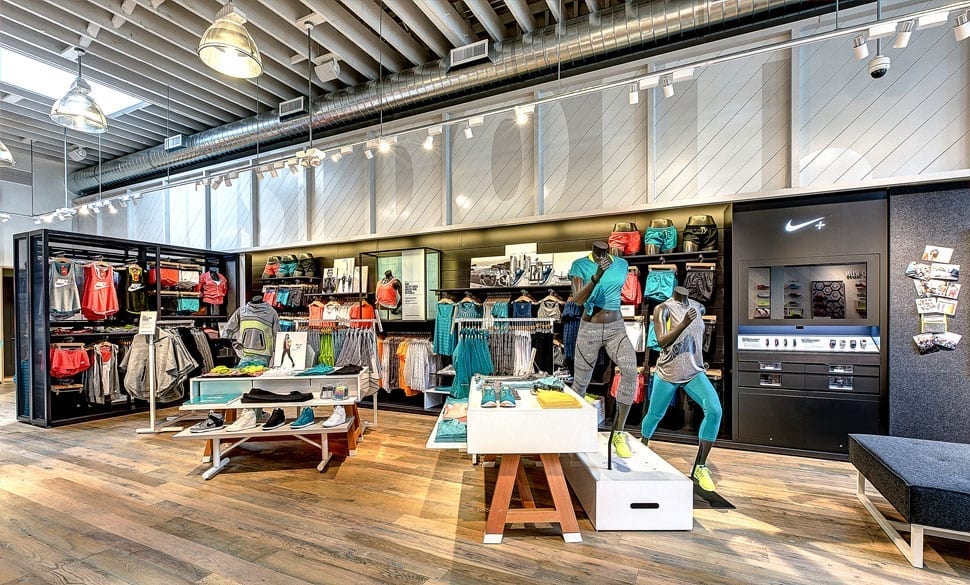
    American sporting goods giant Nike has opened its first dedicated retail store in Cambodia in what observers have described as another sign the Kingdom’s strong economy and rising incomes had not gone unnoticed by international retail giants.

    The opening of the outlet store in central Phnom Penh marks the first time that Nike goods such as sport shoes and apparel – including items produced at local factories – can be purchased from a dedicated brand outlet.

    According to Julie Chung, Charge d’ Affaires at the US Embassy in Phnom Penh, Nike’s retail launch underscores the Kingdom’s economic development and its ability to attract major name-brand American products and investment.

    “This is a testament to the economic transformation that is taking place here a transformation we hope the United States and American companies can continue to help support,” she said at the store opening on Saturday.

    Ronald Marvin, executive director of the American Chamber of Commerce, said the Nike store’s arrival was a positive sign that American businesses have confidence in the Cambodian market.

    However, on a retail level, some analysts said the choice of opening a flagship store on Monivong Boulevard, rather than in an upscale mall or neighbourhood such as Aeon Mall or Boeung Keng Kang 1, could signify that Nike was still testing the market before going all in.

    “The fact that they are not opening a flagship store in a more prime location could be because they just want to establish a presence in Cambodia for the meantime,” said Sofia Perez of property consultancy advisory Knight Frank Cambodia.

    She said that while Nike’s brand-name appeal would certainly help business, it should not be relied on as the sole marketing tool.

    “The choice in location and the store size will definitely affect brand image, which is important for consumers because for a higher price, they would also expect a more exclusive shopping experience among other added benefits,” Perez said.

    She added, however, that if Nike can develop an effective marketing strategy with added consumer benefits, “they could definitely increase the pressure on their competitors”.