Bank Indonesia (BI) plans to launch a mobile app through which the public and regional administrations can monitor harga pangan (the prices of staple foods) on a daily basis.
The public would be able to use the app to avoid being deceived, while the regional administrations can use it to observe when prices go too high so they can tackle them faster.
The public can already download the app or use it on the hargapangan.id website, but it has not been officially launched.
The program managed by the Information Center for Strategic Food Prices (PIHPS) collects data from traditional markets in 82 cities in all 34 provinces in the country for 10 commodities: rice, shallots, garlic, red chili, birdseye chili, beef, chicken, eggs, sugar and vegetable oil.
“The PIHPS has been running, but we’ll wait for the official launch,” Dody Budi Waluyo, the BI governor’s assistant for monetary and economic policy, said recently.
“BI keeps improving the program. We’ll also collect prices not only from traditional markets, but also from modern markets; also maybe from big traders and touch on more commodities, as well as prices at the producers’ level. The point is we keep innovating with this,” he added.
Previously, BI deputy governor Sugeng told the media that the central bank also plans to create a data system to track supplies of staple foods in the regions.
All the aforementioned systems were developed so BI and the government could come up with better policies to achieve a 4 to 5 percent inflation rate.
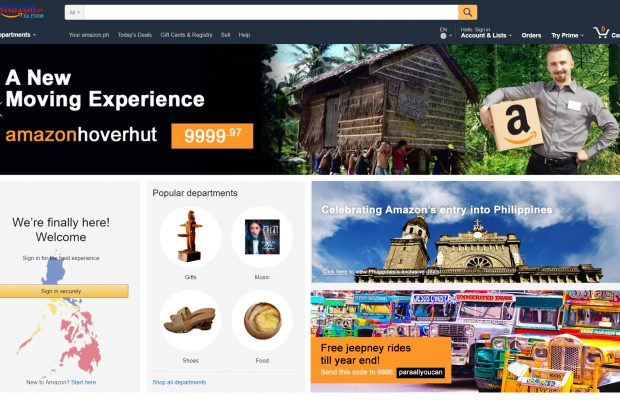
Amazon with exclusive affiliate partner iPrice Philippines premieres the first screenshots of the all new and exciting online shopping platform: Amazon.ph. Slated to be launched late 2017, millions of local and international products will be made available to Filipinos with same-day delivery service throughout the nation. Maintaining the ethos of Amazon, the new e-commerce platform in the Philippines will be guided by four principles: customer obsession rather than competitor focus, passion for invention, commitment to operational excellence, and long-term thinking.
Partnering Amazon in this new endeavor is iPrice, a meta-search website in seven major countries in Southeast Asia as Amazon’s prime affiliate partner. With similar values and vision for ecommerce in Southeast Asia, iPrice’s partnership with Amazon will empower the Seattle based company with the needed marketing channels to aggressively market its products and services to the competitive ecommerce sector.
Further details of Amazon’s affiliate partnership with iPrice will be revealed at the annual AWS Summit on 20th of April 2017 at the Marriott Hotel Grand Ballroom in Manila. Here is an exclusive screenshot of Amazon.ph.
The Baguio Barrel Man
Often seen as the souvenir of choice of most travelers, the Barrel Man offers more than just it’s barrel. Handcrafted from tropical wood unique only to the Philippines, the Barrel Man is a figure that is built of quality material and has the magical powers suited to relieve men of their physiological and psychological barriers.
Amazon.ph and the Baguio Barrel Man was reviewed by test audiences prior to launch. It assisted in saving a marriage, and restoring one’s manhood.
DHL eCommerce, a division of the world’s leading logistics company Deutsche Post DHL Group, has launched a new commercial international shipping product facilitating Singapore-based e-tailers, online merchants, manufacturers, and traditional ‘brick and mortar’ retailers to ship their products to consumers in the U.S. using the reliable DHL network in a simple and cost-effective manner.
Parcel International Direct U.S. is geared towards the burgeoning e-commerce market and seeks to respond to the growing appetite for cross-border e-commerce in the Americas region, allowing businesses to ship products up to 6.5 kg to their customers across the U.S.
With 71% of retailers and 76% of manufacturers expecting the share of cross-border revenue to grow in the future[1], Parcel International Direct U.S. aims to enable Singaporean retailers to grow their business in the U.S. market with ease.
The cross-border market is the newest blue chip of the digital retail industry and shows great promise, projected to grow at a rate of 25% annually between 2015 and 2020. This growth will bring the value of the market from USD300 Billion in 2015 to 900 billion in 2020 — almost triple in a matter of half a decade.[2]
The product offers simple and cost-effective international shipping option with end-to-end tracking and a competitive transit time of 4-6 business days. Through IT integration, the DHL eCommerce Web Portal enables e-tailers to seamlessly integrate their orders into the DHL network by preparing orders for shipping individually or in bulk, track and generate reports all from a single portal. This product follows the company’s launch of Parcel International Direct Australia in October 2016.
“DHL eCommerce aims to provide best-in-class e-commerce logistics for both merchants and end consumers through high quality, cost-efficient logistics solutions as well as a positive delivery experience. We want to enable local businesses to reach their international consumers with ease and allow them to fully leverage the massive potential that e-commerce brings,” said Sham Alexandra, Managing Director, DHL eCommerce Singapore. “Through Parcel International Direct U.S., we enable retailers in Singapore to expand beyond borders and reach out to the huge consumer market potential in the U.S.”
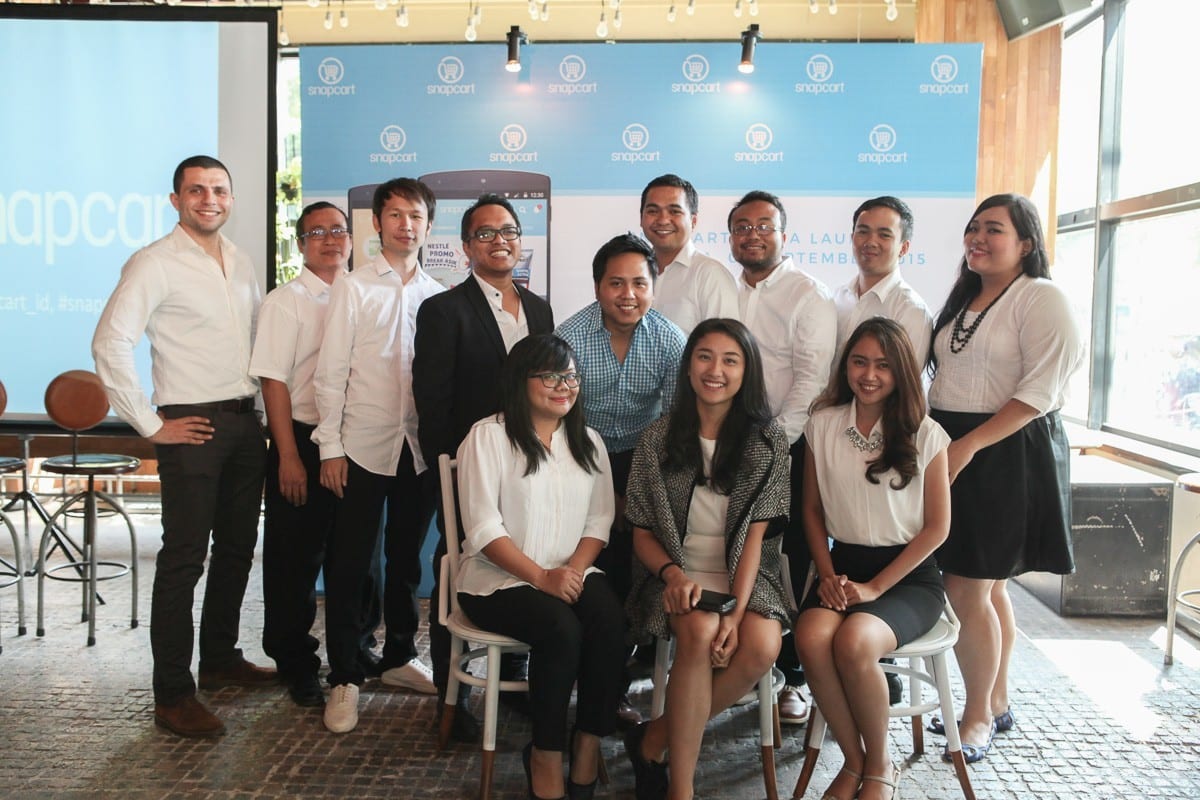
In a bid to shed light on the offline retail market of Southeast Asia, startup Snapcart has raised US$3 million in pre-Series A funding,
“Southeast Asia is a black hole and brands don’t know what is happening,” explains Snapcart CEO Reynazran Royono.
The new funding round comes after Snapcart raised US$1.7 million in January of 2016. Since then Snapcart has expanded from Indonesia to the Philippines.
Retailers will connect 12.5 billion business assets such as products, digital signs and Bluetooth beacons to IoT platforms by 2021, up from 2.7 billion in 2016, Juniper Research has predicted.
The company has argued ‘next-gen’ processes, such as personalized retail, could be achieved by integrating enterprise software and emerging technologies, with data from connected IoT assets.
Juniper forecasts that software spend for enterprise resource planning (ERP) systems to integrate this data would reach $11.3 billion annually in 2021, from $1.5 billion in 2017.
The research firm also predicted that radio-frequency identification (RFID) will re-emerge as the industry’s ‘killer app’ becoming the key factor in the IoT retail ecosystem.
RFID tags, used to identify and locate retail assets in real-time, are now at a low enough price point for mass deployment and integrate well with new IoT systems and analytics. New services, such as dynamic pricing or enabling promotional offers via in-store digital signs are also poised for growth.
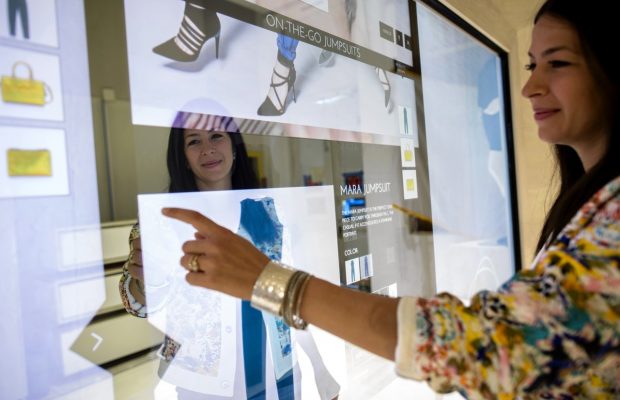
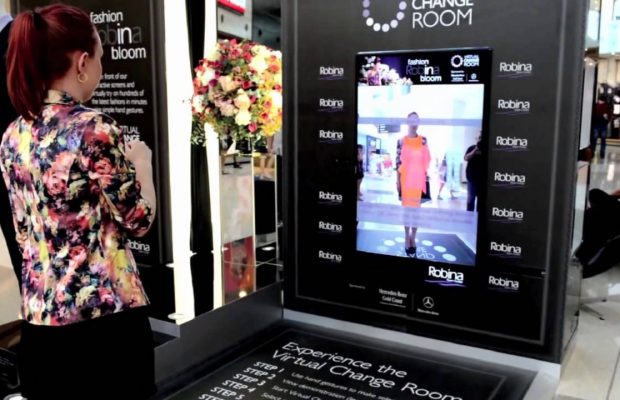
“Innovative retailers such as Rebecca Minkoff have combined RFID with smart mirrors,” said research author Steffen Sorrell. “Integrating these systems allows real-time information to improve the store experience and bridge physical and virtual worlds – in this case, the concept drove a 200% increase in sales.”
Juniper believes that physical retail spaces still have many benefits, not least in terms of being able to avoid the sterility of online shopping. It predicts online retailers’ focus would be on technologies such as machine learning to provide digital assistance, or digital performance management.
Cross-border e-commerce is now the fastest growing segment in the retail market, according to a report published by DHL Express.
Cross-border sales volumes are predicted to increase at an annual average rate of 25% – from $300 billion to $900 billion – between 2015 and 2020. This is twice the pace of domestic e-commerce growth, DHL Express said.
The study found that online retailers are boosting sales by 10-15% on average simply by extending their offering to international customers.
By including premium service offering such as faster shipping options, retailers and manufacturers also grew 1.6 times their online stores faster on average than other players.
“Shipping cross-border is much, much easier than many retailers believe, and we see every day the positive impact that selling to international markets can have on our customers’ business growth,” DHL Express CEO Ken Allen said.
In Asia (Singapore, Hong Kong, and India) and Europe (Italy, Spain, France, Germany), key markets for high-value purchases are being expanded — with growth rates up to two or three times higher than the global average driven by rising consumer education and e-tailer awareness of opportunity.
The report also noted that the $30 billion market of high-basket value transactions is evenly divided between Asia, Europe, and North America.
Allen added that DHL Express sees that virtually every product category has the potential to upgrade to premium, both by developing higher quality luxury editions and by offering superior levels of service quality to meet the demands of less price-sensitive customers.
“The opportunity to ‘go global’ and ‘go premium’ is there for many retailers in all markets,” he said.
The main challenges highlighted by consumers to cross-border purchases relate to logistics, trust, price, and customer experience.
The competition between shopping websites has now switched focus from prices to rapid delivery.
Analysts said competing by cutting prices by up to 50 per cent is an old story, and with customers’ demand for good service increasing, delivery times have become a key factor.
Alexandre Dardy, the CEO of the country’s largest online shopping platform, Lazada, said besides increasing the number of merchants and products, his company would soon reduce delivery times.
Currently the average delivery time that Lazada offers customers is more than two days, with urban areas served faster than rural for obvious reasons.
At the end of last year the company tied up with AhaMove, a motorbike-based delivery service, and began a new delivery schedule that enables customers to get their product within just 60 minutes in certain cases.
Another online shopping website, tiki.vn, is also taking measures to improve its delivery process. Currently its average delivery time is two to three days.
Trần Ngọc Thái Sơn, director of tiki.vn, said product quality and delivery time are the most important factors for customers.
His company has begun to deliver within 24 hours, he said.
In case of late delivery, customers will receive a Tiki coin worth VNĐ30,000 (US$1.3) for use next time while shopping.
The speedier delivery does cost more, the company said.
Express delivery costs two or three times higher than standard delivery.
For instance, while standard delivery costs only around VNĐ15,000 for a package weighing less than three kilogrammes, express delivery costs VNĐ30,000.
However, 50-75 per cent of this is covered by the online shopping companies.
Dardy said Ahamove gets VNĐ30,000 for express delivery, with Lazada covering VNĐ20,000 of it and only passing on VNĐ10,000 to the customer.
But despite this, companies have no hesitation in offering express delivery, realising this will encourage customers to return in future.
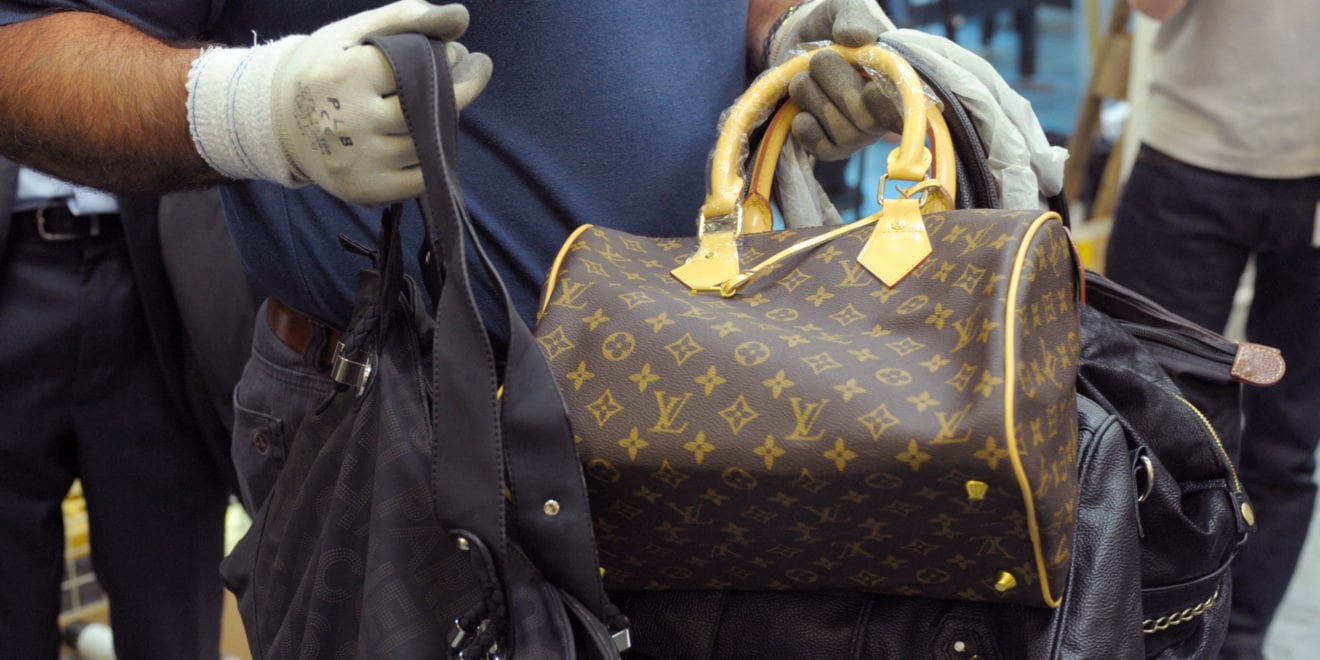
In Singapore and other parts of South East Asia, there has at least been a minimal market for counterfeit goods. Retailers across the region have wrangled with this issue for many years and today, it shows little sign of waning.
Statistics for 2016 revealed that, worldwide, the market for counterfeit goods worldwide was worth an astonishing $650bn (US$460bn). Many of these products were sold online to customers the world over, with popular items sold including eyeglasses, electronics and designer footwear. Bargain-hunting consumers may find the price outweighs whether or not what they buy is genuine.
Local trade
The range of fake goods finding their way at customs is pretty wide. Aside from luxury items such as jewellery and smartphones, everyday items bearing counterfeited brand names including rice, noodles and chocolate are also sold as the genuine article. Singapore, as a major global port, sees a fair few of said goods reach customs.
In September 2016, Singapore Customs seized over 5,000 bags of counterfeit rice imported from India. That same month, more than 1,300 wallets, bags and purses were confiscated. Both bore trademarks of brands which local authorities deemed to be illegal, highlighting the need for retailers to be wary of what they buy in from suppliers.
When determining what is real and what is fake, Singapore Customs do a lot of the work, whether through performing checks at airport terminals and ports or by enforcing the Trade Marks Act. However, retailers are also tasked with staying on-side, whether selling products online or offline in the bustling streets and markets.
Telling real from fake
Retailers are advised to read the Trade Marks Act. Introduced in 1998 and revised in 2005, it states that it is illegal for traders to sell any products bearing un-trademarked logos or other forms of branding. Inspecting goods thoroughly is a must before buying; a good way of doing this is to compare a fully-trademarked product against one that has been offered for sale.
Any differences in fonts, brand names, colours and materials should be easy to spot. If there are any signs that a product offered by a wholesaler is fake, it is recommended to contact local customs and turn down those products. This should be done regardless of whether or not they seem to represent value for money.
Should any business find itself selling counterfeit goods, knowingly or otherwise, there are grave consequences. Hefty fines are often given per fake item sold, reaching as much as $10,000 per item. In such an instance, legal advice from local firms including Withers LLP is advisable, whether it’s before or after buying fake goods.
Multiple sources
Many counterfeit goods sold across Asia find their way onto online marketplaces such as Amazon, AliBaba and eBay. Retailers using these channels to sell their products are advised to take precautions to ensure what they sell on said sites are the real thing. AliBaba account holders are advised to register with AliProtect.
Whether they come from China, India, Europe or within Singapore, the market for fake goods shows no sign of slowing down. Attempts by governments and online retailers to clamp down on them are improving, though.
While its direct-selling model echoes brands like Avon and Tupperware, Indonesia’s MindStores gives the approach a modern twist—with augmented reality.
Recognized as the first partnership store network to use augmented and virtual reality, MindStores equips its store owners with their own unique partner cards which customers use to access the stores virtually. The whole process is relatively simple, and takes place in-person only.
A store owner, who can be located anywhere—from their living room to a public coffee shop—shows a customer their partner card. Using a dedicated app on their own smartphone, that customer scans the card to see a 3D retail store appear on their screen. From there, the customer enters that partner’s virtual store and can browse and purchase merchandise to have shipped to them. The store owner then gets a cut of the sale.
Slingshot, the Indonesian technology and media company that operates MindStores, announced this week that the store network has opened more than 7,000 stores in Indonesia since its launch last June. They estimate that they will have more than 150,000 active stores by the second quarter of 2017, with the potential to open more than 4 million new stores in the country over the next two years.
As part of the pilot program, MindStores partnered with Alfamart, a large Indonesian convenience store chain, to have their wares sold through branded Alfamind virtual stores by individual store owners. However, augmented reality gives MindStores the potential to expand their retail partnerships to other companies, with many stores appearing side by side on each scanned store owner card.
“The future will be an augmented reality city that is working flawlessly with people, with stores, with consumers,” said Daniel Surya, CEO of Slingshot and its parent company, WIR Group, in an interview with NextReality. “Now is just the first phase. We’re looking at a data-driven city using augmented reality.”
Surya noted that MindStores already has an agreement with one of the largest insurance companies in Indonesia, Astra Life, in collaboration with UK-based Aviva, as their next retail partner. Eventually, MindStores will also give its store owners the ability to sell their own merchandise and crafts—not just partner brands—like on Etsy.
The company expects to expand to China and India by the end of the year, Latin America and Africa next year and, eventually, the United States. Each expansion will require recruiting partners that resonate with consumers in those markets.
Working in emerging markets presents challenges in rendering AR and VR animations, since most consumers are equipped with lower-end phones running on processors two or three generations old.
The stores are designed to render smoothly through its Android or iOS app. To ensure consistent operation, the company built the stores on their own engine, which is compatible with more modest hardware. For instance, minimum requirements to run on Android include OS version 4.2 Jelly Bean, quad-core 1.8 GHz CPU, and 2 GB RAM.
“We need to be able to present this technology on the simplest, most modest phone available on the market,” said Surya. The app is also optimized to compensate for available connectivity in the emerging markets. According to a spokesperson, the app is designed to allow for offline browsing, though an internet connection is required to place an order.
Nonetheless, they are also testing the experience with smart glasses, namely Vuzix and HoloLens, and their research and development team maintains relationships with the leading hardware makers so that they are familiar with the next wave of devices.
Empowering Women Through Community-Based Selling
Along with the eye-catching AR and VR aspects, community-based selling has been a significant component of the company’s success.
The direct selling model appeals to mothers of single-income families as supplemental income, according to Surya. Since brand loyalty is low in Indonesia, the ability to offer goods at a discount to friends and neighbors gives store owners and their partner retailers an advantage.
Through Mindstores we’ve used innovative technology to create something as equally innovative as it is meaningful, through its proven ability to make a positive impact to empower women worldwide. Slingshot will continue enhancing the Mindstores experience, for the benefit and futures of an often-overlooked population: women in less developed regions of the world.
Compared to the cost of opening a brick-and-mortar store or securing a franchise license, the start-up cost for MindStores is relatively modest. Store owners invest a minimum fee (the equivalent of about $100) to serve as capital to purchase inventory credit from Alfamart, the partner retailer.
Their customers order products through the store and pay the customer in cash. The retailer applies the purchase towards the inventory credit and ships to the customer. Customers pay the store owners directly in cash. Store owners can purchase additional credits once the initial investment is exhausted.
The store owners receive about 15% of each sale for most of Alfamart’s product categories, such as fashion and household goods, which have 30-40% margins. MindStores takes a 2% cut, with the remainder of the proceeds going to Alfamart. Slingshot reports that participants average $900–$1,200 per month in sales.
Next Stop: SXSW
Slingshot is one of five Indonesian companies appointed by BEKRAF (Indonesian Government Agency for Creative Economy) to attend the South by Southwest (SXSW) Conference and Festival, taking place March 10–19 in Austin, Texas. The companies will exhibit in the Indonesian section named Archipelageek.
“It is a tremendous honor to represent our Country at such a prestigious event,” said Surya. “We’re proud to showcase the creative and innovative technological achievements from Indonesia, which we believe are highly relevant in today’s worldwide marketplace.”
In addition to its MindStores business unit, Slingshot also operates AR&Co., which specializes in augmented reality content development, and DÄV, an AR media placement company. Founded seven years ago as the AR Group, Slingshot has offices in New York, Los Angeles, Silicon Valley, Jakarta, Singapore, Barcelona, and Malta.
Slingshot has completed more than 500 projects in 20 countries, working with brands such as Disney, Cartoon Network, Samsung, LG, Intel, Lenovo, and Sony, to name a few.
Among their notable campaigns include AR-enabled ads for the successful Nigerian presidential campaign of Muhammadu Buhari, holographic Star Trek collectible pins, and the first AR children’s books in Spain.
“We’ve always been excited about the possibilities of augmented reality and the power it has as an engaging and immersive platform,” said Surya.
Indonesia increases its dominance over the global retail coffee market with an average sales growth of 19.6 percent each year throughout the last five years, followed by India (15.1 percent average growth) and Vietnam (14.9 percent average growth in second and third position, respectively.
The data gathered by Mintel also revealed that the growth of the global retail coffee market in 2016 had reached 2.7 percent from the previous 2.5 percent in 2015. Meanwhile, Asia continues to dominate the fastest growth in the global coffee market.
According to the data, the slowest growth in the global coffee market throughout 2011-2016 is recorded by Finland with a -3.7 percent average growth, followed by Australia with a 0 percent growth, Poland with a 0.1 percent growth, Dutch with a 0.5 percent growth, and Belgium with a 0.5 percent growth.
Mintel’s Global Drinks Analyst Jonny Forsyth, stated that Asia’s coffee market is increasingly growing following the high level of innovations in various processed coffee products in the region. Throughout the same period, the number of newly introduced coffee products in Asia grows by 95 percent.
In comparison, the number of new tea products introduced in Asia in the same period only grew by 55 percent. Jonny asserted that the numbers showed that the majority of Asian citizens have shifted from the tradition of consuming tea to coffee.
“In 2016, there was a drastic increase in the number of new coffee products that rivals the previously booming tea product in Asia. It is true tea drinking tradition has been the main obstacle for Asia’s coffee products. But, currently there are many tea-coffee hybrid products that have been introduced in order to solve the problem,” Jonny explained.
Huong, an office worker in Hoang Mai district in Hanoi, said she reserves a budget of VND2-3 million for buying new clothes every month. But she does not want products bearing Vietnamese brands, but preferably orders Zara and Mango products from overseas shops online.
Huong said that the foreign high-street products are now affordable for office workers like her.
“Why don’t you choose foreign brands if they have diverse design, good materials and reasonable prices?” she said.“Manufacturers and distributors often launch sale promotion campaigns with big discount rates. I can buy many products at the prices just equal to or even cheaper than Vietnam’s export products,” she explained.
Oanh, an account executive in Hanoi, said she looks for Zara, H&M, Mango and Uniqlo products regularly, which allows her to buy high-quality products at reasonable prices.
Sometimes she can buy products at just VND1 million or lower in sales campaigns.
“I never buy Vietnamese goods during sale promotion campaigns because I am not sure about the actual value of the goods,” she said. “Meanwhile, no need to worry about this when you buy products from these brands. And the prices are very good”.
Huong and Oanh order the products online and pay fees to have the products shipped to Vietnam. There are many shipping agents in Hanoi, who are in charge of receiving products, carrying to Vietnam and delivering to clients.
Thuy Linh, one of the agents, commented that Vietnamese clients mostly order clothes and footwear, and 80 percent of ordered products bear high-street brands such as Zara, Mango, and Forever 21, while the remaining 20 percent are luxury brands.
Linh said she is always busy so Vietnamese tend to favor foreign high-street brands. A T-shirt with Zara or Mango brand can be bought at VND180,000 only, including fees, which is cheaper than Chinese products.
Understanding the Vietnamese taste and realizing the rapid increase of middle-income earners in Vietnam, a lot of high-street brands have been conquering the local market. Zara, the fashion brand from Spain, has been present in Vietnam since mid-2016. Mango, which targets customers aged 18-40, has been present in Vietnam since 2004 through a franchise contract signed with Maison JSC.
In the latest news, H&M has begun employing workers to prepare for its landing in Vietnam. The Swedish brand’s first shop would be in Hanoi, cover an area of 2,000 square meters and employ 100 workers. The recruitment will also be implemented in HCMC.
Hong Kong’s SmarTone is deploying “smart robots” at its psychical retail stores to help enhance the customer experience. The initiative, launched last week on Valentine’s day, involves the leading mobile network operator in Hong Kong deploying the NAO robot at its stores.
It marks the first time SmarTone is using actual robots for enhancing the customer experience. The idea is to streamline the customer experience while adding fun and improving engagement.
At the launch ceremony at SmarTone’s apm store, NAO joined local Web-celebrity Lilian Kan to sing, dance and play games with customers while uttering words of love.
Not to be outdone, Pepper, another smart robot, joined in the festivities as well. It was the first time both robots were pictured together.
“SmarTone has always been pushing the frontiers of innovation, committed to innovating customer experience in the industry,” SmarTone head of marketing and sales Josephine Lam said.
“The introduction of NAO will enable a fun and interactive experience, deepening in-store engagement with customers.”
NAO can perform detailed actions and is multi-lingual. It offered details about the latest service plan offerings while providing recommendations on phone accessories.
“Robotics is one of the hottest technologies and we know they will have a significant impact on our lives in the future,” SmarTone head of products and services Alex Kun said.
“We will continue to seek ways to introduce the latest robotics technologies into our business as well as provide opportunities for local enterprises, organizations, and individuals to experience the technology.”
SmarTone is not just looking to robotics to improve customer services and operational efficiency.
The company is looking to improve overall robotics appreciation as a territory-wide effort. For example, it will include the introduction robot rental services and the organization of coding workshops to spur interest in robotics among the youth.
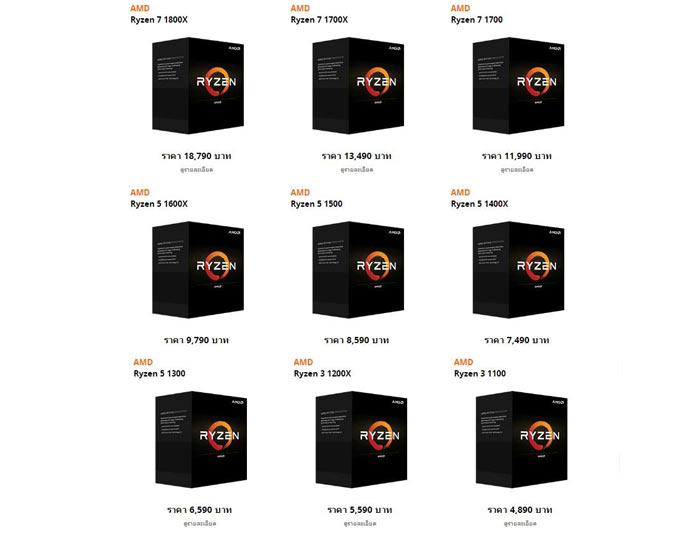
Another day, another AMD Ryzen leak / rumour / news morsel… or two. Particularly interesting today we see what is claimed to be an AMD Ryzen box art matrix from Thailand. The web images don’t only show the products which will be soon on sale but the prices, in Thai Baht naturally. In a similar vein a Belgian online retailer has let slip its prices for the AMD Ryzen 7 range of CPUs.
Looking at the single box art close-up we have available, above, via WCCFTech, the box design is rather simple and mainly black. Just because these have appeared on a Thai retailer site doesn’t mean they are representative of what AMD will ship either. It’s hard to know if the retailer images are overcompressed or just shoddily put together as placeholders, maybe by the retailer itself.
Perhaps more important than the box images, if they are genuine, is another price indication at this time. Looking over the nine CPUs and prices in Thai Baht we see a price range from the Ryzen 7 1800X at 18,790 Baht (£430), down to the Ryzen 3 110 at 4,890 Baht (£112). Its possible to click through the above image matrix on the Thai retail site and get more details. You can find a full set of these pictures in the source article, one is included below for reference.
Singapore-based lifestyle venture platform, iFashion Group, announced today it has acquired Singaporean independent designer brands marketplace Megafash for S$3.5 million (US$2.23 million), in a cash and shares deal.
iFashion group also appointed Jeremy Khoo, the CEO and founder of Dressabelle – an O2O fashion marketplace that it acquired last year for S$7.5 million (US$5.5 million) – as its new CEO.
This new development will strengthen iFashion Group’s position as a major lifestyle portal in Southeast Asia. Megafash has both a strong online and offline presence, with its 7 stores occupying over 15,000 sq ft. It works with over 2,000 indie brands globally to sell over 300,000 unique products on its marketplace. In 2016, Megafash’s annualised revenue was reported to be S$8 million (US$5.7 million).
“It’s an exciting time for us at Megafash. The brand has grown significantly, from 3 stores in 2015 to 7 stores currently. In times of economic downtown, we are pleased to say that our revenue grew five times from 2015. Megafash continues to grow as Singapore’s leading lifestyle marketplace. In fact, in December we received as many as 2,000 orders a day,” said Megafash’s CEO and Co-Founder, Jiawen Ngeow, in an official press release.
The acquisition of Megafash will also accelerate iFashion Group’s plans to go public. A press release said that the company is mulling an IPO at the end of April or May.
Last year. besides Dressabelle, iFashion Group made two other acquisitions: online retail real estate booking platform INVADE, and Malaysian fashion brand NOSE.
The retail sector in Hong Kong recorded the poorest annual sales in nearly two decades last year, according to a report by the ‘Nikkei Asian Review’. The Hong Kong government argues that this ‘annus terribilis’ partly responds to the declining number of Chinese tourists visiting the territory.
The report reveals that retail sales in Hong Kong came in at 436.6 billion Hong Kong dollars in 2016, what implies an 8.1 percent dip in comparison with retail sales from the previous year. This is, in fact, the sharpest decline since the Asian financial crisis in 1998 when sales plummeted 17 percent year- on-year.
On the upside, some analysts say they start to see the first signs of a gradual recovery in the territory’s economy as the number of Chinese tourists stabilizes and the performance of retail sales in the latter half of last year improved when compared to the previous six months.
Last year, retail sales fell in every month. However the year-on-year declines waned in the latter months, moving from a 5.5 percent year-on-year decrease in November to 2.9 percent in December.
“The near-term outlook for retail sales business will still depend on whether the recent improvement in inbound tourism could gain more traction and the extent to which local consumer sentiment will be affected by various external uncertainties,” a Hong Kong government spokesperson told the ‘Nikkei Asian Review’.
It’s worth calling out that the number of mainland visitors to Hong Kong in December indicated a reversal after months of decline. The number of visitors increased by 9 percent year-on- year, led by the Christmas holidays, and outperforming the 7.8 percent growth rate observed year-on- year that month in Macau.
Worst affected retailers were those operating within the luxury and upmarket niches. Jewelry group Chow Sang Sang issued a profit warning last month that its full-year earnings for 2016 could drop as much as 40 percent. Meanwhile, fashion retailer Bauhaus closed four shops across Hong Kong and Macau as its same store’s sales declined 10 percent year-on-year in the final quarter of 2016. Its direct competitor, I.T, recorded a slightly smaller decline (-4.6 percent) in store sales in Hong Kong during the three-month period between September and November 2016.
Market sources recall that the vast majority of luxury retailers in Macau and Hong Kong depend on the influx of wealthy tourists coming from mainland China as their main source of revenue.
“Looking ahead, the near-term outlook for retail sales business will still depend on whether the recent improvement in inbound tourism could gain more traction and the extent to which local consumer sentiment would be affected by various external uncertainties,” the government said in a statement issued earlier this month.