Tag: Retailers

  • Festive feasts, online deals bring smile to China retailers

    Festive feasts, online deals bring smile to China retailers

    Retail sales hit their year high in December, buoyed by the festive mood in the food and beverage sector and continued surge in online shopping. Still, inflationary pressures are making themselves felt in consumers’ pocketbooks, climbing to their highest in 30 months.


    Higher prices on shop stickers nationwide played a major role in the 0.1 percentage uptick last month to 10.9%, with price-adjusted sales growth steady at 9.2%.

    Diners notched up 335.2 billion yuan (US$48.8 million) in bills, up 10.6% from a year earlier and an improvement on November’s 10.1% year-on-year gain — perhaps driven by Chinese homeowners celebrating their good fortunes in the property market.

    Consumer goods sales rose 10.9% in December from a year ago, the same as in November but well ahead of gross domestic product growth of 6.7% for the year.

    Vehicle sales jumped 14.4% from 13.1%, and clothing to 7.1% from 5.1%. Food products, another major component, rose 8.6% from 8.8% in November.

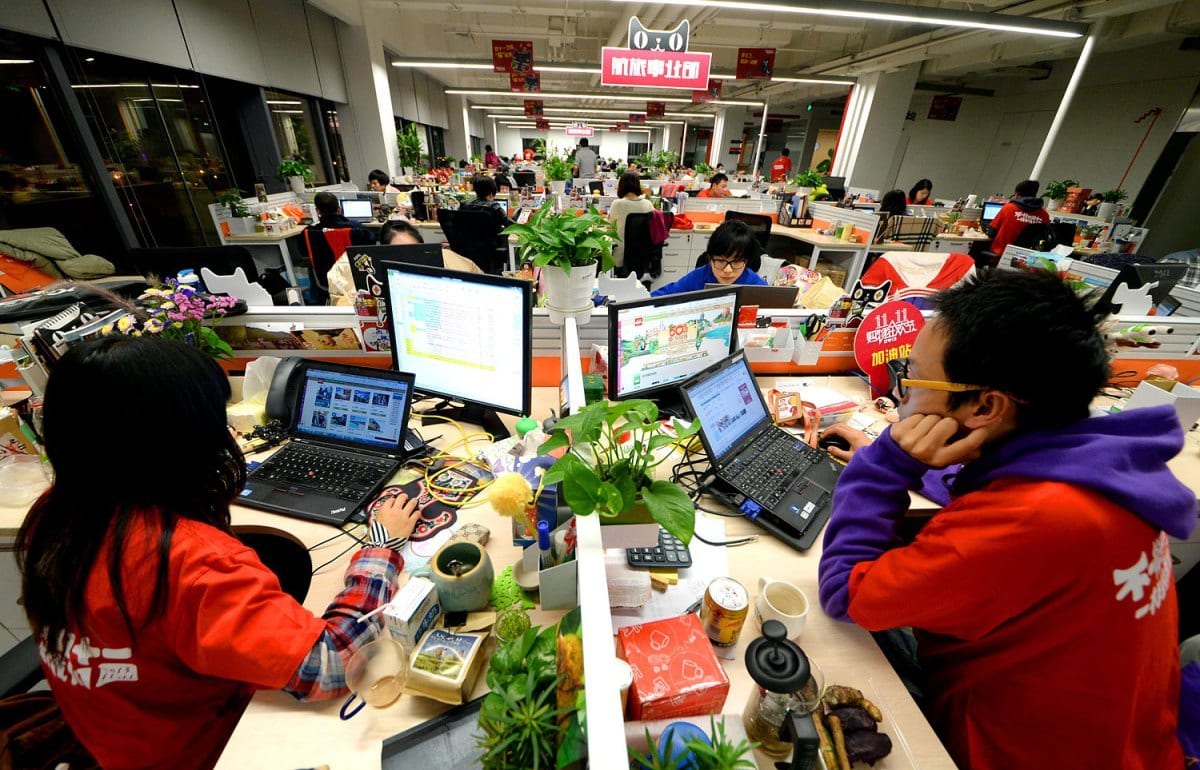
    E-commerce for the full year totalled 5.16 trillion yuan, 26.2% up on 2015, and accounting for 12.6% of overall retail sales in China. The percentage was just 9.7% during the first half of 2015.

    A key indicator of consumer spending, China’s retail sales grew 10.4% in 2016, the same as in the first three quarters. After deducting price changes, retail sales clocked in at 9.6%, according to National Bureau of Statistics. Total retail sales were 33.23 trillion yuan in 2016.

  • Vietnam airport operator misses out on retail business opportunities

    Vietnam airport operator misses out on retail business opportunities

    Despite robust growth in passenger numbers, the state-owned Airports Corporation of Vietnam (ACV), which operates the country’s civilian airports, generated only $81 million from non-aeronautical businesses such as airport retail in 2016, or 15 percent of the annual target.

    Industry experts said the airport operator’s revenue mainly comes from the aeronautical sector such as landing fees and passenger service charges. Meanwhile it hasn’t focused enough on non-aeronautical business, especially the airport retail business.

    The operator estimated its revenue from retail at $1 per passenger last year, far below the average of other airport operators in Asia that reached up to $12.

    Thailand’s AOT and Malaysia’s BHD raked in $4-5 per passenger last year.

    The ACV, which operates 22 civilian airports in Vietnam, recorded significant growth in passenger traffic in 2016 to an estimated 81 million, with Vietnam’s airline market developing at the third-fastest pace in the Asia-Pacific region.

    According to market research group Nielsen, Vietnam’s airline market will be fueled by the middle and affluent class which is forecast to rise from 12 million people in 2014 to 33 million by 2020.

    However, ACV revenue lags behind it’s Thai counterpart even after factoring differences in passenger traffic. As of the end of the third quarter of 2016, the ACV’s annual revenue was only equal to 40 percent of Thailand’s airport operator AOT while passenger traffic made up as much as 68 percent.

    The proportion of international arrivals at Vietnam’s airports is about 30 percent of total passenger traffic, compared to 58 percent in Thailand and 48 percent in Malaysia, while service charges on international travelers are higher than those for domestic passengers. That partly explains why the ACV is so far behind many of its competitors in the region in terms of revenue.

    Airports Corporation of Vietnam, which is currently valued at $1.2 billion, is one of Vietnam’s biggest state-owned enterprises.

    Last year, the ACV raised $51.6 million by selling a 3.47 percent stake in an initial public offering where foreigners snapped up 82 percent of the shares on offer.

    France’s Aeroports de Paris SA has emerged as the front-runner to buy a 20 percent stake in the Ho Chi Minh City-based company, according to the Transport Ministry. The deal is scheduled to take place in March.

  • As Vietnamese banks digitise, customer service key

    As Vietnamese banks digitise, customer service key

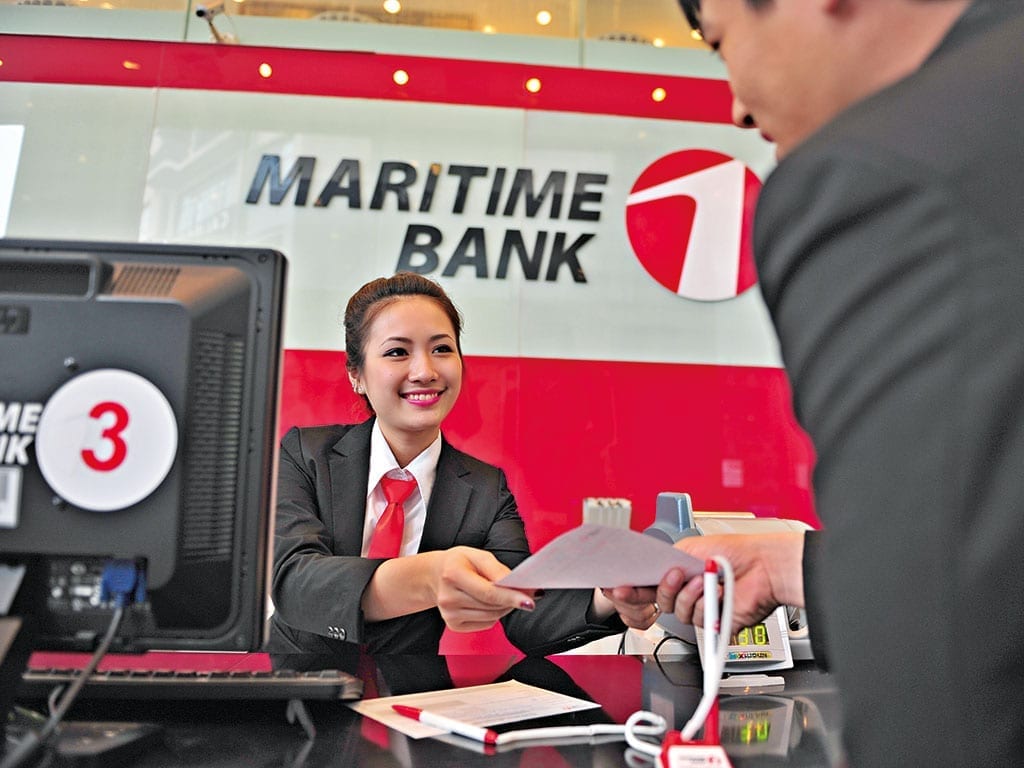
    Customers must be at the centre of banks’ attention as they make a move towards digital transformation in an effort to adapt to a changing landscape of financial innovation and disruptive technologies.

    This was said by head of Retail Banking at VP Bank, Sandeep Deobhakta, at a conference held in Hà Nội on Thursday, titled, ‘The Future of Finance in Việt Nam 2017.’

    Deobhakta, who has been holding this position since May 2015, said customers in Việt Nam are very open to new technologies and the nascent retail banking industry in Việt Nam can also adopt these technologies faster than other markets if they put customers first.

    In the future, traditional banks might lose business to companies that employ disruptive innovations if they failed to deliver better, simpler and faster solutions to customers, Deobhakta cautioned.

    VP Bank has been working with Timo, Việt Nam’s first mobile-only bank, giving customers better solutions to manage their money, bills and the ability to top up their mobile cards through the Timo app. At Timo Hangouts, one can forget about a typical bank branch and instead enjoy a coffee as one opens an account and uses bank services.

    Timo has about 4,000 customers in the HCM City and opened a Timo Hangout in Hà Nội last October, looking to attract more than 100,000 users by next year.

    Việt Nam has a huge untapped market for financial innovation, with only 20 per cent of the population having bank accounts and 3 per cent owning credit cards, Foo Boon Ping, managing editor of The Asian Banker, said at the conference.

    “The stable GDP growth of around 6 to 7 per cent, low wages, a large population with a high savings and strong innovative approach are crucial factors that will accelerate the financial and industrial development in the Vietnamese market,” he said.

    “Digital transformation is driven by real business needs to transform to become more cost efficient and to serve your customers as their behavior and preferences change,” he added.

    There are only about 36 fin-tech companies in Việt Nam, with most focusing on providing consumers and merchants with online and digital payment solutions.

  • Singapore eyes increased investments, more flights to Manila

    The government of Singapore has expressed interest in further increasing its investments in the Philippines, as well as adding more flights to Manila in anticipation of increased demand in air travel between the two countries.

    In a recent meeting with Finance Secretary Carlos Dominguez III, Singaporean Ambassador to Manila Kok Li Peng said Singapore’s private sector would like to explore new growth opportunities in the Philippines, particularly in the retail, transportation, infrastructure and tourism sectors.

    Ambassador Kok said Singaporean businessmen were planning to schedule the next meeting of the Philippines-Singapore Business Council (PSBC) in Davao City and, if possible, meet with President Rodrigo Duterte to discuss new business and investment activities in the Philippines.

    “We’re trying to get a mixed meeting of the PSBC here. They want to bring the members to Davao to meet with the President,” Kok said, to which Dominguez responded that a possible date for such a dialogue could be in February.

    Singapore’s investments in the Philippines–valued at P16.8 billion in 2015–are mostly in real estate activities, electricity, gas, steam and air conditioning supply, and manufacturing.

    Singapore was the Philippines’ fourth largest trading partner in 2015. The country’s total exports reached $3.8 billion in 2015, mainly comprising electronic products, petroleum products, and electronic equipment and parts.

    The Philippines, in turn, imported a total of $5 billion worth of goods from Singapore in 2015, mostly mineral fuels, lubricants, food and live animals, and industrial machinery and equipment.

    Kok also said that Singapore was looking at the Philippines in exploring more markets for its airline industry.

    “More competition is good for the consumer,” Kok said in explaining Singapore’s plan for its airline companies—Singapore Airlines, SilkAir and Tiger Airways—to add more flights to the Philippines.

    In response, Dominguez, a former chairman of the Philippine Airlines, agreed that opening the Philippines’ air travel industry to competition and even partnerships with other airlines would benefit the economy and boost the growth of the tourism sector.

    Dominguez said the Duterte administration was “engaging more with ASEAN and countries around Asia” as a way to “move forward” and achieve a balance in strengthening the Philippines’ diplomatic ties with other nations across the globe.

    In Beijing last October, Dominguez and Socioeconomic Planning Secretary Ernesto Pernia, who were part of President Duterte’s delegation on his state visit to China, jointly announced that while the Philippines would maintain its good relations with Western economies, it pushed for “stronger integration” with its neighbors in the region.

    The move, they said, would open for the Philippines countless opportunities for trade and investment in a market of 1.8 billion people across the region, especially now that other ASEAN economies had also committed to greater integration and China had pledged to open its capital markets.

    ASEAN groups the Philippines, Malaysia, Singapore, Brunei, Thailand, Indonesia, Laos, Cambodia, Myanmar and Vietnam.

    Both Dominguez and Kok agreed that technology and innovation are indispensable to sustaining growth under the current knowledge-based global economy.

    “We’re now [living under] a knowledge-based economy. We think innovation is the way to go in the future,”Kok said.

    Dominguez said the rapid growth of online-based businesses and investments was among the reasons the Duterte administration considered it a priority to improve “interconnectivity and internet speeds” in the country.

    “The structure of the industry in the Philippines right now is really holding us back. And it’s becoming quite obvious that the system now we have, where we basically have two service providers, is not really working,” Dominguez told Kok.

    In the meeting, Kok also informed Dominguez of Singapore’s request to review and update the terms of its 40-year old double taxation agreement with the Philippines.

    Dominguez assured Kok that he would discuss Singapore’s concerns regarding the double taxation agreement with the Bureau of Internal Revenue.

  • Why omni-channel payments need to be the new norm in retail

    Why omni-channel payments need to be the new norm in retail

    Electronic payments account for 69%1 of consumer transactions in Singapore – just slightly higher than the global average of 65%. The country’s e-commerce market, valued at US$1.39b in 2015, is predicted to exceed S$7b in 2025 with 60% of consumers saying they bought products online at least once a month2 – some even showing a growing preference to shop online and pick up their purchases in-store.

    Consumer buying habits aren’t rooted solely at retail locations or online. They shift between retail stores at malls, smartphones, laptops, and transient, yet trendy, pop-ups. In other words, consumers are omni-channel shoppers. So why haven’t payment systems followed in the same direction?

    In Singapore, it’s a common sight to see retail counters with multiple terminals serving different modes of payment: one for credit cards, another for debit cards, yet another for contactless payments. On the back-end, business owners spend hours liaising with various vendors, different banks, grappling with multiple platforms and numerous devices.

    Businesses could instead integrate payments across multiple platforms – increasing efficiency and profits by adopting a seamless, omni-channel payments system. In doing so, they would be able to process payments with greater speed and efficiency saving time and resources in their back-offices, leverage integrated data for actionable insights, and offer customers a seamless, integrated experience.

    1. Greater efficiency
    70% of businesses surveyed in a KPMG report agreed that there are simply too many payment methods to deal with. Many retailers have multiple banking contracts and relationships across Singapore to manage, each of which provides part of the company’s in-store payment solution. This represents an enormous investment in managing reports and financial flows.

    By adopting omni-channel payments, businesses will be able to work across a single centralised platform that enables businesses to accept and process payments across multiple markets. In doing so, retailers can drastically simplify these processes, cut down on the human resource and financial investments needed to manage their payment acceptance.

    2. Leverage data for actionable insights
    The use of technology and data allows local retailers to gain business intelligence and insights into areas such as purchasing habits. Integrating payments from the point-of-sale (POS) system with accounting software or customer relationship management (CRM) systems to capture disparate pieces of information enables retailers to better serve their customers. Leveraging insights gleaned from payment information, retailers can decide when and who to offer discounts and deals to drive sales.

    Having access to cross-channel shopper data gives merchants a treasure trove of information that can be analysed for patterns online and offline. They can then mine this information for customer retention and loyalty marketing. Many merchants are already beginning to offer their customers an omni-channel shopping experience and in doing so significantly improve the shopper experience.

    An example: a shopper makes a number of purchases from an e-commerce site. Several months later, she goes shopping whilst on vacation. At the checkout, the terminal recognises the shopper’s card, and the staff member adds a discount and a personal thank you thus delighting the customer with an even more seamless, personalised experience.

    3. Seamless customer experience
    Businesses need to recognise that the customer journey today is fluid, accessible, and continuous. Shoppers can, and want, to purchase whatever they want, without restrictions on time, location, and across social, online, and mobile channels.

    Businesses too need to provide a seamless experience and allow customers to start a purchase in the channel of their choice and complete it in a potentially different channel of their choice.

    Here’s what a customer journey might look like: a shopper goes into a store and wants a shirt in a different colour than what’s currently available in-store. If a store has adopted an omni-channel approach, the shopper can go to the in-store tablet-assisted sales terminal that carries the entire web-based inventory, choose the colour they want, make the payment on the spot, and have it delivered to the address of their choice.

    Omni-channel payments enable retailers to service customers across multiple channels (in-store, online, or mobile); retail sectors, payment types (NETS or debit and credit cards), and payment methods (contactless, chip and PIN, magnetic and online) through mobile point-of-sales devices, payment gateway, or virtual terminal. In doing so, the store has gained a purchase rather than losing an opportunity.

    With discerning consumers becoming increasingly accustomed to omni-channel payment capabilities, it will transform “the next big trend” into “the new norm” for consumers in Singapore.

    1.https://newsroom.mastercard.com/asia-pacific/press-releases/singapore-among-top-markets-in-asiapacific-advancing-towards-a-cashless-society-new-mastercard-report/
    2.https://www.pwc.com/sg/en/publications/assets/total-retail-sea-2016.pdf

  • Vietnam urges retailers to ditch cash for plastic

    Vietnam urges retailers to ditch cash for plastic

    With online sales booming in the country of 93 million, it’s time for shoppers to embrace e-commerce. Vietnam is trying to convince at least 70 percent of its citizens aged 15 and over to open bank accounts and about 50 percent of urban residents to switch to non-cash payments via debit and credit cards by 2020.

    Online retail revenue is forecast to hit $10 billion in the next four years, accounting for 5 percent of the country’s total retail market, which grew 10.2 percent last year to $118 billion.

    The government has officially rolled out its e-commerce development plan for 2016-2020 to tap into the fast-growing consumer population with a huge demand for online shopping.

    According to one estimate, about 30 percent of the population will buy goods and services over the internet and spend an average of $350 per year online by 2020.

    In 2015, Vietnamese shoppers spent $4.07 billion online, a jump of 37 percent from the previous year, according to the Vietnam E-commerce Report, adding that revenue from online retail accounted for 2.8 percent of the country’s revenue from the sale of goods and services in the same year.

    With a population of 93 million, Vietnam was ranked as the smallest e-commerce market in Southeast Asia in terms of sales just three years ago. Now online retail is gaining momentum with the country’s 49 million internet users increasingly turning to online shopping.

    According to Internet World Stats, Vietnam is currently ranked 18th in the world in terms of the number of internet users, with mobile subscription rates as high as 40 percent.

    In order to increase non-cash transactions, the government will require all supermarkets, shopping malls and convenience stores to accept payments via credit and debit cards.

    It is forecast that in the next four years the number of supermarkets will nearly double to 1,300 and shopping malls to 300, according to the government’s plan.

    Spending at supermarkets, convenience stores and shopping malls is expected to rise to 45 percent of total consumer spending by 2020, up from 25 percent now, government data shows.

    The government also wants 70 percent of utility service providers including telecommunications companies and electricity and water suppliers to move their billing online.

  • Vietnam retail e-commerce to earn US$10 billion by 2020

    Vietnam retail e-commerce to earn US$10 billion by 2020

    Data from the Association of Vietnam Retailers (AVR) indicates that in 2015, retail e-commerce surpassed US$4.07 billion, with a growth rate of 20%.

    Ho Thi Kim Thoa, Deputy Minister of Industry and Trade, told a forum on e-commerce and mobile phone technologies in Hanoi on December 8 that e-commerce was a vital development trend in the retail sector.

    Thoa said last year, the growth rate of the retail sector was 9.5%. Traditional retail made up 80%, while modern retail including supermarkets, convenience stores and e-commerce accounted for only 20%. “Notably, in the modern retail channels, the portion of e-commerce was at a low level of around 2.8%,” she added.

    The country had 217 e-commerce trading floors with total revenues of VND1.66 trillion in 2014, double the 2013 figure.

    “Vietnamese businesses have seen positive changes in e-commerce by big firms. The number of small- and medium-size enterprises (SMEs) participating in e-commerce was modest even though 97% of the country’s 600,000 firms are SMEs,” she said.

    The deputy minister noted that the Prime Minister had promulgated a decision on master planning of e-commerce in 2016-20.

    She gave the recent Online Friday on December 2 as an optimistic example of e-commerce development. The number of enterprises joining in the event this year was 3,000, higher than last year.

    She urged businesses to catch up with e-commerce trends and have plans to enhance e-commerce development.

    Dinh Thi My Loan, AVR’s chairwoman, said there were many factors promoting e-commerce development, including the popularity of mobile devices.

    Nguyen Thanh Hung, chairman of Vietnam E-commerce Association (VECOM), agreed that the development of mobile phones and applications had contributed to promoting purchasing activities.

    Hung said the country’s e-commerce had been developing at a growth rate of 30% a year. “Businesses have quickly shifted from offline to online retail. Several are even totally doing business online,” he said.

    However, Pham Thanh Cong  from Nielsen said the sector should ha solutions to meet demand in rural areas as there are 1.3 million traditional shops, accounting for 85% of the retail sector’s revenue.

  • South Korea’s consumer sentiment suffers due to political turmoil

    South Korea’s consumer sentiment suffers due to political turmoil

    It’s been a dramatic year for South Korea. And that drama has played out both in the political and business spheres.  Let’s show you what it’s done to consumer spending.

    Consumer sentiment last month dropped its the lowest level since the 2009 financial crisis. The Bank of Korea, says the consumer sentiment index stood at 95.8 in November.

    Retail sales in South Korea have dropped more than 1 percent on a yearly basis since the beginning of November. Box office receipts plunged 17 percent on the year in November alone.

  • Use underground space to boost retail in Singapore

    Use underground space to boost retail in Singapore

    In land-scarce Singapore, land optimisation is a strategic thrust that is achieved by reclaiming land, intensifying land use upwards, and building downwards.

    However, there are limits to land reclamation and building upwards due to maritime and aviation constraints respectively.

    Therefore, unlocking underground space and synergising below and above-ground land use is the next frontier for Singapore.

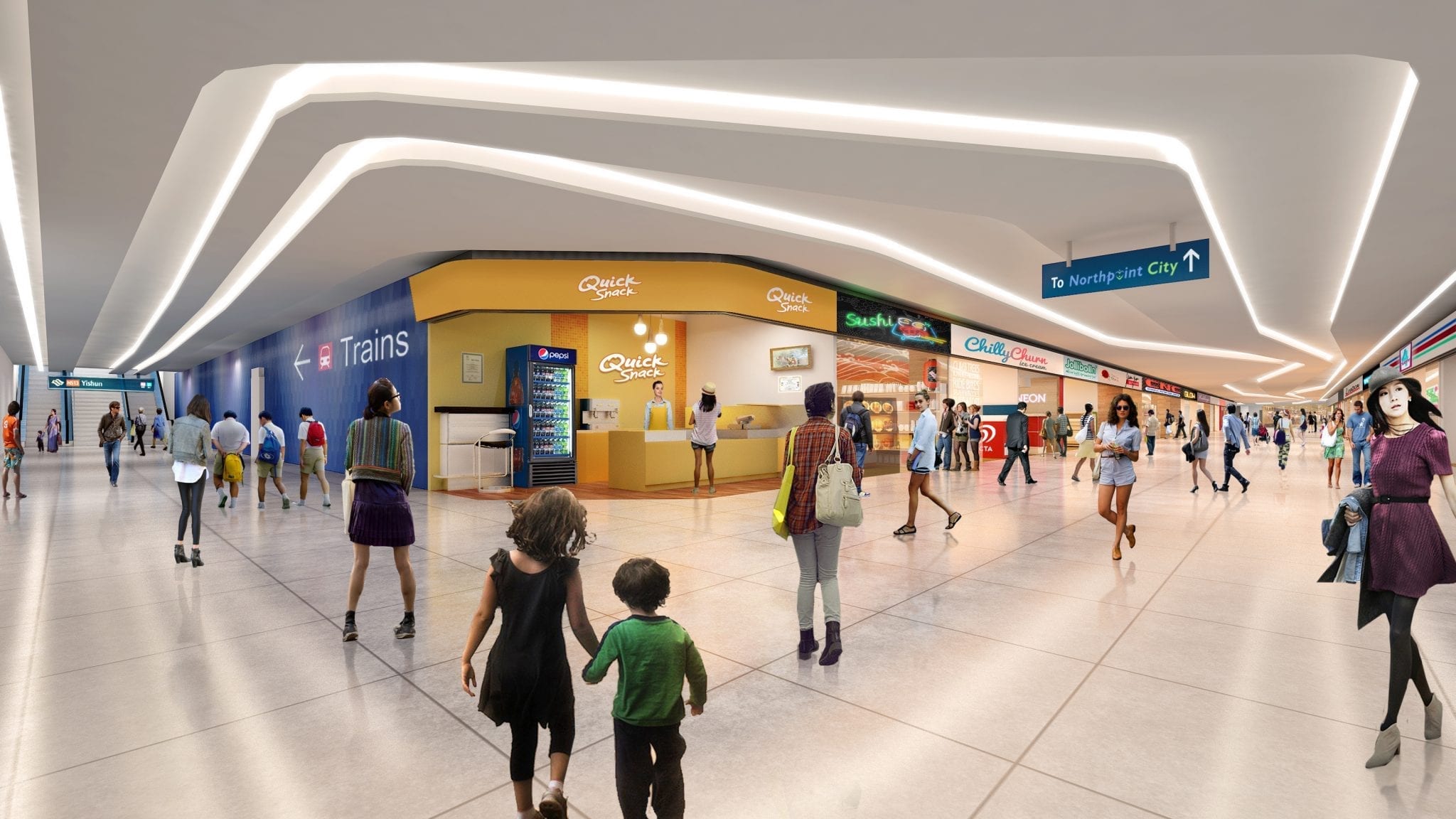
    To facilitate the growth of an extensive underground pedestrian network, the Urban Redevelopment Authority (URA) developed an Underground Master Plan to guide the construction of underground walkways in the Central Area.

    INCENTIVE SCHEME

    While the government has the ability to finance public underground development, the commercial viability of an underpass is a significant consideration for building owners and developers.

    Consequently, URA implemented an incentive scheme in 2004 to co-fund the construction of strategic underground links in the Central Region, in particular Orchard Road.

    However, no developer on Orchard Road has voluntarily capitalised on the URA incentive scheme to construct underground connections.

    This provided the key impetus for this study, which focuses on the integration of underground walkways with existing buildings on Orchard Road.

    It evaluates the feasibility of an underpass from the perspective of developers, retailers, and the public.

    PERSPECTIVES OF DEVELOPERS, RETAILERS AND THE PUBLIC

    From a developer’s perspective, there are two motivations for an underpass.

    First, an underground walkway provides a seamless, all-weather retail experience.

    Second, an underpass enhances underground connectivity which could generate higher foot traffic, resulting in higher rents for landlords.

    Furthermore, we found that there are two tiers of underpass in terms of connectivity efficiency, whereby a primary underground linkway provides a direct connection between an MRT station and shopping mall, while a secondary underpass connects two adjacent shopping malls.

    However, there are six barriers to the development of an underground walkway, namely:

    • (a) high construction cost;
    • (b) subterranean land premium;
    • (c) extensive underground infrastructure beneath public roads;
    • (d) structural building limitations;
    • (e) loss of rental revenue during construction period; and (f) diversion of pedestrian traffic to competitors’ shopping malls.

    Consequently, the total development cost – comprising high construction cost and subterranean land premium – renders an underpass commercially infeasible.

    A robust tenant mix is central to the success of an underpass, and the demand for retail space along the link depends on the rent and trade mix.

    Generally, retail rent is contingent upon the location within a shopping mall, shop size, and the building’s proximity to transportation nodes.

    The rents are highest on the ground-level retail spaces fronting Orchard Road, while rentals in the basement levels are typically lower than those of levels one through three, except in cases with direct connectivity to an MRT station.

    Our study found that the suitable tenant mix for an underground walkway includes fashion, convenience, pharmacy and healthcare, food and beverage, and accessories.

    Furthermore, the tenant mix within an underpass is distinguished from those in the basement levels of a shopping mall.

    From a shopper’s perspective, one may use an underpass to commute, shop, or do both.

    It is dependent on the visibility and connectivity efficiency of an underpass.

    For instance, the primary underpass between Orchard MRT Station and Tangs Plaza is heavily utilised because it is not only highly visible, but it also serves as an efficient linear connection between the two shopping malls.

    Conversely, the secondary underpass between Orchard Central and The Centrepoint was previously underutilised due to a lack of both visibility and awareness of its existence.

    However, the completion of Orchard Gateway provided a more seamless underground connection between Somerset MRT Station and Orchard Central, generating higher traffic flow to The Centrepoint.

    RECOMMENDATIONS

    Our study proposes four recommendations to encourage the development of new underpasses:

    First, the government could undertake the construction of an underground linkway and sell the retail spaces to investors.

    The precedent was set by the sale of Tangs Underpass, connecting ION Orchard and Tangs Plaza, to joint-venture partners CapitaLand and Sun Hung Kai Properties.

    Today, the Tangs Underpass is lined with retail spaces on both sides of the walkway.

    Second, our study proposes further enhancement to the subsidy on public pedestrian walkways and an introduction of a subsidy for retail space under the URA incentive scheme.

    These refinements significantly reduce the construction cost of an underpass, thereby making it commercially viable for building owners and developers.

    Third, the government may consider the provision of feasibility studies and infrastructure support under the URA incentive scheme, which would benefit both the state and the market.

    From the state’s perspective, this would develop the underground database to aid future planning of subterranean space.

    Furthermore, it would provide the market with clarity on the physical conditions encompassing land parcels and technical requirements of an underpass.

    Additionally, infrastructure support could be offered in the form of cash subsidies to partially offset the high construction costs of underground tunnels on Orchard Road.

    Fourth, an increase in plot ratio could incentivise developers to undertake redevelopment or major addition and alteration works, leading to the construction of an underpass which is mandated by URA.

    The 2014 URA Master Plan allows up to a 15 per cent bonus in base plot ratio for land sites above 10,000 square metres in the Orchard Planning Area.

    Furthermore, there is a variety of space and design incentive schemes to maximise a site’s development potential.

    The upcoming Orchard Boulevard MRT Station in 2021 may motivate building owners to amalgamate land parcels in West Orchard and carry out redevelopment or major addition and alteration works, giving rise to the creation of new underground walkways.

    In conclusion, an effective incentive scheme entails a delicate balance between the objectives of the state in enhancing underground connectivity and the market, where profit matters.

    Ultimately, the exploitation of underground space has limitless potential in expanding Singapore’s physical space boundary vertically downwards and optimising land use through the seamless integration of below and above-ground activities.
  • Retail sales in Japan rise by 1.7 percent

    As per industrial data released on Wednesday, Japan has witnessed economical growth after months of stagnation. The country’s industrial output increased 1.5 percent on month, and inventories fell 1.5 percent on month and 4.8 percent on-year.

    Japan’s retail sales also rose by 1.7 percent on-year in November, however, sales of large retailers were down by 0.3 percent on year. The manufacturing industry is meanwhile expected to grow 2 percent in December and 2.2 percent in January.

    The country released revised figures earlier this month, showcasing that its gross domestic product (GDP) for the July-to-September quarter grew 1.3 percent on-year.

    Izumi Devalier, Head of Japan economics at Bank of America-Merrill Lynch said, “We’re now down to levels we saw pretty much at the time of the VAT value-added tax hike. So, inventories are very lean, which means that we should some pretty strong production numbers in the months ahead.”

    “While domestic demand still lacks strength, a pick-up in exports is driving up production. Output will likely continue recovering moderately ahead,” said Takeshi Minami, Chief Economist at Norinchukin Research Institute.

    Growth in exports and factory outputs is offering the country’s economy a boost, while also encouraging policymakers to pull the country’s economy from stagnation.

    Further, the data released showed that Japan’s core consumer price index including oil products dropped 0.4 percent on-year.

    Such a drop has been recorded for the ninth straight month in November.

  • Aprindo Foresees 10% Increase in Retail Sales Volume for 2016

    Aprindo Foresees 10% Increase in Retail Sales Volume for 2016

    Indonesian Retailers Association (Aprindo) said that this year’s retail performance has been better than last year. Aprindo chairman Roy Mandey is confident that volume of retail sales will increase 10 percent this year.

    “We are confident of ending 2016 with 10 percent increase in volume of retail sales compared to last year,” Roy Mandey said in Jakarta on Wednesday.

    Roy explained that the figure of 10 percent is equal to Rp200 trillion. Last year, with national economic growth at 4.7 percent, the volume of retail sales reached 8 percent or equal to Rp181 trillion. “Adding processed food and beverages into the equation would take the sales volume to Rp1,630 trillion.”

    Roy said that sales volume increased significantly in November and December, despite some rallies staged during that period.

    As for next year, Aprindo is confindent of achieving similar figure of sales volume because Indonesian economic growth is predicted at 5.4 percent, which will help the growth of retail industry.

    Roy revealed that the growth of Indonesia’s retail industry is better compared to that of other countries. The United States, for instance, only saw 0.1 percent increase in retail industry. “Indonesia’s [retail sector] is better [in terms of growth], more so because inflation rate is low.”

  • When a gold retailer starts selling sunglasses

    When a gold retailer starts selling sunglasses

    Warmer than expected Christmas weather appears to be providing little comfort for Hong Kong’s retail sector this year. Business has been cold at many outlets despite a projected rebound in mainland visitor arrivals.

    Otherwise, what can explain a gold shop branching out into sunglass sales and news that the city’s biggest karaoke operator is scaling down its operation?

    Let’s talk about the gold retail chain first.

    I’m referring to Luk Fook Jewellery, which has just opened its first eyewear store — “Vision Gallery”.

    The new venture comes after the company announced last month a 31.5 percent slide in same-store sales for the six months ended September compared to the same period a year ago.

    The eyewear store has been put up in a prime location, next to an H&M outlet, on Dundas Street in Mongkok.

    Luk Fook is said to have signed a two-year lease for the 600-square-foot retail space, offering a monthly rental of HK$128,000.

    Though the rent is just half what the previous tenant, bankrupt home appliance chain DSC, was paying earlier, there is still this question: why an eyewear shop, instead of another gold store?

    Well, the answer lies in economics.

    Chairman Wong Wai-sheung told Ming Pao that a 1,000-square-foot gold shop, in terms of costs, would be equivalent to opening 10 eyewear stores.

    Guess what? Luk Fook, which currently has 47 gold shops in Hong Kong, has earmarked HK$20 million to open 10 eyewear stores next year, with a focus on the middle class.

    Last year, the company had 50 gold shops in the city.

    To boost Christmas sales at the new eyewear outlet, Luk Fook is giving away a pair of pearl earrings to the customers.

    We are not sure if this is a nice cross-selling idea but would reckon this is a defensive move.

    Luk Fook as well as its competitors such as Chow Tai Fook and Tse Sui Luen have seen their same-store sales fall steeply this year, with 20-30 percent slide in many cases.

    In comparison, an eyewear retailer such as Stelux Holdings has seen its sales dip just 5 percent.

    During its interim results, Luk Fook said it will strive to broaden its income sources, enhance the operational efficiency and reduce costs in order to minimize the impact of the business downturn.

    The foray into eyewear retail is part of that strategy.

    Elsewhere in the city, Karaoke operator Neway has also come up with a new way to survive.

    Rather than open a new venture, Neway is leasing the 4,000 square-feet lobby and first floor at its Causeway Bay flagship store CEO Neway, according to Apple Daily.

    By sub-leasing 30 percent of the original floor area, Neway is trying to shore up revenues which have been hit by a decline in night-time singing parties at its karaoke outlets.

    The plan will also help the company save some HK$1.8 million in monthly rental.

    The sub-leasing of Causeway Bay shop space comes after the group shut down an 18,000-square-foot Mongkok facility last year.

    As much as we miss the grand lobby of CEO Neway and the good old days of group singing, we cannot help but admit that Karaoke outlets are now a bit out of fashion after they dominated the social scene for about twenty years.

    This year, one of the best-selling items at the Golden Computer Arcade in Sham Shui Po is a microphone with karaoke function that sells at no more than HK$500.

    The made-in-China product, which connects through bluetooth with iPad and the home stereo system, has become an immediate hit and is now a must-have during family gatherings.

    If you can get the same kick at home, why bother spending money on a karaoke shop? This seems to be the view of a growing number of people.

    Given this reality, Neway may need to find something else to sell other than songs.

  • New retail hub rises in Xiamen

    New retail hub rises in Xiamen

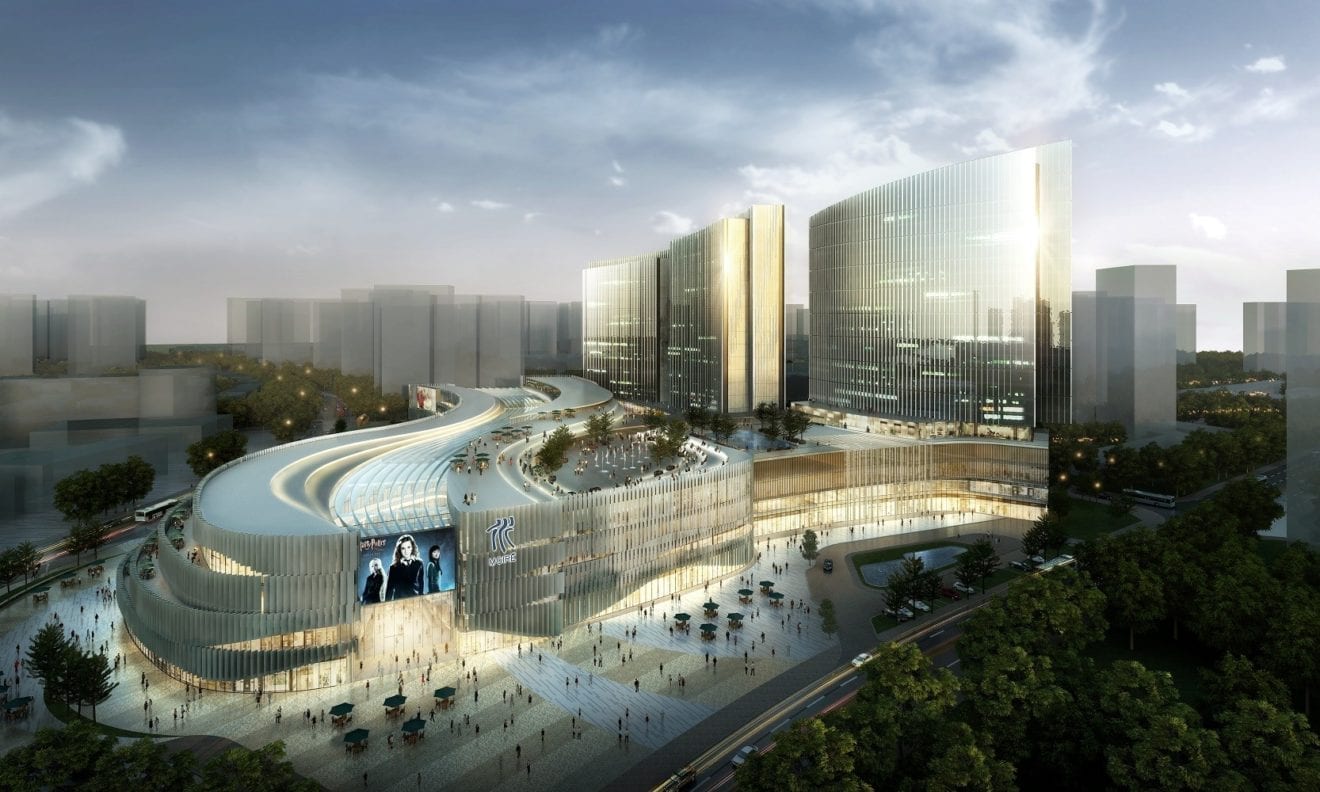
    YCH Group, a supply chain management, and logistics company in Asia-Pacific, has launched a retail hub in Xiamen, China, which is envisioned to support the Pilot Free Trade Zone project in the region.

    The project, which will be the first major mall in the region, will serve the needs of the population in the immediate vicinity and the rapidly growing city of Xiamen. It will be managed by YCH Group on behalf of XPD-YCH Logistics, a joint venture between YCH Group and Xiamen Port Development, a subsidiary of the Xiamen Port Group.

    Spanning 55,000 square meters with a built-up space of 100,000 square meters, the facility was converted from XPD-YCH Logistics’ existing warehouse in Xiamen and will be fully operational this month.

    This comes at an opportune time as Xiamen, which is currently one of the fastest growing cities in China, is growing at 6.7 percent with a population of 4.4 million. Aside from local demand, the mall aims to cater to the burgeoning Chinese retail scene while playing a key role in strengthening Xiamen’s status as one of China’s most popular tourist destinations.

    According to the Xiamen Tourism Bureau, Xiamen receives 1.63 million tourists from home and abroad, and rakes in RBM1.853 billion ($258.9 million) in tourism revenue. Moreover, China has also overtaken the US to become the world’s largest retail market in 2016 with total sales of $4.886 trillion.

    Two of the most well-known brands in China – Sam’s Club and Red Star Macalline – will form the mall’s anchor tenants, occupying approximately 85 percent of the facility. This will be the first Sam’s Club Store opened in Xiamen by Wal-Mart, and will be the 15th Sam’s Club store across 13 cities in China.

    Sam’s Club is a division of Wal-Mart, the world’s largest retailer. It offers an extensive inventory with exceptional value on famous-brand merchandise at “member only” prices for both business and personal use.

    Red Star Macalline, on the other hand, is the largest national home improvement and furniture retail platform in China, with stores in most major cities in China. It targets the rapidly growing middle class in China through the operation of malls that offer home improvement and furniture materials, including flooring, bathroom and kitchen fixtures, with approximately 18,000 well-known brands.

    Strategically situated within the Pilot Free Trade Zone, the mall is located in a highly populated region in Xiamen and is in close proximity to both air and sea ports and numerous famous hotels, bringing numerous trade and business benefits for prospective clients.

    “With the dynamic and growing retail sector in the country, we want to equip retailers with game-changing capabilities that help them simplify processes and optimize costs. This will enable them to remain competitive while simultaneously boosting trade and facilities investment for China with the Pilot Free Trade Zone,” said Koh Yong Seng, Operations Director of North Asia, YCH Group.

  • Retail sector key in attracting tourists

    Retail sector key in attracting tourists

    It is the most wonderful time of the year as far as the retail scene is concerned. Shopping malls are busy once again, cash tills are ringing ever merrily and, perhaps more important, Singapore’s tourist numbers are rising. Despite the threat of online shopping to the domestic market and poor footfall numbers at certain malls, the Singapore retail scene has been a star performer in wooing the tourist dollar.

    A report reveals that for the first time since 2012, shopping has overtaken gambling as the biggest earner in Singapore’s tourism industry. Higher-spending visitors helped boost tourism receipts in the first half of this year. The readiness of tourists to spend more on shopping, accommodation, and food and beverage contributed, in fact, to offsetting a fall in sightseeing, entertainment and gaming. The Chinese, Indian and Indonesian markets played a strong role, with visitors from secondary cities such as Chongqing and Fuzhou attesting to the the vitality of the Singapore Tourism Board’s marketing efforts.

    Clearly, more attention could be paid to such markets within the broader imperative of attracting Asian visitors, given that more than one in four travellers at Changi Airport are either going to or coming from Jakarta, Bangkok, Kuala Lumpur or Hong Kong.

    Unavoidably, Singapore is running out of novelty factors to attract tourists: The integrated resorts and Gardens by the Bay, for example, are no longer new. The challenge for the tourism authorities, therefore, is to constantly create fresh reasons for visiting Singapore. The imaginative reworking of the retail scene could be useful here. As an indication of what is possible, this year’s Great Singapore Sale was held to coincide with China’s summer holidays. Livening up the retail scene is one way for Singapore to remain nimble in meeting the demands of tourists.

  • Singapore shoppers want cross-channel options more than new-age services

    Singapore shoppers want cross-channel options more than new-age services


    When it comes to Christmas shopping, Singaporeans prefer retailers with a physical store, coupled with both e-commerce and mobile app. Singapore shoppers want cross channel options more than new age services like digital wallets and augmented reality store experiences, according to the SAP Hybris Singapore Christmas Shopper survey.

    More than 1,000 consumers in Singapore were surveyed to uncover their Christmas shopping habits.

    When it comes to Christmas shopping, 68 percent of respondents said they prefer retailers with a physical store coupled with both e-commerce and mobile app, enterprise application software provider SAP said in a press statement on 8 December 2016.

    In addition, 54 percent prefer those who offer self-pickup services at a physical store.

    According to the results, 65 percent of respondents stated that retailers can improve their Christmas shopping experience by offering free shipping.

    “Singaporeans are amongst the most tech-savvy spenders in Asia, and no strangers to e-commerce,” said Nicholas Kontopoulos, Global Vice President of Fast Growth Markets for SAP Hybris in the Asia Pacific region. “Despite that and reports of Singapore’s continuously challenging retail landscape, the brick and mortar stores are definitely not dead.

    “In fact, the SAP Hybris survey found that 39 percent of Singaporeans still enjoy browsing through stores. This [shows that] Singapore is a truly multi-channel market, where most consumers are using a combination of devices in their online and offline shopping. In the future, offline and online shopping are no longer two separate business models. Singaporeans are demanding a seamless omnichannel shopping experience,” Kontopoulos concluded.