Tag: Retailers

  • Indian retailers lure customers with discounts as GST kicks in

    Indian retailers lure customers with discounts as GST kicks in

    Some of India’s biggest retailers announced price cuts on Saturday as Asia’s third-largest economy switched to a new nationwide sales tax at the stroke of midnight, replacing a host of provincial and national levies.

    The Goods and Services Tax (GST), India’s biggest tax reform in the 70 years since independence from British colonial rule, unifies the $2 trillion economy and 1.3 billion people into one of the world’s biggest common markets.

    Hypermarket Big Bazaar, owned by Future Retail Ltd, announced discounts of 2 percent to 22 percent on groceries and household supplies across its stores in 26 states.

    Fashion portal Myntra, part of India’s biggest online retailer Flipkart, was also offering GST discounts.

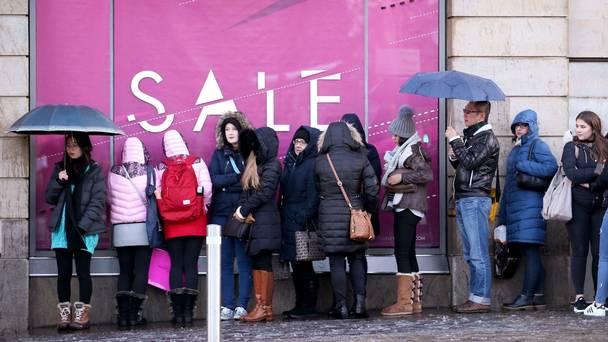
    In Bhubaneswar, the capital of eastern Odisha state, customers queued up outside shops and malls, which remained open until late Friday night to clear stocks of watches, electronic gadgets, cosmetics and gold at discounted rates before the GST regime kicked off at midnight.

    Members of Prime Minister Narendra Modi’s Bharatiya Janata Party (BJP) were seen celebrating the launch of the GST with firecrackers on Friday evening and by painting “Welcome GST” slogans on roads.

    The federal government is encouraging all business to migrate to the new GST system but its complexity – four rates and several exemptions – has still kept many at bay.

    “We will continue as usual unless we see trouble,” said a 35-year-old grocer in Bhubaneswar who has not yet registered for the GST.

    India’s northern Muslim-majority state of Jammu and Kashmir is yet to implement the GST as the provincial government grapples to arrive at a consensus with the opposition and other stakeholders.

    Traders in Kashmir Valley have called for a day’s strike on Saturday to protest the GST.

    “Though we have missed the (July 1) deadline, we will wish to take everybody along before taking any decision,” Public Works Minister Naeem Akhtar said.

  • Vietnamese consumers among most demanding on e-commerce

    Vietnamese consumers among most demanding on e-commerce

    Nielsen has forecast that the Vietnamese e-commerce market will grow 22 per cent this year and 13.2 per cent by 2020.

    According to the Vietnam E-commerce Association (VECOM), the local e-commerce sector will become a 10-billion-dollar business in the next five years.

    However, local consumers are also demanding, with many complaints about price, product information and authorisation, which should be addressed by merchants to improve customers’ trust.

    A research conducted by iPrice and Trusted Company based on more than 30,000 reviews on 5,000 websites in Viet Nam, Malaysia, Singapore, Indonesia and the Philippines found that Vietnamese customers have the lowest trust on e-commerce and spend less money on shopping online.

    Vietnamese customers complain the most about “fake products”, 15 per cent higher than Thailand, the country with the second maximum complaints, given that fact that Thailand ranked 4th worldwide in the fake goods trade.

    The second maximum complaints on e-commerce sites by Vietnamese customers are about the price of products. Despite being an aggressive promotion hunter, the Vietnamese still think products listed by e-commerce merchants are overpriced.

    Given that 80 per cent of consumers prefer cash on delivery (COD) payment, the country also has the highest order cancellation rate, with 30 per cent of products not being accepted due to product failure, the research said.

    Unlike consumers in other Southeast Asian countries such as Singapore and Indonesia that have shared concerns on buying products, the most common queries of the Vietnamese are on product authorisation (store address) and availability. They are revealed to often use feedback forms to ask about products.

    Of all Southeast Asian countries, Viet Nam has an average rating of 3.7 out of five stars, the research has revealed. This is due to the fact that only large merchants have developed a rating scheme for a better shopping experience for consumers.

  • Brick-and-mortar stores with online presence have retail edge

    Brick-and-mortar stores with online presence have retail edge

    The growth of e-commerce may pose a serious threat to brick-and-mortar stores, but there is a silver lining for department stores here. A nationwide survey has found that department stores with both a physical and online presence can have a competitive edge over online-only stores.

    Department store customers who shopped via the store’s online channels – such as its website or mobile app – reported higher levels of customer loyalty than shoppers at e-commerce sites such as Zalora and Groupon.

    This was one of the findings of the latest Customer Satisfaction Index of Singapore released yesterday.

    “This would suggest that traditional brick-and-mortar stores could be better served and complemented by developing a robust omni-channel presence if they have not already done so. It can potentially give them a competitive edge over the e-commerce retailers,” said Mr Chen Yongchang, head of research and consulting at the Institute of Service Excellence (ISE) at the Singapore Management University, which compiled the index.

    The survey of 6,900 Singapore residents and tourists between January and April this year found that satisfaction levels in the retail sector remained similar to last year’s, with the retail sector scoring 72.1 points out of 100, up from 71.7 the year before.

    Of the four retail sub-sectors surveyed, the department store sub-sector showed significant improvement.

    This largely stemmed from more satisfied local shoppers, said Ms Neeta Lachmandas, ISE’s executive director.

    “This increase could be related to the revamps of various stores and product offerings, as well as increased promotional activities targeted at boosting sales.”

    Among department stores, DFS had the highest score of 73.6 while Metro was the only store whose score had increased significantly.

    DFS’ managing director for Singapore and Indonesia, Ms Wilcy Wong, attributed the retailer’s high score to its focus on providing “authentic and personal customer engagement. But at the heart of the DFS experience is of course our people,” she added.

    “We invest heavily in talent management programmes, as well as learning and development through our own DFS University to enhance our operations.”

    The fashion apparel, supermarket and e-commerce sub-sectors did not see any significant change in scores.

    A notable observation among supermarket customers was that those who frequently used self-checkout counters were more satisfied than those who mostly used manned cashier counters.

    The survey also looked at customer satisfaction for the info-communications sector, which scored a record high of 69.6 points out of 100, up 1.6 per cent.

    ISE found that service attributes relating to responsiveness, assurance and empathy were key drivers of loyalty among mobile telecommunications and broadband customers.

    This was in addition to the usual product-related attributes such as suitable subscription plans and fast data speeds.

  • The Challenges For Global Retail Franchises in Indonesia

    The Challenges For Global Retail Franchises in Indonesia

    Research company Spire in 2016 found Indonesia is viewed as the region’s largest franchise industry, with experts predicting at least 60 percent of franchise business operated in Indonesia last year with the majority of foreign franchises.

    Amir Karamoy, Chairman of the National Committee for Franchising and Licenses at the Indonesian Chamber of Commerce and Industry, said regional headquarters based in Indonesia should be encouraged as it benefits the country through taxes and human resource development. But at this stage, Indonesia’s complicated regulations regarding retail businesses and franchises limit foreign involvement, particularly for foreign businesses hoping to base a regional headquarters in the country.

    These regulations, as well as strong competition, can spell trouble for even the biggest global brands. The recent announcement that US convenience store giant 7-Eleven will close its doors in Indonesia has prompted speculation on further reforms.

    Modern Sevel Indonesia (MSI), the local arm of 7-Eleven Indonesia, opened its first store in Bulungan, South Jakarta, in 2009.

    “The business model that 7-Eleven implemented made underlying products such as snacks, beverages and cigarettes popular. This had made several other mini markets struggle to compete,” University of Indonesia academic and businessman Rhenald Kasali said.

    The chain introduced the hang-out concept to Indonesia, which saw young people gather to spend time together and snack, which in turn disrupt traditional models where customers would purchase food and then leave.

    Kasali speculated the Indonesian government does not support the business concept, which could have been a factor in MSI closing all stores by the end of June.

    He said government regulations typically ‘take sides’ in support of older retailers.

    “Sixty percent of 7-Eleven’s income came from youngsters who hang out at the store. 7-Eleven suffered because of bureaucracy and regulators that don’t understand the business model,” Kasali added.

    7-Eleven faced tough questioning from the Ministry of Trade when it first launched about the concept and whether the outlets were convenience stores or restaurants. A government regulation which prohibited the sale of alcohol at convenience stores is also believed to be a factor in the shutdown.

    The convenience store brand is not the first international giant to struggling to do business in Indonesia. Last year Swedish furniture retailer IKEA struggled to keep its franchise in Indonesia due to copyright problems with a firm called IKEA Surabaya.

    The Surabaya-based IKEA had registered the name in 2013, while the Swedish firm had registered in 2013. But Indonesian regulators defended the Surabaya business, saying the Swedish IKEA had been commercially inactive. As a result, Swedish IKEA paid a royalty to the Surabaya IKEA.

    Similarly, French fashion brand Pierre Cardin sued Jakarta businessman Alexander Satyo Wibowo who had been using the name for his brand in Indonesia. Like the IKEA case, the courts sided with the local business and ruled Pierre Cardin had lost the rights to the name due to inactivity.

    Although Pierre Cardin is a famous brand globally, the company registered its name in Indonesia in 2009 while Wibowo registered his brand in 1977. As a result, France’s Pierre Cardin no longer open outlets in Indonesia under that name.

  • China economy growing but harder times beckon

    China economy growing but harder times beckon

    China’s economy continued to improve in the second quarter, with corporate profits rising and hiring up, a private survey showed, but it suggested the Asian giant may have to brace itself for tougher times ahead even though firms have been able to weather a tighter financing environment.

    The quarterly survey of thousands of Chinese firms by China Beige Book International (CBB) showed yesterday that while the property sector slowed, manufacturing improved further and the retail and service industries bounced back after a difficult first quarter.

    That reinforced a flurry of recent data and policymakers’ comments that indicated the authorities were working to curb financial risks and keep the economy on an even keel heading into a key political meeting this year. The survey showed surprisingly strong performance in the commodities sector despite some price weakness in the second quarter, with the aluminium sector particularly strong.

    Yet signs of stress in the corporate sector pointed to a bumpy ride for businesses. CBB said cash flow was negative for many companies and inventory levels in the second quarter was at the highest in the history of the survey.

    That is in line with official data showing growth in industrial inventories picked up to over 10 per cent in April, sparking worries of weak demand. CBB said there are signs that tougher times could be ahead for Chinese companies during a period of deleveraging and rising interest rates.

    “It remains true that either rates have to come plunging back down, as the (state planner) recently called for, or the present level of corporate activity is headed for a cliff,” CBB said in its report.

    As the government stepped up its campaign to curb debt risks and stabilise the financial sector, growth of China’s broad money supply came in at the slowest in at least two decades in May, though bank lending remained solid.

    The survey showed the corporate sector started to feel the effect of tighter credit conditions in the second quarter. Borrowing was not impacted much, CBB said, likely due to positive business outlook for the next six months.

  • Asian Retailers use mobile engagement to grow sales

    Asian Retailers use mobile engagement to grow sales

    Mobile devices have become an essential tool for retailers across Asia looking for more effective ways to engage their customers. Whether using a smartphone or tablet, and whether comparing products and prices, reading product reviews, or making purchases, consumers’ always-on mobile devices are now a pivotal feature of the retail experience. Mobile is now the logical centrepiece for enhanced customer engagement.

    A recent global study by Nielsen found that Asia Pacific leads the way when it comes to mobile shopping, with use above the global average for every mobile shopping activity.

    Customers are engaging more of the in-store experience on their mobile devices, with Nielsen finding that more than half of shoppers use their mobile device when shopping to compare prices or look up product information.

    Progressive retailers are embracing cross-channel engagement strategies, which extend the physical contact that customers have with the store into all possible digital touch points. 

    Two of the main ways that retailers across Asia are using mobiles to engage their customers are for promotional offers to drive sales, and for after sales support and feedback capture to continuously improve the customer experience.

    Driving sales

    Based on customer preferences and purchase history, retailers may send rich, on-brand offers to customers, refined by attributes like market segment, location or social media interaction. These can include text updates announcing upcoming sales as well as discount codes sent directly to native apps or rich messages within the phone browser. Geolocation allows timely, contextual offers to be sent to customers when they are actually in-store, prompting high, immediate redemption rates.

    Nielsen found that almost half of shoppers use their device to look for coupons or deals (44%), make better shopping decisions (42%) or make shopping trips quicker or more efficient (41%).

    Mobile messaging allows an unprecedented level of real-time contact with customers and it’s vital to maintain trust and add value when communicating this way. Giving customers the ability to opt in and out of contact, as well as setting their personal preferences ensures that contact is both welcome and relevant. 

    Customer satisfaction

    Given the general preference for rapid, easily accessed communication, SMS is a viable initial channel for customer service, lowering costs, and keeping contact concise and focused.

    More complex conversations can readily be facilitated by seamlessly pivoting from SMS into mobile web, app, phone or email, allowing customers to engage further via their preferred contact paths when it suits them. This provides immediate options for customers to feed back negative responses for action, reducing risk of social media venting, and brand impact.

    Best practice mobile engagement insights

    There are a few elements that all retailers should consider when designing effective mobile management to grow sales and improve customer service.

    1. Multi-channel communication – send messages to customers in the way that suits them, whether that’s voice, SMS, push, social media, rich messages or email, to improve the rates of delivery. Knowing that customers will almost always have their mobiles close allows retailers to provide messages on all these channels
    2. Geolocation – GPS-enabled smartphone applications allow users to share real-time location information, with relevant data and offers matching the customer’s location.
    3. Automated and integrated messages – incorporating messaging systems with other customer facing and internal technologies such as CRM, marketing and billing systems reduces the need for manual intervention, providing a range of automated, high value communications options, including: customer surveys for generating instantaneous feedback; voucher and barcode downloads; loyalty program offers; time based offers; multilingual support options; and mobile catalogues. 
    4. Consolidate and simplify communications – combining communications streams into a single platform, provides a single view of the customer engagement, regardless of their preferred medium or location, while vastly reducing cost and complexity of managing diverse communications tools.
  • High quality is the leading purchase driver for urban Thais

    High quality is the leading purchase driver for urban Thais

    Although cheaper prices attract consumers in Thailand, it seems a product’s quality is the highest priority when making a purchase decision. According to new research from global market intelligence agency Mintel, as many as three in five (58%) metro Thai consumers* rate high quality as a key purchase factor, making this the leading driver of buying decisions. Also ranking in the list of the top five purchase influences among metro Thais are convenience (42%), special offers (40%), durability (35%), and finally, their favourite brands (26%).

    Thai consumers have seemingly become more cautious with their finances as Mintel research reveals three in five (59%) metro Thais said their personal goal in 2016 was to get their household finances in order. For the best bargains in town, 45% of metro Thais who are smartphone users say they use their devices to compare prices at other stores while out shopping, and 43% say they use their smartphone to research the best price of an item in their area before deciding where to make purchase.

    Avanthi Ravindran, Senior Trend & Innovation Consultant, Southeast Asia and India at Mintel, said:

    “Thailand’s consumers have become more prudent with their spending in recent years. In light of this, more and more consumers are turning to online channels that give them access to competitive offers and cheaper pricing. However, our research shows that high quality remains a key driver of purchases, and consumers are still willing to pay a premium for products that are safe and natural.”

    Furthermore, Mintel research shows that consumers are increasingly becoming more mindful of the environment and what they are consuming. Indeed, 37% of urban Thais prefer products that maintain fair trade regulations, while just over three in 10 (31%) prefer products that carry an environmental certification from a credible government or non-profit organisation.

    Consumers are now also willing to pay a premium for ‘safe to use’ claims on products, as indicated by two in five (40%) metro Thai consumers. This is the second biggest factor behind consumers’ willingness to pay a premium among urban Thais, following ‘better product performance’ (43%) which is the leading motivator. The third most important consideration for Thais to purchase products with a premium price tag is for them to be natural and formulated using pure ingredients; over one in four (27%) metro Thais said that they are willing to pay a premium for everyday products that are ‘natural’.

    “With ingredient safety concerns on an upward trend globally, consumers are on the lookout for products that highlight naturalness as well as clean, pure formulations. The words ‘safe’ and ‘natural’ enhance a product’s appeal to consumers, and these perceptions are only likely to grow with the increasing concerns around food safety and chemical contamination,” Avanthi adds.

    Finally, convenience is the second most important purchase driver among urban consumers in Thailand, after high quality (42% and 58% respectively). While the Digital Age has made shopping easier for convenience-seeking consumers, especially as information is now just a click away, Thai consumers’ busy lifestyles have also called for convenient and easy-to-use formats. Mintel research reveals that three in 10 (30%) metro Thai consumers prefer to eat out as they don’t have time to cook their meals at home, while as many as one in four (24%) prefer to eat lunch at their desk at work as it helps them save time.

    According to Mintel estimates, Thailand’s ready meals retail market saw an increase of 2.1% in volume, and reached 50,170 tonnes in 2015. The market is expected to grow at a volume CAGR (compound annual growth rate) of 3% in the five years from 2016, to reach a volume of 58,700 tonnes in 2020.

    “With metro consumers increasingly looking for convenient meal options, the opportunity for on-the-go formats has expanded, especially as Thailand’s ready meals market is forecast to grow over the next couple of years. The relationship between quality and speed should be recognised; consumers are looking for high quality, fresh products that are delivered conveniently and quickly. Offering the right price and discounting as appropriate are also crucial; companies will need to branch out with their marketing efforts, tap into online channels, and go beyond traditional retail stores,” Avanthi concludes.

  • The Ramadan Productivity Drop And How To Overcome It

    The Ramadan Productivity Drop And How To Overcome It

    The holy fasting month of Ramadan is a special time in Indonesia, with nightly celebrations and long days of devout reflection for Muslims and discrete respect from non-Muslim expats and locals. Although for bosses and managers, the month can be a time of frustration with productivity seemingly grinding to a halt.

    “The productivity of workers declines in the holy month by 35 to 50 percent as a result of shorter working hours and the change in behaviour during this month,” Samer Sunnuqrot, an economist based in the Jordanian capital Amman told.

    Unlike Muslims practicing in Muslim-minority countries, like the United Kingdom or Australia, the specific needs of fasting can be taken into account by business and government in Muslim-majority countries like Indonesia or Jordan.

    “Decisions and meetings will be postponed until the period of Ramadan is over, especially in governmental institutions. This causes lower productivity and performance and might incur losses for business people because of the postponing of decisions and processing of government transactions,” Sunnuqrot said.

    While productivity dips during the fasting month, Sunnuqrot notes consumption tends to rise.

    “The positive side of Ramadan for business people is a higher demand for goods and services and higher consumption.

    “That often means higher prices, which translates into higher profit margins for merchants, retail stores, restaurants and cafes – especially those which arrange amusement programmes for after iftar (the breaking of the fast),” he said.

    Rumy Hasan, a lecturer at the University of Sussex, investigated the economic impact of lost productivity during Ramadan. His research found Ramadan creates a loss of 42 working hours per fasting participant each year, representing an overall 2.5 percent reduction in output annually.

    “Productivity declines not only from the physical strain of fasting but from the disruption to the flow and organization of work. It is reasonable to assume that a decline in productivity would further reduce economic output by at least 3 percent each year, which represents a significant annual recessionary impact of Ramadan,” he said.

    This decline is due largely to the physical effects of fasting.

    “Occupational health researchers have highlighted various adverse health consequences from severe dehydration, including headaches, dizziness and nausea,” Hasan found.

    For Muslim-minority countries this loss can be absorbed by the non-fasting majority of the labour force, but in Indonesia, where almost 88 percent of the population identifies as Muslim, this represents a massive issue.

    But all hope is not lost for managers and bosses hoping to boost productivity in the office until the Idul Fitri long weekend. While fasting, early mornings and late nights leave workers lethargic and struggling to focus so making the workplace flexible can help overcome some productivity issues.

    Beginning work earlier for an earlier finish will ensure workers maximize their energy from the pre-dawn morning meal, or suhoor, while also helping employees make it home in time to break the fast, or iftar, while dodging crippling traffic.

    Business consultant Mohammed Faris suggest non-Muslim managers and bosses take part in their own three-day fasting challenge in an effort to demonstrate both solidarity and to better understand the experiences of fasting colleagues.

    “If you want to engage with your staff on the challenges of fasting in Ramadan and work productivity, the best way is to actually talk about it and empathize with them. Start a conversation by asking your fasting employees how they consider work would be affected in Ramadan and what could be done about it,” he told.

    United Kingdom news portal Metro recommends tailoring traditional productivity tips for the month, such as goal setting and creating daily lists of tasks. This ensures Ramadan is treated as the special time that it is, while also maintaining good work habits.

    Additionally, while it may be tempting to gorge on the traditional treats and meals of the season, keeping healthy during the working week at least will go a long way to maintaining functionality. Lots of fresh fruit and proteins during the morning meals will help keep any participant in great health for a long, productive day ahead. Likewise, avoiding overly sugary and fried snacks in the evening and staying hydrated will keep the body healthy.


  • Toshop creditors are owed at least A$35m after Australian collapse

    Toshop creditors are owed at least A$35m after Australian collapse

    The creditors of Austradia Pty Ltd, which operated Topshop and Topman in Australia before its voluntary administration filing, are owed at least A$35 million following the collapse of the business, it has emerged.

    But Myer, the Australian department stores giant that held a 20% stake and also hosts Topshop and Topman concessions in its stores, is not listed among theAsia  creditors.

    The Australian Financial Review reported that rescue negotiations with the UK brand owner Arcadia Group are dragging on with no resolution yet in sight.

    The first creditors’ meeting saw the Commonwealth Bank of Australia emerging as the biggest creditor on A$12.1 million with Arcadia itself claiming A$8.8m (just over £5 million).

    But while Myer is not on the list, it it believed to be owed several million dollars and had already written down its A$9.2 million equity stake to A$7.2 million, with further losses linked to the failure a possibility.

    Although negotiations have not yet concluded, Arcadia is expected to take over the Australian business and buy back around A$12 million worth of inventory as part of a deal. It is unclear how much creditors would get back.

    The Australian market is as tough as many other global markets at the moment and while Topshop was an early mover in the foreign invasion of its retail sector, the size of its operation was dwarfed by that of global giants H&M and Inditex.

    With estimates that per capita spend on clothing in the country has risen just 0.1% in the past year, and that H&M, Uniqlo and Zara have been behind most of that, it is unsurprising that other retailers have struggled.

  • Shiseido Travel Retail challenges the status quo with WASO Millennial skincare line

    Shiseido Travel Retail challenges the status quo with WASO Millennial skincare line

    Shiseido Travel Retail is set to extend its skincare offer with a new and “completely different” range aimed at Millennials. The WASO line, which aims to change the way beauty is seen and made, will be available in travel retail Asia Pacific in August and in the Americas, Europe, Middle East & Africa in September.

    WASO means skincare that is inspired by Japanese aesthetics, following the ‘Washoku’ philosophy, which ensures that the range has been created with respect for nature while harnessing the power of botanical ingredients. WASO’s campaign and product line aim to champion beauty from the inside out.

    Shiseido said through WASO it is redefining beauty and empowering Millennials to feel beautiful in their own skin.

    To celebrate the new approach to beauty, WASO has partnered with five Millennial brand ambassadors to change the perception of “what is pretty”. The campaign, shot by Viviane Sassen, features the five influencers in the Japanese wilderness. 21-year-old art designer, fashion designer and videographer Julian Klincewicz created the campaign’s video content. Shiseido said it chose him not only because of his talents but because of its dedication to creating an authentic voice for a new generation.

    Collaborative collective Dvein, helmed by Teo Guillem and Carlos Pardo, is behind WASO’s launch film which is a celebration of the key ingredients in each of the WASO products, showing them in their natural elements alongside technology.

    Shiseido has designed a unique method for formulating whole botanical cells into the WASO range, to deliver a total skincare solution, which is called “Whole Cell Release System W” (for moisturisers). Designed to treat the needs of Millennial skin, the product range resolves skincare concerns like dryness, oiliness, blemishes and visible pores.

  • Vietnam among top 6 most-attractive retail markets

    Vietnam among top 6 most-attractive retail markets

    Vietnam has been named among the Top 6 most-attractive retail markets in the world this year by A.T. Kearney in its Global Retail Development Index (GRDI), following India, China, Malaysia, Turkey, and the United Arab Emirates (UAE).

    It outstripped populous markets such as Indonesia (8th) and countries with good retail markets in recent years, such as Thailand (30th), Philippines (18th), Kazakhstan (16th), and Saudi Arabia (11th).

    This is evidence that Vietnam’s retail market is again attracting foreign investors, as it was outside of the Top 30 in 2002, then 6th in 2009, 14th in 2010, and 23rd in 2011, according to A.T. Kearney.

    The reason why Vietnam is in the Top 6 is that its investment laws are open and promote its attraction among foreign retailers.

    The government has permitted foreign retailers to own 100 per cent of capital in the country’s retail sector and has adopted priority policies to attract them.

    This is reflected in a 12.5 per cent increase in foreign investment in 2016. The recent free trade agreement (FTA) signed with the EU is expected to push investment even higher.

    Retail sales have also increased significantly in recent times, reaching $118 billion in 2016, up 10.2 per cent against 2015.

    “It’s a suitable time for Vietnam to boost up its economy, which is shifting towards private enterprise and high-value export items, and this is expected to increase incomes and consumption in the long term,” said Mr. Soon Ghee Chua, AT Kearney’s Southeast Asia chief.

    He also believes that government incentives, urban and middle-class population growth, a young population, and GDP growth expected at 6.6 per cent this year gives foreigners plenty of reason to be optimistic about Vietnam.

    E-commerce also contributes significantly to retail revenue in the country, which is expected to increase 22 per cent this year, and online discounts and promotions are boosting sales. AT Kearney notes, however, that businesses will have to be careful and have a long-term strategy to sustain this growth.

    Foreign retailers are expanding their business systems in the domestic market. According to A.T. Kearney, convenience stores and mini-marts are the fastest growing segments. Circle K and FamilyMart entered the market in 2009 and are expanding rapidly. FamilyMart expects to have more than 800 stores by 2020 and 7-Eleven will open its first store in Vietnam this month under a franchise agreement with Seven System Vietnam, and aims to open 1,000 stores over the next ten years.

    According to forecasts to 2020, modern retail channels will increase up to 45 per cent, the country will have about 1,200-1,300 supermarkets, the number of trade centers will also increase to over 300, and convenience stores will number in the thousands.

    The GRDI was first published in 2002, ranking 30 developing countries on their attractiveness for retail investment.

    It analyzes 25 factors related to macroeconomics and retail, to help retailers identify global strategies and identify emerging market investment opportunities. The study not only indicates the most attractive markets today but also potential markets in the future.

  • Vietna​m urges nearly 13,500 Facebook retailers to declare tax

    Vietna​m urges nearly 13,500 Facebook retailers to declare tax

    Most online transactions in Vietnam involve cash, which is difficult to track and tax. District tax departments in Ho Chi Minh City have sent out tax demands to nearly 13,500 Facebook retailers in a move to target tax avoidance by online businesses.

    Since February, Vietnam’s tax authorities have been looking at ways to collect taxes from online businesses that use Facebook and other social media sites such as Instagram and Youtube.

    Nguyen Nam Binh, deputy director of Ho Chi Minh City’s Tax Department, told VnExpress that the law requires online retailers earning over $4,400 a year to declare tax, so authorities are only targeting long-term and unregistered businesses.

    Despite the requests, Binh Thanh District’s tax department said the response had been limited.

    “Most business owners said their business were short-term and their revenue was not high enough to warrant the tax requirements”, said a department representative.

    In February, Facebook representative Huynh Kim Tuoc said at a conference that Vietnam’s e-commerce environment is thriving, with about 50 young people having already earned millions of dollars through online businesses.

    Local businesses in HCMC also told us their revenue rose significantly after they switched online, with some reporting earnings of up to tens of thousands of dollars per month.

    Chairman of Vietnam Tax Consultant Association Nguyen Thi Cuc told us that Vietnam’s tax policy for online businesses is incomplete and therefore not yet compulsory, adding that it’s difficult to collect taxes from online retailers in Vietnam as most transactions are still in cash.

    Vietnam is also struggling to control business activities from transnational corporations like Facebook and Google, she added.

  • Hong Kong retail sales rise for second consecutive month

    Hong Kong retail sales rise for second consecutive month

    Hong Kong’s retail sales rebounded slightly in April for the second straight month following a two-year period of contraction, with an industry expert predicting that growth for the whole year could hit 1 per cent.

    The latest figures released by the Census and Statistics Department yesterday showed that total retail sales in April edged up 0.1 per cent year on year to HK$35.2 billion.

    That was drastically lower than the 3 per cent rise confirmed for March – which ended a 25-month slump dating back to February 2015.

    ooking at the figures for April, consumer durables recorded the biggest year-on-year decline of 12.8 per cent. The dip was fuelled by an 18 per cent plunge in sales of electronic goods and photographic equipment.

    Motor vehicle sales also fell in April, by 13.9 per cent, in stark contrast to a 16 per cent rise the previous month spurred by a last-minute buying spree for electric cars ahead of the cancellation of a tax waiver for the vehicles.

    Retail Management Association chairman Thomson Cheng Wai-hung said sales of jewellery and luxury watches would also remain sluggish.

    “We don’t see any trend pointing to [the sale of] these expensive items picking up at any time,” he said.

    Setting aside these negatives, Cheng said the April figures were quite positive, with most categories recording modest growth.

    The exception was supermarket sales, which dropped 0.6 per cent.

    “A lot of Hongkongers travelled overseas during the Easter and Ching Ming holidays … This affected livelihood-related sales,” Cheng said.

    Asked if the Labour Day holiday – known in mainland China as the “golden week” – would lead to better figures for May, Cheng said association members who responded to a survey on sales over that period were mostly disappointed.

    The likely visit of President Xi Jinping for the July 1 handover anniversary would also turn some mainland visitors away due to the inconvenience caused by tight security measures, he said.

    We cannot guarantee there will be growth this year, but we see the market starting to stabilise. Thomson Cheng, Retail Management Association chairman

    But for the whole year, the association forecast the value of sales would remain the same as last year, give or take 1 per cent.

    “We cannot guarantee there will be growth this year, but we see the market starting to stabilise,” Cheng said.

    If local demand, which accounts for 70 per cent of all sales, remains robust, a rebound of inbound visitors would translate into a positive sales outlook, he said.

    Statistics from the Tourism Board showed that visitor arrivals in April picked up 1.9 per cent year on year, and 3.2 per cent for the first four months of the year.

    The recent growth provided much-needed relief to the tourism industry, which last year weathered a 4.5 per cent drop in inbound visitors.

    A government spokesman said the near-term outlook depended on how fast the tourism sector recovered and local consumer sentiment amid likely US interest rate rises and external uncertainties.

  • Consumer spending in Malaysia to increase 5.8% in 2017

    Consumer spending in Malaysia to increase 5.8% in 2017

    It will grow at an annual average of 5.3% between 2017-2021. BMI Research reported that consumer spending in Malaysia is set to increase. The rise will be brought about the increasing disposable income. Real household spending growth in Malaysia will continue to expand the medium term.

    However, it will be modest on the back of an uptick in inflation and slightly weaker currency. Household spending will become more dynamic over the medium term as the share of non-essential spending rises. BMI foresees household spending real to grow at an annual average of 5.3% between 2017-2021. In 2017 we project a y-o-y increase of 5.8%

    Rising disposable incomes will foster discretionary spending, highlighted by robust growth in education; restaurants and hotels; and recreation and culture spending. According to BMI, these categories are set to grow at an annual average rate of 8.7%, 8.5% and 8.2% respectively.

    Consumer spending in Malaysia will benefit from a youthful and increasingly urbanised population; rising household incomes; and low levels of unemployment. The growing middle class and relatively low inflation will help generate demand for non-essential items and luxury goods.

  • Philippine Double Digit Growth to Attract Investors

    Philippine Double Digit Growth to Attract Investors

    The year 2016 was a great period for Philippines in the field of consumer lending which recorded a massive growth. The presidential elections in 2016 led to political stability and consumers had more confidence to take consumer loans. When the global market was highly volatile, consumer lending in the Philippines was an attractive destination with its strong consistently growing economic and financial systems that operate in a safe and sound approach.

    The new government has focussed on tax system and introduced a tax reform program that helped the country’s economic growth with respect to consumer lending. The World Bank signified that the Philippine financial market system will grow rapidly due to its consumer confidence and transparency of building regulations. According to research report “Consumer Lending in the Philippines”, country’s robust banking system is crucial in the consumer lending field where it ensures stability and rapid growth in the country’s economy. Thus, the Filipinos are now more confident to take more loans from the retail banks for automobile or domestic purpose.

    The rapid growth in Philippine domestic economy has created more jobs which washed out poverty to some extent. The recent economic developments in Philippines was somewhat driven by the presidential elections. The fixed capital investment rose to 25.6%. There were vast opportunities in the field of construction, manufacturing and service sectors.

    As per the economy growth statistics for the first quarter of 2017, it showed that the primary income for the nation slowed down by 3.9% and the gross national income has risen to 5.9%. The Philippines economy is aiming at a 6.5% to 7.5% GDP for the year 2017.

    The services sector is the highest contributor to the growth of the nation’s economy. The industry sector stands second and agriculture sector stands in the third place. The IPP (Intellectual Property products) are outstanding with the growth contribution of 27.2%. The export and imported goods contributed 22.3% and 20.8% respectively.