Tag: Retailers

  • Singapore retail rent decline ‘moderated’

    Singapore retail rent decline ‘moderated’

    Fresh research from real estate house Edmund Tie & Company suggests the decline in Singapore retail rents has moderated.

    Dr Lee Nai Jia, head of research with Edmund Tie, says the retail leasing market remained subdued in the third quarter, despite the decline easing.

    “While e-commerce and the accessibility to shopping havens in neighbouring countries continue to affect retailers and the overall retail market, the impact seems contained for now,” he said in a research note.

    “In fact, we see more online shopping portals adopting the brick and mortar strategy, such as Reebonz.

    “Separately, local retailers are engaging consumers via omni-channels.”

    In the short term, Jia predicts food and beverage operators and educational institutions will most likely form the bulk of demand for retail space.

  • Singapore retail sales rise 3.7 per cent in August

    Singapore retail sales rise 3.7 per cent in August

    Real Singapore retail sales – those excluding motor vehicles – rose by 3.7 per cent in August, compared with the same month last year.

    Compared with July, they fell by 1.2 per cent.

    Adding motor vehicles into the data, August sales rose by 3.5 per cent year-on-year and eased 0.3 per cent month-on-month.

    Statistics Singapore estimates total retail sales in August at $3.7 billion, higher than the $3.5 billion in August last year.

    Sales by petrol service stations, department stores and supermarkets and of recreational goods, medical goods and toiletries, apparel and footwear, computer and telecommunications equipment and furniture and household equipment rose between 2.8 per cent and 9.5 per cent in August.

    In contrast, retail sales of optical goods and books and watches and jewellery, and sales by food retailers, mini-marts and convenience stores, fell by between 0.4 per cent and 4.1 per cent.

    Sales of food & beverage services increased 3.7 per cent in August 2017, year-on-year, to $729 million.

  • Global e-commerce expected to double in next five years

    Global e-commerce expected to double in next five years

    Global e-commerce continues to revolutionise the air cargo industry, and is forecast to increase 19 per cent a year over the next five years, from US$1.9 trillion in 2016 to US$4.5 trillion in 2021, according to the annual E-Commerce Revolution Report released recently by Air Cargo Management Group (ACMG). The 2017 E-Commerce Revolution Report provides an in-depth look at the explosive growth of global e-commerce air logistics.

    The report features fresh and insightful analysis of the major marketplaces, sellers, and logistics providers that are fuelling this revolution. It is not just the best-known participants, such as Amazon and Alibaba, driving this revolution, but also global express airlines, along with players lesser known outside their home countries, such as JD.com in China and Otto in Germany. The report tracks the companies using and providing e-commerce air logistics, and offers insights on global trends in the industry.

    “E-commerce has disrupted retail and is now revolutionising logistics,” said Alan Hedge, senior director of Air Cargo Management Group. “This, our second annual report, builds on the strengths of the first and covers new territory by offering descriptions of additional e-commerce companies and additional discussion of fulfilment networks in China, the largest e-commerce market on the planet.”

    New for the E-Commerce Revolution Report this year is a web-based companion database tool for exploring relationships between major e-commerce players and logistics providers. The tool allows users to search particular logistics providers and users to isolate logistics transactions worldwide. Additionally, the tool can be used to quantify e-commerce air logistics transactions on a global basis.

  • The Australian shopper has never had so much power

    The Australian shopper has never had so much power

    As the retail sector evolves, the average customer’s expectations are changing. To stay ahead of the curve, businesses need to adapt.

    The average Australian has been quick to adopt online shopping. In 2016, online sales exceeded $20 billion for the first time. Key emerging trends signify beyond doubt that the retail landscape is changing rapidly. To avoid being left behind, Australian retailers need to act now.

    The recent Salesforce Empowered Shopper report highlights the challenge: “We’re in the age of the customer. They expect personalised experiences everywhere, not just in marketing communications, and physical stores are just one touch-point in their increasingly dynamic retail interactions.”

    So what does this mean for Australian retailers as they develop their approach to e-commerce over the next few years? Uber has created an expectation that when a traveller finishes a journey they simply need to get out of the car. The same shift in expectations is happening in the online retail world. Local e-commerce stores such as The Iconic and Showpo are continuously making the ways their customers engage with them easier, faster and more relevant. Step by step, they are raising the bar for all digital retailers.

    Australia’s e-commerce revenue is sitting at $9.54 billion USD, but it is expected to hit $14.151 billion USD by 2020. For retailers this means focusing on a connected customer experience where competitive advantage can be created, with 66 per cent of customers expecting consistent experiences across every brand interaction.

    Another key insight from the report is the evolving view of privacy as part of the overall customer experience. Consumers expect businesses they deal with to maintain their personal privacy. This means brands that focus on transparency around what data they have and how it is being used are rapidly gaining consumer trust.

    While the Amazon and Apple global giants will always exist, Australian businesses can compete through adopting established customer-centric technologies and processes to ensure you maintain the right focus for your business:

    1. Don’t think about catching up, focus on leading in one area

    You can’t do everything. Maintaining focus on a core brand experience is where you can build momentum and differentiation. It’s the harder path initially as the work may not impact sales results in the short term, but it can pay off in a big way.

    A great example of this is The Iconic, they’re all about providing consistent, amazing customer experience. They do this by delivering on what they say they will; next day delivery and free returns. They back this up by being available via multiple channels to resolve issues efficiently and with autonomy, should they arise.

    Action: Use design research techniques to map the customer experience, identify one customer problem that will have a major impact and differentiate. Focus on addressing that issue to build capability and velocity within your organisation.

    2. The customer is central

    The customer, as always, is king. Each interaction with your customer is an opportunity to understand them better. Transactional data allows you to build profiles so you get to know what makes them tick.

    But now you can build profiles that allow you to understand them in greater detail. This knowledge also gives you great power. But, at the risk of sounding like a superhero comic, with that power comes great responsibility. Misuse turns customers off fast. Used correctly, this information can help you focus on driving value for your customer firstand foremost.

    Action: Use the data you have, and may be able to access, to build rich views of Customer Lifetime Value. This will ensure your organisation can see the impact of action in a more holistic and long term way.

    3. Create experiences that allow the customer to live your brand

    Consumers no longer want to passively watch brands tell stories. They want to be part of the action. Design experiences, in the real and digital world, that allows the customer to experience your brand promise.

    Take a look at Nike, and you’ll see they’ve become much more than a brand that sells shoes and sportswear. Their invention of Nike+, first as a sensor in a shoe, then as a wristband and now as a suite of apps, allowed them to focus on what their brand is really about: athletic performance. In doing so they gathered vast amounts of information about how their customers were using their products and created a very ‘sticky’ digital ecosystem.

    Action: Create user experience projects, with design researchers, data analysts and interaction designers, with the intent of defining how your brand would be experienced as an interaction or digital product.

    4. Focus on a long term competitive advantage

    Marketing through technology is not like delivering passive media. You now have the opportunity to introduce technology to your strategy that can help you communicate with your customer, empower your customer and allow you to build relationships over time. Spend more time on creating long term connections, and less time on flashes in the pan.

    Don’t rely on gimmicks and promotions to create loyal customers, utilise customer data and insights to build relevant, meaningful conversations, and stay focused on what your customer needs. Everything else will follow.

    Action: Use hypothesis based testing to build knowledge of what customers actually want. Then use this knowledge to design and build online experiences that create a long term brand differentiator, and a unique relationship between the brand and each customer.

    While many commentators will say that traditional forms of advertising still have their place, what recent events have shown us is that place is increasingly at the bottom of the pile. What’s clear is that businesses need to ‘become digital’ – simply doing digital marketing won’t cut it. Now is the time to invest seriously in your customer, digital technologies and data-driven communications.

    To win in today’s environment it’s critical that businesses start to create a balance between digital advertising and customer focused digital innovation. They need to make the shift from just making people want things, to creating things and experiences that people want.

  • Vietnam’s government steps in to suspend sweeping new tax hikes

    Vietnam’s government steps in to suspend sweeping new tax hikes

    The proposed increases would make it harder for the country to hit its ambitious economic growth target this year.

    The Vietnamese government has instructed the Ministry of Finance to put on hold a series of proposed tax hikes to make life easier for local businesses and the growth target more achievable.

    The ministry is planning to increase a number of different taxes and fees, including raising value-added tax (VAT) from 10 percent to 12 percent.

    It insists that raising indirect taxes such as VAT is essential and an international norm, according to the ministry. The higher taxes were designed to make up for an inevitable shortfall that would occur when Vietnam fulfils its commitments to free trade agreements and removes import tariffs, and will also help tackle rising public debt, the ministry said.

    However, the government has said that in order for the country to reach its economic growth target of 6.7 percent this year, a goal that some experts say is unrealistic, taxes should remain unchanged for now.

    Vietnam has been working hard to realize its growth target.

    The central bank in July reduced its lending interest rate by 0.25 percent to 6.25 percent for the first time in three years to boost economic growth, as many Vietnamese companies still rely heavily on bank loans.

    In early June, the government put forward fresh plans to tap more oil and gas, despite warnings from lawmakers of becoming over-reliant on the mining industry to fuel growth.

    The Ministry of Industry and Trade will increase the amount of crude oil exploited this year by 8 percent to 13.28 million tons, and gas by 10.4 percent to 10.6 billion cubic meters. This will help add around 0.25 percent to economic growth.

    But outsiders view Vietnam’s economic prospects a bit differently.

    In July, HSBC revised down its previous forecast of 6.4 percent, saying the country’s economy is likely to grow by only 6 percent this year.

    Earlier, the Asian Development Bank raised its forecast for Vietnam’s economic growth this year from 6.3 percent to 6.5 percent, while the World Bank reversed its prediction from 6.5 percent to 6.3 percent, and the International Monetary Fund also lowered its forecast to 6.3 percent.

  • Chinese firms are increasingly shopping abroad

    Chinese firms are increasingly shopping abroad

    It was a flurry of activity this month in the Chinese investment sector as the battle for market share intensifies among fashion players.

    No longer content with national domination, Chinese companies are increasingly shopping abroad as they look for ways to build their presence overseas while strengthening their reputation at home.

    This month’s deals are just the latest in a succession of rounds where Chinese firms have targeted brands based outside China’s borders.

    Menswear giant Septwolves, for instance, while the name might not ring many bells outside China, the brand’s parent company Fujian Septwolves Industry Co. Ltd. announced that it will acquire an 80 percent share in Karl Lagerfeld Greater China Holdings (KLGCH).

    Last year the firm reported a net profit of 267 million yuan ($40.5 million at current exchange). Due to KLGCH’s late entry into the market, the deal will likely provide the company with a much-needed boost thanks to its experience in distribution and local resources.

    The deal is a feather in the cap of the Fujian Septwolves chairman, Zhou Shaoxiong: not only will he gain access to the international networks of fashion icon Karl Lagerfeld, but he will also benefit from an increased international brand awareness of his Chinese portfolio.

    However, what may at first glance appear to be a prestige target is in fact a decidedly strategic investment.

    According to Jing Daily, Fujian Septwolves’s representatives suggested that its move into the accessible luxury sector could accelerate the transformation of the company’s retail model.

    Fujian Septwolves already distributes international luxury brands in China including Italian labels Versace and Canali, and in March of this year the firm diversified into media, acquiring a 30 percent minority share of Modern Media’s digital division.

    Another examples is Shenzhen Ellassay Fashion Co. Ltd. that has been building up its portfolio since 2015.

    Earlier this month it purchased a majority stake in Vivienne Tam’s China rights. The deal includes plans to open a number of stores in China before the end of the year, with further openings planned for 2018.

    Gangtai Group also purchased an 85 percent stake in Italian jewellery brand Buccellati in December 2016, while Chinese textile company Shandong Ruyi acquired British heritage brand Aquascutum, as well as a major stake in SMCP, the French company that owns contemporary brands Maje and Sandro.

    While earlier acquisitions raised some eyebrows in fashion industry circles, Booker believes that this month’s increasingly aggressive M&A pace demonstrates that many more China-based players are interested in flexing their investment muscle abroad.

  • Why retailers want you to ‘click and collect’

    Why retailers want you to ‘click and collect’

    Retailers are starting to realise the benefit of combining online and in-store shopping. And by encouraging you to buy online first and collect later, these businesses are saving in a number of areas.

    Despite historically lagging behind the rest of the developed world, Australian retailers are beginning to embrace this approach. From groceries, alcohol, fashion and accessories, sports clothing and even automotive parts, more and more retailers are adopting this strategy. KPMG research found that by 2014, 64 per cent of customers in Australia had ordered online and picked up in-store.

    In Australia 42 per cent of retailers are now offering click and collect, and perhaps in response to the impending threat from Amazon’s entry, this number is up from 24 per cent in 2015. To supplement their pick up in store service, 38 per cent of retailers also allow customers to return their online purchases in-store.

    By comparison, 36 per cent of Western European and 31 per cent of North American retailers offer a click and collect service. The UK’s click and collect market is expected to grow 78 per cent by 2020, to £8.2 billion. This is not surprising given the intense competition among retailers within the British market and the strategic shift away from price to convenience.

    Why you click and collect

    Customers are embracing buying online and picking up in store because it offers them immediate gratification but with cost savings on delivery. Click and collect provides an immediacy that traditional home delivery usually can’t match, particularly in Australia where delivery times have traditionally been slow relative to international standards.

    Depending on the type of merchandise customers are buying, the costs of delivery can be high. In the US, 73 per cent of supermarket shoppers reported they would pick up items in store to avoid shipping costs and 30 per cent said they were not prepared to wait around for delivery of their online order.

    The sort of in-store pickup service also helps customers avoid problems with unprofessional delivery services and dodge the dreaded “card in the mailbox”, where parcels are returned to the depot.

    In-store pickup is especially handy for customers purchasing online just prior to the weekend or at peak shopping periods such as Christmas and Easter when timing is paramount. It can also help solve delivery problems for many customers living in apartment blocks, or living or working in properties that are difficult to access. More and more customers are finding it convenient to order online and then pick up their purchases during their lunch hour or on the commute home.

    Online shopping doesn’t allow for tactile purchasing – actually touching the products – in-store collection enables customers to check the quality, as well as assess the colour, style and size prior to leaving the store. Any problems can be resolved immediately in-store and returns can even be processed at the same time if products don’t meet customer requirements.

    With many retailers increasingly moving away from the traditional online “price wars” and recognising the importance of connecting with customers through multiple channels and touch points, click and collect is the natural progression to encourage customers back into physical stores.

    Why retailers are adopting click and collect

    Retailers can save a lot on click and collect. It reduces operational costs and leverages impulse purchases. Retailers are finding that in-store collection also provides them with additional opportunities to connect with customers and enhance the customer experience.

    One of the main benefits for retailers from shoppers who come into the store to collect their online purchases is that almost 50 per cent make an unplanned purchase. A study by company Bell and Howell of 530 shoppers found 49 per cent of customers were likely to purchase an additional item when picking up their online order.

    The International Council of Shopping Centres found 61 per cent of shoppers who bought items online and picked up in-store, made an additional purchase. This was higher for younger shoppers, with three-in-four millennials making impulsive purchases when popping in to collect.

    Offering click and collect also means customers feel more comfortable about returns as well. A report from packaging company UPS found 82 per cent of shoppers are more inclined to purchase online if they can return the product in store.

    Average parcel delivery costs in Australia are around $25 for a 5kg parcel (for next business day delivery) with courier services even more expensive, particularly for large and bulky items.

    The majority of retailers provide in-store collection free of charge, however some retailers are charging a fee for pickup in order to recoup staffing and storage costs. At the cheaper end of the scale Kmart charges a A$3 fee while Ikea Australia recently announced its fees which range between A$59 and A$149.

    “Bricks and mortar” retailers see click and collect as a way to differentiate and defend themselves from online players. In the US, Walmart announced last month it would offer discounts on products shoppers ordered online, but picked up in stores as a tactic to combat Amazon.

    Now Amazon has started its roll out in Australia, any edge over this competition will be an advantage. Deploying click and collect into a store allows retailers to compress sale time.

    Australian retailer, Super Cheap Auto recently announced shoppers could click and collect their online purchases within 90 minutes – and is now exploring how it can reduce that time down to 60 minutes.

    While shoppers continue to seek convenience, the frequency of online shopping (forecast to hit 12.5 per cent of total retail sales by 2025), will also increase. But getting the product to the customer will continue to be a challenge for retailers.

    So you can expect more retailers to adopt a click and collect strategy. If you can’t get the products to the customers, get the customer to the products.

  • GSK Shopper Science Lab opens in Singapore

    GSK Shopper Science Lab opens in Singapore

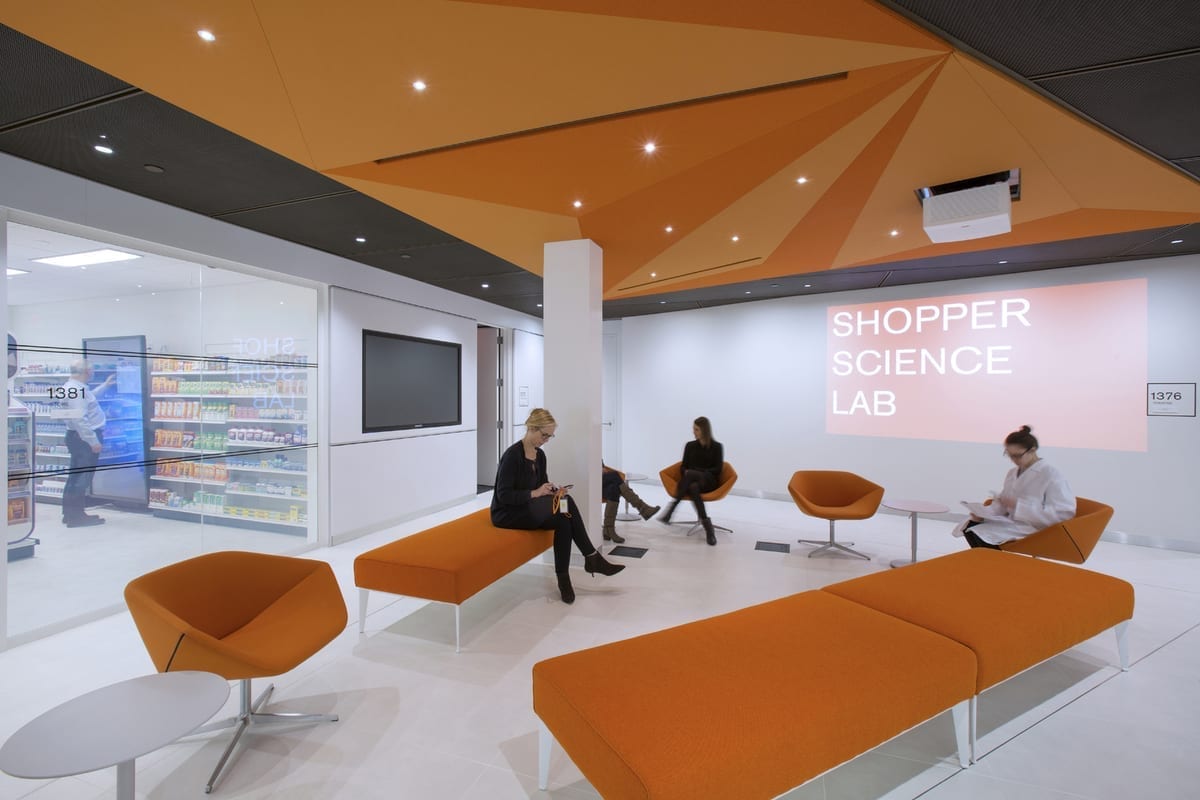
    A new GSK Shopper Science Lab opened in Singapore will help drive business growth across Asia-Pacific, the company says.

    GlaxoSmithKline (GSK) Consumer Healthcare describes the research centre as a “cutting edge facility” which will deliver unique shopper insights and collaborations with retailers.

    “The Shopper Science Lab is a world-class shopper insight facility, equipped with state-of-the-art digital technology. With virtual reality, eye-tracking, facial biometrics, and data visualisation as some of the tools employed in-house, GSK will invite its trade partners, internal business teams and researchers to use the Lab to recreate retail environments; evaluate shoppers’ responses to online and in-store initiatives; and identify winning strategies and initiatives to enhance the shopping experience,” the company said in a statement.

    “As more shoppers join the global middle class, there is an increased demand for trusted, global brands particularly in the emerging markets. The GSK Shopper Science Lab has close proximity to large emerging markets like India and China, enabling GSK and its retail partners to study diverse emerging shoppers closely, with local data collected on the ground.”

    The GSK Shopper Science Lab consists of three labs integrated seamlessly:

    • A 1215 sqft Retail Lab, an immersive retail environment that allows the re-creation of modern and traditional retail environments such as a pharmacy or supermarket, allowing GSK and its partners to quickly test and evaluate shopper responses.
    • A Digital Lab which is a collaborative space which has the ability to test stimuli such as pack designs, point-of-sale materials, brand assets, TVCs, or content across all platforms.
    • A Collaboration Room, which provides a space to convene key decision makers, enabling them to embark on virtual and fully interactive simulations that include relevant data for faster and more informed decision making.

    “Traditional market research is often time-consuming and expensive,” explained Sidharth Singh, VP of commercial excellence, GSK Consumer Healthcare Asia, Middle East and Africa. “By leveraging the latest advances in virtual reality and biometric technology, we are now able to gather insights more efficiently and effectively.”

    An example of such technology is eye-tracking glasses which can be transported to various cities to provide researchers with an indication of how shoppers shop locally. Technology such as virtual reality, tracking sensors and software that can decode the hotspots, can help analyse this highly localised data to understand shopper behaviour in diverse markets.

  • Vietnamese shoppers no longer the world’s thriftiest

    Vietnamese shoppers no longer the world’s thriftiest

    Consumer spending seems to be on the rise with less people interested in saving. Vietnamese consumers have just lost their crown as the world’s most avid savers to penny-pinching shoppers in Hong Kong after three years reigning supreme, according to the latest report on consumer confidence conducted by Nielsen, a global information and measurement company.

    During the first half of this year, only 63 percent of surveyed Vietnamese shoppers said they would put their spare cash into savings, comparing to the 76 percent who said they would save during the same period last year.

    Around 80 percent of people in Hong Kong said they chose to save money rather than spending it on leisure activities, figures from Nielsen revealed.

    The Vietnamese are still securing money for the future, but they are also spending more on leisure activities.

    “Vietnamese consumers’ lifestyles are evolving fast and consumers are more willing to spend on big items to upgrade their living,” said Nguyen Huong Quynh, managing director of Nielsen Vietnam. “This reflects their strong desire for a better life.”

    Saving requires a stable job, which is still a top priority for Vietnamese people. For half of the respondents, securing a position at a company is a big deal.

    “A financial guarantee is considered one of the top priorities among Vietnamese consumers,” Quynh added. “Hence, job stability as well as economic prospects directly influence the level of consumer spending. This explains why job stability is important to Vietnamese people.”

    Vietnam’s Consumer Confidence Index in the second quarter this year reached 117, helping the country secure fifth position on the global optimism table. Indexes above 100 indicate optimism.

    This is also a five-year high for the country, suggesting that Vietnamese consumer sentiment is improving. The surge illustrates the optimistic perception of personal finance and immediate spending intention, the report said.

    It should be noted that the index is calculated by Nielsen based on respondents with online access in 60 countries.

  • Japan economy posts longest expansion in over a decade

    Japan economy posts longest expansion in over a decade

    Economy expansion was driven by robust domestic demand and capital spending. Japan’s economy grew 1.0 percent in the April-June period, notching up its sixth straight quarter of growth and its longest economic expansion in over a decade, government data showed Monday.

    The growth in Japan’s GDP — 4.0 percent at an annualized rate — blew past market expectations for a 0.6 percent rise, and was well up from a 0.4 percent expansion in the first quarter, according to figures from the Cabinet Office.

    The world’s number three economy has been picking up steam, mainly on the back of a surging exports including smartphones parts and memory chips, with investments linked to the Tokyo 2020 Olympics also giving growth a boost.

    But the latest GDP figures were driven by robust domestic demand and capital spending, which offset a quarterly decline in exports.

    Private consumption picked up 0.9 percent in the second quarter — individual spending accounts for more than a half of Japan’s GDP.

    The labor market is tight and business confidence is high but efforts to lift inflation have fallen flat despite years of aggressive monetary easing by Japan’s central bank.

    The latest reading nonetheless means Japan’s economy has had its best string of gains since 2006, during the tenure of popular former prime minister Junichiro Koizumi.

    Monday’s figures are good news for the current prime minister Shinzo Abe — whose brief and underwhelming first term as Japan’s premier came directly after Koizumi.

    A string of short-term leaders followed before Abe swept back to power in late 2012 on a pledge to reignite Japan’s once-booming economy with a plan dubbed Abenomics.

    The scheme — a mix of huge monetary easing, government spending and reforms to the economy — stoked a stock market rally and fattened corporate profits.

    But critics have cast doubt on the plan, as heavily-indebted Japan grapples with low birthrates and a shrinking labor force.

    Abe has seen his public support rating plummet in the past few months over an array of political troubles, including allegations of favoritism to a friend in a business deal.

    Japan has been struggling to defeat years of deflation and slow growth that followed the collapse of an equity and property market bubble in the early nineties.

    The Bank of Japan, aiming to create two-percent inflation as a key part the growth bid, now expects to reach that goal by sometime in the year to March 2020 — four years later than planned.

    Falling prices can discourage spending by consumers, who might postpone purchases until prices drop more or look to save money instead.

    That puts pressure on businesses, creating a cycle in which firms then cut back on expanding production, hiring new workers or boosting wages.

  • 18th​ ​APRCE 2017 to address new retail trends and issues in Asia-Pacific’s largest retail event

    18th​ ​APRCE 2017 to address new retail trends and issues in Asia-Pacific’s largest retail event

    The 18th Asia-Pacific Retailers Convention and Exhibition (APRCE) will take place at the Kuala Lumpur Convention Centre from October 25 to 27, 2017. About 3,000 delegates from 18 countries are expected at Asia Pacific’s largest retail event which is held once every two years.
    Organised by the Malaysia Retailers Association (MRA) and endorsed by Federation of AsiaPacific Retailers Associations (FAPRA), the theme of the 18th APRCE 2017 is “Transformation, Creativity and Beyond”.
    Key global retailers are expected at this event which will spearhead a re-think on retail and how to drive change through innovation, transformation and staying ahead of the pack for business success. It will explore opportunities to capture the next decade of discerning digitised customers.
    World-class speakers, retail leaders and solution providers from the US, UK, Japan, China, Korea and, of course, Malaysia will share their business success stories, new retail trends, ways to retail excellence and e-commerce trends and challenges in retailing, among others.
    Among the 22 speakers at the 18th APRCE2017 are: Mr Howard Saunders, Retail Futurist, Twenty Second and Fifth Ltd, US; Mr Christopher Sanderson, Co-Founder, Future Lab United Kingdom; Mr Motoya Okada, President and CEO, AEON Co. Ltd; Mr Benjamin Yong, Founder and Group Chief Eating Officer of the BIG Group, Malaysia; Mr Hoseok Kim, CEO of Celcom Planet Sdn Bhd (11Street), Malaysia; Ms Michelle Grant, Head of Retailing at Euromonitor International, US; Mr Chan Kok Long, Co-Founder & Executive Director of IPay88 Sdn Bhd, Malaysia; Mr Roger Wang, Chairman of Golden Eagle International Group, China and Mr Chen Xiaodong, CEO of Intime Retail Group, China.
    The delegates attending 
    According to APRCE 2017 Organising Chairman, Mr James Loke, about 1,300 foreign delegates have confirmed their attendance. They include those from Japan, China, Korea, Indonesia, the Philippines and other FAPRA-recognised national retail trade organisations such as in Malaysia, Singapore, Thailand, Vietnam, Myanmar, Australia, New Zealand, Taiwan, Hong Kong, India, Mongolia, Turkey and Fiji.
    The event is the perfect focal point for international networking, and Malaysia, as the host, is the ideal location to mix business with leisure. Representatives from Asia-Pacific will be converging here to exchange ideas, connect with suppliers, seek business opportunities and network.
    The 18th APRCE 2017 is supported by the Ministry of Tourism and Culture, and the Malaysia Convention and Exhibition Bureau (MyCEB).
    How APRCE started 
    Since 1983, APRCE has been the main activity of the Federation of Asia-Pacific Retailers Associations (FAPRA), which has 18 association members from 18 countries. It is the longest running biennial retail conference in Asia-Pacific. The host country is selected by FAPRA members through a bidding process held every 2 years.
    For the record, the 17th APRCE 2015 was held in Manila, Philippines while the 16 th APRCE 2013 took place in Istanbul, Turkey. The 18th APRCE 2017 will bring together participants to learn, discover and network, and make meaningful connections with other industry professionals. It will also highlight innovative solutions to help retailers differentiate themselves from their competitors.
  • Japan’s department stores see June uplift

    Japan’s department stores see June uplift

    Japan department stores saw higher sales in June, which was welcome news after they had fallen in the previous month, the sector’s industry body has said.

    Japanese department stores saw a welcome sales rise last month.

    Sales rose 1.4% year-on-year on a comparable basis at the 229 stores operated by the 80 companies that are part of The Japan Department Stores Association.

    Those 80 firms accounted for turnover of ¥472 billion last month.

    Department stores have faced major challenges in recent years but June’s figures offered some cause for hope, especially as sales had fallen 0.4% in May after rising 0.7% in April. April’s increase  had been the first for 14 months.

    The June rise also helped the three-month average to a 0.7% increase, the first growth in 18 straight quarters.

    The Japan Department Stores Association cited a number of reasons for the increase, from the start of the summer clearance sales (which had been switched from July to June) to high-spending foreign tourists and a return of confidence among more affluent local shoppers.

    In fact, sales to foreign visitors rose a massive 41.4% to ¥18.4 billion.

    It was the second consecutive month that such sales rose more than 40%.

    The Association said cosmetics was one of the key categories to benefit and Chinese tourists were out in force.

    However, there was bad news for the fashion sector as clothing sales fell year-on-year, despite the added impetus of lower prices.

    That said, the clothing that did do well was warm weather fashion as high temperatures and a relatively dry rainy season boosted demand and expensive items such as watches and jewellery were popular too.

  • Facebook traders face taxation anxieties

    Facebook traders face taxation anxieties

    Le Ha of Hanoi, who has been selling clothes on Facebook, is stressed and worried after receiving a message from tax authorities inviting her to come and declare her income.

    Ha is one of over 13,400 Facebook account holders in Hanoi who’ve been identified by the Hanoi Taxation Department as online traders.

    “I have been selling clothes through Facebook for years, getting about 10 orders each day with maximum daily sales of around VND5 million (US$220),” Ha told us, admitting that unlike other shop owners, she doesn’t have to declare her business or pay taxes.

    She was satisfied with her earnings and not having to bother about any intervention from State management agencies.

    The promise of attractive profits has prompted many people to jump on the bandwagon, catching the attention of authorities trying to reduce tax losses from State budget collection.

    A tax administration project for e-commerce business has been drawn up, with the two taxation departments of Hanoi and HCM City functioning as pioneers in bringing business owners selling merchandise on social media, especially Facebook, into the tax bracket.

    Vien Viet Hung, deputy director of Hanoi Taxation Department, told Vietnam News that the department had collected information on the identity and telephone numbers of the 13,422 Facebook traders.

    Since late June, the department has been sending SMS messages to these traders, encouraging and instructing them to voluntarily register their operations, declare income and pay taxes.

    However, after sending messages twice, only 1,000 of the 13,422 phone numbers have replied, and only around 500 have approached the department on their own to register to pay taxes, Hung said.

    In a recent interview with the Vietnam News Agency, Chairwoman of the Vietnam Tax Consultant Association, Nguyen Thi Cuc, said that under current laws, all institutions and individuals that are doing businesses, whether through traditional channels or via e-commerce platforms, are required to declare income and pay taxes.

    However, she also conceded that in the current situation, the tax collection was totally based on the willingness of traders, their authenticity, honesty and integrity.

    Income bracket

    According to the law, only online sellers with revenues over VND100 million a year will be subject to taxation.However, many Facebook merchants are afraid that the taxation process will be fair.

    “If paying tax is an obligation, we are ready to fulfill it, as long as it is fair to everyone. What if I tell the truth, while other Facebook sellers lie about their revenue? They will pay less or no tax, which is unfair,” Le Ha told us.

    Regarding income declaration, many argue that was very difficult to determine the exact revenue of those who do business on internet, so it is not possible to ensure fair treatment of honest sellers and those who deliberately evade taxes.

    But Ta Thi Phuong Lan, deputy head of the division in charge of personal income tax under the General Department of Taxation, said tax authorities can assess Facebook sellers’ revenue by checking their sources of goods, post offices, delivery companies, and bank payments.

    One of the most difficulties in determining Facebook traders’ income is the low rate of non-cash transactions in Vietnam, said Truong Thanh Duc, chairman of the Basico Law Firm.

    In other countries, buyers make payments via banks, so it is not difficult to identify the revenue from online business. Therefore, it is necessary to apply measures to encourage Vietnamese to use non-cash payment methods for online transactions, Duc said.

    Recently, the General Department of Taxation issued Document No. 2623/TCT-CS, asking local taxation departments to co-ordinate with network operators to gather information on online sellers, including identity and bank number accounts, so that they can monitor all online transactions.

    However, in response to the Vietnam News Agency, CMC Telecommunication Infrastructure Joint Stock Co (CMC Telecom) said they haven’t received any communication from tax authorities.

    The company said that if needed, they can explain and persuade customers to provide them with necessary and detailed information, but they can’t ensure that all the customers will agree to supply this.

    Step by step

    Transactions on the Internet are difficult to control and tax collection procedures can’t be comprehensively introduced in a short time, it should be done step by step, said Nguyen Huu Tuan, Head of the E-commerce Management Division of the E-commerce and Information Technology Department under the Ministry of Industry and Trade.

    To collect taxes, authorities should understand each business as they have their own specific characteristics, Tuan said.

    With millions of Facebook accounts, tax authorities should classify them based on the nature of their operations and key products, he said.

    In the first phase, the tax authority should target large and professional businesses. It is easy to identify these account holders as they will have popular Facebook pages with a large numbers of followers, likes, posts and comments, he said.

    The rest are likely to be individuals selling things online as a side job or even seasonal business. They do not sell goods regularly, so tax departments should carefully review the list before inviting them to their offices, Tuấn said.

    “There are petty traders with modest monthly incomes. If we try to control all Facebook sellers, we will use up significant resources and end up being inefficient,” he said.

    Sharing the same idea, Vien Viet Hung, deputy director of Hanoi Taxation Department, said to obtain necessary information on online businesses, tax departments nationwide should have enough staff who are well versed with social media networks.

    The Hanoi Taxation Department will seek co-operation and support from many concerned agencies like commercial banks, post offices, especially social networks like Facebook, to provide information about account holders, Hung said.

    Late last month, reporters of the Vietnam News Agency contacted the Facebook representative office in Vietnam with questions about the tax collection issue, but hadn’t  received any response at the time of going to print.

  • South Korea tips fastest growth in three years in 2017

    South Korea tips fastest growth in three years in 2017

    The forecast for 2017 marks the strongest projected growth of the South Korean economy since GDP expanded by 3.3 percent in 2014. South Korea said Tuesday its economy is set to grow at its fastest rate in three years in 2017, on the back of strong exports and a $10 billion stimulus package aimed at creating jobs and bolstering welfare.

    South Korea has enjoyed a decades-long boom, but expansion has slowed more recently and economic and social frustrations were among the drivers of left-leaning President Moon Jae-In’s election in May.

    The finance ministry raised its forecast for Asia’s fourth-largest economy, saying gross domestic product was expected to expand by 3.0 percent — up 0.4 percentage points from an earlier projection in December.

    The forecast for 2017 marks the strongest projected growth of the South Korean economy since GDP expanded by 3.3 percent in 2014.

    Authorities also cited a recovery in the country’s exports for the improved outlook as the global economy rebounds.

    “We believe the 3.0 percent growth will be possible if the economy continues to undertake reforms for consumption-led growth,” deputy finance minister Lee Chan-Woo told reporters.

    The tweaked forecast comes after the government passed a giant stimulus package over the weekend promising 110,000 new jobs in response to record-high youth unemployment.

    Unemployment among under-30s hit 11.2 percent in April, more than double the rate for the entire working population.

    Economic frustrations were among the factors that fuelled mass anti-corruption protests that saw former president Park Geun-Hye impeached and arrested over corruption.

    Among the new jobs being targeted are firefighters, police, assistant teachers and social workers, while young job seekers, small businesses and tech startups will also be helped.

    Financial assistance will be increased for women on maternity leave, more daycare centers and nursing homes for the elderly are to be opened, and businesses hiring more full-time workers are to be given extra funding.

  • The economics of the money-back guarantee

    The economics of the money-back guarantee

    “Returning the product to Amazon ASAP!” complained one disgruntled Amazon customer as they gave a one-star review for a digital camera on the company’s site. This is despite the same product having an average rating of four-and-a-half stars out of five from 242 other customers.

    Companies like Amazon aren’t just ignoring these disgruntled customers and their product-returning ways. In fact, retailers are increasingly offering extra services such as warranty plans, free shipping and guarantees to reassure them. Selling with the “money-back guarantee” is a prime example of this.

    This is because the economics of the money-back guarantee can work for retailers. These businesses allow customers to return products that do not meet their expectations — as a result of poor quality or a mismatch in taste — for a full or partial refund. Essentially offering their customers an insurance against the perceived risk of the product.

    And research shows these retailers make a profit with this type of guarantee, given specific conditions. Other research also shows the money-back guarantee increases customers’ feeling of satisfaction with their purchase experience, making them likely to return to the store.

    This type of guarantee is particularly important for retailers who sell products online or through mail-order catalogues. This is because customers can’t enjoy the benefits of the traditional “touch-and-feel” shopping experience, to reassure them they are making the right decision.

    Customers rorting the scheme

    Customer returns cost retailers more than US$260 billion (equivalent to 8 per cent of total retail sales) annually in the United States alone. The return rates vary significantly by category, and by channel type. It can reach as high as 35 per cent for high fashion apparel sold in traditional stores, and the rates are higher again for internet and catalogue sales.

    However, in most cases, the returned products are not defective. Customers abuse the money-back guarantee, so much so that buying a product with the intention of returning it has become a trend known as wardrobing or barrowing. In the US, fraud associated with returns costs retailers around US$2 billion during the holiday season alone (US$9 billion annually).

    Retailers try to get around this by offering partial instead of full money-back guarantees for products. The refund is usually less a “restocking fee” charged for returns.

    For example, compare the 30 day money-back guarantees from two Australian furniture retailers, Zanui and Rogerseller. Zanui offers a full refund, whereas Rogerseller charges its customers a 15 per cent restocking fee (it pays back only 85 per cent of the selling price rather than the full amount).

    In most cases, restocking fees can range between 10% and 20% of the original purchase price, some even as high as 50 per cent.

    A survey by professional services company Accenture reported that in the computer electronics industry, most customers returned their products because they simply “did not meet expectations.” More specifically, for 68 per cent of returns, there was “no trouble found” by the customers; 27 per cent of the products were returned due to “buyer’s remorse”.

    And only 5 per cent of the products returned were truly defective. However, regardless of the reason, returned products cannot be sold as “new,” even though the product could be new in the sense that it was never used.

    Major consumer electronics retailers such as Best Buy and Walmart restock these returned items and sell them as “open-box items” at discounted prices. Open-box simply means the product is marked as being opened or used previously. A retailer’s ability to sell returned products as open-box creates an opportunity to attract more price conscious consumers.

    The downside of such product differentiation is that open-box products can have a negative impact on the demand for the new products in a store. The retailer might also have to incur additional costs for handling returns and repackaging them as open-box.

    Making or losing money on the money-back guarantee

    Balancing the benefits and costs of the money-back guarantee is a delicate task for retailers. In studying the guarantee we worked out how retailers could use it to increase sales and profits.

    We looked at product pricing, refunding and inventory stocking decisions in money-back guaranteed sales. We took into account uncertainty in demand, the possibility of a customer’s dissatisfaction with the product after purchase, as well as the lower value customers place on an open-box product, relative to brand new products.

    Using this model, we figured out the best prices retailers could use reselling returned products and the restocking fees to encourage or discourage returns, for the highest possible net profit.

    Even though reselling returned products meant less stock for the retailer it also reduced inventory-related costs adding to profits. In essence, retailers can claim back at least some of the costs associated with return fraud, with reselling.

    In areas of retail with higher risk of returns, the temptation is to tighten returns policies, to limit them. This is especially true for highly innovative products, new technologies, or fashion-driven products (especially high-end ones).

    Interestingly, our study shows that reselling returns complements the money-back guarantee. So these type of high-risk products are likely to give retailers the most benefit, when they are resold after being returned.

    Retailers also feel the benefit of reselling when there are more price conscious customers who are more inclined to buy a product that is being resold, because it’s at a discount.

    So the economics of the money-back guarantee can work for retailers by improving brand value and through reselling via open-box products