Tag: Retailers

  • Luxury retailers ‘missing out on customer engagement’

    Luxury retailers ‘missing out on customer engagement’

    No one can accuse luxury retailers of cutting corners where advertising spend is concerned. On average, they divert 8 per cent of their turnover into funding advertising initiatives. In the US for example, luxury brands invested more than $5 billion in advertising last year, accounting for a significant portion of overall marketing expenditure.

    Love it or hate it, advertising is a principal ingredient of business success. How else would you make customers be aware of your brand and build an inspirational image? Advertising is also essential for increasing brand equity and driving traffic to point of sales, which is how you boost your revenues.

     The twist 

    So, assuming we can agree that advertising remains important, let’s explore the issue through some numbers to see whether luxury brands are extracting maximum value from their advertising investments.

    Here’s one number: the average conversion rate in retail is about 10 per cent, which is to say that merely one out of every 10 customers entering a store will buy something. The best-in-class brands can boast a 20 per cent conversion rate, but that still leaves anywhere between 80 per cent and 90 per cent of store visitors exiting without a purchase.

    On the bright side, these numbers are not necessarily a harbinger of doom because nowadays a store has become more of a touchpoint along the customer journey. A transaction may occur on the premises during the visit, but it may also take place at a later time in another brand store (think airport outlets, for instance) or online. Therefore, a visit without a purchase is not really the issue.

    But we truly have a problem when non-buying customers go away without leaving their personal information. This should be ringing all sorts of alarm bells because it means the brand cannot continue its conversation with these customers. Our research shows that in 2017, an average of 65 per cent of non-buying customers were not invited to leave their personal information. In other words, this is nearly 60 per cent of store visitors who cannot be engaged in further conversation.

    Advertising is only one of many budgetary considerations for luxury brands when it comes to attracting customers to a store as it also entails expenditure on rent, fittings, and staff salaries, among other things.

    When you add it all up, you start questioning the rationale behind these investments. Not because they no longer matter in the grand scheme of things, but because the current retail landscape has rendered existing advertising budget allocation practices inefficient.

    When you think back to the nearly 60 per cent of clients not engaged at all during a store visit, it becomes painful to think of the revenue opportunities missed, not to mention the “waste” of money spent to get those customers cross the store threshold in the first place.

    Luxury brands now operate in a world where consumers are starting to sidestep advertising and increasingly count on referrals and recommendations to choose a product or a service. Think of it in this way: marketing is no longer about what you say to customers but how you influence what they say to each other. 

    The fix

    With that in mind, it seems clear to us that luxury brands should spend more on creating unique and memorable customer experiences (both in-store and post-purchase) for buyers and non-buyers alike.

    Front-line team members should be considered an additional marketing channel, or at least an extension of one. While brands make substantial investments in PR and special events, they need to spend more to make a positive, lasting impression on the customers who come into the store instead of striving to draw even more customers inside.

    Part of the advertising budget should go into delivering customer experiences and providing value to store visitors, surprising and delighting them at the same time. You can guess what will follow, can’t you? Conversations sparked by viral tweets, social media shares, and likes, which is as good as advertising gets for luxury brands.   

    The help

     The gist so far is that luxury brands need to pivot from a push to a pull strategy. Carving out a larger portion of the advertising budget to invest in customer experiences is the way forward, but multiple factors need to interact for effective execution and tangible results.

    For one thing, brands need to put the right people on the shop floor. This may require investment in proper training and ongoing support. Other necessary ingredients are decent pay plus the right KPIs and incentives.

    Last but not least, luxury brands should empower their teams to do whatever is required to deliver a high-quality customer experience – one that will be remembered, shared, and seen by many. When the social media and word-of-mouth mills start churning, luxury brands will have all the vindication they need for having aligned their advertising budgets with the new realities of retail.


  • Hong Kong retail rents set for ‘early lift’

    Hong Kong retail rents set for ‘early lift’

    Hong Kong retail rents are expected to move into an “early upswing cycle” this year according to a regional real estate market briefing prepared by Savills.

    The report details commercial and residential property leasing trends across major Asian markets and as the accompanying tables show, compares occupancy costs of space as well.

    It groups major cities by upswing and downswing, late and early, showing that Hong Kong is at the end of its downswing in retail rental rates. Cities currently in early upswing are Manila, Guangzhou, Jakarta and Singapore. Hong Kong is grouped with Taipei, Hanoi, Ho Chi Minh City and Seoul, suggesting all those markets are about to turn.

    Savills says regional prime retail rents moved by between a decline of 1.8 per cent in Beijing and an increase of 5.9 per cent in Guangzhou last year.

    “Strong local retail consumption growth of 9.5 per cent year on year in the second half of the year following 10.5 per cent in the first half of the year supported the Guangzhou leasing market, while prime shopping malls began to re-position and upgrade, focusing more on entertainment and food & beverage,” said Savills in a brief commentary.

    “Again, Hong Kong’s prime shopping mall rents are considerably ahead of all other Asia-Pacific markets and are expected to move into an ‘early upswing’ cycle this year.”

    Savills says economic growth across Asia-Pacific continued to picked-up moderately in the second half of last year and the International Monetary Fund estimates that the “Emerging and Developing Asia” economies grew by 6.5 per cent over the year as a whole while China grew by 6.8 per cent and Japan’s economy grew by 1.8 per cent last year, from 0.9 per cent in 2016.

    “The improving global economic outlook and an accommodative monetary policy created momentum for business expansion,” said Savills.

  • Retail News Asia makes it to Final with a Selection in the Top Asia Pacific Best News Websites

    Retail News Asia makes it to Final with a Selection in the Top Asia Pacific Best News Websites

    Retail News Asia is selected as one of the winners of the Top Asia-Pacific News websites list! This is the most comprehensive list of best Asia-Pacific News websites on the internet and we’re honoured to be there! Retail News Asia is the leading Retail News portal in Asia Pacific since many years and we show deep respect and bow for being selected as one of the most influencing medias in Asia Pacific.

    RetailNews.asia has always been committed to providing both local and global retailers with the latest breaking retail news throughout the Asian market on a daily base since many years. With over 20 post per day with relevant Retail News, we can proudly say that we’re the leading media in the Retail industry.

    We have resources for everyone from the independently owned business owners, online-only retailers, and major chains expanding their reach throughout the Asian market.

    We Are Stronger Together

    You can quickly and easily search for the latest breaking retail news by country, or come here to keep an eye on the latest local, global and seasonal trends on our portal, watch video’s and/or follow uw with both local and international Retail Events.

    You can network, engage, and share invaluable information with other retailers. Our retailers come from a wide range of industries and expertise, meaning that whatever the question may be—we have you covered!

    We keep you apprised of the upcoming retail events, and even provide coverage and updates during many retail events.

    Thank You

    Retail News Asia wishes to congratulate all the team members, editorial and advertising departments for all hard work, overtime and sweat. We did it together says Sven, Founder of Retail News Asia

  • Retailers take omnichannel path in preparation for Thailand 4.0

    Retailers take omnichannel path in preparation for Thailand 4.0

    Supaluck Umpujh, chairwoman of The Mall Group, said that Thailand 4.0 is an economic model to promote and transform Thailand into a digital economy.

    Digital economy refers to the widespread use of digital technologies, which are rapidly transforming business practices and social interactions.

    According to the Thai Board of Industries, the strategic framework for digital economy promotion consists of four areas: digital commerce, digital entrepreneurship, digital innovation, and digital content.

    In pushing forward this forward-looking agenda, the Ministry of Digital Economy and Society will promote a new generation of entrepreneurs, as well as commercial and industrial innovations. At the same time, it will assist investors in developing new markets for digital content. Entrepreneurs will be aware of the importance of using ICT in enhancing efficiency and reducing production costs. Implementation of the digital economy plan will need the support and involvement of all stakeholders in achieving its stipulated goals.

    “We realised that retail business played a crucial role in Thailand’s economy, and we are also trendsetters in shopping. The first mission that we seek for our customers is to add some online shopping experience into our stores. But we also offer the experience that customers cannot find through digital channels. Currently, we are working on many digital platforms for instance e-commerce, mobile application, Radio Frequency Identification, Near Field Communication and many more,” she said.

    Nicolo Galante, chief operating officer of Central Group, said the group had integrated omnichannels to improve the customer experience. “We [Central Group] expect to move each of its online business units and will launch major e-commerce initiatives such as major partnerships and joint-ventures,” he said, adding that the e-commerce market will have a significant impact on retailers.

    Galante said the Central Group aimed |to be number one in terms of sales across channels. Central Group has stores, customer data and customer knowledge across many different stores, locations and categories.

    Salinla Seehaphan, corporate affairs director of Tesco Lotus, said the Thailand 4.0 economic model stressed on the importance of adding value to traditional products and services using innovation and digital transformation.

    “In our own business, Tesco Lotus has adopted innovation and digital transformation to improve our product and service offerings, as well as our customers’ shopping experience, for example by allowing customers to be able to trace where their fruits and vegetables come from via QR codes. As our core business revolves around fresh food, we have an opportunity to work directly with farmers across the country and help them to become farmers 4.0 in line with the government’s goal for Thai farmers to transform from being simply growers of food to smart farmers who use effective crop management and a market-led approach to farming,” she said.

    We also focus on equipping them with the knowhow that will help them thrive in Thailand 4.0,” she said.

    Punyapon Tepprasit, chief executive of MVP Consultant and lecturer at Sripatum University’s International Trade Department, said the main idea of the Thailand 4.0 economic model focuses on innovation creativity and sustainability. Thai retailers will change definitely in keeping with consumer behaviour. “I have four suggestions for Thai retailers. First of all, retailers must combine the online and offline channel strategy for creating an omnichannel that can help a business generate brand awareness, market share, and sales growth with big data analysis. Online enjoys competitive advantages as it is the fastest, can be available for 24 hours, has low advertising cost, and can track consumer behaviour. Also, businesses can reduce the cost per acquisition for one customer or groups of target customer,” he said.

    “Second, businesses have to build a talent team to create a new creativity strategy. Their new strategy must attract the attention of customers through newness of products and service innovation, or marketing communication via online and offline channel such as the augmented reality technology with an application on smartphone that can boost the emotional connection by experience and relationship creation with customers or target groups. The winner will be the one who can impress the brand on customers’ minds,” added Punyapon.

    “Third is business transformation. Businesses must reshape their organisations into lean entities to minimise wastage in the working process, as well as total cost and lead time. If companies can adjust agilely, they will have a competitive advantage in the volatile environment, because companies have the ability to address the changes in market demand.

    “The fourth is to become a data driven organisation. Businesses have to undertake market research to know the depth of consumer behaviour. Big data is very important, but the tools and data analysis are more important,” he said.

  • 2018 retail predictions and impact of technology

    2018 retail predictions and impact of technology

    Globally e-commerce is a low hanging fruit with low teens penetration. E-commerce is a proven channel and is expected to continue to gain marketshare to the chagrin of incumbent retailers in 2018.

    International grocery research firm IGD, noted that both traditional retailers and ecommerce players, lured by the rosy prospects of the thriving e-commerce market, have stepped up their online expansion, reaching out to more customers in Asia via online platforms.

    In many Asian countries, with m-commerce getting more popular among online shoppers, the move towards a cashless society is gaining steam. Some retailers have also partnered with payment service providers to offer electronic payment services and mobile wallets to provide their online customers a frictionless payment experience.

    In 2017 IGD predicted that online grocery will be the greenfield that will drive battleground. The excitement revolves around the anticipated significant potential as far as addressable market is concerned. In China, online grocery penetration is around 4% (compared to mid- to high-tens for e-commerce) compared to 1% in the US.

    “We think that online grocery is going to be the next driver because the cost of customer acquisition cost while helping Internet companies to cross-sell,” said Sundeep Gantori (video top rigth), director, Equity Analyst, UBS AG. In this exclusive video interview with Retail Tech Innovation, he describes the key pressure points facing retailers in 2018.

    The strategy for much of 2018 will likely be further integration of digital with brick-and-mortar operations as retailers further embrace advanced technologies to improve customer engagement with tools such as virtual and augmented reality as well as gamification. One clear strategy is alignment of business with the needs of the evolving customer.

    IGD also noted that “experiential shopping” is gaining traction in Asia as consumer palate for additional value – exceptional service and personalized experiences, or as the research firm refers to it: immersive shopping experiences and services.

    The latest IDC FutureScape: Worldwide Retail Predictions says that by 2019 50% of retailers will have adopted an omni-channel commerce platform. IDC forecasts up to a 30% increase in omni-channel profitability as a result of increased revenue and efforts to drive up TCO while driving down inventory costs and operational costs.

    The analyst also predicts that in the same period, the top 30% of retailers will be actively engaged in digital transformation, driving organization shifts and investment strategies in foundational endeavors.

  • Stop DDoS from ruining your retail Brand’s sales momentum

    Stop DDoS from ruining your retail Brand’s sales momentum

    On 11 November 2017, Alibaba’s Singles’ Day sales hit a new record high with a 39% increase from last year’s sales. The company’s 2017 profits broke world records of Black Friday and Cyber Monday, marking this Asian sales day as one of the highest revenue sales in history.

    With increasing internet-user penetration, consumer behavior is quickly transitioning in Asia today. Shoppers make most of their retail purchases on-the-go, through mobile applications or via websites. In fact, 90% of this year’s Alibaba sales were made through mobile phones.

    Now more than ever, retail businesses in the Asia-Pacific region need to tap onto an omni-channel approach to be aligned with these changing customer demands. Based on the 2016 e-commerce study, Google and Temasek foresee Southeast Asia to be the next region to boom in this market. The predictions indicated that e-commerce will make up 6% of the region’s total retail sales by 2025.

    Beware of business bullies

    While these statistics show a positive growth for the region, businesses going digital must be aware of the lurking threat factors. The physical shoplifters that pained businesses – especially during big sales such as Great Singapore Sale and Black Friday – have now evolved to become cyber criminals. Unlike thieves, businesses are not physically able to discern these criminals, especially since they attack over the network.

    One of the most devastating kinds of cyberattack for e-commerce businesses today is Distributed Denial of Service (DDoS) which aims to bring down websites, therefore, disrupting online services and businesses. DDoS attacks occur when an unusual and unexpected spike in traffic and connection requests overwhelms a website, slows down the network, or in the worst-case scenario, shuts down the entire system.

    A reliable website that guarantees a good user experience is what defines a successful e-commerce business as it is the main platform for acquiring customers and generating revenues. The damage caused by a network failure or a complete site outage will directly and immediately impact business assets. For instance, Alibaba made US$7 billion within the first 30 minutes of the Singles’ Day sale3. Imagine if they had been hit by a DDoS attack; Alibaba would have lost US$233 million per second. Not only would this be a massive loss, the attack would have also caused long term damage to Alibaba’s brand image and customer loyalty. According to KPMG’s annual consumer survey, one fifth of consumers will turn away from a cyber-attacked company4.

    Don’t fall victim

    With the festive period approaching, online retailers can expect an approximately 20% increase in their web traffic5. To make the most out of this sale period, businesses need to ensure that they are ready to protect themselves against DDoS attacks. This includes re-evaluating their network security to assure they are taking the best protective measures.

    Monitor and Detect

    Businesses cannot fight what they do not know. Monitoring network traffic and flow data with DDoS detection alerts security pros to anomalies before they become full-blown catastrophes.

    One way to get a better understanding of what is happening on the network is baselining to know what the traffic looks like during peacetime. This allows organizations to take the appropriate wartime countermeasures when an attack happens. Effective DDoS detection needs to be able to discern the human traffic from the bots.

    Additionally, organizations need a detection solution that can scale given that attacks are increasingly getting larger in size. The best class solution should not only be able to process the data, but also be equipped with the ability to quickly make intelligent decisions with that data.

    Mitigate and Protect

    DDoS protection requires having the right mitigation in place. Businesses should look for a modern DDoS solution that empowers them to automate defenses – from reports to packet captures to mitigation. This can help security pros reduce stress and thwart attacks quickly.

    Communicate

    As with all security procedures, effective DDoS defense involves a human element, as well. It is imperative for businesses to have a communication plan in place in the event of an attack. This includes critical information such as who to notify during, and after an attack. For example, who should be the first to know if the site goes down due to a DDoS attack? Is that the same person notified if a DDoS attack shuts down the online retail site? Who else is notified if an attack happens? Having communications ironed out ahead of time can reduce time to remediation and lower stress levels.

    Make the most of this year’s sale season

    For businesses, these next few months are the time to peak your revenue and customer traffic. It may be a chance to raise brand awareness or even expand the business. Whichever the case, a DDoS attack can be a fatal roadblock to an organization’s goals. Reacting in an efficient manner is key. Online retailers need to ensure they have an emergency response plan that makes good use of anti-DDoS technologies for unforeseeable attacks. For a happy holiday for all, be on the lookout for any dangers and take the right cautionary actions to protect against any potential threats.


  • Macau retail sales continue to climb

    Macau retail sales continue to climb

    Macau retail sales are on the rise with businesses reporting increased turnover year-on-year. Data from the Statistics and Census Service (DSEC) shows 68 per cent of interviewed restaurants and similar establishments registered a year-on-year rise in receipts or a stable business performance in October, a six percentage point rise from September.

    And the proportion of interviewed retailers reporting a year-on-year sales increase in October rose by eight percentage points from September to 59 per cent.

    The best performing retail categories were cosmetics, with 78 per cent of retailers reporting an improvement, leather goods, (80 per cent), and apparel, (60 per cent).

    Some 21 per cent of interviewed retailers registered a year-on-year sales decline, down by three percentage points over September. Of department stores, 11 per cent reported a decline and 22 per cent of watch and jewellery vendors.

    Generally, retailers expected their sales to be stable in November, with 77 per cent predicting a year-on-year sales increase or a steady business performance, the same proportion as in October.

    Dining out data

    The proportion of western restaurants (25 per cent) reporting a year-on-year growth in receipts went up by nine percentage points, while that of Japanese & Korean Restaurants (44 per cent) was down by 13 percentage points. On the other hand, the share of establishments recording a year-on-year decline in receipts decreased by six percentage points over September to 32 per cent.

    Restaurants and similar establishments interviewed were cautious about their business prospects, with 68 per cent expecting a year-on-year rise in receipts or a steady performance in November, up by four percentage points from October. Among the various types of establishments, 50 per cent of the western restaurants and 73 per cent of the Chinese restaurants predicted their receipts to increase or to remain stable in November, up by 10 and three percentage points respectively from October.

    The DSEC says the sample of the Business Climate Survey on Restaurants & Similar Establishments and Retail Trade was selected based on the value of receipts of the establishments, comprising 167 restaurants and similar establishments (accounting for 53 per cent of the industry’s receipts) and 135 retailers (accounting for 70 per cent of the industry’s receipts).

  • Retail Food Group shares continue to plummet battling other retailers

    Retail Food Group shares continue to plummet battling other retailers

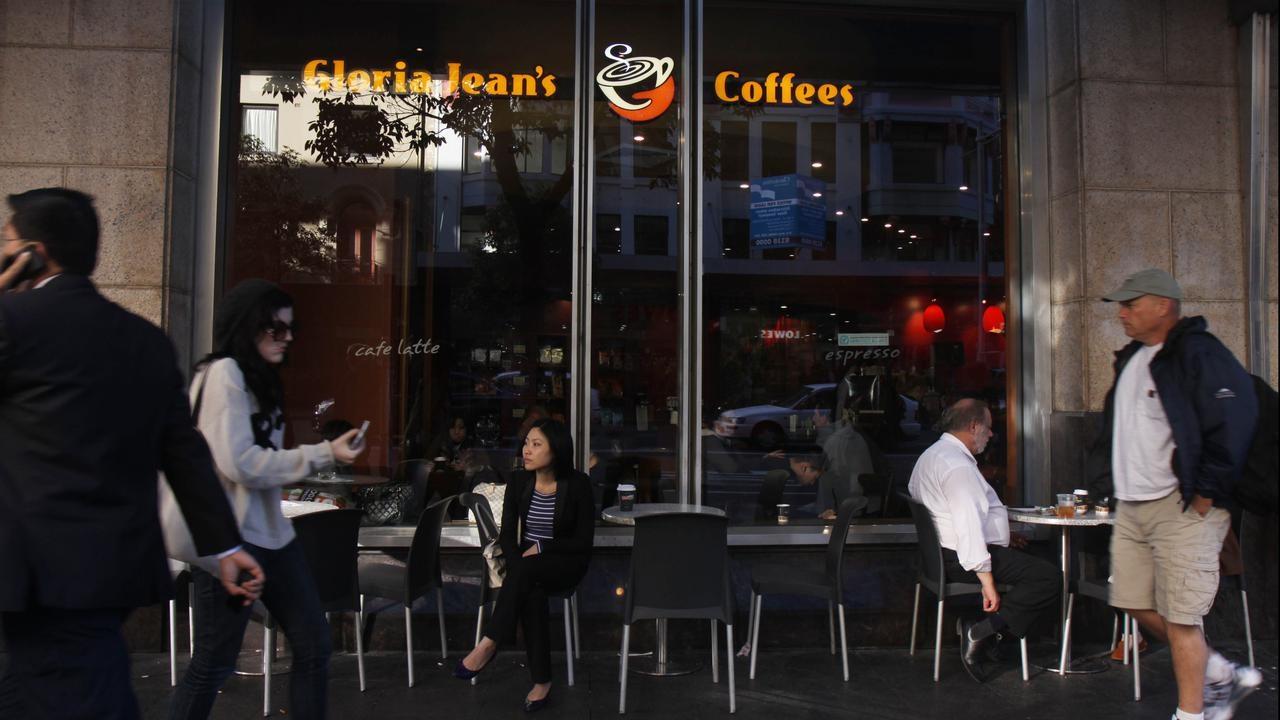
    Shares in Retail Food Group have continued to plummet for a second day after a damaging profit warning from the embattled owner of the Gloria Jean’s, Michel’s Patisserie and Donut King brands.

    RFG shares fell 17.9 per cent to $1.625 on Wednesday – their lowest value since July 2009, compounding a 25 per cent slump suffered on Tuesday when the company warned its first-half profit is expected to decline by more than a third.

    The franchise chain owner’s shares have now fallen 63 per cent since December 11, after Fairfax Media first published stories from an investigation into allegations of high fees and financial stress suffered by franchisees.

    The Fairfax reports have also claimed that significant proportions of Gloria Jean’s and Pizza Capers franchises are up for sale.

    On Thursday morning, shares recovered and bounced up over 20 per cent to $1.96.

    The plummeting stock prices has wiped $507 million from RFG’s market value in just eight trading days.

    RFG did not respond to requests for comment from AAP on Wednesday, however the company has previously denied all allegations in the reports and has blamed a tough retail environment as having a negative impact on its franchisees’ sales.

    The company said on Tuesday that its Crust Pizza and Donut King brands have continued to perform in line with forecasts but Michel’s Patisserie, Brumby’s and Gloria Jean’s are trading below expectations.

    It said domestic franchise revenue is now expected to be lower than previously anticipated, and it will book one-off costs of $7 million, including expenses linked to a business-wide review, in its accounts for the six months to December.

    As a result, the group’s now expects a net profit of around $22 million for the half year, down 34 per cent on $33.5 million in the same period a year ago.

    Meanwhile a law firm involved in a class action against Volkswagon has turned its attention to Donut King and Gloria Jean’s owner the Retail Food Group.

    Bannister Law says it is investigating a potential class action against RFG, and whether the company had reasonable grounds to issue forecasts between August 29 and December 7 of underlying annual profit growth, and whether it should have corrected its guidance earlier than December 19.

  • Rescued retailers’ employees finally paid out

    Rescued retailers’ employees finally paid out

    Administrators for rescued retail chains Marcs and David Lawrence have paid out all employees affected by the company’s transition to new ownership.

    Deed administrator Rodgers Reidy said M. Webster Holdings, which formerly traded as Marcs and David Lawrence, paid a distribution to the employees of the company representing payment in full of employee entitlements.

    “While many current employees were re-employed by FFS Retail, a subsidiary of Myer, when it purchased the assets, those employees who were not re-employed have now been paid their entitlements in full,” said Andrew Barnden of Rodgers Reidy.

    “We have been working closely with Myer to transition the assets to FFS Retail in a seamless manner.

    “In the new year we expect to pay a distribution to the unsecured creditors of the company, which will finalise the successful sale and restructure of the company. We also understand that many former suppliers have also benefited from the sale through ongoing trade.”

    Myer salvaged the Aussie fashion duo from liquidation in April.

    The fashion retailers, which are two of Australia’s best-known labels, had employed about 1130 staff in Australia and another 42 in New Zealand across their 52 stores, 11 outlets and 140 concessions, until entering administration in February.

  • Indonesian Retail Sector Sees More Growth

    Indonesian Retail Sector Sees More Growth

    Despite the expected sluggish economic growth this year, Indonesian food and clothing retailers are gearing up for expansion to capture a greater share of the middle class and its higher income.

    “Expansion is crucial for the retail industry to boost sales turnover, other than renovating old branches,” said Tutum Rahanta, executive at Indonesian Retailers Association (Aprindo), adding he estimated sales turnover from the nation’s retailers to grow between 10 percent and 12 percent this year.

    Last year, Aprindo’s data showed turnover at Rp 150 trillion ($12.75 million).

    Tutum added that competition between retailers is intensifying, so companies must take risks by expanding.

    He said if expansion is delayed, a retailer may lose its market share.

    One retailer eager to expand is Hypermarket operator Matahari Putra Prima, which plans to open 20 new branches over this coming year.

    The company, which is controlled by the Lippo Group, has set aside Rp 700 billion for capital expenditure this year, an increase of 7 percent from 2013, most of which will be used for financing expansion of outlets in eastern Indonesia.

    Danny Kanjongian, corporate communication director at MPP said in January the company plans to open up to 22 outlets this year, mostly in the eastern islands of the country.

    “The company’s cash generation capability is strong, so it can support expansion plans,” Danny told reporters on Friday on the sidelines of an inauguration ceremony of a Foodmart Gourmet outlet in Cilandak Town Square, South Jakarta.

    As of the end of last year, MPP operated 99 Hypermart outlets in as well as 97 Boston Health & Beauty stores and 30 Foodmart outlets.

    Other retailers in different segments, including supermarket chain operator Indomarco Prismatama, department store Ramayana Lestari Sentosa, fashion retailer Mitra Adi Perkasa and electronic retailer Ace Hardware are also in expansion mode.

    Indomarco, controlled by Salim Group through Indoritel Makmur Internasional, the operator of Indomaret, plans to spend Rp 1.3 trillion adding 1,300 new outlets.

    Ramayana, which sells clothes to low-income consumers, plans to spend Rp 350 billion adding six branches this year.

    Mitra Adi Perkasa, which sells a number of well-known fashion brands, is also keen on a massive expansion with previous reports suggesting plans to spend up to Rp 600 billion opening 250 new outlets across the country.

    Despite increasing competition and ballooning expenses, retail businesses in Indonesia will continue to grow over the next few years, according Maybank Kim Eng Securities analyst Janni Asman.

    The country’s growing purchasing power and living standards are the catalyst to that growth, Janni said.

    Indonesia, over the past few years, has been the darling of the investment community, with economic growth of around 6 percent each year since 2007 to 2012 though it is predicted to slow in 2014.

    Gross domestic product has increased five times within 10 years and GDP per capita has increased four times to around $5,000 now.

  • Big retailers expect solid final quarter

    Big retailers expect solid final quarter

    There are more signs of recovery in spending power, noting that there is talk about the government and the Bank of Thailand introducing further stimulatory measures to boost employment and the broader economy.

    TRA president Jariya Chirathivat said that since 2013, retail growth has fallen off. The main factor has been the restructuring of the macro-economy, for which the results will not be felt for many years. Base consumer spending power has still not improved and household debt is still high. Sales of fast-moving consumer goods (FMCG) have also dropped, the association’s figures show.

    The TRA represents the big department stores and supermarkets along with chain stores – collectively dubbed modern retailers – that account for about 30 per cent of the country’s retail sales.

    Among households, middle level consumers still have large credit card debts, and private investment has still not recovered. Meanwhile, farm prices have not been doing as well as expected, the association said.

    While growth in retail sales for the fist nine months of 2017 was clear across all product categories, spending was clustered in Bangkok and other large cities. Fast growing categories included supermarkets aimed at middle-high level consumers, and the health and beauty segment, which is split into beauty stores, pharmacies and health and personal goods shops.

    Department store products remained impacted by a shopping atmosphere which is still not normal, while prices do not encourage tourist spending because of import duties on luxury brands. These are still high compared to other countries that have a policy of reducing luxury taxes to entice tourists to their shopping destinations.

    The home improvement and home appliance and electronics categories did not register the expected growth because of a slump in the construction and real estate sectors.

    As for the food category (hypermarkets and convenience stores) targeting middle-low consumers, this has faced growth problems as spending in this group is still weak. Measures to get spending budgets to the grassroots is starting to become more efficient and have started to stimulate spending, but slowly.

    After the great national loss of 2016, most Thais slowed down spending until last month, when there were signs of a recovery in spending power. This was partly from improved sentiment and partly from government efforts to stimulate the base with budgets, as well as the New Year spending season. The result should be a fourth quarter recovery in 2017 compared to the same quarter of 2016.

    The government’s “Shop Chuay Chart” measures will be implemented in November this year, but the project tends to assist consumers in the middle to high bracket who have started shopping in anticipation of receiving tax rebates.

    The Ministry of Commerce is launching a campaign called “Ruam Jai Perm Suk Shop Sanuk Lod Rub Pi Mai” from December 14 to January 4, involving cooperation from manufacturers, distributors, retailers and wholesalers nationwide to stimulate consumption and affect buying power in every sector.

    The TRA believes the economy in the last quarter of 2017 will become brighter, whether from a lack of spending sentiment for over a year, the Pracha Rat Welfare Card that has given cash to the grassroots to stimulate spending or the state projects “Shop Chuay Chart” and “Ruam Jai Perm Suk Shop Sanuk Lod Rub Pi Mai”.

    This is on top of private sector promotions and sales activities throughout the long holiday until January, which will increase money in circulation and result in a retail index that is improved on expectations at the start of the year. Growth is forecast at about 3.2 to 3.4 per cent (on projected national GDP growth for 2017 of 3.9 per cent).

    Gross domestic product grew 4.3 per cent in the third quarter compared to the same period last year, with projections that GDP growth for the whole year will be as high as 3.9 per cent.

    The TRA projects 2018 growth in the retail index should be in the range of 3.8 to 4 per cent.

  • Solid Advice For A Successful Distribution Business

    Solid Advice For A Successful Distribution Business

    Retail stores depend heavily on wholesale distributors, seeing as they make sure all products get transported and delivered. And just like retail stores depend on distributors, distributors depend on retail stores for business. However, this is just a basic explanation that typically comes with several challenges, difficult choices, and complexities. Here is a deeper look at what builds the foundation of a strong and successful wholesale distribution company.

    1. Retail Clients

    There are several ways to approach retail clients, but keep in mind, the size of the network plays a huge part in terms of the profit margin. Locking in as many retailers as possible (while still being able to handle the workload), will directly influence how much profit the company stands to make. In addition to gaining more clients, there has to be a focus on how regularly orders come in.

    Ultimately, it works in the distributors best interest to get closer to manufacturers as well, because they represent another source of business on its own.

    1. Manufacturing Clients

    A very effective tactic used by successful distributors is to offer products directly to the retail store, which they purchase or carry from manufacturers. This makes it more convenient for the retail store, and possibly more practical depending on the circumstances.

    However, manufacturers typically have a vetting system in place, especially if they produce popular brand products. In other words, they are going to assess the distributor before allowing them to re-sell or transport their products. When this is the case, pay close attention to the requirements they have according to the application form. Read on if you want more about distribution.

    1. Marketing Team

    Yes, if the service is good and the retailers along with the manufacturers are impressed, there will be referrals. This will lead to expansion and better opportunities. But it doesn’t mean a marketing team shouldn’t be on the outside, focused on selling the distributor. In fact, it only makes sense to build a client base via the help of a professional marketing team.

    1. Minimizing Expenses

    Like any other business, wholesale distributors also aim to cut expenses as much as possible. One way of doing so is by investing in a warehouse facility that is closer to your clients. This reduces the shipping costs, enabling the distributor to offer more competitive prices. Although, this is only a good plan if the network of the distributor reaches a significant extent. If all the retailers are in a concentrated area, a warehouse will be redundant.

    The advice above is solid and no nonsense and could help you either improve your current business or to start a new one up successfully.

  • Vietnam retail sales already faced a growth with 10 per cent

    Vietnam retail sales already faced a growth with 10 per cent

    Vietnam has seen a surge in retail sales, which topped VND 3258 trillion (US$106.9 billion) for the first 10 months of this year.

    This was year-on-year growth of 10.7 per cent, says the General Statistics Office (GSO) in releasing statistics of retail sales of consumer goods and services. Excluding inflation, the increase evens out at 9.4 per cent.

    These sales make up 74.9 per cent of the total for the sector.

    Accommodation, restaurant and catering services raked in an estimated $18 billion, accounting for 12.5 per cent of the total as well as being a 12.5 per cent improvement on the same period last year.

    Spending on travel for the 10 months reached about $1.3 billion, 15.2 per cent more than the same period a year ago, and making up 0.9 per cent of the total.

    Sales of textiles and garments rose 9.8 per cent, home appliances by 8.8 per cent, and transport services by 8.4 per cent.

    Other services totalled $16.8 billion to be 11.7 per cent of the total and 9.2 per cent up from last year.

    During the 10 months, international arrives rose by 28.1 per cent year on year to reach nearly 10.5 million, according to the Vietnam National Administration of Tourism.

  • Healthy jump in Hong Kong retail sales

    Healthy jump in Hong Kong retail sales

    Hong Kong retail sales rose at their fastest rate in more than 30 months in September, underlining the industry’s steady recovery.

    The Census and Statistics Department (C&SD) estimated retail sales totalled HK$35.7 billion during the month, up 5.6 per cent on the same month last year.

    That follows a revised estimate of August’s sales increase of 2.7 per cent.

    For the first nine months of 2017, retail sales are running at a more modest 0.9 per cent higher.

    Even after netting out the effect of price changes year-on-year, sales were up by 5.5 per cent, said C&SD.

    A government spokesman describe September’s improvement as “notable growth”.

    “This reflected the upbeat consumer sentiment and continued improvement in inbound tourism, as most broad types of retail outlets registered varying degrees of year-on-year rises. The performance of retail sales in the near term should continue to be bolstered by the prevailing favourable job and income situation as well as the recovery in inbound tourism,” the spokesman said.

    The recovery was driven by watches and jewellery, with sales up 14.7 per cent, cosmetics and medicines, up 12.7 per cent and department store sales up 9.4 per cent. Supermarket sales rose 2.6 per cent.

    Apparel and footwear sales lagged at just 1.7 per cent and 1.2 per cent respectively, while furniture and homewares were up 5.2 per cent and optical shops by 5 per cent.

    The only major sector to post a decline in sales was electrical goods and photographic equipment, likely to receive a boost in October and November from the launch of new Samsung models and the iPhone X.

  • Terminal 4 brings new retail brands to Changi Airport

    Terminal 4 brings new retail brands to Changi Airport

    Changi Airport retail has received a boost, with some 20 new retail brands making their debut at the new Terminal 4 (T4) which opened yesterday.

    The retail mix at the terminal, which was five years in the making, spans 81 shops, 62 of them retail and service outlets and 19 food and beverage operators. About a quarter of them are making their Changi Airport retail debut.

    Centrestage are integrated cosmetics and perfumes and liquor and tobacco stores operated by The Shilla Duty Free and DFS respectively. In a first for the airport, shoppers are able to pay for all their purchases from the two stores in a single transaction.

    In the departure transit area, there are several “double volume retail outlets” with frontages spanning up to 11 metres high.

    One of the main retail attractions at T4 is the Heritage Zone, with its facades of old Singapore shop houses, as well as the row of F&B outlets exuding nostalgia through their local delights and old-school furnishings. They serve up traditional Singaporean breakfast and snack items such as kaya toast, mee siam and kopi. At Live Prata Station, Indian roti is prepared right in front of customers.

    “We have received very encouraging feedback from passengers that the offerings curated for T4 are refreshing and bring a new dimension to shopping and dining at Changi Airport,” said Teo Chew Hoon, CAG’s group senior VP for airside concessions.

    “Our commercial team has paid attention to bringing in innovative concepts and new experiences for passengers spanning a range of categories, from the live cooking stations for prata and BBQ pork, to the sampling of cocktail mixes and the test-flying of drones. We will continue to work with our tenant partners to create a fun, vibrant and positively surprising experience for passengers and visitors at T4,” she said.

    On its first day of operations yesterday, following extensive testing, the terminal handled 19 arrivals and departures, carrying about 4200 passengers. Cathay Pacific and Korean Air are the first two of nine airlines scheduled to use the new facility.

    Tan Lye Teck, Changi Airport Group’s executive VP for airport management said the new terminal will increase Changi Airport’s capacity by 16 million passenger movements per annum, taking the total capacity to 82 million.

    Japanese theme

    Meanwhile, Changi Airport retail welcomed a Japanese Farmers Market to Terminal 3 last month, along with other retailers.

    Located in the Departure Hall, the market sells an extensive range of produce including Wagyu beef cuts, fruits, and bento boxes imported from Japan.

    Across from the Farmers Market, Kalms’ automated retail machines offer a range of gifts such as flower bouquets, soft toys and jewellery.

    And in the public area of T3, local beverage store LiHo opened its first airport outlet last month.

    In Terminal 1’s transit area, Michael Kors opened its second Changi Airport store.