Retail News CRM

Tag: retailing

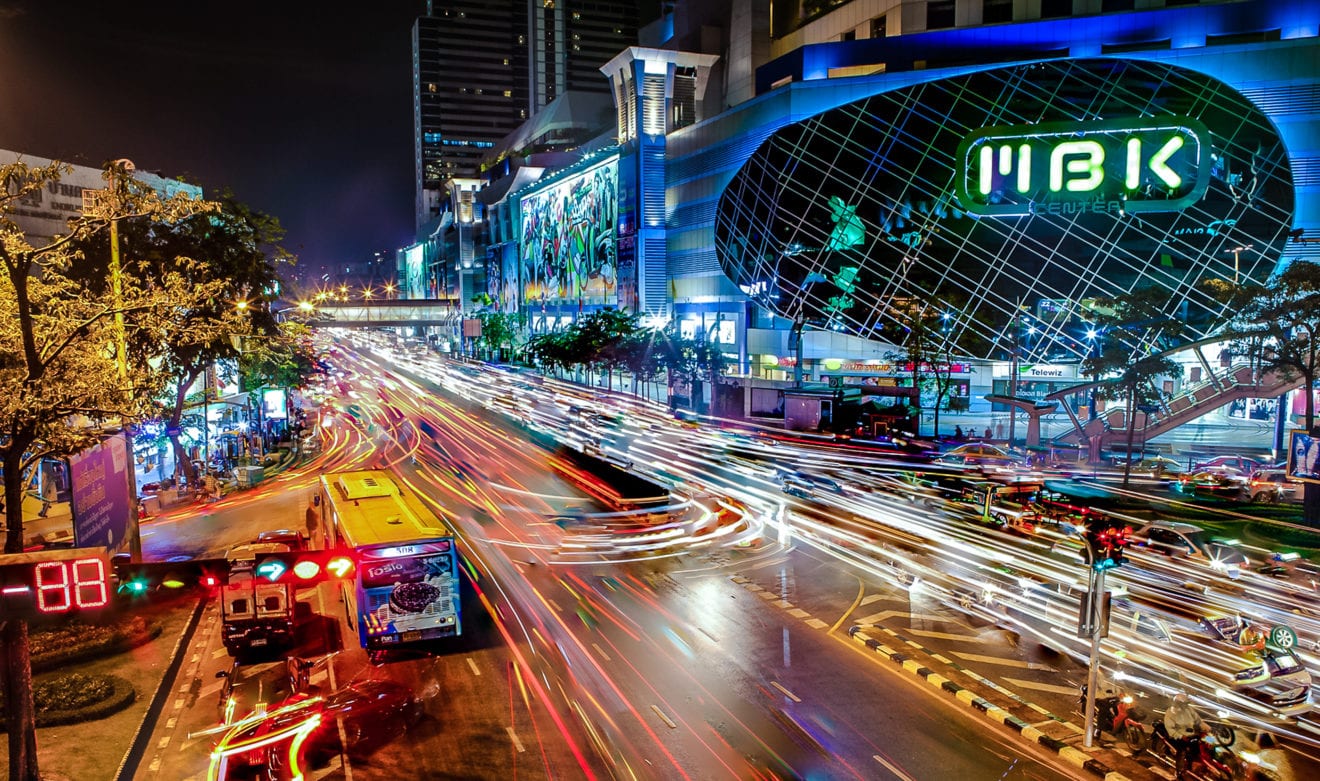
  • Supply of Bangkok retail space keeps growing

    Supply of Bangkok retail space keeps growing

    Despite the challenges of low consumer purchasing power and the growth of online shopping, the supply of Bangkok retail space is continuing to grow.

    Colliers International Research expects about 300,000 sqm of new retail space to enter the Thai market this year.

    “Shopping malls have multiplied in numbers over the past few years, currently occupying the highest share in retail supply,” says Colliers International associate director Surachat Kongcheep.

    Around 114,350 sqm of new retail space opened in the first half of this year, pushing the total retail area in Bangkok to more than 7.6 million sqm. The new space mostly involves malls and office buildings in outer Bangkok, which comprises more than 60 per cent of total retail supply.

    Although Thailand’s economy has not fully recovered, many developers are still launching retail projects as long-term investments.

    Show DC shopping complex is the only large retail project to have opened so far this year.

    A source at IconSiam says the developer has postponed this year’s opening of the IconSiam Project, a 750,000 sqm retail space by the Chao Phraya River. Luxury Japanese department store Takashimaya is one of the project’s main anchors.

    Surachat says the growth of community malls, which boomed in Bangkok’s retail sector three years ago, started to slow down last year because of the developers’ lack of expertise in the retail business.

    As of the second quarter of this year, shopping malls in Bangkok and surrounding areas covered 4.4 million sqm, or 58 per cent of the capital’s total retail supply, which is about 7.6 million sqm.

    Even more malls

    Colliers’ research shows the major players in the retail sector will continue to increase the number of shopping malls in Thailand, especially in major cities, while other retailers will focus on expanding their portfolios internationally.

    Despite weak spending power, most hypermarkets, speciality stores and large shopping malls in Bangkok’s suburban areas are at 100 per cent occupancy level, says Surachat. Occupancy rates in all retail categories in the second quarter were nearly the same as those in the previous quarter, at rates above 96 per cent. Most of these areas are occupied by hypermarkets and surrounded by speciality stores and entertainment complexes.

    Meanwhile, shopping malls also show high occupancy rates as they are popular for local and international brands.
    “Bangkok’s total retail area has quickly risen within the past quarter through the addition of many new office buildings,” says Surachat. Office buildings have added retail space for tour and travel services, convenience stores and dessert cafes.

    Average rental rates of all locations in Bangkok in the first half of the year have risen by 5 to 10 per cent. Large shopping malls have the highest rents, says Colliers.

    Rental space in Bangkok’s city area can add up to more than THB3000 (US$88) a sqm per month, especially in central malls with direct access to BTS stations. Meanwhile, monthly rents in community malls beyond the main roads start at around THB800 a sqm.

    Despite the increasing average rental rate, Bangkok’s suburban community malls are not likely to raise their rents in the next two quarters because of their decreasing popularity, says Colliers.


  • Japan’s retail sales growth slows in May, June looks more positive

    Japan’s retail sales growth slows in May, June looks more positive

    Retail sales in Japan lifted 2% for the month of May, as shopping revenue growth slowed in the archipelago nation, compared to April’s increase of 3.2%.

    The May result came in below a median forecast of 2.6% compiled by Reuters.

    The biggest contributors to the rise were sales of motor vehicles, followed by fuel, medicine and toiletries, according to the Economy Ministry.

    Offsetting the gains, sales at supermarkets and department stores dipped 0.6% in May, after growing for the first time in nine months in April at a pace of 1.1%

    Month-on-month, sales fell 1.6% from April, when they rose 1.4% on March.

    However, June looks to be more positive on the retail front for major apparel and accessories players.

    A report by WWD said big-name fashion retailers in Japan recorded a positive sales month in June, on the back of early clearance sales and an increase in shopping tourists to the nation.

    Fast Retailing said Tuesday that same-store sales at its Uniqlo stores in Japan were up 4.1% on the year last month, while Isetan Mitsukoshi Holdings, the country’s largest department store operator, said same-store sales among its Tokyo metropolitan area gained 1.1% year-over-year in June.

    After releasing a soaring first-quarter profit result last week, Takashimaya said June sales at its 17 department stores in Japan grew 4.6% compared with the same month last year, while H2O Retailing Corp, which operates the Hankyu and Hanshin chains of department stores, said sales at those stores were up 4.6% on the year last month.

    Finally, the 18 Daimaru and Matsuzakaya department stores in Japan, operated by J. Front Retailing, posted a 4.8% sales rise on the year in June.

  • e-retail brands out of the social media loop in SE Asia

    e-retail brands out of the social media loop in SE Asia

    Over 85% of consumers in Singapore, Malaysia and Indonesia, who mention e-retailer brand names in their social media posts don’t tag brand handles, according to Digimind.

    This means brands need to be vigilant in monitoring their brand reputation in the wider social media space to ensure they aren’t missing out on key conversations and trends, and are able to act upon any customer service concerns quickly.

    With the rise of empowered consumers and an increasing adoption of online shopping, e-retailers need to adopt customer-centric strategies in order to thrive. With so much of our daily conversations happening online, data from social media can provide key insights for e-retailers wishing to optimize customer experiences.

    Digimind’s study, Social Shopping in 2017, assessed the state of the e-retail industry in the three countries by monitoring 15 local and regional e-retailers, including Lazada, Zalora, and Berrybenka.

    “It’s no secret that brands who implement customer-centric strategies are excelling. With 2.8 billion active social media users in Southeast Asia, it is crucial for e-retailers to listen to what is being said about their brand, competitors and the industry online,” said Stephen Dale, general manager of APAC at Digimind.

    “Understanding what consumers are saying on social media can provide companies with an arsenal of insights that can be used to develop content strategies, improve customer service, build brand advocacy, and increase sales,” said Dale.

    He added that when analyzed in conjunction with other data such as web page visits and browsing behavior, this can further inform marketing plans and Voice of the Customer programs.

    The study also revealed that while the majority of e-retailer’s followers in the countries studied were on Facebook, consumers were most actively publicly posting their opinions and experiences on e-retailers on Instagram and Twitter.

    This means while Facebook is the ideal channel for brands to communicate with followers, Instagram and Twitter are key channels for community engagement.

  • The Challenges For Global Retail Franchises in Indonesia

    The Challenges For Global Retail Franchises in Indonesia

    Research company Spire in 2016 found Indonesia is viewed as the region’s largest franchise industry, with experts predicting at least 60 percent of franchise business operated in Indonesia last year with the majority of foreign franchises.

    Amir Karamoy, Chairman of the National Committee for Franchising and Licenses at the Indonesian Chamber of Commerce and Industry, said regional headquarters based in Indonesia should be encouraged as it benefits the country through taxes and human resource development. But at this stage, Indonesia’s complicated regulations regarding retail businesses and franchises limit foreign involvement, particularly for foreign businesses hoping to base a regional headquarters in the country.

    These regulations, as well as strong competition, can spell trouble for even the biggest global brands. The recent announcement that US convenience store giant 7-Eleven will close its doors in Indonesia has prompted speculation on further reforms.

    Modern Sevel Indonesia (MSI), the local arm of 7-Eleven Indonesia, opened its first store in Bulungan, South Jakarta, in 2009.

    “The business model that 7-Eleven implemented made underlying products such as snacks, beverages and cigarettes popular. This had made several other mini markets struggle to compete,” University of Indonesia academic and businessman Rhenald Kasali said.

    The chain introduced the hang-out concept to Indonesia, which saw young people gather to spend time together and snack, which in turn disrupt traditional models where customers would purchase food and then leave.

    Kasali speculated the Indonesian government does not support the business concept, which could have been a factor in MSI closing all stores by the end of June.

    He said government regulations typically ‘take sides’ in support of older retailers.

    “Sixty percent of 7-Eleven’s income came from youngsters who hang out at the store. 7-Eleven suffered because of bureaucracy and regulators that don’t understand the business model,” Kasali added.

    7-Eleven faced tough questioning from the Ministry of Trade when it first launched about the concept and whether the outlets were convenience stores or restaurants. A government regulation which prohibited the sale of alcohol at convenience stores is also believed to be a factor in the shutdown.

    The convenience store brand is not the first international giant to struggling to do business in Indonesia. Last year Swedish furniture retailer IKEA struggled to keep its franchise in Indonesia due to copyright problems with a firm called IKEA Surabaya.

    The Surabaya-based IKEA had registered the name in 2013, while the Swedish firm had registered in 2013. But Indonesian regulators defended the Surabaya business, saying the Swedish IKEA had been commercially inactive. As a result, Swedish IKEA paid a royalty to the Surabaya IKEA.

    Similarly, French fashion brand Pierre Cardin sued Jakarta businessman Alexander Satyo Wibowo who had been using the name for his brand in Indonesia. Like the IKEA case, the courts sided with the local business and ruled Pierre Cardin had lost the rights to the name due to inactivity.

    Although Pierre Cardin is a famous brand globally, the company registered its name in Indonesia in 2009 while Wibowo registered his brand in 1977. As a result, France’s Pierre Cardin no longer open outlets in Indonesia under that name.

  • China economy growing but harder times beckon

    China economy growing but harder times beckon

    China’s economy continued to improve in the second quarter, with corporate profits rising and hiring up, a private survey showed, but it suggested the Asian giant may have to brace itself for tougher times ahead even though firms have been able to weather a tighter financing environment.

    The quarterly survey of thousands of Chinese firms by China Beige Book International (CBB) showed yesterday that while the property sector slowed, manufacturing improved further and the retail and service industries bounced back after a difficult first quarter.

    That reinforced a flurry of recent data and policymakers’ comments that indicated the authorities were working to curb financial risks and keep the economy on an even keel heading into a key political meeting this year. The survey showed surprisingly strong performance in the commodities sector despite some price weakness in the second quarter, with the aluminium sector particularly strong.

    Yet signs of stress in the corporate sector pointed to a bumpy ride for businesses. CBB said cash flow was negative for many companies and inventory levels in the second quarter was at the highest in the history of the survey.

    That is in line with official data showing growth in industrial inventories picked up to over 10 per cent in April, sparking worries of weak demand. CBB said there are signs that tougher times could be ahead for Chinese companies during a period of deleveraging and rising interest rates.

    “It remains true that either rates have to come plunging back down, as the (state planner) recently called for, or the present level of corporate activity is headed for a cliff,” CBB said in its report.

    As the government stepped up its campaign to curb debt risks and stabilise the financial sector, growth of China’s broad money supply came in at the slowest in at least two decades in May, though bank lending remained solid.

    The survey showed the corporate sector started to feel the effect of tighter credit conditions in the second quarter. Borrowing was not impacted much, CBB said, likely due to positive business outlook for the next six months.

  • Three in Four Consumers Frustrated by Inconsistent Retail Experience

    Three in Four Consumers Frustrated by Inconsistent Retail Experience

    Not only do today’s shoppers expect a great service experience, they want it to be integrated and harmonised across channels. According to recent research by Manhattan Associates, three quarters of shoppers say they expect a consistent cross-channel shopping experience, yet just 14 percent claim to enjoy such an experience today. With 82 percent stating they expect their online experience to be duplicated in store, and 78 percent saying they feel they know more about the products and services in store than the store associate, it is clear where the consumer thinks retailers need to invest.

    Furthermore, half of the consumers surveyed said they would like store assistants to make personal recommendations in the same way a website already recommends products they might like, indicating that personalisation within every selling channel – not just online – is high up on the consumer’s agenda.

    The rewards for those retailers able to effectively provide customers with a consistent service experience across channels is potentially huge, with 56 percent of the consumers surveyed stating a seamless service capability as the main reason they would be willing to commit their loyalty to a retailer.

    Other key findings include:

    • 45 percent of consumers stated “a reward scheme that gives you exclusive promotional offers” and 35 percent stated “fast delivery” as key reasons they would stay loyal to a retailer
    • 64% of consumers consider “free delivery” as the most important fulfilment option a retailer should offer as part of their online service proposition, ahead of any chargeable option
    • 47 percent view “product advice” and 33 percent of consumers consider “checking stock availability” as the most important aspects of the service provided by store assistants
    • Regarding reasons consumers are more likely to go to a physical store rather than buying online, 62 percent of respondents said “to get the product there and then” and 53 percent stated “to try and feel the products before buying in-store”
    • As to what consumers would like to happen when they go into a store and the product is not available on the store shelf, 42 percent said “they would like the store assistant to check if it is available in a store nearby where they can collect it from” whilst 19 percent stated “they would like the store assistant to order the product for them and have it delivered to their home or to the same store for collection”

    Raghav Sibal, managing director, Australia and New Zealand at Manhattan Associates, commented, “Consumers clearly have an expectation of what a retail experience should look like in today’s digital world and are willing to offer their loyalty in exchange for retailers able to meet that expectation. Now is the time for retailers to invest in technologies that keep them ahead of the curve and take the appropriate steps required to close the gap between customer expectation and today’s reality. Those that do will be the ones that will thrive in 2017 and beyond.”

    The research by Manhattan Associates questioned 2,000 adults in Australia about their shopping experience and expectations.

  • Philippine Double Digit Growth to Attract Investors

    Philippine Double Digit Growth to Attract Investors

    The year 2016 was a great period for Philippines in the field of consumer lending which recorded a massive growth. The presidential elections in 2016 led to political stability and consumers had more confidence to take consumer loans. When the global market was highly volatile, consumer lending in the Philippines was an attractive destination with its strong consistently growing economic and financial systems that operate in a safe and sound approach.

    The new government has focussed on tax system and introduced a tax reform program that helped the country’s economic growth with respect to consumer lending. The World Bank signified that the Philippine financial market system will grow rapidly due to its consumer confidence and transparency of building regulations. According to research report “Consumer Lending in the Philippines”, country’s robust banking system is crucial in the consumer lending field where it ensures stability and rapid growth in the country’s economy. Thus, the Filipinos are now more confident to take more loans from the retail banks for automobile or domestic purpose.

    The rapid growth in Philippine domestic economy has created more jobs which washed out poverty to some extent. The recent economic developments in Philippines was somewhat driven by the presidential elections. The fixed capital investment rose to 25.6%. There were vast opportunities in the field of construction, manufacturing and service sectors.

    As per the economy growth statistics for the first quarter of 2017, it showed that the primary income for the nation slowed down by 3.9% and the gross national income has risen to 5.9%. The Philippines economy is aiming at a 6.5% to 7.5% GDP for the year 2017.

    The services sector is the highest contributor to the growth of the nation’s economy. The industry sector stands second and agriculture sector stands in the third place. The IPP (Intellectual Property products) are outstanding with the growth contribution of 27.2%. The export and imported goods contributed 22.3% and 20.8% respectively.


  • Hong Kong retail market enters post-correction era

    Hong Kong retail market enters post-correction era

    Hong Kong’s retail sector is transitioning into a period of normality. After several years of correction, the retail market is showing genuine signs of stability and renewed tenant activity.

    The driver is, simply, cost. In the first half of 2017, rental costs of core shopping areas have finally come down to a level considered acceptable from a tenant perspective. Significantly, with this normalization, low-to-middle range retailers are now confident and less likely to succumb to outlandish rental costs and fierce competition with luxury jewelry stores for retail space. Higher up the value chain, landlords of shopping malls and street shops have become so nimble with their portfolio strategy that a more diversified market has brought in a new era of retail.

    The change is conspicuous. Major streets in Hong Kong are no longer dominated by jewelry shops, pharmacies or luxury brands.

    Outside forces are increasingly influencing this retail shift; Chinese tourists’ diminishing consumption have changed the consumer profile. And as a result, landlords have to cater to the needs of a more local clientele. To reflect the transition in the market, landlords are actively leasing to more trendy tenants such as affordable luxury brands, diversified fashion concepts, cosmetics stores and food & beverage establishments.

    The change is also occurring away from the street level. Most shopping malls have transformed or are about to transform their tenant mix by adding unique restaurants, niche fashion brands, international lifestyle stores or sports-related gadget shops. In addition to cinemas, landlords are signing boutique-style gyms as alternative tenant anchors. They are successfully attracting footfall, complemented with a sports brand added to the trade-mix.

    But retailers have still not fully regained their confidence and a meaningful recovery in Hong Kong will take time. Signs of a more measured rebound are more obvious with well-established brands who are still regrouping from their extensive expansion across Greater China. As such, newer brands are taking advantage of the situation and are actively acquiring.

    Innovative hybrid concepts, mingling entertainment with dining, have been imported from the overseas market into Hong Kong. As opposed to previous cycles, international operators of these new concepts have found space in revitalized industrial buildings. Some of these family-friendly restaurants, like Mr. Tree and Crazy Car Cafe in Lai Chi Kok, have become so sought-after that customers have to book one month in advance to secure a place for a child’s birthday party.

    Nonetheless, the current retail market is at its healthiest it has been in the last ten years. Hong Kong’s landlords are now adopting proactive and flexible strategies to attract tenants and foot traffic, paving the way for the long term development of the retail industry. Only time will tell.

  • Demand for People Counting Systems Stirs up With Increasing Retail Stores

    Demand for People Counting Systems Stirs up With Increasing Retail Stores

    Globally, the increasing number of supermarkets, shopping malls, and retail stores is triggering the deployment of people counting systems. There is a strong need for retailers to monitor footfalls in order to remain competitive.
    Traffic to sales ratio can help retailers in accurately comparing stores on the basis of sales volume. A report by TMR Research, titled “People Counting System Market – Global Industry Analysis, Size, Share, Trends, Analysis, Growth, and Forecast 2017–2025,” offers a comprehensive study of the market. It provides a detailed analysis of the various parameters of the global people counting system market, including trends, opportunities, geographical segmentation, and competitive scenario, for the forecast period between 2017 and 2025.

    The availability of easy set-up and low-cost solutions is stoking the growth of the global people counting system market. The snowballing demand for people counting solutions in the transport sector is also contributing to the overall revenue generation of the market. Rapid technological advancements and robust growth of the retail sector, particularly in emerging countries, are likely to provide a significant push to the market.

    On the flip side, the expansion of the worldwide e-commerce industry and the growing popularity of online sales channel are challenging the growth of the brick and mortar commerce, which in turn is hampering the growth prospects of the market.

    Geographically, Asia Pacific will account for a large chunk in the revenue pie of the global market. The rising number of shopping malls, retail stores, and supermarkets are prompting global participants to invest in the region. Besides this, favorable government initiatives are promoting the presence of foreign retailers in India, which is also leading to the widening pool of retail stores in Asia Pacific. Countries such as Hong Kong, China, Japan, India, Malaysia, and Singapore will be the sites of high growth rate throughout the forecast horizon.

    Other developing regions such as Latin America and the Middle East and Africa are likely to witness similar growth conditions. The presence of infrastructure such as airports, train stations, and bus stations along with a substantial number of upcoming projects are boosting the adoption of people counting systems. The robust growth of the hospitality industry is also supporting the growth of the regions.

  • Tianjin FAW Xiali Auto expects Q1 net loss to widen

    Tianjin FAW Xiali Auto expects Q1 net loss to widen

    Tianjin Faw Xiali Automobile Says it expects Q1 net loss to widen to 240-290 million yuan from 166.9 million yuan ($24.24 million) year ago.

  • Snapcart raises US$3million in quest for Southeast Asian offline retail data

    Snapcart raises US$3million in quest for Southeast Asian offline retail data

    In a bid to shed light on the offline retail market of Southeast Asia, startup Snapcart has raised US$3 million in pre-Series A funding,

    “Southeast Asia is a black hole and brands don’t know what is happening,” explains Snapcart CEO Reynazran Royono.

    The new funding round comes after Snapcart raised US$1.7 million in January of 2016. Since then Snapcart has expanded from Indonesia to the Philippines.

  • Vietnamese spend big on foreign high-street clothes

    Vietnamese spend big on foreign high-street clothes

    Huong, an office worker in Hoang Mai district in Hanoi, said she reserves a budget of VND2-3 million for buying new clothes every month. But she does not want products bearing Vietnamese brands, but preferably orders Zara and Mango products from overseas shops online.

    Huong said that the foreign high-street products are now affordable for office workers like her.

    “Why don’t you choose foreign brands if they have diverse design, good materials and reasonable prices?” she said.“Manufacturers and distributors often launch sale promotion campaigns with big discount rates. I can buy many products at the prices just equal to or even cheaper than Vietnam’s export products,” she explained.

    Oanh, an account executive in Hanoi, said she looks for Zara, H&M, Mango and Uniqlo products regularly, which allows her to buy high-quality products at reasonable prices.

    Sometimes she can buy products at just VND1 million or lower in sales campaigns.

    “I never buy Vietnamese goods during sale promotion campaigns because I am not sure about the actual value of the goods,” she said. “Meanwhile, no need to worry about this when you buy products from these brands. And the prices are very good”.

    Huong and Oanh order the products online and pay fees to have the products shipped to Vietnam. There are many shipping agents in Hanoi, who are in charge of receiving products, carrying to Vietnam and delivering to clients.

    Thuy Linh, one of the agents, commented that Vietnamese clients mostly order clothes and footwear, and 80 percent of ordered products bear high-street brands such as Zara, Mango, and Forever 21, while the remaining 20 percent are luxury brands.

    Linh said she is always busy so Vietnamese tend to favor foreign high-street brands. A T-shirt with Zara or Mango brand can be bought at VND180,000 only, including fees, which is cheaper than Chinese products.

    Understanding the Vietnamese taste and realizing the rapid increase of middle-income earners in Vietnam, a lot of high-street brands have been conquering the local market. Zara, the fashion brand from Spain, has been present in Vietnam since mid-2016. Mango, which targets customers aged 18-40, has been present in Vietnam since 2004 through a franchise contract signed with Maison JSC.

    In the latest news, H&M has begun employing workers to prepare for its landing in Vietnam. The Swedish brand’s first shop would be in Hanoi, cover an area of 2,000 square meters and employ 100 workers. The recruitment will also be implemented in HCMC.

  • Vietnam airport operator misses out on retail business opportunities

    Vietnam airport operator misses out on retail business opportunities

    Despite robust growth in passenger numbers, the state-owned Airports Corporation of Vietnam (ACV), which operates the country’s civilian airports, generated only $81 million from non-aeronautical businesses such as airport retail in 2016, or 15 percent of the annual target.

    Industry experts said the airport operator’s revenue mainly comes from the aeronautical sector such as landing fees and passenger service charges. Meanwhile it hasn’t focused enough on non-aeronautical business, especially the airport retail business.

    The operator estimated its revenue from retail at $1 per passenger last year, far below the average of other airport operators in Asia that reached up to $12.

    Thailand’s AOT and Malaysia’s BHD raked in $4-5 per passenger last year.

    The ACV, which operates 22 civilian airports in Vietnam, recorded significant growth in passenger traffic in 2016 to an estimated 81 million, with Vietnam’s airline market developing at the third-fastest pace in the Asia-Pacific region.

    According to market research group Nielsen, Vietnam’s airline market will be fueled by the middle and affluent class which is forecast to rise from 12 million people in 2014 to 33 million by 2020.

    However, ACV revenue lags behind it’s Thai counterpart even after factoring differences in passenger traffic. As of the end of the third quarter of 2016, the ACV’s annual revenue was only equal to 40 percent of Thailand’s airport operator AOT while passenger traffic made up as much as 68 percent.

    The proportion of international arrivals at Vietnam’s airports is about 30 percent of total passenger traffic, compared to 58 percent in Thailand and 48 percent in Malaysia, while service charges on international travelers are higher than those for domestic passengers. That partly explains why the ACV is so far behind many of its competitors in the region in terms of revenue.

    Airports Corporation of Vietnam, which is currently valued at $1.2 billion, is one of Vietnam’s biggest state-owned enterprises.

    Last year, the ACV raised $51.6 million by selling a 3.47 percent stake in an initial public offering where foreigners snapped up 82 percent of the shares on offer.

    France’s Aeroports de Paris SA has emerged as the front-runner to buy a 20 percent stake in the Ho Chi Minh City-based company, according to the Transport Ministry. The deal is scheduled to take place in March.

  • Vietnam retail e-commerce to earn US$10 billion by 2020

    Vietnam retail e-commerce to earn US$10 billion by 2020

    Data from the Association of Vietnam Retailers (AVR) indicates that in 2015, retail e-commerce surpassed US$4.07 billion, with a growth rate of 20%.

    Ho Thi Kim Thoa, Deputy Minister of Industry and Trade, told a forum on e-commerce and mobile phone technologies in Hanoi on December 8 that e-commerce was a vital development trend in the retail sector.

    Thoa said last year, the growth rate of the retail sector was 9.5%. Traditional retail made up 80%, while modern retail including supermarkets, convenience stores and e-commerce accounted for only 20%. “Notably, in the modern retail channels, the portion of e-commerce was at a low level of around 2.8%,” she added.

    The country had 217 e-commerce trading floors with total revenues of VND1.66 trillion in 2014, double the 2013 figure.

    “Vietnamese businesses have seen positive changes in e-commerce by big firms. The number of small- and medium-size enterprises (SMEs) participating in e-commerce was modest even though 97% of the country’s 600,000 firms are SMEs,” she said.

    The deputy minister noted that the Prime Minister had promulgated a decision on master planning of e-commerce in 2016-20.

    She gave the recent Online Friday on December 2 as an optimistic example of e-commerce development. The number of enterprises joining in the event this year was 3,000, higher than last year.

    She urged businesses to catch up with e-commerce trends and have plans to enhance e-commerce development.

    Dinh Thi My Loan, AVR’s chairwoman, said there were many factors promoting e-commerce development, including the popularity of mobile devices.

    Nguyen Thanh Hung, chairman of Vietnam E-commerce Association (VECOM), agreed that the development of mobile phones and applications had contributed to promoting purchasing activities.

    Hung said the country’s e-commerce had been developing at a growth rate of 30% a year. “Businesses have quickly shifted from offline to online retail. Several are even totally doing business online,” he said.

    However, Pham Thanh Cong  from Nielsen said the sector should ha solutions to meet demand in rural areas as there are 1.3 million traditional shops, accounting for 85% of the retail sector’s revenue.

  • South Korea’s consumer sentiment suffers due to political turmoil

    South Korea’s consumer sentiment suffers due to political turmoil

    It’s been a dramatic year for South Korea. And that drama has played out both in the political and business spheres.  Let’s show you what it’s done to consumer spending.

    Consumer sentiment last month dropped its the lowest level since the 2009 financial crisis. The Bank of Korea, says the consumer sentiment index stood at 95.8 in November.

    Retail sales in South Korea have dropped more than 1 percent on a yearly basis since the beginning of November. Box office receipts plunged 17 percent on the year in November alone.