Retail News CRM

Tag: retailing

  • Select Vietnamese sellers to get Amazon training support

    Select Vietnamese sellers to get Amazon training support

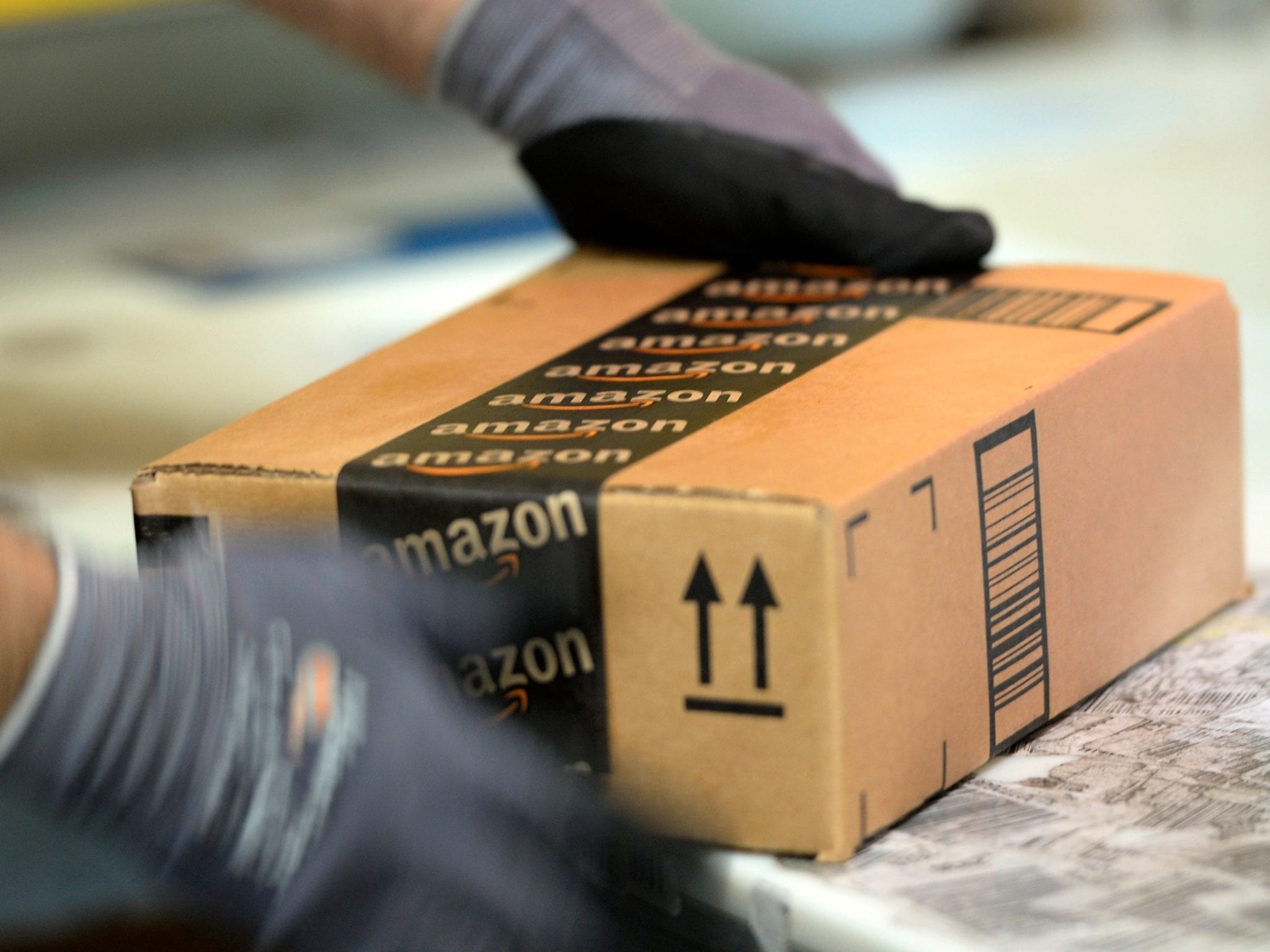
    100 selected Vietnamese businesses will participate in a support program to help them reach more customers on Amazon. These businesses will receive offline or online training, with in-depth support from Amazon and discounts from local service providers, according to a statement jointly released Wednesday by the Vietnam Trade Promotion Agency (Vietrade) under the Ministry of Finance and Amazon Global Selling.

    The program aims to help local businesses, especially in handicraft, textile, footwear and consumer goods, improve their export capabilities through selling on Amazon.

    They will also have the opportunity to participate in the second stage of the program, which will help them develop their brands.

    Other sellers who are interested can also join an online training program starting next month to get equipped with the basic knowledge of selling on Amazon.

    Bernard Tay, Amazon’s regional director for Southeast Asia, said that the young, tech savvy population in Vietnam and strong development of the manufacturing sector generate great e-commerce potential in the country.

    However, a lack of knowledge and experience prevents them from reaching out to the global market, he said.

    Vu Ba Phu, director of Vietrade, said that the support program will open up new potentials for local companies in expanding their businesses internationally.

    There are 300 million Amazon accounts in 185 countries and territories at present. Amazon also has 175 fulfillment centers worldwide.

    Vietnam has more than 700,000 businesses, of which 98 percent are small and medium enterprises, according to Vietrade.

    The country’s e-commerce market grew by 25 percent in 2017 and is expected to maintain this growth momentum over the next three years, according to the Vietnam E-commerce Association (Vecom).

    It also estimates online retail revenues to hit $10 billion by 2020, accounting for five percent of the country’s retail market.

  • Thailand franchise market ready for further growth

    Thailand franchise market ready for further growth

    Thailand franchise consultancy Gnosis Co expects a healthy market for franchises in the country.

    Gnosis MD Sethaphong Phadungpisuth said more than 50 chains from both local and international brands are exploring the market this year following measures to ease regulations on the part of the Business Development Department.

    “The Thailand franchise market will become more active this year. We expect the overall number of new franchise brands both from abroad and the domestic market that will open their franchise in Thailand this year to increase by 10 per cent to about 630 brands”, he said.

    According to Gnosis, some brands have chosen Thailand as a springboard to other Asean countries, in particular Myanmar and Laos.

    Among those diverse brands set to start operations in Thailand this year include Taco Bell, The Edge Learning Centre, and Singaporean hygiene and disinfection products firm Sureclean. Additionally the number of Taiwanese milk tea chains continues to increase in the territory.

    Franchise business in Thailand is estimated to be valued at THB250-300 billion (US$7.84 billion).

  • LVMH plans London hotel-retail project

    LVMH plans London hotel-retail project

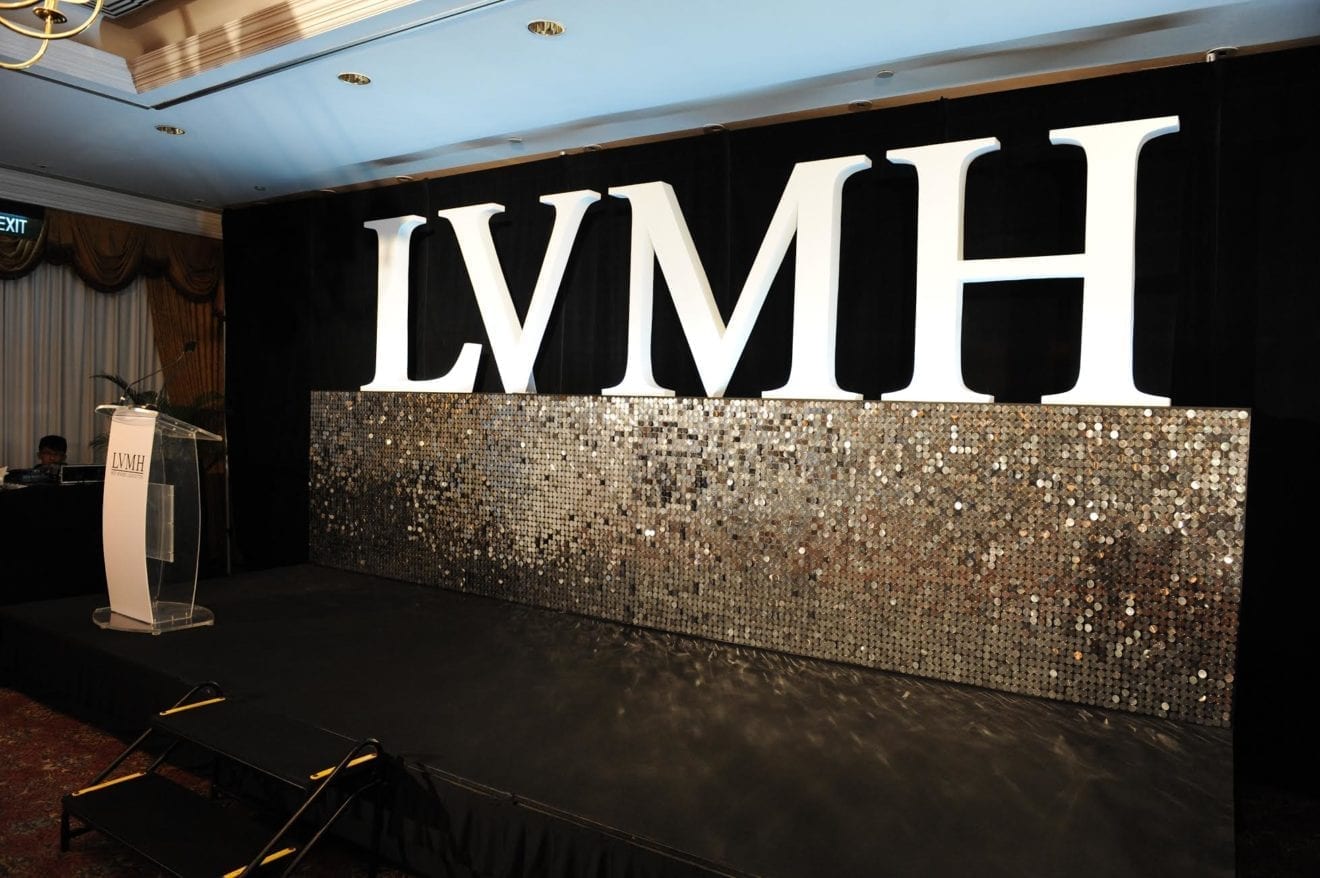
    Luxury retailer LVMH is harbouring plans to develop a corner of London’s Grafton Street, according to a report on Business of Fashion.

    The development, made in partnership with privately owned property developer O&H, will reportedly include a Cheval Blanc hotel, a restaurant, a spa and a rumoured flagship Celine boutique. The projects are expected to be complete by the third quarter of 2022.

    The news follows the group’s acquisition of luxury hospitality group Belmont at the end of last year, at which time the company said it saw growth potential in the luxury sector coming not only from goods, but also high-end experiences.

    LVMH already operates a number of locations in the Grafton Street vicinity, including stores by Louis Vuitton, Loro Piana, Christian Dior and Rimowa nearby.

  • Abercrombie & Fitch sales continue to climb

    Abercrombie & Fitch sales continue to climb

    Abercrombie & Fitch sales rose for the second consecutive year as its restructure and new store format begins to pay off. Comparable sales rose by 3 per cent in the year to February 2, to US$3.6 billion and operating income, after excluding extraordinary items, was $138.6 million compared to $100.8 million last year. However fourth-quarter sales fell by 3 per cent.

    CEO Fran Horowitz said the fashion retailer achieved an improvement in gross profit and reduced operating expenses, resulting in a 77-per-cent improvement in net income.

    “We continue to keep the customer at the centre of everything we do and are excited about the future of our brands. Our transformation initiatives are gaining traction and keeping us on track to deliver our previously disclosed fiscal 2020 targets.”

    Neil Saunders, MD of GlobalData Retail, said while the sales decline during the fourth quarter looks poor on the surface, the dip is a function of a calendar shift and a shorter trading period compared to last year.

    “The comparable Abercrombie & Fitch sales figure, which strips out these negative influences, provides a more balanced assessment of performance and here we believe A&F continues to deliver good growth. The comparable growth rate of 3 per cent is particularly impressive when set against last year’s stellar 9 per cent uplift.”

    He said there was now a clearly evident divergence between the performance of the Abercrombie and Hollister brands. The former posted a 2 per cent decline in comparables with the latter recording an impressive 6 per cent uplift.

    “In our view, Hollister is a brand that is strongly connected to its core customer base, both through impressive marketing and an assortment that is attuned to their needs and tastes. Our own tracking shows that the brand has strong traction and is attracting and converting a core group of shoppers on a regular basis at the same time as adding some new shoppers into the mix. Provided Hollister remains on trend with its range – and we see no reason why this should not be the case – we believe it should continue to perform well as the company moves into its new fiscal year.”

    Saunders said that while Abercrombie’s performance was a little soft this time around, the brand was up against tougher prior year figures.

    “Nevertheless there has clearly been a loss of momentum. Our data show that affinity to the brand, although much improved, is a more tenuous than Hollister. This means that Abercrombie was more exposed to the loss of consumer momentum in the general economy after Thanksgiving and Black Friday.”

    But he said the brand continues to show good potential and there were a number of fashion wins over the period, including good traction in outerwear.

    “Despite the slowdown we remain confident that Abercrombie is on the right track and can improve its numbers as it fine-tunes both marketing and merchandising.”

  • Security concerns inhibiting m-payment adoption in Hong Kong

    Security concerns inhibiting m-payment adoption in Hong Kong

    More than half (53%) of Hong Kong residents polled during a recent survey conducted by the Hong Kong Internet Registration Corporation (HKIRC) said concerns over cybersecurity and privacy risks are major barriers to greater adoption of mobile payments.

    Other barriers that have been cited in the survey include technical instability and the lack of support for mobile payment from most local merchants in the city

    In speaking about the survey, HKIRC deputy CEO Bonnie Chun allayed the primary fear of using mobile payment, pointing out that the government ‘has already put a lot of regulations in place to ensure the industry strictly follow their guidelines. We suggest the government promote its policies via different channels such as social media among others,” said Chun.

    She added that the government should keep on educating the public about the different ways of maintaining safe online hygiene such as changing one’s passwords regularly, using two-factor authentication, not using public Wi-Fi connections for making payment transaction and downloading mobile apps only from reliable sources.

    “Also, mobile payment providers should increase their transparency on how they handle personal data. They should try not to collect too much personal data during the registration process to increase users’ confidence.”

    Mobile payment gets a foothold in Hong Kong

    The survey polled 1,200 residents in the city between the ages of 18 and 65, who belong to various industry sectors.

    Survey results showed that mobile payment is now gaining a foothold in the city with 23% of respondents using mobile payment and is now in the top three payment methods in Hong Kong after credit cards (37%) and Octopus Card (25%).

    While 93% of respondents between the ages of 18 to 25 have used it before, a high percentage – 77% – of older respondents aged 56 to 67 have also used mobile payments.

    More than a quarter of respondents or 28% have been using mobile payments two to three times a week. About 88% of respondents use their mobile phone for transactions of less than HK$500 ($64).

    The survey showed that respondents want to be able to use mobile payment in three areas: public transport, government bills and clinic,

    “The future of mobile payment in Hong Kong is very positive. When we start using mobile payment in public transport, people will become more familiar with it and the adoption rate will increase,” Chun said

  • Retail interest in Myanmar robust, but foreign investment is lacking

    Retail interest in Myanmar robust, but foreign investment is lacking

    When RHB, a Singapore brokerage, first selected Singapore Exchange-listed Yoma Strategic Holdings as one of its top five stock picks for retail clients on May 2, shares of the company soared 15 percent, hitting a 4-month high of 48 cents on May 9 as investors hurried to get onboard.

    “Yoma Strategic offers a pure play on Myanmar, and is well positioned to capture growth opportunities in the country,” wrote RHB analyst Vijay Natarajan in his report.

    While prospects could be “clouded” because of Rakhine, Mr Natarajan believes Myanmar holds long-term growth potential and views “the stock as the best proxy for investors to get exposure to Myanmar.”

    With GDP growth projected to hit 6.8pc in 2018-19 and rise further to 7pc in the next fiscal year, according to the World Bank’s latest estimates, Myanmar remains one of the most promising emerging economies in Asia and retail investors have been keen for a slice of the pie.

    Yet, Myanmar’s economy also remains one of the most difficult to access, with few avenues available for retail investors to tap. “Many Maybank clients have been asking about opportunities to invest in Myanmar. But other than Yoma Strategic, there are hardly any other options for retail investors to enter the country,” said Chua Hak Bin, senior economist at Maybank Kim Eng Research.

    Mr Chua added that there is still a lack of statistics and data available on Myanmar compared to other countries, which has made it hard to generate reports that will help his clients make investment decisions.

    Consequently, many have been channeling funds into Vietnam instead. “Vietnam has opened up its economy, signed on to the Trans-Pacific Partnership [of 11] and attracted a flood of foreign direct investments,” Mr Chua said.

    Vietnam is also experiencing a tourism boom, led by tourists from China, as well as a remittance boom, as overseas Vietnamese re-invest their earnings, including into the property market. This has driven the current account and balance of payments into a surplus, even though imports have been on the rise.

    Notably, Vietnam’s push to equitise its State-owned enterprises has also helped to boost interest and liquidity in the country’s stock market. “Vietnam has been the rockstar in ASEAN. There are lessons for Myanmar from Vietnam’s experience,” Mr Chua said.

    ‘Many Maybank clients have been asking about opportunities to invest in Myanmar. But other than Yoma Strategic, there are hardly any other options for retail investors to enter the country.’ Chua Hak Bin, Maybank Kim Eng Research

    Companies Law

    While efforts to reform the economy have been slower than expected to materialise, Myanmar, for its part, has taken credible measures to liberalise its market with the enactment of several new laws, including the Myanmar Companies Law, which was signed last December.

    Among the most anticipated regulations is one that will allow foreigners to own stakes of up to 35pc in local companies, including the five listed on the Yangon Stock Exchange.

    “The purpose of this regulation is to allow foreigners to own shares in local firms and for local companies to benefit from access to foreign capital,” said U Aung Naing Oo, director general of the Directorate of Investment and Company Administration (DICA), during the Myanmar’s Business Leaders Summit in Yangon last week.

    At the summit, U Aung Naing Oo reaffirmed that the process of enforcing the Company Law “is going well. The key aim is to make it easier for foreign investors to invest in Myanmar. As promised, we will be able to fully enforce the law by August 1,” he said.

    In fact, the YSX has seen a spike in interest from local companies to list on the exchange since the Companies Law was approved. Within a year, investors should be able to trade shares of three more firms – engineering company Great Hor Kham, Myanmar Agro Exchange Public Limitedand logistics player Ever Flow River  -on the exchange.

    Still, some say it could take a while yet before the equity market opens up to retail investors. Pedro Jose Bernando, a partner at law firm Kelvin Chia, warns that while the Company Registration Office has already circulated draft rules on the Companies Law, it appears“they are more concerned now with the implementation of the e-registration system, and not so much with how the substance of the law, including the 35pc threshold will be implemented,” he told The Myanmar Times.

    He added that the 35pc rule will like be rolled out incrementally, to privately-owned Myanmar companies first, before being extended to public-listed companies, if at all.

    Stocks to watch

    In the meantime, investors still keen on placing their bet on Myanmar still have a few other stock options to consider. Singapore-listed Memories Group, the vehicle which holds Yoma Strategic and Yangon-listed First Myanmar Investments’ tourism businesses, is one.

    The company, which came to market in January, operates Balloons over Bagan and the Hpa-an Lodge and Pun Hlaing Lodge businesses. In March, it also bought a luxury yacht business in Mergui.

    London-listed Myanmar Strategic Holdings (MSH) is another option. Just last week, the company took up a $150,000 minority stake in Myanmar-based digital consulting firm, nexlabs. This came a month after MSH and Auston Institute of Management announced a joint venture to set up and operate a private school in Yangon. It is also invested in the Ostello Bello hostel chain in Bagan, Mandalay and Inle Lake.

    Then, there is London-listed Myanmar Investment International, an investment holding company with stakes across the financial services, telecommunications, healthcare and tourism sectors.

    Investors can also consider a handful of other companies which operate businesses in Myanmar, including Thai national oil and gas company PTT Exploration and Production Public Company Limited (PTTEP) as well as Thai Beverage, which is listed in Singapore.

    Last year, Thai Bev bought a 50pc stake in Myanmar Distillery Co, which makes Grand Royal whisky. In 2013, it acquired Singapore’s beverage maker Fraser & Neave (F&N), which this year received Myanmar Investment Commission approval to manufacture and distribute beer in the country, three years after it sold its 55pcstake in Myanmar Brewery to Japan’s Kirin Holdings for $560 million.

    In the meantime, Yoma Strategic is already upping its game. Last week, the company announced a joint venture with Pernod Ricard, which makes Chivas and Ballentine’s, to produce and distribute whisky in Myanmar.

  • Singapore Sales stays under the Expectations

    Singapore Sales stays under the Expectations

    Falling sales of electronics and apparel muted the overall figure for Singapore retail sales in April.

    The year-on-year headline figure rose by just 0.7 per cent after sales of motor vehicles were excluded from the data. Sales of computers and phones fell by 9.8 per cent, while apparel and footwear sales fell by 3.4 per cent.

    Supermarkets and hypermarkets slipped by 2.3 per cent and department stores by 1.7 per cent.

    Categories which improved were led by petrol service stations, up 8.5 per cent, and medical goods and toiletries, up 7.8 per cent.  Sales of furniture and household goods rose 4.8 per cent.

    Month-on-month retail sales declined 1.7 per cent and Statistics Singapore estimated online shopping accounted for just 4.4 per cent of total retail sales in April.

    Food retailers also had a forgettable month, with total sales falling 1.7 per cent year on year. Within that category, fast-food outlets boosted sales by 5.4 per cent, at the expense of restaurants and cafes, which declined 4.3 per cent.

  • Japan studies regular mandatory closings in the Retail Industry

    Japan studies regular mandatory closings in the Retail Industry

    Large-scale specialty stores such as Daiso and Ikea may be subject to mandatory closings every two weeks as the South Korean government studies the validity of such a regulation.

    Research on the appropriateness of the regulation on large-scale specialty stores will start this month, says the Korea Small Business Institute. It will examine whether the big retailers are hurting small shops, and whether the regular closures are necessary. Requested by the Ministry of SMEs and Startups, the study will determine if the regulation is necessary.

    The restriction on such large-scale specialty stores has become the thorniest issue in the retail industry. Large retail outlets such as E-mart, Home Plus and Lotte Mart are subject to restrictions on working hours following a revision of the Distribution Industry Development Act in 2012, aimed at protecting small shops. Local governments adopted ordinances based on the Act, forcing large retail outlets to close on the second and fourth Sunday of each month.

    However, critics say it is unfair as only retail outlets are subject to the regulation while shopping malls such as Shinsegae Group’s Starfield and specialty shops like Ikea were exempted.

  • Myanmar allows full foreign ownership in Retail Business

    Myanmar allows full foreign ownership in Retail Business

    Foreign companies are now allowed to invest in Myanmar’s retailers and wholesalers, including holding 100% stakes, as the country makes efforts to lift foreign investment amid the Rohingya refugee crisis.

    The Ministry of Commerce announced the change on Friday, explaining that it wants to increase competition in the sectors and promote price stability and technology transfers. The new rule took effect on Wednesday.

    But restrictions still apply. Foreign companies must invest at least $700,000 to take an up to an 80% stake in retailers, and $3 million for anything more. They cannot own minimarkets and convenience stores with floor spaces of 929 sq. meters or less. For wholesalers, the minimums are set at $2 million for up to an 80% stake and $5 million for more.

    The ministry is also letting foreign companies themselves bring their products into Myanmar and sell them instead of going through local importers as in the past. This could encourage automakers and appliance manufacturers to make further inroads here.

    Foreign companies could technically take stakes in Myanmar retailers and wholesalers before if they received the ministry’s approval. But almost none got the green light. Japanese retailer Aeon, one of the handful that did, began operating supermarkets with a local partner in 2016.

    Emerging economies often restrict foreign investment to protect homegrown retailers and wholesalers. It is unusual for a country like Myanmar, with per capita gross domestic product of only $1,200 or so in 2016, to relax the rules so much.

    But de facto civilian leader Aung San Suu Kyi has come under fire for delays in key economic reforms. And human rights abuses against the Rohingya Muslim minority, hundreds of thousands of whom have fled to neighboring Bangladesh, are making American and European businesses uneasy about operating in Myanmar.

    The country approved about $5.7 billion of foreign investment in the 12 months ended March, down for a second straight year. A further decrease could throw a wrench into a development strategy heavily reliant on foreign money.

  • Global Brands expects massive loss this year

    Global Brands expects massive loss this year

    A big swing to a loss is expected by apparel group Global Brands Group Holding for its latest 12 months, to the end of March.

    A preliminary assessment of its accounts indicates a net loss attributable to shareholders of between US$70 million and $75 million.

    This compares to a net profit attributable to shareholders of about $90 million for the previous 12 months.

    Global Brands says the expected loss is primarily the result of one-off impairment charges from the write-off of a receivable arising from a loan made by the company, as well as impairment charges on various intangible assets. Also, a major licence expired during the year. Exceeding $100 million, the impairment charges and receivable write-off were non-cash adjustments.

    The company expects to release its annual results late next month.

  • New Zealand Consumer spending finished stronger in 2017

    New Zealand Consumer spending finished stronger in 2017

    Consumer spending growth accelerated to five per cent year-on-year in the three months to the end of December last year, with retail trade picking up momentum over the holidays, new National Australia Bank data has revealed.

    Up from three per cent growth y/y in the third quarter, NAB’s latest quarterly customer spending report, which measures around 2.7 million daily transactions through the bank’s facilities, has tracked spending increases across the entirety of metro and regional Australia.

    Retail trade increased 3.4 per cent y/y in Q417, up from 2.4 per cent in the third quarter, while accommodation and food services spending was 10.4 per cent, up 3 per cent.

    The Northern Territory was the strongest growth state for retail trade, up six per cent, offsetting a 0.6 per cent decline in Western Australia.

    Retail trade spending growth was 4.7 per cent in Victoria and 3.3 per cent in NSW. Across the entire economy Victoria was the strongest performer, while NSW and NT lagged.

    Average monthly customer spending during the quarter was up $166 to $2306 in metro areas and up by $104 to $2089 in regional areas.

  • Kanmo Retail Group Digitises Retail Game with Capillary Technologies

    Kanmo Retail Group Digitises Retail Game with Capillary Technologies

    Capillary Technologies, a leader in omnichannel engagement and commerce solutions, has been locked in as the omnichannel partner for Kanmo Retail Group, which manages a portfolio of more than 70 brands across Indonesia, including Mothercare, Karen Millen, Coach, Justice and T.M. Lewin.Capillary will play a strategic role in supporting Kanmo Retail Group’s mission to provide outstanding retail experiences to customers through designing and powering the technology that enables the business to seamlessly connect online and offline customer journeys.

    As the Indonesian market charges towards digitising traditional retail stores and taking on an omnichannel approach, Kanmo Retail Group recognises the growing need to build a truly omnichannel system that puts their customers at the centre of everything they do.

    “Kanmo Retail Group caught on early to the fact that Indonesia is undergoing a digital boom. However, to truly yield results from our omnichannel strategy, we have to look beyond just engaging our customers through offline and online means. We have to take into consideration all customer touchpoints across our various brands and integrate them seamlessly onto a single platform,” said Bhavin Patel, Group Omnichannel Director at Kanmo Retail Group said.

    “Not only does Capillary helps to integrate all our existing systems and merge them into a single, omnichannel experience platform, they also provide us with the flexibility of scaling and easily deploying the solution accordingly. Additionally, the advanced AI-based reporting and actionable insights engine enabled us to analyse data across channels which in turn provide us business insights and allowing us to improve our campaigns,” Patel added. “All these made Capillary the perfect choice for us.”

    Capillary Vice President and Business Head for Asia Pacific, Abhijeet Vijayvergiya commented on Capillary’s partnership with Kanmo Retail Group, “We are excited to be working with Kanmo Retail Group and empowering their digital journey. With a passionate team at Capillary accompanied with Kanmo Group’s futuristic vision, we look forward to seeing a long-term and rewarding partnership.”Kanmo Retail Group is currently using the following solutions from Capillary Technologies:

    • Capillary’s Loyalty+ and Insights+

    Kanmo Retail Group will be able to build an omnichannel loyalty programme that ensures customers can continue their seamless journey across all Kanmo brands. At the backend, all Kanmo brands will now have a 360° single, unified view of their consumers across channels and have access to in-depth actionable insights and recommendations for the next critical interaction.

    • Capillary’s Order Management System

    As part of Anywhere Commerce+, this feature allows Kanmo Retail Group to integrate all their inventory in the backend with all the orders that have been placed. With a single view of orders and inventory, Kanmo store employees can easily assist customers with omnichannel experiences such as placing orders from the store that can either be picked up from any store of their choice or be delivered to their homes. It would also help Kanmo Group increase efficiency and reduce errors in fulfilment across their omnichannel operations.

    In Southeast Asia, Capillary is working with 14 million customers and has 14 hundred stores active on its platform, including Mitra10, Bata, Caring Pharmacy, TungLok Group and McDonald’s. Fresh off a US$20m funding round led by blue chip investors Warburg Pincus and Sequoia Capital, Capillary also plans to use some of the new funds in strengthening its presence in Southeast Asia, including Indonesia, after achieving a threefold growth in the region.

  • Online Giants Carve Out Twin Empires in China’s Age of New Retail

    Online Giants Carve Out Twin Empires in China’s Age of New Retail

    The largest e-commerce players in China have rapidly expanded their scope and reach in recent years through a wave of investments and acquisitions. Alibaba owns two of China’s largest e-commerce platforms, Taobao and TMall, as well as an electronic payments system, AliPay. JD has allied with Tencent, which owns WeChat. Now, a report released by Oliver Wyman, a global consulting firm, analyses how the two players’ ubiquity in mobile payments, deep consumer data and sophisticated logistics capabilities has resulted in a new ‘age of empires’ in China’s retail sector where incumbents must quickly adapt to survive.

    The report, Chinese Grocery’s Age of Empires, reveals the e-commerce giants’ efforts to drive further growth by introducing new shopping formats – dubbed O2O, or online-to-offline. These blend online shopping’s convenience and wealth of information with the social experience and physical contact with products that people enjoy in traditional, brick-and-mortar stores. This is most immediately visible in the online grocery sector, where Alibaba and Tencent/JD are actively pursuing three strategic plays that could together increase their share of grocery shopping from around 10 percent today to around 30 percent over the next five years, by when it could be worth approximately 400 billion renminbi in gross merchandise value.

    “With the grocery sector seeing mobile payment penetration of 35%, the two giants are seeking to maximize their critical advantage of dominance in covering 97% of the overall mobile payment market,” says Richard McKenzie, Partner, Greater China at Oliver Wyman. “Now their investments are rapidly building a wider ecosystem of alliances that will make them ubiquitous through online-to-offline tools and features.”

    Over 460 million people in China regularly shop online, where densely populated cities facilitate home delivery. As a result, China has leapfrogged other markets to take the lead with nearly 10 percent of the population shopping for groceries online, compared to just 3 percent in the United States and 6 percent in the United Kingdom, Europe’s highest rate.

    This rapid change favors the two giant empires, which could make it hard for independent retailers to survive outside of them, evidenced by declining like-for-like sales and margins among China’s traditional supermarkets and convenience stores over the past few years. However, they may yet survive in some form with help from the online giants themselves, leveraging the empires’ logistics networks, rapid delivery services and new software solutions.

    Both empires are building their O2O power through three plays, each of which blends their online capabilities with offline stores in new ways:

    1. Experimentation with own retail formats

    Unlike supermarkets elsewhere that offer online shopping in parallel with a traditional in-store experience, China’s players integrate elements of the two. For example, Alibaba’s Hema stores offer smartphone payment and home delivery within 30 minutes. . Though expensive to set up and with high initial running costs, these stores are only marginally loss making. With further maturity and ramp up, breaking even is within reach. Oliver Wyman believes there is potential for at least 1,000 stores in major cities with total revenues of RMB 200 billion.

    1. Strategic Partnership with Big Box Retailers

    Big-box retailers have tried and failed to launch their own O2O and online shopping services in the past. Amid pressure from the online giants, a flurry of partnerships has seen large retailers aligning themselves with the two tech empires. These show early signs of success as parties combine their different strengths. Examples include Alibaba installing Tmall Supermarket shelves in RT-mart branches, with one-hour home delivery for products on these shelves, while Walmart, which has a strategic partnership with JD, is using its O2O unit JD Daojia as the service platform for over 150 stores to attract online traffic.

    1. Reinvention of the traditional world of “mom and pop” shops

    Traditional stores still account for half the sales of fast-moving consumer goods in China, much of them through the more than 7 million family-run stores that dominate retail outside big cities. Since early 2017, JD and Alibaba have been converting these into franchises, helping them optimize their stock through data-based curation tailored to their neighborhoods. Smartphone-based ordering systems and rapid delivery have also revolutionized procurement. Tmall planned to open 10,000 such franchises in 2017, while JD is aiming for one million by 2021. Alibaba and JD are further likely to dominate the growing market for their ordering systems, a market that could be worth up to RMB 400 billion over the next five years.

    Wai-Chan Chan, Partner, Greater China at Oliver Wyman notes, “China has not only surpassed the US in terms of online grocery penetration but also in terms of the pace of innovation and introduction of value-added services. Customers at a Hema store can pay seamlessly via their mobile phone, have fresh crayfish cooked in-store and delivered to their home within 30 minutes. Players in other markets are still some way behind in matching that offering.”

    As O2O becomes the new normal in retail, the two alliances will act as both players and facilitators of these models. While retailers and brands need to plan the best way to function in a retail world dominated by the two tech empires, identifying opportunities for synergy, it will pose a more serious challenge for some incumbents.

    The new environment will pose serious challenges to independent supermarkets and hypermarkets. Survival will require drastic changes, but this is unlikely under their current set-up. Some leading convenience stores should be able to survive outside these empires in the short term, but they too will come under threat in time from the revival of family-run stores under the franchise networks run by the two giants.

    The tech empires will inevitably influence the shape and future of the supermarket and hypermarket industry. It is crucial for incumbents to find ways to partner or co-exist with them if they are to survive and thrive.

  • Time to go to into a retail rehab

    Time to go to into a retail rehab

    Why are retailers failing at such an alarming rate?

    The preconditions for any business to be successful are:

    1. Is there a real market need that I understand?
    2. Do I have access to a product or service address that need?
    3. Am I sufficiently equipped (skills, resources, motivation etc) to address this opportunity in a particular way that provides me with a competitive advantage or at least desirable point of difference?

    Points one and and two are usually not the issue because failure is quick – if the business even succeeds in getting off the ground.

    The root cause of many failures can be found in HOW the retailer chooses to play the arbitrage game of tapping into a supply to meet a need.

    That is, entrepreneurs will pick the way in which business is done (proposition delivered) and attempt to build some differentiation around that that can be defended at a profit.

    Timing: First or faster

    An example would be Zara that aims to bring the latest fashion (from the catwalk to the store) in less than six weeks – and if anecdotal reports are to be believed have done so in a matter of days. Or you can be the Concord. Or the movie house that shows all the premiers.

    Leverage:  Add value, minimise cost

    Someone turns raw meat into patties, someone solves the challenge of distributing fuel to every town in every country. Someone is the cheapest, someone figures out how to make things smell better, work differently, last longer or taste better. We are limited only by our imagination and the possibilities of innovation are endless. Of course, any particular innovation can be made redundant in a flash.

    Change: Adapt, transform, improve

    More than simply adding value, there are opportunities for entrepreneurs to transform products completely. Old tires can become road base. Cars can be turned into supercars or transformed into vehicles for mobility impaired people and clothes can be altered to fit. Wind can be turned into electricity.

    Access: Exclusive or convenient

    Businesses also exist on the premise that access to the product/ service is exclusive or particularly convenient. This is a very typical ‘advantage’ that many smaller retailers rely on, and it is most often also their weakness. E.g. to be the only menswear retailer in Yepoon or the only newsagent in the shopping centre, or maybe even the only convenience store on that particular side of that particular city block leverages ‘access’ as the method of arbitrage.

    Most small, product-oriented retailers tend to rely on the ‘access’ angle to create a POD. Retailers tend to be resellers, so innovation is not a primary focus. The only value-add lies in the bulk-breaking activity. These SME retailers are content to be ‘the only shoe shop’ in the mall as their core proposition.

    In the past this has been a legitimate approach to ‘capitalise’ on an opportunity. There has always been limits as to how far people would travel to gain access to a product, so geography-based retail propositions have been viable since forever.

    But, reliance on this particular approach is the reason why the technological shift in the market is causing serious competitive pressure. And being blind to the change that has occurred is the cause of many retail failures.

    Too many retailers rely on the fact that they are ‘the only’ cafe on the strip, the only menswear retailer in a suburb, the only servo on that street.

    If you merely rely on being the only store in a particular geography, the internet obliterated that point of difference because on the internet, geography hardly matters.

    Everything that is for sale is in every customer’s pocket. And the time delay (caused by delivery requirements) are (a) offset by cost saving and (b) becoming shorter and shorter. In metropolitan areas, many e-commerce providers are providing same-day delivery and food delivery businesses do it in a matter of hours.

    This leaves traditional corner-stores an ever-shrinking market comprising mostly of emergency shoppers or impulse buyers.

    That is why Amazon poses such a threat to retailers – suddenly there is a competitor that it is more convenient and cheaper than your shop on your corner, and you can do very little about it.

    The internet has made geography irrelevant – and if THAT has been the basis of your business, so is the business.

    The only appropriate response is to change your execution. You need pick a different propositional dimension to differentiate.

    The problem is obvious. The solution is obvious. But maybe, like any good rehab program, the starting point is to admit the problem.

  • Storefront partners with Obsess to create virtual reality stores

    Storefront partners with Obsess to create virtual reality stores

    Storefront is pushing the boundaries of the retail industry by giving brands for the first time ever the opportunity to rent Virtual Reality pop-up stores right on its platform.

    Retailers and e-commerce brands can now launch a virtual, fully customisable store powered by Obsess’ VR technology, featuring their own inventory and choosing any layout, decor and style.

    The ‘Future of Retail’ is retail everywhere, according to Storefront

    Storefront is making retail accessible to anyone in the world by now giving customers a unique selling and buying experience through Virtual Reality, in addition to its current retail space offerings. Now, anyone has the ability to experience a physical store with the ease of online shopping.

    “We see this Virtual Reality pop-up store as creating a new category between e-commerce and a physical retail space. It’s a great in between,” says Joy Fan, Storefront’s CCO.

    Get a taste of (virtual) reality

    With this new partnership with Obsess, brands and retailers can now easily book space through a New York City, Los Angeles, or San Francisco themed virtual store.

    Now with this virtual pop-up store, e-commerce brands can get a branded store environment without the need to invest in a physical space – just yet.

    “Our goal is to bring the visual merchandising and curation of retail stores into online shopping to make it a more guided and enjoyable experience,” explains Obsess founder and CEO Neha Singh.

    By booking this virtual reality experience, brands will be able to increase digital engagement, reduce costs, create more traffic and acquire new data.

    A unique initiative that allows Storefront to open all doors to all ideas.

    About Storefront

    Storefront is the world’s largest marketplace for short-term retail space rental, making it possible for brands to sell their idea anywhere; for space owners to activate their space with a click and for consumers to buy local; globally.

    Storefront’s platform powers more than 10,000 listings, which represent more than 30 millionsqft of retail space. The company offers greater access to spaces in leading retail cities around the world, including Hong Kong, New York, Paris, London, Milan, Amsterdam, Los Angeles and San Francisco.

    Since its launch in 2013, it has helped thousands of brands all over the world, including Google, Samsung, L’Oréal, Everlane, Shopify, Indiegogo; open temporary retail stores.