Tag: retailing

  • Vietnam unable to match minimum wages with living standards

    Vietnam unable to match minimum wages with living standards

    The minimum wage – minimum living standard gap has been widening for years, but there is no solution in sight as workers struggle to make ends meet.

    Vietnam first introduced the “minimum living standard” term in its 2012 Labor Law, which requires that the minimum wage must meet the minimum living standard.

    A decade later, the gap between the two has kept widening and the current minimum wage far is from matching the level needed for an average laborer to make ends meet.

    The minimum wage in Region 1, referring to the most developed areas of a province or city, has stayed unchanged at VND4.42 million ($194) since 2020, which is 5 percent shy of the official minimum living standard, according to a study by the Research Center for Employment Relations.

    When compared with the acceptable living standard, the figure is 41 percent lower, it said.

    One of the reasons for such a wide gap is that the starting point of the minimum wage was too low, said Mai Duc Chinh, former deputy chairman of the Vietnam General Confederation of Labor.

    In 2013, representatives of businesses and workers negotiated and agreed that the first minimum wage level would be VND2.35 million, 30 percent lower than the minimum living standard at the time.

    In 2014, the labor confederation proposed that the gap be eliminated, but the Vietnam Chamber of Commerce and Industry (VCCI) and the Ministry of Labor, Invalids and Social Affairs opposed it, saying a sudden surge would hurt businesses.

    They finally agreed to increase the wage by 15 percent to VND2.7 million.

    In the following years, the minimum wage level was increased mostly to make up for inflation, which means technically the “15 percent gap” is still there, Chinh said.

    Another reason that the gap still exists is the lack of an independent organization to determine the minimum living standard, said Vu Quang Tho, former head of the Institute of Workers and Trade Union.

    Labor representatives think that raising a child costs 70 percent of an adults’ living costs, but businesses think the ratio should be around 50 percent. The labor reps also say that the average daily amount of food a worker needs is 2,300 calories, but businesses think the figure should be 2,000 calories.

    Chinh said that current labor laws allow business owners to increase workers’ salaries “according to the ability of the business,” which is something that authorities cannot evaluate and manage.

    Therefore, if a company claims to continuous losses or plunging revenues, it can keep workers’ salaries unchanged for years, which is what happened over the last two years of Covid-19.

    Do Quynh Chi, director of the Research center For Employment Relations, said many countries have shown that a well-designed minimum wage set of policy will protect workers at the “bottom” of the labor market.

    He said: “Other countries have strong union organizations, and the wage there meets minimum living standards.”

  • High costs drive consumer prices up

    High costs drive consumer prices up

    The prices of many consumer goods, especially food and foodstuffs, have skyrocketed in the first quarter of this year driven by higher input costs and record gasoline prices. At her local retail store last weekend, Loan, a worker in a garment factory in HCMC’s District 12, could not hide her surprise at the sudden increase in the prices of many goods.

    “I estimated the prices of many consumer goods like sugar, milk, cooking oil, instant noodles, fish sauce, and beer had increased by 10-30 percent since the beginning of this year,” she said.

    She now has to pay VND500,000 ($22) to buy seasoning for half a month compared to VND400,000 earlier.

    “Other living expenses have also gone up.”

    The value-added tax was cut to 8 percent from 10 percent on Feb. 1, but many consumers said they “have yet to feel its impact” since the prices of many goods have risen sharply. Many retailers are also surprised by the price hikes. Ngoc, owner of a retail stall in HCMC’s Go Vap District, said the prices of beer, sugar, instant noodles, fish sauce, and cooking oil have increased by 10 percent this year.

    “Consumer goods prices rarely increase in the first quarter. After Lunar New Year (Tet) holidays in early February, businesses often reduce prices to stimulate demand since demand is weak”.

    Ngoc has yet to restock her stall, but the wholesaler who supplies her has announced a hike in prices during the next delivery because many manufacturers have already increased them. A survey found that the prices of eight of the nine main consumer products have surged, with seven of them seeing a double-digit increase. Saying input costs have increased by 120 percent in the last 12 months, a spokesperson for a cooking oil company added they had to raise prices by VND1,000-2,000.

    Breweries also cited costs as a reason to hike prices. Wheat prices have risen by 10-20 percent since the crisis between Russia and Ukraine, two of the world’s biggest wheat exporters, began. The chief of a HCMC-based consumer goods producer said labor and raw materials costs have soared by 40 percent since last year and they have been forced to adjust prices up.

    Acecook, the country’s leading instant noodles producer, said it has had to hike prices by 10 percent since input and transportation costs have risen. Other businesses said they have yet to raise their prices but it is “inevitable”. Truong Chi Thien, head of egg producer Vfood, said his company is losing VND100-200 on every egg it sells.

    It has yet to increase prices because of a commitment under HCMC’s price stabilization program to keep prices unchanged for a month before and after Tet, which this year fell on Feb. 1. Thien said his firm would have to seek approval from the city Department of Finance to hike prices in the next stabilization program starting April.

    The prices of other items like wood and steel also rose to new highs recently. Steel prices have gone up by nearly 8 percent in the last two weeks to over VND19 million per ton, which is higher than the VND18.3 million reached last year. Vietcombank Securities forecast its prices to keep rising as energy prices surge amid the Ukraine conflict.

    VnDirect Securities said global commodities prices are at a 14-year peak. The S&P GSCI Index, the benchmark for commodity prices, has gone up by 5.02 percent this month, it said. Rising oil prices have driven metal prices up, with aluminum rising by 3.6 percent to a new peak of US$3,850 per ton on the London Metal Exchange, it said. Iron ore futures are 15 percent up, the highest in over three months, it added. It said commodities prices will continue to increase, putting inflation risks on the global and Vietnam market.

  • Malaysia’s retail sales record double-digit growth in the fourth quarter

    Malaysia’s retail sales record double-digit growth in the fourth quarter

    Malaysia’s wholesale and retail trade recorded the highest monthly sales value amounting to RM120.5 billion in December, with annual sales recording a four percent growth to reach RM1.3 trillion in 2021 compared with the preceding year, according to the Department of Statistics Malaysia (DOSM).

    On a month-on-month comparison, the sales value of wholesale and retail trade rose 2.5 percent, supported by the reopening of various economic sectors including interstate travels. Recall that sales for the whole of 2020 contracted by 5.9 percent ― a historical low.

    In a statement today, chief statistician Datuk Seri Mohd Uzir Mahidin said 2021’s performance was underpinned by wholesale trade, which increased 6.4 percent to RM641.8 billion, followed by retail trade which expanded 4.4 percent to RM533.6 billion.

    In contrast, the motor vehicles sub-sector recorded lower sales compared with 2020, down by 8.2 percent to RM124 billion. Against 2019 pre-pandemic sales, the sector contracted 2.0 percent.

    On a monthly basis, the 3.5 percent rise in wholesale and retail trade in December was contributed by the retail trade sub-sector, which expanded 3.5 percent to RM48.5 billion, due mainly to the six percent growth in non-specialized stores to RM18 billion.

    However, retail sales in specialized stores remained negative, contracting 3.1 percent. The index for retail Internet sales for December recorded a 20.7 percent growth compared to a year ago.

    On a wholesale level, trade also expanded with a 4.1 percent growth to RM57.6 billion in December 2021 driven by an 8.1 percent expansion to RM11.5 billion in food, beverages, and tobacco, followed by agricultural raw materials and live animals with 14.7 percent growth to RM4.7 billion.

    Similarly, other specialized wholesale increased 2.3 percent to RM22.5 billion.

    On a month-on-month basis, wholesale trade grew 2.2 percent, contributed mainly by household goods which rose 4.4 percent.

    Meanwhile, Mohd Uzir said the 1.5 percent growth recorded in the motor vehicles sub-sector was attributed mainly to car parts and accessories sales which rose 11.7 percent to RM3.5 billion. December motor vehicle sales slipped 4.5 percent.

    On a quarterly comparison, the fourth quarter of 2021 (Q4 2021) saw wholesale trade expanding 5.1 per cent to RM169.7 billion, underpinning the wholesale and retail trade combined. Retail trade saw a 5.0 per cent growth to RM142.6 billion.

    Quarterly motor vehicle sub-sector also grew 5.3 per cent to reach RM42 billion.

    In another statement, Mohd Uzir said volume index of the wholesale and retail trade rebounded 1.4 per cent in Q4 2021, bringing the overall performance of this index for 2021 to 2.1 per cent.

    The increase was attributed to motor vehicles sub-sector, which rose 3.7 per cent, followed by retail trade at 2.0 per cent. However, wholesale trade inched down marginally by 0.03 per cent in the period.

    For quarter-on-quarter comparison, the volume index jumped 16.3 per cent, supported by motor vehicles which surged 136.9 per cent.

    Compared to Q4 2019, the volume index expanded by 2.1 per cent.

    “As for seasonally adjusted volume index, wholesale and retail trade soared 15.3 per cent as against Q3 2021.

    “All sub-sectors recorded positive growth namely motor vehicles (137.1 per cent), retail trade (8.5 per cent) and wholesale trade (6.0 per cent),” he noted.

    Mohd Uzir added that volume index of wholesale and retail ended 2021 with 124.1 points after a 2.1 per cent growth due to wholesale trade and retail trade, which grew 3.8 per cent and 3.4 per cent, respectively.

    As for pre-pandemic comparison, the sector remained below 2019 figure with a negative 4.2 per cent, pulled down by motor vehicles sub-sector, which slipped 10.2 per cent.

  • E-commerce saved fashion designer Tadashi Shoji during pandemic

    E-commerce saved fashion designer Tadashi Shoji during pandemic

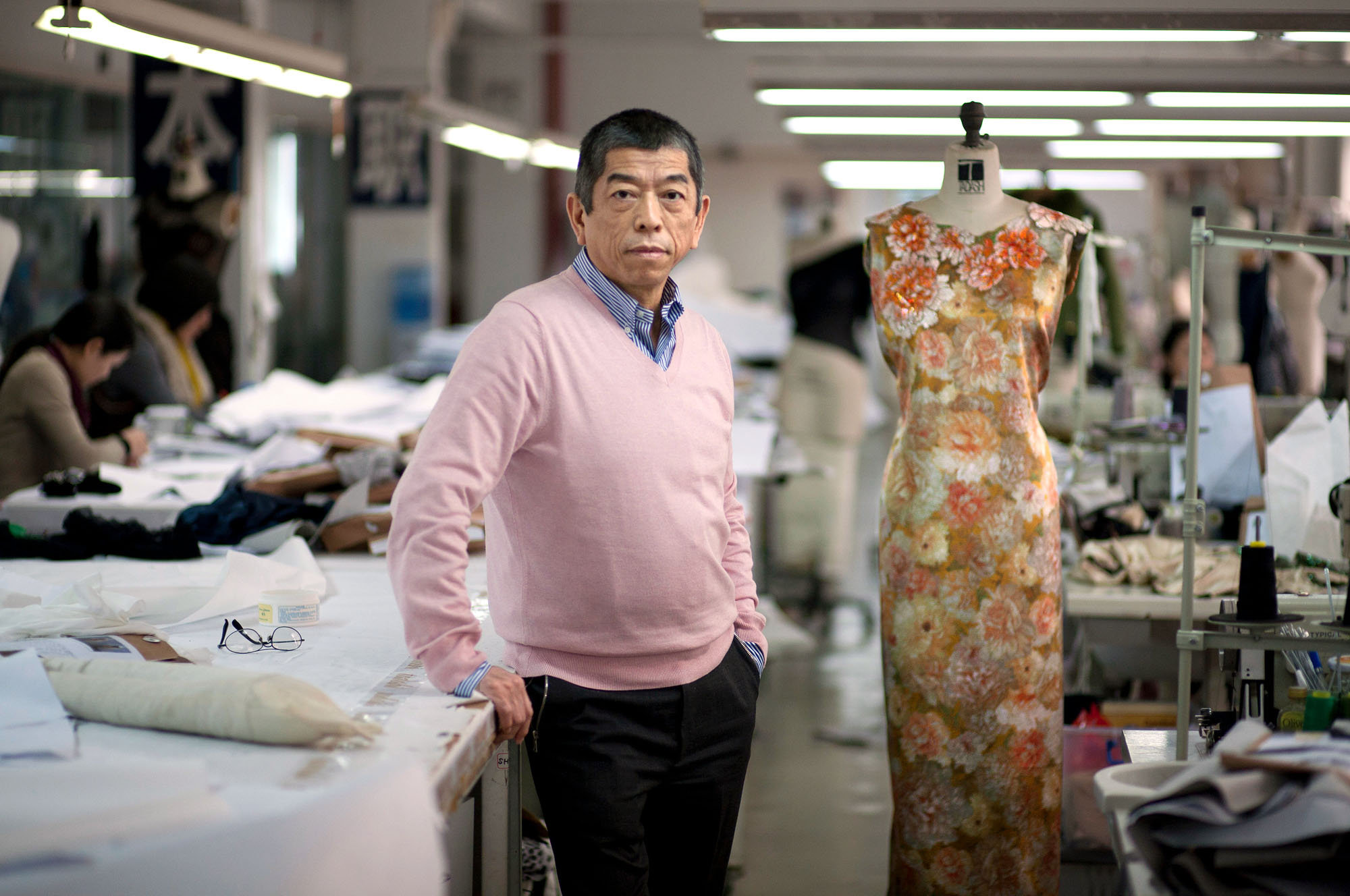
    After closing all his stores, veteran fashion designer Tadashi Shoji said he has been able to keep his business afloat during the Covid-19 pandemic thanks to the success of e-commerce and custom sales.

    The Los Angeles, California-based brand released its digital runway show online on Saturday during New York Fashion Week.

    Keeping costs low, the video was filmed in the company’s cafeteria with creative lighting and editing.

    “Logistically it’s very hard, but it’s very fortunate for us because of Covid our e-com is increasing tremendously. That’s helping me to survive in this Covid time,” Shoji said.

    “If we didn’t have this strong e-com infrastructure for us I think, I think our business went down,” he said.

    Shoji said this season was inspired by “boundless expression” and has added different silhouettes to his normal body-con repertoire.

    Menswear was the inspiration for many looks with stretch velvet, shimmer and slits providing femininity.

    The designer’s signature draped tulle, lace and hand beading made the collection look familiar to his long-time fans.

    New York Fashion Week will end on Feb 16 with over 150 designers having presented their collections live or online.

  • Retail Trends Set to Shape the Customer Experience in 2022

    Retail Trends Set to Shape the Customer Experience in 2022

    The Asian retail landscape is significantly challenged today. With supply chain issues impacting on stock levels, increasing volumes of returns and increased customer expectations in relation to online deliveries – local brands will have a hard time in satisfying customers in 2022. As a result, retailers will find that they quickly need to adopt new systems and approaches that help meet the consumer demand for a seamless and more personalised shopping experience today and into the future.

    So what trends will shape the customer experience over the next year across Asia and what do retailers need to know?

    Returns management will increasingly impact consumers’ perception retail brands

    While eCommerce has served as a lifeline for retailers over the past year, the ever-increasing volume of returns is posing significant challenges, including impacting consumer perceptions of a retail brand. The returns process can regularly make or break the overall brand experience and savvy retailers are increasingly viewing the return process as an opportunity to further engage with customers, providing as it does, an additional touchpoint to enhance the overall customer experience.

    Retailers today need to have greater visibility and more intelligence around their inventory, regardless of where it is currently residing in their network. Smarter front-end omnichannel systems capable of efficiently dealing with customer enquiries and greater insight into data around transportation processes will be the key areas for brands looking to solve the challenges presented by the growing returns trend.

    The war for talent will put pressure on supply chain operations

    Given the extent to which a positive or negative customer service interaction can have on a shopper’s perception of a retail brand, the war for talent and need to retain high performing staff will create additional business pressures. In such an environment, organisations need to focus on selling themselves as an employer of choice and create and promote initiatives that set their business apart in a competitive hiring field.

    Given the need to retain IP in a challenging hiring market, more employers are focusing on career planning and succession internally to ensure adequate support and training for workers to move up the ladder. Many supply chain and retail organisations are also offering financial support for further tertiary education studies or providing retention bonuses to ensure continuity.

    Micro-fulfilment will help drive supply chain efficiencies and cost savings

    As eCommerce and ‘store to door’ delivery continues to grow, many retailers are struggling to turn a profit from online sales. The challenges of the last two years didn’t just fast-track eCommerce uptake, they also accelerated advances in technology, pushed businesses to revaluate traditional models, and forced many to rethink relationships between retailers, disruptive start-ups and automation; setting the scene for a radical shake up of fulfilment strategies over the coming year.

    One of these fulfilment strategies, and one of the most cost-effective trends retailers and supply chains are adopting is micro-fulfilment. Micro-fulfilment involves moving out of large singular DCs to smaller and more local and convenient hubs. By expediting the fulfilment process, micro-fulfilment gives brands the opportunity to get goods to their customers quicker; whilst also providing convenient collection point for consumers. With the adoption of this kind of smart fulfilment method, retailers can get their goods to consumers faster, cheaper and more efficiently.

    Visibility and forward planning will help future-proof retail and supply chain operations

    With supply chain issues leading to stock level challenges for many retailers, the last thing any business wants is to run out of stock – or worse, to later find out that the stock they needed was in the warehouse the whole time.

    To mitigate this, operational visibility and forward planning remain fundamental to retail and supply chain continuity and efficiency. To gain these insights, solutions like a Warehouse Management System (WMS), which integrate all sales and distribution channels into one place are requried. With innovations like a WMS, retailers have absolute transparency around their goods and are able to review the rules of stock allocation, temporarily giving priority to in-store stock over warehouse stock, thus, freeing up any trapped inventory confined within closed stores.

    For more information on how your retailer business can enhance the customer experience in 2022, please visit: www.manh.com/en-sg

    Written by Richard Wright, Managing Director, SEA, at Manhattan Associates

  • Strong end to the year for Singapore retail sales

    Strong end to the year for Singapore retail sales

    Retail sales in Singapore will continue to see modest growth in December as well as in the first quarter of 2022 on the back of increased mobility, according to a report by RHB.

    RHB said retail sales in Singapore have been on an uptrend since July based on the three-month moving average.

    “Retail sales are anticipated to rise in the year ahead as domestic demand continues to recover amid the pick-up in overall business activities. This is also aided by the expected improvement in the labor market in 2022 as the unemployment rate steadily falls, with the latest monthly print of 2.6% for October,” RHB said.

    It said that fluctuations in sequential readings may occur due to year-end demand increase, particularly on spending in the discretionary industries.

    The Department of Statistics Singapore reported that retail sales for November 2021 inched up 1.9% year-on-year (YoY), reaching a value of $3.7b, whilst food and beverage sales climber 0.6% YoY in November 2021 reaching $706m.

    Travel restrictions in Singapore are also expected to occur gradually in 2022 which will increase visitor arrivals and support spending on retail sales especially in the second half of the year, RHB said.

    However, it said that the new strains of the coronavirus may slightly delay the re-opening of borders and easing of restrictions.

  • Behind e-commerce giant Lazada’s success in pandemic-hit year

    Behind e-commerce giant Lazada’s success in pandemic-hit year

    In light of its proud achievements in 2021, Lazada Vietnam expects more breakthroughs in 2022 to bring more value for their customers and partners.
    Lazada hit impressive milestones in 2021, with remarkable profits, site traffic and record number of orders and new sellers on the platform, and step-by-step attracted consumers and partners across the country.

    Looking back on a breakthrough year, Lazada Vietnam’s leaders shared their experiences in surviving the pandemic, thereby continuously creating more value for customers, users as well as business partners.

    An amazing digital migration

    The pandemic has posed many challenges, but it has also pushed businesses to adapt the digital transformation. Ladaza Vietnam’s CEO described this amazing “digital migration” of Vietnamese businesses as an “astonishing wave”.

    Since October 2021, the number of new sellers joining the platform has increased by about 30 percent per month. According to the recent report: “E-commerce in 2021: Adapting and quickly overcoming obstacles from Covid-19”, in the first 11 months of the year, sellers from non-urban areas accounted for 40 percent of all new merchants on Lazada.

    The percentage of new sellers from Hanoi and Ho Chi Minh City also increased by 29 percent and 31 percent, respectively. Fast-moving consumer goods (FMCG) recorded the highest increase, followed by fashion, home furniture and electronics. James Dong, CEO of Lazada Vietnam and Thailand, believes this is a good sign for Vietnam’s fastest growing momentum.

    James Dong, general director of Lazada Vietnam and Thailand. Photo by Lazada Vietnam
    James Dong, CEO of Lazada Vietnam and Thailand. Photo by Lazada Vietnam

    To support sellers, Lazada has shortened the listing process, and integrated business management solutions with real-time charts. The platform has also implemented marketing, promoting transportation process, ensuring on-time, non-contact, non-cash delivery to reduce risks of Covid-19 contamination for buyers and sellers.

    During the peak of the pandemic in HCMC, Lazada shortened the sales registration process to three hours for fresh food suppliers, and reduced the delivery time. These solutions helped reduce the risk of spreading infections, stabilizing food prices, and meeting urgent consumption needs.

    Moreover, Lazada’s “three Easy” (3Es) strategy including “Easy to buy – Easy to sell – Easy to deliver” has yielded achievements. “The benefit and safety of customers and business partners are always the top priority of the platform,” according to the CEO.

    “The practical test” for the supply chain

    Vu Duc Thinh, Chief Logistics Officer of Lazada Vietnam, described the supply chain situation during the epidemic as “terrible”. For more than four months, transportation, sales, and trading activities were almost frozen. The flow of raw materials, goods production, distribution and transportation were all interrupted.

    “Without goods, sellers fail to conduct business. Without duct tape, sellers can’t pack their goods. Even after tackling those difficulties, if shipping units shut down, buyers won’t receive the goods,” Thinh explained.

    Overcoming obstacles, Thinh and the Lazada Vietnam logistics team made several efforts to adapt in order to maintain operations and maintain item flow. Epidemic-prevention solutions at working sites were quickly deployed to ensure the safety of employees and customers.

    Vu Duc Thinh, logistics director of Lazada Vietnam,
    Vu Duc Thinh, Chief Logistics Officer of Lazada Vietnam. Photo by Lazada Vietnam

    “We all work from 5 a.m. to 11 p.m. every day. At the end of the day, we usually evaluated the effectiveness of our work and make adjustment for the next day,” said Thinh.

    Looking back at 2021, Thinh is proud that Lazada is one of the few e-Commerce platforms in Vietnam to maintain its supply chain during the pandemic. The logistics system completed the target from the beginning of the year. Some indicators exceeded expectations. Efforts to ensure smooth operations not only helped business remain stable, but also meet the increasing demand of consumers. That contributed to maintaining growth for Lazada, ensuring jobs and stable income for all staff.

    “The ability to adapt with a long-term vision for sustainable development is Lazada’s strength. Lazada has focused on technology and logistics since the early days of development and the importance of this strategy is proved,” Thinh stated.

    Besides logistics, Lazada has carried out many marketing activities to help the community overcome the challenges in the past year.

    Nguyen Thi Thuy Hang, Chief Marketing Officer of Lazada Vietnam, said the marketing team always set their KPIs as the peace of mind, optimism and comfort of users and the community. Lazada has flexibly approached and interacted with customers via many activities.

    By offering discount vouchers, Lazada has encouraged shopping. For loyal customers, the platform has provided the “Voucher club” package with many benefits like collecting vouchers with a total value of up to VND850,000 and VND50,000 a month.

    Nguyen Thi Thuy Hang, marketing director of Lazada Vietnam
    Nguyen Thi Thuy Hang, Chief Marketing Officer of Lazada Vietnam. Photo by Lazada Vietnam

    “Incentives can solve cost-related problems, but it needs more factors to really share with the community,” said Hang. That is why in 2021, Lazada’s shoppertainment (shopping and entertainment) activities were heavily invested. Hundreds of livestream episodes were performed every day with diverse content, meeting entertainment needs via LazCook, LazMusic, LazGetfit, LazLearn, LazHome, LazPlay…

    According to statistics from Lazada Vietnam, during the peak days of its Shopping Festivals, the platform created more than 400 livestream episodes per day, attracting a 5-6 times increase in viewership compared to weekdays. SuperShow, a music festival, also reached tens of millions of views on its platforms.

    Total orders during the Nov. 11 shopping festival nearly doubled. Customer numbers increased 1.5 times over the same period last year. On the 12.12 Super sale day, sales from LazLive increased seven times. The SuperShow hit 26 million views, contributing to a 20-fold increase in sales.

    “Technology is expected to be the key to enhancing the user experience. This year, we will apply more modern technologies, accompanying users in the shopping experience on the Lazada platform,” Hang shared.

    “The best person is not necessarily the most suitable one”

    In terms of recruitment and training human resources, Van Thi Hong Hanh, Chief People Officer of Lazada Vietnam, said the success of Lazada last year was thanks to its young, adaptive, proactive and creative staff.

    This platform set out a competency framework consisting of seven criteria as the foundation for personnel, recruitment, training and career development decisions and plans. The criteria include problem-solving ability; creativity and improvisation; communication – coordination; business knowledge; management capacity – group leadership; corporate culture creation; awareness – change management.

    Van Thi Hong Hanh, human resources director of Lazada Vietnam
    Van Thi Hong Hanh, Chief People Officer of Lazada Vietnam. Photo by Lazada Vietnam

    During the pandemic, Lazada has implemented the “Covid Care 2.0” program, ensuring the health of both employees and the community. Working from home, getting fully vaccinated, providing protection kits, and supporting Covid-19 infected employees were quickly implemented. Many programs were also implemented to motivate, connect and honor outstanding individuals and groups.

    In 2021, Lazada’s workforce rose by 20 percent in comparison to 2020. According to HR Asia magazine, Lazada was named “Asia’s Best Place to Work” for three years in a row due to a range of policies and initiatives with a people-centric strategy. In addition, at Best Choice Awards 2021, the platform was named “eCommerce platform of the year”.

    “What makes Lazada so outstanding is that we don’t get distracted by short-term financial goals or transient statistics. Instead, we always strive for long-term, more sustainable growth by constantly improving the customer experience and extending our brand partners and sellers,” James Dong emphasizes.


  • Reliance joins calls for India to tighten marketplace rules

    Reliance joins calls for India to tighten marketplace rules

    Vedanta Chairman Anil Agarwal on Tuesday said India is on the path of encouraging ease of doing business and stressed that the government is production-minded and not revenue-minded.

    In a tweet, Agarwal said trust, talent, and technology are the cornerstones of development.

    ”We fully agree with PM Shri Narendra Modi Ji at #DavosAgenda that it’s the best time to invest in India. It is a great opportunity for entrepreneurs to identify partners and investors to collaborate with them, as general consciousness is that they’d like to work with local entrepreneurs,” he tweeted.

    He also tweeted, ”#India is definitely on the path of encouraging ease of doing business. Govt. is production minded and not revenue minded.” Citing India’s commitment to deep economic reforms and the ease of doing business, Modi on Monday asserted that this is the best time to invest in the country as policy-making is focused on the needs for the next 25 years for a ‘clean and green’ as well as ‘sustainable and reliable’ growth period.

    In his special address to the World Economic Forum’s online Davos Agenda 2022 summit, Modi underlined a host of reform measures undertaken by his government to stress that it has worked to reduce the administration’s interference in business by deregulating many sectors and to clear the way for free trade agreements with different countries.

    India was once associated with ‘License Raj’, he had noted highlighting the measures, including the reduction of corporate tax to boost business and doing away with over 25,000 compliance requirements.

    He also mentioned new challenges, including cryptocurrencies, facing the world and said they call for countries to respond together as measures by any one country may be inadequate.

  • Value-added tax to be cut to 8 pct from February

    Value-added tax to be cut to 8 pct from February

    A draft government decree reduces value-added tax on many products and services from the current 10 percent to 8 percent from Feb. 1.

    The decree on tax reduction to foster economic recovery approved by the National Assembly will also make expenses on pandemic prevention deductible.

    The VAT cut will lead to a loss of some VND49.4 trillion (over $2.1 billion) in revenues, according to the Ministry of Finance.

    The deductible expenses will lead to a loss of VND2 trillion.

    The lower VAT rate will not apply to telecommunications, information technology, financial activities, banking, securities, insurance, real estate, metal, and prefabricated metal products, mining (excluding coal), coke, refined petroleum, chemicals, and chemical products, and goods and services subject to excise tax.

  • The Philippines to loosen restrictions on foreign retailers

    The Philippines to loosen restrictions on foreign retailers

    President Rodrigo Duterte has signed into law a measure that would further open up the Philippine retail sector to more foreign retail businesses by lowering their required paid-up capital.

    Republic Act (RA) 11595, which amends RA 8762, also known as the Retail Liberalization Act of 2000, was signed by Duterte on Dec. 10, 2021, and was released to reporters on Thursday.

    Duterte earlier certified the bill as urgent as part of efforts to encourage the entry of more investors and further boost economic recovery amid the prevailing coronavirus disease 2019 (Covid-19) pandemic.

    Under the law, “a foreign retailer shall have a minimum paid-up capital of PHP25 million.”

    The current law sets the required capital at USD2.5 million or PHP119.67 million.

    The law also mandates the entry of foreign retailers coming from countries that do not prohibit the entry of Filipino retailers.

    In the case of foreign retailers engaged in retail trade through more than one physical store, the minimum investment per store must be at least PHP10 million “provided that this requirement shall not apply to foreign investors and foreign retailers who are legitimately engaged in retail trade and were not required to comply with the minimum investment per store at the time of the effectivity of this Act.”

    The Department of Trade and Industry, Securities and Exchange Commission, and the National Economic and Development Authority shall review the required minimum paid-up capital every three years and their recommendations should be submitted to Congress.

    Foreign retailers are encouraged to have a stock inventory of products that are made in the Philippines.

    As for penalties, violators may face imprisonment of not less than four to six years and a fine of not less than PHP1 million but not more than PHP5 million.

    In the case of partnerships, associations, or corporations, the penalty shall be imposed upon its partners, president, directors, general manager, and other officers responsible for the violation.

    If the offender is not a citizen of the Philippines, he or she shall be deported immediately after the service of sentence.

    If the Filipino offender is a public officer or employee, he or she shall, in addition to the penalty prescribed, suffer dismissal and permanent disqualification from public office.

    RA 11595 is a consolidation of House of Representatives Bill 59 and Senate Bill 1840 passed by the House and the Senate on September 21 and 20 last year, respectively.

  • Vietnam retail sales down in 2021

    Vietnam retail sales down in 2021

    Data of the General Statistics Office (GSO) of Vietnam showed that the country’s total retail sales of consumer goods and services from January to October reached VND3,720 trillion (US$162.4 billion), down 8.6% compared with the same period last year.

    Food and foodstuffs were the only sector whose retail sales rose, with a year-on-year increase of 4.4%.

    All other sectors suffered a decline in retail sales. Retail sales of vehicles; tools, equipment, home appliances, educational and cultural products; and clothes edged down 6.7%, 11.1% and 11.7% year-on-year, respectively.

    HCMC, which always leads the country in retail sales, saw a year-on-year decline of 26.2% from January to October 2021. Retail sales of other big cities and provinces such as Can Tho, Hanoi and Khanh Hoa fell 4.8%, 4.4% and 18.6% against the same period last year, respectively.

    Some localities enjoyed a slight increase in retail sales, including Danang (up 0.9% year-on-year), Dong Nai (up 3.7%), Binh Duong (up 6.4%) and Haiphong (up 8.7%).

    Accommodation and catering services were the hardest hit sectors. From January to October, accommodation and catering revenues plunged 38.8% year-on-year in HCMC, 35.9% in Nghe An, 25% in Binh Duong, 22.8% in Dong Nai, 19.5% in Hanoi, 17.3% in Danang, 12.7% in Quang Ninh, 11.1% in Can Tho and 6.4% in Haiphong.

    Travel revenues also dropped sharply in January-October, down 67.5% year-on-year in Thua Thien-Hue, 58% in HCMC, 53.4% in Danang, 49.9% in Haiphong, 45.7% in Hanoi, 41.5% in Quang Binh, 34.2% in Ba Ria-Vung Tau and 30.6% in Quang Ninh.

    Travel restrictions aimed at slowing the spread of Covid-19 and lost incomes have negatively affected the retail market.

    According to the General Statistics Office, the retail market always posted double-digit growth from 2016 to 2020.

    The country’s retail sales were US$118 billion in 2016 (up 10.2% year-on-year), US$129.56 billion in 2017 (up 10.9%), US$142.8 billion in 2018 (up 12.4%), and US$161.7 billion in 2019 (up 12.7%).

    In 2020, despite the negative impact of the Covid-19 pandemic, total retail sales of consumer goods and services amounted to US$172 billion, up over US$11 billion from 2019.

    As the Covid-19 pandemic has been brought under control, many services have been allowed to reopen since early last month. The country’s total retail sales of consumer goods and services in October rose 18.1% month-on-month.

    The General Statistics Office expected the resumption of economic activity and increasing demand in the year-end season would help the retail sector recover strongly.

  • Retail sales in Hong Kong continue to recover slowly

    Retail sales in Hong Kong continue to recover slowly

    Hong Kong’s economy lost some momentum in the second quarter but still expanded by 7.5% from a year earlier, as domestic and global activity continued to recover from last year’s pandemic-induced slump.

    Despite some slowdown in robust export growth, the government said the city’s economic recovery remains on track as global demand picks up and local coronavirus fears ease.

    The preliminary gross domestic product (GDP) estimate released on Friday compares with a revised growth rate of 8% in the first quarter and forecasts of 8.4% by DBS and 8.5% by ING.

    On a quarterly basis, the economy contracted by a seasonally adjusted 1% in April-June, its first decline since the second quarter of 2020. That compared with a revised 5.5% growth in the previous quarter.

    “The global economic recovery should continue to support Hong Kong’s exports of goods in the near term, though there may be some moderation from the exceptionally strong performance in the first half of 2021,” a government spokesman said in a statement along with the GDP figures.

    “Exports of services should likewise sustain growth,” the spokesman said, adding that a stabilized pandemic situation locally and a consumption voucher scheme will help stimulate consumer demand.

    For the first half of 2021, the economy grew by 7.8% over a year earlier. The government maintained its full-year growth forecast at 3.5%-5.5%.

    Analysts caution, however, that the recovery will be uneven. While consumer spending is improving as coronavirus worries ebb, international travel restrictions will continue to weigh on tourism and related retail and services sectors.

    The trade-reliant city is also benefiting from mainland China’s swift recovery from the COVID-19 crisis, though China’s growth rates are slowly returning to more normal levels.

    Hong Kong’s economy fell into its longest recession on record in early 2019, weighed down by huge anti-government protests followed by the pandemic in 2020.

    Seasonally adjusted unemployment slipped to 5.5% in April-June, from 6% in March-May and 6.4% in February-April. Exports jumped 33% in June, their eighth straight month of growth.

    Retail sales rose 10.5% in May from a year earlier, the fourth consecutive monthly gain, but growth lagged pre-pandemic levels as inbound tourism is virtually non-existent.

    Hong Kong reported two new imported COVID-19 cases on Friday, with no local community infections recorded in over 50 consecutive days.

    The government has urged more people to get vaccinated to pave the way for a reopening and broader based economic recovery. About 35% of the population has received the recommended two doses and 47% have had their first dose.

  • Moleskine opens its first retail store in SEA

    Moleskine opens its first retail store in SEA

    It’s been a big year for Brioni. The fashion house has marked its 65th year by collaborating with us on our ’Wallpaper* Handmade… in Italy’ exhibition, opening several new stores and – of course – throwing a large party. And now it is celebrating the milestone with a commemorative Moleskine notebook, which it’s giving to friends of the brand, illustrated by the whimsical hand of the artist, Carlo Stanga.

    Eschewing fashion’s customary glossy images, Stanga has created a series of playful and informal vignettes depicting the tailoring brand’s history and identity. On one page, a team of tiny characters spills from the pockets of a giant suit jacket as they carry out its finishing touches. And on another, there are a series of Brioni-clad Oscars, with a caption that reads: ’Brioni conquers Hollywood.’

    ’We were attracted to Carlo’s work by his fresh and modern stroke,’ says Brioni. The brand has a large archive of illustrations. From its inception in 1945, up until the 1970s, it collaborated with artist, Luigi Tarquini. ’We feel that illustration is a warmer art form than photography,’ the fashion house explains.

    Next up for Brioni is the opening of its new stores in China and Düsseldorf, plus September will see its first fashion show with Alessandro Dell’Acqua at the creative team’s helm.

  • Malaysian Tycoon Tony Fernandes’ AirAsia Launches Parcel Delivery Service To Tap E-Commerce Boom

    Malaysian Tycoon Tony Fernandes’ AirAsia Launches Parcel Delivery Service To Tap E-Commerce Boom

    AirAsia Group controlled by Malaysian tycoon Tony Fernandes has launched a parcel delivery service as the loss-making budget airline seeks to tap the e-commerce boom across Southeast Asia.

    The new service, called AirAsia Xpress, is the company’s latest venture as it expands its digital business to shore up the airline’s revenues that have been hard hit by the Covid-19 pandemic, AirAsia said in a statement on Tuesday. The service will initially be available in Kuala Lumpur and other areas around the densely populated Klang Valley, before rolling out to other parts of Malaysia and Southeast Asia.

    Powered by Teleport—the group’s logistics arm—AirAsia Xpress gives its super app users two options: instant delivery to receive their packages in less than an hour or same-day delivery to receive their packages within six hours. The new venture complements the airline’s food delivery and ride-hailing services, which are part of initiatives to build a super app that will compete with Southeast Asia’s tech titans such as Indonesia’s GoTo and Singapore’s Grab and Sea Group.

    “As we move forward with the post-pandemic recovery, we believe that people will remain greatly dependent on efficient and affordable delivery services—one of AirAsia’s core strengths,” said Lim Ben-Jie, head of e-commerce delivery at AirAsia’s superapp. “Combining our ease of usability and network reach across ASEAN and beyond, AirAsia Xpress will support individuals and micro-businesses with fast and convenient deliveries.”Southeast Asia is among the fastest-growing regions in the world, with gross merchandise value from the digital economy climbing 49% to $174 billion this year from the previous, according to a new study jointly published by Google, Temasek, and Bain & Company this month. As consumers across the region increasingly embrace e-commerce and other digital platforms, the study predicts the GMV to grow to $363 billion by 2025 and surpass $1 trillion by 2030.

    This strong growth trajectory bodes well for AirAsia, which is seeking to grow the share of its digital businesses to 50% of the group’s revenue by 2025. The group has been pivoting into digital businesses as Covid-19 travel restrictions drag passenger and cargo traffic lower.

    Earlier this week, AirAsia reported its third-quarter revenue declined 37% from the previous year to 296 million ringgit ($70 million). In a research note, Raymond Choo, an analyst at Kuala Lumpur-based Kenanga Research, cut his full-year earnings estimate for AirAsia by 17% to a net loss of 2.41 billion ringgit.

    “As a group, we have taken advantage of the downtime in flying to tap new revenue streams and fully transform ourselves into an investment holding company with a portfolio of synergistic travel and lifestyle businesses,” Fernandes, CEO of AirAsia Group, said in a statement when the group announced its third-quarter results. AirAsia’s superapp, along with Teleport and the group’s fintech unit BigPay, are gaining traction and building a strong presence in key markets, he added.

    Fernandes and his business partner, Kamarudin Meranun, took over AirAsia in 2001 to build a low-cost carrier that would make air travel affordable. Fernandes—who dropped out of this year’s ranking of Malaysia’s 50 Richest people—also has interests in hospitality, insurance, and education.

  • E-commerce sites report jump in 11/11 sales

    E-commerce sites report jump in 11/11 sales

    E-commerce platforms reported a surge in sales on Singles’ Day on Nov. 11, an annual shopping event, with the most popular items being masks and healthcare products. Tiki said revenues were up nine times from last year, and the number of buyers was double that on normal days.

    Face masks, products for babies and mothers, and fast-moving consumer goods were the top sellers, it said.

    It also sold some 10,000 mobile phones, including 500 iPhones, 2,000 electric motorbikes and bicycles, and 6,000 cans and bottles of beer.

    Shopee sold 1.8 million decorative items, including some 100,000 decals and stickers, 1.6 million healthcare products, one million earphones, and 150,000 mobile phone covers.

    Lazada said revenues doubled and the number of customers was up by half. Healthcare and beauty products were its best-sellers, and electronics sales almost doubled, with laptop and desktop sales nearly tripling.

    Sendo said revenues were 40 percent higher than during other promotions such as Sept. 9 and Oct. 10, with fashion, household, and beauty items seeing sales double.

    According to a report called ‘e-Conomy SEA 2021’ released this week by Google, Temasek and Bain & Co., Vietnam’s e-commerce market will increase to $13 billion this year, up 53 percent from last year, and triple by 2025.