Tag: retailing

  • Hanoi’s first metro line gets $38M capital hike

    Hanoi’s first metro line gets $38M capital hike

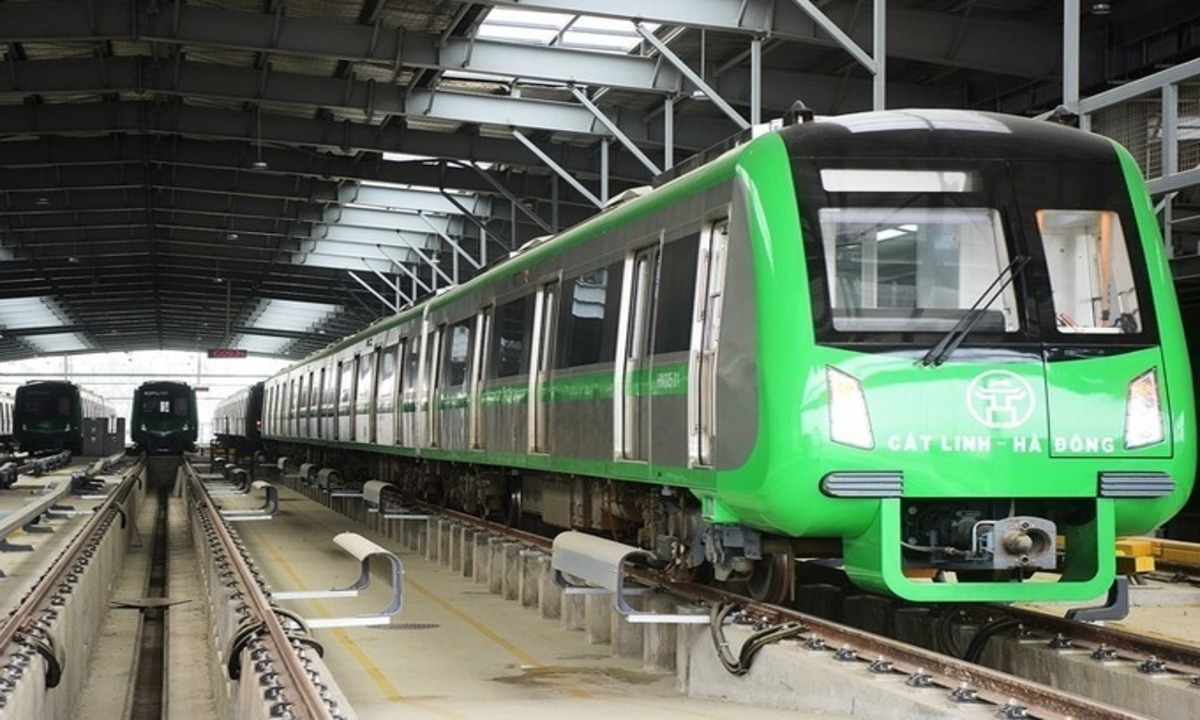
    The Cat Linh – Ha Dong Metro Line in Hanoi has received an additional VND911 billion ($38.6 million) capital increase.

    The money will come from state coffers, with 24.4% of it from domestic funds and the rest foreign funds, according to a decision signed by Deputy Prime Minister Le Minh Khai.

    The Ministry of Planning and Investment and the Ministry of Finance are responsible for reporting the disbursement of this capital to the Prime Minister’s Office.

    The 13-kilometer Cat Linh – Ha Dong Metro Line earlier saw its cost increase from VND8.77 trillion in 2008 to VND18 trillion in 2017.

    It is one of five metro lines nationwide that has seen cost increases.

    The Cat Linh – Ha Dong Metro Line started operating commercially at the end of last year and so far it has served 7.3 million passengers, among them 10,000 monthly subscribers.

    The line has recorded a revenue of around $53 billion so far with a monthly growth of 20%.

  • E-commerce giant Carousell lays off 110 staff

    E-commerce giant Carousell lays off 110 staff

    Carousell, a Singaporean consumer-to-consumer (C2C) service platform operating across Southeast Asia, is letting go of about 110 employees, or 10% of its total headcount, to reduce costs amid a challenging market condition for the tech industry. 

    The announcement came from the company’s blog on Thursday, posted by co-founder and CEO of Carousell Siu Rui Quek, saying, “I take responsibility for the decisions that have led us here. Parting with teammates, whom we are grateful to for joining us on this mission, is a very difficult decision.” 

    Carousell did not specify which business units or regional offices would be affected by the layoffs. The Singapore-headquartered company operates in Malaysia, Indonesia, the Philippines, Cambodia, Taiwan, Hong Kong, Macau, Australia, New Zealand, and Canada. 

    In the statement, the company’s leaders had discussed finding ways, including moving to an inexpensive rental office and slashing co-founders and executives’ salaries voluntarily to save budgets without cutting staff. But that was “far from enough,” it said.  

    Quek also explained in the blog post that he “was too optimistic” about the recovery from the COVID pandemic and even doubled down on recruitment and investment for its business. “The reality is that we were quick to grow our expenses and hire, but the returns took longer than expected,” Quek wrote. “It is important to act swiftly, course correct, and right-size our investment levels to better align with this new reality.” 

    The affected workers will receive at least three months’ salary and be able to extend their medical benefits and insurance coverage through June next year. According to the statement, the company will also pay out all remaining time off balances and offer career counseling and job search support, letting those laid-off workers keep their office laptop and LinkedIn Learning membership until June 2023. 

    Founded in 2012, Carousell, backed by Sequoia Capital India, Naver, 500 Global and Rakuten Capital, has raised a total of $372.6 million since its inception.

  • Trade surplus at $10.6B for 2022

    Trade surplus at $10.6B for 2022

    The trade surplus was US$0.78 billion in November, which took the year’s figure to $10.6 billion, the General Statistics Office said Tuesday.

    The surplus in the same period last year was $0.6 billion.

    But exports fell in November by 8.4% to $29.18 billion, which took the full-year figure to $342.21 billion.

    The U.S. has been Vietnam’s biggest export market ($101.5 billion).

    Meanwhile, imports were worth $331.61 billion, a year-on-year increase of 10.1%.

    They included shipments of $109.9 billion from China, the biggest exporter to Vietnam.

    Last year exports had been worth $336.31 billion, up 19%, and imports, $332.23 billion, up 26.5%, for a trade surplus of $4.08 billion.

    The surplus has been growing since 2016, according to the GSO.

  • Chinese luxury resale platform Plum bags $100 million in funding

    Chinese luxury resale platform Plum bags $100 million in funding

    Plum, a used luxury fashion e-commerce platform, announced on November 1 that it had completed a C round of financing worth $100 million. In this round, Zhuanzhuan, a Tencent-backed leading used goods trading marketplace in China, made the strategic investment. Xu Wei, founder and CEO of Plum, said that the funds will be mainly for upgrades in service, user experience, product R&D and database construction.

    Plum was established in 2017. The platform focuses on second-hand luxury goods trading, and its products cover all categories of fashion trends such as bags, shoes, clothing, jewelry and watches. According to statistics published by Aurora Mobile, in the fourth quarter of 2021, the number of monthly active users of Plum exceeded that of Secoo, a famous luxury e-commerce platform in China, ranking first among the luxury e-commerce platforms. In addition, Plum’s business has achieved rapid growth this year, and its business income has doubled since 2022 compared with the same period of last year.

    Apart from Xu Wei, Plum was jointly founded by Pang Bo. CEO Xu Wei is the co-founder of Blink and served as the investment director at Sinovation Ventures. She is said to be a serial entrepreneur. Pang Bo is currently the CTO of Plum, who is a former senior engineer of Baidu, and has more than 10 years of technical management experience.

    In recent years, Plum is investing in improving its standardized service capabilities, focusing on building key modules in the performance operating system such as commodity identification, commodity information and price database. It aims to build the largest second-hand fashion transaction database in China.

    The cooperation between Plum and Zhuanzhuan, two second-hand trading platforms, is not only reflected in the capital level. Before this financing, Plum’s products had been available through Zhuanzhuan and other “exclusive” channels such as bags, accessories, designer shoes, watches and clothing. Plum’s products complement the other’s core 3C (Computer, Communication and Consumer Electronics) category. In addition, Plum will also do commodity recycling in Zhuanzhuan’s channel.

    The rational and low-carbon consumption concept is gaining traction and second-hand trading such as used cars, 3C items and books continue to prosper. According to an industry research report by Frost & Sullivan, the transaction scale of second-hand idle goods in China has increased from about 300 billion yuan ($41.2 billion) in 2015 to over one trillion yuan in 2020, and it is estimated that this figure will reach nearly 3 trillion yuan by 2025.

  • Ikano Retail posts record revenue growth

    Ikano Retail posts record revenue growth

    Ikano Retail has recorded its highest turnover yet for the financial year to August 31, reaching US$1 billion across the five markets in which it operates Ikea stores – Malaysia, Singapore, Thailand, the Philippines and Mexico, equivalent to 41.2 per cent year-on-year growth.

    The increased sales were driven by the return of visitors to physical stores after two years of Covid-19 disruptions. CEO of Ikano Retail, Christian Roejkjaer, said there were 113 million visits to the group’s stores and shopping centres.

    In Malaysia, where the group operates four shopping centres, the company recorded $361.8 million in sales. Meanwhile, in the Philippines, where earlier this year it opened the world’s largest Ikea store in Pasay City, turnover reached $113.6 million.

    Sales in Singapore and Thailand reached $255.4 million and $276.6 million respectively.

    “Our shelves were not fully stocked as we would have liked it and our costs went way up,” said Roejkjaer. “Still, we are leading our markets for affordable, quality home furnishing solutions – and our customers appreciate that.’’

    The retailer is also accelerating its expansion plan after the easing of Covid-19 restrictions, planning to open its first compact city-centre concept store in Thailand later this year at The Emsphere, along with its third Mexico store.

  • Singapore retail sales continue their strong post-Covid surge

    Singapore retail sales continue their strong post-Covid surge

    Takings at the till in Singapore grew faster in May, helped by a low year-ago base and the continued boost from tourist spending after travel restrictions were eased. Retail sales surged 17.8 percent year on year, extending the 12.1 percent growth in April, according to figures released by the Department of Statistics (SingStat) on Tuesday (July 5).

    This exceeded the expectations of analysts polled by Bloomberg, who projected sales to grow by 13.4 percent.

    Excluding motor vehicles, growth was even stronger, coming in at 22.6 percent.

    “The year-on-year increase in retail sales in May 2022 was mainly attributed to the low base in May 2021 when measures such as international travel restrictions were in place,” said SingStat in a press statement.

    Experts said this growth is expected to continue but might be moderated due to higher prices and inflation.

    RHB senior economist Barnabas Gan said: “The retail sales momentum will likely stay buoyed into the third quarter as Asia moves on from Covid-19-related fears. Tourism levels have been picking up across Asian economies, including Singapore.”

    He added that the tight labour market and reopening of Asia’s borders should support spending. “On the back of domestic demand and tourism-led spending, we think retail sales from an index perspective will likely return to pre-Covid levels by the end of this year,” he said.

    But the bright outlook might be muddied by any unexpected worsening of the Russia-Ukraine conflict and China’s economic slowdown, he noted.

    Maybank Kim Eng economist Lee Ju Ye added that the surge in inflation and rising mortgage rates will likely result in some belt tightening by consumers.

    “In particular, sales of discretionary items such as watches and jewellery and recreational goods may be the most affected,” she said.

    Consumers are also expected to lean towards lower-priced items as costs go up, added National University of Singapore business professor Lawrence Loh.

    “In the near term, retail may face a double whammy of moderation in demand and escalation of costs.”

    Within the retail trade sector, most industries recorded year-on-year growth in sales in May.

    Discretionary industries such as wearing apparel and footwear saw sales balloon by 98.2 per cent due to the low base in May 2021, when there was lower tourist spending due to travel curbs.

    Department stores, which were hard hit by Covid-19 restrictions, also saw sales jump by 73.1 per cent.

    This was followed by retailers of watches and jewellery, which recorded higher sales of 60.7 per cent.

    Retailers of food and alcohol saw sales rise by 47.3 per cent, while petrol service stations recorded sales increases of 45.8 per cent.

    In contrast, sales of motor vehicles fell 10.2 per cent.

    Supermarkets and hypermarkets recorded declines in sales of 10.3 per cent, while minimarts and convenience stores saw sales fall by 4.8 per cent.

    This was due to the higher demand for groceries in May 2021 when more people stayed home during the Phase 2 (Heightened Alert) period, SingStat noted.

    Meanwhile, the sales of food and beverage services grew by 40.1 per cent in May on a year-on-year basis, compared with the 11.6 per cent increase in April.

    “The significant growth in food and beverage sales in May 2022 was mainly attributed to the low base in May 2021, when Phase 2 (Heightened Alert) measures were in place, with dining in at food and beverage establishments not allowed for half of the month,” SingStat said.

  • Singapore retail sales continue to recover

    Singapore retail sales continue to recover

    Singapore retail sales continued their rebound in July, rising 18.1 per cent year on year, excluding motor vehicles.

    That followed a 19.9 per cent increase in June, both months reflecting the low base of a year earlier when Covid restrictions on border crossings and retail trading impacted shopping.

    The fastest-growing category was apparel and footwear which surged 68.3 per cent, largely due to handbags and footwear. Sales of food and alcohol, trade through department stores, and sales of watches and jewellery increased by between 41.7 and 53.1 per cent.

    Retail sales (excluding motor vehicles) in July were estimated at S$3.4 billion, of which online sales comprised 14.3 per cent, a similar level to June. Online sales of computer and telecommunications equipment accounted for 49 per cent of the category’s turnover, while 28.9 per cent of furniture and household equipment spending was online, and 14.8 per cent of supermarket sales.

    Meanwhile, sales of food and beverage services grew by 41.9 per cent in July, following June’s 59.1 per cent increase. The significant growth was due to the low base in July last year when restrictions on dining-in at restaurants and cafes were in place.

    Food and beverage service sales reached $939 million in July, of which online ordering accounted for 26.2 per cent.

  • South Korea’s retail sales up 9.7 per cent in July amid eased virus curbs

    South Korea’s retail sales up 9.7 per cent in July amid eased virus curbs

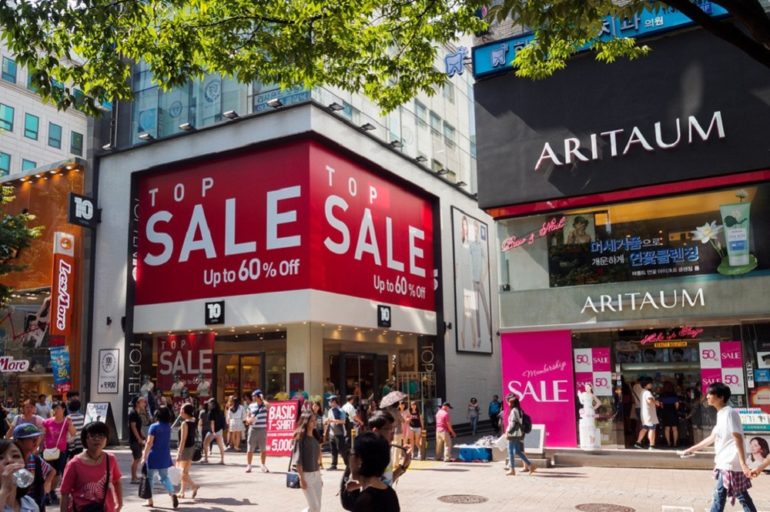
    Retail sales in South Korea rose 9.7 percent on-year in July amid eased COVID-19 curbs and the growth in people’s outdoor activities, the industry ministry said Tuesday.

    The combined sales of 25 major offline and online retailers came to 14.17 trillion won ($10.48 billion) last month, compared with 12.9 trillion won a year earlier, according to the data compiled by the Ministry of Trade, Industry and Energy.

    It marked the fifth consecutive month of on-year growth.

    Sales from offline stores rose 12.1 percent in July, as department stores, in particular, saw their sales surge 31.6 percent on-year. Demand for luxury goods, clothing and other fashion items logged solid growth, according to the data.

    Sales of convenience stores also went up 10.4 percent in July on the back of the popularity of food packages and other daily items.

    Sales of discount chain stores, such as E-mart and Lotte Mart, inched up 0.2 percent on-year amid the dwindling demand for home appliances, while those of smaller supermarkets fell 3.6 percent, the data showed.

    Sales from online platforms jumped 7.3 percent from a year earlier over the continued spread of the contactless shopping trend amid the prolonged pandemic.

    Demand for cosmetics via online platforms surged 14 percent on-year as people resumed outdoor activities.

    Sales of foodstuff and beverages also grew 14.7 percent, while those of home appliances and other electronic devices logged an on-year fall, the data showed.

    Online platforms accounted for 47.63 percent of the total sales in July, according to the ministry.

    South Korea has experienced a new virus wave since late July following a monthslong let-up after the worst infections here so far.

    But the government decided not to reimpose strict antivirus regulations, such as business curfews and a cap on private gatherings, to support people’s return to normalcy.

    All schools resumed in-person classes, and many companies ended their remote working policies.

  • Owndays launches premium concept store in Singapore

    Owndays launches premium concept store in Singapore

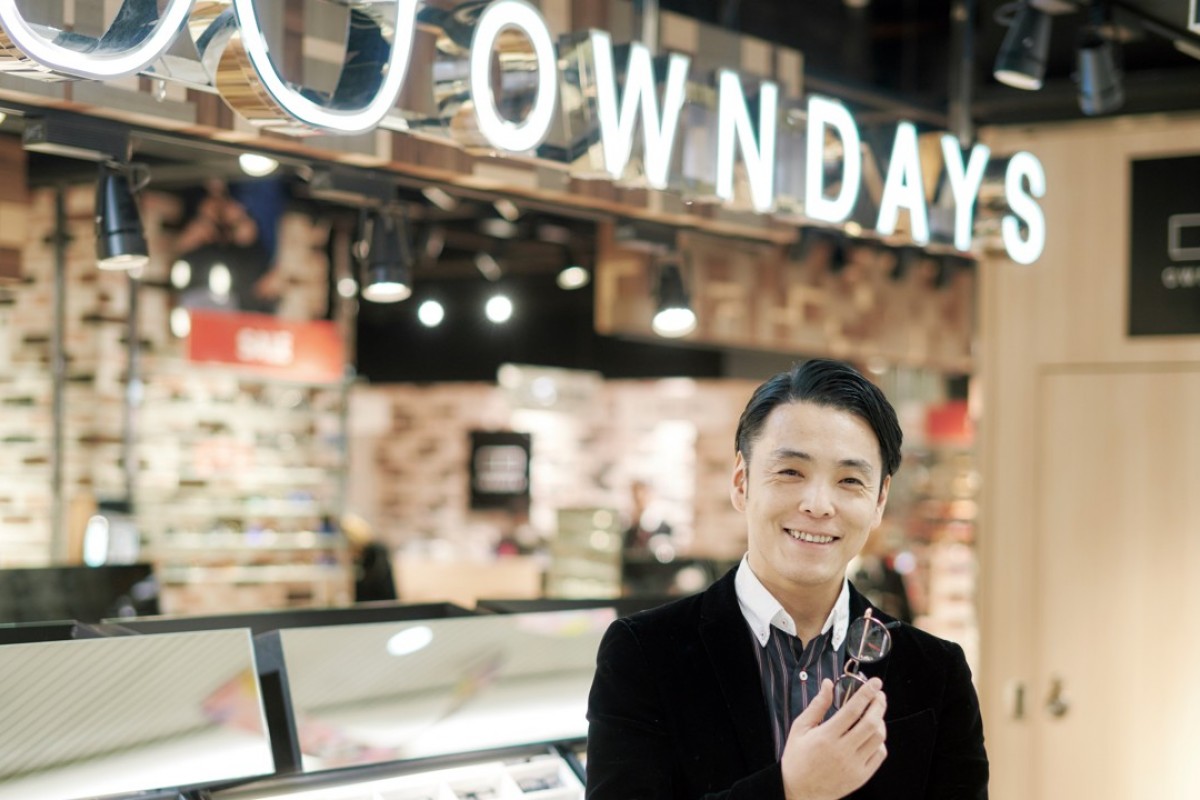
    Japanese fast fashion eyewear brand, OWNDAYS, is pleased to announce the opening of a new store at Takashimaya S.C., Ngee Ann City. This will be the brand’s second premium concept store in the world and its 33rd store in Singapore. The new store will open to public on 20 May 2022 and will house a collection of made-in-Japan eyewear and premium ophthalmic lenses curated exclusively for its premium concept stores.

    The Takashimaya S.C. store mirrors the concept of “Japanese Luxury” originally introduced at its first premium concept store at Marina Bay Sands, offering a premium eyewear shopping experience topped with Japanese hospitality and an extended product offering. Drawing inspiration from Ryoanji Temple, an UNESCO World Heritage Site and a popular attraction in Kyoto, Japan known for its famous rock garden, the new store features a distinct Japanese-styled aesthetics that pays homage to the origins of the brand while incorporating a touch of luxury.

    The main retail floor is flanked by a dry landscape complete with rock arrangements, gravel, moss and shrubs to achieve the Zen Garden interior. Beige wood elements are also heavily featured in the store interior to emphasise a sense of traditional Japanese-ness.

    Také Umiyama, Managing Director/COO of OWNDAYS INC. said, “The Takashimaya S.C. store reflects the core value of OWNDAYS, which is to constantly evolve and innovate in order to deliver quality eyewear to consumers at the best value. With a store that is located right in the heart of Orchard Road, it allows us to make well-designed, good quality eyewear more accessible to our customers. Besides, the new store is a space where we hope local consumers could enjoy a complete Japanese experience without having to physically travel to Japan. We welcome customers to visit the store even when they are not looking to purchase any spectacles and just to feel transported to Japan.”


  • Central Retail reports solid growth in Thailand, Vietnam and Italy

    Central Retail reports solid growth in Thailand, Vietnam and Italy

    Mr. Yol Phokasub, Chief Executive Officer of Central Retail Corporation PCL (CRC), announced “Central Retail has achieved success hitting record-high in Q4/2021 performance, with a revenue of THB 58,765 million +15%. EBITDA THB 8,031 million +42% and a net profit of THB 2,464 million +124%. We ended 2021 on a high note with profit of THB 277 million. EBITDA THB 20,059 million and a total revenue of THB 195,654 million. Despite the ongoing challenges posed by the spread of COVID-19 for extended periods across Thailand, Vietnam and Italy, Central Retail achieved profitability and generated positive returns to shareholders, with dividend payment of THB 0.30 per share.

    Thailand: Sales in 2021, excluding tourist spendings, returned higher than pre-pandemic levels. Accounting for this achievement is Central Retail’s Multi-Category Platform, providing portfolio flexibility and adaptability to changing customer needs. The focus in 2021 was the hardline segment, which aligns with consumer trends during the pandemic, enabling the segment to rapidly grow and drive sales to levels higher than the pre-pandemic era by 26%. The company launched 5 new Thai Watsadu branches and new store formats under go! WOW banner of total 15 branches within three months in 2021, of which was positively received by customers, underlining the company’s leadership position in Omnichannel Home Improvement Platform. Additionally, Central Retail successfully acquired COL, including OfficeMate and B2S, and is prepared to list MEB, the leader in the e-book business and novel website for Thais, in the stock exchange of Thailand in 2022. For the food segment, Central Retail maintains its #1 position as The Best Food Destination in Thailand, driving business expansion in 2021 by opening 46 branches to reinforce its leadership position in the category. Tops Supermarket also received the Top Influential Brands award from Influential Brand Singapore and Neo Target, a leader in corporate reputation consultancy in Thailand. The company also implemented fixed prices of consumer goods from the end of last year until the first quarter of this year to alleviate financial burdens of consumers during turbulent times. For the fashion segment, the company drove the highest levels of growth in the fourth quarter when compared to previous quarters in the last two years and the segment is still strong in momentum.

    Vietnam: Despite the impact from COVID-19, Central Retail charged ahead with investment plans, including renovations and business expansion to strengthen its leadership in the hypermarket and lifestyle mall segment across urban and rural areas. The company also expanded into the food segment by launching new store format mini go! that targets mass consumers, as well as Tops Market to serve every customer segment in Vietnam. Although Vietnam faced a difficult situation during the pandemic that forced stores to close during the second and third quarters, our sales grew by 8% higher than 2019 whilst EBITDA grew 9% compared to the previous year.

    Italy: Central Retail initiated renovations of Rinascente across 3 flagship stores, including Milan, Florence and Rome. The renovations took place during the lockdown in Italy and were completed in time for the border reopening in mid-2021, which has successfully attracted a growing number of customers, resulting in strong business growth. The spending power from domestic customers along with the return of European tourists boosted sales growth in the fourth quarter, matching 99% of sales during the pre-pandemic era. The company’s annual sales in Italy saw a strong growth of 30% compared to the previous year and has achieved a fourfold increase in EBITDA compared to the year before.

    Property: Renovated and launched new branches across Thailand and Vietnam, including the opening of GO! lifestyle mall in Vietnam and Robinson Lifestyle in Thailand, totaling 6 branches. Robinson Lifestyle maintained an occupancy rate of over 90% and the number of customers has been increasing consistently. By the end of 2021, Central Retail has a total of 69 branches across Robinson Lifestyle, Tops Plaza and GO! lifestyle malls with total net leasable space over 650,000 square metres, a 10% increase from the previous year.

    Technology and Digital: Central Retail enhanced technology integration across the organisation and its people by adopting a digital-first culture and building on the most comprehensive omnichannel platforms, securing Central Retail’s unique leadership in omnichannel retailing. These efforts resulted in omnichannel sales accounting for 20% of total sales, and a 109% growth. The company also built on the CRC Data Ecosystem and developed new techn

  • Reimagining the Customer Experience for New Breed of Shoppers

    Reimagining the Customer Experience for New Breed of Shoppers

    Retailers across the APAC region have had to quickly adapt to changing operating conditions over the previous two years, leading to many adopting new technologies and solutions to better serve customers across whichever touchpoints or platforms they prefer.

    As learned pandemic behaviours become the default setting for millions of consumers across the region, brands will continue to serve customers via click & collect and kerbside pickup, while simultaneously processing online returns in-store too.

    For many retailers, this agile, innovation-heavy fusion of online and physical demand is becoming more commonplace, placing the role of modern, dynamic Point-of-Sale (POS) technology squarely at the centre of a redefined connected commerce era.

    For brands today, a reimagined customer experience can be broken down into three key stages, with modern POS playing an important linchpin function at each of the three phases:

    • Pre-purchase: Retailers need to have full visibility of not just customer data such as purchase history, but also their own inventory too.
    • Purchase: Out-of-stock is no longer an option for retailers today. With modern POS, endless aisle capabilities mean shoppers can purchase goods from across an entire network, rather than being restricted by the availability of inventory at a single location.
    • Post-purchase: Stores have a critical role to play in the returns process, but without smart, joined-up store systems, returned goods can often fall into an inventory ‘black hole’.

    From retail industry’s first conception of a Point-of-Sale system, invented back in 1879, the retail landscape has come a very long way, and for those who want to meet the needs of the 21st century shopper, they need to be across all aspects of the omnichannel.

    But, as we observe an acceleration towards a true convergence point between physical and digital retail (fuelled by the effects of the pandemic), it’s important for retailers to continue to innovate and remove any remaining points of friction from this reimagined shopping experience.

    For example, if we go back to the perennial problem of out-of-stock predicaments, it’s hard to believe that even in this day and age, only a small minority of retailers are capable of offering in-store purchasing from another store’s inventory, or indeed from the warehouse.  From a customer experience perspective, this tends to feel like an outdated process, causing not only the risk of losing a sale but also brand loyalty.

    To truly reimagine the customer experience journey at a deeper level in 2022, we must recognise that the role of the store is no longer limited to selling, rather brick-and-mortar retail must be repositioned as a hub for fulfilment too.

    The benefits of this approach have been played out over the last two years and continue to do so today – with retailers with store fulfilment options seeing higher revenue growth – a 114% increase when click and collect is implemented and a 60% increase when ship from store is implemented.

    The future of the customer experience journey is closely linked to eCommerce, and the future of eCommerce is intrinsically linked to the evolving capabilities offered by stores.

    In order to meet supercharged customer expectations, retailers need to adopt a ‘sell/fulfil/engage’ mentality. However, when it comes to future-ready POS implementation, brands often make three common mistakes: adopting a store-only plan which could limit future agility, underinvestment in change management leading to uncertainty or failure to thrive, and selecting a “proven” vendor with old technology without consideration for new innovations.

    All too often, brands are still thinking in silos. Instead, they need to develop a unified commerce roadmap – encompassing a POS + clientele management + store fulfilment + customer engagement strategy. Likewise, retailers need to make a clear plan for organisational change and select the right vendor capable of delivering against long-term, aspirational, and often moving targets.

    As the evolution of POS continues amidst the backdrop of a pandemic-effected economy, one thing that has become increasingly clear is that customers are in the driving seat when it comes to how, when and where they want to shop.

    Today, it’s now up to retailers to take the reins of this new customer experience journey and drive the narrative forward, but they can only do this by having sophisticated, modern POS and order management systems in place that support their customers varied shopping journeys. Whether customers are shopping in-store, online, or via a smartphone or on social media, retailers need to ensure that they are capable of delivering a seamless customer experience journey across all the places their brand is represented, both online and physically.

    For more information on how your retailer business can enhance the customer experience in 2022, please visit: www.manh.com/en-sg

  • Omicron restrictions throttled Hong Kong retail sales in March

    Omicron restrictions throttled Hong Kong retail sales in March

    Hong Kong’s retail sales fell in March for a second consecutive month after the city imposed stringent restrictions to curb an outbreak of COVID-19 but the government expected the sector to draw support as cases decline and measures are eased.

    Retail sales in March fell 13.8% from a year earlier to HK$23.8 billion ($3.03 billion), official data released on Thursday showed. That followed a 14.6% drop in February.

    “The improved local epidemic situation of late and thus the progressive relaxation of social distancing measures, along with the disbursement of the first batch of electronic consumption vouchers in early April, will render support to the retail sector,” a government spokesman said.

    In volume terms, retail sales in March dropped 16.8% from a year earlier, compared with a 17.6% decline in February.

    At the start of this year, Hong Kong implemented its most draconian anti-COVID-19 measures as the Omicron variant brought a dramatic spike in infections, with businesses hit hard by widespread closures.

    The city’s economy contracted 4% in the first quarter of this year, breaking four quarters of growth, but the government expects an improving situation with the local epidemic and support measures to help lift domestic demand for the remainder of the year.

    Hong Kong’s economy is expected to grow 2.0% to 3.5% this year after expanding 6.4% in 2021.

    Sales of jewellery, watches, clocks and valuable gifts, which before the pandemic relied heavily on tourists from the mainland, plunged 36.8% in March following a 33.6% drop in February, the data showed.

    Clothing, footwear and related products dropped 41.5% in March against a 39.0% drop in February.

    Tourist arrivals in March plunged 73% from a year earlier to 1,800. That compares with a drop of more than 52% in February.

    Online retail sales were a bright spot, surging 30.9% year-on-year in March in value terms after February’s 50.0% growth.

    Hong Kong will further ease COVID restrictions as cases in the financial hub continue to ease. Beaches and swimming pools reopened on Thursday and restaurants were allowed to serve eight people per table, up from four.

  • Miniso eyes Hong Kong stock market listing

    Miniso eyes Hong Kong stock market listing

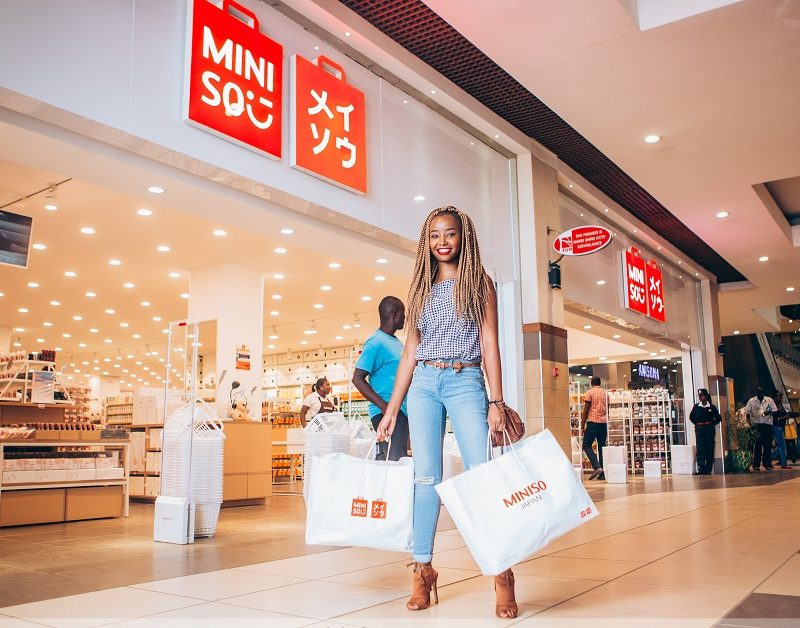
    Miniso Group Holding, the New York-listed Chinese household and consumer goods retailer, is planning a second listing in Hong Kong, joining an increasing number of US-listed mainland companies seeking a listing closer to home.

    The retailer submitted its application to Hong Kong stock exchange on Thursday, according to the bourse’s website.

    The Guangzhou-based company is following in the footsteps of electric-vehicle makers Li Auto and Xpeng in seeking a dual primary listing in Hong Kong to hedge against the risk of being delisted from US exchanges. Legislation introduced by the Trump administration in 2020 seeks to delist Chinese companies that fail to pass US audit reviews for three consecutive years, and the Biden administration is not letting up.

    Miniso raised US$608 million from its IPO on the New York Stock Exchange in October 2020. The company’s shares, however, have fallen more than 66 percent since listing and were trading at US$7.88 on Thursday.

    Miniso’s revenue increased by 24.2 percent to 5.42 billion yuan (US$853.5 million) for the six months ended December 2021, while adjusted net profit rose 114 percent to 398.6 million yuan, according to its listing application.

    The company said it expects to see strong growth because of China’s booming retail and pop toy market.

    The estimated growth rate of the pop toy market in China, which saw gross merchandise value (GMV) reach 34.5 billion yuan in 2021, is 24 percent from 2022 to 2026, according to Miniso’s filing, citing data from Frost & Sullivan.

    Miniso, which opened its first store in China in 2013, has built a global network with over 5,000 stores in around 100 countries, including 3,100 in China as of end 2021.

    The aggregate GMV of products sold through its network was about 18 billion yuan in 2021, making it the largest global branded variety retailer of lifestyle products, according to Frost & Sullivan.

    BofA Securities, Haitong International Capital and UBS are the joint sponsors.

  • South Korea’s retail sales rebounded in February

    South Korea’s retail sales rebounded in February

    Sales at South Korea’s top department stores rebounded sharply in February from the previous month, government estimates showed on Tuesday, reflecting this year’s change of timing for the Lunar New Year holiday.

    Combined sales last month at department stores run by Hyundai Department Store, Lotte Shopping and Shinsegae Co rose 7.1 percent from a year ago, the finance ministry said.

    This was the fastest gain for department store sales since a 10.5 percent rise seen in August last year and compared to a 11.0 percent drop in January, which was the steepest contraction on record.

    Retail numbers are usually distorted at the beginning of the year as the Lunar New Year holiday, when consumers tend to splurge, can fall either in January or February. This year the holiday was in February while it was in January last year.

    Sales at the country’s top discount stores also showed a sharp gain in February, jumping 30.5 percent on-year and bouncing back from a 18.3 percent drop in January.

    The January decline was the sharpest fall seen since February 2014.

    Meanwhile, the same data showed annual sales of locally produced automobiles last month slipped 3.8 percent, undermining a 3.9 percent gain in January.

    Gasoline sales by volume last month rose 12.5 percent in annual terms, rising for a third straight month and picking up the pace from a 5.3 percent rise in January the finance ministry data showed.

  • As western retail brands exit, Russia looks east for replacements

    As western retail brands exit, Russia looks east for replacements

    Russia is looking to China, India, Iran and Turkey to plug the gap created by an exodus of western retail companies, an industry body said on Friday, as Moscow grapples to find ways to combat its growing isolation in the face of sanctions.

    The Russian Council of Shopping Centres (RCSC), an organisation representing developers, shopping centre owners and retail chain operators, said it was negotiating with its corresponding representatives in the four countries about finding alternatives to western brands.

    “A list of foreign companies that have temporarily ceased operations in Russia was sent to them so that appropriate equivalents can be found,” a statement on the RCSC website read.

    “Over time this will help supplement or completely replace goods of the defunct brands with ones of a similar quality and design.”

    Dozens of big brands have temporarily shuttered operations or exited the country since Russia sent tens of thousands of troops into Ukraine on Feb. 24 in what it calls a special operation.

    Sanctions have hampered supply chains and fuelled panic buying among some Russians, with medicine and sugar shortages reported, and accelerating inflation is set to send prices higher.

    During an RCSC meeting of more than 100 market participants, the challenges facing Russian retailers were discussed.

    RCSC cited Igor Maltinsky, director of development at Melon Fashion Group, as saying that the main challenge facing domestic retail firms was the uncontrollable growth of production costs, due to huge increases in procurement and logistics costs, as well as many other related factors.

    Melon owns four, mainly women’s, fashion brands – Zarina, Befree, Love Republic and Sela and had 846 stores across Russia and CIS at the end of 2021. It had been planning to hold an initial public offering (IPO) this year.

    On Thursday, Swedish real estate firm Eastnine, a minority shareholder in Melon, said the planned IPO had been postponed. It said western sanctions had negatively affected the company, making valuing it very difficult.