Tag: revenue

  • CapitaLand Mall Trust’s 2018 Full-Year Earnings: Steady Growth in Distribution Per Unit

    CapitaLand Mall Trust’s 2018 Full-Year Earnings: Steady Growth in Distribution Per Unit

    CapitaLand Mall Trust (CMT) has achieved a distributable income of S$108.1 million for the December quarter, up 5.1 per cent on the same period a year earlier. CMT’s manager, CapitaLand Mall Trust Management (CMTML), says full-year distributable income reach S$410.7 million, up 3.8 per cent year on year. CMTML chairman Richard R Magnus said the results were achieved through “proactive asset and capital management” and reflect the quality of CMT’s portfolio, underpinned by attractive locations and diverse tenant mix.

    “Cognisant of the challenges ahead – which include slowdowns in the global and Singapore economies, uncertainty in the interest rate environment and competition from the completion of new shopping malls – we remain vigilant and will continually explore new ways to differentiate our malls from the competition and increase customer engagement.”

    CMTML CEO Tony Tan said the portfolio was rejuvenated last year by through the sale of Sembawang Shopping Centre and redeploying the proceeds into acquiring the remaining interest in Westgate – a higher-yielding quality asset.

    “During the fourth quarter, we completed the asset enhancement initiatives at Tampines Mall and Westgate, which are targeted at expanding their retail offerings and improving comfort and accessibility for visitors. In the same quarter, Plaza Singapura welcomed NomadX,

    CapitaLand’s first multi-label concept store featuring digital sensors, ePayment systems and unmanned store technology. By immersing our physical retail space with digital technology, we are empowering our tenants to strengthen interactions with a new set of customers while getting to know our shoppers better,” said Tan.

    “Through continual efforts to refresh CMT’s tenant mix and elevate the shopping experience, we ended the year with a high portfolio occupancy of 99.2 per cent.”

    Tan said the Funan redevelopment continues its leasing momentum and is on track to open in the second quarter of this year.

    “Including leases under active negotiations, the leasing for Funan has reached more than 80 per cent.”
  • CIMB Thai’s FY18 net profit drops on higher tax expenses

    CIMB Thai’s FY18 net profit drops on higher tax expenses

    CIMB Thai Bank PCL’s unaudited con-solidated net profit for the year ended Dec 31, 2018 (FY18) fell 98.2% year on year to 6.9 million baht (RM883,732), dragged down mainly by higher income tax expenses. Profit before tax decreased 44.5% to 271.2 million baht year on year, mainly due to a 9.6% increase in operating expenses and lower net fee and service income and other income of 7.0% and 2.6% respectively. This was offset by a 5.3% growth in net interest income and a 2.6% decline in provisions.

    President and CEO Kittiphun Anutarasoti said CIMB Thai group’s consolidated operating income, on a year-on-year basis, increased 2.9% from 2017 to 13.54 billion baht from higher net interest income of 5.3% on the back of loan expansion and higher interest income on investments.

    Net interest margin over earning assets stood at 3.71% in 2018, compared with 3.89% in 2017 as a result of lower yield on earning asset.

    As at Dec 31, 2018, CIMB Thai’s total gross loans stood at 227.8 billion baht, making an increase of 6.9% from Dec 31, 2017.

    Deposits stood at 234.3 billion baht, an increase of 6.5% from at the end of December 2017. CIMB Thai said the modified loan-to-deposit ratio was higher at 97.2% against 96.8% as at Dec 31, 2017.

    The gross non-performing loan (NPL) stood at 9.9 billion baht, with a lower gross NPL ratio of 4.3% compared with 4.8% as at Dec 31, 2017. The lower NPL ratio was due to more efficient risk management policies, improved asset quality management and loan collection processes as well as the sale of some NPLs in 2018.

  • Tesco Asia sales continue dropping despite growth in profit

    Tesco Asia sales continue dropping despite growth in profit

    Tesco Asia like-for-like sales continue to decline while the UK-headquartered company repositions its offer – masking a stronger underlying performance for the business. “We have made good progress in our discussions with suppliers towards a new commercial approach,” explained Tesco CEO Dave Lewis in a quarterly update. “We also accelerated planned changes to our operating model in Thailand, helping to reduce costs and underpinning our profit recovery.”

    Lewis said that despite minor changes to the government-issued welfare cards scheme during the third quarter, Tesco Thailand sales fell by about 1 per cent for the 19-weeks including the key Christmas trading period.

    Restructured Thailand store operations have led to reduced costs, underpinning profit recovery at the expense of sales.

    Referring to Tesco’s global operations, Lewis added: “We have more to do everywhere but remain bang on track to deliver our plans for the year and as we enter our centenary we are in a strong position.”

    The December quarter represented the 12th consecutive quarter of like-for-like sales growth for Tesco globally, with sales up 2.6 per cent.

  • Last-mile delivery investment will boost sales

    Last-mile delivery investment will boost sales

    Increased investment by retailers in last-mile delivery is essential to uncover new revenue streams, according to a new study released by the Capgemini Research Institute. According to the report, 97 per cent of organisations believe that current last-mile delivery models are not sustainable for full-scale implementation across all locations, and that free shipping costs cannot be maintained unless delivery costs are reduced through automation.

    “Today, customers are neither satisfied with the quality of delivery services, nor willing to bear the total cost of last-mile delivery,” said Tim Bridges, global sector leader, consumer products, retail and distribution at Capgemini.

    “Therefore, the dilemma facing retailers is to provide last-mile delivery services that customers value, without damaging their own profitability. If done right, and their last-mile experience can win over customer satisfaction, retailers stand to gain loyalty, increased purchase value and frequency, while mitigating profitability risk through automation and optimisation of fulfillment locations,” he said.

    Among its conclusions, the report stated that with warehouse and product sorting representing one-third of supply chain costs, there is a significant opportunity in automation. Recognising this opportunity, 89 per cent of organisations are investing in the mechanisation and automation of store back-rooms to expedite fulfillment and deliveries.

    Speed boosts sales

    Fast and effective last-mile delivery were also shown to increase customer spend and loyalty. Seventy-four per cent of satisfied customers intend to increase spend by as much as 12 per cent with retailers they frequently purchase from. The majority (82 per cent) of customers have shared positive experiences with friends and family, and just over half (53 per cent) would be willing to purchase a paid membership for a good delivery service. However, despite 55 per cent of customers expressing that offering two-hour deliveries would increase loyalty, only 19 per cent of firms currently provide this compared to 59 per cent of firms that offer a delivery timeframe of more than three days.

    The report found that consumers are not satisfied with the current state of last-mile delivery with high prices (59 per cent), non-availability of same-day delivery (47 per cent), and late deliveries (45 per cent) driving delivery dissatisfaction.

    According to the findings, 97 per cent of organisations believe that current last-mile delivery models are not sustainable for full-scale implementation across all locations. As such, they must be viewed as a key investment for this year, with only 1 per cent of customers willing to absorb the total cost incurred for last mile deliveries.

    Despite low delivery costs being the top priority for half of all customers, only 30 per cent of organisations considered it a top priority for themselves.

    Recommendations for retailers

    The report closes with the following recommendations for last-mile delivery success:

    Optimise fulfillment locations: Increasing store-based deliveries by 50 per cent could potentially lead profit margins to soar by as much as nine per cent. Dark stores – retail outposts with store-like layouts intended only to fulfil online orders – can also process high delivery volumes and are 23 per cent cheaper than conventional stores for same-day deliveries. Additionally, if 30 per cent of deliveries and returns are routed through parcel locker collection arrangements, organisations could expect an eight percent increase in profit margins.

    Automate delivery options: Back-room automation could increase profits by up to 14 per cent by reducing the cost of click-and-collect orders and deliveries from store. Furthermore, automation offers a range of benefits including reduction of fulfillment errors and managing returns (which forms 26 per cent of the delivery cost).

  • Sexual Harassment Claims Against Ted Baker’s Founder investigated

    Sexual Harassment Claims Against Ted Baker’s Founder investigated

    UK fashion retailer Ted Baker has appointed an independent committee of non-executive directors to investigate workplace harassment claims that current chief executive and founder Ray Kelvin expected staff to hug him and sit on his lap when visiting stores.

    “Ray, and the company’s leadership, have always prided themselves on Ted Baker being a great employer and business to work with,” the company said in a response to media reports about the claims and a petition started by staff members to stop the behaviour.

    “Accordingly, they and the board take these concerns very seriously and the board has directed a thorough and urgent independent external investigation carried out into these matters.”

    Organise, a website that allows employees to speak out against what they see in the workplace, and where Ted Baker staff initially spoke out about the workplace harassment, was contacted by leadership at the retailer who said they’re “open to changing the way we do things” when it comes to hugs.

    “Together our pressure exposed what was happening at the highest level. Now, over 100 anonymised reports of harassment are sat with Ted Baker’s board,” Organise said in a blog post about the matter.

    In an interview, Kelvin explained that he hugs people because his psoriatic arthritis makes it painful to shake hands, and took offence when it was suggested that people would be uncomfortable doing so.

    “You can’t expect my life to change because today people are particular about certain things that we grew up quite naturally with,” Kelvin explained, calling it “good old-fashioned stuff.”

    “Plenty of people might have sat on Ted Baker’s knee.”

  • Restructuring continue benefits 7-Eleven Malaysia

    Restructuring continue benefits 7-Eleven Malaysia

    New store openings are maintaining a modest 7-Eleven Malaysia sales growth rate – but improved margins are driving solid profit improvement. The listed convenience store operator released its third-quarter results on Friday, which showed third-quarter sales growth of 1 per cent and year-to-date growth of 1.3 per cent. But net profit was up 4.1 per cent for the quarter and 13.3 per cent year to date.

    CEO Colin Harvey said net profit grew 27.6 per cent quarter on quarter.

    “However, this is only the first step in the right direction towards where the organisation should be, and there is scope for improvement. I am confident that our strategy roadmap focussed on strengthening the key areas of, assortment, supply chain, operational excellence, store base, and digitally enabling the organisation will bear fruit in terms of financial performance, and overall customer shopping experience.”

    He said the group’s net revenue of RM1.66 billion year to date was driven by growth in new stores and consumer promotion activity.

    Continued store expansion has taken the network to 2259 stores.

    7-Eleven Malaysia expects trading conditions for the next quarter to improve with the anticipated heightened consumer sentiment.

    “We expect to see further improvements in the next quarter by pursuing our core strategy pillars of operations excellence, cost management and commercial innovation,” the company said.

  • Kenanga Malaysia raises earnings outlook for Carlsberg

    Kenanga Research has increased its FY18 and FY19 earnings for Carlsberg Brewery Malaysia Bhd on the back of improved contributions from Lion Brewery in Sri Lanka.

    “We increased our FY18E and FY19E earnings by 4.3% and 3.5% respectively as we improved contributions from Lion Brewery. Additionally, we increased our Malaysian demand assumptions following the stronger results,” it said in its report today.

    For the nine months ended Sept 30, the group reported core Patami of RM205 million, which amounted to 82% of Kenanga Research’s full-year expectations.

    “We deem this to be above but within our consensus estimates, mainly due to better-than-expected contribution from its Sri Lankan associate, Lion Brewery. Malaysian sales were also better than expected, subsequent to our previous adjustments for softer demand post-Sales and Services Tax (SST),” it said.

    Moving forward, it expects Carlsberg’s on-trade sales (at food and beverage establishments) to be dented by Sales and Services Tax finally kicking in, as these establishments would have to bear the brunt of both taxes.

    “We anticipate demand to be skewed towards the off-trade market (retails, supermarkets), albeit being a lower margin channel. Still, the group’s continued emphasis on its premium mix could bolster the overall performance in the local scene,” it said.

    Meanwhile, HLIB Research does not expect any hike in alcohol excise duty as the structure is already the third highest globally.

    “We opine a hike in excise duty would result in growth in the illicit market at the expense of the legal volumes, which will result in reduced tax collection. For this reason, a hike in alcohol excise duties is unlikely,” it said in its report.

    It expects the government and Royal Malaysian Customs to continue their efforts to fight contraband and strengthen the legitimate tax paying portion of the beer market in Malaysia and hence the government’s revenue collection of excise duty.

    On the recent increase in the minimum age for purchasing alcohol to 21, it expects this to result in lower industry volumes due to a smaller pool of legal consumers.

    HLIB Research maintained its “buy” call with an unchanged target price of RM22.70.

    Carlsberg’s share price fell 1.62% or 32 sen to close at RM19.40 with 51,600 shares traded. It was one of the top losers on the bourse this week.

  • Abercrombie & Fitch results going uphill

    Abercrombie & Fitch results going uphill

    Abercrombie & Fitch is on the right road to recovery. Third-quarter net income is up by 133 per cent year on year, supported by a 75 per cent increase in operating profit. The company has still delivered positive comparables both overall and for each of the Hollister and Abercrombie brands. And at 6 per cent growth, US comparables are still on fairly solid ground.

    While Abercrombie & Fitch’s sales growth has slowed, both overall and on a comparable basis, and total sales at the Abercrombie brand have slipped into negative territory, a calendar shift in reporting periods, currency fluctuations and some tough-to-match prior year comparable figures are mitigating factors.

    GlobalData’s consumer-tracking data continues to show a number of positive movements in consumer sentiment about both of the main brands. Over the past year, there has been a 4 percentage point increase in the number of American shoppers who say they consider Abercrombie when shopping for apparel. For Hollister, the same metric rose by just shy of 6 percentage points. The same research also reveals that among core shoppers, perceptions of quality and design at both Abercrombie and Hollister are up sharply on last year.

    The results justify the step changes that have been made to things like fabrication, detailing and styling of the product set. The range – especially at Abercrombie – is now more sophisticated, more on-trend, and better reflects what modern consumers want. There is also a cohesiveness to the assortment which stimulates multiple purchases and helps to push up average transaction values. However, as good as these things are, both brands have more to do yet in making consumers aware of the changes and getting them to take a fresh look at the brands.

    Many of the positive movements are far more pronounced in the US than they are elsewhere. In our view, the geographical difference in the pace of recovery is telling. While it is right that the company has focused its recovery efforts on its most important market, there is now a need to adapt some of the strategies and plays so that they are relevant overseas. Customer dynamics, competitive sets, and perception of the brands are all very different in markets like the UK and a degree of localisation is needed to ensure that the brands fully resonate with regional consumers. We believe management recognises this and has already taken some steps, such as opening a new-format mall-based store in the UK at Manchester’s Intu Trafford Centre.

    Overall, the recovery at Abercrombie & Fitch is still a work in progress. However, turning around a once very-troubled brand is far from easy. Progress and advancement do not all come at once; this is a step-by-step process that will build over time.

  • TM posts RM175m net loss in Q3

    TM posts RM175m net loss in Q3

    Telekom Malaysia Bhd (TM) suffered a net loss of RM175.59 million during the third quarter ended Sept 30 compared with a net profit of RM211.82 million a year ago, due to an impairment loss on network assets recognised during the quarter.

    In a filing with Bursa Malaysia, TM said it recognised a provision of RM934.8 million during the quarter for the impairment of fixed and wireless network assets following the continued pressure from challenging business, industry and economic conditions.

    It said that the impairment losses were projected based on an assessment of the recoverable value in use of the affected network assets at respective entity levels and it will continue reviewing the economic circumstances revolving around these assets in coming periods to reflect any potential impairment or recoverable value.

    Its core net profit, excluding non-operational items, stood at RM266.4 million, a 71% improvement sequentially while revenue for the quarter rose marginally to RM2.95 billion from RM2.94 billion a year ago on the back of higher data as well as other telecommunication related services revenue.

    During the quarter, UniFi recorded a loss of RM808.3 million compared with a profit of RM56.7 million a year ago, due to the impairment loss on network assets while revenue fell 2% to RM1.33 billion from RM1.36 billion a year ago due to lower revenue from voice services in line with a decrease in customer base and usage.

    This was partially offset by higher UniFi revenue in line with increase in customer base at 1.24 million as at end-September compared with 1.04 million a year ago.

    TM ONE recorded a 13.2% drop in profit to RM147.5 million during the quarter from RM170 million a year ago due to high operating costs, including the allocated impairment loss of network assets.

    Revenue for the segment rose 1.9% to RM1.12 billion from RM1.10 billion a year ago due to higher revenue from customer projects.

    As for TM Global, profit rose 9.1% to RM103.3 million from RM94.7 million a year ago due to lower operating costs while revenue rose 2.6% to RM562.8 million from RM548.4 million a year ago due to higher revenue from voice services.

    For the nine months ended Sept 30, net profit plunged 87.21% to RM83.5 million from RM652.74 million a year ago while revenue fell 1.74% to RM8.73 billion from RM8.89 billion a year ago.

    “The recent industry and market challenges have had major impact to the overall revenue estimates and earnings of TM Group in the financial year. TM anticipates that the challenging environment will persist for both our retail and wholesale segments,” the group said.

    In the midst of these challenges, TM said it will continue to focus on strengthening the performance of its core business and operations.

    In a separate filing, TM announced a revised dividend policy of distributing yearly dividends of 40-60% from its net profit, effective from the next dividend declaration.

    The group said that dividends will be paid depending on overall business and earnings performance, capital commitments, financial conditions, distributable reserves and other relevant factors.

  • AirAsia X falls on the back of Q3 losses

    AirAsia X falls on the back of Q3 losses

    AirAsia’s share price slid in yesterday’s early morning trade as the airline recorded widening losses. At 9.45am, the counter was down 1.5 sen or 6.25% to 22.5 sen a share on turnover of 2.8 million shares. An increase in average fuel price and a RM138.2mil impairment made on an amount due from a joint venture resulting in AirAsia X’s net losses jumping almost five times to RM197.47mil from RM43.3mil in the year-ago quarter.

    The carrier said the average fuel price in 3Q18 had increased to US$91 per barrel compared with US$65 in 3Q17.

    Meanwhile, the impairment made in the third quarter was related to a lease rental and maintenance reserve due from a JV through a third-party leasing intermediary.

  • China retail sales surges in October

    China retail sales surges in October

    Official figures for China retail sales show an 8.6 per cent year-on-year increase in October. That’s a little shy of the 9.2 per cent achieved in September and the same pace of growth for the first 10 months of the year.

    The data was released by the National Bureau of Statistics (NBS), which blamed the slowing growth rate on delayed consumption ahead of the 11.11 Singles Day shopping festival. Many products sold on Singles Day are pre-ordered, but not settled until the 24-hour sale commences, to boost the event’s topline figure.

    The NBS said sales in rural areas rose by 9.7 per cent in October, a faster rate than the 8.4 per cent in urban areas.

    Online spending soared 25.5 per cent to reach RMB 7 trillion during the first 10 months of this year.

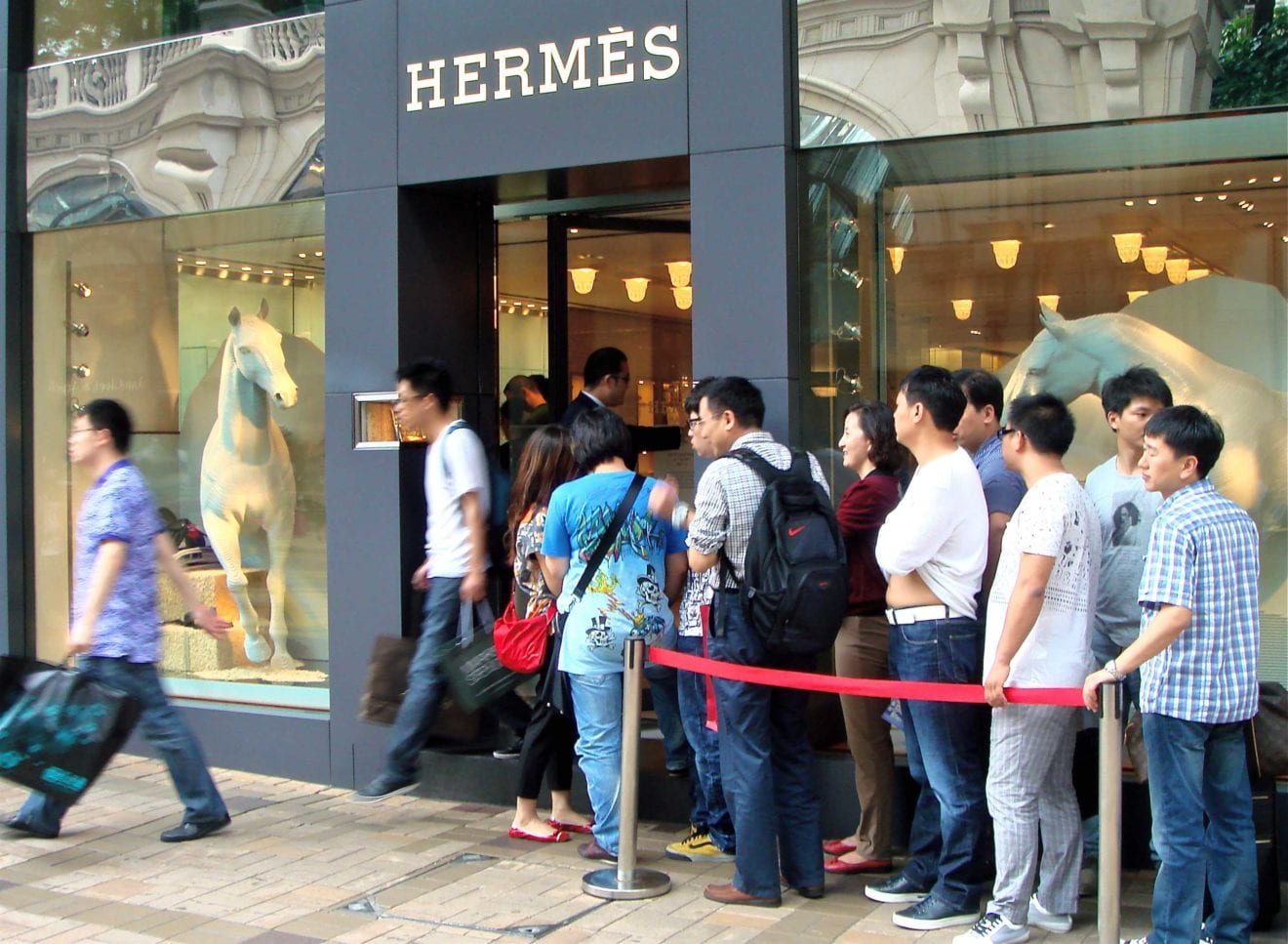
  • Hermes sales growth boosted by Asia

    Hermes sales growth boosted by Asia

    Hermes sales surged 11 per cent in the quarter to September, with all geographical regions performing well. Asia – excluding Japan – led the way, with sales up 14 per cent. The company reported a “significant increase” in Mainland China with new stores in Xi’an (which opened in September) and Changsha (in May) along with the Landmark Prince’s store in Hong Kong in January helping underpin growth.

    A new commercial website hermes.cn, launched on October 17 and a massive duplex flagship opens tomorrow at Bangkok’s new IconSiam development. In Japan, sales rose 7 per cent.

    Group-wide revenue reached  €4.316 billion at the end of September, with sales through company-owned stores up 11 per cent as well, confirming the trend evident during the first half of the year.

    “Hermes realised a very strong growth over the first nine months of the year, in all regions,” said executive chairman Axel Dumas. “We keep our optimism for the future, but we are also thankful for the past.”

    By product category, Hermes’ ready-to-wear division achieved growth of 15 per cent, aided by the successful launch of the women’s Spring-Summer 2019 collection, presented at the Hippodrome Paris Longchamp. Demand was also high for fashion accessories and shoes.

    Growth in leather goods and saddlery reached 9 per cent, while the silk and textiles business grew by 4 per cent. Perfume sales rose by 9 per cent, watches by 8 per cent and other business lines, encompassing jewellery, Art of Living and Hermes Table Arts, by 23 per cent.

  • Snapdeal trims losses for FY18, exudes confidence on hitting profits

    Snapdeal trims losses for FY18, exudes confidence on hitting profits

    E-commerce firm Snapdeal has narrowed its consolidated losses substantially to Rs 613 crore for FY2017-18, as per regulatory documents. According to a report: The company, which competes with larger rivals like Amazon and Flipkart, had posted a consolidated loss of Rs 4,647.1 crore in FY2016-17, documents filed with the Corporate Affairs Ministry showed.

    The consolidated revenue from operations declined to Rs 436.1 crore for 2017-18 as against Rs 903.8 crore in the previous financial year.

    On standalone basis too, Snapdeal trimmed its losses to Rs 440.7 crore in 2017-18 from Rs 4,638.9 crore in the year-ago period. Total revenue was at Rs 514.6 crore in FY18 as against Rs 1,105.7 crore in the previous fiscal.

    Snapdeal, in its filing said, the company had embarked on its journey towards profitability last year.

    “This year, we continued on this path and focused on building a leaner and more capital efficient business. We substantially reduced our costs, both variable and fixed overheads,” it added.

    The company said it reduced its business promotion expense by 88 percent year-on-year, whereas fulfilment expenses were lower by 67 percent y-o-y.

    “We optimised the team structure and leveraged technology more efficiently, which was critical in trimming our employee expenses by 68 per cent y-o-y. While all of this has come at the expense of lower top line, your company is extremely proud of its achievements over the year and is absolutely confident that it is heading in the right direction to achieve profitability,” it said.

    When contacted, a Snapdeal spokesperson said, “Our prime focus last year was to maximize the operating efficiency of the marketplace ahead of implementing our planned growth initiatives. We are extremely pleased to see the incredible results from our disciplined execution with losses reducing by 88 percent”.

    In addition, parts of the revenue, which were disproportionately loss-making, were identified and curtailed during the year in order to realign the business for growth with healthy margins, the spokesperson added.

    Snapdeal, which had seen its business being impacted severely by the intense competition in the e-commerce segment, had last year dumped the US$ 950-million takeover offer from rival, Flipkart.

    It was then that Snapdeal Co-founders, Kunal Bahl and Rohit Bansal had said the company will pursue a fresh strategy in the Indian market.

  • Pandora sales declining, relies on China

    Pandora sales declining, relies on China

    Jewellery retailer Pandora is looking to China, India and Latin America to arrest a decline in global sales. The Danish company has unveiled an initiative that it hopes will reignite sustainable revenue growth, Programme Now, after group revenue dropped 3 per cent in the third quarter of this year.

    Under the program, Pandora will significantly reduce its franchise acquisitions and scale back new store openings. For the stores it does open, it will concentrate on growth markets, such as China, India and Latin America. It hopes the move will grow like-for-like sales, if not total sales.

    To achieve this, the business plans to enhance its marketing, personalisation, digital and e-commerce capabilities, as well as the in-store customer experience.

    Pandora also noted that part of its success moving forward lies in execution in all parts of the value chain, as well as more closely coordinating parts of the business to work in tandem, to reduce costs.

    The implementation of the program, as well as the weak third-quarter results, however, have led the company to revise its full-year earnings guidance. It has cut its annual revenue forecast from between 4 and 7 per cent to between 2 and 4 per cent, or DKK 1.2 billion to DKK 1.4 billion (US$184 million to $214 million).

    “The third quarter results were unsatisfactory and we adjust our full year guidance,” Pandora CFO Anders Boyer said.

    “We have taken the first major step in the programme today by changing our network expansion plan. We have confidence in a strong future for Pandora and will use this year and next to reset the business.”

    Pandora expects revenue and total like-for-like growth to be impacted through to 2020 by the planned reduction of mark-downs, though this is likely to cause a margin neutral result on the group level.

  • Kakao profit falls in Q3 as investment costs rise

    Kakao profit falls in Q3 as investment costs rise

    Kakao, the operator of Korea’s top mobile messenger, KakaoTalk, said Thursday its third-quarter operating profit fell 35 percent from last year due to increased costs from new businesses. Operating income reached 30.7 billion won ($27.3 million) in the July-September period from 47.4 billion won a year ago, the company said in a regulatory filing.

    Sales rose 16 percent on-year to a quarterly record high of 599.3 billion won, the company said.

    Kakao said its operating income plunged due to increased investments in new businesses, such as Kakao Mobility, that the company recently launched in an effort to secure new growth engines.

    Kakao said the revenue from its content platform remained steady at 306.7 billion won, with the figure representing a 17 percent year-on-year increase.

    Advertising sales grew 10 percent year on year to 167.1 billion won over the cited period on the back of mobile advertising revenue growth.

    Music content sales increased by 11 percent year on year to 136 billion won in the third quarter due to steady revenues from the Melon streaming service.

    Kakao said it will keep up efforts until the end of this year in order to expand its foothold by wrapping up a merger with its entertainment affiliate, Kakao M. The tieup will allow the company to move forward on various business collaborations.

    Kakao said the decision is aimed at bolstering its entertainment content based on the users of Melon, which is currently operated by Kakao M.