Retail News CRM

Tag: robot

  • Revolutionizing Parenthood: Meet the ‘Gestation Robot’ Transforming AI in Reproductive Health

    Revolutionizing Parenthood: Meet the ‘Gestation Robot’ Transforming AI in Reproductive Health

    Kaiwa Technology, a forward-thinking Chinese tech firm, is making headlines with its ambitious plan to develop what may become the world’s first “gestation robot.” Set to hit the market in 2026 and priced at approximately USD 13,900, this humanoid robot boasts a revolutionary artificial womb designed to carry a fetus through the entire ten-month gestation period.

    This groundbreaking innovation aims to provide an alternative pathway for individuals unable or unwilling to experience the trials of human pregnancy. However, the announcement has sparked an intense global debate, raising a host of ethical questions even as it offers a glimmer of hope to couples facing infertility challenges.

    Building on Past Breakthroughs

    The concept is not entirely new; it follows in the footsteps of the groundbreaking 2017 “biobag” experiment, where researchers successfully nurtured a premature lamb. With advances in artificial intelligence and biotech reshaping the landscape of reproductive technology, the gestation robot marks a bold—and to some, entirely controversial—leap into the next chapter of human procreation.

    For those watching this space, it’s hard not to feel a mix of excitement and trepidation. After all, one wonders if the future of childbirth might include a friendly robot as a maternal stand-in—imagine a cuddly android ushering a new generation into the world!

    Questions & Answers

    What is the primary function of Kaiwa Technology’s gestation robot?
    The gestation robot is designed to replicate human pregnancy by providing an artificial womb that can carry a fetus through a ten-month period.

    When is Kaiwa Technology planning to release this robot?
    The company is scheduled to introduce the gestation robot to the market in 2026.

    What kind of ethical concerns are being raised by this innovation?
    The introduction of the gestation robot has sparked a debate regarding the implications of technology on natural reproduction, including concerns over the ethical boundaries of artificial procreation and the potential impact on societal norms surrounding motherhood.

  • Ocado launches first robotic warehouse in Asia with Aeon

    Ocado launches first robotic warehouse in Asia with Aeon

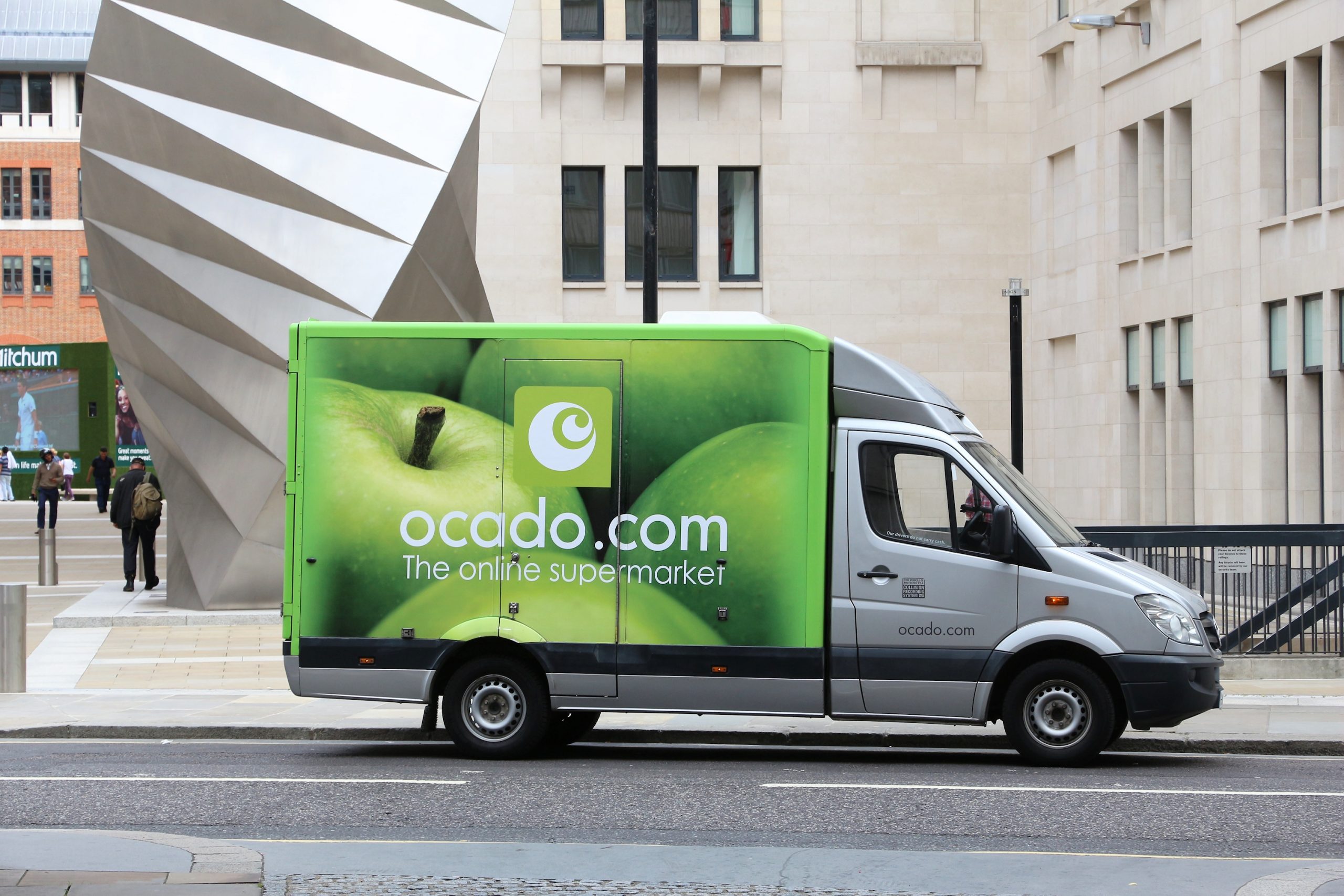
    Ocado, a British online supermarket and technology group, has launched its first robotic warehouse in Asia. The warehouse, which is located in Japan, is a joint venture with Aeon, a Japanese retailer. The warehouse will be used to fulfill orders for Aeon’s “Green Beans” brand.

    Ocado CEO Tim Steiner said that the launch of the warehouse is a significant milestone for the company. He said that the Asia-Pacific region is a “key growth market” for Ocado, and that the company plans to open more robotic warehouses in the region in the future.

    The launch of the warehouse comes at a time when Ocado is facing increasing competition from other online retailers, such as Amazon. However, Steiner said that he is confident that Ocado’s robotic technology will give the company a competitive advantage in the long term.

  • Elon Musk Faces Skeptics As Tesla Gets Ready To Unveil ‘Optimus’ Robot

    Elon Musk Faces Skeptics As Tesla Gets Ready To Unveil ‘Optimus’ Robot

    Tesla Chief Executive Elon Musk blamed overreliance on factory robots for sending the electric carmaker to “production hell” four years ago, saying humans were better at certain jobs.

    My, how times have changed.

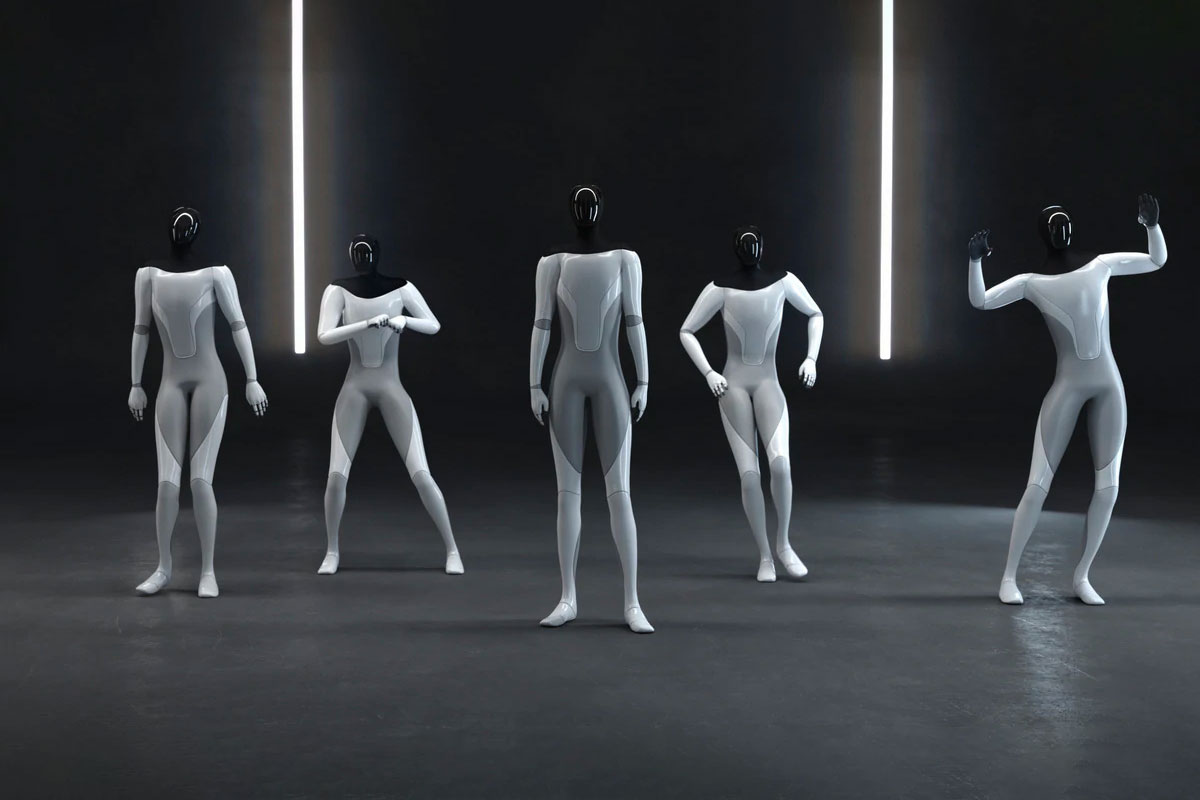
    Musk’s Texas company now is floating ambitious plans to deploy thousands of humanoid robots, known as Tesla Bot or Optimus, within its factories, expanding eventually to millions around the world, according to job postings. Buzz is building within the company as Tesla is having more internal meetings on robots, a person familiar with the matter said.

    Longer term, Musk said at a TED Talk robots could be used in homes, making dinner, mowing the lawn and caring for the elderly people, and even becoming a “buddy” or a “catgirl” sex partner.

    The robot business eventually may be worth more than Tesla’s car revenue, according to Musk, who is now touting a vision for the company that goes well beyond making self-driving electric vehicles.

    At its “AI Day” on Sept. 30, Tesla will unveil a prototype from its project Optimus, an allusion to the powerful and benevolent leader of the Autobots in the Transformers series. Production could start next year, Musk said.

    Tesla faces skepticism that it can show technological advances that would justify the expense of “general purpose” robots in factories, homes and elsewhere, according to robotics experts, investors and analysts interviewed by Reuters.

    Tesla already employs hundreds of robots designed for specific jobs for production of its cars.

    Humanoid robots have been in development for decades by Honda Motor Co and Hyundai Motor Co’s Boston Dynamics unit. Like self-driving cars, the robots have trouble with unpredictable situations.

    “Self-driving cars weren’t really proved to be as easy as anyone thought. And it’s the same way with humanoid robots to some extent,” the lead of NASA’s Dexterous Robotics Team, Shaun Azimi said.

    “If something unexpected happens, being flexible and robust to those kinds of changes is very difficult.”

    At an “Autonomy” event in 2019, Musk promised 1 million robotaxis by 2020 but has yet to deliver such a car.

    Musk’s robots may be able to demonstrate basic capabilities at the event, but it would be hard for them to impress public expectations of robots that are as capable as humans, experts say.

    To succeed, Tesla will need to show robots doing multiple, unscripted actions, said Nancy Cooke, a professor in human systems engineering at Arizona State University. Such proof could boost Tesla stock, which is down 25% from its 2021 peak.

    “If he just gets the robot to walk around, or he gets the robots to dance, that’s already been done. That’s not that impressive,” she said.

    Tesla did not respond to Reuters’ request for comments, but Musk in the past proved skeptics wrong, jump-starting the electric car market and building a rocket company, SpaceX, although some product launches were behind schedule.

    Initially, Optimus will perform boring or dangerous jobs, including moving parts around its factories, according to Musk.

    Musk acknowledged that humanoid robots do not have enough intelligence to navigate the real world without being explicitly instructed.

    But he said Tesla can leverage its expertise in AI and key components to develop and produce smart, yet less expensive, humanoid robots at scale.

    He tweeted on Monday that its Autopilot team is also working on its Optimus robot, when asked about fixes of what it calls Full Self-Driving beta – a test version of its new automated driving software.

    Tesla is on hiring spree for people to work on humanoid bi-pedal robots, with about 20 job postings on “Tesla Bot” including jobs for designing key robot parts like “actuators”.

    “The code you will write will at term run in millions of humanoid robots across the world, and will therefore be held to high quality standards,” one of the job postings said.

    Tesla has over 2 million vehicles on the road.

    Jonathan Hurst, chief technology officer at Agility Robotics, a humanoid robot firm founded in 2015 said the technology “is right now starting to turn the corner.”

    “Certainly, an important measure of success is do they make money from it,” he told Reuters, referring to Tesla’s humanoid robot efforts.

    Analysts see more pageant than product. “It’s all part of distracting people and giving them the next shiny object to chase after,” Guidehouse Insights analyst Sam Abuelsamid said.

    “Investors are not excited about Optimus,” said Gene Munster, managing partner at venture capital firm Loup Ventures, which holds Tesla stocks. “It’s just such a low probability that it works at scale,” he said, saying it is “infinitely harder than self-driving cars.”

    And then there is Musk’s own experience with robots in the factory.

    During the 2018 production hell, Musk specifically noted the problems of the “fluff bot,” an assembly robot that failed to perform simple tasks that human hands can do – picking up pieces of “fluff” and placing them on batteries.

    He said the cost of having technicians maintain the complicated robot far exceeded that of hiring someone to do the assembly.

    The fluff bot is “a funny example but drives home the point that autonomy often doesn’t generalize well, and so handling soft fluffy material that isn’t as predictable as a rigid part was causing a huge problem,” Aaron Johnson, a mechanical engineering professor at Carnegie Mellon University, said.

    “Human hands are way better at doing that,” Musk said.
  • Uber Launches Robot Food Delivery In California

    Uber Launches Robot Food Delivery In California

    Uber Technologies on Monday said it launched pilot food delivery services with autonomous vehicles in two California cities, and said it was adding electric vehicle charging stations into its global driver app.

    The announcements are part of Uber’s annual product event where the ride-hail and food delivery company showcases the latest updates to its app.

    Uber announced one food delivery service using autonomous cars, and a separate pilot using sidewalk robots. Both services are available to Uber Eats users in Santa Monica and West Hollywood in California, and consumers will have the ability to opt out of the programs.

    The autonomous car pilot is in collaboration with Motional, the self-driving joint venture of Hyundai Motor Co and Aptiv PLC, and was initially announced in December. It launched on Monday, Uber and Motional said.

    Uber said the sidewalk robots are provided by Serve Robotics, a spin-off of delivery company Postmates, which Uber acquired in 2020.

    The vehicles in both services are actively monitored by human operators, Uber said, adding that “it will be some time before this technology is operated at scale.”

    Self-driving companies have repeatedly pushed out timelines to provide truly driverless trips at scale, with only a few limited fully autonomous programs available across the U.S.

    Uber on Monday also said it was launching a map of electric vehicle charging stations in its driver app in the U.S. this summer, and later worldwide, in an effort to promote drivers switching to a battery-powered vehicle.

    Uber, which aims to have only electric vehicles on its platform in the United States, Canada and Europe by 2030, said charging was one of drivers’ biggest obstacles to switching to EVs.

    The company also said it was launching an option this summer to rent party and coach buses, and passenger vans through its U.S. app in collaboration with rental service US Coachways.

  • Baidu’s Electric Vehicle Firm Jidu Unveils First ‘Robot’ Car

    Baidu’s Electric Vehicle Firm Jidu Unveils First ‘Robot’ Car

    The concept car, which is free of door handles and can be fully controlled via voice recognition, was launched through an online press conference held on Baidu’s metaverse-themed app Xirang.

    Jidu, an EV venture controlled by Baidu and co-funded by Chinese automaker Geely, plans to mass produce the model, which would be 90% similar to the concept car, in 2023.

    The ‘robot’ EVs will possess autonomous Level 4 capabilities that need no human intervention as well as utilize Qualcomm’s 8295 chips, which will enable users to access voice assistance offline when internet connection is poor.

    Baidu’s EV-making plan comes as tech companies around the world race to develop smart cars after Tesla’s success in commercializing electric vehicles.

    Besides equipping the vehicle with autonomous driving software technology powered by Baidu, Jidu will also build two lidars and 12 cameras alongside the car. Lidars are detection systems, similar to radars, which use pulsed laser light rather than radio waves.

    “The Jidu robocar aims to meet users’ needs for intelligent travel … and intelligent cabin in the new era,” said Joe Xia Yiping, Jidu chief executive, adding “the ultimate goal is to realize a fully driverless transportation experience.”

    Jidu cars will target users who like cutting-edge technologies, Luo Gang, head of operations at Jidu, told Reuters in an interview on Wednesday.

    The EVs will be manufactured in Hangzhou Bay in China’s eastern city of Ningbo, where Geely has several plants.

    Jidu has hired ex-Cadillac designer Frank Wu as its head of design, and Wang Weibao, a former member of Apple Inc’s EV initiative Project Titan, as its head of intelligent driving.

    Jidu’s first model will be priced above 200,000 yuan ($29,914.59), Baidu chief executive Robin Li said on a conference call last month.

    Smartphone maker Xiaomi Corp and Didi Global are among other Chinese tech giants who are pursuing auto-making ambitions.

  • Robot baristas to serve coffee in over 30 train stations in Singapore

    Robot baristas to serve coffee in over 30 train stations in Singapore

    Singapore-based Crown Digital announced yesterday that it will be installing its robotic baristas at 30 Mass Rapid Transit (MRT) stations in that country by the end of 2022.

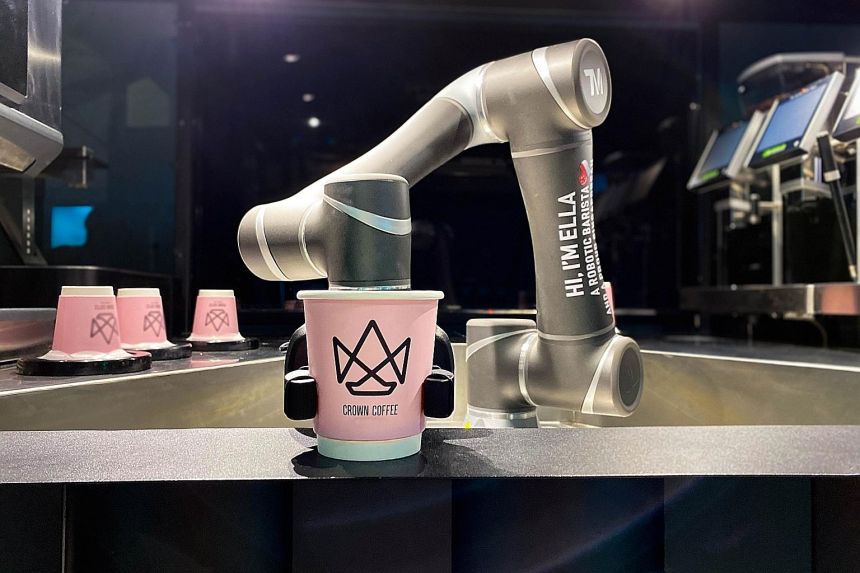
    Dubbed “Ella,” Crown Digital’s robo-coffee kiosk is 5 sq. meters, serves a variety of coffee and tea drinks, and can make up to 200 coffees per hour. While Ella uses an articulating arm to make and serve drinks, one of its standout features is its transparent screen that can display information about drinks, orders and even full-motion videos and graphics.

    For these MRT installations, Crown Digital has collaborated with Stellar Lifestyle, which has “expertise in property and retail management, media and digital advertising solutions,” according to the Crown Digital announcement blog post. Crown Digital also wrote that Stella Lifestyle has invested an undisclosed sum in Crown Digital’s pre-Series A round of funding.

    This is the second rail network that Crown Digital has partnered with, following a pilot deal with Japan’s JR East‘s train stations signed at the end of last year. With their high-traffic audiences looking for refreshment on-the-go, transit hubs like MRT stations and airports are popular target markets for robotic coffee kiosk companies that are just now coming market such as Crown Digital, Smyze, and Cafe X.

    Another benefit to robotic coffee baristas in these pandemic times is that they are contactless. Robots don’t get sick, and don’t act as a vector of viral transmission the way that humans do.

    While there are a number of robot baristas coming to market, we have yet to see big coffee chains jump into automation. The exception is Costa Coffee, which bought Briggo last year and re-branded those Coffee Hauses into Costa Coffee BaristaBots. Though I suspect that as more deals like Crown Digital’s start popping up, we’ll soon see other big coffee brands like Starbucks and Dunkin add their own robots as well.

  • Google’s Waymo Self Driving Car Unit Starts Robo-Taxis In San Francisco

    Google’s Waymo Self Driving Car Unit Starts Robo-Taxis In San Francisco

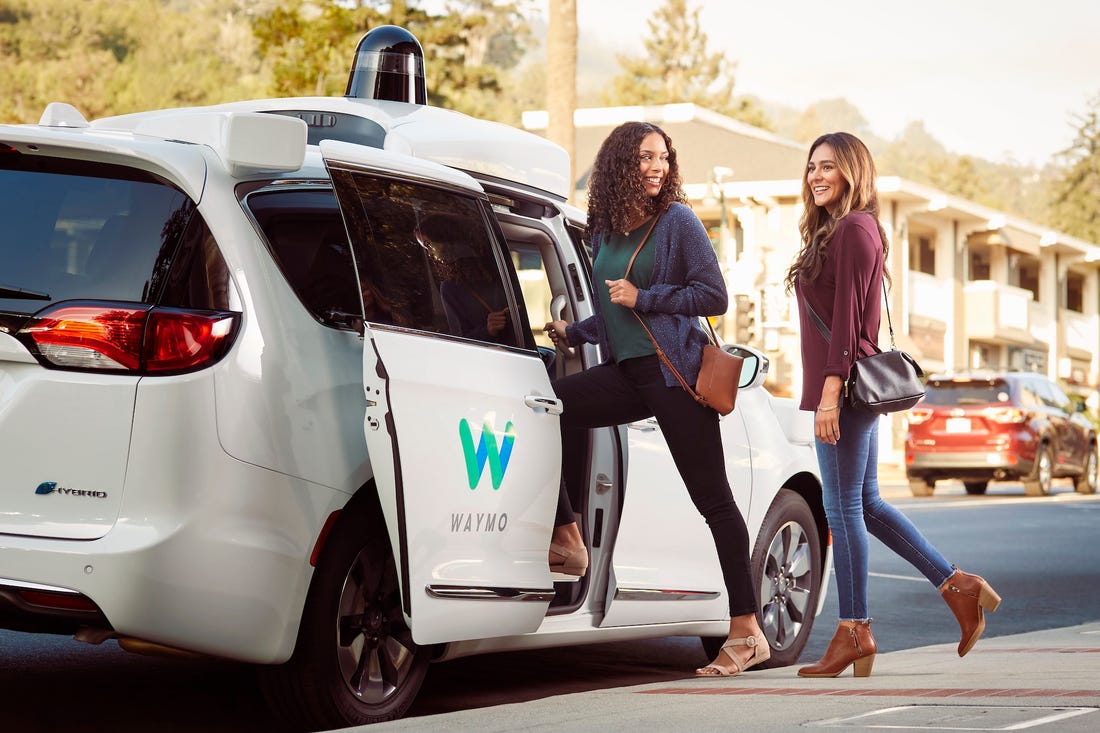
    Waymo is the pioneer of self-driving cars, but it has been beaten to the punch by Chinese rivals AutoX and Baidu to deploying robo-taxis. Well, this wasn’t going to stand for long as it has started tests of its robo-taxis in San Francisco.

    Waymo had deployed its ride-sharing service in Phoenix, Arizona earlier in 2020 called Waymo One. For the first time, it had also started testing the service without safety drivers in the area, but now a more full-fledged expansion is happening.

    Experts have predicted that the pandemic is accelerating the adoption of autonomous vehicles for transportation and delivery. Overall, global trust for autonomous vehicles has also grown by leaps and bounds in the last three years as the technology has progressed.

    Waymo has Chrysler Pacifica and Jaguar I-Pace electric SUVs which have driven over 20 billion autonomous miles through computer simulations and 20 million autonomous miles on public roads in 25 cities.

    Now Waymo employees in San Francisco will use the Waymo One app to hail rides. They will be prompted for pick-up and drop-off points before being given an ETA. This is similar to a typical ride-hailing app.

    Till 2019, Waymo had a fleet of 153 cars and 268 safety drivers in San Francisco alone, though its latest fleet size is unknown, though presumably, it has increased. These vehicles were deployed in San Francisco to deliver packages for non-profits after the pandemic induced halt in testing.

    “We’re beginning with a limited number of cars and riders and will scale over time. These rides are being offered with a single-vehicle operator,” a Waymo spokesperson said.

    “The initial program starts this week and will last for several, but we plan to grow it over time. We don’t have any specific timelines to share about when (or where) we’ll be offering a public service. It’s worth bearing in mind this is for early product testing and continuous improvement, and there are many further steps we’d need to go through … before we could deploy a service to the public,” Waymo added in a statement.

    Waymo has a permit from the public utility commission in California that’s part of the procedures to run an autonomous vehicle passenger service pilot. This is separate from the California Department of Motor Vehicles (DMV) under which 66 companies have permits.

    Waymo One currently delivers rides with a network of 600 autonomous cars from Phoenix 24 hours a day, seven days a week. It also has a partnership with LYFT to deploy 10 cars on the Waymo One platform.

    Currently, it is on track to having more than 60,000 Pacifica minivans from Chrysler and 20,000 i-pace electric SUVs from Jaguar. It also has a deal with Daimler for developing self-driving semis.

  • Amazon Unveils Zoox Self Driving Robotaxi

    Amazon Unveils Zoox Self Driving Robotaxi

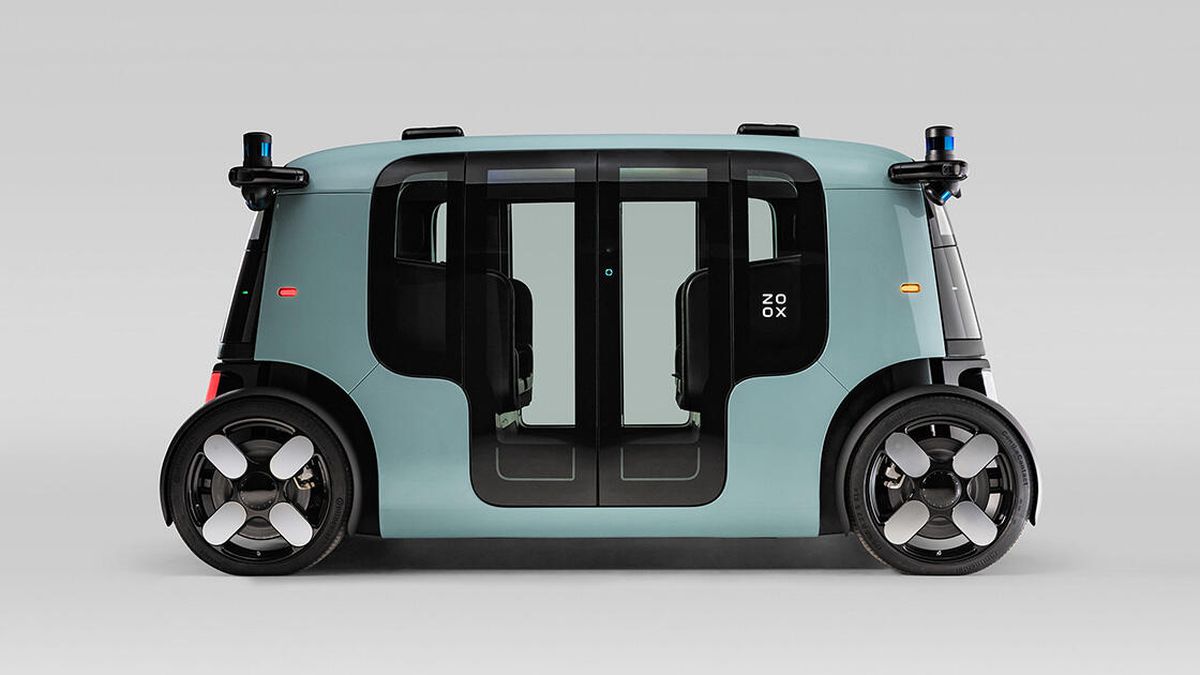
    Amazon could become the fourth major player to have a self-driving robotaxi service after Waymo, Cruise, and AutoX. Amazon’s Zoox comes out of stealth after releasing prototypes six years ago. The most striking thing about Zoox is that its car has a level of fit and finish that goes beyond what Waymo or Cruise have unveiled. And presumably, this will be the basis of a ride-hailing service that Amazon will launch to take on the likes of Uber, Waymo, and Cruise.

    The vehicle is quite different as it has a carriage-style four-wheel all-electric powertrain that can set up for people. It is just 3.63 meters long which makes it smaller than the Origin robotaxi by Cruise.

    Zoox is different because it can drive both forward and backward and side to side — in other words, it has bi-directional capabilities. This allows the car to handle tight curbside pickups” and tricky U-turns, something which AutoX has also shown off. It is also the fastest autonomous vehicle of its kind as it travels at 120 kilometers per hour — a Waymo robotaxi can only do 72 kilometers per hour.

    As far as the autonomous tech goes, this vehicle marries 6 LiDAR arrays as well as multiple radar sensors and cameras providing a 270-degree field of view, with the vehicle having no blindspots. It even has sensors for redundancies and can see objects up to 150 meters away.

    The interior is also unique. It gets really comfortable bench seats that face inward with the passengers surrounded in textured fabric. It also features a radical new system for airbags alongside cupholders and wireless charging mats. The ceiling draws inspiration from the Rolls-Royce Ghost with its starry sky pattern and each seat even gets a touchscreen for controlling music, AC, and their route plus ETA.

    It is also an EV that is powered by a 133 kWh battery and can have up to 16 hours of continuous use. This is in the league of Tesla battery packs which is very impressive.

    Amazon is the secretive player in the self-driving space. It has used for robotaxis and self-driving vehicles for the sake of its infrastructure and logistics business. But then it also holds a massive investment in Rivian and Aurora who just bought Uber’s ATG unit.

    The big news here is that Zoox is out of stealth and it has a very very impressive self-driving vehicle which seems more fleshed out than even Waymo.

  • Ella takes up role as Singapore’s first robotic barista

    Ella takes up role as Singapore’s first robotic barista

    She is a barista with a very strong arm. And “Ella”, Singapore’s first fully automated robot barista, will be serving customers their caffeine fixes at CityHub mall in Lavender from Saturday (Oct 3).

    Crown Coffee, the food and beverage arm of Crown Group, said the outlet was launched in an effort to push automation and reduce physical interaction in the light of the coronavirus pandemic.

    Ella, named after Crown Group founder and chief executive Keith Tan’s wife, served a range of hot drinks to Minister of State for Trade and Industry Low Yen Ling and members of the media at a launch event on Friday.

    In a speech at the event, Ms Low, who is also Minister of State for Culture, Community and Youth, emphasized the importance of digitalization and automation in navigating the pandemic and zoomed in on Ella as a solution that creates opportunity from chaos.

    “While Covid-19 has severely impacted our businesses and economy, it has also created the impetus for us to build stronger business capabilities and seek out new growth opportunities,” she said.

    Crown Coffee’s new robot barista is able to make up to 200 cups of coffee an hour. It joins a host of new innovations spurred on by Covid-19 such as cleaning robots.

    Ella brews and serves coffee behind a transparent screen in a contactless set-up. Users will have to download the Crown Coffee mobile app, through which they can order drinks, from $4 each.

    Developed by Crown Group’s technology arm, Crown Digital, Ella is Mr Tan’s response to the cost pressures of training and retaining human workers, and a pre-emptive response to digital disruption.

    “We need to disrupt ourselves, as opposed to waiting for things to change,” said the former wealth manager, who started Crown Group in 2016 to follow his passion for coffee.

    Ella has been in development since 2017, when the first prototype was built.

    Mr Tan, 40, said Ella is part of his company’s aim to serve consistent, barista-quality coffee to more people conveniently.

    He added: “Ella’s main application will be in high-traffic areas like MRT stations or airports. Imagine you’re on your way to work and you order your coffee from the mobile app and when you get to the station your coffee is waiting for you.”

    Crown Group is currently seeking funding to expand Ella across Singapore and beyond, said a spokesman.

    Asked about the costs involved compared to employing human baristas, Mr Tan said that it will take some time for any savings from automation to accrue.

  • Service robots prove popular at height of pandemic

    Service robots prove popular at height of pandemic

    With the coronavirus pandemic continuing to spread relentlessly around the globe, “untact,” or non-contact services are emerging as a new trend, and demand for service robots to replace humans is also growing.

    The state-run Korea Trade-Investment Promotion Agency (Kotra) says interest in service robots has soared since they were employed in public-sanitation and service businesses to limit the spread of Covid-19 in China.

    According to the China Academy of Information and Communications Technology, 54 percent of all voice robots introduced in China were used more than 1 million times per day during the Chinese COVID-19 quarantine period, which lasted until February 7.

    According to an analysis of some 500 cases collected by the coronavirus artificial intelligence (AI) quarantine support information platform, the most popular products were service robots, big data analysis systems and smart recognition (body temperature measurement) devices.

    Service robots are divided into “professional service robots” used at companies and in public places and “home and personal service robots” used in ordinary homes.

    Among them, the market for service robots stood at US$9.46 billion as of last year, up 14.1 percent from a year earlier. The average annual growth rate of service robots over the past five years also stands at 21.9 percent.

    China’s service robot market stood at US$2.2 billion last year, accounting for 25 percent of the global service robot market.

    It is a figure that grew 19.6 percent year on year, with an annual average growth rate of 28 percent over the past five years, exceeding the global average. Furthermore, it is expected to grow to $4 billion in 2021 as demand rises.

    Chinese service robots have been focused on housekeeping, guest reception, customer service (in retail stores, restaurants and banks) and education, led by start-up companies.

    However, with the outbreak of Covid-19, service robots have drawn more attention in areas such as delivery, quarantine disinfection and patrol.

    In particular, during the coronavirus quarantine process, multi-function products for disinfection, temperature measurement, and mask-wear monitoring, rather than products equipped with one function, were notable.

    “The market for service robots is expanding through rental services, easing the initial burden of introduction compared to directly selling hardware,” Kotra said.

  • CITIC Launches Robo-Advisor in Hong Kong

    CITIC Launches Robo-Advisor in Hong Kong

    China CITI Bank International launches its robo-advisory offering in Hong Kong which was co-developed with fintech firm Quantifeed.

    The new goals-based advisory offering, «Robo 360» is a goal-based advisory service made available through CITIC’s mobile banking app, «inMotion». Investors will be able to access 8-20 portfolios with a minimum investment amount as low as $100 and fees of just 1 percent. The portfolios are constructed with up to eight funds each by leveraging smart analytics and quantitative research capabilities.

    The launch makes CITIC the first bank in Hong Kong to offer a goals-based robo-investment advisory solution.

    We believe this will revolutionize wealth management in Hong Kong by ensuring that professionally managed investment products, previously only available to a limited wealth segment, are now available to retail customers, said Alex Ypsilanti, CEO, and co-founder of Quantifeed.

    Quantifeed has successfully developed scalable and highly customizable digital wealth and robo-advisory solutions for banks, brokers, insurers and wealth planners across Asia.

    These include DBS’s ‘digiPortfolio’ platform in Singapore, Cathay United Bank’s ‘CathayRobo’ service in Taiwan and Everbright Sun Hung Kai’s ‘EBSHK Direct AI-Portfolio Investing’ system in Hong Kong. The firm has a strong footprint in the region, with offices in Hong Kong, Singapore, and Sydney, and has recently expanded its services into Japan.

  • Niska introduces robotic vendor through ice cream

    Niska introduces robotic vendor through ice cream

    Australian retail start-up Niska is bringing an interactive robotic experience to Melbourne with the launch of a game-changing ice cream store at Federation Square.

    Niska, Australia’s first-ever robotic retail store, offers Australian-made artisan ice-cream with a variety of flavors and toppings, all served by a team of robot staffers: Pepper, Eka, and Tony.

    The robots create a unique customer experience and “world-class service” by establishing meaningful interactions with each person.

    Visitors can even take selfies with Pepper, the social humanoid robot, and their ice cream, with photo spaces available within the store.

    With bricks-and-mortar retailers realizing the importance of creating unique and curated merchandise experiences, Niska is getting ahead of the curve with robotic retail.

    CEO and co-founder Kate Orlova said the company plans to revolutionize the retail space.

    “For us, ice-cream is just the beginning. We’re looking to expand the robotics into other areas of retail. The future is here and it is exciting! We look forward to changing the retail game and pioneering retail robotics,” she said.

    Minister for Jobs, Innovation, and Trade, Martin Pakula called it a “real feather in the cap for Victorian innovation”.

    “There is amazing work going on here in areas like robotics and artificial intelligence – and the ice-cream’s also pretty good,” he said.

    Niska is now open at Tenancy 20, Crossbar Building Federation Square.

  • Futuristic Ikea robotic furniture debuting in Hong Kong

    Futuristic Ikea robotic furniture debuting in Hong Kong

    Ikea has developed a robotic furniture suite in collaboration with American start-up Ori that is set for roll-out first in Hong Kong.

    The Rognan furniture platform includes several items, including a double bed, workstation, wardrobe, media unit, bookshelf and sofa. They are designed with cramped city living spaces in mind, targeting residents of urban micro apartments.

    The Rognan unit can transform at different times of the day to fulfil different uses. Furniture owners can reform the platform into a bedroom, walk-in closet or lounge using a touchpad interface.

    “We have been working with developing small space living solutions for a long time, and we know that some of the biggest challenges in peoples’ homes are storage and finding the place to do all the activities that you’d want to do in your home,” said Ikea product developer for new innovations Seana Strawn. “This is especially the case in big cities where people have to make compromises in the functions of their homes. We wanted to change that.”

    Residents using the Rognan system can free up 8sqm of living space without compromising storage space or comfort.

    Pricing for the robotic furniture has yet to be released. It is expected to launch commercially next year in both Hong Kong and Japan before a broader international roll out.

  • Ford Partners With Robots Maker Agility Robotics In Mobility Service Push

    Ford Partners With Robots Maker Agility Robotics In Mobility Service Push

    Ford Motor Co said on Wednesday it is partnering with walking robots maker Agility Robotics to assist self-driving delivery vans to drop packages at the doorsteps of people’s homes. Ford’s move into robotics comes as the No.2 U.S. automaker looks to expand into autonomous driving and mobility services. The company, which launched a self-driving pilot with delivery partners including Domino’s in Miami last year, said Agility Robotics’ two-legged robot, Digit, is capable of lifting packages that weigh up to 40 pounds.

    The robot can walk up and down stairs and through uneven terrain, while maintaining its balance after being bumped, Ford said bit.ly/2Jy47T5.

    “It’s not always convenient for people to leave their homes to retrieve deliveries,” Ken Washington, Ford’s chief technology officer, said.

    “If we can free people up to focus less on the logistics of making deliveries, they can turn their time and effort to things that really need their attention.”

    In 2017, Ford bought Argo AI, a Pittsburgh-based self-driving startup, but with spiraling development costs for autonomous cars in recent years, the company and other carmakers have sought alliances and outside investors.

  • Self-Driving Tesla Robotaxi Coming In 2020

    Self-Driving Tesla Robotaxi Coming In 2020

    Tesla CEO Elon Musk has said that the electric car maker is ready to fly autonomous robotaxis from 2020. Making a series of bold predictions during the Tesla Autonomy Day at the Palo Alto-based headquarters late on Monday, Musk said the company expects to get necessary approvals by 2020.

    “I feel very confident predicting that there will be autonomous robotaxis from Tesla next year — not in all jurisdictions because we won’t have regulatory approval everywhere,” reported Musk as saying.

    “In places where there aren’t enough people to share their cars, Tesla would provide a dedicated fleet of robotaxis,” the report added.

    Tesla Founder and CEO hoped that robotaxis would return home and automatically park and recharge.

    Tesla also unveiled a new Samsung-made microchip that, the company said, was being included in every new car.

    Musk said that by the middle of 2020, Tesla’s autonomous system will have improved to the point where drivers will not have to pay attention to the road.

    “We will have more than one million robotaxis on the road,” Musk said. “A year from now, we’ll have over a million cars with full self-driving, software… everything.”

    He said Tesla would soon develop cars that could last for at least one million miles with minimal maintenance.

    Taxi hailing company Uber is also planning the next generation of transportation – flying taxis.

    It has named Dallas and Los Angeles in the US as the first two cities for the commercial launch of its aerial taxi service by 2023 and has been on the lookout to select an international city as its third partner.

    Uber has shortlisted five countries — India, Japan, Australia, Brazil and France — and a city in one of them will become the first Uber Air City outside of the US.