Retail News CRM

Tag: robot

  • Robot employees take on human tasks at UOB Singapore

    Robot employees take on human tasks at UOB Singapore

    UNITED Overseas Bank (UOB) has introduced two robots, or ‘virtual employees’, that will support its wholesale banking and retail businesses.

    In a press statement to Human Resources, the bank said its first robot employees, named Amy and Eve, started working at UOB three weeks ago, and have since cut the time taken to process a transaction by more than half.

    Amy and Eve have been taking on tasks that UOB’s human employees have found repetitive and time-consuming, allowing their human teammates to focus on more stimulating and challenging work.

    Feedback from the robots’ human colleagues have been positive, with most noting that they have been helpful and productive.

    Lim Ann Liat, managing director and head of markets and enterprise technology, group technology and operations, UOB, said: “By introducing robots into our workforce, we can improve our process using technology yet maintain a human touch. This also lifts the load off our people which in turn makes their jobs more fulfilling.”

    UOB plans to take onboard more robots in the coming months for other processes such as card operations, cash management and trade and remittance.

    Separately, in a whitepaper published today (Nov 23) by The Economist Corporate Network (ECN), it was reported that business leaders recognise the need for their leadership on automation and AI both inside and outside the company.

    The paper, based on a survey and focus group interviews with CEOs and other C-suite executives based in the Asia-Pacific region, revealed that 81% of CEOs would lead by example and automate parts of their job.

    According to the findings, CEOs find it difficult to clearly communicate their company’s automation and AI strategy to their employees.

    Dr Florian Kohlbacher, ECN Director for North Asia, commented: “We are talking too much about the potential negative impact of AI and automation on the workplace. What is needed instead is a proactive discussion on how companies can harness technology in order to strategically manage the transformation and systematically shape the workplace of the future.”

  • StarHub launches autonomous delivery robot

    StarHub launches autonomous delivery robot

    Singapore’s StarHub has entered a partnership with ST Kinetics to supply autonomous delivery robots to local businesses.

    Under the partnership, the companies will deploy Aethon TUG robots to business environments, starting with a roll out in three hotels to streamline the laundry supply chain.

    TUG robots (pictured) were designed by ST Engineering’s land systems business Aethon. They are designed to transport materials of up to 635kg per trip.

    The robots are integrated with a customer’s Wi-Fi infrastructure, elevator and IT systems to allow it to navigate autonomously on premises, including by opening doors and riding elevators.

    TUG will be the second robotics solution introduced by StarHub for corporate customers. The operator is offering managed robotics solutions through an as a service business model, which includes round-the-clock technical support and maintenance services.

    In addition, the partnership is part of StarHub’s connected building initiative to provide IoT solutions for companies to solve environmental sustainability, productivity or safety challenges.

    “Faced with continued manpower crunch, the hospitality industry is increasingly turning to innovation and automation to drive better business outcomes,” StarHub chief of enterprise Dr Chong Yoke Sin said.

    “We are pleased to partner ST Kinetics to offer the TUG to our customers, for tasks involving heavy lifting. This can help reduce lifting hazards and boost productivity, ultimately saving costs for customers.”

  • Yes24 testing robot to help out in bookstore

    Yes24 testing robot to help out in bookstore

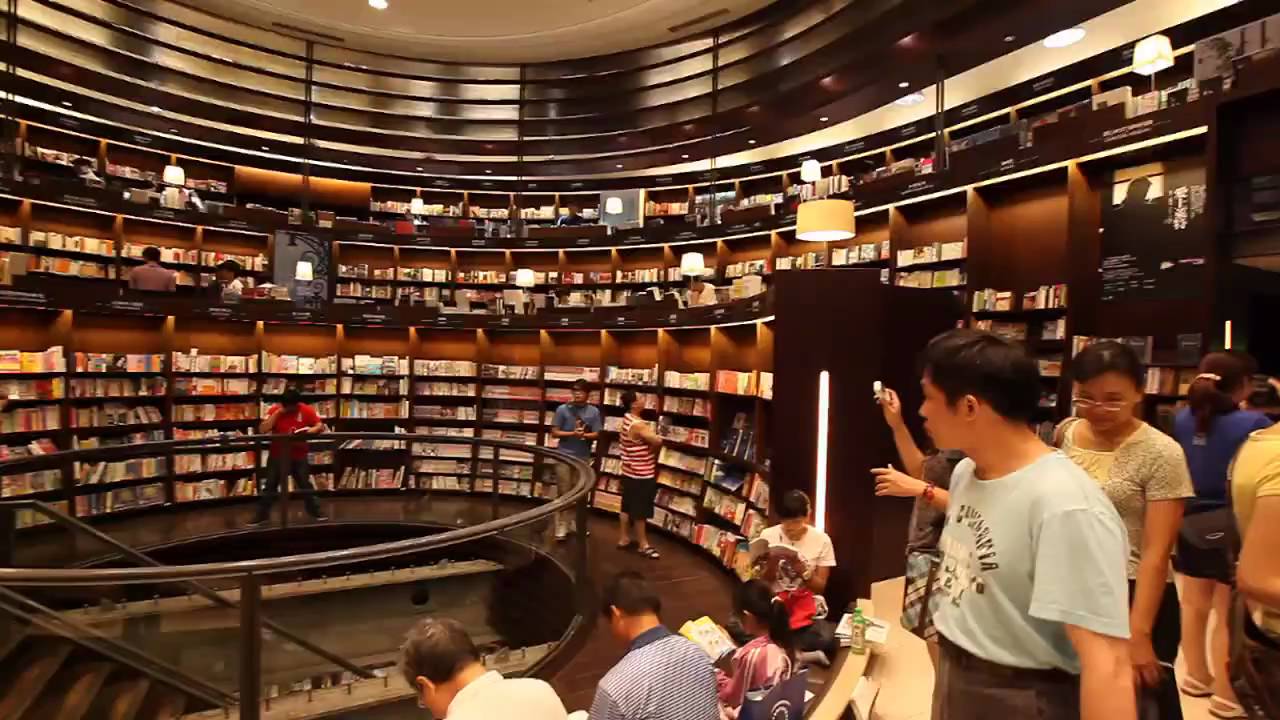
    Bookseller Yes24 is trialling an autonomous robot, nicknamed Around, at its secondhand bookstore in Busan.

    Its prime job is to collect books that have been read by customers, but it is also helpful for staff members.

    Yes 24 collaborated with Naver Labs for a year on developing the robot as well as an “air cart”, an electric trolley to help staff members move books around more safely and easily. It is equipped with anti-collision features.

    More Arounds and carts will be rolled out before year’s end after the trial and follow-up software and hardware updates.

  • Pizza delivery by robot cars has arrived with big questions

    Pizza delivery by robot cars has arrived with big questions

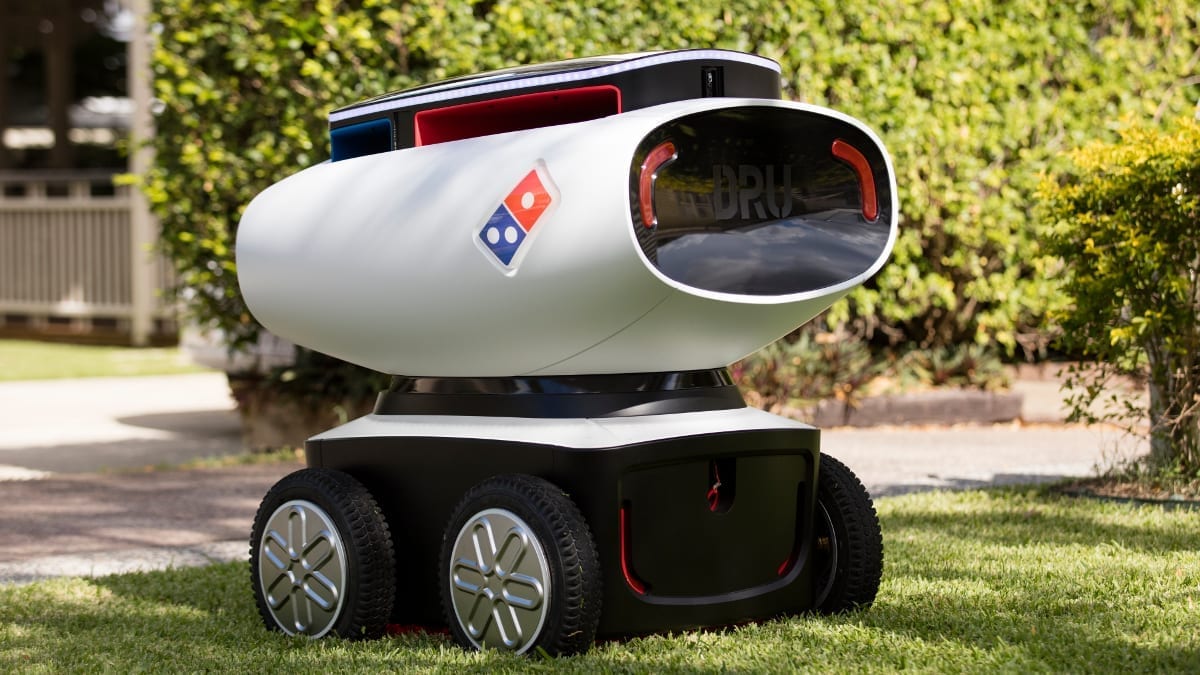
    Domino’s Pizza and Ford have paired up in a pilot project that will look at how humans interact with driverless food-delivery cars. Ann Arbor is home to thousands of students, an age group not likely to view this new technology with suspicion. But it could turn into a fascinating social experiment for the food industry.

    Customers ordering through Domino’s will be able to track their delivery in real time by using a downloadable app on their smartphones. They receive a text message that gives them a four-digit code to use once the car arrives.

    But it’s the final portion of the drive that could prove unpredictable for Domino’s. The driverless delivery vehicle could end up in the driveway, or near the curb. Customers may not want to go out to the car if it’s raining or snowing. Domino’s USA president Russell Weiner says these challenges are a major part of the experiment.

    “We’re interested to learn what people think about this type of delivery,” he said in a recent statement. “The majority of our questions are about the last 50 feet of the delivery experience.”

    No tipping attractive to students

    Human behaviour can be difficult to predict at the best of times, especially when dealing with food. This will be the first time a food service or retail company has used driverless cars to interact with actual consumers.

    The experience will certainly offer convenience for customers in a variety of ways. With the app, expectations will be managed, and quality of service — Domino’s key strategic focus — will be more consistent.

    That’s because delivery times will be streamlined, fewer pizzas will be damaged in handling mishaps and the customer won’t have to deal with tips — at least not for now. No tipping will reduce price points, making delivered pizzas more affordable. For cash-strapped students, that’s key.

    For Domino’s, the business case for a driverless fleet is unquestionably strong. Lower insurance costs, lower fuel consumption, consistent delivery times, no thefts, controllable temperatures to keep food safe for customers so therefore less waste — the list goes on.

    Domino’s delivers more than a billion pizzas annually, and has more than 100,000 drivers. Running a driverless fleet could save the company millions.

    Embracing the concept of home food deliveries without having to hire drivers cannot come soon enough for the food service industry, which is looking for ways to increase revenue beyond their regular foot traffic.

    Restaurant operators won’t need to deal with the headache of hiring the right people for delivery, and delivery is an important means of expanding the brand outside their facilities.

    Home delivery can be dicey

    Most of us who have ordered home-delivered food have had mixed experiences.

    Some drivers make convicted felons look like choir boys, causing customers to be hesitant about the food. But home delivery is no walk in the park for the drivers, either.

    Drivers in the U.S. have told of finding themselves in unbelievably awkward situations,including being tipped with weed, being asked to eat with the customer to offer company, showing up during domestic disputes and being greeted by a naked customer as the front door opens.

    There’s an endless list of unpleasant scenarios that would discourage anyone from contemplating home food delivery as a full-time job or even part-time job.

    A humanless home food delivery experience, on the other hand, also offers a unique perspective on the market currency of convenience.

    For years, price has been king. In study after study, price has trumped any other feature consumers were looking for in food service.

    Consumers crave convenience and privacy

    Younger generations, however, have a different take on convenience. Price remains a significant factor for higher revenues of course, but the constant quest for more convenience on both sides of the food continuum is now reaching the point of obsession.

    Getting rid of delivery personnel is now a realistic approach. With driverless home food delivery, one could potentially get food delivered without seeing a single human being — a frightening thought for some, a reassuring one for others.

    In the future, consumers could binge on their favourite junk food several times a week without the embarrassment of seeing the same delivery person.

    No matter how you look at it, Domino’s and Ford are onto something. After all, driverless technologies are consistent with what Domino’s is all about.

    The company has been successful over the years with its mastery of home delivery. Joining forces with Ford could make the company even more efficient.

    Nonetheless not all of us needs Domino’s to get our food fix. Divorcing the human aspect from food is simply impossible for many food service companies — thousands of them, in fact. And thank goodness for that.
  • Venture gears up to field test self-driving delivery robot

    Venture gears up to field test self-driving delivery robot

    Tokyo-based venture ZMP Inc. may begin field testing a self-driving delivery robot in August intended as an alternative to aerial delivery drones as Japan grapples with a growing labor shortage.

    The box-shaped CarriRo Delivery robot, which is 133 cm long and 109 cm high, is designed to run on sidewalks and carry loads of up to 100 kg, ZMP said.

    “Our delivery robot is more suitable than drones when it comes to delivering heavy products like food items,” said ZMP Chief Executive Officer Hisashi Taniguchi.

    The company has teamed up with sushi delivery firm Ride On Express Co. to test a prototype of the autonomous vehicle on private property.

    The robot, which is equipped with cameras and sensors and can steer itself at a maximum speed of 6 kph, selects delivery routes on its own using a pre-loaded map. It can be controlled remotely when needed, according to ZMP, which is also developing self-driving car technologies.

    Customers can unlock the robot’s cargo hold using a code sent to their smartphones.

    While looking to improve the robot’s features, including climate management in the cargo hold, ZMP and its partners will urge the government to make regulatory changes that allow the robot to be tested on public roads.

    ZMP hopes the CarriRo Delivery robot will be treated similarly to electric scooters used by the elderly.

    Domino’s Pizza Enterprises Ltd. began testing an autonomous delivery robot in Australia last year, while companies like Amazon.com Inc. and Rakuten Inc. are seeking to commercialize drones for door-to-door parcel deliveries.

  • Retail robot coming to a shop near you

    Retail robot coming to a shop near you

    Designed as a sales assistant, this robot can talk, guide shoppers and even receive credit card payments. In a demonstration yesterday at Marina Mandarin Hotel, the XYZrobot greeted a prospective customer with “It’s a pleasure to be at your assistance”, told him there was a special promotion on 3D printers, and led him to where the printers were supposed to be.

    The robot was even able to moderate its pace to the walk of the shopper. It was launched yesterday by Singapore consumer electronics retailer Newstead Technologies, ahead of the upcoming PC Show 2017.

    The XYZrobots could help retailers save costs, said Mr Sky Chen, 36, general manager of retail and global distribution services at Newstead Technologies.

    “This robot does not get sick or need to take leave. So if you calculate the costs of purchasing the robot verses hiring an employee, a shop could easily see how it is worth it.”

    It is understood to be the first retail robot in Asia which is able to receive payments by credit card.

    Each robot can run for about eight hours on a four-hour charge. It will also be able to return to its charging point as often as it needs.

    The robot was manufactured by Taiwanese tech firm New Kinpo Group.

    Its chief executive officer Simon Shen, 51, said: “Fewer young people (in Singapore) want to do jobs that pay less such as retail. So as our population ages, we must keep up with the manpower shortages.”

    The idea was conceived three years ago to help cope with manpower shortages and the company invested $5 million to develop it.

    Mr Shen said that people ought to be doing jobs that require higher thinking and that robots can fill in the gaps for tasks that require less of a human touch.

    But Professor Chen I-Ming of the School of Mechanical and Aerospace Engineering in Nanyang Technological University thinks that humans are always needed in certain sectors such as retail.

    “Sales is all about persuading people to buy things. You need to use hard sell or soft sell tactics based on the consumer. This is a communication skill that robots simply cannot do as of now.”

    The XYZrobot will be on display for visitors to engage with at the PC Show 2017, which will be held at Marina Bay Sands Expo and Convention Centre from June 1- 4.

    From August this year, it will be sold in Newstead’s Suntec City store for at least $12,000.

  • Vietnamese workers warned of ‘robot threat’

    Vietnamese workers warned of ‘robot threat’

    Robots are already being used at the 20-hectare Vinamilk actory in Binh Duong province. There are 19 robots and several workers. Everything runs on an automation process. Some robots carry packs to the filling room, while others take finished products to the storehouse.

    When robots begin to lose power, they automatically go to the battery charging area, where they install full batteries without the assistance of workers.

    Nguyen Chien Thang, director of Scan Pacific, an interior product manufacturer, who has received more orders from foreign partners in recent years, has decided to equip his newly built factory with an automated production line, which would help increase productivity by 4-5 times.

    Other large furniture companies in Binh Duong have also spent money on automation technology. A representative of Vi Dai, a supplier of machines and equipment, said the company’s sales increased by 50 percent in 2016 because more wooden furniture manufacturers bought modern equipment to increase productivity and lower costs.

    Thanks to the automation production line, which has been running in the last 10 years, Minh Long 1 Porcelain Company has cut the number of workers from 400 to 20. To date, it has imported seven robots with the value of no less than 40,000 euros.

    Analysts commented that though it is costly to replace workers with intelligent robots, using robots in production lines is a growing tendency worldwide, including in developing countries like Vietnam.

    The World Economic Forum predicted 5 million jobs would be lost by 2020 because of  artificial intelligence. The latest report from ILO shows that two-third of 9.2 million workers in the textile & garment and footwear industries in South East Asia are being threatened by robots.

    In Vietnam, ILO said 86 percent of textile & garment workers may lose jobs in the automation process, while three-fourth of workers in the electronics sector will be replaced with robots.

    Pham Thi My Le, president of Le & Associates, predicted that 80 percent of works would be undertaken by robots by 2020.

    The popularity of robots would prompt multi-national conglomerates to stop outsourcing to Asian countries and to make products in their home countries with automated production lines. If so, Asian countries, which now rely on doing the outsourcing for foreign companies, would suffer.

    Vietnam can attract foreign investments thanks to cheap labor. However,  once robots replace large numbers of workers, that advantage will diminish.

  • Foxconn to help Japanese firm sell robots around the world

    Foxconn to help Japanese firm sell robots around the world

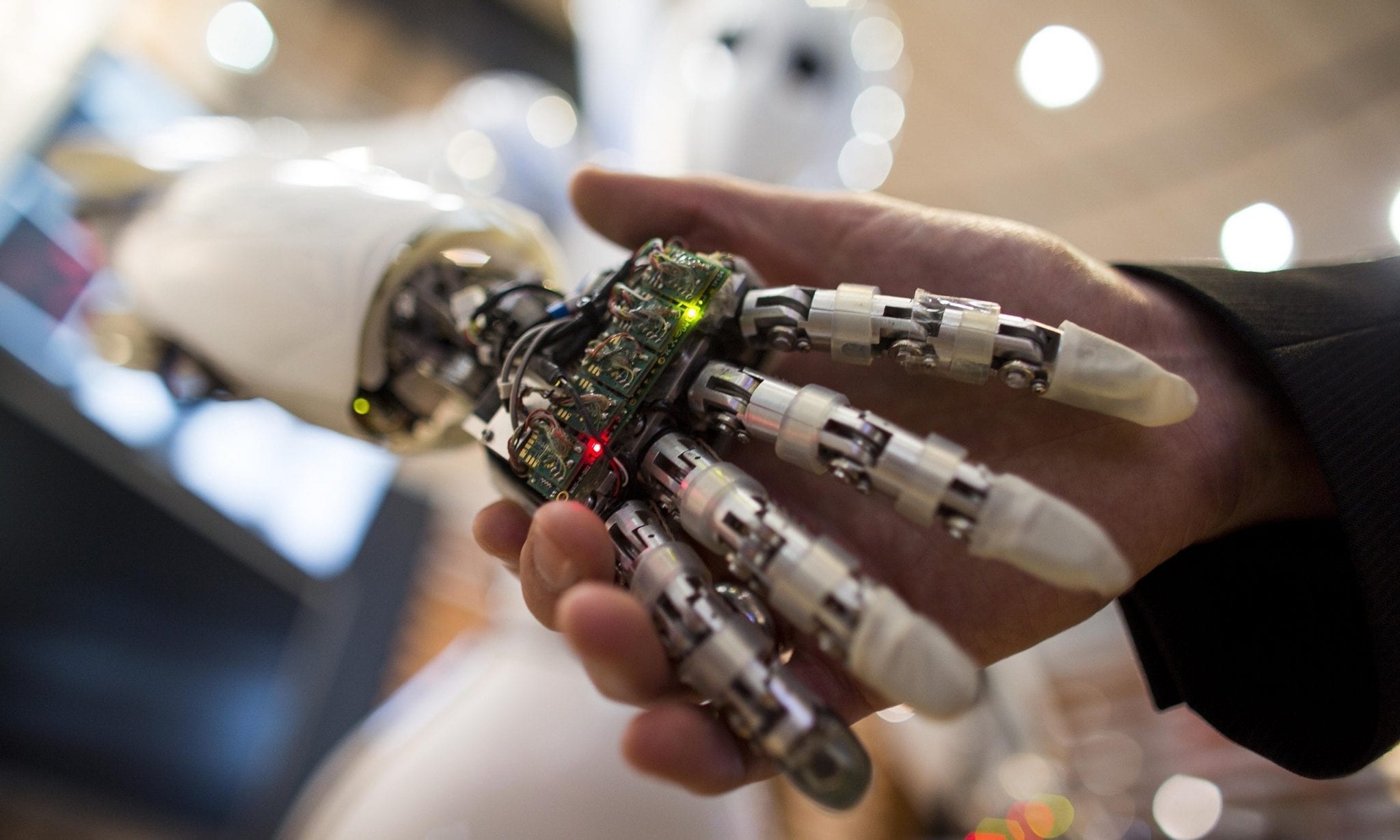
    What guise will robots of the future take? Some see as them as faceless automatons, capable of performing basic tasks for us, whilst the Supermatrix predicts a future where they’ll be actively concious but subdued through a dream within a dream. SoftBank Mobile however believes robots can be our friends before they do our bidding, which is why it launched its Pepper robot in Japan last year and is now partnering with Foxconn and Alibaba to help sell it around the world.

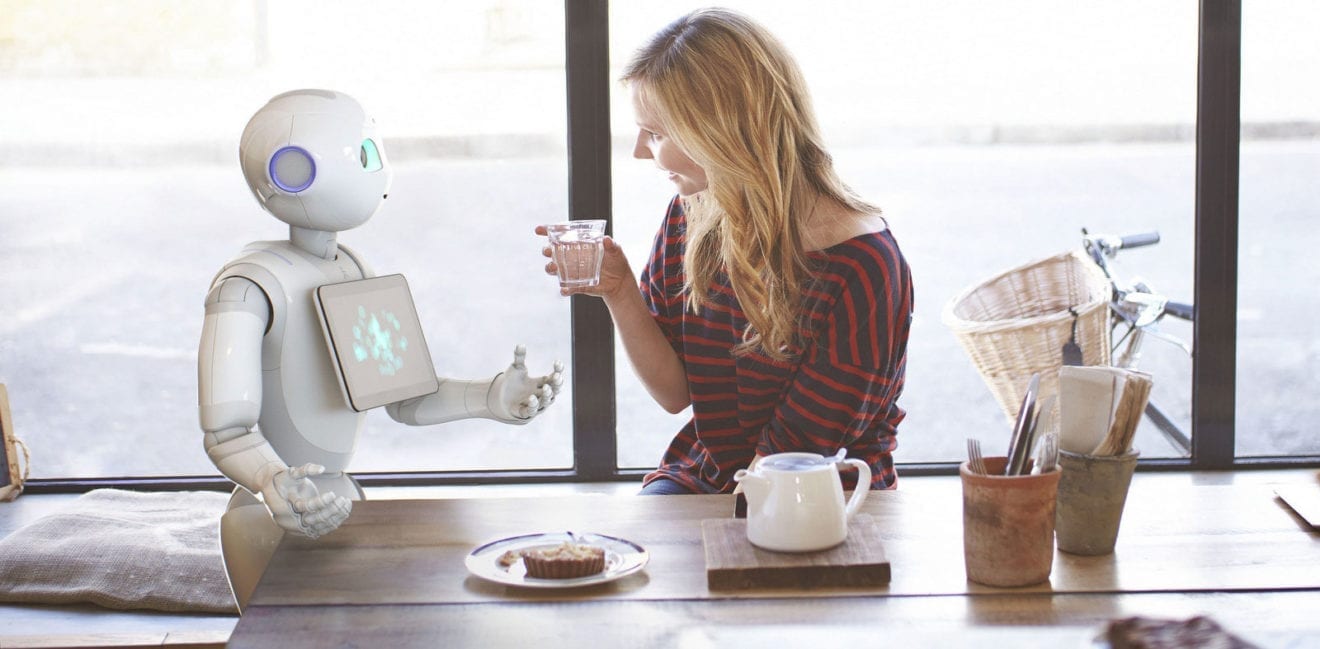
    Pepper doesn’t perform any particularly useful tasks around the house or office, but he can read facial expressions and judge emotions based on language and tone of voice and can react accordingly. If you are sad, he might engage you in conversation or play your favourite song to cheer you up. Over time he learns your emotions and different moods and can compliment or help alleviate them depending on your preferences.

    To date he’s mostly been used as a greeter in Softbank stores, but there are other potential uses such as babysitter, party greeter, serving staff or a companion for the elderly. It’s expected that retailers may be some of the most interested in Pepper, but that there are plenty of other applications for him where end users and other organisations may see him as a good fit for the role.

    Projected costs for the robot are expected to be $1,660 (£,1044) up front, followed by monthly payments of £125 to cover ongoing insurance coverage (should it fall over and break) as well as access to the cloud processing facilities required to make many of Pepper’s more complicated analysis and decisions.

  • You can now order pizza from a robot in Singapore

    You can now order pizza from a robot in Singapore

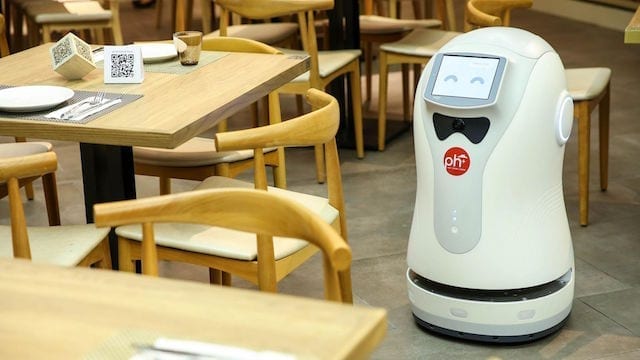
    If your Pizza Hut clerk seems like a robot, you may have stumbled into Singapore and a near future in retail commerce.

    Before the end of this year, credit card giant MasterCard will deploy an actual robot in one lucky Pizza Hut location in Singapore that will not only engage with customers, but help them fulfill their pizza cravings by guiding them through a purchase and assisting them in completing a mobile transaction.

    MasterCard announced on Tuesday that, by the end of this year, it will launch a personalized shopping and concierge experience that will also serve as the very first commerce application for Softbank Robotic’s Pepper robot.

    The experiment “follows our own philosophy that every device is a commerce device,” Tobias Puehse, VP Innovation Management, MasterCard Labs, told Mashable.

    Pepper’s new job comes on the heels of news that Softbank Robotics’ (formerly Aldebaran) adorable and emotive 4-foot-tall robot is finally getting an Android SDK and would soon be coming to America.
    The best robot
    MasterCard chose Pepper because of “its early success in Japan, in terms of being active in a retail environment with various partners,” Puehse said.

    The credit card company spent months programming the commerce experience and had to overcome some challenges, like the fact that Pepper doesn’t come equipped with Low Energy Bluetooth or NFC communication abilities. Eventually they settled on placing a Bluetooth LE beacon near Pepper, which connects to the store’s Wi-Fi network — the same one the Pepper robot will be on — and lets the customer connect via Bluetooth.

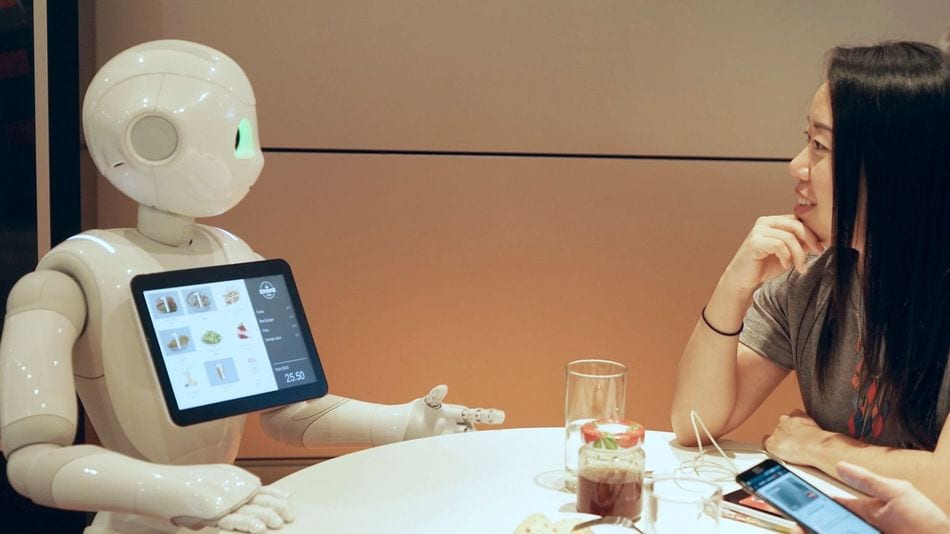
    In practice, Pepper will greet would-be pizza hounds using natural language and cognition, as opposed to interface requests. If you have MasterCard’s MasterPass Wallet application on your phone (Android or iOS), a little Pepper icon will appear in it. If you don’t, Pepper asks you to scan a QR code. Once you’re connected, Pepper will be able to glean your name, as well as your shopping preferences, and might ask you, “Would you like to have your favorite drink again?”

    Pepper will guide you through the product selection process, but, according to Puehse, can also handle random questions about, say, the calorie count in pizza. (But, do you really want to know the answer to that?)

    One thing Pepper does not do, though, is complete the transaction for you. For the sake of security, MasterCard chose to keep the transaction on your mobile device. Pepper will only know that you are ready to buy that slice, send your phone the order details and, once you’ve bought it, get the transaction-complete notification. Pepper will then tell you where to go pick up your pizza.
    Pizza takes time
    Because Pepper is a conversational robot and MasterCard designed the interaction to be “human-like,” Puehse said, there won’t necessarily be any efficiency gains from shopping with a robot. The benefit is that, when using Pepper to get that slice of buffalo pizza, there’s no learning curve. Pepper will, in essence, communicate with you just as a highly skilled pizza retail clerk might. It will know the product, respond to questions about it and, perhaps, be a bit more knowledgeable about your pizza desires and needs.

    Puehse told Mashable that he can envision a store full of Pepper robotics, each one helping a different customer, but the near-term goal is to “make sure it has all the value that we anticipate it will.” If all goes well, yes, MasterCard wants pizza-selling robots to “proliferate in Asia Pacific and beyond,” Puehse said.

    Unfortunately, there’s no timeline for Pepper coming to U.S.-based Pizza Huts. Still, Pepper’s new commerce chops might almost make it worth taking the longest pizza-run in history.

    Have something to add to this story? Share it in the comments.