Retail News CRM

Tag: robot

  • Emart goes digital in high-tech Uiwang store

    Emart goes digital in high-tech Uiwang store

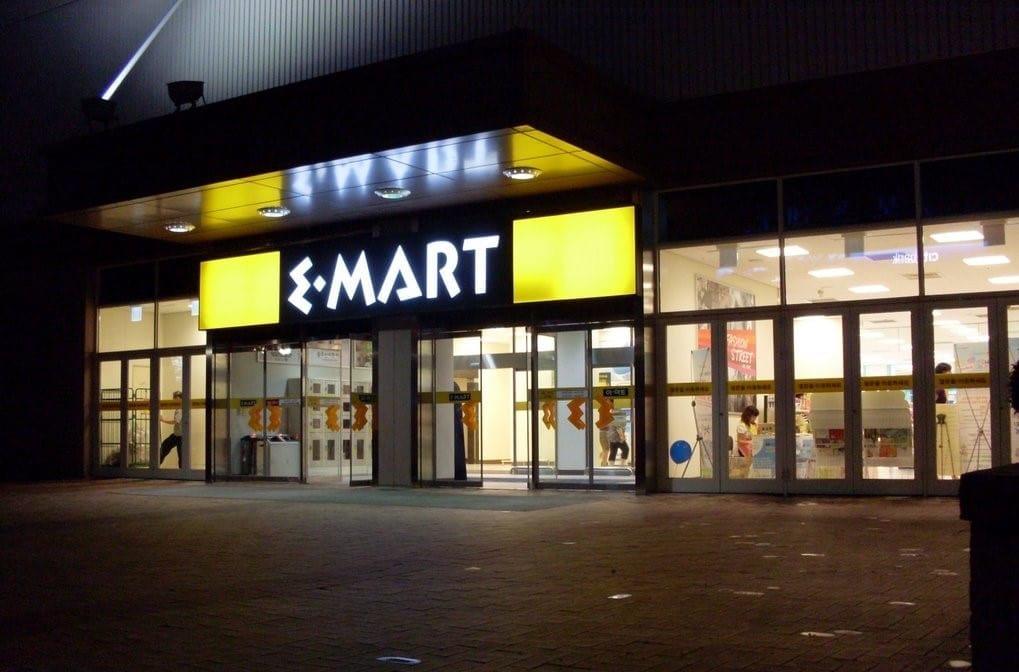
    Emart is going fully digital with its brand new Uiwang branch that will open in Gyeonggi tomorrow. Innovative features of the Uiwang branch – the first Emart store to open in 30 months – include digital displays instead of paper signs and guide robots that can escort customers to desired products. The Uiwang store will span 9,917 square meters (106,745 square feet) across two basement floors in a commercial building.

    “We will introduce a revolutionary format of offline stores that breaks away from tradition in order to meet the challenges of our fast-changing era,” read an Emart report.

    Going paper-free is a big change that Emart hopes will both appeal to customers and help management.

    Price labels will be digitalized and controlled by a central server in the Uiwang branch, allowing store managers to display and change prices with unprecedented ease and speed. The new store will also install digital signage, or electronic displays, alongside elevators, moving walkways and cashiers instead of paper posters for advertisement and notices.

    “By minimizing paper usage, we can provide consumers with a unique shopping experience while practicing green management and boosting productivity,“ read the Emart report.

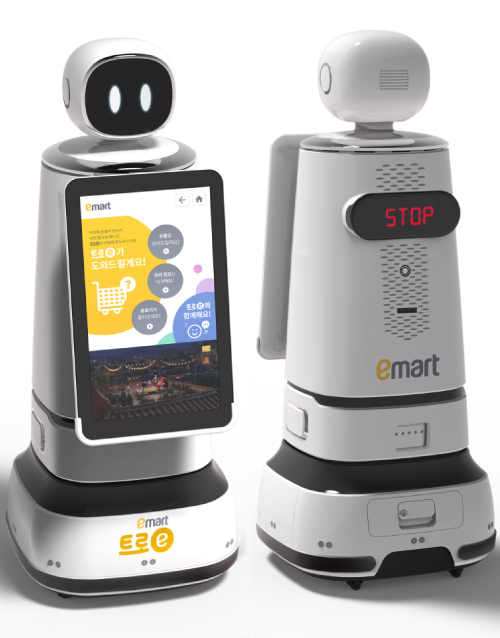
    The new Uiwang store will also be home to Tro.e, an autonomous robot equipped with a 27-inch touch screen that is capable of guiding consumers to desired products and making casual conversation. Like Pepper, a robot the company employed earlier this year at its Seongsu branch in eastern Seoul, Tro.e will only be available for a limited time on a test run at Uiwang.

    Emart developed Tro.e, named after the Swedish word tro, which means trust, together with Future Robot, one of the official robot providers for the PyeongChang Winter Olympics.

    The grocery section of the new store will only be located on the lower floor of the store, while the upper floor will host a variety of affiliated shops including Electro Mart, Pierrot Shopping, Daiz, Boots and a Kakao Friends Store.

    Emart will open a 660-square-meter “Culture Lounge” for customers to read books and purchase beverages.

    “We will continue striving to offer consumers a unique shopping experience with our distinctive products and digital shopping environment,” said a senior manager in charge of development at Emart.

  • Real human call centres still preferred : research

    Real human call centres still preferred : research

    New research reveals 75 per cent of shoppers prefer live-agent support for customer service verses 25 per cent support for self service and chatbots.

    The research, from cloud contact-centre operator NewVoiceMedia, identified consumer concerns about sharing sensitive information, a lack of understanding of bots and their inability to resolve issues.

    “Chatbots can provide customers with quick answers to frequently asked questions or issues, and the survey notes the benefit of chatbots for certain interactions, such as 24-seven service,” the survey’s authors concluded.

    But when it comes to handling sensitive financial and personal information, most customers are more comfortable with a live agent, and just 13 per cent say they would be happy if all service interactions are replaced by bots in the future.

    Foremost among consumer concerns about using chatbots include:

    • A lack of understanding of the issue (65 per cent).
    • The inability to solve complex issues (63 per cent).
    • The inability of chatbots to provide answers to simple questions (49 per cent).
    • The lack of a personal service experience (45 per cent).

    While less than half of the people surveyed (48 per cent) said they would be willing to use chat bots for service – versus the 38 per cent who wouldn’t – 46 per cent also felt that bots kept them from reaching a live person.

    Banks (82 per cent) and medical services (75 per cent) were the businesses that people were least likely to want to deal with bots.

    Customers prefer live agents for technical support (91 per cent); getting a quick response in an emergency (89 per cent); making a complaint (86 per cent); buying an expensive item (82 per cent); purchase inquiries (79 per cent); returns and cancellations (73 per cent); booking appointments and reservations (59 per cent); and paying a bill (54 per cent). However, when asked about buying”a basic item”, 56 per cent would choose a chatbot over a live interaction.

    The top benefit cited for dealing with chat bots was 24-hour service.

    “When a situation becomes emotional or complex, people want to engage with people”, says Dennis Fois, president of NewVoiceMedia. “As businesses add more customer service channels, conversations are becoming more complex and higher value, and personal, emotive customer interactions play a critical role in bridging the gap for what digital innovation alone cannot solve,” he said.

    “For this reason, companies must find the right balance between automation and human support to deliver the service that customers demand. Frontline contact centre teams will continue to be the difference makers on the battlefield to win the hearts and minds of customers, and organisations deploying self-service solutions should ensure that there is always an option to reach a live agent”.

    There is a sense consumers may warm to chatbots in the future, however, given that younger respondents (aged 18-44) were more open to using chatbots overall and across the individual scenarios compared to older consumers (45-60+).

  • JD.com’s First Robot Restaurant Now Open in Tianjin

    JD.com’s First Robot Restaurant Now Open in Tianjin

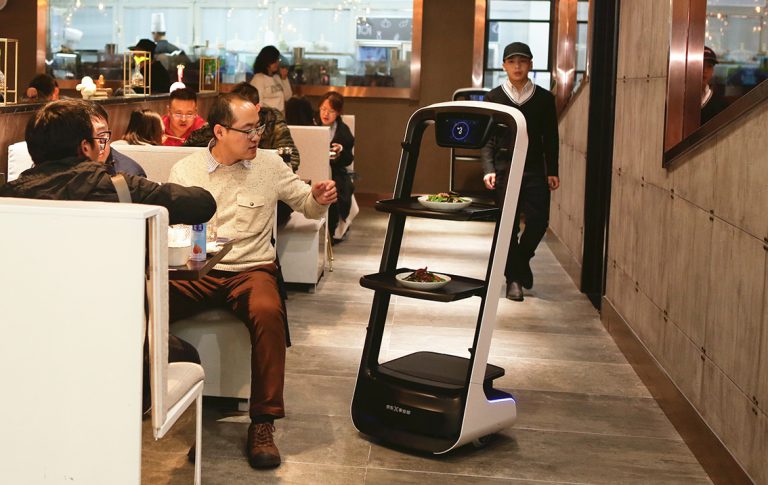
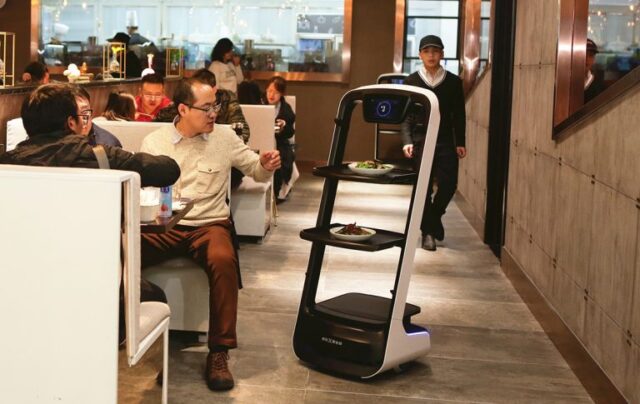
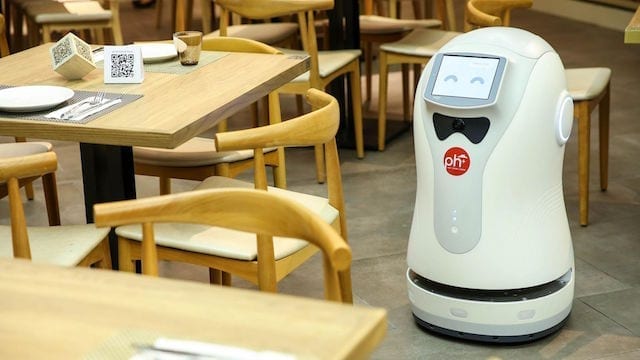
    Chinese online retailer JD has opened its first fully automated robot restaurant in Tianjin. The 400sqm venue has opened as “XCafe” at the Sino-Singapore Tianjin Eco-city, an area of Tianjin dedicated to environmental sustainability. XCafe is the first fully-automated restaurant in China, with all aspects of ordering, preparing, cooking, plating and serving performed by robots, which can work a full day on a single charge. Five or six human staff are still required to refill and position ingredients for the robot chefs.

    XCafe’s manager Tang Siyu said the restaurant can seat about 300 guests for dinner, with a table turnover rate of three turns per table during the lunch or dinner hour. It currently serves around 40 predominantly stir-fry dishes, with a potential full menu of more than 200 offerings.

    The restaurant also features VR interactive games and immersive dining experience areas.

    JD plans to open 1000 robot restaurants by 2020 and is seeking to promote the technology to other catering firms.

  • Incheon Airport tests an unmanned shuttle service

    Incheon Airport tests an unmanned shuttle service

    Incheon International Airport said Sunday that it has successfully tested a self-driving shuttle bus becoming the first Korean airport to do so. The test took place inside its long-term parking lot on Friday, where a driverless bus ran 2.2 kilometers at a speed of 30 kph.

    “The test route has lots of curved lanes and is frequently interrupted by other cars … We have seen that autonomous driving is possible,” the airport said.

    The shuttle bus used in the test has been developed by Korean companies, including KT and Unmanned Solution. It is the country’s first driverless vehicle to obtain a temporary driving license. Last month, the airport signed a memorandum of understanding with KT to cooperate in autonomous driving. It plans to introduce a detailed plan for various self-driving car services.

  • When robot take over Hotel management

    When robot take over Hotel management

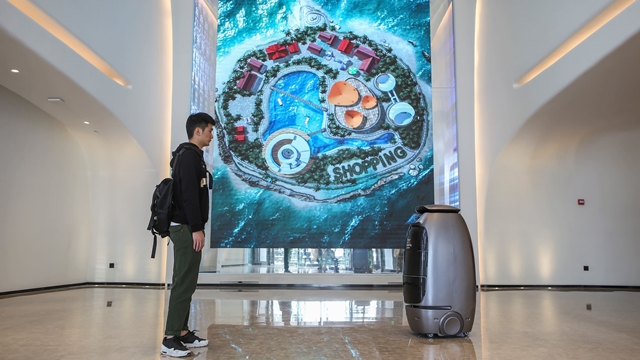
    An automated Alibaba hotel is set to open in Hangzhou. The move showcases the e-commerce giant’s technological capacity and serves to diversify its scope of business – with a view to demonstrating and selling its data-driven innovations. The company has claimed the hotel will be more efficient than manned properties within a comparable price range.

    The Alibaba hotel, which has already accepted bookings, features robotics, facial recognition, smart speakers, voice-activated lighting and room service, and automated alerts for cleaning. Hotel guests will be able to purchase any item featured in the rooms on Alibaba’s website.

    The hotel’s features are well in advance of similar voice-command technologies recently offered to the hospitality industry by Chinese search engine Baidu, although a similar hotel was launched by Shenzhen firm Smart LYZ in Chengdu earlier this year.

    A statement from the company read: “The solutions deployed at Alibaba’s Future Hotel can be used to streamline the operation of [China’s] hospitality sector while improving the experience of guests.”

  • LG, E-mart develops smart-cart robot

    LG, E-mart develops smart-cart robot

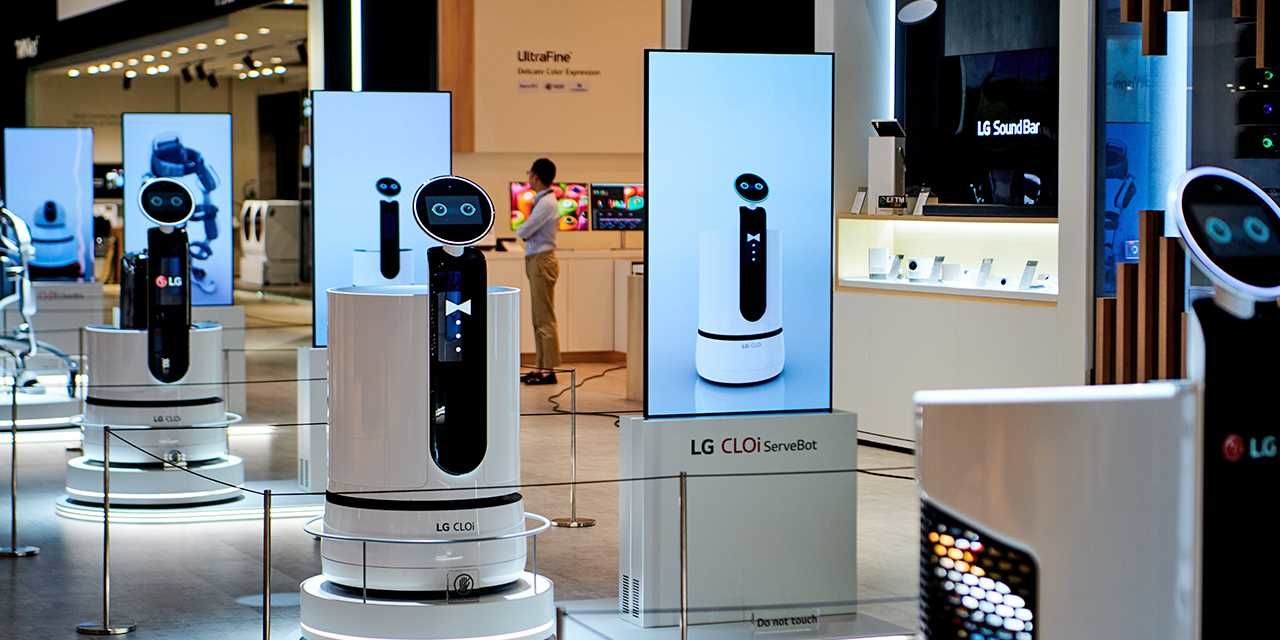
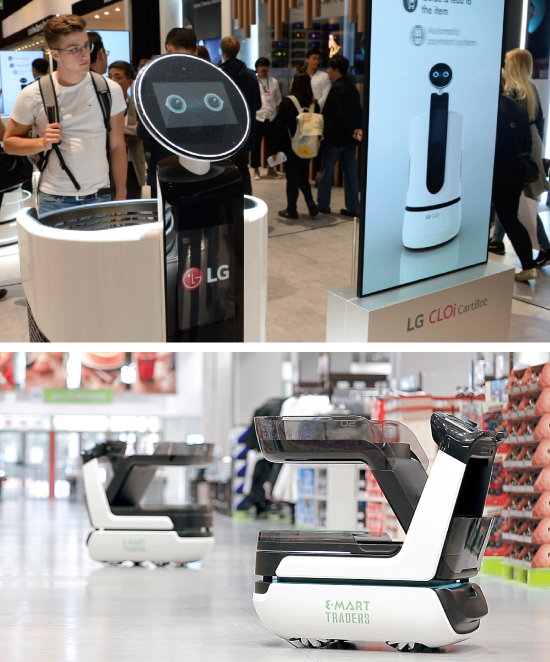
    LG Electronics has signed an agreement with E-mart to develop a new type of service robot that can assist shoppers at its South Korean supermarkets. Under the agreement, the two companies will develop what they call a smart-cart robot that can automatically identify obstacles and follow shoppers as they walk through aisles. LG said the new robot will free visitors from the hassle of pushing heavy carts by themselves.

    The South Korean tech giant said the robot will be developed by its research lab, which has been releasing various robots under the CLOi brand.

    So far, LG has released eight different products under the brand, which are suited for different tasks, including guiding, cleaning and even mowing lawns. The company unveiled the CLOi SuitBot, which can help workers lift and move heavy objects easier as well.

    LG said it has been making efforts to bolster its robot business by joining forces with different clients, including airports, bakeries and retail shops.

    CLOi stands for clever, clear, close operating intelligence, LG said.

    The company has been making investments in robotic firms, including Robotis, AI startup Acryl and US-based robot maker Bossa Nova Robotics.

  • Hyundai brings wearable robotics to factories

    Hyundai brings wearable robotics to factories

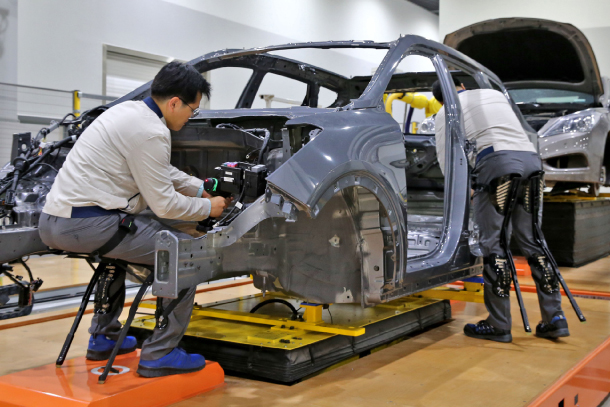
    The Hyundai Motor Group will expand the use of wearable robots at its facilities as it works to make robotics a major source of revenue, the company said Monday. Since September, Korea’s largest automaker has been testing the Hyundai Chairless Exoskeleton (H-CEX) at its North American factory. The H-CEX is an assistive robot for workers who have to stay in a seated position throughout the day. By the end of this year, the carmaker will introduce the Hyundai Vest Exoskeleton (H-VEX) at the same facility.

    The H-CEX, the first wearable developed by Hyundai for use at production sites, reduces the use of waist and lower body muscles by 80 percent, reducing the fatigue that results from being in the same seated position for a long period of time, Hyundai said in statement. The soon-to-be introduced H-VEX exoskeleton is for workers in jobs that require a lot of arm lifting. The machine vest will support the upper body and protect neck and shoulder muscles.

    “By expanding test applications, we hope to prove the technological effectiveness of our wearable robots,” Hyundai said in statement.

    The two exoskeletons were developed by Hyundai’s robotics team, established in May after the company named robotics as one of its five pillars for the future.

    The team is preparing to launch other robots focusing on three main areas: wearables, service robots and mobility robots.

    Hyundai is gearing up to test a hotel robot capable of providing room service and guiding guests. It will be introduced at the Haevichi Hotel & Resort on Jeju Island and at the Rolling Hills Hotel in Hwaseong, Gyeonggi, from the end of this year.

    A car-selling robot with natural language conversation capabilities and artificial intelligence will be prototyped by early next year. By 2020, the automaker plans to introduce a robot that can autonomously charge electric vehicles at charging stations.

    “We believe that robotics could be a solution not only for mobility but also for production in areas suffering from population decline,” a spokesperson for Hyundai said. “We plan to make notable achievements in robotics using technological data we have accumulated while developing autonomous cars.”

    Hyundai is not the only automobile maker bringing exoskeletons to assembly lines. U.S. automaker Ford has tested EksoVest, an upper-body assisting wearable jointly developed with Ekso Bionics. It was introduced at two U.S. factories in November last year. Ford announced in August a plan to bring the robot to 15 plants globally.

    German automakers BMW and Audi are also developing wearable aids for factory workers.

    According to market tracker BIS, the world’s wearable robot market is due to grow by 50 times from $96 million in 2016 to $4.65 billion by 2026.

  • Robots start serving Korea’s customers

    Robots start serving Korea’s customers

    On the 31st floor of Lotte World Tower in Jamsil, southern Seoul, a polar bear-shaped robot is reading customers’ palms instead of their credit cards to take their payments.

    The robot can also answer simple questions and make different 3D faces, depending on the conversation topic. If a customer complains about stress, Veny offers up a helpful suggestion: “There’s nothing like spicy food to beat stress. Why don’t you try the Hot Chicken Flavor Ramen and sprinkle cheese on top?” It throws out jokes, too, though they aren’t always winners: “A king that parks? Park-ing.”

    Veny is one of many robots introduced at local brick-and-mortar retailers in August. Companies have recently been trying to add new automated technologies, like expanded electronic kiosks, to their stores. Several major retailers upped their game last month by introducing humanoid robots in hopes of building closer connections with customers than other machines could provide.

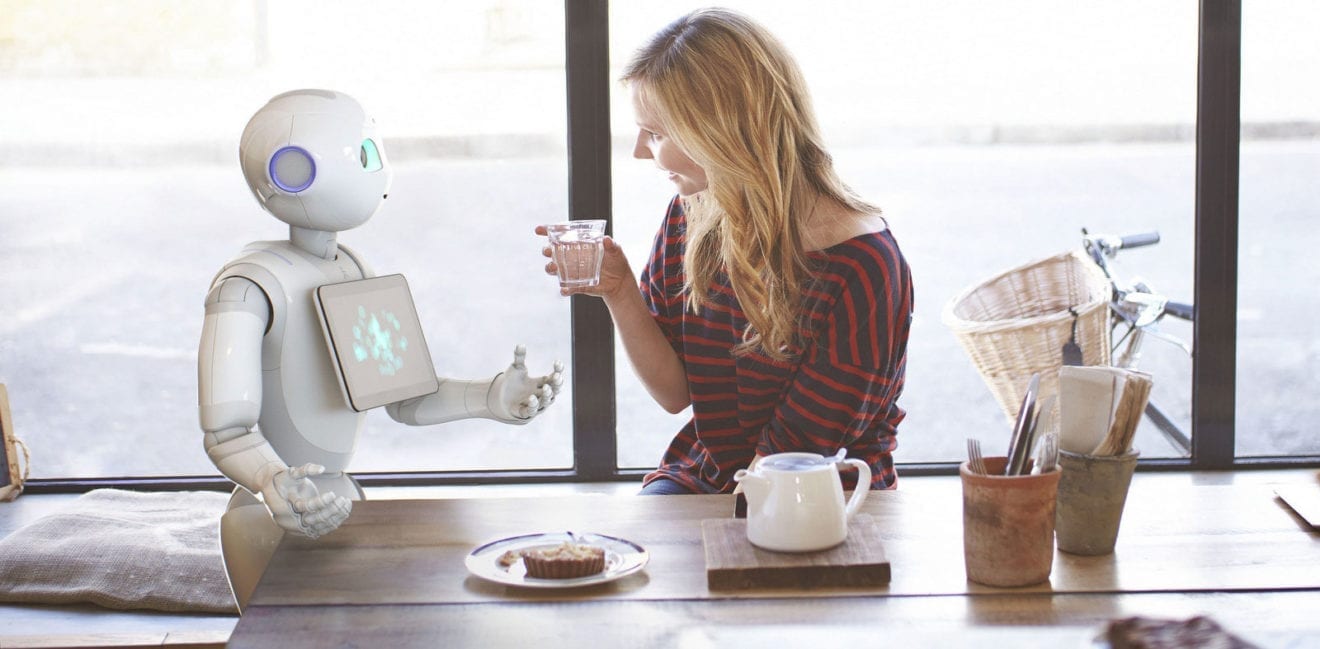
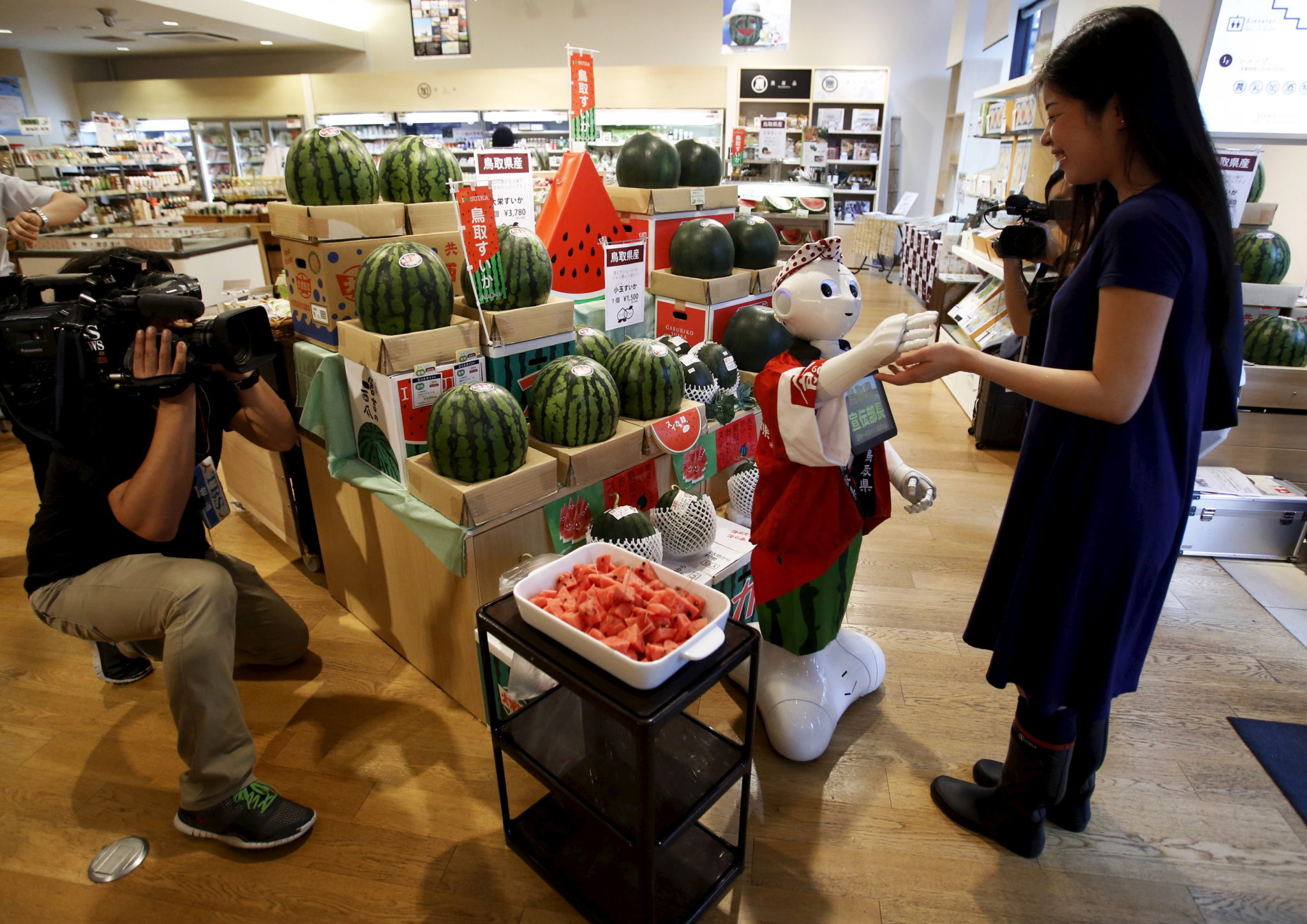
    On Wednesday, the second-generation humanoid Pepper robot starting working at discount chain Emart’s Seongsu branch in eastern Seoul. It works three times a day for one and a half hours each shift at the store’s imported food section.

    Developed by Japan’s SoftBank Robotics, Pepper is equipped with software from Emart to help it serve consumers at the discount store. This was the second launch after the discount chain introduced an early version of Pepper in May. Although identical in appearance, the new Pepper can move by itself and is more outgoing.

    With its sensors and camera, the humanoid robot is on the lookout for consumers to offer assistance. “Sir, I can help you. Wait for me,” it says after spotting a customer. Pepper uses its screen to show items, escorts consumers to them, suggests the best sauce for dinner and waves goodbye.

    Emart explained in a statement that it chose the imported food section as the test-bed for Pepper because it has many products that local shoppers are unfamiliar with. Unlike the mobile Pepper, Veny sits still on top of the cashier desk. The robot has a monitor on its belly through which consumers can pay at 7-Eleven.

    Veny accepts credit cards, but its real trick is reading palms with its electronic paw. After registering your credit card information and doing a palm scan at a kiosk in front of the store, Veny will automatically retrieve payments from your account after you place your hand on his left paw. The service is currently limited to Lotte Card holders.

    Veny’s cashier function is not very different from what existed before at the two 7-Eleven Signature branches, which were the first unmanned convenience stores in Korea when they opened in May last year. A major point the company focused on with Veny was charm.

    The robot can recognize the face of past customers if they permit it to and can also talk about over 1,000 scenarios, including the fictional story of how he traveled to Korea all the way from the North Pole.

    A pioneer in the restaurant business is delivery app Baedal Minjok’s Dilly Plate robot, which was developed by Bear Robotics. For two weeks starting from Aug. 6, the server robot had its first local test-run at a Pizza Hut restaurant in Mok-dong, western Seoul. Dilly Plate looks like a high stool with a round top just about the right size to hold a pizza pan. It can safely carry up to 22 kilograms (49 pounds) at once.

    “The response was better than we expected,” said a Baedal Minjok spokesman who visited the branch several times during the test period. “One thing I noticed was that people got used to seeing Dilly running on the floor quite quickly. After one or two trials, servers seemed more comfortable working efficiently with the robot. Consumers were interested at first, and they quickly got accustomed to Dilly serving plates.”

    Another robot experiment in the food sector is local coffee franchise Dal.Komm Coffee’s b;eat – an unmanned take-out coffee stand. A robot serves drinks behind glass windows.

    B;eat has around 20 branches across Seoul. It takes orders through a mobile app or a kiosk beside the machine from seven iced or hot menu options, ranging from Americanos to cappuccinos. A coffee machine from the Swiss company Thermoplan makes the espresso-based beverages. B;eat’s robot arm moves plastic cups around to pour ice and coffee and delivers drinks to customers. It takes around three or four minutes to receive a drink after ordering it.

    “B:eat runs 24 hours a day, so it works best at places like airports, terminals or public spaces like libraries and universities,” said Dal.Komm Coffee in a statement. After its launch in January, B;eat has also proved to be popular at office buildings.

    While some people are intrigued seeing robots do human tasks, many also fear that this may be the start of robots pushing out the human workforce. Some local media outlets reported that the increased interest in robots in the retail industry is in line with the increased burden on companies due to the minimum wage hike.

    Retail companies say otherwise. They say their ongoing automation efforts are aimed at enhancing service while leaving tedious, repetitive work to robots and offer an entertainment factor get customers into brick-and-mortar stores.

    “An internal survey we did on store staff a few years ago showed that more than 60 percent of their work was taking care of payments,” said a 7-Eleven spokesman. “There are many more tasks that if done properly can lead to increased profits, such as placing orders, cleaning, arranging the shelves and stock management, and these can only be done by people, not robots … even for our unmanned stores, we need people to offer help on the new systems. It’s unlikely that technology will ever completely replace people at brick-and-mortar stores.”

    The global market for reception robots was estimated at $1.4 billion last year. This is expected to reach $11.8 billion by 2025. Robot experts point out that Korea is still in its infancy in terms of service robots.

    “The local robot industry is centered on industrial robots,” said a 2017 report from the Institute for Information and Communications Technology Promotion. “There are a few companies that develop robots for education or cleaning, but it is hard to find any in other service sectors.”

    “Regarding reception and emotional robots, in particular, Korea has very few companies that have technology in the sector comparable to Japan and China, whose governments are supporting the market’s growth.”
  • Rise of robots fuels slavery threat for Asian factory workers

    Rise of robots fuels slavery threat for Asian factory workers

    Drastic job losses due to the growth of automation in the region – a hub for many manufacturing sectors from garments to vehicles – could produce a spike in labour abuses and slavery in global supply chains, said risk consultancy Verisk Maplecroft on Thursday.

    More than half of workers in Cambodia, Indonesia, Thailand, Vietnam and the Philippines – at least 137 million people – risk losing their jobs to automation in the next two decades, the United Nations’ International Labour Organization (ILO) says.

    The risk of slavery tainting supply chains will spiral as workers who lose their jobs due to increased robot manufacturing will be more vulnerable to workplace abuses as they jostle for fewer jobs at lower wages, said Alexandra Channer of Maplecroft.

    “Displaced workers without the skills to adapt or the cushion of social security will have to compete for a diminishing supply of low-paid, low-skilled work in what will likely be an increasingly exploitative environment,” she said.

    “Without concrete measures from governments to adapt and educate future generations to function alongside machines, it could be a race to the bottom for many workers,” the head of human rights at Britain-based Maplecroft said in a statement.

    Farming, forestry and fishing, manufacturing, construction, retail and hospitality are the sectors in Southeast Asia where workers are most likely to be replaced by robots, Maplecroft said in an annual report, with Vietnam the country at most risk.

    Workers in the garment, textile and footwear industry – mostly women in countries such as Cambodia and Vietnam – face the biggest threat from automation in the region, Maplecroft said.

    The five countries the report lists are already considered high-risk for modern slavery as labour abuses are rife, wages low and the workforce dependent on low-skilled jobs, the firm said, with automation set to make things worse.

    “Automation has always posed a risk to low-skilled jobs, but governments and business can determine how it impacts on workers,” said Cindy Berman of the Ethical Trading Initiative, a group of unions, firms and charities promoting workers’ rights.

    “Technology can be disrupting, but it can also be part of the solution by creating opportunities for better jobs,” its head of slavery strategy.

  • When robots strolling around at Incheon Airport

    When robots strolling around at Incheon Airport

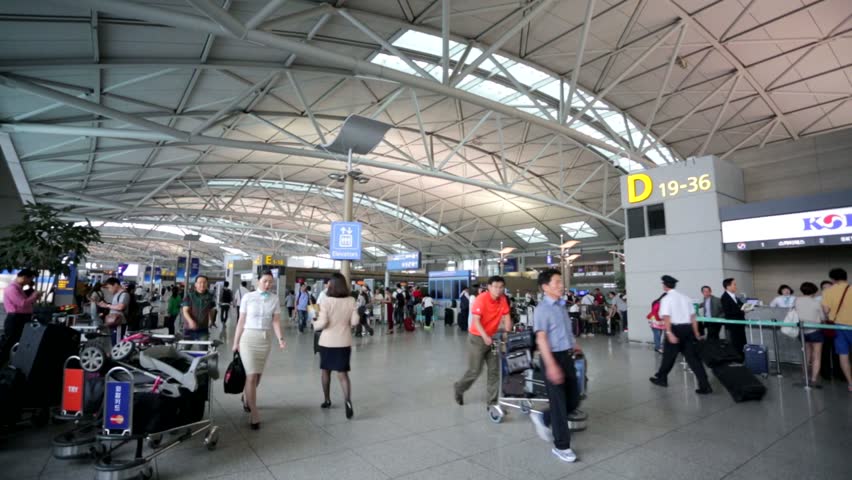
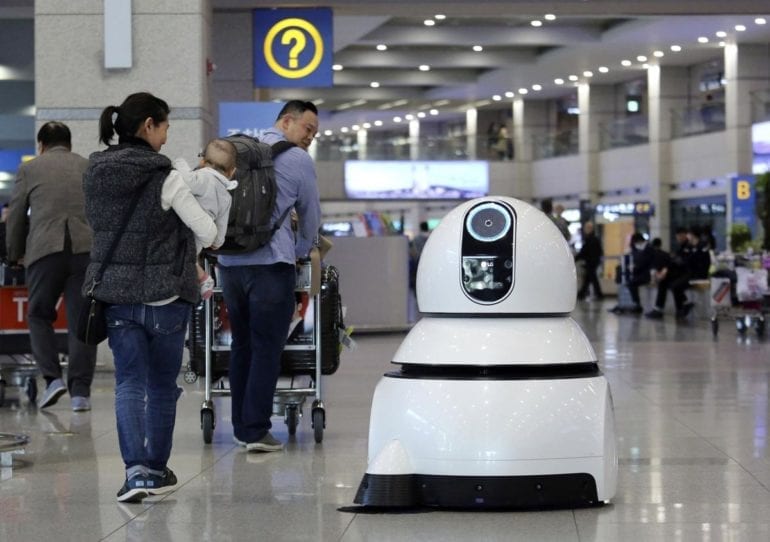
    Incheon International Airport will deploy robot guides that can escort travelers to immigration and baggage claim areas from 21 July, in time for the summer peak season.

    The airport said it is first in the world to put robots into service, as opposed to testing them.

    The second-generation robot, dubbed Airstar, is an upgraded version of guide robots that were tested in the airport last year.

    Airstar robots have improved driving and voice recognition features compared to the test versions and are also capable of expressing 14 different emotions.

    The self-driving feature was upgraded by using more sensors including three-dimensional camera sensors that help avoid obstacles and ultrasonic sensors that recognize very close objects, the airport said.

    As for voice recognition, the new robot is designed to distinguish voice commands from other noises in the airport. The robot speaks four languages: Korean, English, Chinese and Japanese.

    The robots will escort travelers, tell them how busy immigration desks are, what products are restricted on board and the way to gates after scanning barcodes on boarding passes.

    The robots can also take photos of travelers in the airport and send it to them by email or text message.

    The second-generation robot hardware was designed by Puloon Technology and LG’s IT service unit LG CNS developed the software starting last September.

    Eight robots will be deployed in Terminal One and six in Terminal Two, which opened at the beginning of this year.

    “We plan to make Incheon a cutting-edge smart airport by adopting drones, Internet of Things technology and autonomous shuttle buses,” said Chung Il-young, CEO of Korea’s largest airport.

  • HHI, Naver to build cheap robots

    HHI, Naver to build cheap robots

    Industrial robot company Hyundai Heavy Industries Holdings (HHI Holdings) inked a partnership with tech giant Naver on Monday to develop customer service robots that will sell for a fraction of the price of existing models.

    HHI Holdings, the holding company of Korean shipbuilder Hyundai Heavy Industries, will handle the production, sales and quality control of the service robots while Naver’s research and development arm Naver Labs will lead technology and software development.

    The two companies plan on commercializing two types of service robots within the year.

    One is a high-precision indoor mapping robot dubbed M1, and the other is a service robot called Around that can control its own movements around shops using a 3-D map created by M1.

    The two robots were initially developed by Naver Labs, but the industrial robot maker will help commercialize the products by producing them at its factory in Daegu.

    According to Naver, it was able to minimize the number of expensive sensors used for Around as the precise map data captured by M1 gives the self-driving robot a better sense of direction without including numerous sensors and cameras.

    “By cutting the use of sensors, we pulled down the manufacturing cost of our autonomous robot to about one-tenth that of competing robots in the market,” a Naver spokesperson said. “To commercialize the robots, one of our priorities was making them more affordable.”

    The spokesperson said that competing models cost over 100 million won ($93,132), largely due to their high-tech sensors and cameras.

    The robots will be deployed in a variety of commercial locations, like airports, shopping malls, gas stations, hotels and factories to guide customers and provide product information.

    In the future, the two companies will also work together on new robot concepts and take advantage of both companies’ affiliates and customer networks, HHI Holdings said in a statement.

    Service robots are becoming more common in Korea nowadays. Incheon International Airport started testing guiding robots and cleaning robots made by LG Electronics from last year, and it is preparing to officially launch them later this year. In January, local coffee shop chain Dal.komm Coffee released a coffee-making robot called b;eat.

  • E-Mart rolling out robot concierge

    E-Mart rolling out robot concierge

    South Korean discount store chain owner E-Mart Inc says it has started testing a robot to provide an automated concierge service to shoppers.

    Dubbed “Pepper”, the robot concierge will be stationed at an E-Mart outlet in Seoul for about three weeks, the company says.

    Developed by Japan’s Softbank Robotics Corp., the 1.2m-tall robot provides product information, introduces sale items and answers frequently asked questions, E-Mart says.

    This follows E-Mart unveiling an autonomous shopping cart, Eli, for a test run at its warehouse-style supermarket Traders in Hanam, just southeast of Seoul.

    This week, the company signed a memorandum of understanding with Seoul National University to carry out joint research on the implementation of auto-driving robots in the retail sector.

  • Arvato takes over warehousing and distribution for ECOVACS Robotics

    Arvato takes over warehousing and distribution for ECOVACS Robotics

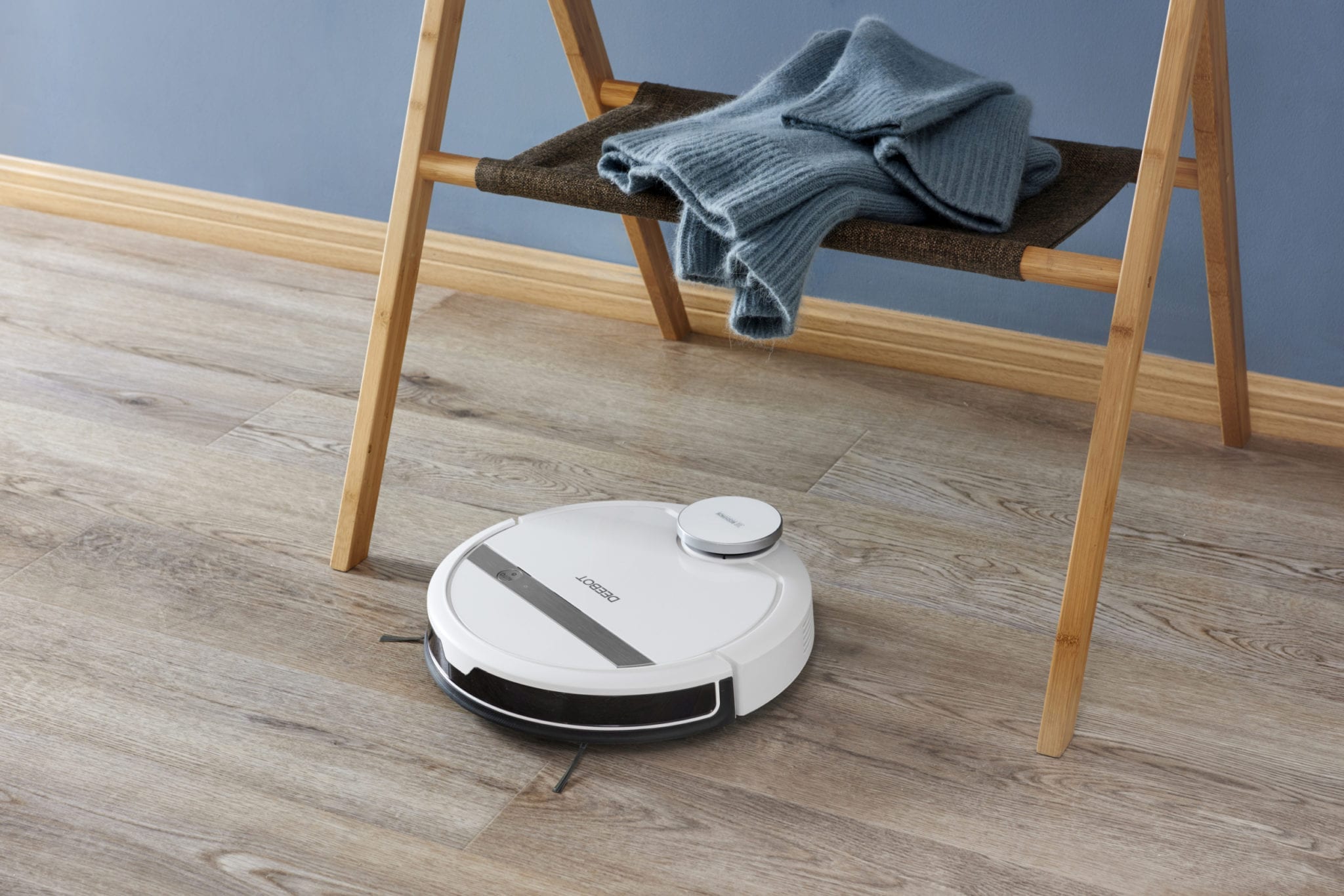
    Arvato SCM Solutions is the new fulfillment partner for the in Duesseldorf, Germany based European Headquarter of ECOVACS Robotics, a global leading manufacturer of home robotic appliances. As part of the collaboration, the service provider is responsible for the entire warehousing and distribution processes of robots and accessories for the EMEA region since the beginning of March. Operating out of Arvato’s 75.000 square meter logistics site in Dueren (North Rhine-Westphalia), an essential part of the solution developed for ECOVACS is Arvato’s new transport management system, which allows all inbound and outbound shipments to be managed and billed carrier-neutrally.

    For our growth in Europe, we needed a partner with experience in retailing,

    covering specific retail requirements, while at the same time providing a high level of system automation as well as efficiency through scalable structures,” explains Andreas Wahlich, General Manager of ECOVACS Europe. In the highly competitive European market for home robotic appliances, the robotics company currently ranks second in terms of market share. In its home market China and the Asia-Pacific region in general, ECOVACS is the market leader.

    The new business was implemented at the state-of-the-art multi-user site in Dueren. From there, Arvato SCM Solutions manages and distributes ECOVACS robots to business customers, distributors and consumers in the EMEA region. “We started with several central European countries as well as some third party countries like Switzerland and Ukraine,” states Dennis Schmitz, Director Account Management Hightech & Entertainment at Arvato SCM Solutions. Overall, he expects a shipment volume of around 300,000 floor and window cleaning robots in the first year – with a strong growth tendency for the following years.

    “ECOVACS is a client with high growth potential and active in the fast-evolving robotics market – a target industry that is also a part of our growth strategy,” says Thomas Becker, Executive Vice President Hightech & Entertainment at Arvato SCM Solutions. “Here we can leverage one of our strengths, focusing on standardized and efficient processes in highly complex retail environments.”

  • Nissan, partner eye early 2020s robotaxi rollout

    Nissan, partner eye early 2020s robotaxi rollout

    Nissan is deepening collaboration with a Japanese mobile gaming and communications giant to develop self-driving taxis.

    Nissan wants the partnership to lift it ahead of its rivals in the nascent vehicle mobility services segment. But when it comes to realizing self-driving taxis that can pick up and drop off customers automatically on public roads without a glitch, the automaker acknowledges there is still a long way to go.

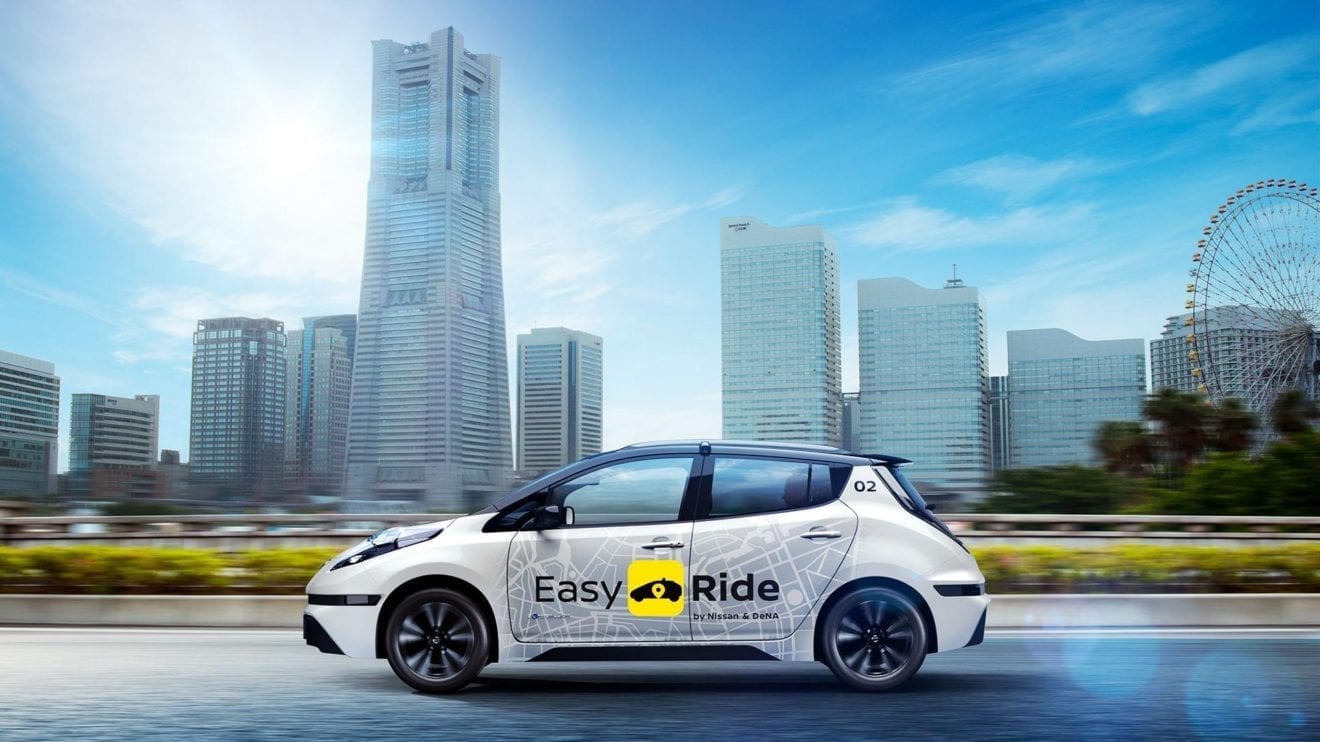
    Last month, Nissan Motor Co. and online tech company DeNA Co. field-tested Easy Ride robotaxis, involving some 300 participants.

    “This represents a big step toward enhancing self-driving cars and the mobility service operation system from the stage of just presenting a conceptual image,” Nissan CEO Hiroto Saikawa said during the launch. “This will help advance our business in offering a new mobility service for many customers in a variety of scenes.”

    The robotaxis are based on a modified Nissan Leaf electric vehicle. For their field testing, they traveled about two miles on a preset city route from Nissan’s headquarters in Yokohama to a nearby commercial facility.

    Collaborative effort

    Using a DeNA-designed smartphone app, users could hail a taxi by selecting a pickup time slot and specifying which of a list of preset destinations they wanted. A tablet computer installed inside the vehicle notified the passenger about recommended events in the area.

    Discount coupons for restaurants affiliated with Easy Ride were sent to the user’s smartphone.

    Such an online user experience could not have been possible without the help of DeNA, Nissan officials said.

    “Efficient and effective collaboration with partners who have expertise in their respective fields are the key to remaining competitive in the future,” Saikawa said. DeNA CEO Isao Moriyasu stressed that his company wants to bring innovation to the transportation system as a mobility service provider.

    The companies plan to introduce their robotaxi service commercially in the early 2020s. But they must resolve technical details before introducing a fully autonomous mobility service in a heavily congested urban environment.

    Easy Ride uses Seamless Autonomous Mobility, developed by Nissan from NASA technology, for its fleet operation system. That system allows vehicles to make decisions in unpredictable situations with the combined support of in-vehicle artificial intelligence and humans, according to Nissan. There will be a control center where people monitor Easy Ride fleets.

    Unexpected situations

    But technology challenges remain. Among them: perfecting the robotaxi’s ability to judge where it is most appropriate for loading and unloading passengers. Unexpected complications, such as road construction or a line of parked cars on the roadside, for example, wouldn’t faze a human driver. But altering behavior to accommodate unusual circumstances doesn’t come easily to an AI-powered, sensor-directed taxi without the aid of remote monitoring by humans at the control center.

    At a media test ride in mid-February, an Easy Ride vehicle unexpectedly stopped its self-driving mode just as it was about to get moving when a pedestrian walked in front of it. As a result, another test vehicle was brought in and the procedures had to be repeated.

    Nissan expected such glitches to occur during the field test, and is looking to incorporate the experiences into its development.

    Kazuhiro Doi, a global director of Nissan’s research division, admitted that the experiment was challenging, even in Yokohama’s waterfront area, with its wide streets and relatively light traffic.

    “Self-driving while trying to avoid so many parked cars is actually difficult,” Doi said of the research. “GPS signals are weak or cut off due to high-rise buildings. I thought it would be easy at first, but it has proven to be more challenging.”

  • Robots the future of customer service?

    Robots the future of customer service?

    When consumers walk through physical aisles of a supermarket or browse online catalogues these days, it is easy to overlook a vital and emerging trend – robots in retail.

    Robotics play a crucial role in cultivating a holistic retail experience for consumers in ways that have not been seen or thought of before. In warehouses, robots boost productivity and speed up the shipping of goods to stores and customers. Robots have also been drafted in stores, ready to serve customers with efficient inventory management. As the role of robotics in retail advances, we will see the same increase in speed and efficiency apply to the shopping experience as it has for industrial applications.

    Robots are making a timely appearance in the retail landscape as businesses today face pressure from multiple angles. Besides facing intense competition, they are also having to cater to a business environment that is being turned topsy-turvy as e-commerce grows.

    Consumer preference is also going through rapid transformation as shoppers become accustomed to e-commerce experiences that allow for cross-site comparisons, competitive prices and the convenience of shopping anytime, anywhere as they are connected via a computer or mobile device.

    The retail industry stands to gain as a whole with the entrance of robotics technology. Robots are being deployed, both in e-commerce businesses and brick-and-mortar establishments, to enhance efficiency and strengthen logistical and operational functions. Indirectly, this should translate to improved service levels and shopping experiences, and perhaps even lower costs.

    Workers in the retail industry too stand to benefit as robots can take on menial, mundane or dangerous tasks, freeing them up for knowledge-driven work.

    “Can.I.Help.You.Mdm?… Beep”

    Robots in retail can take on frontline, customer-facing roles too. As artificial intelligence capabilities grow, robots are emerging from beyond behind-the-scenes operations. Retailers have started to accommodate in-store robot assistants, able to direct traffic and perform important roles such as inventory management, freeing staff to handle more complex tasks.

    One such retailer is Walmart, which has installed robots into 50 of its stores across the US. These robots cruise along supermarket aisles checking shelves for items that need to be restocked, as well as merchandise that is misplaced or incorrectly priced. This vital information is then communicated to store staff who take necessary action. Equipped with cameras, these robots scan shelves three times faster than humans and are more accurate in picking irregularities. The engagement of robots is a pivotal component of Walmart’s plan to boost efficiency and accessibility of shoppers.

    Warehouses and delivery: hardwired for efficiency

    To satisfy today’s customer expectations of receiving goods faster, and with low or no delivery charges, retailers must develop an effective logistics system. Robots can help ease the pressure on retailers by improving logistical functions that are otherwise time-consuming. One example is how automation and robotics are used in smart warehouses to move large volumes of items through storage systems in a quick and reliable fashion, while still monitoring the exact location of each item at all times.

    Global retail stalwart Amazon built its success on automating its warehouse operations while maintaining its top-10 status in the ranks of the biggest employers. Fuelled by the support of the 55,000 robots employed last year, Amazon offered quicker deliveries at lower costs and led the retail industry in sales growth.

    Closer to home, robots have progressively proven themselves at Alibaba. The company recently introduced ‘Steel Soldiers’, a film about human and robots fighting shoulder-to-shoulder together. Its renowned smart warehouse is laden with sensor-charged robots who perform 70 per cent of tasks and can each carry up to 500kg of goods.

    Its competitor JD.com has also started using robots for the transportation of goods within 20km. Using robots has reduced JD’s unit delivery cost by 80 per cent and it’s fully automated sorting centre handles 9000 online shopping orders per hour – an operation previously performed by 180 human sorters.

    Alibaba and JD are testament to the idea that robotics can add value to shoppers by reducing delivery costs and speeding up logistical processes, even if they never meet them.