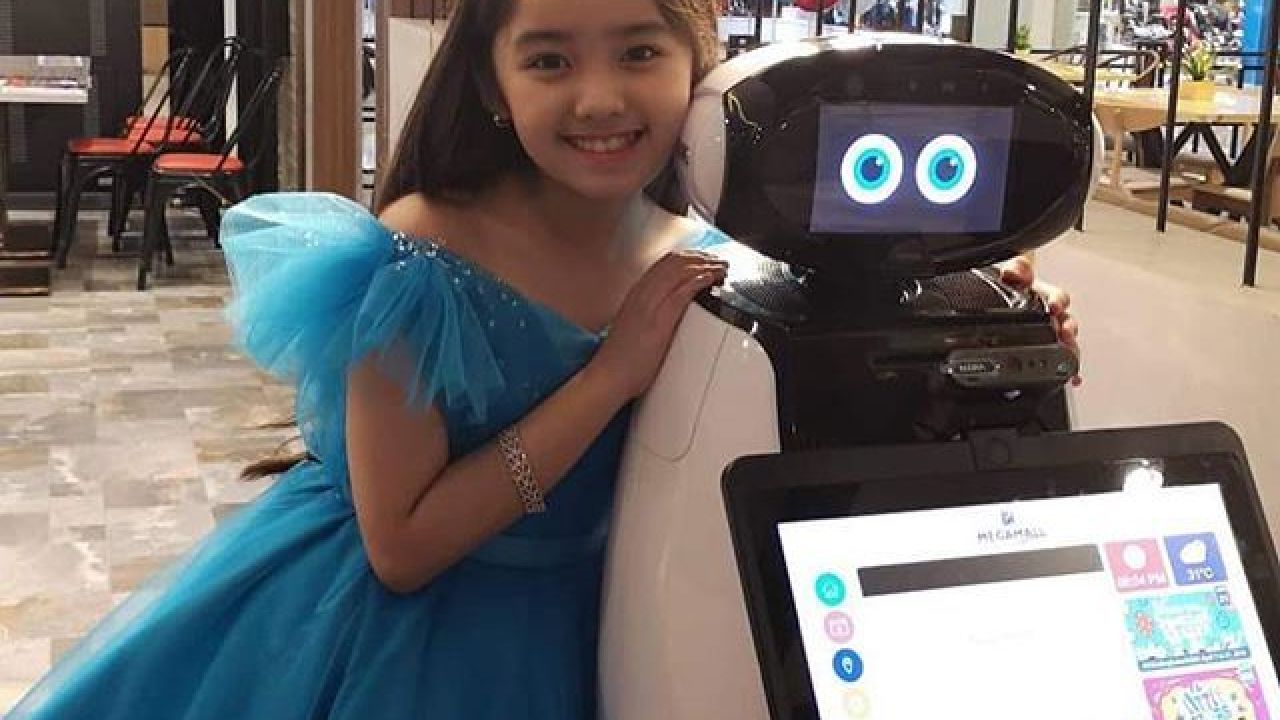
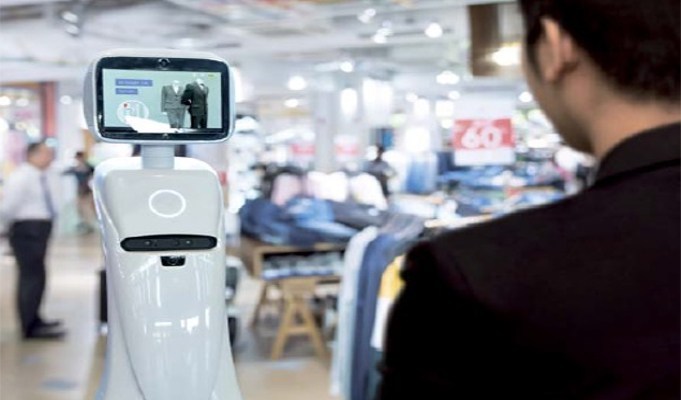
SM Group has employed its first in-mall customer service robot, at SM Megamall.
Named Sam, the AI humanoid robot is designed to help customers with directions and information about the latest mall deals, promotions and events.
“Innovation is what SM strives for in providing better customer service to all and we are proud to introduce our latest innovation yet,” said Steven Tan, SM Supermalls COO.
“Sam is easy to approach and has answers to almost everything SM mall related, making shopping more seamless and fun for our customers.”
Equipped with an advanced face-recognition technology, Sam can also make personalised greetings to customers at Mega Atrium, Mega Fashion Hall and Bank Drive.
Customers can also chat with Sam through the SM Supermalls Facebook page 24/7 to get information on branch locations, mall schedules and promotions.
Created in partnership with the Cal-Comp Technology, Sam will be upgraded with more functions to provide a more fun and engaging shopping experience.
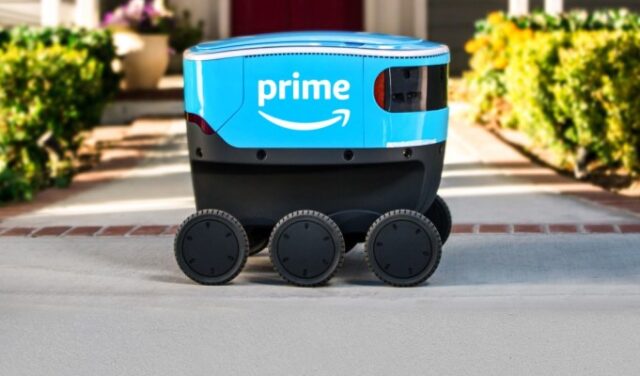
Amazon has introduced self-driving delivery service dubbed Scout – an all-electric self-driving vehicle that will maneuver across sidewalks in order to deliver purchased items to customers. Scout is the size of a ‘small cooler’ and can roll along sidewalks, delivering packages safely to a customer’s doorstep. The device is currently operating in Snohomish County, Washington, the company announced Wednesday.
“The devices will autonomously follow their delivery route but will initially be accompanied by an Amazon employee,” Amazon said in a statement. “We developed Amazon Scout at our research and development lab in Seattle, ensuring the devices can safely and efficiently navigate around pets, pedestrians and anything else in their path.”
Customers in Snohomish County can order just as they normally would and their Amazon packages will be delivered either by one of our trusted partner carriers or by Amazon Scout.
According to the release, Amazon is starting with six Amazon Scout devices, delivering packages Monday through Friday, during daylight hours.
LG Electronics and portal operator Naver Wednesday agreed to jointly develop an advanced guidance robot based on the high-tech mobility platform. LG Electronics and Naver’s R&D subsidiary signed a memorandum of understanding (MOU) to collaborate on research and development of robot technology, expanding on their discussions made during the recent Consumer Electronics Show (CES) in Las Vegas.
Under the agreement, the two Korean companies will explore ways to adopt Naver’s integrated location and mobility solution eXtended Definition & Dimension Map (xDM) in LG’s guide robot called Air Star to upgrade its function.
The xDM platform is an advanced mobility technology that can be used in both indoor and outdoor settings and accurately analyzes location data in real time.
“Based on LG Electronics’ know-how in artificial intelligence (AI) and autonomous driving, we will combine Naver’s software platform in our robots to provide differentiated value for our customers,” Roh Jin-seo, the head of the robotics business at LG Electronics, said during the signing ceremony at Naver Labs in Seongnam, south of Seoul.
Naver debuted its AI and other robotic technologies during this year’s CES, drawing attention from industry officials around the globe.
We are at the beginning of the most radical transformation of the foodservice industry. Until now, technological innovations in the industry meant ordering food from an app or paying bill through tablets. But now restaurant owners are upping the ante, taking the game to the next level by experimenting with technology like never before. From introducing interactive smart tables and virtual bars to replacing servers with robots, restaurateurs are revolutionising the foodservice industry in the best way possible to enhance the overall customer experience.
Interactive Smart Tables
Mumbai-based Drinx Exchange has introduced electronic tech tables, where customers can interact with an electronic screen on the table they’re dining on. From watching live scores of sports, to receiving personalised offers, tracking their orders, paying their bill, and even singing along with the music in the bar, these tech tables will ensure consumers remain engaged through the time they’re in the restaurant. The screen also keeps giving them live offers that are just right for what they drink.
The electronic table also splits the bill among the number of diners on the table and the payment can be settled on the table itself by scanning a Paytm QR Code on the screen
Furthermore, the prices of drinks also fluctuate just like the stock exchange and customers can vote to crash the market price. Apart from this, the table also helps the customers in checking the status of their cab if they book it from Drinx Exchange app.
According to Founders, Drinx Exchange, Rahul Dingra and Dibyendu Bindal, “The bar aims to ease the experience of ordering and makes it less stressful and more exciting for its millennial customers.”
Virtual Bar
The Beer Café has recently introduced ‘URBAR’, a virtual bar which allows patrons to reserve and consume their favourite brands.
One can explore from a wide selection of alco-beverage, pre-pay and stock them in ‘URBar’. The latest ‘wallet for customer’s drinks’ initiative highlights the brand’s vision to redefine the alco-beverage space through technology differentiation and further strengthen its position as a pioneer.
The patrons can log in to The Beer Café’s mobile app, and click on the URBar icon, reserve in the form of bottle (for spirits), keg (for draught beer), or case (for bottled beer) and start consuming.
This not only gives patrons the privilege to buy their favourite brands at a special price but also benefits in the form of one price across the nation. A consumer can choose any portion he/she wishes to consume at any Beer Café outlet spread across 12 cities and save the rest for their next outing. The bottle/ keg purchased stands as a prepaid instrument and stock diminishes as the consumer opts to consume.
There are multiple convenient ways of recharging the account. Customers can use an ‘online’ mobile wallet to add balance to their brew bucks – which is The Beer Café’s own currency. Or ‘pay at store’ by just walking into the closest The Beer Café outlet and the brew crew will be happy to assist the customers.
What’s more, it also gives patrons the option to spread the cheer around by gifting customisable amounts of their reserved stock to friends, family and colleagues.
Rahul Singh, Founder & CEO, The Beer Café says, “At The Beer Café, we believe that social drinking should first and foremost be about the experience. Our focus is to improve customer’s real world experience, their choices of brand and location. With the URBar feature, we are giving the users a chance to experience our differentiated proposition in the virtual realm. It is a delightful addition to the existing feature on The Beer Café mobile app. With this initiative we have raised the bar – quite literally!”
Futuristic Robot
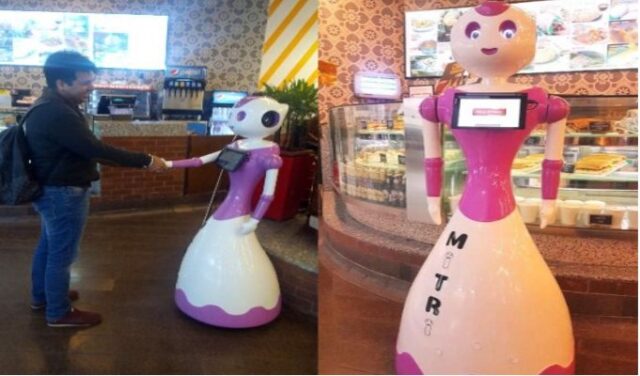
Travel Food Services (TFS), travel food and retail company, unveils the latest in technology – Mitri, the robot, to make the experience of travellers interactive and fun.
Mitri will be engaging with customers at TFS’s Dilli Streat outlet at Indira Gandhi International Airport, New Delhi, and is the first ever airport installation in the F&B segment.
Visitors to the Dilli Streat outlet will be met and greeted by Mitri, who will facilitate activities and engage with them by providing menu detail. It would also be offering food recommendations. Mitri is a testament to Travel Food Service’s commitment of enhancing the travel experience in India, and presents a true example of how technology like Artificial Intelligence can help improve customer satisfaction, and drive productivity and sales.
Commenting on the latest technology, Gaurav Dewan, COO and Business Head, Travel Food Services said, “We are always on the lookout for latest innovative technologies that can enhance the experience and satisfaction of our customers. We are extremely excited to present Mitri at our Dilli Streat outlet at the Delhi Airport. With Mitri being such an innovative and futuristic concept, and given her success, we are hopeful to bringing her to more outlets across India.”
Robots Replacing Servers
At a restaurant in Alibaba Group Holding Ltd’s futuristic ‘FlyZoo’ hotel, tall capsule-shaped robots deliver food that guests have ordered via the FlyZoo app. Meanwhile, at a separate bar, a large robotic arm can mix more than 20 different types of cocktails.
Travel Food Services (TFS), India’s leading Travel Food and Retail Company, unveils the latest in technology – Mitri, the Robot, to make the experience of travellers interactive and fun. Mitri will be engaging with customers at TFS’s Dilli Streat outlet at Indira Gandhi International Airport, New Delhi, and is the first ever airport installation in the F&B segment.
Visitors to the Dilli Streat outlet will be met and greeted by Mitri, who will facilitate activities and engage with them by providing menu detail. It would also be offering food recommendations. Mitri is a testament to Travel Food Service’s commitment of enhancing the travel experience in India, and presents a true example of how technology like Artificial Intelligence can help improve customer satisfaction, and drive productivity and sales.
Commenting on the latest technology, Gaurav Dewan, COO and Business Head, Travel Food Services said, “We are always on the lookout for latest innovative technologies that can enhance the experience and satisfaction of our customers. We are extremely excited to present Mitri at our Dilli Streat outlet at the Delhi Airport. With Mitri being such an innovative and futuristic concept, and given her success, we are hopeful to bringing her to more outlets across India.”
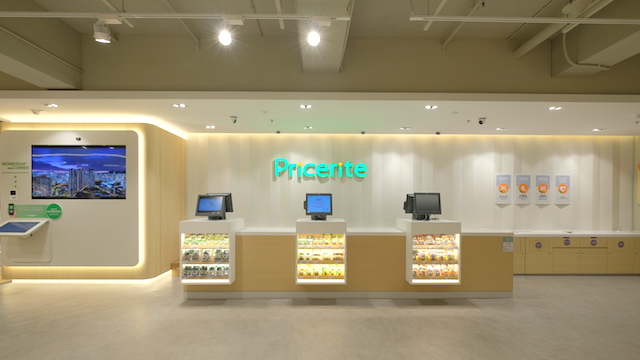
A lot of Hong Kong retailers are talking about technology right now, but before they even started, Pricerite founder and chairman Bankee Kwan was already embracing it. Now home to the first Pepper robot on customer service duty in a Hong Kong store and leading-edge online apps allowing shoppers to virtually place furniture in their home, Pricerite’s technology journey started way back in 1999.
The furniture retailer is part of Celestial Asia Securities Holdings (Cash Group) which was the first Hong Kong company to launch an online brokerage in 1999. Nowadays, trading shares online is an indispensable part of any brokerage business. Five years later, Cash Group was the first to introduce mobile trading for brokerages.
The company began developing a broader New Retail Concept back in 2012 and in 2014 became the first home furnishings retailer to launch an omnichannel business model.
“So we have always had the mindset to embrace technology to help the business become more competitive and to serve the customers better,” Kwan said.
“That’s why during the Sars epidemic (2003), Pricerite was the first company to introduce online shopping so that our customers could purchase necessities and have them delivered to them. That was 13 years ago, and now online shopping has become popular and common place for housewives to purchase goods.
“So I can actually say we go back a little bit regarding our group philosophy on technology. We always treat our customers’ concerns and feelings as our number one priority.
“New retail concepts will become much more popular. That’s why were are moving ahead with Pepper, with Augmented Reality (AR) and Virtual Reality (VR) to create an impact.”
Concept store
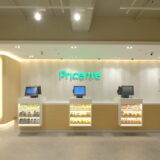
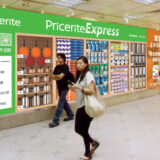
Pricerite’s two-story 20,000sqft New Retail Concept Store in Mong Kok’s Chong Hing Square has been trading for about a year now, a testbed for apps and in-store technology that is constantly being revised, enhanced and added to.
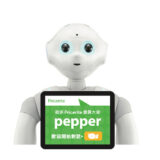
Pepper, the smiling robot with the female Cantonese voice, is probably the most visible execution Pricerite’s customer-centric digital transformation journey. To the delight of children it can dance on request and answer customer questions about the company’s loyalty program from its workspace outside the membership counter.
But it is the less visible execution of Pricerite’s digital strategy that is the most breathtaking: an innovative app which allows you to place furniture items in your own apartment virtually – and order direct from your phone or tablet, from in store or home. It is a great solution for Hongkongers facing shrinking apartment footprints, which make planning a layout that suits one’s lifestyle a challenging task.
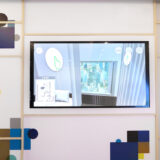
The made-to-order zone on the Mong Kok concept store’s level B2 is equipped with a large display screen for app users to preview their selected product from all angles. Using VR technology, the system also provides customised furnishing solutions for medium and small-sized apartments. Guests can take a virtual tour of homes to gain an accurate glimpse of products in situ and see a product’s intelligent functions in action – for example, tables that convert to sleeping spaces and furniture with storage space built in. The AR mode uses cutting-edge mobile 3D Space-Tracking technology, including Apple’s iOS ARKit, which cuts out the hassle of product scanning while generating an “actual” 1:1 preview of an item, allowing simple and easy mix-and-matching for different home styles.
“Technology advances have transformed consumer behaviour and shopping patterns while e-commerce has changed the consumption value chain, creating a complementary retail channel to bricks-and-mortar stores,” observes Kwan.
“Using leading-edge retail technologies to combine online and offline shopping experiences, coupled with a modern supply chain, and big data and artificial intelligence innovations, we have created a pioneering all-round omnichannel retail network for home furnishing.”
The concept store also features multiple digital kiosks and touch-screens around the store augmenting the customer service roles of floor staff by suggesting alternative or complementary products, and providing specifications. AR features in several innovations in store, including creating 3D images of items in the company’s catalogue.
Centres of experience
Kwan says the company’s long-term investment in new technologies has been driven by asking how the company can serve its customers better in terms of information and engagement.
“It’s my experience that the physical store remains the centre of experiences and engagement.” Technology, he says, can make purchasing decisions easier.
“Many traditional retailers are still unsure about whether the innovations will take on, whether they should invest in the technology. But it is essential if we are to remain competitive, especially when we look at millennials and how they shop and interact online.”
Kwan believes that despite the slow uptake of online shopping in Hong Kong, online and mobile shopping will be significant in the future. He cites the Hong Kong government’s Smart City initiative to boost wi-fi connectivity and encourage e-payments as a major driver in years to come.
“With all those facilities established and enabled, fast retailing through mobile is the trend. It is gaining momentum in Hong Kong and we have everything quite well developed, but the market will dictate the change and if you do not accept that [as a retailer], you will fade out and become history.
“So I say, wait another three years and you’ll see the landscape of the retail market will change a lot. I was at a retail summit in Hong Kong recently where we had Facebook and Google and online marketers joining. We were all coming to roughly the same conclusion: technology is a must to keep you competitive.”
Kwan can only guess what percentage of Pricerite’s sales are online versus in-store now – and for good reason. So many transactions begin online and end offline – or the other way around – that it is no longer possible to attribute a sale to either channel. Perhaps retailers who do are missing the whole point of omnichannel. If pushed to nominate a figure he’d say 20 per cent online, 80 per cent offline and he expects that ratio to change to 40/60 within a year or two.
Pricerite’s customers do not make a distinction between online or offline, so it stands to reason the company should not do so either.
“This is whole model is an O2O model, so our customer can shop online, understand we have a promotion, understand the product meets their requirements and then they will come down to the store for the physical experience and to touch the products, then maybe go back home and place an order. So you cannot say this is offline or online,” says Kwan.
“But I believe application of technology to enhance the customer’s experience and engagement, is definitely the road to go and to develop together with more applications and technology, just like Pepper so as to reduce the customer service burden on store staff.”
Kwan stresses Pepper and any other technology implemented at Pricerite must integrate with human staff, not replace them, what he describes as “a balanced fusion of technology and people”.
“Pepper I believe will become popular to provide instant information and master data about product features, etc. That will allow our people to migrate into higher added-value areas.” Kwan says customer response to the AR and VR technology to date has been “really good” and it is driving sales of goods after people look at them either online or instore. “It boosts their confidence buying because they have seen on a screen how a sofa will look in one part of a room and a rug in another.
“The technology is constantly improving and getting much easier to use. I understand our competitors also shop at our stores on and off and they are now also developing the same sort of technology. That, together with efforts by the Hong Kong Government to encourage startups working to develop technology for the service and retail sectors will help drive its adoption in years to come.”
Pricerite’s technology quest is ongoing. The apps will continue to be refined and upgraded with more features and made as user-friendly as possible. Other initiatives are under development but not yet ready to be revealed publicly just yet. And more Peppers are on order, with expanded functions – most of them will speak English, too.
View the gallery below for full images (5 images) :
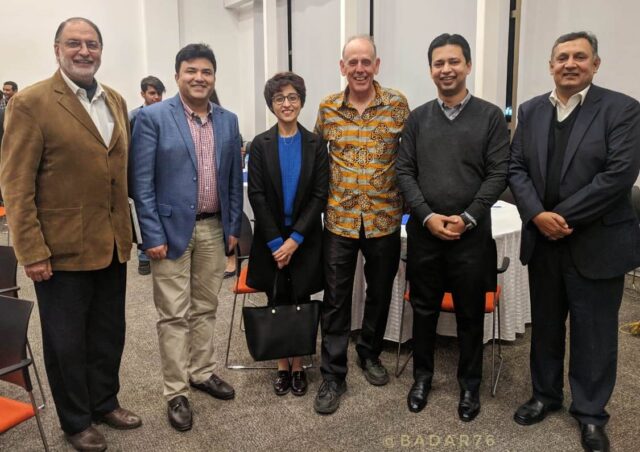
Stephen Brobst, CTO of Teradata, conducted an enlightening session on the future of Machine Learning (ML) &Artificial Intelligence (AI) at Telenor Pakistan headquarters ‘345’ in Islamabad. The session was attended by Telenor Pakistan employees and executives from across industries including Irfan Wahab Khan, CEO Telenor Pakistan and President OICCI, Haroon Bhatti, Chief Business Officer (CBO) at Telenor Pakistan, BadarKhushnood, Cofounder & VP at Bramerz, QazafiQayyum, Country Manager Teradata, Khimde Ando, CEO Mitsubishi Corporation, Brig. Tahir Mehmood, Director ISPR, AVM Faaiz Amir, Vice Chancellor Air University, Barkaan Saeed, Ex-Chairman PASHA and Retd. Brig. Saleem Ahmed Moeen, CEO SecureTech.
The participants learned about the future of artificial intelligence, the role of emerging technologies, differences between deep and shallow learning and their application techniques, and the opportunities of using advanced analytics to create high-value outcomes.
“We have entered a new era of analytics with machine learning and artificial intelligence algorithms beginning to deliver on the long-promised advancement into self-learning systems,” Brobst told the audience. “These approaches allow us to solve previously intractable problems with completely new attack plans. The appetite of deep learning algorithms for vast amounts of data and the ability to derive intelligence from diverse sets of noisy data allows us to go far beyond previous capabilities in what we used to call advanced analytics,” he added.
Brobstinformed that in order be successful with the use of new technologieswe need to fully understand their capabilities and limitations. He also stressed the need to develop new skill sets in order to harness the power of deep learning to create business value in an enterprise.
“In our times of Siri, Alexa, and Google, Machine Learning & Artificial Intelligence are not a part of science fiction anymore; they are our reality,” remarked Irfan Wahab Khan. “For tech companies like Telenor and Terada, the real charm of AI and ML technologies is their ability to recognize patterns and synthesize large amounts of data. Telenor is not only harnessing the strength of AI and Advance Analytics for its own commercial use but is also enabling other organizations to benefit from the technology by offering incisive Market Research insights and ability to run targeted campaigns on its diverse Advertising assets. The fact that these technologies get smarter with time as increased amounts of data is fed to them makes them acornerstone for all future technologies,” he added.
Impressive progress is being made in ML & AI technologies globally. From self-driving and learning cars to flying drones circling the skies, the technological advancements of today could already be perceived as something out of a futuristic novel. Gartner, the world’s leading research and advisory company,also predicts that by 2020, AI will become one of the top five investment priorities for at least 30 percent of Chief Information Officers. Being the country’s technology leader, Telenor Pakistan is keeping its people abreast of the latest technological developments to realize its ambition of digitally empowering Pakistan.
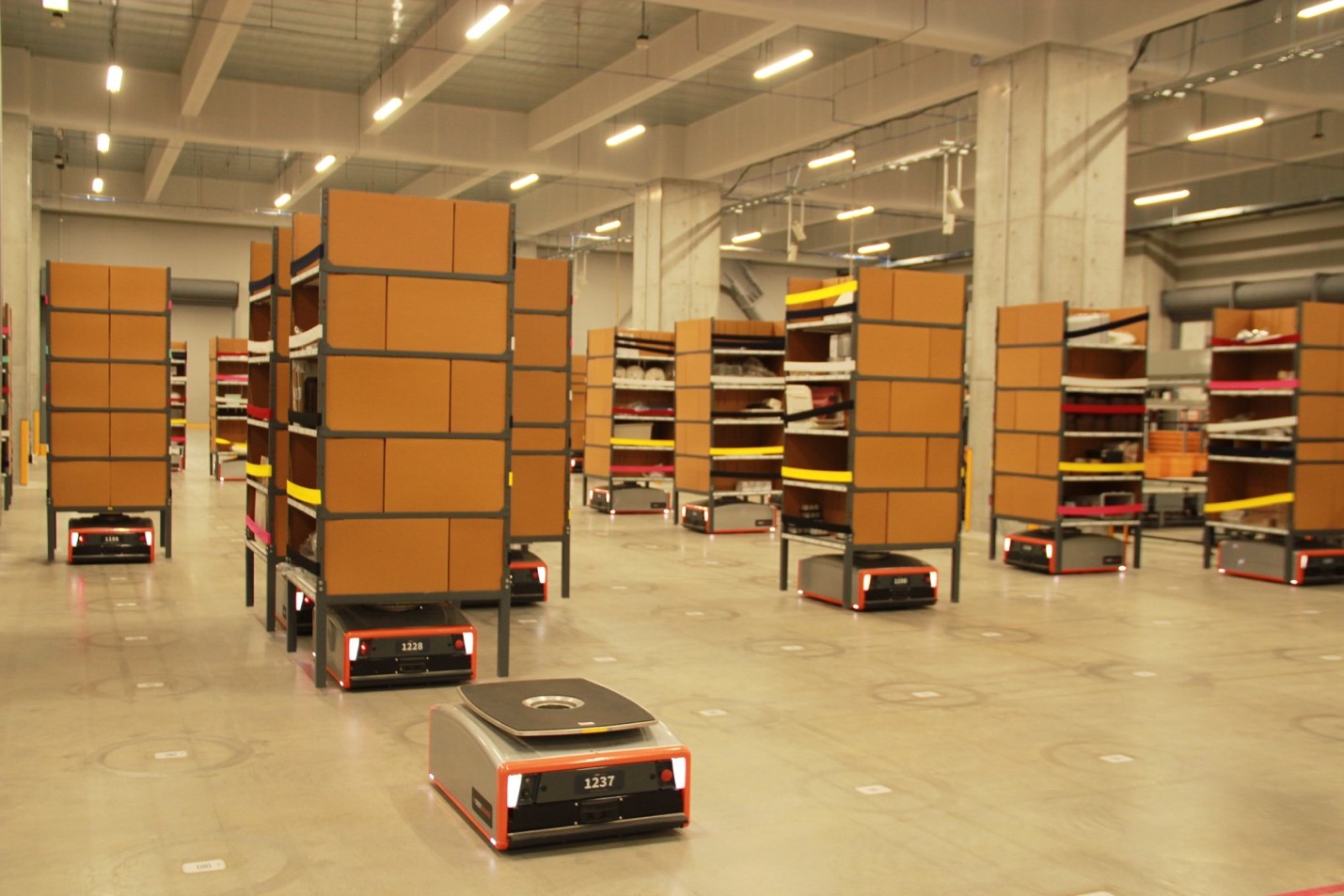
Robotics and warehouse automation company, GreyOrange, will launch its new modular sortation system and demonstrate upgraded versions of its Butler and PickPal at LogiMAT 2019, the 17th International Trade Fair for Intralogistics Solutions and Process Management in Stuttgart, Germany on 19-21 February.
Nowadays, retailers and logistics businesses face many new kinds of complexities and challenges due to the unprecedented growth in volumes, combined with the volatility of peak periods and increased pressure to cut operational costs. GreyOrange will present a portfolio of AI-powered solutions that bring Flexible Automation to life; it reduces complexities and delivers maximum productivity, from inventory management and picking to sortation.
Sid Chatterjee, Vice President – Products, GreyOrange, said, “The GreyOrange solution portfolio offers a strong business case for Flexible Automation. In the past year it has been adopted globally by industry-leading players in retail, 3PL and e-commerce. At LogiMAT we will demonstrate how our new solutions can help address the complexities of retail distribution. We invite everyone to visit our booth to get a hands-on demo to see how higher throughput can be achieved.”
The new GreyOrange modular sortation system, designed for flexibility and portability, comprises modular components that deliver significantly higher throughput per unit area; it improves space utilization and reduces operating costs. The AI-enabled robotics system can be easily scaled making it more investment-friendly and usable for a range of applications across retail and logistics industries.
In the demo of the GreyOrange Butler goods-to-person system, visitors will see how this robotics solution uses an AI-first approach to optimize order fulfillment processes from inventory management to order picking. It has been deployed in distribution centres in Japan, India, Europe and the Americas across industries such as 3PL, e-commerce, electronics and retail. Additionally, the Butler PickPal handles high-speed auto-fulfillment with AI-powered shelf picking.
GreyMatter, the Warehouse Execution System, is the software platform developed by GreyOrange to make flexible warehouse automation a reality, and address the complexities of warehouse operations caused by ever-changing retail trends. By connecting people, processes and material more efficiently using Artificial Intelligence and Machine Learning, it provides granular control and visibility across warehouse processes and enables systems to adapt flexibly to changing business demands.
Southeast Asia has become a shining star with its several enterprises in the area. Singapore, especially, has become one of South Asia’s most attractive countries for entrepreneurs and investors, thanks to investments by technology companies, government support, and low tax rates. Singapore is closely followed by Malaysia and Indonesia in this competition.
Malaysia, one of the three strongest economies in Southeast Asia, is one of the few countries that provide state support to entrepreneurs. These competing enterprises of the region have been developing products in the fields of machine learning and blockchain to keep up with the technology age. Entrepreneurs focus on developing problem-solving oriented products to preserve and expand their market shares. Here is a list of five Asian enterprises, which will have a great impact on the industry in 2019.
Naulo
Naulo is a restaurant in Kathmandu, Nepal. What makes it unique is the fact that it operates with five waiter robots, two named Ferry and three named Ginger. Customers choose their orders by touching the screen on the robots and then the robots serve the orders to the tables. With this digital service, the restaurant was the first venue in Southern Asia to use robots as waiters.
Designed and manufactured by the Nepali technology company Paaila Technology, Robot Ginger has the ability to recognize objects and conversations, process natural language, auto-dock and even make jokes and answer basic IQ questions in both English and Nepali. Binay Raut, CEO of Paaila Technology and Naulo Restaurant, said that their new target is “to introduce this Nepali innovation in the international market.” So, we are highly like to see more robots in the restaurants in 2019 as well!
Groove X
Japanese engineers have a great invention for those who feel lonely! The start-up company, Groove X’s robot has the name Lovot, a combination of the words ‘love’ and ‘robot’. This penguin-looking robot uses artificial intelligence technology to move, react when it is called or loved, and sleep when it is cuddled. Lovot will compete with Sony’s artificial intelligence-equipped robot dog, Aibo, and will be released towards the end of 2019. As Groove X says, it will be “the one and only robot in this universe that heals your heart.”
Glueck Technologies
It goes without saying that we all depend on technology. Various technologies impact and improve almost every aspect of our lives: online education to space travels, self-driving cars to online poker are all astonishing features of technology once thought to be impossible.
Glueck takes technology and artificial intelligence to another level. Using artificial intelligence and deep learning technologies, Glueck offers a product that enables machines to understand people’s emotions. With the algorithm they’ve developed, the analyzes people’s emotional states and their responses to real-life alerts. This unique product is designed to produce the right message to the right audience in the media, advertising and e-commerce fields.
Dahmakan
Dahmakan has become the first food distribution company to create an important capital in Southeast Asia. It provides first-class, chef-made food delivered to customers’ doorsteps, and appeals to a niche audience. The company’s founders are former FoodPanda employees, which is the biggest food distribution chain in Asia. Dahmakan plans to rapidly expand to other countries besides Malaysia and Thailand. You can also expect Dahmakan at your own doorstep in 2019!
GrabCar
GrabCar is a car-sharing app with a Southeast Asian origin. While studying at Harvard Business School in 2011, Tan Hooi Ling and her classmate, Anthony Tan, decide to take part in an entrepreneurship competition and at the end of the competition GrabCar, first known as MyTeksi, was born.
Although it was first designed to adopt a smart local business strategy, GrabCar is currently one of the biggest shareholders in Asia in the car-sharing applications market. It operates in eight Southeast Asian countries from Malaysia to Singapore, Vietnam to Myanmar, Thailand to the Philippines.
In March 2018, Grab announced that it had acquired Uber’s Southeast Asia operations integrating Uber’s ridesharing and food delivery business in the region into its own platform. As Grab said, in 2019 it “will drive towards becoming the number one online-to-offline mobile platform in Southeast Asia and a major player in food delivery.”
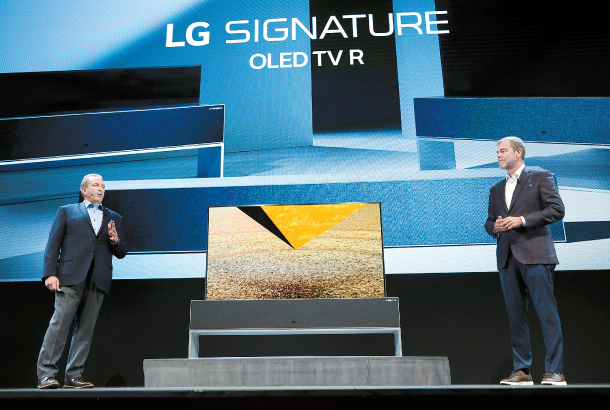
LG Electronics, one of the leading home appliance manufacturers in the world, said Sunday it received a total of 132 awards at this year’s Consumer Electronics Show (CES) in Las Vegas. It said its products received the coveted CES top innovation title announced by the Consumer Technology Association. LG, which has been a major player in big-screen TVs and is a global leader in the field of organic light-emitting diode (OLED) screens, unveiled the world’s first mass production-capable rollable TV at the gathering that ran from Tuesday through Friday.
The LG Signature OLED TV R received considerable attention, with Engadget, a multilingual blog network and the official award partner at CES, naming it Best TV Product.
The innovative TV that allows the big OLED screen to vanish into a long box with embedded speakers was also noted by some 50 media outlets, such as the Wall Street Journal and Cnet.
The company said its 8K resolution OLED TV and Super Ultra HD TV, as well as an artificial intelligence-equipped TV set, were praised by tech experts from around the world.
Media outlets and online publications like USA Today and TechRadar, also gave LG HomeBrew, a craft beer making machine, their highest awards, while the waterfall OLED display at the entrance of the company’s booth – made up of 260 flexible panels – won recognition from numerous international IT outlets.
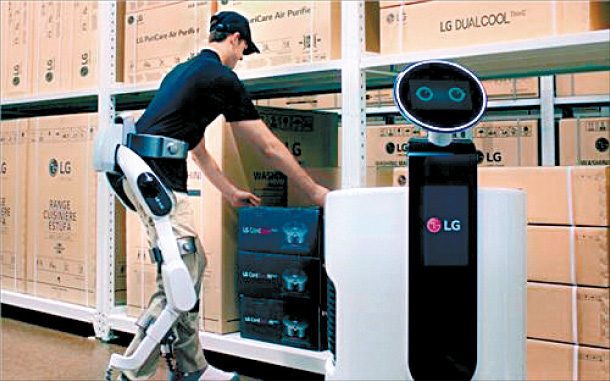
Beside such products, the company’s LG SuitBot, an exoskeleton that can help physical laborers, and Styler, a clothing care system, received praise at this year’s CES.
Song Dae-hyun, who heads LG’s home appliance business, said in a press conference over the weekend that the company is aiming expand its presence in the United States through the marketing of premium products.
He said in the built-in appliance market in North America, LG is targeting high income earners.
“If LG competes in mid-range consumer appliances, it will struggle and not turn a lot of profit so it makes sense to shift to premium products,” the senior executive said.
He said that, in particular, the U.S. market is attractive because it has considerable growth potential.
The executive said to better engage prospective clients, LG opened its first overseas Signature Kitchen Suite showroom in California’s Napa Valley.
The Experience and Design Center is the second of its kind after one in southern Seoul, with another to be built in New Jersey.
Unlike other countries, the United States has always been a so-called builder’s market with the customer having greater say in what kind of appliances go into a home, making it ideal for high-end products.
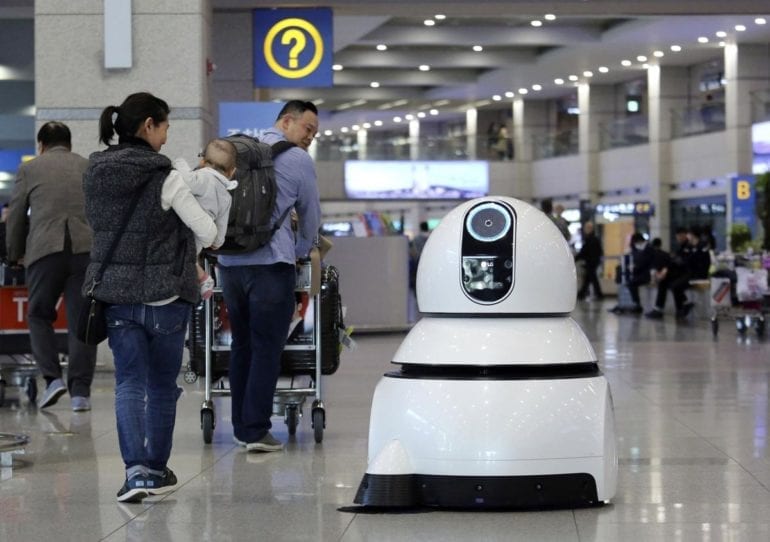
LG Electronics and Naver are cooperating on the development of robotic capabilities.
Their first project will use Naver’s mapping and navigation technology to improve the functionality of LG’s CLOi GuideBot.
LG’s guiding robot is currently in operation at Incheon International Airport. It escorts travelers to certain destinations within the facility.
Naver Labs, the research and development arm of the Korean internet portal company, said its eXtended Definition & Dimension Map (xDM) solution will enable LG robots to self-drive indoors even when equipped with low-end sensors.
The solution integrates Naver’s mapping, navigation and positioning technology to support various location-based services, such as augmented-reality walking navigation and autonomous driving, according to the company. Naver hopes to improve this by using big data collected by LG robots.
The two companies said they will gradually expand collaboration to other areas of robot development after the first project. The agreement was reached during the Consumer Electronics Show (CES) in Las Vegas and announced Thursday. Both LG and Naver demonstrated their latest robot technologies at the exhibition.
“One of our biggest achievements during CES was to reach an agreement with LG,” said Seok Sang-ok, head of the robotics team at Naver Labs. “With LG, we will find ways to develop technologies that improve lives.”
LG has already announced other deals at CES, including a plan to work with Microsoft on autonomous car technology development and an agreement with Apple to source television programming.
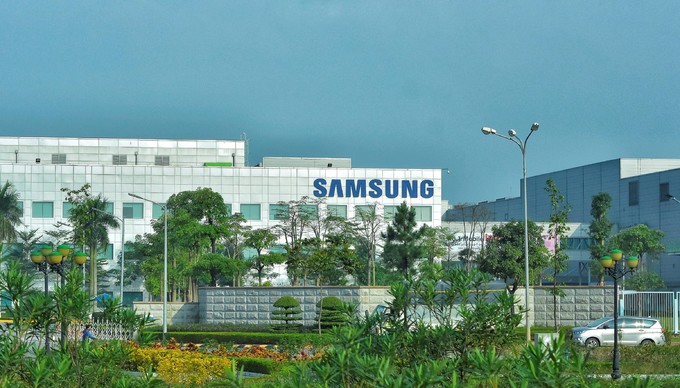
Samsung robots are coming this year. Kim Hyun-suk, president and head of Samsung Electronics’ consumer electronics division, said the company has been conducting research on the robotics market and is now preparing to launch several robots this year during a press conference with reporters on Monday, a day prior to the opening of the Consumer Electronics Show (CES) in Las Vegas.
Until now, Samsung Electronics has stayed mum on whether it is making robots. “To develop robots, it’s important to have an artificial intelligence [AI] platform ready [to mount on the robots],” Kim said. “That AI platform is almost ready.”
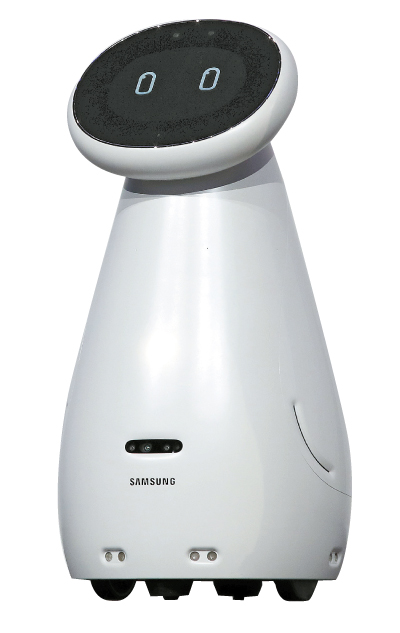
Samsung unveiled three variations of its AI-based robot, dubbed Samsung Bot, at the briefing, revealing its robotics technology for the first time.
The three Samsung Bots, labeled Care, Air and Retail, are designed to aid people’s health, and improve air quality and retail shop management. Samsung Bot Care, for instance, monitors users’ vitals like blood pressure and heartbeat and helps people take medicine at the right time. The robot can also call 119 and contact family members when it senses an emergency such as a heart attack.
The electronics giant also introduced its wearable robot, dubbed GEMS. It assists people with difficulty walking due to weak muscles or injuries and reduces physical pain in the knees and ankles.
“I can’t say for sure when the products introduced today will be commercialized,” Kim said. “There are possibilities that robot products not introduced yet could be commercialized first.”
Kim added that demand for robots is expected to increase, especially due to societal aging, pointing out that robots like Samsung Bot Care will be useful for the elderly.
“By exploiting Samsung’s know-how in AI, Internet of Things and developing multiple devices, we are considering our options for various types of robots,” Kim said.
On concerns of whether Samsung’s own AI engine Bixby is losing ground due to the company’s AI partnerships with tech giants like Google and Amazon, Kim said that is a “misunderstanding.”
Though Amazon’s Alexa AI assistant and Google Assistant may be a step ahead of Bixby in terms of technology and presence in the global market, Kim said partnerships make Bixby stronger, not weaker.
The important thing, according to Kim, is that when people ask Bixby a question, the AI will be able to give out answers based on its own knowledge or by utilizing data from Google or Amazon.
“No company has strengths in every aspect of business,” Kim said. “Though Bixby is a latecomer [to the AI assistant market], Samsung has relative strength in making devices compared to other tech companies, and Google and Amazon will focus on what they are good at.”
Kim also commented on LG Electronics’ rollable TV that made headlines globally. LG’s rollable TV prototype can roll itself into a storage box that becomes a table with speakers.
According to the Samsung president, there needs to be considerations on whether the product can be “economical.” He added that without the economic feasibility to commercialize the product, the prototype is a lot less meaningful.
Brian Kwon, head of LG’s home entertainment division, said in a separate press briefing Tuesday in Las Vegas that the company will make rollable TVs its future growth engine.
On concerns about the product’s cost, Kwon said while the price may be a barrier in widely expanding sales of the product right after launch, the company will strive to quickly improve the TV’s cost competitiveness.
Technology has penetrated in every sphere of our lives. We live, love, eat and sleep on #technology now. Each year, we see technology moving deeper and deeper into our existence. It’s good and bad – both. Good because it helps us in doing more in less time and efforts. Bad because interweaving of tech in our lives has left us dependent, vulnerable and very anxious. Let’s see what 2019 has in store for us – specifically 5 technology leaps to look out for in retail.
Omnichannelisation – The technology approach to seamlessly tie all sales channels in a see-anywhere-buy-anywhere way in picking up steam with mainstream brands and retailers. Omni channel technology is also being used as a strategic advantage by multichannel stores and small brands/retailers to scale their operations while centralizing the inventory. The main advantage is higher brand loyalty due to “all touch point” approach – and much lower active inventory requirements. In 2019, we expect omni channel to penetrate deeper into all spheres of retail through simplification and customization of omni-tech.
Cashier-Less Shopping – Yes, it all started with #Amazon GO, a proprietary technology that eliminates the need of checkout registers and cashiers. Customers can activate a geo-sensed resident app (Amazon GO app), walk in, pick up what they need and walk out – and all transaction happens in the backdrop through something what Amazon calls “Just Walk Out” (JWO) Technology. Ease of use, time savings and low cost operations are at the core of this technology. In 2019, you’ll see Amazon and a few other technology providers opening more of these JWO stores worldwide.
Virtual Retail Experience – According to #emarketer report, two thirds of US customers were interested in using Virtual retail experience – where you could get near-real brand and store experiences using head mounted or holographic hardware. 2019 could see a surge in virtual-reality based retail experiences. The upside? No (or very low) rentals and really easy reconfiguration of virtual stores.
Hyper-Local Retail – Hyperlocal retail refers to the technology where consumers can find and buy products near to them using an app that runs on geolocation. A catalog of products from local stores is uploaded on the app and the customers can discover and buy products from nearby stores. It’s a great cusp between purely online and purely offline retail experience. This is very useful for daily needs products, appliances and electronics. It’s awesome for the retailer since it allows for expansion of product-discovery while minimizing store footfall. Overall, a win-win for retailer and consumer. In 2019, watch out for companies like #nearbuy and #zopper making it big in India.
AI-based Consumer Insight – Artificial intelligence and machine learning is growing leaps and bounds in almost every segment. Retail is no exception. In 2019, AI and ML is expected to grow manifold in terms of demand forecasting, inventory planning, customer service bots, natural language based customer engagement and customer’s next purchase (and time) prediction. Though it may sound a bit nerdy, but the more data flows through the AP engines, the more powerful they get at predicting consumer behavior; and provide more powerful strategic advantages to the brands and store. Watch out! If you have that weird feeling that your phone purchase was somehow orchestrated – but cannot put a finger on anything concrete, you may have been Artificially Driven into that purchase!
The use of artificial intelligence in the retail sector is a $300 billion cost-saving opportunity for retailers which are able to scale and expand the technology, though just 1 per cent of retailers have achieved the necessary level of development, according to research from Capgemini Research Institute. The study looked at 400 global retailers, and how they are implementing the burgeoning technology at different stages of maturity, and found that over a quarter of retailers are deploying AI in their businesses – a seven-fold increase from 2016.
“For global retailers, it appears reality has kicked in regarding AI, both in terms of what the technology can achieve and what they need to do to get there,” Capgemini vice president global consumer products and retail sector Kees Jacobs said.
“Of course, deploying and scaling will be the next big objective, but retailers should be wary not to chase ROI figures without also considering the customer experience.”
According to the research, retailers deploying AI systems were eight times more likely to be working on high-complexity projects rather than smaller projects which are easier to scale, and generally lack a focus on customer usability.
Only 10 per cent of such retailers noted customer experience as a driving factor of these developments, and only 7 per cent noted customer pain points as a priority. Meanwhile, cost (62 per cent) and ROI (59 per cent) are driving most investment into the space.
Despite this, 98 per cent of retailers surveyed expect customer complaints to decrease, while 99 expect to see an increase in sales, as a result of investment into AI – far ahead of the more contrasted expectations noted in 2017.
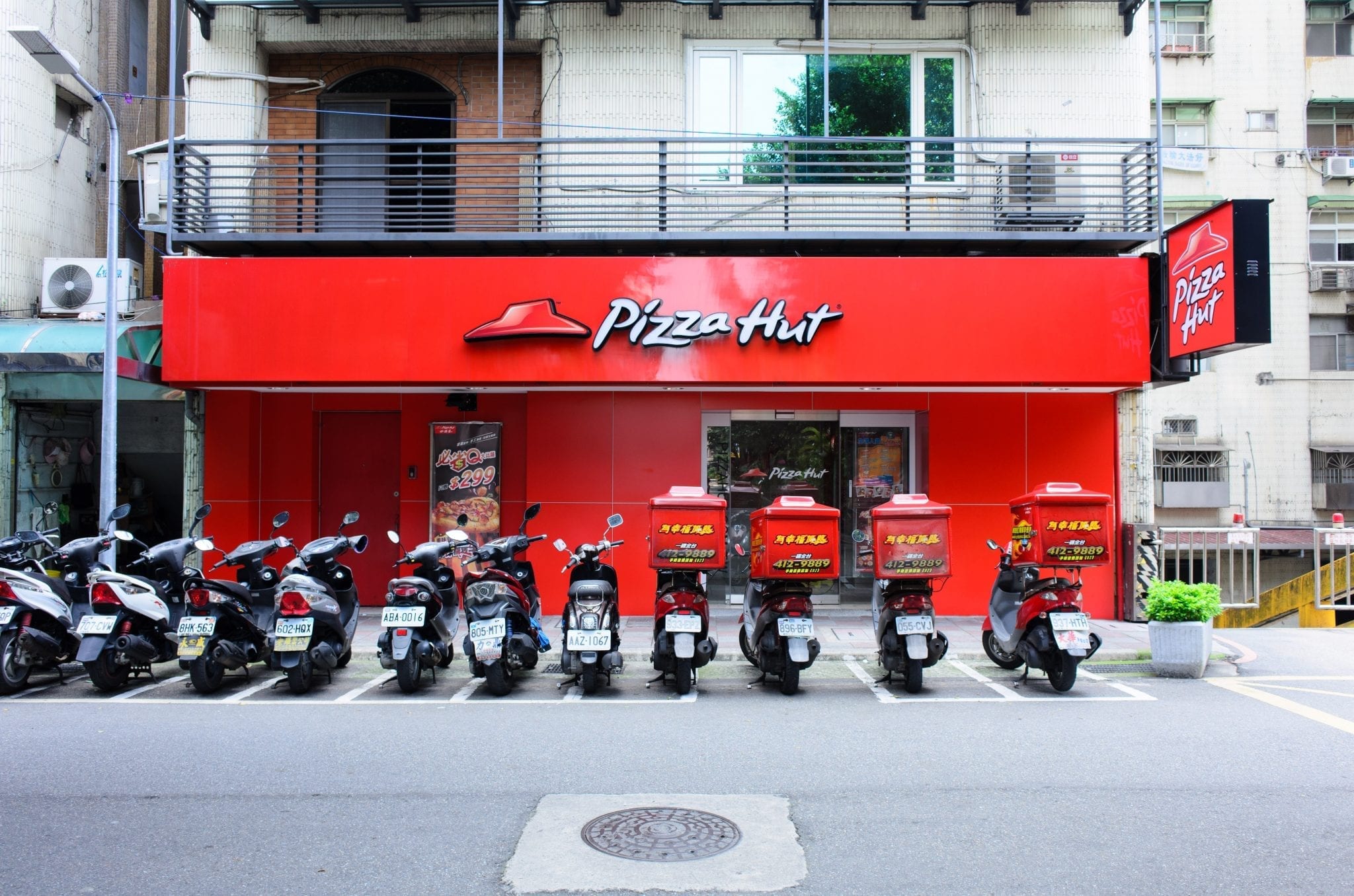
Yum! Restaurants-led Pizza Hut is betting big on technology. The brand is investing technology at each every step from taking orders to delivery of the pizza. Elaborating more on the same, Managing Director, Pizza Hut (India Subcontinent), Yum! Restaurants, Unnat Varma said, “We are using technology in sorting out our kitchens. So kitchens are becoming better in terms of layout, efficiency, optimising labour. Apart from this, we are also using technology to schedule riders to make sure that pizzas reach hot and fresh to the consumers.”
“To ensure a seemless experience to the customers we have again using technology. We have a new online experience for customers, it is one of the best friction-less experience. From getting customer’s location to ordering the pizza, the entire process has been reduced to a four-step journey,” he added.
The brand is also not shying away from using drones to deliver the pizzas in the near future.
“We are closely watching the drone delivery space. However, there is no current successful model. There has to be regulation, approval from the Government that drones can fly in the air space and to understand that how does it work for food as food is very atypical, it cannot loose temperature and it has to be accurate, it has to reach in a certain stipulated time and it has be delivered straight. We will host the space, we are very open, we are transforming ourselves digitally and technologically, if this space helps us unlock some future possibilities, we will definitely go ahead with it,” Varma revealed.
Enhancing Customer Experience
To add to the overall consumer experience, the brand has been constantly improving its products.
According to Varma, “These days the customer experience is always around product and product excellence and there we have been making a continuos effort to make our product more delicious, fresh and hot but in addition to that it is about the entire experience – how fast customer can place the order, how fast cusotmer can locate our store, can we give cusotmers a great value deal, can we understand their requirements, can we customise, can we help them earn and let them use some loyalty points in the future.”
Expansion Plans
Pizza Hut India plans to open over 200 more outlets in India by 2022 to expand its retail footprint. Currently, it operates 422 stores in the country.
“‘Pizza Hut is a very democratic brand, it is used by segments of the consumers in the market, so our attempt is to go to as close to consumer as possible, it could be going after the shoppers in the shopping mall or it could be going close to residential areas, or going to captive locations where we have people working, so we are open to all kind of opportunities that exist. We are even open to open our outlets at airports and railway stations too,” asserted Varma.
The pizza chain runs a franchise model in the country, where investments for opening new outlets mainly comes from franchise partner.