Tag: seafood

  • Crab exports skyrocket

    Crab exports skyrocket

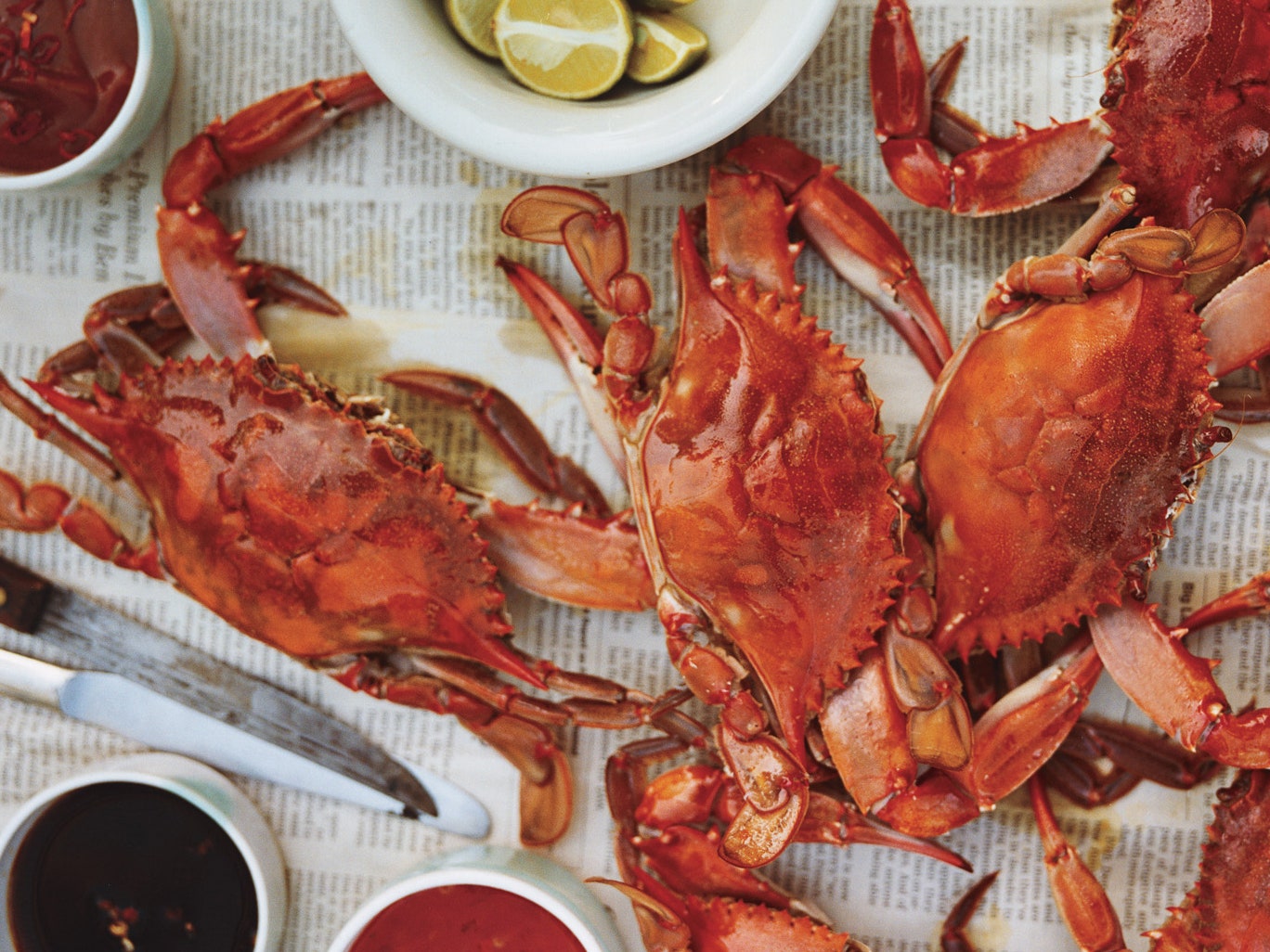
    Vietnam crab exports rose 41% to $111 million between Jan. 1 and July 15 this year, according to data from the Vietnam Association of Seafood Exporters and Producers (VASEP).

    The U.S, China, Japan and France were the four major markets accounting for 92% of the value.

    China was the fastest growing market as exports surged 74% year-on-year to $37 million, followed by France (up 60%) and Japan (51%).

    Exports to the U.S. grew 27%, though the country was Vietnam’s top market with a value of $38 million.

    Crab prices have surged amid domestic shortage and rising demand from major markets in the U.S., China and Japan.

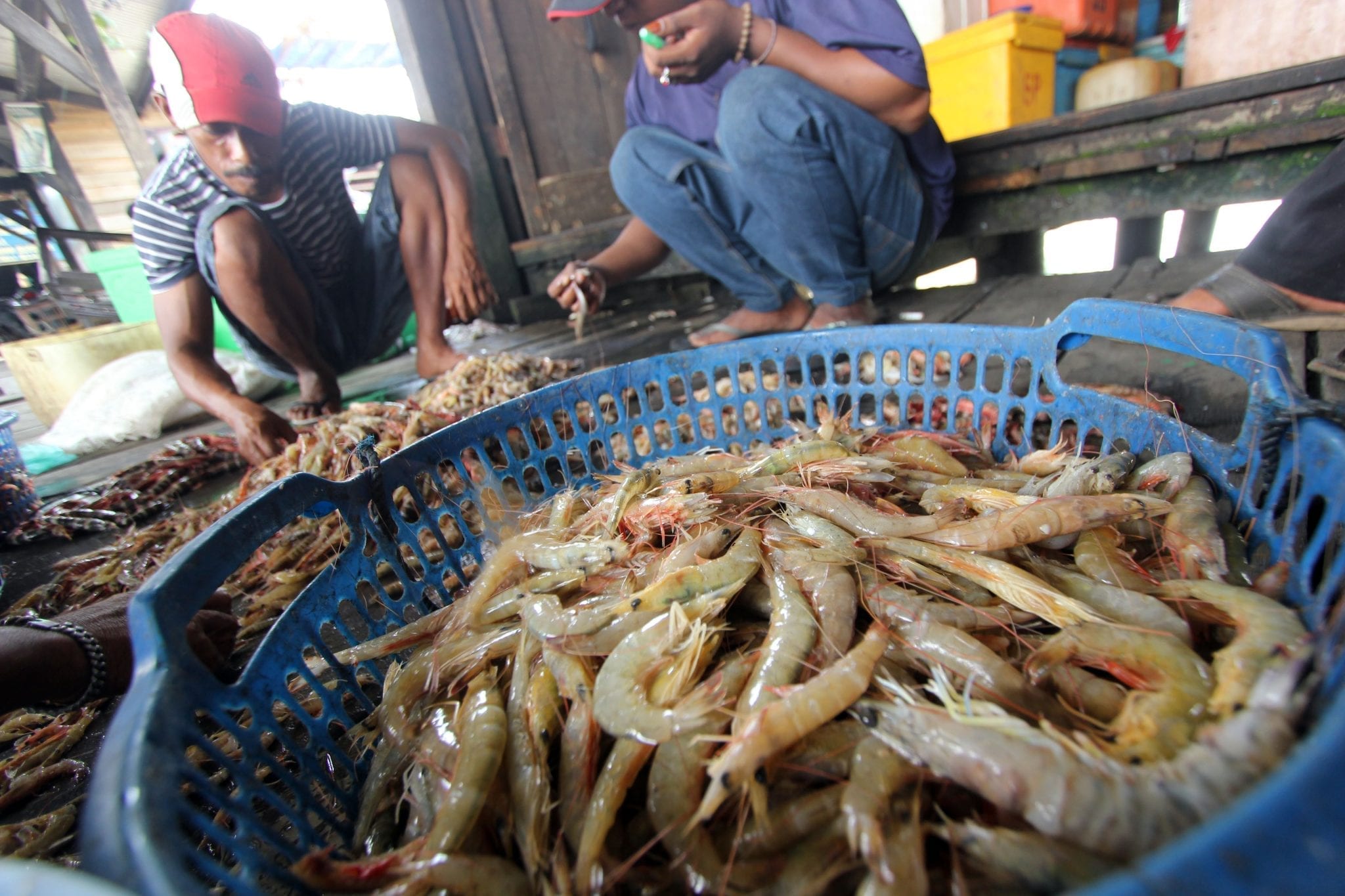
    Hoang, a crab seller, said prices at-the-farm have risen 20% since last month to VND400,000-600,000 ($17-26) a kilogram but there was hardly enough for him to sell.

    VnExpress survey showed crab prices in HCMC have risen to the highest in the year-to-date at VND900,000 a kilogram.

    VASEP expects crab exports to thrive in the second half this year thanks to rising demand driven by holidays like Christmas and Lunar New Year.

  • China scraps Covid bans on Vietnamese seafood

    China scraps Covid bans on Vietnamese seafood

    Chinese authorities will no longer penalize Vietnamese seafood exporters with a temporary ban if their containers are found contaminated with Covid-19, that country’s embassy in Hanoi has said.

    Exporters used to face a seven-day ban for every container of theirs found contaminated with the coronavirus. A seafood exporter who was once banned for three weeks said shipments have returned to normal.

    “China is trying to reduce the damage caused by its zero Covid strategy, and so exporting to the country has now become easier.”

    Dozens of Vietnamese exporters suffered from the ban, some for weeks and even months due to the large number of containers infected.

    Vietnam exported US$427.6 million worth of seafood to China in the first six months, up 107 percent year-on-year, according to the Vietnam Association of Seafood Exporters and Producers (VASEP).

    VASEP expects exports to China to boom in the second half of this year following the easing of the draconian safety measures.

  • Seafood companies post profit surge as global demand recovers

    Seafood companies post profit surge as global demand recovers

    Many seafood firms have seen a year-on-year surge in profits in the first quarter this year thanks to surging prices and recovering demand.

    Vinh Hoan Corporation, the largest listed seafood company, posted after-tax profits of over VND550 billion ($23.9 million) in the first quarter, up 4.2 times year-on-year.

    Cuu Long Fish Joint Stock Company·also saw its profits surge over 5.7 times against the same period last year to VND63 billion, the highest quarterly profit since late 2018.

    IDI International Development & Investment also recorded after-tax profits of over VND200 billion, the highest quarterly profit since 2010 when it began releasing financial reports.

    Nam Viet Corporation reported a three-time year-on-year surge in profits to VND206 billion while Camimex Group saw its profits double to VND25.1 billion.

    Sao Ta Foods Joint Stock Company, another seafood firm, reported its profit surging nearly 1.5 times year-on-year to VND42.2 billion.

    The surge in profits among seafood companies in the first quarter was credited to surging prices and recovering global demand.

    Vietnam’s seafood exports grew by 40 percent year-on-year to $2.4 billion in Q1 despite direct impacts of the ongoing Russia-Ukraine crisis.

    Growth was led by pangasius catfish, whose exports increased by 88 percent to $646 million and accounted for 27 percent of overall exports, according to the Vietnam Association of Seafood Exporters and Producers.

    Shrimp remained the top seafood export item, accounting for 37.5 percent of the total at over $900 million, up 37 percent.

    A recent report by Rong Viet Securities Corporation said that pangasius exports would record a strong recovery this year due to increased global demand and supply shortage from Russia. The high selling price will last until the end of the second quarter due to increase in raw material prices.

    An Binh Securities warned of downside risks like surging feed and logistics costs and fierce competition from other exporting countries like India, Ecuador and Indonesia.

    On the stock market, the seafood sector has posted gains over the past months, with some hitting the ceiling regardless of the overall gloomy market trend.

    On Friday, Vinh Hoan closed at around VND104,000, up 55 percent since January.

  • Seafood exports rise by 40 pct in Q1

    Seafood exports rise by 40 pct in Q1

    Vietnam’s seafood exports grew by 40 percent year-on-year in Q1 to US$2.4 billion despite direct impacts of the ongoing Russia-Ukraine crisis.

    The growth was led by shark catfish, whose exports increased by 88 percent to $646 million and accounted for 27 percent of overall exports, according to the Vietnam Association of Seafood Exporters and Producers (VASEP).

    Shrimp remained the top export item, accounting for 37.5 percent of the total at over $900 million, up 37 percent.

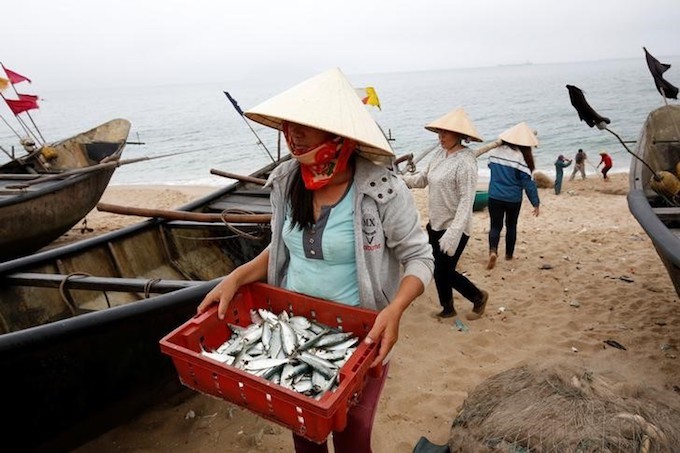
    VASEP said the conflict is having an impact on the industry, with the skyrocketing gasoline prices forcing fishermen not to go out to sea or even sell their boats.

    In March export growth slowed down to 25 percent from 44 percent in January and 62 percent in February.

    Tuna and octopus exports grew by 20 percent last month, but exports of other saltwater fishes slipped by 14 percent.

    Exports to Russia fell by 86 percent to $2.7 million, and exports to Ukraine came to a complete halt. Russia and Ukraine used to account for around 2 percent of Vietnam’s seafood exports.

    VASEP expects gasoline prices to continue to cast a shadow on the industry in the coming months, but growth to be driven by recovering demand in other markets like the U.S and the E.U.

    It forecast 25 percent growth in exports in April.

  • Russia-Ukraine crisis cuts Vietnam’s seafood exports

    Russia-Ukraine crisis cuts Vietnam’s seafood exports

    Vietnamese exporters of seafood to Russia and Ukraine are in trouble, with some reporting double-digit percentage declines as the military confrontation between the two countries continue.

    Five Vietnamese catfish exporters to Russia have reported a year-on-year drop in export value by 29.8 percent to $2.18 million in January, according to data from the Vietnam Association of Seafood Exporters and Producers (VASEP).

    This is a contrast to a 72.5 percent increase in exports value last year to Russia. Vietnam was Russia’s third biggest importer of catfish last year, behind Argentina and China.

    “Since the beginning of the year, and especially after Russia launched a special military operation in Ukraine, export of catfish to this market has faced disruptions and challenges,” VASEP said in a report.

    Catfish exporters say that the 30 percent plunge in the ruble has made buyers unwilling to pay for their orders. Payment processes have also become difficult as a result of Western nations’ sanctions on Russia.

    Shipping has also become a challenge with transport firms not accepting orders to Russia, given the high chances of having the goods seized on the way.

    Vietnamese catfish exporters have stopped signing new orders to Russia even though importers still want to buy.

    Meanwhile, Vietnamese shrimp exporters have reported a year-on-year decline of 23 percent in Russia exports value to $3.3 million from January 1 to February 15.

    Exporters say there is no certainty that their shipment will be cleared to enter Russia and all transactions are facing difficulties.

    Russia and Ukraine are among the top 20 export markets for Vietnamese tuna, but exporters say several shipments have been returned amid the military conflict, and they are trying to find new markets now.

    Russia’s military operation in Ukraine has entered its 13th day with no rapid end in sight despite the multitude of sanctions that Western countries have imposed on Moscow.

  • Seafood exports edges up to 2,4Bln

    Seafood exports edges up to 2,4Bln

    Seafood exports rose by 2.8 percent year-on-year in the first nine months of the year to US$2.4 billion, according to the Vietnam Association of Seafood Exporters and Producers.

    Tuna, squid and octopus accounted for the highest proportion of the exports.

    Bivalve mollusk exports soared 39 percent to $99.6 million.

    The five biggest markets for squid and octopus were Korea (accounting for 41 percent), 11 member countries of the CPTPP (24 percent), Thailand (11 percent), EU (10 percent), and China (7 percent).

    In September alone, exports fell by 24 percent year-on-year, after falling by 24 percent in August, due to social distancing restrictions.

    VASEP expects the figure to also decline in October.

  • Seafood companies fear lack of raw materials as Covid hits farm output

    Seafood companies fear lack of raw materials as Covid hits farm output

    The decline this year in shrimp and fish farming in the Mekong Delta threatens to cause a serious shortage of raw materials for processors in the coming months.

    “We have increased shrimp prices, but many farmers are still worried that Covid outbreaks will affect prices later, and so have reduced their production,” Le Van Quang, general director of Minh Phu Aquaculture Group Joint Stock Company, said.

    Speaking at a conference held online on Friday to discuss how to restore processing and exports of agricultural and aquatic produce, he forecast a big shortage in the next three months, and said businesses would be unable to meet foreign orders.

    In Tien Giang and An Giang provinces, farmers have been unable to sell their fish, shrimp and crab harvests for months due to Covid-19 restrictions.

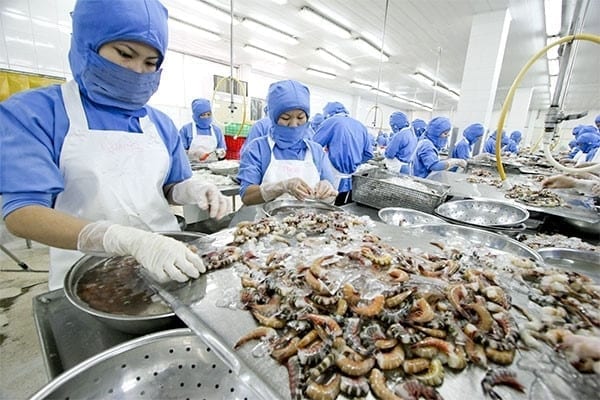
    Many processing plants have been running at 30-40 percent of capacity as stay-at-work requirements cause a labor shortage.

    Nguyen Hoai Nam, deputy general secretary of the Vietnam Association of Seafood Exporters and Producers (VASEP), said the government should come up with policies to encourage shrimp farmers right now so that they could harvest in November to enable exports.

    He also wanted it to prioritize Covid-19 vaccination for seafood companies’ workers so that normal production could resume.

    The southern provinces and Ho Chi Minh City could be divided into three in terms of likely resilience if certain epidemic prevention measures are adopted after September 15, he said.

    The first, where the infection rate is lowest, includes Ca Mau, Bac Lieu, Hau Giang, Soc Trang, Ben Tre, and Vinh Long provinces. Businesses in this shrimp processing hub are expected to return to 60 percent of capacity by October and 80 percent by year-end.

    The second, where the epidemic is gradually being controlled, includes An Giang, Kien Giang, Tra Vinh, and Dong Thap provinces and Can Tho city, and here the rates would be 50 percent and 70 percent.

    The area with the highest risk of infection, including Long An, Binh Duong and Tien Giang and Ho Chi Minh City, would recover to 40 percent and 60 percent.

    Vietnam’s seafood exports were worth $5.5 billion in the eight months of 2021, a year-on-year increase of 6 percent, according to the Vietnam Association of Seafood Exporters & Processors (VASEP).
  • Vietnamese Seafood export falls in August

    Vietnamese Seafood export falls in August

    Vietnam’s seafood export turnovers stood at $520 million in August, down 36 percent against the same month last year due to Covid-19 outbreaks.

    Last month, only 30-40 percent of seafood enterprises in the south ensured the stay-at-work mode, mobilizing 40-40 percent of employees to work, eat and sleep at factories, so their production capacity dropped 50-60 percent, said the Vietnam Association of Seafood Exporters & Processors (VASEP).
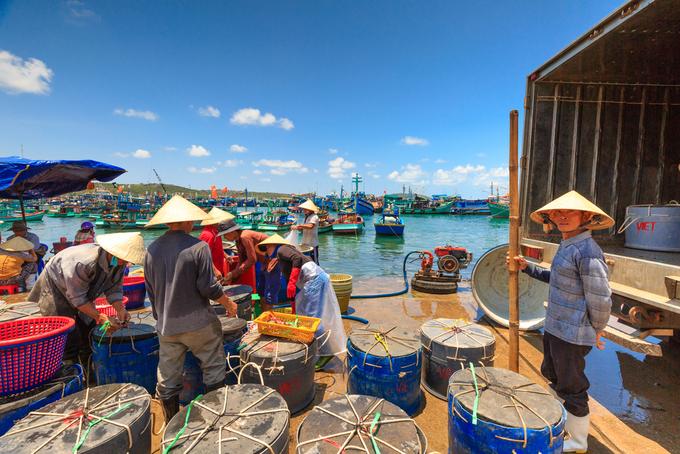
    Meanwhile, material supply chains were broken or met with difficulty in transport. Seafood firms saw higher input costs and freight ones, and some exporters failed to deliver goods on time, losing clients to their foreign rivals.

    However, seafood export turnovers in the first eight months of this year rose 6 percent on-year to $5.5 billion.

    The VASEP forecast seafood export turnovers will decrease at least 20 percent on-year to $660 million in September, because the pandemic is still progressing complexly in the South, while vaccination among workers in industrial parks and export processing zones is limited.

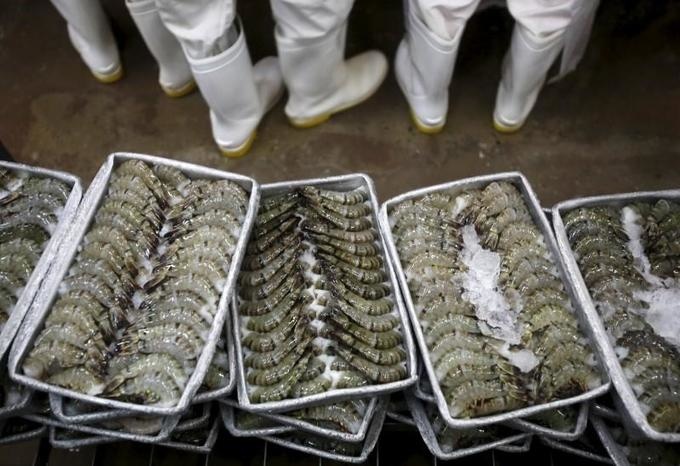
    Some southern provinces, including Soc Trang, Cau Mau, Bac Lieu and Kien Giang, which are major prawn producers and exporters, have contained the pandemic fairly well, so they are expected to export more prawns and shrimps in the remaining months of this year.

    Major catfish producing and exporting provinces are still being hit hard by the pandemic, with over half of factories having to close down, so tra fish export is unlikely to bounce back in September.

    HCMC and localities in the Mekong Delta, home to many squid, octopus, tuna processing plants, are still experiencing complex Covid-19 situations, so their seafood production and export are predicted to continue to be sluggish this month.

    In the fourth quarter, when most of seafood processing workers will have been vaccinated against Covid-19, seafood export can recover slightly, reaching turnovers of $8.5-8.6 billion, the VASEP forecast.

  • Shrimp processing giant posts large revenue increase

    Shrimp processing giant posts large revenue increase

    Minh Phu Seafood, one of the country’s biggest shrimp processors, reported a 9 percent rise in revenues to over VND6.1 trillion ($269 million) in the first half of the year.

    The HCMC company said however the pandemic is causing disruption in sales, especially in North America, its biggest market.

    Its net profit rose nearly 20 percent to VND276 billion.

    It received a VND336-billion import tariff refund after the U.S. in February withdrew an accusation that one of its subsidiaries, Mseafood, had violated anti-dumping regulations.

    The company had to deposit the sum while it disputed the case.

  • Imported seafood prices skyrocket amid transport restrictions

    Imported seafood prices skyrocket amid transport restrictions

    The prices of imported king crabs and abalones have risen by 30-50 percent in HCMC due to limited supply caused by mobility restrictions.

    King crabs are sold at VND2.5-2.9 million ($109-126) per kilogram, 50 percent higher year-on-year.

    Australian and South Korean abalones are sold at 30 percent higher at VND1.6-1.8 million.

    Salmon prices are up 18 percent at VND650,000.

    A seafood importer who owns a restaurant in the city’s Tan Binh District blamed the price rise on a supply shortage, saying the semi-lockdown has made transporting seafood difficult.

    Another reason is the limited number of flights coming to Vietnam from abroad.

    Another importer said half the crabs died on the way to Vietnam due to flight delays, causing him losses. He has stopped selling for now.

    Tran Van Truong, CEO of seafood chain Hoang Gia, said flights from Norway to HCMC are rare and in most cases have to transit in other countries.

    Many sellers are increasing the sale of domestic seafood items such as red tilapia and squid to survive.

  • Seafood firms net big catch from export recovery

    Seafood firms net big catch from export recovery

    A seafood export recovery has helped bigger firms boost profits while smaller ones have struggled with the spike in shipping rates.

    Seafood exports topped $4 billion in H1, a year-on-year increase of 15 percent, according to the General Department of Vietnam Customs. In Q2 particularly, seafood export turnover increased by more than 21 percent over the same period last year, reaching nearly $2.4 billion. This led to firms reporting positive business results.

    Vinh Hoan JSC earned over VND2.3 trillion in revenue and over VND260 billion in post-tax profit, up 41 percent and 16 percent year-on-year, respectively. According to its monthly report, VHC’s exports to most markets increased, with the two largest ones being the U.S. and China.

    The Kien Hung JSC (KHS) said its net profit increased 10 times in Q2 as demand from Europe, America, Japan and South Korea temporarily recovered and stabilized. The firm also actively sought imported materials at competitive prices to maintain stable production.

    The Minh Phu Seafood Corporation has yet to announce its H1 business results, but estimates a pre-tax profit of over VND300 billion, a year-on-year increase of 11 percent.

    However, not all seafood exporters reported positive business results, partly because of high freight rates. The Vietnam Association of Seafood Exporters and Producers (VASEP) said that by May, freight rates in some ports had doubled compared to late 2020 and sextupled compared to early 2020.

    The Nam Viet Corporation reported an increase of over 20 percent in revenue in Q2 but a decrease of 26 percent in net profit year-on-year. The corporation attributed the decline in profit to a sharp rise in financial and selling expenses, that latter shooting up 137 percent compared to last year due to a hike in freight and transportation rates.

    The Thuan Phuoc Seafood and Trading Corporation (THP) saw its profit fall even further to VND10 billion, half that of the same period last year, because of rising selling expenses.

    The sea freight, which ups nearly times, cost the firm VND26 billion.

    In early July, VASEP requested the Ministry of Agriculture and Rural Development to report to PM the issues of container shortage and sea freight rates, seeking intervention to have the latter reduced to pre-November 2020 levels.

  • Major seafood firm reports 25 pct profit fall

    Major seafood firm reports 25 pct profit fall

    It attributed the falling profit to a 20 percent drop in income from financial activities and a 27 percent increase in cost of goods sold during the period.

    The company also said that the pandemic has changed consumer behavior in its main export markets like the U.S., Japan, Canada, Australia and New Zealand. They have prioritized buying essential products.

    Seafood exports to these markets fell by half in the first quarter of the year, contributing to a year-on-year revenue drop of 12 percent to VND1.6 trillion.

    The company aims to export $638 million worth of shrimp this year.

    Its total asset value at the end of March was nearly VND7.4 trillion.

    It has targeted revenues of VND15.7 trillion and post-tax profit of VND1.4 trillion this year.

  • Seafood Exports Edge up in Vietnam

    Seafood Exports Edge up in Vietnam

    Seafood exports in the first two months of 2021 rose by 2.2 percent year-on-year to over $1 billion, according to the Vietnam Association of Seafood Exporters and Producers.

    Pangasius fish accounted for 21 percent of the exports at $214 million, up 1.7 percent. Shrimp exports topped $380 million, a year-on-year decrease of 0.8 percent.

    VASEP explained that, due to the impact of Covid-19, global demand is high for products that could be preserved for long, are easy to cook at home and are reasonably priced such as frozen and processed white leg shrimp.

    Black tiger shrimp exports plunged due to high prices.

    VASEP estimated exports would be worth $640 million in March, with shipments to the U.S., E.U. and CPTTP trade deal member countries continuing to rise.

  • Seafood processor Vinh Hoan buys 51 pct stake in snack company

    Seafood processor Vinh Hoan buys 51 pct stake in snack company

    Seafood processing company Vinh Hoan Corporation has bought a 51.29 percent stake in the Sa Giang Import-Export Corporation.

    It bought 3.56 million shares from the State Capital Investment Corporation (SCIC) at VND97,500 per share in a deal worth almost VND350 billion.

    SCIC had planned to auction the shares in July 2020 at a starting price of VND111,700 ($4.80), but failed to attract investor interest.

    Sa Giang makes ready-to-eat foods such as prawn crackers and instant noodles and newer products such as crackers made from crab, fish and squid.

    It mainly exports its products to Europe, especially Germany and the Netherlands, and some Asian countries.

    Last year it reported revenues of VND310 billion and a net profit of VND31 billion.

    The company has convened an extraordinary general meeting at the beginning of February to dismiss some members.

  • Seafood exports plummet

    Seafood exports plummet

    Seafood exports in January fell 25 percent year-on-year and are set to continue falling due to the novel coronavirus outbreak.

    They fell to $556 million, with exports of pangasius fish falling by 64 percent, octopus by 50 percent and tuna by 30 percent, the Vietnam Association of Seafood Exporters and Producers said in a report.

    It attributed the drop to the seven-day Lunar New Year (Tet) holiday in January, adding exports would continue to fall in February and March since the epidemic has limited exports to China.

    In the worst case, seafood exports to China will fall 30 percent in the first half to $400 million. But if there is limited border trade, the impact could be mitigated somewhat.

    China was Vietnam’s fourth-largest market last year, with exports being worth $1.23 billion after rising 22 percent.