Retail News CRM

Tag: service

  • AirAsia launches daily Manila-Taipei service

    AirAsia launches daily Manila-Taipei service

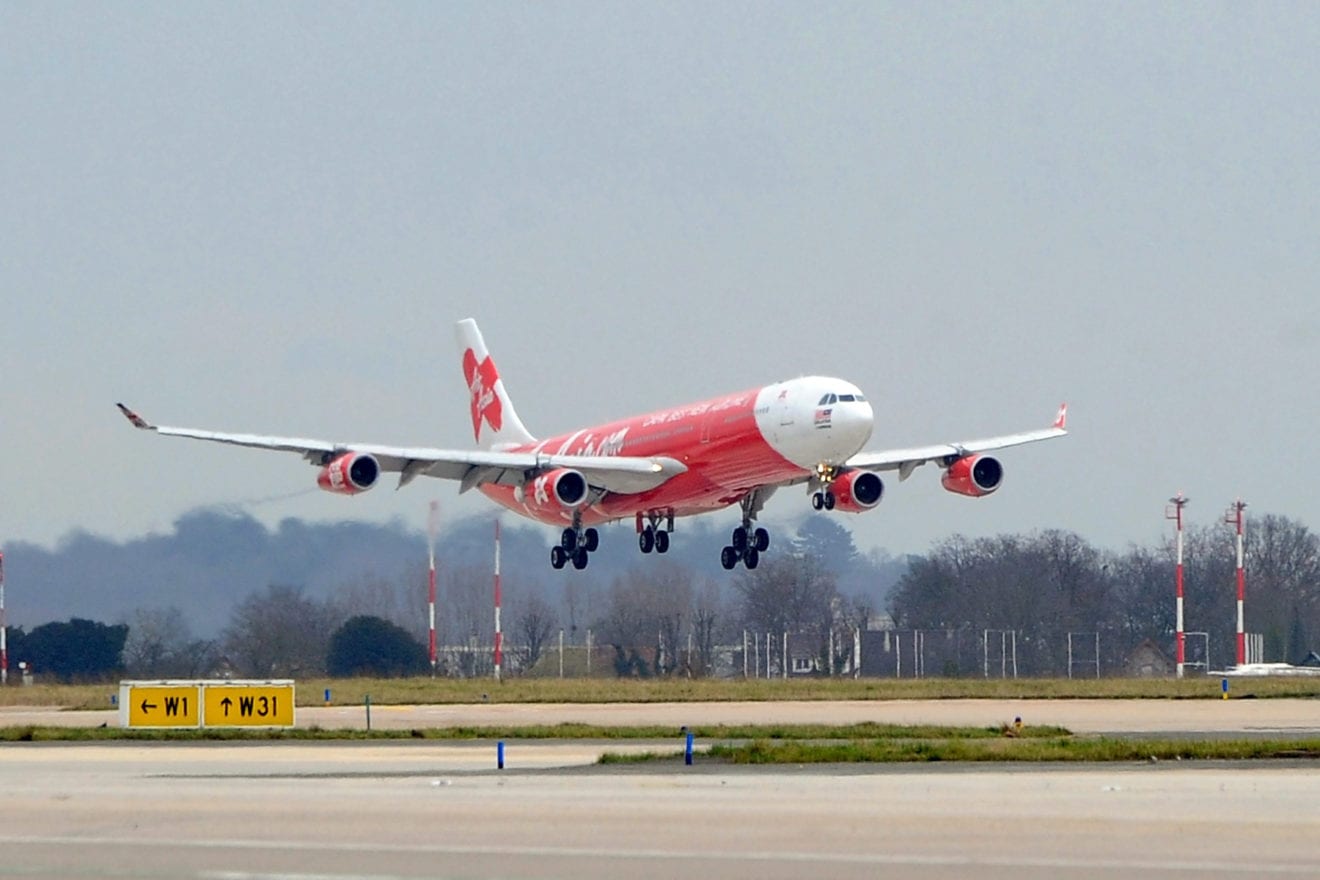
    Travellers from the Philippines now have more options when flying to Taiwan after Philippines AirAsia started its daily Manila-Taipei service last Monday.

    Philippines AirAsia chief executive Captain Dexter Comendador himself piloted the Airbus A320 to mark the budget airline’s maiden voyage from Manila to Taipei.

    “Today heralds a brighter and much closer ties between two countries to improve trade and tourism,” he addressed the passengers midway through the flight.

    “We have introduced amazing connections for our guests to enjoy and we are aiming to go further across Asia by strengthening AirAsia’s presence in Taiwan,” Comendador added.

    The flight touched down at the Taoyuan International Airport after midnight to a welcome water barrage from firetrucks.

    The Taipei-Manila route was officially launched Tuesday at a press conference at the Grand Sheraton in Taipei, which was attended by Philippines AirAsia chair Maan Hontiveros and AirAsia North Asia CEO Kathleen Tan.

    A thrice-weekly Cebu-Taipei service was also announced with performances from Sinulog dancers. Taiwanese celebrity travel blogger Patty Woo also regaled guests with her beach adventures during her recent trip to Cebu.

    Starting Friday, Philippines AirAsia will begin regular flights from Cebu to Taipei on Wednesday, Friday and Sunday.

    Taiwanese tourist arrivals in the Philippines have reached 157,517 from January to August this year. Taiwan is currently the country’s sixth top visitor market after Korea, the United States, China, Japan and Australia.

    “Taiwan and the Philippines share a strong affinity with one another. They enjoy robust economic ties, many Filipinos live and work in Taiwan and more and more Taiwanese are visiting the many beautiful islands in the Philippines. We are honored to be able to bring the countries even closer together,” Tan said.

    Taiwan is known for night markets, tourist attractions like Taipei 101, and foodie adventures with its diverse culinary offerings

    Philippines AirAsia has teamed up with TourMeAway Walking Tours to make exploring Taipei more fun. From now until November 30, Philippines AirAsia travelers to Taipei may join the Hunger Game Walking Tour or the Taipei Chillout Tour for free.

  • Huawei launches cloud VPN integration service

    Huawei launches cloud VPN integration service

    Huawei has launched a new service which it says can resolve problems in enterprise leased line services that have affected telecoms operators, such as slow provisioning, lack of services, and difficult operation.

    According to Huawei, the CloudVPN Integration Service Solution can quickly meet the customized ICT needs of enterprise and enable operators to boost enterprise revenue by delivering a variety of value-added services.

    “A lot of operators are starting to think how to carry out CloudVPN business to market for their customers. But when they started this journey, they faced a lot of challenge,” said Bruce Xun, vice president of Global Technical Services Department at Huawei.

    By integrating a variety of value-added services, combining cloud, leased line, and value-added services, operators can provide one-stop CloudVPN for their enterprise customers, Xun noted.

    The CloudVPN Integration Service provides accurate network planning, helping carriers reduce time to market for new services over the overlay network architecture. Multi-vendor ICT resource orchestration allows enterprises to use cloud and network resources on demand and in real time, shortening the services provisioning time to minutes.

    Operators can reduce service delivery time from a month to 15 minutes with the CloudVPN Integration Service solution.

    The solution can meanwhile accurately identify the network bandwidth bottlenecks based on enterprise service prospects, optimizing networks accordingly to ensure services quality.

    At the launch, Huawei also announced it completed integration and certification with 20 ecosystem partners, including Fortinet, Check Point, Citrix, Red Hat, Riverbed and Infoblox, via its Cloud Open Labs. The company aims to expand the number of partners to 30 by the end of the year.

    Xun said Huawei’s Cloud Open Labs gives operators access to a range of third-party value-added services that have been pre-integrated by its partners.

    The agile integration capability of the CloudVPN Integration Service solution allows operators to add new VAS in just seven days.

    Huawei is planning to enhance its multi-vendor integration tool by increasing the development and testing team with 60 more senior engineers to support multi-level multi-vendor integration tool development.

    The service is expected to be commercially available by the end of the year.

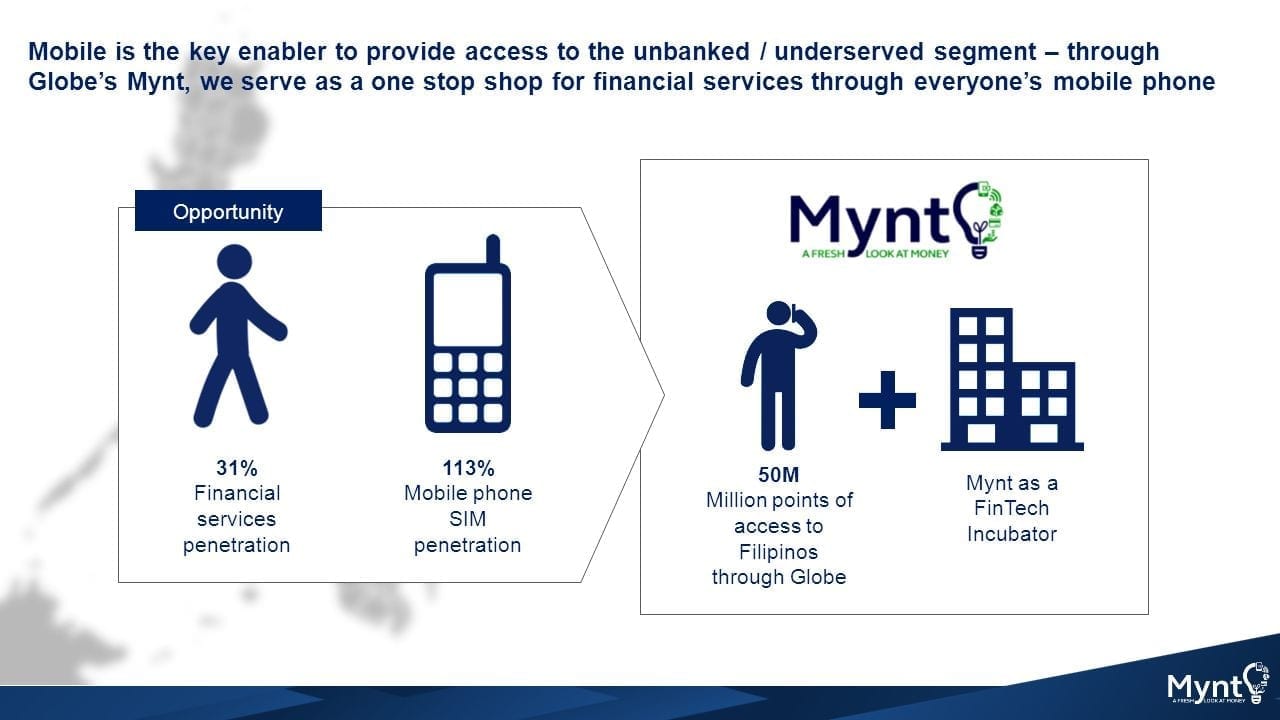
  • Globe’s Fintech Subsidiary Mynt Selects Amdocs to Power its Casa Service

    Globe’s Fintech Subsidiary Mynt Selects Amdocs to Power its Casa Service

    Amdocs, the leading provider of customer experience solutions, today announced that Mynt, Globe Telecom’s fintech subsidiary, has selected the Amdocs Mobile Financial Services solution to power Casa – a new service that will enable Mynt to offer retailers a cloud-based, financial-grade, white-label digital money fintech platform, providing retailers with the means to offer a wide range of financial services and generate a new revenue stream.

    The Mynt Casa service, which will be powered by the Amdocs Mobile Financial Services solution, will enable retailers to offer bill payments, money transfers, closed-loop merchant payment solutions and loyalty program management. In addition, a card management feature will support them in issuing a closed-loop companion prepaid card to any customer, even if they do not hold a bank account. Cards will be linked to the user’s mobile wallet account, allowing them to pay for purchases at retail and online stores.

    The Amdocs solution will be deployed on Amazon’s public cloud. Based on a multi-tenant system, it will enable retailers in different locations to be hosted as separate tenants on a centralized platform, wholly managed by Amdocs. Under a five-year software as a service (SaaS) agreement, Amdocs will assume complete responsibility for development, deployment, operation and maintenance of the Amdocs solution via a revenue-sharing model with Mynt.

    “Retailers in emerging markets such as the Philippines need their own e-money solution that allows them to offer financial services such as point-of-sale payments, using cashless methods such as mobile wallets, payment cards and loyalty points,” said JM Aujero, chief sales officer at Mynt. “With Casa’s easy-to-use cloud-based platform, we will be able to provide for this need in a way that is tailored to each individual retailer. At the same time, it will enable them to offer wider financial services, such as third-party bill payments and money transfers without having to invest in new infrastructure deployment and operations.”

    “The ability for retailers and merchants to offer their own financial services solutions is a huge opportunity for mobile financial services providers to drive usage and adoption,” said Patrick McGrory
    , president for Amdocs’ emerging offerings. “Casa, powered by Amdocs’ cloud-based solution, provides superior, retail-specific capabilities, combined with a time-to-market advantage that will enable Mynt to quickly roll out services to its retail partners across the Philippines.”

    Amdocs also separately announced the availability of its Mobile Financial Services Card Management System (CMS). CMS supports any service provider in issuing both closed loop and open loop prepaid and debit cards to their customers, even to those who have no bank account. The card can be linked to a consumer’s mobile wallet with a stored value and/or loyalty point account as the source of funds. They can use the card to pay for purchases at a retail point of sale terminal, withdraw cash from an ATM, or for online shopping.


  • Ride-hailing app Grab brings GrabBike services to Bali

    Ride-hailing app Grab brings GrabBike services to Bali

    Watch out Gojek, competitor GrabBike has come to Bali. Ride-hailing app Grab has announced that it launched both GrabBike and GrabExpress services in Bali, as of Oct. 22. 

    Like Gojek, GrabBike allows you to order motorbike taxis, while GrabExpress is Grab’s courier service. Also in common with Gojek, the app’s drivers use black and green colors.

    Similar to Uber, the app has provided its GrabCar driver services in some time in Bali (they launched in 2015)—to the frustration of competing taxi and other drivers operating on the island. 

    As with GrabCar, the GrabBike and GrabExpress options will be most available in Badung and Denpasar. 

    Grab started in Malaysia but has quickly spread throughout the region, with notable success in Jakarta, its first Indonesian city. 

    “Bali is dominant in growth and tourism potential, so we saw an opportunity to improve the quality of daily trips in Denpasar and Badung. The launching of two-wheel services in Bali will complement GrabCar, which previously launched in 2015.

  • Vodafone Australia to offer fixed broadband services

    Vodafone Australia to offer fixed broadband services

    Vodafone Australia has revealed plans to branch out into offering fixed broadband services over the national broadband network (NBN).

    The operator plans to extend into fixed-line broadband to give its mobile customers more access to data both at home and on-the-go.

    While the NBN rollout is not scheduled for completion until 2020, around three million premises have access to the network and more than 1.1 million have signed up.

    At a press briefing, Vodafone Australia CEO Inaki Berroeta said the move into fixed broadband is a “natural progression” for the company, and it’s the right time to make the move because the NBN project is reaching the scale required to deliver an NBN service that complements its mobile network. It is expected that 4 million premises will be NBN-ready by the end of the year.

    Vodafone plans to make its first commercial NBN services available next year.

    Market research from Roy Morgan indicates that 550,000 of Vodafone’s mobile customers already intend to switch fixed broadband provider over the next 12 months, giving the operator a large potential market at the ready.

    Vodafone’s customers are also over 50% more likely than average to be dissatisfied with their current fixed broadband provider, and are statistically 10 percentage points less likely than the national average to have market leader Telstra as a fixed broadband provider.

  • Dnata has inaugurated its customer service centre for cargo at Dubai Airport

    Dnata has inaugurated its customer service centre for cargo at Dubai Airport

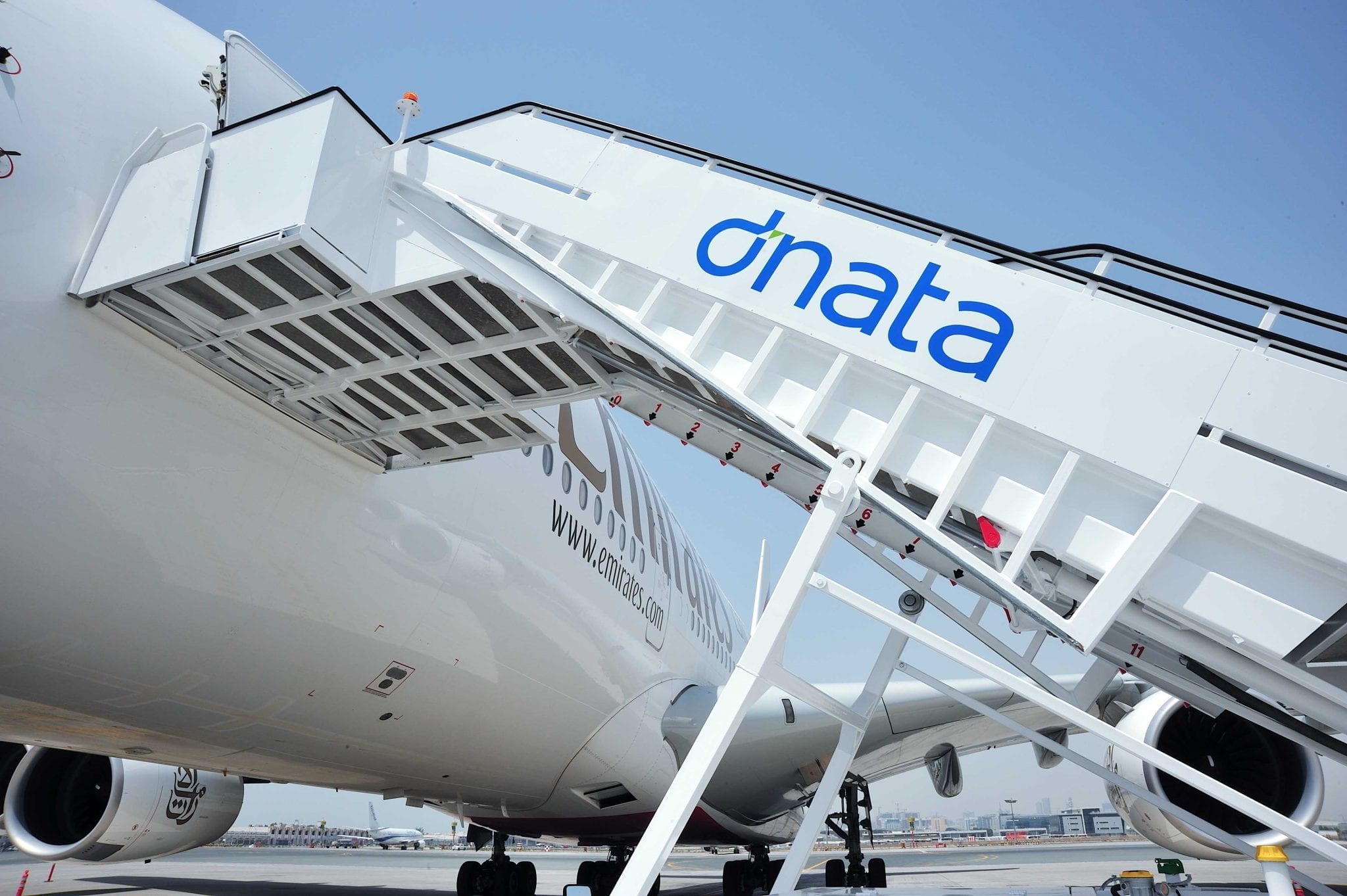
    According to dnata, the new 5,000m2 facility is located at Freight Gate 5 at the Dubai Airport Free Zone and is expected to handle 25,000 tonnes of export cargo every month.

    “What we see today is the result of meticulous planning, creative thinking and most of all, listening to our customers,” said Gary Chapman, president of dnata and group services. “We are looking to bring about further efficiency, cost-saving and surpass our customers’ expectations.  We take pride in being a leader in cargo handling, and it’s important to constantly raise the bar when it comes to innovation and customer service. I believe this new centre really demonstrates our commitment to providing a secure and efficient environment for our customers’ cargo needs.”

    According to dnata, the service centre features new export counters, government agencies, a special cargo acceptance area, a new office space for airline and freight forwarders, as well as dnata’s new Cargo Integrated Control Centre, which operates 24/7 and simplifies information flow between all stakeholders. The CICC also monitors, troubleshoots and enables quick decision-making to improve efficiency.

    “While we have accomplished a great deal, we are always looking to innovate and offer better service to our customers,” said Chapman. “They have come to expect that of us, and we are constantly looking at ways to improve. We have exciting plans ahead. The evolution of this facility will see the opening of an import customer service centre, as well as additional storage and handling capacity for our export customers.”

  • Enhancing last mile delivery, consumer experience with SMS Services

    Enhancing last mile delivery, consumer experience with SMS Services

    E-commerce is a fast-moving game and major forces are changing the rules. Forward-thinking retailers are investing to maximize the potential of both physical and digital channels. Global players that once stood on the sidelines are now poised to compete in South East Asia. Just recently, Indonesian department store chain MatahariMal raised $500 million to develop their e-commerce venture. Alibaba too, has invested $249 million in SingPost to expand their delivery network in SEA.

    As the world’s fastest growing internet region with 260 million users, South East Asia is fast becoming a unique e-commerce market. Primed for tough competition, e-commerce companies are fast prioritizing customer service as a way to stand out from their competitors. Keeping customers at the heart of their business strategy, and delivering the best possible value to them is becoming more important than ever.

    Today, last-mile delivery has become a priority for both e-commerce companies and their customers. Ensuring speedy, but prompt delivery has been proven to give companies an edge in the competitive landscape, while showing customers that companies could go the extra mile for them.

    In fact, local and regional players have still emerged as early winners, largely due to their ability to provide a better-tailored experience for local consumers than what global competitors usually offer. For instance, Singapore-based Lazada built local logistics footprints in each market to increase delivery reliability, and added motorbike fleets to provide speedier options to traditional truck deliveries.

    That said, enhancing last-mile delivery for consumers in the region comes with its own set of challenges.

     Consumer trust, diversity, slow infrastructure serve as roadblocks

    Firstly, the lack of consumer trust is one of the challenges the Southeast Asian e-commerce market is facing. Consumers today are wary of making transactions online due to various security issues such as fraud. According to the e-conomy SEA report by Google and Temasek Holdings, 58 percent of citizens in South East Asia expressed concerns over financial information being shared online. With cyber attacks on the horizon, trust between customers and e-commerce companies have been shaken and today, assurances must be given to customers on a consistent basis to maintain strong relationships.

    The region also encompasses a wide range of ethnicities, languages, consumer preferences and regulations, coupled by a politically and economically complex landscape. With such diversity, consumers in different markets have conflicting preferences and expectations, which means more time and money must be invested carefully into business planning to ensure that this is addressed adequately.

    Despite the immensely positive steps taken towards ASEAN economic integration, there are still socio-political and economic issues that can put a dampener on overall business growth of regional delivery companies.

    Southeast Asia also lacks a solid regional payment and logistics infrastructure, which were the foundation for China’s astounding digital-retail growth. Even though larger businesses today are investing in the development of delivery infrastructure, they are still weak and getting your goods delivered affordably and efficiently may still be an issue. As a result, organisations often find it a challenge to make a scalable business model work, and to justify the high levels of initial investment.

    The use of SMS to represent reliability and optimization

    In order to manage deliveries in a reliable and robust manner while ensuring customer trust is being built, e-commerce companies are looking at the option of sending SMS notifications to customers, and are turning to SMS services to manage the surge in SMSs.

    SMS services have been selected over mobile apps as it is ideally equipped for both application-to-person (A2P) or machine-to-machine (M2M) applications. While not a popular choice of communication between people today, businesses still leverage SMS because it is always delivered even when customers do not have smartphones or data connection, representing reliability and consistency.

    This step is critical for business continuity as it helps to ensure continued trust with customers. To best manage their communication processes when it comes to delivery, e-commerce companies can consider working with a messaging solutions provider to create a reliable and efficient distribution process and enhance overall customer experience.

    By outsourcing their communication processes to messaging solutions, companies can efficiently manage the large volume of messages they send to customers and delivery partners, through unlimited scalability and transmission capacity.

    Through implementing SMS messaging services, delivery processes are more convenient and transparent for e-commerce companies, their business partners and customers. SMS services can not only be used during the registration process to authenticate customers’ account mobile numbers, but also more importantly, update recipients on specific parcel delivery information such as estimated time of arrival.

    By selecting a provider with high quality of service, reliability, security levels and transparency, e-commerce companies can experience increased customer and partner satisfaction as communication becomes more efficient with important messages being sent and delivered in seconds.
  • Sunway Malls Adopt New Strategy in Elevating Customer Service

    Sunway Malls Adopt New Strategy in Elevating Customer Service

    Malaysia’s mall industry, already faced with stiff competition is expected to intensify as another 27.28 mil sq ft of new retail space will be entering the market according to National Property Information Centre (Napic) data.

    Of the 27.28 mil sq ft supply, 16.2 mil sq ft is at various stages of construction while the remaining 11.08 mil sq ft is are being planned. This will add on to the 148.85 mil sq ft of existing retail space in the market and brings Malaysia’s total retail space supply to 178.13 mil sq ft.  

    The increase in retail space comes at a time when retailers are already hard pressed with slower retail sale growth and lower margin amid weak consumer sentiments.

    In the latest quarter results by Retail Group Malaysia (RGM), Q2 2016 registered a growth rate of 7.5% against the forecast of 9.9% – 24% lower than expected. RGM termed the results as ‘below market expectation’. In contrast, retail sales fell 4.4% in Q1 2016.

    In a bid to increase, sustain and retain footfall and sales, Sunway Malls re-strategise their human capital enhancement by recruiting ex-flight attendants into the customer service division to better serve its shoppers.

    While known for delivering quality service, the hiring of ex-flight attendants also allows Sunway Malls to leverage on the crew’s training and experience in safety and emergency handling which serves as an added advantage for group’s front-line service.

    The initiative has so far seen the recruitment of nine ex-flight attendants from a local carrier in both Sunway Pyramid and soon- to-be-opened Sunway Velocity Mall. Recruitment effort is also underway to place more ex-attendants in Sunway Putra Mall in Kuala Lumpur and Sunway Carnival Mall in Penang.

    “With increasing competition, it is imperative that the creation of good customer service experience in malls takes precedence as both a strategic differentiator and a loyalty tool in a saturated market,” says Kevin Tan, Chief Operating Officer of Sunway Malls.

    “From the moment a customer steps into the mall, we strive to provide world class service through our touching hearts philosophy to create a warm, welcoming and wholesome lifestyle experience. We value the different needs of each and every customer in spite of background, gender and age hence we are creating diversity in the Concierge so they can engage with the various shopper profiles we have and extend assistance every time it’s necessary,” he continues.

    The group’s effort in delivering good customer service was also acknowledged by Professor Philip Kotler, the Father of Modern Marketing when he awarded Sunway Pyarmid with My Branded Service Award in recognition of its outstanding customer service back in 2009.

    Its earlier customer service initiatives among others included carpark guiding system, powered wheelchairs, child distance monitors and auxiliary police force were known as the mall industry’s firsts.

    Although Sunway Malls is hiring ex-flight attendants as part of their new retail strategy, the brand still welcomes all who have interest in the service line.

    “Some of our best customer service employees are not from the airline industry but they have the passion and the willingness in serving customers and that’s the most important criteria of all,” says Kevin.

  • Nokia launches 5G Acceleration Services

    Nokia launches 5G Acceleration Services

    Nokia has launched a new service designed to help operators develop a plan for their 5G transformation.

    The new Nokia 5G Acceleration Services will help operators carry out the required business, network and operational transformation to prepare for a 5G programmable world.

    Operators will be able to develop a tailored transformation plan, prepare and design multi-vendor 5G networks and define the pace of investment and adoption of new technologies.

    Services will include collaborative customer workshops, technical and economic analysis, a 5G spectrum assessment, technology workshops and radio access network design support.

    IDC research director for EMEA Telecommunications commented that industry adoption of 5G will take a different path compared to 4G.

    “For one thing, this time the use cases are developing ahead of the technical standard. That’s healthy for the industry, but will also require networks to support myriad performance profiles fairly rapidly,” he said.

    “Operators thus have to make sure that their 5G evolution plans incorporate both upgrades to their networks and advancements in their operational capabilities. If they can start to monetize new use cases while still migrating toward 5G, so much the better.”

    At CTIA Super Mobility 2016, tomorrow, Nokia CEO Rajeev Suri plans to lay out the ways the vendor is preparing operators for the coming of 5G – including by commercially launching 4.5G Pro network technologies – and to highlight emerging use-cases for 5G.

  • AIS introduces self-service at contact centers

    AIS introduces self-service at contact centers

    Thailand’s AIS has upgraded its customer contact center system in a bid to provide a consistent, enhanced and personalized customer experience for its growing subscriber base.

    The new system now routes up to 70% of all customer calls to a self-service system.

    The self-service capacity allows subscribers to gain access to services such as activating their SIM card, subscribing to roaming services or selecting rewards, without dealing with long queues.

    Leveraging Avaya’s Self-Service solution, AIS’ Advanced Contact Centers (ACC) have streamlined customer care and enhanced personalized live agent support at its contact centers located in Bangkok and Korat.

    The centers currently employ 3,300 customer service employees, serving 40 million subscribers nationwide.

    Smartphone users in Thailand are expected to reach 20 million in 2016 and this is expected to soar further with the introduction of 4G commercial services this year. Demand for more sophisticated, seamless and highly reliable broadband connectivity from business is also expected to escalate as Thailand’s digital economy accelerates.

    ACC saw the digital transformation of its contact center as a critical enabler in the new economy. The new self service system will ensure a consistent customer experience for AIS’s 11 million calls it receives through its contact centers every month.

    In the past, each customer call routed to a live agent can cost between 50 to 100 baht ($1.42 to $2.84), depending on the competency level of the agent. In contrast, the new system means that each call costs only 1 baht for ACC.

    The new system also provides capabilities for ACC to identify and categorize AIS’s customer calls and the services they require before matching them with the right agents trained to help specific service requests or customer types.

  • Wirecard and Verifone Partner to Bring Complementary Payment Services and Solutions

    Wirecard and Verifone Partner to Bring Complementary Payment Services and Solutions

    Wirecard AG and Verifone have entered into a strategic alliance to rapidly expand the point-of-sale market in Asia Pacific beginning with Indonesia. As the world’s fourth most populous country, Indonesia is considered one of the largest and fastest growing markets for payment solutions according to analysts.

    The five-year strategic alliance brings together the technology portfolio and geographic strengths of both companies through in-country companies like Wirecard’s PT Prima Vista Solusi and locally established Verifone teams, to enable financial institutions, retailers and various industry verticals to benefit from best-of-breed payment solutions.

    “Working as a strategic development partner to Verifone, Wirecard will provide software platforms for payment acceptance and processing that run on Verifone terminals, as well as in-depth market expertise, said Rudy Khowara, managing director of Wirecard Global Point-Of-Sales. “Furthermore, unique segment-specific features will be created through collaboration with our extended ecosystem of clients and partners.”

    Though Indonesia is largely a cash-dominated society, the payment cards market is developing significantly with payments card transaction volume increasing by about 124 percent in 2015 as compared to 2010 according to the Lafferty Group.

    “We are delighted to partner with Wirecard to spur the growth of new payment solutions and electronic commerce in Indonesia, where we are establishing a local team and permanent presence,” said Steve Aliferis, president of Verifone Asia Pacific. “With Wirecard as our preferred partner, we are working to offer banks and merchants access to the best technology solutions available and drive payment acceptance of all forms across diverse environments.”

    Through their respective subsidiaries in Asia, PT Prima Vista Solusi and Verifone Systems International, the two companies will collaborate to deliver a complete suite of payment commerce services. Wirecard will provide software platforms for payment acceptance and processing as well as in-depth market expertise.

    Safe Harbor Statement under the Private Securities Litigation Reform Act of 1995 for VeriFone Systems, Inc.

    This press release includes certain forward-looking statements within the meaning of the Private Securities Litigation Reform Act of 1995. These statements are based on management’s current expectations or beliefs and on currently available competitive, financial and economic data and are subject to uncertainty and changes in circumstances. Actual results may vary materially from those expressed or implied by the forward-looking statements herein due to changes in economic, business, competitive, technological and/or regulatory factors, and other risks and uncertainties affecting the operation of the business of VeriFone Systems, Inc., including many factors beyond our control.

    These risks and uncertainties include, but are not limited to, those associated with: successful collaboration with Wirecard to spur the growth of payment solutions in Indonesia, execution of our strategic plan and business initiatives and whether the expected benefits of our plan and initiatives are achieved, short product cycles and rapidly changing technologies, our ability to maintain competitive leadership position with respect to our payment solution offerings, our assumptions, judgments and estimates regarding the impact on our business of the continued uncertainty in the global economic environment and financial markets, our ability to successfully integrate acquired businesses into our business and operations, our ability to protect against fraud, the status of our relationship with and condition of third parties such as our contract manufacturers, distributors and key suppliers upon whom we rely in the conduct of our business, our dependence on a limited number of customers, the conduct of our business and operations internationally, our ability to effectively hedge our exposure to foreign currency exchange rate fluctuations, and our dependence on a limited number of key employees.

    For a further list and description of the risks and uncertainties affecting the operations of our business, see our filings with the Securities and Exchange Commission, including our annual report on Form 10-K and our quarterly reports on Form 10-Q. The forward-looking statements speak only as of the date such statements are made. Verifone is under no obligation to, and expressly disclaims any obligation to, update or alter its forward-looking statements, whether as a result of new information, future events, changes in assumptions or otherwise.

  • Asian banks failing customers

    Asian banks failing customers

    Affluent Asians expect more from their banks according to new research.

    In an increasingly competitive retail banking market, affluent middle class consumers in Asia expect greater recognition and reward for their loyalty according to a report by the Collinson Group. This expectation is particularly high in China (82 per cent), India (79 per cent) and Singapore (66 per cent) showing Asian banks score poorly.

    “These consumers seek more personalised communications with less than half of consumers in Singapore feeling they receive a high level of personal service and only 35 per cent of consumers feeling that their bank knows and understands them,” said the research house.

    Collinson Group interviewed 4400 affluent middle class consumers (within the top 10-15 per cent income bracket) in Singapore, China, India, Brazil, Italy, the UAE, the UK and the US. It reveals the changing attitudes and expectations of this group towards banks.

    The research shows that while Singaporean consumers are the least satisfied with the service they receive from their banks of all the countries surveyed, they are also the least likely to switch providers, because they feel there is little to differentiate banks. This presents an opportunity for those retail banks which invest in recognising and rewarding customer loyalty.

    Chris Rogers, director of market development with Collinson Group says banks are losing their position as a ‘one-stop shop’ for financial services, with savvy consumers choosing a range of financial service providers.

    “Customers are increasingly looking elsewhere for additional services.”

    Collinson Group research has previously highlighted how today’s affluent consumers place a higher priority on family, altruism and enriching experiences ahead of short-term satisfaction and this is reflected in their expectations of banks. Some 81 per cent of Chinese expect their banks to be ethical.

  • Foodpanda seals $110m funding

    Foodpanda seals $110m funding

    One of the world’s best-known merchant bankers has taken a strategic stake in fast-growing food delivery service Foodpanda.

    Just 50 days after securing $110 million cash injection from its parent and other new investors, the Rocket Internet subsidiary says Goldman Sachs has invested another $110 million into the business and will take a seat on its advisory board.

    The funds are being used by Foodpanda to snap up rival delivery services in new and existing markets to help it gain critical mass and eliminate competition. Since its launch in 2012 the business has now raised more than $310 million.

    Its latest acquisitions have been in Malaysia and other Southeast Asian markets, along with Russia, Mexico and Eastern Europe.

    Foodpanda says it will use the Goldman Sachs funds to expand its own delivery activities and improve overall customer experience across its 40 markets.

    Foodpanda’s service standards are slipping in some established markets and customers often lack an alternative supplier due to Foodpanda’s ‘scorched earth’ acquisition strategy. Improving delivery times, the temperature control and delivery condition of food and improving customer response times is becoming a major challenge for the company in some markets.

    “Last-mile delivery has been part of Foodpanda’s operations since the beginning. It will now accelerate its efforts to drive customer satisfaction, aiming to offer the most convenient way of ordering food – from the mobile app and online,” the company said in a statement.

    Ralf Wenzel, co-founder and CEO of Foodpanda group, said Goldman Sachs has deep expertise in online marketplaces and will help the company build the leading mobile food delivery marketplace in Emerging Markets targeting over 3 billion consumers.

    “The Emerging Markets represent the largest opportunity in online food delivery and we are committed to create the most convenient way for ordering and delivering food.”

    Foodpanda now has partnerships with more than 45,000 restaurants across 40 countries, and claims market leadership in 32 of those markets.

  • Siam Paragon names and shames bad taxis

    Siam Paragon names and shames bad taxis

    The unprofessionality of Bangkok’s taxi drivers is notorious internationally.

    Now a Bangkok shopping centre has teamed with the Department of Land Transport to name and shame bad drivers, in the hope they’ll reform or find fares elsewhere.

    Most residents of, or visitors to, Bangkok relying on taxis to transport them home or to their hotel after a day’s retail therapy have endured frustrating delays due to taxi drivers illegally refusing fares.

    Despite fines and threats of being reported to the hotline – itself overloaded, such is the extent of the problem – drivers try to pick and choose passengers which give them the best profits, leaving others stranded on the pavement.

    DLT has fined 31 of 54 drivers caught refusing fares at the Siam Paragon taxi rank and is hunting down a further 23, according to website Thai Rath Online.

    Meanwhile, the drivers’ taxi registration numbers, taxi co-ops and rental agents have been listed on a sign at the rank so potential passengers are warned, according to DLT director-general Teerapong Rodprasert. The drivers’ names were not listed because drivers often share cars.

    In a crackdown at the rank, DLT officials suspended the licences of two drivers for seven days because it was their second offence.

    Last week, Thai police conducted a blitz on Sukhumvit Rd, catching 34 drivers who refused fares late one night.

    Both locals and tourists report an epidemic of Thai taxi drivers refusing fares or refusing to use the meter and setting flat fees for hires, both illegal.

    A 24 hour hotline – 1584 – allows passengers to lodge complaints, by providing the taxi’s or driver’s registration numbers. There is also a free DLT Check smartphone app available.