Retail News CRM

Tag: service

  • Louis Vuitton personalisation service launches in Asia

    Louis Vuitton personalisation service launches in Asia

    Luxury retailer Louis Vuitton is offering a personalisation service for a selection of men’s ready-to-wear items in a limited number of global stores. The My LV World Tour Louis Vuitton personalisation service offers clients the opportunity to customise their purchases with a variety of patches and embroideries inspired by vintage travel labels and varsity lettering of the kind Gaston-Louis Vuitton used to adorn his own luggage. The service was previously limited to leather goods.

    The patch themes include world-famous cities and heritage LV graphics, some of which will be available seasonally as limited-edition items.

    The Louis Vuitton personalisation service is available in only eight Asian stores: Hong Kong’s Canton Road and Pacific Place; Shanghai’s Plaza 66; Beijing’s Shin Kong; Japan’s Omotesando and Shinsaibashi; Singapore’s Marina Bay Sands and Seoul’s Shinsegae Main.

  • Aeon Credit posts better earnings in third quarter

    Aeon Credit posts better earnings in third quarter

    Aeon Credit Service (M) Bhd’s net profit for the third quarter ended Nov 30, increased 23.5% to RM87.14 million from RM70.55 million a year ago, attributed to lower impairment loss on financing receivables. Revenue for the period increased 11.6% to RM348.5 million from RM312.35 million.

    For the nine-month period, the group reported a 22.62% rise in net profit to RM267.01 million from RM217.75 million. Revenue was up by 8.7% to RM1.01 billion from RM925.95 million.

    Aeon Credit told Bursa Malaysia that its gross financing receivables as at Nov 30 was RM8.31 billion, representing an increase of 15.41% from RM7.2 billion a year ago. Meanwhile, net financing receivables after impairment was RM7.74 billion compared with RM7.03 billion a year ago.

    Its non-performing loan ratio stood at 2.05% as at Nov 30, 2018 versus 2.48% as at Nov 30, 2017.

    Total transaction and financing volume in the current quarter and nine months ended Nov 30 increased by 49.5% to RM1.5 billion and by 26.4% to RM3.9 billion respectively.

  • Kakao postpones carpooling service

    Kakao postpones carpooling service

    Kakao Mobility announced las week that it would postpone the official launch of its carpooling service after a week of fierce protests from the local taxi industry. The Kakao affiliate started offering a beta version of the service last Friday that was made available to a randomly selected pool of users nationwide. On the same day, it declared that the official launch date of its carpooling service would be on Dec. 17.

    “After much consideration, we decided to postpone the official launch in order to listen and apply a wider range of opinions from taxi drivers, users and many others,” Kakao said in an official statement Thursday afternoon.

    But it did not specify when the official launch will be delayed until. The statement sparked rumors that this may be the start of Kakao indefinitely postponing the service’s official release, which the company denied.

    “What we know for now is that it’s not going to happen this year,” said a Kakao spokesperson. “But this doesn’t mean the delay is going to be an indefinite one. The exact date is still a matter of discussion.”

    The beta service will continue to be offered to random users selected regardless of age and region. Kakao explained that the beta service was being offered to a very limited pool of users, just enough to examine the technology and check the effect it may have on taxi drivers.

    The announcement comes six days after the beta service and the official launch date were released.

    The backlash from taxi drivers has been fierce, with widespread protests that culminated in a 57-year-old taxi driver setting himself on fire in front of the National Assembly in western Seoul on Monday.

    Two days later, a committee that consists of two taxi company associations and two taxi driver labor unions announced plans to stage a protest in Seoul on Dec. 20, with more than 100,000 people expected to attend. This would be the third protest targeted at putting a stop to carpooling services.

    Regardless of Kakao’s decision to postpone the launch, a source from the committee said there is no change to the plans for the protest.

    Taxi drivers also launched a sleep-in protest in front of the National Assembly starting from Wednesday, with members of the four organizations continuing their vigil in shifts through the night.

    Kakao, the local taxi industry and government officials have been in talks for more than half a year, but are still failing to agree on a solution to the carpooling service issue.

    Kakao wants to introduce a carpooling service during busy commuting hours, but drivers say that even if rides are limited to twice a day, they will still eat up around 59 percent of all taxi demand.

  • Indonesia’s Traveloka Co-Founder Resigns

    Indonesia’s Traveloka Co-Founder Resigns

    Indonesian unicorn startup Traveloka announced the resignation of its co-founder, Derianto Kusuma, from his position as chief technology officer on Tuesday. Derianto was one of three persons involved in the establishment in February 2012 of the online ticketing and hotel booking service, which has since become one of the leading tech companies in Southeast Asia.

    “Deri has played an unparalleled role in Traveloka’s development and success by building, scaling, and making not only sustainable technology capability and systems but also a sustainable organization,” said Ferry Unardi, chief executive and co-founder of Traveloka.

    Following his exit from the company, Derianto took to online publishing platform Medium to write about his journey. In his post, he wrote about what drove him to start the company and the actual implementation of different business models throughout the nearly seven years since Traveloka was founded.

    He also touched on why he decided it was best for him to leave.

    “A few years ago, the battle started to show trends towards being more commercially than innovation-driven, predatory than productive, perception-oriented than fundamentals-oriented,” Derianto wrote.

    With these new trends, Derianto felt that his duty – building the technological foundation – had been fulfilled.

    “Two years ago, I ensured Traveloka had strong technological, organizational foundations built for scale and sustainability, and put in place a solid senior team that can take them forward,” Derianto wrote.

    Though Derianto wrote that he would be spending more time with family and friends after resigning, he said he “yearns” to develop a new venture in a noncompeting category, a technology that would “fundamentally transform society.”

    “I’m glad that we have finally reached this milestone where I believe it’s a win-win for everyone involved,” Derianto wrote.

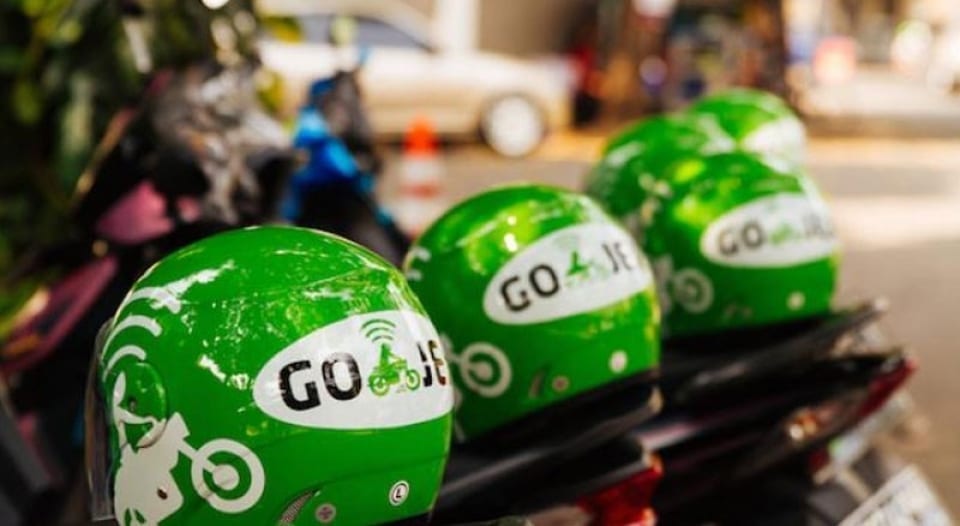
  • Indonesia’s Go-Jek Starts Trial Launch in Singapore, Challenges Grab

    Indonesia’s Go-Jek Starts Trial Launch in Singapore, Challenges Grab

    Indonesian ride-hailing firm Go-Jek kicked off a trial launch in parts of Singapore on Thursday and plans to roll out an array of services through its app in early 2019, challenging dominant player Grab in the small city-state. Both Go-Jek and Grab are raising billions of dollars and investing aggressively in the race to corner a bigger share of Southeast Asia, as more of the region’s 640 million consumers go online and use smartphones to shop, commute and make payments.

    Go-Jek, backed by the likes of Tencent Holdings, Alphabet Inc’s Google and Singapore state investor Temasek Holdings, is initially launching ride-hailing service in parts of Singapore after forming a partnership with DBS Group Holdings, the region’s biggest bank.

    “As this is a new product, we will obviously give promotions, but at the end of the day, it shouldn’t only be pricing that differentiates our services,” Go-Jek’s president, Andre Soelistyo said on Thursday.

    Grab, backed by Japan’s SoftBank and Chinese ride-hailing firm Didi Chuxing, bought Uber Technologies’ loss-making Southeast Asian business this year, marking the first big consolidation in the region.

    Following this, Singapore’s anti-trust watchdog slapped Grab and Uber with fines and imposed measures to open up the local market to competitors after concluding that their merger had driven up prices.

    Go-Jek’s executives declined to give any details on how many drivers it had signed up or a target for market share in Singapore but said payment services would be launched later.

    Started in 2011 in Jakarta, Go-Jek has evolved from a ride-hailing service to a one-stop app through which its customers can make online payments and order everything from food, groceries to massages.

  • Biggest car rental company heading to Vietnam

    Biggest car rental company heading to Vietnam

    Vietnam is the first stop for Enterprise Rent-A-Car in Asia, after 85 locations in Europe and the Americas. The world’s largest car rental servicer, Enterprise Holdings, recently announced that its Enterprise Rent-A-Car service is now available in Vietnam. The move is part of Enterprise Holdings’ goal to expand its car rental services across the Asia Pacific region.

    Enterprise Rent-A-Car will operate in Vietnam through its Vietnamese franchise partner MP Logistics.

    Cuong Dang, general director of Enterprise Rent-A-Car Vietnam, said the company currently has 300 rental cars, from 5 to 47 seaters, available in Ho Chi Minh City. The service is scheduled to be expanded to Hanoi and central Da Nang City in the first quarter of 2019.

    Rent-A-Car’s initial strategy will be to grow a base of corporate customers, foreign employees of multinational companies with operations in Vietnam. The initial emphasis will be on long-term rentals with a chauffeur.

    Later, it will expand its services to include short-term, chauffeur-driven options, self-drive rentals and leisure hire at popular tourist destinations likes Da Nang.

    Cuong said he believes that there is great demand in Vietnam’s car rental market but inadequate supply, and that in the future, this market will thrive.

    There are two reasons Vietnam’s car rental market will grow, he said.

    First, FDI growth will be maintained for the next 10 years, which will attract an increasing number of foreign workers.

    Second, the middle class is seeing strong growth. The younger generation does not accord much priority to saving to buying luxurious cars and big homes, but tend to pay more attention to quality of life and experiences, and as such would be more willing to rent cars.

    However, Cuong noted that the Rent-A-Car model brought to Vietnam would take longer to recoup capital and profits than in the U.S.

    “The price of buying a car in Vietnam is twice that in the U.S., but the rental price is the same in both markets, so the business risk will be higher,” Cuong said.

    Todd Prister, regional director for the Enterprise Franchise Asia-Pacific said that the company is excited about the potential of Vietnam’s economy.

    “Vietnam not only has one of the highest growth rates in the world as well as attractive business markets, but also is a prominent destination in Southeast Asia. Combining these factors, Vietnam will be a brilliant opportunity for us,” said Todd.

    Enterprise is the largest car rental company in the U.S. and is the 13th largest private enterprise in the country.

    Todd Prister said Enterprise is also the largest car rental company in the world in terms of vehicles owned, employees and sales.

    The company is present in 85 countries, 10,000 locations, owns over two million vehicles and has an average annual turnover of about $22 billion.

  • Rivalry heats up in Vietnam’s food delivery market

    Rivalry heats up in Vietnam’s food delivery market

    Last week, a sea of red filled the inside of a milk tea shop in Ho Chi Minh City instead of regular young customers usually found in such places. GoViet drivers were queuing up to purchase food ordered by customers over its online delivery app Go Food, which was running a 50-percent discount program along with free delivery within 5 kilometers.

    The very next morning, the shop was filled with green shirts of Grab drivers. Grab had launched a free delivery promotion for the first 999 cups of milk tea ordered.

    Gradually, the green shirt – red shirt war is becoming visible on the streets.

    Despite being new entrants in the online food delivery market, both Go Viet and Grab are using various measures to attract and capture customer habits. Everyday, these two tech companies spend big on promotions across a wide range of food and drinks.

    They are also recruiting stars from the entertainment industry to endorse their service.

    From the get go, Go Viet had announced a partnership with singer Son Tung M-TP, who broke the record of Asia’s most viewed music video in 24 hours last May, as the company’s brand ambassador.

    Similarly, Grab’s start-studded ads feature diva My Tam, goalkeeper Bui Tien Dung and striker Nguyen Quang Hai of the national football team.

    While having large financial and technological capabilities, both Grab and Go Viet face many challenges after entering the market later than competitors like Delivery Now by Foody, Vietnammm, and Lala, which are apps well known to many customers.

    Delivery Now offers a wider range of food on its menu than Grab and Go Viet, had has a dense network of partners from large restaurants to small pavement stalls, industry insiders say.

    Delivery Now is a product of Foody Corporation, a Vietnamese food service startup that was acquired by Singapore-based internet firm Sea LTD last year; Vietnammm.com is a subsidiary of Takeaway.com, one of the world’s largest online food ordering websites based in the Netherlands; and Lala is invested by Ho Chi Minh City-based Scommerce Group, an information technology and services firm.

    Many experts believe that the race for market share between Go Viet and Grab will resemble that of Grab and Uber when they first entered Vietnam.

    Both Grab and Go Viet are aspiring to become super apps, for which food delivery is an indispensable keystone. In addition to attracting users with incentives and advertising, the two companies are spending a lot of money on reward policies to incentive drivers and expand their network of partner restaurants.

    Grab Vietnam CEO Jerry Lim claimed GrabFood’s growth has been very impressive, with the number of its contractors increasing eight-fold in just a month of testing in Hanoi. GrabFood was released in the city early last month, after a period of testing.

    In Vietnam, Grab is reaching delivery speeds of under 25 minutes and aims for a further reduction to 20 minutes per order, the fastest in regional markets.

    Grab Food is available in both Hanoi and Ho Chi Minh City, while Go Food is only present in the latter.

    Go Viet, however, remains confident that it will meet the needs of customers, aiming to partner up with thousands more restaurants nationwide in casual dining, fast food or luxury dining.

    “Food delivery and e-wallets are promising market segments,” GO Viet CEO Nguyen Vu Duc said after a few months of competing against Grab.

    However, these delivery apps also have certain limitations. For some items on their menu, drivers have to pay up front when ordering for customers in non-partner restaurants.

    Not all drivers are happy to buy food this way as waiting is time consuming, they have to make advance payments and risk the customer not accepting delivery.

    Do Xuan Quang, deputy head of Vietnam Logistics Business Association, said Vietnam was the fastest growing e-commerce market in Southeast Asia, and along with the strong growth of the logistics industry at 15-20 percent, a similar movement in the delivery market was not surprising.

    In 5-10 years, the delivery market in Vietnam will be valued at around $10 billion, he said.

    U.K.-based market research firm EuroMonitor International values the food delivery market in Vietnam at around $33 million this year and at more than $38 million in 2020. It also puts the annual growth rate of the market at 11 percent.

  • 7-Eleven Korea launches locker service

    7-Eleven Korea launches locker service

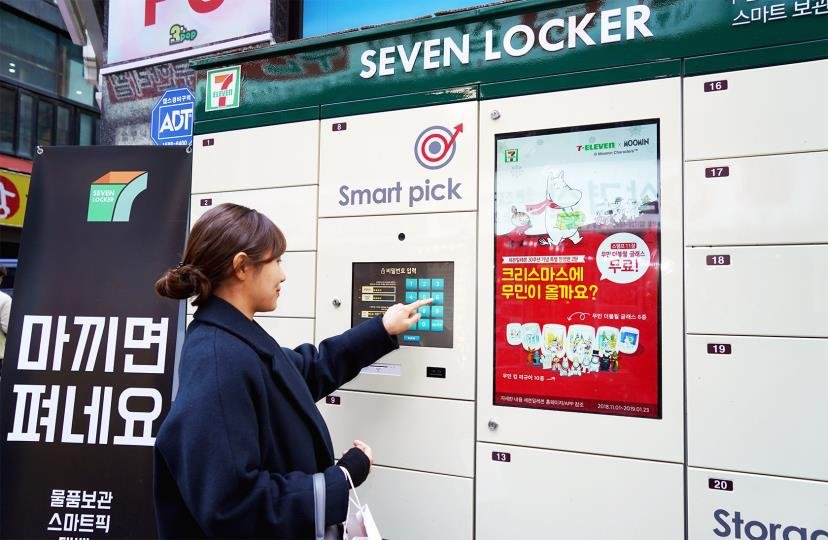
    7-Eleven South Korea has launched an unmanned locker service called Seven Locker at two stores in Seoul.

    The initiative is part of the company’s effort to diversify operations and generate more profits for its convenience stores.

    The Seven Locker trial operations started at two stores in Seoul’s Hongdae and Jongno districts, with another eight on track to open by year’s end to better gauge customer response and growth potential. The plan calls for 100 lockers to be placed at 7-Eleven stores across the country in the first half of next year, with the service to be extended to all key stores going forward.

    The lockers will be set up near tourist attractions and entertainment districts where there is demand for such services among locals and foreigners alike.

    The convenience store chain said depending on the size of the space, storage fees will range from 2000 won (US$1.76) to 4000 won for a four-hour period, with users allowed to make payments using their credit cards.

    “The lockers can create more profit for stores, while providing a differentiated service to our customers,” a local 7-Eleven executive said.

  • Vietnam’s gaming firm profits fall 52 pct in 9 months

    Vietnam’s gaming firm profits fall 52 pct in 9 months

    Vietnamese online gaming giant VNG has reported Jan-Sept 2018 profits of VND152 billion ($6.5 million), a 52 percent year-on-year slump. The company has said in its third-quarter financial statement that higher expenditures have eaten into its profits.

    Selling and administrative expenses of VND853 billion ($36.7 million) and VND382 billion ($16.44 million) respectively in the nine-month period marked a 72 percent and 27 percent year-on-year surge.

    At its recent annual meeting, the company’s management board had predicted a sharp drop in profits compared to previous year as the company wanted to focus resources on investment in strategic products and diversify operations.

    The company focuses in four main areas: e-wallet, mobile product development, ecosystem building, and e-commerce.

    VNG has set a revenue target of over VND5 trillion (more than $215 million) for this year, 17 percent higher than in 2017.

    However, after-tax profit is expected to only reach VND549 billion ($23.62 million) compared to VND938 billion ($40.36 million) in 2017.

    VNG, which used to be known as VinaGame, also owns major news site Zing, popular music site Zing MP3, instant messaging app Zalo, and e-commerce site Tiki.

    Tiki, VNG’s largest investment in e-commerce, continues to suffer increasing losses. In the first half of this year, Tiki’s losses of VND102 billion (nearly $4.39 million) were more than double the same period last year.

    The cumulative loss of this e-commerce site has reached nearly VND600 billion (about $25.82 million) after seven years of operation, beginning in 2010.

  • KT increases fixed-line network speed tenfold, to 10Gbps

    KT increases fixed-line network speed tenfold, to 10Gbps

    KT announced Wednesday it will introduce a fixed-line network 10 times faster than its current offerings in Seoul as well as six major Korean cities.  The launch of Korea’s first home internet with speeds of up to 10 gigabits per second (Gbps) comes about four years after the mobile carrier launched wired internet with 1-Gbps speed.

    According to the company, Korea’s largest fixed-line internet service provider, a faster home internet has become a necessity as the number of independent content creators, like YouTubers and dedicated Esports players, has grown explosively.

    “The 10 times faster network will enable creators to air their content in ultra high-definition quality,” said Lee Pill-jai, senior executive vice president for marketing at KT. “It will also make virtual reality and augmented reality content a norm.”

    In a demonstration Wednesday at KT headquarters in Gwanghwamun, central Seoul, the actual download and upload speeds of the new internet service exceeded 8 Gbps whereas the existing internet achieved speeds of less than 1 Gbps. With the new internet, it takes only 30 seconds to download a 33-gigabyte ultra high-definition movie, according to KT. At 1 Gbps, it takes four minutes and 30 seconds.

    “You also need to think of the many devices that will be connected to home internet in the future,” said Park Hyun-jin, head of the wire and wireless business unit at KT. “I personally use five internet-powered devices, but by 2021, an average person will have 13 devices connected to the internet.”

    According to Park, the connection of numerous devices will slow internet speeds and make a 10-Gbps fixed-line a necessity to maintain tolerable internet speeds on each device.

    Faster fixed-line internet will also support the deployment of the high-speed 5G wireless internet nationwide, according to KT.

    “The 5G network is offered as wireless internet through base stations, but 5G network equipment and base stations need to be connected via a wired backbone network,” a spokesperson from KT said. “Having a 10-Gbps fixed-line network as the 5G’s backbone network will increase the stability of the wireless service.”

    The so-called backbone is a part of a computer network that connects other networks.

    According to KT, its 10-Gbps internet will be able to cover about 60 percent of the country by the early half of next year.

    To subscribe to the 10-Gbps internet, it costs 110,000 won ($96) per month, but if users already subscribe to KT for TV services, the monthly fee could be discounted to 77,000 won on a three-year contract basis.

    The company also released 5-Gbps and 2.5-Gbps internet plans, for those wanting faster but affordable home internet.

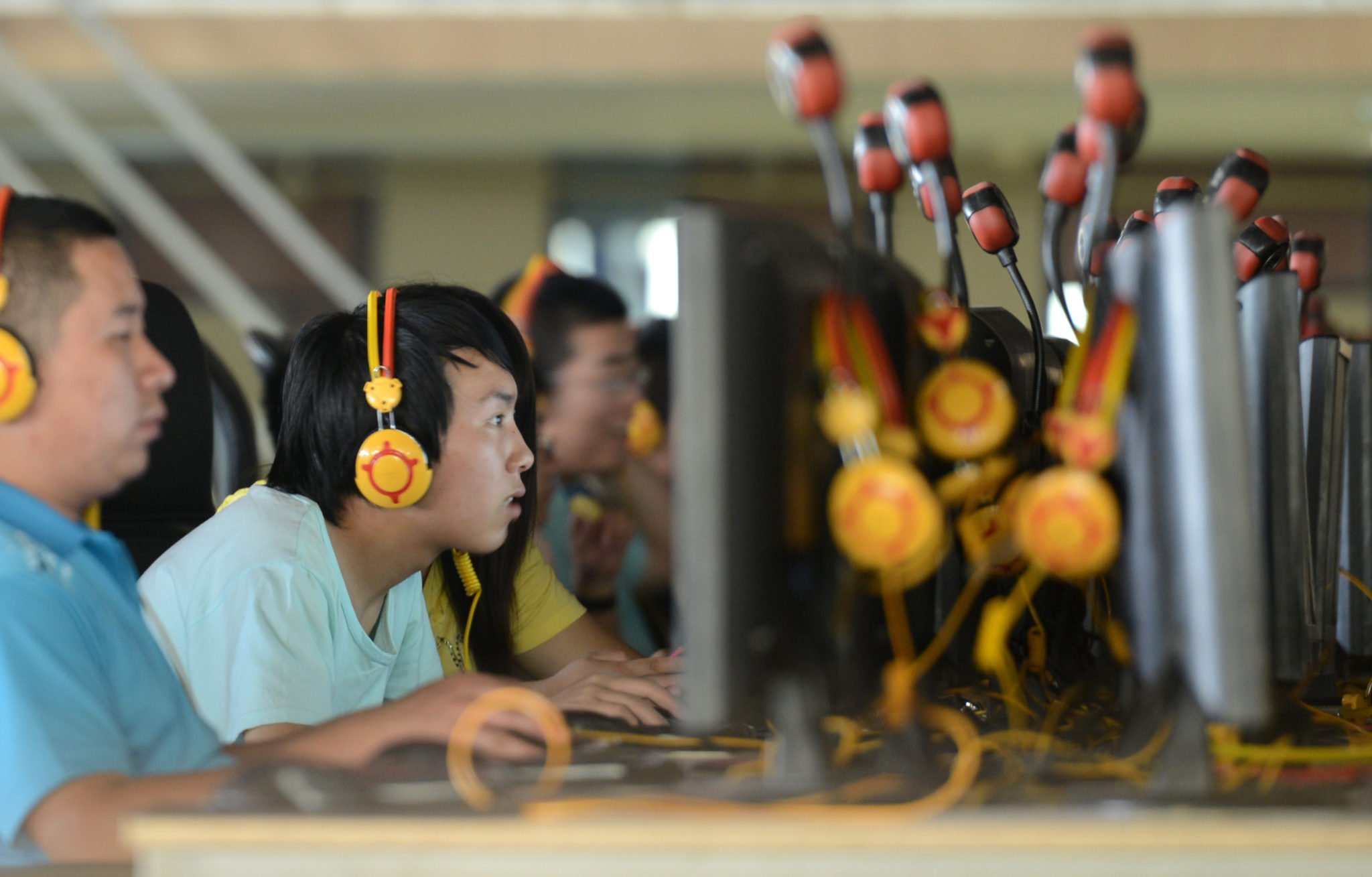
    To enable users to get a feel for 10-Gbps internet, KT said it will gradually install the network at 80 Starbucks Reserve shops in Korea and six PC rooms operated by AfreecaTV by this year.

  • TrueMoney Vietnam wins payment services license

    TrueMoney Vietnam wins payment services license

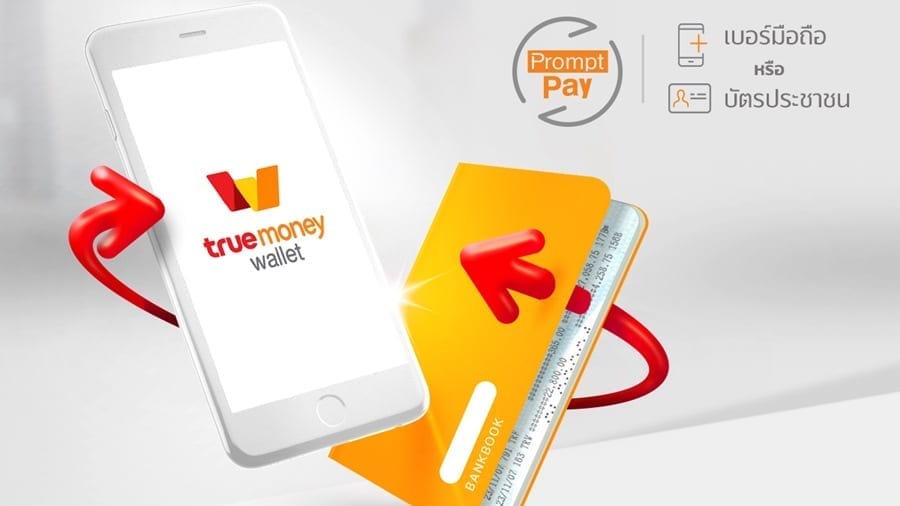
    TrueMoney Vietnam has obtained an Intermediary Payment Services License from the State Bank of Vietnam to operate digital financial services in the market.

    The company, part of Thailand-based True Corporation’s payment services subsidiary Ascend Money, has secured approval to operate e-money, e-payment, wireless transfers, and payment gateway services.

    With the approval, Vietnam will be the second country in the region to launch TrueMoney Wallet after Thailand.

    Consumers in Vietnam are expected to be able to use TrueMoney Wallet to make online purchases, pay bills and top up their pre-paid mobile and gaming cards, as well as to transfer money from their bank accounts to the digital wallet and from their wallet to other wallets.

    Offline and online merchants will be able to use TrueMoney’s system as a payment gateway and companies will soon be able to disburse payroll to their employees via TrueMoney Wallet.

    TrueMoney has a network of over 5,000 agents across 40 provinces in Vietnam. Agents are small business owners who conduct financial services for customers, enabling the Vietnamese population to access services such as top-up and bill payment near their location.

    TrueMoney Vietnam aims to soon offer additional financial services such as loans and insurance in the second quarter of 2018.

    “Winning the license to operate digital financial services cements our presence in Vietnam, an important market for Ascend in our expansion throughout Southeast Asia,” Ascend Money president Tanyapong Thamavaranukupt said.

    “This means TrueMoney is now able to deploy a broad range of safe, affordable and convenient digital money solutions to Vietnam’s population of 90 million. In particular we hope to provide equal access to financial services for the unbanked.”

    Vietnam has one of the lowest banking penetration rates in the region, with only one third of the population having an account with a formal financial provider, compared to the regional average of 69%.

    “While Vietnam has the potential to surpass China in GDP growth by 2020, the country urgently needs to connect its people and businesses to financial services, to reap the benefits of inclusive growth. As Southeast Asia’s fastest growing mobile commerce market, as well as one of its largest unbanked populations, Vietnam poses a key opportunity for TrueMoney to innovate and scale,” Tanyapong continued.

    TrueMoney has e-money licenses to operate financial services in Thailand, Myanmar, Indonesia, Cambodia, Philippines, and Vietnam.

    Vietnam, along with the Philippines, Indonesia, and Myanmar, has been identified by the World Bank as among the top 25 countries to focus strategic efforts on financial inclusion. According to the World Bank, in 2014 Vietnam had the lowest credit card usage in Southeast Asiaand only 50% of the debit cards in circulation were in use.

    The Asian Development Bank estimates that bringing digital financial services to Southeast Asia’s unbanked population can boost the GDP of economies by as much as 6%.

  • DHL E-Commerce Launches New Service Points in Asia

    DHL E-Commerce Launches New Service Points in Asia

    DHL eCommerce has launched ServicePoints networks in key Asian markets.

    In a statement issued today (24 November), DHL eCommerce said that it has established a network of more than 200 ServicePoints in Thailand – which will enable commerce sellers to ship nationwide and for online shoppers to conveniently pick-up their orders. DHL added that over 1,000 ServicePoints will be launched over the coming months.

    “We are extremely positive about the e-commerce growth in Thailand, and have seen fantastic growth since we launched our domestic delivery network in Thailand in 2016. We will continue to enhance our existing solutions and launch new services to offer greater convenience and choice for sellers and shoppers across Thailand,” said Kiattichai Pitpreecha, Managing Director, DHL eCommerce Thailand.

    “We are really pleased to now be able to offer parcel drop-off and pick-up locations, all of which are easy to access, simple to use and provide a fantastic customer experience.”

    On Tuesday (21 November), DHL eCommerce also announced that it has launched a ServicePoints network in Vietnam.  The company statement said: “DHL eCommerce has already launched more than 100 ServicePoints and will continue to rapidly expand to more than 1,000 in the coming months.”

  • MBK launches “Bangkok Buddy” service

    MBK launches “Bangkok Buddy” service

    Thai shopping mall MBK Center has launched a “Bangkok Buddy” service aimed at providing a memorable customer experience for local and international shoppers.

    Available from 2pm every day, the two-hour experience starts with an exclusive hip hop and contemporary dance production combining electronic music with Thai instruments. The Bangkok Buddy team then walks around the mall to offer customers and tourists any shopping or travelling help they may need.

    Founded in 1985 as Mah-Boon-Krong, MBK Shopping Center is at Pathumwan intersection in the heart of the city. The eight-storey mall offers 140,000 sqm with more than 2500 shops and stalls plus 150 eateries. It has an average of 115,000 customers a day, including 35,000 tourists.

    MBK is close to Siam Centre, Siam Discovery, Siam Paragon and Siam Square with their shopping and dining experiences.

  • TV as a Service market to reach $1.5b in 2021

    TV as a Service market to reach $1.5b in 2021

    In a recent video software market report, ABI Research evaluates expectations of the new TV as a Service (TVaaS) business model and finds that TVaaS revenues will grow from 10% in 2016 to 35% of video software revenues in 2021. The TVaaS model states that recurring revenues based on video consumption, transactions, or subscriber-related metrics will take over traditional hardware sales, software and IP licenses, and service-related revenues. TVaaS opportunities will grow to $1.5 billion in 2021.

    “Companies that wish to succeed in the TVaaS realm need to commit to customer-oriented solutions, including investing in 24/7 operational capabilities and robust engineering organizations,” said Sam Rosen, managing director and vice president at ABI Research.

    “Solutions need to support the hybrid cloud methodology where they can be deployed in public cloud infrastructure, as well as customer’s own data centers. Also important to operators is the use of microservice-based architectures that allow larger customers to adopt one or two components of a solution around a specific pain point.”

    Most major vendors now demonstrate products with TVaaS components. Major examples include Cisco’s Infinite Video suite, Nagra’s intuiTV product, and Ericsson’s MediaFirst suite. Similar TVaaS trends are also occurring in product lines outside of middleware, including DRM, guide licensing and metadata, transcoding and QoE measurement.

    In terms of readiness to transition to TVaaS architectures and business models, DRM leads the movement at a 56% transition rate by 2021, followed by transcoding and its 36% transition rate within the same time. Middleware, as well as guide licensing and metadata, will only transition to 20% and 12%, respectively.

    “Video software markets are in a period of rapid disruption, highlighted most aggressively by Ericsson’s revelation that its media unit’s operating income showed a loss of 25% of revenues in 2016, accelerating to 33% in the fourth quarter,” said Rosen.

    “To survive the upheaval, these markets must adopt models that showcase a unique balance of service-oriented integration and development offerings, intellectual property (IP) licensing, traditional software licensing and TVaaS.”

  • Singtel, AXA launch safe driving smart car service

    Singtel, AXA launch safe driving smart car service

    Singtel has collaborated with AXA Insurance to launch a joint smart car solution aimed at promoting better and safer driving habits.

    The joint solution comprises a Modus smart car device synchronized with a cloud-based smart car application over Singtel’s mobile networks. It analyzes driving patterns through a vehicle’s On-Board Diagnostic (OBD) port.

    Features include driver analysis covering areas such as breaking, acceleration and speed, real-time location monitoring to make it easier for users to find their car and trip history, and provide driving scores based on analysis of this data.

    The solution can also monitor engine health information and provide scheduled maintenance reminders, and provide alerts for speed and mileage limits and geo-fence boundaries.

    To promote the new solution, Singtel and AXA are offering a year worth of free AXA car insurance to the safest driver in Singapore using the solution. Drivers will need to travel at least 3,000km during the contest period.

    “The smart car solution is yet another innovative service that we are bringing to our customers, following the successful launch of Singtel SmartHome,” Singtel CEO consumer Singapore Yuen Kuan Moon said.

    “Now, our customers can enjoy an integrated connected lifestyle both in and out of the home. The solution will allow car lovers to track their driving habits and empower them to have a smarter drive.”