Retail News CRM

Tag: service

  • McDonald’s China Teams up loyalty program with Ele.me app

    McDonald’s China Teams up loyalty program with Ele.me app

    McDonald’s customers in China can now earn loyalty points when they order a Big Mac or Filet-o-Fish through Ele.me, Alibaba Group’s on-demand delivery platform.

    Ele.me users can activate a McDonald’s membership card with just one click on the app to earn loyalty points for purchases and receive vouchers worth up to RMB 88.5 (US$12.80). The fast-food giant attracted nearly 20,000 new members on its first day of launching the service on May 20, while single-day orders increased about 20 per cent week-on-week, McDonald’s China said.

    McDonald’s China is one of the first restaurant chains to pilot the new Ele.me service, one of the app’s latest tools to help the food-and-beverage sector seamlessly connect their online and offline operations.

    “McDonald’s is an important strategic partner for us, and we are thrilled to fully integrate their loyalty program with our platform. We look forward to continuing to work together to improve the delivery experience for consumers and provide even more services, benefits and perks,” said Hu Xiaoyu, VP of Ele.me.

    There are more than 3100 McDonald’s restaurants in Mainland China, more than 2000 of which also have a virtual presence on Ele.me. McDonald’s China launched its membership program last year, rewarding members for purchases made in-store or via its app and mini-program. It now counts more than 75 million members.

    “Integrating our loyalty program with Ele.me helps us provide more customers with a complete set of membership services and benefits, which ultimately enhances the delivery experience,” said Emily Pang, head of brand extension at McDonald’s China.

    Also among the first batch of global restaurant chains to bring their membership program to Ele.me are Burger King, Dairy Queen and Papa Johns, all of which reported higher sales in the 30 days that followed their launch. Burger King was the first to opt in last November, and has since attracted 2 million new members, with members contributing to nearly 40 percent of its gross merchandise volume on Ele.me.

    Ele.me plans to roll out even more features, such as birthday perks and member-only sales campaigns, to “bring more value to every purchase,” Hu said.


  • Global food e-commerce sales forecasted to Triple

    Global food e-commerce sales forecasted to Triple

    A new report has forecasted global food e-commerce sales to nearly triple through 2023, rising to US$321 billion and accounting for nearly 5 percent of total e-commerce revenues.

    The Global Food E-Commerce report, released by market research firm Packaged Facts, projects the Asia Pacific region will account for the majority of absolute growth, primarily due to the rapidly expanding Chinese market.

    China dominates regional e-grocery activity in part because of the country’s large urban population and rapidly expanding the middle class. In addition, much of China’s large population has access to high-tech devices and the ability to shop online, due to the country’s position at the forefront of technological development and electronics.

    Last year, more than 75 percent of global food e-commerce sales were concentrated in the top five markets: China, the US, Japan, the UK, and South Korea. In each of these countries, e-grocery spending is highest in large urban centers, where many retailers have focused their marketing efforts for home delivery or click-and-collect services.

    The report states that through 2023, demand growth in these countries will be driven by five key factors: increasing comfort among existing online shoppers in making routine grocery purchases online; growing use of subscriptions and memberships with online retailers; greater penetration of broadband internet in rural and remote areas; greater acceptance of (and investment in) home delivery, click-and-collect, and drive order fulfillment formats in an increasingly omnichannel retail environment; and improvements to data security that ease consumer fears about having their personal information stolen while shopping online.

  • Japan bans handset-mobile service bundles

    Japan bans handset-mobile service bundles

    The Japanese government has passed a new bill aimed at reducing mobile prices for consumers and stimulating competition in the mobile market. The new bill includes provisions banning operators from offering bundled device and mobile plans under a single price package.

    The new law, which is due to take effect as early as the third quarter, is aimed at addressing a practice that consumers and lawmakers have complained make it difficult to compare prices between operators.

    Incumbent operators NTT Docomo, SoftBank and KDDI have been under pressure to reduce their mobile charges to help alleviate the financial pressure on consumers. As part of its efforts, the government has been seeking to address the issue of mobile operators offering device subsidies in exchange for relatively high prices for mobile services.

    Responding to this pressure, Docomo last month introduced a simplified fee structure that it says will have the effect of reducing mobile rates by up to 40%, and its rivals are considering following suit.

    The amended legislation also introduces new penalties for companies using misleading sales tactics, as well as a new registration requirement for handset retailers for regulatory purposes.

  • DBS Rolls Out Customer Center of the Future

    DBS Rolls Out Customer Center of the Future

    DBS has retrained its customer center employees to take on new roles as customers become more digitally savvy. Voice biometrics specialists, live chat agents, and customer experience designers are among the 13 new job roles that DBS Bank has introduced in recent years as it creates the customer center of the future, the bank said in a media statement on Thursday.

    As it creates the customer center of the future, the bank has upskilled and retrained over 500 customer center employees and eliminated common customer pain points such as long waiting times. «By investing in our people, we have been able to transform from a labor-intensive department with a high turnover rate to one that is technology-enabled where employees are more fulfilled and armed with future-forward skills,» said Geeta Sreeraman, DBS’ Head of Customer Centre, Singapore.

    Customer centers are traditionally labor-intensive departments. At DBS Singapore, its customer center processes over four million inbound customers’ calls every year. But with new digital initiatives and new roles created, call volumes have dropped 12 percent over the last year. Over the next three years, the bank predicts call volumes will drop by a further 20 percent.

    As customers become more digitally-savvy, DBS has expanded its service channels online and on social media to serve its customers. DBS’ customer center has also incorporated technologies such as voice biometrics, chatbots, and data analytics so that callers can experience shorter call waiting times and opt to resolve their banking queries independently via the bank’s website, on their mobile banking app or through the bank’s Facebook or Twitter channels.

    In 2017, DBS committed to investing S$20 million over five years to equip employees with digital skills to become a future-ready workforce. Since then, the bank has rolled out a company-led Professional Conversion Programme (PCP), an AI-based learning tool available 24/7 and scholarships that encourage peer-to-peer learning.

    The new roles in DBS’ Customer Center are:

    1. Social media relations manager
    2. ‘Live’ chat agent
    3. Customer experience designer
    4. Demand manager
    5. Mobile app developer
    6. Business intelligence lead
    7. Content creator
    8. Knowledge platform designer
    9. Voice biometrics specialist
    10. Natural language processing engineer
    11. Scrum master
    12. Digital evangelist
    13. VTM manager
  • ZTE, China Telecom launch 5G industrial service platform

    ZTE, China Telecom launch 5G industrial service platform

    ZTEChina Telecom and industrial equipment company Zhejiang Supcon have jointly developed a 5G-enabled industrial service platform designed to allow specialists to remotely assist on-site maintenance personnel.

    The Plantmate service platform allows on-site maintenance personnel to use augmented reality glasses equipped with high definition cameras to send real-time high definition images back to specialists over 5G.

    These specialists can then diagnose and troubleshoot problems remotely, communicating with on-site personnel over voice and video as well as a shared digital whiteboard.

    Users will also be able to access the maintenance specialist team at Zhejiang Supcon’s Hangzhou headquarters to obtain remote consultation and technical guidance for the company’s equipment and instruments.

    The three companies have announced plans to deepen their 5G cooperation in the industrial feed in the future to help jointly promote the implementation of a 5G industrial internet.

  • YouTube TV’s Subscription Fee is Going Up

    YouTube TV’s Subscription Fee is Going Up

    There are a few different forces fighting each other with YouTube TV right now. First is that the streaming service is still relatively new, especially taking into account how recently it was made widely available in the U.S., and it is likely lagging in terms of subscriber numbers. Second is the content selection available for YouTube TV, which is pretty good and compares well with other services, but depending on what you want, YouTube TV might not have it. And third is the price, which directly impacts, and is impacted by, those first two items.

    For the earliest of adopters, YouTube TV was priced at $35 per month. Then came a small price bump to $40 when YouTube TV added Turner network channels, including TNT, TBS, Cartoon Network, Turner Classic Movies, NBA TV and the MLB Network. When that price hike happened, as is often the case, original subscribers were grandfathered in to the original price. Unfortunately, that’s not the case with YouTube TV’s newest price hike.

    Google announced that YouTube TV will now cost $50 per month — or $55 per month if you subscribe via an Apple device, in order to offset the Apple tax — and that new price doesn’t just apply to new customers but to all customers. New customers will have to pay the new price starting today, but existing subscribers won’t see the bump until after May 13th. Of course, the price hike is coming with new content, this time from Discovery, including Discovery Channel, HGTV, Food Network, TLC, Investigation Discovery, Animal Planet, Travel Channel, and MotorTrend. Plus OWN: Oprah Winfrey Network will become available later this year.

    It’s still a competitive deal considering the content made available, but a $10 or $15 change can be a lot, especially when the point of cord cutting is to save money.

  • FastGo announces Vietnam’s first helicopter ride-sharing service

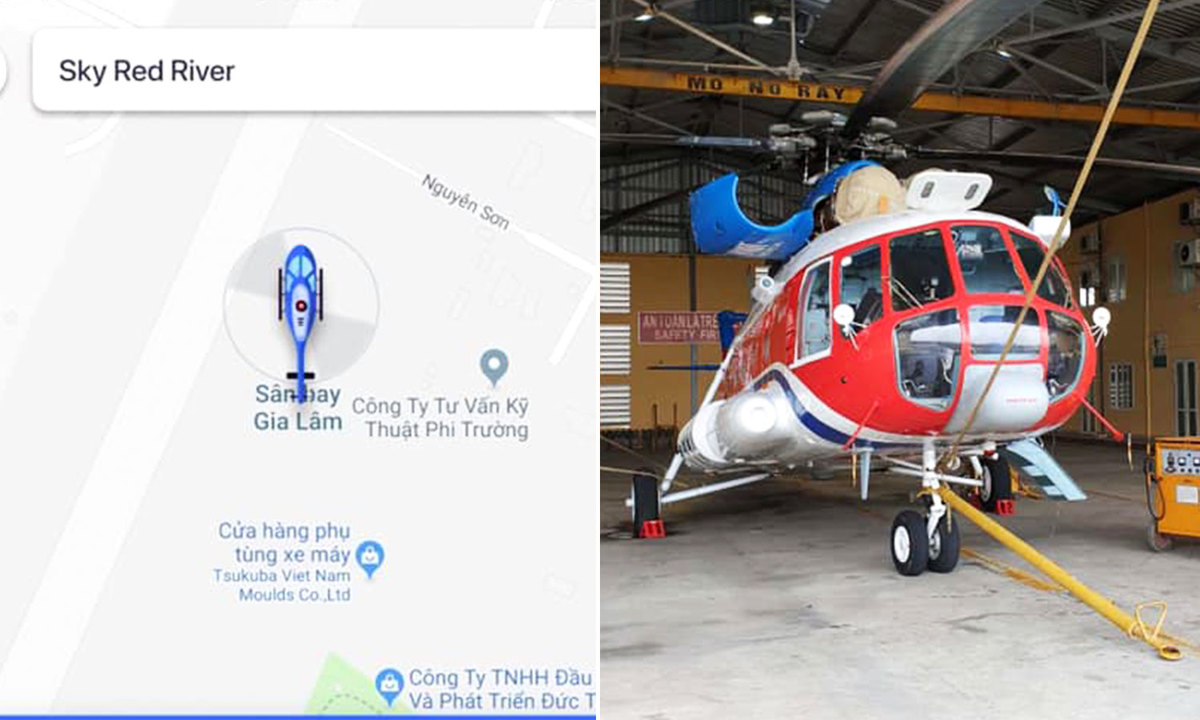
    FastGo announces Vietnam’s first helicopter ride-sharing service

    Vietnamese ride-hailing firm FastGo plans to launch the country’s first helicopter ride-sharing service in Hanoi this month, focusing on tourism in northern provinces.

    CEO Nguyen Huu Tuat told that FastSky’s first flight will take off on April 25.

    With 12 passengers to a helicopter, FastSky will operate tours from Hanoi to northern tourist destinations such as the Red River and Ha Long Bay.

    “Apart from SkyTour, we’ll also operate SkyWedding services for wedding photography and SkySOS for emergencies in which helicopters will land on Hanoi skyscrapers to pick up patients,” Tuat said.

    Prices vary for each service. A tour will cost a minimum of $125 per person, which can be paid in installments over a period of 12 months.

    Tuat said: “We offer premium services for business people but also want everyone to have a chance to fly. FastSky will be a game-changer in the transport industry.”

    FastGo only provides technology solutions while helicopters and pilots are provided by a partner who is permitted to fly in Vietnam, he said, but declined to reveal the company’s name.

    FastGo began operations last June, a few months after Uber announced its exit from Southeast Asia.

    The company, part of Vietnamese technology start-up NextTech Group, expanded to Myanmar last December.

    It plans to launch operations in Singapore this month and in five other countries in the region, including Indonesia and the Philippines, by the end of the year.

    With almost 60,000 drivers on board, the company claims to be the second most popular ride-hailing firm in Vietnam after Grab.

  • SM Group introduces first Customer Service Robot

    SM Group introduces first Customer Service Robot

    SM Group has employed its first in-mall customer service robot, at SM Megamall.

    Named Sam, the AI humanoid robot is designed to help customers with directions and information about the latest mall deals, promotions and events.

    “Innovation is what SM strives for in providing better customer service to all and we are proud to introduce our latest innovation yet,” said Steven Tan, SM Supermalls COO.

    “Sam is easy to approach and has answers to almost everything SM mall related, making shopping more seamless and fun for our customers.”

    Equipped with an advanced face-recognition technology, Sam can also make personalised greetings to customers at Mega Atrium, Mega Fashion Hall and Bank Drive.

    Customers can also chat with Sam through the SM Supermalls Facebook page 24/7 to get information on branch locations, mall schedules and promotions.

    Created in partnership with the Cal-Comp Technology, Sam will be upgraded with more functions to provide a more fun and engaging shopping experience.

  • Google offers Android users one 99-cent movie rental service

    Google offers Android users one 99-cent movie rental service

    Haven’t seen Lady Gaga and Bradley Cooper yet in A Star is Born? Google will let you rent it for only 99 cents from the Google Play Store. Android users are receiving a notification today about a special offer allowing them to pick one movie to rent from the Google Play Store library for 99 cents (+ Tax). The offer expires on April 21st. Once an Android user takes Google up on the deal, he or she will have 30 days to finish viewing the film selected. The video rented will play in the highest quality for the device being used to view it (4K, HD or SD).

    Typically, a movie like A Star is Born will cost $5.99 to rent in 4K, so Google is offering a good deal here, even though it is limited to one rental. Most likely Google is trying to get Android users to rent a film in the hope that the experience is so enjoyable, they decide to repeat it a number of times, paying full price, of course.

    There are plenty of movies available to rent for 99 cents (+ Tax). You might want to consider one of these:

    • Mary Poppins Returns
    • Aquaman
    • Fantastic Beasts: The Crimes of Grindelwald
    • Bohemian Rhapsody
    • Get Out
    • Ralph Breaks the Internet

    Remember, you only get one shot at a 99 cent rental, so choose wisely. Watch for the notification on your Android phone, or open the Google Play Store app on your device and tap on the Movies & TV heading.

  • 4 in 5 APAC operators plan to deliver 5G for sport events

    4 in 5 APAC operators plan to deliver 5G for sport events

    More than four in five (81%) operators in Asia-Pacific plan to deliver 5G services to major live sports and esports event organizers, according to research conducted by Ovum for Amdocs.

    The research found that operators in the region view sports events such as the Tokyo 2020 Olympic Games as an opportunity to create new enterprise services grounded in 5G communications.

    As well as 5G, 81% of APAC operators plan on offering IoT-related technology and services to stadium owners and tournament organizers to create efficiencies in stadium management, and 56% plan to offer services that will improve fan experiences, such as introducing the ability to order food and beverages over mobile devices.

    Operators anticipate new commercial opportunities from supporting major sporting events with 5G. Around 44% of operators in the region believe 5G will drive growth in terms of ARPU and 32% believe it will boost their enterprise business.

    Meanwhile 50% of Asia-Pacific operators believe that 5G will drive growth in sports TV subscribers, and 43% believe it will drive mainstream adoption of virtual reality services.

    To capitalize on these opportunities, 81% of operators plan on creating new partnerships with broadcasters and OTT service providers.

    The same proportion are planning to create new partnerships with device manufacturers, 64% are seeking direct partnerships with sports venues, and 56% want partnerships with social media and video game companies.

    But operators are also anticipating network related challenges regarding new 5G services for sports and esports. When asked about the biggest expected challenges, 69% cited issues with delivering the required levels of capacity and connectivity to support live HD video, and 56% cited indoor coverage to stadiums.

    “Operators see both short-term benefits in supporting sports with 5G, including growth in ARPU and their media business line, as well as longer-term benefits, such as enhanced brand appeal among younger demographics,” Amdocs CMO Gary Miles said.

    “Furthermore, working with new types of partners on 5G and sports will give operators a vital role in a new digital business ecosystem. Out of a multitude of potential 5G use cases, our research shows that sports and esports is certainly among the most compelling.”

  • Free Spotify premium service for Samsung Galaxy S10 buyers

    Free Spotify premium service for Samsung Galaxy S10 buyers

    With the Samsung Galaxy S10e, Galaxy S10 and Galaxy S10+ all officially launching today, music streamer Spotify has announced that its Android app will be pre-installed on all three models in the U.S. Additionally, the Spotify app will come loaded out of the box on the Samsung Galaxy Fold, and certain Galaxy A units in the states as well. The latter are mid-range phones offered by Sammy.

    Besides pre-installing the Spotify app on these Samsung Galaxy handsets, state-side users will receive a free six-month subscription to Spotify’s premium U.S. service as long as they are not a current subscriber to the music streamer. While Spotify does offer a free ad-supported tier of service, it does not come with certain features available to premium members. Those features include unlimited skips, and the ability to download music that can be played offline. Premium members can also play any track in Spotify’s library, and songs are streamed in High Quality.

    Spotify normally offers a free 30-day free trial to its premium tier, after which pricing is $9.99 per month. Families with up to six members can pay $14.99 monthly, and students with a verified .edu email address are charged only $4.99 a month.

    Last August, Samsung and Spotify teamed up to take on Apple Music. Spotify became Samsung’s new “go-to music service provider” as it tries to keep its lead over Apple Music world-wide. Launched in October 2008, Spotify has yet to turn a profit and has embarked on a campaign to transition subscribers from its free tier of service to a subscription plan.

  • Singapore’s Grab begins using Hyundai Motor’s Kona

    Singapore’s Grab begins using Hyundai Motor’s Kona

    Hyundai Motor, Korea’s largest carmaker by sales, said Wednesday that Singapore-based Grab began using its Kona Electric for its ride-hailing service this month. In November, Hyundai Motor and its affiliate Kia Motors jointly invested $250 million in the Southeast Asian company for a business partnership in ride-hailing service markets, the carmaker said in a statement.

    “The company is aiming to enter electric car markets in Southeast Asia through the partnership with Grab and gain a share of those markets,” the statement said.

    Grab has initially purchased 20 Kona electric vehicles (EVs) from Hyundai for its service and plans to increase the number to 200 by the end of this year, Hyundai said.

    The Kona EV can travel up to 400 kilometers (248.5 miles) per charge. The driver can charge the all-electric car to around 80 percent full in about 30 minutes, it said.

    In partnership with Grab, Singapore Power has granted Kona EV drivers a 30 percent discount when powering the emission-free car at charging stations, the statement said.

    This week, the Kona EV grabbed a coveted North American Car, Utility and Truck of the Year award at the Detroit auto show.

  • Indonesia to Regulate Ride-Hailing Rates Threatens Grab, Go-Jek Expansion

    Indonesia to Regulate Ride-Hailing Rates Threatens Grab, Go-Jek Expansion

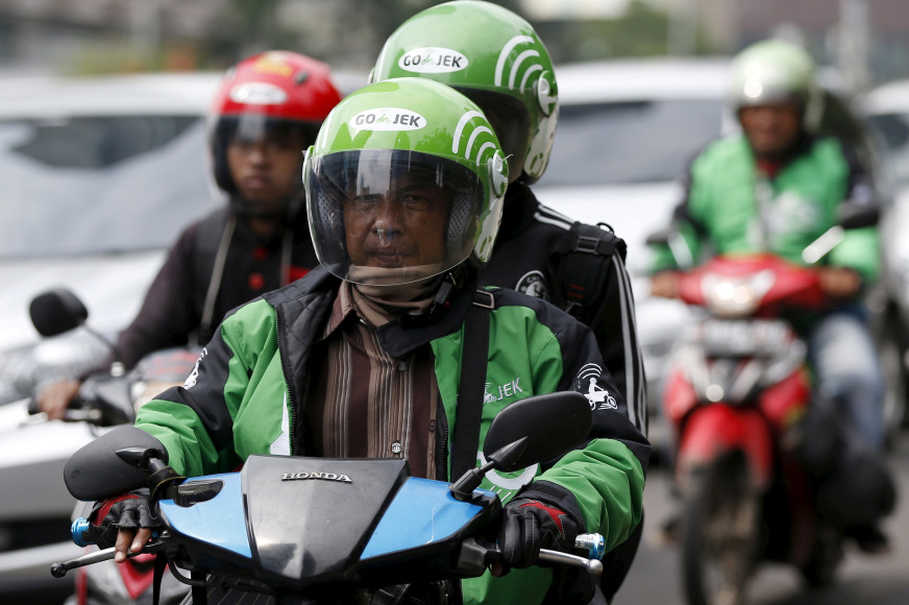
    The government is preparing to launch regulations fixing the rates drivers and riders for ride-hailing services such as Grab and Go-Jek receive, two officials said this week, creating potential obstacles for the companies’ expansion. The regulations would meet drivers’ demands for more oversight and higher rates but there are concerns that the rising costs to the companies could stifle their development as they battle to dominate the ride-hailing market in Southeast Asia’s biggest economy.

    Singapore-based Grab and homegrown Go-Jek have been locked in price wars in Indonesia, part of a wider fight to bring banking, e-commerce, ride-hailing, food-delivery and other services to every corner of Southeast Asia.

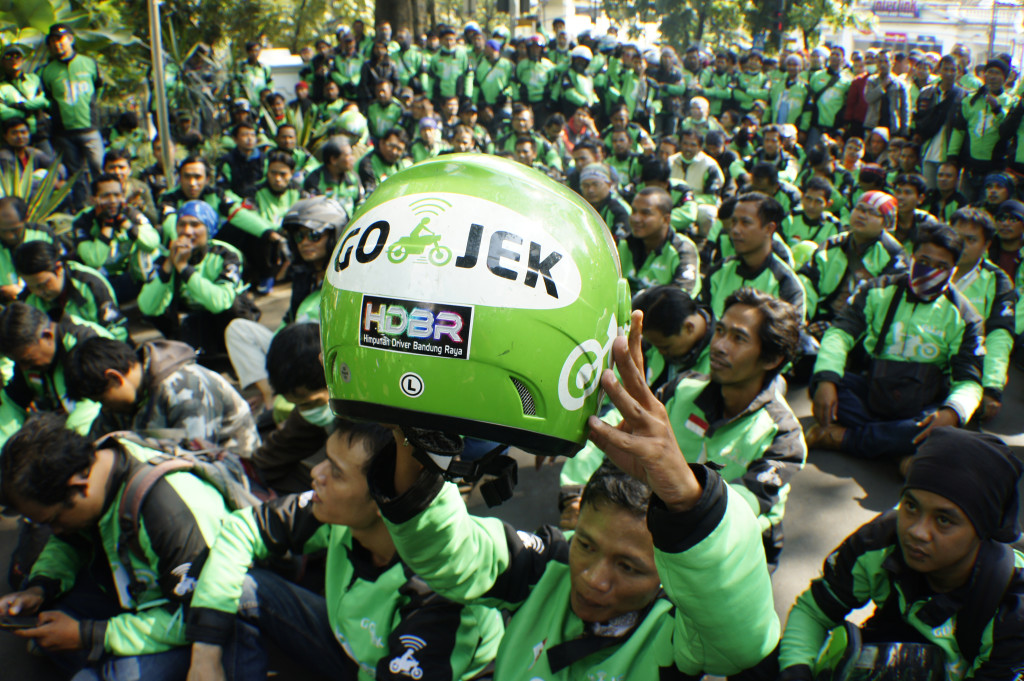
    However, since 2018, motorcycle taxi drivers working for Grab and Go-Jek in Jakarta have held protest rallies calling for higher fares and better conditions.

    The Ministry of Transportation plans to implement minimum and maximum tariffs for car and motorbike ride-hailing that will be “higher than Go-Jek and Grab’s current rates” and impose limits on promotional price cuts, said Budi Setyadi, director general of land transportation at the ministry.

    “This is for the safety and protection of drivers,” he said.

    Ahmad Yani, public transportation director at the ministry, said dependency on incentive-driven payments and low fixed rates per kilometer created a safety risk as it led to drivers overworking.

    He said Grab paid Rp 1,200 (8 US cents) per kilometer with a focus on bonuses, while Go-Jek’s rate was Rp 1,400 per kilometer.

    The officials said fixed fare ranges for motorbikes were still being finalized but would be implemented from March.

    Fixed rates for ride-hailing cars will start in June and be set at between Rp 3,500 and Rp 6,000 per kilometer on the islands of Java, Sumatra and Bali.

    The drivers were pushing for increases to a standard fare of Rp 3,000 to Rp 4,000 per kilometer.

    New Rules

    The firms said they welcomed the new rules, though they had not seen details of the motorbike regulations.”Grab believes the government will develop the best regulatory framework and hopes that all stakeholders will be included in the process,” said Tri Sukma Anreianno, the company’s head of public affairs .

    A Go-Jek spokesman said: “We support the government’s spirit to encourage our driver partners … and hope the regulation will have a positive impact on the sustainability of drivers’ income … and fair business competition.”

    However, both transportation officials said the companies are worried about the pending regulation since they have spent heavily on driver subsidies to slash their customer rates and build their businesses.

    “Grab and Go-Jek have told me they would prefer there was no regulation,” Ahmad said. “Due to the competition between them … they are scared what could happen if they don’t keep up with each other.”

    The Supreme Court blocked a previous attempt in 2017 by the transportation ministry to fix ride-hailing rates after drivers sued, saying the rules favored the taxi firms.

    Both ministry officials said the new regulations met anti-competition standards and followed extensive discussions with driver syndicates.

    Grab and Go-Jek drivers welcomed the prospect of standard fares.

    “I have been working for Grab since 2015. Before, I could earn Rp 300,000 to Rp 400,000 per day. Now, I can only get Rp 150,000,” said Hermansyah, a Grab motorcycle driver partner.

    Another driver, who had worked for both companies, said neither provided much protection, leading drivers to bear operational costs. He asked not to be identified since he had a role in organizing protests.

    The fixed rates will be a challenge to a business model that has depended on cheap passenger prices for growth and could undermine innovation.

    “Cheap fares has been the firms’ main way to attract customers,” said Yayat Suprityatna, urban and transportation observer at Trisakti University in Jakarta.

  • Vietcombank’s profit skyrockets, Vietinbank’s falls

    Vietcombank’s profit skyrockets, Vietinbank’s falls

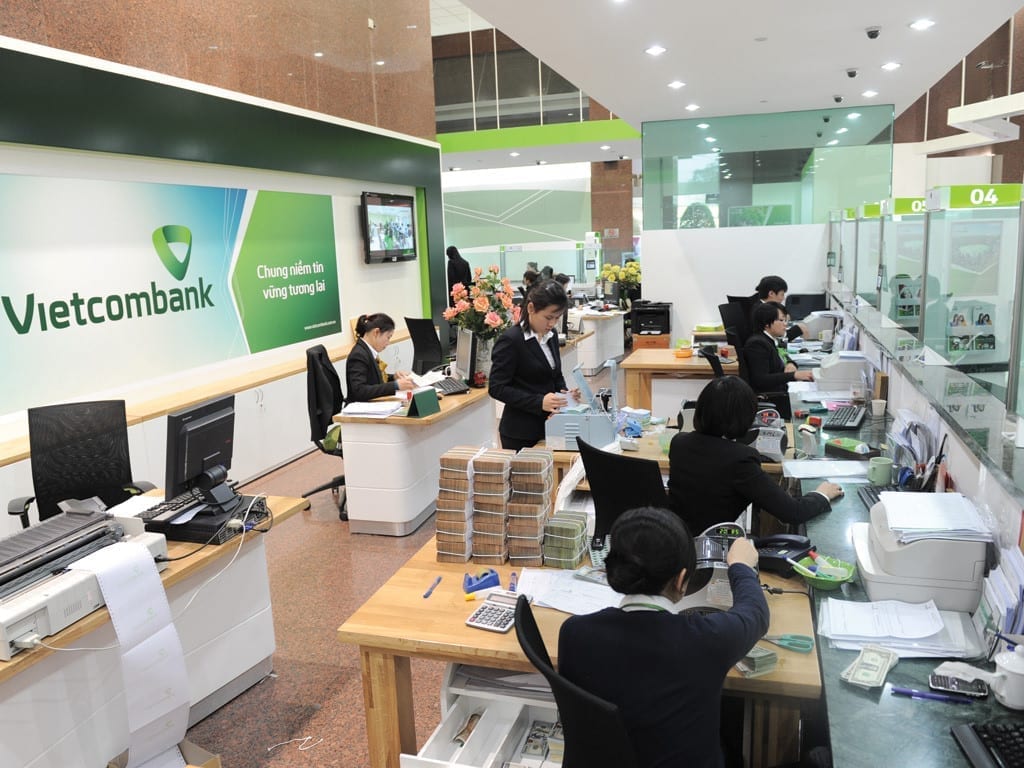
    Two of Vietnam’s largest banks reported contrasting performances in 2018, with Vietcombank’s profits rising by 63.5 percent and Vietinbank’s falling by 27 percent. Vietcombank, the largest listed bank by market capitalization, said profit before tax was VND18.02 trillion ($772.73 million) last year, up 63.5 percent over 2017. Vietcombank earlier this month raised VND6.2 trillion ($265.86 million) from selling a 3 percent stake to foreign investors.

    Singapore sovereign fund GIC bought 2.55 percent while Japan’s Mizuho Bank bought the remaining 0.45 percent to keep its 15 percent stake unchanged. Nghiem Xuan Thanh, Vietcombank’s chairman, said at a recent conference his bank had achieved all its target last year.

    Bad debts last year accounted for 0.97 percent of total loans and the bank hopes to keep it below 1 percent this year too. Vietcombank plans to have its total asset value increased by 12 percent, and its capital mobilization up by 13 percent this year.

    Vietinbank, the fourth largest listed bank by market cap, saw profit before tax slip to VND6.7 trillion ($287.3 million) in 2018 from VND9.2 trillion ($394.5 million) in 2017. Asset growth, credit growth and capital mobilization grew by 6-10 percent, lower than targeted.

    The lender’s proposal to increase charter capital has not been approved. Its chairman Le Duc Tho said increasing capital is “vital” since it has remained unchanged for years. The State Bank of Vietnam owns 65 percent of the bank, while foreign ownership has reached the 30 percent cap.

  • Indonesia’s Go-Jek rejected in the Philippines

    Indonesia’s Go-Jek rejected in the Philippines

    Indonesia’s Go-Jek suffered a setback to its expansion plans on Wednesday after the transportation regulator in the Philippines rejected its application to launch a ride-hailing service, saying its domestic unit did not meet local ownership criteria. However, the setback may only be temporary as the firm, whose backers include Google, could appeal the decision or team up with Philippine investors.

    “Go-Jek can get a local partner that will own at least 60 percent of the ride-hailing entity to comply with the law,” said January Sabale, head of communications at the Land Transportation Franchising and Regulatory Board (LTFRB).

    The decision comes as Go-Jek seeks to expand in Southeast Asia, having evolved from a ride-hailing service founded in 2011 to provide a one-stop app through which users can order food and services such as massages and make payments online.

    The firm has raised billions of dollars from investors such as Tencent Holdings, JD.com and Temasek Holdings to challenge market leader Grab.

    Several Philippine ride-hailing firms have been operating in the capital Manila and in major provinces since March 2017, but have had limited success in wresting domestic market share away from Singapore-based Grab, which stands at over 90 percent.

    “Homegrown firms are not making a dent on early player Grab, because the cars they can enroll now have to go through the LTFRB’s filtering hurdles,” said Rene Santiago, a transportation expert and president of Bellwether Advisory in Manila.

    Go-Jek applied for a license to operate in Manila in August through wholly owned subsidiary Velox Technology Philippines. Later the same month, ride-hailing was added to a list of industries where foreign ownership is limited to 40 percent.

    Velox “did not meet the citizenship requirement and the application was not verified in accordance with our rules,” regulator chairman Martin Delgra said

    A spokesman for Go-Jek said: “We continue to engage positively with the LTFRB and other government agencies, as we seek to provide a much-needed transportation solution for the people of the Philippines.”

    There are around 37,000 registered ride-hailing vehicles across eight accredited firms, Delgra said. The Department of Transportation has capped the total at 65,000.