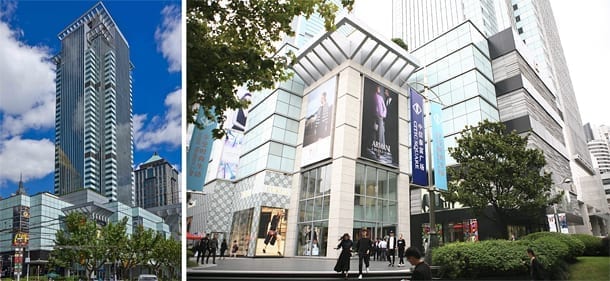
Located along Nanjing Road (West), one of the world’s busiest shopping destinations, the Roastery will be part of the soon to be built HKRI Taikoo Hui Project, Shanghai’s newest premium world-class retail, office, and hotel area.
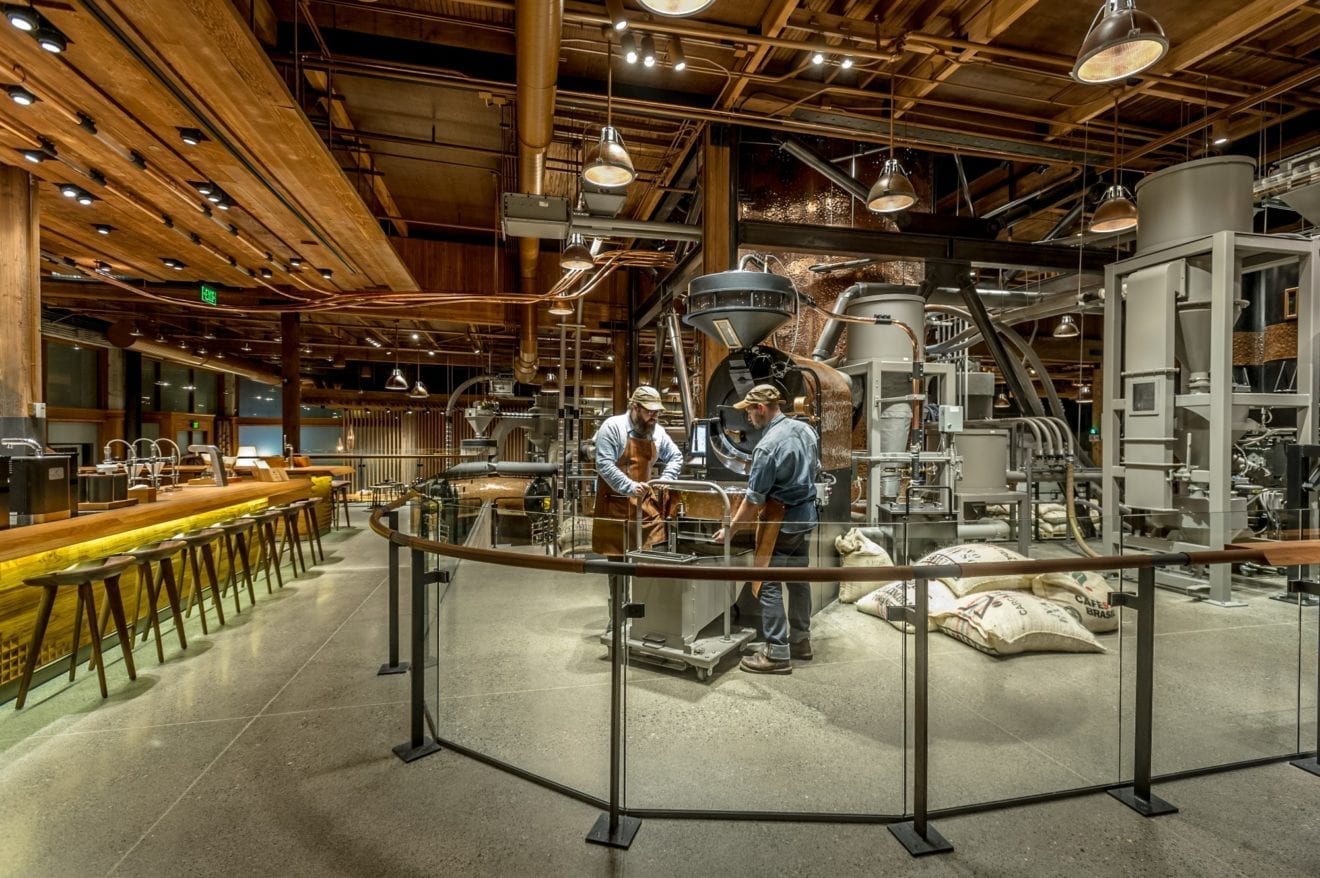
Scheduled to open in late 2017, the new Starbucks Roastery and Tasting Room in Shanghai will be inspired by the first location that debuted in December 2014 in the company’s hometown of Seattle, Washington. The 2,700 square-meter (30,000 square-foot) Shanghai space will reflect a similar, immersive all sensory experience. This interactive, retail environment will allow customers in China to better understand the craft of roasting and brewing a range of Starbucks coffees including the rare, limited availability of Starbucks Reserve coffees from around the world.
“China represents the most important and exciting opportunity ahead of us. As our first international Roastery, we will take even bolder steps to make this Shanghai location our most stunning store, while making it completely unique and relevant to the Chinese customer,” said Howard Schultz, chairman and chief executive officer of Starbucks. “The Starbucks Roastery environment honors coffee innovation as a modern day Willy Wonka experience, where customers are only feet away from the theatre and artistry of our coffee craft. I am confident this will be one of the most highly-anticipated store openings in our international markets.”
China is, today, Starbucks largest international market with more than 2,100 stores across over 102 cities, including 55 Starbucks Reserve® stores. The new Roastery represents Starbucks 45-year relentless pursuit for coffee excellence and promises to bring to China an unparalleled experience that starts with the passionate Starbucks partners. Exclusively at the Roastery, customers will be able to watch freshly-roasted beans arrive, connect with Starbucks coffee specialists and master roasters, enjoy a unique beverage and food menu, as well as savor some of the most unique, small-lot coffees brewed multiple ways. Starbucks believes this revolutionary retail concept will make the new Roastery one of the city’s latest and most iconic must-visit lifestyle destinations and landmarks, for Shanghainese and visitors from China and around the world.
The Shanghai Jing’an Government has given Starbucks their full support to bring this first-of-its-kind coffee retail experience that combines coffee roasting, manufacturing, education and retail within a single facility in China. Following a meeting with Starbucks global leaders, Shanghai Jing’an Party Secretary, Mr. An Lusheng, and Shanghai Jing’an Mayor Mr. Lu Xiaodong reiterated: “The new Jing’an is focused on developing high-end commercial sectors, establish new developmental goals for a modern cosmopolitan city, and encourage new retail innovations within our district. The government fully supports this pioneering retail experience and initiative from Starbucks.”
The Starbucks Roastery will be part of the HKRI Taikoo Hui complex, developed jointly between HKR International Limited and Swire Properties Limited, who are fully committed to launch this pioneering project with sustainability and quality at its core. The revolutionary retail experience of the new Starbucks Roastery will be located within a standalone semi-circle building of the complex that faces the bustling Nanjing Road (West), known as China’s Number One Commercial Street, due to its deep history and rich cultural heritage, which is set to become the most anticipated business and lifestyle destination in Shanghai.
Mexican-inspired restaurant chain Taco Bell has opened its first outlet in China, near Shanghai’s landmark Oriental Pearl Tower in the Lujiazui business district.
The restaurant has opened in conjunction with Yum China Holdings, which is the licensee of Yum! Brands in Mainland China.
“Leveraging our deep insights into Chinese consumer preferences, developed from close to 30 years working in this market, we researched and fine-tuned the Taco Bell menu for China, and the initial response from customers is very encouraging,” says Yum China CEO Micky Pant.
Favourite items on the brand’s menu have been adapted to local tastes, plus sauces have been developed. Items such as the Shrimp and Avocado Burrito will be offered only in China Taco Bells, and the Crunchy Taco Supreme now has Taco Bell’s signature nacho cheese sauce while the Volcano Chicken Burrito features spicy Sriracha sauce.
Customers can order shared plates featuring seasoned nacho chips, spicy fried chicken and Mexican fries. Drinks available include cold draft beer and specialty cocktails such as the Margarita and the Mojito.
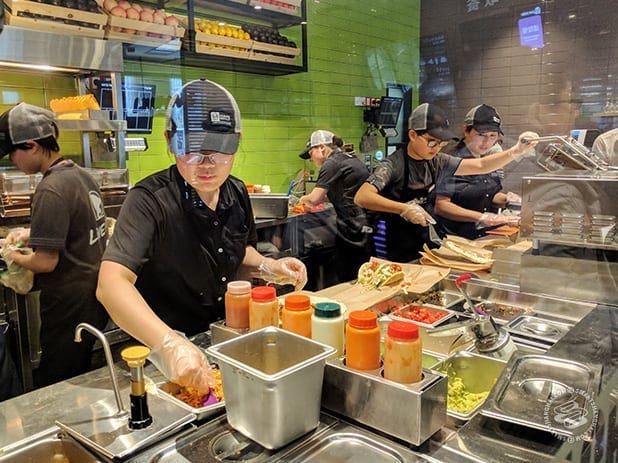
There is an open kitchen so customers can see their food being made to order. There are also self-order kiosks.
The restaurant has been officially launched following a soft opening during which customers have been sharing their experience of the brand through social-media posts, blogs and videos. More than 1000 people took part in a selfie soft-opening promotion.
California inspiration
“Built around the concept of ‘Live Mas’, which literally means ‘Live More’, Taco Bell encourages its customers to try new things,” says Pant. “I look forward to creating experiences that surprise and delight people as we expand the Taco Bell brand in China.”
The Shanghai restaurant showcases Taco Bell’s classic California-inspired look and design. It features surfboards hanging from the ceiling as well as guitars and graffiti art. It also integrates advanced technology throughout, including free Wi-Fi, digital ordering kiosks, digital menu boards and a range of payment options.
“Building restaurants in new international markets is a key component to the overall growth and evolution of Taco Bell, and we’ve just scratched the surface of our global unit expansion potential,” says CEO Brian Niccol. “The opening of this restaurant in China is an exciting milestone for the brand, as this market holds tremendous growth potential.”
Taco Bell has more than 7000 restaurants, more than 300 of them in 26 countries outside of the US. It aims to reach 1000 restaurants internationally by 2022.
Yum China Holdings, with executive offices in Shanghai, has exclusive rights in mainland China to KFC and Pizza Hut as well as Taco Bell. Yum China also owns the East Dawning and Little Sheep concepts. With more than 7300 restaurants and 400,000-plus employees in more than 1100 cities, Yum China generated more than $8 billion in system sales in 2015.
Taco Bell, a subsidiary of Yum! Brands, was the first quick-service restaurant to offer American Vegetarian Association (AVA) certified menu items. Taco Bell’s 350-plus franchise organisations serve more than 42 million customers each week through 7000 restaurants across the US, as well as through its mobile, desktop and delivery ordering services.
Based in Louisville, Kentucky, Yum! Brands has nearly 43,000 restaurants in 135 countries and territories. Worldwide, it opens more than six new restaurants a day on average.
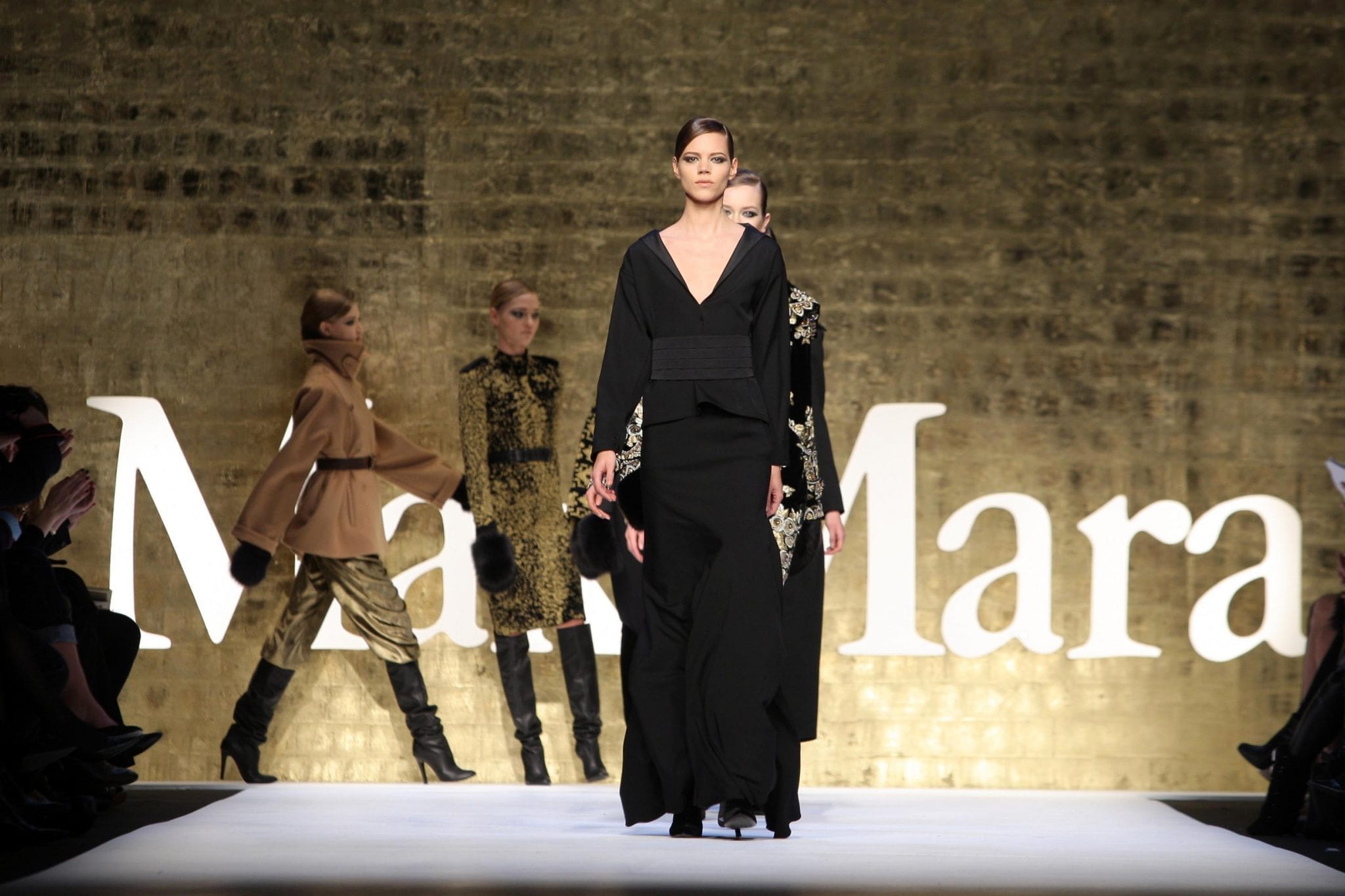
Luxury Italian fashion house Max Mara hosted its first runway show in Shanghai yesterday.
It is presenting its pre-collection for fall 2017, as well as a capsule collection conceived in collaboration with Chinese artist Liu Wei, who also created the set for the runway show.
With the capsule collection, the label is test driving its “see now, buy now” strategy. The collection comprises 11 pieces in upmarket fabrics, inspired by dense urban landscapes. The items will be available from tomorrow in a selection of Max Mara boutiques worldwide, including Paris, and on the label’s website.
Max Mara opened its first store in China in 1993 and now has 414 boutiques there, including 35 in Shanghai.
The Italian group has 19 apparel brands, led by Max Mara and Max Sport. It achieved sales of €1.38 billion (US$1.45 billion) last year, with 60 per cent coming from abroad. The company employs 5692 people and has 2668 locations in more than 100 countries.
DJI, the world leader in unmanned aerial vehicle technology, will open the doors of its Shanghai flagship store to the public on December 10, giving residents of China’s largest city the opportunity to explore the creative and professional possibilities that drone technology has brought to the world.
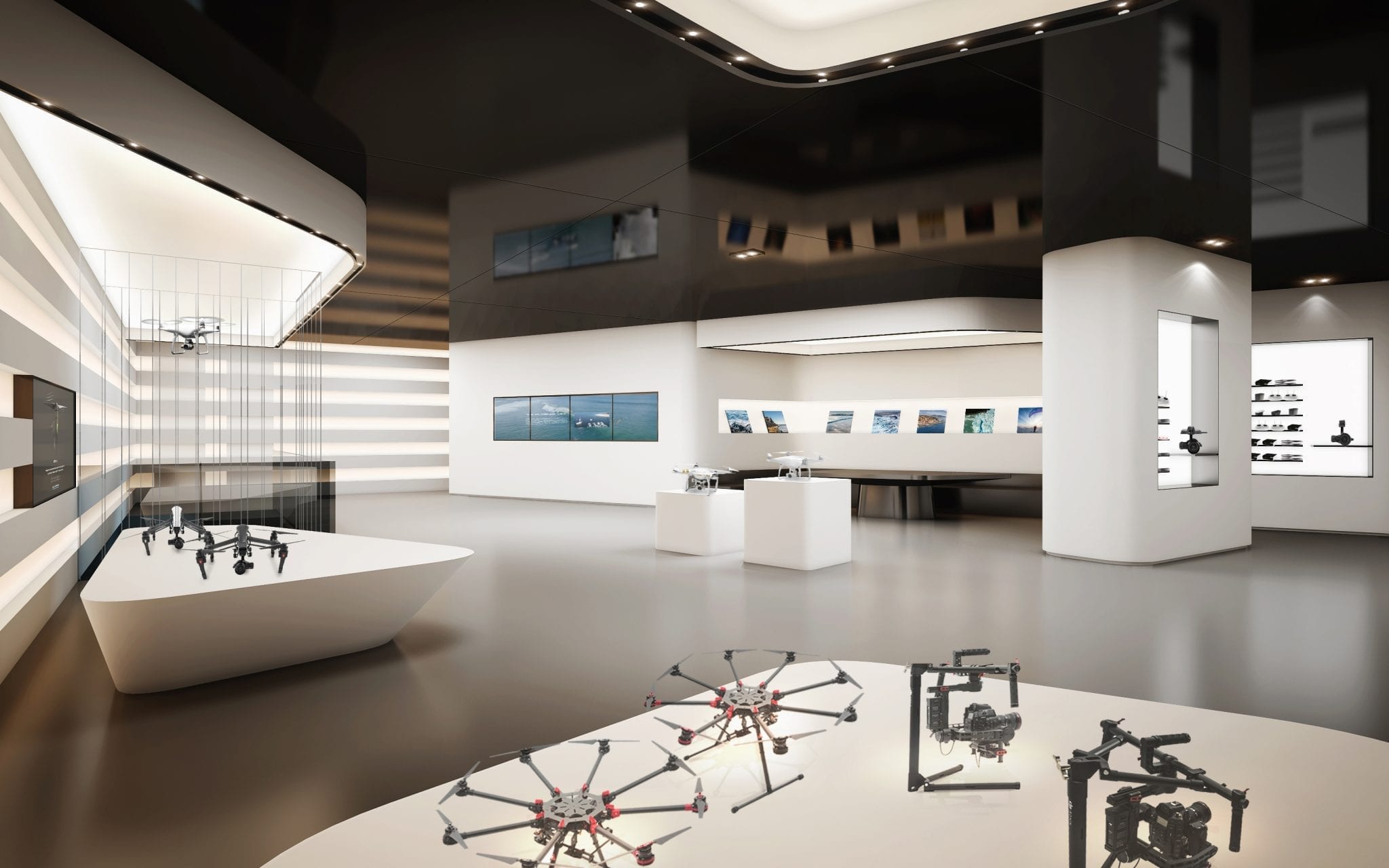
Located at the center of Shanghai’s busiest shopping, dining and entertainment district in Xintiandi (aka “New Heaven and Earth”), the two-story, 500-square-meters flagship store will display DJI’s full range of aerial platforms and camera products. Drone enthusiasts and novices alike can get hands-on experience with DJI’s market-leading technology, from the foldable yet powerful Mavic Pro personal drone to the latest professional products such as the Phantom 4 Pro and Inspire 2 drones.
“2016 is a milestone year for DJI as we celebrate 10 years of imagination, inspiration and innovation,” said Paul Xu, DJI Vice President. “We’ve expanded creative possibilities for professionals, and we’ve made it easier for general consumers to experience the fun and excitement of flight. Our flagship stores have become important touch points for people to discover, learn and be inspired. Our newest Shanghai flagship store will allow us to continue on this path and provide more people the opportunity to experience our aerial technology first hand.”
The Shanghai flagship store’s building retains traditional Shanghainese architectural elements, combining Western and Chinese design concepts. The outdoor cafes, art galleries and lifestyle boutiques in the surrounding Xintiandi neighborhood also create a vibrant cultural backdrop for the new flagship store.
The first floor of the DJI Shanghai flagship store will house a 20-square-meters flight cage demonstrating DJI drones in flight, which can also be seen by pedestrians outside the store. Also on the first floor is the Technical Support Center and the DJI Story Corner where visitors can see creative use cases and the evolution of the DJI Story on a curved surface projection screen. The SkyPixel Gallery on the second floor will showcase breathtaking aerial images by photographers from around the world. A dedicated space is also set aside for future customer workshops, photography seminars and special events.
The DJI Shanghai flagship store will officially open its doors to the public at 12 noon on Saturday, December 10. The first 300 customers can enjoy special discounts when purchasing selected DJI products or bundles on opening day. The first 100 visitors to the store will also receive a limited edition DJI t-shirt.
In celebration of the store opening, there will be a series of activities and programs throughout the day around the Xintiandi area. Life-size DJI Phantom and Osmo mascots will kickstart the opening celebration with a street parade, flight simulators and virtual reality goggles will be set up for people to experience the thrill of being in the pilot’s seat, and those who want to play the role of a movie director can try out the Osmo+ and Osmo Mobile handheld stabilized gimbals.
The Shanghai flagship store is DJI’s fourth foray into retail after opening its first flagship store in Shenzhen, China in December 2015, followed by the Seoul, Korea flagship store opening in March and the Hong Kong flagship store opening in September.
The DJI Shanghai flagship store is located at No. 222 Madang Road, Xintiandi, Shanghai, China. Opening hours of the store are Mon – Sun, 10 am to 10 pm. The Technical Support Center will begin operations the following Monday, December 12, and is opened Mon – Sun, 10 am to 10 pm.
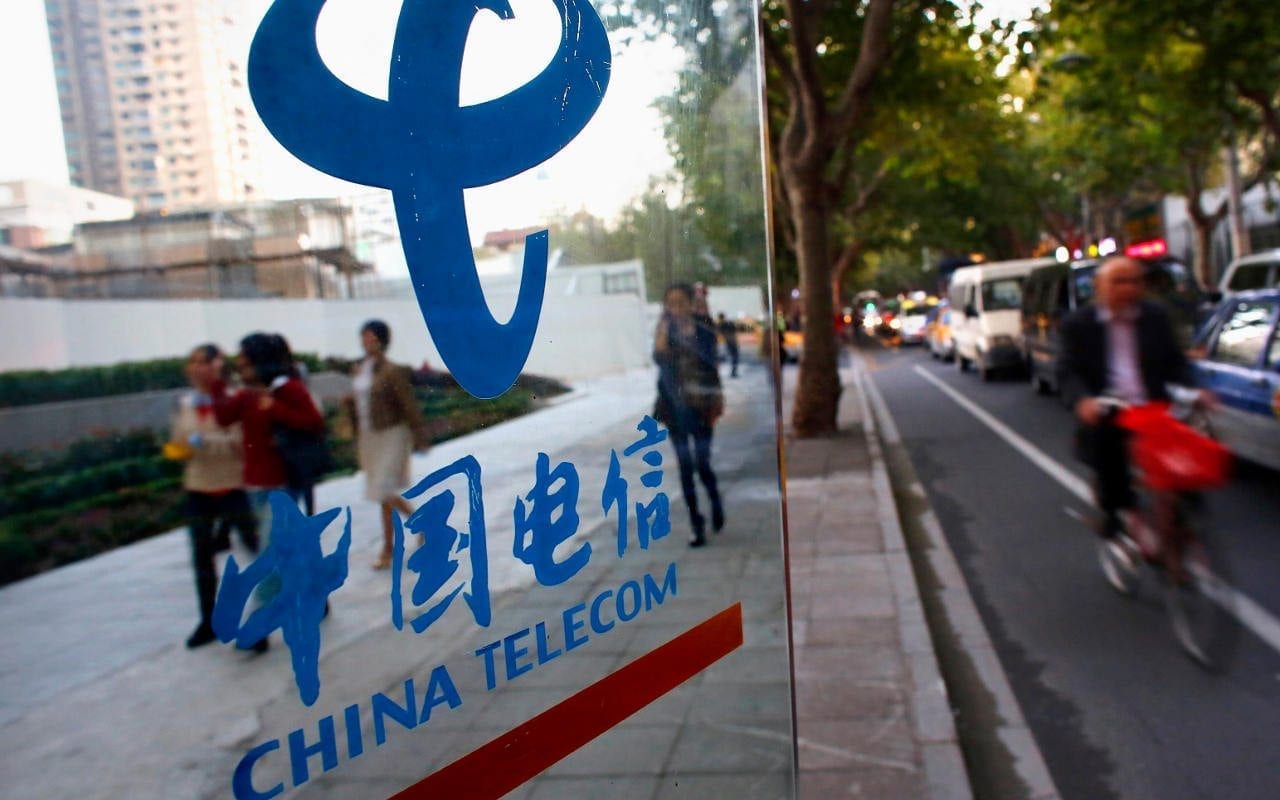
The trial solution involves slicing the access network into home, enterprise and campus connections, which will potentially allow the operator to use a single network to deliver all types of services.
OLT hardware is shared by services, and all segments are isolated from each other in order to improve service reliability and network security.
China Telecom Shanghai engaged Huawei to develop an access network slicing solution to address issues including insufficient equipment room space and runaway power consumption associated with rapid user base growth.
“Traditional OLTs do not support the access of full services. Network slicing enables service isolation and optimizes resource utilization,” China Telecom Shanghai vice chief engineer Zhang Jun said.
“Network slicing is our first step toward cloud. It is now being including in the related technical standards of China Telecom. In the future, we will cooperate with Huawei to further optimize network slicing.”
The companies expect that network slicing will propel the development of gigabit networks. This will be essential to helping operators meet the enormous capacity demands of the cloud era.
Beiyang Jiamei Seafood, a Chinese processor switching its business from exports to imports, plans to expand into re-fresh products for the domestic market.
The company, which is based in Qingdao, hopes to start processing re-fresh, packaged cod products for retail in Shanghai early next year, said Peng Song, its general manager.
“We have in mind selling re-fresh cod and redfish. I think cod, both Atlantic and Pacific, can be very big in the Chinese market,” he told.
If this model works, it could then be applied in other Chinese cities, he said. “I think we would be the first company in China to do this,” he said, during the China Fisheries & Seafood Expo.
The company is also starting to sell frozen cod products into Chinese retail, wholesale and foodservice.
“For the big, longline Pacific cod, we cut it into steaks. For the Atlantic cod, we make loins, portions and J-cuts,” he said. “I do think this item will boom in China, in a very short time.”
Chinese in coastal cites do eat Pacific cod, he said, as the same species that is caught by Russians and American vessels is also in Chinese waters.
But, the species is not sold as “cod” and consumers are unfamiliar. “The catching is inconsistent, so people do not like to promote it. The species may not be new, but to name it Pacific cod, Atlantic cod, that is new,” he said.
The company is also putting the Marine Stewardship Council (MSC) logo on its cod retail bags.
“We now have most of our products MSC approved. I think that is the future,” said Song.
“The MSC is also fully traceable, from catch-to-plate. That is a powerful message for the Chinese consumer, who is worried about food safety,” he said.
Promoting the traceability angle of the MSC logo is the best way to expand in the China market, he said, due to the concerns over food safety in China.
Shift to domestic sales
Beiyang Jiamei now generates around $35 million from domestic sales, as well as the same amount from re-processing and exporting.
For the re-processing business, cod, haddock and arrowtooth flounder are the main species, he said.
The company only started doing domestic sales in 2011. Beiyang Jiamei is selling into wholesale, into retail and foodservice, and also via online stores on JD.com and Tmall.
Beiyang Jiamei’s main brand is “Sea Mix”, but it also has another for families, “Dinosaurs”. Also, the company is launching a high-end brand, “Prime Catch”, for crab and other more expensive items.
A big focus of the domestic business, including e-commerce, is coldwater shrimp. Beiyang Jiamei imports around 5,000 metric tons of coldwater shrimp a year.
Due to the quota cuts for coldwater shrimp in Canada, the company is now importing more vannamei from Ecuador and also red shrimp from Argentina.
“We use coldwater shrimp to open the door to the supermarkets. Then, we try and introduce our other products to them. Coldwater shrimp will remain the most important item to us,” he said.
“Needless to say, the high prices of coldwater shrimp mean vannamei has taken a share of the market,” said Song.
“The price is RMB 91.50 ($13.53) per kilogram. This is the same price as L1 [Argentine shrimp] or 30/40 from Ecuador,” he said.
“In China, if you entertain a guest, you want the bigger size to create a good impression”, meaning the vannamei and Argentina shrimp has a strong appeal, he said.
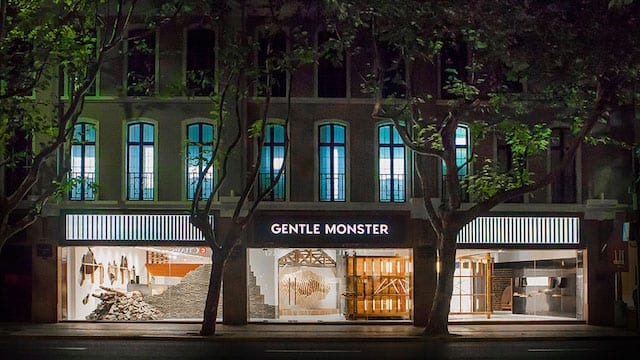
Luxury eyewear brand Gentle Monster from South Korea has opened a flagship store, The Artisan, in Shanghai.
It is on a tree-lined stretch of Huaihai Zhong Lu, an artery road in the former French Concession.
Gentle Monster has opened several flagship stores in the past two years, in Seoul, Beijing, Hong Kong and New York City.
Supervised by creative director Hankook Kim, the design concept for the store is loosely inspired by an artisan’s workshop, and features several rooms each with a distinctly different design. The settings are either functional or experiential, but always feature specially designed fixtures and furnishings to give each flagship store an individual touch.
Looking more like an art gallery than an eyewear shop, it includes kinetic art that produces sound, with a multi-layered entrance.
A feature is a motorised installment of wood and metal, appropriately named Sound Wave, that produces a repetitive dull sound with its flowing movement.
With a distressed wall, the Carpenter Artisan space holds a tree trunk on its side, its top resting on a pile of bricks from a broken wall. It is dissected by metal boxes, and expresses the process of crafting via a gradual transition from tree to lumbar. Other features include a fanned “stairway” of plans, a table full of wood shavings and timber “artworks”.
Behind the entrance ceiling light is a triangular wooden roof structure, formerly supported by the bricks that now lay under the tree in the wooden artisan space. It expresses the passion of artisans and their willingness to deconstruct and tear down in order to create something new.
With two circular rooms, the Metal Atelier of Artisan space features lines flowing in from the stairs and the black walls, expressing the processing of metal. The larger room shows raw metal with repetitive images of pipes, while the smaller room displays polished and machined metal.
To highlight the contrast between metal and wood, an installation inspired by the intangible sounds on the first floor features vertical boards on a stairway, indicating crafts flowing through the corridors and representing the resting mind of a troubled artisan.
Amid all this, the Shanghai store displays the brand’s full range of prescription eyewear and sunglasses, as well as collaboration models with brands such as Hood by Air, Opening Ceremony and Six Lee.
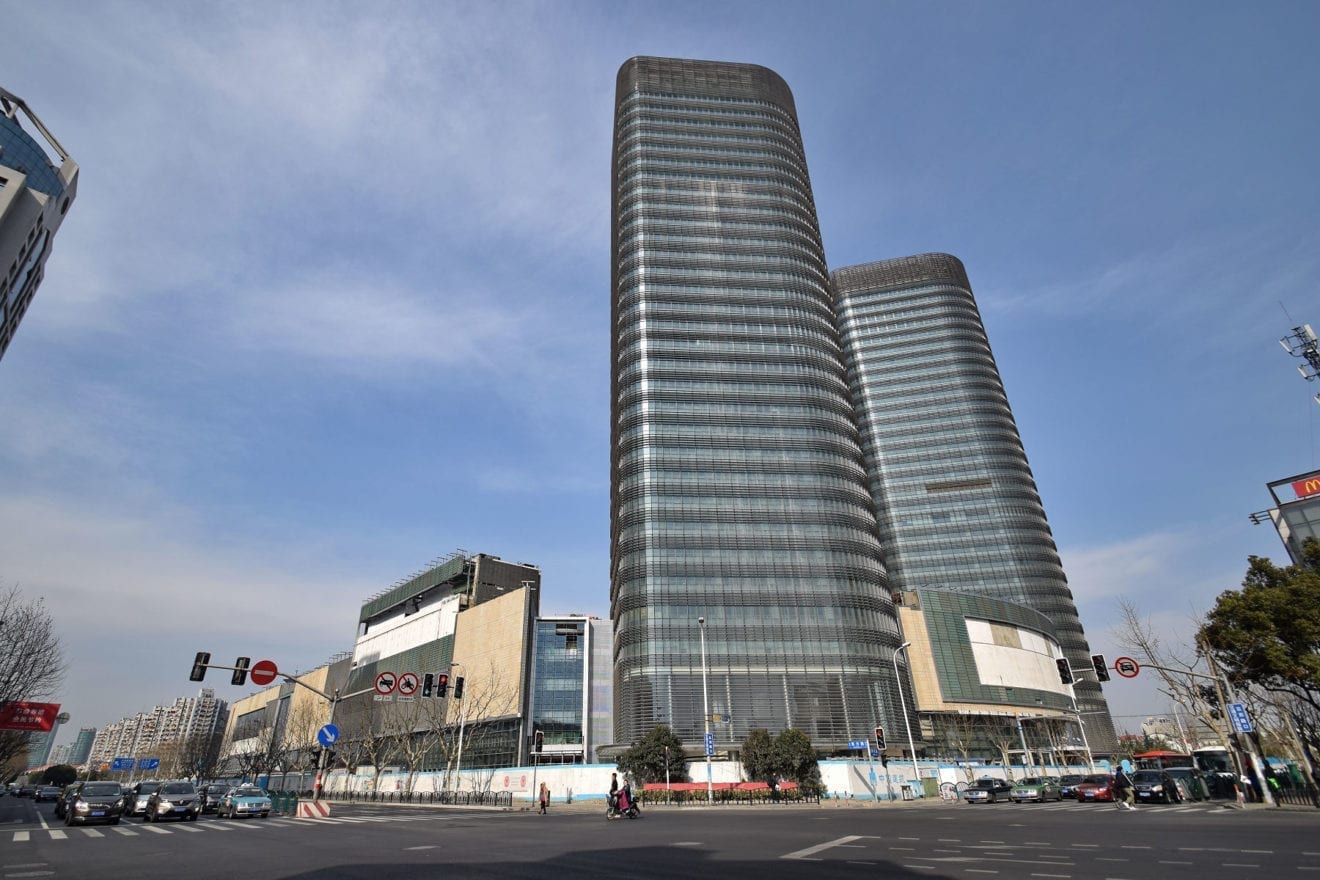
Chinese tycoon Li Ka-shing has sold the Century Link office and retail complex in Shanghai for 20 billion yuan (US$2.95 billion).
Li’s Cheung Kong Property Holdings (CK Property) and the Li Ka Shing (Overseas) Foundation agreed to sell their combined 100 per ownership of the complex, in Pudong’s Lujiazui district, to a company set up especially for the deal. China Life Insurance is the majority shareholder, with the minority stake held by closed-end funds managed by ARA Fund Management, in which CK Property owns 7.8 per cent. The purchaser, known as Mapleleaf Century, will be managed by ARA.
Century Link comprises two 34-storey towers and a retail podium.
“The disposal enables the company to realise its investment,” says CK Property. It expects to record an unaudited gain of about HK$6.22 billion (US$801.9 million) after the transaction.
CK Property was reportedly looking for a buyer for the development last year. Over the past two years, companies backed by Li and his family have sold office and shopping mall projects in Beijing, Shanghai, Guangzhou and Nanjing.
Many businesses have been prompted to shed renminbi-denominated assets, reports the South China Morning Post, following the yuan depreciating by 2 per cent against the US dollar since mid-August after having weakened by 6.6 per cent in the past year.
Five days before the announcement of the sale, China Life led the acquisition of a US$2 billion stake in American hotels owned by Starwood Capital Group.
The net proceeds from the Shanghai property disposal are intended to be used by the group as general working capital, says CK Property.
In Hong Kong, CK Property is selling The Center in Central, the tallest building in its portfolio, with an asking price of HK$35 billion. The 73-storey tower, which has 1.2 million sqft (111,483.6 sqm) of office space, 13,000 sqft of retail space and 402 car parks, has attracted a handful of potential buyers.
CK Property owns 48 storeys in The Center building after Malaysian developer Guoco Group bought 11 floors in 1997. Nine of the 11 floors were sold to Singapore’s DBS Group Holdings in 1998, while CK Property sold the 60th and 79th floors in 1999.
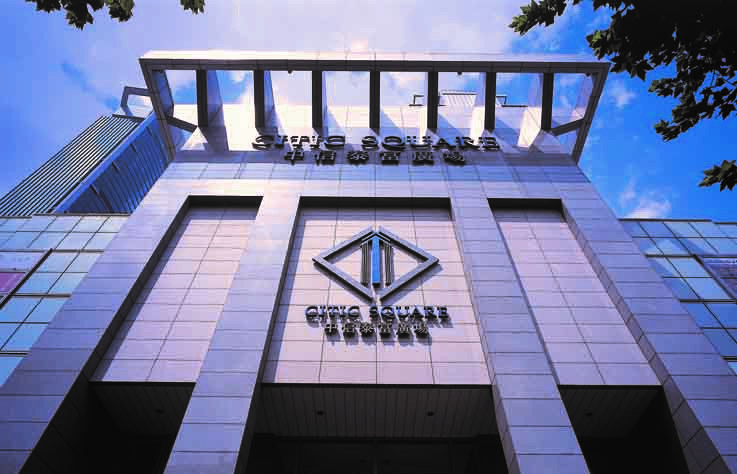
Lotte Department Store has signed on to a joint venture with Citic Group, a state-owned Chinese company, to operate a shopping mall in Shanghai and to build three more in the region between 2017 and 2019, the Korean company announced Monday.
The joint venture will operate the already-existing Citic Square Mall in the bustling commercial district of Jing’an on West Nanjing Road. The mall is currently run by Citic Group, and Lotte’s participation in the joint venture with the Chinese company will allow the Korean retail giant to step foot into the Shanghai market without having to navigate through China’s byzantine business regulations.
Lotte will hold approximately 49 percent of the joint venture’s shares and will focus on operations, while Citic Group will help with property development.
The partnership was first offered by Citic Group, which makes 60 trillion won ($52.6 billion) in annual sales from financial services, energy and property development. “In China, companies in property development have started to launch businesses in retail because they already have the land to build new facilities,” a Lotte Department Store spokesman said.
Although Citic Group is an influential company in China, it lacks expertise in retail, as it wasn’t the group’s main business in the past. Competition is also tough, as Shanghai is currently home to over 50 department stores and 80 shopping malls.
Lotte Department Store, on the other hand, already has five branches across China and has experience with merchandising, store design and employee training in the country. Sales at Lotte’s five department stores rose 28 percent last year from the previous year.
The Korean retail giant said it plans to use the partnership to create more opportunities for Korean brands to enter Shanghai. Consumers in the metropolis have shown particularly high interest in Korean popular culture, making it a good starting point for Korean fashion companies looking to set foot in China.
“We believe the partnership with Citic Group will strengthen our stance in the Chinese market,” Lotte Department Store CEO Lee Won-jun said. “Our plan is to use this opportunity to help other domestic companies with potential to expand to China as well.”
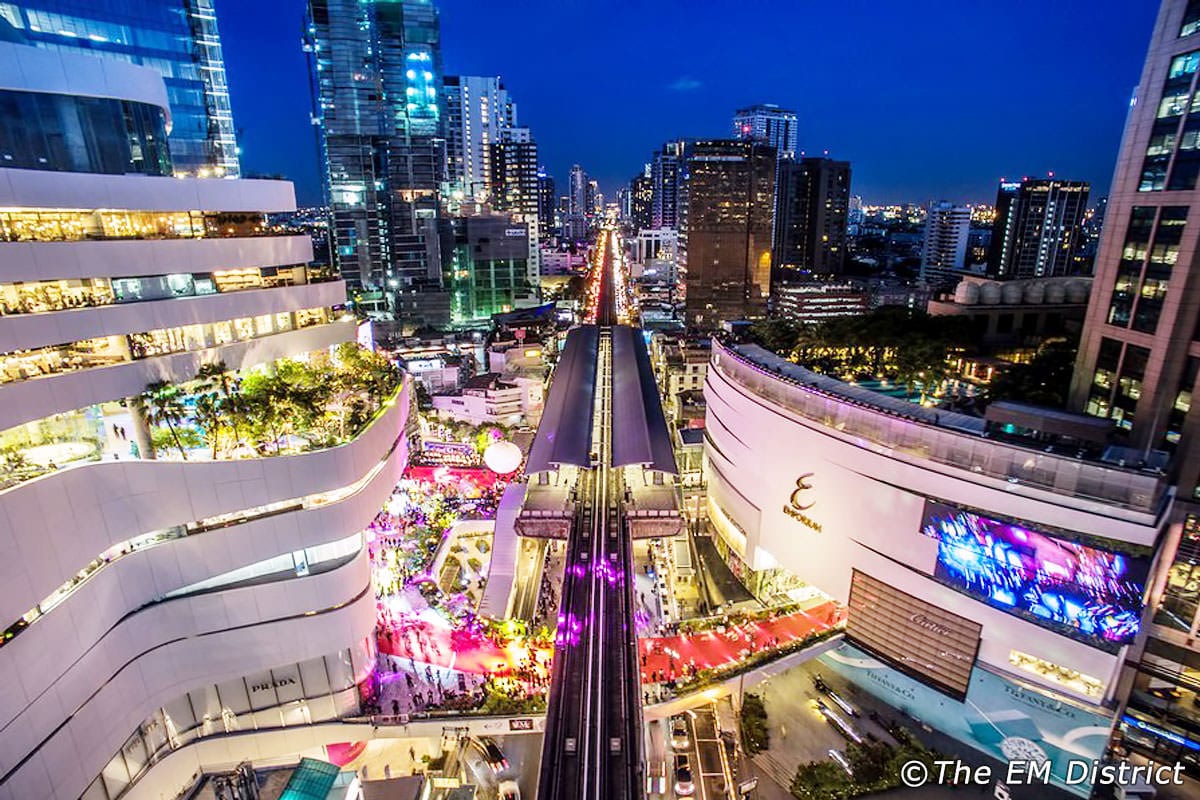
Asia is home to more than half the world’s most dynamic retail hubs, according to new research that reinforces images of the region’s mall-strewn megacities.
The research, by professional services and investment management company JLL, says 12 of the fastest-growing retail cities are in Asia, with eight in China alone — another indication that global economic growth is increasingly driven by the Asia-Pacific region.
JLL lists Dubai as the world’s fastest-growing retail destination, with Shanghai second and Beijing third. Places 9 to 13 are occupied by Bangkok, Chengdu, Kuala Lumpur, Jakarta and Manila, respectively. Only two European cities make the top 20 — Moscow and Istanbul — with none from Africa. Mexico City is the sole city from the western hemisphere, sitting at number 19.
Overall, JLL lists London as the “most attractive” city for retailers, with Hong Kong second and Paris third. Dubai, Singapore, Shanghai, Tokyo and Beijing all make the top 10, with Bangkok, Taipei, Seoul and Osaka in the top 20.
Shanghai at night. The Chinese megacity is projected to be one of the world’s retail hubs in the coming years (Photo: Simon Roughneen)
The study looks at the presence of 240 international retail brands in 140 cities — which altogether make up 36% of the world’s gross domestic product, 13% of the global population and a third of total worldwide consumer spending.
“The search for growth is escalating the penetration of international brands across the world’s most attractive retail cities, especially in Asia,” said David Zoba, chairman of JLL’s Global Retail Leasing Board.
Asia catching up
Many Western economies continue to suffer from slow growth — in stark contrast with Asia, where the International Monetary Fund predicts overall growth of more than 5% in 2016-17 and describes the region as “the engine of the global economy.”
Asia is urbanizing rapidly as economies develop and incomes rise, meaning that big global brands will increasingly look to Asia as a source of consumers. World Bank research shows that nearly 200 million people in the East Asia and Pacific region –excluding India and its heavily populated neighbors such as Pakistan — moved from the countryside to cities during the decade after 2000.
In 1800, only 3% of the world’s population lived in cities, a figure that rose to 13% by 1900. Now more than half the world’s population is urbanized, with projections that 70% or more of the world will live in urban areas by 2050. And while in the 19th and 20th centuries urbanization was mainly a Western and Japanese phenomenon, developing countries are catching up fast, particularly in Asia.
Despite the steady rural-urban shift, only 36% of East Asia’s population had moved to urban areas by 2010, with only Japan, Malaysia, South Korea and Taiwan having larger urban than rural populations.
While China had by far the largest absolute numbers of people moving to cities, smaller countries such as Cambodia, Laos and Vietnam showed higher rates of urbanization. Laos more than doubled its small urban population, while high-growth economies such Cambodia and Vietnam both had between 4% and 4.5% annual urban population growth rates. Retail investors are noticing opportunities even in smaller cities such as Phnom Penh, where Japanese mall operator Aeon opened the city’s first large shopping mall in 2014.
Asia’s cities will continue to grow over the coming decades as the region becomes wealthier. McKinsey Global Institute expects that in the next 15 years, “the center of gravity of the urban world will move south and, even more decisively, east.” According to MGI, half of global GDP in 2007 came from 380 developed world cities, with the 22 biggest cities in developing countries contributing a mere 10%.
However, MGI predicted that by 2025 half of the cities in its 2007 rankings will not make the list, with 136 developing world cities entering its ranking of the 600 biggest urban economies — including 100 from China alone.
“By 2025, developing-region cities of the City 600 will be home to an estimated 235 million middle-class households earning more than $20,000 a year at purchasing power parity (PPP),” MGI reported. The figure is larger than the 210 million such households expected in the cities of developed regions.
Thinktank Oxford Economics said that cities such as Chengdu, Hangzhou and Wuhan “will become as prominent in 2030, in economic terms, as cities like Dallas and Seoul are today.”
Shift east
The thinktank predicted that by 2030 eight European cities will drop out of the global top 50 cities ranking, measured by GDP, while nine Chinese cities will join that group, taking the Chinese total to 17, which will be more than North America and four times more than Europe.
In turn, the thinktank said, this will mean more Asian consumers with money to spend. “Starting from a comparatively low base today, China will boast some 45 million high-income urban households (exceeding $70,000 per annum at 2012 prices and exchange rates) by 2030, putting it well ahead of Europe and hot on the heels of North America. Shanghai will jump from a rank of 69th today to 8th for its number of high-income households in 2030,” Oxford Economics said.
Otherwise, however, the seven megacities with the most high income residents will remain the same as today, with Tokyo leading New York, London, Osaka, Los Angeles, Paris and Chicago.
But Asian cities are set to add tens of millions of middle-income households (incomes between $10,000 and $70,000) to their ranks by 2030. Jakarta will be home to 9.4 million, with 7 million to 9 million more in each of Chongqing, Shanghai, Tokyo and Beijing, the projected top five cities ranked by population of middle-income households, according to the thinktank.
JLL said that for retailers, vying for market share in emerging economies is sometimes risky, but the potential prize — market access to vast populations and rapidly expanding middle classes — outweighs any perils.
For example, China’s anti-corruption crackdown has had “a knock-on effect” on the luxury goods market in the world’s second-biggest economy, said James Hawkey, JLL’s head of retail for China. But retailers are nonetheless “increasingly comfortable dealing with these risks, and generally have their eyes on the long-term prize of establishing a strong position in major world markets.”
Although incomes and spending power remain lower in many Asian countries and cities than in the West, part of the attraction of smaller, less-developed markets is relatively low rental costs.
“Places like Ho Chi Minh City, Jakarta and Bangalore present an opportunity for retailers to establish their brands at rents of less than $2,000 per square meter per year with projected in-store sales increasing by 8% to 10% until 2019,” JLL reported.
Wealthy mid-sized cities or trade-oriented city-states such as Singapore and Hong Kong also benefit from high numbers of visitors such as tourists or business travelers.
But Asia’s urbanization will not mean that rural dwellers will be ignored by retailers, particularly in China.
“Retail potential in Asian hubs is strongly influenced by what is happening in their hinterlands — what is happening in nearby provinces and/or countries,” Steven McCord, JLL’s head of research for northern China, told the Nikkei Asian Review.
“Shanghai exerts a ‘gravity effect’ over its surrounding cities and provinces due to its size and the wealth of its retail offer. Therefore, close to 80 million people within day-trip distance to Shanghai will regularly travel to that city for large shopping sprees,” McCord added.
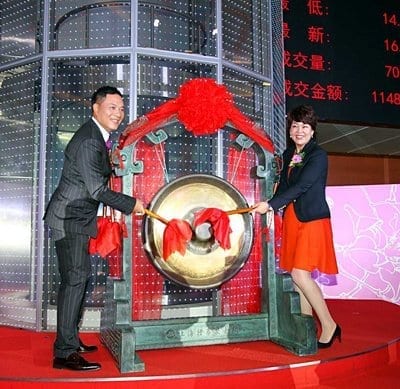
Shanghai Laiyifen, the owner and operator of a chain of snack food stores in China, has completed an IPO in Shanghai, listing on Wednesday.
Laiyifen is the first Chinese company specialising in snacks to go public. On the same day its massive advertising hoarding in New York’s Times Square was unveiled.
After 17 years, the company has transformed itself from a small snack shop on a Shanghai street into a robust snack foods business, drawing the attention of both domestic and international media organisations by creating a buzz in Shanghai and New York simultaneously.
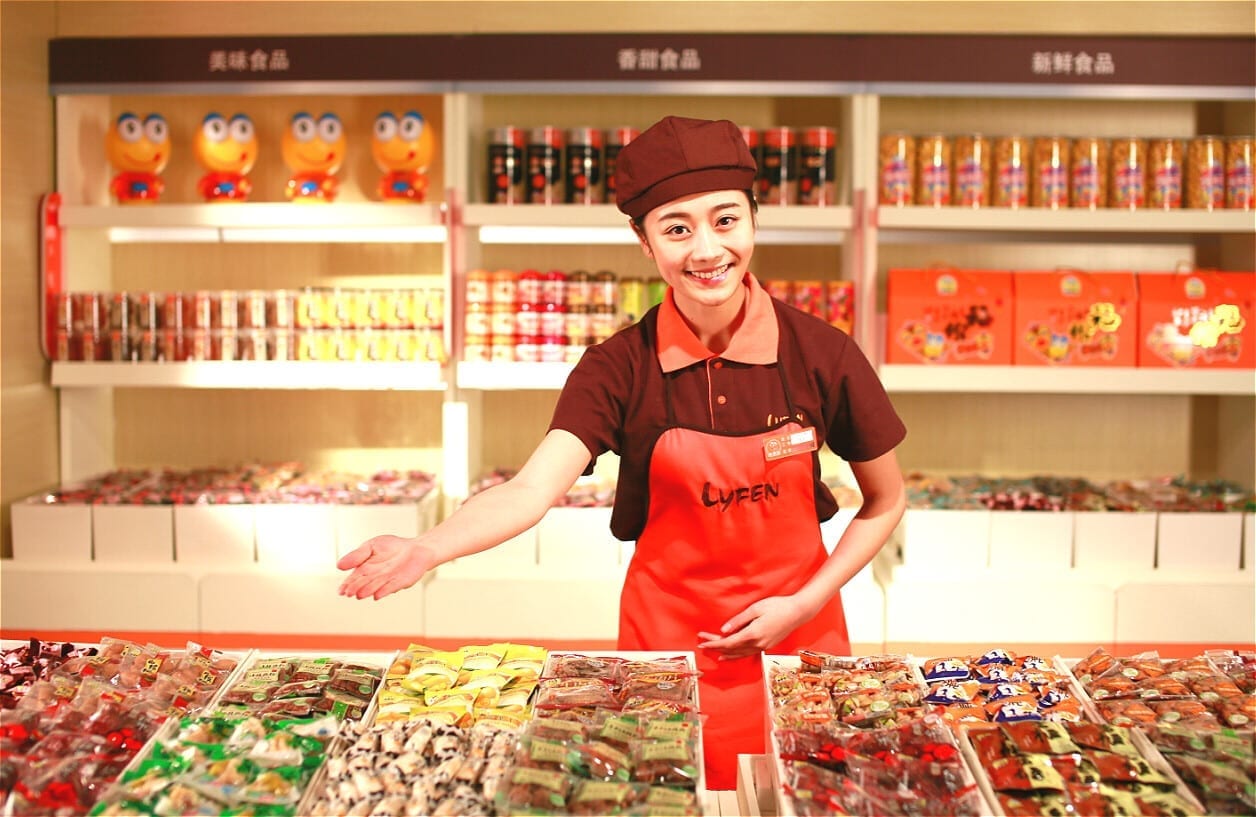
Laiyifen opened its first store in 1999 and has since established a network of 2271 outlets across more than 10 Chinese provinces and municipalities, including Jiangsu, Zhejiang, Anhui and Shandong provinces, and the cities of Shanghai, Tianjin and Beijing.
In addition, the company has deployed an omnichannel marketing model combining online with offline operations. With over 13 million loyal members, Laiyifen boasts annual sales in excess of RMB3 billion (approx. US$450 million) and has served over 450 million consumers in the aggregate.
Wednesday’s listing raised some RMB660 million (US$98.3 million) by issuing up to 60 million shares (25 per cent of its post-issue share capital), and appointed China Securities as lead underwriter.
Laiyifen’s controlling shareholders and actual controllers have all made a commitment to restrictions on the number of shares they can hold. The company’s other shareholders have, as well, made a commitment to voluntary lock-up of shares in their possession.
Saturday mornings appear to be ideal for fitness-crazy Shanghai groups to have fun in the form of dance-like workouts outdoors.
Some 500 lined up last Saturday to join a one-hour event. The venue was disco-like. Les Mills, one of the world’s largest developers of group workouts, kicked off its global tour for 2016 beside the shimmering Huangpu.
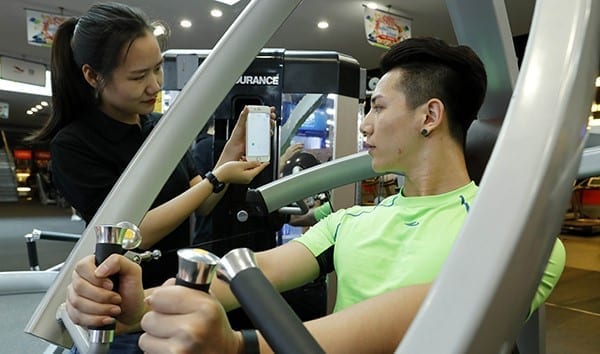
On the dais, five coaches gave instructions to the fitness fanatics, who pushed up weight-laden barbells in sync with the beats of rock-and-roll music.
“It feels more like a party than an early morning workout,” said Zhang Qiong, 26, who woke up at 6 am to attend the morning’s first class.
Phillip Mills, CEO of Les Mills, said it is not surprising Chinese people are passionate about group workouts, given the proliferating gyms and fitness programs.
Les Mills’ programs are provided to 8 million people by 90,000 teachers in more than 17,000 clubs around the world every week.
The firm is eyeing fast growth in China. “Workouts have become a lifestyle. People believe they are good for work-life balance. As far as I know, China has more than 18,000 brands of gyms and workout programs. Les Mills has been popular around the world. Now, it’s getting increasingly welcomed across the nation,” said Phillip Mills.
“China’s fitness market, including gyms and program developers, needs consolidation after the fast growth. In the long run, we’re confident the market size is really going to expand to a significant size.”
According to a research note from Euromonitor International, demand for fitness in China has become one of the top ten drivers of the consumer market. Other drivers include clothing, leisure, entertainment, food and beverages.
Joey Chio, senior associate director of Savills China Retail Tenant Representation, said that athletics-related leisure, also called “athleisure” by fitness fans, has been gaining market share in clothing in recent years. Brands such as Lululemon and Under Amour have become trendy in the retail landscape.
Its spillover effect has been that opportunities arose for players in other sectors, like mobile application developers. Keep, a smartphone app which teaches workout tips and training programs through video clips, now boasts 50 million users. It received C round investments from, among others, technology giant Tencent Holding Ltd. This, just two years after launch.
“Fitness has become popular due to many factors. There is government policy to develop the sports sector. Lifestyles are changing with more focus on health. There is a cultural trend toward sexy six-pack figures. There is middle-class anxiety about the costs of ill health and peer pressure to look better. You want to prove you can afford to hit a gym to stay active,” said Julian Chow, an analyst with Shanghai-based Tang Yue Culture and Communication.
Fitness market insiders said China’s health clubs and gyms still face some challenges, and measures are needed to make the market more transparent and fair.
“Piracy of choreography, unsafe exercise instructions given by untrained coaches, and poorly regulated membership pricing are hindering the development of the fitness market. As the market gets more mature and competition fiercer, consumers will have more options, which should improve standards,” said Michael Yip, a coach with Tera Wellness Club.
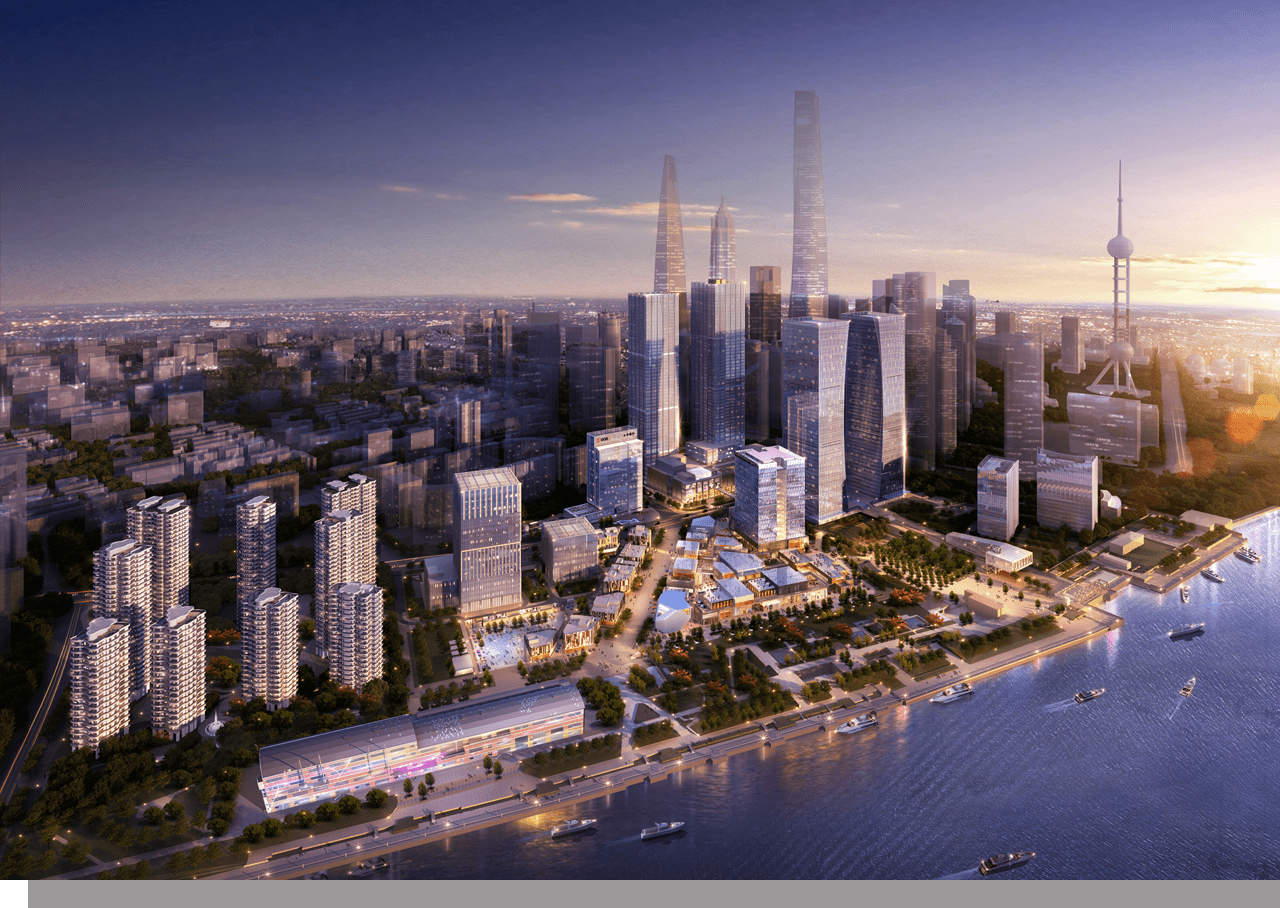
Appointed as the masterplanner, architect and interior designer, Benoy Shanghai has revealed its design for the mixed-use Gala Avenue Westside development in Shanghai.
The project is part of the major Lujiazui Harbour City development, scheduled to be complete in 2018. It covers 250,000 sqm of riverside land being redeveloped into an iconic future destination.
Combining offices, high-end shopping and entertainment, as well as public space, Gala Avenue Westside is on a site previously run as a shipyard by the Shanghai Ship Company since the 1800s.
“We have embraced the history of the site and built upon this,” says Benoy Shanghai studio director Qin Pang. “Our design celebrates the themes of ‘New and Old’, ‘East and West’ and ‘Traditional and Modern’.”
Gala Avenue Westside comprises a 100m office tower and 12 interconnected retail hubs spanning two to three storeys. A chain of squares will form an internal streetscape linking the buildings, both above ground and below, along with a network of green spaces.
The development has been positioned for maximum retail exposure, with views of the Huangpu River and the Pudong cityscape.
Benoy’s Shanghai portfolio already includes Mango West Bund Plaza of the wider DreamCenter development along the Huangpu River, and Vanke Xuhui Center, a large-scale, mixed-use development connected to the city’s South Railway Station.
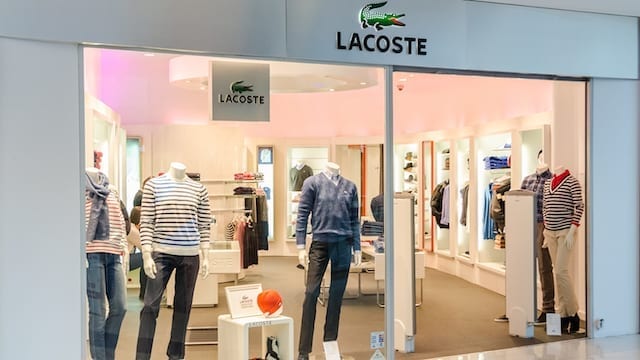
French fashion brand Lacoste China has opened a duty-free corner in downtown Shanghai’s Yueda Plaza 889, run by CNSC.
China National Service Corporation for Chinese Personnel Working Abroad is a state-owned enterprise of international trade and economic co-operation established in 1983.
BUCHAREST, ROMANIA – OCTOBER 09: Lacoste store on October 09, 2013 in Bucharest, Romania. Is a French clothing company founded in 1933 that sells high-end clothing and most famously polo shirts.
Lacoste says the point-of-sale is in line with the a Chinese duty-free policy that offers Chinese travellers a 190-day duty-free shopping period after returning from abroad.
“We are aiming at building a long-term relationship with Lacoste,” says CNSC deputy-GM Jacky Yan.
Designer outlet malls are sprouting up all over mainland China, even as department stores find themselves struggling amid a slump in retail sales.
At least 17 new outlet malls are scheduled to open in China in the second half of 2016, according to a report by Outlet Sight, which tracks the industry. Some developers are betting on outlet malls because they typically offer off-season or factory excess goods priced at a discount to the in-season products sold by the same brands in department stores.
“We think designer outlets are more defensive than high-street retail,” said Chris Reilly, Asia-Pacific managing director at TH Real Estate, a property fund that manages nearly US$100 billion of real estate in Asia, Europe and the US. “Their fundamentals are better in terms of supply and demand.”
China’s department store sector has been battered in recent years by sluggish sales growth and declining profits, with store closures intensifying since 2015. Offline sales at the mainland’s top 50 retailers declined 3.1 per cent year on year in the first half of 2016, according to figures from the National Commercial Information Centre of China.
However, the discount mall sector appears ripe for strong growth; for a country with China’s population and spending power, there are relatively few factory outlet malls – just 40 at present – compared with as many as 300 in the US, said Zhong Beichen, chief executive of outlet developer Beijing Capital Juda, which has already opened four such outlets, in Beijing, Hainan, Zhejiang and Jiangsu.
“We aim to open outlets in more than 20 cities by 2020 and become the largest outlet operator in China,” Zhong told the South China Morning Post. “Discount malls can perform well despite economic ups and downs” because they offer customers cheaper price points, he said. “When the economy expands, people shop to dress nice, but outlets will still be the first choice for those seeking affordable luxury in an economic slowdown.”
Juda was spun off from state-owned property developer Beijing Capital Land Ltd and listed in Hong Kong in 2015.
The boom is attracting developers and investors to the fray.
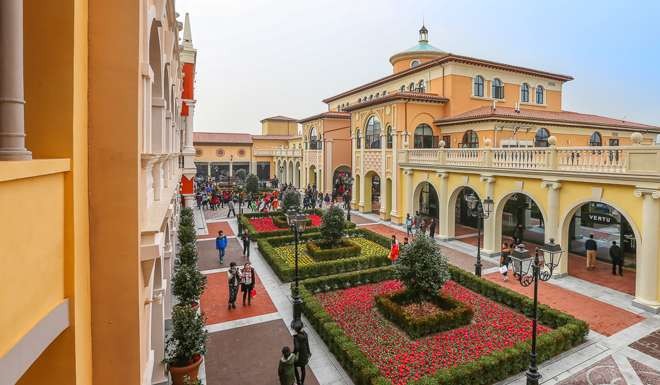
London-based TH Real Estate launched an US$850 million fund in China, with two Italian village-themed outlet malls in Wuqing in Tianjin city and Shanghai.
“Our target shopper is the Chinese household earning more than US$20,000 a year,” said TH Real Estate’s Reilly. “This demographic group is already the largest in the world, and we expect the number to more than double over 10 years with the rise of the Chinese middle class.”
With TH Real Estate’s Florentia Village in Shanghai 90 per cent occupied, and its Florentia Village Wuqing full to capacity, Reilly said he is confident the China Outlet Mall Fund can grow to US$2 billion by 2020. Four more Florentia Village malls are slated to open in Chengdu, Wuhan, Chongqing and Qingdao by 2017.
Factory outlets face stiff competition from online retailers, but have the advantage of providing a complete experience, Juda’s Zhong said.
“Our strategy is to build outlets in places with beautiful scenery to attract families for the shopping experience,” he said, citing their 110,000 square meter outlet in Beijing’s Fangshan District, which is located near a forest park.
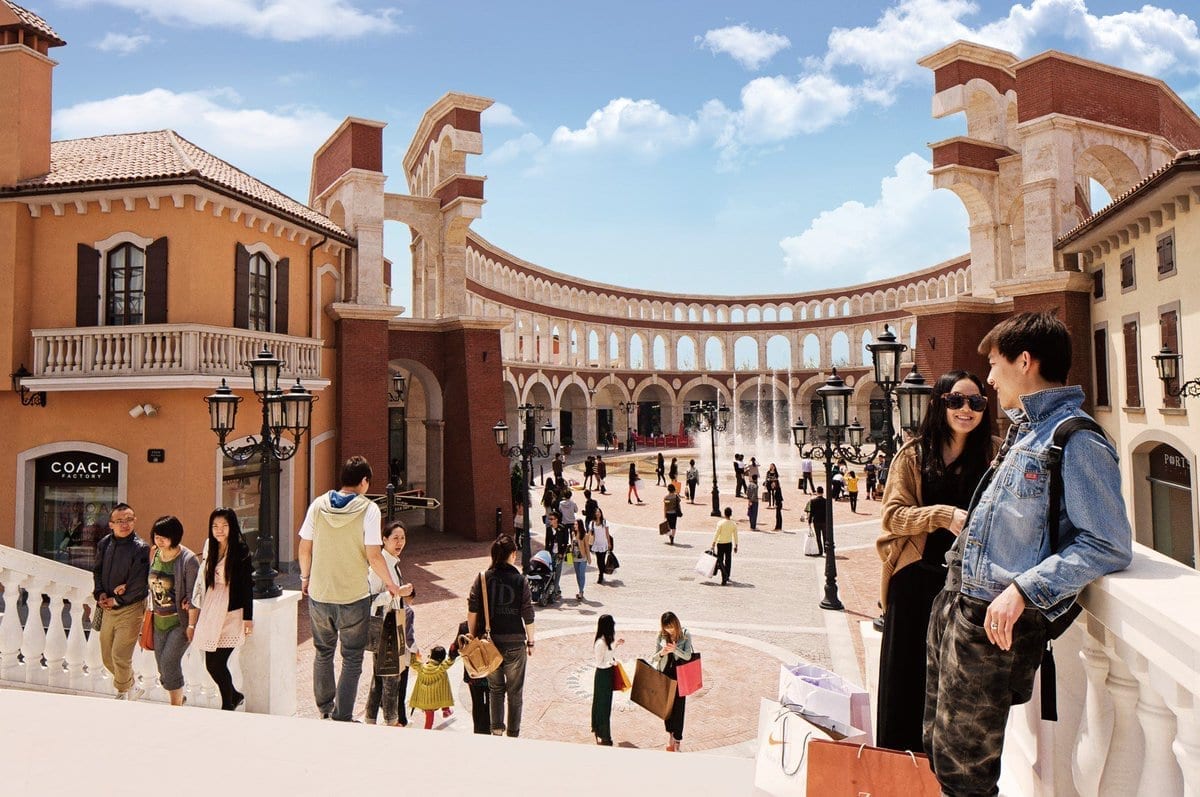
Themed malls, such as the Florentia Village brands, are also becoming popular. Covering 90,000 square meters and with 3,000 car parking spaces, Florentia Shanghai reconstructs scenes of Florence including an Italian-styled city plaza, paved streets, porches, fountains and luxury brands such as Versace, Ferragamo and Zegna.
“Shoppers like to visit outlets for the discounts, they want to try on designer brands, but what’s more important, it’s like a day out,” Reilly said.