Tag: Shenzhen

  • Arrow holds IoT innovation showcase in Shenzhen

    Arrow holds IoT innovation showcase in Shenzhen

    Arrow Electronics has held an internet of things (IoT) innovation showcase in Shenzhen aimed at connecting innovative Hong Kong startups with technology companies in China.

    The event attracted 500 attendees from all sections of the IoT ecosystem in Hong Kong and China, providing a platform for IoT businesses in China and Hong Kong to collaborate.

    As well as startups and entrepreneurs, international technology manufacturers, IoT solution providers and system integrators attended.

    Notable attendees included Analog Devices, Cypress, Honeywell, Infineon, Intel, Nexperia, NXP, ON Semiconductor, Qualcomm, and STMicroelectronics.

    Arrow Electronics components president for APAC Simon Yu said that recent research from the Chinese University of Hong Kong and Hong Kong Baptist University found that entrepreneurship in Hong Kong and Shenzhen has grown 206% and 284% respectively between 2009 and 2016. But innovation in some major areas including the IoT is being held back due to limited engineering expertise and production resources.

    “Arrow has long supported technology innovation in Hong Kong and China,” he said.

    “Our engineering expertise and IoT industry reputation, especially in the greater China area, can definitely assist IoT startups in removing key barriers and connecting them with the ecosystem players on their road to innovation entrepreneurship and social impact.”

    Arrow Electronics last year opened the Arrow Open Lab at Science Park to help support entrepreneurship and innovation in Hong Kong. This week’s event built on that initiative.

  • China Telecom to turn Shenzhen into a Gigaband City

    China Telecom to turn Shenzhen into a Gigaband City

    China Telecom Shenzhen and Huawei have signed an agreement to deliver gigabit broadband connectivity to 900,000 homes in Shenzhen.

    The companies have entered a five-year deal that aims to transform Shenzhen into a “Gigaband City”, using next-generation optical line terminals and PONs to deliver 100% Gigabit coverage for communities in the city.

    Services will be available for residential users, governments and enterprises, and will be capable of enabling advanced services including 4K video and VR film streaming, Gigaband hotels and passive optical LANs.

    Based on the experience with the rollout, China Telecom and Huawei plan to jointly define the standards for a gigaband city, paving the way for future deployments.

    “China Telecom (Shenzhen) is dedicated to accelerating Shenzhen’s broadband network capabilities and together with Huawei we aim to rapidly transform into an ultrafast landscape,” the China Telecom subsidiary’s general manager commented.

    “This will enable Shenzhen to keep pace with consumer demand for new internet applications such as ultra-broadband (UBB) video, VR and AR, Gigaband campus, and smart homes. We believe a Gigaband city will also foster digital economy innovation in Shenzhen and establish Shenzhen as an oasis for inventors.”

    Announcing the agreement, the companies said this will mark the first time 1,000Mbps all-optical networks will be deployed on such a large scale.

  • New Fashion Gallery set to open in Changi T2

    New Fashion Gallery set to open in Changi T2

    Lagardère Travel Retail Asia Pacific COO Emmanuel de Place has confirmed that the travel retailer is to introduce ‘an exciting new version’ of its successful Fashion Gallery retail concept in Singapore Changi Airport Terminal 2 this month, as it also eyes the upcoming MTR duty free contract in Hong Kong.

    He says the Changi Airport Fashion Gallery initiative – still to be unveiled – is just one of many ongoing retail developments across several Asia locations this year, as LTR continues to update its growing fashion offer in the region, alongside its duty free, travel essentials and foodservice businesses.

    In an interview, Emmanuel de Place said he is convinced that Asia will continue to progress over the next five years: “The market will definitely continue to grow thanks to the passenger growth and all of these emerging countries in Asia gaining maturity and building more and more passengers,” he said.

    “So we definitely want to take a share of that at Lagardère Travel Retail, as we have over the past few years.”

    GROWTH POTENTIAL IS THERE

    Whether Asia will grow in proportion with the rest of the company’s business remains to be seen, but de Place certainly believes it is possible: “It may well, because certainly Asian countries are growing faster than any other region and especially when we look at China.

    “The potential of travel retail growth there is definitely enormous, even though there have been some questions in the last few years about that high-end luxury segment of this travel retail market.

    “But we still believe there will be some growth and definitely with our development plans across the three business lines as you know, with duty free and luxury at one end and travel essentials and foodservice.”

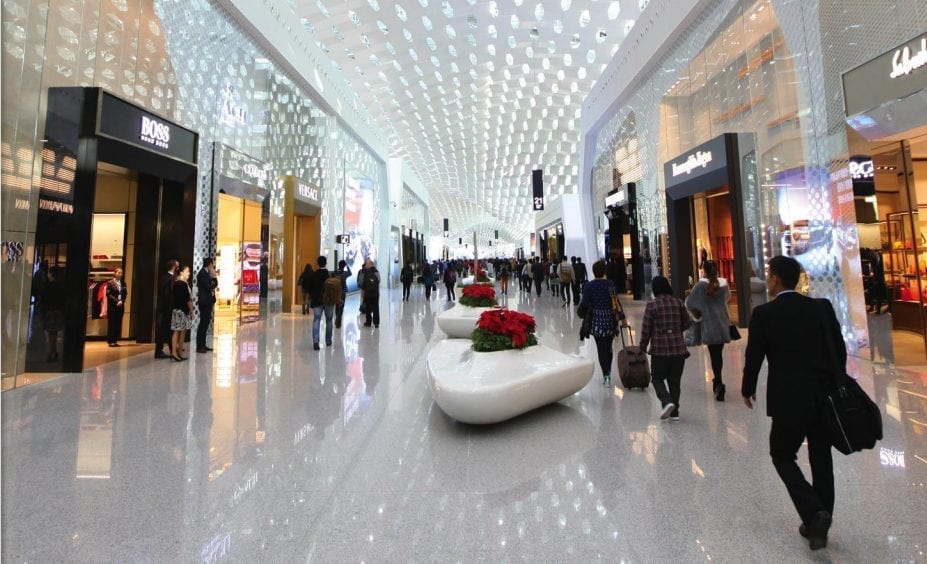
    web Lagardère Travel Retail's fashion stores at Shenzhen Bao'an International Airport.

    Lagardère Travel Retail’s fashion stores at Shenzhen Bao’an International Airport in China.

    MTR IS ALSO OF INTEREST

    Meanwhile, turning to Hong Kong, de Place also confirmed that LTR remains very interested in the Mass Transit Railway (MTR) Express train concession at the West Kowloon Terminus, which will ultimately connect Hong Kong with the Mainland when it is finally completed.

    He said: “When we look at the big project at the station that they are bidding in Hong Kong then definitely that would be a very nice combination of foodservice, gifts, souvenirs and a lot of specialty shops and a duty free offer. So definitely we believe that we can propose something interesting.”

    A comprehensive interview with Emmanuel de Place appears in the July print edition of The Travel Retail Business, where he talks in depth about the company’s duty free and travel retail business across the Asia Pacific region.

  • China will bounce back and continue to drive global growth for decades

    China will bounce back and continue to drive global growth for decades

    Economists have often said “when America sneezes, the world catches a cold” reflecting the importance of the US to the global economy.  But the past 12 months suggest the world’s immune system is more sensitive to China’s sniffles than was previously thought.

    The country’s economic slowdown and the overdue lancing of the bubble in its stock market have made the world’s central bankers and policymakers realise that China now has a huge influence on global markets.

    I was in Beijing and Shanghai last week in part to attend the G20 summit in my role as a board member of the Institute of International Finance but also to see for myself what is happening in China. There is no substitute for visiting a country if you really want to understand what is going on there. Get there, meet companies and policymakers and listen to what the people you meet have to say.

    This is especially the case with somewhere like China because it can be opaque and a lot of what is written about the country is nonsense. You can only get so much information to form a view from sitting in an office 6,000 miles away.

    One of my most interesting meetings was with Dr Pan Gongsheng, deputy governor of China’s central bank. It is true that the economy is slowing. Never mind the validity of the official figures, the 6.9pc growth achieved last year is a far cry from the double-digit expansion achieved a few years ago.

    But is this slowdown really so bad? The change in the pace of growth is as much by design as by accident. China’s policymakers made a deliberate decision a few years ago, to move the economy away from an investment-led, export-driven model towards one in which domestic consumption plays the dominant role. The country’s leaders want growth that is sustainable.

    For a long time investors have focused on China’s manufacturing data as an indicator to how well or badly the economy is doing. Recent weakness in the manufacturing data has been interpreted as a big negative and has ignored the growth of service industries, especially in the private sector.

    Real estate, finance, hospitality, retail, transport, construction and other services accounted for some 55pc of GDP in 2014, up from 47pc in 2006, according to data compiled by CLSA and Citic Securities.

    As the economy continues to move to a more domestic focus, this share will continue to rise. This is not to say everything is rosy in China. In recent years, western leaders watched with wide-eyed wonder at their Chinese counterparts’ handling of the economy. They looked on in envy at Beijing’s ability to manage the economy at a time when the world seemed to be closing in.

    That reputation has taken a major dent recently. They successfully deflated a bubble in the property market but that meant that China’s army of retail investors piled into the domestic stock markets. The authorities should not have tried to prop this over-leveraged and speculative bubble. They should have let it pop but chose to intervene and then did so in a messy, unclear and unsuccessful way.

    While they were bungling the rescue of the stock market, the authorities made a mess of communicating a loosening in renminbi policy, which fuelled suspicions the country was seeking to devalue its way out of trouble. This is prompting wealthy locals to move their cash offshore and in response the government is making it harder for money to be moved overseas.

    Local government and corporate debt are big problems, the state sector is bloated and inefficient, while the property market remains fragile. Whilst my trip provided comfort on the state of the economy, my views on the stock market remain unchanged. We have always been very cautious about investing in Chinese companies because so many are opaque and many have woeful corporate governance.

    It’s obvious if you spend time in China to see that the Shanghai and Shenzhen stock markets operate like casinos. Trading activity is dominated by retail investors who buy on rumours and flee at the first sign of trouble. It’s much more sensible to expose yourself to China’s growth by investing in companies which aren’t based there but do business there.


    It’s a much easier way of investing in companies with decent growth prospects, that have quality management and adhere to good levels of transparency and accounting standards. From speaking to companies, economists and analysts in China, it’s clear to me that the country is heading for a softer, rather than harder, landing. You need to look beyond the stock market for the clues of why, though. China’s consumer spending is still motoring. Consumers have taken to internet shopping at a startling pace.

    Barely 15pc of the population had shopped on the internet a few years ago. Now over 40pc have. Chinese shoppers spent nearly $8bn (£5.7bn) in the first 10 hours of the country’s equivalent of Cyber Monday or Black Friday. Chinese authorities might have lost some of their reputation for financial competency, but they have $3.4 trillion in foreign exchange reserves to soften the blow of a slowing economy.

    Unlike many policymakers in the West, those in Beijing still have plenty of tools at their disposal to avert economic disaster and to help the country to develop. The announcement last week of the opening up of the bond market to long-term international investors is a prime example and is a step in the right direction.

    Ultimately China will shake off its current sniffles to continue to be a driver of global growth for decades to come.

  • DJI opens futuristic drone shop in China

    DJI opens futuristic drone shop in China

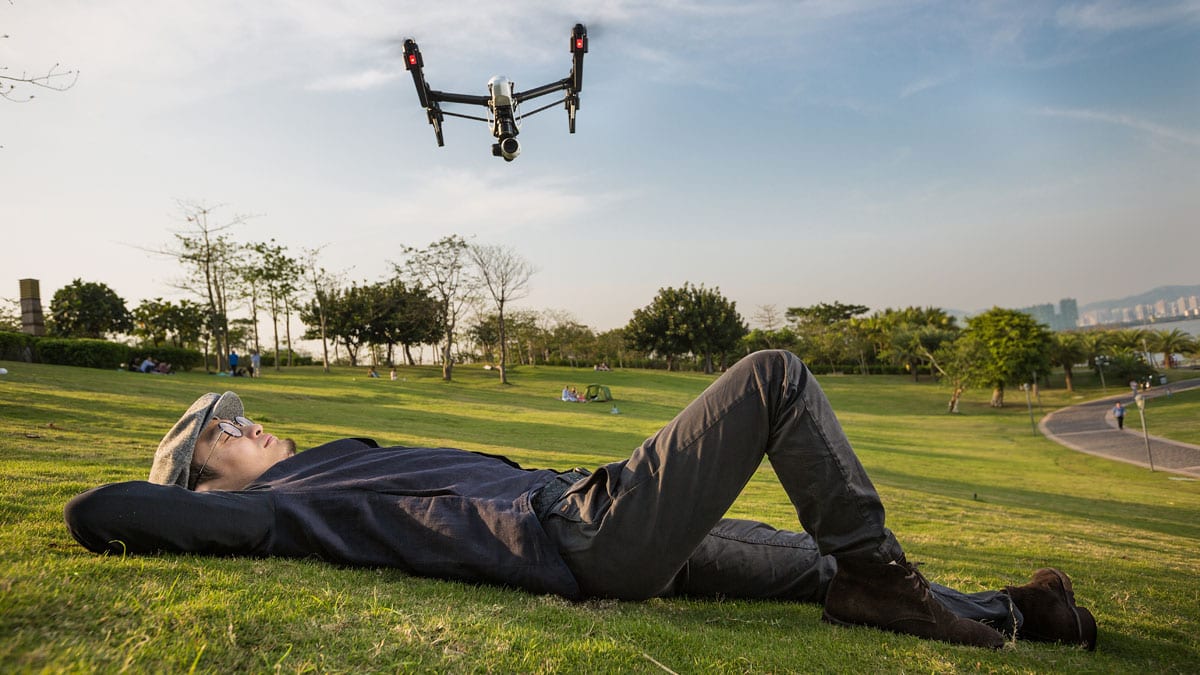
    DJI, one of the world’s leading manufacturers of unmanned aerial vehicle technology (drones) has opened its first flagship drone shop, in Shenzhen.

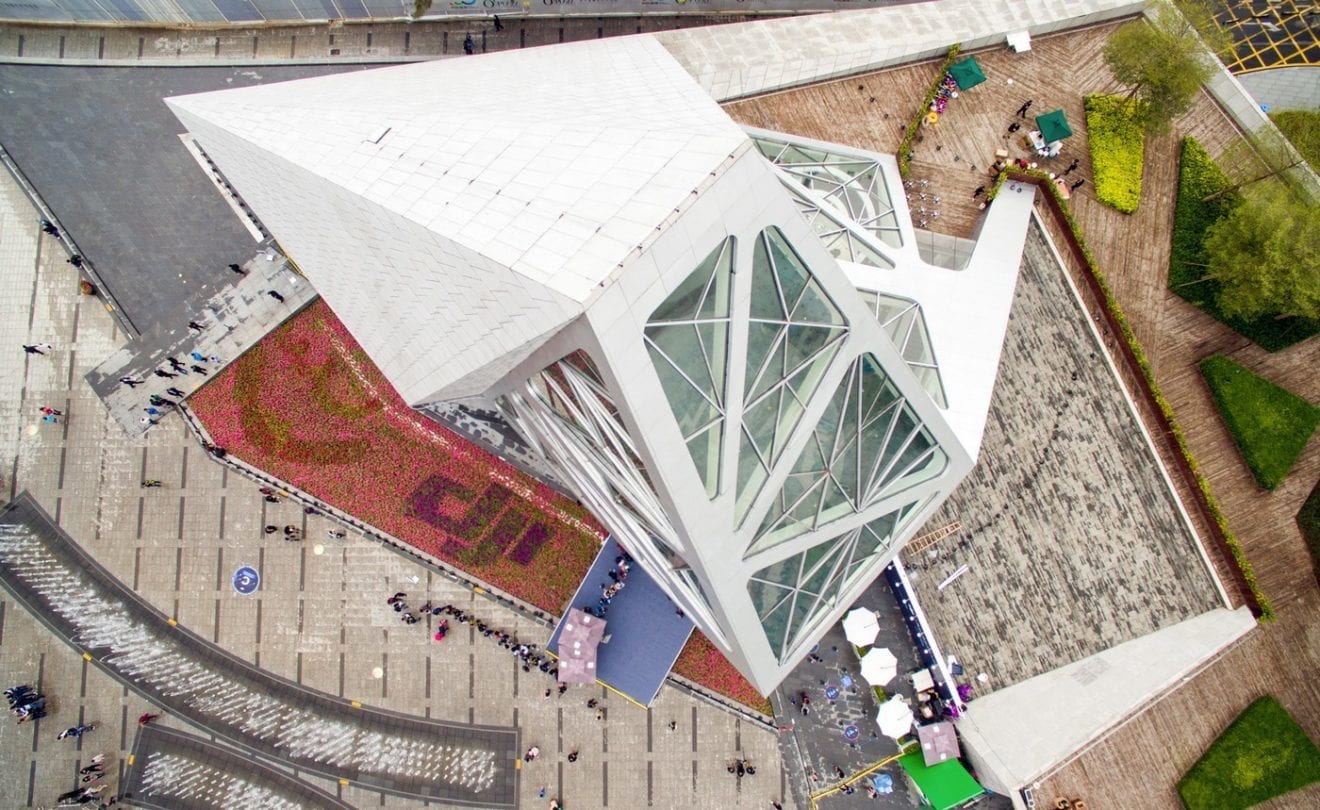
    As the photos demonstrate, the store is futuristic in its design and customer engagement let alone the sci-fi nature of the products the brand sells.

    The store, at OCT Harbour, features a full range of DJI’s consumer products and aims to let consumers see, touch and learn firsthand about the company’s innovative and creative platforms.

    “The DJI flagship experience is an important touchpoint to connect people with our cutting-edge technology and get a sneak peek into the future,” said Frank Wang, DJI founder and CEO.

    “Whether you are curious to learn how to fly or a professional looking for the latest aerial imaging technology to create your next big idea, the flagship store will provide you with the opportunity to really experience the DJI brand up close and in person. More importantly, it will allow us to engage our customers in a deeper and more meaningful way.”

    On display and for sale will be DJI’s Phantom 3 series, the Inspire 1 and Spreading Wings series, Matrice 100, Guidance, the Ronin handheld three-axis camera gimbal line, as well as the company’s latest integrated stabilized 4K handheld camera, the Osmo.

    Product Showcase 2

    The flagship’s interior architecture is based on the concept of yuan, the Chinese word for “circular.” It is symbolic of DJI’s drone propellers, which form a circular shape when in motion. This concept can be seen in various places around the store, including the SkyPixel Around the World interactive installation, which is featured on a cylinder-shaped map in the shop’s center. The flagship store also features a theatre, flight area, lounge area and repair counter.

    The OCT Harbour store features a stunning waterfront view and is surrounded by a vibrant culture of tourism, ecology and commerce.

    Highlights of the flagship store include:

    Theatre: Visitors can expect an immersive visual experience at the Theatre, where they can see stories captured from the sky and content from around the world.

    Theater

    SkyPixel Around the World: An interactive installation, where visitors can explore photo and video stories captured by aerial enthusiasts from the Skypixel community.

    Flight Area & SkyPixel

    Flight Area: DJI pilots will be there throughout the day to perform demos, and the LED screen will project different backgrounds to match the different flight experiences.

    Lounge Area: Visitors can sit back and relax in the lounge area, talk with staff and learn about DJI’s latest products.

    Product Showcase 3

    Repair Counter: A team of customer-support staff to provide technical assistance, help with firmware updates and make reservations for drop-off repair.

    Repair Counter

    The DJI flagship store is located at the Shenzhen Tourist Information Center, OCT Harbour, East No.8, Baishi Rd, Nanshan District, Shenzhen, China. Opening hours are Sun-Thu 10am to 10pm; Fri-Sat 10am to 10.30.

    DJI Flagship Store aerial shot 1

    DJI was founded and is run by people with a passion for remote-controlled helicopters and experts in flight-control technology and camera stabilisation. The company is dedicated to making aerial photography and filmmaking equipment and platforms more reliable and easier to use for creators and innovators around the world. DJI’s global operations currently span North America, Europe and Asia, and its products and solutions have been chosen by customers in over 100 countries; for applications in film, advertising, construction, fire fighting, farming, and many other industries.

    The company has a YouTube channel featuring its products in action.

  • Qianhai Centre Shenzhen design revealed

    Qianhai Centre Shenzhen design revealed

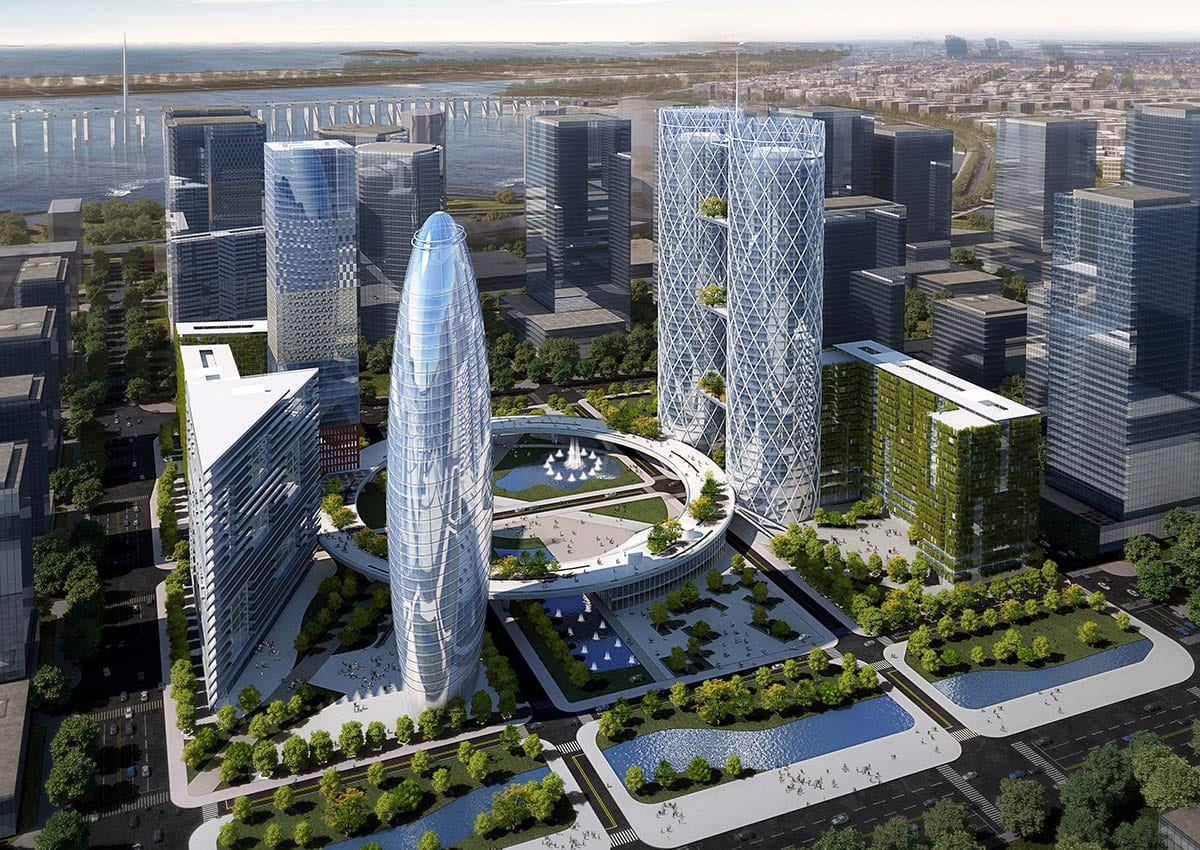
    Benoy, the global studio of Architects, Masterplanners, Interior and Graphic Designers has revealed its design of the future China Resources Land (CRL) Qianhai Centre Shenzhen.

    The development will form a core part of the highly publicised Qianhai special economic zone. As masterplanner and retail architect, Benoy says it has “challenged the status quo of a traditional finance district” by creating a multi-layered active city environment for the commercial scheme.

    Located in the centre of Qianhai, the development sits within ‘Neighbourhood 2’ of the district. With a vision to transform the district into the ‘Manhattan of the Pearl River Delta’, Qianhai itself is expected to attract $45 billion in future investment.

    “Our design has aimed to capture how we want our cities to look, feel and function in the future; bringing a new concept to shape this emerging zone,” said Chao Wu, Benoy director.

    Benoy’s masterplan for the 54,000 sqm site aims to create an active 24 hour destination and develop the plot to its fullest potential. The scheme will feature a four-storey podium including a basement retail level which will connect to five towers comprising commercial offices, a five star international hotel and serviced apartment residences.

    Enlivening the heart of the development, and, in turn, the wider district has been a key consideration of the design. As such, Benoy has carved two main ‘spines’ through the development to create a lively internal streetscape. The Financial Valley and the Green Belt thoroughfares open up the podium to create an interconnected environment from the sunken basement levels up to the roof garden on Level 4.

    As Chao explains: “These open-air spines bring the development to life with their fluid form which is accentuated by landscaping, terraces and an eclectic mix of spaces. The design gives human-scale and creates a recreational experience and personality for the emerging financial zone.”

    At the intersection of these internal streets sits the focal point of the scheme – a large, vertically and horizontally connected outdoor event space. This outdoor entertainment area has been designed for year-round enjoyment with a monocoque steel canopy featuring ETFE material. A modern theatre and art gallery have been strategically positioned nearby to support the events programme, reiterating the commitment to inject art and culture into the commercial precinct.

    “This development needs to serve both the living and working needs of the surrounding community. We wanted to create a model which functions as a recreational realm bustling with activities and different environments to form a centrepiece for the wider commercial masterplan,” says Chao.

    The development has not ignored its identity within the financial district with the architectural language respecting both functions of the scheme. The lively designs along the interior spines of the development have been complemented by the formal and clean lines of the street-facing facades which reference the corporate nature of the district.

    Following the vision of the district, CRL Qianhai Centre promotes a strong integration of public transport and a multi-layered pedestrian-friendly environment as a Transit Oriented Development. Three metro lines which include Line 1, Line 5 and the future Line 11 are seamlessly integrated into the scheme. Environmentally aware, the development is targeting both LEED and China Green Building three star certifications.

    CRL Qianhai Centre has broken ground and is due to complete construction in 2018. The development adds to Benoy’s growing portfolio in the emerging Pearl River Delta economic zone.

  • Qianhai Chow Tai Fook mall opens in Shenzhen

    Qianhai Chow Tai Fook mall opens in Shenzhen

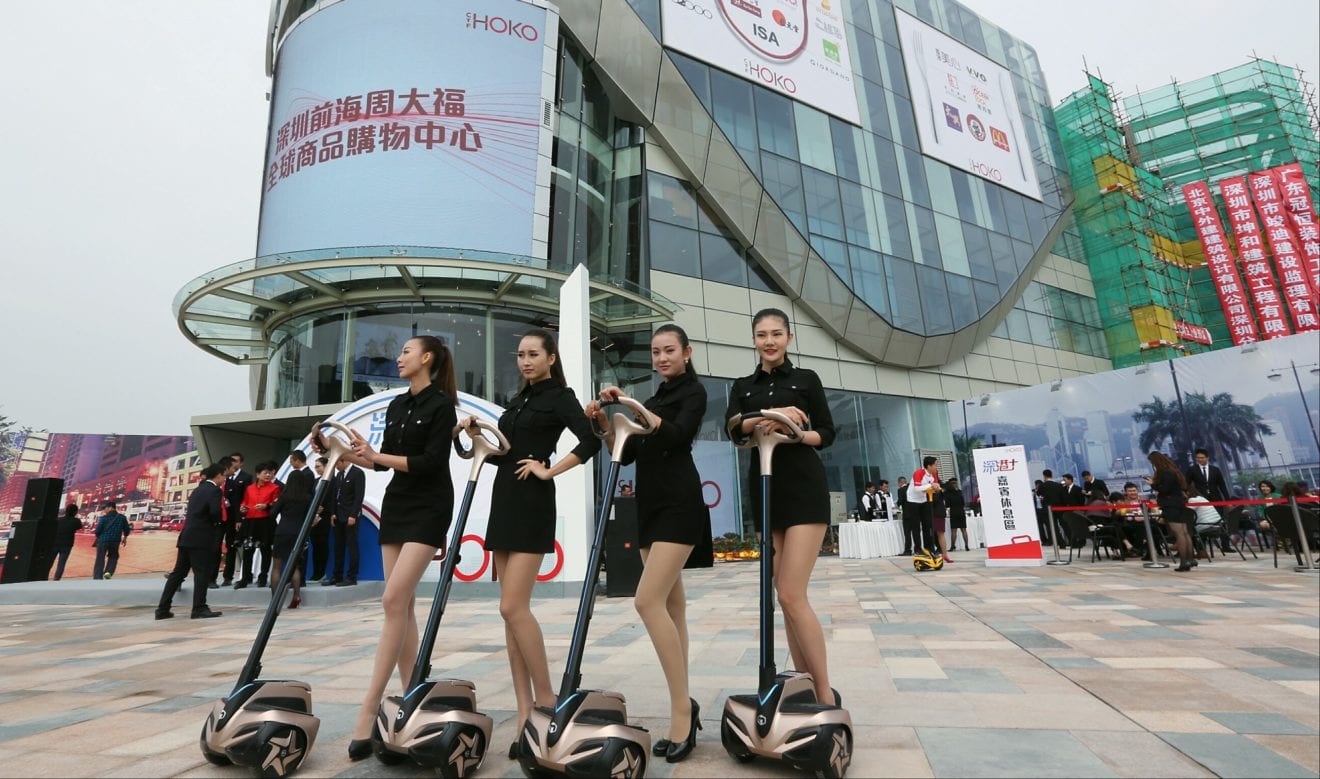
    The new Qianhai Chow Tai Fook mall opened its doors in Shenzhen on Monday – selling Hong Kong sourced goods to mainlanders at prices said to be cheaper than in Hong Kong.

    Officially named the Qianhai Chow Tai Fook Global Goods Shopping Center, the 19,000 sqm mall is a joint venture between jeweller Chow Tai Fook and two investment partners.

    A total of 21 retail brands opened stores in the first phase of the development opened yesterday, including beauty products chain Sa Sa, fast fashion brand Giordano and CRCare. They are joined by a range of food and infant formula retailers.

    More stores will join the development when stage two opens next summer.

    The HK$423 million shopping centre has been built inside the Shenzhen special economic zone, taking advantage of tax concessions and allowing mainlanders to buy Hong Kong sourced goods without crossing the border.

    Shenzhen has a population of 20 million creating a huge potential catchment for the development.

    Adrian Cheng Chi-kong, executive director of the Qianhai Chow Tai Fook mall, said it will not be competing with the border shopping mall planned for the Hong Kong side of the border, explaining the two properties will cater for different clienteles.

  • Hong Kong and Shenzhen should improve transport connections

    Hong Kong and Shenzhen should improve transport connections

    Hong Kong and Shenzhen are key points on China’s planned “Maritime Silk Road”, and the emergence of east and south axes in the Pearl River Delta bay area will help to realize Beijing’s bigger strategy.

    However, the existing transport infrastructure, based on the “stores in front and factories behind” model, is no longer sufficient for the deepening interaction among cities in the region.

    In recent years, both Hong Kong and Shenzhen have planned new metropolitan areas in the western Pearl River Delta.

    For example, the focus of development in Shenzhen has shifted from its commercial hub in Lo Wu and administration and finance centre in Futian to Qianhai and Houhai, while the financial and technology industries are also moving to the bay area.

    The western part of the city is now turning into a new central business district.

    Meanwhile, the future development of Hong Kong will center around Lantau Island, which will become a new centre for retail, business, tourism and exhibitions.

    Also, the soaring number of passengers commuting between Hong Kong and Shenzhen requires a review of the existing transport system, which focuses on moving goods rather than people.

    The “one-hour living zone” — where home, office, shopping and leisure venues are within an hour’s traveling time of one another — has increased cross-border living and consumption among residents of both cities.

    Leisure travel and visits to families and friends have increased rapidly in recent years.

    Shenzhen Bay Port was designed for daily traffic of 50,000 vehicles and 60,000 passengers.

    However, vehicle traffic is around 10,000 a day at present, while passenger traffic has already surged to 160,000.

    Emerging cross-border e-commerce will push both cities toward a three-level transport system, which includes a national high-speed railway, regional intercity rail and connecting subway systems.

    First, the authorities should push and further improve the high-speed railway network between Hong Kong and Guangdong.

    Rail transport is fast, convenient and green.

    China’s nationwide high-speed railway network is in the midst of developing a link between Shenzhen and Hong Kong.

    The Guangzhou-Shenzhen-Hong Kong high-speed railway will shorten the travel time from Hong Kong to Guangzhou to 48 minutes.

    The high-speed railway link will bring Hong Kong into China’s ambitious nationwide high-speed railway network.

    It will become a key route for Hong Kong to connect with the mainland, as well as connect with the intercity railway network in the Pearl River Delta region.

    In addition, as Shenzhen gradually becomes one of China’s key high-speed transport hubs, Hong Kong will also benefit from the six main high-speed railway lines connecting Shenzhen with other parts of the country.

    The six lines will be the Shanghai-Shenzhen coastal high-speed railway, the Ganzhou-Shenzhen high-speed railway, the Beijing-Guangzhou-Hong Kong high-speed railway, the Guangzhou-Guiyang-Chongqing high-speed railway, the Guangzhou-Nanning-Kunming high-speed railway and the coastal high-speed railway in western Guangdong.

    Also, both cities should strive to create an integrated intercity railway link, which would enhance goods and passenger transport in the region.

    Lantau Island will be a gateway and new metropolitan area for Hong Kong after land reclamation and construction of the Hong Kong-Zhuhai-Macau bridge.

    The area will become the city’s third major business area, as well as a key hub connecting Hong Kong with Shenzhen.

    Hong Kong should also improve the connection of its metro system with that of Shenzhen.

    The MTR Lok Ma Chau Station already connects with Line 4 of Shenzhen’s metro system, and the MTR Lo Wu Station connects with Line 1 of Shenzhen.

  • Drone maker DJI plans retail outlet in Shenzhen

    Drone maker DJI plans retail outlet in Shenzhen

    Chinese drone maker DJI Technology Co is opening its largest retail store in Shenzhen, Guangdong province, later next month.

    The 800-square-meter store will give DJI, which claims to control about 70 percent of the global drone market, a boost in the retail sector and help ward off competition from overseas players.

    DJI said in a statement that the store has floor space larger than the passenger cabin of an A380 aircraft. It will be located in a busy shopping district named OCT Harbor, and will open for business later next month.

    She Shuanglin, a researcher who tracks the drone market at research firm Analysys International, expects the new store to spark demand for drones.

    “DJI plans to open similar stores in other cities like Beijing and Shanghai so that customers can see and experience their entire range of products,” She said. “But it will need big stores to display the entire range of products.”

    Drone maker DJI plans retail outlet in Shenzhen

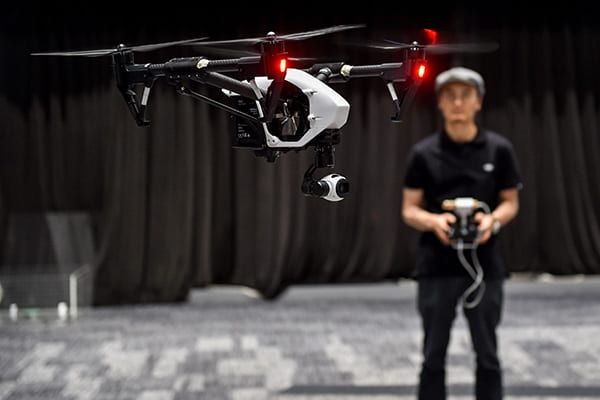
    Wang Tao, founder and CEO of DJI Innovation Technology Co, operates a drone in Shenzhen, Guangdong province. The turnover of China’s civil-use drone market is on track to soar to 2.3 billion yuan this year, according to an Analysys International estimate.

    Retail prices for the company’s drones start at around 4,000 yuan ($630), with high-end products priced above 20,000 yuan.

    The company has indicated it will not go in for a sizable expansion and will stick to just one or two outlets in each city, She said.

    DJI already has several authorized and small-sized stores in major cities.

    Turnover of the civil-use drone market in the country is set to reach 2.3 billion yuan this year, a 55 percent jump from a year earlier, according to an Analysys International estimate. Demand for drones in the country is likely to exceed 11 billion yuan by 2018, it said.

    Overseas drone makers are also eyeing the rapidly growing market in China.

    Nicolas Halftermeyer, chief marketing officer of France-based Parrot SA, told China Daily in an earlier interview that the company sees China as a key market for its inexpensive drones designed as kids’ toys.

    Parrot’s drone business generated 44.4 million euros ($47 million) in revenue in the third quarter of this year, a 60 percent surge over a year earlier.

    DJI, however, is planning a slew of measures, like ramping up hiring, to counter competition.

    It is also building a development center in Silicon Valley in the United States and has hired top engineers from companies like Apple Inc and Tesla Motors Inc.

    Darren Liccardo, former head of Tesla’s autopilot project, joined DJI in August to head its engineering, systems and application development.

    Rob Schlub, a former antenna expert from Apple, joined DJI’s research facility in Palo Alto, California, to oversee the entire development team.

    She from Analysys International said the cash-rich DJI is making aggressive investments in overseas recruitment to maintain a technology edge over its challengers.

    “DJI will remain focused on unmanned aviation and high-performance camera development in the coming years,” said She.

    DJI said it has a 1,500-member R&D team in Shenzhen. Its US facility will be responsible for advanced technology development.

  • Jenny Bakery Shanghai store scam

    Jenny Bakery Shanghai store scam

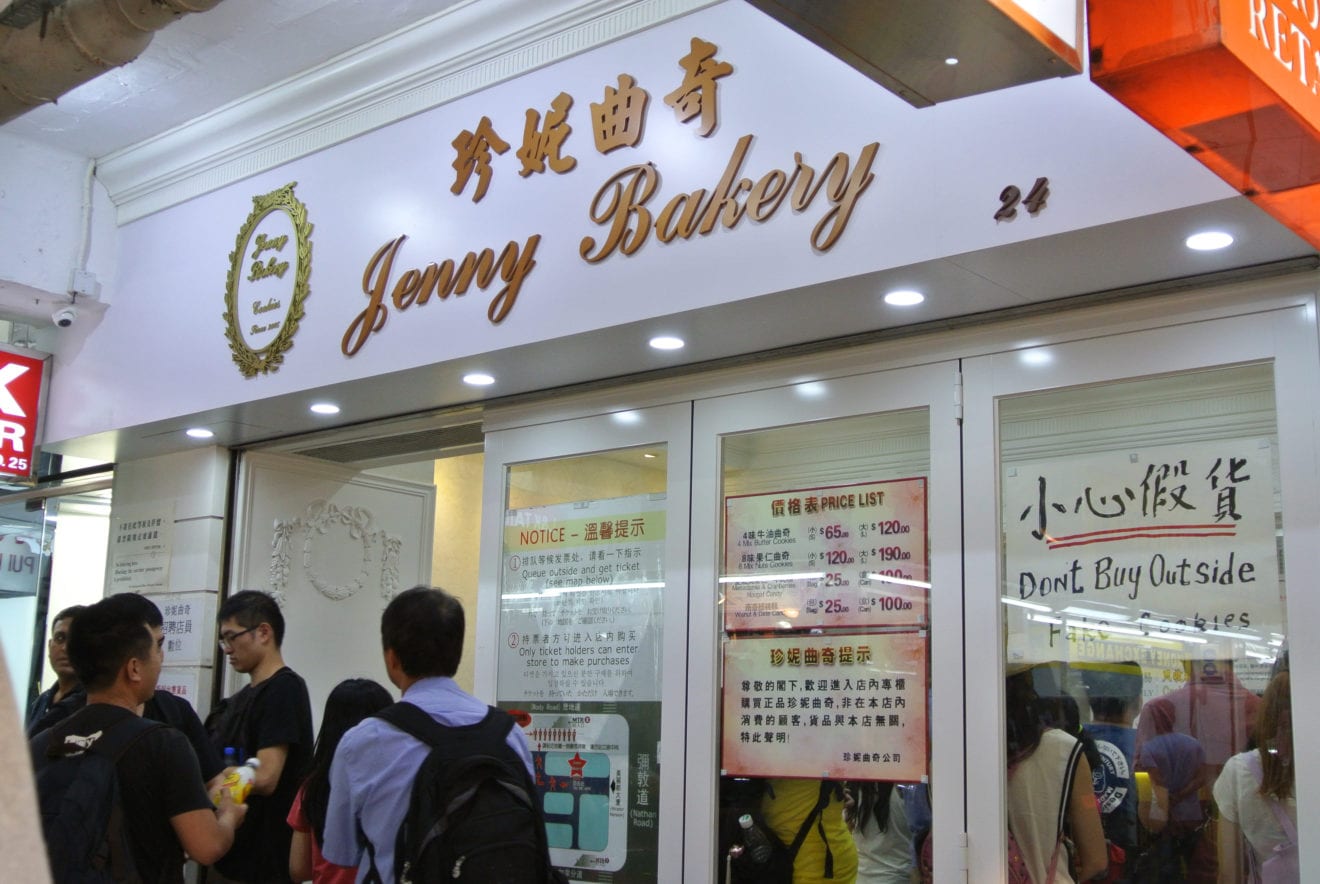
    A Jenny Bakery Shanghai store scam has angered the Hong Kong brand’s owners – not to mention Shanghai city officials and hundreds of customers who queued for hours only to find the cookies were copies.

    In the latest example of Mainland China’s seemingly contagious penchant for copying brands and labels and ripping off other people’s IP, crooked entrepreneurs launched a promotional campaign for the Shanghai opening of popular Hong Kong baker Jenny Bakery. It was even located in a respected shopping centre – the Global Harbour mall in the city’s Putuo District.

    Chinese media say that promotional material for the new store suggested the maker of the “most tasty cookies in Hong Kong had come to Shanghai”.

    The difference was in the signage: The Shanghai store bore the branding JENNY BAKERY (in capitals); the original Hong Kong business signage is Jenny Bakery. The Shanghai store even sold similarly packaged products: cookies in tins with teddy bear graphics which bore a strong likeness to the Hong Kong packaging.

    But such is the laxness of Chinese IP laws, it appears all that Putuo District city officials could do was reprimand the copycat scammers. They have been told to make it clear it has no association with the Hong Kong business and warned they could be fined if investigations prove they deliberately misled customers.

    The scammers had priced boxes of cookies at 98 yuan, or US$15.80 – nearing double the price of the original Hong Kong product, which sells for HK$70, or about US$9.

    While Jenny Bakery made it clear it does not have any stores in the mainland and that all its cookies are handmade, JENNY BAKERY maintained it had done nothing wrong by selling cookies baked at a factory in Shenzhen. The company said it was a legally registered brand and its business is legitimate.

    The Shanghai store has since closed, but not before affixing a notice to its door claiming it was the only legal owner of the brand name in the mainland – which is actually true; it was registered in Shenzhen earlier this year.

  • China’s fake Apple Stores alive and well, look to profit on iPhone 6s launch

    China’s fake Apple Stores alive and well, look to profit on iPhone 6s launch

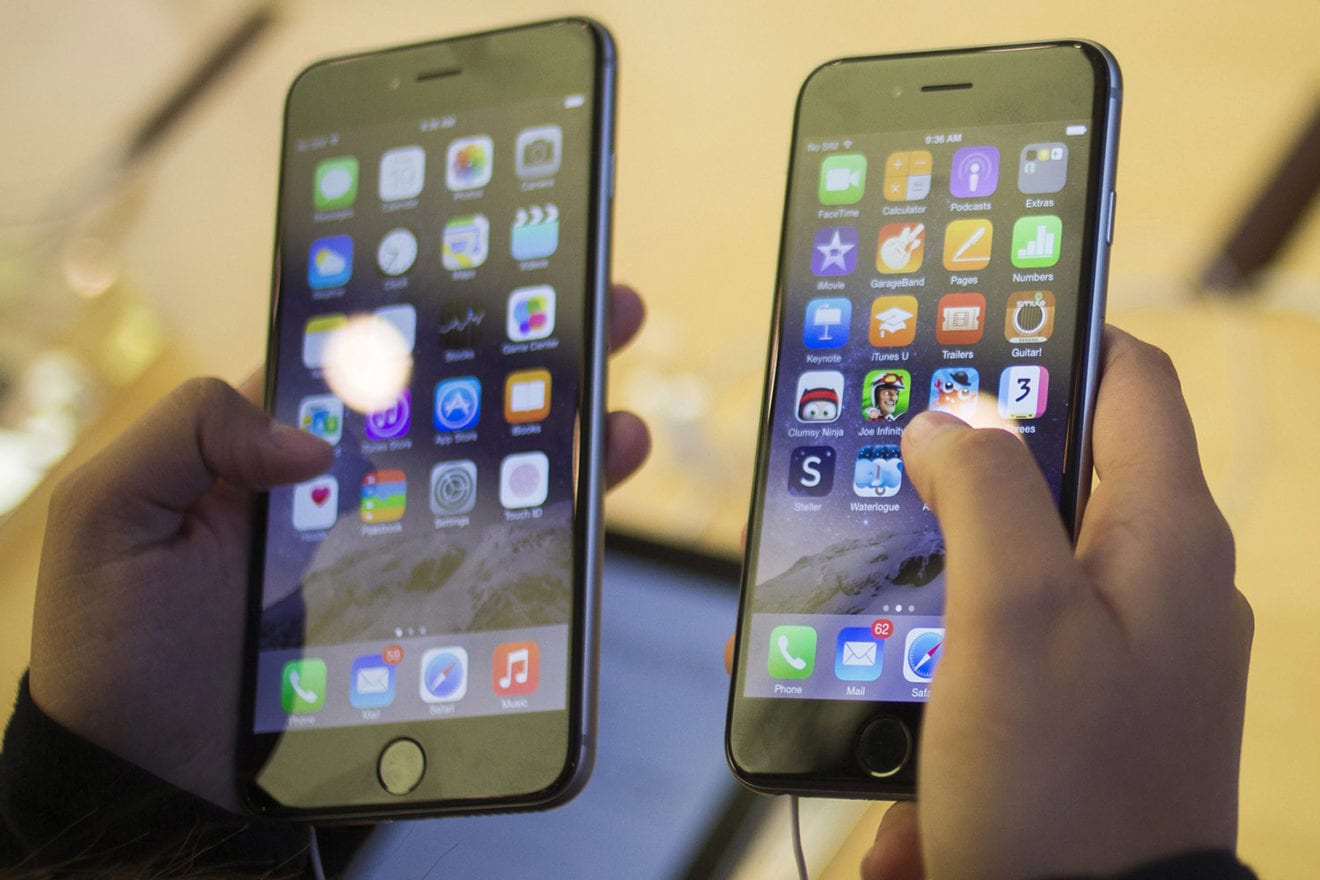
     Thanks to lax copyright enforcement policies, growing demand for all things Apple and a lack of official retail channels, China’s fake Apple Stores are experiencing a resurgence on the back of iPhone 6s preorders.

    In electronics manufacturing mecca Shenzhen, a major cog in Foxconn’s iPhone and iPad production machine, a multitude of counterfeit Apple stores are popping up to take advantage of Friday’s iPhone 6s release, reports Reuters. According to publication estimates, more than 30 storefronts bear Apple’s iconic logo, with some unauthorized outlets kitting out personnel with Apple Store-style blue t-shirts and lanyard name tags.

    As they have in the past, these counterfeit stores are taking advantage of China’s seemingly insatiable iPhone demand. Just hours after iPhone 6s preorders went live last week, Apple’s allotment for the Chinese market sold out, pushing buyers loathe to wait an extra two to three weeks toward unauthorized stores that buy stock from official resellers and flip them for a hefty profit.

    With iPhone viewed as a status symbol in China, many consumers are willing to pay more than double retail prices to get their hands on one the day it comes out. For some buyers the high costs are apparently worth the added cachet that comes with nabbing a copy on day one. Consumers in other markets are also keen to get their hands on Apple’s latest smartphone, but Chinese customers are especially zealous.

    The benefits are more concrete for resellers, who risk minimal retail overhead and an upfront investment by smuggling iPhones in from Hong Kong, the U.S. and other far-flung markets. If successful, however, they stand to haul in huge returns.

    Apple has for years dealt with counterfeit stores, an issue that gained media attention in 2011. While Chinese officials ultimately ordered a handful of operators to shut down, the unauthorized resale industry was never completely wiped out. Now with iPhone 6s, resellers are back in business.

    Part of the problem stems from an inadequate official retail presence in the region. Apple only had 22 stores serving all of China as of June. By comparison, there are 53 Apple Stores in California alone. The disparity is stands in contrast to China’s market potential, which is widely viewed as vital to Apple’s growth and sales sustainability. The company has plans to expand its retail footprint to 40 stores by 2016, however, the most recent being a second Hangzhou location in April.

  • Luxurious Qingdao MixC Mall a landmark

    Luxurious Qingdao MixC Mall a landmark

    The brand new Qingdao MixC Mall simply accomplished, is described as probably the most vital retail scheme but for proprietor China Assets Land.

    Occupying an space of 450,000 sqm, Qingdao’s MixC Mall is the most important of its type in China, establishing an thrilling landmark within the nation’s northeast.

    Its inside design was accomplished by Benoy, the worldwide studio of architects, masterplanners, inside and graphic designers.

    Built-in into the China Assets Centre, the broader mixed-use improvement is a outstanding business addition for the town. The scheme can also be an important element of the Metropolis Crossing improvement, the main landmark constructing group in Qingdao.

    “We’re proud to ship CRL’s new flagship for his or her high-end retail model. Because the sector continues to evolve, Benoy is happy to be on the forefront of designing the guts of those main mixed-use schemes. MixC Mall in Qingdao is a very built-in expertise which unites Retail and Leisure for the town,” commented Craig Menzies, director at Benoy.

    Masking seven ranges and three underground ranges, the retail-led podium has one of the in depth packages for purchasing centres within the nation; bringing collectively retail, meals and beverage, leisure, schooling and tradition. The event includes a roof backyard and sunken plazas, an Olympic-standard ice skating rink, a devoted youngsters’s space and the primary SEGA indoor theme park in China.

    Benoy’s Inside Design drew inspiration from Qingdao’s waterfront panorama with the inside areas formed by undulating, wave-like varieties. The curved flooring sample, function ceilings and essential atrium have all embodied parts of the ocean to offer hanging focal factors all through the design.

    “Qingdao has been described as one in every of China’s most habitable cities and so our design aimed to attach guests with the pure panorama. We celebrated the mall’s proximity to the outside by means of using pure stone, timbers, skylights and glass curtain partitions,” defined Emily WS Wong, Benoy senior affiliate director and venture design chief.

    Situated in Qingdao’s well-established business centre, the scheme offers the advantages of being a Transit Oriented Improvement, with seamless connectivity to 2 metro strains. Interested in the business benefits of the scheme’s location and wider integration, over 85 per cent of the event’s retail models have been rented by 2013, two years previous to the mall’s opening.

    MixC Malls are on the prime of the CRL retail portfolio. The distinguished schemes are already working in main cities comparable to Shenzhen, Chengdu, Hangzhou and Chongqing with Qingdao now the main improvement of the collection.

  • Walmart launches Hypermarket O2O platform “Walmart To Go” in China

    Walmart launches Hypermarket O2O platform “Walmart To Go” in China

    Walmart launched its hypermarket O2O platform “Walmart To Go” within the Chinese language metropolis of Shenzhen on Tuesday. The platform consists of the newly launched “Walmart” cellular purchasing APP, To Go Service Centre, in shops for self-pickup and a number of on-line & offline e-payment choices.

    Walmart will pilot “Walmart To Go” in Shenzhen (besides Yantian and Dapeng) and supply high quality e-commerce expertise to clients with its community of 23 shops. “Walmart To Go” can be adjusted and upgraded based on clients’ feedbacks and steadily increase its service nationwide.

    By looking for key phrase “Walmart” in each iOS and Android APP shops, clients can simply obtain the APP onto their telephones. Presently the APP presents greater than 10,000 gadgets, with 1000 recent/dairy/frozen SKUs in addition to merchandise overlaying grocery, well being and wonder merchandise and family chemical compounds. Extra gadgets bought in bodily shops can be added to the APP steadily.

    “Walmart To Go” is aimed to offer high quality purchasing expertise to clients. From ordering on the APP, choosing merchandise from the shelf, to residence supply or in retailer self-pick-up, clients will expertise a considerate service by Walmart devoted groups.

    “‘Walmart To Go’ is a vital milestone as it’s an enhancement and extension to our brick and mortar enterprise. We’re uniquely positioned to combine bodily and digital retail seamlessly. Walmart needs to be an actual O2O firm. We’ll proceed to innovate each on-line and offline to satisfy the altering calls for of our clients, and would be the most trusted omni-channel retailer in China,” Sean Clarke, President and CEO of Walmart China spoke on the “Walmart To Go” launch ceremony.

    To offer one of the best supply providers to Chinese language shoppers, Walmart leveraged its expertise within the US, UK, and different comparably more experienced E-Commerce markets. Each bodily retailer acts as an unbiased customer support and operation centre with a devoted group of Walmart employees liable for APP orders. These educated specialists will cowl the order preparation course of from product choosing, packaging, to delivering or handing the merchandise to clients in retailer. For recent meals that require a sure storage temperature, the Walmart supply staff will use particular insulated luggage to ensure the identical off-the-shelf freshness a buyer expects in a Walmart retailer.

    In the meantime, Walmart works with logistics firm to construct supply group solely liable for Walmart orders.

    If clients select home-delivery providers and full an order earlier than 11 am, the merchandise might be delivered on the identical day. Supply charge might be freed from cost if the acquisition is over CNY188. Clients may also determine to select up their order in any retailer they need. The assigned retailer will put together the gadgets inside about four hours in accordance with buyer choice of the pick-up time. After clients obtain the reminder message on their cell phone, they might go to the “To Go Centre” to select up the order by order quantity.

    Merchandise bought on the APP are the identical as those bought in bodily shops. APP customers additionally take pleasure in the identical worth and after gross sales providers as in bodily shops. Walmart’s 100 % Fear Free Recent Assure additionally applies on APP. If APP customers usually are not glad with the recent merchandise they purchased, they might refund inside 14 days of buy.

    Walmart APP offers versatile cost choices for patrons reminiscent of Union Pay, Alipay and E present playing cards. Walmart bodily shops may even have particular e-payment checkouts to simply accept Alipay and different cellular cost strategies. The retail big stated it should add extra e-payments within the shops and on the APP sooner or later to offer extra handy cost providers.

  • Walmart China plans major expansion

    Walmart China plans major expansion

    The world’s biggest retailer Wal-Mart Stores believes the best way to achieve profitability in China is to open more stores and lure more customers.

    Walmart China will expand its store network by almost a third between now and 2017 according to CEO Doug McMillon.

    “Our aim is to become an integral part of China’s economy. China is a top priority,” McMillon told a press conference in Beijing.

    Faced with slowing growth in its mature home market, Walmart sees a massive opportunity in China’s rising middle class and booming tier 2 and 3 cities as a means to restoring growth and boosting profits. Cities like Shenzhen and Wuhan.

    But its experiences in China to date have been mixed. Sales declined 0.7 per cent in the quarter to January 31 and same store sales fell 2.3 per cent.

    At the end of January, Walmart had 411 stores in China – and after some underperforming stores are closed should end 2017 with a network exceeding 500.

    The company is also increasing its investment in its online business Yihaodian.com. Launched in 2011 with 18,000 SKUs the online store now boasts more than 8 million products. With more and more Chinese buying online – on both computers and mobile devices – the potential seems unlimited.

    Walmart’s Asian chief, Scott Price, said while the company had seen a softening in sales, it was not all bad news.

    “We’ve gained share in the hypermarket channel.”